Thyroid Health Explained: Hypothyroidism, Hyperthyroidism, Symptoms, Causes, Treatment and Complete Thyroid Care Guide
A gland smaller than your thumb sits quietly at the base of your throat, and yet it influences your heart rate, your weight, your mood, your hair, your periods, and how tired you feel every single day. This guide brings together everything worth knowing about the thyroid, how it works, what goes wrong, how doctors test and treat it, and which foods, habits, and lifestyle choices genuinely support it, all explained clearly, without the medical jargon or scattered half-answers.
Introduction: The Gland Running the Show Quietly
Most people never think about their thyroid until something feels off, unexplained tiredness that sleep doesn't fix, weight that won't budge no matter what you try, or the opposite, weight falling off along with a heart that won't slow down. The thyroid rarely announces itself loudly. It works in the background, and when it stops working the way it should, the symptoms often get blamed on everything else first, stress, aging, a busy schedule, before anyone thinks to check the small gland actually responsible.
This guide pulls together the full picture: what the thyroid is and how it functions, the two main disorders and everything underneath them, how doctors diagnose and treat thyroid problems, and the food, lifestyle, and self-care habits that genuinely support thyroid health, all written in plain, complete language so you walk away actually understanding your own thyroid rather than just recognizing a few scattered terms.
What Is the Thyroid Gland?
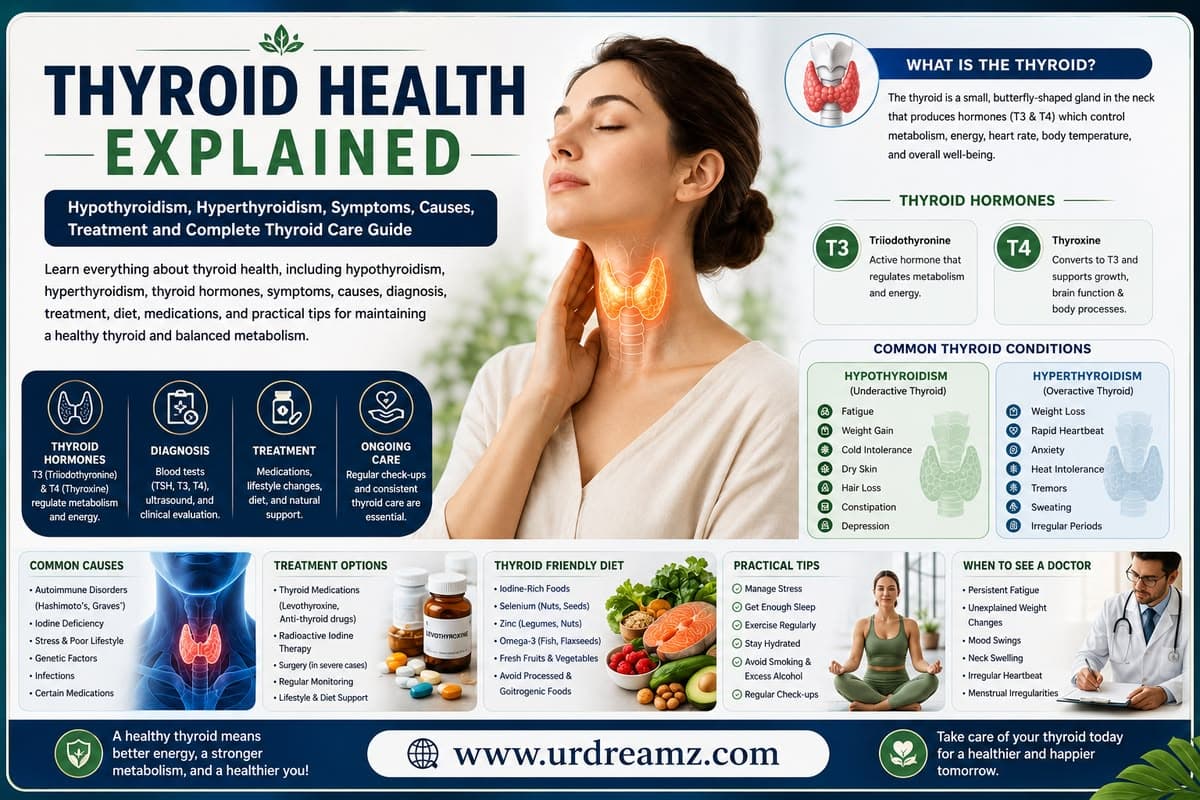
The thyroid is a small, butterfly-shaped gland that is part of the endocrine system, the network of glands throughout the body responsible for producing and releasing hormones directly into the bloodstream. Its primary job is regulating your metabolic rate, essentially controlling the pace at which your body converts food into usable energy. Because nearly every cell in your body relies on energy to function, thyroid hormones end up influencing an unusually wide range of processes, from how fast your heart beats to how your body maintains temperature to how your brain functions day to day.
Where the Thyroid Is Located and What It Looks Like
The thyroid sits at the front of your neck, wrapped around your windpipe, roughly at the level where a necklace would sit. It's shaped somewhat like a butterfly or a bowtie, narrower in the middle and wider on either side, with two lobes connected by a thin strip of tissue called the isthmus. A healthy thyroid is small enough, typically only about two inches long, that you usually can't see or feel it from the outside, which is exactly why an enlarged thyroid, a visible or palpable swelling in the neck, is often one of the first outward clues that something has changed.
How the Thyroid Actually Works
The thyroid produces hormones and releases them directly into the bloodstream, where they travel throughout the body and bind to receptors in nearly every tissue, instructing cells on how quickly to burn energy and carry out their normal functions. When thyroid hormone levels are balanced, this process runs quietly and efficiently in the background. When levels drop too low or climb too high, the effects ripple outward into nearly every system, the heart, the digestive tract, the skin, the reproductive system, and the brain, which explains why thyroid symptoms can look so different from person to person.
The Hypothalamus-Pituitary-Thyroid Control System
The thyroid doesn't operate independently; it's part of a tightly coordinated feedback loop involving the brain. The hypothalamus, a small region at the base of the brain, releases a signal called thyrotropin-releasing hormone, which prompts the nearby pituitary gland to release thyroid-stimulating hormone, commonly known as TSH. TSH then travels to the thyroid and instructs it to produce and release its own hormones. When thyroid hormone levels rise high enough, they signal back to the brain to reduce TSH production, and when levels fall too low, TSH rises to push the thyroid to produce more, a self-regulating loop that, when functioning normally, keeps hormone levels remarkably stable.
T3, T4 and TSH Explained Simply
Thyroxine, commonly called T4, is the hormone the thyroid produces in the largest quantity, though it's relatively inactive on its own until it's converted into triiodothyronine, or T3, the form that actually does most of the metabolic heavy lifting inside your cells. TSH, produced by the pituitary gland rather than the thyroid itself, is the signal that tells the thyroid how much T4 and T3 to make; a high TSH generally means the brain is working hard to push an underperforming thyroid to produce more hormone, which is exactly the pattern seen in hypothyroidism, while a low TSH generally reflects the opposite, the brain trying to calm down an overactive thyroid.
Why Iodine Matters So Much
Iodine is the raw mineral building block the thyroid needs to actually manufacture T3 and T4; without enough of it, the gland simply cannot produce adequate hormone regardless of how hard the pituitary tries to stimulate it. This is why iodine deficiency historically caused widespread thyroid problems, including goiter, before iodized salt became common. In countries where iodized salt is widely available, outright deficiency has become rare, but the balance still matters in both directions, since consistently excessive iodine intake can also disrupt thyroid function, particularly in people who already have an underlying autoimmune thyroid condition.
Table: Thyroid Hormones at a Glance
| Hormone | Produced By | Main Role |
|---|---|---|
| TSH (thyroid-stimulating hormone) | Pituitary gland | Signals the thyroid to produce more or less hormone |
| T4 (thyroxine) | Thyroid gland | Main hormone produced; converts to active T3 |
| T3 (triiodothyronine) | Thyroid gland and peripheral tissues | Active hormone driving metabolic effects |
| Calcitonin | Thyroid gland (C-cells) | Helps regulate blood calcium levels |
What Is Thyroid Disease?
Thyroid disease is a broad umbrella term covering any condition that disrupts the thyroid's ability to produce the right amount of hormone or that causes structural changes to the gland itself, such as nodules or inflammation. The two central categories are hypothyroidism, an underactive thyroid producing too little hormone, and hyperthyroidism, an overactive thyroid producing too much, though each of these has several distinct underlying causes rather than being a single condition on its own.
How Common Is Thyroid Disease?
Thyroid disease is genuinely common, affecting an estimated 20 million people in the United States alone, with the true number likely higher since many cases remain undiagnosed due to symptoms that overlap so heavily with ordinary fatigue, stress, or aging. Hypothyroidism accounts for the large majority of thyroid disease cases, while hyperthyroidism is considerably less common, and women are affected far more often than men, roughly five to eight times more likely across most thyroid conditions.
Hypothyroidism Explained
Hypothyroidism, often called an underactive thyroid, occurs when the gland fails to produce enough hormone to meet the body's needs. Since thyroid hormone essentially sets the pace for metabolism throughout the body, an underactive thyroid causes nearly everything to slow down, energy production, heart rate, digestion, and even mental processing speed. Because this slowdown tends to develop gradually, sometimes over months or years, many people don't notice a clear starting point; they simply feel progressively more tired, sluggish, and unlike themselves without immediately connecting it to their thyroid.
Causes of Hypothyroidism
The most common cause of hypothyroidism, particularly in countries with iodized salt, is Hashimoto's disease, an autoimmune condition where the immune system mistakenly attacks thyroid tissue. Other causes include thyroiditis, inflammation of the thyroid that can eventually lead to permanent underactivity, congenital hypothyroidism present from birth, surgical removal of part or all of the thyroid, radioactive iodine treatment for a previous hyperthyroidism diagnosis, certain medications that interfere with hormone production, and, in regions without iodized salt, genuine iodine deficiency.
Symptoms of Hypothyroidism
Because hypothyroidism slows metabolism across the entire body, its symptoms tend to reflect that widespread deceleration: persistent fatigue that doesn't improve with rest, unexplained weight gain despite no real change in eating habits, increased sensitivity to cold, dry skin and thinning or coarse hair, constipation, muscle and joint aches, a slower-than-usual heart rate, low mood or depression, and heavy or irregular menstrual periods in women. Individually, many of these symptoms are common and non-specific, which is exactly why they're so often misattributed to something else entirely, and why a proper blood test, rather than symptom-guessing, remains the only reliable way to confirm the diagnosis.
Table: Common Hypothyroidism Symptoms
| Symptom | Why It Happens |
|---|---|
| Fatigue | Slowed cellular energy production |
| Weight gain | Reduced metabolic rate |
| Cold intolerance | Reduced heat-generating metabolic activity |
| Dry skin and hair thinning | Reduced cell turnover and circulation |
| Constipation | Slowed digestive tract motility |
| Depression or low mood | Thyroid hormone's role in brain chemistry |
| Heavy or irregular periods | Hormonal effects on the menstrual cycle |
| Slow heart rate | Reduced metabolic demand on the heart |
Hyperthyroidism Explained
Hyperthyroidism, an overactive thyroid, is essentially the mirror image of hypothyroidism: the gland produces more hormone than the body actually needs, pushing metabolism into overdrive. Instead of everything slowing down, everything speeds up, heart rate, digestion, body temperature regulation, and often mental and emotional state as well. Hyperthyroidism is considerably less common than hypothyroidism, but it tends to produce more dramatic, faster-developing symptoms that people notice sooner, partly because a racing heart and unexplained rapid weight loss are harder to overlook than gradual fatigue.
Causes of Hyperthyroidism
Graves' disease, another autoimmune condition, is by far the most common cause of hyperthyroidism, occurring when the immune system produces an antibody that mimics TSH and continuously stimulates the thyroid to overproduce hormone. Other causes include hyperfunctioning thyroid nodules that produce hormone independently of normal regulation, thyroiditis in its early inflammatory phase, and excessive iodine intake, whether from diet, supplements, or certain iodine-containing medications, which can push an already sensitive thyroid into overproduction.
Symptoms of Hyperthyroidism
Hyperthyroidism typically produces a cluster of symptoms reflecting an accelerated metabolism: a rapid or irregular heartbeat, unexplained weight loss despite normal or even increased appetite, heat intolerance and excessive sweating, difficulty sleeping, nervousness, irritability or anxiety, hand tremors, and in women, irregular or absent menstrual periods. Because the symptoms so closely resemble anxiety or simply being under significant stress, hyperthyroidism is sometimes misattributed to a purely psychological cause before the underlying thyroid problem is identified through blood testing.
Table: Common Hyperthyroidism Symptoms
| Symptom | Why It Happens |
|---|---|
| Rapid heartbeat | Excess thyroid hormone accelerating heart activity |
| Unexplained weight loss | Sharply increased metabolic rate |
| Heat intolerance and sweating | Increased metabolic heat production |
| Difficulty sleeping | Overstimulated nervous system |
| Anxiety or irritability | Excess hormone affecting brain chemistry |
| Hand tremors | Overactive nervous system stimulation |
| Irregular or absent periods | Hormonal disruption of the menstrual cycle |
Table: Hypothyroidism vs Hyperthyroidism
| Feature | Hypothyroidism | Hyperthyroidism |
|---|---|---|
| Thyroid hormone level | Too low | Too high |
| Metabolism | Slowed down | Sped up |
| Heart rate | Slower than usual | Faster than usual |
| Weight | Tends to increase | Tends to decrease |
| Temperature sensitivity | Cold intolerance | Heat intolerance |
| Most common cause | Hashimoto's disease | Graves' disease |
| Mood effect | Depression, low energy | Anxiety, irritability |
Hashimoto's Disease Explained
Hashimoto's disease is a chronic autoimmune condition in which the immune system gradually attacks and damages thyroid tissue, eventually impairing the gland's ability to produce enough hormone. It's the leading cause of hypothyroidism in regions with adequate iodine intake and tends to progress slowly, sometimes over years, meaning thyroid function can decline gradually long before symptoms become obvious or a diagnosis is made. Because it's autoimmune, Hashimoto's often occurs alongside other autoimmune conditions, and having a family history of it or related autoimmune diseases raises individual risk.
Graves' Disease Explained
Graves' disease is the autoimmune counterpart on the hyperthyroidism side, where the immune system produces antibodies that bind to and continuously activate thyroid-stimulating receptors, pushing the gland to overproduce hormone well beyond what the body needs. Beyond the classic hyperthyroidism symptoms, Graves' disease can also cause a distinctive eye condition in some people, involving swelling and irritation around the eyes, sometimes causing a noticeable bulging appearance, which is treated somewhat separately from the thyroid overactivity itself.
Goiter Explained
A goiter is simply an enlargement of the thyroid gland, which can occur with hypothyroidism, hyperthyroidism, or even when thyroid function is otherwise normal. In cases of iodine deficiency, the thyroid enlarges as it tries to compensate for insufficient hormone-building material, working harder in an effort to meet the body's demands. A goiter can also develop from Hashimoto's disease, Graves' disease, or nodules within the thyroid itself. Common signs include visible swelling at the front of the neck, a feeling of tightness in the throat, and occasionally a change in voice or difficulty swallowing if the enlargement becomes significant.
Thyroid Nodules Explained
Thyroid nodules are lumps that form within the thyroid gland, and they're actually quite common, often discovered incidentally during an unrelated scan or physical exam rather than causing any symptoms themselves. The large majority of thyroid nodules are benign, non-cancerous growths that don't require aggressive treatment beyond monitoring. Some nodules, however, become hyperfunctioning, producing thyroid hormone independently and potentially causing hyperthyroidism, while a smaller percentage may prove cancerous upon further evaluation, which is exactly why any newly discovered nodule warrants proper assessment rather than being dismissed automatically.
Thyroiditis Explained
Thyroiditis refers to inflammation of the thyroid gland, and it can behave quite differently depending on the specific type. In many cases, thyroiditis causes stored thyroid hormone to leak out into the bloodstream, temporarily pushing hormone levels too high and producing hyperthyroidism symptoms, sometimes for weeks or months, before the thyroid's hormone stores are depleted and function shifts toward hypothyroidism instead. Some forms are painful, with visible swelling and tenderness in the neck, while others, like silent thyroiditis, cause the same hormonal swings without any pain at all, which can make the condition harder to recognize without proper testing.
Postpartum Thyroiditis
Postpartum thyroiditis is a specific, relatively common form of thyroid inflammation that develops in some women within the first year after giving birth, affecting an estimated 5 percent of postpartum women. It typically follows a distinctive pattern, a temporary period of hyperthyroidism symptoms followed by a period of hypothyroidism symptoms, before thyroid function often, though not always, returns to normal on its own. Because new motherhood already comes with exhaustion and shifting emotions, postpartum thyroid symptoms are especially easy to dismiss as simply part of adjusting to life with a newborn, making awareness of this specific condition genuinely valuable for new mothers and their doctors alike.
Thyroid Cancer: The Basics
Thyroid cancer begins in the tissue of the thyroid gland itself and is diagnosed in a substantial number of people each year, though the outlook for most types is genuinely favorable, with treatment success rates considerably higher than many other cancers. Papillary thyroid cancer is by far the most common type, followed by follicular, with medullary and anaplastic types being much rarer. Most thyroid cancers are discovered through evaluation of a nodule found either incidentally or during a routine exam, and treatment typically involves surgery, sometimes followed by radioactive iodine therapy, depending on the specific type and stage.
Table: Common Thyroid Conditions Overview
| Condition | What It Involves |
|---|---|
| Hashimoto's disease | Autoimmune attack on the thyroid, leading to hypothyroidism |
| Graves' disease | Autoimmune overstimulation of the thyroid, leading to hyperthyroidism |
| Goiter | Visible or palpable enlargement of the thyroid gland |
| Thyroid nodules | Lumps within the thyroid, usually benign |
| Thyroiditis | Inflammation causing temporary hormone swings |
| Postpartum thyroiditis | Temporary thyroid inflammation after childbirth |
| Thyroid cancer | Cancerous growth within thyroid tissue, usually treatable |
Who Is Most at Risk of Thyroid Disease?
Certain factors consistently raise the likelihood of developing thyroid disease. Being female carries a significantly higher risk across nearly all thyroid conditions, and risk generally increases with age, particularly after 60. A family history of thyroid disease meaningfully raises individual risk, as does having another autoimmune condition, since autoimmune diseases tend to cluster together in the same person or family. Previous radiation exposure to the head or neck, certain medications high in iodine, and recent pregnancy also increase risk, making these groups particularly worth watching for early symptoms.
Table: Thyroid Disease Risk Factors
| Risk Factor | Why It Raises Risk |
|---|---|
| Being female | Women are five to eight times more likely to develop thyroid disease |
| Age over 60 | Thyroid disease prevalence rises notably with age |
| Family history | Genetic predisposition to autoimmune thyroid disease |
| Other autoimmune conditions | Autoimmune diseases often occur together |
| Recent pregnancy | Raises risk of postpartum thyroiditis |
| Prior head/neck radiation | Can damage thyroid tissue directly |
| High-iodine medications | Can trigger hyperthyroidism in susceptible individuals |
How Thyroid Disease Affects the Heart
Thyroid hormone directly influences the force and speed of your heartbeat, your blood pressure, and your cholesterol levels, which is exactly why thyroid problems can sometimes masquerade as heart disease or worsen existing cardiac issues. In hypothyroidism, a slowed heart rate combined with stiffer arteries can raise blood pressure, and reduced metabolism can allow cholesterol to build up in the blood, contributing to narrowed arteries over time. In hyperthyroidism, the heart works harder and faster, which can trigger abnormal heart rhythms such as atrial fibrillation and, in people who already have narrowed arteries, potentially bring on chest pain or angina.
How Thyroid Disease Affects Weight and Metabolism
Because thyroid hormone sets the baseline pace of metabolism, thyroid disease genuinely does affect weight, though not always to the extreme degree people sometimes assume. Hypothyroidism generally causes modest, gradual weight gain due to a slower metabolic rate, while hyperthyroidism typically causes weight loss despite a normal or increased appetite, since the body is burning through energy faster than usual. Neither condition is usually the sole explanation for dramatic weight changes on its own, but for anyone experiencing unexplained weight shifts alongside other thyroid symptoms, testing thyroid function is a genuinely reasonable and common first step.
How Thyroid Disease Affects Mood, Memory and Brain Fog
Thyroid hormone plays a direct role in brain function, influencing neurotransmitter activity, mental processing speed, and overall cognitive clarity. Hypothyroidism is frequently associated with low mood, depression, and a foggy, sluggish quality to thinking, sometimes described as brain fog, difficulty concentrating, or slower recall than usual. Hyperthyroidism tends to produce the opposite emotional pattern, anxiety, irritability, restlessness, and difficulty settling the mind, alongside genuine difficulty sleeping that compounds the mental strain further.
How Thyroid Disease Affects Hair, Skin and Nails
Because thyroid hormone influences cell turnover and circulation throughout the body, hair, skin, and nails are often among the more visibly affected areas. Hypothyroidism commonly causes dry, coarse skin, brittle nails, and diffuse hair thinning or hair loss, sometimes including the outer third of the eyebrows specifically. Hyperthyroidism can cause different but equally noticeable changes, including warm, moist, smoother skin and, in some cases, hair that becomes fine and thin due to the accelerated metabolic state affecting hair growth cycles.
How Thyroid Disease Affects Digestion
Thyroid hormone influences how quickly food moves through the digestive tract, which is exactly why constipation is such a common complaint in hypothyroidism, the slowed metabolic pace extends to intestinal motility as well. Hyperthyroidism tends to produce the opposite digestive pattern, more frequent bowel movements or loose stools, since the accelerated metabolism speeds digestion along faster than usual. These digestive changes, much like many other thyroid symptoms, are easy to attribute to diet or stress alone, which is part of why they're so often overlooked as a thyroid clue.
Diagnosis: The TSH Test and Beyond
The TSH blood test is the standard first-line screening tool for thyroid function, since it reflects how hard the brain is working to regulate the thyroid and tends to shift before T3 or T4 levels move outside a normal range in many cases. A high TSH generally points toward hypothyroidism, since the brain is pushing harder to stimulate an underperforming gland, while a low TSH generally points toward hyperthyroidism. Depending on the results, doctors often follow up with direct measurements of T4 and T3, or their "free" forms, which reflect the portion of hormone actively available to the body's tissues rather than bound to carrier proteins in the blood.
Understanding Your Thyroid Test Results
A general normal range for TSH is often cited as roughly 0.5 to 5.0 mIU/L, though the exact range can vary somewhat between laboratories and is interpreted differently depending on factors like age, pregnancy, and existing thyroid treatment. It's genuinely important not to self-diagnose from a single number pulled out of context; the same TSH result can mean something different for a pregnant woman, someone already on thyroid medication, or an otherwise healthy adult with no symptoms at all, which is exactly why results should always be interpreted by a doctor familiar with the full clinical picture rather than compared against a generic online range alone.
Thyroid Ultrasound and Imaging
When a doctor feels an enlarged thyroid or a nodule during a physical exam, or when blood tests suggest a structural issue rather than a simple hormone imbalance, a thyroid ultrasound is typically the next step. This imaging test uses sound waves to create detailed pictures of the gland, helping identify nodules, measure their size, and assess certain features that help distinguish lower-risk from higher-risk findings. In some cases, a specialized nuclear medicine scan may also be used to see how actively different parts of the thyroid are functioning, which can help clarify whether a nodule is contributing to hormone overproduction.
Table: Common Thyroid Tests Explained
| Test | What It Measures |
|---|---|
| TSH | How strongly the brain is signaling the thyroid |
| Free T4 | Active, available thyroxine in the blood |
| Free T3 | Active, available triiodothyronine in the blood |
| Thyroid antibodies | Signs of autoimmune thyroid disease (Hashimoto's or Graves') |
| Thyroid ultrasound | Structure of the gland, presence of nodules |
| Thyroid scan/uptake | How actively different areas of the thyroid are functioning |
| Fine needle biopsy | Whether a nodule shows signs of malignancy |
Treatment for Hypothyroidism
The standard treatment for hypothyroidism is thyroid hormone replacement medication, most commonly levothyroxine, a synthetic form of T4 that's essentially identical to what a healthy thyroid produces naturally. It's typically taken once daily, ideally on an empty stomach, often first thing in the morning, to support consistent absorption. After starting or adjusting the dose, a follow-up blood test roughly six to eight weeks later helps confirm whether the dose is correctly calibrated, and once a stable, effective dose is found, most people only need periodic monitoring afterward, usually annually, unless symptoms change or a new life circumstance like pregnancy requires dose adjustment.
Treatment for Hyperthyroidism
Hyperthyroidism treatment depends on the underlying cause and severity, but generally includes one or more of a few core approaches: antithyroid medications that reduce the thyroid's hormone production directly, beta-blockers that don't treat the thyroid itself but help manage symptoms like a racing heart while other treatment takes effect, radioactive iodine therapy that gradually reduces overactive thyroid tissue, and, in select cases, surgical removal of part or all of the thyroid. The right approach depends on the specific cause, the severity of symptoms, and individual patient factors like pregnancy status or plans, which is why treatment is always tailored rather than one-size-fits-all.
Radioactive Iodine Therapy Explained
Radioactive iodine therapy works because the thyroid naturally absorbs iodine to build hormone, meaning a radioactive form of iodine, taken orally, concentrates specifically in thyroid tissue and gradually destroys overactive cells with minimal effect on the rest of the body. It's a common, well-established treatment for hyperthyroidism and certain thyroid cancers. Because the treatment reduces thyroid tissue, many people who undergo radioactive iodine eventually develop hypothyroidism as a result and go on to need lifelong thyroid hormone replacement, essentially trading one, more manageable, condition for the other.
Thyroid Surgery Explained
Thyroid surgery, known as a thyroidectomy when the entire gland is removed or a lobectomy when only part of it is removed, is used to treat certain cases of hyperthyroidism, large goiters causing physical symptoms, thyroid nodules that can't be adequately assessed or that show concerning features, and thyroid cancer. Removing the entire thyroid always results in permanent hypothyroidism requiring lifelong hormone replacement, while a partial removal sometimes leaves enough remaining tissue to maintain adequate hormone production, though this isn't guaranteed and depends on how much healthy tissue remains.
Table: Thyroid Treatment Options Compared
| Treatment | Used For | Key Consideration |
|---|---|---|
| Levothyroxine | Hypothyroidism | Typically lifelong, requires dose monitoring |
| Antithyroid drugs | Hyperthyroidism | Can normalize hormone levels over time |
| Beta-blockers | Symptom relief in hyperthyroidism | Doesn't treat the thyroid itself |
| Radioactive iodine | Hyperthyroidism, some thyroid cancers | Often leads to eventual hypothyroidism |
| Thyroid surgery | Nodules, large goiters, cancer, select hyperthyroidism cases | Full removal requires lifelong hormone replacement |
Living With Lifelong Thyroid Medication
For most people with hypothyroidism, or hyperthyroidism treated with radioactive iodine or surgery, thyroid medication becomes a genuine lifelong commitment rather than a short-term fix. This isn't cause for alarm; consistently taking the correct dose, as prescribed, allows the large majority of people to feel completely normal and live an entirely ordinary life. The most important habits are taking the medication consistently at the same time each day, ideally on an empty stomach, avoiding stopping or adjusting the dose without medical guidance, and keeping up with periodic blood tests, since dosing needs can shift over time due to weight changes, pregnancy, aging, or other new medications.
Key Nutrients for Thyroid Health
Several specific nutrients play a direct, well-documented role in thyroid hormone production and regulation. Iodine remains the essential raw material for hormone synthesis itself. Selenium supports the enzymes that convert T4 into active T3 and provides antioxidant protection to thyroid tissue. Zinc contributes to hormone synthesis and conversion as well. Iron is necessary for the enzyme responsible for the earliest step of thyroid hormone production, meaning iron deficiency can impair thyroid function even when iodine intake is adequate. Vitamin D helps regulate immune function, which is particularly relevant for autoimmune thyroid conditions like Hashimoto's and Graves' disease, and vitamin A assists in converting T4 into its active T3 form.
Foods That Support Thyroid Health
Building meals around foods naturally rich in these key nutrients supports healthy thyroid function far more reliably than any single "superfood" claim. Sea vegetables, fish, dairy, and eggs supply iodine; Brazil nuts, sunflower seeds, and seafood supply selenium; pumpkin seeds, legumes, and lean meats supply zinc; and colorful fruits and vegetables provide antioxidants that help calm the low-grade inflammation often present in autoimmune thyroid conditions.
Table: Best Foods for Thyroid Health
| Food | Key Nutrient | Why It Helps |
|---|---|---|
| Seaweed and sea vegetables | Iodine | Essential raw material for thyroid hormone |
| Fish and shellfish | Iodine, selenium, zinc | Supports hormone production and conversion |
| Brazil nuts | Selenium | Supports T4-to-T3 conversion and antioxidant protection |
| Eggs | Iodine, selenium, vitamin D | Supports overall hormone production |
| Dairy products | Iodine, vitamin D | Common everyday iodine source |
| Pumpkin seeds | Zinc | Supports hormone synthesis |
| Legumes and lentils | Zinc, iron | Supports hormone production pathways |
| Leafy greens | Iron, antioxidants | Supports hormone synthesis and reduces inflammation |
| Berries | Antioxidants | Helps calm inflammation in autoimmune thyroid conditions |
| Yogurt and fermented foods | Probiotics | Supports gut health linked to immune regulation |
Foods and Habits to Limit for Thyroid Health
Certain foods and habits can work against thyroid health, either by interfering with hormone absorption, disrupting iodine uptake, or adding to inflammation that worsens autoimmune thyroid activity. It's worth noting that most of these are only a genuine concern in large, regular quantities, moderate intake of otherwise healthy foods like broccoli or soy rarely poses a real problem for most people, and cooking cruciferous vegetables meaningfully reduces their goitrogenic effect.
Table: Foods and Habits to Limit
| Food or Habit | Why It's a Concern |
|---|---|
| Excess raw goitrogenic vegetables (cabbage, cauliflower, kale) | Can interfere with iodine uptake in very large raw amounts |
| Excess soy products | May interfere with thyroid hormone absorption |
| Processed foods | Additives and unhealthy fats may disrupt hormone balance |
| Excess refined sugar | Contributes to inflammation and blood sugar instability |
| Excess caffeine | Can interfere with medication absorption and raise cortisol |
| Alcohol | Can interfere with medication effectiveness and hormone function |
| Excess iodine supplementation | Can trigger or worsen thyroid dysfunction in sensitive individuals |
| Taking medication with food or coffee | Can meaningfully reduce absorption of thyroid medication |
Table: A Sample Thyroid-Friendly Daily Diet Plan
| Time | Meal or Habit |
|---|---|
| Early morning | Thyroid medication on an empty stomach with plain water |
| Breakfast (30-60 minutes later) | Oats with seeds, berries and a few soaked almonds |
| Lunch | Brown rice, lentils, salad and cooked vegetables |
| Afternoon snack | Roasted pumpkin seeds or a small handful of Brazil nuts |
| Dinner | Grilled fish or tofu with steamed vegetables and soup |
| Evening | Warm turmeric milk or chamomile tea |
| Throughout the day | Consistent water intake, minimal excess caffeine |
This is a general educational example rather than a personalized prescription; specific iodine, selenium, and other nutrient targets should be discussed with a doctor, particularly for anyone with an existing thyroid condition.
Exercise and Thyroid Health
Regular physical activity supports healthy metabolism and immune function, both of which play a role in overall thyroid health, and research has even found associations between daily activity levels and markers of inflammation and thyroid hormone balance. A well-rounded routine combining cardiovascular exercise, strength training, and flexibility work tends to offer the most complete support. That said, anyone with an existing thyroid condition, particularly hyperthyroidism with an elevated heart rate, should check with a doctor before starting a new or more intense exercise routine, since a suddenly demanding workout can be genuinely harder on a body already running in overdrive.
Yoga and Thyroid Health
Yoga holds a particularly popular place in thyroid wellness culture, partly because several classic poses involve positioning that gently compresses or stretches the neck and throat area where the thyroid sits, believed by many practitioners to stimulate blood flow to the gland. While rigorous clinical evidence specifically proving yoga directly changes thyroid hormone output remains limited, yoga's well-documented ability to reduce stress and lower cortisol offers a genuinely plausible, indirect pathway to supporting thyroid balance, since chronic stress is known to disrupt hormonal regulation more broadly throughout the endocrine system.
Table: Yoga Poses Believed to Support Thyroid Function
| Pose | Traditional Benefit |
|---|---|
| Shoulder Stand (Sarvangasana) | Believed to stimulate the thyroid gland directly |
| Fish Pose (Matsyasana) | Opens the throat area, often paired with shoulder stand |
| Plow Pose (Halasana) | Believed to improve blood flow to the thyroid |
| Cobra Pose (Bhujangasana) | Stimulates the thyroid and adrenal glands, strengthens the spine |
| Bow Pose (Dhanurasana) | Believed to support metabolism and hormonal regulation |
| Lion's Pose (Simhasana) | Releases tension in the throat area |
Anyone with thyroid eye disease, neck injuries, high blood pressure, or who is pregnant should approach inverted poses like shoulder stand cautiously and ideally under the guidance of a qualified instructor.
Stress, Sleep and the Thyroid
Chronic stress keeps cortisol levels elevated, and sustained high cortisol can genuinely disrupt the delicate hormonal signaling between the brain and thyroid, potentially worsening symptoms in people who already have an underlying thyroid condition. Sleep disturbances are often one of the earliest, most overlooked symptoms of thyroid dysfunction itself, meaning poor sleep and thyroid imbalance can end up reinforcing each other in a cycle. Prioritizing seven to nine hours of consistent, quality sleep and building in genuine stress-reduction practices, deep breathing, meditation, time outdoors, or simply protected downtime, supports thyroid health as directly as diet does, even though it rarely gets the same attention.
Herbal and Natural Support for the Thyroid
Several herbs have a long history of traditional use for supporting hormonal balance and stress resilience, which indirectly benefits thyroid function. Ashwagandha is widely used for its stress-reducing, adaptogenic properties, which may help support hormonal balance more broadly. Guggulu, an herb used in traditional Ayurvedic medicine, is sometimes associated with metabolism and thyroid support. Holy basil, also known as tulsi, is commonly used for managing stress and inflammation, and ginger is often included for its general digestive and anti-inflammatory support. As with any herbal supplement, these should be discussed with a doctor before use, particularly for anyone already taking thyroid medication, since herbs can sometimes interact with prescription treatment or aren't appropriate during pregnancy.
Thyroid Health in Women
Thyroid disorders disproportionately affect women, and hormonal shifts across a woman's life, puberty, pregnancy, postpartum, and menopause, all interact with thyroid function in ways that make women's thyroid health a genuinely distinct topic. Beyond the general symptoms already covered, women with thyroid dysfunction often experience irregular menstrual periods, fertility challenges, and, as discussed earlier, a specific risk of postpartum thyroiditis following childbirth. Menopause can also complicate the picture further, since some symptoms of menopause and thyroid imbalance genuinely overlap, mood changes, fatigue, temperature sensitivity, making thyroid testing a reasonable step for women experiencing a cluster of these symptoms around this life stage.
Thyroid Health in Men
Thyroid disease is less common in men than women but still genuinely significant and, if anything, more likely to be overlooked or misattributed to other causes, since thyroid symptoms are less commonly on a man's or his doctor's radar as a first consideration. Beyond general symptoms, men with thyroid dysfunction can experience effects on testosterone levels, energy and muscle mass, and fertility, and thyroid disease becomes noticeably more common in men after age 60, much as it does in women. Any man experiencing unexplained fatigue, weight changes, or mood shifts genuinely benefits from including a simple thyroid check as part of the broader workup rather than assuming it's exclusively a women's health concern.
Thyroid Health During Pregnancy
Thyroid hormone plays a genuinely critical role during pregnancy, supporting the baby's brain and nervous system development, particularly in the earliest months before the baby's own thyroid becomes functional. Untreated thyroid dysfunction during pregnancy, whether hypothyroidism or hyperthyroidism, can affect both mother and baby, which is why thyroid testing is a routine consideration during prenatal care, especially for women with known risk factors. Many women already taking thyroid medication before pregnancy need a higher dose once pregnant, making prompt communication with a doctor as soon as pregnancy is confirmed genuinely important rather than something to delay.
Thyroid Health in Children
Thyroid disorders can affect children as well, including congenital hypothyroidism present from birth, which is why most newborns in many countries are routinely screened shortly after delivery, since early treatment prevents the growth and developmental problems that untreated congenital hypothyroidism can otherwise cause. Beyond infancy, children and adolescents can develop both hypothyroidism and hyperthyroidism, sometimes presenting as unexplained changes in growth rate, energy level, or school performance, making pediatric thyroid awareness genuinely valuable for parents even though these conditions are considerably less common than in adults.
Thyroid Health After 50
Thyroid disease becomes notably more common after age 50, particularly hypothyroidism, and diagnosis in this age group carries its own added complexity, since many classic thyroid symptoms, fatigue, weight changes, mood shifts, overlap significantly with symptoms people already attribute to normal aging. Some older adults with genuinely low thyroid levels don't even present with the textbook symptoms at all, which is part of why routine thyroid screening becomes increasingly worthwhile after 50, even in the absence of obvious symptoms, rather than waiting for a clear-cut presentation that may never fully materialize.
Table: Thyroid Health Myths vs Facts
| Myth | Fact |
|---|---|
| Thyroid disease only affects women | Men and children can develop thyroid disease too, though less commonly |
| More iodine is always better for the thyroid | Excess iodine can actually trigger or worsen thyroid dysfunction |
| Thyroid disease can be diagnosed from symptoms alone | A blood test is required to confirm the diagnosis, since symptoms overlap with many other conditions |
| Diet alone can cure thyroid disease | Diet supports thyroid health but generally cannot replace medical treatment when it's needed |
| Thyroid medication can be stopped once you feel better | Most thyroid conditions require lifelong, consistent treatment |
| Weight gain is always caused by the thyroid | Thyroid disease can contribute to weight gain, but it's rarely the sole cause of significant weight change |
Prevention and Long-Term Thyroid Care
Because most thyroid disease stems from genetics and autoimmune processes that can't be directly prevented, true prevention in the strictest sense is limited. What genuinely is within your control is maintaining adequate, but not excessive, iodine intake, eating a balanced, nutrient-dense diet built around whole foods, managing stress, prioritizing sleep, staying physically active, limiting exposure to environmental toxins where reasonably possible, and keeping up with regular checkups, especially if you have any of the risk factors covered earlier in this guide. None of this guarantees avoiding thyroid disease entirely, but it consistently supports the healthiest possible thyroid function and gives any developing issue the best chance of being caught early.
When to See a Doctor About Your Thyroid
You should talk to a doctor if you notice persistent fatigue, unexplained weight changes, changes in heart rate, new sensitivity to heat or cold, visible swelling in your neck, changes in your menstrual cycle, or a cluster of symptoms that just doesn't feel like your normal baseline. A simple blood test is usually all it takes to check thyroid function, and given how common thyroid disease is and how effectively it can typically be managed once identified, there's genuinely little downside to getting checked if something feels off.
Frequently Asked Questions
What is the thyroid gland and what does it do?
The thyroid is a small, butterfly-shaped gland in the neck that produces hormones controlling metabolism, affecting nearly every organ system including the heart, digestion, and brain function.
What are the first signs of a thyroid problem?
Common early signs include unexplained fatigue, weight changes, temperature sensitivity, mood changes, and changes in hair, skin, or menstrual cycles, though these vary depending on whether the thyroid is underactive or overactive.
Can thyroid disease be cured?
Most thyroid disease is manageable rather than curable, requiring lifelong medication or monitoring, though some causes, like certain forms of thyroiditis, can resolve on their own over time.
What foods should be avoided with thyroid disease?
Excess raw goitrogenic vegetables, excess soy, processed foods, refined sugar, and excess caffeine or alcohol are generally worth limiting, though most of these are only concerning in large, regular amounts.
Is thyroid disease hereditary?
Yes, family history meaningfully raises the risk of most thyroid conditions, particularly autoimmune types like Hashimoto's and Graves' disease.
How is hypothyroidism treated?
Hypothyroidism is typically treated with daily thyroid hormone replacement medication, most commonly levothyroxine, taken consistently and monitored with periodic blood tests.
Can stress really affect the thyroid?
Yes, chronic stress raises cortisol, which can disrupt the hormonal signaling between the brain and thyroid and potentially worsen symptoms in people with an existing thyroid condition.
How often should thyroid levels be checked?
Once a stable treatment dose is established, most people need thyroid levels checked about once a year, though more frequent testing is needed after starting or adjusting medication, or during pregnancy.
Can exercise help thyroid function?
Regular physical activity supports healthy metabolism and immune function, both relevant to thyroid health, though anyone with hyperthyroidism should check with a doctor before starting a vigorous new routine.
Is yoga good for thyroid health?
Yoga's stress-reducing effects offer a genuine, indirect benefit to hormonal balance, and specific poses are traditionally believed to support thyroid function, though strong direct clinical evidence remains limited.
Conclusion
The thyroid may be small, but its influence stretches into nearly every corner of how you feel day to day, your energy, your weight, your mood, your heart, and your hair and skin. Understanding the difference between an underactive and overactive thyroid, recognizing the wide range of symptoms each can cause, and knowing which foods, habits, and treatments genuinely support thyroid health puts you in a far stronger position than guessing based on fatigue or frustration alone. This guide is intended for general education and does not replace professional medical advice; always consult a qualified doctor or endocrinologist for diagnosis, testing, and a treatment plan suited to your individual thyroid health.
If persistent, unexplained symptoms have been quietly wearing you down, tiredness that won't lift, weight that won't shift, a heart that won't calm down, it's worth remembering that a single, simple blood test can often provide the missing piece of the puzzle. Thyroid disease is common, well understood, and, in the overwhelming majority of cases, entirely manageable once it's properly identified.
Related Reading:
- Diabetes Explained: Symptoms, Causes, Blood Sugar and Treatment Guide
- Weight Loss Diet Plan: Best Foods for Fat Loss
- High Blood Pressure vs Low Blood Pressure: Complete Guide
- Heart Health: Complete Guide to Prevention, Symptoms and Diet
- Digestive Problems Explained: Causes, Symptoms and Treatment
- Fatty Liver Disease: Warning Signs, Stages and Complete Guide
- Kidney Health Explained: Symptoms, Causes and Treatment
- Joint Pain Explained: Causes, Symptoms and Treatment
- High Cholesterol Explained: Symptoms, Causes, LDL vs HDL and Treatment Guide
- Anemia Explained: Symptoms, Causes, Iron Deficiency and Treatment Guide
- Sleep Health Explained: Causes of Poor Sleep and Complete Guide to Better Sleep
- Piles (Hemorrhoids) Explained: Internal vs External Piles and Complete Treatment Guide
- Dental Health Explained: Common Teeth and Gum Problems and Complete Oral Care Guide
- Eye Health Explained: Common Eye Diseases and Complete Eye Care Guide
- Fitness & Exercise Explained: Complete Beginner's Guide
- Immune System Explained: How Immunity Works and Complete Guide to Boosting Immunity Naturally
- Healthy Aging Explained: How to Stay Active and Live a Longer, Healthier Life
This article is for general educational purposes only and is not a substitute for professional medical advice, diagnosis, or treatment. Always consult a qualified doctor or endocrinologist regarding thyroid symptoms, testing, or treatment.