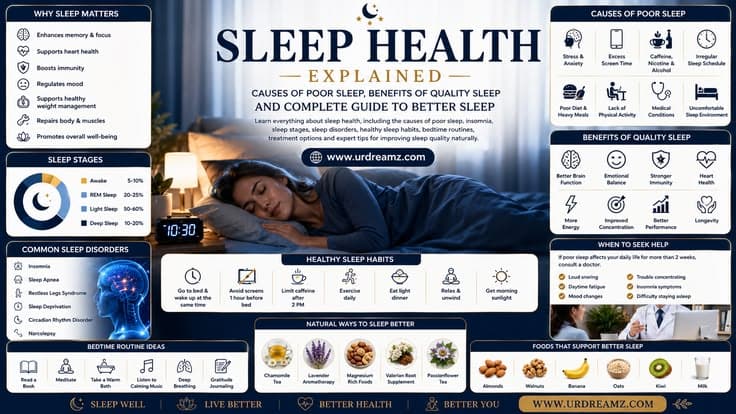
Sleep Health Explained: Causes of Poor Sleep, Benefits of Quality Sleep and Complete Guide to Better Sleep
Sleep is not downtime; it is one of the most active repair and maintenance processes your body performs every single day. This complete guide explains what actually happens while you sleep, why poor sleep quietly undermines nearly every system in the body, what causes insomnia and other sleep disorders, and which evidence-informed habits, foods, and treatments genuinely help you fall asleep faster, stay asleep longer, and wake up feeling restored.
Introduction: Why Sleep Deserves Real Attention
In a culture that often treats tiredness as a badge of hard work, sleep is the one health habit almost everyone quietly shortchanges. Yet sleep is not a passive pause button on the day; it is an active period during which the brain clears waste, the body repairs tissue, hormones reset, and memories are sorted and stored. Chronic short or poor-quality sleep has been linked to nearly every major chronic condition, from heart disease and diabetes to depression and weakened immunity, which means the way you sleep tonight genuinely shapes how your body and mind function tomorrow, next month, and for years to come.
This guide is built to move beyond generic advice like "just get more sleep" and instead explain the actual mechanics behind healthy sleep: what the different stages of the sleep cycle are doing, why insomnia and other sleep disorders develop, and which specific habits, foods, and treatments are genuinely supported by an understanding of sleep science rather than trend-driven shortcuts.
What makes sleep particularly worth understanding in depth is how invisible its effects can be day to day. A single late night rarely feels catastrophic, and that is exactly the trap: the damage from chronic sleep shortfall accumulates quietly over months and years, showing up as gradually rising blood pressure, slowly declining focus, or a mood that feels harder to manage than it used to, long before anyone connects the dots back to sleep itself.
What Is Sleep Health?
Sleep health refers to more than simply logging enough hours in bed. It encompasses several distinct dimensions working together: duration, meaning how many hours you sleep; quality, meaning how deep and uninterrupted that sleep is; timing, meaning whether your sleep aligns with your body's natural internal clock; and daytime alertness, meaning whether the sleep you got actually leaves you feeling rested and functional. A person can technically spend eight hours in bed and still experience poor sleep health if that time is fragmented, poorly timed, or consistently shallow.
Thinking about sleep health across these dimensions rather than a single number explains why two people sleeping the same number of hours can feel completely different the next day. Someone who sleeps seven broken hours interrupted by frequent waking is likely to feel far more depleted than someone who sleeps a solid seven hours without disruption, even though both would report the same total sleep duration if asked.
Why Sleep Matters: The Body's Nightly Repair Shop
During sleep, the body carries out a remarkable amount of maintenance work that is difficult or impossible to perform while awake. Tissues and muscles repair themselves, growth hormone is released to support this repair, the immune system produces and organizes the proteins it needs to fight infection, and the brain flushes out metabolic waste products that accumulate during waking hours. At the same time, the brain consolidates memories formed during the day, strengthening the ones worth keeping and letting go of less relevant information.
Because so many distinct repair processes are compressed into the hours of sleep, cutting that time short does not simply delay one function; it interrupts several at once. This is part of why the effects of poor sleep show up in so many seemingly unrelated ways, from a weaker immune response to slower muscle recovery to a harder time regulating emotions the following day.
It can help to think of sleep less as "doing nothing" and more as the body's dedicated maintenance window, similar to how a business might close briefly overnight to restock shelves, clean equipment, and prepare for the next day. Skipping that window does not eliminate the need for the work; it simply means the work is delayed, rushed, or left undone, and the consequences show up gradually rather than immediately.
The Sleep Cycle: An Overview
A full night of sleep is not one continuous, uniform state but a series of repeating cycles, each lasting roughly 90 minutes and moving through distinct stages: light sleep, deep sleep, and REM sleep. Most adults move through four to six of these cycles per night, with the balance shifting as the night progresses, so that deep sleep is more concentrated in the first half of the night while REM sleep becomes more prominent toward the early morning hours.
This cyclical structure explains why waking up in the middle of a cycle, particularly during deep sleep, often leaves a person feeling far groggier than waking up at the natural end of a cycle, even if the total sleep duration was identical. It is one of the reasons sleep quality and timing matter just as much as sheer quantity.
Understanding this cyclical pattern also helps explain why an alarm clock going off at the "wrong" moment can leave someone feeling far worse than one going off just a few minutes earlier or later. Because deep sleep dominates the earlier cycles of the night and REM sleep dominates the later ones, cutting sleep short at different points in the night has genuinely different effects on how rested a person feels, not just how many hours they logged.
Non-REM Sleep Stages Explained
Non-REM sleep is divided into stages traditionally labeled N1, N2, and N3. N1 is the brief transitional stage between wakefulness and sleep, lasting only a few minutes, during which muscles begin to relax and the brain's activity starts to slow. N2 follows and makes up the largest share of total sleep time, characterized by further slowing of brain activity, a drop in body temperature, and a slowing heart rate, effectively preparing the body for the deeper stages ahead. N3, commonly referred to as deep sleep or slow-wave sleep, is the most physically restorative stage, when the body carries out the bulk of its tissue repair and immune strengthening.
Deep Sleep Explained
Deep sleep, also called slow-wave sleep, is widely considered the most physically restorative stage of the entire sleep cycle. During this stage, the body releases the majority of its nightly growth hormone, driving muscle repair and tissue growth, while the immune system strengthens its defenses against illness. Deep sleep is concentrated mostly in the first half of the night, which is part of why going to bed significantly later than usual, even while still getting a similar total number of hours, can reduce the amount of deep sleep obtained and leave the body feeling less physically recovered.
REM Sleep Explained
REM sleep, short for rapid eye movement sleep, is the stage most closely associated with dreaming and is markedly different from deep sleep in character. Brain activity during REM sleep resembles wakefulness far more closely than any other sleep stage, even as the body's major muscles become temporarily paralyzed, likely a protective mechanism that prevents the body from physically acting out dreams. REM sleep plays a central role in memory consolidation, emotional processing, and creative problem-solving, and it becomes progressively longer and more frequent as the night goes on, which is why REM sleep is disproportionately lost when sleep is cut short in the early morning hours.
Table: The Sleep Cycle Stage by Stage
| Stage | Type | What Happens |
|---|---|---|
| N1 | Light non-REM sleep | Brief transition into sleep; muscles begin to relax |
| N2 | Light non-REM sleep | Heart rate slows, body temperature drops, largest share of total sleep |
| N3 | Deep non-REM sleep | Tissue repair, immune strengthening, growth hormone release |
| REM | Rapid eye movement sleep | Dreaming, memory consolidation, emotional processing |
How Many Hours of Sleep You Actually Need
Sleep needs are not identical across every stage of life, and they shift considerably from infancy through older adulthood. Newborns require the most sleep of any age group to support the extraordinary rate of early brain and physical development, while sleep needs gradually decline through childhood and adolescence before settling into the familiar seven to nine hour range recommended for most healthy adults. These figures represent general population guidelines rather than rigid personal targets, since individual sleep needs can vary somewhat based on genetics, activity level, and overall health.
Table: Recommended Sleep Duration by Age
| Age Group | Recommended Sleep |
|---|---|
| Newborns (0-3 months) | 14-17 hours |
| Infants (4-11 months) | 12-15 hours |
| Toddlers (1-2 years) | 11-14 hours |
| Children (6-13 years) | 9-11 hours |
| Teenagers (14-17 years) | 8-10 hours |
| Adults (18-64 years) | 7-9 hours |
| Older adults (65+ years) | 7-8 hours |
Benefits of Good Sleep: Brain Function
Quality sleep sharpens nearly every dimension of cognitive performance, including memory formation, focus, decision-making, and creative problem-solving. During deep and REM sleep, the brain consolidates the information gathered throughout the day, effectively transferring useful memories into longer-term storage while clearing out irrelevant clutter. Consistently well-rested individuals tend to process information faster, retain what they learn more effectively, and generate more original solutions to problems than those working on chronic sleep debt.
Benefits of Good Sleep: Heart Health
Sleep and cardiovascular health are more closely intertwined than many people realize. Adequate, consistent sleep helps regulate blood pressure, since blood pressure naturally dips during healthy sleep, giving the cardiovascular system a nightly period of reduced strain. Chronic short sleep, by contrast, has been associated with higher rates of high blood pressure, coronary artery disease, and stroke, likely through a combination of elevated stress hormones, increased inflammation, and disrupted metabolic regulation that accumulates over years of insufficient rest.
Benefits of Good Sleep: Immune Function
The immune system relies heavily on sleep to function at full strength. During deep sleep in particular, the body produces and releases proteins called cytokines that help coordinate the immune response against infection and inflammation. People who consistently sleep too little have been shown to be more susceptible to common illnesses such as colds, and vaccines have even been shown to produce a weaker antibody response in people who are sleep deprived around the time of vaccination, underscoring just how directly sleep supports the body's defenses.
Benefits of Good Sleep: Weight Management
Sleep plays a surprisingly direct role in regulating body weight through its effect on appetite-controlling hormones. Insufficient sleep tends to raise levels of ghrelin, the hormone that stimulates hunger, while simultaneously lowering leptin, the hormone that signals fullness, a combination that commonly leads to increased appetite and stronger cravings for high-calorie, high-sugar foods. Poor sleep can also reduce motivation for physical activity the following day, creating a compounding effect that makes healthy weight management considerably harder without adequate rest.
Benefits of Good Sleep: Mood and Mental Health
Sleep and emotional regulation are tightly linked, with REM sleep in particular believed to play a key role in processing emotional experiences and reducing their intensity over time. Chronic sleep deprivation is strongly associated with a higher risk of anxiety and depression, and even a single night of poor sleep can measurably reduce emotional resilience, making minor frustrations feel more overwhelming than they otherwise would. This relationship also runs in both directions, since anxiety and depression can themselves disrupt sleep, often creating a self-reinforcing cycle that requires addressing both sides to break.
Benefits of Good Sleep: Muscle Recovery and Physical Repair
For anyone engaged in regular physical activity, sleep is just as important as the workout itself. Growth hormone released predominantly during deep sleep drives muscle repair and growth, replenishes energy stores, and supports the recovery of connective tissue stressed during exercise. Athletes and physically active individuals who cut sleep short often experience slower recovery, reduced strength and endurance performance, and a higher risk of injury, making consistent quality sleep a genuine performance tool rather than an optional extra.
Table: Benefits of Good Sleep at a Glance
| Area | Benefit |
|---|---|
| Brain | Improved memory, focus and creativity |
| Heart | Healthier blood pressure and lower cardiovascular risk |
| Immunity | Stronger defense against infection |
| Weight | Better appetite regulation and hunger hormone balance |
| Mood | Improved emotional regulation and lower anxiety and depression risk |
| Muscles | Faster physical recovery and repair |
| Hormones | Balanced growth, stress and appetite hormones |
| Skin and eyes | Reduced strain and support for tissue repair |
Signs You Are Not Getting Enough Sleep
Because sleep deprivation often builds gradually, many people adapt to feeling somewhat tired without recognizing just how much it is affecting them. Common signs include needing an alarm to wake up rather than waking naturally, relying heavily on caffeine to function, feeling drowsy during the day, especially in low-stimulation situations like meetings or driving, and noticing more frequent irritability, forgetfulness, or difficulty concentrating than usual. Physical signs such as dark circles under the eyes and a weakened response to minor illness can also point to accumulated sleep debt.
Table: Common Signs of Sleep Deprivation
| Sign | What It Suggests |
|---|---|
| Needing an alarm to wake up | Insufficient natural sleep duration |
| Daytime drowsiness | Poor sleep quality or insufficient hours |
| Irritability and mood swings | Impaired emotional regulation from lack of rest |
| Brain fog and forgetfulness | Reduced memory consolidation during sleep |
| Frequent illness | Weakened immune function |
| Weight gain or increased cravings | Disrupted hunger hormone regulation |
| Dark circles under the eyes | Chronic insufficient or poor-quality sleep |
What Is Insomnia?
Insomnia is one of the most common sleep disorders and is defined by persistent difficulty falling asleep, staying asleep, waking too early, or feeling unrefreshed despite an apparently adequate opportunity to sleep. It is distinct from simply having an occasional restless night; insomnia becomes a diagnosable condition when these difficulties are frequent enough, and significant enough, to noticeably affect daytime functioning, mood, or concentration. Insomnia can exist as a standalone condition or as a symptom linked to another underlying medical or mental health issue, which is why identifying the pattern and possible cause matters more than simply reaching for a quick fix.
It is worth distinguishing insomnia from simply being a "light sleeper" or occasionally having a rough night after a stressful day, both of which are normal variations rather than a disorder. What separates insomnia from these ordinary experiences is persistence and impact: the difficulty recurs regularly over time and genuinely interferes with how a person functions the next day, rather than being an isolated, easily explained event.
Acute vs Chronic Insomnia
Insomnia is generally classified by duration and pattern. Acute insomnia is short-lived, typically lasting from a few days to a few weeks, and is most often triggered by an identifiable stressor such as a major life event, travel, illness, or a temporary period of high stress. Chronic insomnia, by contrast, is defined as difficulty sleeping at least three nights per week for three months or longer, and is more likely to be tied to an ongoing medical condition, a mental health disorder, medication effects, or deeply ingrained unhelpful sleep habits that have developed over time.
Table: Acute Insomnia vs Chronic Insomnia
| Aspect | Acute Insomnia | Chronic Insomnia |
|---|---|---|
| Duration | A few days to a few weeks | Three or more nights weekly for three months or longer |
| Common trigger | Stress, travel, illness, major life event | Ongoing medical or mental health condition, ingrained habits |
| Typical resolution | Often resolves once the trigger passes | Usually requires structured treatment such as CBT-I |
Causes of Insomnia
Insomnia rarely has a single cause and is more often the result of overlapping factors. Psychological contributors such as stress, anxiety, and depression are among the most common triggers, since a racing or worried mind makes it difficult for the body to shift into a relaxed, sleep-ready state. Poor sleep habits, including an irregular sleep schedule, excessive screen use before bed, and consuming caffeine, nicotine, or alcohol too close to bedtime, can independently disrupt the ability to fall and stay asleep. Physical causes, including chronic pain, hormonal changes, certain medical conditions such as asthma, arthritis, heart disease, or hyperthyroidism, and specific medications, can all interfere with sleep as well, either directly or by causing discomfort that makes rest difficult.
Table: Common Causes of Insomnia
| Category | Examples |
|---|---|
| Psychological | Stress, anxiety, depression, excessive worry |
| Behavioral | Irregular sleep schedule, screen use before bed, shift work |
| Substances | Excessive caffeine, nicotine, or alcohol close to bedtime |
| Medical | Chronic pain, asthma, arthritis, heart disease, hyperthyroidism |
| Medication-related | Certain stimulants, decongestants, or other prescription drugs |
Risk Factors for Insomnia
Certain factors make a person statistically more likely to experience insomnia, even without any single obvious trigger. These include increasing age, since sleep architecture naturally becomes lighter and more fragmented over time; being female, partly due to hormonal fluctuations across the menstrual cycle, pregnancy, and menopause; having high baseline stress levels or an existing mental health condition; living with a chronic medical illness; and working irregular or rotating shifts that repeatedly disrupt the body's natural sleep-wake rhythm.
Symptoms of Insomnia
The symptoms of insomnia extend well beyond the bedroom itself. Core symptoms include difficulty falling asleep, frequent awakenings throughout the night, and waking up earlier than intended and being unable to fall back asleep. These nighttime patterns typically spill over into the daytime as fatigue, sleepiness, irritability and mood changes, and reduced concentration, memory, and overall performance at work, school, or in daily responsibilities, which is often what finally prompts someone to seek help.
Complications of Untreated Insomnia
Left unaddressed over the long term, insomnia carries consequences that reach well beyond simple tiredness. It has been linked to a meaningfully reduced quality of life, poorer academic and work performance, and a higher risk of accidents, particularly those related to drowsy driving. Chronic insomnia is also associated with an increased risk of developing depression and anxiety, elevated blood pressure and cardiovascular disease, and a weakened immune system, illustrating why insomnia is worth treating proactively rather than simply enduring.
Common Sleep Disorders: An Overview
Beyond insomnia, several other distinct sleep disorders can disrupt normal sleep patterns, each with its own underlying mechanism and treatment approach. These disorders can affect the ability to fall asleep, stay asleep, or reach genuinely restorative rest, and because their symptoms sometimes overlap with ordinary tiredness or stress, they frequently go undiagnosed for years. Recognizing the specific pattern of a sleep disorder is an important step toward getting the right kind of help rather than simply trying harder to "sleep better" through willpower alone.
Sleep Apnea Explained
Sleep apnea is a condition characterized by repeated pauses in breathing during sleep, often caused by the throat muscles relaxing enough to partially or fully block the airway. Each pause can briefly wake the sleeper, though often without full conscious awareness, fragmenting sleep dozens or even hundreds of times a night without the person realizing it. Loud snoring, gasping or choking sounds during sleep, morning headaches, and significant daytime sleepiness are common indicators, and because sleep apnea repeatedly reduces oxygen levels during the night, it is also linked to a higher long-term risk of high blood pressure and heart disease if left untreated.
Restless Leg Syndrome Explained
Restless leg syndrome causes an uncomfortable, often hard-to-describe sensation in the legs along with a strong urge to move them, typically worsening in the evening or at rest, which makes falling asleep considerably more difficult. The exact cause is not always clear, though it has been linked to iron deficiency, certain chronic conditions, pregnancy, and genetics. Moving the legs, walking, or stretching typically provides temporary relief, and addressing an underlying cause, such as correcting an iron deficiency when present, can substantially improve symptoms.
Narcolepsy Explained
Narcolepsy is a chronic neurological condition that disrupts the brain's normal ability to regulate sleep-wake cycles, causing excessive and often sudden daytime sleepiness, sometimes accompanied by sudden loss of muscle tone triggered by strong emotion, a symptom known as cataplexy. Unlike ordinary tiredness, narcolepsy involves the brain intruding elements of REM sleep into waking hours, which can also include vivid hallucinations while falling asleep or waking up. Narcolepsy is a lifelong condition typically managed with a combination of scheduled naps, lifestyle adjustments, and medication under specialist care.
Circadian Rhythm Disorders Explained
Circadian rhythm disorders occur when the body's internal biological clock becomes misaligned with the external day-night cycle, making it difficult to fall asleep and wake up at socially or practically appropriate times, even when total sleep duration might otherwise be adequate. Shift workers, frequent long-distance travelers experiencing jet lag, and some individuals with a naturally delayed or advanced internal clock are especially prone to these disruptions. Treatment often focuses on gradually shifting sleep timing, strategic light exposure, and maintaining as much consistency as the circumstances allow.
Parasomnias: Sleepwalking and Night Terrors
Parasomnias are a category of sleep disorders involving unusual behaviors or experiences during sleep, most notably sleepwalking and night terrors. Sleepwalking typically occurs during deep non-REM sleep and can involve walking, talking, or performing routine activities while still largely asleep, usually with no memory of the episode afterward. Night terrors, more common in children, involve sudden intense fear, screaming, or thrashing during sleep, again typically without any memory the next morning. Both are more common in children, who often outgrow them, though persistent or dangerous episodes in adults warrant a proper sleep evaluation.
Table: Common Sleep Disorders Compared
| Disorder | Core Feature | Common Signs |
|---|---|---|
| Insomnia | Difficulty falling or staying asleep | Daytime fatigue, irritability, poor concentration |
| Sleep apnea | Repeated breathing pauses during sleep | Loud snoring, gasping, morning headaches |
| Restless leg syndrome | Uncomfortable urge to move the legs | Worse in the evening or at rest, disrupted sleep onset |
| Narcolepsy | Brain struggles to regulate sleep-wake cycles | Sudden daytime sleep attacks, cataplexy |
| Circadian rhythm disorder | Internal clock misaligned with the day-night cycle | Difficulty sleeping or waking at needed times |
| Parasomnia | Unusual behavior during sleep | Sleepwalking, night terrors, no memory of the episode |
Sleep and Mental Health
The relationship between sleep and mental health runs in both directions, making it one of the more complex aspects of sleep science. Stress and anxiety commonly keep the mind too activated to allow sleep onset, while depression is frequently associated with either difficulty sleeping or, in some cases, sleeping excessively yet still feeling unrefreshed. At the same time, poor sleep itself measurably worsens mood regulation and stress resilience, meaning that a bad night of sleep can make the next day's stress feel more intense, which in turn makes the following night's sleep harder to achieve. Breaking this cycle often requires addressing both the underlying mental health concern and the sleep pattern together, rather than treating either in isolation.
Diagnosis of Sleep Problems
Evaluating a sleep problem typically begins with a detailed conversation about sleep patterns, timing, symptoms, and daytime functioning, sometimes supported by a sleep diary kept over one to two weeks. When a specific sleep disorder such as sleep apnea or narcolepsy is suspected, a doctor may recommend a sleep study, either conducted overnight in a specialized sleep lab or, in some cases, through an at-home monitoring device, to measure breathing patterns, oxygen levels, brain activity, and movement during sleep. This structured evaluation helps distinguish between insomnia, an underlying sleep disorder, or a sleep disturbance secondary to another medical or mental health condition, ensuring treatment is targeted at the actual cause.
Treatment: Sleep Hygiene
Sleep hygiene refers to the set of everyday habits and environmental factors that support consistent, high-quality sleep, and it is typically the first line of treatment recommended for most sleep difficulties. This includes maintaining a consistent sleep and wake time even on weekends, creating a dark, quiet, and cool bedroom environment, limiting caffeine and heavy meals in the hours before bed, and reserving the bed primarily for sleep rather than work or extended screen use. While sleep hygiene alone will not resolve every sleep disorder, it forms the foundation that other treatments, from CBT-I to medication, are built on top of.
What makes sleep hygiene effective is not any single rule in isolation but the cumulative signal sent to the body when several of these habits are practiced together and consistently. A single well-timed evening rarely fixes months of irregular sleep, but two to three weeks of steady sleep hygiene practiced consistently is often enough to produce a noticeable improvement in how quickly a person falls asleep and how rested they feel the next day.
Table: Sleep Hygiene Checklist
| Habit | Why It Helps |
|---|---|
| Consistent sleep and wake time | Reinforces the body's internal clock |
| Dark, quiet, cool bedroom | Supports uninterrupted, deeper sleep |
| Limit caffeine after early afternoon | Prevents stimulant interference with sleep onset |
| Avoid heavy meals late at night | Reduces digestive discomfort that can disrupt sleep |
| Reduce screens before bed | Limits blue light interference with melatonin |
| Regular daytime exercise | Improves overall sleep depth and quality |
| Relaxing bedtime routine | Signals to the body that sleep is approaching |
| Reserve the bed for sleep | Strengthens the mental association between bed and sleep |
Treatment: Cognitive Behavioral Therapy for Insomnia
Cognitive Behavioral Therapy for Insomnia, commonly abbreviated as CBT-I, is widely regarded as the most effective long-term treatment for chronic insomnia, generally recommended ahead of medication in most clinical guidelines. CBT-I works by identifying and restructuring the specific thoughts and habits that are unintentionally reinforcing poor sleep, such as excessive time spent awake in bed, anxiety about not sleeping, or an irregular schedule, and replacing them with structured techniques such as sleep restriction, stimulus control, and relaxation training. Because it addresses the underlying patterns driving insomnia rather than simply masking symptoms, CBT-I tends to produce more durable improvement than medication alone.
Treatment: Sleep Medications
Prescription sleep medications can play a useful role for short-term or specific situations, particularly acute insomnia tied to a clear temporary stressor, but they are generally not intended as a first-line or indefinite solution for chronic insomnia due to the potential for dependence, tolerance, and side effects. When medication is used, it is typically prescribed at the lowest effective dose for the shortest reasonable duration, alongside sleep hygiene and, where appropriate, CBT-I, rather than as a standalone long-term fix. Any decision to start, adjust, or stop a sleep medication should always be made together with a doctor rather than through self-adjustment.
Natural Sleep Remedies
A range of natural approaches can meaningfully support sleep for people with mild to moderate difficulty, particularly when combined with solid sleep hygiene. Melatonin supplements can help reset sleep timing, especially for circadian rhythm issues like jet lag, though they work best as a timing tool rather than a sedative for chronic insomnia. Magnesium, found naturally in foods like almonds and leafy greens, supports muscle relaxation and nervous system calming, while herbal options such as chamomile tea have a long-standing reputation for gentle, calming effects before bed. Relaxation-based practices, including meditation, mindfulness, and structured breathing exercises, can also reduce the mental activation that frequently keeps people awake.
Foods and Nutrients That Support Sleep
Certain foods contain compounds that directly or indirectly support the body's sleep processes. Magnesium-rich foods, such as almonds, pumpkin seeds, and leafy greens, help relax muscles and calm the nervous system. Foods naturally containing melatonin or its precursors, such as tart cherries, kiwi, and oats, can gently support the body's sleep-wake signaling. Protein sources containing tryptophan, an amino acid the body uses to produce serotonin and eventually melatonin, such as turkey, eggs, and Greek yogurt, can also support the sleep process, particularly when paired with a small portion of complex carbohydrates in the evening.
Table: Best Foods for Better Sleep
| Food | Key Sleep-Supporting Compound |
|---|---|
| Almonds | Magnesium |
| Banana | Magnesium and potassium |
| Kiwi | Serotonin and antioxidants |
| Tart cherry juice | Natural melatonin |
| Chamomile tea | Natural calming compounds |
| Oatmeal | Complex carbohydrates supporting serotonin production |
| Greek yogurt | Tryptophan and probiotics |
| Walnuts | Melatonin and healthy fats |
| Turkey and eggs | Tryptophan for serotonin and melatonin production |
| Warm turmeric milk | Calming, anti-inflammatory compounds |
Table: Foods and Habits to Avoid Before Bed
| Item | Why It Disrupts Sleep |
|---|---|
| Coffee, tea, energy drinks | Caffeine keeps the nervous system alert |
| Alcohol | Disrupts deeper sleep stages despite initial drowsiness |
| Spicy or heavy fried foods | Can cause discomfort and disrupted digestion overnight |
| Sugary desserts | Can cause blood sugar swings that disturb sleep |
| Large late-night meals | Forces digestion to compete with rest |
| Bright screens | Blue light interferes with melatonin release |
Building a Healthy Bedtime Routine and Sleep Environment
A consistent bedtime routine acts as a signal to the brain that sleep is approaching, gradually shifting the body out of an alert daytime state and into a relaxed, sleep-ready one. Simple, repeatable rituals such as dimming the lights, reading, light stretching, or a few minutes of deep breathing can be more effective over time than any single supplement, precisely because consistency trains the brain to associate these cues with sleep onset. The physical sleep environment matters just as much as the routine itself: a cool room, generally between about 65 and 70 degrees Fahrenheit, along with minimal light and noise and comfortable bedding, removes many of the small disruptions that otherwise fragment sleep without a person fully realizing it.
The most sustainable bedtime routines tend to be short and genuinely enjoyable rather than an elaborate checklist that feels like one more task at the end of a long day. Even a simple ten to fifteen minute sequence, repeated in roughly the same order each night, is generally enough to build the association the brain needs, and starting small is far more likely to stick than attempting a lengthy routine that quickly feels burdensome and gets abandoned within a week.
Blue Light and Screen Time Before Bed
Screens from phones, tablets, computers, and television emit blue light, a wavelength that closely resembles daylight and can suppress the body's natural release of melatonin, the hormone responsible for signaling that it is time to sleep. Using screens in the hour or two before bed can therefore delay sleep onset and reduce overall sleep quality, even when the content itself is not particularly stimulating. Reducing screen brightness, using night mode settings, or simply stepping away from devices in favor of a low-light activity in the final stretch before bed can meaningfully support the body's natural wind-down process.
Exercise and Sleep Quality
Regular physical activity is one of the most reliably effective ways to improve sleep quality, helping people fall asleep faster, spend more time in deep sleep, and wake less frequently during the night. The timing of exercise matters somewhat, since vigorous activity too close to bedtime can temporarily raise body temperature and alertness in a way that makes falling asleep harder for some people; finishing more intense workouts at least a few hours before bed generally avoids this effect while still capturing the sleep benefits of daytime movement.
Best Sleep Positions
Sleep position can influence comfort, breathing, and even digestion, though the ideal position varies somewhat by individual needs. Side sleeping, particularly on the left side, is often recommended for its potential digestive benefits and is commonly advised during pregnancy to support healthy blood flow. Back sleeping can support spinal alignment for some people but may worsen snoring or sleep apnea symptoms in others. Stomach sleeping is generally the least recommended position, since it tends to strain the neck and can aggravate acid reflux, though ultimately the most sustainable position is often the one that allows an individual to fall and stay asleep comfortably.
Table: Sleep Positions and Their Effects
| Position | Potential Effect |
|---|---|
| Left side | May support digestion and reduce acid reflux |
| Right side | May ease strain on the heart compared to left side in some people |
| Back (supine) | Can support spinal alignment but may worsen snoring |
| Stomach | Can strain the neck and worsen acid reflux |
| Fetal position | May help relieve stress and support comfort for many sleepers |
Sleep During Pregnancy, Childhood and Older Age
Sleep needs and challenges shift considerably across different life stages. During pregnancy, hormonal changes, physical discomfort, and an increased need for bathroom trips commonly disrupt sleep, and side sleeping is generally recommended in later pregnancy to support healthy circulation. In childhood, consistent sleep schedules and adequate total sleep duration support healthy brain development, growth, and emotional regulation, making bedtime routines especially valuable for younger children. In older adults, sleep architecture naturally becomes lighter and more fragmented, with less time spent in deep sleep, though this does not mean poor sleep should simply be accepted as inevitable, since underlying causes such as medication effects, chronic pain, or an undiagnosed sleep disorder are often treatable at any age.
Table: Common Sleep Problems and Practical Fixes
| Problem | Practical Fix |
|---|---|
| Can't fall asleep | Avoid caffeine late in the day; put screens away an hour before bed |
| Can't stay asleep | Avoid alcohol before bed; keep the room cool, around 65-70°F |
| Can't wake up | Wake at the same time daily to regulate the body clock |
| Snoring | Try side sleeping; clear nasal congestion before bed |
| Neck or shoulder pain | Replace worn pillows; adjust sleep position |
| Acid reflux at night | Sleep on the left side with the head slightly elevated |
| Leg cramps | Stretch, apply gentle heat, and stay hydrated during the day |
Table: Sleep Myths vs Facts
| Myth | Fact |
|---|---|
| You can fully "catch up" on lost sleep over the weekend | Extra weekend sleep helps but does not fully reverse accumulated sleep debt or its effects |
| Everyone needs exactly eight hours | Healthy adult needs generally range from seven to nine hours, varying by individual |
| Alcohol helps you sleep better | Alcohol may speed sleep onset but disrupts deeper, more restorative sleep stages |
| Watching TV helps you relax before bed | Screen light can delay melatonin release and disrupt sleep onset |
| Snoring is always harmless | Loud, frequent snoring can be a sign of sleep apnea and deserves evaluation |
| Older adults need much less sleep | Sleep needs decrease only modestly with age; quality often changes more than quantity |
Prevention Tips for Long-Term Sleep Health
Protecting long-term sleep health comes down to consistency far more than any single trick or product. Keeping a steady sleep and wake schedule, even on weekends, building a calming pre-bed routine, limiting caffeine and alcohol in the hours before sleep, staying physically active during the day, and creating a genuinely dark, quiet, and cool bedroom together form the foundation that supports healthy sleep night after night. Addressing stress proactively through daily habits such as light exercise, journaling, or mindfulness can also prevent the kind of chronic mental overactivation that often turns into ongoing insomnia.
Small, sustainable habits repeated consistently tend to outperform occasional dramatic efforts when it comes to sleep, much like they do with diet and exercise. A stable bedtime maintained most nights of the week will generally do more for long-term sleep quality than an occasional perfect night surrounded by a chaotic schedule the rest of the time.
It also helps to treat weekends and holidays as part of the same sleep schedule rather than an exception to it. Large swings between weekday and weekend sleep timing, sometimes informally called social jet lag, can leave the body's internal clock perpetually readjusting, which tends to undercut the benefits of otherwise good sleep habits during the week.
When to See a Doctor About Sleep
Occasional restless nights are a normal part of life and rarely cause for concern, but certain patterns deserve professional evaluation. You should consider speaking with a doctor if sleep difficulties persist for several weeks despite consistent efforts at sleep hygiene, if they interfere with daily functioning, mood, or safety, if you experience loud snoring or gasping during sleep suggestive of sleep apnea, or if sleep problems appear connected to anxiety, depression, or another underlying health concern. A doctor can help identify the specific cause, recommend appropriate testing such as a sleep study if needed, and guide you toward the treatment approach most likely to help.
Frequently Asked Questions
How can I fall asleep faster?
Keeping a consistent bedtime, avoiding screens and caffeine close to bedtime, and using a calming wind-down routine such as reading or deep breathing are among the most effective, evidence-supported ways to fall asleep faster.
What causes a lack of deep sleep?
Irregular sleep schedules, alcohol use, stress, certain medications, and conditions like sleep apnea can all reduce the amount of deep sleep obtained during the night.
How much sleep do adults really need?
Most healthy adults need between seven and nine hours of sleep per night, though individual needs can vary somewhat based on genetics and overall health.
Can lack of sleep cause weight gain?
Yes, insufficient sleep disrupts hunger-regulating hormones, often increasing appetite and cravings for high-calorie foods, which can contribute to weight gain over time.
What are the main symptoms of insomnia?
Difficulty falling asleep, frequent nighttime waking, waking too early, and daytime fatigue, irritability, and poor concentration are the core symptoms of insomnia.
What foods should be avoided if you have trouble sleeping?
Caffeine, alcohol, heavy or spicy meals, and sugary desserts close to bedtime can all interfere with falling or staying asleep.
What is the best natural remedy for sleep?
There is no single best remedy for everyone, but a consistent sleep schedule, a calming bedtime routine, and limiting caffeine and screens before bed tend to help most people, sometimes alongside natural options like magnesium-rich foods or chamomile tea.
Is six hours of sleep enough?
For most adults, six hours falls short of the recommended seven to nine hours and is associated with a higher long-term risk of several chronic health conditions, even if it feels manageable in the short term.
What is the root cause of insomnia?
Insomnia often stems from a combination of psychological factors like stress or anxiety, behavioral habits like an irregular schedule, and sometimes an underlying medical condition, rather than a single isolated cause.
When should I see a doctor about my sleep?
If sleep difficulties persist for several weeks, interfere with daily life, or come with symptoms like loud snoring, gasping, or excessive daytime sleepiness, it is worth consulting a doctor for proper evaluation.
Conclusion
Sleep is not a passive afterthought to health; it is one of the most active, foundational processes your body relies on every single day. Understanding the sleep cycle, recognizing the early signs of poor sleep or insomnia, and building consistent, evidence-informed habits around sleep hygiene, nutrition, and your bedtime environment can meaningfully improve both how well you sleep and how well you function while awake. This guide is intended for general education and does not replace personalized medical advice; if sleep problems persist or significantly affect your daily life, consult a qualified healthcare professional for proper diagnosis and treatment.
If you take just one idea from this guide, let it be this: quality sleep is not a luxury you earn after everything else is handled, it is the foundation that makes everything else, energy, mood, focus, and long-term health, possible in the first place. Protecting a consistent bedtime is one of the simplest, most powerful investments you can make in your overall wellbeing.
Sleep improvement rarely happens overnight, no pun intended; it tends to unfold gradually as small, consistent changes accumulate into a genuinely different relationship with rest. Give any new habit from this guide a few consistent weeks before judging its effect, keep track of how you feel rather than chasing a perfect number of hours, and treat persistent sleep struggles as a signal worth investigating rather than a personal failing to push through alone.
Related Reading:
- Diabetes Explained: Symptoms, Causes, Blood Sugar and Treatment Guide
- Weight Loss Diet Plan: Best Foods for Fat Loss
- High Blood Pressure vs Low Blood Pressure: Complete Guide
- Heart Health: Complete Guide to Prevention, Symptoms and Diet
- Digestive Problems Explained: Causes, Symptoms and Treatment
- Fatty Liver Disease: Warning Signs, Stages and Complete Guide
- Kidney Health Explained: Symptoms, Causes and Treatment
- Thyroid Disorders Explained: Symptoms, Causes and Treatment
- Joint Pain Explained: Causes, Symptoms and Treatment
- High Cholesterol Explained: Symptoms, Causes, LDL vs HDL and Treatment Guide
- Anemia Explained: Symptoms, Causes, Iron Deficiency and Treatment Guide
This article is for general educational purposes only and is not a substitute for professional medical advice, diagnosis, or treatment. Always consult a qualified healthcare provider regarding sleep problems, insomnia, or any sleep disorder.