Eye Health Explained: Common Eye Diseases, Vision Problems, Causes, Symptoms, Prevention and Complete Eye Care Guide
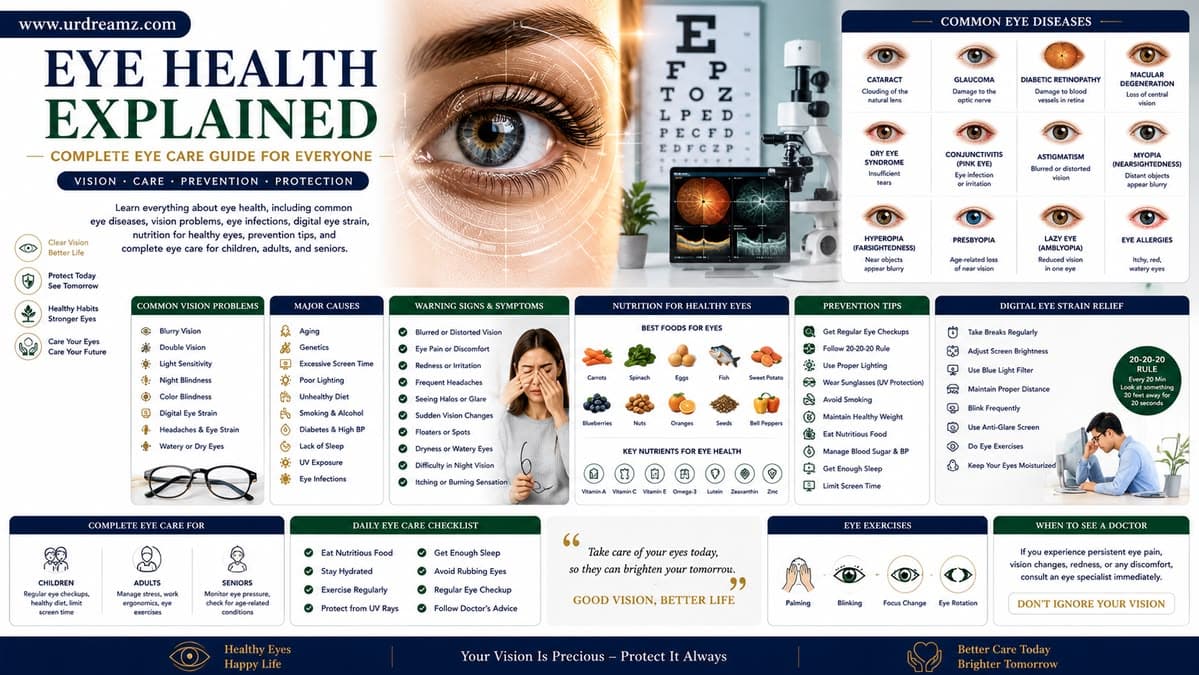
Your eyes process more information per second than almost any other organ, yet most people only think about them once something already feels wrong. This guide walks through every major eye disease and vision problem individually, its causes and symptoms, whether conditions like diabetes, blood pressure, liver disease, or gut health can genuinely affect your eyes, and exactly which home remedies, herbal support, medical treatments, foods, vitamins, exercises, and sun-safety habits actually protect your vision for the long run.
Introduction: The Organ You Only Notice When It Fails
You probably haven't thought about your eyes today, and that's actually the point, they're designed to work quietly in the background while you go about your life. That quietness is exactly why so many eye problems sneak up on people: vision changes gradually, symptoms get explained away as tiredness, and by the time something feels genuinely wrong, a condition has often been developing for months or years already.
This guide takes a genuinely complete approach. We'll go through the major eye diseases and vision problems one at a time, what causes each one and how it actually presents, then dig into something people rarely get a straight answer on, whether conditions elsewhere in the body, diabetes, blood pressure, liver disease, even gut health, can genuinely show up in your eyes. From there, we'll cover home remedies, herbal support, medical treatment, the vitamins and foods that actually matter, simple exercises, and how to protect your eyes from the sun and screens without turning it into a complicated routine.
What Is Eye Health?
Eye health refers to the proper functioning of every structure involved in vision, the cornea, lens, retina, optic nerve, and the surrounding tear film and eyelids that keep everything protected and lubricated. It's not just about seeing clearly in the moment; it's about how well your eyes hold up over decades of constant use, sun exposure, screen time, and whatever else your body is dealing with, since the eyes are unusually sensitive to changes happening elsewhere in the body.
How the Eye Actually Works
Light enters through the cornea, the clear dome at the front of the eye, passes through the pupil, and is fine-tuned by the lens before landing on the retina at the back, where specialized cells convert it into electrical signals sent to the brain via the optic nerve. Every part of this chain has to work correctly for clear vision to happen; a problem anywhere along the way, a clouded lens, a damaged retina, a compressed nerve, disrupts the final image even if everything else is functioning perfectly. This is exactly why eye problems can stem from so many different places in the body, not just the eye itself.
Common Vision Problems: An Overview
Vision problems generally fall into two broad buckets: refractive errors, where the eye simply doesn't focus light correctly and glasses or contacts fix the issue directly, and disease-related problems, where the actual structure of the eye is damaged or deteriorating. Understanding which bucket a symptom falls into changes everything about how it should be handled, which is exactly why we're covering both separately rather than lumping "blurry vision" into one vague category.
Myopia (Nearsightedness)
Myopia happens when the eyeball is slightly too long or the cornea too curved, causing light to focus in front of the retina instead of directly on it, making distant objects blurry while close-up vision stays relatively clear. It typically develops in childhood or the teenage years and has been rising globally in recent decades, a trend many eye specialists connect partly to more screen-based near work and less time spent outdoors during childhood.
Hyperopia (Farsightedness)
Hyperopia is essentially the opposite, the eyeball is slightly too short or the cornea too flat, so light focuses behind the retina, typically making close-up objects blurry while distance vision stays clearer. Mild hyperopia often goes unnoticed in younger people since the eye can partly compensate by adjusting focus, but that compensation gets harder to sustain with age, which is why symptoms often become more noticeable later in life.
Astigmatism
Astigmatism occurs when the cornea or lens has an irregular curve rather than a perfectly round one, scattering light across multiple focus points instead of one, leading to blurred or distorted vision at any distance. It frequently shows up alongside myopia or hyperopia, and like both, is usually correctable with properly fitted glasses, contacts, or refractive surgery.
Presbyopia
Presbyopia is an age-related stiffening of the eye's natural lens that makes it harder to focus on close-up objects, typically becoming noticeable in the early to mid-forties. Unlike other refractive errors, it isn't caused by an irregularly shaped eye but by the lens naturally losing flexibility over time, which is why almost everyone eventually needs reading glasses regardless of what their vision was like earlier in life.
Table: Refractive Errors Compared
| Condition | What's Affected | Typical Onset |
|---|---|---|
| Myopia | Distance vision blurry | Childhood or teenage years |
| Hyperopia | Near vision blurry | Can be present early, more noticeable with age |
| Astigmatism | Distorted vision at any distance | Any age, often present from birth |
| Presbyopia | Near vision due to lens stiffening | Early to mid-forties |
Common Eye Diseases: An Overview
Unlike refractive errors, eye diseases involve actual damage or degeneration of eye structures, and several of the most serious ones develop silently, causing little or no discomfort until real vision loss has already occurred. This is exactly why regular eye exams matter even when your vision feels fine; some of these conditions are only reliably caught through direct examination, not by waiting for symptoms to show up on their own.
Cataracts: Causes and Symptoms
A cataract is a gradual clouding of the eye's naturally clear lens, causing vision to become blurry, hazy, or dim, similar to looking through a fogged window. It's most commonly caused by aging, as proteins in the lens slowly clump together, though injury, certain medications, prolonged UV exposure, and diabetes can all speed up the process. Symptoms include cloudy or blurry vision, increased difficulty seeing at night, colors appearing faded, and sensitivity to glare, particularly from headlights while driving after dark.
Glaucoma: Causes and Symptoms
Glaucoma refers to a group of conditions that damage the optic nerve, most often linked to elevated pressure inside the eye, and it's one of the leading causes of irreversible blindness worldwide. It's caused by fluid buildup inside the eye that isn't draining properly, and risk rises with age, family history, and certain conditions like diabetes. What makes glaucoma particularly dangerous is that it typically causes no early symptoms at all, silently narrowing peripheral vision over years before central vision is finally affected, which is why routine eye pressure checks matter so much.
Macular Degeneration: Causes and Symptoms
Age-related macular degeneration affects the macula, the small central part of the retina responsible for sharp detail needed for reading and recognizing faces. It comes in a more common "dry" form, involving gradual thinning of the macula, and a less common but more aggressive "wet" form, involving abnormal blood vessel growth that can cause faster vision loss. Symptoms include blurred or distorted central vision, difficulty recognizing faces, straight lines appearing wavy, and a blank or dark spot in the center of your visual field as the condition progresses.
Diabetic Retinopathy: Causes and Symptoms
Diabetic retinopathy is a complication of diabetes in which chronically high blood sugar damages the small blood vessels of the retina, causing them to leak, swell, or grow abnormally. Early stages often cause no symptoms at all, but as it progresses, symptoms can include blurred vision, dark spots or streaks floating in the field of vision, and in advanced cases, significant vision loss. Because it's directly tied to blood sugar control, this is one condition where managing an entirely different disease, diabetes, is genuinely the primary way to protect your eyesight.
Dry Eye Syndrome: Causes and Symptoms
Dry eye syndrome happens when the eyes don't produce enough tears, or produce poor-quality tears, leaving the surface of the eye insufficiently lubricated. Common causes include aging, prolonged screen use that reduces blink rate, dry or air-conditioned environments, certain medications, and underlying conditions affecting tear production. Symptoms include a gritty or burning sensation, redness, light sensitivity, and, somewhat counterintuitively, sometimes excessive watering as the eyes overcompensate for the underlying dryness.
Conjunctivitis (Pink Eye): Causes and Symptoms
Conjunctivitis, commonly called pink eye, is inflammation of the conjunctiva, the thin, clear membrane covering the white of the eye and the inside of the eyelids. It can be caused by viral or bacterial infection, both typically contagious, or by allergies, which aren't contagious but still cause real discomfort. Symptoms usually include redness, itching, tearing, and sometimes discharge, with bacterial conjunctivitis often producing a thicker, yellow-green discharge compared to the watery discharge more typical of viral or allergic forms.
Table: Eye Diseases at a Glance
| Condition | Main Cause | Key Symptom |
|---|---|---|
| Cataracts | Aging, UV exposure, diabetes | Cloudy, hazy vision |
| Glaucoma | Elevated eye pressure | Often silent; peripheral vision loss |
| Macular degeneration | Aging, genetics, smoking | Blurred or distorted central vision |
| Diabetic retinopathy | Poorly controlled blood sugar | Blurred vision, floaters |
| Dry eye syndrome | Reduced tear quantity or quality | Gritty, burning discomfort |
| Conjunctivitis | Infection or allergy | Redness, itching, discharge |
Does Diabetes (Sugar) Affect the Eyes?
Yes, and this is one of the clearest, most well-documented connections between a systemic disease and eye health that exists in medicine. Chronically high blood sugar damages the delicate blood vessels of the retina, leading to diabetic retinopathy, and diabetes also raises the risk of cataracts developing earlier in life and can contribute to a specific form of glaucoma. Blood sugar swings can even cause temporary blurry vision by changing the shape of the eye's lens, which is why sudden vision changes in someone with diabetes should always prompt a blood sugar check alongside an eye exam.
Does Blood Pressure Affect the Eyes?
Yes, chronically high blood pressure can damage retinal blood vessels over time, a condition called hypertensive retinopathy, which can cause blood vessel narrowing, leaking, swelling of the optic nerve, and in severe or sudden spikes, even bleeding inside the eye. Many people with hypertensive retinopathy have no symptoms at all in the earlier stages, which is exactly why an eye exam can sometimes reveal uncontrolled blood pressure before a person even realizes it's a problem, making the eyes a genuinely useful early warning window into cardiovascular health.
Does Liver Disease or Jaundice Affect the Eyes?
Yes, quite visibly. When the liver isn't processing bilirubin properly, whether from hepatitis, liver disease, or bile duct blockage, bilirubin builds up in the bloodstream and deposits in tissues throughout the body, including the whites of the eyes, causing the yellowing known as jaundice. This yellow discoloration of the sclera is often one of the earliest, most noticeable outward signs that something is wrong with the liver, sometimes appearing before other symptoms like fatigue or abdominal discomfort become obvious. Beyond jaundice itself, some chronic liver conditions have also been associated with dry eye symptoms and, in certain autoimmune liver diseases, broader eye inflammation.
Does Stomach and Gut Health Affect the Eyes?
This is a newer, genuinely fascinating area of research, but the short answer is: increasingly, yes. Scientists have identified what's now often called the gut-eye axis, the idea that an imbalanced gut microbiome can trigger low-grade systemic inflammation and immune dysregulation that eventually affects delicate eye tissue. The proposed mechanism goes roughly like this: an unhealthy gut microbiome can lead to a more permeable intestinal lining, sometimes called leaky gut, allowing bacterial byproducts into the bloodstream, which triggers the release of inflammatory signals, which in turn can affect the blood-retinal barrier and contribute to inflammation inside the eye. Conditions with some of the strongest evidence for this gut connection include dry eye disease, uveitis, and there's growing research interest in whether gut health also plays a role in age-related macular degeneration, diabetic retinopathy, and glaucoma, though the evidence for these last few is still developing rather than settled.
Practically speaking, this doesn't mean gut health replaces standard eye care, but it does mean that eating a genuinely balanced, fiber-rich, minimally processed diet, managing stress, and supporting your gut microbiome through whole foods and, when appropriate, probiotics, is a reasonable, low-risk addition to protecting your eyes over the long term, alongside everything else covered in this guide.
Table: Systemic Diseases and Their Eye Connections
| Condition Elsewhere in the Body | Eye Connection |
|---|---|
| Diabetes (high blood sugar) | Diabetic retinopathy, earlier cataracts, temporary blurred vision |
| High blood pressure | Hypertensive retinopathy, retinal blood vessel damage |
| Liver disease / jaundice | Yellowing of the sclera, occasional dry eye or inflammation |
| Gut dysbiosis (imbalanced gut microbiome) | Linked to dry eye, uveitis; emerging research in AMD, glaucoma |
| Autoimmune disease | Uveitis and other forms of eye inflammation |
| High cholesterol | Fatty deposits around the cornea, blood vessel changes |
Digital Eye Strain and Computer Vision Syndrome
Digital eye strain, also called computer vision syndrome, refers to a cluster of symptoms caused by prolonged screen use, and it's become one of the most common eye complaints in the modern world simply because of how much time people now spend looking at phones, computers, and TVs. Unlike the diseases discussed above, it doesn't cause permanent damage, but it can genuinely disrupt daily comfort and productivity if left unaddressed.
Causes and Symptoms of Digital Eye Strain
The main driver is a reduced blink rate during screen use, people naturally blink less while focused on a screen, allowing the eye's surface to dry out faster than usual, combined with prolonged close-focus effort and often poor screen positioning or lighting. Common symptoms include eye fatigue, dryness, blurred vision that improves after a break, headaches, and neck or shoulder discomfort from awkward screen posture, all of which tend to build gradually across a long work session rather than appearing suddenly.
Home Remedies for Eye Health
Several simple, genuinely useful home practices support everyday eye comfort. A warm compress applied to closed eyelids can loosen debris and support natural oil gland function, particularly helpful for mild dryness or an early stye. A cool, damp cloth over closed eyes can soothe puffiness and general eye fatigue after a long day of screen use. Blinking exercises, consciously blinking fully and slowly every so often during screen work, help redistribute tears across the eye's surface and counter the dryness that builds during long stretches of focused work.
Table: Home Remedies for Common Eye Issues
| Remedy | Best Used For | How to Use |
|---|---|---|
| Warm compress | Mild stye, dryness, blocked oil glands | Clean warm cloth over closed eyes, 5-10 minutes |
| Cool compress | Puffiness, general eye fatigue | Cool damp cloth over closed eyes, 10 minutes |
| Frequent blinking | Digital eye strain, dryness | Consciously blink fully every few minutes during screen time |
| Preservative-free artificial tears | General dryness and irritation | Use as needed, following package guidance |
| Adequate hydration | Overall tear production support | Consistent water intake throughout the day |
Herbal Treatment for Eye Health
Traditional herbal practices for eye comfort have a long history, and several gentle approaches can genuinely support everyday comfort alongside proper medical care. Cooled chamomile tea bags placed over closed eyelids can soothe tired or mildly irritated eyes thanks to their calming, mildly anti-inflammatory properties. Cooled rosewater applied with a clean cloth over closed eyelids is another traditional practice used to reduce puffiness and general discomfort. Cucumber slices offer a similar cooling effect that can reduce the appearance of puffiness, though this is a comfort measure rather than a treatment for any underlying disease.
It's important to be genuinely careful here rather than assuming natural automatically means safe for something as delicate as the eye surface. Anything meant to actually go inside the eye, rather than simply rest against closed eyelids, should be a sterile, properly formulated product recommended by a doctor. Homemade solutions, undiluted herbal extracts, raw honey, or other substances should never be placed directly inside the eye, since they carry a real risk of introducing bacteria or causing injury to a genuinely delicate surface.
Table: Herbal Remedies and Safety Notes
| Remedy | Typical Use | Safety Note |
|---|---|---|
| Cooled chamomile tea bags | Soothing tired or irritated eyes | Apply only to closed eyelids |
| Cooled rosewater compress | Reducing puffiness and discomfort | Use a clean cloth; avoid the open eye surface |
| Cucumber slices | Cooling and reducing puffiness | Cosmetic comfort only, not disease treatment |
| Warm compress with clean cloth | Helping a stye or blocked gland drain | Discontinue if pain or swelling worsens |
| Undiluted herbal extracts placed in the eye | Sometimes used traditionally | Not recommended; risk of irritation or infection |
English (Medical) Treatment Overview
Once a condition moves beyond what home care and herbal support can reasonably manage, medical treatment becomes necessary, and modern ophthalmology offers a wide, well-established range of options matched specifically to each condition. Getting the right diagnosis first is essential, since treatment for something like dry eye looks completely different from treatment for glaucoma or diabetic retinopathy, even though several conditions can share overlapping symptoms like blurriness or discomfort.
Table: Medical Treatment by Condition
| Condition | Common Medical Treatment |
|---|---|
| Refractive errors | Glasses, contact lenses, or LASIK/refractive surgery |
| Cataracts | Surgical lens replacement once vision is significantly affected |
| Glaucoma | Pressure-lowering eye drops, laser treatment, or surgery |
| Macular degeneration | Nutritional support, injections for the wet form, monitoring |
| Diabetic retinopathy | Blood sugar control, laser treatment, or injections as needed |
| Dry eye syndrome | Lubricating drops, prescription drops if needed |
| Conjunctivitis | Depends on cause: supportive care, antibiotics, or antihistamines |
Eye Drops Explained
Eye drops treat a wide range of conditions, from lubricating drops that relieve dryness to antibiotic drops for bacterial infections, antihistamine drops for allergies, and pressure-lowering drops that form the first line of treatment for many cases of glaucoma. Because different conditions call for very different drops, and some can worsen certain conditions if used incorrectly, anything beyond basic preservative-free lubricating drops should generally be used only as directed by a doctor rather than chosen based on symptoms alone.
LASIK and Refractive Surgery
LASIK and related refractive surgeries reshape the cornea with a precisely controlled laser to correct how light focuses on the retina, offering many people significantly reduced or eliminated dependence on glasses and contacts. These procedures are generally safe and effective for well-selected candidates, but factors like corneal thickness, overall eye health, and prescription stability all affect candidacy, which is why a thorough evaluation with an eye surgeon is necessary before assuming it's the right option.
Cataract Surgery
Cataract surgery, one of the most commonly performed and successful procedures in modern medicine, involves removing the eye's clouded natural lens and replacing it with a clear artificial one. It's typically quick, done on an outpatient basis, and most patients notice significantly improved vision within days. Because cataracts generally worsen gradually rather than resolving on their own, surgery remains the only effective treatment once a cataract has progressed enough to meaningfully affect daily life.
Managing Glaucoma Long Term
Because vision lost to glaucoma can't be restored, treatment focuses entirely on lowering eye pressure to slow or halt further optic nerve damage, typically starting with prescription eye drops and progressing to laser treatment or surgery if drops alone aren't enough. Glaucoma management is a lifelong commitment rather than a one-time fix, requiring consistent treatment and regular monitoring, since the condition can keep progressing quietly even while someone feels their vision is stable.
Best Vitamins for Eye Health
Certain nutrients are directly tied to maintaining healthy vision and protecting against age-related damage. Vitamin A supports the retina's ability to process light and prevents night blindness. Vitamin C and vitamin E act as antioxidants, protecting delicate eye tissue from oxidative stress that accumulates over time. Lutein and zeaxanthin, concentrated specifically in the macula, act almost like an internal pair of sunglasses, filtering harmful light and supporting long-term macular health. Zinc helps transport vitamin A from the liver to the retina, and omega-3 fatty acids support tear film quality, helping reduce dry eye risk.
Table: Best Vitamins and Minerals for Eyes
| Nutrient | Role in Eye Health | Good Sources |
|---|---|---|
| Vitamin A | Supports night vision, retinal health | Carrots, sweet potatoes, liver |
| Vitamin C | Antioxidant protection | Citrus fruits, bell peppers |
| Vitamin E | Protects cells from oxidative damage | Nuts, seeds, vegetable oils |
| Lutein and zeaxanthin | Filters harmful light, protects the macula | Leafy greens, eggs, corn |
| Zinc | Transports vitamin A to the retina | Meat, shellfish, legumes |
| Omega-3 fatty acids | Supports tear film, reduces dry eye risk | Fatty fish, flaxseed, walnuts |
Vitamins and Nutrients to Use With Caution
More isn't always better when it comes to eye nutrition, and a few nutrients genuinely deserve caution rather than casual megadosing. Excess vitamin A, particularly from high-dose supplements rather than food, can build up to toxic levels in the body and, ironically, cause vision problems and other serious health effects rather than preventing them. High-dose beta-carotene supplements have also been specifically linked to increased lung cancer risk in smokers in large clinical trials, making food sources generally the safer route for most people rather than concentrated supplements taken without medical guidance.
Table: Vitamins to Limit or Use Carefully
| Nutrient | Concern | Safer Approach |
|---|---|---|
| High-dose vitamin A supplements | Can build up to toxic levels over time | Prioritize food sources over concentrated supplements |
| High-dose beta-carotene supplements | Linked to increased lung cancer risk in smokers | Smokers should avoid high-dose supplements specifically |
| Unregulated "eye health" supplement blends | Dosing and quality can vary widely | Discuss any supplement with a doctor before starting |
Best Foods for Healthy Eyes
Food remains the most reliable, lowest-risk way to get the nutrients your eyes actually need, and building a consistent variety into your regular meals does more for long-term eye health than any single supplement ever could.
Table: Best Foods for Eye Health
| # | Food | Key Benefit |
|---|---|---|
| 1 | Carrots | Vitamin A supports night vision |
| 2 | Sweet potatoes | Rich in beta-carotene |
| 3 | Spinach and leafy greens | Lutein and zeaxanthin for macular health |
| 4 | Kale | High in lutein and zeaxanthin |
| 5 | Salmon and fatty fish | Omega-3s support tear film quality |
| 6 | Eggs | Lutein, zeaxanthin, zinc and vitamin A |
| 7 | Citrus fruits | Vitamin C antioxidant protection |
| 8 | Bell peppers | High vitamin C content |
| 9 | Almonds and nuts | Vitamin E protection |
| 10 | Sunflower seeds | Vitamin E and zinc |
| 11 | Berries | Antioxidants protect eye tissue |
| 12 | Corn | Natural source of lutein |
| 13 | Whole grains | Zinc and vitamin E |
| 14 | Water | Supports healthy tear production |
| 15 | Shellfish | Excellent zinc source |
Foods to Avoid for Eye Health
Just as certain foods actively support the eyes, others quietly work against long-term vision health, mainly through promoting inflammation, blood vessel damage, or nutrient deficiency over time. None of these need to be eliminated entirely for most people, but consistently overdoing them adds up to real, measurable risk over the years.
Table: Foods to Avoid or Limit for Eye Health
| Food or Habit | Why It Harms Eye Health |
|---|---|
| Highly processed sugary foods | Linked to increased diabetic eye complications |
| Excess refined carbohydrates | Contributes to blood sugar swings affecting the eyes |
| Fried and greasy foods | Promotes inflammation throughout the body |
| Excess salt | Contributes to high blood pressure, raising hypertensive retinopathy risk |
| Excess alcohol | Can contribute to nutrient deficiencies affecting the eyes |
| Smoking and tobacco | Significantly raises risk of cataracts and macular degeneration |
| Chronic dehydration | Worsens dry eye symptoms |
Table: A Sample Healthy Eye Diet Plan
| Meal | Eye-Healthy Option |
|---|---|
| Breakfast | Scrambled eggs with spinach and a side of orange slices |
| Mid-morning snack | A small handful of almonds or sunflower seeds |
| Lunch | Grilled salmon salad with bell peppers and leafy greens |
| Afternoon snack | Carrot sticks or a piece of fruit |
| Dinner | Baked sweet potato with steamed kale and grilled fish |
| Throughout the day | Consistent water intake to support tear production |
Eye Exercises
Eye exercises won't correct a genuine refractive error or reverse disease, but simple, regular exercises can genuinely reduce digital eye strain, ease eye muscle fatigue, and support comfort during long work or screen sessions. Think of them less as a treatment and more as stretching for the small muscles that control eye movement and focus, muscles that get surprisingly little variety of movement during a typical screen-heavy day.
Table: Simple Eye Exercises
| Exercise | How to Do It | Benefit |
|---|---|---|
| Palming | Cover closed eyes gently with cupped palms for 30-60 seconds | Relaxes eye muscles, reduces strain |
| Focus shifting | Alternate focus between a near object and a distant one | Exercises focusing muscles |
| Figure eight tracing | Trace an imaginary figure eight with your eyes | Improves eye muscle flexibility |
| Blinking exercise | Blink slowly and fully 10-15 times | Redistributes tears, reduces dryness |
| Eye rolling | Slowly roll eyes in a full circle, both directions | Loosens eye muscles |
The 20-20-20 Rule Explained
The 20-20-20 rule is one of the simplest, most consistently recommended habits for reducing digital eye strain: every 20 minutes, look at something roughly 20 feet away for at least 20 seconds. This brief shift gives the eye's focusing muscles a genuine break from sustained close-up effort and naturally encourages a few extra full blinks, both of which meaningfully reduce the fatigue and dryness that build up during long screen sessions.
Sun Protection and UV Safety
Protecting your eyes from ultraviolet light is one of the simplest, most effective long-term investments in eye health, and it's genuinely underused compared to how much attention sun protection gets for skin. Sunglasses that block both UVA and UVB rays help reduce cumulative sun damage linked to cataracts and certain forms of macular degeneration, and wraparound styles offer added protection by blocking light entering from the sides. This matters even on cloudy days, since UV rays pass through cloud cover, and is especially important during peak sun hours, at high altitude, or near reflective surfaces like water and snow, which intensify UV exposure considerably.
Table: Sun and Screen Safety Checklist
| Habit | Why It Helps |
|---|---|
| UV-blocking sunglasses outdoors | Reduces cumulative sun damage to the eyes |
| Wraparound sunglasses in bright conditions | Blocks light entering from the sides |
| Sunglasses on cloudy days too | UV rays still pass through cloud cover |
| Wide-brimmed hat in direct sun | Adds extra shade and reduces glare |
| 20-20-20 rule during screen use | Reduces digital eye strain |
| Adjust screen brightness to match the room | Reduces contrast strain on the eyes |
Workplace and Sports Eye Safety
Eye injuries are among the most preventable causes of vision loss, and appropriate protective eyewear dramatically reduces this risk in higher-risk environments. Safety glasses or goggles should be worn during activities involving flying debris, chemicals, or power tools, while sports-specific eyewear is strongly recommended for activities carrying a meaningful risk of eye impact, such as racquet sports, basketball, or contact sports. Because a serious eye injury can happen in a single unguarded moment, treating protective eyewear as a standard part of the activity, rather than an optional extra, is one of the most effective and underused eye safety habits available.
Eye Health in Children
Early childhood is a critical window for visual development, and undetected vision problems during this period can affect learning and overall development, not just eyesight. Routine vision screening during well-child visits helps catch conditions like significant refractive errors or eye misalignment early, when treatment tends to be most effective. Encouraging outdoor time, limiting excessive continuous near-work, and taking signs like squinting or sitting too close to screens seriously as potential vision clues all support healthy visual development through childhood.
Eye Health in Seniors
Aging brings a higher likelihood of several major eye conditions occurring together, including cataracts, glaucoma, macular degeneration, and presbyopia, making comprehensive, regular eye exams especially important at this stage of life. Beyond disease screening, ensuring adequate home lighting, addressing vision changes promptly, and considering how declining vision might affect fall risk and driving safety are all practical steps that support both eye health and overall independence in older age.
Eye Health During Pregnancy
Pregnancy can bring temporary vision changes due to hormonal shifts and fluid retention, which can slightly affect corneal shape and occasionally make a previously stable contact lens prescription feel less comfortable. For women with pre-existing diabetes or gestational diabetes, monitoring for diabetic eye changes becomes particularly important, since blood sugar fluctuations can affect eye health more noticeably during this period. Most pregnancy-related vision changes resolve after delivery, but any significant or persistent change should be discussed with a doctor rather than assumed to be routine.
Table: Eye Health Myths vs Facts
| Myth | Fact |
|---|---|
| Reading in dim light permanently damages your eyes | It can cause temporary strain but not lasting damage |
| Eating carrots alone gives you perfect vision | Carrots support eye health but can't correct a refractive error |
| Wearing glasses makes your eyes weaker over time | Glasses correct focus; they don't weaken the underlying eyes |
| You only need an eye exam if vision feels blurry | Conditions like glaucoma often cause no early symptoms |
| Screen time causes permanent eye damage | It causes temporary strain, not permanent structural damage |
| Natural or herbal eye drops are always safer than medical ones | Unregulated homemade preparations can introduce infection or irritation |
Prevention Tips for Lifelong Vision
Protecting your eyesight over a lifetime comes down to a combination of consistent habits rather than any single dramatic intervention: regular eye exams even without symptoms, UV-protective sunglasses outdoors, the 20-20-20 rule during screen work, a diet genuinely rich in eye-supportive nutrients, avoiding smoking, and managing broader health conditions like diabetes, blood pressure, and cholesterol, since so many serious eye conditions are closely tied to overall cardiovascular and metabolic health rather than existing in isolation.
It's also worth remembering that supporting your gut health, staying well hydrated, and managing stress aren't unrelated wellness advice tacked onto an eye guide, they genuinely feed into the same inflammatory pathways that research increasingly connects to long-term eye health. None of these habits need to be perfect every single day; consistency over years is what actually protects vision, not occasional intense effort followed by months of neglect.
When to See an Eye Doctor
Routine eye exams are recommended periodically for everyone, even without symptoms, with frequency depending on age, risk factors, and existing conditions as advised by your eye doctor. You should seek care sooner if you experience sudden vision changes, eye pain, persistent redness, flashes of light or new floaters, difficulty seeing at night, or any of the systemic conditions discussed above, diabetes, high blood pressure, liver disease, that make regular eye monitoring especially worthwhile.
Frequently Asked Questions
Can diabetes really damage your eyes?
Yes, chronically high blood sugar damages the small blood vessels of the retina, causing diabetic retinopathy, and also raises the risk of cataracts and certain forms of glaucoma.
Can high blood pressure affect eyesight?
Yes, hypertensive retinopathy results from long-term high blood pressure damaging retinal blood vessels, and it often causes no symptoms until it's fairly advanced.
Can liver problems cause yellow eyes?
Yes, when the liver can't process bilirubin properly, it builds up and deposits in the whites of the eyes, causing the yellow discoloration known as jaundice.
Can gut health really affect your eyes?
Emerging research on the gut-eye axis suggests gut imbalance can contribute to inflammation linked to conditions like dry eye disease and uveitis, with more research ongoing for other eye diseases.
What foods are best for eye health?
Leafy greens, carrots, fatty fish, citrus fruits, nuts, and eggs are among the most consistently supportive foods for long-term eye health.
Is it safe to put herbal remedies directly in the eye?
Generally no; homemade or herbal preparations should be used on closed eyelids rather than placed directly in the eye due to infection risk.
Can screen time permanently damage your eyes?
Screen time causes temporary digital eye strain rather than permanent damage, though it can contribute to real discomfort if not managed.
What is the earliest sign of glaucoma?
Glaucoma typically has no early symptoms at all, which is why routine eye pressure checks are the primary way it's detected before noticeable vision loss.
How often should I get an eye exam?
Most healthy adults are advised to have an eye exam every one to two years, with more frequent exams for people with diabetes, high blood pressure, or a family history of eye disease.
When should I see an eye doctor urgently?
Sudden vision loss, eye pain, flashes of light, a sudden increase in floaters, or a curtain-like shadow in your vision all warrant urgent evaluation.
Conclusion
Your eyes are far more connected to the rest of your body than most people realize, quietly reflecting how well your blood sugar, blood pressure, liver, and even your gut are doing, long before other symptoms show up. Understanding the major eye diseases individually, recognizing which home and herbal practices are genuinely safe, and building consistent habits around diet, screen use, sun protection, and regular eye exams together form a realistic, sustainable path toward protecting your eyesight for life. This guide is intended for general education and does not replace professional eye care; always consult a qualified eye doctor for diagnosis, treatment, and personalized guidance regarding your vision and overall eye health.
If there's one habit worth carrying forward from everything covered here, it's this: treat your eyes as a genuine window into your overall health, not just a standalone body part to check on separately. A routine eye exam costs very little time compared to the years of clear, comfortable vision, and the early warning about your broader health, it can help protect.
Related Reading:
- Diabetes Explained: Symptoms, Causes, Blood Sugar and Treatment Guide
- Weight Loss Diet Plan: Best Foods for Fat Loss
- High Blood Pressure vs Low Blood Pressure: Complete Guide
- Heart Health: Complete Guide to Prevention, Symptoms and Diet
- Digestive Problems Explained: Causes, Symptoms and Treatment
- Fatty Liver Disease: Warning Signs, Stages and Complete Guide
- Kidney Health Explained: Symptoms, Causes and Treatment
- Thyroid Disorders Explained: Symptoms, Causes and Treatment
- Joint Pain Explained: Causes, Symptoms and Treatment
- High Cholesterol Explained: Symptoms, Causes, LDL vs HDL and Treatment Guide
- Anemia Explained: Symptoms, Causes, Iron Deficiency and Treatment Guide
- Sleep Health Explained: Causes of Poor Sleep and Complete Guide to Better Sleep
- Immune System Explained: How Immunity Works and Complete Guide to Boosting Immunity Naturally
- Piles (Hemorrhoids) Explained: Internal vs External Piles and Complete Treatment Guide
- Dental Health Explained: Common Teeth and Gum Problems and Complete Oral Care Guide
This article is for general educational purposes only and is not a substitute for professional medical advice, diagnosis, or treatment. Always consult a qualified eye doctor regarding any eye condition, symptom, or vision concern.