Cholesterol Explained: HDL vs LDL, High Cholesterol Symptoms, Causes, Treatment and Complete Heart Health Guide
High cholesterol affects a huge share of adults, and the overwhelming majority of them have absolutely no idea, because it almost never causes a single symptom until it has already done real damage. This guide brings everything together in one place: what cholesterol actually is, the real difference between HDL and LDL, what your numbers mean, what genuinely causes high cholesterol, the warning signs worth knowing, and every practical tool available to fix it, medication, home remedies, healthy drinks, the best and worst foods, a real diet framework, and the exercise that actually moves the needle.
Introduction: The Number Most People Never Check
Somewhere between 70 and 100 million adults are walking around with high cholesterol at any given time, and a genuinely large share of them feel completely fine. That's not a comforting fact, it's exactly the problem. Cholesterol doesn't announce itself with pain or discomfort the way a stomach bug or a headache does; it quietly builds up inside artery walls for years, sometimes decades, before it ever produces a symptom, and by the time it does, that symptom is often a heart attack or a stroke rather than a gentle early warning.
This guide exists to close that gap. We're going to walk through exactly what cholesterol is, the genuine difference between HDL and LDL, what your actual numbers mean when you get them back from a lab, every meaningful cause of high cholesterol, the warning signs that do occasionally show up, and then spend real time on what actually works, medication when it's needed, but also home remedies, the drinks and foods that genuinely help, the ones that genuinely hurt, and the kind of realistic diet and exercise plan you can actually sustain for years rather than abandon after two weeks.
What Is Cholesterol?
Cholesterol is a waxy, fat-like substance found in every cell of your body. Despite its reputation, it isn't some foreign toxin your body accidentally produces; it's a genuinely essential building block your body relies on for several core jobs, forming part of the structure of your cell membranes, helping your liver produce bile to digest fat, and serving as the raw material for hormones including vitamin D and sex hormones. The problem was never cholesterol's existence, it's what happens when there's simply too much of the wrong type circulating in your blood.
Where Cholesterol Actually Comes From
Cholesterol in your body comes from two sources working together. Your liver manufactures the majority of it, roughly 80 percent, entirely on its own, regardless of what you eat, adjusting production based on signals from your diet and overall health. The remaining share comes directly from the food you eat, particularly animal products like meat, poultry, eggs, and dairy, all of which contain dietary cholesterol. What actually matters more than dietary cholesterol itself, for most people, is saturated and trans fat intake, since these fats push the liver to manufacture more LDL cholesterol than it otherwise would.
Why the Body Needs Cholesterol in the First Place
It's worth pausing on this, since so much messaging treats cholesterol as purely dangerous. Every single cell membrane in your body relies on cholesterol to maintain its structure and flexibility. Your liver uses cholesterol to manufacture bile acids, which are essential for digesting and absorbing dietary fat. And cholesterol is the literal starting material your body uses to synthesize vitamin D and steroid hormones, including estrogen, testosterone, and cortisol. A body with zero cholesterol simply couldn't function; the actual goal has never been eliminating cholesterol, it's keeping the right balance between the protective and the harmful types.
How Cholesterol Travels Through the Blood
Cholesterol is fat-based, and fat doesn't dissolve in blood, which is mostly water, any more than oil dissolves in a glass of water. To get around this, your body packages cholesterol together with protein into small particles called lipoproteins, which can travel through the bloodstream the way little delivery vehicles carry cargo through city streets. The type of lipoprotein carrying the cholesterol, low-density or high-density, is exactly what determines whether that cholesterol ends up helping your body function or getting deposited inside an artery wall.
LDL Cholesterol: The "Bad" Cholesterol Explained
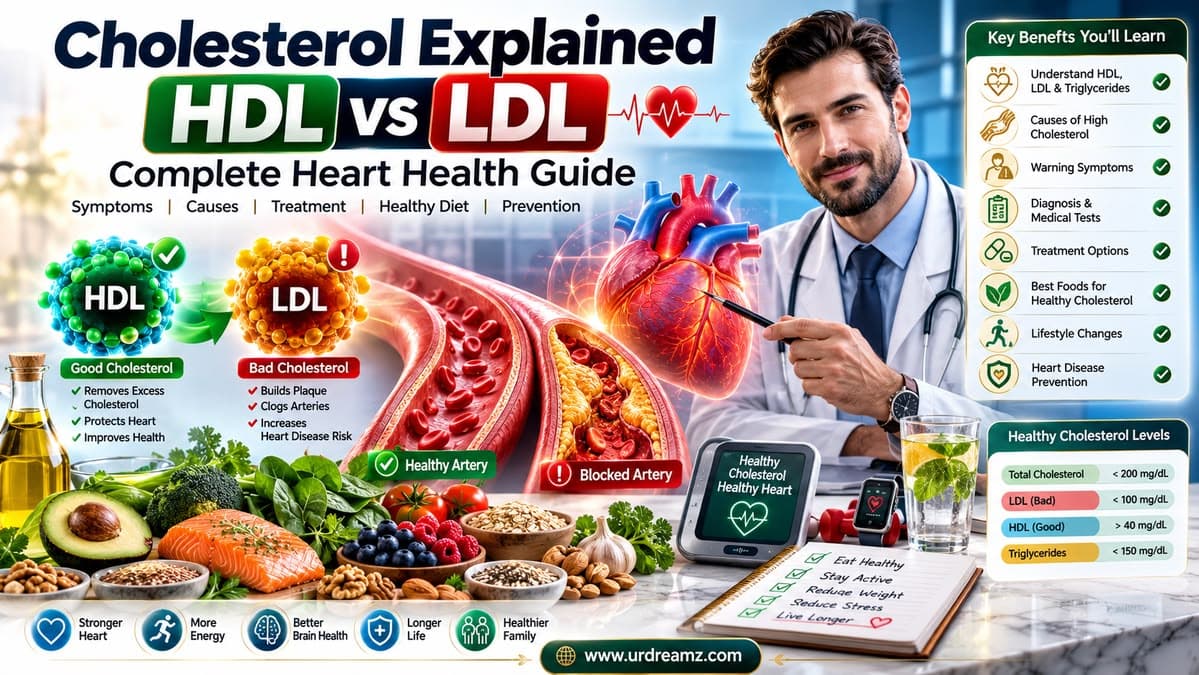
Low-density lipoprotein, or LDL, carries cholesterol from the liver out to the rest of the body's cells. The trouble starts when there's more LDL circulating than your cells actually need. Excess LDL particles can penetrate the inner lining of your artery walls, where they trigger inflammation, become oxidized, and gradually build up into a fatty deposit called plaque. Over years, this plaque narrows and stiffens the arteries, restricting blood flow and raising the risk of heart attack and stroke, which is exactly why lower LDL levels are consistently linked to better long-term heart health.
HDL Cholesterol: The "Good" Cholesterol Explained
High-density lipoprotein, or HDL, works in the opposite direction. It moves through your bloodstream picking up excess cholesterol from your arteries and tissues and carrying it back to the liver, where it's broken down and eliminated from the body, a process doctors call reverse cholesterol transport. This is exactly why higher HDL levels are protective rather than harmful, and why regular exercise, healthy fats, and not smoking, all of which tend to raise HDL, are consistently recommended as part of cholesterol management.
VLDL Cholesterol Explained
Very-low-density lipoprotein, or VLDL, is produced by the liver and consists mostly of triglycerides rather than cholesterol itself. Its job is to transport fat from the liver out to tissues throughout the body. As VLDL particles deliver their triglyceride cargo, they gradually shrink and convert into LDL particles, meaning elevated VLDL indirectly contributes to higher LDL over time. Because it's difficult to measure directly on a routine lipid panel, VLDL is usually estimated from your triglyceride level rather than tested separately.
Non-HDL Cholesterol Explained
Non-HDL cholesterol is simply your total cholesterol minus your HDL, meaning it captures every potentially harmful type of cholesterol in your blood, LDL, VLDL, and a couple of smaller, less commonly discussed particle types, all in a single number. Many doctors consider non-HDL cholesterol a genuinely useful figure precisely because it reflects the full harmful load in one measurement, rather than requiring separate interpretation of several individual numbers.
Triglycerides Explained
Triglycerides are a distinct type of fat in your blood, separate from cholesterol, that store unused calories for later energy use. When you eat more calories than your body needs immediately, particularly from sugar, refined carbohydrates, and alcohol, the surplus gets converted into triglycerides and released into your bloodstream. Chronically elevated triglycerides are linked to insulin resistance, type 2 diabetes, and a meaningfully higher risk of heart disease, and at very high levels, they can also raise the risk of pancreatitis, a genuinely serious inflammation of the pancreas.
Table: HDL vs LDL at a Glance
| Feature | HDL (Good Cholesterol) | LDL (Bad Cholesterol) |
|---|---|---|
| Main function | Removes excess cholesterol from arteries | Delivers cholesterol to tissues |
| Effect on arteries | Protective, helps clear plaque buildup | Contributes to plaque buildup |
| Ideal direction | Higher is better | Lower is better |
| Boosted by | Exercise, healthy fats, not smoking | Reduced by lowering saturated/trans fat |
| Nickname | Good cholesterol | Bad cholesterol |
What Is High Cholesterol?
High cholesterol, sometimes called hyperlipidemia or hypercholesterolemia, generally means your total cholesterol is elevated above a healthy range, though the more clinically meaningful picture comes from looking at LDL, HDL, and triglycerides individually rather than the total figure alone. Two people can have an identical total cholesterol number and very different actual risk, depending on how much of that total is protective HDL versus harmful LDL, which is exactly why doctors always look at the full breakdown rather than a single combined score.
Table: Total Cholesterol Ranges Explained
| Category | Total Cholesterol (mg/dL) |
|---|---|
| Desirable | Below 200 |
| Borderline high | 200-239 |
| High | 240 or above |
Table: LDL Cholesterol Ranges Explained
| Category | LDL Cholesterol (mg/dL) |
|---|---|
| Optimal | Below 100 |
| Near optimal | 100-129 |
| Borderline high | 130-159 |
| High | 160-189 |
| Very high | 190 or above |
People with existing heart disease or a very high overall risk are often given a more aggressive individual LDL target, sometimes below 70, based on their doctor's assessment.
Table: HDL Cholesterol Ranges Explained
| Category | HDL Cholesterol (mg/dL) |
|---|---|
| Low (higher risk) | Below 40 (men), below 50 (women) |
| Better | 40-59 (men), 50-59 (women) |
| Ideal/protective | 60 or above |
Unlike LDL, higher HDL is genuinely better, though extremely high HDL, above roughly 80, isn't necessarily more protective and may warrant a closer look with your doctor.
Table: Healthy Triglyceride Ranges
| Category | Triglycerides (mg/dL) |
|---|---|
| Normal | Below 150 |
| Borderline high | 150-199 |
| High | 200-499 |
| Very high | 500 or above |
The Cholesterol Ratio Explained
The cholesterol ratio, calculated by dividing total cholesterol by HDL, offers another useful lens for understanding cardiovascular risk. A lower ratio generally reflects a healthier balance between protective and harmful cholesterol, even when the total cholesterol figure alone looks unremarkable. Some doctors also look at the ratio between triglycerides and HDL, since a high result here can flag insulin resistance well before a blood sugar test would catch it. No single ratio replaces a full lipid panel, but it adds useful context when interpreting your numbers as a complete picture rather than in isolation.
Is High Cholesterol Dangerous? Understanding the Real Risk
High cholesterol itself doesn't hurt, and that's precisely what makes it dangerous. The genuine risk isn't the number on a lab report, it's what that number represents happening quietly inside your arteries over years: a slow, cumulative buildup of plaque that eventually restricts blood flow to your heart or brain. High cholesterol is one of the major, well-established risk factors for heart attack and stroke, and because it develops silently, many people don't discover it until a cardiovascular event has already occurred, which is exactly why regular screening matters even when nothing feels wrong.
Symptoms and Signs of High Cholesterol
Here's the honest, important answer: high cholesterol itself does not cause symptoms. A blood test is genuinely the only reliable way to find out if your cholesterol is high, no amount of paying close attention to how you feel will reveal it. That said, in rare cases of very high, often genetically driven cholesterol, some visible physical signs can develop over time, and it's worth knowing what these look like, even though they represent the exception rather than the rule.
Table: Warning Signs Sometimes Linked to Very High Cholesterol
| Sign | What It Is |
|---|---|
| Xanthelasma | Yellowish, soft deposits on or around the eyelids |
| Xanthomas | Fatty lumps that can form under the skin, often near joints or tendons |
| Arcus senilis | A pale ring around the edge of the cornea, sometimes linked to high cholesterol at a younger age |
| Chest pain (angina) | Can occur once plaque has significantly narrowed a coronary artery |
| Leg pain when walking | Can reflect reduced blood flow from peripheral artery disease |
None of these signs are common in typical, moderate high cholesterol; they tend to appear only with very high, often inherited cholesterol levels, or once significant artery narrowing has already developed, which reinforces the same core message: don't wait for a physical sign, get tested instead.
Why High Cholesterol Is Called a "Silent" Condition
Doctors sometimes call high cholesterol a silent condition for exactly the reason you'd expect: it can exist for years, sometimes decades, without producing a single noticeable sign, all while plaque quietly accumulates inside artery walls. This silence is precisely why so many people learn they have high cholesterol only after a routine blood test, or worse, only after a heart attack or stroke has already happened. Understanding this single fact, that feeling fine tells you nothing about your cholesterol, is arguably the most important takeaway in this entire guide.
How Atherosclerosis Actually Develops
Atherosclerosis is the medical term for the process high cholesterol drives inside your arteries. It begins when excess LDL particles slip into the inner lining of an artery wall, where they become oxidized and trigger an immune response, drawing in white blood cells that, over time, form a fatty, fibrous plaque. As this plaque accumulates across years, it narrows the artery and makes its walls stiffer and less flexible. Eventually, this narrowing can restrict blood flow enough to cause symptoms like chest pain, or a piece of plaque can rupture, triggering a blood clot that can suddenly and completely block the artery, precisely the mechanism behind most heart attacks and many strokes.
Complications of Untreated High Cholesterol
Left unaddressed over years, high cholesterol can lead to several serious complications, all stemming from the same underlying plaque buildup. Coronary artery disease develops when plaque narrows the arteries supplying the heart, sometimes producing chest pain or angina. A heart attack occurs when a plaque ruptures and a resulting clot completely blocks blood flow to part of the heart muscle. A stroke happens through a similar process affecting the arteries supplying the brain. Peripheral artery disease, less commonly discussed but genuinely significant, involves plaque buildup in the arteries supplying the legs and arms, restricting blood flow and sometimes causing pain during walking.
Causes of High Cholesterol: Diet
Diet remains one of the most significant, and most modifiable, drivers of cholesterol levels. Regularly eating foods high in saturated fat, fatty cuts of red meat, full-fat dairy, butter, and foods high in trans fat, often found in fried items and commercially baked goods, signals the liver to manufacture more LDL cholesterol. A diet consistently low in fiber-rich fruits, vegetables, and whole grains also removes one of the body's most effective natural tools for clearing excess cholesterol through the digestive system before it's even absorbed.
Causes of High Cholesterol: Obesity and Body Weight
Carrying excess body weight, particularly fat concentrated around the abdomen, disrupts how your body manages both cholesterol and triglycerides, generally raising LDL while lowering protective HDL. This pattern places extra strain on the cardiovascular system, and encouragingly, it also means that even a modest amount of weight loss, often just 5 to 10 percent of body weight, can produce a genuinely meaningful improvement in cholesterol numbers.
Causes of High Cholesterol: Physical Inactivity
A sedentary lifestyle contributes directly to unhealthy cholesterol patterns. Regular physical activity helps raise HDL cholesterol and supports the enzymes responsible for clearing triglycerides from the bloodstream efficiently. When the body remains inactive for extended periods, these protective processes slow considerably, allowing LDL and triglycerides to accumulate more readily than they would in an active body, regardless of diet.
Causes of High Cholesterol: Smoking
Smoking damages the lining of blood vessels directly and consistently lowers HDL cholesterol, stripping away one of the body's key natural defenses against plaque buildup. It also makes LDL particles more prone to the kind of oxidation that specifically triggers inflammation and plaque formation inside artery walls. Quitting smoking is one of the fastest, most consistently effective ways to see genuine improvement in HDL levels and overall cardiovascular risk.
Causes of High Cholesterol: Alcohol
Alcohol's relationship with cholesterol is more nuanced than most other risk factors. Heavy, regular alcohol intake reliably raises both total cholesterol and triglycerides, and can meaningfully worsen overall cardiovascular risk. Because there's no genuine cardiovascular benefit from drinking alcohol that outweighs these risks, most current medical guidance simply recommends limiting intake, or avoiding it entirely, rather than treating moderate drinking as a protective habit.
Causes of High Cholesterol: Genetics and Family History
Genetics play a real, sometimes dominant role in cholesterol levels. Family history can influence how efficiently your liver clears LDL cholesterol from your blood, and certain inherited genetic conditions, discussed in more detail shortly, cause very high LDL levels from a young age regardless of diet or lifestyle. If high cholesterol or early heart disease runs in your family, particularly appearing before age 55 in men or 65 in women, it's genuinely worth mentioning to your doctor, since it can influence how early and how closely your own cholesterol should be monitored.
Causes of High Cholesterol: Age and Sex
Cholesterol levels naturally tend to rise with age, largely because the liver becomes somewhat less efficient at clearing LDL cholesterol from the blood over the decades. Sex also plays a role in this pattern: before menopause, women generally have a more favorable cholesterol profile than men of the same age, partly due to estrogen's protective effect on HDL. After menopause, this advantage narrows considerably, with LDL cholesterol commonly rising, which is one reason cardiovascular risk in women increases meaningfully in the years following menopause.
Medical Conditions Linked to High Cholesterol
Beyond lifestyle and genetics, several underlying medical conditions can directly raise cholesterol levels, which is exactly why unexplained high cholesterol sometimes prompts a doctor to screen for one of these conditions rather than assuming lifestyle alone is responsible. Chronic kidney disease, chronic liver disease, diabetes, hypothyroidism, and certain autoimmune conditions like lupus have all been directly linked to elevated cholesterol, and treating the underlying condition often improves cholesterol numbers as a direct result.
Table: Medical Conditions That Can Raise Cholesterol
| Condition | How It Affects Cholesterol |
|---|---|
| Chronic kidney disease | Disrupts normal lipid processing and clearance |
| Chronic liver disease | Impairs the liver's role in cholesterol regulation |
| Diabetes | Often raises triglycerides and lowers HDL |
| Hypothyroidism | Slows metabolism, raising LDL cholesterol |
| Obesity | Raises LDL and triglycerides, lowers HDL |
| Sleep apnea | Associated with unfavorable lipid changes |
| Lupus | Chronic inflammation can worsen cholesterol profile |
Medications That Can Raise Cholesterol
A number of medications prescribed for entirely unrelated conditions can raise cholesterol as a side effect, including certain treatments for acne, some cancer therapies, specific blood pressure medications, HIV treatment, medications for irregular heartbeats, and drugs used after organ transplants. This doesn't necessarily mean the medication should be stopped, since it's often still the right treatment for its intended purpose, but it does mean your doctor may want to monitor your cholesterol somewhat more closely while you're taking it.
Familial Hypercholesterolemia Explained
Familial hypercholesterolemia is an inherited genetic condition that impairs the body's ability to clear LDL cholesterol from the blood, causing very high LDL levels from childhood, often accompanied by a strong family history of early heart disease across multiple generations. Because this pattern isn't caused by diet or lifestyle, it typically doesn't respond to lifestyle changes alone and usually requires medication, sometimes starting in childhood or adolescence, alongside closer, ongoing monitoring. Anyone with a family history of very early heart attacks or strokes, or a known family diagnosis of this condition, should raise it directly with their doctor.
Can Children Have High Cholesterol?
Yes, and it's more common than most people assume, often linked to genetic factors, diet, or excess weight during childhood. Because of this, most children are recommended to have a first cholesterol screening once between ages 9 and 11, with earlier screening if a child has a family history of high cholesterol, early heart disease, diabetes, or obesity. Catching elevated cholesterol early in life allows for earlier intervention, whether through diet and lifestyle changes or, when genuinely needed, medication, well before decades of plaque buildup have had the chance to accumulate.
Diagnosis: The Lipid Profile Blood Test
A lipid profile, sometimes called a lipid panel, is the standard blood test used to check cholesterol. It measures total cholesterol, LDL, HDL, and triglycerides from a single blood draw, typically taken from a vein in your arm, with results generally available within a day or two. This single test gives your doctor the core information needed to assess your cardiovascular risk and determine whether lifestyle changes alone are sufficient or whether medication should be part of your treatment plan.
Fasting Before a Cholesterol Test
Traditionally, patients were asked to fast for roughly 9 to 12 hours before a cholesterol test, since eating can temporarily raise triglyceride levels and affect certain calculated results. More recent research has shown non-fasting lipid panels are reasonably accurate for LDL and HDL, and many doctors now consider them acceptable for general screening purposes. Fasting is still often recommended, though, when triglycerides need to be measured with maximum accuracy, or for anyone with a history of very high triglyceride levels, so it's always worth confirming your specific doctor's preference before your appointment.
How Often Should You Check Your Cholesterol?
For most healthy adults, cholesterol is typically checked every four to six years, though this can vary based on your specific health history and risk factors. People with diabetes, high blood pressure, existing heart disease, a family history of high cholesterol or early heart disease, or those already taking cholesterol-lowering medication generally need more frequent testing, often annually or even more often, so that treatment can be adjusted as needed based on how your numbers respond.
Table: Recommended Cholesterol Screening Schedule
| Age Group | General Recommendation |
|---|---|
| Children (9-11 years) | First screening, earlier if risk factors are present |
| Teens and young adults (17-21) | Second screening recommended |
| Adults 20-44 | Every 4-6 years if low risk |
| Adults 45-65 | Every 1-2 years |
| Adults 65+ | Annually |
| Anyone with risk factors or existing treatment | More frequent testing as advised by a doctor |
Treatment Overview for High Cholesterol
Treatment for high cholesterol is built around two complementary pillars: lifestyle changes and, when necessary, medication. For many people with mild to moderately elevated cholesterol and no other major risk factors, consistent changes to diet, physical activity, weight, and smoking status can bring cholesterol back into a healthier range without a prescription at all. For others, particularly those with a strong genetic component, very high LDL, or existing heart disease, medication becomes a necessary partner to lifestyle changes rather than a replacement for them, and the two working together consistently outperform either approach alone.
Statins Explained
Statins are the most widely prescribed and most extensively studied class of cholesterol-lowering medication, working by slowing your liver's own cholesterol production, which prompts liver cells to pull more LDL out of the bloodstream to compensate. Large, long-running clinical studies have consistently shown that statins meaningfully reduce the risk of heart attack and stroke in appropriate candidates. Like any medication, statins can cause side effects in some people, most commonly muscle aches, so anyone prescribed a statin should discuss expected benefits and possible side effects with their doctor rather than adjusting or stopping the medication on their own.
Other Cholesterol Medications Explained
Beyond statins, several other medication classes are available for people who need additional cholesterol lowering or can't tolerate statins well. Ezetimibe works by reducing how much cholesterol your intestine absorbs from food, and can be used alongside statins or on its own. PCSK9 inhibitors, a newer class of injectable medication, can lower LDL substantially, often used for people with an inherited form of high cholesterol or those who need more aggressive treatment than statins alone provide. Bile acid resins, fibrates, and niacin each work through different mechanisms and are generally reserved for more specific situations, such as primarily targeting high triglycerides rather than LDL.
Table: Cholesterol Medications Compared
| Medication | How It Works | Primary Target |
|---|---|---|
| Statins | Reduces liver's cholesterol production | LDL cholesterol |
| Ezetimibe | Reduces intestinal cholesterol absorption | LDL cholesterol |
| PCSK9 inhibitors | Helps liver clear more LDL from blood | LDL cholesterol (substantial reduction) |
| Bile acid resins | Binds bile acids, prompting liver to use more cholesterol | LDL cholesterol |
| Fibrates | Increases breakdown of triglyceride-rich particles | Triglycerides |
| Niacin | Affects liver fat production | Triglycerides, can raise HDL |
| Omega-3 fatty acid medications | Derived from fish oil, reduces liver triglyceride production | Triglycerides |
Home Remedies and Natural Approaches to Lower Cholesterol
Several genuinely evidence-supported home approaches can meaningfully support cholesterol management, particularly for mild to moderate elevation, though they work best as a complement to, not a replacement for, medical guidance, and anyone already on cholesterol medication should check with a doctor before adding supplements, since some can interact with prescription treatment. Psyllium husk, a soluble fiber supplement, has solid evidence for modestly lowering LDL when taken consistently. Plant sterols and stanols, found naturally in small amounts in plants and added to some fortified foods, compete with cholesterol for absorption in the gut and can meaningfully lower LDL when consumed regularly in adequate amounts. Garlic has shown modest cholesterol-lowering effects in some studies, though the evidence remains mixed. Flaxseed, rich in both fiber and omega-3s, has shown modest LDL-lowering benefits as well.
Table: Home and Natural Remedies for Cholesterol
| Remedy | How to Use | Evidence Level |
|---|---|---|
| Psyllium husk | Mixed with water daily | Well supported for modest LDL reduction |
| Plant sterols/stanols | 2-3 grams daily via fortified foods | Well supported for LDL reduction |
| Ground flaxseed | 1-2 tablespoons daily in food | Modest, reasonably supported benefit |
| Garlic (raw or supplement) | Regular culinary use or supplement | Mixed, modest evidence |
| Oat bran/beta-glucan | Daily in breakfast foods | Well supported for LDL reduction |
| Green tea | 2-3 cups daily | Modest supporting evidence |
Healthy Drinks That Support Cholesterol Levels
What you drink matters just as much as what you eat when it comes to cholesterol, and a few genuinely simple swaps can meaningfully support healthier numbers over time. Water remains the foundational choice, since it replaces sugary and alcoholic drinks without adding anything harmful. Green tea contains catechins, antioxidant compounds that have shown modest LDL-lowering effects in research. Plain black or herbal tea, unsweetened, is another reasonable everyday option. Freshly made vegetable juice, particularly from tomatoes or beets, and unsweetened plant milks like oat or soy milk, some of which are fortified with plant sterols, can also fit well into a cholesterol-conscious routine.
Table: Best Drinks for Cholesterol and Heart Health
| Drink | Why It Helps |
|---|---|
| Water | Replaces sugary or alcoholic drinks entirely |
| Green tea | Antioxidants (catechins) support lower LDL |
| Unsweetened black or herbal tea | Low-calorie, no added sugar or fat |
| Fortified plant milk (oat, soy) | Some varieties contain added plant sterols |
| Fresh vegetable juice (unsweetened) | Provides fiber and antioxidants without added sugar |
| Low-fat milk | Provides protein and calcium without excess saturated fat |
Best Foods to Lower Cholesterol
The right foods can help lower LDL, raise HDL, and support a healthier heart overall, and building a rotation of these into regular meals matters far more than any single "miracle" food. Oats and other whole grains contain soluble fiber, specifically beta-glucan, that binds cholesterol in the digestive tract and helps carry it out of the body before it's absorbed. Fatty fish like salmon and sardines provide omega-3 fatty acids that lower triglycerides and support overall heart health. Nuts, avocado, and olive oil provide the kind of unsaturated fat that helps improve cholesterol balance when used to replace saturated fat rather than simply added on top of it. Legumes, leafy greens, and fiber-rich fruits round out a genuinely well-supported cholesterol-friendly diet.
Table: Best Foods for Lowering Cholesterol
| Food | Key Benefit |
|---|---|
| Oats and barley | Soluble fiber (beta-glucan) reduces LDL absorption |
| Fatty fish (salmon, mackerel, sardines) | Omega-3s lower triglycerides |
| Olive oil | Monounsaturated fat lowers LDL when replacing saturated fat |
| Avocado | Monounsaturated fat and potassium support HDL |
| Nuts (almonds, walnuts) | Healthy fats, fiber and plant sterols |
| Legumes (beans, lentils) | Excellent source of soluble fiber |
| Leafy greens | Fiber and antioxidants supporting heart health |
| Berries and apples | Pectin fiber and antioxidants |
| Flaxseeds and chia seeds | Omega-3s and soluble fiber |
| Whole grains | Fiber supporting healthy cholesterol and blood sugar |
| Soy products (tofu, edamame) | Plant protein linked to modest LDL reduction |
| Fortified foods with plant sterols | Directly compete with cholesterol for absorption |
Foods and Fast Food to Avoid With High Cholesterol
On the other side of the equation, certain foods consistently worsen cholesterol, primarily by raising saturated and trans fat intake, and fast food deserves particular attention here, since it tends to concentrate several of the worst offenders, saturated fat, trans fat, excess sodium, and refined carbohydrates, into a single convenient, easy-to-overeat meal. Fatty cuts of red meat, processed meats like sausage and bacon, full-fat dairy, butter, fried foods of essentially any kind, and commercially baked goods made with hydrogenated oils are all worth genuinely limiting rather than eating regularly.
Table: Foods and Fast Food to Avoid
| Food | Why It Raises Cholesterol Risk |
|---|---|
| Fried fast food (fries, fried chicken) | High in trans and saturated fat |
| Burgers and processed fast food meat | High saturated fat and sodium |
| Processed and deli meats (bacon, sausage, salami) | High in saturated fat and sodium |
| Full-fat dairy (cream, butter, high-fat cheese) | High saturated fat raises LDL |
| Commercially baked goods (pies, pastries, cakes) | Often contain trans fats and refined sugar |
| Coconut oil and palm oil in packaged foods | High in saturated fat |
| Sugary drinks and soda | Raises triglycerides |
| Excess alcohol | Raises total cholesterol and triglycerides |
| Instant noodles and packaged snack foods | Low fiber, high sodium and unhealthy fat |
The Mediterranean Diet for Cholesterol
The Mediterranean diet consistently ranks among the most well-supported eating patterns for cholesterol and overall cardiovascular health, built around vegetables, fruits, whole grains, legumes, nuts, olive oil, and fish, with red meat and processed foods kept genuinely minimal. It reduces saturated fat intake while increasing unsaturated fats and fiber simultaneously, a combination that consistently shows meaningful improvements in LDL, triglycerides, and overall cardiovascular risk across large studies. Part of what makes it so sustainable, compared to more restrictive diets, is that it's built around genuinely enjoyable, flavorful food rather than elimination, which makes it realistic to maintain for years rather than weeks.
Table: A Sample Cholesterol-Friendly Daily Diet Plan
| Meal | Suggested Option |
|---|---|
| Breakfast | Oatmeal with berries, flaxseed and a small handful of walnuts |
| Mid-morning snack | An apple or a small handful of almonds |
| Lunch | Lentil or bean salad with leafy greens and olive oil dressing |
| Afternoon snack | Plain yogurt or hummus with vegetable sticks |
| Dinner | Grilled salmon or other fatty fish with steamed vegetables and quinoa |
| Drinks throughout the day | Water and unsweetened green tea |
This is a general educational example rather than a personalized prescription; portion sizes and specific choices should be adjusted with guidance from a doctor or registered dietitian, particularly for anyone with diabetes or other existing conditions.
Understanding Dietary Fats: Saturated, Trans, and Unsaturated
Not all fat affects cholesterol the same way, and understanding the difference genuinely changes how you shop and cook. Saturated fat, found in fatty meat, butter, full-fat dairy, and tropical oils like coconut and palm oil, raises LDL cholesterol when eaten in excess. Trans fat, often listed as "partially hydrogenated oil" on ingredient labels and common in fried and commercially baked goods, is genuinely the most harmful type, since it simultaneously raises LDL and lowers protective HDL. Unsaturated fats, both monounsaturated, found in olive oil, avocado, and most nuts, and polyunsaturated, found in fatty fish, sunflower oil, and flaxseed, actually support a healthier cholesterol profile when they replace saturated fat in the diet rather than simply being added on top of it.
Exercise and Cholesterol
Regular aerobic exercise reliably raises protective HDL cholesterol while helping lower triglycerides, and combined with dietary changes, it's one of the single most effective lifestyle tools for improving an unhealthy lipid profile. Most guidelines recommend at least 150 minutes of moderate-intensity activity weekly, roughly 30 minutes most days, and both steady cardio and higher-intensity interval training have shown meaningful cholesterol benefits. Strength training adds further benefit by improving overall body composition, since excess body fat itself contributes to higher LDL and lower HDL independent of diet.
Table: Best Exercises to Improve Cholesterol
| Exercise | Cholesterol Benefit |
|---|---|
| Brisk walking | Raises HDL, accessible for most fitness levels |
| Swimming | Full-body cardio with minimal joint impact |
| Cycling | Improves HDL and overall cardiovascular fitness |
| Jogging or running | Strong HDL and triglyceride benefits |
| Strength training | Improves body composition, supports metabolic health |
| Dancing or group fitness classes | Sustainable, enjoyable way to meet weekly activity goals |
Weight Loss and Cholesterol
Losing even a modest amount of excess weight, generally 5 to 10 percent of body weight, can meaningfully lower LDL and triglycerides while raising HDL cholesterol. Weight loss achieved through a sustainable combination of diet and regular activity tends to produce more lasting cholesterol improvement than rapid, extreme dieting approaches, which are harder to maintain and can sometimes even worsen cholesterol temporarily during the most aggressive phase. Reducing abdominal fat specifically appears to offer an outsized benefit for cholesterol and overall metabolic health.
Quitting Smoking and Cholesterol
Quitting smoking is genuinely one of the fastest ways to improve HDL cholesterol and overall cardiovascular health, with measurable benefits to blood vessel function appearing within weeks of stopping. Because smoking directly damages blood vessel linings, quitting also reduces how easily LDL particles become trapped and oxidized within artery walls, meaningfully lowering long-term plaque buildup risk on top of the direct HDL benefit.
Sleep, Stress and Cholesterol
Poor sleep and chronic stress both influence cholesterol indirectly but genuinely. Inadequate sleep has been linked to unfavorable changes in triglycerides and overall metabolic regulation, while chronic stress raises cortisol levels, which can contribute to weight gain and less favorable cholesterol patterns over time. Prioritizing consistent, adequate sleep and practical stress management, regular exercise, relaxation techniques, or simply protecting downtime, therefore plays a genuine, if often overlooked, supporting role in overall cholesterol management.
Cholesterol in Women
Cholesterol patterns in women shift meaningfully across life stages. Before menopause, estrogen offers a genuine protective effect, generally keeping HDL higher and overall cardiovascular risk lower than in men of the same age. After menopause, this protection fades considerably, and LDL cholesterol commonly rises, part of why cardiovascular risk in women increases notably in the years following menopause. Pregnancy also naturally raises cholesterol levels temporarily to support fetal development, which is generally expected and not typically a cause for concern on its own.
Cholesterol in Men
Men generally face a higher cardiovascular risk at a younger age compared to women, partly because they lack the pre-menopausal estrogen protection women have earlier in life. This is part of why cholesterol screening guidelines often start slightly earlier and recommend more frequent testing for men, and why men are sometimes diagnosed with high cholesterol or even experience a cardiovascular event at a younger age than women with an otherwise similar lifestyle and risk profile.
Cholesterol After Age 50
Cholesterol management genuinely deserves increased attention after 50, since age-related changes, a naturally less efficient liver, accumulated years of dietary and lifestyle exposure, and, for women, the post-menopausal shift, all combine to raise cardiovascular risk during this stage of life. This makes annual or near-annual cholesterol screening, along with continued attention to diet, exercise, and any other cardiovascular risk factors like blood pressure or blood sugar, genuinely worthwhile rather than optional after this age, even for people who have never had a cholesterol problem before.
Table: Cholesterol Myths vs Facts
| Myth | Fact |
|---|---|
| You'll feel symptoms if your cholesterol is high | High cholesterol is silent; a blood test is the only way to know |
| Eggs are always bad for cholesterol | Most people can include eggs in moderation; overall saturated fat intake matters more |
| Only overweight people get high cholesterol | Genetics and diet can raise cholesterol regardless of body weight |
| Cholesterol medication means you can eat whatever you want | Lifestyle changes remain important alongside medication |
| Natural remedies alone can replace medication for everyone | Some people, especially with genetic causes, genuinely need medication |
| Children can't have high cholesterol | High cholesterol can affect children, often due to genetics |
A Realistic Plan to Lower Cholesterol Over Time
Improving cholesterol is rarely about one dramatic change; it's about several modest, sustained adjustments working together over months. Start by swapping one high-saturated-fat food for a healthier alternative each week rather than overhauling your entire diet overnight, choose skim milk over whole, olive oil over butter, grilled over fried. Add a 20 to 30 minute walk most days if you're not already active. Include a soluble fiber source, oats, beans, or psyllium, daily. Cut back gradually on alcohol and quit smoking if it applies to you. None of these individually feels dramatic, but sustained together, they consistently produce measurable improvement within a few months, often enough to meaningfully change the treatment conversation with your doctor.
When to See a Doctor About Cholesterol
Because high cholesterol produces no symptoms, routine screening according to the schedule covered earlier is the main way it's caught. You should see a doctor sooner, outside of routine screening, if you have a family history of very early heart disease or stroke, notice any of the rare visible signs discussed earlier like xanthelasma, are managing diabetes, high blood pressure, or another condition linked to cholesterol, or simply haven't had your cholesterol checked in several years. A doctor can interpret your specific numbers in the context of your overall risk and help you build a genuinely personalized plan, whether that's lifestyle changes alone, closer monitoring, or medication.
Frequently Asked Questions
What is a healthy cholesterol level?
Generally, total cholesterol below 200 mg/dL, LDL below 100 mg/dL, and HDL above 40 mg/dL for men or 50 mg/dL for women are considered healthy targets, though your personal ideal depends on your overall cardiovascular risk.
Can high cholesterol be reversed?
For many people, especially those with lifestyle-driven high cholesterol, consistent diet and exercise changes can meaningfully lower LDL and improve HDL over a period of months, though some genetic forms require ongoing medication regardless of lifestyle.
Are eggs bad for cholesterol?
For most people, moderate egg consumption doesn't significantly raise cholesterol, since overall saturated fat intake tends to matter more than dietary cholesterol from a single food; individual tolerance can vary, so it's worth discussing with a doctor if you have existing high cholesterol.
Does exercise really lower cholesterol?
Yes, regular aerobic exercise reliably raises HDL and helps lower triglycerides, and combined with strength training and dietary changes, it's one of the most effective lifestyle tools for improving cholesterol.
How long does it take to lower cholesterol naturally?
Many people see meaningful improvement within 8 to 12 weeks of consistent dietary and lifestyle changes, though full results can take several months, and ongoing consistency matters more than any single short-term effort.
What foods should I avoid with high cholesterol?
Fried and fast food, processed meats, full-fat dairy, commercially baked goods with trans fats, and sugary drinks are the main foods worth limiting.
Is high cholesterol hereditary?
Yes, family history can meaningfully raise your risk, and certain inherited conditions like familial hypercholesterolemia cause very high cholesterol independent of lifestyle.
What is the fastest way to lower LDL cholesterol?
A combination of reducing saturated and trans fat, increasing soluble fiber, regular exercise, and, when appropriate, statin medication produces the fastest, most reliable LDL reduction.
Can stress raise cholesterol?
Chronic stress can indirectly worsen cholesterol through elevated cortisol, weight gain, and less healthy eating and activity patterns, even though stress itself isn't a direct chemical cause of high cholesterol.
Do I need medication if my cholesterol is only slightly high?
Not necessarily; many people with mildly elevated cholesterol and no other major risk factors are advised to try lifestyle changes first, with medication reserved for higher-risk situations or when lifestyle changes alone aren't enough.
Conclusion
High cholesterol is common, almost always silent, and, for the large majority of people, genuinely manageable once it's properly identified and addressed. Understanding the real difference between HDL and LDL, knowing your own numbers through regular screening rather than waiting for symptoms that likely won't come, and building steady, sustainable changes across diet, drinks, exercise, and habits like smoking can meaningfully protect your heart and arteries for decades to come. This guide is intended for general education and does not replace personalized medical advice; talk with a qualified doctor about your own cholesterol numbers, risk factors, and the treatment approach that's genuinely right for you.
If there's one thing worth remembering above everything else in this guide, it's that cholesterol doesn't ask permission before it starts affecting your arteries, which is exactly why waiting for a symptom is never the right strategy. A simple blood test, paired with the consistent, realistic habits covered here, remains the most reliable path to genuinely protecting your heart health for the long run.
Related Reading:
- Diabetes Explained: Symptoms, Causes, Blood Sugar and Treatment Guide
- Weight Loss Diet Plan: Best Foods for Fat Loss
- High Blood Pressure vs Low Blood Pressure: Complete Guide
- Heart Health: Complete Guide to Prevention, Symptoms and Diet
- Digestive Problems Explained: Causes, Symptoms and Treatment
- Fatty Liver Disease: Warning Signs, Stages and Complete Guide
- Kidney Health Explained: Symptoms, Causes and Treatment
- Joint Pain Explained: Causes, Symptoms and Treatment
- Anemia Explained: Symptoms, Causes, Iron Deficiency and Treatment Guide
- Sleep Health Explained: Causes of Poor Sleep and Complete Guide to Better Sleep
- Piles (Hemorrhoids) Explained: Internal vs External Piles and Complete Treatment Guide
- Dental Health Explained: Common Teeth and Gum Problems and Complete Oral Care Guide
- Eye Health Explained: Common Eye Diseases and Complete Eye Care Guide
- Fitness & Exercise Explained: Complete Beginner's Guide
- Immune System Explained: How Immunity Works and Complete Guide to Boosting Immunity Naturally
- Healthy Aging Explained: How to Stay Active and Live a Longer, Healthier Life
- Thyroid Health Explained: Hypothyroidism, Hyperthyroidism and Complete Thyroid Care Guide
This article is for general educational purposes only and is not a substitute for professional medical advice, diagnosis, or treatment. Always consult a qualified doctor regarding your cholesterol levels, cardiovascular risk, and treatment options.