Vegan Recipes: Easy, Healthy Plant-Based Meals for Every Occasion — Breakfast, Dinner, Desserts and Party Food
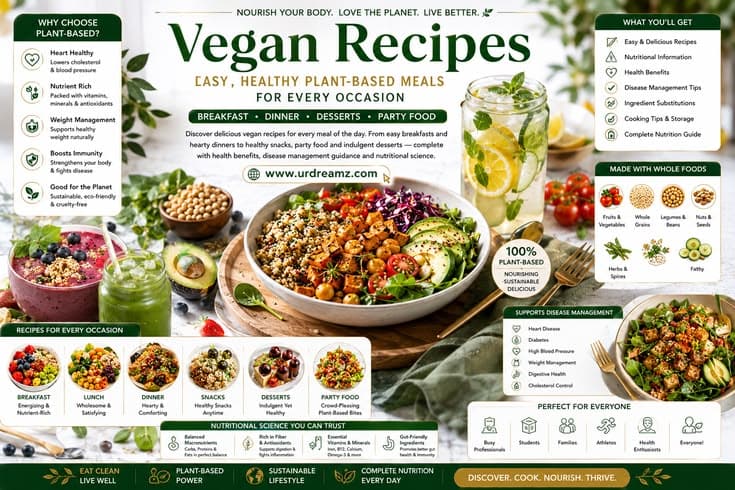
Plant-based eating has undergone a remarkable transformation over the past decade — from a niche dietary philosophy practiced by a small minority to one of the most scientifically validated, globally embraced, and culinarily exciting ways of eating available today. Vegan recipes are no longer defined by what they lack (meat, dairy, eggs) but by the extraordinary diversity and creativity of what they include: a vast and colorful world of legumes, whole grains, vegetables, fruits, nuts, seeds, herbs, spices, and plant-based dairy alternatives that collectively produce meals which are not only nutritionally complete but genuinely delicious, deeply satisfying, and visually stunning.
Whether you are a committed long-term vegan, a curious omnivore exploring plant-based options, someone managing a chronic health condition, an athlete seeking optimal performance nutrition, or a home cook trying to feed a mixed family one night a week without meat — this comprehensive guide provides everything you need. Inside, you will find complete recipes for every meal of the day, a deep exploration of the health benefits of plant-based eating supported by current nutritional science, specific guidance on which health conditions benefit most from vegan dietary patterns, a complete vegan party food collection, essential nutritional considerations, and practical tips for making plant-based cooking enjoyable, sustainable, and genuinely exciting.
More Healthy Recipes from Our Collection
This vegan recipes guide connects naturally with our broader healthy eating library. Each guide complements the others for a complete nutritional picture:
- High Protein Breakfast Recipes — Complete Morning Meal Guide
- Weight Loss Complete Guide — 37 Recipes and 17-Day Meal Plan
- Diabetic Breakfast Recipes — Healthy Low Sugar Morning Meals
- Overnight Oats Recipes — Easy Make-Ahead Breakfast Ideas
- Green Detox Smoothie — Healthy Ingredients and Weight Loss Guide
- Healthy Vegetable Soup — Weight Loss Benefits and Cooking Guide
- Mediterranean Chickpea Salad — High-Protein Healthy Lunch
- Healthy Meatball Recipes — Turkey, Chicken, Beef and Veggie Meatballs
- Grilled Chicken with Roasted Vegetables — Healthy Dinner Guide
What Is a Vegan Diet? The Complete Beginner's Guide
A vegan diet is one that excludes all animal-derived foods and ingredients. This means no meat of any kind (beef, pork, chicken, fish, seafood), no dairy products (milk, cheese, butter, yogurt, cream), no eggs, and no honey or other bee products. Beyond food, veganism as a philosophy also typically extends to avoiding animal-derived products in clothing (leather, wool, silk) and cosmetics (ingredients tested on animals), though for the purposes of this guide we focus exclusively on the dietary dimension.
What a vegan diet does include is the complete plant kingdom: every vegetable, fruit, legume, grain, nut, seed, herb, and spice in existence — an extraordinarily diverse and flavorful ingredient universe that is far more expansive than the animal foods excluded. The assumption that vegan eating is restrictive is one of the great nutritional myths of the modern era. A well-constructed vegan diet is among the most diverse, colorful, texturally varied, and nutritionally complex eating patterns available.
The growth of veganism worldwide has been dramatic and consistent. Global plant-based food market value exceeded $30 billion in 2023 and is projected to continue growing at approximately 12% annually through 2030. The reasons people choose plant-based eating are varied — environmental sustainability, animal welfare, personal health, religious considerations, or economic factors — but the nutritional science consistently supports the health advantages of well-planned plant-based dietary patterns across multiple health outcomes.
Types of Plant-Based Diets
It is useful to understand the spectrum of plant-based dietary approaches, as they differ meaningfully in terms of what is included and excluded:
- Vegan: Excludes all animal products — meat, dairy, eggs, honey, and all animal-derived ingredients
- Whole Food Plant-Based (WFPB): Vegan plus emphasis on unprocessed, whole foods — excludes refined oils, added sugars, and processed vegan foods
- Vegetarian: Excludes meat but includes dairy and eggs
- Flexitarian: Primarily plant-based with occasional animal products — the most accessible entry point for most people
- Raw Vegan: Vegan diet where foods are not heated above 48°C (118°F) — preserves heat-sensitive enzymes
This guide primarily addresses standard vegan and whole-food plant-based eating, as these represent the most nutritionally complete and most studied plant-based dietary approaches.
Health Benefits of a Vegan Diet: What Science Actually Says
The health benefits of well-planned vegan eating are among the most consistently documented nutritional findings in modern scientific literature. Multiple large-scale studies, meta-analyses, and long-term prospective cohort studies have examined the relationship between plant-based dietary patterns and human health outcomes, and the pattern of findings is remarkably consistent across independent research groups worldwide.
| Health Benefit | Evidence Level | Primary Mechanism | Key Research Support |
|---|---|---|---|
| Lower risk of cardiovascular disease | Strong | Reduced LDL cholesterol, lower saturated fat, higher fiber | Multiple large cohort studies; JAMA meta-analysis |
| Type 2 diabetes prevention and management | Strong | Improved insulin sensitivity, high fiber, low glycemic load | Physicians Committee for Responsible Medicine trials |
| Lower body weight and BMI | Strong | Lower caloric density, higher fiber, higher satiety per calorie | Multiple systematic reviews |
| Reduced cancer risk (especially colorectal) | Moderate-Strong | High fiber, antioxidants, absence of heme iron and processed meat | European Prospective Investigation into Cancer (EPIC) study |
| Improved gut microbiome diversity | Strong | High dietary fiber and polyphenol diversity feeding microbial species | Gut microbiome studies; American Gut Project |
| Lower blood pressure | Moderate-Strong | High potassium, low sodium, absence of dietary cholesterol | Multiple controlled trials |
| Reduced inflammation | Moderate | High antioxidants and polyphenols, absent saturated fat stimulation | CRP and inflammatory marker studies |
| Improved kidney health | Moderate | Lower protein load, higher alkaline-producing foods | Journal of the American Society of Nephrology |
| Better skin health | Emerging | High antioxidants, reduced dairy (linked to acne), high hydration | Dermatology observational studies |
| Longer lifespan potential | Moderate | Combination of cardiovascular, metabolic, and cancer risk reduction | Blue Zone population studies, Adventist Health Study |
The Fiber Advantage
Perhaps the single most important nutritional advantage of a well-constructed vegan diet is its extraordinary fiber content. The average non-vegan diet in industrialized countries provides approximately 15–17g of dietary fiber daily — well below the recommended minimum of 25–38g. Vegan diets, by contrast, naturally deliver 35–60g of fiber daily when based on whole foods. This dietary fiber difference has cascading positive effects throughout the body: it feeds the beneficial gut bacteria that produce immune-supporting, inflammation-reducing, and mood-stabilizing short-chain fatty acids; it slows glucose absorption and prevents blood sugar spikes; it reduces LDL cholesterol reabsorption; it promotes satiety and supports healthy weight; and it dramatically reduces colon cancer risk by accelerating the transit of potential carcinogens through the digestive tract.
The Antioxidant and Phytonutrient Advantage
Plants produce thousands of protective compounds — phytonutrients — that they use to defend against UV radiation, pathogens, and environmental stressors. When we eat a diverse range of plant foods, we consume these compounds and they exert their protective effects in our bodies. No animal food contains meaningful amounts of these compounds. A vegan diet naturally provides a vastly higher diversity and quantity of antioxidants, polyphenols, carotenoids, flavonoids, isoflavones, glucosinolates, and other phytonutrients that provide antioxidant protection, reduce inflammation, support immune function, and contribute to cellular health in ways that are genuinely unprecedented in any other dietary pattern.
Which Health Conditions Benefit Most from a Vegan Diet
Specific health conditions respond particularly well to plant-based dietary intervention — in some cases producing benefits comparable to or exceeding those of pharmaceutical treatments. Understanding which conditions respond best helps you prioritize plant-based eating as both a preventive and therapeutic nutritional strategy.
1. Type 2 Diabetes
Vegan diets have shown remarkable effectiveness for both preventing and managing type 2 diabetes. The Physicians Committee for Responsible Medicine (PCRM) conducted multiple randomized controlled trials showing that a low-fat vegan diet improved glycemic control more effectively than the standard American Diabetes Association diet, with participants experiencing greater reductions in HbA1c, fasting glucose, and insulin resistance.
The mechanisms are clear: the high fiber content of plant foods slows carbohydrate digestion and glucose absorption, dramatically reducing post-meal blood sugar spikes. The absence of dietary saturated fat (which promotes insulin resistance) and the abundance of magnesium (critical for insulin receptor function) both support improved insulin sensitivity. Many people with type 2 diabetes following a whole-food plant-based diet have reduced or eliminated their diabetes medications under medical supervision — a clinical outcome rarely achievable through dietary change alone in non-plant-based approaches.
Best vegan foods for diabetes: Lentils, chickpeas, black beans, leafy greens, broccoli, berries, whole grain oats, quinoa, cinnamon, and flaxseeds. Pair with guidance from our Diabetic Breakfast Recipes Guide.
2. Heart Disease and High Cholesterol
Cardiovascular disease is the number one cause of death globally, and dietary saturated fat and dietary cholesterol from animal products are among its most significant modifiable risk factors. A whole-food plant-based vegan diet eliminates dietary cholesterol entirely (only animal foods contain cholesterol), dramatically reduces saturated fat intake, and provides the soluble fiber that binds to bile acids (which are made from cholesterol) in the digestive tract, forcing the body to use blood cholesterol to make new bile acids — directly reducing LDL levels.
The legendary Ornish Diet studies showed that a plant-based, very low-fat diet could actually reverse documented coronary artery disease — not merely slow its progression, but genuinely reduce arterial plaque — in controlled clinical trials. Dr. Caldwell Esselstyn's work at the Cleveland Clinic produced similar results, with many patients avoiding bypass surgery and angioplasty through dietary change alone.
Best vegan foods for heart health: Walnuts, flaxseeds, hemp seeds, chia seeds, avocado, oats (beta-glucan), berries, garlic, tomatoes (lycopene), leafy greens (Vitamin K), and beans (soluble fiber).
3. Hypertension (High Blood Pressure)
Plant-based dietary patterns consistently demonstrate meaningful blood pressure reduction in controlled studies. The high potassium content of plant foods — especially leafy greens, sweet potato, banana, beans, and avocado — counteracts sodium's blood pressure-raising effects at the cellular level. The absence of dietary cholesterol and saturated fat reduces arterial stiffness. The nitrates in dark leafy greens (beetroot, spinach, arugula) convert to nitric oxide in the body, which directly dilates blood vessels and reduces blood pressure.
A meta-analysis published in JAMA Internal Medicine found that vegetarian and vegan dietary patterns were associated with significantly lower systolic and diastolic blood pressure compared to omnivore diets — effects comparable to first-line antihypertensive medications in many studies.
4. Obesity and Weight Management
Vegan dietary patterns consistently produce lower body mass index (BMI) and greater weight loss in controlled trials compared to omnivore, vegetarian, and other dietary patterns. The BROAD study showed that a whole-food plant-based diet produced greater weight loss than standard care at 6 months. The Adventist Health Study 2 — one of the largest and most comprehensive diet-health studies ever conducted — found that vegans had the lowest average BMI of any dietary group studied.
The mechanism is straightforward: plant foods have a much lower caloric density than animal foods. You can eat a much larger volume of food (which fills the stomach and creates satiety) on a plant-based diet for the same number of calories. High fiber creates sustained satiety through multiple hormonal pathways. The absence of highly processed, highly palatable animal-product-heavy foods reduces the reward-driven overeating that drives much of the obesity epidemic.
5. Certain Cancers
The EPIC (European Prospective Investigation into Cancer) study — one of the largest nutrition research projects ever conducted, following over 500,000 people across 10 European countries — found consistent associations between plant-based dietary patterns and reduced risk of specific cancers, particularly colorectal cancer. The World Health Organization classifies processed meat as a Group 1 carcinogen and red meat as a Group 2A carcinogen, making their elimination through a vegan diet a meaningful cancer risk reduction strategy.
The specific mechanisms include: dietary fiber reduces colon carcinogen exposure through faster transit time; the absence of heme iron (from red meat) eliminates a compound that catalyzes carcinogenic N-nitroso compound formation; the high antioxidant load from diverse plant foods protects DNA from oxidative damage; and isoflavones from soy foods have shown protective effects in hormone-sensitive cancers in some populations.
6. Inflammatory Conditions (Arthritis, IBD, Chronic Pain)
Chronic inflammation is the underlying driver of rheumatoid arthritis, inflammatory bowel disease, and many other chronic pain conditions. Plant-based diets — particularly those emphasizing anti-inflammatory foods like berries, leafy greens, nuts, seeds, and turmeric — consistently reduce inflammatory biomarkers (CRP, IL-6, TNF-alpha) in blood tests. The absence of arachidonic acid (an inflammatory fatty acid found in animal products that the body converts to inflammatory prostaglandins) and the presence of omega-3 fatty acids from flaxseeds, chia seeds, walnuts, and hemp seeds create an anti-inflammatory biochemical environment at the cellular level.
Several case studies and clinical reports have documented dramatic improvements in rheumatoid arthritis symptoms following transition to whole-food plant-based eating, with some patients achieving remission without pharmaceutical intervention.
7. Digestive Health and IBS
The high dietary fiber intake of a plant-based diet directly supports healthy digestive function through multiple pathways. Soluble fiber from oats, beans, and psyllium forms a gel that regulates bowel transit speed and reduces IBS symptoms. Insoluble fiber from vegetables and whole grains adds bulk and promotes regular bowel movements. The prebiotic fibers from onions, garlic, leeks, asparagus, and oats feed the beneficial gut bacteria that produce short-chain fatty acids supporting colon health, immune function, and intestinal barrier integrity. A review of gut microbiome research consistently shows that vegan dietary patterns produce the most diverse, most beneficial gut microbiome profiles of any dietary pattern studied.
Essential Vegan Nutrition: What to Know and Plan
A well-planned vegan diet meets all human nutritional requirements. An unplanned vegan diet can develop deficiencies in specific nutrients that are less abundant or absent in plant foods. Knowing which nutrients require attention — and how to address them through food and supplementation — allows you to follow a vegan diet with complete confidence and without compromise to your health.
| Nutrient | Why It Matters | Best Vegan Sources | Supplementation Needed? |
|---|---|---|---|
| Vitamin B12 | Nerve function, red blood cell production, DNA synthesis | Fortified plant milks, nutritional yeast, fortified cereals | Yes — supplement 250–1000mcg daily or 2500mcg weekly |
| Omega-3 Fatty Acids (EPA/DHA) | Brain health, heart health, inflammation | ALA from flaxseed, chia seeds, walnuts (converts partially to EPA/DHA) | Consider algae-based omega-3 supplement (where fish get it originally) |
| Vitamin D | Bone health, immune function, mood regulation | Sunshine, fortified plant milks, UV-exposed mushrooms | Yes — test levels, supplement 1000–2000 IU D3 or D2 daily |
| Iron | Oxygen transport, energy production | Lentils, spinach, tofu, pumpkin seeds, fortified cereals, quinoa | Usually no — pair with Vitamin C to increase non-heme iron absorption by 3x |
| Calcium | Bone density, muscle contraction, nerve function | Fortified plant milks, tofu (calcium-set), broccoli, kale, almonds, tahini | Usually no — if diet provides 1000mg daily from food sources |
| Zinc | Immune function, wound healing, protein synthesis | Legumes, pumpkin seeds, hemp seeds, cashews, nutritional yeast | Usually no — soak legumes to reduce phytates and improve zinc absorption |
| Iodine | Thyroid hormone production, metabolism | Iodized salt, seaweed (with caution — highly variable) | Consider supplement — iodine is difficult to obtain reliably from vegan foods |
| Protein | Muscle, immune function, enzymes, hormones | Legumes, tofu, tempeh, seitan, edamame, quinoa, hemp seeds | No — easily obtained from varied plant foods if eating adequate calories |
The Protein Myth: Can Vegans Get Enough Protein?
This is the most common question about vegan nutrition — and the concern is largely unfounded for people eating sufficient calories from a varied diet. The Academy of Nutrition and Dietetics — the largest organization of nutrition professionals in the world — states clearly that well-planned vegan diets are nutritionally adequate for all stages of life, including pregnancy, infancy, and athletic performance. Plant foods contain all twenty amino acids, including all nine essential amino acids. While individual plant foods may be lower in specific amino acids, eating a variety of plant proteins throughout the day provides a complete and sufficient amino acid profile.
Excellent complete or near-complete vegan protein sources include: soy foods (tofu, edamame, tempeh) which contain all essential amino acids in good ratios; quinoa which is a rare plant complete protein; hemp seeds which provide all essential amino acids; and any combination of legumes with grains which together provide complete amino acid coverage. A 75kg adult requires approximately 60–75g of protein daily for basic function, easily achievable on a varied vegan diet without any special planning or supplements.
Vegan Breakfast Recipes: Energizing Morning Meals
Vegan breakfasts are among the most vibrant, creative, and naturally nutritious meals in the plant-based repertoire. Without eggs or dairy as the default morning proteins, vegan breakfasts rely on legumes, whole grains, nuts, seeds, and plant-based dairy alternatives — ingredients that deliver fiber, plant protein, complex carbohydrates, and broad-spectrum micronutrients in naturally satisfying combinations.
1. Tofu Scramble — The Vegan Answer to Scrambled Eggs
Tofu scramble is the most popular and most convincing vegan egg replacement in existence. Firm tofu, crumbled to resemble scrambled eggs, cooks in olive oil with turmeric (which provides both golden color and curcumin anti-inflammatory benefits), garlic powder, nutritional yeast (adds cheesy umami flavor and B vitamins), black salt (kala namak — its sulfurous compounds create a distinctly egg-like taste), and your choice of vegetables.
How to make it: Press 400g of firm tofu to remove excess water. Crumble into a hot oiled pan over medium-high heat. Add ½ teaspoon turmeric, ½ teaspoon garlic powder, 2 tablespoons nutritional yeast, ¼ teaspoon black salt, and black pepper. Add diced red bell pepper, cherry tomatoes, baby spinach, and any other vegetables you enjoy. Cook, stirring, for 8–10 minutes until the liquid evaporates and the tofu is slightly golden. Serve on whole grain toast with avocado and fresh herbs. One serving provides approximately 20–22g of complete soy protein.
2. Overnight Oats — The Ultimate Make-Ahead Vegan Breakfast
Plant-based overnight oats using oat milk, almond milk, or coconut yogurt instead of dairy are equally delicious and nutritious as traditional versions. Rolled oats soaked overnight in plant milk with chia seeds, maple syrup, and your choice of fruits create a creamy, fiber-rich, protein-containing breakfast that requires zero morning effort. For the complete overnight oats guide including 15+ flavor variations and meal prep strategies, see our comprehensive Overnight Oats Recipe Guide — all recipes can be easily adapted to plant-based versions using plant milks and coconut yogurt.
3. Avocado Toast with Toppings
Avocado toast has transcended its millennial brunch association to become a genuinely serious nutritional powerhouse when made properly. Mashed avocado on whole grain or sourdough toast provides monounsaturated fats, potassium, folate, and Vitamin E from the avocado, complex carbohydrates and B vitamins from the bread, and almost limitless nutritional enrichment from toppings: hemp seeds for complete plant protein, sliced cherry tomatoes for lycopene and Vitamin C, red onion for quercetin, microgreens for concentrated nutrition, nutritional yeast for B vitamins, and a pinch of chili flakes for capsaicin metabolism support.
4. Smoothie Bowl
A vegan smoothie bowl — blended frozen fruit, plant milk, and optional protein additions like hemp seeds or plant protein powder, served thick in a bowl with arranged toppings — is both visually beautiful and nutritionally excellent. The thick base requires only ½ cup of plant milk (allowing frozen fruit to create an ice cream-like consistency) and can be made from virtually any fruit or combination. Popular bases include acai and banana, mango and pineapple, mixed berries and banana, or spinach and banana. Toppings provide crunch (granola, sliced almonds), nutrition (chia seeds, hemp seeds, coconut flakes), and color (fresh fruit, edible flowers).
5. Vegan Pancakes
Traditional pancakes use eggs and milk — both easily replaced in vegan versions. A flax egg (1 tablespoon ground flaxseed + 3 tablespoons water, rested 5 minutes) replaces the binding function of egg. Plant milk (oat milk produces the most pancake-like result) replaces dairy milk. The result — with whole wheat flour, baking powder, a pinch of salt, maple syrup, and vanilla extract — produces fluffy, golden pancakes completely indistinguishable from traditional versions in texture and flavor. Serve with fresh berries, maple syrup, and a dollop of coconut yogurt.
6. Chia Seed Pudding
Chia seed pudding — chia seeds soaked overnight in plant milk with sweetener and flavorings — is one of the most nutritionally impressive breakfasts available regardless of dietary approach. Each tablespoon of chia seeds provides 4g of plant-based omega-3 ALA fatty acids, 4g of dietary fiber, 2g of complete plant protein, calcium, magnesium, and phosphorus. A bowl of chia pudding made with coconut milk, topped with mango and coconut flakes, feels genuinely indulgent while delivering extraordinary nutritional value.
Vegan Lunch Recipes: Nutritious Midday Meals
Vegan lunches work best when they are hearty enough to sustain energy through the afternoon, nutritionally complete with protein, complex carbs, healthy fats, and vegetables, and practically simple enough to prepare ahead for weekday convenience.
1. Lentil Soup — The Most Nutritionally Complete Vegan Bowl
Red or green lentil soup is simultaneously one of the most nutritionally dense, most affordable, most filling, and most deeply satisfying vegan meals available. Lentils provide approximately 18g of plant protein per cooked cup alongside 16g of dietary fiber — placing them among the most protein-dense plant foods available. They also provide exceptional iron, folate, potassium, and B vitamins in a form that is bioavailable and easily digestible, particularly when cooked with digestive spices like cumin and turmeric.
Simple Red Lentil Soup Recipe: Sauté 1 diced onion, 3 minced garlic cloves, 2 diced carrots, and 2 diced celery stalks in 2 tablespoons olive oil until softened. Add 1 teaspoon each of cumin, turmeric, and coriander. Add 1 cup red lentils and 1 litre low-sodium vegetable broth. Simmer 20–25 minutes until lentils dissolve. Finish with lemon juice and fresh parsley. For a detailed soup guide, see our Healthy Vegetable Soup Guide.
2. Mediterranean Chickpea Salad
The Mediterranean chickpea salad from our dedicated guide is entirely plant-based in its core form — simply omit the optional feta cheese or replace with marinated tofu cubes. Chickpeas, cucumber, tomatoes, olives, red onion, parsley, olive oil, and lemon create a complete, protein-rich, fiber-dense vegan lunch that is ready in 10 minutes and stores beautifully for meal prep throughout the week. See the complete guide at Mediterranean Chickpea Salad Recipe.
3. Buddha Bowl
The Buddha bowl — a balanced, colorful assembly of grains, roasted vegetables, legumes, greens, and dressing in a single large bowl — is the most practical, flexible, and genuinely beautiful vegan lunch concept available. A classic formula: ½ cup cooked grain (quinoa, brown rice, farro) as base; 1 cup roasted vegetables (sweet potato, broccoli, cauliflower, bell peppers); ½ cup legumes (chickpeas, black beans, edamame); 1 cup greens (spinach, kale, arugula); 1 tablespoon seeds or nuts; and 2 tablespoons dressing (tahini-lemon, miso-ginger, or avocado-lime). This formula provides complete protein, complex carbohydrates, fiber, healthy fats, and an extraordinary spectrum of micronutrients in a single bowl.
4. Avocado and Black Bean Wrap
A whole wheat tortilla filled with mashed avocado, drained black beans, diced tomatoes, red onion, fresh cilantro, lime juice, and chili flakes creates a portable, satisfying vegan lunch in under 5 minutes. Black beans provide 15g of plant protein per half cup alongside 7.5g of fiber. Avocado adds heart-healthy monounsaturated fats and potassium. The whole wheat tortilla provides complex carbohydrates and additional fiber for sustained afternoon energy.
5. Tofu and Vegetable Stir-Fry
Extra-firm tofu pressed, cubed, and pan-fried until golden, then tossed with colorful vegetables (bok choy, broccoli, snap peas, bell peppers, carrots) in a savory sauce (low-sodium soy sauce, sesame oil, rice vinegar, garlic, fresh ginger, and a small amount of cornstarch for gloss) produces one of the most satisfying plant-based lunches in the Asian food tradition. The key to excellent tofu in stir-fry is pressing thoroughly (30 minutes minimum) and cooking in a hot pan without overcrowding — this creates the golden, slightly crispy exterior that makes tofu genuinely enjoyable rather than bland and soft.
Vegan Dinner Recipes: Hearty, Satisfying Evening Meals
Vegan dinners are where plant-based cooking genuinely shines — the rich, warming, complex flavors of well-seasoned curries, stews, pasta dishes, and grain bowls are perfectly suited to the plant kingdom's diverse ingredient palette.
| # | Dinner | Cook Time | Primary Protein | Calories |
|---|---|---|---|---|
| 1 | Red Lentil Dal | 25 minutes | Red lentils (18g) | 320 kcal |
| 2 | Chickpea Tikka Masala | 30 minutes | Chickpeas (15g) | 380 kcal |
| 3 | Tofu Stir-Fry with Brown Rice | 25 minutes | Tofu (20g) | 400 kcal |
| 4 | Black Bean Tacos | 20 minutes | Black beans (14g) | 350 kcal |
| 5 | Vegan Pasta with Lentil Bolognese | 35 minutes | Lentils (18g) | 450 kcal |
| 6 | Roasted Vegetable Quinoa Bowl | 35 minutes | Quinoa + chickpeas (20g) | 420 kcal |
| 7 | Vegan Chili | 40 minutes | Mixed beans (18g) | 380 kcal |
| 8 | Mushroom and Spinach Curry | 25 minutes | Chickpeas + tempeh (22g) | 360 kcal |
| 9 | Stuffed Bell Peppers with Quinoa and Vegetables | 40 minutes | Quinoa + lentils (16g) | 340 kcal |
| 10 | Vegan Shepherd's Pie with Lentil Filling | 50 minutes | Lentils (18g) | 400 kcal |
Red Lentil Dal — The Definitive Vegan Comfort Dinner
Dal is the cornerstone protein dish of Indian cuisine and one of the most nutritionally complete, affordable, and deeply satisfying vegan dinners in the world. Red lentils cook in 20–25 minutes without soaking, dissolving into a creamy, protein-rich sauce that pairs beautifully with brown rice, whole grain roti, or eaten as a warming soup. The spice combination — cumin seeds tempered in oil until popping, turmeric, coriander, garam masala, and finished with a squeeze of lemon and fresh cilantro — transforms the neutral lentil base into an aromatic, complex, genuinely exciting meal.
Heat 2 tablespoons coconut or olive oil in a heavy pot. Add 1 teaspoon cumin seeds and let them pop for 30 seconds. Add 1 diced onion and cook until golden (8 minutes). Add 4 minced garlic cloves, 1 tablespoon fresh ginger, 1 teaspoon turmeric, 1 teaspoon coriander, 1 teaspoon garam masala, and ½ teaspoon chili powder. Cook 2 minutes. Add 1 cup red lentils, 1 can (400g) crushed tomatoes, and 750ml vegetable broth. Simmer 20–25 minutes until lentils dissolve. Finish with lemon juice, salt, and fresh cilantro.
Chickpea Tikka Masala
This vegan adaptation of the beloved Indian classic replaces chicken with hearty chickpeas in a rich, aromatic tomato-based sauce enriched with full-fat coconut milk instead of cream. Chickpeas absorb the spiced sauce beautifully and provide 15g of plant protein alongside 6g of fiber per serving. The sauce — built from a foundation of sautéed onion, tomato, garlic, ginger, and a blend of garam masala, cumin, coriander, turmeric, and paprika — is every bit as rich and satisfying as the original, with the added benefit of the chickpeas' resistance to overcooking (unlike chicken, they can simmer indefinitely without becoming tough).
Vegan Lentil Bolognese
Lentil bolognese is the most successful vegan pasta dish for omnivores — the texture of cooked green or brown lentils is remarkably similar to ground meat, and the rich tomato-wine sauce's complexity distracts completely from any difference. Sauté onion, carrot, celery, and garlic in olive oil until softened. Add tomato paste and cook 2 minutes. Add 1 cup green lentils, 1 large can crushed tomatoes, 500ml vegetable broth, 1 teaspoon dried oregano, 1 teaspoon dried basil, and a bay leaf. Simmer 30–35 minutes until lentils are completely tender and the sauce has thickened. Serve over whole wheat spaghetti with nutritional yeast "Parmesan."
Three-Bean Vegan Chili
Three-bean vegan chili — kidney beans, black beans, and pinto beans simmered with crushed tomatoes, peppers, onion, garlic, and a bold spice blend (cumin, chili powder, smoked paprika, oregano, cayenne) — is the ultimate crowd-pleasing plant-based comfort food. It provides an exceptional protein combination from three different legume varieties with slightly different amino acid profiles for complementary nutritional coverage, enormous fiber content, and a bold, smoky, warming flavor that improves even further the next day as spices continue to develop. This dish reheats beautifully and freezes perfectly, making it ideal for batch cooking and weekly meal prep.
Vegan Tofu Recipes: The Complete Guide
Tofu is the most versatile, most protein-dense, and most widely misunderstood ingredient in vegan cooking. People who find tofu bland or unpleasant have almost always experienced it incorrectly prepared — tofu that is not pressed, not properly seasoned, and cooked at insufficient heat will indeed be bland and soft. Tofu that is pressed dry, marinated with bold flavors, and cooked at high heat until golden-brown is one of the most satisfying, texturally interesting, and proteinaceous foods available in any dietary tradition.
Types of Tofu and Their Uses
- Silken tofu: Soft, custard-like texture. Best for smoothies, desserts (chocolate mousse, cheesecake), salad dressings, and sauces. Not suitable for stir-frying or situations requiring the tofu to hold its shape.
- Soft tofu: Slightly firmer than silken. Best for soups (miso soup), gentle scrambles, and creamy dishes.
- Firm tofu: Versatile. Can be cubed and stir-fried, crumbled into scrambles, or marinated and baked. Requires pressing to remove excess moisture before cooking.
- Extra-firm tofu: The best choice for most cooked applications — highest protein density, holds shape best during cooking, and develops the best golden crust when fried or baked. Always press before cooking.
How to Press Tofu Properly
Pressing is the most important tofu preparation step and the one most commonly skipped. Remove tofu from packaging and drain. Wrap in clean kitchen towels or paper towels. Place on a flat surface and put a heavy object (cast-iron pan, heavy book, cutting board with weights) on top. Leave for 15–30 minutes for firm tofu; 30–60 minutes for extra-firm. The tofu will release surprising amounts of water — you will notice the towels becoming very wet. This step is non-negotiable for crispy, well-textured cooked tofu.
Crispy Baked Tofu Recipe
Press 400g extra-firm tofu for 30 minutes. Cut into 2cm cubes. Toss with 2 tablespoons low-sodium soy sauce (or tamari for gluten-free), 1 tablespoon sesame oil, 1 tablespoon cornstarch (creates an exceptionally crispy exterior), 1 teaspoon garlic powder, and ½ teaspoon smoked paprika. Spread in a single layer on a parchment-lined baking sheet — no overlapping. Bake at 200°C for 25–30 minutes, flipping halfway through, until deeply golden and crispy on all surfaces. Use in stir-fries, salads, grain bowls, or as a snack with dipping sauce.
Tofu Stir-Fry with Vegetables
The classic tofu application. Press and cube extra-firm tofu. Pan-fry in 2 tablespoons of neutral oil (avocado or refined coconut) over high heat for 4–5 minutes per side until golden. Remove tofu from the pan. In the same pan, stir-fry a combination of broccoli, snap peas, bell peppers, carrots, and bok choy with minced garlic and fresh ginger for 5–6 minutes. Add the tofu back to the pan with a sauce of 3 tablespoons low-sodium soy sauce, 1 tablespoon sesame oil, 1 tablespoon rice vinegar, 1 teaspoon cornstarch, and 1 teaspoon maple syrup. Toss everything together until the sauce glazes all vegetables and tofu. Serve over brown rice with toasted sesame seeds and sliced scallions.
Tofu Nutrition Facts
Extra-firm tofu per 100g: 76–85 calories, 8–9g complete soy protein (all essential amino acids), 4–5g fat (mostly polyunsaturated), 1–2g carbohydrates, 150–200mg calcium (when calcium-set), and significant iron, magnesium, and zinc. Tofu is particularly valuable for vegans because it provides complete protein alongside calcium in a single food — addressing two of the most commonly discussed vegan nutritional considerations simultaneously.
Vegan Snack Recipes: Healthy Between-Meal Options
Vegan snacking is one of the most naturally nutritious snacking approaches available — whole-food plant-based snacks are generally rich in fiber, micronutrients, and plant protein while being free from the processed animal fats and refined ingredients that make most conventional snack foods nutritionally problematic.
| Snack | Prep Time | Calories | Key Nutrition |
|---|---|---|---|
| Hummus and vegetable crudités | 5 minutes (store-bought hummus) | 150–200 kcal | Plant protein, fiber, Vitamin C |
| Apple slices with almond butter | 2 minutes | 200–250 kcal | Fiber, Vitamin E, healthy fats |
| Roasted chickpeas (spiced) | 5 min prep + 30 min baking | 180–200 kcal | Plant protein, iron, fiber |
| Energy balls (dates, oats, nut butter) | 10 minutes | 120–150 kcal each | Natural sugar, fiber, healthy fats |
| Avocado toast (mini) | 5 minutes | 150–200 kcal | Monounsaturated fats, Vitamin E, potassium |
| Trail mix (nuts, seeds, dried fruit) | 2 minutes | 200–250 kcal per ¼ cup | Healthy fats, protein, iron, magnesium |
| Chia pudding cup | 5 min prep + overnight soak | 180–220 kcal | Omega-3, fiber, calcium, complete protein |
| Edamame (steamed, lightly salted) | 5 minutes | 120 kcal per ½ cup | Complete soy protein, iron, folate |
| Fresh fruit with cashew cream | 10 minutes (blend soaked cashews) | 150–200 kcal | Vitamins, antioxidants, healthy fats |
Roasted Spiced Chickpeas Recipe
Roasted chickpeas are the ultimate vegan snack — crunchy, savory, high in plant protein and fiber, and completely satisfying in the way that conventional processed snacks aim for but rarely achieve through whole-food means. Drain and rinse 1 can (400g) of chickpeas. Dry them very thoroughly with kitchen towels — moisture is the enemy of crispiness. Toss with 1 tablespoon olive oil, 1 teaspoon smoked paprika, ½ teaspoon cumin, ½ teaspoon garlic powder, and salt. Spread on a dry baking sheet in a single layer. Roast at 200°C for 30–35 minutes, shaking the pan every 10 minutes. Remove when they are deeply golden and feel hard and crunchy all the way through — they will crisp further as they cool. Eat within 24 hours for maximum crunch, as they soften with time.
No-Bake Energy Balls
Energy balls — made from medjool dates, rolled oats, nut butter, and optional additions like cocoa powder, shredded coconut, or hemp seeds — are arguably the most convenient vegan snack for meal prep. Process 1 cup pitted medjool dates in a food processor until a paste forms. Add 1 cup rolled oats, ½ cup almond or peanut butter, 2 tablespoons cocoa powder (optional), 2 tablespoons hemp seeds, and a pinch of salt. Process until the mixture just comes together and sticks when pressed. Roll into balls (approximately 1 tablespoon each). Refrigerate for 30 minutes until firm. Store in a sealed container in the refrigerator for up to 2 weeks. Each ball provides natural dates sugar for quick energy, complex oat carbohydrates for sustained energy, and plant protein and healthy fats from the nut butter for satiety.
Vegan Party Food and Entertaining: Impress Your Guests
One of the most common anxieties about vegan cooking is entertaining — will omnivore guests enjoy the food, will there be enough variety, will it feel celebratory and impressive rather than restrictive? The answer is emphatically yes — vegan party food, when executed with confidence and creativity, produces some of the most colorful, diverse, and genuinely crowd-pleasing food at any gathering. These recipes are specifically designed for parties and gatherings, requiring either minimal last-minute preparation or complete advance preparation for stress-free entertaining.
1. Rainbow Vegan Mezze Platter
A generous mezze platter requires zero cooking confidence and produces maximum visual impact. Arrange on a large wooden board or platter: a large bowl of homemade or quality store-bought hummus (drizzled with olive oil and dusted with smoked paprika); a bowl of baba ganoush (smoky roasted eggplant dip); whole wheat pita triangles or crackers; an array of colorful vegetable crudités (red, yellow, and orange bell pepper strips; cucumber rounds; cherry tomatoes; carrot sticks; broccoli florets; radish slices); marinated olives; stuffed grape leaves (dolmades); and a simple tabbouleh salad. This requires 15–20 minutes of assembly and provides an extraordinary spread that omnivores find as impressive and enjoyable as committed vegans.
2. Vegan Stuffed Mushrooms
Large portobello mushroom caps or cremini mushrooms stuffed with a savory filling of finely diced onion, garlic, sun-dried tomatoes, fresh herbs, breadcrumbs, nutritional yeast, and pine nuts — baked at 200°C for 20 minutes until golden and fragrant — are universally loved party food that happens to be completely plant-based. Prepare the filling completely in advance and stuff the mushrooms 30 minutes before your guests arrive. The combination of the mushroom's umami depth and the herbed breadcrumb filling creates a genuinely sophisticated, restaurant-quality appetizer.
3. Crispy Tofu Bites with Dipping Sauce
Crispy baked tofu bites (using the recipe from the tofu section above, cut into smaller 1.5cm cubes and cooked until exceptionally crispy) served with a sweet chili dipping sauce, peanut satay sauce, or teriyaki glaze create a protein-rich party snack that even the most skeptical non-vegan party guest will enjoy. Prepare the tofu completely in advance — it reheats at 180°C for 8–10 minutes and regains its crispiness perfectly, making it genuinely practical for party logistics.
4. Vegan Bruschetta Bar
A bruschetta bar — grilled whole grain baguette slices arranged alongside bowls of different toppings — creates an interactive, visually beautiful, completely plant-based party experience. Topping options: classic tomato and basil (diced tomatoes, fresh basil, olive oil, garlic, salt); white bean and herb (mashed cannellini beans with garlic, rosemary, and olive oil); avocado and hemp seed; roasted red pepper and walnut pesto; and marinated artichoke hearts with olives. Guests build their own combinations, creating inherently social and personalized party food that accommodates all taste preferences.
5. Vegan Spring Rolls with Peanut Dipping Sauce
Fresh rice paper spring rolls — filled with rice vermicelli, julienned vegetables (cucumber, carrot, red cabbage, avocado), fresh herbs (mint, cilantro, Thai basil), and either crispy tofu or mango for sweetness — are visually stunning, refreshing, and genuinely addictive party food. The peanut dipping sauce (natural peanut butter, lime juice, soy sauce, maple syrup, fresh ginger, garlic, and water to thin) creates the perfect counterpart. These can be assembled 2–3 hours ahead and kept covered with a damp towel, making them practical for party planning.
6. Guacamole and Salsa Station
A guacamole and salsa station with tortilla chips is the easiest, most universally crowd-pleasing vegan party food concept available. Make guacamole from scratch — 4 ripe avocados, lime juice, diced red onion, minced jalapeño, fresh cilantro, salt — and present alongside a fresh pico de gallo (tomatoes, onion, cilantro, lime, jalapeño, salt). Serve with good quality baked corn tortilla chips. This needs only 15 minutes of preparation and reliably disappears first at any gathering.
| Party Food | Prep Time | Make Ahead? | Storage | Serves |
|---|---|---|---|---|
| Rainbow Mezze Platter | 20 minutes (assembly) | Components 2–3 days ahead | Assemble day of serving | 8–12 |
| Stuffed Mushrooms | 30 minutes prep + 20 min bake | Fill ahead, bake day of | Filled: 1 day refrigerated | 6–8 |
| Crispy Tofu Bites | 40 minutes total | Yes — reheat before serving | 3 days refrigerated | 6–8 |
| Bruschetta Bar | 25 minutes | Toppings 1 day ahead | Grill bread day of | 10–14 |
| Fresh Spring Rolls | 45 minutes | 3–4 hours ahead | Covered with damp towel | 6–8 |
| Guacamole and Salsa Station | 15 minutes | Salsa 2 days ahead | Guacamole day of only | 8–10 |
| Vegan Chocolate Truffles | 30 min + 2 hr chilling | Yes — 5 days ahead | Refrigerated in sealed box | 12–16 |
Vegan Dessert Recipes: Sweet Indulgence Without Animal Products
Vegan desserts have undergone a revolution in the past decade. The discovery that flax eggs bind as effectively as chicken eggs in baked goods, that aquafaba (the liquid from canned chickpeas) whips into stiff peaks like egg whites, that cashew cream creates richer, more stable cheesecake-like fillings than cream cheese, and that coconut cream produces genuinely excellent whipped cream — has made vegan baking and dessert-making a genuinely exciting culinary space that often produces results indistinguishable from conventional versions.
1. Vegan Chocolate Cake
Vegan chocolate cake uses the combination of plant milk, apple cider vinegar (creating "vegan buttermilk" when mixed together), flax eggs, neutral oil, and cocoa powder to produce a moist, deeply chocolatey, richly textured cake that consistently wins taste tests against traditional versions. The vinegar reacts with baking soda to create lift and a tender crumb. The oil prevents the dryness that can affect egg-free baking. And the cocoa-coffee combination (adding a small amount of strong coffee intensifies chocolate flavor dramatically) creates a genuinely sophisticated, restaurant-quality dessert.
Basic recipe: Combine 1.5 cups plant milk with 1 tablespoon apple cider vinegar and rest 5 minutes. Mix dry ingredients: 2 cups whole wheat flour, ¾ cup cocoa powder, 2 cups coconut sugar, 2 teaspoons baking powder, 1 teaspoon baking soda, 1 teaspoon salt. Combine wet and dry with ⅔ cup neutral oil and 1 teaspoon vanilla. Bake at 180°C for 30–35 minutes. Frost with ganache made from full-fat coconut milk and dark chocolate chips.
2. Vegan Chocolate Mousse
The simplest and most elegant vegan dessert: melt 200g of good quality dark chocolate (70%+ cocoa, vegan varieties abound) and allow to cool slightly. Blend with 400g of silken tofu (drained), 3 tablespoons maple syrup, 1 teaspoon vanilla extract, and a pinch of salt until completely smooth. The silken tofu provides a creamy base that is genuinely indistinguishable from cream-based mousse in texture. Refrigerate for at least 2 hours until set. Serve in small cups or glasses topped with fresh raspberries and mint. This recipe provides approximately 6g of complete soy protein per serving — making it arguably the most nutritionally sophisticated chocolate dessert available.
3. Banana Nice Cream
Nice cream is perhaps the most perfectly simple vegan dessert concept: frozen ripe bananas blended until smooth create a creamy, ice-cream-like texture with zero added dairy, zero added sugar, and extraordinary natural sweetness. The potassium from bananas, the resistant starch from slightly unripe frozen bananas, and the antioxidants from any fruit additions combine to create a dessert that is genuinely nutritious alongside being delicious. Base: freeze 4 ripe bananas (peeled, sliced) overnight. Blend from frozen — the natural banana starch creates the characteristic thick, scoopable texture. Variations: add cocoa powder for chocolate, frozen strawberries for strawberry, frozen mango for mango, or peanut butter for PB banana.
4. Vegan Brownies
Black bean brownies are one of the most compelling vegan baking discoveries — the black beans provide moisture, binding (replacing eggs), structure (replacing some flour), and additional protein without any detectable bean flavor in the finished brownie. Blend 1 can (400g) drained black beans until completely smooth. Combine with ½ cup cocoa powder, ½ cup maple syrup, ¼ cup almond butter, 1 teaspoon vanilla, ½ teaspoon baking powder, and ½ teaspoon salt. Fold in ½ cup dark chocolate chips. Bake at 180°C for 20–25 minutes. The result is a fudgy, rich, intensely chocolate brownie that most tasters cannot identify as containing beans or being vegan.
5. Vegan Cheesecake
Cashew-based vegan cheesecake has genuinely changed the vegan dessert landscape. Soak 2 cups of raw cashews in cold water for 4–6 hours (or boiling water for 30 minutes). Blend drained cashews with ¼ cup coconut cream, ¼ cup lemon juice, 3 tablespoons maple syrup, 2 tablespoons coconut oil, 1 teaspoon vanilla extract, and a pinch of salt until completely, silky smooth. Pour over a base of blended Medjool dates and walnuts pressed into a springform pan. Freeze for 4+ hours until set. Top with fresh berries, lemon curd, or dark chocolate ganache before serving. The cashew filling is genuinely luxurious — rich, creamy, tangy, and indistinguishable from dairy cream cheese filling to most tasters.
Vegan Indian Recipes: Rich Tradition of Plant-Based Cooking
Indian cuisine is arguably the world's most naturally vegan-friendly culinary tradition. An enormous proportion of traditional Indian recipes are entirely plant-based — the legume-forward cooking of South Indian cuisine in particular, the vegetable curries of Gujarat, the street food tradition of chaat and dosas, and the grain-based traditions across the subcontinent have always centered on plants rather than animals as the primary food source. This makes Indian vegan cooking not a compromise or adaptation but a return to authenticity.
Palak Dal (Spinach and Lentil Curry)
Spinach and lentils cooked together in an aromatic spiced tomato base create one of the most nutritionally powerful single-dish meals in any culinary tradition. The lentils provide plant protein and iron; the spinach contributes additional iron, folate, Vitamin K, and calcium; the tomatoes add lycopene and Vitamin C that dramatically increases iron absorption from both the lentils and spinach; and the spice blend (cumin, coriander, turmeric, garam masala) provides anti-inflammatory compounds including curcumin and cinnamic aldehyde. This dish serves as the perfect complete vegan meal over brown basmati rice or with whole wheat roti.
Chana Masala (Spiced Chickpea Curry)
Chana masala — chickpeas cooked in a deeply spiced tomato-onion-ginger-garlic gravy — is arguably the most universally popular Indian vegan dish globally. The chickpeas provide 15g of plant protein and 6g of fiber per serving while absorbing the bold masala flavors beautifully. The combination of amchur (dry mango powder), pomegranate seed powder, and garam masala creates the characteristic complex, slightly sour, deeply savory character that distinguishes authentic chana masala from simplified versions.
Saag Aloo (Spinach and Potato Curry)
Fresh spinach and potatoes cooked together with garlic, ginger, and warming spices create a simple, affordable, and genuinely satisfying vegan curry that is a staple of everyday Indian home cooking. The potato provides complex carbohydrates and Vitamin B6; the spinach adds iron, folate, and Vitamins A and K; and the spiced oil (garlic, ginger, cumin, chili, garam masala) creates the aromatic base that ties the two simple vegetables into a complete, cohesive, deeply flavorful dish.
Vegan Meal Prep: Preparing Plant-Based Meals for the Week
Vegan meal prep is one of the most practical and reliable strategies for maintaining consistent plant-based eating through busy weeks. The key advantage of vegan meal prep over conventional meal prep is that most plant-based protein sources (legumes, grains, roasted vegetables) store and reheat better than animal proteins — lentils improve in flavor over 3–4 days in the refrigerator, cooked beans keep beautifully for 5 days, roasted vegetables maintain acceptable quality for 4 days, and whole grains last the full week.
| Meal | Prep Day | Batch Amount | Storage |
|---|---|---|---|
| Overnight Oats (5 jars) | Sunday evening | 5 servings | 5 days refrigerated |
| Red Lentil Dal | Sunday afternoon | 6 servings | 5 days refrigerated / 3 months frozen |
| Roasted Vegetables (2 baking sheets) | Sunday afternoon | 6–8 servings | 4 days refrigerated |
| Cooked Quinoa or Brown Rice | Sunday afternoon | 6–8 servings | 5 days refrigerated |
| Marinated Crispy Tofu | Sunday afternoon | 4–6 servings | 3–4 days refrigerated |
| Hummus (homemade) | Sunday | 8–10 servings | 5–7 days refrigerated |
| Energy Balls | Sunday | 15–20 balls | 2 weeks refrigerated |
| Three-Bean Chili | Sunday | 6–8 servings | 5 days refrigerated / 3 months frozen |
The Sunday Vegan Meal Prep Session (90 Minutes)
- Start the Red Lentil Dal on the stove (25 minutes, mostly unattended)
- While Dal simmers, prep and roast two baking sheets of vegetables at 220°C (25–30 minutes)
- Cook a large batch of quinoa or brown rice (20 minutes, mostly unattended)
- Press, marinate, and bake tofu (40 minutes total — can overlap with other cooking)
- Assemble overnight oats jars (10 minutes)
- Make energy balls (10 minutes)
- Cool everything completely before portioning into labeled, dated containers
Vegan Protein Guide: Getting Enough Protein on a Plant-Based Diet
Meeting protein needs on a vegan diet is entirely achievable — but it does require intentional inclusion of protein-rich plant foods at most meals rather than the passive protein accumulation that occurs when animal products anchor every meal. Here is a practical guide to the best vegan protein sources and how to incorporate them daily.
| Food | Protein per Serving | Serving Size | Amino Acid Profile | Best Used In |
|---|---|---|---|---|
| Tofu (extra-firm) | 17–20g | 150g | Complete (all EAA) | Stir-fries, scrambles, salads, desserts |
| Tempeh | 19–21g | 100g | Complete (all EAA) | Sandwiches, bowls, stir-fries, grilling |
| Edamame (shelled) | 17g | 1 cup | Complete (all EAA) | Snacks, salads, stir-fries, grain bowls |
| Lentils (cooked) | 18g | 1 cup | Good (low in methionine) | Dal, soups, bolognese, salads |
| Chickpeas (cooked) | 15g | 1 cup | Good | Curries, salads, hummus, roasted snacks |
| Black Beans (cooked) | 15g | 1 cup | Good | Tacos, chili, salads, burritos |
| Seitan | 25g | 100g | Good (low in lysine) | Sandwiches, stir-fries, grilling (not gluten-free) |
| Quinoa (cooked) | 8g | 1 cup | Complete (all EAA) | Grain bowls, salads, breakfast, side dishes |
| Hemp Seeds | 10g | 3 tablespoons | Complete (all EAA) | Smoothies, salads, oatmeal, toast toppings |
| Nutritional Yeast | 8g | 2 tablespoons | Complete (all EAA) | Sauces, popcorn, pasta, scrambles, dressings |
Best Time to Eat Vegan Meals: Timing for Maximum Health Benefits
While the quality of food choices matters most, strategic timing of plant-based meals can meaningfully enhance their health benefits — particularly for athletic performance, blood sugar management, and digestive health.
Morning: Protein and Complex Carbohydrates Together
The most effective vegan breakfast timing involves consuming both protein (tofu scramble, hemp seeds, edamame) and complex carbohydrates (whole grain toast, oatmeal, quinoa) together at the morning meal. The carbohydrates provide immediate brain glucose and morning energy; the protein slows digestion and extends satiety, preventing the mid-morning energy crash and hunger that drives poor snack choices. Breakfast is also the optimal time to consume iron-rich plant foods (spinach, lentils, fortified cereals) alongside Vitamin C sources (bell peppers, citrus, strawberries) that dramatically increase iron absorption — taking advantage of the morning's enhanced digestive activity when iron absorption is highest.
Pre-Workout: 2–3 Hours Before Exercise
Consume complex carbohydrate-dominant vegan meals 2–3 hours before training for optimal energy provision and glycogen replenishment. A bowl of oatmeal with banana, chia seeds, and almond butter, or a quinoa grain bowl with roasted vegetables, provides the sustained glucose release that fuels endurance and strength performance without the digestive discomfort of heavy protein or fat immediately before exercise.
Post-Workout: Within 30–90 Minutes After Exercise
The post-workout window is the most important nutritional timing consideration for vegan athletes. Combine plant protein (tofu, tempeh, edamame, protein powder) with fast-absorbing carbohydrates (banana, dates, rice) immediately after training to maximize muscle protein synthesis and glycogen replenishment. A vegan protein smoothie with plant protein powder, banana, oat milk, and hemp seeds consumed within 30 minutes of completing training is physiologically equivalent in recovery support to any conventional post-workout protein shake.
Evening: Lighter Meals with Digestive Support
Evening vegan meals ideally emphasize digestive-supportive foods — cooked rather than raw vegetables (easier to digest for most people), warming spiced dishes (ginger, turmeric, cumin all support digestive enzyme activity), and meals that are satisfying without being excessively heavy. Lentil soups, dal, vegetable curries, and tofu stir-fries are ideal evening choices. Avoid very high-fiber raw vegetables late at night if you experience bloating or digestive discomfort — cooking significantly reduces the fermentation load on the gut.
Best Times for Specific Health Goals
- For weight loss: Eat the largest meal at lunch and a lighter dinner — research shows earlier calorie distribution supports better weight management outcomes
- For diabetes management: Space meals 4–5 hours apart and avoid late-night eating — this allows blood glucose to return to baseline between meals and supports overnight metabolic restoration
- For heart health: Eat walnuts, flaxseeds, and hemp seeds daily — no specific timing required, but morning consumption with breakfast ensures compliance
- For energy: Eat a protein-containing vegan breakfast within 1 hour of waking, and avoid skipping meals which causes blood sugar crashes and energy dips
- For sleep: Include magnesium-rich foods (pumpkin seeds, dark chocolate, spinach, almonds) at the evening meal — magnesium supports melatonin production and sleep quality
Vegan Diet for Athletes: Performance Nutrition on Plants
The idea that athletes cannot thrive on a vegan diet has been conclusively disproved by both peer-reviewed research and high-profile athletic examples. Elite athletes across virtually every sport — from ultra-marathon runners and professional tennis players to Olympic weightlifters and NFL players — have demonstrated that plant-based eating is not only compatible with elite athletic performance but may offer specific advantages including faster recovery, reduced inflammation, and better cardiovascular efficiency.
Key Nutritional Strategies for Vegan Athletes
The most important nutritional strategy for vegan athletes is consuming adequate total calories — a common mistake is underestimating caloric needs on a plant-based diet, which can lead to inadequate protein intake even when food choices are protein-rich, simply because insufficient food is being consumed overall. Plant foods are generally less calorie-dense than animal foods, meaning vegan athletes often need to eat larger food volumes to meet energy needs.
Plant protein quality is another consideration — while all essential amino acids are present in plant foods, leucine (the primary trigger for muscle protein synthesis) is lower in many plant proteins than in animal proteins. Vegan athletes can compensate by consuming slightly higher total protein (1.8–2.2g per kg body weight vs 1.6g recommended for omnivores) and by including leucine-rich plant foods like soy products, lentils, and hemp seeds as primary protein sources.
Creatine is exclusively found in animal flesh — vegan athletes have zero dietary creatine intake and consistently show lower muscle creatine saturation than omnivores. Vegan athletes engaged in high-intensity strength or sprint training may benefit significantly from creatine supplementation (3–5g daily of vegan-certified creatine monohydrate), as research shows vegan athletes respond more strongly to creatine supplementation than omnivores due to their lower baseline levels.
Common Vegan Cooking Techniques and Tips
Several specific cooking techniques are particularly valuable for plant-based cooking — techniques that maximize flavor, optimize texture, and produce results that satisfy even the most committed omnivore at the table.
Caramelizing Onions for Deep Flavor Base
Caramelized onions are the most powerful flavor-building tool in vegan cooking. Cook diced onions in olive oil over medium-low heat for 30–45 minutes, stirring occasionally, until they are deeply golden-brown, soft, and sweet. The Maillard reaction and caramelization produce hundreds of complex flavor compounds that create an extraordinary savory depth in any dish they are added to — from curries and soups to pasta sauces and grain bowls. This time investment pays enormous flavor dividends and can be done in large batches, refrigerated for 5 days, and added to whatever you cook that week.
Roasting for Concentrated Flavor
Roasting transforms vegetables from background ingredients into genuinely exciting main components. Garlic becomes sweet and almost buttery when roasted whole. Cauliflower develops nutty, almost cheese-like qualities at 220°C. Cherry tomatoes concentrate their sweetness and lycopene when roasted for 30 minutes. Always roast at high temperature (200–220°C), in a single layer with space around each piece, with adequate olive oil coating. For a complete guide to roasting vegetables, see our Grilled Chicken with Roasted Vegetables Guide — the roasting techniques apply equally to vegan cooking.
Building Umami in Vegan Cooking
Umami — the savory "fifth taste" associated with meat, aged cheese, and fermented foods — can be achieved in vegan cooking through specific ingredients and techniques. The highest-umami vegan ingredients include: nutritional yeast (the most powerful umami booster available — add to sauces, scrambles, pasta, and soups); tomato paste (cook in oil for 2 minutes to concentrate its glutamates); soy sauce or tamari; miso paste; mushrooms (especially dried shiitake and porcini — soak in boiling water and add both mushrooms and soaking liquid); sun-dried tomatoes; and kelp flakes. Combining multiple high-umami ingredients creates a synergistic flavor boost that exceeds what any single ingredient produces.
Using Acid for Brightness
A squeeze of fresh lemon or lime juice, a splash of apple cider vinegar, or a drizzle of balsamic vinegar added at the very end of cooking is the single most effective finishing technique in plant-based cooking. Acid brightens all the other flavors, balances richness, reduces the perception of blandness, and makes dishes taste complete and rounded rather than flat. Many experienced vegan cooks say that the most common cooking error they see in others' plant-based food is a lack of acid at the finishing stage.
Vegan Recipes for Specific Health Conditions: A Quick Reference
| Health Condition | Best Vegan Foods | Foods to Emphasize | Foods to Limit |
|---|---|---|---|
| Type 2 Diabetes | Lentil dal, chickpea curry, green smoothie | Legumes, low-glycemic vegetables, berries, oats | Refined grains, fruit juice, added sugars, white rice |
| Heart Disease | Oatmeal with walnuts, lentil soup, avocado toast | Walnuts, flaxseeds, oats, berries, olive oil, dark leafy greens | Coconut oil excess, processed vegan foods, salt |
| Hypertension | Green smoothie, lentil soup, spinach salad | Potassium-rich foods (banana, sweet potato, beans), leafy greens, beets | Salty processed foods, canned foods with high sodium |
| Obesity / Weight Loss | Buddha bowls, lentil soups, vegetable stir-fries | Legumes, non-starchy vegetables, whole grains, seeds | Processed vegan junk food, refined oils, added sugars |
| Inflammatory Conditions | Turmeric golden milk, berry smoothie, walnut salad | Berries, turmeric, ginger, walnuts, leafy greens, olive oil | Refined oils, processed foods, excess alcohol |
| Digestive Health / IBS | Cooked lentil soup, banana oatmeal, steamed vegetables | Cooked rather than raw, ginger, peppermint, oats, bananas | Raw cruciferous vegetables (when symptomatic), high-FODMAPs if sensitive |
| Osteoporosis / Bone Health | Calcium-set tofu, kale salad, almond tahini bowl | Calcium-set tofu, fortified plant milks, kale, broccoli, almonds, tahini | Excess caffeine, excess alcohol, very high sodium (depletes calcium) |
| Anemia (Iron Deficiency) | Lentil dal with tomatoes, spinach smoothie, quinoa bowl | Lentils, spinach, tofu, pumpkin seeds, fortified cereals, dried apricots | Coffee and tea with meals (inhibit iron absorption) |
Top 10 Vegan Foods Everyone Should Know
If you are new to plant-based eating, stocking your kitchen with these 10 foundational vegan foods gives you the nutritional building blocks to create virtually any healthy vegan meal in this guide.
- Red Lentils: Fastest-cooking legume, dissolves into creamy dishes, 18g protein per cup, exceptional iron and folate. The foundation of dal, soups, and stews worldwide.
- Chickpeas: The most versatile legume — roasted as snacks, blended as hummus, curried as tikka masala, tossed in salads, or baked in aquafaba meringues. 15g protein per cup.
- Extra-Firm Tofu: Complete soy protein, calcium-rich, absorbs any flavor beautifully. The most versatile vegan protein and the best dairy and egg replacer in savory cooking.
- Nutritional Yeast: The vegan kitchen's secret weapon — adds cheesy umami flavor and B vitamins (including B12 in fortified varieties) to virtually everything.
- Hemp Seeds: Three tablespoons provide 10g of complete protein, 6g of omega-3 ALA, and a comprehensive mineral profile. Add to literally anything without affecting flavor.
- Chia Seeds: 1 tablespoon provides 4g of fiber, 4g of omega-3 ALA, 2g of complete protein, calcium, and phosphorus. Gel-forming in liquid — use in puddings, smoothies, and as egg replacer.
- Medjool Dates: The best natural sweetener in plant-based cooking — caramel-like, fiber-rich, and providing potassium, magnesium, and iron alongside their sweetness. Use in energy balls, smoothies, and desserts.
- Tahini (Sesame Paste): An exceptional source of calcium (130mg per tablespoon), healthy fats, and plant protein. The base of hummus, a dressing ingredient, and a dessert element. More calcium-dense than milk per tablespoon.
- Avocado: The most heart-healthy fat in the plant kingdom. Every avocado provides 20+ essential nutrients, extraordinary monounsaturated fats, potassium (more than a banana), and folate. Irreplaceable in vegan cooking for creaminess, satiety, and nutrition.
- Dark Leafy Greens (Spinach, Kale, Swiss Chard): The most nutrient-dense plant foods available — extraordinary concentrations of Vitamins K, A, C, folate, iron, calcium, and magnesium in every handful. The nutritional backbone of any well-constructed vegan diet.
Vegan Diet vs Other Diets: Honest Comparison
| Feature | Vegan | Keto | Mediterranean | Paleo |
|---|---|---|---|---|
| Animal products | None | Yes (meat, dairy, eggs) | Fish, poultry, dairy (moderate) | Yes (meat, fish, eggs) |
| Fiber content | Very High | Low | High | Moderate |
| Heart health evidence | Strong | Mixed/Emerging | Very Strong | Mixed |
| Diabetes management | Strong evidence | Strong short-term | Strong | Moderate |
| Weight loss | Strong | Strong (short-term) | Moderate-Strong | Moderate |
| Environmental impact | Lowest | High | Moderate | High |
| Gut microbiome | Best diversity | Reduced diversity | Good diversity | Moderate diversity |
| Cost | Lowest | High | Moderate | High |
| B12 supplementation needed | Yes — mandatory | No | No | No |
| Longevity research | Strong (Blue Zones) | Limited | Very Strong | Limited |
A Complete 7-Day Vegan Meal Plan
| Day | Breakfast | Lunch | Dinner | Snack |
|---|---|---|---|---|
| Monday | Tofu scramble on whole grain toast | Mediterranean chickpea salad | Red lentil dal with brown rice | Apple with almond butter |
| Tuesday | Overnight oats with berries (oat milk) | Buddha bowl with quinoa and roasted veg | Chickpea tikka masala with roti | Roasted spiced chickpeas |
| Wednesday | Smoothie bowl with hemp seeds | Lentil soup with whole grain bread | Tofu stir-fry with brown rice | Energy balls |
| Thursday | Avocado toast with hemp seeds | Avocado and black bean wrap | Three-bean vegan chili | Edamame with sea salt |
| Friday | Vegan pancakes with fresh berries | Roasted vegetable quinoa bowl | Vegan lentil bolognese | Chia pudding |
| Saturday | Chia pudding with mango | Green detox smoothie + hummus platter | Stuffed bell peppers with quinoa | Trail mix |
| Sunday | Tofu scramble with vegetables | Chana masala with brown basmati rice | Vegan shepherd's pie | Vegan chocolate mousse |
How to Start a Vegan Diet: A Practical Guide for Beginners
The most successful transition to vegan eating happens gradually and intentionally rather than overnight and all at once. A step-by-step approach allows you to discover which plant-based foods you genuinely enjoy, develop cooking skills and confidence, and build a sustainable routine rather than abandoning the transition after an unsatisfying first week.
Week 1: Discover Your Plant-Based Favorites
Before eliminating anything, spend one week adding more plant foods to every meal without removing anything. Add spinach to morning smoothies. Replace one meat meal with a lentil soup or chickpea curry. Try tofu scramble for breakfast one day. Discover which plant foods genuinely excite you — these will become the foundation of your sustainable plant-based eating pattern.
Week 2: Replace One Category at a Time
The easiest first step for most people is replacing dairy milk with plant milk in coffee, cereal, and cooking. This single change eliminates the most significant dairy intake for many people with minimal disruption and essentially zero flavor compromise — oat milk in coffee is preferred by many coffee shops globally precisely because it tastes excellent. Try almond milk, oat milk, soy milk, and coconut milk to find your preference.
Week 3–4: Build Your Core Recipe Collection
Master 5–7 vegan recipes that you genuinely enjoy and can prepare confidently. These become your rotation. A dal. A stir-fry. A salad. A smoothie. Overnight oats. A curry. A pasta. With 5–7 reliable recipes, you have a complete week of dinners covered and can begin experimenting from a position of nutritional security rather than uncertainty.
Supplement from Day One
The single most important practical recommendation for anyone beginning a vegan diet is to start Vitamin B12 supplementation immediately — before any deficiency develops. B12 is the only nutrient that cannot be reliably obtained from an unfortified plant-based diet, and deficiency develops slowly (taking months to years) but causes irreversible neurological damage when advanced. Take 250–1000mcg of cyanocobalamin or methylcobalamin daily, or 2500mcg weekly. This is non-negotiable for long-term vegan health.
Vegan Recipes for Special Occasions and Party Ideas
Special occasions deserve extraordinary food — and plant-based cooking at its finest is genuinely extraordinary. These occasion-specific vegan menus demonstrate that celebration food needs no animal products to be impressive, memorable, and deeply satisfying.
Birthday Party Vegan Menu
- Starters: Rainbow mezze platter, crispy tofu bites, guacamole and salsa station
- Main: Build-your-own taco bar with seasoned black beans, roasted vegetables, guacamole, salsa, and corn tortillas
- Dessert: Vegan chocolate cake with dark chocolate ganache and fresh berries
Dinner Party Vegan Menu (Impressive)
- Starter: Butternut squash soup with toasted pumpkin seeds and swirl of coconut cream
- Main: Cashew cream stuffed portobello mushrooms with roasted vegetable medley and wild rice
- Dessert: Cashew cheesecake with fresh mango coulis
Summer Outdoor Party
- Fresh spring rolls with peanut sauce
- Grilled vegetable skewers with tahini dipping sauce
- Corn on the cob with herb butter (vegan butter)
- Watermelon and mint agua fresca
- Banana nice cream sundae bar
Frequently Asked Questions About Vegan Recipes and Diet
Is a vegan diet healthy?
A well-planned vegan diet is not just healthy — it is among the most health-protective dietary patterns known to nutritional science. The Academy of Nutrition and Dietetics, the British Dietetic Association, and multiple other major nutritional organizations confirm that well-planned vegan diets are nutritionally adequate for all stages of life. Key benefits include lower cardiovascular disease risk, better blood sugar management, healthier body weight, and improved gut microbiome diversity. The critical qualifier is "well-planned" — Vitamin B12 supplementation is essential, and adequate protein, calcium, iron, and omega-3 fats must be included through food and supplements as needed.
What do vegans eat for protein?
Vegans obtain protein from tofu (17–20g per 150g serving), tempeh (20g per 100g), edamame (17g per cup), lentils (18g per cup), chickpeas (15g per cup), black beans (15g per cup), quinoa (8g per cup), hemp seeds (10g per 3 tablespoons), seitan (25g per 100g), and nutritional yeast (8g per 2 tablespoons). Eating a variety of these foods throughout the day easily meets protein requirements for most adults.
Can you lose weight on a vegan diet?
Yes — vegan dietary patterns consistently produce greater weight loss than omnivore patterns in controlled studies. The high fiber content of whole-food plant-based eating creates exceptional satiety with lower caloric density — you eat larger food volumes while consuming fewer calories. However, processed vegan foods (vegan ice cream, vegan cheese, vegan junk food) can be as calorie-dense as their conventional equivalents. Weight loss on a vegan diet depends on centering the diet on whole, minimally processed plant foods.
Is vegan food expensive?
Whole-food vegan eating is among the most affordable dietary approaches available. Dried lentils, dried beans, rolled oats, brown rice, seasonal vegetables, and fruits cost less per gram of protein and per calorie than almost any animal product. The expense in vegan eating typically comes from specialty products (vegan cheese, meat alternatives, exotic superfoods) that are not necessary for nutritional completeness. A whole-food plant-based diet built from dried legumes, whole grains, seasonal vegetables, and basic nuts and seeds can be extremely affordable.
What are the easiest vegan recipes for beginners?
The most beginner-friendly vegan recipes are: overnight oats (5 minutes, no cooking); red lentil soup (one pot, 25 minutes); tofu scramble (15 minutes, replaces eggs); avocado toast (5 minutes); banana nice cream (5 minutes, no cooking); chickpea salad (10 minutes, no cooking); and three-bean chili (one pot, 40 minutes). These seven recipes cover breakfast, lunch, dinner, and dessert with minimal equipment, basic skills, and widely available ingredients.
Can vegans eat enough calcium without dairy?
Yes — multiple plant foods provide meaningful calcium: calcium-set tofu (400mg per 100g — as much as milk), fortified plant milks (300mg per cup), kale (180mg per cup cooked), broccoli (180mg per cup), almonds (75mg per oz), and tahini (130mg per tablespoon). Meeting the 1000mg daily calcium requirement through plant sources is entirely achievable — eating calcium-set tofu, fortified plant milk, and leafy greens daily provides approximately 1000mg without any supplementation.
Are vegan diets suitable for children?
Yes — the Academy of Nutrition and Dietetics states that well-planned vegan diets are appropriate for all life stages including infancy and childhood. The key word is "well-planned" — children on vegan diets require careful attention to Vitamin B12 (supplement essential), calcium (fortified plant milks, tofu), Vitamin D (supplement or fortified foods), omega-3 fats (algae-based supplement), and adequate calories and protein for growth. Consultation with a registered dietitian familiar with vegan nutrition is strongly recommended for parents feeding vegan children to ensure their needs are properly met.
Is vegan food boring?
This is perhaps the most persistent and most incorrect misconception about vegan eating. The plant kingdom contains thousands of ingredients; human culinary traditions have developed vegan dishes over millennia; and the modern vegan food movement has produced an extraordinary flowering of culinary creativity that makes plant-based eating genuinely exciting. Indian dal, Thai curry, Mexican tacos, Italian pasta with lentil bolognese, Japanese miso ramen, Lebanese mezze, Ethiopian injera with lentil stew — these are among the world's most exciting, complex, and deeply satisfying meals, and they are all traditionally plant-based. Vegan cooking is the opposite of boring — it demands creativity and rewards it generously.
What vegan food is best for digestion?
Foods that most actively support healthy digestion on a vegan diet include: cooked lentils and chickpeas (prebiotic fiber for gut bacteria); oats (beta-glucan fiber); ginger (stimulates digestive enzymes and reduces nausea); turmeric (reduces gut inflammation); fermented foods like kimchi, sauerkraut, and miso (provide live probiotic bacteria); banana (gentle on the gut, provides inulin prebiotics); and digestive herbal teas like peppermint, chamomile, and fennel. The high overall fiber intake of whole-food vegan eating is itself the single most important factor in long-term digestive health.
How do I make vegan food taste better?
Four techniques transform adequate vegan food into genuinely excellent vegan food: add acid at the end of cooking (lemon juice, lime, vinegar brightens every dish); use nutritional yeast for umami depth; build a proper flavor base by cooking onion and garlic thoroughly before adding other ingredients; and use sufficient salt and spices — under-seasoning is the most common vegan cooking error. Fresh herbs added at the end of cooking (cilantro, basil, parsley) also add brightness and complexity that elevates any plant-based dish dramatically.
What supplements should vegans take?
Essential: Vitamin B12 (250–1000mcg cyanocobalamin or methylcobalamin daily — not optional for long-term vegans). Strongly recommended: Vitamin D (1000–2000 IU D2 or vegan D3 daily, especially in low-sunlight regions); algae-based omega-3 DHA/EPA supplement (250–500mg combined daily). Consider based on blood testing: iodine, zinc, iron (only if deficient — do not supplement iron without confirming deficiency through blood test). Annual blood tests monitoring B12, Vitamin D, iron, and omega-3 levels are recommended for anyone following a long-term vegan diet.
Final Thoughts: Embrace Plant-Based Eating for Life
Vegan eating, at its best, is not a restriction but an expansion — an opening of the culinary imagination to an extraordinary world of flavors, textures, colors, and nutritional possibilities that conventional animal-product-centered eating often eclipses. The science supporting its health benefits has never been stronger. The culinary tradition supporting its deliciousness has never been richer. And the practical accessibility of plant-based eating — from affordable dried legumes that feed a family for days to the exploding availability of quality vegan products globally — has never been greater.
Whether you are committing to full veganism, exploring Meatless Mondays, managing a health condition that responds well to plant-based eating, or simply curious about the world of plant-based cooking — this guide provides the nutritional knowledge, practical recipes, and cooking techniques to make your plant-based journey genuinely successful, nutritionally complete, and deeply enjoyable.
Start with the tofu scramble. Make a pot of red lentil dal. Try the crispy roasted chickpeas. Blend a smoothie bowl. Make overnight oats with oat milk and berries. These small explorations will reveal a culinary world that, once discovered, most people find they genuinely prefer.
Complement your vegan cooking journey with these related healthy eating resources:
- Overnight Oats Recipes — make them vegan with plant milks and coconut yogurt
- Green Detox Smoothie — entirely plant-based and naturally vegan
- Healthy Vegetable Soup — most recipes are naturally vegan or easily adapted
- Mediterranean Chickpea Salad — one of the most complete vegan lunch options available
- Green Tea Guide — the perfect vegan beverage for health and wellbeing
- Weight Loss Complete Guide — vegan recipes are at the heart of sustainable fat loss
- Diabetic Breakfast Recipes — plant-based eating is one of the most powerful dietary tools for diabetes management
- Healthy Meatball Recipes — includes veggie-packed lentil meatball recipe
Good food. Real life. Goals that fit. More plant-based recipes, nutrition science, and wellness guides at www.urdreamz.com — Better Health. Better You.