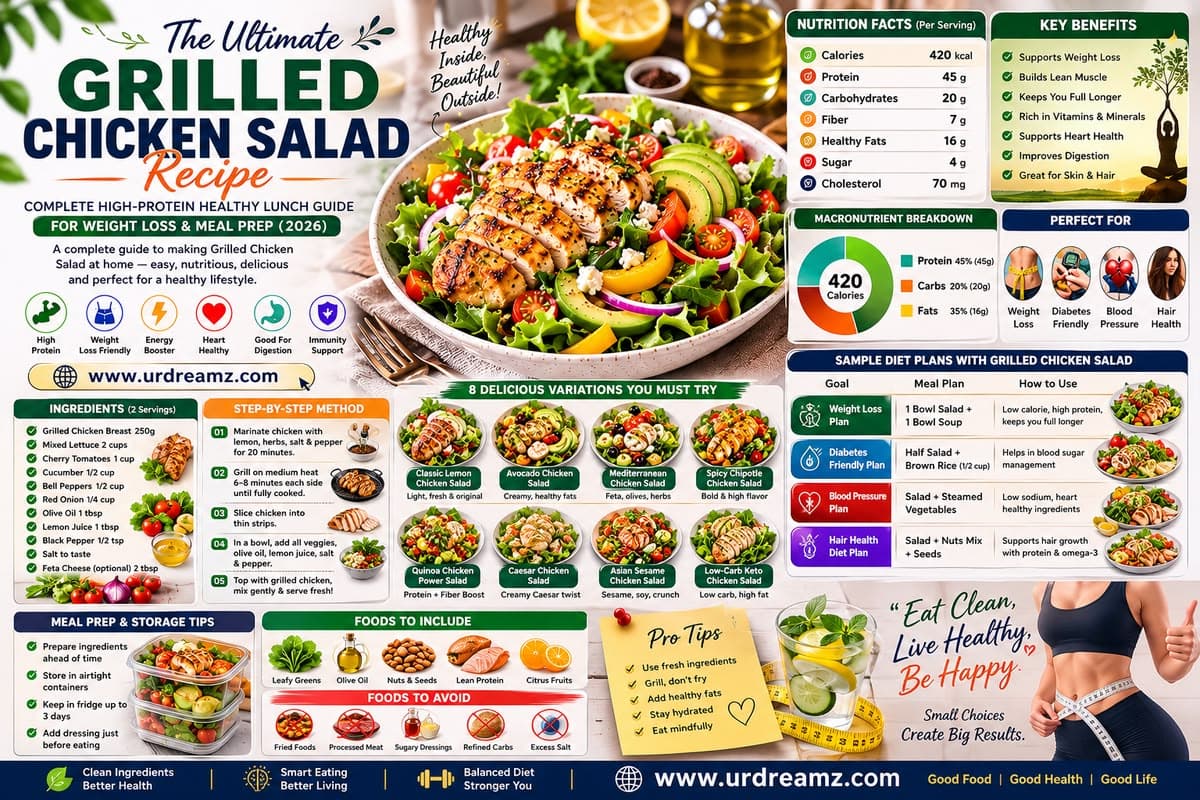
Grilled Chicken Salad Recipe: Complete High-Protein Healthy Lunch Guide
Everything you need to know about making Grilled Chicken Salad at home — ingredients, step-by-step method, protein and carbohydrate breakdowns, 8 variations, sample diet plans, and how this dish fits into eating patterns for weight loss, diabetes, blood pressure, digestion, and hair health.
Introduction: The Lunch That Actually Keeps You Full
Grilled Chicken Salad solves a problem most "healthy lunch" ideas fail at: staying satisfying past 2 PM. A plain bowl of lettuce might feel virtuous for the first hour after eating it, but without enough protein and fat, hunger tends to creep back quickly, often followed by a trip to the snack drawer or a sugary pick-me-up. Building the same salad around a solid portion of grilled chicken, a source of healthy fat like avocado or olive oil, and a mix of fresh vegetables changes that equation entirely — you get a lunch that is genuinely light, but also genuinely filling.
This guide walks through the complete process: how to season and grill chicken so it stays juicy rather than dry, how to build a salad around it properly, the full nutrition breakdown including protein and carbohydrate content, and how this dish fits into eating patterns for weight loss, diabetes, blood pressure, digestion, and even hair health. We also cover eight distinct variations of the recipe, from a Mediterranean-style version to a spicy Southwest take, along with sample diet plans built around this salad as a central meal.
Whether you're packing lunch for a busy office week, building a post-workout meal, or simply looking for a dinner that doesn't feel heavy, the same core method covered here applies — only the specific vegetables, cheese, and dressing change from one version to the next.
What Is Grilled Chicken Salad?
At its core, Grilled Chicken Salad is exactly what it sounds like: seasoned chicken breast, grilled until cooked through and lightly charred, sliced and served over a bed of fresh greens and vegetables, then finished with a simple dressing. What separates a genuinely good version from a forgettable one is usually the quality of two things — how well the chicken itself is seasoned and cooked, and how fresh and varied the vegetables are.
Because the base formula is so simple, it adapts easily to almost any flavor direction, from a bright Mediterranean profile with feta and olives to a smoky, spiced Southwest version with corn and black beans, all while keeping the same basic grill-then-toss technique.
It's also worth noting that this dish sits at an interesting intersection between a "salad" and a full meal — unlike a side salad meant to accompany something else, Grilled Chicken Salad is built to stand on its own as the entire meal, which is why portion size and protein content matter so much more here than in a typical garden salad.
Why This Dish Is a Lunch (and Dinner) Staple
This recipe checks nearly every box that matters for a everyday meal: it's quick to make, genuinely filling thanks to its protein content, easy to customize for different tastes and goals, and simple to pack for work or school. It also travels well, holds up reasonably in the refrigerator, and doesn't require any specialized equipment beyond a grill pan or stovetop skillet.
Because it combines lean protein with vegetables and healthy fat in one bowl, it also naturally aligns with several well-known healthy eating patterns, including Mediterranean-style eating and general high-protein, lower-carbohydrate approaches to weight management.
There's also a practical, everyday reason this dish keeps showing up in meal-prep rotations: it uses ingredients that are almost always available at any grocery store, regardless of season, which makes it one of the more dependable "go-to" recipes for anyone who doesn't want to plan an elaborate shopping trip just to eat well during a busy week.
Who This Recipe Is Best For
Grilled Chicken Salad suits busy professionals who want a filling lunch that reheats or packs easily, anyone focused on weight loss or high-protein eating, people managing blood sugar or blood pressure, and families looking for a lighter dinner option that still feels satisfying. Its simple, adjustable format also makes it a good fit for beginner cooks.
This guide includes general nutrition information related to common health considerations such as diabetes, blood pressure, digestive sensitivity, and hair health. This information is educational and not a substitute for personalized medical advice — always check with your doctor or a registered dietitian before making significant dietary changes, especially if you are managing a diagnosed health condition.
If you're new to cooking chicken at all, this is also a reasonable place to start, since the grilling technique here — season, sear, rest, slice — is one you'll reuse in countless other recipes once you've practiced it a few times on this one.
Kitchen Equipment You Will Need
A grill pan, outdoor grill, or regular skillet all work for cooking the chicken, along with tongs for flipping, a meat thermometer to confirm doneness, a cutting board and sharp knife for slicing the chicken and vegetables, and a large mixing bowl for tossing the salad together. None of this equipment is specialized, making the recipe accessible in almost any kitchen.
If you plan to make this recipe often, a dedicated salad spinner for washing and drying greens is a small but worthwhile investment, since properly dried greens hold dressing better and stay crisper for longer than greens that are still slightly wet.
Main Ingredients Overview
The base recipe needs just a handful of ingredient categories: chicken breast, salad greens, a mix of fresh vegetables, a source of healthy fat, and a simple oil-and-acid dressing. Everything beyond that — specific cheeses, specific herbs, specific proteins added on top — is where the eight variations covered later in this guide diverge.
Because the ingredient list is built around categories rather than a single fixed set of items, this is one of the easier recipes to make with whatever you already have on hand — a different green, a different vegetable, or a different cheese will still produce a satisfying result as long as the basic balance of protein, freshness, and fat stays intact.
Table: Full Ingredient List and Substitutes
| Ingredient | Purpose | Possible Substitute |
|---|---|---|
| Chicken breast (2 pieces) | Main protein | Chicken thigh (boneless, skinless) |
| Romaine or mixed greens | Salad base | Spinach, arugula, or kale |
| Cherry tomatoes | Freshness, vitamin C | Diced regular tomatoes |
| Cucumber | Crunch, hydration | Celery or radish |
| Red onion | Sharp flavor contrast | Shallot or scallion |
| Avocado | Healthy fat, creaminess | Olive oil drizzle |
| Olive oil | Cooking fat, dressing base | Avocado oil |
| Lemon juice | Brightness, dressing acid | Red wine or apple cider vinegar |
| Salt, pepper, mixed herbs | Seasoning | To taste |
Choosing the Right Chicken Cut
Boneless, skinless chicken breast is the standard choice for this recipe because it's lean and easy to slice neatly over a salad, but boneless chicken thighs work well too and tend to stay juicier, at the cost of slightly more fat and calories. Pounding chicken breast to an even thickness before grilling is one of the simplest ways to prevent the thinner end from drying out before the thicker end finishes cooking.
If you're cooking for a household with mixed preferences, grilling both a breast and a thigh option side by side, using the same seasoning, is an easy way to satisfy different textures and fat preferences without doubling your prep work.
Best Salad Greens
Romaine lettuce offers a satisfying crunch and holds up well under a warm topping like grilled chicken, while baby spinach and mixed greens bring a softer texture and slightly more nutrient density. Kale can also be used, though it benefits from a quick massage with a bit of the dressing beforehand to soften its texture.
Table: Salad Greens Compared
| Green | Texture | Best For |
|---|---|---|
| Romaine lettuce | Crisp, crunchy | Classic, Caesar-style salads |
| Baby spinach | Soft, tender | Fitness and Mediterranean bowls |
| Mixed greens | Varied, mild | General everyday use |
| Kale (massaged) | Hearty, chewy | Heartier, more filling salads |
| Arugula | Peppery, delicate | Mediterranean or Italian-style bowls |
Best Vegetables and Add-Ins
Cherry tomatoes, cucumber, bell peppers, carrots, and red onion all add crunch, color, and nutrients without significantly increasing the calorie count. Add-ins like boiled eggs, feta cheese, olives, or pumpkin seeds bring extra protein, healthy fat, or texture depending on which variation you're building.
Rotating which specific vegetables you use from week to week, even within the same base variation, is a simple way to keep the salad interesting without needing an entirely new recipe every time you make it.
Best Healthy Fats to Add
Avocado, olive oil, feta cheese, and pumpkin or sunflower seeds are the most common sources of healthy fat in this dish. A small amount goes a long way toward improving both flavor and satiety, so these are typically added in modest, measured portions rather than piled on generously.
Best Dressings
A simple olive oil and lemon juice dressing is the lightest and most versatile option, while a Greek yogurt-based dressing adds creaminess with less fat than a traditional mayonnaise-based one. A balsamic vinaigrette suits heartier, Mediterranean-style versions, and a lime-cilantro dressing pairs particularly well with a Southwest-style salad.
Making your own dressing from scratch, rather than reaching for a bottled version, is one of the simplest ways to control both sodium and added sugar, since many store-bought dressings contain more of both than most people expect from a "healthy" salad topping.
Table: Dressing Options Compared
| Dressing | Flavor Profile | Best Paired With |
|---|---|---|
| Olive oil and lemon | Light, bright | Classic, everyday salads |
| Greek yogurt dressing | Creamy, tangy, lower fat | Caesar-style, fitness bowls |
| Balsamic vinaigrette | Sweet, tangy | Mediterranean, Greek-style salads |
| Lime-cilantro dressing | Zesty, fresh | Southwest-style salads |
| Honey mustard dressing | Sweet, tangy | Avocado or fruit-based salads |
Table: Recipe At a Glance
| Detail | Information |
|---|---|
| Prep Time | 5–10 minutes |
| Cook Time | 10–14 minutes |
| Total Time | 15–25 minutes |
| Servings | 2 |
| Skill Level | Beginner-friendly |
| Best For | Lunch, light dinner, or meal prep |
| Calories (approx.) | ~320 kcal per serving |
Step 1: Season the Chicken
Pat the chicken breasts dry, then season both sides with salt, pepper, and your chosen herbs, or coat them in a simple marinade of olive oil, lemon juice, garlic, and herbs for twenty to thirty minutes if you have time. Even a few minutes of seasoning contact makes a noticeable difference compared to seasoning right as the chicken hits the pan.
If you're short on time, seasoning the chicken immediately before cooking still works reasonably well — the marinade step adds extra depth, but it isn't strictly required to end up with a flavorful result, especially if your dressing and other salad ingredients are well-seasoned too.
Step 2: Grill the Chicken
Heat a grill pan or skillet over medium-high heat with a small amount of oil, then cook the chicken for five to seven minutes per side, depending on thickness, until it's cooked through and reaches a safe internal temperature. Avoid pressing down on the chicken while it cooks, since this squeezes out moisture that would otherwise keep it juicy.
Resist the urge to flip the chicken too frequently — letting it sit undisturbed for the first few minutes on each side allows a proper sear to form, which helps both the flavor and the texture of the final sliced chicken.
Step 3: Rest and Slice
Remove the chicken from the heat and let it rest for three to five minutes before slicing. This resting period allows the juices to redistribute through the meat rather than spilling out onto the cutting board the moment you cut into it, which keeps the sliced chicken noticeably more moist.
Step 4: Assemble the Salad
While the chicken rests, combine your salad greens, cherry tomatoes, cucumber, and any other vegetables or add-ins in a large bowl. Building the base of the salad during the resting period is an easy way to keep the whole process efficient rather than waiting until the chicken is fully done to start.
Step 5: Dress and Serve
Add the sliced chicken on top of the assembled salad, drizzle with your chosen dressing, and toss gently to combine, or serve the dressing on the side if you're prepping the salad ahead of time. Finish with a sprinkle of fresh herbs or a final twist of black pepper before serving.
Tips for Juicy Grilled Chicken
Pound the chicken to an even thickness before cooking, don't skip the resting step, and use a thermometer rather than guessing by eye or cutting into the chicken to check doneness, since cutting into it too early releases moisture that should stay inside the meat.
A quick brine — even just fifteen minutes in lightly salted water before cooking — can also help chicken breast retain more moisture during grilling, which is a useful trick if you find your chicken tends to come out dry more often than not.
How to Know When Chicken Is Done
Chicken breast is safely cooked once it reaches an internal temperature of 165°F (74°C) at the thickest part, measured with a meat thermometer. The chicken should be opaque all the way through with no pink remaining, and the juices should run clear rather than pink or red.
Grilling Without an Outdoor Grill
A stovetop grill pan or a regular non-stick skillet both work well as substitutes for an outdoor grill. While you won't get the same smoky char, both methods still produce well-seared, juicy chicken as long as the pan is properly preheated before the chicken goes in.
An indoor countertop grill or even the oven's broiler setting can also work in a pinch, though broiling requires closer attention since the heat source is more intense and less forgiving than a stovetop pan.
Nutrition Facts Overview
A well-built serving of Grilled Chicken Salad made with lean chicken breast, a modest amount of olive oil, and a generous portion of vegetables typically lands under 350 calories while still delivering an impressively high amount of protein, which is a big part of why this dish is so often recommended for weight management and general healthy eating.
What makes this nutritional profile particularly useful is the ratio between protein and calories — very few lunch options deliver over 30 grams of protein for under 350 calories, which is part of why this specific combination of chicken and vegetables shows up so consistently across fitness and weight-loss meal plans.
Table: Nutrition Facts Per Serving (Approximate)
| Nutrient | Amount |
|---|---|
| Calories | ~320 kcal |
| Protein | ~35 g |
| Carbohydrates | ~10 g |
| Fat | ~16 g |
| Fiber | ~4 g |
| Sugar | ~4 g |
| Sodium | ~420 mg |
Note: Values are estimates and will vary based on the specific vegetables, dressing, and portion size used.
These figures assume roughly 150 grams of grilled chicken breast, two cups of mixed greens and vegetables, and about a tablespoon of olive oil-based dressing. Adjusting any of these portions, especially the amount of dressing or added cheese, will shift the final numbers accordingly.
Protein Content Explained
A single serving built around roughly 150 grams of grilled chicken breast provides around 35 grams of protein, which is a substantial share of most adults' daily protein target in one meal. This is a big part of why the dish keeps you full for hours rather than leaving you hungry shortly after eating, unlike a salad built around greens and dressing alone.
Adding a secondary protein source, like a boiled egg or a spoonful of feta, on top of the chicken pushes the total protein content even higher, which is exactly the strategy used in the High-Protein Fitness variation covered later in this guide.
Table: Protein Content Breakdown
| Component | Approx. Protein |
|---|---|
| 150 g grilled chicken breast | ~35 g |
| 1 boiled egg (add-in) | ~6 g |
| 2 tbsp feta cheese | ~4 g |
| 2 tbsp pumpkin seeds | ~5 g |
| 2 cups mixed greens | ~2 g |
Carbohydrate Content Explained
This dish is naturally low in carbohydrates, since chicken contains none and most of the vegetables used are non-starchy. The small amount of carbohydrate in a typical serving comes almost entirely from the vegetables themselves, plus a negligible amount from any dressing that contains a touch of honey or vinegar.
This low baseline carbohydrate count is exactly why the recipe adapts so easily to keto and other low-carb eating plans without needing significant changes — the base formula is already well within most low-carb targets before any adjustments are even made.
Table: Carbohydrate Breakdown by Component
| Component | Approx. Carbohydrates |
|---|---|
| Chicken breast | 0 g |
| 2 cups mixed greens | ~2 g |
| 1/2 cup cherry tomatoes | ~4 g |
| 1/2 cucumber | ~2 g |
| 1/2 avocado | ~6 g (mostly fiber) |
| Dressing (2 tbsp, varies) | ~1–3 g |
Calorie Content Explained
Calorie content mainly depends on how much oil, cheese, and higher-fat add-ins like avocado or nuts are used. A base version made with a light olive oil dressing, lean chicken, and mostly non-starchy vegetables generally stays under 350 calories, while a richer version with feta, olives, and a heavier dressing can climb noticeably higher.
Being aware of which specific add-ins push a version of this salad higher in calories — rather than avoiding those ingredients altogether — makes it easier to enjoy a richer variation occasionally while still keeping your everyday version lighter and more calorie-conscious.
Is Grilled Chicken Healthier Than Fried Chicken?
Yes, generally. Frying adds substantial extra fat and calories through both the breading and the frying oil itself, while grilling requires only a small amount of oil and no coating at all. Grilled chicken retains a much leaner protein-to-fat ratio, making it the clearly better option for weight management, heart health, and most other general health goals.
Grilled Chicken Salad for Different Health Conditions: An Overview
Because this dish is built from simple, whole ingredients that are each easy to adjust, Grilled Chicken Salad adapts well to a wide range of health goals and conditions. Below, we walk through how the base recipe supports several common concerns, including diabetes, blood pressure, weight loss, digestive health, and hair health. As with all health information in this guide, this section is educational and general — always consult your doctor or a registered dietitian for individualized advice.
For Diabetes and Blood Sugar (Sugar Patients)
Why it's useful: This salad is naturally low in carbohydrates and high in protein and fiber, a combination that helps produce a gentler blood sugar response compared to a carbohydrate-heavy meal. Best build: Stick to non-starchy vegetables, use a light olive oil and lemon dressing rather than a sweetened one, and avoid croutons or sugary dressings. What to watch: Store-bought dressings often contain more added sugar than expected, so making your own simple dressing is one of the easiest ways to keep this salad genuinely blood-sugar-friendly.
Pairing the salad with a source of healthy fat, like avocado or a modest amount of olive oil, can also help slow digestion slightly and smooth out the overall blood sugar response to the meal, especially when combined with its already high protein content.
For High Blood Pressure (BP)
Why it's useful: Building flavor from lemon juice, garlic, and fresh herbs instead of salt keeps the sodium content of this dish naturally low, and its vegetables provide potassium, a mineral commonly associated with healthy blood pressure regulation. Best build: Season the chicken with herbs and citrus rather than heavily salted seasoning blends, and choose fresh mozzarella or a smaller portion of feta over saltier, more processed cheeses. What to watch: Pre-made dressings, croutons, and cured toppings like olives or bacon can add meaningful amounts of sodium, so portion these thoughtfully if blood pressure is a concern.
Cooking the chicken with a dry herb rub instead of a store-bought seasoning packet is another simple way to control sodium at the source, since many pre-mixed poultry seasonings contain more salt than a home cook might expect.
For Weight Loss
Why it's useful: The combination of lean protein, fiber-rich vegetables, and a modest amount of healthy fat supports satiety at a comparatively low calorie cost, which is exactly what makes this dish so frequently recommended for weight management. Best build: Follow the weight-loss-focused variation described later in this guide, using a smaller amount of measured olive oil and avoiding calorie-dense add-ins like large amounts of cheese or croutons. What to watch: Dressing portion size is the single most common place extra, unaccounted-for calories sneak into an otherwise light salad.
Bulking up the vegetable portion relative to the dressing and cheese is one of the simplest ways to increase the overall size and visual satisfaction of the meal without meaningfully increasing its calorie count.
For Stomach and Digestive Health
Why it's useful: Grilled chicken is a lean, easily digestible protein compared to fattier or fried meats, and it doesn't carry the heaviness that can sometimes trigger digestive discomfort after eating. Best build: Choose milder vegetables like cucumber and well-washed lettuce, and go easy on raw onion or garlic if these tend to cause discomfort for you personally. What to watch: Very large raw salads can be harder to digest for some people simply due to volume and fiber content; starting with a smaller portion and paying attention to how your body responds is a reasonable approach if you have a sensitive stomach.
Chewing thoroughly and eating at a slower pace can also make a noticeable difference in how comfortably a large raw salad digests, since salads require more mechanical breakdown than softer, cooked foods before the stomach can process them efficiently.
For Hair Health
Why it's useful: Hair is largely made of protein, and a diet with adequate protein, iron, and zinc supports the basic building blocks needed for healthy hair growth. Chicken breast provides high-quality protein and iron, while add-ins like pumpkin seeds and eggs contribute zinc and biotin, nutrients frequently discussed in relation to hair health. Best build: Including a variety of protein sources like chicken, eggs, and seeds in the same salad broadens the range of nutrients relevant to hair health in one sitting. What to watch: No single meal or ingredient can reverse hair loss on its own, and hair thinning can have many underlying causes; anyone experiencing noticeable hair loss should speak with a doctor or dermatologist, since nutrition is only one of several possible contributing factors.
Consistency matters more than any single meal here — hair growth cycles unfold over months, so a diet that regularly includes enough protein and key micronutrients over time is far more relevant to hair health than any one particular salad eaten occasionally.
For Heart Health and Cholesterol
Why it's useful: Lean chicken breast, olive oil, and a generous portion of vegetables align closely with heart-healthy eating patterns like the Mediterranean diet, offering a favorable ratio of unsaturated to saturated fat. Best build: Use olive oil as the primary added fat, keep cheese and heavier dressings to a moderate portion, and lean on herbs, lemon, and vinegar for flavor. What to watch: Creamy, mayonnaise-heavy dressings and large amounts of cured meat like bacon can shift this dish away from its heart-healthy baseline if used generously.
Adding a handful of nuts or seeds also contributes additional unsaturated fats and fiber, both of which are commonly associated with supporting healthy cholesterol levels as part of an overall balanced diet.
Table: Health Condition Suitability Summary
| Health Condition | General Suitability | Key Adjustment |
|---|---|---|
| Diabetes / Blood Sugar | Generally suitable | Non-starchy vegetables, homemade dressing |
| High Blood Pressure | Generally suitable | Low-sodium seasoning, watch cheese and olives |
| Weight Loss | Generally suitable | Measure oil, limit high-calorie add-ins |
| Digestive Sensitivity | Generally suitable | Milder vegetables, smaller portions |
| Hair Health Support | Generally supportive | Include eggs, seeds for added zinc and biotin |
| Heart Disease / Cholesterol | Generally suitable | Olive oil, limit creamy dressings |
8 Ways to Make Grilled Chicken Salad
Once you're comfortable with the base technique, the real fun starts with variation. Below are eight distinct takes on this salad, each built around a different flavor profile or goal, from classic and Mediterranean to specifically weight-loss- or fitness-focused versions.
Treat these variations as a starting menu rather than a strict list — once you understand what each one changes, whether it's the cheese, the dressing, or the extra protein source, you can freely borrow elements from different versions to build whatever combination suits your mood or your goals that day.
1. Classic Healthy Grilled Chicken Salad
Ingredients: Grilled chicken breast, romaine lettuce, cucumber, cherry tomatoes, red onion, avocado, olive oil, lemon juice, salt, pepper, mixed herbs. Method: Marinate the chicken in olive oil, lemon, garlic, salt, and pepper for thirty minutes, grill for six to seven minutes per side, then combine the lettuce, cucumber, tomatoes, onion, and avocado in a bowl. Add the sliced chicken, drizzle with an olive oil and lemon dressing, toss, and garnish with fresh herbs before serving. This version is the most versatile, all-purpose starting point for anyone new to the recipe.
2. Mediterranean Grilled Chicken Salad
Ingredients: Grilled chicken breast, mixed lettuce, cherry tomatoes, cucumber, Kalamata olives, feta cheese, red onion, olive oil, lemon juice, oregano, black pepper. Method: Grill the chicken with oregano, garlic, and olive oil, mix the vegetables in a bowl, top with sliced chicken, feta, and olives, then finish with a lemon-olive oil dressing and a sprinkle of fresh oregano. This version leans into bright, briny Mediterranean flavors and pairs particularly well with whole-grain pita on the side.
3. High-Protein Fitness Chicken Salad
Ingredients: 250 g grilled chicken breast, baby spinach, two boiled eggs, avocado, cherry tomatoes, cucumber, pumpkin seeds, olive oil, lemon juice, black pepper. Method: Grill and slice the chicken, spread the spinach in a serving bowl, add the eggs, avocado, cucumber, and tomatoes, top with chicken and pumpkin seeds, then finish with an olive oil and lemon dressing. This version maximizes total protein content and is well suited as a gym meal or post-workout lunch.
4. Weight Loss Low-Calorie Chicken Salad
Ingredients: 150–200 g grilled chicken breast, lettuce, spinach, cucumber, bell peppers, carrots, cherry tomatoes, lemon juice, 1 tsp olive oil, black pepper, herbs. Method: Grill the chicken with herbs and pepper, mix all the fresh vegetables in a bowl, add the sliced chicken, then make a light dressing with just lemon juice and a single teaspoon of olive oil. Toss well and serve as a portion-controlled lunch or dinner. This version keeps calories as low as reasonably possible while still delivering a satisfying amount of protein.
5. Avocado Chicken Salad
Ingredients: Grilled chicken, avocado, lettuce, tomatoes, cucumber, lime dressing. Method: Follow the classic method, but increase the avocado portion and finish with a lime-based dressing instead of lemon for a slightly different, brighter citrus note. This version leans into extra healthy fats and creamy texture, making it especially filling.
6. Greek Chicken Salad
Ingredients: Chicken, feta cheese, olives, cucumber, tomatoes, oregano dressing. Method: Grill the chicken with oregano and garlic, then build the salad around cucumber, tomatoes, feta, and olives, finishing with an oregano-forward olive oil dressing. This version is closely related to the Mediterranean variation but leans more heavily into classic Greek salad flavors specifically.
7. Caesar Chicken Salad (Healthy Version)
Ingredients: Grilled chicken, romaine lettuce, whole wheat croutons, light parmesan, Greek yogurt Caesar dressing. Method: Grill the chicken as usual, then toss romaine with a small amount of light parmesan and a small portion of whole wheat croutons for crunch, using a Greek yogurt-based Caesar dressing instead of a traditional oil-and-egg-based one to significantly lower the fat content while keeping the familiar flavor.
8. Spicy Southwest Chicken Salad
Ingredients: Grilled chicken, corn, black beans, avocado, bell peppers, lime-cilantro dressing. Method: Season the chicken with a Southwest-style spice blend before grilling, then build the salad around corn, black beans, bell peppers, and avocado, finishing with a lime and cilantro dressing. This version adds more fiber and plant protein from the beans and corn compared to the other variations, along with a bolder, smokier flavor profile.
Table: Comparing All 8 Variations
| Variation | Key Feature | Best Suited For |
|---|---|---|
| Classic | Balanced, versatile | Everyday lunch |
| Mediterranean | Feta, olives, oregano | Mediterranean-style eating |
| High-Protein Fitness | Eggs, extra protein | Gym meals, post-workout |
| Weight Loss Low-Calorie | Minimal oil, portion control | Calorie deficit goals |
| Avocado | Extra healthy fat | Satiety-focused eating |
| Greek | Feta, olives, oregano dressing | Classic Greek flavor lovers |
| Caesar (Healthy) | Yogurt-based dressing | Lighter comfort-food craving |
| Spicy Southwest | Beans, corn, lime-cilantro | Bold flavor, added fiber |
Sample Healthy Diet Plans Using This Salad
Grilled Chicken Salad can serve as the anchor meal within a broader daily eating plan, and the specific variation you choose can shift depending on what that day's plan is built around — whether that's weight loss, blood sugar management, or muscle building.
Diet Plan Focus: Weight Loss
For a weight-loss-focused day, the Weight Loss Low-Calorie variation works well as a midday meal, paired with a lighter, protein-forward breakfast like Greek yogurt and a dinner built around grilled fish or chicken with extra vegetables. Keeping snacks minimal and centered on whole foods, like a piece of fruit or a small handful of nuts, rounds out this type of day.
Drinking water alongside meals and paying attention to genuine hunger cues, rather than eating purely on a schedule, also tends to support weight-loss goals more effectively than any single recipe swap on its own.
Diet Plan Focus: Diabetes Management
For blood sugar-focused eating, the Classic or Mediterranean variation works well, paired with a fiber-rich breakfast and a dinner that similarly emphasizes non-starchy vegetables and lean protein. Spacing meals fairly evenly throughout the day, rather than eating one very large meal, tends to support more stable blood sugar overall.
Pairing this salad with a short walk after eating, when possible, is another simple habit that some people find helps support a more stable blood sugar response, though this should be adapted to your own physical ability and health situation.
Diet Plan Focus: Muscle Building
For a muscle-building day, the High-Protein Fitness variation fits well as either lunch or a post-workout meal, paired with additional protein sources at other meals and a modest amount of complex carbohydrates like brown rice or sweet potato to support training energy needs.
Table: Sample One-Day Diet Plan (General Example)
| Meal | Example |
|---|---|
| Breakfast | Greek yogurt with berries, or eggs and vegetables |
| Lunch | Grilled Chicken Salad (variation based on goal) |
| Snack | A piece of fruit or a small handful of nuts |
| Dinner | Grilled fish or chicken with vegetables and a modest grain portion |
This is a general example, not a prescribed plan — individual calorie and nutrient needs vary and are best discussed with a healthcare provider or dietitian.
Who Should Limit or Avoid This Dish
Grilled Chicken Salad is broadly suitable for most people, but a few specific situations call for caution or modification. As with all health-related content in this guide, this is general, educational information rather than personal medical advice.
Table: Conditions Requiring Caution
| Condition / Situation | Why It Requires Caution |
|---|---|
| Poultry allergy | Chicken should be avoided entirely; substitute a plant-based or fish protein instead |
| Active digestive flare (e.g., diverticulitis, IBD flare) | Large raw salads can be harder to tolerate during a flare; well-cooked, lower-fiber options may be advised temporarily |
| Advanced chronic kidney disease | High-potassium ingredients like avocado and tomatoes may need to be limited depending on individual dietary restrictions |
This table is general educational information, not a diagnosis or personalized medical recommendation.
Meal Prep Guide
Grilled Chicken Salad is one of the easier dishes to meal prep, since the chicken, vegetables, and dressing can all be stored separately and combined fresh right before eating. This keeps the greens from wilting and the vegetables from becoming soggy over several days of storage.
A useful trick for weekly prep is to grill a large batch of chicken with two different seasoning profiles — say, a Mediterranean herb blend and a Southwest spice mix — so you can rotate between two of the variations covered in this guide throughout the week without any extra cooking effort beyond the initial batch.
Storage Tips
Store grilled chicken, chopped vegetables, and dressing in separate airtight containers in the refrigerator, assembling the salad fresh each time you're ready to eat. This single habit is the biggest factor in keeping meal-prepped salads tasting fresh through the end of the week rather than turning soggy by day two.
Freezing Instructions
Grilled chicken freezes well on its own for up to two months, making it convenient to batch-cook a larger amount and freeze individual portions. Fresh salad vegetables do not freeze well and should always be prepared fresh rather than frozen alongside the chicken.
Reheating Tips
Chicken can be gently reheated and served warm over a cold salad, or simply sliced cold straight from the refrigerator if you prefer a fully chilled dish. Avoid microwaving on high power for too long, since this tends to dry the chicken out and make it noticeably tougher.
Table: Storage and Shelf Life
| Component | Shelf Life |
|---|---|
| Grilled chicken (refrigerator) | 3–4 days |
| Grilled chicken (freezer) | Up to 2 months |
| Chopped fresh vegetables (refrigerator) | 2–3 days |
| Dressing (refrigerator, homemade) | Up to 1 week |
Common Mistakes to Avoid
Overcooking the chicken until it turns dry, skipping the resting step before slicing, dressing the salad too far in advance and letting it turn soggy, and under-seasoning the chicken since the vegetables alone won't carry much flavor are the most common mistakes home cooks run into with this recipe.
Another easy-to-miss mistake is cutting the chicken while it's still too hot, which releases more moisture than slicing it after a proper rest — even an extra minute or two of patience here noticeably improves the final texture of the sliced chicken.
Table: Mistakes and Quick Fixes
| Mistake | Quick Fix |
|---|---|
| Dry, overcooked chicken | Use a thermometer, pull at 165°F |
| Soggy salad | Store dressing separately until serving |
| Bland overall flavor | Season the chicken generously before cooking |
| Uneven cooking | Pound chicken to an even thickness |
| Too much dressing | Add gradually and toss, rather than pouring all at once |
Pro Tips for the Best Flavor
Marinate the chicken for at least twenty minutes whenever your schedule allows, toast nuts or seeds briefly before adding them for extra flavor, and always dress the salad just before serving to keep the greens crisp rather than wilted.
Family-Friendly Adaptations
For picky eaters, keep the chicken mildly seasoned and set out toppings like cheese, olives, and dressing separately so each family member can build their own version. Cutting the chicken and vegetables into smaller, bite-sized pieces also makes the salad more approachable for younger children.
Budget and Meal Planning Tips
Chicken breast, lettuce, and basic salad vegetables are all relatively affordable and widely available, making this a budget-friendly lunch to keep in regular rotation. Buying chicken in bulk and grilling a large batch at the start of the week is one of the simplest ways to keep this meal both cheap and convenient.
Buying vegetables that are in season, and rotating which specific vegetables you use based on what's on sale that week, can also meaningfully lower the overall cost of this recipe without sacrificing freshness or variety.
How We Put This Guide Together
This guide combines tested grilling and salad-building technique with practical, general nutrition information, written to answer the real questions people search for when looking into Grilled Chicken Salad. Rather than repeating any single source, we brought together common preparation methods, nutrition data, and health-condition considerations into one comprehensive reference, explained in plain, straightforward language for cooks at any experience level.
Our goal throughout has been to make this both a step-by-step recipe you can follow the first time and a reference you can return to later, whether you need a quick reminder on cooking temperature, a new variation to try, or guidance on how the dish fits a specific health goal.
Frequently Asked Questions
What goes in a grilled chicken salad?
Most versions include grilled chicken breast, salad greens, fresh vegetables like tomatoes and cucumber, a healthy fat like avocado or cheese, and a simple dressing.
Is grilled chicken salad healthy?
Yes, especially when made with lean chicken, fresh vegetables, and a light homemade dressing rather than a heavy, store-bought one.
Is grilled chicken salad good for weight loss?
Yes. Its combination of protein and fiber supports satiety at a relatively low calorie count, especially in the weight-loss-focused variation.
How much protein is in grilled chicken salad?
A typical serving with about 150 grams of grilled chicken breast provides roughly 35 grams of protein.
Is grilled chicken salad good for diabetics?
Generally yes, since it's naturally low in carbohydrates, though the dressing and any added grains should be chosen carefully.
Can grilled chicken salad help build muscle?
Yes, particularly the high-protein fitness variation, which increases the chicken portion and adds eggs for extra protein.
Is grilled chicken salad keto-friendly?
Yes, in most of its variations, since it's naturally low in carbohydrates as long as starchy add-ins like croutons or beans are limited or omitted.
Can I meal prep grilled chicken salad?
Yes. Store the chicken, vegetables, and dressing separately and assemble fresh each time to avoid a soggy salad.
How long does grilled chicken salad last in the fridge?
Grilled chicken on its own keeps for three to four days; chopped fresh vegetables are best used within two to three days for the best texture.
Can I freeze grilled chicken for salads?
Yes, grilled chicken freezes well on its own for up to two months, though fresh vegetables should always be prepared separately and fresh.
Is grilled chicken healthier than fried chicken?
Yes. Grilling uses much less oil and no breading, keeping the calorie and fat content considerably lower than a fried version.
What is the best seasoning for grilled chicken?
A simple blend of garlic, lemon, olive oil, salt, pepper, and dried herbs like oregano works well across nearly every variation of this salad.
Table: Quick-Answer FAQ Summary
| Question | Short Answer |
|---|---|
| Healthy? | Yes, especially homemade |
| Good for weight loss? | Yes |
| Good for diabetes? | Generally yes |
| Keto-friendly? | Yes, in most variations |
| Freezer-friendly (chicken)? | Yes, up to 2 months |
| Good for meal prep? | Yes, store components separately |
Conclusion
Grilled Chicken Salad earns its place as one of the most reliable lunches you can learn to make well, precisely because it solves the two biggest problems with "healthy" eating — staying satisfying and staying interesting. Whether you stick with the classic version, lean into a Mediterranean or Greek-style bowl, or build a Southwest-inspired plate loaded with beans and corn, the underlying technique of seasoning, grilling, resting, and assembling stays simple enough to repeat all week without ever feeling repetitive.
As with any general dietary guidance, the health-condition information in this guide is meant to support informed everyday choices rather than replace personalized medical or nutritional advice. If you are managing diabetes, high blood pressure, a digestive condition, hair loss, or any other health concern, working with your doctor or a registered dietitian will give you guidance tailored specifically to your own needs.
Once you've made a few of these variations, you'll likely find yourself building your own version on the fly — a different cheese here, a different dressing there — without needing to follow an exact recipe at all. That flexibility, more than any single ingredient, is what makes this salad such a durable addition to a genuinely sustainable way of eating.