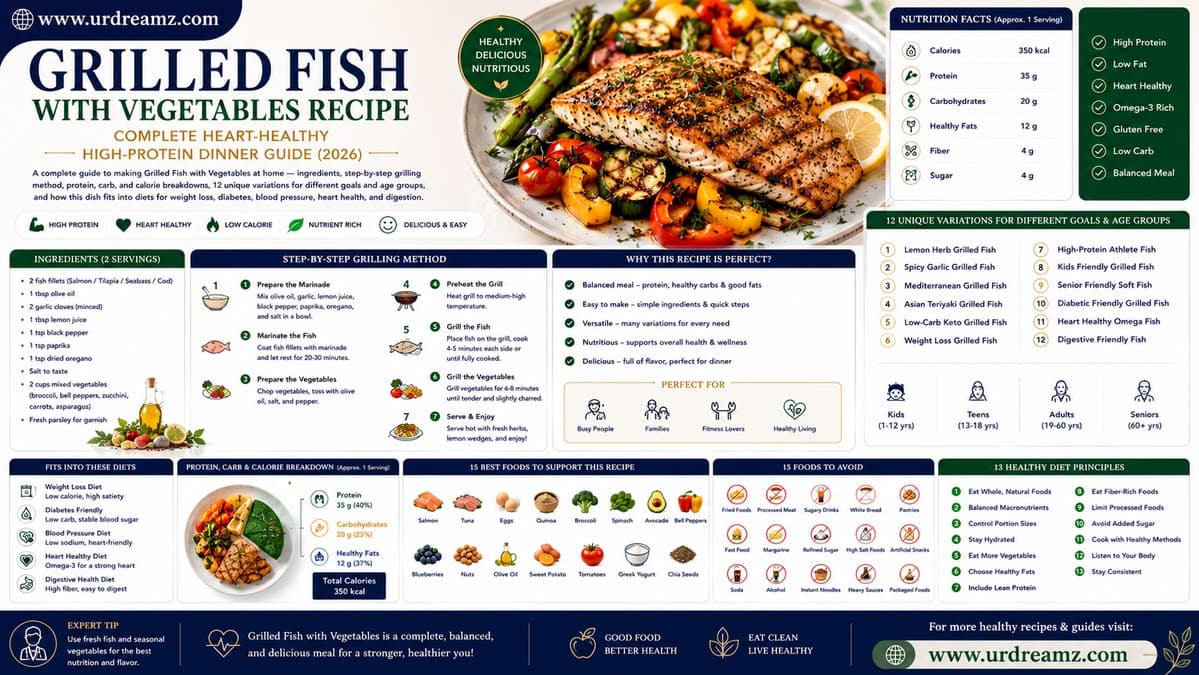
Grilled Fish with Vegetables Recipe: Complete Heart-Healthy High-Protein Dinner Guide
Everything you need to know about making Grilled Fish with Vegetables at home — ingredients, step-by-step grilling method, nutrition breakdowns, 12 variations for different goals and age groups, and frequently asked questions.
Introduction: A Dish That Fits Almost Every Table
Grilled Fish with Vegetables is one of the few dinners that genuinely works for almost anyone at the table — someone managing blood sugar, someone trying to lose weight, a growing teenager, a grandparent who needs something gentle on the stomach, or a family simply wanting a fast, flavorful weeknight meal. The core technique is simple: season the fish, grill it alongside a mix of colorful vegetables, and serve it hot with a squeeze of lemon. From that simple base, the dish can be reshaped in a dozen different directions depending on who you're cooking for.
This guide goes deep on every part of that process. We cover how to choose the right fish, how to build a marinade, the exact grilling steps from start to finish, and a full nutritional breakdown covering protein, carbohydrates, calories, and omega-3 content. We then walk through twelve distinct variations of this recipe — built specifically for weight loss, muscle building, vegetarians, children, teenagers, older adults, diabetes, heart health and blood pressure, general nutritional support alongside cancer treatment, Mediterranean-style eating, and a keto or low-carb approach — along with an honest look at which health situations call for extra caution.
What Is Grilled Fish with Vegetables?
At its core, this dish is a piece of fish — typically a fillet or steak — seasoned or marinated, then cooked over direct heat on a grill or grill pan until it turns opaque and flakes easily, served alongside a selection of vegetables cooked the same way. The vegetables pick up a similar smoky char to the fish, which ties the whole plate together with a consistent flavor profile.
Because both the fish and the vegetables cook using the same basic method — direct, high heat for a relatively short time — this dish comes together as close to a one-technique meal as you can get, even though it involves two very different ingredients cooking side by side.
Why This Dish Is a Cornerstone of Healthy Eating
Grilled Fish with Vegetables shows up repeatedly across nearly every major style of healthy eating — the Mediterranean diet, the DASH diet for blood pressure, high-protein fitness plans, and general weight-management guidance — because it hits several nutritional targets at once: lean protein, healthy fats (especially from oilier fish like salmon), fiber and micronutrients from the vegetables, and very little added sugar or refined carbohydrate.
Grilling itself also plays a role in why this dish is considered healthy. Because no breading or deep-frying is involved, and only a modest amount of oil is used for the marinade, the final calorie and fat content stays considerably lower than a fried or battered version of the same fish.
Who This Recipe Is Best For
This dish suits nearly everyone: busy families looking for a fast, one-technique dinner, anyone focused on high-protein or heart-healthy eating, people managing weight loss or blood sugar goals, and even children and older adults once the preparation is adjusted slightly for texture and seasoning. Because fish cooks quickly and doesn't require complicated technique, it is also a reasonable starting point for beginner cooks who feel intimidated by seafood.
This guide includes general nutrition information related to common health conditions such as diabetes, high blood pressure, heart disease, and digestive sensitivity, along with a section on conditions that call for extra caution. This information is educational and not a substitute for personalized medical advice — always check with your doctor or a registered dietitian, and especially an oncologist or specialist if you are managing a serious illness, before making significant dietary changes.
Kitchen Equipment You Will Need
An outdoor grill, a stovetop grill pan, or even a regular oven with a broiler setting can all be used for this recipe. Beyond that, you'll need a mixing bowl for the marinade, tongs or a fish spatula for flipping delicate fillets without breaking them, a meat thermometer to confirm doneness, and a baking sheet if you plan to roast the vegetables in the oven instead of grilling them directly.
Choosing the Right Fish
Firmer fish like salmon, tuna steak, swordfish, and mahi mahi hold together well on a grill and are more forgiving for beginners, while flakier white fish like cod, tilapia, and sea bass require a bit more care but offer a milder flavor that pairs well with a wider range of seasonings. Choosing a fish based on your own taste preference and comfort level with grilling technique is often more important than any single "best" option.
Table: Popular Fish Types and Their Traits
| Fish Type | Texture | Flavor | Beginner-Friendly? |
|---|---|---|---|
| Salmon | Firm, oily | Rich, distinct | Yes |
| Cod | Flaky, lean | Mild | Moderate care needed |
| Tilapia | Flaky, lean | Very mild | Moderate care needed |
| Sea Bass | Firm, moderate fat | Mild, slightly sweet | Yes |
| Tuna Steak | Very firm, meaty | Rich, meat-like | Yes |
| Mahi Mahi | Firm | Mild, slightly sweet | Yes |
| Trout | Tender, moderate fat | Mild, nutty | Moderate care needed |
| Snapper | Firm, lean | Mild, slightly sweet | Yes |
Main Ingredients Overview
The base recipe needs just a handful of ingredient categories: a fish fillet or steak, olive oil, garlic, lemon, a few dried or fresh herbs, and a selection of vegetables suited to grilling. Everything else — specific spice blends, specific vegetables, specific sauces — is where the twelve variations covered later in this guide diverge from one another.
Table: Full Ingredient List and Substitutes
| Ingredient | Purpose | Possible Substitute |
|---|---|---|
| Fish fillets (2, 6 oz each) | Main protein | Any firm or flaky white fish |
| Olive oil | Cooking fat, marinade base | Avocado oil |
| Garlic | Core aromatic | Garlic powder |
| Lemon juice and zest | Brightness, tenderizing acid | Lime juice |
| Paprika | Color, mild warmth | Smoked paprika |
| Dried oregano | Herbal depth | Italian seasoning |
| Fresh parsley | Garnish, freshness | Fresh dill or cilantro |
| Broccoli, bell peppers, zucchini, carrots | Vegetable base | Any grill-friendly vegetables |
| Salt and black pepper | Seasoning | To taste |
Best Vegetables for Grilling
Vegetables that hold their shape and don't turn to mush under high heat work best here: broccoli, bell peppers, zucchini, asparagus, carrots, green beans, and cauliflower are all popular choices. Denser vegetables like carrots benefit from being cut thinner or par-cooked slightly before grilling, since they take longer to soften than something like zucchini or bell peppers.
Table: Vegetable Grilling Times (Approximate)
| Vegetable | Approx. Grilling Time |
|---|---|
| Zucchini (sliced) | 6–8 minutes |
| Bell peppers (sliced) | 8–10 minutes |
| Broccoli florets | 8–10 minutes |
| Asparagus | 5–7 minutes |
| Carrots (thin sticks) | 10–12 minutes |
| Green beans | 7–9 minutes |
| Cauliflower florets | 10–12 minutes |
Herbs, Spices, and Marinades
A simple garlic-lemon-herb marinade is the most versatile starting point, but this dish adapts easily to bolder flavor directions. A honey-garlic glaze adds a sweet-savory finish, a Cajun-style spice blend brings smoky heat, a Mediterranean approach leans on oregano, olives, and feta, and a fresh mango salsa adds a bright, tropical contrast to the smoky fish.
Table: Marinade and Flavor Profile Options
| Flavor Profile | Key Ingredients | Best Paired With |
|---|---|---|
| Garlic Lemon Herb | Garlic, lemon, olive oil, parsley | Almost any fish |
| Honey Garlic Glaze | Honey, garlic, soy sauce | Salmon, tuna steak |
| Cajun Spice | Cajun seasoning, paprika, lime | Firm white fish |
| Mediterranean | Oregano, olives, cherry tomatoes, feta | Sea bass, snapper |
| Mango Salsa | Mango, red onion, lime, cilantro | Mahi mahi, tilapia |
| Parmesan Herb Crust | Parmesan, herbs, light breadcrumb | Firm white fish (oven method) |
Table: Recipe At a Glance
| Detail | Information |
|---|---|
| Prep Time | 15–20 minutes |
| Cook Time | 15–20 minutes |
| Total Time | 30–40 minutes |
| Servings | 2–4 |
| Skill Level | Beginner to moderate |
| Best Cooking Method | Outdoor grill, grill pan, or oven broiler |
| Calories (approx.) | 300–400 kcal per serving |
Step 1: Prepping the Fish
Pat the fish fillets completely dry with paper towels — this step matters more than it seems, since excess moisture prevents a good sear and makes the fish more likely to stick to the grill. If using whole fish, make two or three diagonal cuts on each side to help the marinade penetrate and allow the fish to cook more evenly.
Step 2: Marinating
Whisk together olive oil, minced garlic, lemon juice and zest, paprika, oregano, salt, and pepper, then coat the fish thoroughly. Cover and refrigerate for twenty to thirty minutes — long enough to add flavor, but not so long that the acid in the lemon juice begins to break down the texture of the flesh.
Step 3: Prepping the Vegetables
Cut the vegetables into similarly sized pieces so they cook at roughly the same rate, then toss them in olive oil, salt, and pepper, or a portion of the same marinade used for the fish. Larger, flatter pieces or skewered smaller pieces both work well and make flipping on the grill easier.
Step 4: Preheating the Grill
Preheat the grill or grill pan to medium-high heat before adding anything. A properly preheated grill is one of the most important factors in preventing sticking and achieving good grill marks, since food placed on a cold or lukewarm grill tends to stick and tear rather than release cleanly.
Step 5: Grilling the Fish
Lightly oil the grill grates, then place the fish on the grill and cook for four to six minutes per side, depending on thickness, until it flakes easily with a fork and reaches a safe internal temperature. Avoid moving the fish too soon after placing it down — let it develop a light sear before attempting to flip it.
Step 6: Grilling the Vegetables
Grill the prepared vegetables alongside or after the fish, turning occasionally, until they are tender with light char marks, following the approximate times in the earlier vegetable table. Denser vegetables should go on first, with quicker-cooking ones added a few minutes later so everything finishes around the same time.
Step 7: Checking Doneness
Fish is done when it turns opaque throughout, flakes easily with a fork, and reaches a safe internal temperature. A meat thermometer inserted into the thickest part of the fillet is the most reliable way to confirm doneness without cutting into the fish and losing moisture.
Step 8: Resting and Serving
Let the fish rest for two to three minutes after removing it from the grill, which allows the juices to settle. Garnish with fresh parsley or dill and serve with lemon wedges alongside the grilled vegetables.
Table: Internal Temperature and Doneness Guide
| Fillet Thickness | Approximate Internal Temperature |
|---|---|
| Thin fillets (1/2–1 inch) | 130–135°F (54–57°C) |
| Medium fillets (1–1.5 inches) | 135–140°F (57–60°C) |
| Thick fillets (1.5+ inches) | 140–145°F (60–63°C) |
| Well done | 145°F+ (63°C+) |
Fish is generally considered done when it flakes easily and is opaque throughout; follow local food safety guidance for minimum safe temperatures.
Should You Marinate Fish Before Grilling?
Yes, in most cases. A short marinade of twenty to thirty minutes adds flavor and a bit of tenderness without breaking down the fish's texture. Marinating much longer than that, especially with a citrus-heavy marinade, can start to "cook" the surface of the fish through the acid, resulting in a mushier texture once it hits the grill.
Can You Grill Frozen Fish?
It's best to fully thaw fish before grilling, since frozen or partially frozen fillets cook unevenly and are more prone to sticking and falling apart on the grill. Thawing overnight in the refrigerator, or using a quick cold-water thaw for about thirty minutes, both work well before starting the recipe.
Skin On or Skin Off?
Leaving the skin on, especially for oilier fish like salmon, helps hold the fillet together on the grill and adds a crispy texture once cooked. If you prefer not to eat the skin, it can simply be removed after cooking rather than before, which still gives you the structural benefit during grilling.
Grilling in Foil vs Direct Grill
Grilling fish directly on the grates gives the best char and grill marks but requires more attention to prevent sticking, while wrapping fish in a foil packet is a more forgiving, beginner-friendly method that traps steam and keeps the fish extra moist, though it won't develop the same smoky char.
Oven-Grilled Alternative
If you don't have access to an outdoor grill, a stovetop grill pan or the oven's broiler setting can produce a very similar result. Broiling fish on a high rack for roughly the same amount of time as grilling gives a comparable sear and doneness, making this recipe fully accessible even without outdoor grilling equipment.
How to Prevent Fish From Sticking
Make sure the fish is thoroughly dry before cooking, preheat the grill fully, oil the grates (not just the fish) right before cooking, and avoid flipping too early. Fish naturally releases from a properly heated, oiled grill once a sear has formed — if it resists when you try to flip it, it usually just needs another minute before it will release cleanly.
Nutrition Facts Overview
A serving of Grilled Fish with Vegetables made with a lean or moderately fatty fish, a modest amount of olive oil, and a generous portion of vegetables delivers a strong balance of protein and healthy fat with very few carbohydrates, making it one of the more nutritionally efficient dinners you can make at home.
Table: Nutrition Facts Per Serving (Standard Recipe, Approximate)
| Nutrient | Amount |
|---|---|
| Calories | ~350 kcal |
| Protein | ~32 g |
| Carbohydrates | ~12 g |
| Fat | ~18 g |
| Fiber | ~4 g |
| Sugar | ~4 g |
Note: Values are estimates and vary significantly by fish type, portion size, and amount of oil used.
Protein Content Explained
Fish is one of the most efficient sources of lean, high-quality protein available, typically delivering a large amount of protein relative to its calorie count. A standard 6-ounce fillet of most common fish provides enough protein to cover a substantial share of an adult's daily protein needs in a single serving.
Table: Protein Content by Fish Type (Per 6 oz Cooked)
| Fish Type | Approx. Protein |
|---|---|
| Salmon | ~34 g |
| Cod | ~30 g |
| Tilapia | ~32 g |
| Tuna steak | ~40 g |
| Sea bass | ~32 g |
| Mahi mahi | ~33 g |
Carbohydrate Content Explained
Fish itself contains essentially no carbohydrates, which means the total carbohydrate content of this dish comes almost entirely from the vegetables served alongside it. This makes the dish naturally very low in carbohydrates unless a starchy side like rice or potatoes is added.
Table: Carbohydrate Breakdown by Component
| Component | Approx. Carbohydrates |
|---|---|
| Fish (any type) | 0 g |
| 1 cup mixed grilled vegetables | ~10 g |
| 1/2 cup brown rice (optional side) | ~22 g |
| 1 small sweet potato (optional side) | ~24 g |
| 2 tbsp marinade (varies) | ~1–3 g |
Calorie Content Explained
Calorie content varies mainly based on the type of fish used and how much oil goes into the marinade. Leaner fish like cod and tilapia tend to be lower in calories, while oilier fish like salmon runs somewhat higher due to its healthy fat content, though still well within a moderate range for a full dinner portion.
Table: Calories by Fish Type (Per 6 oz Cooked, Approximate)
| Fish Type | Approx. Calories |
|---|---|
| Cod | ~150 kcal |
| Tilapia | ~170 kcal |
| Sea bass | ~180 kcal |
| Mahi mahi | ~170 kcal |
| Salmon | ~280 kcal |
| Tuna steak | ~250 kcal |
Is Grilled Fish Healthier Than Fried Fish?
Yes, generally. Frying adds a significant amount of additional fat and calories through the breading and cooking oil, while grilling relies on a much smaller amount of oil and no breading at all. Grilled fish typically retains more of its lean protein-to-fat ratio, making it the better choice for most health goals, including weight loss and heart health.
Omega-3 Fats and Why They Matter
Oilier fish like salmon, mackerel, and trout are rich in omega-3 fatty acids, a type of fat that has been studied for its potential role in supporting heart and brain health. While leaner white fish contains less omega-3 than salmon, it still contributes lean protein and other beneficial nutrients, making a variety of fish types a reasonable approach rather than relying on just one.
Table: Omega-3 Content by Fish Type (Approximate, Per 6 oz)
| Fish Type | Omega-3 Level |
|---|---|
| Salmon | High (~2–2.5 g) |
| Trout | High (~1.5–2 g) |
| Tuna steak | Moderate (~1 g) |
| Sea bass | Moderate (~0.7 g) |
| Cod | Low (~0.3 g) |
| Tilapia | Low (~0.2 g) |
Is Grilled Fish Good for Weight Loss?
Yes. Grilled fish is naturally lean, high in protein, and low in carbohydrates, all of which support satiety at a relatively low calorie cost. Pairing it with a generous portion of grilled non-starchy vegetables and going easy on added oil and sauces makes this one of the more efficient dinners for anyone working toward a calorie deficit.
Is Grilled Fish Good for Diabetes (Sugar)?
Generally, yes. Fish itself contains no carbohydrates and therefore has minimal direct impact on blood sugar. Pairing it with non-starchy grilled vegetables and avoiding sugary glazes or breading keeps the overall meal aligned with blood sugar management goals. This recipe does not treat or cure diabetes, but it can be a reasonable part of a broader, balanced meal plan for people managing the condition.
Is Grilled Fish Good for Blood Pressure (BP)?
Yes, especially when prepared with minimal added salt. Building flavor from garlic, lemon, and herbs rather than salt-heavy seasoning blends keeps the sodium content low, and the omega-3 fats in oilier fish like salmon have been studied for a possible supportive role in blood pressure and cardiovascular health more broadly.
Is Grilled Fish Good for Stomach and Digestive Health?
Generally, yes. Fish is a lean, easily digestible protein compared to fattier or fried meats, and it doesn't carry the heaviness that can sometimes cause digestive discomfort after a meal. Pairing it with well-cooked, non-gas-forming vegetables makes it a gentle option for anyone with a sensitive stomach, though individual tolerance to specific vegetables like broccoli or cauliflower can vary.
Is Grilled Fish Good for Heart Health?
Yes, particularly when made with oilier fish like salmon or trout, olive oil, and a generous portion of vegetables. The combination of lean protein, omega-3 fats, and low saturated fat content aligns closely with heart-healthy eating patterns like the Mediterranean and DASH diets.
Table: Health Condition Suitability Summary
| Health Condition | General Suitability | Key Adjustment |
|---|---|---|
| Diabetes / Blood Sugar | Generally suitable | Non-starchy vegetables, avoid sugary glazes |
| High Blood Pressure | Generally suitable | Low-sodium seasoning, herbs and lemon |
| Weight Loss | Generally suitable | Lean fish, measured oil, extra vegetables |
| Heart Disease | Generally suitable | Oilier fish, olive oil, minimal saturated fat |
| Digestive Sensitivity | Generally suitable | Well-cooked vegetables, mild seasoning |
12 Ways to Make Grilled Fish with Vegetables
Once you understand the base technique, the fun part is adapting it. Below are twelve distinct variations of this recipe, each built with a different person, goal, or life stage in mind — from weight loss and muscle building to children, older adults, and specific health conditions.
1. Classic Grilled Fish with Vegetables
Best for: Healthy adults, general family dinner. Ingredients: Salmon, cod, tilapia, or sea bass; olive oil; garlic; lemon juice; black pepper; paprika; oregano; broccoli; bell peppers; zucchini; carrots. Method: Marinate the fish in lemon, garlic, and herbs for twenty minutes, coat the vegetables in olive oil and herbs, preheat the grill to medium heat, grill the fish four to five minutes per side depending on thickness, grill the vegetables eight to ten minutes, and serve with lemon and fresh parsley. This version is the most balanced, all-purpose starting point for anyone new to the recipe.
2. Weight Loss Grilled Fish
Best for: Fat loss, calorie deficit goals. Ingredients: Tilapia or cod, broccoli, cauliflower, zucchini, lemon, garlic, black pepper. Method: Use only about a teaspoon of olive oil total, skip heavy sauces entirely, and grill the fish and vegetables as usual. A small, optional portion of brown rice or quinoa can be added on the side if extra carbohydrates fit your daily plan. This version keeps the calorie count as low as reasonably possible while still delivering a satisfying, high-protein meal.
3. High-Protein Gym Version
Best for: Muscle building, active training schedules. Ingredients: Salmon or tuna steak, broccoli, green beans, bell peppers, olive oil, garlic, herbs. Method: Grill the fish as usual, then serve with a larger portion of high-protein vegetables and a side of quinoa or sweet potato to support higher calorie and carbohydrate needs around training. This version prioritizes a larger total protein and calorie count compared to the standard recipe.
4. Vegetarian Alternative (No Fish)
Best for: Vegetarians. Ingredients: Tofu or paneer, mushrooms, bell peppers, zucchini, broccoli, olive oil, garlic, Italian herbs. Method: Season firm tofu or paneer cubes the same way you would fish, then grill them alongside the vegetables until lightly charred. Serve with brown rice or quinoa. This version keeps the same grilling technique and flavor profile while removing the fish entirely for a fully vegetarian plate.
5. Kids-Friendly Version
Best for: Children age four and up. Ingredients: Mild, boneless white fish, carrots, sweet corn, potatoes, a small amount of butter, mild herbs. Method: Keep the fish boneless and only lightly seasoned, gently grill or steam the vegetables until soft, and cut everything into small, manageable bite-sized pieces before serving. This version avoids strong spice and any bones, both of which matter for younger children still learning to eat fish safely.
6. Teen Fitness Version
Best for: Active teenagers, young athletes. Ingredients: Salmon, sweet potato, broccoli, bell peppers, olive oil, lemon, herbs. Method: Grill the fish as usual and balance the plate with a solid portion of protein alongside complex carbohydrates like sweet potato, which supports the higher energy needs of growing, physically active teenagers involved in sports or regular exercise.
7. Senior-Friendly Version
Best for: Older adults. Ingredients: Soft fish like salmon or cod, steamed broccoli, carrots, spinach, olive oil, lemon. Method: Avoid overcooking the fish so it stays tender rather than tough, keep vegetables soft rather than heavily charred for easier chewing and digestion, and use a lighter hand with salt and seasoning. This version prioritizes gentle texture and lower sodium, both common considerations for older adults.
8. Diabetes-Friendly Version
Best for: People managing blood sugar. Ingredients: Salmon or cod, broccoli, spinach, cauliflower, olive oil, lemon, garlic. Method: Avoid any breading or sugary glazes, stick to non-starchy vegetables, and pay attention to portion size for the fish and any optional grain side. This recipe does not treat diabetes on its own, but it can be a reasonable component of a broader, balanced meal plan for people managing the condition, ideally developed with a healthcare provider or dietitian.
9. Heart and High Blood Pressure Friendly Version
Best for: Heart health, high blood pressure management. Ingredients: Salmon, asparagus, broccoli, bell peppers, olive oil, lemon, garlic, dill. Method: Replace added salt with herbs and lemon for flavor, avoid processed seasoning blends that often contain hidden sodium, and choose an omega-3-rich fish like salmon as the primary protein. This version leans specifically into the flavor tools that don't rely on sodium, while still maximizing heart-supportive fats.
10. Cancer-Supportive Healthy Meal
Best for: General healthy eating during or after cancer treatment, with individual needs varying widely. Ingredients: Salmon or trout, broccoli, kale, spinach, garlic, olive oil, turmeric, black pepper. Method: Grill the fish and vegetables lightly, being careful to avoid heavy charring. If you or a loved one is undergoing cancer treatment, dietary needs should always be customized according to guidance from an oncologist or registered dietitian, since treatment can significantly affect appetite, digestion, and nutrient needs in ways general recipes cannot account for.
11. Mediterranean Style
Best for: Anyone following a Mediterranean eating pattern. Ingredients: Sea bass, cherry tomatoes, olives, olive oil, garlic, oregano, lemon. Method: Grill the fish with a generous herb and olive oil marinade, and serve alongside a Greek salad and whole-grain pita for a complete Mediterranean-style meal that emphasizes healthy fats, vegetables, and moderate portions of whole grains.
12. Keto / Low-Carb Version
Best for: Ketogenic or strict low-carb eating plans. Ingredients: Salmon, butter, broccoli, cauliflower, spinach, herbs. Method: Grill the fish with a butter-herb baste instead of a lighter olive oil marinade, and serve with low-carb vegetables instead of rice or potatoes. This version increases the proportion of healthy fats slightly while keeping total carbohydrates to a minimum.
Table: Comparing All 12 Variations
| Recipe Type | Best For | Main Protein | Side |
|---|---|---|---|
| Classic | Family | Fish | Mixed vegetables |
| Weight Loss | Fat loss | Cod / Tilapia | Low-calorie vegetables |
| High-Protein Gym | Muscle building | Salmon / Tuna | Quinoa / Sweet potato |
| Vegetarian | Vegetarians | Tofu / Paneer | Grilled vegetables |
| Kids | Children | Boneless white fish | Soft vegetables |
| Teens | Active teens | Salmon | Sweet potato + vegetables |
| Seniors | Older adults | Soft fish | Steamed vegetables |
| Diabetes-Friendly | Blood sugar management | Salmon / Cod | Non-starchy vegetables |
| Heart / BP-Friendly | Heart health | Salmon | Low-sodium vegetables |
| Cancer-Supportive | Nutritious meal | Salmon / Trout | Cruciferous vegetables |
| Mediterranean | Mediterranean diet | Sea bass | Salad |
| Keto | Low-carb | Salmon | Broccoli and cauliflower |
Best Side Dishes for Grilled Fish
Beyond the grilled vegetables already included in the dish, brown rice, quinoa, a simple mixed salad, roasted baby potatoes, or whole-grain pita all pair well, depending on your dietary goals. Lighter sides work best when the fish itself is rich or oily, while heartier sides suit leaner fish and higher-calorie needs.
Table: Side Dish Pairing Guide
| Side Dish | Why It Works |
|---|---|
| Brown rice | Whole grain, complements richer fish |
| Quinoa | Adds plant protein and fiber |
| Mixed green salad | Light, fresh contrast |
| Roasted baby potatoes | Heartier option for higher-calorie needs |
| Whole-grain pita | Pairs well with Mediterranean-style fish |
| Cauliflower rice | Low-carb, keto-friendly option |
Best Sauces and Dressings
A simple lemon-butter sauce adds richness for special occasions, a light yogurt-dill sauce suits a lighter, heart-conscious plate, mango salsa brings a fresh, tropical brightness, and a classic olive oil and lemon drizzle keeps things simple and works well with nearly every fish type.
Table: Sauce Options Compared
| Sauce | Flavor Profile | Best Paired With |
|---|---|---|
| Lemon-butter sauce | Rich, buttery | Firm white fish |
| Yogurt-dill sauce | Cool, tangy | Salmon, trout |
| Mango salsa | Sweet, tropical | Mahi mahi, tilapia |
| Olive oil and lemon | Light, simple | Any fish |
| Chimichurri | Herby, tangy | Firm, meatier fish |
Meal Prep Guide
Grilled fish is best enjoyed fresh, but it can still work reasonably well for meal prep if grilled slightly under to allow for gentle reheating later, then stored with the vegetables in a separate or divided container to keep textures distinct.
Storage Tips
Store leftover grilled fish and vegetables in an airtight container in the refrigerator for up to three days. Keeping any sauce separate until serving helps prevent the fish from becoming soggy.
Freezing Instructions
Cooked fish can be frozen for up to one to two months, though the texture may soften slightly once thawed, which is more noticeable in flakier fish like cod or tilapia than in firmer fish like salmon or tuna. Cool completely before freezing in an airtight, freezer-safe container.
Reheating Tips Without Drying It Out
Reheat gently, covered, in a low oven or a covered skillet with a small splash of water or broth to help retain moisture. Avoid high-heat microwaving, which tends to dry out fish quickly and can produce an unpleasant, rubbery texture.
Table: Storage and Shelf Life
| Storage Method | Shelf Life |
|---|---|
| Refrigerator (airtight container) | 2–3 days |
| Freezer (airtight, freezer-safe) | 1–2 months |
| Room temperature | Not recommended beyond 2 hours |
Common Mistakes When Grilling Fish
Overcooking the fish until it turns dry, not preheating the grill fully, skipping the marinade and ending up with underseasoned fish, flipping too early and causing it to stick or break apart, and overcrowding the grill so the fish steams instead of searing are the most common mistakes home cooks run into with this recipe.
Table: Mistakes and Quick Fixes
| Mistake | Quick Fix |
|---|---|
| Dry, overcooked fish | Use a thermometer, pull at the right temperature |
| Fish sticking to the grill | Preheat fully, oil the grates, don't flip too early |
| Underseasoned fish | Marinate for at least 20 minutes |
| Fish falling apart | Use a fish spatula, handle gently |
| Unevenly cooked vegetables | Cut into similar sizes, add denser ones first |
Who Should Limit or Avoid Certain Preparations
While fish is broadly considered one of the healthiest proteins available, there are specific situations where certain preparations, fish types, or ingredients in this dish call for caution. As with all health-related guidance in this article, this is general, educational information and not a personal medical recommendation — anyone with a diagnosed condition or allergy should follow their own doctor's or dietitian's advice.
Table: Conditions That Require Extra Caution
| Condition / Situation | Why It Requires Caution |
|---|---|
| Fish or shellfish allergy | Fish should be fully avoided; use the vegetarian variation instead |
| Pregnancy or young children | Certain high-mercury fish (like large tuna or swordfish) are best limited; smaller fish like tilapia, cod, and salmon are generally lower-mercury choices |
| Gout | Some fish are higher in purines; portion and fish choice may need adjustment |
| Blood thinner medication (e.g., warfarin) | Leafy greens like kale and spinach are high in vitamin K, which can interact with these medications |
| Advanced chronic kidney disease | Protein and certain vegetable choices (potassium, phosphorus) often need individualized limits |
| Histamine intolerance | Certain fish, especially if not very fresh, can trigger symptoms in sensitive individuals |
| Soy allergy | Honey-garlic and other soy-based marinades should be avoided or substituted |
| IBS with garlic/onion sensitivity (FODMAP) | Garlic-heavy marinades may need to be reduced or swapped for garlic-infused oil |
| Swallowing difficulties (dysphagia) | Bones and firm textures can pose a choking risk; boneless, softer fish is safer |
| Active cancer treatment | Appetite, taste, and food safety needs vary significantly; follow oncologist or dietitian guidance |
This table is general educational information, not a diagnosis or personalized medical recommendation.
Fresh vs Frozen Fish
Fresh fish, when truly fresh, offers the best texture for grilling, but high-quality frozen fish — properly flash-frozen shortly after being caught — is nutritionally comparable and often more practical and affordable for regular cooking. The key with frozen fish is thawing it properly and fully before grilling, as covered earlier in this guide.
How to Buy Fresh Fish
Fresh fish should smell mild and oceanic rather than strongly "fishy," have firm flesh that springs back when pressed, and clear, not cloudy, eyes if buying whole fish. Buying from a reputable fishmonger or grocery store with high turnover generally improves your odds of getting genuinely fresh product.
A Note on Sustainable Seafood
Choosing fish from well-managed, sustainable fisheries or farms supports both ocean health and the long-term availability of seafood as a food source. Many grocery stores now label seafood with sustainability certifications, which can be a simple way to make a more environmentally conscious choice without extensive research at the point of purchase.
Pro Tips for the Best Flavor
Bring fish to room temperature for about ten minutes before grilling for more even cooking, don't skip the resting period after cooking, and always finish with fresh herbs and a squeeze of lemon just before serving rather than during cooking, since fresh acidity and herbs lose some of their brightness under heat.
Family-Friendly Adaptations
For families with a range of ages and preferences at the table, preparing a milder base marinade and offering bolder sauces like mango salsa or a spicier Cajun rub on the side lets everyone customize their own plate without needing to cook multiple separate meals.
Budget and Meal Planning Tips
Choosing more affordable fish like tilapia or frozen cod, buying vegetables in season, and building the marinade from pantry staples like garlic, lemon, and dried herbs all help keep this dish budget-friendly for regular weekly rotation, even though fish can sometimes be pricier than other proteins.
How We Put This Guide Together
This guide combines tested grilling technique with practical, general nutrition information, written to walk both beginners and experienced cooks through the full process of making Grilled Fish with Vegetables. Rather than repeating any single source, we brought together common preparation methods, nutrition data across different fish types, and adjustments for a wide range of ages and health goals into one comprehensive reference, explained in plain, straightforward language.
Frequently Asked Questions
What is the best fish for grilling?
Firmer fish like salmon, tuna steak, and mahi mahi are the most beginner-friendly, since they hold together well on the grill; flakier fish like cod and tilapia require a bit more care but work well too.
How do you grill fish without it sticking?
Pat the fish dry, preheat the grill fully, oil the grates before cooking, and avoid flipping too early — let it develop a sear first.
Is grilled fish healthier than fried fish?
Yes. Grilling uses much less oil and no breading, keeping the calorie and fat content considerably lower than a fried version.
How long should fish be grilled?
Most fillets take about four to six minutes per side, depending on thickness, until they flake easily and reach a safe internal temperature.
Should fish be marinated before grilling?
Yes, generally for twenty to thirty minutes, which adds flavor without breaking down the texture the way a much longer marinade might.
Is grilled fish good for weight loss?
Yes. It is naturally lean and high in protein, which supports satiety at a relatively low calorie cost, especially when paired with plenty of vegetables.
Is grilled fish good for diabetes?
Generally yes, since fish itself contains no carbohydrates, though the overall meal and any sides should still be built with blood sugar goals in mind.
Which fish has the highest omega-3 content?
Salmon and trout are among the richest sources of omega-3 fatty acids compared to leaner white fish like cod or tilapia.
Can grilled fish be meal prepped?
Yes, though it's best enjoyed fresh; if prepping ahead, slightly undercook it and reheat gently to avoid drying it out.
Can you freeze grilled fish?
Yes, for up to one to two months, though flakier fish may soften somewhat in texture after freezing and thawing.
What vegetables go best with grilled fish?
Broccoli, bell peppers, zucchini, asparagus, and carrots are all popular choices that grill well alongside fish.
Is grilled fish good for heart health?
Yes, particularly oilier fish like salmon, thanks to its omega-3 content, lean protein, and generally low saturated fat.
Table: Quick-Answer FAQ Summary
| Question | Short Answer |
|---|---|
| Healthier than fried? | Yes |
| Good for weight loss? | Yes |
| Good for diabetes? | Generally yes |
| Good for blood pressure? | Yes, with low-sodium seasoning |
| Freezer-friendly? | Yes, 1–2 months |
| Keto-friendly? | Yes, with low-carb sides |
Conclusion
Grilled Fish with Vegetables earns its place as one of the most broadly useful dinners you can learn to make well, precisely because it isn't really one recipe — it's a flexible, forgiving technique that can be reshaped for a child's plate, a bodybuilder's meal prep container, a heart-conscious dinner, or a special Mediterranean-style spread, all using the same basic grilling method. Once you're comfortable with the core steps of seasoning, grilling, and checking doneness, moving between the twelve variations covered in this guide becomes second nature.
As with any general dietary guidance, the health-condition information in this guide is meant to support informed everyday choices rather than replace personalized medical or nutritional advice. If you are managing diabetes, heart disease, kidney disease, a food allergy, or are undergoing cancer treatment, working with your doctor, oncologist, or a registered dietitian will give you the most accurate guidance for your own situation.