Green Detox Smoothie Recipe: Healthy Ingredients, Benefits and Weight Loss Guide
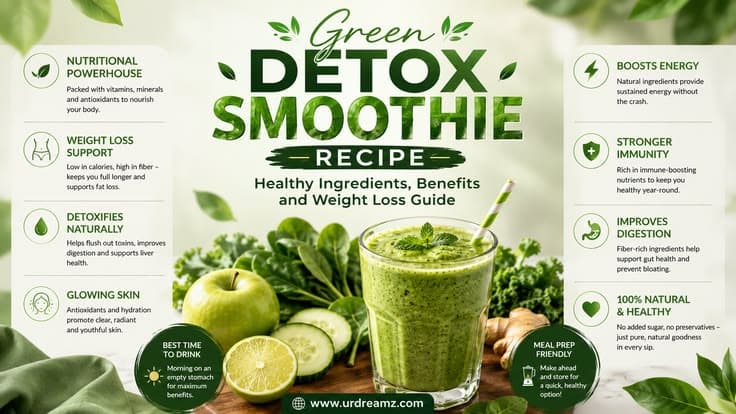
A green detox smoothie is one of the most powerful, convenient, and genuinely nutritious things you can drink for your health. In less than five minutes, you can blend a single glass that delivers an extraordinary range of vitamins, minerals, antioxidants, fiber, and plant-based protein — everything your body needs to start the day with energy, clarity, and vitality. Whether you want to lose weight, improve digestion, boost immunity, enhance your skin, or simply build a healthier morning routine, the green detox smoothie is one of the most versatile tools in the modern wellness kitchen.
This complete guide covers everything from the perfect base recipe and the best ingredients to detailed health benefits, weight loss strategies, flavor variations, protein additions, meal prep methods, common mistakes, and honest answers to the most frequently asked questions about green smoothies. Every recipe and tip is written in my own words based on thorough nutritional research — no fluff, no filler, just practical, evidence-based guidance you can apply immediately.
More Healthy Recipes from Our Collection
This green detox smoothie guide is part of a growing collection of evidence-based healthy recipes designed to support every aspect of your nutrition. Before we dive in, here are the related guides that connect naturally with your smoothie journey:
- High Protein Breakfast Recipes — Complete Morning Meal Guide
- Weight Loss Breakfast Recipes — Healthy Fat Loss Guide
- Diabetic Breakfast Recipes — Healthy Low Sugar Morning Meals
- Overnight Oats Recipes — Easy Make-Ahead Breakfast Ideas
- Green Tea Recipe — Health Benefits, Weight Loss and Brewing Guide
- DASH Diet Complete Guide — Low Sodium Recipes for Blood Pressure
What Is a Green Detox Smoothie?
A green detox smoothie is a blended beverage made primarily from dark leafy greens — typically spinach, kale, or cucumber — combined with fresh or frozen fruits, a liquid base, and optional nutritional boosters like chia seeds, ginger, or protein powder. The word "detox" in this context refers to the smoothie's naturally high content of antioxidants, chlorophyll, fiber, and phytonutrients that support the body's own detoxification systems — primarily the liver, kidneys, and digestive tract.
Unlike green juice, which extracts liquid from plants and discards the fiber, a green smoothie retains the entire fruit and vegetable — including all dietary fiber, which is critical for digestive health, blood sugar stability, and satiety. This makes green smoothies a significantly more complete nutritional package than juices for most health goals.
Green smoothies originated in the raw food wellness movement of the early 2000s and have since become one of the most popular healthy beverages globally. Their appeal is straightforward: they are fast to make, easy to customize, genuinely nutritious, and one of the most efficient ways to consume a large variety of plant foods in a single serving.
Green Smoothie vs Green Juice: Which Is Better?
The green smoothie vs green juice debate is one of the most common questions in the wellness world. Both have genuine health benefits, but they serve different purposes and the right choice depends on your specific health goals.
| Feature | Green Smoothie | Green Juice |
|---|---|---|
| Fiber content | High (whole plant retained) | Very low (fiber removed) |
| Satiety | High — keeps you full for hours | Low — absorbed quickly |
| Calorie content | Higher (more filling) | Lower (less filling) |
| Blood sugar impact | Moderate (fiber slows absorption) | Higher spike (no fiber) |
| Nutrient absorption | Good, with fiber benefits | Very fast, concentrated |
| Digestive support | Excellent (fiber feeds gut bacteria) | Moderate |
| Equipment needed | Standard blender | Cold-press juicer (expensive) |
| Best for | Meal replacement, weight loss, daily nutrition | Short-term cleansing, micronutrient flood |
| Diabetic-friendly | Yes (fiber stabilizes glucose) | Use with caution |
| Preparation time | Under 5 minutes | 10–15 minutes + cleanup |
For most people, green smoothies are the superior everyday choice because they retain fiber, are more filling, support gut health, and are significantly faster and cheaper to prepare. Green juices have value for specific cleansing protocols or for flooding the body with concentrated micronutrients, but they should not replace regular fiber intake.
The Perfect Green Detox Smoothie Formula
Every great green smoothie follows a simple formula. Master this framework and you can create hundreds of variations without ever needing a specific recipe again. The formula balances macronutrients, ensures proper texture, delivers maximum nutrition, and guarantees a flavor that actually tastes good.
| Component | Amount | Best Options | Role |
|---|---|---|---|
| Liquid Base | 1 cup (240ml) | Almond milk, coconut water, oat milk, water | Creates blendable consistency |
| Leafy Greens | 1–2 large handfuls | Spinach, kale, cucumber, Swiss chard | Core nutrition, chlorophyll, fiber |
| Fruit | 1 cup | Banana, berries, mango, pineapple, apple | Natural sweetness, vitamins, energy |
| Protein Source | 1 serving | Greek yogurt, protein powder, nut butter, chia seeds | Satiety, muscle support, staying power |
| Healthy Fat | 1 tablespoon | Avocado, chia seeds, flaxseeds, almond butter | Creaminess, fat-soluble vitamin absorption |
| Flavor Boosters | To taste | Ginger, lemon juice, cinnamon, vanilla extract | Depth of flavor, additional health benefits |
| Sweetener (optional) | 1 tsp if needed | Honey, 1 date, maple syrup, stevia | Natural sweetness without refined sugar |
| Ice / Frozen Fruit | ½ cup | Ice cubes or frozen banana/berries | Thick, cold, creamy texture |
Blending order matters: Always add your liquid to the blender first, then soft ingredients, then greens, and finally frozen ingredients on top. This order prevents the blender from struggling and ensures a smooth, even consistency every time.
Classic Green Detox Smoothie Recipe
This is the foundational green detox smoothie recipe — clean, refreshing, gently sweet, and packed with nutrients. It is the perfect starting point for beginners and a reliable daily staple for experienced smoothie drinkers.
Ingredients (1 serving)
- 1 cup fresh spinach (or ½ cup frozen spinach)
- ½ cucumber, roughly chopped
- 1 green apple, cored and chopped
- ½ lemon, juiced
- 1 teaspoon fresh ginger, grated
- 1 cup cold water or coconut water
- 1 tablespoon chia seeds
- Ice cubes as needed
Instructions
- Add coconut water or cold water to your blender first.
- Add spinach and cucumber next.
- Add chopped green apple and fresh ginger.
- Squeeze in the lemon juice.
- Add chia seeds and ice cubes last.
- Blend on high speed for 60–90 seconds until completely smooth.
- Taste and adjust — add more lemon for tartness, a teaspoon of honey for sweetness, or extra water for thinner consistency.
- Pour into a glass or mason jar and drink immediately for maximum nutrient freshness.
Nutrition estimate per serving: Approximately 120–150 calories, 4g protein, 6g fiber, rich in Vitamin C, Vitamin K, potassium, magnesium, and EGCG-like antioxidants from the apple and spinach.
Green Smoothie Nutrition Facts
The nutritional profile of a green smoothie varies significantly based on ingredients, but a well-constructed green detox smoothie delivers an impressive range of essential nutrients in a single glass.
| Nutrient | Amount | Health Benefit |
|---|---|---|
| Calories | 120–180 kcal | Low calorie, high nutrient density |
| Carbohydrates | 25–35g | Sustained energy from natural sugars and fiber |
| Dietary Fiber | 5–8g | Gut health, satiety, blood sugar regulation |
| Protein | 3–5g (base) / 20–25g (with protein additions) | Satiety, muscle support |
| Healthy Fats | 2–4g | Fat-soluble vitamin absorption, brain health |
| Vitamin C | 40–80mg (50–90% DV) | Immunity, collagen production, iron absorption |
| Vitamin K | 80–200mcg (70–200% DV) | Bone health, blood clotting |
| Potassium | 400–600mg | Blood pressure, muscle function |
| Magnesium | 40–80mg | Sleep, stress, muscle recovery |
| Iron | 2–4mg | Oxygen transport, energy production |
| Chlorophyll | High (from greens) | Detoxification, anti-inflammatory, alkalizing |
| Antioxidants | Very high (polyphenols, carotenoids) | Cellular protection, anti-aging |
Best Leafy Greens for Green Smoothies
The choice of leafy green is the most important decision you make when building a green smoothie. Different greens have vastly different nutritional profiles, flavors, and textures — understanding these differences helps you choose the right green for your specific health goals and taste preferences.
Spinach — The Best Green for Beginners
Spinach is the undisputed champion for green smoothie beginners. Its mild, almost neutral flavor disappears completely when blended with sweet fruits, making it entirely undetectable in the final smoothie. Nutritionally, spinach is a powerhouse — rich in iron, Vitamin K, Vitamin A, folate, and magnesium. Fresh baby spinach or frozen spinach both work equally well. Start with one large handful (approximately 30g) and increase from there.
Kale — Maximum Nutrition but Stronger Flavor
Kale delivers exceptional nutritional density — it is one of the most nutrient-rich foods on Earth, providing extraordinary amounts of Vitamins K, A, and C, alongside calcium, manganese, and powerful antioxidants including quercetin and kaempferol. However, kale has a much stronger, more bitter flavor than spinach and a tougher texture. Remove the tough central stems before blending and pair with sweet fruits like mango, banana, or pineapple to balance the bitterness. Massaging kale briefly before blending can also reduce bitterness.
Cucumber — The Ultimate Hydration Green
Cucumber is approximately 95% water, making it the most hydrating green smoothie addition available. It has a completely neutral, clean flavor that works beautifully in any green smoothie. Beyond hydration, cucumber provides silica (excellent for skin and joint health), Vitamin K, and anti-inflammatory compounds. It is particularly valuable in summer smoothies or post-workout recovery blends when hydration is a priority.
Celery — The Gut Health and Blood Pressure Star
Celery contains a unique combination of phytonutrients — particularly phthalides — that relax arterial walls and support healthy blood pressure. It is also exceptionally high in Vitamin K and provides a mild, savory undertone that pairs surprisingly well with apple and lemon. Celery has gained significant popularity as a morning detox drink ingredient, and adding 2–3 stalks to a green smoothie delivers all its benefits in a far more complete nutritional package than celery juice alone.
Avocado — Creamy Fat and Nutrient Delivery
While technically a fruit, avocado functions as a leafy green in smoothie nutrition terms because it contributes healthy monounsaturated fats, fiber, and a remarkable range of B vitamins alongside potassium, magnesium, and folate. Half an avocado transforms the texture of any smoothie from watery to luxuriously creamy, while its fat content significantly increases the absorption of fat-soluble vitamins (A, D, E, K) from the other greens.
Best Fruits for Green Smoothies
Fruits are what make green smoothies palatable and delicious. They provide natural sweetness that balances the bitterness of leafy greens, contribute vitamins and antioxidants, and create the fruity base note that most people associate with a satisfying smoothie.
| Fruit | Flavor Impact | Key Nutrients | Best Paired With | Weight Loss Friendliness |
|---|---|---|---|---|
| Banana | Sweet, creamy, thick | Potassium, B6, resistant starch | Spinach, peanut butter, cocoa | Moderate (caloric but very filling) |
| Pineapple | Tropical, tangy, bright | Vitamin C, bromelain (digestive enzyme) | Spinach, coconut water, ginger | Excellent (bromelain aids fat digestion) |
| Mango | Rich, tropical, sweet | Vitamins A and C, beta-carotene | Spinach, coconut milk, lime | Good (natural sweetness reduces sugar need) |
| Green Apple | Tart, fresh, light | Quercetin, pectin fiber, Vitamin C | Cucumber, ginger, lemon, kale | Excellent (low sugar, high fiber) |
| Blueberries | Sweet, mild, slightly tart | Anthocyanins, Vitamin C, antioxidants | Spinach, banana, almond milk | Excellent (low calorie, high antioxidant) |
| Strawberries | Bright, fruity, summery | Vitamin C, manganese, polyphenols | Banana, yogurt, spinach | Excellent (very low calorie) |
| Kiwi | Tangy, unique, refreshing | Vitamin C (150% DV), digestive enzymes | Spinach, cucumber, mint | Excellent (very low sugar) |
| Papaya | Mild, tropical, creamy | Papain (digestive enzyme), Vitamin C, A | Ginger, lime, coconut water | Excellent (digestive support) |
| Mixed Berries | Complex, vibrant, tart | Comprehensive antioxidant spectrum | Spinach, kale, protein powder | Excellent (lowest sugar of all fruits) |
15 Easy and Healthy Smoothie Recipes
Here are 15 thoroughly tested smoothie recipes covering every flavor profile, health goal, and dietary preference. Each recipe is designed to be quick, nutritious, and genuinely delicious — made entirely from whole, recognizable ingredients with no artificial anything.
1. Classic Green Detox Smoothie
Blend 1 cup spinach, ½ cucumber, 1 green apple (cored), juice of ½ lemon, 1 teaspoon fresh ginger, 1 cup coconut water, and ice cubes. High in Vitamin C, deeply hydrating, and gently cleansing for the liver and digestive system. This is the gold standard green smoothie — light, fresh, and perfectly balanced.
2. Blueberry Smoothie
Blend 1 cup frozen blueberries, 1 ripe banana, ½ cup Greek yogurt, 1 cup milk of choice, 1 tablespoon honey, 1 tablespoon chia seeds, and ice cubes. Rich in anthocyanin antioxidants that support brain health, eye health, and cardiovascular protection. The Greek yogurt adds protein while chia seeds deliver omega-3 fats and fiber.
3. Chocolate Protein Smoothie
Blend 1 ripe banana, 1 cup milk, 2 tablespoons cocoa powder, 1 tablespoon peanut butter, ice cubes, and optionally 1 scoop chocolate protein powder. This recipe satisfies chocolate cravings while delivering a protein-rich, antioxidant-packed breakfast. Cocoa powder contains flavanols that support heart health, and peanut butter adds healthy fats and sustained energy.
4. Vanilla Smoothie
Blend 1 cup vanilla almond milk, 1 banana, 1 scoop vanilla protein powder, ½ teaspoon vanilla extract, 1 teaspoon honey, and ice cubes. Clean, classic, and endlessly satisfying — this is the go-to recipe for those who want a high-protein smoothie without strong flavors getting in the way.
5. Peach Smoothie
Blend ¼ cup rolled oats, 1 cup milk, ½ cup Greek yogurt, 1 cup fresh or frozen peaches, 1 tablespoon maple syrup, 1 tablespoon chia seeds, and ½ teaspoon vanilla extract. The rolled oats make this smoothie extraordinarily filling — perfect as a complete meal replacement. Peaches provide Vitamins A and C alongside natural digestive enzymes.
6. Strawberry Banana Smoothie
Blend 1 cup frozen strawberries, 1 banana, ½ cup plain or vanilla yogurt, 1 cup milk, 1 tablespoon honey or maple syrup, ½ teaspoon vanilla extract, and ice cubes. One of the most universally beloved smoothie combinations — naturally sweet, vibrant pink, high in Vitamin C, and deeply satisfying. Great for kids and adults alike.
7. Green Smoothie (Classic Avocado Kale)
Blend ½ ripe avocado, 1 cup kale leaves (stems removed), 1 cup spinach, 1 banana, 1 cup almond milk, 1 tablespoon flax meal, 1 teaspoon honey, and ice cubes. This is one of the most nutritionally complete smoothies you can make — avocado provides healthy fats and creaminess, kale delivers exceptional antioxidants, and flax meal adds omega-3 fatty acids and lignans for hormonal health.
8. Watermelon Smoothie
Blend 2 cups seedless watermelon cubes, juice of 1 small lime, and ice cubes if desired. This minimal-ingredient smoothie is the most hydrating recipe in this collection — watermelon is 92% water and rich in lycopene (a powerful antioxidant), citrulline (supports blood flow and muscle recovery), and Vitamins A and C. Perfect for post-workout recovery or hot summer days.
9. Mango Smoothie (with Oats and Carrots)
Blend ¼ cup rolled oats, 1 large carrot (roughly chopped), 1 cup mango chunks, 1 cup milk of choice, ½ cup Greek yogurt, 1 tablespoon maple syrup, ½ teaspoon vanilla extract, and ½ teaspoon ground cinnamon. This unusual but extraordinary combination delivers beta-carotene from both carrot and mango, prebiotic fiber from oats, and protein from yogurt — in a naturally sweet, warming flavor profile.
10. Pineapple Smoothie (Tropical Ginger)
Blend 1 cup fresh pineapple chunks, 1 banana, ½ cup plain yogurt, ½ cup coconut milk, 1 teaspoon freshly grated ginger, and 1 cup ice cubes. Pineapple's bromelain enzyme and ginger's gingerols create a powerful digestive support smoothie. The coconut milk adds tropical richness and medium-chain triglycerides that the body burns efficiently as fuel.
11. Berry Protein Smoothie
Blend 1 cup mixed berries, 1 scoop vanilla protein powder, 1½ bananas, 1¼ cups almond milk, and 1 tablespoon chia seeds. This is the ideal post-workout recovery smoothie — the protein supports muscle repair, berries provide anti-inflammatory antioxidants, banana replenishes glycogen, and chia seeds add omega-3 fats and fiber.
12. Mango Coconut Smoothie
Blend 1 cup mango chunks, ½ cup pineapple, ½ cup coconut milk, 1 tablespoon coconut flakes, and 1 teaspoon honey. This tropical smoothie is naturally dairy-free, rich in Vitamins C and A from the mango and pineapple, and provides medium-chain fatty acids from coconut milk for quick, clean energy.
13. Avocado Smoothie
Blend ½ ripe avocado, 1 banana, 1 cup spinach, 1¼ cups almond milk, 1 tablespoon lime juice, and 1 teaspoon honey. Avocado creates the creamiest, most luxurious smoothie texture possible — and its healthy fats dramatically increase the absorption of fat-soluble vitamins from the spinach. This smoothie is particularly excellent for skin health and hormonal balance.
14. Pineapple Gut Health Smoothie
Blend 1 cup pineapple, 1½ bananas, ½ cup plain yogurt, 1 teaspoon freshly grated ginger, 1¼ cups water, and 1 teaspoon honey. This smoothie specifically targets digestive wellness — pineapple's bromelain breaks down proteins, yogurt's probiotics replenish beneficial gut bacteria, ginger reduces gut inflammation, and banana's resistant starch feeds healthy microbiome bacteria. Drink this one slowly and mindfully.
15. Matcha Smoothie
Blend 1 teaspoon ceremonial or culinary matcha powder, 1 banana, 1¼ cups almond milk, ½ cup plain yogurt, and ice cubes. This green tea smoothie combines the antioxidant power of matcha's EGCG with banana's natural creaminess and yogurt's protein and probiotics — creating a calm, focused energy that lasts throughout the morning without coffee jitteriness. For more on matcha's benefits, see our Green Tea Complete Guide.
Health Benefits of Green Detox Smoothies
The health benefits of regular green smoothie consumption are broad, well-supported by nutritional science, and cumulative over time. Here is a comprehensive overview of what happens to your body when green smoothies become a consistent part of your diet.
| # | Health Benefit | Key Ingredients Responsible |
|---|---|---|
| 1 | Supports natural liver detoxification | Spinach, parsley, lemon, cucumber |
| 2 | Improves digestion and reduces bloating | Ginger, pineapple, papaya, fiber from greens |
| 3 | Boosts immune system function | Spinach, citrus, berries, ginger |
| 4 | Supports healthy weight and fat loss | High fiber, low calorie density, protein |
| 5 | Improves skin health and complexion | Vitamin C, antioxidants, healthy fats from avocado |
| 6 | Reduces inflammation throughout the body | Ginger, turmeric, berries, leafy greens |
| 7 | Supports cardiovascular health | Potassium, fiber, antioxidants, healthy fats |
| 8 | Provides sustained natural energy | Natural sugars + fiber, B vitamins, iron |
| 9 | Improves gut microbiome diversity | Fiber (prebiotic), probiotics from yogurt |
| 10 | Supports blood sugar regulation | Fiber slows glucose absorption, cinnamon, greens |
| 11 | Strengthens bones | Calcium from greens, Vitamin K, magnesium |
| 12 | Improves mental clarity and focus | B vitamins, iron, magnesium, healthy fats |
| 13 | Supports healthy cholesterol levels | Soluble fiber, plant sterols from greens |
| 14 | Provides deep cellular hydration | Cucumber, coconut water, watermelon |
| 15 | Supports healthy aging and longevity | Antioxidants neutralizing oxidative stress |
Green Smoothies for Weight Loss: The Complete Strategy
Green detox smoothies are one of the most effective breakfast choices for sustainable weight loss — and the reasons are rooted in basic nutrition science, not marketing hype. Understanding exactly how and why they support fat loss helps you use them strategically for maximum results.
Why Green Smoothies Support Fat Loss
The primary mechanism is simple: green smoothies are extraordinarily high in volume, fiber, water content, and nutrients relative to their calorie count. A well-constructed green smoothie containing spinach, cucumber, green apple, chia seeds, and coconut water delivers around 150–200 calories while creating genuine satiety that lasts 3–4 hours — far longer than a 300-calorie muffin or sugary cereal that leaves you hungry within an hour.
This is the concept of caloric density — choosing foods and drinks that fill your stomach, satisfy your hunger, and fuel your body with the fewest possible calories while delivering maximum nutrition. Green smoothies are perhaps the most efficient vehicle for this principle in the entire food world.
5 Summer Smoothies Specifically for Weight Loss
1. Tropical Detox Smoothie: Blend 1 cup pineapple chunks, ½ cucumber, 1 teaspoon ginger, and 1 cup coconut water. Ideal for debloating — pineapple's bromelain reduces digestive inflammation while cucumber flushes excess water weight.
2. Triple Berry Blast: Blend ½ cup strawberries, ½ cup blueberries, ½ cup Greek yogurt, and ½ cup almond milk. Boosts metabolism with anthocyanin antioxidants from berries and provides protein from yogurt to keep hunger at bay.
3. Glowing Green Smoothie: Blend 1 cup spinach, ½ avocado, 1 green apple, and 1 cup water. High in fiber and healthy fats — avocado creates satiety that prevents overeating for hours, while spinach provides nutrients with almost zero calories.
4. Creamy Banana Oats Smoothie: Blend 1 banana, 2 tablespoons rolled oats, 1 tablespoon peanut butter, and 1 cup almond milk. The perfect meal replacement — rolled oats provide beta-glucan fiber that stabilizes blood sugar and dramatically reduces hunger between meals.
5. Protein Blueberry Shake: Blend 1 cup blueberries, 1 scoop protein powder, 1 cup milk, and ice cubes. Ideal for fat burn — high protein content increases metabolic rate through the thermic effect of food, and blueberries specifically have been shown in studies to reduce abdominal fat.
Key Weight Loss Smoothie Principles
- Always include a protein source — protein is the most satiating macronutrient and prevents muscle loss during weight reduction
- Use unsweetened almond milk or coconut water as your liquid base to minimize calorie load
- Prioritize berries over tropical fruits — berries are the lowest sugar, highest antioxidant fruit option
- Add 1–2 tablespoons of chia seeds or flaxseeds to every smoothie — their fiber and omega-3 fats dramatically extend satiety
- Avoid adding honey, maple syrup, or juice unless absolutely necessary for palatability — let fruit provide the sweetness
- Make it a meal, not a snack — drink your smoothie as a complete breakfast replacement, not in addition to other breakfast foods
For complementary weight loss breakfast ideas that pair perfectly with a smoothie routine, see our Weight Loss Breakfast Recipes Guide.
High-Protein Green Smoothies: 13 Protein Smoothie Ideas
Protein is the most important macronutrient for anyone using smoothies to support fitness, muscle building, post-workout recovery, or sustained morning energy. These 13 protein smoothie ideas cover every protein source and every flavor preference — from classic banana peanut butter to sophisticated mocha cold brew.
1. Banana Peanut Butter Protein
Blend 2 ripe bananas, 2 tablespoons peanut butter, 1 cup milk, 1 scoop vanilla protein powder, and a pinch of cinnamon. Over 25g of protein per serving. The banana-peanut butter combination is one of the most satisfying, energy-dense smoothie pairings available — naturally creamy, sweet, and filling without any artificial additions.
2. Berry Greek Yogurt Boost
Blend 1 cup mixed berries, 1 cup Greek yogurt, 1 tablespoon chia seeds, ½ cup almond milk, and 1 teaspoon honey. Greek yogurt contributes approximately 15–18g of protein from casein and whey, and the mixed berries add antioxidants for immune support and recovery.
3. Tropical Mango Green Protein
Blend 1 cup spinach, 1 cup mango chunks, 2 tablespoons hemp seeds, 1 cup almond milk, and ½ cup coconut yogurt. Hemp seeds are a complete plant protein containing all essential amino acids, making this an ideal vegan protein smoothie that also delivers Vitamin C, beta-carotene, and digestive enzymes.
4. Chocolate Almond Power
Blend 1 banana, 2 tablespoons cocoa powder, 1 tablespoon almond butter, 1 scoop plant-based protein powder, and 1 cup almond milk. Indulgent, rich, and satisfying — this delivers over 25g of protein while providing flavanol antioxidants from cocoa that support heart health.
5. Oatmeal Breakfast Blend
Blend ½ cup rolled oats, 1 banana, 1 cup milk, 1 tablespoon nut butter, 1 scoop protein powder, and 1 teaspoon cinnamon. Rolled oats are a powerful addition to protein smoothies — their beta-glucan fiber combines with protein to create exceptional staying power that keeps hunger suppressed for 4–5 hours.
6. Spinach Avocado Power
Blend 1 cup spinach, ½ avocado, 1 tablespoon flaxseeds, 1 scoop vanilla protein, and 1 cup almond milk. A fat-and-protein combination that is particularly effective for cognitive function and focus — healthy fats from avocado and flax support brain health, while protein sustains energy.
7. Blueberry Chia Seed Boost
Blend 1 cup blueberries, 2 tablespoons chia seeds (pre-soaked for 10 minutes is ideal), ½ cup Greek yogurt, and 1 cup almond milk. Chia seeds provide 5g of protein per tablespoon alongside omega-3 fats and a remarkable 10g of fiber — making this one of the most gut-health-supportive protein smoothies available.
8. Vanilla Berry Protein
Blend 1 scoop vanilla protein powder, 1 cup strawberries, 1 banana, and 1 cup almond milk. Simple, clean, and completely delicious — this is the most beginner-friendly protein smoothie and a reliable daily staple for those who want high protein without complex preparation.
9. Peach Ginger Turmeric
Blend 1 cup frozen peaches, 1 teaspoon fresh ginger, ½ teaspoon turmeric, 1 scoop vanilla protein, and 1 cup almond milk. The anti-inflammatory trifecta of ginger, turmeric, and peach antioxidants makes this the best protein smoothie for recovery from exercise-related muscle inflammation.
10. Pineapple Coconut Refresh
Blend 1 cup pineapple, ½ cup coconut milk, 1 scoop vanilla or unflavored protein, and ½ banana. Naturally tropical, dairy-free, and deeply satisfying. Pineapple's bromelain enzyme actually helps the body absorb protein from the protein supplement more efficiently.
11. Mocha Cold Brew Protein
Blend ½ cup cold brew coffee, 1 banana, 1 tablespoon cocoa powder, 1 scoop chocolate protein, and ½ cup almond milk. The coffee provides caffeine for pre-workout energy, cocoa delivers antioxidants, and the protein supports muscle performance and recovery. This is the most effective pre-workout protein smoothie.
12. Cherry Almond Butter
Blend 1 cup frozen cherries, ½ cup mixed berries, 1 tablespoon almond butter, 1 cup almond milk, and 1 scoop protein powder. Cherries are extraordinarily rich in anthocyanins that reduce exercise-induced muscle soreness — making this the ideal post-workout recovery smoothie for strength training athletes.
13. Pumpkin Spice Protein
Blend ½ cup pumpkin puree, 1 banana, 1 scoop vanilla protein, 1 cup almond milk, ½ teaspoon pumpkin spice, and ice cubes. A seasonal favorite that is equally nutritious year-round — pumpkin puree adds beta-carotene, potassium, and fiber to an already protein-rich base.
For more high-protein morning meal ideas, see our High Protein Breakfast Recipes Complete Guide.
Choosing the Right Milk for Your Smoothie
The liquid base you choose for your smoothie significantly affects its calorie count, protein content, flavor, creaminess, and overall nutritional profile. Here is a definitive guide to every major milk option for smoothies, matched to specific health goals and smoothie types.
| Milk Type | Calories (1 cup) | Protein | Flavor | Best For |
|---|---|---|---|---|
| Whole Cow's Milk | ~150 kcal | 8g | Creamy, rich | Meal replacement smoothies, high-protein blends |
| Skim Milk | ~80 kcal | 8g | Light, clean | Weight loss smoothies — high protein, low calorie |
| Almond Milk (unsweetened) | ~30–40 kcal | 1g | Light, slightly nutty | Low-calorie smoothies, weight loss, green smoothies |
| Oat Milk | ~120 kcal | 3g | Naturally sweet, creamy | Breakfast smoothies, oat blends, neutral pairing |
| Soy Milk | ~80–100 kcal | 7g | Neutral, creamy | Vegan protein smoothies, highest plant protein |
| Coconut Milk (carton) | ~45 kcal | 0g | Tropical, light | Mango, berry, tropical smoothies |
| Coconut Milk (canned) | ~400–550 kcal | 0–1g | Very rich, thick | Dessert-style or keto smoothies (use sparingly) |
| Cashew Milk | ~25–50 kcal | 1g | Smooth, mild, rich | Ultra-creamy low-calorie smoothies |
| Macadamia Milk | ~60 kcal | 1g | Buttery, smooth | Green smoothies, keto smoothies |
| Coconut Water | ~45 kcal | 0g | Naturally sweet, light | Post-workout rehydration smoothies, tropical blends |
Quick Milk Selection Rules
- Want more protein? Choose soy milk or dairy milk
- Want fewer calories? Choose unsweetened almond milk
- Want the creamiest smoothie? Choose oat milk or whole cow's milk
- Want dairy-free? Choose almond, oat, soy, coconut, or cashew milk
- Making a tropical smoothie? Choose coconut water or coconut milk (carton)
- Making a green smoothie? Choose almond milk, macadamia milk, or water for the cleanest flavor
- Post-workout rehydration? Choose coconut water for natural electrolytes
Superfoods and Healthy Additions for Green Smoothies
Superfoods are nutrient-dense additions that take an already healthy green smoothie to an entirely new level of nutritional completeness. These additions are used in small amounts but contribute disproportionately large health benefits.
| Addition | Amount per Smoothie | Key Benefit | Flavor Impact |
|---|---|---|---|
| Chia Seeds | 1–2 tablespoons | Omega-3 fats, fiber, protein, satiety | Neutral — no flavor impact |
| Flaxseeds (ground) | 1 tablespoon | Omega-3 ALA, lignans, hormonal balance | Very mild, slightly nutty |
| Hemp Seeds | 2 tablespoons | Complete protein (all amino acids), omega-3 and 6 | Mild, slightly nutty |
| Spirulina | ½–1 teaspoon | Protein (60% by weight), B12, iron, detox support | Strong seaweed flavor — mask with mango or pineapple |
| Matcha Powder | 1 teaspoon | EGCG antioxidants, calm energy, metabolism support | Earthy, slightly bitter — pairs with banana |
| Turmeric | ¼–½ teaspoon | Curcumin (anti-inflammatory), joint support | Mild earthy warmth — add black pepper to activate |
| Cinnamon | ½ teaspoon | Blood sugar regulation, antioxidant, anti-microbial | Warming, sweet — enhances almost any flavor |
| Ginger (fresh or powder) | 1 inch fresh / ¼ tsp powder | Digestion, nausea relief, anti-inflammatory | Warming, spicy — balances sweetness |
| Coconut Water | 1 cup (as liquid base) | Natural electrolytes, potassium, hydration | Lightly sweet, clean tropical flavor |
| Dates (pitted) | 1–2 dates | Natural sweetness, fiber, iron, potassium | Caramel-like sweetness — excellent sugar substitute |
6 Morning Boost Smoothies: Energizing Coffee Alternatives
These six morning boost smoothies are specifically designed to provide clean, sustained energy to start your day — without relying on coffee or artificial stimulants. Each recipe uses natural energy-providing ingredients that fuel your body and mind through the morning hours.
1. Berry Ginger Smoothie
Blend 1 cup mixed berries, 1 cup almond milk, ½ cup spinach, 1 banana, and 1 teaspoon grated ginger. The berries provide natural sugars for quick energy while the banana delivers potassium and B vitamins for sustained cellular energy production. Ginger activates circulation and mental alertness. Boosts immunity and improves morning focus.
2. Tropical Turmeric Smoothie
Blend 1 cup mango, ½ cup pineapple, 1 cup coconut water, ½ teaspoon turmeric, and 1 tablespoon yogurt. The combination of tropical fruit natural sugars, coconut water electrolytes, and turmeric's anti-inflammatory activation creates an invigorating morning wake-up drink that also reduces overnight inflammatory markers.
3. Apple Oat Smoothie
Blend 1 apple (cored), 1 cup oat milk, ½ cup rolled oats, 1 tablespoon nut butter, and 1 teaspoon cinnamon. The complex carbohydrates from oats and apple combined with healthy fat from nut butter create the most stable, long-lasting energy release of any smoothie — perfect for those with demanding morning schedules. Also supports heart health through beta-glucan fiber.
4. Matcha Spinach Smoothie
Blend 1 cup spinach, 1 cup almond milk, 1 banana, 1 teaspoon matcha powder, and 1 teaspoon honey (optional). Matcha's L-Theanine plus caffeine combination delivers the cleanest, most focused morning energy available from any natural source — without coffee's anxiety or mid-morning crash. Rich in antioxidants and deeply nourishing.
5. Mocha Coffee Smoothie
Blend 1 cup brewed coffee (cooled), 1 banana, 1 tablespoon cocoa powder, 1 tablespoon nut butter, and a drizzle of honey. This smoothie does contain caffeine from coffee — and deliberately so. The banana and nut butter buffer the caffeine's effects on blood sugar, preventing the energy crash that plain coffee typically causes by mid-morning.
6. Citrus Carrot Smoothie
Blend ½ cup orange juice, ½ cup carrot juice (or 1 large carrot, chopped), 1 banana, juice of ½ lemon, and 1 teaspoon grated ginger. This vibrant orange smoothie is extraordinary for immune support — the beta-carotene from carrot converts to Vitamin A in the body, while the Vitamin C from orange and lemon works synergistically to protect cells and energize morning immune function.
10 Berry Smoothie Recipes for a Healthy Diet
Berry smoothies are among the healthiest and most antioxidant-rich smoothies you can make. Berries are the lowest-sugar, highest-antioxidant fruits in existence — making them ideal for weight loss, diabetic-friendly diets, anti-aging protocols, and daily immune support. Here are 10 outstanding berry smoothie recipes.
1. Classic Strawberry Banana Bliss
Blend 1 cup frozen strawberries, 1 banana, ½ cup Greek yogurt, and ½ cup almond milk. High in Vitamin C for immune support and collagen production, plus protein from Greek yogurt for sustained energy. One of the most universally loved smoothie combinations.
2. Blueberry Powerhouse
Blend 1 cup blueberries, ½ avocado, 1 scoop protein powder, 1 cup spinach, and enough water to blend. Extraordinarily rich in anthocyanin antioxidants that specifically support brain health, eye health, and cardiovascular protection. The avocado adds healthy fats and creaminess.
3. Raspberry Chia Delight
Blend 1 cup raspberries, 1 cup milk, 1 tablespoon chia seeds, ½ cup rolled oats, and ½ cup coconut milk. Raspberries have the highest fiber content of any commonly used berry — combined with chia seeds and oats, this smoothie provides exceptional digestive support and satiety for hours.
4. Mixed Berry and Spinach Glow
Blend 1 cup mixed frozen berries, 1 large handful spinach, 1 tablespoon flaxseeds, and 1 cup orange juice. A comprehensive antioxidant spectrum from multiple berry varieties combined with spinach's iron and folate, plus Vitamin C from orange juice to maximize iron absorption. Supports skin radiance and immune function simultaneously.
5. Blackberry Hemp Protein Shake
Blend 1 cup blackberries, 2 tablespoons hemp seeds, ½ banana, and 1 cup soy milk. Blackberries are among the richest sources of anthocyanins — the purple-blue antioxidants linked to brain health and cancer prevention. Hemp seeds provide complete plant protein and omega-3 fats.
6. Very Berry Oat Breakfast
Blend ½ cup each strawberries and blueberries, ½ cup rolled oats, ½ cup Greek yogurt, 1 teaspoon honey, and enough milk to blend. A genuinely filling meal replacement — the beta-glucan from oats combined with protein from Greek yogurt and antioxidants from berries creates a perfectly balanced breakfast that sustains energy without a sugar crash.
7. Acai and Raspberry Reviver
Blend 1 acai smoothie pack (thawed), ½ cup raspberries, ½ banana, and 1 cup coconut water. Acai berries contain unique antioxidants not found in any other food — including anthocyanins, proanthocyanidins, and ferulic acid. Combined with raspberry's ellagic acid, this is one of the most comprehensive antioxidant smoothies available.
8. Cranberry Citrus Detox
Blend ½ cup fresh or frozen cranberries, 1 orange (peeled), ½ inch fresh ginger, and enough water to blend. Cranberries contain unique A-type proanthocyanidins that specifically prevent bacteria from adhering to urinary tract walls — making this the most effective smoothie for urinary tract health. The orange provides Vitamin C and the ginger adds anti-inflammatory support.
9. Strawberry Kiwi Refresher
Blend 1 cup strawberries, 2 kiwis (peeled), ½ cucumber, a few fresh mint leaves, and coconut water or regular water. This smoothie is the most hydrating berry recipe — cucumber and coconut water provide deep cellular hydration while kiwi delivers extraordinary Vitamin C (approximately 150% of daily value per kiwi). Naturally very low in calories.
10. Cherry Berry Almond Cream
Blend 1 cup frozen cherries, ½ cup mixed berries, 1 tablespoon almond butter, and 1 cup almond milk. Cherries contain exceptionally high concentrations of anthocyanins and melatonin precursors — making this smoothie particularly valuable for post-workout recovery and as an evening option that supports both muscle repair and restful sleep.
13 Creamy Keto Smoothie Recipes
Keto smoothies are low-carbohydrate, high-fat blends designed to support a ketogenic diet — keeping carbohydrates under 20–50g daily while providing generous healthy fats to fuel ketosis. These recipes use healthy fat sources like avocado, nut butters, full-fat coconut milk, and MCT oil instead of high-sugar fruits, and use low-carb berries and fiber-rich seeds instead of bananas or mangoes.
- Avocado Green and Creamy Berry Bliss: Creamy avocado base with antioxidant berries — rich, filling, and deeply nutritious
- Rich Cacao and Coconut Dream: Indulgent chocolate flavor using unsweetened cocoa, full-fat coconut milk, and MCT oil — without a single gram of refined sugar
- Almond Butter and Chia Power: Filling and packed with healthy fats and fiber — almond butter plus chia seeds create exceptional satiety
- Strawberry Cheesecake Shake: Full-fat cream cheese, frozen strawberries, and vanilla extract — tastes like dessert but perfectly keto-compliant
- Vanilla Coconut Cream: Classic vanilla flavor using coconut cream, vanilla extract, and a keto sweetener — ultra-rich and smooth
- Matcha Avocado Elixir: Matcha's antioxidant EGCG combined with avocado's healthy fats creates a uniquely energizing keto smoothie
- Peanut Butter and Chocolate Swirl: The ultimate comfort keto combo — unsweetened cocoa, peanut butter, almond milk, and monk fruit sweetener
- Raspberry Coconut Burst: Tart frozen raspberries meet rich coconut cream — beautiful color, extraordinary flavor
- Turmeric and Spice Golden Milk Smoothie: Anti-inflammatory turmeric, coconut milk, ginger, and cinnamon — comforting and deeply healing
- Macadamia Nut Delight: The highest fat keto smoothie — macadamia nuts deliver monounsaturated fats ideal for sustained ketosis energy
- Blueberry Avocado Collagen Boost: Collagen peptides, avocado, and wild blueberries support skin, joint, and gut health simultaneously
- Lemon Cheesecake Zest: Full-fat cream cheese, lemon juice, vanilla extract, and a keto sweetener — refreshingly tangy and surprisingly dessert-like
- Pumpkin Spice Keto Smoothie: Pumpkin puree (low carb), cinnamon, nutmeg, coconut milk, and vanilla protein create a seasonal comfort smoothie without the carbs
Key keto smoothie tip: Add MCT oil (1 tablespoon) to any keto smoothie to boost ketone production and provide rapid clean energy without raising blood sugar.
Best Time to Drink Green Smoothies
Timing your green smoothie consumption strategically can meaningfully enhance its benefits — whether your goal is weight loss, athletic performance, digestion, or sustained energy throughout the day.
| Timing | Best For | Recommended Recipe Type | Notes |
|---|---|---|---|
| Early morning (empty stomach) | Detox, energy activation, alkalizing | Classic green detox (cucumber, lemon, ginger) | Best for detox benefits; may cause discomfort if protein-sensitive |
| After breakfast (as snack) | Extra nutrition, mid-morning energy | Fruit-heavy, low calorie green smoothie | Good if you prefer a solid breakfast first |
| As breakfast meal replacement | Weight loss, convenience, nutrition | High-protein smoothie with oats, yogurt, nut butter | Must include protein and fat to sustain energy until lunch |
| 30 minutes before workout | Energy, fat burning, performance | Fruit + carb-based smoothie (banana, oats) | Avoid high fat before intense exercise (slows digestion) |
| Within 30 minutes after workout | Muscle recovery, glycogen replenishment | High-protein + berry smoothie | Protein + carbs within 30 minutes maximizes recovery |
| Mid-afternoon (2–3 PM) | Energy slump prevention, hydration | Light green smoothie or berry smoothie | Replace afternoon snacks and sugary drinks |
| Evening | Nutrient catch-up, digestion support | Low sugar, magnesium-rich (spinach, banana, almond milk) | Avoid high-caffeine additions (matcha, mocha) in evening |
Should You Drink a Green Smoothie on an Empty Stomach?
Drinking a green detox smoothie first thing in the morning on an empty stomach is beneficial for most healthy adults. Without food already in the digestive system, nutrients are absorbed quickly and the liver begins its morning cleansing cycle more efficiently. However, individuals with sensitive stomachs, GERD, or low blood sugar issues may find that having a small amount of food first (such as a few nuts or a piece of bread) before their smoothie prevents digestive discomfort.
Green Smoothie Meal Prep: How to Prepare for the Week
Meal prepping green smoothies is one of the smartest time-saving strategies for maintaining consistent healthy eating habits throughout a busy week. With 30–40 minutes of preparation on a Sunday, you can have a different nutritious smoothie ready every morning for five days — with zero morning effort required beyond pressing a blender button.
Freezer Smoothie Pack Method
The most popular and effective smoothie meal prep method is the freezer pack system. Pre-portion all your solid smoothie ingredients into individual zip-lock bags or freezer-safe containers, then freeze. In the morning, simply empty one frozen pack into your blender, add liquid, and blend for 60 seconds. The frozen ingredients replace ice cubes and create a perfectly thick, chilled smoothie.
How to Build Your Smoothie Freezer Packs
- Plan 5 different smoothie recipes for the week — choose Monday through Friday flavors in advance.
- Prepare all your solid ingredients for the week in one session: wash and dry spinach/kale, peel and slice bananas, measure berries, chop cucumbers and apples.
- Portion each day's solid ingredients into individual freezer bags, labeling with the day of the week and the liquid to add.
- For ingredients that don't freeze well (yogurt, protein powder, nut butters), keep them in the refrigerator and add fresh each morning.
- Stack your bags in the freezer in day order so Monday's pack is accessible first.
- Each morning: grab one bag from the freezer, empty into blender, add your liquid base, blend 60–90 seconds, enjoy.
Smoothie Storage: How Long Do They Last?
- Refrigerator: Up to 24 hours in an airtight container or mason jar. Shake or stir before drinking as separation occurs naturally. Nutrient quality degrades over 24 hours — drink as fresh as possible for maximum benefit.
- Freezer (packed): Frozen smoothie packs keep for up to 3 months. Blend from frozen — do not thaw before blending.
- Frozen smoothie cubes: Blend your smoothie, pour into ice cube trays, freeze solid, then transfer to a bag. Re-blend the cubes with a small amount of liquid when ready to drink.
Best Containers for Smoothie Storage
Use 16 oz or 24 oz wide-mouth mason jars for storing prepared smoothies — they are airtight, glass (no BPA), easy to shake before drinking, and perfect for taking to work or school. Fill jars all the way to the top to minimize air contact, which slows oxidation and nutrient degradation.
Common Smoothie Mistakes to Avoid
Even health-conscious people make these mistakes regularly — and they can transform an otherwise nutritious smoothie into an unhealthy, high-calorie drink that works against your health goals.
- Too much fruit and not enough vegetables: Overloading a smoothie with fruit creates a very high-sugar drink that spikes blood sugar and contributes excess calories. Aim for a ratio of approximately 60% vegetables to 40% fruit in green smoothies, or at minimum equal parts.
- Forgetting protein: A smoothie without protein digests rapidly, causes a blood sugar spike, and leaves you hungry within 1–2 hours. Always include a protein source — Greek yogurt, protein powder, nut butter, seeds, or cottage cheese.
- Skipping healthy fats: Fat-soluble vitamins (A, D, E, K) from greens cannot be absorbed without dietary fat. Add avocado, nut butter, chia seeds, or flaxseeds to every smoothie for proper nutrient absorption.
- Adding fruit juice as the liquid base: Fruit juice is essentially liquid sugar with minimal fiber. Use almond milk, oat milk, coconut water, or plain water as your liquid base instead.
- Using store-bought smoothies as healthy substitutes: Most commercial smoothies contain more sugar than a can of soda, with minimal fiber and protein. Homemade smoothies are incomparably superior in nutritional quality and cost.
- Adding too many caloric extras: Nut butters, protein powders, full-fat coconut milk, honey, granola, and dates all add meaningful calories. A smoothie that starts as a 200-calorie drink can easily become an 800-calorie meal when over-supplemented.
- Drinking too fast: Smoothies should be sipped slowly like a meal, not gulped quickly. Drinking a smoothie fast sends a large amount of natural sugar into the bloodstream rapidly — slowing down gives the fiber time to moderate absorption.
- Ignoring rotation: Eating large amounts of raw spinach or kale every single day without rotation may cause oxalate accumulation. Rotate your greens — use spinach 3 days, kale 2 days, cucumber and avocado on the remaining days for nutritional variety and safety.
Green Smoothies for Specific Health Goals
Green Smoothies for Diabetics
Diabetic-friendly green smoothies focus on maximizing fiber and minimizing glycemic load. Use low-sugar vegetables as the primary base (spinach, cucumber, kale, celery), choose low-sugar fruits (berries, green apple, kiwi), always include protein and healthy fat to blunt glucose response, and avoid any added sweeteners including honey and maple syrup. Chia seeds are particularly valuable for diabetic smoothies — their gel-forming fiber dramatically slows sugar absorption. For comprehensive diabetic breakfast guidance, see our Diabetic Breakfast Recipes Guide.
Green Smoothies for Kids
Make green smoothies kid-friendly by letting children choose their own fruits and toppings, using a high ratio of sweet fruit to greens (banana, mango, strawberries with a small handful of spinach — invisible once blended), and presenting the smoothie in a fun cup with a colorful straw. Children who help make their smoothies are far more likely to drink them enthusiastically. Start with a very mild base and gradually increase the vegetable ratio as their palates adapt.
Green Smoothies for Heart Health
Focus on ingredients with documented cardiovascular benefits: spinach and kale (high potassium, reduces blood pressure), flaxseeds (omega-3 ALA reduces LDL cholesterol), blueberries (anthocyanins protect arterial walls), avocado (monounsaturated fats improve cholesterol ratio), and oats (beta-glucan fiber reduces LDL absorption). For cardiovascular nutrition, also pair with our DASH Diet Complete Guide.
Green Smoothies for Gut Health
Prioritize prebiotic fibers (spinach, banana, oats, chia seeds), probiotic additions (plain yogurt, kefir), and digestive enzymes (pineapple bromelain, papaya papain, ginger). The pineapple gut health smoothie and berry chia smoothie from this guide are particularly effective for supporting gut microbiome diversity and reducing bloating.
Green Smoothies for Pregnancy
Focus on folate-rich greens (spinach, kale), Vitamin C sources (kiwi, strawberries, orange), iron-rich additions (spinach, pumpkin seeds), calcium (dairy or fortified plant milk, chia seeds), and omega-3 fats (flaxseeds, hemp seeds). Avoid high-mercury additions and keep smoothies balanced in macronutrients. Always consult your healthcare provider for personalized pregnancy nutrition advice.
Green Smoothies vs Overnight Oats: Which Is Better for Breakfast?
Both green smoothies and overnight oats are excellent make-ahead breakfast options — but they serve slightly different nutritional purposes and work best for different people and goals. Understanding the differences helps you choose the right option for your specific morning needs.
Green smoothies are faster to consume, provide immediate hydration, are particularly rich in Vitamin C and chlorophyll, and are generally lower in calories — making them ideal for weight loss, detox goals, those who prefer liquid breakfasts, and people who exercise in the morning and need quick digestion before physical activity.
Overnight oats are more filling, provide more complex carbohydrates for longer-lasting energy, are higher in beta-glucan fiber (specifically beneficial for cholesterol and blood sugar), and are ideal for those who need sustained energy for several hours without eating again. See our Overnight Oats Complete Guide for detailed recipes and guidance.
The ideal strategy is to alternate between both based on your morning energy needs, time available, and health goals — or even pair a smaller smoothie alongside overnight oats for a combined breakfast that covers both hydration and satiety.
Green Smoothie Myths vs Facts
- Myth: Green smoothies taste like grass and vegetables. Fact: A properly made green smoothie with ripe bananas, berries, or mango tastes entirely like fruit. The greens are completely undetectable to most people. Bitterness only occurs with too much kale or insufficient sweet fruit.
- Myth: You need an expensive high-powered blender. Fact: A standard household blender works perfectly well for most green smoothies, particularly those using spinach (softer than kale) and ripe fruits. A basic blender is all most people need.
- Myth: Smoothies cause blood sugar spikes just like juice. Fact: Unlike juice, smoothies retain all the fiber from whole fruits and vegetables. This fiber significantly slows glucose absorption and prevents the sharp blood sugar spikes associated with fruit juice.
- Myth: Eating whole fruits and vegetables is always better than smoothies. Fact: While whole foods have benefits (slower eating pace, more chewing), smoothies allow many people to consume far more variety and quantity of plants than they would otherwise eat — which is a genuine net nutritional benefit for most people.
- Myth: Green smoothies are complete detox programs on their own. Fact: The body detoxifies continuously through the liver, kidneys, lymphatic system, and skin. Green smoothies support these natural processes — they don't replace medical treatment or constitute a complete "detox cleanse."
- Myth: More ingredients always means healthier. Fact: Simpler smoothies are often more nutritionally focused and easier to digest. A 5-ingredient smoothie is often superior to a 15-ingredient one that combines incompatible nutrients or simply adds unnecessary calories.
Frequently Asked Questions About Green Detox Smoothies
What is the best green smoothie recipe for beginners?
Start with the classic green detox smoothie: 1 cup spinach (undetectable in flavor), ½ cucumber, 1 green apple, juice of ½ lemon, 1 teaspoon ginger, and 1 cup coconut water. Blend with ice. This recipe is light, refreshing, naturally sweet, and a perfect introduction to green smoothies for those who are new or skeptical.
Can I drink a green smoothie every day?
Yes — daily green smoothie consumption is entirely safe and beneficial for most people. Rotate your leafy greens (spinach, kale, cucumber alternately) to prevent over-consumption of any single plant's oxalates or goitrogens, and vary your fruit and addition combinations for broad nutritional spectrum coverage.
Will green smoothies help me lose weight?
Yes, when used strategically. Green smoothies support weight loss by replacing higher-calorie breakfast options with lower-calorie, high-fiber, high-nutrient alternatives. They are particularly effective when they include protein and healthy fat to create genuine satiety. However, they work best as part of a calorie-conscious overall diet rather than as an isolated intervention.
Can I use frozen spinach instead of fresh?
Absolutely. Frozen spinach is often more nutritious than "fresh" spinach that has been sitting in the refrigerator for several days, because it is flash-frozen at peak nutrient content immediately after harvest. Use the same amount frozen as you would fresh — and enjoy the fact that frozen spinach also makes your smoothie naturally colder without needing as much ice.
Why is my green smoothie bitter?
Bitterness in green smoothies is almost always caused by too much kale (use spinach instead, or only a small amount of kale), unripe fruit (use fully ripe bananas and sweet mango), or insufficient sweet fruit to balance the greens. Adding a teaspoon of honey, a few pitted dates, or a quarter cup more frozen mango typically resolves bitterness immediately.
Are green smoothies better than a multivitamin?
Green smoothies provide nutrients in their natural whole-food forms alongside fiber, water, and thousands of phytonutrients that no supplement can replicate. They are not directly comparable to multivitamins — but for many people, a daily green smoothie delivers more usable, bioavailable nutrition than a standard multivitamin tablet.
Can kids drink green smoothies?
Yes — green smoothies made with spinach and sweet fruit are safe and nutritious for children of all ages. Use a higher ratio of sweet fruit to greens to ensure palatability, and avoid adding caffeine-containing additions like matcha or cocoa for young children.
How long does a green smoothie stay fresh?
Up to 24 hours in a sealed, airtight container in the refrigerator. For best flavor, color, and nutrient retention, drink within the first few hours of making. The longer it sits, the more oxidation reduces Vitamin C content and causes color browning.
Complete Smoothie Ingredients Checklist: Build the Perfect Smoothie Every Time
Use this comprehensive checklist as a reference whenever you are building a new smoothie. Choose one or two options from each category based on your health goals and flavor preferences.
| Category | Best Options | Amount |
|---|---|---|
| Liquid Base | Almond milk, oat milk, soy milk, coconut water, dairy milk, coconut milk, kefir, water | 1 cup (240ml) |
| Fruits | Banana, strawberries, blueberries, mango, pineapple, apple, peach, kiwi, papaya, berries | 1 cup total |
| Vegetables / Greens | Spinach, kale, cucumber, Swiss chard, celery, carrot, zucchini, beetroot, avocado | 1–2 large handfuls |
| Protein Boosters | Protein powder, Greek yogurt, silken tofu, cottage cheese, nut butter, egg white powder | 1 serving |
| Healthy Fats | Avocado, nut butter, chia seeds, flaxseeds, hemp seeds, walnuts, almonds, MCT oil | 1 tablespoon |
| Superfoods | Chia seeds, flaxseeds, hemp seeds, spirulina, maca powder, acai powder, cacao, matcha | ½–1 teaspoon to 1 tablespoon |
| Natural Sweeteners | Honey, maple syrup, dates, agave nectar, stevia, monk fruit, coconut sugar | 1 teaspoon maximum |
| Flavor Boosters | Cinnamon, vanilla extract, ginger, lemon juice, lime juice, fresh mint, cocoa powder | To taste |
| Texture Makers | Ice cubes, frozen fruit, rolled oats, soaked chia seeds, banana, avocado, Greek yogurt | As needed |
Smoothie Goal Guide: Match Your Ingredients to Your Health Goals
| Health Goal | Best Liquid | Best Fruits | Best Additions | Key Ingredients to Prioritize |
|---|---|---|---|---|
| Weight Loss | Unsweetened almond milk, water | Berries, green apple | Spinach, chia seeds, protein powder | High fiber, high protein, low calorie density |
| Muscle Gain | Dairy milk, soy milk | Banana, mango | Protein powder, peanut butter, oats, Greek yogurt | High protein, complex carbs, healthy fats |
| Energy Boost | Coconut water, oat milk | Banana, pineapple | Oats, matcha, dates | Natural sugars balanced with fiber, B vitamins |
| Gut Health | Kefir, coconut water | Pineapple, papaya, banana | Yogurt, chia seeds, ginger, flaxseeds | Probiotics, prebiotics, digestive enzymes |
| Immunity | Orange juice, water | Kiwi, strawberries, berries | Spinach, ginger, turmeric, citrus | Vitamins C and A, antioxidants, zinc |
| Skin Health | Almond milk, water | Strawberries, kiwi, papaya | Avocado, collagen powder, flaxseeds | Vitamin C, healthy fats, antioxidants |
| Heart Health | Oat milk, almond milk | Blueberries, strawberries | Spinach, flaxseeds, walnuts, oats | Omega-3 fats, fiber, potassium, antioxidants |
| Blood Sugar Balance | Unsweetened almond milk, water | Berries, green apple | Chia seeds, cinnamon, spinach, protein | High fiber, low glycemic fruits, protein, cinnamon |
Final Thoughts: Make Green Smoothies Part of Your Daily Routine
The green detox smoothie is one of the most powerful, flexible, and genuinely accessible tools for improving your daily nutrition. In five minutes or less, you can consume more vitamins, minerals, antioxidants, fiber, and phytonutrients than most people eat in an entire day — in a form that is delicious, convenient, and completely customizable to your preferences and health goals.
The key to making green smoothies a sustainable habit is starting simple, mastering the basic formula, and then exploring flavors and additions gradually as your palate and confidence grow. You do not need expensive superfoods, exotic ingredients, or professional equipment. A basic blender, fresh spinach, a banana, and a handful of berries is all you need to start.
Pair your daily green smoothie with the broader healthy eating strategies across our Recipes collection for a complete, evidence-based approach to nutrition that is practical, enjoyable, and genuinely effective for long-term health:
- High Protein Breakfast Recipes — for protein-rich morning fuel
- Weight Loss Breakfast Recipes — for fat loss nutrition strategies
- Diabetic Breakfast Recipes — for blood sugar management
- Overnight Oats Recipes — for fiber-rich make-ahead breakfasts
- Green Tea Complete Guide — for the perfect healthy drink to complement your smoothie routine
- DASH Diet Complete Guide — for cardiovascular nutrition
Blend. Enjoy. Stay healthy every day. More healthy recipes, tips, and wellness resources at www.urdreamz.com.