Diabetic Breakfast Recipes: Healthy Low-Sugar Morning Meals for Better Blood Sugar Control
Breakfast tends to set the tone for blood sugar across the rest of the day, which makes it one of the most useful meals to get right for anyone managing diabetes, prediabetes, or simple insulin resistance. This guide walks through dozens of practical, low-glycemic breakfast ideas — eggs, oats, yogurt, seeds, fruit, bread, and quick grab-and-go options — along with food lists, a sample weekly plan, and the kind of everyday detail that makes these choices easy to stick with rather than just theoretically healthy.
1. Why Breakfast Choices Matter So Much for Blood Sugar
The first meal of the day often follows a long overnight fast, which means the body is particularly responsive to whatever arrives first. A breakfast loaded with refined carbohydrates and little protein or fiber tends to cause a sharp glucose spike followed by a crash, while a breakfast built around fiber, protein and healthy fat tends to produce a much gentler, more sustained rise. Over time, the cumulative effect of these morning choices plays a real role in overall blood sugar stability, not just how the next hour or two feels.
There's also a practical, everyday reason breakfast deserves extra attention: it's usually the meal eaten with the least amount of planning, often grabbed quickly between waking up and starting the day's responsibilities. That rush tends to push people toward convenient, highly processed options — sugary cereal, a pastry, sweetened coffee — precisely the category of foods that cause the steepest blood sugar swings. Building a small rotation of genuinely quick, diabetes-friendly options removes that time pressure as an excuse, which matters more in practice than any single piece of nutrition theory.
Morning blood sugar can also be influenced by overnight hormonal shifts that have nothing to do with food at all, sometimes called the "dawn phenomenon," where blood sugar rises somewhat naturally in the early morning hours regardless of what was eaten the night before. This is worth knowing simply so that a slightly elevated morning reading isn't automatically blamed on the previous night's dinner — sometimes it's just biology working in the background, and the breakfast that follows still matters for what happens through the rest of the morning.
2. How the Glycemic Index Fits Into Breakfast Planning
The glycemic index ranks how quickly a carbohydrate-containing food raises blood sugar compared to pure glucose. Lower-glycemic foods digest more slowly, producing a gentler rise, while higher-glycemic foods can cause a much faster spike. This isn't the only factor that matters — portion size, what a food is paired with, and individual variation all play a role too — but it's a genuinely useful lens for comparing breakfast options against each other.
| Glycemic Category | Typical Breakfast Examples |
|---|---|
| Low glycemic | Steel-cut oats, most berries, eggs, Greek yogurt, lentils |
| Medium glycemic | Whole grain bread, sweet potato, brown rice porridge |
| High glycemic | White bread, sugary cereal, pastries, instant oatmeal packets |
A related concept, glycemic load, accounts for both how fast a food raises blood sugar and how much carbohydrate is actually in a typical serving, which gives a more complete picture than the glycemic index alone. A food can technically rank as high glycemic index but still have a fairly modest effect on blood sugar if eaten in a small enough portion, while a food with a moderate glycemic index can still cause a meaningful spike if eaten in a very large amount. Thinking about both numbers together, even loosely, tends to lead to more realistic decisions than rigidly avoiding any food that appears on a "high GI" list regardless of portion.
Cooking method and ripeness also shift glycemic impact in ways that surprise many people. A riper banana digests faster than a slightly underripe one; pasta cooked al dente has a gentler effect than pasta cooked very soft; and oats left whole digest more slowly than oats that have been finely ground into flour. None of this needs to be tracked obsessively, but it's a useful piece of context when two seemingly similar breakfast choices behave quite differently in practice.
3. Building a Diabetic-Friendly Breakfast Plate
Rather than memorizing a long list of approved and forbidden foods, it helps to think in terms of a simple structure: a protein source, a fiber-rich carbohydrate, and a small amount of healthy fat, with non-starchy vegetables added whenever practical. This combination slows digestion and blunts the glucose response far more reliably than any single "superfood" added on its own.
| Plate Component | Examples |
|---|---|
| Protein | Eggs, Greek yogurt, cottage cheese, tofu |
| Fiber-rich carbohydrate | Oats, whole grain or sourdough toast, berries |
| Healthy fat | Avocado, nuts, seeds, olive oil |
| Non-starchy vegetables | Spinach, mushrooms, peppers, tomatoes |
This structure works because each component slows down a different part of digestion. Protein and fat both delay how quickly the stomach empties its contents into the small intestine, which in turn delays how quickly any accompanying carbohydrate reaches the bloodstream as glucose. Fiber adds a third layer of slowdown, partly by adding bulk and partly by interacting with digestive enzymes in ways that blunt the speed of carbohydrate breakdown. Put together, these three elements explain why a bowl of plain cereal and a bowl of yogurt with the same calorie count can produce such different blood sugar responses.
It's also worth treating this structure as a flexible guide rather than a strict formula that must include exactly four boxes ticked every single morning. Some mornings might lean almost entirely on protein and vegetables with very little carbohydrate at all, while others include a more generous fiber-rich carbohydrate portion alongside a lighter protein source. The goal is consistency in the general pattern over time, not perfect adherence to one specific combination at every meal.
4. Egg-Based Breakfasts: A Reliable Diabetic-Friendly Staple
Eggs contain almost no carbohydrate, deliver high-quality protein, and digest slowly enough to support steady energy through the morning, which makes them one of the most consistently recommended breakfast foods for blood sugar management. They're also versatile enough to avoid the monotony that can derail any long-term eating pattern.
Concerns about eggs and cholesterol have shifted considerably in recent nutrition guidance, with most current dietary advice viewing moderate daily egg consumption as a reasonable part of a generally balanced diet for most people, including many with diabetes. As always, anyone with specific cholesterol concerns or other complicating health conditions is better served checking with their own doctor than relying on general guidance, but eggs are no longer treated as the dietary villain they once were in older nutrition advice.
5. Boiled Eggs for a Zero-Effort Start
Hard-boiled or soft-boiled eggs require no real cooking skill and travel well, making them a practical choice for mornings with no time to spare. A batch boiled at the start of the week turns into an instant protein source for several mornings running.
A useful trick for batch-boiling without overcooking the yolks is to lower eggs gently into already-boiling water rather than starting them in cold water, then timing roughly nine to ten minutes for a firm but not chalky yolk before transferring them straight into an ice bath. Storing the boiled eggs unpeeled in the refrigerator keeps them fresher for longer than peeling them all in advance.
6. Vegetable and Spinach Omelettes
Folding chopped spinach, tomatoes, mushrooms or peppers into a simple omelette adds fiber and volume without adding meaningful carbohydrate, helping the meal feel more substantial while keeping the glucose impact low.
Cooking the vegetables briefly before adding the eggs, rather than folding them in raw, helps release excess moisture so the omelette doesn't turn watery, and also softens tougher vegetables like peppers and mushrooms to a more pleasant texture. A small amount of cheese folded in near the end adds flavor and a bit of extra calcium without dramatically changing the carbohydrate count.
7. Egg Muffins for Batch-Cooked Mornings
Whisked eggs baked in a muffin tin with diced vegetables and a little cheese make an easy make-ahead option; a batch baked on the weekend covers several weekday mornings with nothing more than a quick reheat.
A standard muffin tin makes about a dozen egg muffins from roughly eight to ten eggs combined with a generous mix of diced vegetables, which works out to two or three muffins per serving for a reasonably filling breakfast. They reheat well in a microwave in under a minute, making them one of the more practical options for an office breakfast or a school-morning routine with multiple people to feed.
8. Why Oats Show Up So Often in Diabetic Breakfast Advice
Oats contain a soluble fiber called beta-glucan, which slows carbohydrate digestion and has been linked in research to modest improvements in post-meal blood sugar response. Steel-cut and rolled oats, which are less processed, tend to have a gentler glycemic effect than instant oatmeal packets, which often break down and digest more quickly.
The degree of processing matters more than people often expect. Steel-cut oats, which are simply chopped whole oat grains, digest the slowest of the common varieties. Rolled oats, which are steamed and flattened, digest a bit faster. Instant oats, which are pre-cooked, dried and often ground finer, digest the fastest of the three and are also the version most likely to come pre-packaged with added sugar. Choosing steel-cut or plain rolled oats over instant packets is one of the simplest upgrades available within the same general food category.
9. Overnight Oats Built for Blood Sugar Stability
Combining rolled oats with unsweetened milk, a spoon of chia seeds, and a small portion of berries, then letting the mixture sit in the fridge overnight, produces a filling, fiber-rich breakfast that needs zero morning effort and avoids the added sugar found in many flavored, packaged versions.
A reasonable starting ratio is roughly equal parts oats and liquid by volume, adjusted slightly thicker or thinner depending on personal preference, left to soak for at least four hours and ideally overnight. Using unsweetened almond, oat or dairy milk rather than a sweetened version keeps total sugar lower, and a small spoon of cinnamon adds sweetness-adjacent flavor without any actual sugar at all.
10. Savory Oats as an Alternative to Sweet Toppings
Cooking oats in water or broth and topping them with a fried egg, sautéed greens and a little black pepper shifts the flavor profile away from sweetness entirely, which some people find easier to keep consistently low in added sugar than a sweetened version.
This approach also opens the door to flavors borrowed from savory porridge traditions found in many cuisines, from a simple garlic and ginger broth base to a scattering of chili flakes and fresh herbs. Treating oats as a blank canvas for savory ingredients, the same way rice or potatoes are often used, removes the assumption that oats must always taste sweet to be enjoyable.
11. Greek Yogurt as a Breakfast Base
Plain Greek yogurt carries meaningful protein with very little carbohydrate, especially compared to flavored varieties, which often contain as much added sugar as a dessert. Choosing the plain version and adding your own fruit and seeds gives far more control over the overall sugar content of the meal.
Reading the label side by side on plain versus flavored versions of the same yogurt brand often reveals a striking gap — sometimes ten grams or more of added sugar per serving in the flavored version that simply isn't present in the plain one. Buying plain and sweetening lightly at home, if any sweetness is wanted at all, keeps that control firmly in your own hands rather than the manufacturer's.
12. Cottage Cheese Bowls for a Savory or Sweet Twist
Cottage cheese works equally well in a savory bowl with cucumber and black pepper or a milder sweet bowl with a few berries, and its high protein content per serving makes it a particularly filling option for managing mid-morning hunger.
Choosing a low-sodium variety where available helps balance out cottage cheese's naturally higher sodium content compared to some other dairy options, which matters more for people also managing blood pressure alongside blood sugar. Its mild flavor makes it adaptable to almost any topping direction, savory or sweet, without much extra effort.
13. Chia Seed Pudding for a No-Cook Option
Chia seeds absorb liquid and form a gel-like pudding texture when soaked overnight in milk, delivering fiber and a modest dose of omega-3 fats without needing any cooking at all, making this one of the easiest make-ahead breakfasts on this list.
A typical ratio is about three tablespoons of chia seeds to one cup of liquid, stirred well shortly after combining to prevent clumping, then left covered in the refrigerator overnight. The texture firms up considerably by morning, and toppings like a few berries or a sprinkle of cinnamon can be added just before eating to keep things visually appealing rather than soaking in overnight.
14. Flaxseed as a Simple Add-In
Ground flaxseed stirred into yogurt, oats or a smoothie adds fiber and a mild nutty flavor without changing the texture of the dish much, making it an easy way to boost the fiber content of an existing breakfast rather than a meal on its own.
Whole flaxseeds tend to pass through the digestive system largely intact, so grinding them shortly before use generally makes their fiber and nutrients more accessible. Buying whole seeds and grinding small batches as needed, rather than buying pre-ground flax that can go rancid faster, tends to preserve freshness a little longer.
15. Nuts and Seeds Worth Keeping on Hand
| Nut or Seed | Why It's Useful |
|---|---|
| Almonds | Healthy fat and a satisfying crunch with minimal carbohydrate |
| Walnuts | A source of omega-3 fatty acids |
| Chia seeds | High fiber, easy to add to almost any breakfast |
| Flaxseeds | Fiber and a mild flavor that blends into most dishes |
| Pumpkin seeds | A crunchy topping with a reasonable protein content |
16. Low-Carb Breakfast Bowls
A bowl built around eggs, sautéed greens, avocado and a sprinkle of seeds skips grains almost entirely while still feeling like a full, satisfying meal, which makes it a good option for mornings when a stricter low-carb approach feels appropriate.
17. Avocado Toast Done the Diabetic-Friendly Way
Choosing a dense whole grain or sourdough bread rather than soft white bread, and topping it generously with mashed avocado plus a boiled or fried egg, turns a popular brunch staple into a far steadier option for blood sugar than its plain white-bread version.
18. Vegetable-Forward Breakfasts
Leaning on non-starchy vegetables like spinach, zucchini, peppers and mushrooms as the bulk of a breakfast, rather than as an afterthought, naturally lowers the overall glycemic load of the plate while adding volume, fiber and micronutrients.
19. Fruit Choices That Tend to Work Well at Breakfast
| Fruit | Why It's Generally a Good Fit |
|---|---|
| Berries (blueberries, strawberries, raspberries) | Lower sugar load with high fiber and antioxidants |
| Apples and pears | Fiber-rich skin slows sugar absorption |
| Kiwi | Relatively low glycemic impact with good vitamin content |
| Grapefruit | Lower sugar content among common breakfast fruits |
| Cherries | Lower glycemic impact when eaten in modest portions |
20. Fruits Generally Better Eaten in Smaller Portions
Bananas, grapes, mangoes, pineapple and dried fruits like raisins and dates tend to raise blood sugar more quickly than berries or apples, largely due to their higher natural sugar concentration. They aren't off-limits, but smaller portions paired with protein or fat tend to work better than eating them alone in large amounts.
21. Pairing Fruit With Protein or Fat
Eating fruit alongside a source of protein or fat — a few almonds, a spoon of Greek yogurt, a smear of nut butter — slows the rate at which its natural sugars hit the bloodstream, making this a simple, broadly useful habit regardless of which specific fruit is on the plate.
22. Choosing Bread Wisely
Bread is one of the most common breakfast staples and also one of the easiest places for blood sugar to spike if the wrong type is chosen. Dense, fiber-rich breads digest more slowly than soft, highly processed white bread, even when the calorie counts look similar on a label.
| Bread Type | General Glycemic Impact |
|---|---|
| White bread | High — rapid digestion, fast glucose rise |
| Whole wheat bread | Moderate — better than white, varies by brand |
| Multigrain or seeded bread | Lower — denser texture slows digestion |
| Sourdough | Often lower — fermentation may modestly affect digestion speed |
23. Toast Toppings That Help More Than They Hurt
Topping toast with peanut butter, avocado, a boiled egg or cottage cheese adds protein and fat that slow down the carbohydrate from the bread itself, generally producing a steadier blood sugar response than topping the same toast with jam or sweetened spreads.
24. Five-Minute Diabetic Breakfast Ideas
- Plain Greek yogurt with a handful of berries and chia seeds.
- Two boiled eggs (pre-cooked) with a small piece of fruit.
- Cottage cheese topped with cucumber slices and black pepper.
- A pre-made chia pudding cup grabbed straight from the fridge.
- A handful of mixed nuts alongside a hard-boiled egg.
25. Grab-and-Go Options for Hectic Mornings
Anything portioned the night before works best for genuinely rushed mornings — a jar of overnight oats, a container of egg muffins, or a small bag of nuts and berries — since the goal on hectic days is simply removing decision-making from the equation entirely.
26. Office-Friendly Diabetic Breakfasts
Foods that travel well without refrigeration for a short commute, or that can sit safely in an office fridge until mid-morning, tend to work best here: hard-boiled eggs, a small tub of plain yogurt, or a container of nuts and seeds alongside a piece of low-glycemic fruit.
27. Meal Prep Basics for a Calmer Week
Preparing several breakfasts at once on a single day off — boiling a batch of eggs, baking a tray of egg muffins, or portioning overnight oats into jars — removes the daily decision fatigue that often leads to grabbing something less diabetes-friendly out of convenience.
| Prepped Item | How Long It Keeps |
|---|---|
| Boiled eggs | About 5-7 days refrigerated |
| Egg muffins | About 4 days refrigerated, longer frozen |
| Overnight oats jars | About 4-5 days refrigerated |
| Chia pudding cups | About 5 days refrigerated |
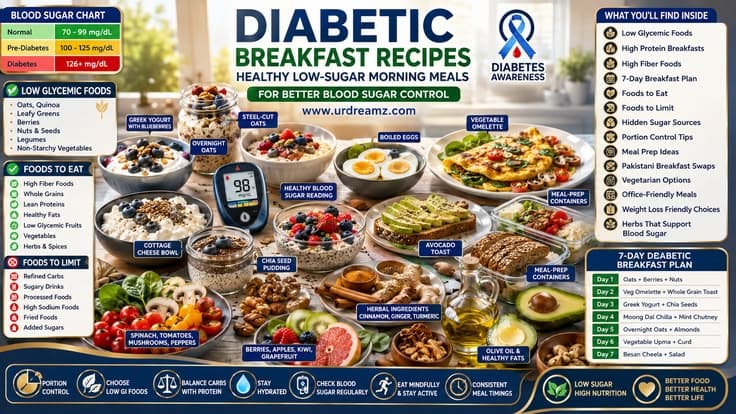
28. A Sample Seven-Day Diabetic Breakfast Plan
| Day | Breakfast |
|---|---|
| Monday | Vegetable omelette with a side of berries |
| Tuesday | Overnight oats with chia seeds and walnuts |
| Wednesday | Plain Greek yogurt with flaxseed and apple slices |
| Thursday | Avocado toast on dense whole grain bread with a boiled egg |
| Friday | Cottage cheese bowl with cucumber and seeds |
| Saturday | Savory oats with a fried egg and sautéed spinach |
| Sunday | Chia seed pudding with a handful of mixed berries |
29. Thinking About Portion Size, Not Just Food Choice
Even genuinely low-glycemic foods can raise blood sugar meaningfully if eaten in large enough quantities, so portion awareness still matters even when the ingredients themselves are sound choices. A reasonably sized bowl rather than an overflowing one tends to keep the overall carbohydrate load in a manageable range.
30. Foods That Tend to Work Against Blood Sugar Goals
| Food Category | Examples | Why It's a Concern |
|---|---|---|
| Refined carbohydrates | White bread, pastries, sugary cereal | Rapid digestion, fast glucose spikes |
| Sugary breakfast drinks | Fruit juice, sweetened coffee drinks | Liquid sugar absorbs especially quickly |
| Flavored yogurts | Most fruit-on-the-bottom or flavored varieties | Often contain dessert-level added sugar |
| Instant oatmeal packets | Pre-sweetened flavored packets | More processed and often higher in added sugar than plain oats |
| Processed breakfast meats | Sausages, bacon, deli meats | High in sodium and saturated fat, worth limiting |
31. Watching Out for Hidden Sugar
Some of the least obviously sweet breakfast products quietly contain meaningful added sugar — flavored oatmeal, certain granolas, some breads, and packaged sauces or spreads used as toppings. Checking the ingredient list for sugar listed under names like corn syrup, dextrose or cane juice helps catch what a glance at the front of the package might miss.
32. Herbs and Spices Often Linked to Blood Sugar Support
| Herb or Spice | Traditional Reputation |
|---|---|
| Cinnamon | Some research suggests modest support for insulin sensitivity |
| Turmeric | Associated with anti-inflammatory properties |
| Ginger | Used traditionally to support digestion |
| Garlic | Some studies suggest a mild supportive role in metabolic health |
| Apple cider vinegar | Sometimes used before meals; effects vary by individual |
None of these act as a substitute for an overall balanced breakfast, but they're a reasonable, low-risk way to add flavor while leaning toward foods with a long traditional association with metabolic health.
33. Pakistani and Desi-Style Diabetic Breakfast Adjustments
Traditional South Asian breakfasts often center on paratha, white bread or sweetened tea, all of which can be adjusted rather than eliminated entirely. Swapping refined flour paratha for a smaller portion cooked with less oil, choosing whole wheat chapati over white bread, and reducing added sugar in tea are practical changes that keep familiar flavors while lowering the overall glycemic load.
| Traditional Item | Diabetic-Friendlier Adjustment |
|---|---|
| Refined flour paratha | Smaller portion, whole wheat flour, less oil |
| White bread | Whole wheat or multigrain chapati or roti |
| Sweetened tea | Reduced sugar or a sugar substitute, smaller cup |
| Sweetened lassi | Plain yogurt-based drink with little to no added sugar |
34. Vegetarian Diabetic Breakfast Options
Vegetarian mornings can still hit solid protein targets through eggs, dairy, legumes and tofu rather than relying heavily on grains alone. A bowl of yogurt with seeds, a lentil-based savory pancake, or a tofu scramble with vegetables all deliver the protein and fiber combination that supports steadier blood sugar throughout the morning.
35. High-Protein Diabetic Breakfast Ideas
For mornings where extra protein feels useful — before physical activity, or simply for longer-lasting fullness — combining two protein sources tends to work well: eggs alongside Greek yogurt, or cottage cheese alongside a handful of nuts, each adding up to a meaningfully higher protein total than either alone.
36. Diabetic Breakfast Ideas With Weight Management in Mind
When weight loss is also a goal alongside blood sugar management, leaning toward lower-calorie protein sources like egg whites, non-fat Greek yogurt and a generous portion of non-starchy vegetables, while keeping higher-calorie additions like nut butter and oil more modest, tends to support both goals at once without requiring two separate eating plans.
37. Notes for Prediabetes and Gestational Diabetes
For prediabetes, many of the same principles apply, often with a bit more flexibility, since the goal is frequently prevention rather than tight day-to-day management. For gestational diabetes specifically, breakfast often needs closer attention because morning blood sugar can behave differently during pregnancy, and many care providers recommend pairing carbohydrate with protein particularly carefully at this meal. In either case, working directly with a doctor or dietitian to personalize portions is more reliable than following general guidance alone.
38. Common Diabetic Breakfast Mistakes
- Relying on flavored yogurt or "healthy-looking" granola: Both often carry more added sugar than they appear to at first glance.
- Skipping breakfast entirely: This can sometimes lead to overeating or poor choices later in the day rather than improving blood sugar.
- Drinking fruit juice instead of eating whole fruit: Juice lacks the fiber that slows sugar absorption in whole fruit.
- Treating all carbohydrates as equally risky: Fiber-rich carbohydrates behave very differently from refined ones and don't need to be avoided in the same way.
- Ignoring portion size on otherwise healthy foods: Even oats or fruit can raise blood sugar meaningfully in large enough quantities.
39. Frequently Asked Questions
What is generally considered the best breakfast for diabetics?
A combination of protein, fiber and healthy fat — such as eggs with vegetables, or Greek yogurt with seeds and berries — tends to support the steadiest blood sugar response.
Is oatmeal genuinely good for diabetes?
Plain rolled or steel-cut oats, eaten in a reasonable portion and ideally paired with protein, are generally considered a solid choice; heavily sweetened instant packets are a different story.
Can diabetics eat fruit at breakfast?
Yes, particularly lower-sugar options like berries and apples, ideally paired with a protein or fat source and eaten in a sensible portion.
Should diabetics avoid bread completely?
Not necessarily — denser whole grain, multigrain or sourdough bread tends to have a gentler effect on blood sugar than soft white bread, so the type and portion matter more than blanket avoidance.
What is the fastest diabetic-friendly breakfast?
Pre-portioned options like a yogurt cup with berries, pre-boiled eggs, or a chia pudding cup made the night before all take only a minute or two to eat.
Can diabetics skip breakfast altogether?
It's generally not recommended as a routine strategy, since skipping meals can sometimes lead to less stable blood sugar and less controlled eating later in the day, though individual responses vary and this is worth discussing with a doctor.
40. Final Thoughts
Managing blood sugar at breakfast doesn't require an elaborate or restrictive routine — it mostly comes down to consistently choosing a protein source, a fiber-rich carbohydrate, and a modest amount of healthy fat, while staying aware of portion size and watching for hidden added sugar in products that look healthier than they actually are. The recipes and ideas throughout this guide are meant to be mixed, matched and rotated based on how much time, ingredients and energy any given morning allows, rather than followed as a single rigid script. Small, repeatable choices at this one meal, kept up consistently, tend to add up to a meaningfully steadier day than any single "perfect" breakfast ever could on its own. As always, this guide is for general educational purposes and isn't a substitute for personalized advice from a doctor or registered dietitian familiar with your specific health needs.