Grilled Chicken with Roasted Vegetables Recipe: High-Protein Healthy Dinner for Weight Loss and Muscle Building
When it comes to building a genuinely healthy dinner routine that supports weight loss, muscle building, metabolic health, and long-term wellbeing without sacrificing flavor or satisfaction, very few meals compete with grilled chicken and roasted vegetables. This combination — lean protein from perfectly grilled chicken breast alongside colorful, caramelized, nutrient-dense roasted vegetables — is the cornerstone of healthy eating across Mediterranean, fitness, clean eating, and weight loss dietary traditions worldwide. It is simultaneously simple enough to prepare on a Tuesday evening after a long workday and impressive enough to serve to guests at a weekend dinner.
This complete guide covers everything you need to know: the master recipe with step-by-step grilling and roasting instructions, comprehensive nutrition facts, the science behind each ingredient's health benefits, 12 flavor variations from Mediterranean to keto to Asian, the best marinades for juicy chicken every time, a complete guide to roasting every vegetable perfectly, meal prep strategies for the whole week, specific adaptations for weight loss and muscle building goals, diabetic-friendly modifications, family dinner ideas, and honest evidence-based answers to the most frequently asked questions about this foundational healthy dinner.
Our Complete Healthy Recipes Collection
This grilled chicken with roasted vegetables guide is the eighth article in our growing evidence-based healthy recipes library. Together, these guides form a comprehensive daily nutrition roadmap from breakfast through dinner:
- High Protein Breakfast Recipes — Complete Morning Meal Guide
- Weight Loss Complete Guide — 37 Recipes and 17-Day Meal Plan
- Diabetic Breakfast Recipes — Healthy Low Sugar Morning Meals
- Overnight Oats Recipes — Easy Make-Ahead Breakfast Ideas
- Green Tea Recipe — Health Benefits and Weight Loss Guide
- Green Detox Smoothie — Healthy Ingredients and Weight Loss Guide
- Healthy Vegetable Soup — Weight Loss Benefits and Cooking Guide
- Mediterranean Chickpea Salad — High-Protein Healthy Lunch Guide
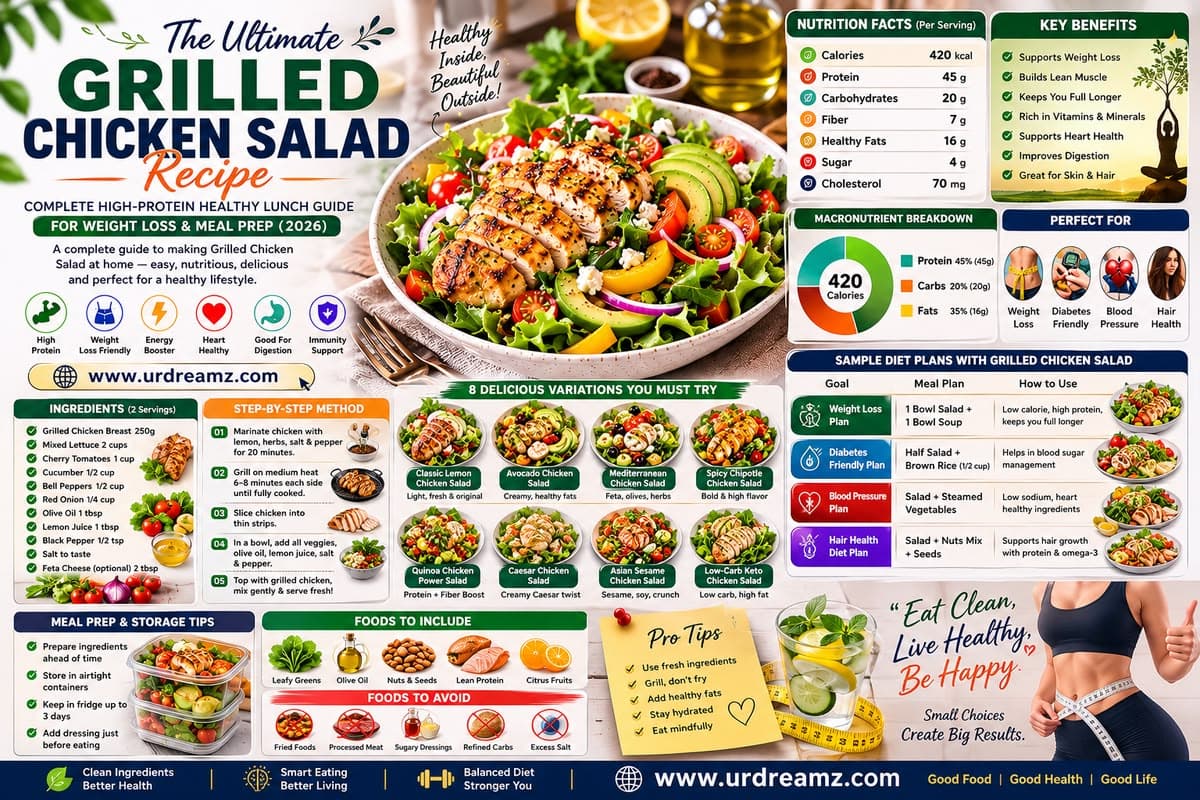
- Grilled Chicken Salad — High-Protein Healthy Lunch Recipe
Why Grilled Chicken with Roasted Vegetables Is the Perfect Healthy Dinner
The combination of grilled chicken breast and roasted vegetables represents the cleanest, most nutritionally complete, and most satisfying healthy dinner formula available. It resolves the fundamental challenge of healthy dinner cooking — producing a meal that is simultaneously high in lean protein, rich in vitamins and minerals, low in unnecessary calories, deeply satisfying to eat, and achievable on a weeknight schedule without specialized equipment or culinary training.
Grilling chicken breast produces the highest ratio of protein to calories of any cooking method. A 150g grilled chicken breast provides 35–40g of complete protein for approximately 165 calories with less than 3g of fat — numbers that no other cooking method, meal kit, or supplement package can match for practical everyday eating. The dry heat of grilling creates the Maillard reaction on the chicken's surface, producing hundreds of complex flavor compounds that make genuinely well-seasoned grilled chicken one of the most satisfying foods available at any calorie count.
Roasting transforms vegetables in ways that raw preparation and steaming cannot. The high oven heat concentrates natural sugars through caramelization, creates crispy edges through moisture evaporation, and softens tough cell walls to reveal the natural sweetness hidden within every vegetable. Broccoli that tastes bitter and unpleasant steamed becomes nutty and almost caramel-like when roasted correctly. Zucchini that tastes watery raw becomes concentrated and savory when roasted at 220°C. This transformation is not just cosmetic — it dramatically increases the palatability of the vegetable portions that are essential for reaching daily fiber, vitamin, and mineral targets.
Together, these two techniques produce a dinner plate that looks beautiful, smells extraordinary, tastes genuinely wonderful, and delivers the nutritional profile of a carefully engineered health food without any of the compromise or sacrifice typically associated with "healthy eating."
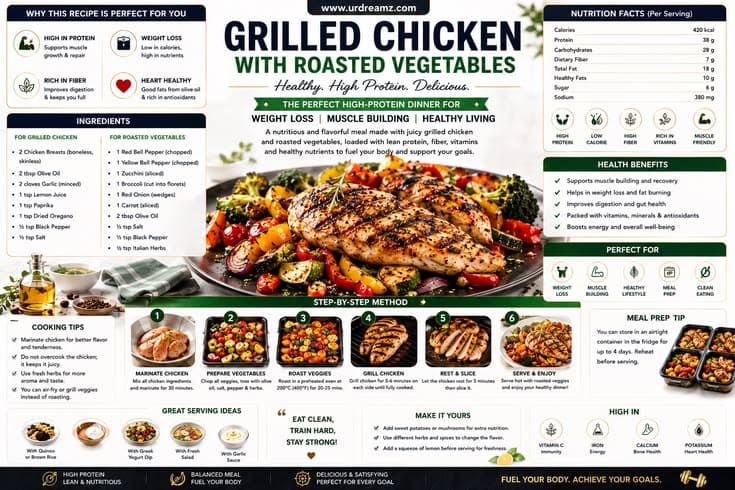
Nutrition Facts: Grilled Chicken with Roasted Vegetables
Understanding the complete nutritional profile of this meal in detail helps you fit it precisely into your health goals — whether tracking macros for muscle building, counting calories for weight loss, managing blood sugar for diabetes, or simply understanding what this dinner does for your body.
| Nutrient | Amount | % Daily Value | Primary Source |
|---|---|---|---|
| Calories | 380–450 kcal | 19–23% | Chicken (165 kcal) + vegetables + olive oil |
| Protein | 36–42g | 72–84% | Chicken breast (primary), vegetables (minor) |
| Total Fat | 14–18g | 18–23% | Olive oil (healthy monounsaturated fats) |
| Saturated Fat | 2–3g | 10–15% | Minimal — primarily from chicken skin (removed) |
| Carbohydrates | 18–25g | 6–8% | Roasted vegetables (complex carbs and fiber) |
| Dietary Fiber | 6–9g | 21–32% | Broccoli, bell peppers, zucchini, carrots |
| Sugar | 8–12g (natural only) | — | Caramelized natural vegetable sugars — no added sugar |
| Vitamin A | 80–150% DV | 80–150% | Carrots, bell peppers, broccoli |
| Vitamin C | 100–200% DV | 100–200% | Bell peppers (exceptionally high), broccoli |
| Vitamin K | 80–150% DV | 80–150% | Broccoli, zucchini, asparagus |
| Potassium | 800–1,200mg | 17–26% | Chicken, bell peppers, zucchini, broccoli |
| Iron | 3–5mg (17–28% DV) | 17–28% | Chicken breast, broccoli, asparagus |
| Calcium | 80–120mg | 8–12% | Broccoli, kale (if included) |
| Magnesium | 60–100mg | 14–24% | Chicken, broccoli, cauliflower |
| Selenium | 35–55mcg (64–100% DV) | 64–100% | Chicken breast (excellent source) |
Macro Breakdown at a Glance
- Protein: 36–42g — exceptional for a single dinner serving
- Calories: 380–450 kcal — satisfying dinner without caloric excess
- Net Carbs: 10–16g — naturally low carb, keto-compatible with proper portion
- Fiber: 6–9g — outstanding for digestive health and satiety
- Glycemic Load: Very Low — blood sugar stable for diabetics and weight loss
The Complete Ingredient Guide: Chicken and Vegetables
Selecting the right ingredients is the foundation of an exceptional grilled chicken with roasted vegetables dinner. Here is a detailed breakdown of the best choices for every component.
| Ingredient | Amount (2 servings) | Why This Choice | Key Nutritional Contribution |
|---|---|---|---|
| Boneless, skinless chicken breasts | 2 large (300–340g total) | Leanest protein source, lowest fat, highest protein ratio | 35–40g complete protein per breast, selenium, B6, B12 |
| Zucchini | 1 large, thick slices | Crisps beautifully, absorbs seasoning, mild flavor | Vitamin B6, Vitamin C, manganese, hydration |
| Red bell pepper | 1 large, cut into strips | Natural sweetness, beautiful color, Vitamin C powerhouse | Highest Vitamin C of any vegetable, beta-carotene |
| Yellow squash | 1 medium, thick slices | Pairs beautifully with zucchini, contrasting color | Vitamin A, Vitamin C, folate, manganese |
| Broccoli florets | 2 cups | Sulforaphane cancer protection, exceptional nutritional density | Vitamins C and K, sulforaphane, calcium, iron |
| Carrots | 2 medium, angled slices | Natural sweetness when roasted, beta-carotene | Beta-carotene (Vitamin A), fiber, potassium |
| Red onion | 1 medium, wedges | Sweetens dramatically when roasted, depth of flavor | Quercetin antioxidant, antimicrobial, Vitamin C |
| Asparagus (optional) | 1 bunch | Elegant presentation, natural diuretic, folate | Folate, Vitamin K, asparagine (detox support) |
| Cauliflower (optional) | 1 cup florets | Low carb, versatile, excellent when caramelized | Vitamin C, sulforaphane, choline, low glycemic |
| Extra virgin olive oil | 3 tablespoons total | Best cooking oil for both grilling and roasting | Oleocanthal (anti-inflammatory), polyphenols, Vitamin E |
| Garlic (fresh or powder) | 3 cloves or 1.5 tsp powder | Essential depth of flavor for both chicken and vegetables | Allicin, antimicrobial, immune support, cardiovascular |
| Paprika | 1 tsp for chicken | Color, mild smoky warmth, visual appeal | Capsaicin, Vitamin A, antioxidants, metabolism support |
| Dried oregano | ½ tsp for vegetables | Mediterranean herbal character, pairs perfectly with vegetables | Carvacrol (antimicrobial), antioxidants, digestive support |
| Dried thyme | ¼ tsp for vegetables | Earthy depth that elevates all roasted vegetables | Thymol (antimicrobial), flavonoids, respiratory support |
The Master Recipe: Grilled Chicken Breast with Roasted Vegetables
This is the foundational recipe — developed for maximum flavor, nutritional completeness, practical weeknight execution, and genuine satisfaction. Total time is 40–45 minutes: 10 minutes of preparation and 30–35 minutes of combined cooking.
Ingredients (serves 2)
For the Chicken
- 2 boneless, skinless chicken breasts (approximately 150–170g each)
- 1 tablespoon extra virgin olive oil
- 1 teaspoon paprika
- ½ teaspoon garlic powder
- ½ teaspoon onion powder
- ½ teaspoon dried oregano
- Sea salt and black pepper to taste
For the Roasted Vegetables
- 1 large zucchini, cut into 1.5cm thick half-moons
- 1 red bell pepper, cut into wide strips
- 1 yellow squash, cut into 1.5cm thick half-moons
- 1 medium red onion, cut into wedges
- 1 cup broccoli florets
- 2 medium carrots, cut diagonally into 1cm slices
- 2 tablespoons extra virgin olive oil
- ½ teaspoon dried oregano
- ¼ teaspoon dried thyme
- Salt and black pepper to taste
- Optional: 2 tablespoons fresh lemon juice as a finishing drizzle
Step-by-Step Instructions
Step 1 — Preheat the Oven and Prepare Vegetables (10 minutes)
Preheat your oven to 220°C (425°F). High temperature is critical for achieving properly caramelized, slightly crispy-edged roasted vegetables rather than steamed, soft ones. Line a large baking sheet (or two smaller ones — vegetables should not be crowded, which causes steaming instead of roasting) with parchment paper or foil for easy cleanup. Place all cut vegetables in a large mixing bowl. Drizzle with olive oil, sprinkle with oregano, thyme, salt, and pepper. Toss thoroughly until every piece of vegetable is lightly coated with oil and seasoning — undercoated vegetables will not caramelize properly.
Spread the vegetables in a single layer on the prepared baking sheet. The most important rule of vegetable roasting: no overlapping. When vegetables overlap, they steam in each other's moisture rather than roasting in the hot circulating air. Each piece needs airflow around it to develop caramelized edges and concentrated flavor. If necessary, use two baking sheets side by side.
Step 2 — Start Roasting the Vegetables (5 minutes hands-on, 25–30 minutes total)
Place the baking sheet in the preheated oven. Vegetables with different cooking times should be arranged strategically: carrots and broccoli at the edges where heat is highest; zucchini, squash, and bell peppers in the center. Roast for 15 minutes, then use a spatula to flip all vegetables. Return to the oven for another 10–15 minutes until the edges are golden-brown and slightly caramelized, and the pieces are tender when pierced with a fork. Total roasting time for this vegetable combination is approximately 25–30 minutes.
Step 3 — Prepare and Season the Chicken (5 minutes)
While the vegetables begin roasting, prepare the chicken. If the chicken breasts are uneven in thickness — typical for most store-bought breasts — pound them gently with a meat mallet or the bottom of a heavy pan until they are approximately 2cm uniform thickness throughout. Uneven chicken cooks unevenly; the thin parts overcook and dry out while the thick center is still cooking. In a small bowl, combine olive oil, paprika, garlic powder, onion powder, oregano, salt, and black pepper to form a seasoning paste. Brush this marinade generously over both sides of each chicken breast. Allow to rest at room temperature for 5–10 minutes while the grill heats — room temperature chicken cooks more evenly than cold chicken straight from the refrigerator.
Step 4 — Grill the Chicken to Perfection (10–14 minutes)
Heat a grill pan, outdoor grill, or heavy cast-iron skillet over medium-high heat until visibly hot — a drop of water should sizzle and evaporate immediately upon contact. Place the seasoned chicken breasts on the hot surface. Do not move them immediately — allow them to cook undisturbed for 5–7 minutes per side, depending on thickness. Moving the chicken before it is ready to release naturally causes it to tear and lose its developing crust. The chicken is ready to flip when it releases easily from the surface — if it sticks, give it another 30–60 seconds.
Cook the second side for 4–6 minutes until the internal temperature reaches exactly 74°C (165°F) when measured with an instant-read thermometer at the thickest point. Remove from heat immediately at this temperature — every additional degree above 74°C dries the chicken measurably. The most critical step: rest the chicken for a full 5 minutes on a cutting board before slicing. This resting period allows the contracted muscle fibers to relax and the internal juices to redistribute throughout the meat rather than pooling at the center. Skipping the rest can cause 30–40% of the chicken's internal moisture to pour out onto the cutting board rather than staying in the meat where it belongs.
Step 5 — Finish, Slice, and Plate
After resting, slice the chicken diagonally into strips — diagonal cutting creates a larger surface area with a more elegant presentation than straight slices. Remove the roasted vegetables from the oven when the timer completes. If using fresh lemon juice, drizzle it over the finished vegetables now — heat destroys Vitamin C, so adding lemon after roasting rather than before preserves its nutritional content and provides a bright finishing flavor that elevates the entire dish. Plate by arranging the colorful roasted vegetables as a base with the sliced grilled chicken arranged on top or alongside. Garnish with fresh parsley, a drizzle of extra olive oil, or lemon wedges. Serve immediately — this meal is at its absolute best eaten fresh from the heat.
Recipe Quick Reference
- Prep Time: 10 minutes
- Cook Time: 25–30 minutes (simultaneous grill + oven)
- Total Time: 40–45 minutes
- Servings: 2
- Protein per serving: 36–42g
- Calories per serving: 380–450 kcal
- Carbs per serving: 18–25g (complex, from vegetables only)
The Science of Perfect Roasted Vegetables
Most people have eaten disappointing, soggy, or bland roasted vegetables — and the reason is almost always one of the same three errors: wrong temperature, wet vegetables, or overcrowded pan. Understanding the science behind roasting transforms every vegetable you cook.
Why Temperature Is Everything
Vegetable roasting requires high heat — specifically 200–230°C (400–450°F). At these temperatures, several important reactions happen simultaneously. The Maillard reaction — the same chemical process that browns meat — occurs on the vegetable's surface, creating hundreds of new flavor compounds and producing the distinctive nutty, complex taste of properly roasted vegetables. Caramelization occurs as the vegetables' natural sugars are exposed to dry heat and transform into complex caramel-like compounds. Moisture evaporates rapidly from the vegetable's surface, concentrating its flavors and allowing the edges to crisp rather than steam.
At lower temperatures (below 180°C), vegetables steam in their own moisture rather than roasting. They become soft, pale, and bland — retaining water content that dilutes flavor rather than concentrating it. This is why roasting at 220°C produces dramatically superior results to roasting at 160–180°C, even with identical ingredients, oil, and seasoning.
The Critical Importance of Dryness
Wet vegetables cannot caramelize. If you wash vegetables and add them to a roasting pan while still wet, the surface water creates steam that prevents the Maillard reaction and results in steamed, not roasted, vegetables. Always pat vegetables completely dry with paper towels after washing. This single step makes a surprising difference in the final texture and flavor of the finished dish.
The One-Layer Rule
Every piece of vegetable must have space around it on the baking sheet. When vegetables are crowded or overlapping, they trap moisture between their surfaces and steam each other. Use a large baking sheet — approximately 45cm x 30cm — for two servings, or use two sheets if necessary. The vegetables should be spread in a single, non-touching layer. If you are meal prepping for 4–6 servings, use multiple baking sheets and rotate them between oven racks halfway through cooking for even browning.
Oil Coating for Even Caramelization
Every surface of every vegetable piece should have a thin, even coating of olive oil. The oil conducts heat to the vegetable's surface, facilitates the Maillard reaction, prevents sticking, carries fat-soluble seasonings into the vegetable, and dramatically improves the absorption of fat-soluble vitamins (A, D, E, K) during digestion. Toss vegetables in a large bowl before spreading on the pan — this ensures even coating far more effectively than drizzling oil directly onto the pan.
Best Vegetables to Roast with Chicken
Not all vegetables roast equally well alongside chicken, and different vegetables have different ideal roasting times. Understanding which vegetables to use and when to add them ensures every component is perfectly cooked simultaneously.
| Vegetable | Prep | Roasting Time at 220°C | Visual Cue for Doneness | Key Nutrients |
|---|---|---|---|---|
| Broccoli | Cut into medium florets | 20–25 minutes | Tips dark brown and crispy, stems tender | Vitamins C and K, sulforaphane, calcium, iron |
| Carrots | Diagonal 1cm slices | 25–30 minutes | Edges caramelized, centers tender when pierced | Beta-carotene (Vitamin A), fiber, potassium |
| Cauliflower | Medium florets | 25–30 minutes | Golden brown on cut surfaces, tender throughout | Vitamin C, sulforaphane, choline, low carb |
| Bell Peppers | Wide strips (3–4cm) | 20–25 minutes | Skin beginning to char at edges, flesh soft | Vitamin C (exceptional), beta-carotene, antioxidants |
| Zucchini | 1.5cm thick rounds or half-moons | 15–20 minutes | Golden edges, tender when pressed — do not over-roast | Vitamin B6, Vitamin C, manganese, potassium |
| Yellow Squash | 1.5cm thick slices | 15–20 minutes | Same as zucchini — slightly caramelized edges | Vitamin A, Vitamin C, folate, fiber |
| Asparagus | Whole spears, ends trimmed | 12–15 minutes | Bright green with lightly crisped tips | Folate, Vitamin K, asparagine, inulin prebiotics |
| Red Onion | Wedges (cut through root) | 25–30 minutes | Deeply caramelized, purple-brown, sweet | Quercetin antioxidant, antimicrobial, Vitamin C |
| Sweet Potato | 2cm cubes (with skin) | 30–35 minutes | Golden caramelized exterior, completely soft inside | Beta-carotene, Vitamin B6, potassium, fiber |
| Green Beans | Whole, ends trimmed | 15–20 minutes | Lightly blistered skin, tender-crisp texture | Vitamins C and K, folate, fiber |
The Staggered Addition Method for Mixed Vegetables
When roasting multiple vegetables with different cooking times simultaneously — as in this recipe — use the staggered addition method. Start denser, slower-cooking vegetables (carrots, cauliflower, sweet potato) in the oven first, then add faster-cooking vegetables (zucchini, asparagus, green beans) 10–15 minutes later. This ensures all vegetables finish cooking at the same time with optimal texture rather than some being overcooked and mushy while others remain undercooked.
12 Best Grilled Chicken Breast Marinades
The marinade is what transforms a plain grilled chicken breast from adequate to genuinely memorable. A well-designed marinade simultaneously adds flavor, improves texture through acid-based protein relaxation, and provides the aromatic compounds that make each variation distinctly different from the last.
| # | Marinade Name | Key Ingredients | Flavor Profile | Best Paired With |
|---|---|---|---|---|
| 1 | Lemon Herb | Lemon slices, fresh thyme, garlic, olive oil | Bright, zesty, Mediterranean | Asparagus, zucchini, yellow squash |
| 2 | Honey Garlic Glaze | Raw honey, minced garlic, soy sauce, olive oil | Sweet and savory, caramelizing | Broccoli, carrots, bell peppers |
| 3 | Spicy Cajun Rub | Cayenne, smoked paprika, garlic powder, onion powder, thyme | Bold, smoky, spiced heat | Corn, zucchini, bell peppers |
| 4 | Mediterranean Marinade | Olive oil, oregano, red wine vinegar, garlic, Kalamata olives | Light, fresh, herbal | All Mediterranean vegetables, red onion |
| 5 | Balsamic Glazed | Aged balsamic vinegar, rosemary, garlic, honey | Rich, tangy, complex | Roasted tomatoes, zucchini, red onion |
| 6 | Greek Yogurt Marinade | Greek yogurt, cucumber, dill, lemon, garlic | Tender, tangy, creamy | Cucumber salad, roasted peppers |
| 7 | Jamaican Jerk Seasoning | Scotch bonnet peppers, allspice, thyme, garlic, ginger | Caribbean heat, authentic spice | Mango salsa, roasted sweet potato |
| 8 | Barbecue Peach | Smoky BBQ sauce, grilled peaches, brown sugar substitute | Fruity, smoky, summer character | Corn, bell peppers, zucchini |
| 9 | Cilantro Lime | Fresh lime juice, cilantro, cumin, garlic, olive oil | Zesty, fresh, Latin flavor | Avocado salsa, roasted jalapeños, corn |
| 10 | Teriyaki Pineapple | Low-sodium soy sauce, pineapple juice, sesame oil, ginger | Sweet, Asian fusion | Bok choy, broccoli, snap peas |
| 11 | Chipotle Lime | Chipotle peppers in adobo, lime zest, garlic powder, cumin | Smoky, spicy, Latin heat | Black beans, corn, roasted peppers |
| 12 | Garlic Butter Herb | Melted garlic butter, fresh parsley, chives, thyme | Rich, indulgent, classic comfort | Asparagus, green beans, roasted mushrooms |
How Long to Marinate Chicken
Marinating time significantly affects both flavor penetration and texture. For quick weeknight marinades using acidic ingredients (lemon juice, vinegar, yogurt): 15–30 minutes at room temperature provides noticeable flavor improvement. For maximum flavor impact without negative texture effects: 2–8 hours in the refrigerator. For very acidic marinades (high citrus or vinegar content): do not exceed 12 hours — extended exposure to acid can denature the surface proteins too aggressively, creating a mushy exterior texture. Yogurt-based marinades (the Greek yogurt marinade above) can safely marinate up to 24 hours because the lactic acid works more gently than citric acid or vinegar.
Grilled Chicken with Roasted Vegetables for Weight Loss
This dinner is exceptionally well-engineered for weight loss — not through caloric restriction to the point of deprivation, but through the strategic combination of macronutrients that produce genuine satiety, stable blood sugar, and a comfortable calorie deficit without hunger.
Why This Dinner Supports Fat Loss Specifically
The 36–42g of protein in this dinner creates the highest possible satiety signal per calorie of any macronutrient. Protein stimulates the production of PYY, GLP-1, and CCK — three powerful satiety hormones that signal fullness to the brain and suppress appetite for 4–6 hours after the meal. High-protein dinners have been shown in multiple randomized controlled trials to reduce nighttime snacking (the caloric downfall of many weight loss attempts) by reducing late-evening hunger naturally through hormonal satiety mechanisms.
The protein also has the highest thermic effect of any macronutrient — the body burns approximately 20–30% of protein calories during digestion, compared to 5–10% for carbohydrates and 0–3% for fats. This means the effective caloric cost of this dinner is measurably lower than its label suggests — perhaps 340–380 effective calories rather than 380–450 labeled calories, due to the metabolic cost of processing high amounts of dietary protein.
The roasted vegetables contribute high fiber content (6–9g per serving) that slows gastric emptying, reduces post-meal blood glucose spikes, and feeds beneficial gut bacteria that produce short-chain fatty acids supporting fat metabolism. The high vegetable volume physically fills the stomach, triggering stretch receptors that send fullness signals to the brain quickly and durably.
The 7-Day Weight Loss Dinner Plan
Incorporating grilled chicken with roasted vegetables into a structured 7-day weight loss dinner rotation produces consistent, sustainable fat loss without menu monotony. Here is how this dinner fits into a complete weekly plan:
| Day | Breakfast | Lunch | Dinner |
|---|---|---|---|
| Day 1 | Chia pudding with berries | Chicken quinoa bowl | Zucchini noodles with turkey sauce |
| Day 2 | Protein smoothie | Turkey avocado wrap | Baked salmon with sweet potato |
| Day 3 | Peanut butter banana oats | Lentil salad with veggies | Chicken stir-fry with brown rice |
| Day 4 | Cottage cheese with fruit | Tuna quinoa salad | Vegetable curry with chickpeas |
| Day 5 | Egg muffins with spinach | Grilled chicken and avocado salad | Ground beef and vegetable skillet |
| Day 6 | Greek yogurt with honey and nuts | Shrimp rice bowl with veggies | Grilled Chicken with Roasted Vegetables |
| Day 7 | Avocado toast with eggs | Mediterranean chickpea salad | Salmon and quinoa with steamed broccoli |
For a comprehensive weight loss meal plan with 37 recipes and a 17-day structured plan, see our Weight Loss Complete Guide.
9 High-Protein Easy Dinners: 30 Minutes or Less
Grilled chicken with roasted vegetables belongs to a family of high-protein, real-food dinners that can be prepared in 30 minutes or less on any weeknight. Here are 9 outstanding high-protein dinner options that deliver 31–38g of protein per serving using simple, whole-food ingredients.
1. Lemon Garlic Chicken and Veggies (36g protein)
Chicken breast cooked in a lemon garlic sauce, served alongside cauliflower rice, broccoli, and diced bell peppers. The cauliflower rice replaces traditional starchy rice with a low-carb, high-fiber alternative that has virtually zero glycemic impact. The lemon garlic sauce — olive oil, fresh lemon juice, minced garlic, and fresh parsley — takes 2 minutes to prepare and transforms simple grilled chicken into a genuinely elegant dinner.
2. Turkey Fajita Bowl (35g protein)
Seasoned ground turkey cooked with colorful bell peppers, onions, and cumin-based spices, served over brown rice with salsa and sliced avocado. Ground turkey is significantly leaner than ground beef while providing nearly identical protein content — making it one of the best protein-to-fat ratio meat options for regular healthy eating. The fajita spice blend (cumin, chili powder, garlic, paprika, oregano) is one of the most appetite-stimulating seasoning combinations in the dinner repertoire.
3. Salmon and Asparagus (38g protein)
Grilled or pan-seared salmon fillet served alongside roasted asparagus and a small portion of quinoa dressed with lemon juice and olive oil. Salmon is the single most nutritionally dense dinner protein available — providing approximately 35–40g of complete protein plus 2–4g of omega-3 EPA and DHA fatty acids per serving, alongside Vitamins D and B12, selenium, and astaxanthin (a powerful antioxidant responsible for salmon's distinctive color). This dinner supports cardiovascular health, brain function, inflammation reduction, and muscle building simultaneously.
4. Beef and Broccoli Bowl (34g protein)
Lean beef strips (sirloin or flank steak) cooked with broccoli florets and carrots in a low-sodium teriyaki-inspired sauce, served over brown rice. Lean beef provides the highest bioavailable iron and zinc of any common protein source — minerals that are critical for energy production, immune function, and cognitive performance. Broccoli's Vitamin C content doubles iron absorption from the beef when consumed in the same meal.
5. Grilled Chicken with Roasted Vegetables (36–42g protein)
The featured recipe in this guide — the most versatile, most complete, and most reliably satisfying high-protein dinner in the collection. See the complete recipe above for full preparation details.
6. Chicken and Sweet Potato Plate (37g protein)
Grilled chicken breast served alongside roasted sweet potato cubes and steamed or roasted green beans with olive oil. The sweet potato provides complex carbohydrates, exceptional beta-carotene, Vitamin B6, and potassium — making this the ideal pre-workout dinner when eaten 3–4 hours before training to ensure adequate glycogen for performance.
7. Cottage Cheese Taco Bowl (33g protein)
Seasoned ground turkey cooked with taco spices, topped with a generous spoonful of full-fat cottage cheese that melts into the hot meat to create a creamy, high-protein sauce. Served with shredded lettuce, halved cherry tomatoes, salsa, and sliced avocado. Cottage cheese contributes an additional 14g of casein protein that digests slowly through the night — making this an excellent dinner for overnight muscle repair.
8. Garlic Shrimp Zucchini Noodles (32g protein)
Plump shrimp sautéed in abundant garlic and olive oil, served over spiralized zucchini noodles (zoodles) with cherry tomatoes and freshly grated Parmesan. Shrimp provides the lowest calorie-to-protein ratio of any common protein — approximately 24g of protein per 100g at only 99 calories and virtually zero fat. This dinner delivers pasta-night satisfaction with a fraction of the carbohydrate content of traditional pasta dishes.
9. Tuna and Avocado Bowl (31g protein)
High-quality canned tuna dressed with everything bagel seasoning served over mixed greens with sliced avocado, cucumber, and cherry tomatoes. The healthiest possible quick dinner — prepared in under 5 minutes with zero cooking, delivering complete protein from tuna, omega-3 fats, and monounsaturated fats from avocado alongside a comprehensive range of vitamins and antioxidants from the vegetables.
Grilled Chicken Dinner Variations: 10 Complete Meal Ideas
The grilled chicken breast is one of the most versatile proteins in the kitchen — it adapts to virtually any cuisine, flavor profile, or dietary approach without losing its fundamental nutritional advantages.
1. Mediterranean Grilled Chicken Plate
Marinate in Mediterranean marinade (olive oil, oregano, red wine vinegar, garlic). Serve with roasted zucchini, bell peppers, cherry tomatoes, and red onion. Add a side of warm whole wheat pita and a small Greek salad with feta and Kalamata olives. This variation embodies the Mediterranean dietary pattern most completely — combining the cardiovascular benefits of olive oil, the antioxidant protection of colorful vegetables, the gut-health support of plant fiber, and the complete protein of grilled chicken in a single, authentic-tasting meal.
2. Garlic Herb Chicken with Asparagus
Use the garlic butter herb marinade. Grill the chicken and roast asparagus spears and cherry tomatoes at 220°C for 12–15 minutes until asparagus is bright green with crisped tips. Finish with a drizzle of reduced balsamic vinegar over the asparagus and a sprinkle of lemon zest over the chicken. Asparagus contains inulin — a prebiotic fiber that specifically feeds Lactobacillus and Bifidobacterium species, supporting gut health alongside the meal's protein and vegetable nutrition.
3. Keto Grilled Chicken with Low-Carb Vegetables
Season with lemon herb marinade. Roast a combination of broccoli, cauliflower, asparagus, and zucchini — all low-carb, high-fiber vegetables — with generous olive oil and garlic. Add sliced avocado alongside the plate for additional healthy fats to support ketosis. This variation keeps net carbs under 10g per serving while delivering exceptional fiber, vitamins, and 36+ grams of protein in a completely satisfying keto-compliant dinner.
4. Sheet Pan Chicken Fajita Bowl
Season chicken with chipotle lime marinade. On a large baking sheet, arrange sliced chicken alongside strips of red, yellow, and green bell peppers and onion wedges. Roast everything together at 220°C for 20–25 minutes, turning halfway through. Serve over cauliflower rice or brown rice with guacamole, salsa, lime wedges, and fresh cilantro. The one-pan approach minimizes cleanup while producing deeply caramelized fajita vegetables alongside perfectly cooked chicken.
5. Asian-Style Grilled Chicken with Bok Choy
Marinate in teriyaki pineapple marinade. Grill the chicken while bok choy halves are roasted at 220°C for 15 minutes with sesame oil and garlic. Serve over brown rice with a drizzle of low-sodium soy sauce and toasted sesame seeds. Bok choy is exceptionally rich in Vitamins A, C, and K alongside calcium — making it one of the most nutritionally impressive Asian vegetables for regular cooking.
6. Lemon Herb Chicken with Green Beans and Almond
Marinate in lemon herb marinade. Roast whole green beans with slivered almonds, garlic, and olive oil at 220°C for 15–20 minutes until the beans are blistered and the almonds are golden. The almonds add healthy fats, Vitamin E, and a satisfying crunch alongside 6g of additional plant protein per serving. Serve the grilled chicken sliced over the green bean almondine for an elegant dinner that takes under 30 minutes to prepare.
7. Spicy Cajun Chicken with Roasted Corn and Bell Peppers
Season generously with Cajun rub (cayenne, smoked paprika, thyme, garlic powder, onion powder). Roast corn kernels (fresh or frozen) alongside colorful bell pepper strips and red onion wedges at 220°C for 20 minutes. The capsaicin from the Cajun seasoning has demonstrated thermogenic properties — temporarily boosting metabolic rate and potentially supporting fat oxidation. This is the most metabolism-activating version in the collection.
8. Pesto Grilled Chicken with Roasted Vegetables
Brush chicken with prepared basil pesto (or homemade pesto — basil, Parmesan, pine nuts, garlic, olive oil) before and after grilling. Roast any combination of seasonal vegetables alongside. Pesto adds depth of flavor from the basil's essential oils, healthy fats from pine nuts and olive oil, calcium and protein from Parmesan, and the powerful antimicrobial compound eugenol from fresh basil. This is the simplest flavor upgrade to the basic recipe.
9. BBQ Chicken with Roasted Sweet Potato and Broccoli
Brush chicken with sugar-free BBQ sauce during the last 2 minutes of grilling to caramelize the sauce without burning. Roast sweet potato cubes (2cm, with skin) for 30–35 minutes and broccoli florets for the final 20 minutes. The sweet potato provides complex carbohydrates, beta-carotene, and Vitamin B6 that support glycogen replenishment after training — making this the best variation for post-workout dinners when carbohydrate replenishment is a priority.
10. Greek Chicken Pita Plate
Marinate in Greek yogurt marinade. Grill and slice the chicken into strips. Serve with warm whole wheat pita, a side of tzatziki (Greek yogurt, cucumber, dill, garlic), roasted bell peppers and zucchini, and a simple tomato-cucumber salad with olive oil and oregano. This family-friendly build-your-own presentation is the most crowd-pleasing variation and the best choice for feeding mixed groups with different dietary preferences.
20 Meal Ideas Using Rotisserie Chicken
Rotisserie chicken — one pre-cooked whole chicken from any supermarket — is arguably the single best meal prep starting point available. The initial investment of 10 minutes to separate the meat produces enough protein for 20 different meals across the week. The key is organizing your components systematically so that the same base protein becomes a completely different meal depending on how it is prepared and paired.
How to Prepare 20 Meals from One Rotisserie Chicken
- Start with 1 rotisserie chicken: Allow to cool slightly before handling for food safety.
- Remove and separate the meat: Remove skin. Shred white breast meat with two forks. Chop thigh and leg meat into bite-sized pieces. Keep separate if desired for different textures in different recipes.
- Divide and portion: Portion approximately ½ to 1 cup of chicken into individual meal prep containers — this provides enough for 15–20 single-serving portions depending on chicken size.
- Add flavors, sauces, and mix-ins: Each portion gets different treatment to create completely different meals.
- Store: Refrigerate portions for up to 4 days. Freeze for up to 3 months.
- Save the carcass: Simmer the remaining bones, skin, and cartilage in water with onion, celery, carrot, and herbs for 2–3 hours to produce deeply nutritious, collagen-rich homemade chicken broth — the base for the healthiest possible soups and sauces.
| # | Meal | Key Add-Ins |
|---|---|---|
| 1 | Chipotle Chicken Bowl | Brown rice, black beans, salsa, avocado, sour cream |
| 2 | Chicken Caesar Salad | Romaine, Parmesan, croutons, Caesar dressing |
| 3 | BBQ Chicken | Sugar-free BBQ sauce, coleslaw, corn |
| 4 | Chicken Taco Bowl | Taco seasoning, lettuce, tomato, cheese, guacamole |
| 5 | Chicken Stir-Fry | Mixed vegetables, low-sodium soy sauce, sesame oil, rice |
| 6 | Buffalo Chicken Wrap | Sugar-free buffalo sauce, celery, blue cheese, whole wheat wrap |
| 7 | Chicken Sandwich | Whole grain bread, lettuce, tomato, avocado, Dijon mustard |
| 8 | Chicken Pita Pocket | Tzatziki, cucumber, tomato, red onion, whole wheat pita |
| 9 | Chicken Quesadilla | Whole wheat tortilla, pepper jack cheese, salsa, spinach |
| 10 | Chicken Pasta | Whole wheat pasta, olive oil, garlic, cherry tomatoes, Parmesan |
| 11 | Asian Chicken Noodle Bowl | Rice noodles, bok choy, miso broth, sesame, scallions |
| 12 | Chicken and Rice | Brown rice, roasted vegetables, garlic, lemon, herbs |
| 13 | Chicken Enchilada Bowl | Brown rice, enchilada sauce, black beans, cheese, cilantro |
| 14 | Greek Chicken Bowl | Quinoa, cucumber, tomato, olives, feta, lemon-oregano dressing |
| 15 | Chicken Soup | Homemade broth (from carcass), carrots, celery, noodles, herbs |
| 16 | Coconut Curry Chicken | Coconut milk, curry paste, bell peppers, spinach, rice |
| 17 | Chicken Fried Rice | Brown rice, egg, mixed vegetables, low-sodium soy sauce, sesame |
| 18 | Mexican Chicken Salad | Romaine, corn, black beans, salsa vinaigrette, avocado |
| 19 | Honey Garlic Chicken | Honey-garlic glaze, roasted broccoli, sesame seeds, rice |
| 20 | Chicken Avocado Salad | Mixed greens, avocado, lemon dressing, cucumber, cherry tomatoes |
Grilled Chicken for Muscle Building: The Complete Fitness Dinner Guide
For people focused on building or maintaining muscle mass, grilled chicken with roasted vegetables is one of the most strategically useful dinners available — providing the complete amino acid profile needed for muscle protein synthesis alongside the micronutrients that support hormonal health, recovery, and training performance.
How Chicken Breast Supports Muscle Building
Chicken breast provides all nine essential amino acids — the specific amino acids the body cannot synthesize independently and must obtain from dietary protein. Among these, leucine is particularly important for muscle building because it directly activates mTOR — the primary molecular switch that initiates muscle protein synthesis. Chicken breast provides approximately 2.7g of leucine per 150g serving — a dose that research consistently identifies as sufficient to maximally stimulate muscle protein synthesis when consumed as part of a balanced diet with adequate total protein intake.
The selenium content of chicken breast (approximately 45–55mcg per 150g serving, representing 80–100% of daily value) supports thyroid hormone function and testosterone synthesis — both of which are critical for anabolic muscle building hormonal environments. Zinc from chicken supports growth hormone release. Niacin (Vitamin B3) supports energy production during training. Together, these micronutrients create a hormonal and energetic environment that is genuinely conducive to muscle development — not just a source of raw protein building blocks.
Modifications for Maximum Muscle Building
- Increase chicken portion: Use 200–250g per serving instead of 150g to reach 45–55g of protein per dinner
- Add complex carbohydrates: Include 1 cup of roasted sweet potato or ½ cup of brown rice alongside the vegetables for glycogen replenishment
- Include high-zinc vegetables: Add pumpkin seeds as a topping for additional zinc alongside chicken's zinc content
- Add avocado for healthy fats: Monounsaturated fats from avocado support testosterone synthesis and provide caloric density for muscle-building caloric surpluses
- Consume within 2 hours after training: The post-workout anabolic window, when muscle cells are most responsive to amino acids, maximizes this dinner's muscle-building potential
Grilled Chicken with Roasted Vegetables for Diabetes Management
This dinner is extraordinarily appropriate for people managing type 2 diabetes, pre-diabetes, or insulin resistance — and the reason lies in the specific physiological impact of each component on blood glucose management.
Blood Sugar Impact Analysis
Grilled chicken breast has a glycemic index of zero — it contains no carbohydrates and therefore has no direct impact on blood glucose. Its high protein content actually reduces the glycemic response to any carbohydrates consumed in the same meal by slowing gastric emptying and stimulating incretin hormones that improve the body's insulin response. Essentially, eating chicken at dinner makes the blood sugar impact of the vegetables gentler and more gradual than if those same vegetables were consumed without protein.
The roasted vegetables in this recipe (broccoli, zucchini, bell peppers, asparagus, carrots) all have low glycemic indexes. Their dietary fiber creates a physical gel in the digestive tract that slows glucose absorption significantly. The net carbohydrates per serving (the carbohydrates that actually impact blood sugar after fiber is subtracted) is approximately 10–16g — spread over the course of the entire digestive process of a fiber-rich, protein-containing meal, this produces a slow, gentle glucose curve rather than a spike.
The extra virgin olive oil in this recipe independently improves insulin sensitivity through its oleic acid content and provides the beneficial polyphenols (oleocanthal, hydroxytyrosol) that reduce the chronic inflammation associated with insulin resistance progression.
Adjustments to Maximize Diabetic Safety
- Limit or replace carrots and sweet potato (higher glycemic vegetables) with lower-glycemic options (broccoli, cauliflower, asparagus, zucchini, bell peppers) for maximum blood sugar stability
- Avoid honey or sugar in marinades — use garlic, herbs, vinegar, and citrus for flavoring instead
- Skip any store-bought marinades or sauces containing added sugar
- Include avocado alongside the meal for its insulin-sensitizing monounsaturated fats
- Add a small side of the green tea described in our Green Tea Guide — green tea catechins specifically improve insulin sensitivity and reduce post-meal blood glucose responses
- Always consult your healthcare provider for personalized diabetes nutrition guidance
For comprehensive diabetic breakfast nutrition, see our Diabetic Breakfast Recipes Guide.
Meal Prep Guide: Grilled Chicken and Roasted Vegetables for the Week
Grilled chicken with roasted vegetables is one of the most meal-prep-friendly dinner combinations available. Both components store well, reheat beautifully, and maintain their texture and flavor for 4–5 days in the refrigerator — making Sunday meal prep for the entire work week entirely practical.
Weekly Meal Prep Strategy (serves 5 dinners)
- Sunday prep session (40–50 minutes): Season and grill 5 chicken breasts (750–850g total) in batches. While the first batch grills, begin preparing the second. Simultaneously, roast two full baking sheets of vegetables at 220°C for 25–30 minutes. Allow everything to cool completely before portioning.
- Portion and pack: Divide the grilled chicken and roasted vegetables into 5 meal prep containers with tight-fitting lids. Label with the day of the week. Use glass containers if possible — they reheat more evenly and do not retain odors.
- Vary the seasoning across the week: Prepare the 5 chicken breasts with different marinades — Mediterranean on Monday, lemon herb on Tuesday, Cajun on Wednesday, garlic herb on Thursday, balsamic on Friday — so that each day's dinner tastes distinctly different from the last despite sharing the same preparation method.
- Reheat correctly: Reheat in the microwave for 2–3 minutes covered with a damp paper towel (the moisture prevents the chicken from drying out). Alternatively, reheat in a 180°C oven for 8–10 minutes for the best texture — the vegetables will re-crisp slightly in the oven, recovering much of their original texture that is softened during refrigeration.
- Add fresh elements at serving time: Keep a fresh lemon, fresh herbs (parsley, cilantro), and avocado to add immediately before eating. These additions restore brightness and freshness that cannot be captured in meal-prepped containers.
Storage Duration
- Grilled chicken (refrigerator): 3–4 days in sealed containers
- Grilled chicken (freezer): Up to 2 months — slice before freezing for faster thawing
- Roasted vegetables (refrigerator): 4–5 days — they soften during storage but reheat acceptably
- Roasted vegetables (freezer): 2–3 months for most varieties — texture suffers but flavor remains. Best used in soups or stews after freezing rather than reheated as a side dish
- Assembled meal prep containers: 4 days maximum for both components together
10 Healthy Dinner Ideas Under $10
Eating a high-quality, nutritious dinner does not require an expensive food budget. These 10 healthy dinner ideas each cost under $10 per household serving and deliver exceptional nutritional quality from simple, widely available whole food ingredients.
| # | Dinner | Key Ingredients | Primary Nutrition |
|---|---|---|---|
| 1 | One-Pan Chicken and Vegetables | Chicken thighs, potatoes, carrots, broccoli, herbs | High protein, complex carbs, broad vitamins |
| 2 | Chicken Burrito Bowls | Rice, chicken, beans, corn, fresh toppings | Complete protein and complex carbs |
| 3 | Egg and Vegetable Scramble | Eggs, spinach, tomatoes, peppers, olive oil | Complete protein, choline, vitamins |
| 4 | Baked Sweet Potatoes with Black Beans | Sweet potatoes, black beans, salsa, herbs | Fiber, plant protein, beta-carotene |
| 5 | Tuna Pasta Salad | Whole wheat pasta, tuna, vegetables, light yogurt dressing | Complete protein, omega-3, complex carbs |
| 6 | Turkey and Bean Chili | Ground turkey, kidney beans, tomatoes, spices | High protein, fiber, iron |
| 7 | Veggie Fried Rice | Brown rice, eggs, mixed vegetables, soy sauce | Balanced protein, complex carbs, vitamins |
| 8 | Cabbage and Turkey Stir-Fry | Ground turkey, shredded cabbage, garlic, light seasonings | Very high protein, ultra-low carb |
| 9 | Lentil and Vegetable Soup | Red lentils, colorful vegetables, vegetable broth | Plant protein, iron, folate, fiber |
| 10 | Homemade Bean Quesadillas | Whole wheat tortillas, beans, cheese, vegetables | Plant protein, calcium, fiber |
5 Unique High-Protein Dinners That Don't Feel Like Diet Food
One of the most important keys to long-term healthy eating success is finding high-protein dinners that are genuinely enjoyable — not meals that feel like sacrifice or deprivation. These five creative high-protein dinners deliver 30–50g of protein per serving in formats that feel indulgent and exciting rather than restrictive and boring.
1. Chicken Shawarma Bowl — Light Version (40–50g protein)
Spiced chicken (cumin, coriander, turmeric, cinnamon, paprika, garlic) served over fragrant rice alongside garlic yogurt sauce, pickled vegetables, and fresh herbs. The shawarma spice blend transforms ordinary grilled chicken into a restaurant-quality Middle Eastern experience. The garlic yogurt sauce (labneh, minced garlic, lemon, fresh mint) adds additional protein and probiotics alongside extraordinary flavor. This is the most globally appealing variation in the collection and consistently wins over even self-described "healthy eating skeptics."
2. Cottage Cheese Taco Skillet (35–45g protein)
Lean ground beef or turkey cooked with taco spices until browned, then a generous cup of full-fat cottage cheese stirred into the hot skillet where it melts and creates a creamy, protein-amplified sauce. Served over lettuce with tomatoes, salsa, and sliced avocado. The cottage cheese provides casein protein that digests slowly through the night, while the meat contributes fast-digesting whey-like complete amino acids — creating a comprehensive protein coverage that benefits muscle recovery throughout the evening and overnight.
3. Teriyaki Salmon Rice Stack (35–45g protein)
A composed, visually elegant dish: a base of steamed short-grain brown rice, topped with sliced cucumber dressed in rice vinegar, then a lacquered teriyaki-glazed salmon fillet (brushed with a mix of low-sodium soy sauce, honey, mirin, and garlic), finished with a sesame drizzle and pickled ginger. This dinner delivers the highest omega-3 content of any option in this guide — approximately 3–4g of EPA and DHA — alongside complete protein and the gut-supporting fermented components (rice vinegar, miso if used in the teriyaki) that make Japanese-influenced cooking so interesting from a nutritional perspective.
4. Chicken Pesto Zucchini Boats (30–40g protein)
Large zucchini halved lengthwise, the centers scooped out and mixed with cooked shredded chicken, basil pesto, and diced sun-dried tomatoes, then filled back into the zucchini shells and topped with mozzarella. Baked at 200°C for 20 minutes until the cheese is golden and bubbling. The zucchini boat presentation makes this feel like an entirely different category of dinner — comfortable, warming, satisfying — while delivering lean protein, healthy fats, and exceptional vegetable nutrition in a single vessel.
5. Protein Ramen Upgrade (35–50g protein)
A standard instant ramen packet (as the noodle and broth base only — discard the flavor packet and use low-sodium miso paste instead) upgraded with two soft-boiled eggs, shredded grilled chicken, sautéed bok choy, and sliced scallions. The instant ramen's deep umami broth becomes a genuinely nutritious protein bowl rather than a sodium-bomb when the flavor packet is replaced with real miso and fresh additions. This is the most psychologically satisfying option in this collection — it tastes like genuine indulgence and delivers 35–50g of protein depending on chicken portion size.
10 Keto-Friendly Family Dinner Ideas
Grilled chicken with roasted vegetables is a naturally keto-friendly dinner — and it serves as the perfect template for a broader collection of keto family meals that are high in protein, satisfying for all age groups, and genuinely enjoyable rather than feeling like dietary restriction.
| # | Dinner | Keto Modification | Protein |
|---|---|---|---|
| 1 | Fajita Night | Skip tortillas and rice — serve with extra veggies, guacamole, cheese, and sour cream | 35–45g |
| 2 | Salmon Dinner | Skip potatoes — add extra butter-roasted vegetables instead | 38–42g |
| 3 | Taco Bowls | Use lettuce leaves as the base instead of rice and beans | 35–40g |
| 4 | Pesto Chicken | Skip pasta — serve over extra roasted zucchini noodles | 36–42g |
| 5 | Sheet Pan Dinner | Skip potatoes — load with extra low-carb roasted vegetables | 35–40g |
| 6 | Asian Lettuce Wraps | Already keto — serve in lettuce cups with extra avocado | 30–35g |
| 7 | Grilled Chicken Caesar | Skip croutons — add extra bacon and Parmesan | 36–42g |
| 8 | BBQ Chicken Night | Skip corn and beans — serve with coleslaw and roasted vegetables | 35–40g |
| 9 | Mediterranean Bowls | Skip rice and hummus — add extra feta, olives, and roasted vegetables | 36–42g |
| 10 | Stir Fry Night | Serve over cauliflower rice instead of regular rice | 32–38g |
Health Benefits of This Complete Dinner
The combination of grilled chicken and roasted vegetables delivers health benefits that extend far beyond simple caloric or macronutrient considerations — it actively supports multiple body systems simultaneously through the combined action of its nutritional components.
Cardiovascular Health
The extra virgin olive oil in this recipe provides oleocanthal — a natural compound that inhibits the same inflammatory enzymes (COX-1 and COX-2) as pharmaceutical anti-inflammatory medications at the doses consumed in a standard serving of this dinner. The lycopene from tomatoes (if included), the quercetin from red onion, the sulforaphane from broccoli, and the polyphenols from olive oil collectively create one of the most comprehensive dietary cardiovascular protection packages available in a single meal. The lean chicken breast provides complete protein without the saturated fat of red meat, maintaining a favorable cholesterol profile.
Bone Health
The Vitamin K from broccoli, asparagus, and green vegetables, combined with the calcium from broccoli and any dairy accompaniments, and the potassium from vegetables (which reduces urinary calcium loss), creates a genuinely bone-supportive dinner. Vitamin K is the nutrient most frequently underconsumed in modern diets, and it is essential for activating osteocalcin — the protein that anchors calcium into bone matrix. A single serving of this dinner can provide 80–150% of daily Vitamin K requirements.
Immune System Function
The red bell pepper in this recipe provides more Vitamin C than an orange — a single pepper delivers approximately 150–200% of the daily Vitamin C requirement. Combined with the beta-carotene from carrots (converted to Vitamin A, which supports the integrity of immune barrier tissues), the zinc from chicken (directly supports immune cell production and function), and the selenium from chicken (supports antioxidant immune defenses), this dinner creates broad-spectrum immune nutritional support in a single serving.
Muscle Recovery and Repair
The complete amino acid profile of chicken breast, combined with the magnesium from vegetables (which is essential for ATP energy production and muscle relaxation after contraction), the potassium from multiple vegetables (supporting muscle cell electrical function), and the B vitamins from chicken (B6, B12, niacin — all central to energy metabolism and protein synthesis), creates an ideal post-exercise recovery meal that addresses multiple muscle recovery pathways simultaneously.
Anti-Inflammatory Action
Chronic low-grade inflammation drives most modern non-communicable diseases. The anti-inflammatory agents in this dinner include oleocanthal from olive oil (COX inhibitor), sulforaphane from broccoli (NF-κB inhibitor), quercetin from red onion (broad-spectrum anti-inflammatory), lycopene from tomatoes (reduces CRP inflammatory marker), and the general polyphenol load from all colorful vegetables. Regular consumption of this dinner as part of an overall Mediterranean-style diet significantly reduces measured inflammatory markers over time.
Common Grilled Chicken Dinner Mistakes and How to Avoid Them
The most frequent errors that produce disappointing grilled chicken dinners are well-defined and entirely preventable with the right knowledge.
Cooking Chicken Straight from the Refrigerator
Cold chicken breast placed directly on a hot grill from the refrigerator cooks unevenly — the exterior overheats and dries out before the center reaches safe internal temperature. Allow chicken to rest at room temperature for 15–20 minutes before grilling. This simple timing adjustment produces noticeably more even cooking throughout the breast without any other change to technique or ingredients.
Not Pounding the Chicken to Even Thickness
Standard supermarket chicken breasts are typically thicker at one end and thin at the other, with the thickness difference sometimes exceeding 2cm between the thickest and thinnest points. This means the thin part will be overcooked and dry by the time the thick end reaches safe temperature. Pounding or butterflying the breast to even 2cm thickness is the single most impactful technique improvement most home cooks can make to their grilled chicken results.
Flipping Too Frequently
The temptation to flip chicken frequently during grilling — to check progress and feel in control — actually prevents the formation of the characteristic grill crust and extends total cooking time. Flip chicken only once, halfway through the total cooking time. The first side's crust will form properly and the grill marks will be clean and defined rather than torn and patchy.
Skipping the Resting Period
The 5-minute rest after grilling is non-negotiable. Cutting immediately causes a visible flood of internal juices onto the cutting board — moisture that should remain in the meat. This single error is responsible for more dry chicken dinners than any other factor. Set a 5-minute timer when the chicken comes off the heat. Use those 5 minutes to finish plating the vegetables, adding garnishes, and pouring the finishing drizzle of olive oil and lemon juice.
Overcrowding the Vegetable Pan
Overlapping or crowded vegetables steam rather than roast, producing pale, soft, bland vegetables rather than the caramelized, concentrated, crispy-edged roasted vegetables this recipe is designed to produce. Use a full-size baking sheet (at minimum 45cm x 30cm) for two servings and two sheets for four or more servings. The surface area investment pays immediate dividends in texture and flavor quality.
Using Cold or Wet Vegetables
Vegetables that are still cold from the refrigerator take longer to reach roasting temperature and may not caramelize as effectively. Vegetables with surface moisture from washing cannot crisp — the steam generated from the water keeps the surface cool and wet. Room temperature, completely dry vegetables roast optimally from the moment they enter the hot oven.
7 High-Protein Family Night Dinner Ideas
Feeding a family healthy, high-protein dinners that everyone actually enjoys requires balancing nutritional completeness with the universal palatability demands of varied age groups and taste preferences. These seven family-friendly high-protein dinners solve the problem with build-your-own formats, familiar flavors, and protein-forward ingredients that satisfy everyone at the table.
- Turkey Meatball Pasta Bowls: Lean turkey meatballs served over whole wheat pasta with marinara sauce and fresh Parmesan. The turkey meatballs provide complete protein in a familiar, crowd-pleasing format that children universally accept. Make extra meatballs on Sunday and freeze for rapid weeknight deployment.
- Sheet Pan Chicken Fajita Bowls: Everything on one pan — chicken thighs, bell peppers, and onions seasoned with fajita spices and roasted together at 220°C for 30 minutes. Set up a self-serve station with tortillas, rice, lettuce wraps, beans, and toppings so each family member builds their preferred version.
- Beef and Sweet Potato Skillet: Lean ground beef cooked with diced sweet potato, garlic, onion, and spinach in a single cast-iron skillet. A genuinely complete meal — the beef provides iron and complete protein, sweet potato provides beta-carotene and complex carbs, and spinach delivers folate, iron, and Vitamin K.
- Greek Chicken Pita Plates: Grilled lemon-herb chicken served with warm pita, tzatziki, roasted vegetables, and a simple Greek salad. The build-your-own format gives children agency over their plate while ensuring everyone gets adequate protein and vegetables.
- Salmon Rice Bowls with Crunchy Slaw: Teriyaki-glazed salmon over brown rice with a simple cabbage slaw dressed in rice vinegar and sesame oil. The crunchy, tangy slaw contrasts beautifully with the rich, glazed salmon.
- BBQ Chicken Stuffed Potatoes: Large baked russet potatoes split open and stuffed with shredded BBQ chicken, cheddar cheese, and chives. Filling, familiar, and beloved by children — while delivering substantial protein from the chicken and complex carbohydrates and potassium from the potato.
- Egg Roll Turkey Bowls: Ground turkey cooked with shredded cabbage, carrots, garlic, and ginger in a soy-sesame sauce — all the flavors of an egg roll without the deep-fried wrapper. Ready in under 20 minutes, extraordinarily high in protein, and genuinely delicious when topped with sriracha and sliced scallions.
Healthy Girl Meals: Nine Simple Nutritious Dinner Concepts
The "healthy girl meals" trend that has become prominent on social media represents a broader movement toward simple, nourishing, genuinely enjoyable food that feels good to eat and supports energy, skin health, hormonal balance, and overall wellbeing. Grilled chicken with roasted vegetables fits perfectly within this philosophy — whole food, minimal processing, real ingredients, and genuine satisfaction. Here are nine healthy concepts that embody this approach to evening eating:
- Salmon Bowl: High protein, rich in omega-3 fats for skin health, brain function, and anti-inflammatory support
- Chicken Quinoa Bowl: Balanced protein and complex carbs, filling and nutritionally complete
- Creamy Tuscan Chicken Pasta: A lightened version using Greek yogurt instead of heavy cream, sun-dried tomatoes, and baby spinach
- Avocado Toast with Eggs: Quick, nutritious, and genuinely satisfying — healthy fats from avocado with complete protein from eggs
- Chopped Salad: A full bowl of crunchy raw vegetables with a protein source — the simplest high-volume, nutrient-dense dinner available
- Chicken Wrap: Grilled chicken, hummus, roasted vegetables, and leafy greens in a whole wheat wrap — quick, portable, nutritionally complete
- Smoothie Bowl for Dinner: A thick, nutrient-dense smoothie bowl topped with protein-rich additions for those who want a lighter evening meal option
- Grilled Chicken with Roasted Vegetables: The featured recipe in this guide — the most nutritionally complete, satisfying, and versatile option in the entire healthy dinner collection
- Cottage Cheese Bowl: Plain full-fat cottage cheese (high casein protein for overnight muscle repair) with fresh berries, honey, and nuts — the simplest high-protein dinner option for busy evenings
Healthy Dinner Recipes: Complete Google Autosuggest Coverage
Based on current Google Autosuggest data for "Healthy Dinner Recipes," the most searched variations and their coverage in this guide are:
| Search Query | Coverage in This Guide |
|---|---|
| Healthy dinner recipes to lose weight | Weight loss section, 7-day meal plan, calorie analysis |
| Healthy dinner recipes for 2 | Master recipe serves 2 — entire guide scaled for 2 |
| Healthy dinner recipes for family | Family dinner section, 7 high-protein family nights, keto family meals |
| Healthy dinner recipes with chicken | Entire guide focuses on chicken as primary protein |
| Healthy dinner recipes easy | 15-minute section, rotisserie chicken 20 meals, budget dinners |
| Healthy dinner recipes low carb | Keto section, low-carb vegetable guide, net carb analysis |
| Healthy dinner recipes high protein | Entire guide — all recipes target 30–50g protein |
| Healthy dinner recipes vegetarian | Vegetable variations, Mediterranean bowls, egg dinners |
| Healthy dinner recipes for two | Master recipe, all 9 easy dinners — scaled for 2 servings |
Frequently Asked Questions: Grilled Chicken with Roasted Vegetables
How do you grill chicken so it is not dry?
Four steps guarantee juicy grilled chicken every time: pound to even thickness (2cm throughout); bring to room temperature before grilling; cook to exactly 74°C internal temperature and not beyond; rest for 5 full minutes before slicing. Each step individually improves juiciness, and combined they produce chicken that is virtually impossible to dry out.
What temperature should I roast vegetables at?
220°C (425°F) is the optimal temperature for most vegetables. This high heat promotes caramelization and the Maillard reaction, concentrates flavors through moisture evaporation, and produces the characteristic crispy edges and golden-brown surfaces that distinguish properly roasted vegetables from steamed ones. At lower temperatures, vegetables steam rather than roast.
Can I use chicken thighs instead of chicken breast?
Yes — chicken thighs are actually more forgiving than breasts because their higher fat content (primarily monounsaturated oleic acid, interestingly) makes them significantly harder to dry out through overcooking. They deliver slightly less protein per gram (approximately 25g per 150g vs 35g for breasts) but much richer flavor. Cook thighs to the same internal temperature (74°C) but for slightly longer (8–10 minutes per side vs 4–6 minutes per side for breasts).
How do I know when my chicken is fully cooked?
The most reliable method is an instant-read thermometer — insert it at the thickest point, and cook until it reads exactly 74°C (165°F). Without a thermometer: pierce the thickest part with a thin knife and observe the juices — they should run completely clear with absolutely no pink tinge. The meat should feel firm (not squishy) when pressed with tongs, and the surface should be golden-brown.
Can I make this recipe without a grill?
Yes — in order of preference: a cast-iron grill pan produces the closest results to outdoor grilling, including grill marks and the characteristic dry-heat surface; a regular heavy-bottomed skillet produces excellent seared chicken without grill marks; oven-baking at 200°C for 20–25 minutes produces juicy chicken without the sear character. The roasted vegetables remain unchanged regardless of chicken cooking method.
Is grilled chicken with roasted vegetables good for weight loss?
It is one of the most effective weight loss dinners available. The combination of 36–42g of protein (the most satiating macronutrient), 6–9g of dietary fiber (from the vegetables), and high volume with low calorie density creates a dinner that fills the stomach completely while staying under 450 calories — achieving genuine satiety without the caloric excess that prevents weight loss.
Can I meal prep this recipe?
Excellent meal prep choice. Grill 5 chicken breasts and roast multiple baking sheets of vegetables on Sunday. Portion into sealed containers. Refrigerate for up to 4 days. Vary the marinades across the week for flavor variety. Reheat with a damp paper towel in the microwave or in a 180°C oven for 8–10 minutes to recover vegetable texture.
What can I serve with grilled chicken and roasted vegetables?
Best additions by health goal: for weight loss — fresh green salad and green tea; for muscle building — brown rice or quinoa alongside the vegetables; for balanced family dinner — whole grain bread and a simple side salad; for keto — extra avocado and an olive oil dressing drizzle. The meal is nutritionally complete on its own — additions should be based on specific caloric and carbohydrate needs rather than perceived incompleteness.
How do I keep roasted vegetables from being soggy?
Three rules: ensure vegetables are completely dry before roasting (pat with paper towels after washing); coat evenly but lightly with olive oil (too much oil creates steaming, not roasting); and never crowd the pan (vegetables need airflow around each piece to roast rather than steam). Following these three rules consistently produces perfectly caramelized, tender-crisp roasted vegetables every time.
Complete Grocery List: Building a Healthy Dinner Kitchen
Stocking your kitchen with the right proteins, vegetables, grains, and pantry ingredients makes it possible to prepare any of the healthy dinners in this guide on demand without special shopping trips.
| Category | Essential Items | Why Stock These |
|---|---|---|
| Proteins | Chicken breasts, lean ground turkey, salmon fillets, canned tuna, shrimp, eggs, cottage cheese | Complete protein coverage for every night of the week |
| Vegetables | Broccoli, asparagus, bell peppers, onions, garlic, carrots, zucchini, cherry tomatoes, mixed greens, spinach, avocado | Cover roasting, salads, soups, and stir-fries |
| Grains and Carbs | Brown rice, quinoa, sweet potatoes, whole wheat pasta, cauliflower rice (frozen) | Complex carbs for energy and glycogen replenishment |
| Canned and Pantry | Black beans, lentils, diced tomatoes, low-sodium vegetable broth, olive oil | Quick protein additions and flavor bases |
| Seasonings and Extras | Lemons, garlic powder, paprika, oregano, thyme, rosemary, cumin, Dijon mustard, low-sodium soy sauce | Create 12+ distinct flavor profiles from same base ingredients |
| Healthy Fats | Extra virgin olive oil, avocado oil (high-smoke-point), nuts, seeds | Cooking, dressings, and healthy fat supplementation |
| Dairy (optional) | Greek yogurt, feta cheese, Parmesan, cottage cheese | Protein additions, dressings, and flavoring |
Final Thoughts: Build Your Healthy Dinner Routine Around This Recipe
Grilled chicken with roasted vegetables deserves a permanent, prominent, and recurring place in every healthy household's dinner rotation — not as an occasional "healthy option" compromise, but as a genuinely preferred, deeply satisfying meal that you look forward to eating regularly. When prepared with the right technique — properly marinated chicken grilled to exactly the right temperature and rested before slicing, roasted vegetables at high heat on uncrowded pans with good olive oil — this dinner is one of the most genuinely delicious things you can make in under 45 minutes.
The nutritional case for making this dinner a weekly staple is overwhelming: 36–42g of complete lean protein per serving, comprehensive vitamins and minerals from colorful roasted vegetables, heart-healthy monounsaturated fats from olive oil, meaningful dietary fiber for gut health and satiety, anti-inflammatory phytonutrients from both the vegetables and the olive oil, and a calorie level that supports weight management without deprivation.
Start with the master recipe exactly as written — classic Mediterranean seasoning, the core vegetable combination, the lemon herb finishing drizzle. Perfect your technique: the pound-to-even-thickness step, the medium-high heat grill, the 74°C pull temperature, the 5-minute rest. Then explore the 12 marinade variations and countless vegetable combinations that make this essential recipe infinitely renewable across a lifetime of healthy eating.
Build the complete healthy eating picture by connecting this dinner to our full recipe library:
- High Protein Breakfast Recipes — for a protein-rich start to complement this healthy dinner
- Weight Loss Complete Guide — integrate this dinner into a complete fat-loss meal plan
- Diabetic Breakfast Recipes — pair diabetic-friendly breakfast choices with this blood-sugar-stable dinner
- Overnight Oats Recipes — prepare your make-ahead breakfast while tonight's chicken marinates
- Green Tea Guide — enjoy green tea as a post-dinner digestive and antioxidant ritual
- Green Detox Smoothie — start tomorrow's morning with the perfect complement to last night's protein dinner
- Healthy Vegetable Soup — use leftover roasted vegetables in a next-day healing soup
- Mediterranean Chickpea Salad — the ideal high-protein vegetarian lunch to precede this chicken dinner
- Grilled Chicken Salad — use leftover grilled chicken from dinner for next day's high-protein lunch salad
Real food. Real results. Better health starts with better dinner choices. More healthy recipes, nutrition guides, and meal planning resources at www.urdreamz.com — Better Health. Better You.