Mediterranean Chickpea Salad Recipe: Healthy Ingredients, Weight Loss Benefits and Complete Recipe Guide
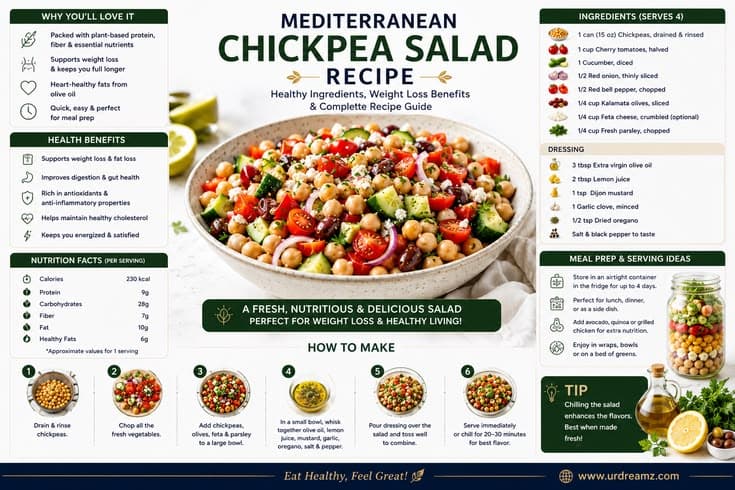
The Mediterranean Chickpea Salad is one of the most celebrated, nutritionally complete, and genuinely delicious salads in the entire healthy eating world — and it deserves every bit of its extraordinary popularity. This vibrant, colorful bowl brings together the best of Mediterranean cuisine: hearty chickpeas bursting with plant protein, crisp fresh cucumbers, juicy cherry tomatoes, briny olives, creamy feta cheese, fragrant parsley, and a simple lemon and olive oil dressing that ties everything together with bright, clean flavor.
What makes this salad particularly remarkable is how effortlessly it delivers on every level simultaneously. It is high in protein, high in fiber, genuinely filling, deeply satisfying, naturally low in calories, rich in antioxidants and healthy fats, completely vegetarian, easily made vegan, gluten-free by default, perfect for meal prep, and ready in under 15 minutes with zero cooking required beyond draining a can of chickpeas. For busy people trying to eat well without spending hours in the kitchen, this salad is perhaps the single most practical healthy meal available.
In this complete guide, you will find the master recipe, detailed ingredient explanations, comprehensive nutrition facts, weight loss guidance, 10+ variations, meal prep strategies, serving ideas, common mistakes to avoid, and honest answers to the most frequently asked questions about Mediterranean chickpea salad.
More Healthy Recipes from Our Collection
This Mediterranean Chickpea Salad guide is the newest addition to our growing library of evidence-based healthy recipes. Each connects naturally with the others for a complete daily nutrition strategy:
- High Protein Breakfast Recipes — Complete Morning Meal Guide
- Weight Loss Complete Guide — 37 Recipes and 17-Day Meal Plan
- Diabetic Breakfast Recipes — Healthy Low Sugar Morning Meals
- Overnight Oats Recipes — Easy Make-Ahead Breakfast Ideas
- Green Tea Recipe — Health Benefits, Weight Loss and Brewing Guide
- Green Detox Smoothie Recipe — Healthy Ingredients and Weight Loss Guide
- Healthy Vegetable Soup Recipe — Weight Loss Benefits and Complete Cooking Guide
What Is Mediterranean Chickpea Salad?
Mediterranean chickpea salad is a no-cook, cold salad inspired by the flavors and ingredient traditions of Mediterranean cuisine — particularly the cuisines of Greece, Turkey, Lebanon, and the broader Middle East. At its core, it combines cooked or canned chickpeas (also known as garbanzo beans) with fresh raw vegetables, herbs, olives, and a simple olive oil and lemon juice dressing.
The Mediterranean diet — of which this salad is a perfect representative — is consistently ranked by nutritionists and physicians as the single healthiest dietary pattern in the world. Decades of research from the landmark PREDIMED study and many subsequent trials confirm that adherence to Mediterranean-style eating dramatically reduces the risk of cardiovascular disease, type 2 diabetes, certain cancers, cognitive decline, and all-cause mortality. The Mediterranean chickpea salad is a convenient, practical, and genuinely delicious way to bring this dietary philosophy to your everyday lunch or dinner.
What distinguishes this salad from other healthy salad options is its exceptional completeness as a meal. The chickpeas provide substantial plant protein and slow-releasing complex carbohydrates. The olive oil provides heart-healthy monounsaturated fats and fat-soluble vitamin absorption. The fresh vegetables provide vitamins, minerals, fiber, and antioxidants. The herbs and lemon provide flavor, additional antioxidants, and digestive support. Together, these components create a genuinely balanced meal that satisfies hunger for hours without a sugar crash or energy dip.
Mediterranean Chickpea Salad Nutrition Facts
The nutritional profile of Mediterranean chickpea salad is one of the primary reasons it has earned such consistent acclaim from nutritionists, dietitians, and health-conscious home cooks worldwide. Here is a detailed breakdown per serving of the classic recipe.
| Nutrient | Amount | % Daily Value | Health Role |
|---|---|---|---|
| Calories | 300–380 kcal | 15–19% | Satisfying without excess calories |
| Protein | 18–22g | 36–44% | Satiety, muscle maintenance, immune function |
| Dietary Fiber | 8–10g | 29–36% | Gut health, cholesterol, blood sugar stability |
| Total Fat | 14–18g | 18–23% | Heart-healthy monounsaturated fats from olive oil |
| Saturated Fat | 3–5g (from feta) | 15–25% | Moderate — use feta sparingly if limiting |
| Carbohydrates | 30–38g | 10–13% | Complex carbs from chickpeas for sustained energy |
| Vitamin C | 35–60mg (40–65% DV) | 40–65% | Immunity, collagen, iron absorption |
| Vitamin K | 60–100mcg (50–85% DV) | 50–85% | Bone health, blood clotting |
| Folate | 150–200mcg (38–50% DV) | 38–50% | Cell division, DNA repair, pregnancy nutrition |
| Iron | 4–6mg (22–33% DV) | 22–33% | Oxygen transport, energy production |
| Potassium | 500–700mg | 11–15% | Blood pressure, muscle function, heart health |
| Calcium | 150–250mg (with feta) | 15–25% | Bone density, muscle contraction |
| Magnesium | 50–80mg | 12–20% | Sleep, stress, blood sugar regulation |
The high-protein version with lemon herb dressing delivers approximately 22g of protein, 350 calories, and 8g of fiber per serving — making it a genuinely complete meal that satisfies both hunger and nutritional needs simultaneously.
Mediterranean Chickpea Salad Ingredients: Complete Guide
Every ingredient in a well-made Mediterranean chickpea salad earns its place by contributing both flavor and nutrition. Understanding what each ingredient does — and why it matters — helps you make smarter substitutions and create better-tasting, more nutritious salads consistently.
| Ingredient | Amount (serves 4) | Role in Salad | Key Nutritional Contribution |
|---|---|---|---|
| Chickpeas (canned or boiled) | 2 cans (800g drained) | Protein and fiber foundation, hearty texture | Plant protein, iron, folate, resistant starch |
| Cucumber | 1 large, diced | Crunch, freshness, hydration | Silica, Vitamin K, 95% water content |
| Cherry Tomatoes | 1 cup, halved | Juiciness, sweetness, color | Lycopene, Vitamin C, potassium |
| Red Bell Pepper | 1, diced | Sweetness, color, crunch | Highest Vitamin C of any vegetable, antioxidants |
| Red Onion | ½, finely chopped | Pungency, flavor depth | Quercetin antioxidant, antimicrobial, Vitamin C |
| Kalamata Olives | ½ cup, pitted | Briny depth, Mediterranean character | Monounsaturated fats, polyphenols, heart health |
| Feta Cheese (optional) | ¾ cup, crumbled | Creaminess, salty tang, richness | Calcium, protein, probiotics (if authentic) |
| Fresh Parsley | ¼ cup, chopped | Freshness, color, herbal brightness | Vitamin K, Vitamin C, iron, natural diuretic |
| Extra Virgin Olive Oil | 3 tablespoons | Dressing base, richness, fat-soluble vitamin carrier | Oleocanthal (anti-inflammatory), polyphenols, Vitamin E |
| Fresh Lemon Juice | 3 tablespoons | Acidity, brightness, flavor balance | Vitamin C, enhances iron absorption from chickpeas |
| Garlic (minced or powdered) | 1 clove or 1 tsp powder | Pungent depth, flavor base | Allicin, antimicrobial, immune support |
| Dried Oregano | 1 teaspoon | Mediterranean herbal signature | Antioxidants, antimicrobial, digestive support |
| Avocado (optional, for weight loss version) | ½, sliced | Creaminess, healthy fats, satiety | Monounsaturated fats, potassium, folate, Vitamin E |
The Classic Mediterranean Chickpea Salad Recipe
This is the master recipe — the one that belongs in every healthy home cook's permanent repertoire. It takes approximately 15 minutes from first ingredient to first forkful, requires zero cooking, and produces a genuinely beautiful, satisfying, deeply nutritious meal.
Ingredients (serves 4)
- 2 cans (800g total drained weight) chickpeas, rinsed and drained
- 1 large cucumber, diced into 1cm pieces
- 1 cup cherry tomatoes, halved
- 1 red bell pepper, diced
- ½ red onion, very finely diced
- ½ cup kalamata olives, pitted and halved
- ¾ cup feta cheese, crumbled (optional — omit for vegan version)
- ¼ cup fresh flat-leaf parsley, roughly chopped
- ½ avocado, diced (optional — for weight loss version)
For the Lemon Herb Dressing
- 3 tablespoons extra virgin olive oil
- 3 tablespoons fresh lemon juice (approximately 1.5 lemons)
- 1 teaspoon Dijon mustard (acts as emulsifier)
- ½ teaspoon garlic powder (or 1 small clove, minced very finely)
- ½ teaspoon honey (omit for strict vegan)
- 1 teaspoon dried oregano
- Salt and black pepper to taste
Step-by-Step Instructions
- Prepare the chickpeas: If using canned chickpeas, rinse them thoroughly under cold running water for 30 seconds and drain well. This removes excess sodium and the starchy liquid that can make the salad soggy. If using dried chickpeas, soak overnight and boil for 45–60 minutes until completely tender but not mushy, then cool completely before using.
- Prepare the vegetables: Dice the cucumber into uniform 1cm cubes — consistency of cut creates better texture throughout the salad. Halve the cherry tomatoes. Dice the red bell pepper. Very finely dice the red onion — if you find raw red onion too sharp, soak the diced onion in cold water for 5 minutes and drain; this mellows the harshness significantly while preserving its flavor and crunch.
- Make the dressing: In a small bowl or jar, combine olive oil, lemon juice, Dijon mustard, garlic, honey, and oregano. Whisk vigorously (or shake the jar) until the dressing is fully emulsified and no longer separates. Taste and adjust — more lemon for brightness, more salt for savory depth, more honey if you prefer a slightly sweeter balance.
- Combine: In a large mixing bowl, add the chickpeas, cucumber, cherry tomatoes, red bell pepper, red onion, and olives. Toss gently to combine.
- Dress the salad: Pour the dressing over the salad and toss gently but thoroughly until every ingredient is evenly coated. The dressing should lightly coat everything without pooling at the bottom.
- Add finishing ingredients: Add the crumbled feta cheese and chopped parsley. If using avocado, add it now. Toss very gently — avocado and feta are fragile and should not be broken up by aggressive mixing.
- Rest and serve: For the best flavor, allow the salad to rest for 15–20 minutes at room temperature before serving. This marinating time allows the chickpeas and vegetables to absorb the dressing's flavors and creates a significantly more complex, cohesive taste than serving immediately. Serve at room temperature or lightly chilled.
Recipe Notes and Pro Tips
- Always use extra virgin olive oil — not light or refined olive oil. The polyphenols and anti-inflammatory oleocanthal that make olive oil therapeutically valuable are found almost entirely in the extra virgin variety and are largely absent from processed olive oils.
- Use fresh lemon juice, never bottled. The difference in flavor is enormous and the fresh Vitamin C content is irreplaceable.
- The salad improves dramatically from the first hour to the fourth hour as the chickpeas absorb the dressing — making it genuinely ideal for meal prep.
- If preparing ahead, hold the feta and parsley until just before serving to maintain their texture and freshness.
Mediterranean Chickpea Salad for Weight Loss
The Mediterranean chickpea salad is one of the most effective weight loss meals available — not through any gimmick or artificial restriction, but through genuine nutritional design that creates satiety, stable blood sugar, and calorie efficiency simultaneously.
Why This Salad Specifically Supports Fat Loss
Chickpeas are one of the most satiating foods known to nutritional science. Their unique combination of slow-digesting protein, high-amylose resistant starch, and soluble fiber creates a prolonged feeling of fullness that typically lasts 4–6 hours after consumption. A 2016 randomized controlled trial published in the journal Obesity found that people who consumed chickpeas regularly felt 31% fuller than those eating equivalent calories from wheat bread, and consumed significantly fewer calories at subsequent meals.
The olive oil in this salad — while calorie-dense — actually supports weight management rather than undermining it. Research from the PREDIMED study found that participants consuming a Mediterranean diet rich in olive oil lost more weight and maintained weight loss more successfully over 5 years than those following a low-fat diet. The oleic acid in olive oil activates specific satiety hormones (OEA) that signal fullness to the brain, reducing overall calorie intake naturally.
The fiber from chickpeas (approximately 6g per half cup) feeds beneficial gut bacteria that produce short-chain fatty acids — compounds that improve insulin sensitivity, reduce inflammation, and support the hormonal environment conducive to fat loss. High-fiber diets have been consistently shown to produce greater weight loss than low-fiber diets at equivalent calorie levels.
Mediterranean Chickpea Salad for Weight Loss — Optimized Version
For maximum weight loss support, use this specific ingredient combination: 1.5 cups chickpeas, 1 cup cucumber, 1 cup cherry tomatoes, ½ red onion, ½ avocado, ½ cup kalamata olives, 2 tablespoons fresh parsley, 3 tablespoons fresh lemon juice, 1 teaspoon garlic powder, and 3 tablespoons olive oil. Hold or reduce the feta cheese to 2 tablespoons maximum.
This version delivers approximately 320 calories, 18g protein, 10g fiber, and extraordinary satiety — perfectly positioned as a complete lunch that prevents afternoon snacking and supports a gentle calorie deficit without hunger or deprivation. For a comprehensive weight loss meal plan, see our Weight Loss Complete Guide with 37 Recipes and 17-Day Meal Plan.
| Metric | Classic Version | Weight Loss Version |
|---|---|---|
| Calories per serving | 350–380 kcal | 290–320 kcal |
| Protein | 18–22g | 16–20g |
| Fiber | 8–10g | 10–12g (avocado adds fiber) |
| Fat | 14–18g | 14–16g |
| Feta cheese | ¾ cup crumbled | 2 tablespoons (or omitted) |
| Avocado | Optional | Included (½ avocado) |
| Satiety duration | 3–4 hours | 4–6 hours (more fiber and fat) |
| Blood sugar impact | Low glycemic | Very low glycemic |
Health Benefits of Mediterranean Chickpea Salad
The health benefits of Mediterranean chickpea salad are remarkable in their breadth and depth. This single salad simultaneously addresses cardiovascular health, blood sugar regulation, digestive function, bone health, immune support, skin health, and healthy weight management — making it one of the most comprehensively therapeutic everyday meals available.
Heart Health
Every major ingredient in this salad contributes to cardiovascular protection through distinct but complementary pathways. The olive oil provides oleocanthal — a natural compound with anti-inflammatory properties comparable to low-dose ibuprofen — alongside oleic acid that reduces LDL oxidation and improves the LDL-to-HDL cholesterol ratio. The chickpeas provide soluble fiber that binds to bile acids in the digestive tract, reducing LDL cholesterol reabsorption. The lycopene from tomatoes protects arterial walls from oxidative damage. The potassium from vegetables and olives supports healthy blood pressure. The combined effect of all these components working together is cardiovascular protection that exceeds what any single supplement or medication can provide.
Blood Sugar Regulation
Chickpeas have one of the lowest glycemic indexes of any carbohydrate food — approximately 28, compared to white bread at 70 and white rice at 72. Their high amylose content and dense protein and fiber matrix mean that glucose from chickpeas enters the bloodstream slowly, gently, and consistently over several hours rather than in a sharp spike. For people managing type 2 diabetes, pre-diabetes, or insulin resistance, regular chickpea consumption has been shown in multiple controlled trials to meaningfully improve HbA1c levels, fasting glucose, and insulin sensitivity. For diabetic-specific nutrition guidance, see our Diabetic Breakfast Recipes Guide.
Digestive Health and Gut Microbiome
The dietary fiber in Mediterranean chickpea salad — both from the chickpeas and from the fresh vegetables — provides prebiotic nourishment for the gut microbiome. Chickpea fiber is particularly valuable because it contains both soluble fiber (which feeds Bifidobacterium species in the large intestine) and insoluble fiber (which adds bulk and speeds transit time, reducing constipation and the risk of diverticular disease). The parsley contains apiol and myristicin — compounds that have demonstrated mild diuretic and digestive stimulating properties that help reduce bloating and water retention.
Anti-Inflammatory Properties
The Mediterranean diet as a whole is the most studied anti-inflammatory dietary pattern in existence. The specific anti-inflammatory compounds in this salad include: oleocanthal from olive oil (COX inhibitor), quercetin from red onion (broad-spectrum anti-inflammatory), lycopene from tomatoes (reduces inflammatory markers), polyphenols from olives (antioxidant and NF-κB inhibiting), and curcumin-related compounds from parsley (mild COX-2 inhibition). Together, these create a comprehensive dietary anti-inflammatory effect that reduces chronic low-grade inflammation — the underlying driver of most modern chronic diseases.
Bone Health
The combination of feta cheese calcium, Vitamin K from parsley and cucumbers, and the mineral content of chickpeas (phosphorus, magnesium) creates a genuinely bone-supportive meal. Vitamin K is particularly critical for bone health as it activates osteocalcin — a protein that anchors calcium into bone matrix. Many people consume adequate calcium but insufficient Vitamin K, leading to calcium being deposited in arteries rather than bones. The high Vitamin K content of this salad directly addresses this common nutritional gap.
Chickpea Nutrition Facts: Why Chickpeas Are a Superfood
Chickpeas (Cicer arietinum) — also called garbanzo beans — are among the oldest cultivated crops on Earth, with archaeological evidence of consumption dating back over 7,500 years in the Mediterranean and Middle East. Their extraordinary nutritional density and unique combination of plant protein, fiber, and complex carbohydrates make them one of the most nutritionally complete plant foods available.
| Nutrient | Amount | % Daily Value |
|---|---|---|
| Calories | 134 kcal | 7% |
| Protein | 7.3g | 15% |
| Dietary Fiber | 6.2g | 22% |
| Total Carbohydrates | 22g | 8% |
| Total Fat | 2.1g | 3% |
| Folate | 141mcg | 35% |
| Iron | 2.4mg | 13% |
| Manganese | 0.8mg | 35% |
| Phosphorus | 138mg | 11% |
| Magnesium | 39mg | 9% |
| Zinc | 1.3mg | 12% |
| Potassium | 239mg | 5% |
| Glycemic Index | 28 (very low) | — |
Can Canned Chickpeas Be Used?
Absolutely — canned chickpeas are entirely appropriate for this salad and produce results virtually indistinguishable from home-cooked chickpeas in terms of both flavor and nutrition. The key steps when using canned chickpeas are thorough rinsing under cold water (removes excess sodium and the starchy canning liquid that causes sogginess) and proper draining (shake the colander several times and allow to air-dry for 5 minutes for best texture). Canned chickpeas have already been cooked and are ready to eat immediately — no additional preparation needed.
If cooking chickpeas from dried — which produces a slightly firmer, more flavorful result and is more economical for large batches — soak 1 cup of dried chickpeas in cold water overnight, drain, then simmer in fresh water for 45–90 minutes until completely tender. Dried chickpeas approximately triple in volume when cooked, so 1 cup dry yields approximately 3 cups cooked.
The Best Dressing for Mediterranean Chickpea Salad
The dressing is what transforms a collection of good ingredients into a genuinely unified, complex, and memorable salad. A great Mediterranean dressing is simple — no more than 6 ingredients — but each component must be of excellent quality because there is nowhere to hide in a simple preparation.
Classic Lemon and Olive Oil Dressing
The foundational Mediterranean dressing uses only four ingredients: extra virgin olive oil, fresh lemon juice, salt, and black pepper. The ratio is typically 2 parts olive oil to 1 part lemon juice. This simple combination works because the lemon's acidity balances the richness of the olive oil, and together they coat every ingredient with bright, clean Mediterranean flavor without overwhelming the individual tastes of the vegetables and chickpeas.
Lemon Herb Dressing (Upgraded Version)
The upgraded version adds Dijon mustard, garlic, honey, and dried oregano to the basic formula. The Dijon mustard serves as an emulsifier — it contains compounds that bind oil and water molecules together, creating a smooth, creamy dressing that stays combined rather than separating. The garlic adds pungent depth. The honey provides a subtle sweetness that balances the lemon's tartness. The oregano adds the classic Mediterranean herbal signature that distinguishes this from other salad dressings. Combine 3 tablespoons olive oil, 3 tablespoons lemon juice, 1 teaspoon Dijon mustard, ½ teaspoon garlic powder, ½ teaspoon honey, 1 teaspoon dried oregano, salt, and pepper. Whisk or shake vigorously until smooth and combined.
Balsamic Mediterranean Dressing
A balsamic variation uses 2 tablespoons aged balsamic vinegar alongside 2 tablespoons olive oil and 1 tablespoon lemon juice. The balsamic adds a sweet-acidic complexity and a darker, richer flavor profile that works particularly well with chickpeas and olives. This version pairs beautifully with crumbled feta and fresh basil.
Tahini Lemon Dressing (Middle Eastern Variation)
For a Middle Eastern twist, combine 2 tablespoons tahini, 2 tablespoons lemon juice, 1 tablespoon water (to thin), 1 clove minced garlic, and salt. This dressing adds sesame flavor, additional plant protein, and calcium from the tahini while maintaining the lemon and garlic Mediterranean base. It is also the best dairy-free alternative for a creamy dressing texture when feta is omitted.
10 Mediterranean Chickpea Salad Variations
The basic Mediterranean chickpea salad is a template — a perfect starting point from which dozens of meaningful variations flow naturally. Here are the most popular and nutritionally interesting variations.
1. Vegan Mediterranean Chickpea Salad
Simply omit the feta cheese entirely and replace with additional olives, diced avocado, or toasted pine nuts for richness and texture. Replace the honey in the dressing with maple syrup or agave. The result is 100% plant-based, delivers approximately 16g of plant protein per serving, and loses no meaningful flavor depth. Avocado is the best feta replacement in terms of providing creaminess and healthy fats.
2. Greek Chickpea Salad
Add 1 cup chopped romaine lettuce, double the feta, use Kalamata olives exclusively, and add a few pepperoncini peppers for a spicy-acidic kick. Dress with a proper Greek salad dressing (olive oil, red wine vinegar, lemon juice, dried oregano, and garlic). This version is closer to a traditional Horiatiki (Greek village salad) with the addition of protein-rich chickpeas.
3. Grilled Chicken Mediterranean Salad
Add 150g of sliced grilled chicken breast per serving to transform the chickpea salad from a vegetarian meal into a high-protein omnivore lunch. Season the chicken with garlic, lemon zest, oregano, and olive oil before grilling. This version delivers 35–40g of protein per serving — exceptional for post-workout recovery and muscle maintenance. For more high-protein meal ideas, see our High Protein Breakfast Guide.
4. Tuna Chickpea Salad
Add 1 can (185g) of high-quality tuna (ideally pole-and-line caught, in olive oil) to the basic salad. The tuna contributes 25–30g of additional complete protein and heart-healthy omega-3 fatty acids (EPA and DHA) that complement the plant-based omega-3 ALA from the olive oil. This is the highest-protein variation in the collection and one of the most omega-3-rich meals you can make in under 10 minutes.
5. Quinoa Chickpea Mediterranean Salad
Add 1 cup cooked and cooled quinoa to the salad. Quinoa provides additional complete plant protein (all essential amino acids), complex carbohydrates for sustained energy, and a nutty texture that makes the salad more substantial. This version is ideal as a meal replacement for those with higher caloric needs — athletes, people in physically demanding jobs, or anyone who needs more sustained energy from their lunch.
6. Avocado Chickpea Salad
Add a full diced avocado to the salad, slightly reduce the olive oil in the dressing (as the avocado contributes significant healthy fat), and serve immediately. Avocado dramatically increases the monounsaturated fat content, potassium, folate, and Vitamin E of the salad while creating a naturally creamy texture that is deeply satisfying. This version is particularly popular as a weight loss meal because avocado fat activates satiety hormones very effectively.
7. Gluten-Free Mediterranean Bowl
Serve the salad over a base of cauliflower rice or diced roasted sweet potato to create a warm and cold hybrid bowl. The warm base contrasts beautifully with the cool, crisp salad on top. This version is completely gluten-free, higher in Vitamin A and C, and creates a more substantial meal that works particularly well as a dinner option.
8. Mediterranean Chickpea Salad Jars
Layer the salad components in mason jars in the correct order for optimal preservation: dressing at the bottom, chickpeas next (they can marinate in the dressing), then harder vegetables (cucumbers, bell peppers, red onion), then cherry tomatoes, then olives, and finally delicate items (feta, parsley) at the top. Keep sealed and refrigerated for up to 4 days. Shake and pour into a bowl when ready to eat. This is the most practical meal prep format for office lunches.
9. Mediterranean Chickpea Salad Sandwich or Wrap
Use the salad as a filling for a whole wheat pita pocket, a whole grain wrap, or tucked into romaine lettuce leaves for a grain-free option. The chickpeas provide enough structure and substance to hold the sandwich together without becoming messy. This is an excellent option for children's lunch boxes or office lunches where a fork-and-bowl setup is impractical.
10. Mediterranean Chickpea Soup (Hot Variation)
In cooler months, transform the salad into a warm chickpea stew by adding the salad ingredients (minus the cucumber and lettuce) to 2 cups of warm vegetable broth, simmering for 10 minutes, and finishing with a drizzle of olive oil and lemon juice. For comprehensive soup guidance, see our Healthy Vegetable Soup Recipe Guide.
6 Delicious and Healthy Salad Recipes
The Mediterranean chickpea salad belongs to a broader family of genuinely excellent healthy salads, each with its own nutritional character and flavor profile. Here is a guide to 6 of the most popular and nutritionally impressive healthy salads — each representing a different dietary approach and taste experience.
1. Classic Caesar Salad
Crisp romaine lettuce, freshly grated Parmesan, whole grain croutons, and a classic Caesar dressing. A timeless restaurant favorite made healthier at home by using a lighter dressing (Greek yogurt base instead of raw egg and oil), whole grain croutons instead of white bread, and increasing the romaine base for more fiber and Vitamin K. Romaine lettuce is one of the most Vitamin K and Vitamin A-rich lettuces available — nutrition that is often underappreciated in this classic dish.
2. Greek Salad
Fresh cucumber, tomatoes, red onion, Kalamata olives, and feta cheese dressed with olive oil, lemon juice, and dried oregano. Light, refreshing, and deeply satisfying — this is essentially the Mediterranean chickpea salad without the chickpeas. Adding chickpeas to a Greek salad is in fact the easiest path to creating this guide's featured recipe. Greek salad provides exceptional hydration (high water content from cucumbers and tomatoes), cardiovascular protection (olive oil, olives, tomato lycopene), and bone support (feta calcium, olive oil fat-soluble vitamin carrier).
3. Quinoa Salad
Protein-packed quinoa with black beans, corn, diced avocado, and a tangy lime dressing. This is the most complete plant-based protein salad in the collection — quinoa provides all essential amino acids in a single grain, black beans add additional plant protein and fiber, avocado provides healthy fats, and the lime dressing provides Vitamin C that dramatically increases iron absorption from both the quinoa and black beans. Excellent for vegans and vegetarians who need reliable complete protein sources.
4. Strawberry Spinach Salad
Fresh baby spinach, sliced strawberries, crumbled feta, toasted almonds, and a balsamic vinaigrette. Sweet, tangy, and visually stunning — this salad demonstrates that healthy eating can be genuinely beautiful and celebratory. Strawberries provide extraordinary Vitamin C alongside anthocyanin antioxidants. Spinach delivers iron, magnesium, and Vitamin K. Almonds contribute Vitamin E, healthy fats, and additional protein. The balsamic dressing's polyphenols add antioxidant value beyond flavor. This is an excellent choice for skin health due to its comprehensive antioxidant spectrum.
5. Asian Sesame Salad
Shredded cabbage and carrots, edamame, and a sesame-ginger dressing create a crunchy, bold-flavored salad with strong East Asian culinary influences. Cabbage provides an exceptional glucosinolate content for liver detoxification support. Edamame (young soybeans) delivers complete plant protein with an impressive amino acid profile. The sesame dressing provides sesamin and sesamolin — unique lignans with demonstrated cholesterol-lowering and anti-inflammatory properties. This is the most fiber-rich salad in the collection per serving.
6. Chickpea and Avocado Salad
Creamy avocado, hearty chickpeas, diced cucumber, halved cherry tomatoes, and a simple lemon dressing. Simple, healthy, genuinely satisfying — this is the most streamlined version of the Mediterranean chickpea salad concept, distilled to its essential elements. The avocado provides creaminess without dairy, making it naturally vegan and dairy-free while delivering exceptional healthy fat content for satiety and fat-soluble vitamin absorption.
Side Salad Recipes: The Complete Collection
Beyond the Mediterranean chickpea salad as a main dish, salads play a crucial role as nutritious, flavorful side dishes that complement main courses and increase the vegetable content of any meal. Here are the essential side salad recipes that belong in every healthy cook's repertoire.
| Salad Name | Key Ingredients | Dressing | Best Served With |
|---|---|---|---|
| Classic Garden Salad | Romaine, cherry tomatoes, cucumber, red onion, croutons | 3 tbsp olive oil + 1 tbsp red wine vinegar + 1 tsp Dijon + salt and pepper | Grilled chicken, pasta dishes, soups |
| Caesar Salad | Romaine, Parmesan, croutons | Caesar dressing + lemon juice + black pepper | Grilled fish, chicken, pizza |
| Cucumber and Tomato Salad | Sliced cucumber, cherry tomatoes, red onion | 2 tbsp olive oil + 1 tbsp red wine vinegar + dried oregano | Grilled meats, Mediterranean mains, soups |
| Broccoli Bacon Salad | Broccoli florets, crumbled bacon, red onion, shredded cheddar | Mayonnaise + apple cider vinegar + honey | BBQ dishes, summer gatherings |
| Greek Salad | Romaine, cucumber, tomato, red onion, feta, Kalamata olives | Olive oil + lemon juice + dried oregano | Grilled fish, lamb, pita bread |
| Southwest Corn Salad | Corn, black beans, red bell pepper, red onion, cilantro | Lime juice + olive oil + chili powder | Grilled chicken, fish tacos, BBQ |
Different Types of Healthy Salads: A Complete Category Guide
The world of healthy salads is far broader and more diverse than most people realize. Different salad types serve different nutritional purposes, work in different contexts, and suit different dietary requirements.
| Salad Type | Primary Ingredients | Nutritional Focus | Best Health Goal |
|---|---|---|---|
| Greek Salad | Cucumber, tomatoes, olives, feta, red onion | Antioxidants, healthy fats, calcium | Heart health, bone health |
| Chickpea Salad | Chickpeas, vegetables, olive oil, lemon | Plant protein, fiber, iron | Weight loss, blood sugar, gut health |
| Caesar Salad | Romaine, Parmesan, croutons, Caesar dressing | Vitamin K, Vitamin A, calcium | Bone health, everyday nutrition |
| Quinoa Salad | Quinoa, black beans, vegetables, lime | Complete plant protein, fiber, complex carbs | Muscle gain, vegan protein, energy |
| Pasta Salad | Pasta, vegetables, cheese, Italian dressing | Complex carbs, variety of nutrients | Energy, crowd-pleasing meals |
| Potato Salad | Potatoes, mayonnaise, herbs, celery | Potassium, Vitamin B6, resistant starch (cold) | Comfort food, potassium replenishment |
| Cucumber Salad | Cucumber, vinegar, dill, onion | Hydration, Vitamin K, silica | Hydration, skin health, low calorie |
| Fruit Salad | Seasonal fruits, honey, mint | Vitamin C, antioxidants, natural sugars | Immunity, skin health, dessert replacement |
| Corn Salad | Corn, bell peppers, onion, lime | B vitamins, fiber, Vitamin C | Energy, digestion, summer eating |
| Beetroot Chickpea Salad | Beetroot, chickpeas, onion, lemon, mint | Nitrates for blood pressure, plant protein, iron | Cardiovascular health, athletic performance |
Meal Prep Guide: Mediterranean Chickpea Salad for the Week
Mediterranean chickpea salad is one of the most meal-prep-friendly salads available because its primary ingredient — chickpeas — actually improves in flavor as it marinates in the dressing over several days. Unlike delicate lettuce-based salads that wilt and weep within hours of dressing, this hearty salad maintains excellent texture and intensifying flavor for up to 4–5 days in the refrigerator.
Step-by-Step Weekly Meal Prep
- Sunday prep session (20 minutes): Open, rinse, and drain 2 cans of chickpeas. Dice the cucumber, tomatoes, bell pepper, and red onion. Prepare the full dressing batch (double the recipe for the week). Mix chickpeas, cucumber, tomatoes, pepper, onion, and olives with the dressing. Divide into 4–5 meal-prep containers.
- Store strategically: Keep feta cheese, avocado, and fresh parsley separate. Add them fresh each day at serving time. Feta and avocado should never be mixed into the main salad during prep as they deteriorate quickly.
- Daily serving: Remove one container from the refrigerator, top with fresh feta and parsley, add half an avocado if using, and enjoy immediately. Total prep time at serving: 2 minutes.
- Mason jar variation: For office lunches, layer in mason jars: dressing at the bottom, chickpeas next, harder vegetables in the middle, delicate items on top. Shake and pour when ready to eat.
How Long Does Mediterranean Chickpea Salad Last?
Without avocado or fresh herbs: 4–5 days refrigerated in sealed containers. With avocado mixed in: consume within 24 hours maximum (avocado browns and deteriorates rapidly). Fresh parsley: add daily at serving time for best color and flavor. The dressed chickpeas actually continue improving in flavor from day 1 to day 3 as they absorb the lemon and olive oil dressing — many people find the 2-day-old version superior to the freshly made salad.
Can Mediterranean Chickpea Salad Be Frozen?
No — this salad does not freeze well. The high water content of cucumbers, tomatoes, and other vegetables causes them to become completely mushy upon thawing, and the fresh herb flavors are destroyed by freezing. The only component of this salad that freezes acceptably is the chickpeas themselves — freeze cooked chickpeas separately in meal-sized portions for rapid future salad assembly.
Serving Ideas: What to Eat with Mediterranean Chickpea Salad
While Mediterranean chickpea salad is a nutritionally complete meal on its own, thoughtful pairings can enhance the eating experience and round out the nutritional profile for specific health goals.
| Pairing | How It Complements the Salad | Best For |
|---|---|---|
| Whole wheat pita bread | Adds complex carbohydrates, texture contrast, scooping vessel | Athletes, active people, higher calorie needs |
| Grilled fish (salmon, sea bass) | Adds omega-3 fats, complete protein, Mediterranean authenticity | Heart health, omega-3 supplementation, dinner |
| Grilled chicken breast | Adds 25–30g lean protein, transforms salad into a substantial dinner | Muscle building, post-workout, high protein diet |
| Hummus and vegetable crudités | Adds additional chickpea protein, tahini fats, colorful vegetables | Entertaining, snacking, Mediterranean platters |
| Green tea | Adds catechin antioxidants, metabolism support, hydration | Weight loss, antioxidant boost, afternoon meal |
| Warm vegetable soup | Creates a complete Mediterranean meal with hydration and additional vegetables | Winter eating, cold days, satisfying dinner |
| Warm whole grain flatbread | Provides scooping vehicle, additional fiber from whole grains | Casual dining, family meals, picnics |
Mediterranean Chickpea Salad for Different Dietary Needs
For Diabetics
Mediterranean chickpea salad is one of the most appropriate salads for diabetic management. With a glycemic index of approximately 28 (extremely low), high fiber content that slows glucose absorption, and the olive oil's demonstrated improvements to insulin sensitivity, this salad supports blood sugar stability in a genuinely meaningful way. Use the weight loss version (without feta, with avocado), keep the dressing to 2 tablespoons maximum to control fat calories, and avoid adding any sweetener to the dressing. For comprehensive diabetic nutrition, see our Diabetic Breakfast Recipes Guide.
For Heart Health
Use a generous amount of extra virgin olive oil in the dressing (increase to 4 tablespoons across 4 servings), maximize the quantity of Kalamata olives, use a full can of chickpeas per serving, and add avocado for additional monounsaturated fats. This combination delivers the highest concentration of polyphenols, oleic acid, fiber, and potassium — the four most cardioprotective nutritional factors in the Mediterranean diet.
For Pregnancy
This salad is an excellent pregnancy food because it is rich in folate from chickpeas (critical for neural tube development in the first trimester), iron from chickpeas and parsley (with Vitamin C from lemon juice to maximize iron absorption), calcium from feta cheese (for fetal bone development), and healthy fats from olive oil and avocado (for brain and nervous system development). Ensure the feta is pasteurized and use canned chickpeas that are thoroughly cooked.
For Children and Teenagers
To make this salad more appealing to younger palates, reduce or eliminate the olives (their strong briny flavor can be off-putting to children), cut the red onion very finely and soak in cold water to reduce sharpness, add a small amount of extra honey to the dressing for sweetness, and serve with whole wheat pita triangles for dipping. Children who help assemble their own salad bowl are significantly more likely to eat it with enthusiasm — let them choose their vegetables and arrange their own plate.
Common Mediterranean Chickpea Salad Mistakes and How to Fix Them
Even simple salads have their pitfalls. These are the most common mistakes that prevent Mediterranean chickpea salad from reaching its full potential — and exactly how to avoid or correct each one.
Why Chickpea Salad Gets Soggy
Sogginess occurs when excess moisture from the vegetables (particularly cucumbers and tomatoes) dilutes the dressing and saturates the chickpeas. The primary preventive measure is thorough draining of the chickpeas — shake the colander vigorously and allow to air-dry for 5 minutes after rinsing. For cucumbers, dicing and salting lightly (then patting dry after 10 minutes) draws out excess water before they are added to the salad. For maximum crispness in meal-prep versions, keep cucumbers and tomatoes separate from the dressed chickpeas and combine only at serving time.
Too Much Dressing
Over-dressing drowns the vegetables, makes the salad greasy, and masks the individual flavors of each ingredient. Start with 2 tablespoons of dressing per serving and add more only if needed. The chickpeas should be lightly coated, not swimming in dressing. Remember that the salad continues releasing vegetable moisture as it sits, which further thins the dressing — so slightly less is always better than slightly more at the initial dressing stage.
Bland Flavor
Bland salad almost always results from one of three problems: insufficient seasoning (add salt progressively — taste as you go rather than adding a fixed amount), poor quality olive oil (cheap refined olive oil has almost no flavor — invest in good quality extra virgin), or insufficient resting time (the salad needs at least 15–20 minutes after dressing for the flavors to meld and the chickpeas to absorb the seasonings). Lemon juice is the single most important brightness-adding ingredient — if the salad tastes flat, a squeeze more of fresh lemon almost always fixes it immediately.
Poor Ingredient Balance
A beautiful Mediterranean chickpea salad should have roughly equal visual proportions of chickpeas, cucumber, tomatoes, and other vegetables. Using too many chickpeas creates a starchy, monotonous texture; using too few makes it a vegetable salad with chickpea garnish rather than a chickpea salad. Aim for chickpeas to constitute approximately 40% of the total volume, vegetables 50%, and herbs and cheese 10%.
Overcooked Chickpeas
If cooking from dried, overcooked chickpeas become mushy and fall apart in the salad rather than holding their shape and providing satisfying texture. Chickpeas for salad should be cooked until completely tender when bitten but not squashable between fingers. This is typically 45–60 minutes of simmering from pre-soaked dried chickpeas. Canned chickpeas, which are pre-cooked to a consistent tender-firm texture, actually make this mistake much less likely.
High-Protein Chickpea Salad: The Post-Workout Version
This optimized high-protein version delivers 22g of protein, 350 calories, and 8g of fiber per serving — designed specifically for post-workout recovery, muscle maintenance, and anyone following a high-protein dietary approach.
Ingredients (1 serving)
- 1 cup chickpeas (boiled or canned, drained)
- 1 cup cucumber, diced
- 1 cup cherry tomatoes, halved
- ½ cup red onion, finely chopped
- ½ cup bell pepper, diced
- ¼ cup feta cheese, crumbled
- 2 tablespoons fresh parsley, chopped
Lemon Herb Dressing
- 2 tablespoons olive oil
- 2 tablespoons fresh lemon juice
- 1 teaspoon Dijon mustard
- ½ teaspoon garlic, minced
- ½ teaspoon honey
- Salt and pepper to taste
How to Boost Protein Further
Add any of the following to increase the protein content beyond the base 22g per serving: 150g grilled chicken breast (+25g protein), 1 can tuna (+25g protein), 2 tablespoons hemp seeds (+6g protein), 2 tablespoons Greek yogurt stirred into the dressing (+3g protein), or ¼ cup additional feta (+4g protein). The tuna + chickpea combination creates the highest-protein single-serving salad possible at approximately 47g of protein per serving — exceptional for serious athletes.
Olive Oil Benefits: Why Extra Virgin Olive Oil Is Non-Negotiable
The olive oil in this salad is not simply a cooking fat — it is a functional medicine ingredient. Extra virgin olive oil is one of the most extensively studied natural compounds in nutritional science, and its health benefits are supported by some of the most robust evidence in all of medicine.
The Science of Olive Oil
Extra virgin olive oil's primary fatty acid is oleic acid (approximately 75% of total fat) — a monounsaturated omega-9 fat with well-documented cardiovascular benefits. Oleic acid reduces LDL cholesterol while maintaining or improving HDL levels, reduces LDL oxidation (the critical step in atherosclerosis development), and reduces arterial inflammation through multiple molecular pathways.
Beyond oleic acid, extra virgin olive oil contains over 30 phenolic compounds and antioxidants unique to olive oil — including hydroxytyrosol, tyrosol, and the famous oleocanthal. Oleocanthal is a natural phenolic compound that inhibits the same inflammatory enzymes (COX-1 and COX-2) as ibuprofen, producing a genuine pain-relieving and anti-inflammatory effect at typical consumption levels. Unlike pharmaceutical COX inhibitors, oleocanthal does not cause gastric side effects at dietary doses.
The European Food Safety Authority (EFSA) has approved the health claim that olive oil polyphenols "contribute to the protection of blood lipids from oxidative stress" — one of very few foods with an approved European health claim for a specific physiological benefit.
Choosing the Right Olive Oil for Salads
For salad dressing, always use extra virgin olive oil — the highest quality grade, produced from cold mechanical pressing without heat or chemical solvents, preserving all polyphenols and antioxidants intact. Look for olive oils with a harvest date (not just expiration date) on the label; fresh olive oil should be consumed within 18 months of harvest. Store in a dark glass bottle away from heat and light to preserve antioxidant content. Spanish, Greek, Italian, and Lebanese extra virgin olive oils all produce excellent salad results with slightly different flavor profiles worth exploring.
The Mediterranean Diet: What It Is and Why It Works
The Mediterranean diet is not a single prescribed eating plan but rather a broad dietary pattern observed across the Mediterranean basin — including Southern Italy, Greece, Spain, Turkey, Lebanon, and North Africa — characterized by specific food groups and an overall philosophy of eating whole, minimally processed, plant-centered foods with moderate healthy fats and protein from a variety of sources.
| Consumption Frequency | Food Groups | Examples |
|---|---|---|
| Every meal | Vegetables, fruits, whole grains, legumes, nuts, seeds, olive oil, herbs, spices | Spinach, tomatoes, chickpeas, whole wheat pita, almonds, olive oil, oregano |
| Daily | Dairy (moderate), water, herbal teas | Greek yogurt, feta cheese, green tea, water |
| Several times per week | Fish and seafood, eggs, poultry | Salmon, sardines, eggs, chicken breast |
| Weekly | Red meat (small portions) | Lamb, beef (limited) |
| Rarely | Sweets, refined foods, processed meats | Sugar, white bread, sausages, processed snacks |
The Mediterranean chickpea salad embodies the "every meal" level of the Mediterranean pyramid almost perfectly — it is built entirely on vegetables, legumes, herbs, and olive oil with optional dairy and is free from all processed or refined foods. Making it a daily lunch habit aligns completely with the evidence-based Mediterranean dietary philosophy.
Feta Cheese: Nutrition, Benefits and Substitutes
Feta cheese is one of the most ancient cheeses in the world — with a production history in Greece stretching back at least 8,000 years. Authentic Greek feta is a Protected Designation of Origin (PDO) product made exclusively from sheep's milk or a mixture of sheep's and goat's milk, aged in brine for at least two months. This aging process creates feta's distinctive sharp, salty, crumbly character and its unique nutritional profile.
Feta Cheese Nutrition
Per 28g (1 oz) serving, feta cheese provides approximately 74 calories, 4g protein, 6g fat (primarily saturated and monounsaturated), 1g carbohydrates, 140mg calcium (14% DV), and meaningful amounts of phosphorus, Vitamin B12, and riboflavin. Authentic traditionally-fermented feta also contains live probiotic cultures that survive in brine — contributing to gut health in ways that processed block cheese cannot replicate.
Best Feta Cheese Substitutes
- Goat cheese (chèvre): Similar tangy flavor, slightly creamier texture, easier to digest for those with lactose sensitivity
- Tofu (firm, marinated): Best vegan substitute — marinate crumbled firm tofu in lemon juice, olive oil, garlic, and salt for 2 hours to approximate feta's briny flavor
- Cashew cream cheese: Rich, creamy vegan option made from soaked and blended cashews with lemon and nutritional yeast
- Nutritional yeast: Sprinkle directly on the salad for a cheesy, umami flavor with B vitamins and no dairy
- Cotija cheese: Mexican aged cheese with a similar salty, crumbly character to feta — excellent substitute for non-Mediterranean palates
Google Autosuggest Keywords: Healthy Salads Complete Coverage
Based on current Google Autosuggest data, the most searched healthy salad topics that this guide addresses include healthy salads recipes, healthy salads for weight loss, healthy salads for lunch, healthy salads with protein, healthy salads for dinner, healthy salads to make at home, healthy salads with chicken, and healthy salads that keep well — all covered comprehensively in this guide and its variations section.
For common salad-related searches, this guide covers: common salad ingredients (chickpeas, cucumbers, tomatoes, feta, olives, red onion), common salad dressings (lemon olive oil, balsamic, tahini, Caesar), common salad toppings (croutons, nuts, seeds, fresh herbs), common salad greens (romaine, spinach, arugula), and common salad vegetables (all major fresh vegetables).
The Pinterest search data confirms the highest-searched Mediterranean chickpea salad variations are: Mediterranean chickpea salad recipe, with feta, for meal prep, dressing, vegan, bowl, jars, sandwich — all addressed in this guide's variations section above.
Frequently Asked Questions About Mediterranean Chickpea Salad
What is Mediterranean chickpea salad?
Mediterranean chickpea salad is a no-cook salad combining protein-rich chickpeas with fresh Mediterranean vegetables (cucumber, tomatoes, bell peppers, red onion), Kalamata olives, optional feta cheese, fresh parsley, and a lemon and olive oil dressing. It is inspired by the dietary traditions of Greece, Turkey, Lebanon, and the broader Mediterranean region.
Is chickpea salad healthy?
Yes — genuinely so. Mediterranean chickpea salad is one of the most nutritionally complete salads available, providing plant protein (18–22g per serving), high dietary fiber (8–10g), heart-healthy monounsaturated fats, comprehensive vitamins and minerals, and powerful antioxidants — all in approximately 300–380 calories per serving. It supports weight management, blood sugar regulation, cardiovascular health, and digestive wellness simultaneously.
Is Mediterranean chickpea salad good for weight loss?
Strongly yes. The combination of high protein from chickpeas, high fiber from both chickpeas and vegetables, and healthy fats from olive oil and olives creates exceptional satiety that typically lasts 4–6 hours. Regular consumption replaces higher-calorie lunch options without creating hunger or deprivation, making it one of the most practical and enjoyable weight loss meal choices available.
Are chickpeas high in protein?
Yes — chickpeas provide approximately 7.3g of protein per half cup cooked, making them one of the highest-protein plant foods available. A full cup of chickpeas (the amount in one serving of this salad) provides approximately 15g of plant protein. Combined with the protein from feta cheese, this brings a serving to 18–22g of total protein.
Can I make Mediterranean chickpea salad vegan?
Yes — simply omit the feta cheese and replace with diced avocado, additional olives, or crumbled marinated tofu. Replace honey in the dressing with maple syrup. The result is 100% plant-based while retaining all the salad's core nutritional benefits and Mediterranean flavors.
What dressing goes best with chickpea salad?
The classic combination of extra virgin olive oil and fresh lemon juice is the most authentic and most complementary dressing for Mediterranean chickpea salad. The lemon's acidity brightens the chickpeas and vegetables while the olive oil provides richness and delivers fat-soluble vitamins. Adding Dijon mustard, garlic, oregano, and a small amount of honey creates the more complex lemon herb dressing used in this guide.
Can I use canned chickpeas for this salad?
Absolutely — canned chickpeas are entirely appropriate and produce excellent results. Rinse thoroughly under cold water for 30 seconds to remove excess sodium and the starchy canning liquid, drain well, and allow to air-dry briefly for the best texture.
How long does Mediterranean chickpea salad last in the fridge?
Without avocado or fresh herbs mixed in: 4–5 days in a sealed container. With avocado mixed in: 24 hours maximum. Add feta and parsley fresh each day at serving time for best results. The salad actually improves in flavor from day 1 to day 3 as the chickpeas absorb the dressing.
What can I serve with Mediterranean chickpea salad?
The salad is complete as a standalone meal, but excellent pairings include whole wheat pita bread or flatbread, grilled fish or chicken, hummus with vegetable crudités, a warm cup of green tea (see our Green Tea Guide), or a bowl of warm vegetable soup as a light dinner starter (see our Vegetable Soup Guide).
Can chickpea salad be eaten every day?
Yes — eating Mediterranean chickpea salad daily is entirely safe and beneficial. Rotate your protein additions (plain chickpeas one day, with tuna the next, grilled chicken the next) and vary your vegetable additions seasonally to ensure nutritional diversity across the week. The consistent olive oil, chickpea, and herb foundation provides a reliable daily dose of beneficial plant compounds that compound in their health effects over time.
Mediterranean Chickpea Salad: Common Ingredient Substitutions
One of the greatest strengths of Mediterranean chickpea salad is how gracefully it accommodates substitutions. No single ingredient is truly irreplaceable — the salad's Mediterranean character comes from the overall combination of fresh vegetables, legumes, olive oil, and citrus rather than any single non-negotiable component.
| Original Ingredient | Best Substitute | Why It Works |
|---|---|---|
| Chickpeas | White beans (cannellini), kidney beans, lentils | Similar protein and fiber profile, compatible flavor |
| Feta cheese | Goat cheese, marinated tofu, avocado | Provides creaminess and salty/rich contrast |
| Kalamata olives | Black olives, green olives, capers | All provide briny Mediterranean depth |
| Fresh lemon juice | Red wine vinegar, apple cider vinegar, lime juice | All provide necessary acidity to balance the oil |
| Parsley | Fresh cilantro, fresh mint, fresh basil | All provide fresh herbal brightness |
| Red onion | Spring onions (scallions), shallots, chives | All provide onion flavor with varying intensity |
| Cherry tomatoes | Diced regular tomatoes, sun-dried tomatoes (rehydrated) | Same lycopene, Vitamin C, and acidity contribution |
| Red bell pepper | Yellow bell pepper, roasted red peppers, sun-dried peppers | Same sweetness and Vitamin C contribution |
| Extra virgin olive oil | Avocado oil (second choice only — use EVOO when possible) | Similar monounsaturated fat profile but fewer polyphenols |
| Fresh cucumber | Zucchini (raw), celery, fennel | All provide crunch and hydration |
6 Healthy Salad Recipes for Every Day
Building a weekly salad rotation keeps healthy eating interesting, ensures nutritional variety, and prevents the menu fatigue that causes many people to abandon healthy eating habits. Here is a practical week of healthy salad recipes, each targeting a different nutritional priority.
| Day | Salad | Primary Nutritional Focus | Protein Source |
|---|---|---|---|
| Monday | Mediterranean Chickpea Salad (classic) | Plant protein, fiber, heart health | Chickpeas + feta |
| Tuesday | Strawberry Spinach Salad | Antioxidants, iron, skin health | Almonds + feta |
| Wednesday | Quinoa Chickpea Mediterranean Bowl | Complete plant protein, complex carbs | Quinoa + chickpeas |
| Thursday | Tuna Chickpea Mediterranean Salad | Omega-3 fats, high protein, selenium | Tuna + chickpeas |
| Friday | Asian Sesame Salad | Fiber, plant protein, sesame lignans | Edamame + hemp seeds |
| Saturday | Grilled Chicken Greek Salad | High protein, calcium, cardiovascular health | Chicken + feta |
| Sunday | Beetroot Chickpea Salad | Nitrates for blood pressure, iron, folate | Chickpeas |
This 7-day rotation covers all major nutritional bases: plant protein, complete protein, omega-3 fats, antioxidants, cardiovascular support, iron, calcium, and prebiotic fiber — through genuinely enjoyable, fresh, and varied meals that make healthy eating a pleasure rather than a chore.
Final Thoughts: Make Mediterranean Chickpea Salad Your Everyday Meal
The Mediterranean chickpea salad earns its status as one of the great everyday healthy meals not through any single extraordinary quality but through the rare and remarkable combination of qualities it brings together simultaneously: extraordinary nutritional completeness, genuine and satisfying deliciousness, effortless 15-minute preparation, outstanding meal prep suitability, infinite customization potential, universal dietary compatibility (vegetarian, vegan, gluten-free, diabetic-friendly, heart-healthy), and accessibility from any supermarket at modest cost.
It is, in the most straightforward nutritional sense, one of the most intelligent things you can eat for lunch. The chickpeas provide plant protein and slow-release fiber that sustain energy and prevent afternoon hunger. The olive oil provides anti-inflammatory polyphenols and healthy fats that support brain function and heart health. The fresh vegetables provide a comprehensive spectrum of vitamins, minerals, and antioxidants that most people chronically fail to consume in adequate variety. The lemon juice provides Vitamin C that maximizes the absorption of the iron from the chickpeas and parsley. Every component works with every other component in a way that feels simultaneously ancient and brilliantly designed.
Start with the classic recipe. Make it once exactly as written. Then explore the variations — try it with grilled chicken, with tuna, with quinoa, in mason jars for office lunches, stuffed into pita for a quick sandwich, or served warm as a stew in winter. Each version reveals a new dimension of this endlessly versatile recipe.
Pair your Mediterranean chickpea salad practice with the other healthy recipes in our growing collection for a comprehensive, enjoyable, evidence-based approach to daily nutrition:
- High Protein Breakfast Recipes — for protein-rich mornings before your salad lunch
- Weight Loss Complete Guide — for integrating this salad into a comprehensive fat loss strategy
- Overnight Oats Recipes — for the ideal make-ahead breakfast to pair with a salad lunch
- Green Tea Recipe Guide — for the perfect beverage companion to your Mediterranean salad
- Green Detox Smoothie — for a morning drink that complements this salad's nutritional profile
- Healthy Vegetable Soup — pair a warm soup with this salad for the ultimate healthy meal combination
Eat fresh. Feel your best. More Mediterranean recipes, healthy eating guides, and wellness resources at www.urdreamz.com — Better Health. Better You.