Greek Yogurt Parfait Recipe: Complete High-Protein Healthy Snack Guide
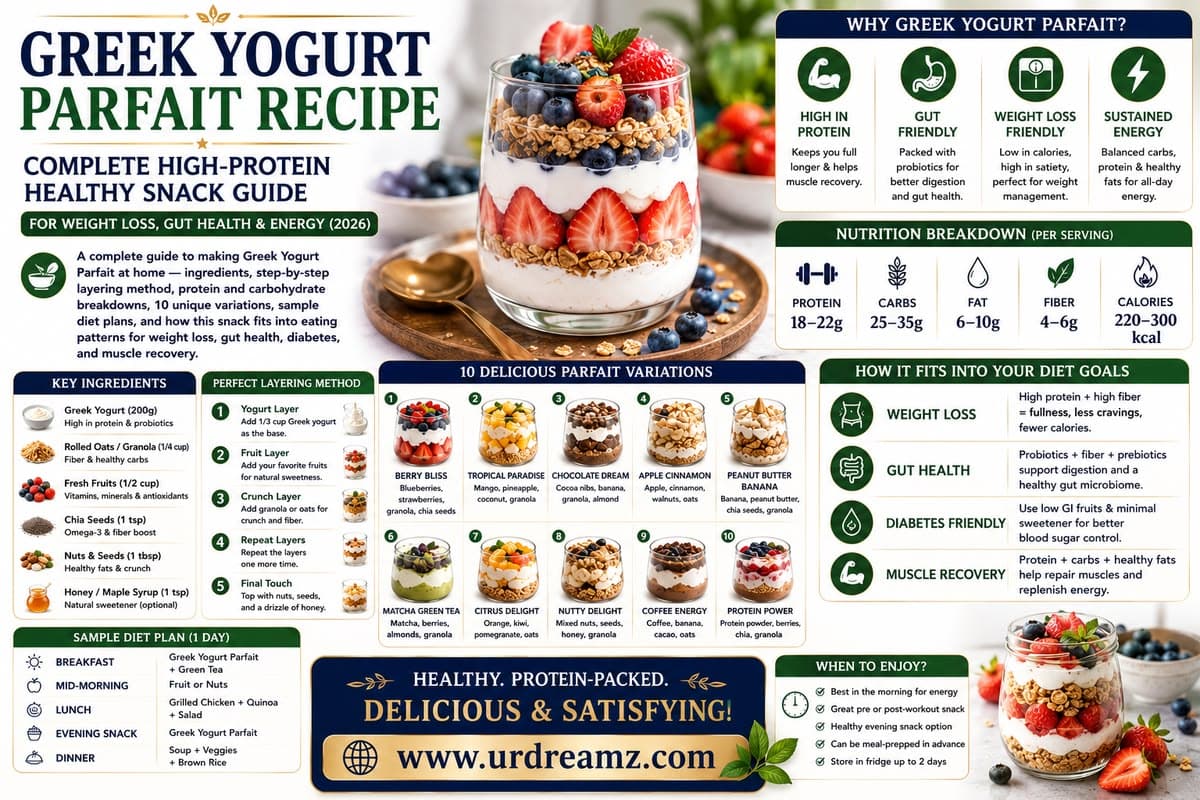
Everything you need to know about making Greek Yogurt Parfait at home — ingredients, step-by-step layering method, protein and carbohydrate breakdowns, 10 variations, sample diet plans, and how this snack fits into eating patterns for weight loss, gut health, diabetes, and muscle recovery.
Introduction: The Snack That Actually Earns Its "Healthy" Label
Not every food marketed as a "healthy snack" actually deserves the title, but Greek Yogurt Parfait is one of the rare exceptions that holds up under scrutiny. Built from just a few whole ingredients — thick, protein-rich Greek yogurt, fresh fruit, a source of crunch like granola or nuts, and a light touch of natural sweetness — it delivers a combination of protein, fiber, and probiotics that most snacks simply can't match. It takes minutes to assemble, requires no cooking, and travels well, which is part of why dietitians consistently recommend it as a go-to option for weight management, gut health, and sustained energy between meals.
This guide goes far beyond a basic recipe card. We cover the difference between Greek and regular yogurt, a full nutritional breakdown including protein and carbohydrate content, exactly how probiotics support gut health, and how this snack fits into eating patterns for weight loss, diabetes, muscle recovery, and heart health. We also walk through ten distinct variations — from a classic berry parfait to a keto-friendly version and a fully vegan alternative — along with sample diet plans built around this snack as a regular part of the day.
Whether you're building a quick breakfast before work, a mid-afternoon pick-me-up, or a proper post-workout recovery snack, the same basic layering formula covered here applies — the fruit, crunch, and sweetener are simply swapped depending on what you're building toward that day.
What Is a Greek Yogurt Parfait?
A Greek Yogurt Parfait is a layered snack or light meal built from Greek yogurt, fruit, and a crunchy topping like granola, nuts, or seeds, typically finished with a small amount of natural sweetener like honey. The word "parfait" originally referred to a French layered dessert, but in modern healthy-eating context, it has come to mean almost any yogurt-based bowl assembled in distinct layers rather than mixed together.
The appeal of the layered format goes beyond presentation — keeping the granola separate from the yogurt until just before eating helps it stay crunchy rather than turning soggy, which is a small but meaningful detail that separates a genuinely enjoyable parfait from a mediocre one.
Because the format is so simple, it's also one of the easiest healthy recipes to make look intentional and put-together, even for someone with zero cooking experience — the visible layers in a clear glass do most of the visual work on their own.
Why Greek Yogurt Parfait Is a Genuinely Healthy Snack
Nutrition experts consistently point to protein and fiber as the two most important qualities of a snack that actually keeps hunger at bay, and Greek Yogurt Parfait delivers both in one bowl. The yogurt alone provides a substantial dose of protein, while the fruit contributes fiber, vitamins, and antioxidants, and any nuts or seeds add healthy fats that further extend satiety.
Because it's built from whole, minimally processed ingredients rather than something manufactured and packaged, it also avoids the excess added sugar, artificial flavoring, and preservatives that show up in many "protein snack" products sold at grocery stores, making the homemade version a meaningfully better choice in most cases.
This combination of qualities — high protein, real fiber, minimal processing, and genuine flexibility — is exactly why registered dietitians so frequently name a yogurt-and-berry combination among their own personal go-to snacks, rather than reaching for a packaged protein bar or snack cup.
Who This Recipe Is Best For
Greek Yogurt Parfait suits anyone looking for a fast, no-cook snack or light breakfast, people managing weight loss or blood sugar goals, athletes and gym-goers needing a convenient post-workout option, and families looking for something both kids and adults will genuinely enjoy. Its naturally probiotic content also makes it a popular choice for anyone focused on digestive health.
This guide includes general nutrition information related to common health considerations such as diabetes, gut health, and muscle recovery. This information is educational and not a substitute for personalized medical advice — always check with your doctor or a registered dietitian before making significant dietary changes, especially if you are managing a diagnosed health condition or a dairy-related sensitivity.
If you've never made a parfait before, this is also one of the most forgiving recipes to start with — there's no cooking step to get wrong, and even an imperfect layering job still tastes exactly the same once you dig in with a spoon.
Greek Yogurt vs Regular Yogurt
Greek yogurt is strained multiple times during production to remove much of its liquid whey, which is what gives it a noticeably thicker texture and a more concentrated protein content compared to regular yogurt made using the same amount of milk. This straining process also reduces the natural sugar (lactose) content somewhat, since some of it is removed along with the whey.
Regular yogurt tends to be thinner, slightly tangier in some cases, and generally lower in protein per serving, though it is often lower in calories as well, depending on the specific brand and fat content chosen.
The straining process is also why Greek yogurt tends to cost more than regular yogurt — it takes roughly three to four times as much milk to produce the same volume of finished Greek yogurt, since so much liquid whey is removed along the way.
Table: Greek Yogurt vs Regular Yogurt Comparison (Per 200g Serving, Approximate)
| Nutrient | Greek Yogurt (plain) | Regular Yogurt (plain) |
|---|---|---|
| Calories | ~130 kcal | ~120 kcal |
| Protein | ~20 g | ~10 g |
| Carbohydrates | ~8 g | ~14 g |
| Calcium | High | High |
| Texture | Thick, creamy | Thinner, more fluid |
Full-Fat vs Low-Fat vs Non-Fat Greek Yogurt
Full-fat Greek yogurt has a richer, creamier mouthfeel and slightly higher calorie and saturated fat content, while low-fat and non-fat versions reduce those numbers while keeping protein content largely intact. Choosing between them mostly comes down to personal preference and your specific calorie or fat goals, since all three are nutritionally solid choices for a parfait base.
Some people also find that full-fat yogurt keeps them feeling fuller for longer thanks to its higher fat content, which can be a worthwhile trade-off even within a calorie-conscious eating plan, as long as the extra calories are accounted for elsewhere in the day.
Table: Fat Content Comparison (Per 200g Serving, Approximate)
| Type | Calories | Fat | Protein |
|---|---|---|---|
| Full-fat Greek yogurt | ~190 kcal | ~10 g | ~18 g |
| Low-fat Greek yogurt (2%) | ~150 kcal | ~4 g | ~20 g |
| Non-fat Greek yogurt | ~130 kcal | ~0 g | ~22 g |
Kitchen Equipment You Will Need
This recipe requires almost no equipment: a bowl or glass jar for layering, a spoon for assembling, and a knife and cutting board for slicing fruit. If you're making your own granola, a baking sheet and oven are needed as well, but the parfait itself comes together with nothing more than basic kitchenware.
Main Ingredients Overview
The base recipe needs just four ingredient categories: Greek yogurt, fresh or frozen fruit, a crunchy topping like granola or nuts, and an optional touch of natural sweetener. Everything beyond that — specific fruits, specific spices, specific protein boosters — is where the ten variations covered later in this guide diverge from one another.
Because the ingredient list is built around categories rather than one fixed combination, this is one of the most forgiving recipes to make with whatever happens to be in your fridge that day — a different fruit, a different crunchy topping, or skipping the sweetener entirely will still produce a satisfying result.
Table: Full Ingredient List and Substitutes
| Ingredient | Purpose | Possible Substitute |
|---|---|---|
| Plain Greek yogurt (1 cup) | Protein base | Non-dairy Greek-style yogurt |
| Mixed berries (1/2 cup) | Fiber, antioxidants, sweetness | Any seasonal fruit |
| Granola (1/4 cup) | Crunch, whole grains | Chopped nuts or puffed cereal |
| Honey (1 tsp, optional) | Natural sweetness | Maple syrup or no sweetener |
| Chia or flax seeds (1 tsp) | Extra fiber, omega-3s | Pumpkin or sunflower seeds |
| Cinnamon (optional) | Warmth, flavor without sugar | Vanilla extract |
Best Fruits for a Parfait
Berries — blueberries, strawberries, raspberries, and blackberries — are the most popular choice thanks to their high antioxidant content and naturally lower sugar level compared to many other fruits. Banana adds creaminess and natural sweetness, mango and pineapple bring a tropical twist, and diced apple with cinnamon offers a warmer, more autumnal flavor profile.
Mixing two or three different fruits in the same parfait, rather than sticking to just one, is a simple way to add visual variety and a broader range of vitamins and antioxidants without any extra preparation effort.
Table: Fruit Options and Their Benefits
| Fruit | Key Benefit |
|---|---|
| Blueberries | High in antioxidants, lower in sugar |
| Strawberries | Rich in vitamin C |
| Banana | Natural creaminess, potassium |
| Mango | Vitamin A and C, tropical sweetness |
| Apple (diced) | Fiber, pairs well with cinnamon |
| Kiwi | High vitamin C, unique texture |
Fresh vs Frozen Fruit
Fresh fruit offers the best texture for a parfait meant to be eaten immediately, while frozen fruit — thawed slightly or blended into a quick compote — works particularly well for overnight or meal-prepped versions, since it releases a bit of natural juice that can actually enhance flavor. Nutritionally, frozen fruit is typically comparable to fresh, since it's usually frozen at peak ripeness.
Keeping a bag of frozen mixed berries on hand is also a practical way to make sure you can always put together a parfait, even on weeks when fresh produce hasn't made it into the fridge yet.
Best Granola and Crunch Toppings
Granola is the classic choice, but chopped nuts, puffed whole grain cereal, or even a few crushed graham crackers can all serve the same textural purpose. The key is adding any crunchy topping right before eating, since even a few minutes sitting in yogurt is enough to soften granola noticeably.
If you enjoy a variety of textures in the same bowl, combining two different crunchy elements — say, granola along with a few whole almonds — adds more textural interest than relying on a single topping alone.
Homemade vs Store-Bought Granola
Homemade granola gives you full control over added sugar and oil, which is a meaningful advantage since many store-bought granolas are surprisingly high in both despite their "healthy" branding. If you prefer the convenience of a store-bought option, checking the sugar content on the nutrition label and choosing a lower-sugar variety is a simple way to keep the overall parfait balanced.
A basic homemade granola can be made by tossing rolled oats, a small amount of oil, a touch of honey or maple syrup, and your choice of nuts or seeds together, then baking at a low temperature until golden and crisp — a batch typically lasts a week or more stored in an airtight container.
Best Nuts and Seeds to Add
Chia seeds, flaxseeds, pumpkin seeds, sunflower seeds, sliced almonds, and chopped walnuts all add healthy fats, extra fiber, and a pleasant textural contrast to the creamy yogurt base. A small amount, roughly a tablespoon, is generally enough to add meaningful nutrition without significantly increasing the calorie count.
Toasting nuts and seeds lightly in a dry pan for a few minutes before adding them brings out a noticeably deeper, nuttier flavor compared to using them raw straight from the bag, and it's a step worth doing whenever you have a spare minute.
Table: Chia Seeds vs Flaxseeds
| Feature | Chia Seeds | Flaxseeds |
|---|---|---|
| Texture | Gel-like when soaked | Best ground for absorption |
| Fiber (per tbsp) | ~5 g | ~3 g |
| Omega-3 content | High | High |
| Best use in parfait | Sprinkled whole or soaked | Ground and sprinkled |
Honey vs Maple Syrup vs No Added Sweetener
Honey adds a distinct floral sweetness and has some natural antimicrobial properties, while maple syrup offers a more neutral, caramel-like sweetness and a slightly different mineral profile. For anyone managing blood sugar closely, skipping added sweetener altogether and relying on the natural sweetness of ripe fruit is often the better choice.
Both honey and maple syrup are still forms of added sugar nutritionally, even though they're often perceived as "healthier" than refined white sugar — the amount used matters more than which specific natural sweetener you choose.
Table: Recipe At a Glance
| Detail | Information |
|---|---|
| Prep Time | 5 minutes |
| Cook Time | None (no-cook recipe) |
| Total Time | 5 minutes |
| Servings | 1–2 |
| Skill Level | Beginner-friendly |
| Best For | Breakfast, snack, or post-workout |
| Calories (approx.) | 250–350 kcal per serving |
Step 1: Choose Your Yogurt Base
Start with about one cup of plain Greek yogurt, choosing full-fat, low-fat, or non-fat based on your personal preference and goals. Plain, unsweetened yogurt is generally the better starting point compared to flavored varieties, since it lets you control exactly how much sweetness goes into the final parfait.
If the only yogurt you have on hand is flavored, that's not a dealbreaker — just be mindful that it likely already contains added sugar, so you can skip any additional honey or maple syrup to keep the overall parfait from becoming overly sweet.
Step 2: Prepare Your Fruit
Wash and slice your chosen fruit into bite-sized pieces. If using frozen fruit, let it thaw slightly first, or gently warm it for a few seconds to release some natural juice, which adds extra flavor to the layers it touches.
Step 3: Prepare Your Granola or Crunch Layer
Measure out your granola, nuts, or seeds. If making your own granola, this step can be done well in advance and stored in an airtight container, since granola typically keeps well for a week or more at room temperature.
Step 4: Layer the Parfait
In a glass or bowl, add a layer of yogurt, followed by a layer of fruit, then a layer of granola, and repeat until your container is full, finishing with a final topping layer for visual appeal. Layering rather than mixing keeps each component's texture distinct until the moment you actually eat it.
Step 5: Add Toppings and Sweetener
Finish with a drizzle of honey or maple syrup if desired, a sprinkle of chia or flax seeds, and a dash of cinnamon for extra warmth. These final touches are where you can most easily customize the parfait to match your specific variation or mood.
Step 6: Serve or Store
Serve immediately for the best texture, or cover and refrigerate for later, keeping in mind that granola will soften the longer it sits in contact with the yogurt. For meal-prepped versions, storing the granola separately until just before eating solves this issue entirely.
Layering Tips for the Best Texture
Placing granola in the very center of the parfait, sandwiched between two yogurt layers, actually helps it stay crisper longer than placing it directly on top, since it has less direct, prolonged contact with the yogurt's moisture. Adding fruit closer to the top layer also helps prevent the parfait from turning watery as fruit releases juice over time.
Using a clear glass jar or cup instead of an opaque bowl also makes the layers visible, which — beyond just looking appealing — makes it easier to judge whether your ratio of yogurt to fruit to granola is well balanced before you even take your first bite.
Nutrition Facts Overview
A standard Greek Yogurt Parfait made with one cup of plain Greek yogurt, a half cup of mixed berries, and a quarter cup of granola typically lands between 250 and 350 calories, while delivering an impressively high protein count for a snack of that size — a combination that is exactly why this recipe shows up so consistently on dietitian-recommended snack lists.
This nutrition profile also compares favorably to many popular snack alternatives — a typical protein bar or flavored yogurt cup often contains similar or higher calories with considerably less protein and more added sugar than a well-built homemade parfait.
Table: Nutrition Facts Per Serving (Approximate)
| Nutrient | Amount |
|---|---|
| Calories | ~300 kcal |
| Protein | ~22 g |
| Carbohydrates | ~35 g |
| Fat | ~8 g |
| Fiber | ~5 g |
| Sugar | ~18 g (mostly natural, from fruit and honey) |
| Calcium | ~20% of daily value |
Note: Values are estimates and will vary based on the specific yogurt, fruit, and granola used.
Protein Content Explained
A single cup of plain Greek yogurt provides roughly 20 grams of protein on its own, which is already more protein than many entire meals contain. Adding a source of protein-rich granola or a spoonful of nut butter can push the total protein content of the parfait even higher, making it a genuinely substantial snack rather than a light nibble.
For context, this means a single serving of this snack can cover a meaningful share of an average adult's daily protein target, all from a five-minute, no-cook recipe — a ratio that very few other quick snacks come close to matching.
Table: Protein Content by Ingredient (Approximate)
| Ingredient | Approx. Protein |
|---|---|
| 1 cup plain Greek yogurt | ~20 g |
| 1/4 cup granola | ~4 g |
| 1 tbsp chia seeds | ~2 g |
| 1 tbsp peanut butter | ~4 g |
| 1/2 cup mixed berries | ~1 g |
Carbohydrate Content Explained
Most of the carbohydrate content in a typical parfait comes from the fruit and granola, since plain Greek yogurt itself is relatively low in carbohydrates. Choosing lower-sugar fruits like berries over higher-sugar options like mango or banana, and being mindful of granola portion size, are the two easiest ways to control the total carbohydrate count.
Because plain Greek yogurt contributes so little to the total carbohydrate count on its own, adjusting the fruit and granola portions gives you nearly full control over how many carbohydrates end up in the final bowl, regardless of which variation you're building.
Table: Carbohydrate Breakdown by Component
| Component | Approx. Carbohydrates |
|---|---|
| 1 cup plain Greek yogurt | ~8 g |
| 1/2 cup mixed berries | ~10 g |
| 1/4 cup granola | ~18 g |
| 1 tsp honey | ~6 g |
| 1 tbsp chia seeds | ~5 g (mostly fiber) |
Calcium and Other Micronutrients
Greek yogurt is a strong source of calcium, which supports bone health, along with smaller amounts of vitamin B12, potassium, and phosphorus. Adding fruit contributes vitamin C and antioxidants, while nuts and seeds bring magnesium, zinc, and additional healthy fats, rounding the parfait out into a genuinely nutrient-dense snack rather than just a protein source.
Getting a variety of micronutrients from a single snack like this is particularly valuable for anyone who struggles to eat a wide range of foods throughout the day, since it packs several different nutrient categories into one convenient, five-minute bowl.
Greek Yogurt Parfait for Gut Health
Greek yogurt is a fermented dairy product, which means it naturally contains live bacterial cultures that can support a healthy gut microbiome when consumed regularly as part of a varied diet. Choosing a yogurt labeled with "live and active cultures" ensures you're getting a meaningful probiotic benefit rather than a version that has been processed in a way that reduces its live culture content.
Pairing yogurt with fiber-rich fruit also supports gut health indirectly, since fiber acts as a food source for the beneficial bacteria already living in your digestive system, a relationship sometimes described using the term "prebiotic" for the fiber side of that equation.
Understanding Probiotics in Greek Yogurt
Probiotics are beneficial bacteria that, when consumed regularly, may support digestive health and a balanced gut microbiome. While research on probiotics is still evolving and effects can vary from person to person, fermented foods like Greek yogurt are commonly recommended as an easy, food-based way to introduce these beneficial bacteria into a regular diet, rather than relying solely on supplements.
Not all yogurt contains the same probiotic strains or amounts, so checking the label for specific mentions of live cultures, and choosing products that haven't been heat-treated after fermentation (a process that would kill the live bacteria), gives you the best chance of getting a genuinely probiotic-rich product.
Greek Yogurt Parfait for Weight Loss
The combination of protein and fiber in this snack supports satiety, which can help reduce overall snacking and calorie intake throughout the day. Choosing non-fat or low-fat yogurt, keeping the granola portion modest, and relying on fruit for natural sweetness rather than added honey are the simplest ways to build a version of this snack specifically tailored for weight-loss goals.
Because a well-built parfait can genuinely satisfy hunger for several hours, it also tends to reduce the temptation to reach for less nutritious options later in the day, which is often just as important for weight management as the calorie count of the snack itself.
Greek Yogurt Parfait for Diabetes (Sugar Patients)
Plain Greek yogurt itself has a relatively low impact on blood sugar thanks to its protein content and reduced sugar compared to regular yogurt, which makes it a reasonable base for a diabetes-conscious snack. Choosing lower-sugar fruits like berries, skipping added honey or maple syrup, and choosing a lower-sugar granola or replacing it with nuts and seeds all help keep this snack aligned with blood sugar management goals. This recipe does not treat or cure diabetes, but it can be a reasonable part of a broader, balanced eating plan for people managing the condition.
Pairing the yogurt with a source of healthy fat, such as a small handful of nuts, can also help further slow the digestion of any carbohydrates in the parfait, contributing to a steadier blood sugar response compared to fruit and granola alone.
Greek Yogurt Parfait for Muscle Building and Post-Workout Recovery
The high protein content of Greek yogurt makes this snack a popular post-workout choice, since protein consumed after exercise supports muscle repair and recovery. Pairing it with a source of carbohydrates, like fruit and granola, also helps replenish glycogen stores used during training, making the full parfait a genuinely well-rounded recovery snack.
Compared to a traditional protein shake, a parfait offers the added benefit of actual food volume and chewing, which some people find more satisfying after a workout than a purely liquid option, while still delivering a comparable protein payload.
Greek Yogurt Parfait for Heart Health
Choosing low-fat or non-fat Greek yogurt, adding heart-healthy fats from nuts and seeds, and relying on fruit rather than added sugar for sweetness all align this snack with heart-conscious eating patterns. The potassium in fruits like banana and the fiber from berries and seeds also contribute to a heart-supportive nutritional profile.
Greek Yogurt Parfait for Kids
This snack is generally well suited for children, offering protein and calcium that support growth, along with a naturally appealing sweet and creamy texture that tends to be popular with younger eaters. For younger children, using a milder, less tart yogurt and keeping toppings simple — like a few berries and a small sprinkle of granola — tends to be the most successful approach.
Table: Health Condition Suitability Summary
| Health Focus | General Suitability | Key Adjustment |
|---|---|---|
| Gut Health | Generally supportive | Choose yogurt with live active cultures |
| Weight Loss | Generally suitable | Non-fat yogurt, modest granola portion |
| Diabetes / Blood Sugar | Generally suitable | Lower-sugar fruit, skip added sweetener |
| Muscle Building | Generally suitable | Larger portion, add nuts or protein granola |
| Heart Health | Generally suitable | Low-fat yogurt, add nuts and seeds |
| Children | Generally suitable | Milder yogurt, simple toppings |
10 Ways to Make Greek Yogurt Parfait
Once you understand the basic layering formula, the fun part is customizing it. Below are ten distinct variations, each built around a different flavor profile or specific goal, from a classic berry version to a fully vegan alternative.
1. Classic Berry Parfait
Ingredients: Plain Greek yogurt, mixed blueberries, strawberries, and raspberries, granola, a drizzle of honey. Why it works: This is the most balanced, all-purpose version, offering antioxidants from the berries alongside the protein of the yogurt, and it's the easiest starting point for anyone new to making parfaits at home.
2. Mango Tropical Parfait
Ingredients: Plain Greek yogurt, diced mango and pineapple, shredded coconut, granola. Why it works: This version brings a bright, tropical flavor profile and a good dose of vitamin C, making it a refreshing option especially in warmer weather.
3. Chocolate Protein Parfait
Ingredients: Greek yogurt mixed with a spoonful of cocoa powder or a scoop of chocolate protein powder, banana slices, granola, a few dark chocolate chips. Why it works: This version satisfies a chocolate craving while still delivering a high-protein, relatively low-sugar profile compared to traditional chocolate desserts.
4. Apple Cinnamon Parfait
Ingredients: Greek yogurt, diced apple, a dash of cinnamon, granola or chopped walnuts. Why it works: The warm, comforting flavor of cinnamon and apple makes this a popular fall-inspired variation, and it works particularly well as a lighter dessert alternative.
5. Peanut Butter Parfait
Ingredients: Greek yogurt swirled with natural peanut butter, banana slices, granola, a light drizzle of honey. Why it works: The combination of peanut butter and banana adds extra protein and healthy fat, making this one of the more filling and satisfying variations on this list.
6. Keto Yogurt Parfait
Ingredients: Full-fat Greek yogurt, a small portion of low-sugar berries, chopped nuts, unsweetened shredded coconut, no added sweetener. Why it works: By skipping granola and honey and relying on nuts and a small portion of berries, this version keeps total carbohydrates low enough to fit within most ketogenic eating plans.
7. Diabetic-Friendly Parfait
Ingredients: Plain Greek yogurt, a modest portion of blueberries or strawberries, a small sprinkle of chopped nuts or a low-sugar granola, no added honey. Why it works: This version minimizes added sugar and leans on the natural sweetness of lower-glycemic berries, making it one of the more blood-sugar-conscious variations on this list. As with all diabetes-related guidance in this article, individual needs vary and should be discussed with a healthcare provider or dietitian.
8. Vegan Yogurt Parfait
Ingredients: Plant-based Greek-style yogurt (coconut, almond, or soy-based), mixed berries, granola, maple syrup instead of honey. Why it works: Plant-based Greek-style yogurts have become widely available and often contain added protein to more closely match dairy-based Greek yogurt, making this a genuinely satisfying option for anyone following a vegan diet.
9. Overnight Parfait Jar
Ingredients: Greek yogurt, chia seeds, oats, fruit, layered in a jar and refrigerated overnight. Why it works: Letting the parfait sit overnight allows the chia seeds and oats to soften slightly and absorb some of the yogurt's moisture, creating a heartier, pudding-like texture that's ready to grab straight from the fridge in the morning.
10. Post-Workout High-Protein Parfait
Ingredients: A larger portion of Greek yogurt, a scoop of protein powder mixed in, banana, a handful of granola, a sprinkle of pumpkin seeds. Why it works: This version maximizes total protein content specifically to support muscle recovery after training, making it a practical alternative to a traditional protein shake for anyone who prefers eating over drinking their post-workout nutrition.
Table: Comparing All 10 Variations
| Variation | Key Feature | Best Suited For |
|---|---|---|
| Classic Berry | Balanced, antioxidant-rich | Everyday snacking |
| Mango Tropical | Vitamin C, bright flavor | Warm-weather refreshment |
| Chocolate Protein | Cocoa, satisfies sweet cravings | Healthy dessert alternative |
| Apple Cinnamon | Warm, comforting flavor | Fall-inspired snacking |
| Peanut Butter | Extra protein and healthy fat | Satiety-focused snacking |
| Keto | Very low carbohydrate | Ketogenic eating plans |
| Diabetic-Friendly | Minimal added sugar | Blood sugar management |
| Vegan | Dairy-free | Plant-based diets |
| Overnight Jar | Make-ahead convenience | Busy mornings |
| Post-Workout | Maximum protein | Muscle recovery |
Sample Diet Plans Using This Parfait
Greek Yogurt Parfait can anchor breakfast or a mid-day snack within a broader daily eating plan, and the specific variation you choose can shift depending on what that day's plan is built around — whether that's weight loss, muscle building, or gut health.
Diet Plan Focus: Weight Loss
For a weight-loss-focused day, the Diabetic-Friendly or Classic Berry variation (made with non-fat yogurt and a light hand on granola) works well as a mid-morning or afternoon snack, paired with protein-forward main meals and plenty of vegetables throughout the day.
Diet Plan Focus: Muscle Building
For a muscle-building day, the Post-Workout High-Protein variation fits well either immediately after training or as a substantial mid-day snack, paired with adequate protein at other meals and enough total calories to support recovery and growth.
Diet Plan Focus: Gut Health
For a gut-health-focused day, the Classic Berry or Overnight Parfait Jar variation works well, paired with other fiber-rich foods and fermented options throughout the day, such as a side of sauerkraut or kimchi with dinner, to support a diverse and well-fed gut microbiome.
Table: Sample One-Day Diet Plan (General Example)
| Meal | Example |
|---|---|
| Breakfast | Greek Yogurt Parfait (variation based on goal) |
| Lunch | Grilled chicken salad or quinoa bowl |
| Snack | A piece of fruit or a small handful of nuts |
| Dinner | Grilled fish or chicken with vegetables |
This is a general example, not a prescribed plan — individual calorie and nutrient needs vary and are best discussed with a healthcare provider or dietitian.
Who Should Limit or Avoid This Snack
Greek Yogurt Parfait is broadly suitable for most people, but a few specific situations call for caution or modification. As with all health-related content in this guide, this is general, educational information rather than personal medical advice.
Table: Conditions Requiring Caution
| Condition / Situation | Why It Requires Caution |
|---|---|
| Milk or dairy allergy | Dairy-based Greek yogurt should be avoided entirely; use a plant-based alternative instead |
| Lactose intolerance | Greek yogurt is lower in lactose than milk but may still cause discomfort for some; a lactose-free or plant-based version may be better tolerated |
| Tree nut or seed allergy | Toppings like almonds, walnuts, or specific seeds should be omitted or substituted based on the individual allergy |
This table is general educational information, not a diagnosis or personalized medical recommendation.
Meal Prep Guide
Greek Yogurt Parfait is one of the easiest snacks to meal prep, since the yogurt, fruit, and granola can all be portioned into separate containers and combined fresh each time, or layered in advance for overnight-style versions that are designed to sit and soften slightly.
Storage Tips
Store yogurt, fruit, and granola in separate airtight containers in the refrigerator, combining them fresh right before eating for the best texture. If you prefer a fully assembled parfait ready to grab, keep in mind the granola will soften somewhat over a day or two of storage.
Freezing Instructions
Plain Greek yogurt can technically be frozen, though its texture becomes noticeably grainier once thawed, which is generally more suitable for smoothies than for a parfait meant to be eaten as-is. Freezing the fruit component separately, particularly berries, is a much more practical way to keep parfait ingredients on hand long term.
Table: Storage and Shelf Life
| Component | Shelf Life |
|---|---|
| Plain Greek yogurt (refrigerator) | 1–2 weeks (check label) |
| Cut fresh fruit (refrigerator) | 2–3 days |
| Granola (room temperature, airtight) | 1–2 weeks |
| Fully assembled parfait (refrigerator) | 1–2 days (granola softens over time) |
Common Mistakes to Avoid
Adding granola too far in advance and ending up with a soggy texture, using heavily sweetened flavored yogurt without realizing how much sugar it adds, overloading the parfait with high-calorie toppings like large amounts of honey or nut butter, and not measuring granola portions are the most common mistakes people make with this otherwise simple recipe.
Table: Mistakes and Quick Fixes
| Mistake | Quick Fix |
|---|---|
| Soggy granola | Add crunch just before eating, or store separately |
| Hidden added sugar | Use plain yogurt, sweeten with fruit or a small amount of honey |
| Too many calories | Measure granola and nut butter rather than free-pouring |
| Bland flavor | Add a pinch of cinnamon or vanilla to the yogurt base |
| Watery parfait | Add fruit closer to the top layer, use fresh rather than fully thawed fruit |
Pro Tips for the Best Parfait
Stir a splash of vanilla extract or a pinch of cinnamon into the yogurt base before layering for extra flavor with zero added sugar, toast your granola or nuts briefly for a deeper flavor, and always taste your yogurt before assembling, since brands vary quite a bit in natural tartness.
Family-Friendly Adaptations
For younger kids, using a milder yogurt, keeping fruit pieces small, and offering toppings like granola or seeds on the side rather than mixed in lets each child build their own version, which tends to make the snack more appealing to picky eaters.
Budget and Meal Planning Tips
Buying Greek yogurt in a large tub rather than individual cups, using frozen fruit instead of fresh when out of season, and making your own granola in bulk are all simple ways to keep this snack affordable for regular, frequent use.
How We Put This Guide Together
This guide combines practical preparation technique with general nutrition information, written to answer the real questions people search for when looking into Greek Yogurt Parfait. Rather than repeating any single source, we brought together common ingredient combinations, nutrition data, and health-condition considerations into one comprehensive reference, explained in plain, straightforward language for readers at any cooking experience level.
Frequently Asked Questions
What is a Greek yogurt parfait?
It's a layered snack made from Greek yogurt, fruit, and a crunchy topping like granola, often finished with a light drizzle of honey.
Is a Greek yogurt parfait healthy?
Yes, especially when made with plain yogurt, fresh fruit, and a modest portion of granola rather than a heavily sweetened, store-bought version.
Is Greek yogurt good for weight loss?
Yes. Its high protein content supports satiety, which can help reduce overall snacking and calorie intake.
Is Greek yogurt high in protein?
Yes, a single cup typically provides around 20 grams of protein, roughly double what regular yogurt offers.
Can I eat Greek yogurt parfait every day?
For most people, yes, as part of a varied diet, though anyone with a dairy sensitivity or specific medical condition should check with their doctor first.
Is Greek yogurt good for gut health?
Yes, when it contains live and active bacterial cultures, which can support a healthy gut microbiome as part of a balanced diet.
Can diabetics eat Greek yogurt parfait?
Generally yes, especially when made with plain yogurt, lower-sugar fruit like berries, and minimal or no added sweetener.
Can I make Greek yogurt parfait ahead of time?
Yes, though for the best texture, store the granola separately and combine it with the yogurt and fruit just before eating.
How long does a yogurt parfait last in the fridge?
A fully assembled parfait is best eaten within one to two days, while the separate components last longer when stored individually.
Can I make a vegan yogurt parfait?
Yes, using a plant-based Greek-style yogurt made from coconut, almond, or soy, many of which now include added protein.
Is Greek yogurt good after a workout?
Yes, its protein content supports muscle recovery, and pairing it with fruit and granola adds carbohydrates to help replenish energy stores.
What is the healthiest topping for a yogurt parfait?
Fresh berries, a small portion of nuts or seeds, and a light homemade granola are generally considered the healthiest, lowest-sugar topping choices.
Table: Quick-Answer FAQ Summary
| Question | Short Answer |
|---|---|
| Healthy? | Yes, especially homemade with plain yogurt |
| High protein? | Yes, ~20g per cup of Greek yogurt |
| Good for gut health? | Yes, with live active cultures |
| Good for diabetics? | Generally yes, without added sugar |
| Freezer-friendly? | Not ideal for yogurt; fruit freezes well separately |
| Vegan-friendly? | Yes, with plant-based yogurt |
Conclusion
Greek Yogurt Parfait earns its reputation as one of the smartest snack choices available, precisely because it delivers on every front that actually matters — protein, fiber, probiotics, and genuine satisfaction — without requiring any cooking or advanced skill. Whether you stick with the classic berry version, build a post-workout protein bowl, or go fully vegan with a plant-based yogurt, the underlying layering technique stays simple enough to repeat daily without ever feeling repetitive.
As with any general dietary guidance, the health-condition information in this guide is meant to support informed everyday choices rather than replace personalized medical or nutritional advice. If you are managing diabetes, a dairy sensitivity, or any other health concern, working with your doctor or a registered dietitian will give you guidance tailored specifically to your own needs.