Grilled Chicken Salad Recipe: High-Protein Healthy Lunch for Weight Loss and Muscle Building
Grilled chicken salad is one of the most complete, reliable, and genuinely enjoyable high-protein meals in the entire healthy eating universe. It delivers 35+ grams of lean protein, 8+ grams of dietary fiber, a comprehensive spectrum of vitamins and minerals, and heart-healthy monounsaturated fats — all in a single bowl under 320–450 calories, ready in 15 minutes, and consistently satisfying enough to replace any temptation to reach for processed food at lunchtime.
Whether your goal is weight loss, muscle building, blood sugar management, cardiovascular protection, or simply eating better without spending hours in the kitchen, grilled chicken salad checks every box simultaneously. It is the most versatile high-protein meal available — it can be eaten warm or cold, as a lunch or dinner, pre-workout or post-workout, plain or with endless flavor variations from Mediterranean to keto to Asian to Greek. It meal preps beautifully, keeps kids and adults equally happy, and works for virtually every dietary framework from keto and paleo to diabetic-friendly and clean eating.
This complete guide covers the master recipe in full detail, comprehensive nutrition analysis, every major healthy variation, expert grilling techniques, meal prep strategies, diabetic-friendly adaptations, the best homemade dressings, common cooking mistakes, and evidence-based answers to the most frequently asked questions about this classic high-protein meal.
More Healthy Recipes from Our Collection
This grilled chicken salad guide is part of our comprehensive Recipes and Cooking library. Each article connects naturally to build a complete daily nutrition strategy:
- High Protein Breakfast Recipes — Complete Morning Meal Guide
- Weight Loss Complete Guide — 37 Recipes and 17-Day Meal Plan
- Diabetic Breakfast Recipes — Healthy Low Sugar Morning Meals
- Overnight Oats Recipes — Easy Make-Ahead Breakfast Ideas
- Green Tea Recipe — Health Benefits, Weight Loss and Brewing Guide
- Green Detox Smoothie — Healthy Ingredients and Weight Loss Guide
- Healthy Vegetable Soup — Weight Loss Benefits and Cooking Guide
- Mediterranean Chickpea Salad — High-Protein Healthy Lunch Guide
Why Grilled Chicken Salad Is the Ultimate Healthy Lunch
The grilled chicken salad has earned its status as a staple of healthy eating culture for very good reasons that go beyond simple popularity. Nutritionally, it solves the most common problem with lunch choices: the tension between satisfaction and health. Most quick lunch options are either satisfying but calorie-dense, or low-calorie but insufficiently filling, leaving you reaching for snacks within an hour. Grilled chicken salad uniquely resolves this tension by combining high-volume, low-calorie vegetables with extremely high-protein lean chicken in a way that fills the stomach completely while staying within the caloric range suitable for weight management.
Chicken breast is the leanest, most protein-dense animal food available. A 150g grilled chicken breast provides 35–40g of complete protein — containing all nine essential amino acids — for approximately 165 calories with less than 3g of fat. No other food source delivers this ratio of protein to calories so cleanly and conveniently. When that chicken is grilled rather than fried or breaded, the nutritional advantage compounds: no additional fat from frying oil, no refined carbohydrates from breading, and the Maillard reaction from grilling creates complex, deeply savory flavors that make the chicken genuinely delicious without any of the caloric overhead of cooking shortcuts.
The vegetable base provides fiber, hydration, vitamins, minerals, and antioxidants that the chicken alone cannot supply. The healthy fat from olive oil and avocado ensures fat-soluble vitamins are absorbed effectively. Together, these components create a nutritionally complete meal that supports muscle repair, stable energy, clear thinking, immune function, and long-term health — every time you eat it.
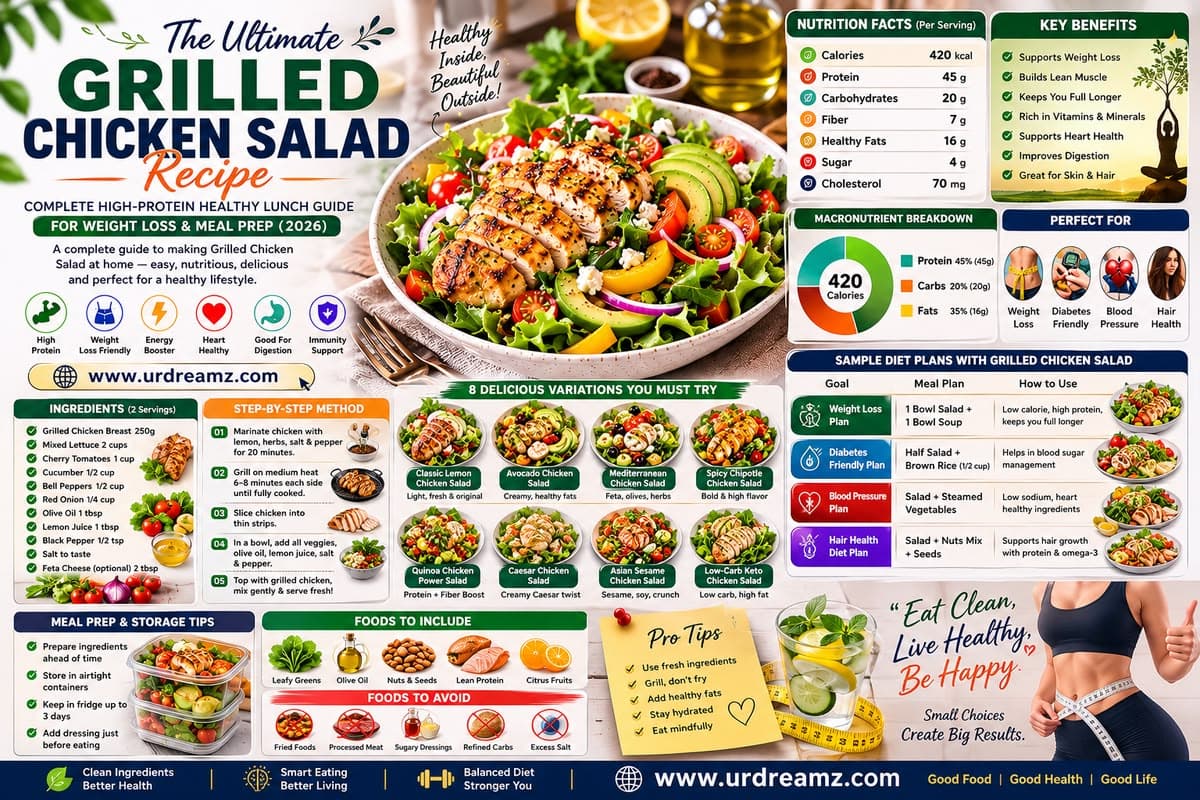
Grilled Chicken Salad Nutrition Facts
Understanding the nutritional profile of grilled chicken salad in detail helps you use it strategically for specific health goals — whether that is hitting protein targets for muscle building, staying within calorie limits for weight loss, or managing blood sugar for diabetic health.
| Nutrient | Amount | % Daily Value | Health Role |
|---|---|---|---|
| Calories | 320 kcal | 16% | Low-calorie, high-satiety meal |
| Protein | 35g | 70% | Muscle repair, satiety, immune function |
| Total Fat | 16g | 21% | Heart-healthy fats from olive oil and avocado |
| Carbohydrates | 8g | 3% | Very low carb — keto and diabetic friendly |
| Dietary Fiber | 3–5g | 11–18% | Gut health, cholesterol, blood sugar |
| Sugar | 4g (natural) | — | Entirely from vegetables — no added sugar |
| Sodium | 420mg | 18% | Controlled — use herbs instead of excess salt |
| Vitamin A | 80–120% DV | 80–120% | Vision, immunity, skin health |
| Vitamin C | 40–70% DV | 40–70% | Immunity, collagen, antioxidant |
| Iron | 2–4mg (11–22% DV) | 11–22% | Oxygen transport, energy production |
| Potassium | 600–900mg | 13–20% | Blood pressure, muscle function |
| Calcium | 80–140mg | 8–14% | Bone strength, muscle contraction |
| Magnesium | 45–80mg | 11–20% | Muscle recovery, sleep, blood sugar |
Key Nutritional Facts at a Glance
- 35g protein — one of the highest-protein single-meal options available
- Under 320 calories — exceptional protein-to-calorie ratio
- Only 8g net carbs — naturally keto and low-carb friendly
- Glycemic Index of approximately 25 — extremely blood sugar friendly
- Ready in 15 minutes — 5 minutes prep, 10 minutes cooking
- Gluten-free by default — no wheat or gluten-containing ingredients
Grilled Chicken Salad Ingredients: Complete Guide
Every ingredient in a well-built grilled chicken salad serves a specific nutritional and flavor purpose. Understanding what each element contributes helps you make better substitutions, improve the recipe to your preferences, and ensure maximum nutritional completeness.
| Ingredient | Amount (1 serving) | Role | Key Nutrition |
|---|---|---|---|
| Chicken Breast (boneless, skinless) | 150–170g (5–6 oz) | Primary protein source, hearty texture | 35–40g complete protein, B vitamins, selenium, zinc |
| Mixed Salad Greens / Spinach | 2 large handfuls (~60g) | Volume, fiber, vitamins, chlorophyll | Vitamins A, K, C, folate, iron, magnesium |
| Cherry Tomatoes | ½ cup, halved | Sweetness, juice, color, Vitamin C | Lycopene, Vitamin C, potassium, antioxidants |
| Cucumber | ½ cup, diced | Crunch, hydration, cooling freshness | Silica, Vitamin K, 95% water |
| Avocado | ½ medium | Creaminess, healthy fat, satiety | Monounsaturated fats, potassium, folate, Vitamin E |
| Red Onion | ¼ cup, thinly sliced | Pungency, flavor complexity | Quercetin antioxidant, antimicrobial, Vitamin C |
| Bell Pepper | ½, diced | Sweetness, crunch, color | Highest Vitamin C of any vegetable, beta-carotene |
| Extra Virgin Olive Oil | 1 tbsp (salad) + 1 tbsp (grilling) | Cooking fat, dressing base, flavor | Oleocanthal (anti-inflammatory), polyphenols, Vitamin E |
| Fresh Lemon Juice | 1 tablespoon | Acidity, brightness, flavor balance | Vitamin C, enhances iron absorption |
| Dijon Mustard | 1 teaspoon | Dressing emulsifier, tangy depth | Selenium, glucosinolates, antimicrobial |
| Feta Cheese (optional) | 2 tablespoons, crumbled | Salty creaminess, Mediterranean character | Calcium, protein, probiotics (if authentic) |
| Garlic Powder | 1 teaspoon (for seasoning) | Depth, savory marinade base | Allicin, immune support, antimicrobial |
| Paprika | 1 teaspoon (for seasoning) | Color, mild warmth, visual appeal | Capsaicin (metabolism), Vitamin A, antioxidants |
The Master Grilled Chicken Salad Recipe: Complete Step-by-Step
This is the foundational recipe — clean, complete, and genuinely delicious. Total time is 15 minutes: 5 minutes of preparation and 10 minutes of cooking. It produces one large, generously portioned bowl with 35g of protein and under 320 calories.
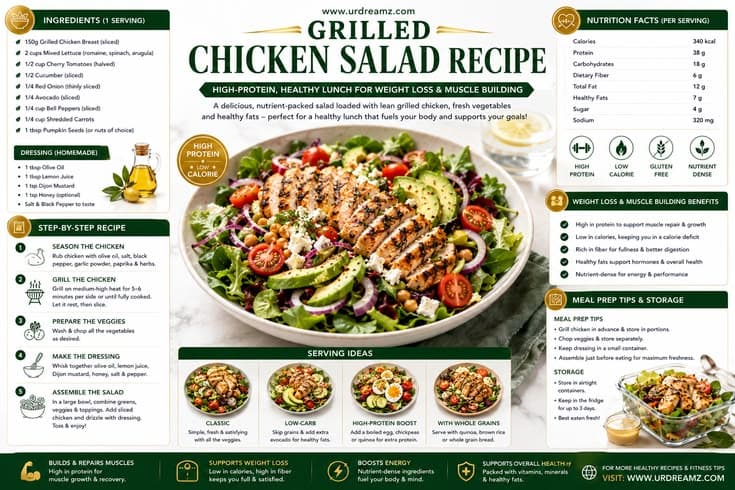
Ingredients (1 serving)
For the Chicken
- 1 boneless, skinless chicken breast (150–170g / 5–6 oz)
- 1 tablespoon olive oil
- 1 teaspoon garlic powder
- 1 teaspoon paprika
- 1 teaspoon dried oregano
- ½ teaspoon sea salt
- ¼ teaspoon black pepper
For the Salad
- 2 cups mixed salad greens (spinach, romaine, arugula or any combination)
- ½ cup cherry tomatoes, halved
- ½ cup cucumber, diced into 1cm pieces
- ½ medium avocado, sliced or diced
- ¼ cup red onion, very thinly sliced
- ½ cup bell pepper, diced (any color)
For the Lemon Herb Dressing
- 1 tablespoon extra virgin olive oil
- 1 tablespoon fresh lemon juice
- 1 teaspoon Dijon mustard
- ½ teaspoon garlic powder
- Salt and black pepper to taste
Step-by-Step Instructions
Step 1 — Prepare and Season the Chicken
Place the chicken breast on a clean cutting board. If it is uneven in thickness, pound it gently with a meat mallet or the flat bottom of a heavy pan until it is uniform in thickness — approximately 2cm throughout. This single step is the most important for producing consistently juicy chicken: uneven thickness means the thin parts overcook and dry out while the thick part is still cooking. Season generously on both sides with the garlic powder, paprika, oregano, salt, and black pepper. Drizzle with olive oil and use your hands to coat the chicken completely in the seasoning. Allow the seasoned chicken to sit at room temperature for 5–10 minutes while the grill or pan heats — this ensures even cooking.
Step 2 — Grill the Chicken Perfectly
Heat a grill pan, outdoor grill, or heavy-bottomed skillet over medium-high heat until genuinely hot — you should see a light wisp of smoke when a drop of water hits the surface. Place the seasoned chicken breast on the hot surface without moving it immediately. Let it cook undisturbed for 4–5 minutes until you can see the cooked color rising about halfway up the side of the breast. Flip once using tongs and cook for another 4–5 minutes on the second side. The chicken is fully cooked when an instant-read thermometer inserted at the thickest point reads 74°C (165°F), or when juices run completely clear when pierced. Never cut into cooking chicken to check — every cut releases valuable moisture and will make the chicken drier.
The most critical step of the entire recipe: Allow the grilled chicken to rest for exactly 5 minutes on a cutting board before slicing. During cooking, the muscle fibers contract and push all the juices toward the center. Resting allows those fibers to relax and the juices to redistribute throughout the meat. Cutting immediately loses up to 40% of the chicken's moisture. After 5 minutes of resting, slice the chicken diagonally into 1cm strips — diagonal slicing creates larger surface area and a more visually impressive presentation.
Step 3 — Build the Salad Base
While the chicken rests, assemble the salad. In a large bowl, combine the mixed greens, cherry tomatoes, cucumber, bell pepper, and red onion. Toss gently to distribute the vegetables evenly. Add the sliced avocado last and handle it carefully — avocado is fragile and bruises easily under aggressive tossing.
Step 4 — Make the Dressing
In a small bowl or jar, combine the olive oil, lemon juice, Dijon mustard, garlic powder, salt, and pepper. Whisk vigorously until the dressing is smooth and emulsified. The Dijon mustard acts as a binding agent that prevents the oil and lemon juice from separating immediately. Taste the dressing — it should taste bright, savory, and pleasantly acidic. If it needs more brightness, add a few more drops of lemon juice. If it tastes too sharp, add a small drizzle of honey.
Step 5 — Assemble and Serve
Pour the dressing over the salad and toss gently until every leaf and vegetable is lightly coated. Arrange the sliced grilled chicken on top of the dressed salad — placing it on top rather than mixing it in ensures the chicken remains visible and creates the classic restaurant-style presentation. Season the finished bowl with a final pinch of salt and black pepper. Serve immediately.
Recipe Quick Reference
- Prep Time: 5 minutes
- Cook Time: 10 minutes
- Total Time: 15 minutes
- Serving Size: 1 large bowl
- Protein: 35g | Calories: 320 kcal | Carbs: 8g | Fat: 16g
Grilling Chicken Perfectly: The Complete Technique Guide
The difference between dry, disappointing grilled chicken and juicy, deeply flavored grilled chicken comes down entirely to technique — specifically marinade, temperature management, and the resting step. Most people who claim they dislike chicken breast have simply never eaten it prepared correctly.
Why Chicken Breast Gets Dry (and How to Prevent It)
Chicken breast dries out because it contains very little intramuscular fat — unlike chicken thighs, which have significant fat marbling that self-bastes during cooking. Without that fat buffer, even moderate overcooking causes the muscle proteins to contract aggressively and squeeze out moisture irreversibly. The solution is twofold: cook to the correct temperature (74°C / 165°F — not higher) and rest before cutting. These two steps alone transform dry, stringy chicken into juicy, tender, genuinely delicious grilled chicken.
Best Marinades for Grilled Chicken Salad
Marinating chicken before grilling serves two purposes: it adds flavor that penetrates the surface layer, and acidic marinades (lemon juice, vinegar, yogurt) slightly denature the surface proteins, creating a more tender texture. For grilled chicken salad, these marinades work best:
- Lemon garlic herb marinade: Olive oil, lemon juice, minced garlic, oregano, thyme — the most Mediterranean-appropriate choice
- Greek yogurt marinade: Greek yogurt, lemon juice, garlic, cumin, paprika — the yogurt's lactic acid tenderizes the chicken while the fat keeps it moist
- Balsamic herb marinade: Balsamic vinegar, olive oil, garlic, rosemary, Dijon mustard — creates beautiful caramelized grill marks and rich depth of flavor
- Honey soy (Asian variation): Soy sauce, honey, sesame oil, ginger, garlic — for the Asian chicken salad variation
Marinate for a minimum of 30 minutes (maximum 24 hours in the refrigerator) for meaningful flavor penetration. Even a quick 15-minute room temperature marinade while the grill heats makes a noticeable difference compared to unseasoned chicken.
Grilling Temperature Guide
Medium-high heat (approximately 200–230°C on an outdoor grill, or just below maximum on a grill pan) is the correct temperature for chicken breast. High heat creates the surface sear that locks in moisture and produces the characteristic grill marks, while allowing the interior to cook through without the exterior burning. Lower heat produces pallid, steamed-tasting chicken without the Maillard reaction browning that creates savory complexity.
Grilled Chicken Salad for Weight Loss: Science and Strategy
Grilled chicken salad is one of the most scientifically well-supported weight loss meals available — and understanding exactly why it works so effectively helps you use it as a strategic tool rather than simply a generic "healthy" choice.
The Protein Advantage
Protein has the highest thermic effect of any macronutrient — the body burns approximately 20–30% of protein calories simply digesting and metabolizing it, compared to 5–10% for carbohydrates and 0–3% for fats. A 35g protein serving of grilled chicken therefore burns approximately 70–100 additional calories in digestion alone — meaning the effective caloric cost is significantly lower than the label suggests. High protein intake also suppresses ghrelin (the hunger hormone) more effectively than carbohydrates or fats, and stimulates the production of PYY and GLP-1 — satiety hormones that signal fullness to the brain and reduce subsequent food intake for 4–6 hours after the meal.
The practical implication is straightforward: people who eat 35g of protein at lunch consistently eat fewer total calories throughout the afternoon and evening than people who eat equivalent calories from lower-protein sources. This is not willpower — it is pure hormonal biochemistry working in your favor.
The Fiber and Volume Strategy
The vegetable base of grilled chicken salad provides high volume — a large physical amount of food that fills the stomach and triggers stretch receptors that signal fullness — with very few calories. Two cups of mixed greens contain approximately 15 calories. Half a cup of cherry tomatoes contains approximately 15 calories. Half a cup of cucumber contains approximately 8 calories. This high volume, ultra-low calorie combination creates genuine stomach fullness without meaningful caloric contribution, allowing the overall meal to stay under 320 calories while feeling completely satisfying.
Weight Loss Strategy: Best Times to Eat Grilled Chicken Salad
Lunch is the optimal time for grilled chicken salad in a weight loss strategy because the high protein and moderate fat content produce satiety that prevents afternoon snacking — the period when most people's caloric discipline breaks down most severely. Consuming this salad as lunch consistently eliminates the 3–4pm hunger window that typically leads to vending machine visits, processed snack consumption, or early dinner overeating.
For a comprehensive weight loss eating strategy that includes this salad as a central component, see our Weight Loss Complete Guide with 37 Recipes and 17-Day Meal Plan.
Grilled Chicken Salad for Muscle Building
For people focused on building muscle, maintaining lean mass during a caloric deficit, or supporting athletic performance, grilled chicken salad is an extraordinarily useful meal — but it needs to be approached slightly differently than for weight loss.
Protein Requirements for Muscle Building
Current sports nutrition research consistently recommends 1.6–2.2g of protein per kilogram of body weight daily for optimal muscle protein synthesis — and spreading protein intake evenly across 3–5 meals throughout the day (rather than consuming most protein at one meal) maximizes the body's ability to utilize amino acids for muscle repair and growth. A grilled chicken salad with 35g of protein represents an ideal single-meal protein contribution for most people in the 70–90kg range pursuing muscle building goals.
How to Modify the Salad for Muscle Building
- Increase chicken portion: Use 200–250g (7–9 oz) chicken breast instead of 150g to increase protein to 45–55g per serving
- Add quinoa or whole grain: Add ½ cup cooked quinoa for complex carbohydrates that fuel glycogen replenishment after training
- Double the avocado: A full avocado adds approximately 300 additional quality calories from monounsaturated fats — ideal for people in a caloric surplus for muscle gain
- Add boiled eggs: Two boiled eggs add an additional 12g of protein plus fat-soluble vitamins and choline for brain health
- Include cottage cheese or Greek yogurt in the dressing: Replace part of the olive oil in the dressing with Greek yogurt for additional protein and a creamy texture
- Add seeds and nuts: Hemp seeds (6g protein per 2 tbsp), pumpkin seeds (9g protein per oz), or almonds provide additional protein, healthy fats, and minerals
Best Time to Eat for Muscle Building
For muscle building, consume grilled chicken salad within 2 hours after strength training (the post-workout anabolic window) when muscle cells are most receptive to amino acids for protein synthesis. Add additional carbohydrates (whole grain bread, sweet potato, or quinoa alongside the salad) to replenish muscle glycogen rapidly and support insulin-driven amino acid uptake into muscle cells. For comprehensive high-protein morning meal strategies, see our High Protein Breakfast Recipes Guide.
Grilled Chicken Salad for Diabetics: Blood Sugar Management
Grilled chicken salad is among the most diabetic-friendly meals available — and this assessment is based on the specific physiological effects of each component on blood glucose management, not simply on its low carbohydrate content.
Blood Sugar Impact Analysis
Grilled chicken breast has a Glycemic Index of exactly 0. Protein does not raise blood glucose directly and actually slows gastric emptying — the rate at which food leaves the stomach — which reduces the speed of glucose absorption from other foods consumed at the same meal. A high-protein meal produces a measurably lower post-meal blood glucose response than the same calorie meal with lower protein, even if the carbohydrate content is identical.
Mixed salad greens are extremely low in digestible carbohydrates. The carbohydrates present are almost entirely dietary fiber — which does not raise blood glucose — plus a tiny amount of naturally occurring glucose and fructose in the cell walls. The fiber in leafy greens creates a physical gel in the digestive tract that slows carbohydrate digestion and glucose absorption from every food consumed at the same meal.
Avocado and olive oil contain healthy monounsaturated fats that improve insulin sensitivity through multiple mechanisms. The PREDIMED study and subsequent research have consistently shown that Mediterranean-style diets rich in olive oil improve glycemic control in type 2 diabetics more effectively than low-fat diets.
Cherry tomatoes and cucumber contain small amounts of natural sugars, but their high fiber and water content results in a negligible glycemic load — effectively zero impact on blood sugar at standard serving sizes.
Critical Adjustments for Diabetic Safety
The base salad ingredients are excellent for blood sugar management, but the dressing choice is critically important. Many store-bought salad dressings contain hidden sugars — particularly high-fructose corn syrup — that can cause sharp blood glucose spikes entirely disproportionate to the small amount consumed. The CDC specifically recommends that people with diabetes make simple, sugar-free homemade dressings: extra virgin olive oil, apple cider vinegar or fresh lemon juice, herbs, garlic powder, salt, and pepper. This simple combination provides flavor without any added sugar.
Avoid commercial Caesar dressings, honey mustard dressings, balsamic glazes (concentrated sugar), and any dressing labeled "sweet" or "honey." If you prefer a creamy texture, use plain unsweetened Greek yogurt mixed with lemon juice and fresh dill — this adds protein while completely eliminating carbohydrate risk from the dressing.
For comprehensive diabetic nutrition guidance, see our Diabetic Breakfast Recipes Guide.
Diabetic-Friendly Serving Variations
- Mediterranean Style: Add a few Kalamata olives and a sprinkle of feta cheese — rich flavor without additional carbohydrates
- Crunchy texture without croutons: Replace carbohydrate-heavy croutons with a small handful of raw unsalted pecans or sliced almonds — same crunch, healthy fats, zero blood sugar impact
- Anti-inflammatory boost: Add a drizzle of extra virgin olive oil and a pinch of turmeric directly to the salad before serving for curcumin-based inflammation reduction
Keto Grilled Chicken Avocado Salad
The keto version of grilled chicken salad maximizes healthy fat content, eliminates all unnecessary carbohydrates, and produces a deeply satisfying, richly flavored bowl that maintains ketosis while delivering exceptional protein for muscle preservation during a ketogenic diet.
Ingredients (serves 2)
- 2 boneless, skinless chicken breasts
- 1 tablespoon olive oil
- 1 teaspoon garlic powder
- 1 teaspoon paprika
- 1 teaspoon sea salt
- ¼ teaspoon black pepper
- 6 cups mixed greens
- 1 avocado, sliced
- ½ cup cherry tomatoes, halved
- ¼ cup red onion, thinly sliced
- ¼ cup cucumber, sliced
- 2 tablespoons crumbled feta cheese (optional)
Keto Dressing
- 2 tablespoons olive oil
- 1 tablespoon fresh lemon juice
- 1 teaspoon Dijon mustard
- ½ teaspoon garlic powder
- Salt and black pepper to taste
Keto Nutrition Per Serving
- Calories: 450 kcal
- Protein: 36g
- Net Carbs: 6g (well within ketogenic limits)
- Fat: 32g (primarily from avocado and olive oil)
This version is fully keto-compliant, gluten-free, and dairy-free if feta is omitted. The full avocado contributes exceptional potassium (more than a banana), folate, Vitamin E, and the monounsaturated oleic acid that supports both ketone production and cardiovascular protection simultaneously.
10 Grilled Chicken Salad Variations
The basic grilled chicken salad is a versatile canvas — a perfect foundation from which completely different flavor profiles, nutritional emphases, and dining experiences can be created by changing a few key components.
1. Grilled Chicken Caesar Salad
Replace mixed greens with crisp chopped romaine lettuce. Add whole grain croutons (or almond croutons for low carb), freshly shaved Parmesan cheese, and a lightened Caesar dressing made from Greek yogurt, lemon juice, garlic, Dijon mustard, Worcestershire sauce, and a small amount of anchovy paste. The chicken replaces the traditional Caesar dressing's anchovy protein contribution while adding far more protein per calorie than any other addition to this classic.
2. Mediterranean Grilled Chicken Salad
Build on a base of romaine and baby spinach. Add Kalamata olives, crumbled feta, cherry tomatoes, red onion, cucumber, and roasted red peppers. Dress with the classic lemon and olive oil dressing from the Mediterranean chickpea salad guide. This variation is the most comprehensive in terms of antioxidant diversity — the combination of lycopene from tomatoes, polyphenols from olives, quercetin from red onion, and oleocanthal from olive oil creates extraordinary anti-inflammatory coverage. See our Mediterranean Chickpea Salad Guide for the detailed Mediterranean dressing recipe.
3. Avocado Grilled Chicken Salad
This variation maximizes healthy fat content by using a full avocado (diced, sliced, or mashed into the dressing as a creamy avocado vinaigrette). Add lime juice instead of lemon, fresh cilantro instead of parsley, and a small amount of jalapeño for gentle heat. The avocado-based dressing eliminates the need for olive oil entirely while providing even more beneficial monounsaturated fats and potassium.
4. Greek Grilled Chicken Salad
Marinate the chicken in lemon juice, olive oil, garlic, and dried oregano for at least 30 minutes before grilling — this creates the characteristic Greek flavor. Build the salad on chopped romaine with cucumber, tomatoes, red onion, Kalamata olives, and generous crumbled feta. The Greek variation is the closest cousin to the Mediterranean chickpea salad in flavor profile and pairs perfectly with warm whole wheat pita bread.
5. Spicy Grilled Chicken Salad
Season the chicken generously with cayenne pepper, chili flakes, smoked paprika, and cumin. The capsaicin from cayenne has demonstrated thermogenic effects — it temporarily increases metabolic rate by 4–5% and may support fat oxidation. Build the salad with sliced jalapeño, mango (for cooling sweetness), red cabbage, and a lime-cumin dressing. This variation is particularly popular in fitness communities for its combination of high protein, metabolic activation from capsaicin, and bright, energizing flavor.
6. Asian Grilled Chicken Salad
Marinate the chicken in soy sauce, sesame oil, ginger, and garlic. Build the salad on shredded napa cabbage and mixed greens with edamame, shredded carrot, sliced cucumber, and scallions. Dress with a sesame-ginger vinaigrette (sesame oil, rice vinegar, soy sauce, fresh ginger, honey). Top with toasted sesame seeds and optional crispy wonton strips (omit for low carb). The edamame adds an additional 9g of complete plant protein per half cup.
7. BBQ Grilled Chicken Salad
Brush the chicken with a sugar-free BBQ sauce during the last 2 minutes of grilling (sugar-free is critical — standard BBQ sauces contain 10–15g of sugar per tablespoon). Build the salad with corn (use sparingly for low-carb adherents), black beans, shredded sharp cheddar, red onion, and cilantro. Dress with a simple lime-cumin vinaigrette. The black beans contribute additional plant protein and fiber that complements the chicken's complete protein beautifully.
8. Quinoa Grilled Chicken Salad
Add ½ cup cooked and cooled quinoa to the base salad for a complete amino acid profile from two protein sources simultaneously. Quinoa provides all essential amino acids alongside significant complex carbohydrates — making this the ideal post-workout variation for athletes who need both protein for muscle repair and carbohydrates for glycogen replenishment. This variation adds approximately 8g of additional protein and 20g of complex carbohydrates per serving.
9. Strawberry Spinach Grilled Chicken Salad
Replace mixed greens with fresh baby spinach. Add sliced fresh strawberries, crumbled goat cheese, and toasted pecans. Dress with a balsamic vinaigrette (balsamic vinegar, olive oil, Dijon mustard, honey). The strawberries provide Vitamin C that dramatically increases the iron absorption from the spinach — a particularly valuable combination for women who need robust iron intake. This is also the most visually stunning variation, with its vivid red strawberries against bright green spinach and pale chicken.
10. Taco Grilled Chicken Salad
Season the chicken with cumin, chili powder, garlic powder, and paprika for taco-inspired flavoring. Build on romaine or iceberg lettuce with black beans, corn, cherry tomatoes, shredded pepper jack cheese, and diced avocado. Dress with a cilantro lime dressing or a simple salsa-based dressing. Crush a small amount of baked tortilla chips on top for crunch (or use jicama sticks for low-carb crunch). This is the most kid-friendly variation and the most likely to convert salad skeptics.
10 Quick Healthy Lunch Recipes (20 Minutes or Less)
Grilled chicken salad belongs to a broader family of quick, nutritious lunch recipes that can transform midday eating from a convenience-driven weakness into a consistent nutritional strength. Here are the most practical high-quality lunch options, each ready in 20 minutes or less.
| # | Recipe | Key Ingredients | Cook Time | Primary Nutrition |
|---|---|---|---|---|
| 1 | Grilled Chicken Salad | Chicken breast, mixed greens, avocado, olive oil, lemon | 15 min | 35g protein, 320 kcal, very low carb |
| 2 | Chicken Wrap | Whole wheat wrap, grilled chicken, lettuce, cucumber, tomato, yogurt sauce | 15 min | High protein, complex carbs, portable |
| 3 | Tuna Salad | Tuna, Greek yogurt, cucumber, cherry tomatoes, mixed greens, lemon | 10 min | High protein, omega-3 fats, very low calorie |
| 4 | Veggie Stir Fry with Tofu | Mixed vegetables, tofu, soy sauce, garlic, olive oil, sesame seeds | 15 min | Plant protein, fiber, anti-inflammatory |
| 5 | Egg Fried Rice | Cooked brown rice, eggs, mixed veggies, soy sauce, green onions | 15 min | Complete protein, complex carbs, iron |
| 6 | Chickpea Salad | Chickpeas, cucumber, tomato, red onion, lemon juice, olive oil | 10 min | Plant protein, high fiber, Mediterranean |
| 7 | Avocado Toast | Whole grain bread, avocado, cherry tomatoes, red chili flakes, salt | 10 min | Healthy fats, fiber, complex carbs |
| 8 | Caprese Salad | Cherry tomatoes, fresh mozzarella, basil, olive oil, balsamic glaze | 10 min | Calcium, lycopene, healthy fats |
| 9 | Quinoa Bowl | Quinoa, black beans, corn, bell peppers, lime juice, olive oil | 15 min (with pre-cooked quinoa) | Complete plant protein, high fiber |
| 10 | Tomato Soup and Whole Grain Toast | Tomatoes, garlic, basil, olive oil, whole grain toast | 15 min | Lycopene, complex carbs, hydration |
4 Budget-Friendly High-Protein Lunch Ideas
Eating high-protein healthy lunches does not require an expensive food budget. These four protein-rich lunch options use affordable, widely available ingredients and cost between $1.25 and $1.55 per serving — proving that nutritional quality and budget-friendliness are entirely compatible.
1. Tuna Rice Bowl ($1.35 per serving)
Canned tuna over brown rice with cucumber, cherry tomatoes, red onion, and a simple olive oil and lemon juice dressing. Ready in 10 minutes (with pre-cooked rice). Canned tuna is one of the most affordable sources of complete protein and omega-3 fatty acids available anywhere. A single can provides 25–30g of protein for approximately $1.00. Brown rice adds complex carbohydrates and additional B vitamins for sustained afternoon energy.
2. Chicken Salad Wrap ($1.55 per serving)
Cooked chicken (from batch-grilled chicken or leftover rotisserie), Greek yogurt, celery, red onion, and lettuce in a whole wheat wrap. Ready in 10 minutes. Using Greek yogurt instead of mayonnaise cuts saturated fat dramatically while adding 8–10g of additional protein and beneficial probiotics. Batch cooking chicken breast at the beginning of the week reduces the per-serving cost significantly.
3. Lentil Power Bowl ($1.25 per serving)
Cooked green or brown lentils over a base of spinach with roasted vegetables, crumbled feta cheese, and an olive oil and lemon dressing. Ready in 15 minutes with pre-cooked lentils. Lentils are arguably the most nutritionally dense budget food available — providing 18g of plant protein, 16g of fiber, exceptional iron and folate, and significant potassium per cooked cup for approximately $0.20–0.30 per serving.
4. Turkey Lettuce Wraps ($1.40 per serving)
Ground turkey cooked with shredded carrots, cabbage, green onions, and seasoned with tamari or coconut aminos, served in large romaine or butter lettuce leaves. Ready in 15 minutes. Ground turkey is one of the most affordable lean protein sources — higher protein and lower fat than ground beef at typically lower cost. The lettuce wraps are naturally gluten-free and extraordinarily low in carbohydrates.
High-Protein Lunch Meal Ideas: Complete Collection
Building a varied repertoire of high-protein lunch options prevents the menu fatigue that causes many people to abandon healthy eating habits. Here are the most nutritionally effective high-protein lunch combinations, each targeting specific health goals.
| Meal | Key Ingredients | Protein | Best Goal |
|---|---|---|---|
| Grilled Chicken Salad | Chicken breast, mixed greens, avocado, olive oil, lemon | 35g | Weight loss, muscle maintenance |
| Turkey and Quinoa Bowl | Lean turkey mince, cooked quinoa, spinach, garlic, olive oil | 40g | Muscle building, post-workout recovery |
| Tuna Salad Sandwich | Tuna (water packed), whole grain bread, Greek yogurt, onion, lettuce | 32g | Budget-friendly high protein, omega-3 |
| Salmon and Brown Rice | Grilled salmon, brown rice, broccoli, lemon, olive oil | 38g | Heart health, omega-3, complex carbs |
| Beef and Veggie Stir-Fry | Lean beef strips, bell peppers, broccoli, onion, soy sauce, garlic | 35g | Iron, zinc, muscle building |
| Chicken and Black Bean Taco | Grilled chicken, black beans, corn tortillas, lettuce, tomato | 38g | Balanced protein plus fiber, enjoyable |
| Egg and Avocado Wrap | Boiled eggs, whole-wheat wrap, avocado, spinach | 22g | Budget, vegetarian protein, healthy fats |
| Shrimp and Lentil Salad | Cooked shrimp, lentils, cucumber, tomato, lemon | 35g | Very low calorie, complete protein, iron |
| Greek Chicken Wrap | Grilled chicken, whole-wheat wrap, chickpeas, Greek yogurt sauce | 42g | High protein, Mediterranean nutrition |
Best Homemade Dressings for Grilled Chicken Salad
The dressing is the element that most powerfully defines the character and flavor of a grilled chicken salad. A great dressing should enhance and unite the ingredients rather than masking them, and it should provide additional nutrition rather than simply adding empty calories or hidden sugars.
| Dressing | Ingredients | Calories (per tbsp) | Best For |
|---|---|---|---|
| Classic Lemon Olive Oil | EVOO, fresh lemon juice, salt, pepper | ~60 kcal | Clean flavor, Mediterranean, keto, diabetic |
| Lemon Herb Dijon | EVOO, lemon juice, Dijon mustard, garlic powder, herbs | ~65 kcal | Complex flavor, emulsified, all-purpose |
| Greek Yogurt Dressing | Greek yogurt, lemon juice, fresh dill, garlic, salt | ~15 kcal | Lowest calorie, highest protein, diabetic-friendly |
| Balsamic Vinaigrette | EVOO, aged balsamic vinegar, Dijon mustard, honey | ~70 kcal | Rich depth, sweet-acid balance, Italian style |
| Honey Mustard | Dijon mustard, raw honey, apple cider vinegar, EVOO | ~55 kcal | Kid-friendly, sweet, crowd-pleasing |
| Avocado Dressing | Ripe avocado, lime juice, cilantro, garlic, olive oil, water | ~45 kcal | Creamy, dairy-free, high healthy fat |
| Tahini Lemon | Tahini, lemon juice, garlic, water, salt | ~50 kcal | Middle Eastern character, sesame calcium |
| Apple Cider Vinegar (Sugar-Free) | ACV, EVOO, Dijon, garlic, herbs | ~55 kcal | Gut health, blood sugar, gut microbiome |
Dressing Tip: Why Homemade Always Wins
Store-bought dressings — even those marketed as "light" or "healthy" — frequently contain high-fructose corn syrup, artificial preservatives, emulsifiers, seed oils of questionable quality, and far more sodium than homemade equivalents. A homemade lemon olive oil dressing takes under 60 seconds to prepare in a small jar, stores in the refrigerator for 5 days, costs less than $0.20 per serving, and contains only ingredients you would actually choose to eat. The investment of those 60 seconds pays compounding nutritional dividends every time you use it.
Grilled Chicken Salad Meal Prep: How to Prepare for the Week
Grilled chicken salad is one of the most practical meal prep choices available because the chicken component — the most time-consuming element — stores excellently for 4 days in the refrigerator and up to 2 months in the freezer, while the vegetable components take only minutes to assemble fresh each morning.
Weekly Meal Prep Strategy
- Sunday batch cook: Season and grill 600–800g of chicken breasts (4–5 large breasts) in one session. This takes approximately 25–30 minutes total and produces enough chicken for 5 lunches. Allow to cool completely before refrigerating.
- Prep the vegetables: Wash and dry all salad greens. Dice cucumber and bell pepper. Halve cherry tomatoes. Store each vegetable separately in sealed containers or zip-lock bags in the refrigerator.
- Make a dressing batch: Prepare enough dressing for the full week (5 servings) and store in a sealed jar in the refrigerator. Shake before each use.
- Daily assembly (2 minutes): Each morning, add a handful of greens to a container, add pre-cut vegetables, slice enough cold chicken for one serving, and add a fresh half-avocado (cut fresh daily — pre-cut avocado browns overnight). Add dressing at the office immediately before eating.
- Transport: Keep dressing separate in a small sealed jar and add immediately before eating for maximum freshness and to prevent soggy greens.
Storage Duration Guide
- Grilled chicken (refrigerator): 3–4 days in a sealed container
- Grilled chicken (freezer): Up to 2 months — slice before freezing for faster thawing
- Pre-cut vegetables: Cucumber and pepper — 4–5 days; cherry tomatoes — 3–4 days; mixed greens — 3–4 days if dry
- Avocado: Slice fresh daily — do not pre-cut or store in the salad
- Homemade dressing: 5–7 days refrigerated in a sealed jar
- Assembled salad (without dressing): 24 hours maximum — assemble each morning for best results
Can You Freeze Grilled Chicken Salad?
No — the assembled salad does not freeze. Fresh vegetables become completely mushy when thawed, and salad greens are irreparably damaged by freezing. However, the grilled chicken portion can and should be frozen for longer-term meal prep. Freeze individual portions of sliced chicken in zip-lock bags, then thaw overnight in the refrigerator and assemble the salad fresh the next morning. This hybrid approach — frozen protein, fresh vegetables — provides the convenience of freezer meal prep with the quality of freshly assembled salad.
20 High-Protein Meal Ideas for Daily Nutrition
Grilled chicken salad is one component of a comprehensive high-protein meal strategy. Here is a collection of 20 evidence-based high-protein meal combinations that cover every meal of the day, every major food preference, and every major health goal.
| # | Meal Combination | Approximate Protein |
|---|---|---|
| 1 | Quinoa, shrimp, and avocado bowl | 32g |
| 2 | Quinoa, mozzarella, and fresh tomatoes | 22g |
| 3 | Brown rice, salmon, and asparagus | 38g |
| 4 | Tuna salad with avocado and olives | 30g |
| 5 | Omelette with avocado and cheese | 28g |
| 6 | Rice, roasted veggies, boiled eggs, Brussels sprouts | 24g |
| 7 | Brown rice, tuna, salad, and spinach | 32g |
| 8 | Mixed fruits, berries, and peanut butter | 12g |
| 9 | Rice, salmon, and broccoli | 36g |
| 10 | Pasta, fresh mozzarella, and tomatoes | 20g |
| 11 | Omelette with salmon, spinach, and avocado | 34g |
| 12 | Rice, mixed veggies, and steamed fish with olives | 30g |
| 13 | Tuna salad with avocado and olives (second serving) | 30g |
| 14 | Rice, roasted veggies, beans, and mushrooms | 18g |
| 15 | Pasta with cheese, avocado, and vegetables | 22g |
| 16 | Chickpea salad with cucumber and radish | 18g |
| 17 | Couscous with salmon and broccoli | 35g |
| 18 | Couscous with roasted eggplant and cheese | 16g |
| 19 | Brussels sprouts with eggs, couscous, and vegetables | 22g |
| 20 | Cheese toast with fresh fruits and berries | 14g |
Why Grilled Chicken Is Better Than Fried Chicken
The comparison between grilled and fried chicken is one of the most nutritionally consequential food choices most people make regularly — and the difference is far more dramatic than most people appreciate.
| Nutrient | Grilled Chicken Breast | Fried Chicken Breast | Difference |
|---|---|---|---|
| Calories | 165 kcal | 320–400 kcal | ~2× more calories when fried |
| Total Fat | 3.5g | 15–22g | 4–6× more fat when fried |
| Saturated Fat | 1g | 4–6g | 4–6× more saturated fat when fried |
| Carbohydrates | 0g | 15–20g (from breading) | Fried adds significant refined carbs |
| Protein | 35g | 25–30g (diluted by breading) | Grilled provides more protein per serving |
| Sodium | ~300mg | ~800–1,200mg | Fried is 3–4× higher in sodium |
| Trans Fat | None | 0.5–2g (from frying oil) | Grilled eliminates trans fat entirely |
| Glycemic Impact | Zero | Moderate (from breading) | Grilled is completely blood sugar neutral |
The critical factor beyond calorie and fat content is the type of fat in fried chicken. When vegetable and seed oils are heated to frying temperatures repeatedly (as is common in commercial frying operations), they undergo oxidation and produce aldehydes, acrolein, and other toxic compounds associated with inflammation and cellular damage. Grilling uses dry heat that does not introduce any additional fat — the chicken cooks in its own minimal moisture rather than absorbing oil. For people managing heart disease, diabetes, or weight, this distinction is clinically significant.
Healthy Lunch Recipes Coverage: Google Autosuggest
Based on current Google Autosuggest data for "Healthy Lunch Recipes," the most searched variations that this guide specifically addresses include healthy lunch recipes for weight loss (covered in weight loss section), healthy lunch recipes for work (covered in meal prep and portable lunch section), healthy lunch recipes easy (covered in the master recipe with 15-minute prep), healthy lunch recipes meal prep (comprehensive dedicated meal prep section), healthy lunch recipes high protein (the entire focus of this guide with 35g+ protein), healthy lunch recipes for kids (variations and serving suggestions section), healthy lunch recipes chicken (the primary protein throughout this guide), and healthy lunch recipes for diabetics (dedicated diabetic section with blood sugar analysis).
The Pinterest autosuggest data confirms that grilled chicken salad, healthy meal prep, high-protein lunch, and macro-friendly meals are among the most consistently saved and searched healthy eating pins — confirming this guide's relevance across both Google Search and Pinterest organic traffic channels.
What Vitamins and Minerals Does Grilled Chicken Salad Provide?
A comprehensive grilled chicken salad provides an extraordinarily broad spectrum of micronutrients in bioavailable forms — the forms found in whole foods that the body recognizes and absorbs most efficiently.
| Vitamin / Mineral | Primary Source in Salad | Key Function | % DV per Serving |
|---|---|---|---|
| Vitamin A | Spinach, mixed greens, bell peppers | Vision, immunity, skin cell renewal | 80–120% |
| Vitamin C | Bell peppers, cherry tomatoes, lemon juice | Immunity, collagen production, iron absorption | 60–90% |
| Vitamin K | Spinach, mixed greens, cucumber | Bone health, blood clotting, cardiovascular protection | 100–200% |
| Vitamin B6 | Chicken breast, avocado, bell peppers | Protein metabolism, neurotransmitter production | 40–60% |
| Vitamin B12 | Chicken breast, feta cheese (if added) | Nerve function, red blood cell production | 15–25% |
| Vitamin E | Avocado, olive oil, spinach | Antioxidant, skin health, immune support | 20–35% |
| Iron | Spinach, chicken breast, bell peppers | Oxygen transport, energy production, immune function | 15–25% |
| Potassium | Avocado, tomatoes, spinach, cucumber | Heart rhythm, blood pressure, muscle function | 15–20% |
| Magnesium | Spinach, avocado, chicken breast | Muscle and nerve function, sleep, blood sugar | 15–25% |
| Selenium | Chicken breast (excellent source) | Thyroid function, antioxidant, DNA protection | 50–70% |
| Zinc | Chicken breast, spinach | Immune function, wound healing, taste and smell | 20–30% |
| Folate | Spinach, avocado, mixed greens | Cell division, DNA repair, pregnancy nutrition | 30–50% |
Common Grilled Chicken Salad Mistakes and How to Fix Them
Understanding the most common mistakes that prevent grilled chicken salad from reaching its full potential — and knowing exactly how to correct each one — dramatically improves your results every time you make this recipe.
Overcooked, Dry Chicken
The most common and most damaging mistake. Chicken breast becomes dry and stringy when internal temperature exceeds 74°C (165°F). Use an instant-read thermometer and remove the chicken from the heat the moment it reaches 74°C. The temperature will continue rising 2–3°C during the 5-minute rest (carryover cooking) — so pulling at exactly 74°C is correct. If you do not have a thermometer, the second most reliable test is piercing the thickest part with a thin knife — the juices should run completely clear with no pink tinge.
Unseasoned Chicken
Bland, under-seasoned chicken ruins the entire bowl regardless of how good the vegetables and dressing are. Season the chicken at minimum 5–10 minutes before grilling (not immediately before, which allows insufficient time for the salt to begin drawing out surface moisture that helps the seasoning adhere). Use at minimum 1 teaspoon of salt per 450g of chicken — this sounds generous but is appropriate for surface seasoning and produces dramatically more flavorful results than timid seasoning.
Wet, Soggy Salad
Soggy salad results from wet greens, wet chicken, or too much dressing. Dry your salad greens thoroughly after washing — a salad spinner is the most effective tool. Pat grilled chicken dry with a paper towel before slicing if any residual moisture remains from resting. Add dressing sparingly — start with less than you think you need, toss, taste, then add more only if genuinely required.
Too Much Dressing
Over-dressed salad feels heavy, greasy, and hides the individual flavors of each ingredient. A well-dressed salad should have every component lightly coated — the leaves should glisten but not drip. For a single serving, 1–2 tablespoons of dressing is typically sufficient. Always dress at the last possible moment before eating — even 20 minutes after dressing, the acids in lemon juice begin wilting leafy greens.
Slicing Chicken Immediately After Grilling
Cutting the chicken without resting first releases 30–40% of the internal moisture immediately onto the cutting board rather than distributing it through the meat where it belongs. The 5-minute rest is not optional — it is the step that determines whether the chicken will be juicy or dry. Use this time to assemble the salad base and make the dressing.
Using Poor Quality Olive Oil
Refined or "light" olive oil has almost no flavor and loses most of the polyphenols and oleocanthal that make extra virgin olive oil medicinally valuable. The olive oil in this salad is not just a vehicle — it is a significant source of the anti-inflammatory and cardiovascular-protective compounds that contribute meaningfully to the salad's health value. Use genuine extra virgin olive oil and notice the difference in flavor and the subtle peppery finish that indicates high polyphenol content.
Grilled Chicken Salad for Kids and Family Lunches
Grilled chicken salad can be one of the most successful ways to introduce children to healthy eating habits — when presented correctly. Children's relationship with salad is almost entirely a function of presentation, choice, and familiarity rather than genuine taste preferences.
Kid-Friendly Modifications
- Separate the components: Many children prefer their food not mixed together. Serve the chicken sliced alongside a small "salad bar" of separate vegetables and let them assemble their own bowl. This involvement dramatically increases acceptance.
- Use iceberg lettuce as the base: Iceberg has a milder flavor and more satisfying crunch than mixed greens or spinach — qualities children typically prefer. Nutritionally adequate and far more likely to be eaten.
- Make it interactive: Provide small cups of different toppings (shredded cheese, croutons, corn, cherry tomatoes) and let children choose their own additions.
- Use honey mustard dressing: The mild, familiar sweetness of honey mustard is the most child-friendly dressing available and genuinely complements grilled chicken.
- Avoid strong flavors initially: Skip raw red onion and strong olives when serving to children who are new to salad. Introduce these flavors gradually as palate comfort grows.
- Chicken presentation matters: Children are more likely to eat chicken that is cut into strips or cubes than thin slices. Make it look fun and manageable.
Chicken Salad vs Other Protein Salads: Complete Comparison
Understanding how grilled chicken salad compares to other popular protein salad options helps you make the best choice for your specific health goals on any given day.
| Salad Type | Protein per Serving | Calories | Best For | Unique Advantage |
|---|---|---|---|---|
| Grilled Chicken Salad | 35g | 320 kcal | Weight loss, muscle building, general health | Highest lean protein, lowest calorie-to-protein ratio |
| Tuna Salad | 28–32g | 250–300 kcal | Budget, omega-3 fats, weight loss | Highest omega-3 DHA and EPA content |
| Salmon Salad | 30–35g | 350–400 kcal | Heart health, omega-3, anti-inflammatory | Highest omega-3 content, astaxanthin antioxidant |
| Shrimp Salad | 25–30g | 200–250 kcal | Lowest calorie protein option | Highest iodine, lowest calorie per gram of protein |
| Mediterranean Chickpea Salad | 18–22g | 320–380 kcal | Vegan, fiber, heart health, gut health | Highest fiber and plant-based nutrition diversity |
| Egg Salad | 18–24g | 280–350 kcal | Budget, vegetarian, choline for brain health | Highest choline content, complete amino acid profile |
| Greek Chicken Salad | 38–42g | 380–420 kcal | Maximum protein, Mediterranean flavor | Highest total protein when chicken and chickpeas combined |
Frequently Asked Questions About Grilled Chicken Salad
Is grilled chicken salad healthy?
Extremely so. Grilled chicken salad is one of the most nutritionally balanced and complete meals available — providing 35g of complete lean protein, comprehensive vitamins and minerals from fresh vegetables, heart-healthy monounsaturated fats from olive oil and avocado, and meaningful dietary fiber — all in approximately 320 calories. It supports weight management, muscle maintenance, cardiovascular health, blood sugar stability, and immune function simultaneously.
How do you make grilled chicken salad?
Season chicken breast with olive oil, garlic powder, paprika, salt, and pepper. Grill over medium-high heat for 4–5 minutes per side until the internal temperature reaches 74°C (165°F). Rest 5 minutes, then slice diagonally. Combine mixed greens, cherry tomatoes, cucumber, bell pepper, avocado, and red onion in a large bowl. Whisk together olive oil, lemon juice, Dijon mustard, garlic powder, salt, and pepper for the dressing. Dress the salad, arrange chicken on top, and serve immediately.
Is grilled chicken salad good for weight loss?
Strongly yes. The combination of 35g protein (which suppresses hunger hormones for 4–6 hours), high vegetable fiber and volume (which fills the stomach with minimal calories), and heart-healthy fats (which activate satiety hormones) makes grilled chicken salad one of the most effective weight loss lunches available. It keeps you full through the afternoon, preventing the snacking that derails most weight loss efforts.
How many calories are in grilled chicken salad?
The classic recipe with the lemon herb dressing and avocado contains approximately 320 calories per serving. The keto version with more avocado and feta is approximately 450 calories. A simpler version without avocado contains approximately 250 calories. All versions provide exceptional nutritional value relative to their calorie content.
Is grilled chicken salad keto friendly?
Yes — with only 8g of net carbohydrates per serving (from the natural sugars in vegetables), grilled chicken salad is completely compatible with a ketogenic diet. Use olive oil-based dressings only (avoid any commercial dressings containing sugar), and maximize avocado content for additional healthy fats that support ketone production.
Can grilled chicken salad be meal prepped?
Yes — with strategic component separation. Grill 4–5 chicken breasts on Sunday and store sliced in the refrigerator (up to 4 days) or freezer (up to 2 months). Prep and separate all vegetables. Assemble fresh each morning in under 2 minutes, adding avocado and dressing immediately before eating.
How long does grilled chicken salad last in the fridge?
The assembled salad lasts 24 hours maximum. Grilled chicken alone lasts 3–4 days refrigerated. Pre-cut vegetables last 3–5 days depending on type. Homemade dressing lasts 5–7 days. For best results, store all components separately and assemble fresh.
Is grilled chicken salad good after a workout?
Excellent — particularly when modified for post-workout recovery. Add quinoa or whole grain bread for carbohydrates to replenish muscle glycogen, increase the chicken portion to 200g for more protein, and consume within 30–90 minutes after training for maximum muscle protein synthesis benefit.
What dressing is healthiest for grilled chicken salad?
Extra virgin olive oil and fresh lemon juice is the healthiest combination — it provides oleocanthal anti-inflammatory compounds, heart-healthy oleic acid, and Vitamin C from the lemon, with zero added sugar and minimal processing. For a lower-calorie option, Greek yogurt-based dressings are excellent. Avoid commercial dressings with added sugars, seed oils, or artificial ingredients.
Can I eat grilled chicken salad every day?
Yes — eating grilled chicken salad for lunch daily is entirely safe and beneficial. Vary the vegetables, dressing, and optional additions (avocado, feta, seeds, different herbs) to ensure nutritional diversity across the week. The consistent high protein and vegetable base provides daily benefits that compound over time.
What vegetables go best with grilled chicken?
The most complementary vegetables for grilled chicken in a salad are mixed greens and spinach (Vitamins A and K, iron), cherry tomatoes (lycopene, Vitamin C), cucumber (hydration, crunch), avocado (healthy fats, creaminess), red bell pepper (Vitamin C, sweetness), and red onion (quercetin antioxidant, flavor depth). Beyond these core vegetables, roasted red peppers, artichoke hearts, corn, black beans, and sun-dried tomatoes all work beautifully in various chicken salad variations.
Best Time to Eat Grilled Chicken Salad
The timing of grilled chicken salad consumption can meaningfully affect how effectively it serves your specific health goals.
| Timing | Goal | Recommended Modification |
|---|---|---|
| Lunch (12–1 PM) | Weight loss, sustained afternoon energy | Classic recipe — no modification needed |
| Dinner (6–7 PM) | Light evening meal, recovery | Add extra greens and reduce chicken to 120g; pair with green tea |
| Pre-workout (2 hours before) | Exercise fueling, energy | Add quinoa or whole grain bread for carbohydrates |
| Post-workout (within 90 min after) | Muscle recovery, protein synthesis | Increase chicken to 200g, add quinoa for glycogen replenishment |
| Office lunch | Convenience, staying full through afternoon | Meal-prep in mason jars; keep dressing separate |
| Weekend meal | Family dining, variety | Use a variation (Greek, BBQ, Asian) for weekend interest |
Final Thoughts: Make Grilled Chicken Salad Your Daily High-Protein Lunch
Grilled chicken salad earns its place as one of the greatest everyday healthy meals through a combination of qualities that is genuinely rare in the food world: it is simultaneously the most protein-dense practical lunch option, the most naturally conducive to weight management, one of the most versatile recipes in existence, and one of the most genuinely delicious things you can make in under 15 minutes from entirely whole, real food ingredients.
At 35g of protein and approximately 320 calories, it outperforms protein supplements in bioavailability, outperforms processed lunch options in nutritional quality, and outperforms elaborate "healthy" restaurant meals in both nutrition and cost. The combination of lean chicken protein, colorful vegetables, heart-healthy olive oil, and creamy avocado creates a bowl that satisfies completely — in both taste and nutrition — without any of the compromise that most "healthy" food decisions require.
Start with the master recipe exactly as written. Grill the chicken correctly — season generously, maintain medium-high heat, cook to 74°C, and rest 5 minutes before slicing. Make the lemon herb dressing from scratch — it takes 60 seconds and tastes incomparably better than any bottled alternative. Build the vegetable base fresh each time. Assemble, dress lightly, and eat immediately. That is all it requires to produce a genuinely excellent high-protein meal every single time.
Then explore the variations — Mediterranean, Greek, keto avocado, spicy, Asian sesame, quinoa — each bringing a completely different dining experience from the same foundational technique. Pair your grilled chicken salad lunch practice with the other evidence-based healthy recipes in our collection:
- High Protein Breakfast Recipes — for a protein-rich morning before your grilled chicken lunch
- Weight Loss Complete Guide — for integrating this salad into a comprehensive fat loss strategy
- Mediterranean Chickpea Salad — the ideal vegetarian high-protein alternative to rotate with this recipe
- Green Detox Smoothie — pair for a complete morning nutrition strategy
- Healthy Vegetable Soup — the perfect warm dinner companion to this salad lunch
- Green Tea Guide — the ideal beverage to pair with this high-protein lunch
- Overnight Oats — the easiest make-ahead breakfast to complement a grilled chicken salad lunch
- Diabetic Breakfast Recipes — for blood sugar management alongside this diabetic-friendly lunch
Fuel your body. Love every bite. More high-protein recipes, healthy lunch ideas, and nutrition guides at www.urdreamz.com — Real Food. Real Results. Better You.