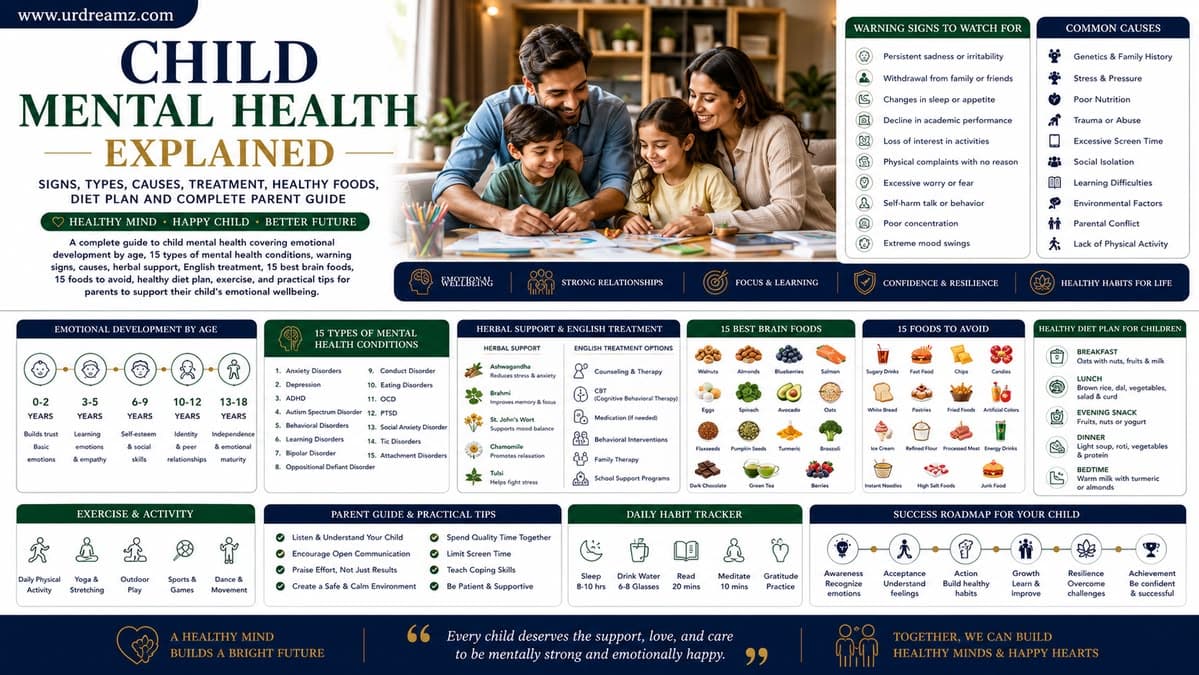
Child Mental Health Explained: Signs, Types, Causes, Treatment, Healthy Foods, Diet Plan and Complete Parent Guide
When we talk about keeping children healthy, we immediately think of physical health: vaccinations, nutrition, sleep, and exercise. But the mental and emotional health of a child is just as foundational to their development and quality of life as anything happening in their body. A child who is physically well but emotionally struggling cannot learn effectively, form healthy relationships, manage daily challenges, or develop into a confident and resilient adult. Mental health is not a luxury concern reserved for children with visible problems. It is the invisible infrastructure on which everything else in a child's life is built.
The challenge for parents is that mental health problems in children look very different from what adults expect. A child with anxiety does not always say they are anxious. They might refuse to go to school, complain of stomachaches every morning, cling to their parents, or become irritable and difficult. A child with depression does not always cry or say they are sad. They might lose interest in things they used to love, sleep too much, eat differently, or simply seem flat and disconnected from the world. A child with ADHD is not simply a naughty or lazy child. Their brain works differently in ways that require understanding and appropriate support rather than punishment.
This complete guide gives parents a thorough understanding of child mental health from the ground up: how emotional development progresses through childhood, what the most common mental health conditions look like and how to recognize them, what causes them, what evidence-based treatments are available, and crucially, what parents can do every single day through diet, exercise, sleep, communication, and consistent love to build the emotional resilience that protects children from developing serious mental health problems in the first place.
1. What Is Child Mental Health
Child mental health refers to the complete emotional, psychological, behavioral, and social wellbeing of a child from infancy through adolescence. It encompasses how a child thinks, feels, relates to others, manages emotions, handles stress, makes decisions, and navigates the challenges and relationships of daily life. A mentally healthy child is not a child who never feels sad, afraid, or angry. Those emotions are a normal and healthy part of being human. A mentally healthy child is one who can experience and express those emotions appropriately, recover from difficult experiences with reasonable speed, maintain meaningful relationships, and continue to learn and develop even through challenging periods.
Mental health is not the absence of mental illness. Just as physical health means more than simply not having a disease, mental health is an active state of emotional and psychological wellbeing. The World Health Organization defines mental health as a state of wellbeing in which every individual realizes their own potential, can cope with the normal stresses of life, can work productively and fruitfully, and is able to make a contribution to their community. For children, this translates to being able to learn at school, play with peers, manage emotions in age-appropriate ways, feel secure in their relationships with family, and develop the sense of self that will carry them through adult life.
2. Why Mental Health Matters During Childhood
Childhood is not simply a waiting room before real life begins. It is the period during which the foundational architecture of the brain is being built, the basic emotional patterns that will shape all future relationships are being established, and the core beliefs about self-worth, safety, and the trustworthiness of the world are being formed. What happens to a child's mental and emotional experience during these years has consequences that extend across the entire lifespan.
The brain develops more rapidly during childhood than at any other period of life. Neural connections are being formed, strengthened, and pruned in response to experience. Chronic stress, trauma, emotional neglect, or unaddressed mental health problems during childhood literally alter the physical structure and chemical functioning of the developing brain in ways that can affect emotional regulation, stress response, learning ability, and relationship patterns for decades. Conversely, warm supportive relationships, emotional attunement, safe environments, and early intervention for emerging mental health problems build brain architecture that supports resilience, emotional intelligence, and lifelong wellbeing.
Approximately half of all lifetime mental health conditions begin before age 14, and three-quarters begin before age 24. This means that the childhood and adolescent years are by far the most important window for identifying emerging problems, building protective emotional skills, and intervening when conditions are developing. Early action is dramatically more effective than treatment of the same conditions years later when patterns are more deeply established and secondary consequences including academic failure, social isolation, and substance use have had time to accumulate.
3. Emotional Development by Age: Complete Milestones
| Age | Normal Emotional Development | Possible Concern If Absent |
|---|---|---|
| Birth to 3 months | Responds to voices and faces. Begins social smiling by 6 to 8 weeks. Shows interest in human faces. Calms when held and soothed. Shows distress through crying | No social smile by 3 months. Does not respond to familiar voices. Does not show interest in faces during alert periods |
| 3 to 6 months | Laughs and vocalizes in response to interaction. Shows joy and excitement. Begins to recognize familiar faces. Shows preference for primary caregivers. Responds to emotional tone of voice | No laughter or vocalization in response to social play. No differential response to familiar vs unfamiliar people |
| 6 to 12 months | Stranger anxiety begins (normal and expected). Separation anxiety emerges as sign of healthy attachment. Shows range of emotions including joy, fear, frustration. Looks to caregiver for emotional cues (social referencing) | No stranger anxiety at all may indicate impaired attachment. No separation anxiety may indicate difficulty forming attachment bonds |
| 1 to 2 years | Strong separation anxiety peaks around 12 to 18 months then gradually reduces. Tantrums begin as child has desires but limited emotional regulation ability. Shows empathy by comforting distressed others. Begins to show pride and shame | Intense tantrums that cannot be calmed even with parental presence. No signs of empathy or response to others' distress |
| 2 to 3 years | Increasing emotional vocabulary (happy, sad, angry, scared). Can identify basic emotions in others. Tantrums begin to decrease as language improves. Shows affection openly. Beginning to understand rules and consequences | No emotional vocabulary. Cannot label any basic emotions in themselves or others. Tantrums intensifying rather than reducing with age |
| 3 to 5 years | More complex emotional understanding including jealousy, pride, guilt, and embarrassment. Can use language to express emotions instead of just acting them out. Beginning to understand that feelings can be hidden. Increasing empathy and prosocial behavior | Persistent inability to regulate emotions in age-appropriate ways. Extreme aggression or emotional outbursts significantly beyond what peers show. No empathic responses |
| 5 to 8 years | Developing emotional coping strategies. Can delay gratification more consistently. Understands that emotions can be mixed. School friendships become emotionally important. Competence and achievement begin to affect self-esteem | Persistent school refusal or separation anxiety at school age. Extreme social withdrawal. Significant regression in emotional functioning |
| 8 to 12 years | More sophisticated understanding of own and others' emotions. Peer relationships intensely important. Beginning to develop personal identity. More aware of social comparison. Can recognize and use multiple coping strategies | Persistent social isolation or peer rejection. Dramatic change in academic performance. Sudden personality change. Signs of bullying involvement |
| 12 to 18 years | Identity formation (who am I?) becomes central developmental task. Intense emotional experiences. Increasing independence from family with strong peer influence. Abstract thinking allows more complex emotional and moral reasoning | Persistent hopelessness, worthlessness, or self-harm thoughts. Dramatic behavioral change. Social withdrawal combined with mood changes. Any substance use. Disordered eating behaviors |
4. Warning Signs of Mental Health Problems in Children
Children rarely announce their mental health struggles directly. They communicate them through behavior, physical complaints, performance changes, and relationship difficulties. Parents who know what behavioral and emotional signs to watch for are in the best position to identify problems early when intervention is most effective.
| Category | Warning Signs | What They May Indicate |
|---|---|---|
| Behavioral Changes | Sudden withdrawal from friends, family, or previously enjoyed activities. Dramatic change in behavior that persists for more than 2 weeks. Increased aggression, irritability, or defiance beyond normal developmental variation. Regressing to younger behaviors (thumb sucking, bedwetting in a child who was toilet trained) | Depression, anxiety, trauma response, PTSD, significant stressor the child is not disclosing |
| Emotional Signs | Persistent sadness, hopelessness, or emptiness that does not lift. Extreme mood swings. Persistent, excessive worry or fear about ordinary things. Expressing feelings of worthlessness, guilt, or that life is not worth living. Emotional numbness or inability to feel positive emotions | Depression, anxiety disorders, bipolar disorder (rare in young children), trauma |
| Physical Complaints | Frequent unexplained stomachaches or headaches (especially before school or stressful events). Changes in eating (eating significantly more or less than usual, refusing foods that were previously enjoyed). Significant changes in sleep (sleeping too much, difficulty falling asleep, frequent nightmares, refusing to sleep alone) | Anxiety commonly presents with physical symptoms especially in younger children who cannot verbalize worry. Depression affects sleep and appetite significantly |
| Academic and Learning | Sudden unexplained drop in grades or academic performance. Significant change in concentration or ability to complete work. Refusing to go to school or frequent school avoidance. Teacher reporting concerning behavioral changes at school. Loss of interest in learning | Anxiety (school refusal), depression (concentration, motivation), ADHD emerging or worsening, learning disability, bullying at school |
| Social Signs | Sudden loss of friends or social withdrawal. Difficulty making or maintaining friendships. Being victimized by peers (bullying). Increased conflict with family members. Spending excessive time alone or in bedroom | Depression, anxiety, autism spectrum characteristics, bullying involvement, significant emotional difficulty |
| Self-Harm Warning Signs | Any mention of not wanting to be alive or wishing they were dead. Unexplained cuts, burns, or marks on the body. Giving away prized possessions. Saying goodbye to people as if they will not see them again. Writing or drawing with themes of death or hopelessness | These are urgent warning signs requiring immediate professional assessment. Never dismiss these as attention-seeking |
5. 15 Types of Child Mental Health Conditions Explained
| # | Condition | Core Features | Age of Typical Onset |
|---|---|---|---|
| 1 | Generalized Anxiety Disorder | Persistent excessive worry about multiple areas of life that the child cannot control. Physical symptoms including headaches, stomachaches, muscle tension. Difficulty sleeping and concentrating | Any age. Often emerges 6 to 10 years |
| 2 | Separation Anxiety Disorder | Extreme distress when separated from primary caregivers beyond what is developmentally expected. School refusal. Physical symptoms when separation anticipated. Nightmares about separation | Most common under 12 but can continue into adolescence |
| 3 | Social Anxiety Disorder | Intense fear of social situations and negative evaluation by others. Avoidance of social activities including school, parties, and peer interaction. Physical symptoms in social situations | Often begins around ages 8 to 15 |
| 4 | Major Depressive Disorder | Persistent low mood or irritability. Loss of interest in previously enjoyed activities. Changes in sleep and appetite. Low energy. Difficulty concentrating. Feelings of worthlessness or excessive guilt. In severe cases, thoughts of death or self-harm | Can occur at any age but rates increase significantly in adolescence |
| 5 | ADHD (Attention Deficit Hyperactivity Disorder) | Persistent inattention and/or hyperactivity-impulsivity that interferes with functioning in multiple settings. Three presentations: predominantly inattentive, predominantly hyperactive-impulsive, combined | Symptoms present before age 12. Often identified when school demands increase |
| 6 | Autism Spectrum Disorder | Persistent differences in social communication and interaction combined with restricted, repetitive patterns of behavior, interests, or activities. Wide spectrum from highly functioning to requiring significant support | Typically apparent before age 3. Diagnosis often 2 to 5 years |
| 7 | Oppositional Defiant Disorder | Persistent pattern of angry, irritable mood, argumentative and defiant behavior, and vindictiveness toward authority figures lasting at least 6 months beyond normal developmental variation | Usually apparent before age 8. Often precedes Conduct Disorder if untreated |
| 8 | Post-Traumatic Stress Disorder | Following exposure to trauma, persistent intrusive re-experiencing (nightmares, flashbacks), avoidance of trauma reminders, negative changes in thoughts and mood, and increased arousal and reactivity | Any age following traumatic experience |
| 9 | Obsessive Compulsive Disorder | Persistent intrusive unwanted thoughts (obsessions) causing significant anxiety, combined with repetitive behaviors or mental acts (compulsions) performed to reduce the anxiety. Child often recognizes the thoughts as irrational but cannot control them | Average onset 10 years. Can begin as young as 5 to 6 years |
| 10 | Specific Phobias | Intense persistent fear of specific objects or situations (animals, heights, blood, injections, darkness, vomiting) that is out of proportion to actual danger and leads to avoidance behavior | Animal phobias typically begin 7 years average. Blood and injection phobias and situational phobias somewhat later |
| 11 | Eating Disorders (Anorexia, Bulimia, ARFID) | Anorexia: restriction of food intake leading to significantly low weight with intense fear of weight gain. Bulimia: recurrent binge eating followed by compensatory behaviors. ARFID: avoidant restrictive food intake disorder based on sensory features not body image concerns | Anorexia and bulimia peak in adolescence. ARFID can begin in early childhood |
| 12 | Selective Mutism | Consistent failure to speak in specific social situations where speaking is expected (school) despite speaking normally in other situations (home). Not due to lack of knowledge of the spoken language | Typically apparent when child enters school or nursery. Average 2.7 to 4 years for onset |
| 13 | Conduct Disorder | Repetitive and persistent pattern of behavior violating the rights of others or major age-appropriate social norms including aggression, destruction of property, deceitfulness, and serious rule violations | Childhood onset before 10 years (more severe prognosis) or adolescent onset |
| 14 | Tourette Syndrome and Tic Disorders | Recurrent involuntary movements (motor tics) and/or sounds (vocal tics). Tourette syndrome involves both motor and vocal tics for more than 1 year. Tics are typically worse with stress, excitement, and fatigue | Onset between 5 and 10 years. Peak severity around age 10 to 12 |
| 15 | Intellectual Disability and Learning Disabilities | Intellectual disability: significant limitations in intellectual functioning and adaptive behavior arising before 18. Learning disabilities (dyslexia, dyscalculia, dysgraphia): specific difficulties in reading, mathematics, or written expression not explained by intelligence, sensory impairment, or inadequate teaching | Intellectual disability often identified early childhood. Learning disabilities often first apparent when academic demands increase in school |
6. Anxiety Disorders in Children
Anxiety disorders are the most common category of mental health condition in childhood, affecting approximately 1 in 8 children globally. Anxiety itself is a normal and necessary emotion: the appropriate amount of anxiety helps children stay safe, prepare for challenges, and respond to genuine threats. Anxiety becomes a disorder when it is persistent, excessive relative to the situation, and interferes with normal functioning including school attendance, social participation, and family life.
Children with anxiety disorders often express their anxiety through physical symptoms rather than directly saying they are worried. Stomachaches, headaches, nausea, and dizziness are among the most common physical manifestations of childhood anxiety, which is why children with anxiety disorders are often taken to doctors for physical complaints before the anxiety is identified. When physical examinations reveal nothing, and the physical symptoms consistently appear before school or other anxiety-provoking situations, anxiety should be considered.
School refusal is one of the most functionally disabling manifestations of childhood anxiety. A child with separation anxiety disorder or social anxiety disorder may simply be unable to attend school despite intellectually knowing they should and wanting to please their parents. The anxiety response overrides rational intention, producing genuine physical distress when school attendance is attempted. Treating this through punishment or force typically worsens the anxiety. Effective treatment involves gradually building the child's capacity to tolerate the anxiety-provoking situation through planned exposure with professional support.
| Type | How the Child Behaves | What Parents Often Think |
|---|---|---|
| Generalized Anxiety | Worries about many things including school performance, family wellbeing, health, natural disasters, social situations. Asks reassurance repeatedly. Cannot relax. Always expects something bad to happen | Child is a worrier. May be seen as sensitive or overly cautious. Sometimes confused with conscientious behavior |
| Separation Anxiety | Extreme distress when parent leaves. Refuses to sleep alone. May not want to go to school. Follows parent around the house. Physical symptoms when separation anticipated | Clinging or difficult behavior. Spoiled. May be confused with normal developmental separation anxiety that should have resolved |
| Social Anxiety | Avoids social activities. Very quiet at school. Will not answer questions in class. Refuses invitations to parties or sleepovers. Extreme self-consciousness in social situations | Child is shy. Introvert. Sometimes confused with ASD. Parents may not realize the degree of distress involved |
| Panic Disorder | Recurrent unexpected panic attacks with intense physical symptoms (racing heart, difficulty breathing, dizziness, feeling of dying or going crazy). Fear of having another attack leads to avoidance | Medical emergency initially. Parents often present to emergency departments with child having first panic attack |
7. Depression in Children
Depression in children looks different from adult depression in important ways that parents should understand. While adults with depression typically present with persistent sadness, children with depression often present with persistent irritability, anger, or emotional outbursts as their primary mood symptom rather than obvious sadness. A child who seems chronically bad-tempered, easily frustrated, and impossible to please may be experiencing depression, not simply being difficult.
Other features that differ in childhood depression include more frequent physical complaints (headaches, abdominal pain), more sleep disturbance (either sleeping excessively or having significant insomnia), more pronounced social withdrawal from friends and activities, more academic deterioration, and lower rates of the cognitive features (hopelessness, worthlessness, guilt) that are prominent in adult depression but less consistently present in younger children who are still developing the cognitive framework to have those types of self-evaluating thoughts.
Depression in children must always be taken seriously. Childhood depression is not a phase, not simply normal sadness, and does not resolve on its own without support in established cases. It causes real suffering, interferes significantly with development and learning, and in adolescents is associated with risk of self-harm and suicidal ideation. The earlier depression is identified and treated, the better the outcomes. Treatment combining therapy (particularly CBT adapted for children) and where appropriate medication in older children and adolescents is effective for the majority of cases.
8. ADHD in Children Explained
Attention Deficit Hyperactivity Disorder is one of the most commonly diagnosed and also one of the most commonly misunderstood childhood mental health conditions. ADHD is a neurodevelopmental condition, meaning it reflects genuine differences in how the brain develops and functions, particularly in the prefrontal cortex regions responsible for executive functioning including attention regulation, impulse control, working memory, and emotional regulation.
A child with ADHD is not choosing to be inattentive or hyperactive. Their brain's self-regulation system works differently from neurotypical children's brains. This means they struggle with tasks requiring sustained attention particularly when the task is not intrinsically motivating, have difficulty waiting their turn and controlling impulses, struggle to organize tasks and manage time, are easily distracted by irrelevant stimuli, and in the hyperactive presentation, cannot sit still and seem to be driven by a motor. These are not character flaws or the result of poor parenting. They are features of a specific neurological profile that responds very well to appropriate management.
| Presentation | Dominant Features | How It Often Appears |
|---|---|---|
| Predominantly Inattentive | Difficulty sustaining attention. Frequently loses things. Does not seem to listen. Makes careless mistakes. Easily distracted. Forgetful in daily activities. Difficulty organizing tasks | Often described as a daydreamer. May be missed as not causing classroom disruption. More common in girls. Often diagnosed later than hyperactive presentation |
| Predominantly Hyperactive-Impulsive | Fidgets constantly. Cannot remain seated when expected. Runs or climbs in inappropriate situations. Cannot play quietly. Talks excessively. Blurts out answers. Cannot wait their turn. Interrupts others frequently | The classic picture parents and teachers recognize as ADHD. More disruptive in classroom settings. More common in boys. Usually identified earlier |
| Combined Presentation | Features of both inattentive and hyperactive-impulsive presentations. Most common presentation overall | Affects both academic performance and social behavior. May shift to more predominantly inattentive presentation in adolescence as hyperactivity reduces |
9. Autism Spectrum Disorder in Children
Autism Spectrum Disorder (ASD) is a neurodevelopmental condition characterized by persistent differences in social communication and interaction, combined with restricted and repetitive patterns of behavior, interests, or activities. The term spectrum reflects the extraordinary diversity of the condition: one individual with ASD may have exceptional intellectual abilities, a sophisticated vocabulary, and be highly independent, while another may have significant intellectual disability, minimal verbal communication, and require intensive daily support. Both individuals have ASD.
Early recognition of ASD is critical because early intervention during the period of maximum brain plasticity produces significantly better outcomes than later diagnosis and intervention. Parents who notice their child is not pointing to show interest by 12 months, not babbling by 12 months, not using single words by 16 months, not using two-word phrases by 24 months, has lost any previously acquired language, does not make appropriate eye contact, does not show interest in other children, or is very rigid about routines should discuss these observations with a healthcare provider promptly.
It is important to understand that ASD is not caused by parenting style or emotional coldness. The outdated and harmful theory linking ASD to refrigerator mothers has been thoroughly and definitively refuted. ASD has genetic and neurobiological bases that parents did not cause and cannot cause through their behavior. The role of parents is not to accept blame but to become their autistic child's most effective advocates, to learn about their child's specific profile of strengths and challenges, and to access the specialized support that helps their child thrive.
10. Oppositional Defiant Disorder
Oppositional Defiant Disorder (ODD) is diagnosed when a child shows a persistent pattern of angry, irritable mood, argumentative and defiant behavior toward authority figures, and vindictiveness that is significantly beyond what is expected for their age and development, lasting at least 6 months and causing problems in multiple settings. All children go through phases of defiance and testing limits, which is a normal part of development. ODD is distinguished by the intensity, persistence, and pervasiveness of these behaviors across all settings and relationships.
Children with ODD frequently have underlying conditions that are driving the difficult behavior: anxiety that presents as defiance when demands are placed, ADHD causing impulsive oppositional responses, depression presenting as irritability and conflict, or trauma responses manifesting as distrust of adult authority. Identifying and addressing the underlying condition is often the most effective approach to ODD. Management that focuses purely on the surface behaviors through punishment without addressing why the child is behaving this way typically produces poor outcomes and can worsen the underlying difficulty.
11. Post-Traumatic Stress Disorder in Children
Children can develop PTSD following exposure to traumatic events including accidents, natural disasters, violence, abuse, witnessing violence, medical trauma, or the sudden loss of a loved one. The child's brain responds to overwhelming threat with a neurological alarm response that remains activated even after the danger has passed, producing the intrusive, avoidant, and hyperarousal symptoms of PTSD.
PTSD in children looks different from PTSD in adults in developmentally important ways. Young children may not have the cognitive or verbal ability to talk about what happened or to understand that their nightmares are connected to the traumatic event. They may re-enact the trauma through play (playing car crash repeatedly after a road accident, for example). They may show regression to younger behaviors. They may lose previously acquired skills. Older children and adolescents are more likely to show the classic adult pattern of intrusive thoughts, avoidance, emotional numbing, and hypervigilance.
12. Obsessive Compulsive Disorder in Children
OCD in children involves persistent intrusive thoughts that cause significant anxiety (obsessions) and repetitive behaviors or mental rituals performed to reduce that anxiety (compulsions). Common obsessions in children include fears of contamination or illness, fears that something terrible will happen to themselves or their family if they do not perform a ritual, concerns about things being perfectly ordered or symmetrical, and intrusive thoughts about harm. Common compulsions include excessive handwashing, checking behaviors, counting, ordering and arranging objects, and seeking repeated reassurance.
The critical feature of OCD that distinguishes it from simply being careful or conscientious is that the obsessions and compulsions consume significant time (more than an hour daily), cause significant distress, and interfere with normal functioning. Children with OCD are often aware that their fears are unrealistic but feel powerless to resist the compulsive response to the obsessional anxiety. The first-line treatment for childhood OCD is a specific form of CBT called Exposure and Response Prevention (ERP) combined with medication (typically SSRIs) in moderate to severe cases.
13. Eating Disorders in Children and Adolescents
Eating disorders are serious mental health conditions with the highest mortality rate of any psychiatric illness. Anorexia Nervosa involves severe restriction of food intake resulting in dangerously low body weight, combined with an intense fear of weight gain and a distorted perception of one's body. Bulimia Nervosa involves recurrent episodes of binge eating (consuming large amounts of food very rapidly) followed by compensatory behaviors such as self-induced vomiting, laxative use, or excessive exercise.
Eating disorders are being identified at increasingly younger ages, with some children showing concerning eating restriction behaviors as young as 8 to 10 years. Warning signs include dramatic changes in eating behavior, food rituals, excessive comments about weight or body shape, frequent trips to the bathroom after meals, wearing loose clothing to hide weight loss, excessive exercise, and social withdrawal especially around food. These conditions require specialist mental health and medical treatment and parents should not attempt to manage them without professional support.
14. Selective Mutism in Children
Selective Mutism is an anxiety-based condition in which a child who speaks normally in some settings (typically at home with family) consistently fails to speak in other specific social situations (typically school or any setting outside the home). The child is not choosing to be disobedient or stubborn. They experience an anxiety response so powerful in the trigger situations that speech becomes impossible, even though they want to speak and are fully capable of speaking in comfortable settings.
Selective Mutism is often mistaken for shyness, rudeness, or defiance, which leads to responses (pressure, punishment, calling attention to the silence) that worsen the anxiety and make speaking even harder. Effective management involves reducing anxiety around the trigger situations through gradual exposure strategies, avoiding pressure to speak, and allowing alternative communication forms while working toward verbal communication. Early intervention produces much better outcomes than waiting for the child to grow out of it, as selective mutism tends to become more entrenched without treatment.
15. Sleep Disorders and Mental Health Connection
The relationship between sleep and mental health in children is bidirectional and profound: poor sleep worsens mental health, and mental health problems disrupt sleep. Anxiety causes difficulty falling asleep and nighttime rumination. Depression disrupts sleep architecture and can cause both insomnia and hypersomnia. ADHD is associated with significant sleep difficulties in the majority of children with the condition. Trauma causes nightmares and hypervigilance that prevents deep sleep. At the same time, chronic sleep deprivation in children produces symptoms including irritability, emotional dysregulation, difficulty concentrating, impulsivity, and mood instability that closely mimic mental health conditions and can be confused with them.
Children need significantly more sleep than adults: toddlers 11 to 14 hours, preschoolers 10 to 13 hours, school-age children 9 to 11 hours, and teenagers 8 to 10 hours. Many children in the modern world are chronically sleep-deprived due to screen use before bed, late schedules, stimulating evening environments, and inadequate understanding of sleep's importance for child development. Addressing sleep is always one of the first steps in supporting a child's mental health, and for some children, simply restoring adequate consistent sleep produces remarkable improvements in mood, behavior, and concentration.
16. Causes of Child Mental Health Problems
| Category | Specific Factors | How They Contribute |
|---|---|---|
| Biological and Genetic | Family history of mental health conditions. Genetic predispositions to anxiety, depression, ADHD, ASD. Prenatal exposure to substances or maternal stress. Premature birth. Neurodevelopmental differences in brain structure and function | Genetic factors contribute to vulnerability. A child with a family history of anxiety is more likely to develop anxiety themselves but is not predetermined to do so. Environment interacts with genetic predisposition |
| Early Life Experiences | Adverse Childhood Experiences (ACEs) including abuse, neglect, domestic violence, parental substance abuse, parental incarceration, or parental severe mental illness. Trauma at any age. Insecure attachment in infancy. Early deprivation of nurturing care | Toxic stress from ACEs alters the developing stress response system, immune function, and brain architecture in ways that increase lifetime risk of mental health and physical health problems |
| Family Environment | Parental mental health difficulties. Marital conflict and family dysfunction. Harsh, inconsistent, or neglectful parenting. Overprotective parenting that prevents development of coping skills. Significant family stressors including poverty, housing instability, parental unemployment | The family environment is the primary context for early emotional development. Chronic stress, unpredictability, or emotional unavailability in the family system directly affects the child's developing emotional regulation capacity |
| School and Peer Factors | Bullying (being victimized or witnessing). Academic difficulties and learning disabilities. Peer rejection or social isolation. School transitions. Exam pressure and performance anxiety. Teacher-student relationship problems | School is the primary social world for children. Negative experiences there including bullying and academic failure have significant mental health consequences |
| Social and Cultural Factors | Poverty and economic deprivation. Community violence. Discrimination and prejudice. Social media and peer comparison. Cultural expectations and identity conflicts. Migration and acculturation stress | Broad social forces create stressors that increase mental health vulnerability particularly when combined with other risk factors |
| Medical and Physical Health | Chronic illness. Chronic pain. Unaddressed sensory impairments (vision, hearing). Nutritional deficiencies. Sleep disorders. Medication side effects | Physical health problems create stress, social limitations, and sometimes directly affect brain chemistry and functioning in ways that increase mental health risk |
17. How Bullying and Cyberbullying Affect Mental Health
Bullying is one of the most significant and prevalent mental health risk factors for school-age children and adolescents. Being bullied is not simply an unpleasant social experience that children should toughen up and learn to handle. It is a sustained experience of victimization, powerlessness, and social exclusion that has demonstrable impacts on mental health including significantly increased rates of depression, anxiety, school refusal, suicidal ideation, and post-traumatic stress symptoms in victims.
Cyberbullying, the harassment, humiliation, or targeting of children through digital platforms, messaging apps, and social media, has added a new and particularly damaging dimension to childhood bullying. Unlike traditional bullying that ends when the child leaves school, cyberbullying follows the child into every space including their bedroom and home. The audience for cyberbullying can be enormous (an entire school year seeing a humiliating post or video), the content can be permanent, and the victim may not even know who all the perpetrators are. This constant, inescapable quality of cyberbullying makes its psychological impact even more severe in many cases than traditional bullying.
Warning signs that a child may be experiencing bullying include: unexplained changes in mood especially after using devices, reluctance to go to school, unexplained physical symptoms before school, changes in social behavior, unexplained loss of devices or requests for extra pocket money (may indicate extortion), and social withdrawal. Parents should create a safe, non-reactive environment where children feel they can disclose bullying without fear of having their devices taken away or being judged for being a victim.
18. Screen Time and Children's Mental Health
The relationship between screen time and children's mental health is complex and nuanced. The research shows that it is not simply the total amount of screen time that matters but what the child is doing on screens, whether screen use is displacing other important activities (sleep, physical activity, face-to-face interaction), and the age and developmental stage of the child. Passive consumption of entertainment content for extended periods, particularly on social media platforms with algorithmic feeds designed to maximize engagement, is associated with worse mental health outcomes than interactive, educational, or creative screen use.
The most consistently harmful pattern of screen use for mental health is screens in the bedroom, particularly during the hour before sleep. Screen use before sleep suppresses melatonin through blue light exposure, delays sleep onset, reduces sleep quality, and through social media use exposes children to content that activates their social comparison and anxiety systems at exactly the time when they should be winding down. Establishing a consistent no-screens rule in the bedroom and for the hour before bedtime is one of the most evidence-supported single interventions parents can make for both sleep quality and mental health.
19. Social Media Effects on Children
Social media use in adolescents has been consistently linked to mental health difficulties in multiple large studies, with the association particularly strong for girls and for heavy users. The proposed mechanisms include: social comparison (constantly seeing curated best-version presentations of peers' lives leading to unfavorable self-comparisons), cyberbullying (discussed above), FOMO (fear of missing out creating anxiety about social exclusion), disrupted sleep from evening and overnight use, displacement of real-life social interaction with lower-quality online interaction, and the dopamine-based reward cycle of likes and notifications that can create compulsive checking behavior.
The age at which children access social media matters significantly. Younger adolescents (12 to 14 years) appear most vulnerable to the negative mental health effects of social media, particularly on body image, social comparison, and self-worth, because they are at a developmentally sensitive period for identity formation and are not yet equipped with the cognitive and emotional maturity to critically evaluate what they are consuming. Delaying social media access until mid-to-late adolescence, setting clear family rules about use, maintaining open communication about online experiences, and regularly discussing what children are seeing and how it makes them feel are all protective.
20. How Physical Health Connects to Mental Health
The separation between physical health and mental health is artificial. The body and mind are one integrated system, and what affects one always affects the other. Several physical health factors directly influence children's mental health in ways that parents should be aware of. Unaddressed vision problems can cause academic difficulties and frustration that look like behavioral problems or low motivation. Unaddressed hearing problems can cause social withdrawal and communication difficulties that resemble characteristics of developmental disorders. Chronic pain from dental problems or headaches creates persistent irritability and difficulty concentrating. Iron deficiency anemia causes fatigue, difficulty concentrating, and irritability that can be mistaken for or worsen ADHD symptoms. Thyroid disorders can cause mood changes, anxiety, and behavioral changes. Even seemingly minor physical discomfort sustained over time creates a background of stress and irritability that reduces a child's emotional resources for handling the normal challenges of daily life.
21. 15 Best Foods for Children's Brain and Mental Health
| # | Food | Key Brain Nutrients | How It Supports Mental Health | How to Include |
|---|---|---|---|---|
| 1 | Salmon and Fatty Fish | DHA and EPA omega-3 fatty acids (highest source) | DHA is the primary structural fat in the brain. Adequate DHA supports brain cell membrane fluidity, neurotransmitter function, and anti-inflammatory effects in the brain. Multiple studies link omega-3 intake to reduced anxiety and depression symptoms in children | At least twice weekly. Baked, grilled, or in fish cakes. Sardines on toast. Tuna in pasta |
| 2 | Eggs | Choline, DHA, B vitamins, complete protein, zinc, iodine | Choline is the precursor to acetylcholine, a neurotransmitter critical for memory and learning. Egg choline also supports healthy brain cell membrane structure. B vitamins support neurotransmitter synthesis and nerve function | Daily. Scrambled, boiled, omelet with vegetables. One of the most complete brain nutrition foods available |
| 3 | Walnuts | ALA omega-3, vitamin E, polyphenols, magnesium | Walnuts have a uniquely high omega-3 content among nuts and contain polyphenols that reduce neuroinflammation. The shape of a walnut (resembling a brain) is coincidental but their brain benefits are real. Magnesium supports healthy stress response and sleep quality | Small handful daily as snack. In oatmeal, yogurt, or baked goods. Walnut and date energy balls |
| 4 | Blueberries and Berries | Anthocyanins, flavonoids, vitamin C, manganese | Blueberry flavonoids cross the blood-brain barrier and accumulate in brain regions involved in learning and memory. Studies show improved memory and cognitive performance with regular blueberry consumption in children. Anti-inflammatory effects in the brain support mental health | Daily in yogurt, smoothies, on oatmeal, or as fresh snack. Frozen blueberries equally nutritious |
| 5 | Dark Leafy Greens (Spinach, Kale) | Folate, magnesium, vitamins K and C, lutein, iron | Folate is essential for neurotransmitter synthesis including serotonin and dopamine. Magnesium supports calm nervous system function and quality sleep. Iron prevents the anemia that significantly impairs mood, concentration, and cognitive function in children | Hidden in smoothies (no taste difference with fruit). In daal, soups, pasta sauces. As saag or palak dishes |
| 6 | Whole Grains (Oats, Brown Rice, Wholemeal Bread) | Complex carbohydrates, B vitamins, magnesium, fiber | The brain runs primarily on glucose. Whole grains provide slow-releasing glucose maintaining steady brain energy throughout the day without the blood sugar spikes and crashes from refined carbohydrates that cause mood swings, difficulty concentrating, and irritability in children | Oats at breakfast daily. Brown rice or wholemeal chapati as carbohydrate base for meals. Wholemeal bread for sandwiches |
| 7 | Pumpkin Seeds | Zinc (very high), magnesium, iron, tryptophan, antioxidants | Zinc is essential for brain development and neurotransmitter function. Zinc deficiency is consistently associated with ADHD-type symptoms and emotional dysregulation in children. Tryptophan is the amino acid precursor to serotonin (mood regulator) and melatonin (sleep regulator) | Roasted as daily snack. Sprinkled on yogurt or cereal. In homemade granola or trail mix |
| 8 | Greek Yogurt and Dairy | Protein, calcium, B12, iodine, probiotics (in yogurt) | The gut-brain axis means gut health directly affects brain function and mood. Probiotics in yogurt support healthy gut microbiome which produces approximately 95 percent of the body's serotonin. Iodine from dairy supports thyroid function which regulates mood and energy | Daily plain Greek yogurt with fruit, honey, and seeds. Milk at meals. Cheese in cooking |
| 9 | Avocado | Healthy monounsaturated fats, folate, vitamin K, potassium, B vitamins | The healthy fats in avocado support myelin sheath formation (the insulating layer around nerve fibers that enables efficient nerve signal transmission). Folate supports serotonin production. Vitamin K and folate together support cognitive function | On toast for breakfast. In smoothies (adds creaminess without taste). Guacamole as dip. Sliced in salads |
| 10 | Legumes (Daal, Chickpeas, Lentils) | Plant protein, iron, zinc, folate, B vitamins, fiber | Legumes provide sustained energy to the brain through their complex carbohydrate and protein combination. Iron from legumes (best absorbed with vitamin C) prevents the cognitive impairment and mood disturbance of iron deficiency anemia, very common in children in Pakistan | Daily daal in South Asian diet. Chana in curries. Hummus as dip. Rajma (kidney beans) in rice dishes |
| 11 | Tomatoes | Lycopene, vitamin C, potassium, folate | Lycopene is a powerful antioxidant that protects brain cells from oxidative damage. Studies suggest lycopene may help protect against depression. Vitamin C supports neurotransmitter synthesis. Cooking increases lycopene bioavailability significantly | In pasta sauces and curries (cooking releases lycopene). Roasted tomatoes. Fresh in salads and sandwiches |
| 12 | Bananas | Tryptophan, B6, potassium, magnesium, natural sugars | Tryptophan from banana converts to serotonin with the help of B6 (the conversion cofactor). Potassium and magnesium support nerve function and healthy stress response. Natural sugars provide quick brain energy. Banana is one of the most accessible mood-supporting foods for children | Daily as snack. In smoothies and yogurt. Mashed on toast. Frozen as ice cream alternative |
| 13 | Dark Chocolate (70 percent or above) | Flavonoids, magnesium, iron, tryptophan, theobromine | Dark chocolate flavonoids increase blood flow to the brain and support neuroplasticity. Magnesium calms the nervous system. Small amounts of dark chocolate genuinely support mood through multiple mechanisms. Not the same as milk chocolate which has too much sugar and too little cacao to provide these benefits | Small piece daily as treat. In smoothies. In healthier baked goods. Not as the sugar-heavy milk chocolate bars |
| 14 | Sunflower Seeds and Almonds | Vitamin E (very high), selenium, magnesium, tryptophan, zinc | Vitamin E is the primary fat-soluble antioxidant protecting brain cell membranes from oxidative damage. Selenium supports thyroid function and acts as a powerful brain antioxidant. Research links low selenium to increased anxiety and depression in children | Mixed seed and nut blend as daily snack. Seed butter on toast. Sprinkled on oatmeal or yogurt. In homemade energy bars |
| 15 | Turmeric with Black Pepper | Curcumin (anti-inflammatory), antioxidants | Curcumin in turmeric has potent anti-inflammatory and antioxidant effects in brain tissue. Research shows curcumin increases BDNF (Brain-Derived Neurotrophic Factor), a protein that supports new brain cell growth and is reduced in depression. Black pepper increases curcumin absorption by up to 2000 percent | Used in cooking as part of everyday curry, rice, and daal dishes. Golden milk (turmeric milk) with black pepper and honey as warm evening drink |
22. 15 Foods to Avoid for Children's Mental Health
| # | Food or Substance | Why It Harms Mental Health | Better Alternative |
|---|---|---|---|
| 1 | Refined sugar and sugary drinks | Causes rapid blood sugar spikes followed by crashes that produce mood swings, irritability, difficulty concentrating, and fatigue in children. Chronic high sugar intake is associated with increased rates of depression and anxiety in multiple population studies. Also promotes systemic inflammation that affects brain function | Fresh whole fruits for sweetness. Water as primary drink. Homemade fruit smoothies without added sugar |
| 2 | Ultra-processed snack foods (crisps, packaged biscuits) | Ultra-processed foods are high in refined carbohydrates, unhealthy fats, artificial additives, and salt while being virtually devoid of the brain nutrients children need. Studies consistently link ultra-processed food consumption to increased depression and anxiety risk in children | Whole food snacks: fresh fruit, homemade roasted nuts, yogurt with fruit, boiled eggs, hummus with vegetables |
| 3 | Artificial food dyes and additives | Certain artificial food colors (Red 40, Yellow 5, Yellow 6) have research evidence linking them to hyperactivity and attention problems in some children. The effect appears most pronounced in children with pre-existing ADHD or sensitivity | Natural colorings from whole foods. Check ingredient labels. Choose products with minimal ingredients |
| 4 | Energy drinks | Very high caffeine content in combination with sugar and artificial additives causes anxiety, racing heart, sleep disruption, mood instability, and in young people with underlying cardiac conditions, potentially serious cardiovascular effects. Not appropriate for children at any age | Water. Coconut water. Fresh fruit juice diluted with water. Herbal teas without caffeine |
| 5 | Excessive caffeine (including cola and strong tea) | Caffeine in children causes anxiety amplification, increased heart rate, sleep disruption that worsens the next day's mood and concentration, irritability, and can worsen ADHD symptoms. Children are more sensitive to caffeine than adults relative to body weight | Caffeine-free alternatives. Herbal teas. Water. Milk. Diluted fruit juices |
| 6 | Fast food consumed regularly | Fast food is typically high in saturated fats, refined carbohydrates, salt, and sugar while being very low in the nutrients supporting brain health. Regular consumption is linked to higher rates of depression and anxiety in children in population studies | Home-cooked meals with vegetables, whole grains, and lean protein. When eating out, choose options with vegetables and protein |
| 7 | Refined white bread, white rice consumed exclusively | Refined grains spike blood sugar rapidly and then drop it, creating the sugar crash cycle that contributes to mood instability and concentration difficulties. They also lack the B vitamins, minerals, and fiber of whole grain versions that are important for brain health | Replace with whole grain alternatives: wholemeal chapati, brown rice, oats, wholemeal bread |
| 8 | High-salt processed foods | Chronic high sodium intake disrupts the balance of minerals important for nerve function and is associated with increased cortisol (stress hormone) production. High-salt diets also increase cardiovascular stress and are associated with anxiety in some research | Cook from fresh ingredients controlling salt. Use herbs and spices for flavor instead of excessive salt |
| 9 | Trans fats (found in margarine, many fried foods, packaged baked goods) | Trans fats disrupt brain cell membrane function and promote neuroinflammation. Multiple studies link trans fat consumption to increased depression risk. Trans fats are found in hydrogenated vegetable oils, many types of margarine, and commercially fried foods | Healthy fats from olive oil, avocado, nuts, seeds, and butter (in moderation) |
| 10 | Excessive omega-6 oils (vegetable oils used in deep frying) | Modern diets have dramatically shifted the omega-6 to omega-3 ratio in favor of omega-6, which is pro-inflammatory. Neuroinflammation driven by excessive omega-6 intake promotes depression and anxiety. Deep frying in vegetable oils creates oxidized inflammatory fats | Cook with olive oil, coconut oil, or small amounts of ghee. Increase omega-3 intake from fatty fish to balance the ratio |
| 11 | Alcohol (never appropriate for children) | Alcohol is a neurotoxin that damages the developing brain even in relatively small amounts. Adolescent brains are particularly vulnerable to the neurotoxic effects of alcohol due to ongoing prefrontal cortex development. Even occasional use in adolescence is associated with permanent cognitive impairments and significantly increased lifetime risk of alcohol use disorder | Not applicable. No safe amount of alcohol for children exists |
| 12 | Diet drinks with artificial sweeteners | Some research suggests artificial sweeteners disrupt gut microbiome balance and may affect mood through the gut-brain axis. The sweetness without caloric satisfaction may also affect appetite regulation and food preferences over time | Water is the ideal drink. Natural fruit flavor in water. Coconut water |
| 13 | Skipping breakfast | Breakfast skipping in children is consistently associated with lower mood, poorer concentration, more behavioral problems, and worse academic performance. The overnight fast leaves the brain depleted of glucose. A nutritious breakfast restores brain fuel and starts the day with stable blood sugar | Even a simple nutritious breakfast: yogurt with fruit, oatmeal with nuts, eggs on toast, or a fruit smoothie with protein |
| 14 | Very low-fat diets | The brain is approximately 60 percent fat and depends on dietary fats for structure and function. Children on very low-fat diets may not receive adequate omega-3, DHA, vitamins A, D, E, and K (fat-soluble vitamins), and the healthy fats needed for brain cell membrane integrity | Include healthy fats daily: full-fat dairy for young children, avocados, nuts, seeds, olive oil, fatty fish. Fat is not the enemy for growing brains |
| 15 | Irregular eating patterns and meal skipping | Irregular eating creates blood sugar instability throughout the day with consequences for mood, impulse control, concentration, and emotional regulation. Children with irregular meal patterns show more behavioral problems and emotional dysregulation than those with consistent regular meals | Consistent meal times: breakfast, lunch, dinner, and 1 to 2 healthy snacks. Regular eating maintains stable blood sugar and stable mood |
23. Key Nutrients for Children's Brain Health
| Nutrient | Brain Function Role | Deficiency Effects on Mental Health | Best Food Sources |
|---|---|---|---|
| Omega-3 DHA and EPA | Primary structural fat in brain neurons. Critical for neurotransmitter receptor function. Anti-inflammatory in brain tissue. Supports synaptic plasticity and learning | Impaired cognitive development. Increased depression and anxiety risk. Attention and behavior problems. Poor impulse control | Salmon, sardines, mackerel, trout, fish oil supplements, algae-based DHA supplements |
| Iron | Required for neurotransmitter synthesis (dopamine, serotonin, norepinephrine). Supports myelination of nerve fibers. Essential for oxygen delivery to the brain | Iron deficiency is one of the most common nutritional causes of impaired cognitive function, attention problems, irritability, and fatigue in children. Very prevalent in Pakistan | Red meat, poultry, lentils, spinach, fortified cereals. Always with vitamin C to enhance absorption |
| Zinc | Essential for neurotransmitter synthesis and regulation. Supports healthy stress response. Important for BDNF (brain growth factor). Involved in hippocampal neurogenesis (new brain cell growth) | Zinc deficiency consistently associated with ADHD-type symptoms, depression, and poor emotional regulation. Very common in South Asian children | Meat, legumes, pumpkin seeds, cashews, yogurt, eggs |
| Magnesium | Regulates NMDA receptors (critical for learning and memory). Calms the stress response by regulating cortisol. Supports quality sleep through GABA activity. Muscle and nerve relaxation | Magnesium deficiency associated with anxiety, irritability, sleep problems, and difficulty concentrating. Very common deficiency in children eating refined diets | Dark leafy greens, pumpkin seeds, almonds, dark chocolate, whole grains, avocado, banana |
| B Vitamins (B6, B9 folate, B12) | Essential cofactors for neurotransmitter synthesis (serotonin, dopamine, GABA). Support healthy methylation (gene expression regulation). B12 required for myelin synthesis and nerve function | Low folate and B12 associated with depression and cognitive impairment. B6 deficiency impairs serotonin production causing mood problems. B12 deficiency in vegetarian and vegan children | Meat, eggs, dairy (B12). Dark leafy greens, legumes (folate). Poultry, fish, bananas, potatoes (B6) |
| Vitamin D | Receptors for vitamin D found throughout the brain. Supports neurotransmitter synthesis. Modulates inflammation. Supports immune function including in the brain | Vitamin D deficiency very prevalent in Pakistan despite sunshine. Associated with increased depression, anxiety, cognitive impairment, and autism severity | Sunlight exposure (primary source). Fatty fish, egg yolks, fortified dairy. Supplementation often needed especially in covered children |
| Iodine | Required for thyroid hormone production. Thyroid hormones are essential for normal brain development and ongoing brain function | Iodine deficiency is the world's leading preventable cause of brain damage. Even mild deficiency causes cognitive impairment, reduced concentration, and fatigue in children | Iodized salt. Dairy products. Seafood. Iodine-containing multivitamin supplements |
24. Complete Weekly Diet Plan for Child Mental Health
| Day | Breakfast | Snack | Lunch | Snack | Dinner |
|---|---|---|---|---|---|
| Monday | Oatmeal with walnuts, banana slices, and honey | Apple with almond butter | Brown rice with masoor daal and spinach. Yogurt | Handful of mixed nuts and dried fruit | Baked salmon with roasted vegetables and wholemeal bread. Glass of milk |
| Tuesday | Scrambled eggs with spinach and tomato on wholemeal toast | Yogurt with blueberries and pumpkin seeds | Chickpea curry with brown rice and cucumber raita | Banana and handful of walnuts | Chicken and vegetable stir fry with brown rice. Glass of milk |
| Wednesday | Greek yogurt with mixed berries, flaxseeds, and honey | Sliced vegetables (carrot, cucumber) with hummus | Whole grain pasta with tomato sauce, minced meat, and spinach | Small piece dark chocolate and apple | Baked fish with sweet potato and steamed broccoli. Glass of milk |
| Thursday | Avocado on wholemeal toast with boiled egg | Orange segments and almonds | Moong daal with brown rice and green salad | Smoothie with spinach, banana, milk, and flaxseeds | Chicken daal with vegetables and wholemeal chapati. Yogurt |
| Friday | Oatmeal with flaxseeds, blueberries, and milk | Boiled egg and apple | Sardines with wholemeal bread and salad. Yogurt | Pumpkin seeds and dried apricots | Lamb and vegetable curry with brown rice and spinach daal. Golden milk at bedtime |
| Weekend | Family breakfast: eggs, whole grain toast, tomatoes, avocado | Fresh fruit platter with nuts | Varied lunch with protein, vegetables, and whole grains | Healthy homemade snack | Oily fish or eggs as protein, colorful vegetables, whole grain carbohydrate |
Include water as the primary drink throughout the day. Limit juice to small amounts. Include fresh fruit at every meal for vitamins and natural sugars. Ensure dairy daily for calcium, B12, and iodine. Include fatty fish at least twice weekly for DHA. Golden milk (turmeric, milk, black pepper, honey) as an evening drink supports both sleep and brain health.
25. Herbal and Natural Support for Child Mental Health
Several herbs and natural substances have traditional use and some scientific evidence for supporting children's emotional wellbeing and mental health. These should be understood as supportive measures alongside evidence-based treatment, good nutrition, sleep, exercise, and professional care where needed, not as replacements for professional treatment of diagnosed mental health conditions.
| Herb or Natural Substance | Claimed Benefit | Evidence and Safety | How to Use |
|---|---|---|---|
| Chamomile (Babunaj) | Mild anxiolytic and relaxation effects. Supports sleep quality. Anti-inflammatory properties. Traditionally used for nervous tension and digestive discomfort associated with anxiety | Several small clinical trials support anxiolytic effects of chamomile in adults. The mild, safe profile makes it reasonable for children over 5 years. Widely used across cultures for centuries as a calming drink | Chamomile tea in the evening, especially before bedtime. Add honey for taste. One cup for children over 5 years. Not for infants |
| Ashwagandha (Withania somnifera) | Adaptogen herb that helps the body and mind manage stress more effectively. May reduce cortisol levels. Traditionally used in Ayurvedic medicine for children's strength, concentration, and calmness | Multiple randomized controlled trials in adults showing significant stress and anxiety reduction. Some pediatric studies showing benefits for concentration and sleep. Generally considered safe for older children and adolescents with appropriate dosing. Avoid in young children without professional guidance | Ashwagandha powder in warm milk with honey (traditional preparation). Supplements for adolescents with professional guidance |
| Lavender | Anxiolytic properties through aromatherapy. Supports relaxation and sleep quality. May reduce generalized anxiety | Good evidence for anxiety reduction through aromatherapy in multiple clinical contexts. Safe for children through aromatherapy use (lavender pillow, diluted essential oil for diffuser). Not for ingestion in young children | Lavender pillow or sachet in the bedroom. A few drops of lavender essential oil in a diffuser. Diluted lavender oil in a warm bath before sleep |
| Saffron (Zafran) | Several small clinical trials show antidepressant effects comparable to low-dose SSRI medications for mild to moderate depression. Contains crocin and safranal with serotonin-modulating properties | Growing evidence base from randomized trials in both adults and adolescents. Generally considered safe in culinary amounts. Traditionally used in Persian and South Asian medicine for mood support. Used in food amounts not therapeutic doses without medical supervision | Added to cooking as culinary spice. Saffron milk (kesar doodh) as traditional mood and sleep-supporting drink |
| Turmeric (Haldi) | Curcumin has potent anti-inflammatory effects in brain tissue. Increases BDNF (Brain-Derived Neurotrophic Factor). Multiple studies show antidepressant and anxiolytic effects | Good evidence for anti-inflammatory and neuroprotective effects. Traditional use in South Asian cooking daily provides ongoing food-source curcumin. Black pepper essential for meaningful absorption | Used freely in everyday cooking. Golden milk (haldi doodh) with black pepper and honey as evening drink. Turmeric in rice, curries, and daal |
| Probiotics | Support the gut-brain axis. Beneficial gut bacteria produce neurotransmitters including serotonin. Healthy microbiome associated with better mood and reduced anxiety in emerging research | Growing evidence for gut-brain axis importance in mental health. Safe in food form. Multiple probiotic strains studied for anxiety and depression with promising results | Daily plain yogurt with live cultures. Lassi. Fermented foods. Consider probiotic supplements for children on antibiotics or with digestive problems |
26. Exercise and Physical Activity for Mental Health
Physical exercise is one of the most powerful and most accessible mental health interventions available for children. The evidence is remarkably consistent: regular physical activity reduces symptoms of anxiety and depression in children, improves attention and concentration (particularly relevant for children with ADHD), supports quality sleep, builds self-esteem through competence and achievement, provides healthy social interaction, and produces neurobiological changes in the brain including increased BDNF, reduced cortisol, and increased serotonin and dopamine that directly improve mood and cognitive function.
| Type of Activity | Mental Health Benefit | How to Include |
|---|---|---|
| Aerobic exercise (running, cycling, swimming, dancing) | Increases serotonin, dopamine, and endorphins. Reduces cortisol. Improves mood immediately after exercise and cumulatively with regular practice. Most evidence-supported for depression and anxiety reduction | At least 60 minutes of moderate to vigorous aerobic activity daily. Can be accumulated across the day |
| Team sports | All aerobic benefits plus social connection, belonging to a group, learning cooperation and communication, and building resilience through competition and teamwork | Enroll in cricket, football, badminton, or other team sports clubs. School sports teams |
| Yoga and mindful movement | Combines physical activity with breath awareness and present-moment focus. Directly activates the parasympathetic nervous system reducing stress and anxiety. Builds body awareness and emotional regulation skills | Children's yoga classes or videos. Family yoga practice. As wind-down before bedtime |
| Outdoor unstructured play | Natural environments reduce cortisol and increase wellbeing. Creative play builds imagination and problem-solving. Risk-taking in play builds confidence and resilience. Social negotiation with peers builds emotional intelligence | Daily outdoor play time. Parks, gardens, natural spaces. Reduce structured scheduled activities to allow genuine free play time |
| Martial arts | Discipline, self-regulation, focus, confidence, and physical competence building. Structured progression through belts builds achievement-based self-esteem. Particularly beneficial for children with anxiety or low self-esteem | Taekwondo, karate, or similar classes. Many programs specifically designed for children with ADHD or anxiety |
27. Sleep and Children's Mental Health
Sleep and mental health have a bidirectional relationship in children that parents need to understand. Poor sleep causes or worsens virtually every childhood mental health problem: it increases anxiety, deepens depression, worsens ADHD symptoms, reduces emotional regulation capacity, increases irritability and behavioral problems, impairs learning and academic performance, and reduces resilience. At the same time, anxiety causes difficulty falling asleep, depression disrupts sleep architecture, ADHD causes hyperarousal that prevents quality sleep, and trauma produces nightmares and hypervigilance at night.
| Age | Recommended Sleep Hours | Key Sleep Hygiene Points |
|---|---|---|
| 1 to 2 years | 11 to 14 hours including naps | Consistent bedtime and wake time. Calming bedtime routine. No screens before bed. Dark, comfortable sleep environment |
| 3 to 5 years | 10 to 13 hours | Consistent routine including bath, story, lights out. No screens within 1 hour of bedtime. Address nighttime fears with reassurance not avoidance |
| 6 to 12 years | 9 to 11 hours | No screens in bedroom. Devices charged outside bedroom. Consistent bedtime even on weekends. Physical activity during the day improves night sleep |
| 13 to 18 years | 8 to 10 hours | Most teenagers are significantly sleep-deprived. Phone charging outside bedroom is the single most impactful change. Later school start times where possible. Consistent sleep schedule |
28. Outdoor Play and Nature for Mental Wellbeing
Time in natural environments has direct, measurable mental health benefits for children that go beyond general exercise benefits. Research on what has been called nature therapy or green exercise shows that even short periods in natural settings significantly reduce cortisol levels, lower anxiety, improve mood, restore attention capacity (particularly important for children with ADHD who show dramatic attention restoration after time in nature), and increase feelings of wellbeing and connection. Studies comparing children who play in green spaces versus built playgrounds show better attention, lower aggression, and reduced stress in the nature group.
In a world where children increasingly spend time indoors, in front of screens, in structured adult-directed activities, and in urban environments with limited natural space, protecting and prioritizing outdoor time in natural settings is genuinely protective for mental health. This does not require parks or countryside: even a garden, a tree-lined street, or a small patch of grass provides some of the beneficial effects. The key elements are natural light, living organisms (plants, insects, birds), and the freedom of unstructured time that nature settings tend to facilitate.
29. English Medical Treatment Options for Children
| Treatment | What It Is | Best For | Evidence |
|---|---|---|---|
| Cognitive Behavioral Therapy (CBT) | Structured therapy teaching children to identify unhelpful thought patterns and their connection to feelings and behaviors, and to develop more helpful alternative ways of thinking and coping. Adapted for different age groups with play, art, and games for younger children | Anxiety disorders (strongest evidence). Depression. OCD. PTSD. Phobias. Any condition involving distorted thinking patterns | The most evidence-supported psychological treatment for childhood anxiety and depression. Considered first-line treatment for most anxiety disorders |
| Play Therapy | Uses play as the medium of communication and healing for children who are too young or unable to engage in talk therapy. Child expresses feelings, experiences, and conflicts through play which the therapist observes and responds to therapeutically | Young children (3 to 8 years). Trauma. Emotional difficulties that cannot be verbalized. Any child who communicates better through action than words | Good evidence base particularly for younger children and trauma processing |
| Family Therapy | Treats the family system as the unit of intervention rather than the individual child. Addresses communication patterns, relationship dynamics, and family functioning that may be contributing to the child's difficulties | When family relationships and communication are contributing to child's problems. Parental mental health issues. Family conflict. Any child's problem that exists in a family context (all of them) | Strong evidence particularly when combined with child-focused treatment |
| Behavioral Therapy and Applied Behavior Analysis | Uses principles of learning theory to modify specific behaviors. ABA is a specific intensive behavioral approach primarily used in ASD treatment | Behavioral problems including ODD, conduct disorder. Habits and tics. ASD (ABA specifically). Phobias (graduated exposure) | Strong evidence for behavioral interventions. ABA has substantial evidence base for ASD outcomes |
| Dialectical Behavior Therapy (DBT) adapted for adolescents | Skills-based therapy teaching mindfulness, emotion regulation, distress tolerance, and interpersonal effectiveness. Originally developed for adults with borderline personality disorder, now adapted for adolescents | Adolescents with emotional dysregulation. Self-harm behaviors. Suicidal ideation. Intense mood instability | Good evidence for adolescent self-harm and emotional dysregulation |
| Medication | Various psychiatric medications used for specific conditions. SSRIs for anxiety and depression. Stimulant medications for ADHD. Other medications for specific conditions | Moderate to severe anxiety and depression where therapy alone insufficient. ADHD (stimulants are highly effective). OCD. Some behavioral conditions | Strong evidence for medication in specific conditions. Always combined with therapy for best outcomes. Detailed in next section |
30. Cognitive Behavioral Therapy for Children Explained
Cognitive Behavioral Therapy is the most extensively researched psychological treatment for childhood mental health conditions and is considered the gold standard first-line treatment for childhood anxiety disorders, depression, OCD, and several other conditions. CBT is based on the understanding that our thoughts, feelings, and behaviors are interconnected, and that changing unhelpful patterns of thinking produces corresponding changes in feelings and behavior.
For children, CBT is always adapted to be developmentally appropriate. With young children (5 to 8 years), CBT is often delivered through play, storytelling, art, and games that communicate the core concepts without requiring abstract verbal processing. With older children and adolescents, more direct verbal discussion of thoughts and feelings is used alongside skill-practice exercises and homework tasks. The typical CBT course for a specific childhood problem is 8 to 20 sessions, with the skills learned in sessions practiced between sessions through structured homework tasks.
Key skills taught in child CBT include: identifying the connection between situations, thoughts, feelings, and behaviors; recognizing unhelpful thinking patterns (catastrophizing, mind reading, all-or-nothing thinking); challenging unhelpful thoughts by examining evidence for and against; developing more balanced and helpful alternative thoughts; graded exposure to anxiety-provoking situations to build tolerance; problem-solving skills; relaxation and calming techniques; and behavioral activation (increasing engagement with rewarding activities to lift mood in depression).
31. When and How Medication Is Used for Children
Medication for childhood mental health conditions is a topic that generates significant concern and sometimes resistance from parents, and this concern is understandable. The decision to use psychiatric medication for a child should never be taken lightly and should always involve careful discussion with a specialist, honest information about expected benefits and risks, and a commitment to monitoring the child's response closely. However, for some children with moderate to severe conditions that have not responded adequately to psychological intervention, medication can be genuinely life-changing, reducing suffering and enabling engagement with therapy and daily life in ways that would not otherwise be possible.
| Medication Type | Conditions Treated | Key Points |
|---|---|---|
| SSRIs (Selective Serotonin Reuptake Inhibitors) such as fluoxetine, sertraline | Anxiety disorders. Depression. OCD | First-line medication for anxiety and depression in children where medication is indicated. Generally well-tolerated. Fluoxetine is the most studied in children and is approved for pediatric depression and OCD in many countries. Requires monitoring especially in the first weeks |
| Stimulant medications (methylphenidate, amphetamines) | ADHD | Highly effective for ADHD with large effect sizes in research studies. Improve attention, reduce hyperactivity and impulsivity, and significantly improve academic and social functioning in the majority of children with ADHD. Side effects include reduced appetite and sleep difficulties which require management |
| Non-stimulant medications for ADHD (atomoxetine, guanfacine) | ADHD when stimulants not tolerated or preferred | Slower onset than stimulants but effective alternatives. No abuse potential. Guanfacine also helps with emotional regulation |
| Antipsychotics (risperidone, aripiprazole) | ASD-related irritability and self-injurious behavior. Tourette syndrome. Severe behavioral conditions | Use limited to specific indications where benefit clearly outweighs risk. Require careful monitoring for metabolic side effects. Not first-line treatment and require specialist prescription and monitoring |
32. Building Emotional Intelligence in Children
Emotional intelligence (EQ) is the ability to recognize, understand, manage, and use emotions effectively in oneself and in relationships with others. Research consistently shows that emotional intelligence is at least as important as cognitive intelligence for life outcomes including academic success, relationship quality, career achievement, and mental health. Unlike IQ which is largely fixed, emotional intelligence is a set of skills that can be deliberately developed through parenting practices, education, and life experience.
The four core components of emotional intelligence are: self-awareness (recognizing one's own emotions and how they affect thoughts and behavior), self-management (regulating emotions and impulses, managing stress, and adapting to change), social awareness (recognizing emotions in others, empathy, understanding social dynamics), and relationship management (effective communication, conflict resolution, teamwork, and influence). Parents develop these skills in children primarily through emotional coaching: validating children's emotions, naming emotions, helping children understand emotional connections, and guiding problem-solving when children are dysregulated.
33. Building Emotional Resilience in Children
Emotional resilience is the capacity to adapt successfully to adversity, stress, and challenges rather than being overwhelmed by them. Resilient children are not children who never struggle or who feel no pain in difficult situations. They are children who can experience difficulty, feel the full weight of it, and then find ways to cope, adapt, and continue moving forward. Resilience is not an innate trait that some children have and others lack. It is built through experiences and relationship over time.
| Strategy | How to Implement | What It Builds |
|---|---|---|
| Warm secure attachment | Be consistently available, emotionally responsive, and loving. Return to closeness after conflict. Create a safe emotional base from which the child can explore and take risks | Secure attachment is the single most important foundation for resilience. Children who know they have a safe, loving person to return to can take risks, face challenges, and recover from failures |
| Allow age-appropriate struggle | Resist the urge to immediately fix every difficulty or solve every problem for the child. Support and guide without removing the challenge entirely | Experiencing manageable difficulty and finding their own way through it builds the child's confidence in their own problem-solving capacity and emotional durability |
| Validate emotions without catastrophizing | Acknowledge and name the child's emotion without dismissing it and without amplifying it into a crisis. Both dismissal and catastrophizing undermine resilience | Children who know their feelings are understood and valid develop the emotional self-awareness that allows effective self-regulation |
| Model healthy coping | Let children see you face difficulties, feel frustration or sadness, use healthy coping strategies, and recover. Narrate your own emotional management process out loud | Children learn emotional regulation primarily by observing it in the adults they are attached to |
| Teach problem-solving skills | When the child faces a problem, guide them through a structured process: What is the problem? What are possible solutions? What might happen with each solution? Try one. How did it go? What next? | A repertoire of problem-solving skills reduces the helplessness that makes adversity most damaging to mental health |
34. Building Self-Esteem and Confidence in Children
Genuine self-esteem is not built through telling a child they are wonderful at everything or praising every action indiscriminately. Children know when praise is unearned and empty praise actually undermines the development of genuine self-esteem because the child cannot trust the evaluation. Genuine self-esteem grows from the experience of trying hard things and succeeding, from being seen accurately and loved anyway including one's flaws, from mastering skills through effort and practice, and from contributing meaningfully to family and community.
Praising effort rather than talent or ability is one of the most impactful specific practices for building self-esteem with lasting effects. When a child is told they are clever, they become afraid of challenges that might reveal they are not. When a child is told they worked hard, they learn that hard work produces results and they become more willing to take on challenges. This shift from fixed mindset (I am smart or I am not) to growth mindset (my abilities develop through effort and learning) fundamentally changes how a child relates to difficulty and failure.
35. Positive Parenting Strategies for Mental Health
The quality of the parent-child relationship is the single most powerful determinant of a child's mental health. No dietary supplement, medication, or intervention replaces the fundamental protective factor of a warm, consistent, loving, and responsive parenting relationship. The research is unequivocal: children with secure, supportive parenting relationships are more resilient, have better mental health outcomes, recover more quickly from adversity, and are better equipped for the challenges of adult life.
| Practice | How to Apply | Mental Health Benefit |
|---|---|---|
| Consistent warm responsiveness | Respond to children's emotional needs consistently and warmly. Return to closeness after conflict. Prioritize the relationship above the behavior | Builds secure attachment which is the foundation of all mental health resilience |
| Emotion coaching | When child shows strong emotion, validate first (I can see you are very upset), name the emotion (that sounds like you're feeling really angry), then help with the problem only after the emotion is acknowledged | Children who feel emotionally understood develop superior emotional regulation skills |
| Consistent boundaries with explanation | Set clear, consistent, age-appropriate boundaries. Explain the reason for rules. Follow through on consequences consistently. Avoid both permissive (no limits) and authoritarian (fear-based) approaches | Predictable structure reduces anxiety. Understanding reasons builds moral reasoning and internal motivation rather than external compliance from fear |
| Quality time daily | Give 15 to 20 minutes of completely focused one-on-one time daily. No devices, no distractions. Follow the child's lead in the activity. This time signals to the child that they are valued and prioritized | Regular undivided attention fills the child's emotional tank. Children who receive adequate quality attention seek less negative attention through behavioral problems |
| Age-appropriate autonomy | Gradually increase the child's decision-making and independence as they develop. Ask for their opinion on decisions affecting them. Allow them to make choices and learn from the results | Appropriate autonomy builds competence, confidence, and internal locus of control (believing one can influence one's own outcomes) |
36. 20 Ways Parents Can Improve Children's Mental Health Daily
| # | Action | Why It Works |
|---|---|---|
| 1 | Listen to your child without interrupting or immediately problem-solving | Children who feel genuinely heard develop better emotional self-understanding and trust in relationships |
| 2 | Give your full undivided attention for at least 15 minutes daily | Consistent focused attention communicates that the child is worthy of the parent's most valuable resource: time and presence |
| 3 | Validate their feelings before advising or correcting | Validated children learn that emotions are understandable and manageable rather than shameful and overwhelming |
| 4 | Make it safe for them to talk about anything without fear of anger or judgment | Children who can tell their parents anything have a critical protection against keeping dangerous secrets about bullying, abuse, or suicidal thoughts |
| 5 | Praise effort and hard work rather than natural ability | Grows a growth mindset where children seek challenges and persist through difficulty rather than avoiding failure |
| 6 | Create a physically and emotionally safe home environment | Safety is the prerequisite for all healthy development. A child who feels unsafe cannot learn, grow, or form healthy relationships |
| 7 | Maintain predictable daily routines especially for sleep and meals | Predictable routines reduce anxiety by making the world feel manageable and controllable. Particularly important for anxious children and children with ADHD or ASD |
| 8 | Encourage regular physical play and outdoor time daily | Exercise and outdoor play are among the most evidence-supported interventions for childhood depression, anxiety, and ADHD |
| 9 | Teach and practice simple calming techniques (deep breathing, counting, muscle relaxation) | Giving children practical tools for managing emotional arousal builds self-regulation skills they can apply independently |
| 10 | Protect and prioritize adequate quality sleep | Sleep is the foundation of emotional regulation, concentration, and behavioral control. Sleep-deprived children cannot function well emotionally |
| 11 | Provide regular nutritious meals at consistent times | Brain nutrition from whole foods and stable blood sugar from regular meals directly support mood, concentration, and emotional regulation |
| 12 | Set consistent screen time limits and no screens in the bedroom | Limits screen time's displacement of sleep, physical activity, and face-to-face interaction while protecting sleep quality from blue light disruption |
| 13 | Support and facilitate positive friendships | Peer relationships become increasingly important for mental health. Children with at least one close friendship are significantly protected from the effects of adversity |
| 14 | Give age-appropriate responsibilities and involve children in family contributions | Contributing meaningfully to family life builds competence, a sense of mattering, and internal self-esteem |
| 15 | Guide children through challenges rather than solving everything for them | Experiencing manageable difficulty and finding one's own way through builds the resilience and problem-solving confidence that protects mental health across life |
| 16 | Model healthy emotional expression and coping in your own life | Children learn emotional regulation primarily through observing and internalizing the emotional regulation of their primary attachment figures |
| 17 | Practice gratitude together as a family daily | Gratitude practice changes the brain's default focus from problems and threats toward positive experiences, building a more optimistic and resilient emotional style over time |
| 18 | Avoid comparing children to siblings, peers, or your own childhood | Unfavorable comparisons undermine self-worth. Every child is unique with their own developmental timeline and profile of strengths and challenges |
| 19 | Be patient and regulate your own stress before responding to difficult behavior | A dysregulated parent cannot co-regulate a dysregulated child. Your calm is their calm |
| 20 | Tell and show your child they are unconditionally loved every day | The deepest protection for mental health across the lifespan is the knowledge of being loved not for achievements or behavior but simply for existing |
37. Parent-Child Communication: How to Talk So Children Open Up
The most valuable thing a parent can do for their child's mental health is to create a relationship in which the child feels safe enough to share their real experiences, feelings, and fears. This communication safety does not happen automatically. It requires deliberate cultivation through the way parents listen, respond, and handle difficult disclosures. Many children keep significant distress hidden from their parents not because they do not want help but because they fear the reaction: being told they are being dramatic, having their devices taken away (particularly relevant for anything disclosed about online experiences), getting in trouble, or causing their parents distress.
The single most powerful communication practice is listening without immediately fixing, judging, or minimizing. When a child shares something difficult, the instinct of most parents is to immediately reassure, correct, or solve. But what the child often most needs is to feel heard and understood first. Reflecting back what the child has shared (so it sounds like you were feeling really left out and that really hurt), naming the emotion (that must have been really hard), and simply being with the child in their experience for a moment before moving to problem-solving creates the sense of being truly understood that makes children want to keep talking.
38. How Schools Can Support Children's Mental Health
Schools are the primary non-family environment in children's lives and have an enormous influence on children's mental health, both as a source of mental health stressors (academic pressure, bullying, social hierarchies, performance anxiety) and as a potential source of mental health support. Schools that prioritize mental health create environments where children feel physically and emotionally safe, where adults know and care about individual students, where social-emotional learning is taught alongside academic subjects, and where struggling students can access support without stigma.
Parents who are concerned about their child's mental health should communicate proactively with school. Teachers spend more waking hours with the child than most parents do and often notice changes in academic performance, social behavior, and emotional presentation that can be important diagnostic information. A child who is struggling at home is usually struggling at school too, and vice versa. Creating a consistent communication channel between home and school around a child's mental health needs allows for coordinated support that addresses the child in all their primary environments simultaneously.
39. Mindfulness and Relaxation Techniques for Children
Mindfulness is the practice of deliberately paying attention to the present moment with curiosity and without judgment. For children, mindfulness is most effectively taught through simple, concrete, experiential practices rather than abstract concepts. Regular mindfulness practice builds the attentional control and emotional regulation skills that directly support mental health, and research shows meaningful benefits for children's anxiety, attention, and emotional regulation from even brief regular practice.
| Technique | How to Do It With Children | Best For |
|---|---|---|
| Belly Breathing (Deep Breathing) | Ask the child to place one hand on their belly. Breathe in slowly through the nose counting to 4, feel the belly rise. Breathe out slowly through the mouth counting to 6, feel the belly fall. Repeat 5 to 10 times. Can be combined with imagining blowing up a balloon slowly | Immediate anxiety and stress reduction. Before tests or performances. Before sleep. During any emotional upset |
| 5-4-3-2-1 Grounding | Name 5 things you can see, 4 things you can touch, 3 things you can hear, 2 things you can smell, 1 thing you can taste. Brings attention to the present moment through sensory awareness | Anxiety and panic. Dissociation. When overwhelmed by worrying thoughts about the past or future. Very effective for trauma-related hyperarousal |
| Progressive Muscle Relaxation | Tense and then relax each muscle group from toes to head. Hold tension for 5 seconds, release and notice the difference. Can be made fun by pretending to squeeze lemons in hands or squish toes in mud | Physical tension from anxiety. Before sleep. After stressful events. Children with chronic anxiety and physical tension symptoms |
| Mindful Body Scan | Lie down comfortably. Slowly move attention through each part of the body from toes to head, simply noticing how each part feels without trying to change anything. Guided by parent or recorded audio | Excellent before sleep. Developing body awareness and presence. Reducing anxiety and hyperarousal |
| Mindful Walking | Walk slowly with full attention on each step. Notice the feeling of foot lifting, moving through air, and touching the ground. Notice sounds, smells, and sights without judgment. Even 5 minutes of mindful walking significantly reduces stress | Transition moments. After school to decompress. When overwhelmed or angry. Can be done anywhere |
40. Healthy Daily Routine for Children's Mental Health
| Time | Activity | Mental Health Purpose |
|---|---|---|
| Morning | Consistent wake time. Nutritious breakfast including protein and complex carbohydrates. Brief gratitude (name one thing you are looking forward to today). Physical movement (walk, stretching, active commute) | Stable blood sugar supports mood and concentration. Gratitude primes positive attentional set for the day. Movement activates serotonin and dopamine |
| After school | Healthy snack immediately after school. Free outdoor play or physical activity (minimum 30 minutes before homework). Brief decompression time before demands | Blood sugar restoration after long school day. Physical activity reduces accumulated stress from school day. Decompression allows emotional regulation before homework demands |
| Evening | Family dinner together without screens. Conversation about the day. Homework completed before devices. Some family leisure time. Warm bath or shower. Reading or quiet activity | Family connection at dinner is strongly associated with child mental health protection. Completing responsibilities before leisure avoids bedtime stress. Wind-down prepares nervous system for sleep |
| Bedtime | Consistent bedtime. No screens minimum 1 hour before bed. Devices charged outside bedroom. Quiet routine: reading, gentle music, breathing exercises, brief gratitude or reflection. Lights out at consistent time | Consistent bedtime establishes circadian rhythm. Screen-free hour allows melatonin to rise naturally. Quiet activities prepare brain for sleep. Gratitude ends the day with positive emotional focus |
41. Grief and Loss in Children
Children grieve differently from adults in ways that often confuse or alarm the adults around them. A child may seem fine one moment, laughing and playing, then be devastated the next. They may ask the same questions about the loss repeatedly over weeks or months as they process it in stages. They may not show grief immediately but experience delayed reactions weeks or months later. They may express grief through behavior (becoming aggressive, regressing, refusing school) rather than through tears. None of these patterns mean the child is not grieving or that they are grieving abnormally. They reflect the child's cognitive and developmental stage and limited experience with loss.
The most helpful thing parents and caregivers can do for a grieving child is to be honest and direct about what has happened (using clear words like died rather than went to sleep, went away, or was lost), allow all feelings about the loss to be expressed without rushing through grief, maintain as much routine stability as possible which provides comfort in the face of huge change, include the child in appropriate rituals like funerals which help make the loss real and provide community support, and be available for questions at any time including the same question asked many times.
42. Trauma in Children: Recognition and Response
Trauma occurs when a child experiences or witnesses an event that overwhelms their capacity to cope. What constitutes a traumatic event varies between children based on their age, prior experiences, temperament, and the context of the event. The same event may be traumatic for one child and not for another, which reflects differences in vulnerability rather than weakness. Common sources of childhood trauma include abuse and neglect, domestic violence, accidents, medical procedures, bereavement, natural disasters, and community violence.
The most protective factor following a potentially traumatic event is the quality and consistency of adult support the child receives in its aftermath. A child who experiences something frightening and has a warm, calm, available, and honest adult to process it with has dramatically better outcomes than a child who experiences the same event without this support. Parents who have experienced the same traumatic event as their child face the particular challenge of being traumatized themselves and needing support to be able to provide support to their child. Seeking professional support for both parent and child following significant trauma is important and not a sign of failure.
43. How Divorce and Family Change Affect Children
Divorce and family change are among the most commonly experienced stressors of childhood, affecting millions of children every year. Research on outcomes for children following parental divorce shows that what matters most for child wellbeing is not whether parents divorce but how the divorce is handled: specifically, the level of ongoing conflict children are exposed to, the quality of parenting from both parents following separation, the degree of disruption to children's daily routines and friendships, and the economic security of the family post-separation.
Children of all ages are affected by parental separation but show this effect differently at different developmental stages. Very young children may show regression and increased distress. School-age children may have magical thinking that they caused the divorce or that they can fix it. Adolescents may show anger, depression, or become prematurely parentified by one parent. In all cases, the following parental behaviors protect children's mental health during divorce: avoiding conflict in front of children, never badmouthing the other parent to children, maintaining consistent routines across both households where possible, allowing children to love both parents without loyalty conflicts, and being honest at an age-appropriate level about what is changing and what will remain the same.
44. Building a Mentally Healthy Home Environment
| Feature | What It Looks Like | Mental Health Effect |
|---|---|---|
| Physical safety | Freedom from violence, abuse, and threat in the home. Children never witness domestic violence or aggression between adults | Physical safety is the absolute prerequisite for all emotional development. Exposure to domestic violence is one of the most damaging ACEs |
| Emotional safety | Children feel safe to express all emotions including negative ones without punishment or dismissal. Mistakes are treated as learning opportunities. Criticism is specific and constructive not global and shaming | Emotional safety allows children to develop healthy self-awareness and emotional expression rather than hiding feelings that then emerge as behavioral problems |
| Warmth and connection | Regular affection, physical closeness, laughter, and shared enjoyment. Family meals together. Rituals and traditions that create belonging | Connection and warmth are the primary nutrients for mental health. Children who feel loved and connected to their family have the strongest foundation for lifelong wellbeing |
| Predictability and structure | Consistent routines for meals, sleep, school, and activities. Clear and consistent expectations. Predictable consequences for behavior | Predictability reduces anxiety by making the world feel manageable. Structure is particularly protective for children with anxiety or ADHD |
| Screen-aware environment | Family screen guidelines. No phones at mealtimes. Devices charged outside bedrooms. Screen-free family activities and time | Limiting screen displacement of family connection, sleep, physical activity, and unstructured play protects all the primary foundations of child mental health |
45. When to Seek Professional Help for Your Child
Many parents worry about over-reacting to normal childhood emotional experiences or medicalizing typical behavior. This concern is understandable, but the greater risk in most cases is under-reacting and allowing a developing mental health problem to become more established before intervention. Early intervention is dramatically more effective than later treatment, and seeking a professional assessment does not commit a family to any particular treatment. It simply provides information about what the child is experiencing and what options are available.
| Situation | Action |
|---|---|
| Any mention of not wanting to be alive, wishing they were dead, or wanting to hurt themselves | Urgent: seek professional assessment same day. Do not leave child alone. Remove access to means of self-harm. This is always serious |
| Unexplained marks, cuts, or burns on the body | Urgent: seek professional assessment promptly. Approach calmly and with care, not anger. Child needs help not punishment |
| Dramatic sudden change in personality, behavior, or functioning | See pediatrician first to rule out physical causes, then mental health referral if no physical cause found |
| Persistent school refusal that does not respond to home management | See mental health professional. School refusal left untreated becomes increasingly entrenched and the longer it continues the harder it becomes to treat |
| Significant ongoing anxiety that interferes with daily life | Mental health assessment. Evidence-based treatment (CBT) is very effective for childhood anxiety when started early |
| Persistent low mood, loss of interest, sleep and appetite changes lasting more than 2 weeks | Mental health assessment. Depression in children does not get better on its own in established cases |
| Behavioral problems that are not responding to consistent positive parenting approaches | Mental health assessment to identify underlying conditions (ADHD, anxiety, ODD) that may be driving the behavior |
| Suspected ADHD or learning disability affecting school functioning | Referral for psycho-educational assessment. Early diagnosis enables appropriate support at school and at home |
| Suspected ASD characteristics | Referral for ASD assessment. Early diagnosis is critical for access to appropriate interventions during the period of maximum brain plasticity |
46. What a Child Psychologist Does
A child psychologist is a doctoral-level mental health professional who has specialized training in child and adolescent development, assessment, and psychological treatment. Child psychologists conduct comprehensive assessments of children's cognitive, emotional, behavioral, and social functioning to identify mental health conditions, developmental disorders, and learning disabilities. They provide evidence-based psychological treatments including CBT, play therapy, family therapy, and other therapeutic approaches adapted for children and adolescents.
Many parents are unsure what to expect from taking their child to see a psychologist. The first appointment typically involves the psychologist meeting with parents alone to gather a detailed developmental history and description of the current concerns, followed by meeting with the child, and sometimes involving the family together. The assessment process may involve standardized questionnaires completed by parents, teachers, and the child, as well as direct observation of and interaction with the child. Following assessment, the psychologist provides feedback about what they have found and recommends a treatment plan if appropriate.
47. Child Mental Health Myths vs Facts
| Myth | Scientific Fact |
|---|---|
| Children cannot have real mental health problems. They will grow out of it | Children can and do experience genuine mental health conditions including depression, anxiety disorders, ADHD, and OCD. Without treatment, these conditions rarely resolve spontaneously and often worsen over time. Half of all lifetime mental health conditions begin before age 14 |
| Mental health problems are caused by bad parenting | Mental health conditions have complex causes including genetic, neurobiological, environmental, and social factors. While parenting quality significantly influences outcomes, most mental health conditions are not caused by parenting and can occur in children with excellent parenting |
| Talking to children about mental health or suicide plants the idea in their head | Research shows the opposite: open, calm conversations about mental health and suicide reduce stigma, increase the likelihood of disclosure when children are struggling, and do not increase suicidal ideation. Silence and avoidance are far more dangerous than honest discussion |
| ADHD is not a real condition. Children are just hyperactive or not disciplined enough | ADHD is one of the most researched conditions in all of medicine with robust neurobiological evidence. It reflects genuine differences in brain development and function that are not caused by poor parenting, diet, or lack of discipline. It responds to evidence-based treatment |
| Children with autism are being spoiled or their parents gave them too much screen time | ASD has genetic and neurobiological causes. Screen time does not cause autism. Parenting style does not cause autism. These theories have been thoroughly refuted by decades of research |
| Taking a child to a psychologist means the family has failed | Taking a child to a psychologist is an act of care and good parenting, not a sign of failure. Just as taking a child to a doctor for a physical illness is normal, taking a child for psychological support for an emotional or behavioral problem is normal and appropriate |
| Psychiatric medication for children is dangerous and parents should always refuse it | Some psychiatric medications have strong evidence bases and good safety profiles for specific conditions in children. When indicated, medication combined with therapy often produces better outcomes than therapy alone for certain conditions like moderate to severe ADHD. The decision requires balanced consideration of evidence-based information, not blanket refusal or acceptance |
| Children from good families do not have mental health problems | Mental health conditions occur across all family types, income levels, and cultural backgrounds. High-achieving, loving families regularly have children with mental health conditions. The presence of a mental health condition says nothing negative about the family |
48. Mental Health Checklist for Parents
| Area | Questions to Consider |
|---|---|
| Mood and Emotions | Is my child's overall mood appropriate for their age? Are there persistent signs of sadness, worry, or anger beyond what I would expect? Has there been a significant change in their emotional state in the past month? |
| Sleep | Is my child getting the recommended hours of sleep for their age? Is sleep consistent? Are there recurring nightmares, difficulty falling asleep, or excessive sleepiness during the day? |
| Appetite and Eating | Has there been a significant unexplained change in appetite or eating? Any food restriction behaviors beyond picky eating? Any binge eating or compensatory behaviors? |
| School | Is my child attending school consistently? Has their performance changed? Are teachers reporting behavioral concerns? Is my child showing anxiety about school? |
| Social | Does my child have at least one friend? Are friendships positive? Is there any sign of bullying involvement? Is there significant social withdrawal compared to their baseline? |
| Physical | Are there frequent unexplained physical complaints (headaches, stomachaches)? Any unexplained marks or injuries? Changes in energy level or activity? |
| Communication | Is my child able to talk to me? Is there any sign they are keeping significant distress hidden? Have I created opportunities for open conversation this month? |
| Concerning Statements | Has my child made any statement about not wanting to be alive, wanting to hurt themselves, or feeling hopeless? Any such statement is urgent and requires professional assessment |
49. Child Mental Health in Pakistan: Context and Support
Pakistan faces a significant child mental health burden with limited resources to address it. Studies suggest that approximately 15 to 25 percent of Pakistani children experience clinically significant mental health difficulties at some point in childhood, yet the mental health workforce is severely limited and stigma around mental health remains a significant barrier to help-seeking in many communities. Recognizing this context is important for parents navigating their children's mental health within the Pakistani system.
Cultural factors that provide protective buffers for children's mental health in Pakistani society include strong extended family networks that provide social support and practical help, religious faith that provides meaning and community for many families, and strong cultural emphasis on family loyalty and care that means many children in difficulty have people who care for them even when professional support is unavailable. These strengths should be recognized and drawn upon.
Cultural factors that sometimes create additional challenges include stigma around mental health that prevents families from seeking help, the interpretation of mental health symptoms through exclusively spiritual or moral frameworks that delays appropriate professional assessment, expectations of emotional stoicism that discourage children from expressing vulnerability, academic pressure that increases anxiety and depression without adequate support structures in schools, and for girls specifically, cultural expectations that may limit autonomy and agency in ways that affect mental health particularly during adolescence.
The increasing availability of online mental health resources, teletherapy platforms, and community organizations working in mental health in Pakistan means that families in more remote areas may have access to support that was not available even a decade ago. Parents who are concerned about their child's mental health should contact their pediatrician as a first step, seek referral to child psychiatry or psychology services available in their region, and access reliable online information and support resources while waiting for or alongside professional assessment.
50. Frequently Asked Questions About Child Mental Health
| Question | Answer |
|---|---|
| What is the most common mental health problem in children? | Anxiety disorders are the most common category affecting approximately 1 in 8 children globally. ADHD is the most commonly diagnosed specific condition. Depression becomes increasingly common in adolescence |
| At what age can a child have a mental health problem? | Mental health problems can occur at any age from infancy onward. Attachment difficulties and developmental trauma can begin in the first months of life. ASD and some anxiety disorders become apparent in early childhood. Depression and conduct problems can begin in middle childhood. Adolescence sees increased rates of depression, anxiety, eating disorders, and emerging personality difficulties |
| How do I know if my child's behavior is normal or a problem? | Consider four factors: Is the behavior age-appropriate? Is it persistent (lasting weeks or months rather than days)? Is it causing significant distress to the child? Is it interfering with their functioning (school, friendships, family life)? If yes to three or more, professional assessment is warranted |
| Can anxiety in children be cured? | Anxiety disorders respond very well to evidence-based treatment particularly CBT. Many children with anxiety achieve full remission with appropriate treatment. Even where some anxiety vulnerability remains, children can learn to manage it so effectively that it does not interfere with functioning or quality of life |
| How do I talk to my child about mental health? | Use simple age-appropriate language. Normalize emotions as part of being human. Share your own emotional experiences appropriately. Ask open questions rather than yes-no questions. Listen more than you talk. React calmly to difficult disclosures to signal safety. Talk about mental health in everyday contexts not only when there is a problem |
| Does ADHD go away as children get older? | ADHD does not go away but its presentation changes. Hyperactivity often reduces in adolescence and adulthood. However, inattention, impulsivity, emotional dysregulation, and executive functioning difficulties typically persist and require ongoing management strategies into adulthood in the majority of cases |
| Can diet really affect a child's mental health? | Yes, significantly. The gut-brain axis, nutrient requirements for neurotransmitter synthesis, blood sugar stability, and inflammatory effects of diet all connect what children eat to how they feel and behave. Omega-3 deficiency, iron deficiency, zinc deficiency, and magnesium deficiency are each independently associated with emotional and behavioral problems in children |
| Is it normal for a child to have imaginary friends? | Imaginary friends are normal in children aged 2 to 7 years and reflect creative, imaginative play rather than mental health problems. Children with imaginary friends tend to have better social skills and creativity than those without. Concern is only warranted if the imaginary friend is distressing to the child, if the child cannot distinguish imagination from reality, or if other concerning signs are present |
| How much worry is normal for a child? | Some worry is healthy and normal. Children appropriately worry about performance, friendships, and family concerns. Worry becomes concerning when it is excessive relative to the situation, when the child cannot be reassured, when it occupies significant time, when it prevents participation in normal activities, or when it causes significant physical symptoms |
| Should I tell the school about my child's mental health condition? | In most cases yes. Schools can provide appropriate academic accommodations, monitoring, and pastoral support once they understand a child's needs. The child does not have to be defined by their diagnosis at school, but giving teachers appropriate information enables them to respond more helpfully to the child's behavior and provide appropriate support |
| Is it safe to give a child psychiatric medication? | Some psychiatric medications have good safety profiles and strong evidence bases for specific conditions in children. The decision requires specialist assessment, careful weighing of benefits versus risks for that individual child, informed parental consent, and close monitoring. Both refusing all medication and accepting all medication without question represent extreme positions. Evidence-based individualized decision-making with a specialist is the appropriate approach |
| What can I do if I cannot afford a psychologist? | Options include community mental health services, hospital outpatient psychiatry departments, school counselors, online mental health resources and self-help programs, parent support groups, and teletherapy services which are increasingly available in Pakistan. Many resources are free or low cost. Starting with your pediatrician for referral is the most accessible first step |
| How can I help a child who has been bullied? | Respond calmly and thank them for telling you. Validate that what happened was wrong and not their fault. Do not tell them to fight back or that they need to toughen up. Involve the school through appropriate channels. Monitor for mental health effects including anxiety, depression, and school avoidance. Keep communication open. Seek professional support if effects persist |
| Does social media cause depression in children? | Research shows a consistent association between heavy social media use and depression and anxiety in adolescents, particularly girls. However, association is not necessarily causation. The relationship is complex and involves social comparison, cyberbullying, sleep disruption, and displacement of other activities. Protective measures include delaying social media access until mid-adolescence, setting limits, keeping devices out of bedrooms, and maintaining open communication about online experiences |
| What are the best daily habits for child mental health? | Regular nutritious meals with brain-supporting foods. Adequate age-appropriate sleep with consistent routine. Daily physical activity and outdoor time. Consistent warm family connection and communication. Manageable screen time without bedroom devices. A predictable daily structure. At least one close friendship. Regular expression of gratitude. A parent who listens, validates, and is available |
A child's mental health is not a destination to be reached but a daily living process supported by the relationships, environment, nutrition, sleep, movement, and meaning that surround them. Every warm interaction, every meal at the table together, every time a parent sits down to really listen, every night of adequate sleep, every hour of outdoor play, and every expression of unconditional love is an investment in the mental health architecture of a growing human being. You do not need a perfect family or unlimited resources. You need consistent care, honest communication, and the willingness to seek help when something needs more support than the family alone can provide.
Related Guides:
- Healthy Sleep for Children Guide
- Positive Parenting Guide
- Child Development Guide
- Healthy Child Nutrition Guide
- Child Immunity Guide
- Breastfeeding Guide
- Child Vaccination Guide
- Child Growth Chart Guide
- Child Dental Care Guide
- Child Eye Care Guide
Medical Disclaimer: This article provides general educational information about child mental health and does not constitute professional medical or psychological advice. Every child is unique and mental health concerns should always be assessed by a qualified healthcare provider or mental health professional. If your child is in crisis or expressing thoughts of self-harm, seek professional help immediately. If you are concerned about your child's mental health, your pediatrician is the appropriate first point of contact for referral to specialist services.