Child Vaccination Explained: Immunization Schedule, Benefits, Side Effects and Complete Parent Guide
Among all the decisions parents make for their children's health, vaccination stands out as one of the most impactful and most thoroughly studied. Vaccines have transformed childhood from an era when diseases like polio, measles, diphtheria, and whooping cough routinely killed or permanently disabled millions of children every year, into an era where most children in immunized populations never encounter these diseases at all. This transformation is not accidental. It is the result of one of the most successful public health interventions in human history, and it depends on every generation of parents making the informed choice to vaccinate their children on schedule.
Yet vaccination also generates more questions, concerns, and misinformation than almost any other area of child healthcare. Parents encounter conflicting information from many sources, some of it well-intentioned but inaccurate, and making sense of it can feel overwhelming. This comprehensive guide gives parents a clear, honest, and complete understanding of how vaccines work, what the immunization schedule looks like and why it is designed the way it is, what to expect before and after vaccination, what the real facts are about vaccine safety and side effects, and how to address the most common concerns and misconceptions that arise.
1. Why Vaccination Matters for Children
Before vaccines became widely available, childhood was marked by the constant threat of diseases that we now rarely encounter. Polio paralyzed hundreds of thousands of children annually worldwide. Measles killed approximately 2.6 million people every year globally before vaccination programs began. Diphtheria, pertussis (whooping cough), and tetanus together accounted for enormous childhood mortality. Tuberculosis was one of the leading causes of death in children across the developing world. These were not rare tragedies. They were ordinary features of childhood that parents lived in constant fear of.
Vaccination fundamentally changed this reality. By introducing specific antigens into the body in a controlled, safe way, vaccines train the immune system to recognize and respond to dangerous pathogens before the child ever encounters them naturally. The result is that diseases which once defined childhood now occur at tiny fractions of their pre-vaccination rates in well-immunized populations. In countries with strong routine immunization programs, most parents have never seen a case of polio, diphtheria, or measles in a child. This invisibility of the diseases vaccines prevent is actually a measure of success, but it also contributes to vaccine hesitancy when parents cannot personally see the threat the vaccine is protecting against.
In Pakistan specifically, the Expanded Programme on Immunization (EPI) has been operating since 1978 with the mission of protecting children from vaccine-preventable diseases. The programme provides free vaccination to approximately 7.5 million children annually. Research indicates that immunizing children through the EPI schedule can avert up to 17 percent of childhood mortality in Pakistan. Despite this, coverage remains uneven across provinces and regions, with Balochistan and parts of Khyber Pakhtunkhwa having the lowest coverage rates and therefore the highest continued risk from preventable diseases.
| Disease | Annual Cases Before Widespread Vaccination | Current Status in Well-Immunized Populations |
|---|---|---|
| Smallpox | Millions globally. One of history's deadliest diseases | Completely eradicated worldwide in 1980. The only human disease ever eradicated |
| Polio | Hundreds of thousands of paralytic cases annually worldwide | Reduced by more than 99 percent globally. Eradication is close. Wild poliovirus remains only in Pakistan and Afghanistan |
| Measles | 2.6 million deaths per year globally before vaccination | Reduced by more than 99 percent in countries with high MMR vaccine coverage. Still a major killer where vaccination is low |
| Diphtheria | Hundreds of thousands of cases annually with high death rate | Rare in well-vaccinated populations. Re-emerges rapidly when coverage drops |
| Pertussis (Whooping Cough) | Major cause of infant mortality particularly in first months of life | Significantly reduced but still circulates. Boosters needed as immunity wanes |
| Tetanus | Major cause of neonatal and childhood death in developing countries | Dramatic reduction. Maternal and neonatal tetanus is a priority target for elimination |
| Haemophilus influenzae b (Hib) | Leading cause of childhood bacterial meningitis and pneumonia | Near elimination in countries with Hib vaccine in national schedule |
2. How Vaccines Work: The Science Explained
The immune system has two primary components that work together to protect the body from infection. The innate immune system is the immediate, non-specific first responder that activates rapidly when any foreign material is detected. The adaptive immune system is the more sophisticated, specific responder that takes several days to mount its first response to a new pathogen but learns from the encounter and retains memory of it, enabling a faster and more powerful response upon future exposure.
Natural infection activates both systems and typically produces lasting immunity, but at the cost of experiencing the actual disease, with all its risks including severe illness, complications, and death. Vaccination activates the adaptive immune system and creates immunological memory by introducing the body to a safe representation of the pathogen, without causing the disease itself. This might be a weakened live pathogen, a killed pathogen, a specific protein from the pathogen, or genetic instructions for the body to produce such a protein itself.
After vaccination, the immune system produces antibodies specific to the antigen it has encountered, and crucially, creates memory B-cells and T-cells that can recognize and respond to that antigen if encountered again in the future. This is why vaccination works: it creates immunological preparedness without the danger of natural infection. When the vaccinated child subsequently encounters the actual pathogen, the immune system can respond so rapidly and powerfully that infection is prevented or the disease is made dramatically milder.
The timing of the vaccination schedule is deliberately designed based on two factors: when the child's immune system is mature enough to respond effectively to the vaccine, and when the child is most vulnerable to the disease. Newborns receive some protection from maternal antibodies passed through the placenta and breast milk, but this protection wanes over the first months of life precisely when vaccines are given to ensure continuous protection.
3. Seven Types of Vaccines and How Each Works
| Vaccine Type | How It Works | Immune Response | Examples in Child Schedule |
|---|---|---|---|
| Live-Attenuated (Weakened) Vaccines | Use a weakened but still living version of the virus or bacteria. The pathogen is attenuated (weakened) so it cannot cause disease in healthy people but is still recognized by the immune system as something to respond to. These vaccines most closely mimic natural infection | Very strong and usually long-lasting immunity. Often require only one or two doses for lifetime protection | MMR (measles, mumps, rubella), Varicella (chickenpox), Oral Polio Vaccine (OPV), Rotavirus vaccine |
| Inactivated (Killed) Vaccines | Use a pathogen that has been killed by heat or chemicals. The killed pathogen cannot replicate or cause disease but still contains the antigens that train the immune system | Solid but often less robust than live vaccines. Usually require multiple doses and periodic boosters | Inactivated Polio Vaccine (IPV), Hepatitis A vaccine, some influenza vaccines |
| Toxoid Vaccines | Target the harmful toxins produced by bacteria rather than the bacteria itself. The toxin is inactivated to make a toxoid that cannot cause disease but trains the immune system to neutralize the real toxin | Specific immunity against the bacterial toxin. Requires boosters as immunity wanes over years | Tetanus and diphtheria components of DPT and Td vaccines |
| Subunit and Recombinant Vaccines | Use specific pieces of the pathogen, typically surface proteins, rather than the whole pathogen. The immune system learns to recognize these specific proteins and respond to them. Very safe as there is no risk of the pathogen causing disease | Targeted immune response. Generally safe for immunocompromised individuals. May require adjuvants (substances that enhance immune response) and multiple doses | Hepatitis B vaccine, HPV vaccine, Pertussis components of modern DPT vaccines, Pneumococcal vaccine |
| Conjugate Vaccines | A subset of subunit vaccines specifically designed to address bacteria with outer polysaccharide (sugar) coatings that can disguise them from immature immune systems. The polysaccharide is attached (conjugated) to a carrier protein that makes it recognizable to young children's immune systems | Effective even in infants whose immune systems cannot respond well to polysaccharides alone. Long-lasting protection | Hib (Haemophilus influenzae type b) vaccine, Pneumococcal conjugate vaccine (PCV), Meningococcal conjugate vaccine |
| mRNA Vaccines | Deliver genetic instructions (messenger RNA) that tell the body's own cells how to make a harmless piece of the target pathogen, typically a surface protein. The immune system responds to this protein and builds immunity. The mRNA is broken down quickly and does not enter the cell nucleus or interact with DNA | Can be developed rapidly. Produces strong immune responses. Does not use any live or killed pathogen | Certain COVID-19 vaccines. This technology may be applied to future childhood vaccines |
| Viral Vector Vaccines | Use a harmless modified virus as a delivery vehicle to carry genetic instructions into cells. The vector virus instructs cells to produce a harmless piece of the target pathogen which the immune system then learns to recognize | Can produce strong immune responses. Used for some COVID-19 vaccines and some other infectious disease vaccines | Certain COVID-19 vaccines. Less common in standard childhood schedules currently |
4. Diseases That Vaccines Prevent in Children
| Disease | Caused By | Serious Complications Without Vaccination | Vaccine |
|---|---|---|---|
| Tuberculosis (TB) | Mycobacterium tuberculosis bacteria | Childhood TB primarily affects the brain (TB meningitis) and disseminates through the body. TB meningitis has high death rates and significant neurological complications in survivors | BCG vaccine at birth |
| Polio | Poliovirus (three strains) | Paralytic polio causes permanent paralysis, most commonly of the legs. Bulbar polio can paralyze breathing muscles causing death. Once paralysis occurs it cannot be reversed | OPV oral drops and IPV injection |
| Diphtheria | Corynebacterium diphtheriae bacteria | Produces a thick membrane in the throat that can block breathing. Also produces toxin that damages the heart and nervous system. Death rate without treatment is 20 to 50 percent | D component of DPT and Pentavalent vaccines |
| Pertussis (Whooping Cough) | Bordetella pertussis bacteria | Causes intense prolonged coughing fits that can last months. In infants under 6 months it is particularly dangerous causing brain damage from oxygen deprivation and death. There is no cure, only supportive treatment | P component of DPT and Pentavalent vaccines |
| Tetanus | Clostridium tetani bacterial toxin | Causes severe painful muscle spasms affecting the whole body including breathing muscles. Neonatal tetanus kills newborns through unclean birth practices. Even with treatment death rates are very high | T component of DPT, Pentavalent, and Td vaccines |
| Hepatitis B | Hepatitis B virus | Children infected at birth or in early childhood are very likely to develop chronic hepatitis B leading to cirrhosis and liver cancer decades later. There is no cure for chronic hepatitis B | Hepatitis B vaccine, also in Pentavalent |
| Haemophilus influenzae type b (Hib) | Hib bacteria | Before the vaccine Hib was the leading cause of childhood bacterial meningitis causing brain damage, deafness, and death. Also caused serious pneumonia and epiglottitis | Hib component of Pentavalent vaccine |
| Pneumococcal disease | Streptococcus pneumoniae bacteria | Causes pneumonia, meningitis, and bloodstream infections. Leading infectious cause of death in children under 5 worldwide. Bacterial meningitis from pneumococcus causes significant death and disability | Pneumococcal conjugate vaccine (PCV) |
| Rotavirus | Rotavirus | Most common cause of severe dehydrating diarrhea in infants and young children. Before the vaccine, rotavirus was responsible for approximately 500,000 child deaths annually worldwide | Rotavirus vaccine (oral) |
| Measles | Measles virus | Measles can cause encephalitis (brain inflammation), pneumonia, and death. Measles also causes immune amnesia, destroying previously acquired immunity to other diseases and leaving children vulnerable for months to years after infection | Measles and MR (Measles-Rubella) vaccine |
| Rubella | Rubella virus | Relatively mild in children but devastating if a pregnant woman is infected. Congenital Rubella Syndrome causes deafness, blindness, heart defects, and intellectual disability in the baby | Rubella component of MR and MMR vaccines |
| Mumps | Mumps virus | Can cause deafness, meningitis, encephalitis, and orchitis (testicular inflammation) in adolescent and adult males that can cause infertility | Mumps component of MMR vaccine |
| Varicella (Chickenpox) | Varicella-zoster virus | Usually mild but can cause severe bacterial skin infections, pneumonia, encephalitis, and death. Virus remains dormant in nerve tissue and can reactivate decades later as shingles | Varicella vaccine |
5. What Is Herd Immunity and Why It Matters
Herd immunity, also called community immunity, refers to the indirect protection that occurs when a sufficient proportion of a population has become immune to an infectious disease, making its spread from person to person unlikely. When enough people are immune, the pathogen cannot find enough new susceptible hosts to sustain a chain of transmission, and the disease fades or disappears from the community even among those who are not themselves immune.
Herd immunity is not just a benefit for the vaccinated individual. It is the mechanism that protects the most vulnerable members of society who cannot be vaccinated themselves. These include newborns too young to have received vaccines (particularly important in the first weeks of life when maternal antibodies are waning), children who are immunocompromised due to cancer treatment, HIV, or other conditions that prevent effective vaccination, and the rare individuals who have genuine medical contraindications to specific vaccines.
The proportion of a population that must be immune to achieve herd immunity varies by disease and depends primarily on how contagious the pathogen is. Measles is one of the most contagious infectious diseases known, with each case capable of infecting 12 to 18 other susceptible individuals. This means that approximately 95 percent of the population must be immune to prevent measles outbreaks. Polio requires 80 to 85 percent immunity for herd protection. Mumps and rubella have lower thresholds around 83 to 85 percent.
When vaccination coverage drops below these thresholds, outbreaks occur. This is precisely what has been observed in countries and communities where vaccine hesitancy has reduced coverage: measles outbreaks in communities that were previously measles-free, polio re-emerging in areas where vaccination campaigns were interrupted. The consequences are borne most severely by the most vulnerable children who were relying on the protection that adequate community vaccination should have provided.
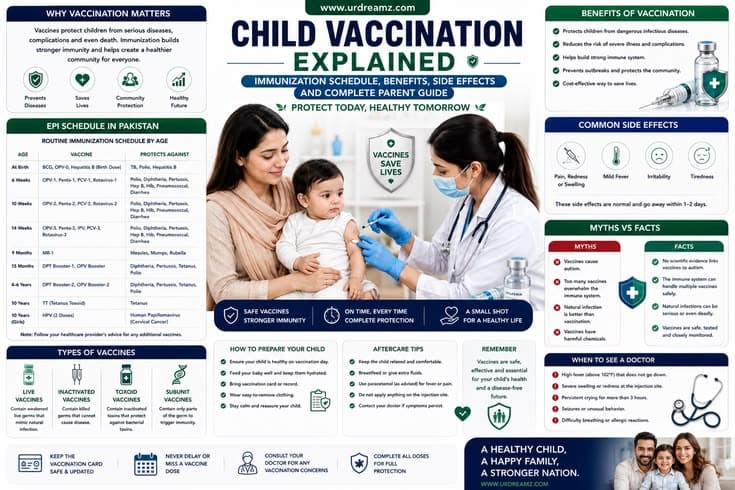
6. Pakistan EPI Vaccination Schedule: Complete Guide
The Expanded Programme on Immunization (EPI) in Pakistan, operating under the Federal Directorate of Immunization, provides a routine immunization schedule that offers free vaccination to all children in Pakistan. The schedule is designed based on the epidemiology of vaccine-preventable diseases in Pakistan and the developmental readiness of the infant immune system to respond to each vaccine. Understanding this schedule helps parents ensure their children receive every vaccine at the right time.
A child in Pakistan needs only five visits in the first year of life and one visit in the second year of life to complete the full routine vaccination schedule, protecting against eleven serious diseases. This is a very achievable commitment that provides lifelong protection against diseases that could otherwise kill or permanently disable the child. All of these vaccines are provided free of cost at government health facilities, EPI centers, and vaccination posts throughout the country.
| Age | Vaccines Given | Disease Protected Against | Route |
|---|---|---|---|
| At Birth | BCG (Bacillus Calmette-Guerin) | Childhood tuberculosis especially TB meningitis and disseminated TB | Intradermal injection in left upper arm |
| At Birth | OPV-0 (Oral Polio Vaccine birth dose) | Polio | Two drops by mouth |
| At Birth | Hepatitis B (Birth dose) | Hepatitis B virus infection. Birth dose is critical to prevent mother-to-child transmission | Intramuscular injection |
| 6 Weeks | Pentavalent 1 (DPT + Hepatitis B + Hib combined) | Diphtheria, Pertussis (whooping cough), Tetanus, Hepatitis B, Haemophilus influenzae type b (five diseases in one injection) | Intramuscular injection in thigh |
| 6 Weeks | PCV-10 (1) Pneumococcal Conjugate Vaccine | Pneumococcal pneumonia, meningitis, and bloodstream infections | Intramuscular injection |
| 6 Weeks | OPV (1) Oral Polio Vaccine | Polio | Two drops by mouth |
| 6 Weeks | Rotavirus Vaccine (1) | Rotavirus diarrhea, the most common cause of severe dehydrating diarrhea in infants | Oral drops |
| 10 Weeks | Pentavalent 2 | Diphtheria, Pertussis, Tetanus, Hepatitis B, Hib (second dose) | Intramuscular injection in thigh |
| 10 Weeks | PCV-10 (2) | Pneumococcal disease (second dose) | Intramuscular injection |
| 10 Weeks | OPV (2) | Polio (second dose) | Two drops by mouth |
| 10 Weeks | Rotavirus Vaccine (2) | Rotavirus diarrhea (second dose) | Oral drops |
| 14 Weeks | Pentavalent 3 | Diphtheria, Pertussis, Tetanus, Hepatitis B, Hib (third and final primary dose) | Intramuscular injection in thigh |
| 14 Weeks | PCV-10 (3) | Pneumococcal disease (third dose) | Intramuscular injection |
| 14 Weeks | OPV (3) | Polio (third dose) | Two drops by mouth |
| 14 Weeks | IPV (1) Inactivated Polio Vaccine | Polio (injectable killed virus vaccine given alongside OPV for enhanced protection) | Intramuscular injection |
| 9 Months | Measles Vaccine (1) | Measles | Subcutaneous injection |
| 15 Months | MR (Measles-Rubella) Vaccine | Measles and Rubella (second measles dose plus rubella protection) | Subcutaneous injection |
It is important to note that the EPI schedule is periodically updated as new vaccines are introduced and as evidence evolves. In some areas of Pakistan, additional vaccines like the Typhoid Conjugate Vaccine (TCV) and Meningococcal vaccines have been added to the routine schedule. Parents should always confirm the current schedule with their local EPI center or pediatrician, as updates to the national schedule may have occurred after this guide was written.
7. International Vaccination Schedule: WHO and CDC Overview
| Age | Vaccines Typically Recommended | Note for Pakistan Parents |
|---|---|---|
| Birth | Hepatitis B birth dose. BCG in countries where TB is prevalent including Pakistan | Both of these are in Pakistan EPI schedule |
| 2 Months (approximately 6 to 8 weeks) | DTaP or DPT (1). IPV or OPV (1). Hib (1). PCV (1). Rotavirus (1). Hepatitis B (2) | In Pakistan this corresponds to the 6-week visit with Pentavalent which combines DPT, Hep B, and Hib in one injection |
| 4 Months (approximately 10 weeks) | DTaP (2). IPV or OPV (2). Hib (2). PCV (2). Rotavirus (2) | Corresponds to Pakistan 10-week visit |
| 6 Months (approximately 14 weeks) | DTaP (3). IPV or OPV (3). Hib (3). PCV (3). Hepatitis B (3). Influenza (annual) | Corresponds to Pakistan 14-week visit. Annual flu vaccine is not in Pakistan EPI but may be recommended by private pediatricians |
| 12 to 15 Months | MMR (1). Varicella (1). Hib booster. PCV booster. Hepatitis A (1) | Pakistan gives Measles at 9 months and MR at 15 months. Varicella and Hepatitis A are not in EPI but available privately |
| 4 to 6 Years (Pre-school) | DTaP booster. IPV booster. MMR (2). Varicella (2) | Currently not formally in Pakistan EPI routine schedule. Check current status with pediatrician |
| 11 to 12 Years | HPV vaccine (first dose). Tdap booster. Meningococcal vaccine | HPV vaccine is increasingly available in Pakistan. Discuss with pediatrician |
| Annually | Influenza vaccine for all children 6 months and older | Not in EPI but available privately and strongly recommended especially for children with chronic health conditions |
8. Detailed Guide to Each Core Childhood Vaccine
| Vaccine | What It Protects Against | Schedule | Type | Important Notes for Parents |
|---|---|---|---|---|
| BCG Vaccine | Tuberculosis, specifically the most severe forms including TB meningitis and disseminated TB in young children | One dose at birth | Live-attenuated bacterial vaccine | A small raised bump at the injection site is normal and expected. This develops into a small scar that is a permanent marker of BCG vaccination. Pakistan is a TB-endemic country making this vaccine particularly important |
| Hepatitis B Vaccine | Hepatitis B virus infection. The birth dose is specifically critical to prevent mother-to-child transmission during delivery | Birth dose plus doses within Pentavalent at 6, 10, and 14 weeks | Recombinant subunit vaccine | Children infected with Hepatitis B at birth have a 90 percent chance of developing chronic infection. The vaccine is highly effective at preventing this. Breastfeeding is safe after vaccination |
| Pentavalent Vaccine (DPT-HepB-Hib) | Five diseases in one injection: Diphtheria (D), Pertussis whooping cough (P), Tetanus (T), Hepatitis B, and Haemophilus influenzae type b (Hib) | Three primary doses at 6, 10, and 14 weeks | Combination vaccine containing toxoids and recombinant antigens | This is often the vaccine associated with post-vaccination fever and fussiness due to the pertussis component. Mild fever and soreness are normal and expected. Give recommended dose of paracetamol as directed by the doctor if fever occurs |
| OPV (Oral Polio Vaccine) | All three strains of wild poliovirus | Birth dose plus doses at 6, 10, and 14 weeks. Also given during supplementary polio campaigns | Live-attenuated virus vaccine given orally | Pakistan is one of only two remaining countries where wild poliovirus transmission continues. This makes polio vaccination particularly critical here. OPV is given as drops in the mouth. It is painless which is why children often tolerate it well |
| IPV (Inactivated Polio Vaccine) | All three poliovirus strains through injectable killed virus | At 14 weeks in Pakistan EPI schedule alongside OPV | Inactivated killed virus injectable vaccine | Given alongside OPV to boost immune response and provide more comprehensive protection. The combination of OPV plus IPV gives better protection than either alone, which is why both are given |
| PCV-10 (Pneumococcal Conjugate Vaccine) | The 10 most common strains of Streptococcus pneumoniae that cause pneumonia, meningitis, and bloodstream infections in children | Three doses at 6, 10, and 14 weeks | Conjugate vaccine | Pneumococcal disease is a major cause of childhood pneumonia deaths in Pakistan. This vaccine has dramatically reduced hospitalization and deaths from pneumonia in countries where it has been introduced |
| Rotavirus Vaccine | Rotavirus, the most common cause of severe dehydrating diarrhea in infants and young children | Two doses at 6 and 10 weeks in Pakistan EPI | Live-attenuated virus given orally | Given as oral drops. Child should not eat or drink anything for 30 minutes before the dose. If the child vomits within 10 minutes of the dose, a replacement dose may be given. Do not give if the child has an intussusception (bowel blockage) history |
| Measles Vaccine | Measles virus | First dose at 9 months in Pakistan EPI | Live-attenuated virus vaccine | Measles remains a significant killer of children in Pakistan, particularly those who are malnourished. The 9-month timing is important as maternal antibodies wane by this age. Missing this vaccine leaves the child highly vulnerable during the peak measles transmission period |
| MR Vaccine (Measles-Rubella) | Measles and Rubella | At 15 months in Pakistan EPI (serves as second measles dose plus rubella protection) | Live-attenuated combined virus vaccine | Rubella is particularly important to prevent because infection during pregnancy causes Congenital Rubella Syndrome. Vaccinating children reduces rubella circulation in the community, protecting pregnant women and their unborn children |
9. Additional Recommended Vaccines Beyond EPI
| Vaccine | Protects Against | Who Should Consider It | Schedule |
|---|---|---|---|
| MMR (Measles-Mumps-Rubella) | Measles, Mumps, and Rubella | Widely recommended. The MR vaccine in EPI does not cover Mumps. Parents who want mumps protection can ask their pediatrician about MMR availability | Two doses: first at 12 to 15 months, second at 4 to 6 years |
| Varicella (Chickenpox Vaccine) | Varicella-zoster virus that causes chickenpox | All children who have not had chickenpox. Particularly recommended to prevent complications in otherwise healthy children and in those with underlying health conditions | Two doses: first at 12 to 15 months, second at 4 to 6 years |
| Hepatitis A Vaccine | Hepatitis A virus, which spreads through contaminated food and water | Particularly important in Pakistan where Hepatitis A transmission is still common due to sanitation challenges | Two doses: first at 12 months, second 6 to 18 months later |
| Typhoid Conjugate Vaccine (TCV) | Typhoid fever caused by Salmonella typhi | Already introduced into EPI in some provinces of Pakistan. Important given the high burden of typhoid in Pakistan including extensively drug-resistant typhoid | Single dose from 6 months of age in current guidance |
| Annual Influenza (Flu) Vaccine | Seasonal influenza viruses | All children 6 months and older. Particularly important for children with chronic health conditions, asthma, heart disease, or who are immunocompromised | One dose annually. Children receiving their first-ever flu vaccine under 9 years need two doses one month apart |
| HPV (Human Papillomavirus) Vaccine | The HPV strains responsible for most cervical cancers and genital warts | Girls and boys aged 9 to 14 years. Most effective when given before potential exposure to HPV which occurs with sexual activity | Two doses if started before age 15. Three doses if started at age 15 or older |
| Meningococcal Vaccine | Neisseria meningitidis bacteria that cause bacterial meningitis and bloodstream infections | Children at elevated risk, those traveling to high-risk regions, and adolescents at around 11 to 12 years | Schedule depends on the specific vaccine type. Discuss with pediatrician |
10. Benefits of Following the Vaccination Schedule
The vaccination schedule is not arbitrary. Each vaccine is placed at a specific age for specific scientific reasons related to when the immune system is ready to respond effectively and when the child is most at risk from the disease. The schedule is designed as a coordinated system, not as individual isolated choices, which is why following it as designed provides maximum protection.
| Benefit | Explanation |
|---|---|
| Protection when it is most needed | The schedule places vaccines at the ages when the child is most vulnerable to each disease and when the immune system is able to mount an effective response. Delaying vaccines leaves the child unprotected during the period of highest risk |
| Prevention of serious complications | Getting the disease rather than the vaccine is far more dangerous. Every vaccine-preventable disease can cause severe complications including death, brain damage, deafness, paralysis, and chronic illness. The vaccine prevents these outcomes |
| Protection of the community | When children are vaccinated on schedule they contribute to community immunity that protects newborns, immunocompromised individuals, and others who cannot be vaccinated. Every unvaccinated child is a gap in community protection |
| Building immunity before school exposure | Most school-age children receive the bulk of their vaccinations before age 6. This ensures they are protected before the intense pathogen exposure that comes with group childcare and school environments |
| Long-term and sometimes lifetime protection | Many childhood vaccines provide protection that lasts decades. Some, like the MMR vaccine, provide lifelong protection with two doses. Following the schedule at the right times optimizes the duration of protection provided |
| Prevention of outbreaks | When vaccination coverage is maintained at recommended levels, outbreaks of vaccine-preventable diseases become rare. When coverage drops, outbreaks follow. The schedule is designed to maintain coverage at protective levels from an early age |
11. Common Vaccine Side Effects: What Is Normal
Side effects after vaccination fall into two categories: common and expected local and systemic reactions that reflect the immune system responding to the vaccine (these are signs the vaccine is working), and rare and serious reactions that require medical attention. Understanding this distinction helps parents respond appropriately rather than panicking about normal reactions or dismissing concerning ones.
The most important thing to understand is that the immune system must recognize the vaccine antigen as something to respond to, and this immune response is precisely what produces the mild fever and discomfort that many children experience. These symptoms are not signs that the child is getting sick. They are signs that the immune system is learning.
| Reaction Type | Symptoms | When It Appears | How Long It Lasts | What to Do |
|---|---|---|---|---|
| Common and Normal Local Reactions | Redness at the injection site. Swelling and warmth around the injection site. Tenderness or pain when the area is touched. A small hard lump that may persist for weeks | Within hours of vaccination. Usually peaks at 12 to 24 hours | 1 to 3 days typically. The hard lump at the site may persist for several weeks, this is normal | Cool compress applied to the area. Gentle massage around (not on) the site. Age-appropriate pain reliever if recommended by your doctor. No specific treatment usually needed |
| Common and Normal Systemic Reactions | Low to moderate fever (most commonly under 39 degrees Celsius). Fussiness and irritability. Reduced appetite. Drowsiness or conversely difficulty sleeping | Within hours to one day for most vaccines. For MMR and chickenpox vaccines, fever and rash can appear 7 to 14 days after vaccination | Usually 1 to 2 days | Ensure adequate hydration. Age-appropriate paracetamol at correct dose for fever if recommended by doctor. Do not use aspirin in children. Extra comfort, skin contact, and reassurance |
| Less Common but Recognized Reactions | BCG vaccine: Small ulcer at the injection site developing over several weeks, then healing to leave the characteristic BCG scar. This is entirely expected and a sign of correct vaccine delivery. Rotavirus vaccine: Mild diarrhea or loose stools in the days following the dose | BCG ulcer: develops 2 to 6 weeks after vaccination. Rotavirus diarrhea: within a few days of dose | BCG ulcer heals over several months. Rotavirus diarrhea resolves within a few days | For BCG ulcer: no treatment needed, keep area clean and dry. For rotavirus diarrhea: maintain hydration |
| Rare but Concerning Reactions | Very high fever above 40 degrees Celsius. Seizure associated with fever (febrile seizure), which is frightening but usually brief and not associated with long-term harm. Persistent inconsolable crying for more than 3 hours in infants. Severe allergic reaction (anaphylaxis): extremely rare but characterized by difficulty breathing, hives, swelling of throat, rapid heartbeat, pallor. Typically occurs within 15 to 30 minutes of vaccination | Within hours for most. Anaphylaxis typically within 15 to 30 minutes which is why vaccination centers ask you to wait for 15 to 30 minutes after each vaccine | Anaphylaxis requires immediate treatment. Febrile seizures are usually brief | High fever: contact your doctor. Seizure: stay calm, ensure child cannot hurt themselves, do not put anything in mouth, call doctor or emergency services. Anaphylaxis: emergency medical care immediately |
12. When to Call a Doctor After Vaccination
| Situation | Urgency | What It May Indicate |
|---|---|---|
| Any difficulty breathing, wheezing, or throat tightening after vaccination | Immediate emergency. Call emergency services or go to emergency room immediately | Possible anaphylaxis (severe allergic reaction). Rare but treatable if addressed immediately |
| Severe allergic skin reaction with widespread hives or swelling of face and lips | Immediate. Emergency medical care needed | Allergic reaction that may progress to anaphylaxis |
| Seizure (convulsion) at any point after vaccination | Contact doctor or emergency services. Febrile seizures are usually brief but always need medical evaluation | Febrile seizure triggered by vaccine-related fever. Usually not dangerous but needs medical assessment |
| Fever above 40 degrees Celsius (104 degrees Fahrenheit) | Contact doctor promptly | High fever above what is typically associated with vaccine reaction. Other causes should be excluded |
| Persistent inconsolable crying for more than 3 hours in an infant | Contact doctor within the same day | Unusual pain response that warrants assessment |
| Signs of infection at the injection site such as increasing redness spreading beyond 2 to 3 centimeters, warmth, pus, or red streaking | Contact doctor within the same day | Possible secondary infection at injection site, which is rare but treatable |
| Child seems very unwell, unusually lethargic, or you are concerned for any reason | Trust your parental instinct. Contact doctor if you are worried | Parents know their child best. When in doubt, call the doctor |
13. How to Prepare Your Child for Vaccination
| Preparation Area | What to Do | Why It Helps |
|---|---|---|
| Practical Preparation | Bring the child's vaccination record or card to every appointment. Know which vaccines are due. Write down any questions or concerns to ask the doctor. Dress the child in easy-to-remove clothing that provides easy access to the thigh or arm | Organized preparation ensures the correct vaccines are given, questions get answered, and the process is smooth |
| Feeding | Breastfeed just before or during the vaccination if possible for infants. For older children, do not fast before vaccination as normal feeding supports comfort and recovery | Breastfeeding during vaccination reduces pain perception through both comfort and the analgesic effects of breast milk. Hunger increases distress |
| Talking to Children | For older toddlers and children, be honest that there will be a quick pinch. Do not promise it will not hurt because it might, and broken promises destroy trust. Explain what the vaccine does: it is medicine that helps protect against serious illness. Avoid extended discussion about vaccination in the days before as anticipatory anxiety makes the experience worse | Honesty builds trust and appropriate preparation. Children who are lied to about pain experience more distress when it occurs |
| Comfort Objects | Bring a favorite toy, blanket, or comfort object for young children | Familiar comforting objects reduce distress and provide a focus for attention during the procedure |
| Pain Relief Discussion | Ask the doctor whether pre-dosing with paracetamol is recommended before the appointment. Guidance on this varies and your doctor's specific recommendation should be followed | Appropriate pain management reduces distress. However pre-medication should only be done on medical advice as routine pre-dosing is not universally recommended |
14. Tips to Reduce Pain and Distress During Vaccination
Pain and distress during vaccination are among the most common concerns parents have, and they are legitimate concerns. Procedures that cause pain in children have real effects on their subsequent fear and avoidance of healthcare. However, several well-studied strategies can significantly reduce pain and distress during vaccination, and parents who know about them can advocate for their use.
| Strategy | How to Use It | Evidence |
|---|---|---|
| Breastfeeding during or immediately before and after | Nurse the infant during the vaccination if comfortable doing so. Studies show breastfeeding reduces crying time by 50 percent or more | Strong evidence. Both the suckling action and breast milk composition provide analgesic effects |
| Skin-to-skin contact for young infants | Hold the infant against bare skin during vaccination | Moderate evidence. Skin-to-skin contact reduces stress hormones and pain perception |
| Parental holding | Hold the child upright in your lap facing you (chest to chest) rather than lying flat on a table. This position is less frightening and more comforting | Good evidence. Children are less distressed when held by a caregiver during vaccination |
| Distraction | Blowing bubbles, looking at a book, talking about something interesting, a favorite song, or an age-appropriate video during the procedure itself | Good evidence. Focused attention on something else during the brief injection significantly reduces pain perception |
| Sugar solution for young infants | A small amount of 24 to 33 percent sucrose solution given immediately before the injection reduces pain responses in young infants. Can be done with a few drops of sugar water on a pacifier | Good evidence in infants under 6 months. The mechanism involves sweet taste activating natural opioid pain pathways |
| Topical anesthetic | EMLA cream or similar topical anesthetic applied to the injection site 45 to 60 minutes before the appointment can numb the skin surface | Good evidence. Reduces needle insertion pain. Requires advance planning |
| Calm parent presence | Parent's own calm demeanor significantly affects the child's distress level. If the parent is visibly anxious, the child's distress increases. Taking slow breaths and maintaining calm while comforting the child is one of the most powerful things a parent can do | Strong evidence. Parental anxiety is directly transmitted to children during medical procedures |
| Prompt comforting after the injection | Immediately comfort the child after the injection is done. Cuddles, kind words, feeding, and prompt return to normal interaction all help the child recover quickly | Good evidence. Post-procedure comfort significantly reduces the duration of distress |
15. After Vaccination Care Guide
| After-Care Area | What to Do | What to Avoid |
|---|---|---|
| Immediate After Care (first 30 minutes) | Stay at the vaccination site or clinic for 15 to 30 minutes after the vaccination. This waiting period allows detection and immediate treatment of any rare allergic reaction. Comfort and feed the child | Do not leave immediately after the injection. The waiting period exists for an important safety reason |
| Injection Site | A cool clean damp cloth applied gently to the injection site can reduce discomfort. Keep the site clean and dry. It is fine to bathe the child normally | Do not rub the injection site vigorously. Do not apply ice directly to skin. Do not squeeze or try to drain any small lump that forms |
| Fever Management | If fever develops, ensure the child is comfortable and well-hydrated. Remove excess clothing. Offer extra fluids especially for breastfed infants (offer breast more frequently). If the child appears uncomfortable or fever is above 38.5 degrees Celsius, give paracetamol in the correct dose for the child's weight as recommended by your doctor | Do not give aspirin to children as it is associated with Reye's syndrome. Do not give ibuprofen to infants under 6 months without medical advice. Do not over-bundle a feverish child |
| Feeding | Breast feed more frequently if the child wants to nurse. Ensure adequate fluid intake. If the child has reduced appetite for a day or two this is normal | Do not force feeding. Reduced appetite for a short time after vaccination is normal |
| Activity | Normal gentle activity is fine. Rest if the child is tired or unwell. Extra comfort, cuddles, and closeness help most children recover from the emotional experience of vaccination | No need to restrict normal gentle activity. No specific restrictions |
| Vaccination Record | Ensure the vaccination is recorded in the child's vaccination card or book immediately. This record is the permanent proof of immunization and will be needed for school enrollment and future healthcare | Do not lose or misplace the vaccination card. This document cannot easily be replaced and contains irreplaceable health information |
16. Can Multiple Vaccines Be Given at the Same Visit
One of the most common concerns parents express is about the number of vaccines given at a single visit. At the 6-week visit in Pakistan, a child may receive four or five vaccine antigens in two or three injections plus oral drops. This can understandably feel like a lot to parents, and understanding why this is safe and actually beneficial is important.
The scientific evidence is very clear: multiple vaccines given simultaneously are safe and do not overwhelm the immune system. A healthy infant's immune system is remarkably capable, able to respond to thousands of different antigens simultaneously. Research shows that infants exposed to the entire current vaccination schedule are using less than 0.1 percent of their immune system's estimated capacity. The vaccines do not compete with each other or reduce each other's effectiveness when given together.
There are actually significant advantages to giving vaccines together on schedule. It means fewer total visits to the healthcare facility, reducing the burden on families. It ensures the child is protected against multiple diseases at the right age, without leaving them unprotected in gaps between more spread-out visits. And it means fewer total injections over the child's early life since many combination vaccines like Pentavalent protect against five diseases in a single injection.
Some parents ask whether vaccines could be spread out over a longer period on a non-standard schedule. This approach is not recommended by any major medical organization because it leaves children unprotected against dangerous diseases for longer than necessary, it requires more clinic visits, and there is no scientific benefit to spacing vaccines out further than the recommended schedule.
17. Missed Vaccines and Catch-Up Immunization
Missing a scheduled vaccine does not mean the child must start the entire series over. In most cases, the series can simply be continued from where it was interrupted, following catch-up schedules designed for this purpose. This is an important message for parents whose children have fallen behind on their immunizations: it is never too late to catch up, and restarting a series is not necessary in most situations.
| Situation | What to Do |
|---|---|
| Child missed one or more vaccines and is still within the recommended age range | Schedule an appointment as soon as possible and get the missed vaccines. Continue from where the series was interrupted. The doses given previously are not wasted and do not need to be repeated |
| Child has no vaccination record and age or prior vaccination status is unknown | Assume unvaccinated and begin or complete vaccination according to the catch-up schedule. Do not delay vaccination because records are unavailable |
| Child is older than the typical age for a vaccine but has never received it | Many vaccines can still be given to older children and adolescents who missed them in the recommended window. Consult your pediatrician about appropriate catch-up for the child's current age |
| Child missed a dose in a multi-dose series such as Pentavalent | Simply give the next dose when possible following minimum interval guidelines. The child does not lose the benefit of doses already received |
| Family has moved or vaccination records were lost | Contact the EPI or local health authority. In Pakistan, vaccination records are kept at EPI centers. Duplicate records may be available. If not, vaccination can be restarted based on current age |
18. Vaccination Records and Certificates
The vaccination card or booklet issued to a child at birth or at the first vaccination visit is one of the most important documents in the child's health record. It documents which vaccines have been given, when they were given, the lot numbers of vaccines received, and by which facility. This record is required for school enrollment in many countries and provinces, for travel to certain countries, for some sports programs, and for healthcare providers who need to know the child's immunization status.
In Pakistan, the vaccination card is provided at the time of the first EPI visit and should accompany the child to every subsequent vaccination appointment. Parents should keep this card in a safe place along with other important documents. Making a photocopy or photograph of the completed sections regularly is wise in case the original is lost or damaged.
Some healthcare systems and countries are moving toward digital vaccination certificates that can be stored and shared electronically. Parents who are concerned about keeping track of paper records can ask their pediatrician or local health authority about digital record options available in their area.
19. Vaccine Myths vs Facts: Complete Debunking Guide
| Myth | Scientific Fact |
|---|---|
| Vaccines cause autism | This is the most widely studied vaccine safety claim in history. Dozens of large, rigorous, independent studies covering millions of children across multiple countries have found no link between any vaccine or vaccine ingredient and autism. The original 1998 paper that suggested this link was based on fraudulent data, was retracted by the journal that published it, and the author lost his medical license. Autism symptoms often become more noticeable around the same age that several vaccines are given, which creates a temporal coincidence that some parents interpret as causation. The science is unequivocal: vaccines do not cause autism |
| Vaccines contain dangerous ingredients | Vaccine ingredients are present in very small amounts and are chosen because they make vaccines more effective, safe, and stable. Thimerosal (a mercury-based preservative) has been removed from all childhood vaccines except some multi-dose flu vaccine vials in many countries, but even when present, the ethylmercury in thimerosal is processed and eliminated by the body very quickly, unlike the methylmercury found in some fish. Aluminum salts used as adjuvants are present in tiny amounts vastly smaller than the aluminum in breast milk and formula over the first year of life. All vaccine ingredients undergo extensive safety testing |
| Diseases vaccines prevent are not serious because children rarely die from them now | The reason these diseases are rare now is precisely because of vaccination. Stopping vaccination would rapidly lead to their return. Before vaccines, these diseases killed and permanently disabled millions of children every year. In communities and countries with low vaccination coverage today, these diseases still cause significant death and disability. The invisibility of these diseases is evidence of vaccination success, not evidence that the diseases themselves were never serious |
| Natural infection gives better immunity than vaccination | Natural infection does sometimes produce strong immunity, but it does so at the cost of experiencing the disease with all its risks including severe illness, complications, and death. Vaccines provide immunity without this cost. In some cases vaccines actually provide more consistent immunity than natural infection. And for diseases like tetanus, natural infection produces no lasting immunity at all because the toxin that causes symptoms does not stimulate immune memory |
| If everyone else is vaccinated my child does not need to be | This reasoning, called free-riding, relies on herd immunity created by others while contributing nothing to it. When enough parents reason this way, vaccination coverage drops below the threshold needed for herd immunity and outbreaks occur. Also, herd immunity is not absolute protection for unvaccinated individuals. Unvaccinated children are at real risk, especially in areas with lower overall coverage like many parts of Pakistan |
| Too many vaccines overwhelm the immune system | The immune system is capable of responding to an enormous number of antigens simultaneously. Infants encounter thousands of bacteria and viruses daily in their environment. The entire childhood vaccine schedule uses less than 0.1 percent of the immune system's estimated capacity. Multiple vaccines given together have been shown to be as safe and effective as vaccines given separately. The schedule is designed for maximum benefit not maximum burden |
| Vaccines are not tested for safety | Vaccines undergo more extensive safety testing before approval than almost any other medical product. Testing typically takes 10 to 15 years and includes preclinical laboratory testing, three phases of clinical trials involving thousands to tens of thousands of participants, independent regulatory review, post-approval surveillance, and ongoing monitoring for rare adverse events. The safety record of vaccines approved through this process is excellent |
| Healthy children do not need vaccines | Vaccine-preventable diseases do not only attack unhealthy children. Previously healthy children die from measles, whooping cough, meningitis, and other vaccine-preventable diseases. Good nutrition and healthy living support immune function but do not replace the specific protection that vaccination provides against specific dangerous pathogens |
20. Addressing Vaccine Hesitancy
Vaccine hesitancy, defined as the delay in acceptance or refusal of vaccination despite availability, is recognized by the World Health Organization as one of the top ten threats to global health. It is driven by a complex mix of factors including lack of information, misinformation encountered online or through social networks, distrust of healthcare systems or governments, religious or cultural concerns, fear of side effects, and previous negative experiences with the healthcare system.
Addressing vaccine hesitancy effectively requires understanding the specific concern the parent has rather than dismissing it. Most parents who are hesitant about vaccines are motivated by genuine concern for their child's wellbeing. They deserve respectful, honest, evidence-based responses to their specific questions. Dismissing or belittling parental concerns is counterproductive and increases resistance.
The most helpful approach to vaccine hesitancy involves acknowledging the parent's concern as coming from care for their child, providing clear honest information about the specific concern, sharing what the scientific evidence actually shows, and maintaining a trusted ongoing relationship with a healthcare provider who can address questions over time. For parents who have been exposed to vaccine misinformation online, pointing to credible sources including the WHO, CDC, Pakistan EPI official site, and recognized pediatric medical associations is helpful. The goal is not to win an argument but to help parents make an informed decision that protects their child.
21. Vaccines and Child Immunity
A very common question parents ask is whether giving multiple vaccines suppresses the child's natural immune system or makes them generally weaker. This concern reflects a misunderstanding of how the immune system works and how vaccination interacts with it.
Vaccination does not weaken the immune system. It trains and strengthens it. Each vaccine exposure adds to the immune system's library of recognized pathogens, making it better equipped to respond to future threats. The immune system does not have a finite capacity that gets used up. It is adaptive and learns continuously throughout life. Getting vaccinated adds knowledge to the immune system rather than depleting any resource.
There is a brief period of immune activation after vaccination, similar to a mild acute immune response, during which the child may be slightly more fatigued as the immune system works. This is temporary and is evidence of the immune system doing exactly what it should do in response to the vaccine. It is not evidence of immune suppression. Within days the child's immune system returns to normal with the added benefit of new specific protection against the vaccine antigen.
22. Vaccines and Special Medical Conditions
| Condition | Vaccination Considerations |
|---|---|
| Premature Infants | Premature babies should receive vaccines at the same chronological age as full-term babies, not adjusted age. Studies show premature infants mount adequate immune responses to most vaccines. The benefits of on-schedule vaccination are particularly important for premature infants who may be at higher risk from vaccine-preventable diseases |
| Children With HIV or Other Immune Deficiencies | Live vaccines (MMR, varicella, rotavirus, OPV) may not be safe for severely immunocompromised children. However inactivated and subunit vaccines are generally safe and recommended. Specific guidance from a pediatric immunologist or infectious disease specialist is essential for these children |
| Children Receiving Chemotherapy or Immunosuppressive Medications | Live vaccines should generally be avoided during immunosuppressive treatment. Inactivated vaccines may be given but may produce weaker immune responses during treatment. Specialist guidance is needed for these children |
| Children With Egg Allergy | Some flu vaccines are produced in eggs and previously required caution in egg-allergic individuals. Current guidance from most major medical organizations states that egg-allergic children can receive flu vaccines in normal settings, as severe reactions are extremely rare and manageable |
| Children With Known Allergies | Known severe allergy to a vaccine component is a genuine contraindication. However most allergic children can be vaccinated safely. Discuss specific allergies with the pediatrician before vaccination |
| Children With Chronic Illnesses (asthma, diabetes, heart disease) | Children with chronic illnesses are often more at risk from vaccine-preventable diseases than healthy children and vaccination is especially important for them. The flu vaccine in particular is strongly recommended for children with chronic health conditions |
23. Vaccines During Illness
A common question is whether it is safe to vaccinate a child who is mildly ill with a cold, runny nose, or low fever. The answer for mild illness is generally yes. Minor illnesses are not a contraindication to vaccination. Delaying vaccination because of every minor illness means that children in the toddler years, who average 8 to 12 colds per year, would fall significantly behind on their vaccine schedule if every sniffle caused a postponement.
The situations where postponing vaccination is appropriate include moderate to severe illness with or without fever (in these cases vaccination is postponed until recovery), and specific contraindications that a doctor has identified. A child with a mild runny nose and normal energy can receive vaccines safely. The mild illness does not interfere with the immune response to the vaccine.
If you are uncertain whether your child is too ill to be vaccinated, call the clinic before the appointment. The medical staff can help you determine whether to proceed with the appointment or reschedule.
24. Government Vaccination Programs in Pakistan
The Expanded Programme on Immunization (EPI) in Pakistan is one of the largest public health programs in the country. Established in 1978, it has expanded significantly over the decades from protecting against six diseases to currently protecting against eleven vaccine-preventable diseases through the routine immunization schedule. All EPI vaccines are provided completely free of cost at government health facilities throughout Pakistan.
The programme operates through a network of EPI centers, Basic Health Units, Rural Health Centers, hospitals, and Lady Health Workers who provide vaccination services in communities. In urban areas, fixed vaccination sites operate regularly at designated facilities. In rural and remote areas, outreach sessions bring vaccination teams to communities where facility access is limited.
| Province or Region | Approximate Vaccination Coverage | Notes |
|---|---|---|
| Punjab | Approximately 80 to 81 percent full vaccination coverage | Highest coverage among the four provinces |
| Azad Jammu and Kashmir | Approximately 88 to 89 percent | Highest coverage of any administrative unit |
| Khyber Pakhtunkhwa | Approximately 68 percent | Coverage is improving but remains below national target |
| Sindh | Approximately 61 percent | Significant variation between urban and rural areas |
| Balochistan | Approximately 37 to 38 percent | Lowest coverage with highest continuing risk from vaccine-preventable diseases |
| National Average | Approximately 78 percent fully immunized children under 2 years | Significant improvement from 66 percent in 2017-18 survey |
25. How to Find Vaccination Centers in Pakistan
Government EPI vaccination centers are located throughout Pakistan and provide free vaccination services. Finding the nearest center and knowing when it operates is an important practical step for parents.
| Method | Details |
|---|---|
| Local Basic Health Unit or Rural Health Center | Every BHU and RHC has designated EPI vaccination days. Ask at your nearest government health facility |
| Lady Health Worker | Lady Health Workers serve most communities throughout Pakistan and can direct families to the nearest vaccination services and remind them about upcoming vaccination appointments |
| Government Hospital Pediatric Department | Hospitals have EPI vaccination clinics. Ask at the pediatric outpatient department |
| Private Pediatrician | Private pediatricians administer both EPI vaccines and additional recommended vaccines. Parents have the choice of receiving vaccines in either the government or private system |
| EPI Pakistan Official Website | The Federal Directorate of Immunization maintains information about the EPI schedule and programs at www.epi.gov.pk |
| Vaccine.pk | A Pakistan-specific online resource where parents can create a customized vaccination schedule for their child based on date of birth |
26. School Vaccination Requirements
Many schools in Pakistan and internationally require evidence of vaccination as a condition of enrollment or attendance. This requirement serves an important public health function: it ensures that school environments, where children spend many hours in close proximity to each other, do not become settings for outbreaks of vaccine-preventable diseases.
The specific vaccines required for school enrollment vary by country, province, and individual school policy. Parents should check their specific school's requirements well in advance of enrollment to ensure all required vaccines have been received. Schools in Pakistan increasingly request to see the child's vaccination card or certificate as part of the enrollment documentation. Where vaccination records have been lost, contacting the EPI center where the child was vaccinated may help recover records.
27. Teen and Adolescent Vaccines
Vaccination does not end in early childhood. Several vaccines are specifically recommended during the pre-teen and teenage years, either because they provide protection against diseases particularly relevant to adolescents, because immunity from childhood vaccines has waned and requires boosting, or because these vaccines are most effective when given before potential exposure which occurs in the adolescent period.
| Vaccine | Why in Adolescence | Schedule |
|---|---|---|
| Tdap (Tetanus, Diphtheria, Pertussis booster) | Immunity from childhood DPT series wanes over time. A booster in adolescence restores protection and reduces pertussis transmission, which is important because adolescents can transmit pertussis to vulnerable infants who have not yet completed their vaccination series | Single booster dose around 11 to 12 years. Replaces one Td booster |
| HPV (Human Papillomavirus) Vaccine | HPV causes virtually all cervical cancers as well as other cancers including oropharyngeal, anal, penile, and vulvar cancers. The vaccine is most effective when given before potential HPV exposure. Girls and boys should receive it ideally between ages 9 and 14 | Two doses for those starting before age 15. Three doses for those starting at 15 or older |
| Meningococcal Vaccine | Adolescents have increased risk from meningococcal disease, particularly those living in dormitories or close quarters. Meningococcal meningitis can be fatal within 24 hours of symptom onset | Primary dose at 11 to 12 years with booster at 16 years in CDC schedule |
| Annual Influenza Vaccine | Annual flu vaccination is recommended for all individuals 6 months and older. Teenagers are not an exception and the annual flu vaccine provides important protection particularly during school flu season | Annually before flu season |
28. Flu Vaccine for Children: Annual Protection
The influenza (flu) vaccine is unique among childhood vaccines in that it must be given annually. This is because influenza viruses mutate rapidly, changing their surface proteins each year in a process called antigenic drift. The flu vaccine is reformulated each year to match the strains predicted to circulate in the upcoming season based on global surveillance data. Last year's flu vaccine will not provide adequate protection against this year's strains.
Influenza is not just a bad cold. In children, particularly those under 5 and those with chronic health conditions, influenza can cause severe pneumonia, dehydration, encephalitis (brain inflammation), and death. Children are also important spreaders of influenza within families and communities. Vaccinating children against influenza protects not just the children themselves but also older family members, grandparents, and community members who are at higher risk from severe influenza.
The flu vaccine is available in most years as either an injectable inactivated vaccine or an intranasal live-attenuated vaccine. Both are effective. Children receiving their very first flu vaccine ever need two doses separated by at least four weeks to build initial immunity. In subsequent years, one annual dose is sufficient. The optimal time to receive the flu vaccine is before the flu season begins, which in Pakistan and South Asia typically peaks between November and March.
29. Questions to Ask Your Pediatrician About Vaccines
| Topic | Questions to Ask |
|---|---|
| Schedule | Which vaccines is my child due for at this visit? Are we on schedule or have we missed any vaccines? Is there anything specific about my child's health that would change the recommended schedule? |
| Side Effects | What side effects should I expect from the vaccines being given today? What should I do if my child develops a fever? At what point should I call you or seek emergency care? |
| Pain Management | Should I give paracetamol before or after the vaccine? Are there other strategies to reduce my child's discomfort? |
| Special Concerns | My child has (specific health condition): does this change anything about vaccination? My child had a reaction to a previous vaccine: does this affect what we do today? |
| Additional Vaccines | Are there vaccines beyond the EPI schedule that you recommend for my child? Should my child receive the flu vaccine annually? What about the chickenpox vaccine or hepatitis A? |
| Missed Vaccines | My child has not had (specific vaccine) yet. What is the catch-up schedule? Which vaccines take priority if we are catching up? |
| Records | Can you update my child's vaccination record today? What happens if I lose the vaccination card? |
30. Complete Vaccination Checklist for Parents
| Stage | Checklist Items |
|---|---|
| Before the Appointment | Know which vaccines are due at the current age. Bring the child's vaccination card to the appointment. Write down any concerns or questions to ask the doctor. Dress the child in easily removable clothing for injection site access. Feed the child normally before the visit. Do not fast |
| At the Vaccination Site | Tell the doctor about any recent illness. Mention any allergies or previous reactions to vaccines. Ask which vaccines are being given and why. Ask what side effects to expect. Ask about pain reduction strategies. Stay for 15 to 30 minutes after vaccination to monitor for immediate reactions |
| After Vaccination | Ensure the vaccination is recorded in the card before leaving. Apply cool compress to injection site if the child is uncomfortable. Monitor for fever and treat appropriately if it develops. Keep the appointment to return for the next scheduled vaccination |
| Record Keeping | Keep the vaccination card in a safe permanent place. Photograph or photocopy the card regularly. Tell your child's school and any other healthcare providers about their vaccination history |
| Staying Current | Mark the next vaccination date in your calendar before leaving the clinic. Set a reminder one week before the due date. Do not wait for the clinic to contact you. Be proactive about keeping up with the schedule |
| Catch-Up if Needed | If a vaccine was missed, contact the EPI center or pediatrician as soon as possible. Ask about the catch-up schedule. Do not assume it is too late. It is almost never too late to catch up on missed vaccines |
Child vaccination is one of the most straightforward and impactful things parents can do to protect their children's health. The schedule exists for good scientific reasons, the vaccines have been tested thoroughly, the diseases they prevent are real and serious, and the protection they provide lasts for years or lifetimes. Every parent who brings their child for vaccination on time contributes not only to their own child's health but to the health of every child in the community. Vaccination is both a personal health decision and a community responsibility, and understanding both dimensions helps parents make this choice with full knowledge of what is at stake.
Internal links for further reading:
- Newborn Baby Care Guide for First Time Parents
- Breastfeeding Guide for First Time Mothers
- Healthy Nutrition for Children: Essential Foods, Vitamins and Balanced Diet Guide
- Positive Parenting Guide: Effective Discipline, Communication and Building Strong Family Relationships
- Child Development Guide: Physical, Cognitive, Emotional and Social Growth Milestones
- Child Immunity Guide: Best Foods, Healthy Habits and Natural Ways to Strengthen Kids Immune System
- Healthy Sleep for Children: Complete Guide to Sleep Hours, Habits, Benefits and Bedtime Routines
- Child Mental Health Explained: Signs, Emotional Development, Common Problems and Complete Parent Guide
Medical Disclaimer: This article provides general educational information about child vaccination and does not constitute medical advice. Vaccination schedules and recommendations may vary based on your location, your child's individual health status, and updates to national immunization programs. Always consult your pediatrician or local EPI health authority for personalized vaccination guidance. Report any concerning reactions after vaccination to your healthcare provider promptly.