Healthy Nutrition for Children: Essential Foods, Vitamins and Balanced Diet Guide
Every parent wants their child to grow up healthy, strong, and full of energy. Yet in a world overflowing with processed snacks, sugary drinks, and conflicting dietary advice, knowing exactly what to feed your child and why can feel genuinely overwhelming. The truth is that good child nutrition does not require complicated meal plans or expensive superfoods. It requires a clear understanding of what growing bodies actually need at each stage of development, which foods deliver those needs most effectively, which foods undermine them, and how to build the kind of daily eating habits that serve children well not just through childhood but for the rest of their lives. This complete guide gives you all of that in one place, written in plain language that any parent can understand and act on starting today.
1. Why Child Nutrition Matters More Than Most Parents Realize
The food a child eats during their first two decades of life does far more than simply fuel their daily activities. Nutrition during childhood is the primary driver of physical growth, brain development, immune system strength, bone density formation, emotional regulation, and the establishment of lifelong eating patterns. The nutritional environment of childhood literally shapes the architecture of the developing brain, determining neural connectivity, cognitive capacity, and emotional resilience in ways that persist well into adulthood.
Malnutrition in childhood does not only mean starvation. In high-income countries, the most common form of childhood malnutrition is overnutrition combined with micronutrient deficiency, a situation where children consume excess calories from poor-quality food while simultaneously being deficient in iron, vitamin D, calcium, zinc, and other nutrients critical for proper development. A child can be overweight and nutritionally deficient at the same time, and this hidden hunger is one of the most significant child health challenges of our era.
Research consistently shows that children who eat nutritious, balanced diets perform better academically, have more stable moods, recover from illness faster, grow to healthier heights and weights, and are less likely to develop chronic diseases including type 2 diabetes, cardiovascular disease, and certain cancers in adulthood. The investment of attention and effort you put into your child's nutrition today is quite literally an investment in their entire future health trajectory.
| Dimension | How Nutrition Affects It | Key Nutrients Involved |
|---|---|---|
| Physical Growth | Adequate calories and protein support height and weight gain. Deficiencies lead to stunting and failure to thrive | Protein, zinc, vitamin A, iodine, iron |
| Brain Development | The brain grows most rapidly in the first three years of life. Nutritional deficiencies during this period cause permanent cognitive impairment | Omega-3 DHA, iron, iodine, choline, zinc |
| Bone Formation | Peak bone mass is largely determined by calcium and vitamin D intake during childhood and adolescence | Calcium, vitamin D, phosphorus, magnesium |
| Immune System | The immune system requires specific nutrients to develop and function. Deficiencies increase infection susceptibility | Vitamins A, C, D, and E, zinc, selenium, iron |
| Emotional Health | Blood sugar stability from balanced meals affects mood. Specific nutrients including omega-3 and B vitamins influence neurotransmitter production | Omega-3, B vitamins, magnesium, tryptophan |
| Academic Performance | Iron deficiency impairs attention and learning. Breakfast eating consistently improves school performance | Iron, iodine, omega-3, glucose from complex carbs |
| Long-Term Health | Childhood dietary patterns strongly predict adult disease risk. Healthy eating habits established young tend to persist | All nutrients. Fiber, antioxidants, and healthy fats are especially important |
2. The Five Food Groups Every Child Needs
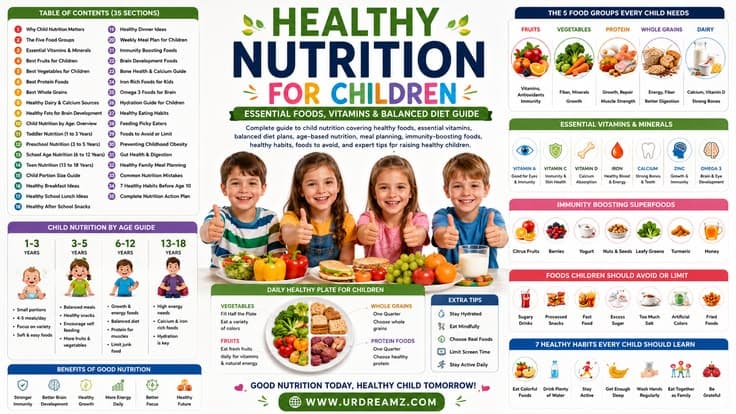
A balanced diet for children is built around five core food groups, each providing nutrients the others cannot fully replace. The goal is variety and balance across these groups rather than perfection at every single meal. Think about balance across the day and week rather than trying to hit every group at every meal.
| Food Group | What It Provides | Best Examples | Recommended Daily Servings for School Age |
|---|---|---|---|
| Fruits and Vegetables | Vitamins A and C, folate, potassium, fiber, antioxidants, and water content. Protective against illness and supports immune function | Apples, bananas, berries, mangoes, oranges, spinach, carrots, broccoli, sweet potato, tomatoes, cucumbers, peas | 5 or more servings combined. Aim for half the plate to be fruits and vegetables at each meal |
| Grains and Starches | Carbohydrates for sustained energy, B vitamins, fiber from whole grains, and minerals. The body's primary fuel source especially for active growing children | Brown rice, whole wheat bread and roti, oats, barley, quinoa, corn, pasta. Prioritize whole grain versions over refined | 4 to 6 servings depending on age and activity level. About a quarter of the plate |
| Protein Foods | Essential amino acids for building muscles, organs, enzymes, and immune proteins. Also provides iron, zinc, and B vitamins in animal sources | Eggs, chicken, fish, lean beef, lentils, beans, chickpeas, tofu, nuts and nut butters, seeds | 2 to 3 servings. About a quarter of the plate. Include plant proteins regularly alongside animal proteins |
| Dairy and Calcium Foods | Calcium and phosphorus for bone and teeth formation, vitamin D in fortified products, protein, and B vitamins. Critical during peak bone formation years | Milk, yogurt, cheese, calcium-fortified plant milks, small fish with bones like sardines, calcium-set tofu, fortified cereals | 2 to 3 servings. Especially important from ages 9 to 18 when bone density peaks |
| Healthy Fats | Essential fatty acids for brain development, fat-soluble vitamin absorption (A, D, E, K), hormone production, and sustained energy | Avocado, nuts, seeds, olive oil, fatty fish like salmon and sardines, eggs | Small amounts with most meals. Fats should not be avoided in children under 2 and should be part of every meal for older children |
3. Essential Vitamins and Minerals for Growing Children
| Nutrient | Why Children Need It | Best Food Sources | Signs of Deficiency |
|---|---|---|---|
| Vitamin D | Essential for calcium absorption and bone mineralization. Also critical for immune function and mood regulation. Deficiency is extremely common in children worldwide | Sunlight exposure is the primary source. Fatty fish, egg yolks, fortified milk, fortified cereals | Bowed legs and bone pain (rickets), frequent respiratory infections, fatigue, low mood |
| Calcium | The primary mineral for building strong bones and teeth. Peak bone mass established in childhood protects against osteoporosis in later life | Milk, yogurt, cheese, fortified plant milk, sardines, calcium-set tofu, broccoli, almonds | Stunted growth, brittle bones, dental problems, muscle cramps |
| Iron | Essential for red blood cell production and oxygen transport throughout the body and brain. Iron deficiency is the most common nutritional deficiency in children worldwide | Red meat, chicken, fish, lentils, beans, fortified cereals, dark leafy greens, pumpkin seeds | Fatigue, pale skin, poor concentration, learning difficulties, frequent infections, slow growth |
| Zinc | Supports immune function, wound healing, protein synthesis, and normal growth. Also important for taste and smell development which affects food acceptance | Meat, shellfish, legumes, nuts, seeds, whole grains, dairy | Slow growth, poor appetite, impaired immunity, skin problems, poor wound healing |
| Omega-3 Fatty Acids (DHA and EPA) | DHA is a structural component of brain tissue and the retina of the eye. Critical for cognitive development, focus, and learning capacity | Fatty fish (salmon, sardines, mackerel), walnuts, flaxseeds, chia seeds, omega-3 fortified eggs | Poor concentration, learning difficulties, dry skin, vision problems |
| Vitamin C | Powerful antioxidant that supports immune function, helps absorb iron from plant foods, and is essential for collagen production in skin, joints, and bones | Citrus fruits, strawberries, bell peppers, kiwi, guava, tomatoes, broccoli, papaya | Frequent infections, slow wound healing, fatigue, bleeding gums |
| Vitamin A | Critical for vision especially night vision, immune function, skin health, and normal growth. Severe deficiency is a leading cause of preventable childhood blindness globally | Sweet potato, carrots, mango, eggs, fortified dairy, liver, dark leafy greens | Night blindness, dry eyes, increased infection susceptibility, dry rough skin |
| B Vitamins (B12, B6, Folate) | B vitamins support energy production, nervous system development, and red blood cell formation. B12 is found primarily in animal products making it a concern for vegetarian children | Meat, fish, dairy, eggs for B12. Legumes, whole grains, and leafy greens for B6 and folate | Fatigue, neurological problems, poor growth, anemia |
| Iodine | Essential for thyroid hormone production which regulates metabolism, growth, and brain development. Deficiency during pregnancy and early childhood causes irreversible cognitive impairment | Iodized salt, seafood, dairy, eggs, seaweed | Thyroid enlargement, slowed growth, cognitive delays, fatigue |
| Magnesium | Involved in over 300 enzymatic reactions. Supports bone health, muscle function, sleep quality, and energy production | Nuts, seeds, whole grains, dark leafy greens, legumes, dark chocolate | Muscle cramps, sleep difficulties, fatigue, poor concentration |
4. Best Fruits for Children
| Fruit | Key Nutrients | Main Benefit for Children | Best Way to Serve |
|---|---|---|---|
| Banana | Potassium, vitamin B6, vitamin C, magnesium, natural sugars | Sustained energy for active children. Potassium supports heart and muscle function. Easy first finger food for toddlers | Sliced in cereal, mashed on toast, frozen as a healthy ice cream alternative |
| Mango | Vitamin A, vitamin C, folate, fiber, antioxidants | One of the richest fruit sources of vitamin A which supports vision and immunity. Children typically love the sweet taste | Cubed as a snack, blended in smoothies, mixed with yogurt |
| Apple | Fiber (pectin), vitamin C, quercetin antioxidant | Pectin fiber feeds beneficial gut bacteria. Regular apple eating associated with better gut health and immune function in children | Sliced with nut butter, in oatmeal, as unsweetened apple sauce |
| Berries (Strawberries, Blueberries, Raspberries) | Vitamin C, anthocyanins, manganese, fiber, antioxidants | Among the highest antioxidant fruits available. Support brain development and protect developing cells from oxidative damage | As snacks, on yogurt, in smoothies, on whole grain pancakes |
| Oranges and Citrus | Vitamin C, folate, potassium, flavonoids | Vitamin C dramatically enhances iron absorption from plant foods when eaten together. Excellent immunity support | Segments as snacks, fresh-squeezed juice in small amounts, in salads |
| Guava | Vitamin C (extremely high), fiber, lycopene, folate | Contains four times more vitamin C than oranges. Exceptional immunity and antioxidant support | Fresh sliced, with a pinch of salt, in fruit salads |
| Papaya | Vitamin C, vitamin A, folate, papain enzyme, antioxidants | Papain enzyme supports healthy digestion. High vitamin A content supports vision and skin health | Cubed as a snack, blended with other fruits, with lime juice |
| Kiwi | Vitamin C, vitamin K, folate, potassium, fiber | One of the most nutrient-dense fruits per calorie. High vitamin C content supports immunity and iron absorption | Halved and scooped, sliced in fruit bowls, in yogurt parfaits |
5. Best Vegetables for Children
| Vegetable | Key Nutrients | Main Benefit | Child-Friendly Serving Ideas |
|---|---|---|---|
| Carrot | Beta-carotene (vitamin A), vitamin K, fiber, potassium | Exceptional source of beta-carotene for eye health and immune function. Natural sweetness makes it more acceptable to children | Raw sticks with hummus, roasted with honey glaze, grated into muffins and bread |
| Sweet Potato | Beta-carotene, vitamin C, potassium, fiber, B vitamins | One of the most nutritionally complete vegetables available. Creamy sweet taste is popular with children of all ages | Baked wedges, mashed with a little butter, in pancakes, as puree for younger children |
| Spinach and Dark Leafy Greens | Iron, calcium, vitamins A, C, and K, folate, magnesium | Excellent iron source especially important for children who eat little meat. Calcium supports bone development | Hidden in smoothies, added to pasta sauces, in omelets, in daal and curries |
| Broccoli | Vitamin C, vitamin K, calcium, iron, sulforaphane, fiber | Contains more vitamin C than oranges by weight. Sulforaphane is a powerful anti-cancer compound. One of the most nutritious vegetables available | Roasted with olive oil, steamed as trees for dipping, in pasta, in cheesy bakes |
| Peas | Plant protein, fiber, vitamins C and K, iron, folate | One of few vegetables providing meaningful plant protein. Easy to eat and usually well-accepted by children as a sweet, soft vegetable | Added to rice, in pasta dishes, in soups, blended into smoothies with minimal taste impact |
| Tomatoes | Lycopene, vitamins C and A, potassium, antioxidants | Lycopene is a powerful antioxidant that is better absorbed when cooked. Widely accepted in sauces, which is an easy way to boost vegetable intake | In pasta sauces, on sandwiches, in soups, fresh sliced with olive oil |
| Cucumber | Water content, vitamins K and C, potassium | High water content supports hydration. Mild flavor and crunchy texture make it very acceptable to most children and picky eaters | Sliced with dips, in sandwiches, in salads, as a water-infused drink |
| Corn | Fiber, B vitamins, antioxidants, carbohydrates for energy | Natural sweetness makes it popular with children. Provides fiber and energy in a form most children enjoy readily | On the cob, mixed into rice, in soups and stews, in salads |
6. Best Protein Foods for Growing Kids
Protein is the building material of every cell in the body. Growing children need adequate protein to build muscles, organs, bones, enzymes, and immune proteins. The quality of protein matters as much as the quantity since some plant proteins are incomplete while animal proteins and certain plant combinations provide all essential amino acids.
| Protein Source | Protein per Serving | Additional Key Nutrients | Child-Friendly Ways to Serve |
|---|---|---|---|
| Eggs | 6 grams per egg | Complete protein, choline for brain, vitamin D, B12, iron, healthy fats, zinc | Scrambled, boiled as snack, in omelets with vegetables, in pancakes and muffins |
| Chicken Breast | 25 grams per 85g serving | Complete protein, B vitamins, phosphorus, selenium | Grilled strips, in soups, in rice dishes, as wraps, baked with vegetables |
| Salmon and Fatty Fish | 22 grams per 85g serving | Complete protein plus omega-3 DHA essential for brain development, vitamin D | Baked fish fingers, in pasta, in rice bowls, as salmon patties |
| Lentils | 18 grams per cooked cup | Plant protein plus fiber, folate, iron, potassium | In daal, in soups, mixed into rice, in lentil burgers, pureed for younger children |
| Chickpeas | 15 grams per cooked cup | Plant protein, fiber, iron, folate, manganese | Roasted as crunchy snack, in curries, as hummus for dipping, in salads |
| Yogurt | 17 grams per cup Greek yogurt | Complete protein plus calcium, probiotics for gut health, B vitamins | With fruit for breakfast, as a snack, in smoothies, as a dip |
| Peanut Butter and Nut Butters | 8 grams per 2 tablespoons | Protein, healthy fats, vitamin E, magnesium, fiber | On whole grain toast, with apple slices, in smoothies, in oatmeal cookies |
| Tofu | 10 grams per half cup | Complete plant protein (when made with calcium), iron, calcium, isoflavones | In stir fry, scrambled like eggs, in soups, baked and crispy as snack |
7. Best Whole Grains for Children
| Whole Grain | Key Benefits | Child-Friendly Uses |
|---|---|---|
| Oats | Beta-glucan fiber that stabilizes blood sugar and sustains energy. Rich in iron, magnesium, and B vitamins. One of the most nutritious whole grains | Porridge with fruit and honey, in smoothies, in homemade granola, in oat pancakes and cookies |
| Whole Wheat Bread and Roti | More fiber, vitamins, and minerals than white equivalents. Sustained energy release without blood sugar spikes | For sandwiches, wraps, with dips, as toast for breakfast |
| Brown Rice | Fiber, magnesium, B vitamins, and slower energy release than white rice | With curries, in fried rice, in rice bowls with vegetables and protein |
| Quinoa | One of very few plant foods containing complete protein with all essential amino acids. Also provides iron, magnesium, and fiber | As a rice alternative, in salads, in grain bowls, mixed into soups |
| Barley | Exceptionally high in beta-glucan fiber. Supports digestive health and stable blood sugar throughout the school day | In soups and stews, as a rice alternative, in grain porridge |
| Corn and Corn Tortillas | Provides fiber, B vitamins, and antioxidants. Whole corn is significantly more nutritious than refined corn products | Corn tortillas as wraps, whole corn on the cob, popcorn as a whole grain snack |
8. Healthy Dairy and Calcium Sources for Kids
Calcium requirements are highest during childhood and adolescence because this is when the body is building bone density that must last a lifetime. Approximately 90 percent of peak adult bone mass is accumulated by age 18, making adequate calcium intake during childhood one of the most important long-term health investments a parent can support.
| Food Source | Calcium per Serving | Notes for Parents |
|---|---|---|
| Milk (1 cup) | 300 mg calcium | The most bioavailable source of calcium with excellent absorption. Full fat for children under 2. Reduced fat from age 2 onward if growth is normal |
| Plain Yogurt (1 cup) | 300 to 400 mg calcium | Also provides probiotics for gut health. Plain is preferable to flavored which often contains excess sugar |
| Cheese (30g or 1oz) | 200 to 250 mg calcium | Concentrated calcium source. High in fat and sodium so moderate portions. Children typically love cheese making it easy to include |
| Sardines with bones (85g) | 325 mg calcium | Excellent bioavailable calcium plus omega-3. The soft edible bones are the calcium source. Can be mashed into sauces |
| Calcium-set Tofu (half cup) | 250 to 350 mg calcium | One of the best plant-based calcium sources. Must be calcium-set (check label for calcium sulfate). Good option for dairy-free children |
| Fortified Plant Milk (1 cup) | 300 mg calcium (when fortified) | Must be fortified to provide comparable calcium to dairy milk. Check labels as unfortified plant milks have very little calcium |
| Broccoli (1 cup cooked) | 62 mg calcium | Lower than dairy but well-absorbed. Counts toward daily calcium intake especially for dairy-free children when consumed in significant quantities |
| Almonds (quarter cup) | 75 mg calcium | Also provides healthy fats, vitamin E, and magnesium. Good contribution to daily calcium when eaten regularly |
9. Healthy Fats Children Need for Brain Development
Fat is not the enemy of child health. It is an absolute necessity. The brain is approximately 60 percent fat by dry weight, and adequate dietary fat intake is essential for the myelination of nerve fibers that enables fast and efficient brain communication. Children should never be placed on low-fat diets without specific medical reason. Fat restriction in children can impair brain development, reduce absorption of fat-soluble vitamins, and interfere with the production of hormones necessary for normal growth.
The most important distinction is between quality fats and poor-quality fats. Omega-3 fatty acids, monounsaturated fats from olive oil and avocado, and the natural fats in whole foods like nuts, seeds, eggs, and fish are genuinely beneficial and should be actively included. The fats to limit are trans fats found in partially hydrogenated oils used in many packaged snacks and fried foods, and excessive amounts of refined vegetable oils high in omega-6 fatty acids that can promote inflammation when consumed far in excess of omega-3 intake.
10. Child Nutrition by Age: Complete Guide
| Age Group | Daily Calorie Needs | Key Nutritional Priorities | Feeding Patterns |
|---|---|---|---|
| Toddlers (1 to 3 years) | 1,000 to 1,400 calories | Iron for brain development, calcium and vitamin D for bones, full fat dairy, zinc for growth, vitamin C | 3 small meals plus 2 to 3 small snacks. Portions are tiny. Expect significant food refusal which is developmentally normal |
| Preschoolers (3 to 5 years) | 1,200 to 1,600 calories | Continued focus on iron, calcium, vitamin D, and healthy fats. Building variety through repeated neutral exposure to new foods | 3 meals plus 1 to 2 snacks. Appetite fluctuates. Trust children's hunger and fullness cues rather than insisting on clean plates |
| School Age (6 to 12 years) | 1,600 to 2,200 calories depending on activity and sex | Calcium peaks in importance for bone density. Iron needs increase especially in girls. B vitamins for energy and brain function during learning | 3 regular meals plus 1 to 2 snacks. Breakfast is especially critical for school performance |
| Teenagers (13 to 18 years) | 2,000 to 3,200 calories depending on sex and activity | Peak calcium and vitamin D needs for maximum bone density. Iron especially critical in girls who menstruate. Zinc for growth spurt support | 3 meals plus snacks as needed. Appetite increases dramatically during growth spurts. Social eating becomes more complex |
11. Toddler Nutrition Guide Ages 1 to 3
The toddler years are one of the most challenging periods for feeding for almost every parent. Food refusal, extreme food selectivity, and apparent sudden rejection of previously accepted foods are all completely normal developmental behaviors in this age group. The toddler's job is to assert independence and explore the world on their own terms. Unfortunately, the dinner table often becomes the arena for this developmental work.
The most important principle for feeding toddlers is the division of responsibility model developed by feeding specialist Ellyn Satter. The parent's job is to decide what food is offered, when it is offered, and where eating takes place. The child's job is to decide whether to eat and how much to eat. When parents respect this boundary, mealtimes become dramatically less stressful and children develop healthier relationships with food and more diverse diets over time.
Toddlers need approximately 1,000 to 1,400 calories daily spread across three small meals and two to three small snacks. Portions are very small, roughly one tablespoon per year of age for most foods as a starting guideline. Full-fat dairy is recommended throughout this period because fat is critical for brain development. Iron-rich foods should be offered daily since iron deficiency is very common in toddlers who are transitioning away from iron-fortified formula and breast milk.
12. Preschool Nutrition Guide Ages 3 to 5
Preschool years bring slightly more flexibility in food acceptance than the toddler years, though picky eating tendencies often continue. Children at this age are typically eating at nursery or preschool for at least some meals, making home meals and snacks even more important for nutritional completeness. This is also a critical window for establishing positive attitudes toward a wide variety of foods.
Research shows that children need to see a new food on their plate an average of eight to fifteen times before they are willing to try it, and significantly more exposures before they reliably accept it. Parents who give up offering vegetables or other rejected foods after a few refusals inadvertently narrow their child's diet permanently. The key is neutral, low-pressure exposure. Place the food on the plate without comment, pressure, or praise, and allow the child to interact with it at their own pace. The goal at each meal is not for the child to eat the food but simply to coexist with it.
13. School Age Child Nutrition Ages 6 to 12
The school years are a time of steady growth, increased physical activity, intensive cognitive development, and rapidly expanding social worlds that influence food choices. Children this age are spending significant portions of their day away from home and making more independent food choices. Building strong nutritional habits during this period sets the foundation for adolescent and adult eating patterns.
Breakfast is arguably the most important meal for school-age children. Studies consistently show that children who eat breakfast demonstrate better concentration, memory, and academic performance throughout the morning compared to those who skip it. A good school-day breakfast includes complex carbohydrates for sustained energy, protein to maintain satiety until lunch, and at least one fruit or vegetable. Practical quick options include whole grain toast with eggs, oatmeal with fruit and nuts, yogurt with berries and granola, or a smoothie with milk and fruit.
Calcium needs increase at age 9 when the growth spurt begins building toward peak bone density, making it particularly important to ensure children in this age group are regularly consuming milk, yogurt, or other calcium-rich foods at this stage.
14. Nutrition for Teenagers Ages 13 to 18
Adolescence represents the second most intensive period of physical growth after infancy, with calorie and nutrient requirements higher during the teenage years than at any other point in life for most individuals. Simultaneously, social influences on food choices intensify, body image concerns emerge, and teenagers begin making far more independent food decisions. This combination creates significant nutritional challenges.
Calcium requirements peak during adolescence because the final 15 to 20 percent of peak bone mass is accumulated between ages 13 and 18. Missing adequate calcium during this window cannot be made up later. Iron needs increase dramatically especially for girls who begin menstruation, with iron-deficiency anemia being the most common nutritional deficiency in teenage girls. Zinc is critical for the growth spurt and sexual development. B vitamins support the enormous energy demands of both the physical and cognitive growth occurring simultaneously.
15. Child Portion Size Guide by Age
| Food Category | Toddler (1-3 years) | Preschool (3-5 years) | School Age (6-12 years) | Teenager (13-18 years) |
|---|---|---|---|---|
| Cooked grain or starch (rice, pasta) | 2 to 4 tablespoons | 4 to 6 tablespoons | Half cup | Three-quarters to one cup |
| Bread or roti | Half slice or half small roti | Half to one slice | One slice | One to two slices |
| Cooked vegetables | 1 to 2 tablespoons | 2 to 4 tablespoons | Half cup | Half to one cup |
| Fresh fruit | Quarter to half piece | Half piece or half cup | One medium piece or half cup | One to two pieces or one cup |
| Cooked meat or fish | 30g (size of large marble) | 30 to 45g | 60 to 90g | 90 to 120g |
| Lentils or beans (cooked) | 2 to 4 tablespoons | 4 tablespoons | Quarter to half cup | Half to one cup |
| Milk or yogurt | Half cup | Half cup | Three-quarter cup | One cup |
| Cheese | 15g (one small cube) | 20g | 30g | 30 to 45g |
A useful rule of thumb for estimating toddler portions is approximately one tablespoon of food per year of age. A 2-year-old might eat 2 tablespoons of each component of a meal. This seems very small to parents accustomed to adult portion sizes, but children have small stomachs and their caloric needs per kilogram of body weight are high, meaning they need nutrient-dense food in small quantities rather than large volumes.
16. Healthy Breakfast Ideas for Kids
Breakfast is the meal that fuels brain function throughout the morning school hours. Children who skip breakfast consistently show poorer concentration, lower memory performance, and more behavioral difficulties compared to breakfast eaters in numerous studies. The ideal children's breakfast provides complex carbohydrates for sustained energy, protein to maintain fullness until lunch, and fruit or vegetables for vitamins and fiber.
| Breakfast Option | Key Nutrients | Preparation Time | Age Range |
|---|---|---|---|
| Oatmeal with banana and almonds | Complex carbohydrates, fiber, potassium, healthy fats, protein | 5 minutes | All ages (blend for toddlers) |
| Whole wheat toast with eggs and tomato | Whole grain carbohydrates, complete protein, lycopene, vitamins | 5 to 8 minutes | Ages 2 and above |
| Greek yogurt with berries and granola | Protein, probiotics, calcium, antioxidants, fiber | 2 minutes (no cooking) | Ages 1 and above |
| Whole grain paratha or roti with yogurt and fruit | Complex carbohydrates, protein, calcium, vitamins | 10 to 15 minutes | All ages (soft pieces for toddlers) |
| Smoothie with milk, banana, spinach, and peanut butter | Protein, calcium, potassium, iron, healthy fats | 3 minutes | Ages 1 and above |
| Boiled eggs with whole grain bread and cucumber | Complete protein, complex carbohydrates, hydration, vitamins | 10 minutes | Ages 1 and above |
| Overnight oats with chia seeds and mango | Fiber, omega-3, protein, vitamin C, complex carbohydrates | 5 minutes preparation the night before | Ages 2 and above |
| Whole grain cereal with milk and fresh fruit | Fortified vitamins and minerals, calcium, protein, antioxidants | 2 minutes | Ages 3 and above when choking risk is lower |
17. Healthy School Lunch Box Ideas
| Lunch Box Component | Healthy Options | Why Include It |
|---|---|---|
| Main Item | Whole grain sandwich with chicken, egg, or tuna. Brown rice or whole wheat pasta with protein. Whole grain wrap with hummus and vegetables. Lentil soup in a thermos | Provides complex carbohydrates for sustained energy and protein for focus through the afternoon |
| Protein Addition | Hard boiled egg, small container of yogurt, cheese cubes, a small portion of nuts (if school allows), hummus for dipping | Protein maintains satiety and supports afternoon concentration |
| Vegetable Component | Carrot sticks, cucumber slices, cherry tomatoes, sugar snap peas, sliced bell pepper. With a small dip like hummus or yogurt | Provides vitamins, minerals, and fiber. Crunchy raw vegetables are often accepted by children who reject cooked ones |
| Fruit Component | Whole fruit cut into pieces, a small container of mixed berries, a banana, a small bunch of grapes, apple slices | Natural sugars for quick energy, vitamins, and fiber. Something sweet that is genuinely nutritious |
| Drink | Water (always the first choice), milk, plain or lightly flavored water. Avoid juice and sugary drinks in the lunch box | Hydration is critical for concentration and physical performance |
18. Healthy After School Snacks
| Snack | Key Nutrients | Quick to Prepare |
|---|---|---|
| Apple slices with peanut butter | Fiber, vitamins, protein, healthy fats | Yes, 2 minutes |
| Yogurt with fruit and a drizzle of honey | Protein, calcium, probiotics, vitamins | Yes, 2 minutes |
| Whole grain crackers with cheese | Complex carbohydrates, calcium, protein | Yes, 1 minute |
| Boiled egg with cucumber and tomato | Complete protein, hydration, vitamins | Yes if eggs pre-boiled, 1 minute |
| Hummus with vegetable sticks and whole grain pita | Plant protein, fiber, vitamins, complex carbohydrates | Yes, 3 minutes |
| Banana with a small handful of almonds | Potassium, magnesium, healthy fats, protein | Yes, 30 seconds |
| Roasted chickpeas (prepared in advance) | Plant protein, fiber, iron, folate | Yes (prep beforehand, just grab) |
| Smoothie with milk, banana, and spinach | Protein, calcium, potassium, iron | Yes, 3 minutes |
| Whole grain toast with avocado and a pinch of salt | Complex carbohydrates, healthy fats, potassium | Yes, 3 minutes |
| Popcorn (air-popped, lightly seasoned) | Whole grain fiber, energy | Yes, 3 minutes in microwave |
19. Healthy Dinner Ideas for Children
| Dinner Option | Nutritional Profile | Child Appeal |
|---|---|---|
| Daal chawal (lentil and rice) with yogurt and salad | Plant protein, iron, fiber, calcium, complex carbohydrates | Familiar, comforting. Most children accept this reliably |
| Grilled chicken with roasted sweet potato and green beans | Complete protein, vitamin A, vitamin C, fiber, B vitamins | Colorful plate. Roasting vegetables increases sweetness and acceptance |
| Egg and vegetable fried rice with cucumber raita | Complete protein, complex carbohydrates, probiotics, vegetables | Familiar flavors. Easy to hide additional vegetables inside rice |
| Fish curry with brown rice and steamed broccoli | Omega-3, complete protein, complex carbohydrates, calcium, vitamin C | Mild fish curries are well-accepted. Broccoli can be dipped in the curry sauce |
| Whole wheat pasta with vegetable tomato sauce and chicken | Complex carbohydrates, lycopene, complete protein, iron | Pasta is universally popular with children. Tomato sauce effectively hides additional vegetables |
| Bean and vegetable soup with whole grain bread | Plant protein, fiber, iron, complex carbohydrates, vitamins | Warm and filling. Bread for dipping increases acceptance |
| Baked salmon with mashed sweet potato and peas | Omega-3, vitamin A, plant protein, vitamin C, complete protein | Salmon has a mild flavor. Sweet potato mash is creamy and popular |
20. Weekly Meal Plan for Children
| Day | Breakfast | Lunch | Afternoon Snack | Dinner |
|---|---|---|---|---|
| Monday | Oatmeal with banana and a boiled egg | Whole wheat sandwich with chicken and salad. Water. Apple | Yogurt with berries | Daal chawal with spinach and tomato salad |
| Tuesday | Whole grain toast with eggs and sliced tomato | Brown rice with lentil soup in thermos. Carrot sticks. Orange | Whole grain crackers with cheese | Grilled chicken with roasted sweet potato and green beans |
| Wednesday | Greek yogurt with mango pieces and a handful of granola | Hummus wrap with vegetables. Milk. Grapes | Apple slices with peanut butter | Egg fried rice with vegetables and cucumber raita |
| Thursday | Smoothie with milk, banana, spinach, and peanut butter | Whole grain pasta salad with chickpeas and vegetables. Water. Kiwi | Boiled egg with cucumber | Fish curry with brown rice and steamed broccoli |
| Friday | Whole wheat paratha with yogurt and a small banana | Lentil soup with whole grain bread. Water. Strawberries | Roasted chickpeas and a piece of fruit | Pasta with vegetable tomato sauce and grilled chicken |
| Saturday | Oat pancakes with fresh fruit and a drizzle of honey | Family lunch. Grilled chicken or fish with rice and salad | Smoothie | Bean and vegetable soup with whole grain bread |
| Sunday | Full cooked breakfast with eggs, whole grain toast, and baked tomatoes | Family meal. Biryani or rice with meat and raita | Fresh fruit plate | Baked salmon or fish with mashed sweet potato and peas |
21. Immunity Boosting Foods for Children
| Food | Immune-Active Compounds | How It Supports Immunity |
|---|---|---|
| Citrus Fruits and Kiwi | Vitamin C, flavonoids, antioxidants | Vitamin C stimulates the production and function of white blood cells that fight infection. Reduces duration and severity of colds |
| Garlic | Allicin, sulfur compounds | Allicin has direct antibacterial and antiviral properties. Stimulates immune cell activity. Easy to add to cooked foods |
| Ginger | Gingerols, shogaols, zingerone | Anti-inflammatory properties reduce immune overreaction. Supports respiratory health |
| Yogurt with Live Cultures | Lactobacillus and Bifidobacterium probiotics | Beneficial bacteria colonize the gut and train immune cells. Up to 70 percent of the immune system resides in gut-associated lymphoid tissue |
| Turmeric | Curcumin | Curcumin modulates immune function and reduces chronic inflammation that undermines immune response |
| Nuts and Seeds | Vitamin E, zinc, selenium, omega-3 | Vitamin E is a potent antioxidant protecting immune cells. Zinc and selenium are essential for immune cell production and function |
| Eggs | Vitamins D and A, zinc, selenium, protein | Provide multiple essential immune nutrients simultaneously. Vitamin D is critical for immune regulation |
| Colorful Vegetables | Beta-carotene, vitamin C, antioxidants, zinc | Diverse antioxidants from different colored vegetables provide comprehensive free radical protection that supports immune function |
22. Brain Development Foods for Kids
The brain grows most rapidly in the first five years of life, with critical periods of neural development continuing through adolescence. Specific nutrients are required at specific developmental windows to support the brain wiring and neurotransmitter production that determines cognitive capacity, emotional regulation, and learning ability.
| Food | Brain-Active Nutrients | Brain Benefit |
|---|---|---|
| Fatty Fish (Salmon, Sardines) | DHA and EPA omega-3 fatty acids | DHA is a structural component of brain tissue. Essential for myelin formation, synaptic connections, and nerve signal transmission. Linked to better memory and learning outcomes |
| Eggs | Choline, DHA, complete protein, B vitamins, iodine | Choline is required for acetylcholine neurotransmitter production and supports memory and muscle control. One of the most comprehensive single brain foods available |
| Blueberries and Berries | Anthocyanins, vitamin C, quercetin | Flavonoids cross the blood-brain barrier and directly improve blood flow to brain regions involved in learning and memory. Protect against cognitive oxidative damage |
| Nuts especially Walnuts | Alpha-linolenic acid (omega-3), vitamin E, antioxidants | Walnuts are the highest plant source of omega-3. Vitamin E protects brain cells from age-related oxidative damage |
| Dark Leafy Greens | Folate, vitamin K, iron, lutein | Folate is critical for neural tube development and ongoing brain function. Iron carries oxygen to brain cells. Lutein accumulates in brain tissue and is associated with stronger cognitive performance |
| Oats | Complex carbohydrates, B vitamins, fiber, iron | Glucose is the brain's exclusive fuel. Oats provide slow, sustained glucose release that maintains consistent brain energy throughout the morning school hours |
| Avocado | Monounsaturated fats, folate, vitamin K, B vitamins | Healthy fats support brain cell membrane integrity. Folate supports neurotransmitter synthesis |
| Beans and Lentils | Iron, folate, protein, complex carbohydrates | Iron is essential for oxygen delivery to brain cells. Iron deficiency is the most common nutritional cause of attention difficulties and learning impairment in children |
23. Bone Health and Calcium Guide for Children
Approximately 99 percent of the body's calcium is stored in bones and teeth. The remaining 1 percent circulates in the blood and is so critical for heart function, muscle contraction, and nerve signaling that the body will extract calcium from bones to maintain blood levels if dietary intake is insufficient. This means children who chronically under-consume calcium do not just develop weaker bones in the present but are building a deficit that will manifest as osteoporosis, fractures, and dental problems decades later.
The recommended calcium intake is 700 mg daily for ages 1 to 3, 1,000 mg for ages 4 to 8, and 1,300 mg for ages 9 to 18 when peak bone development is occurring. Vitamin D is equally critical because without adequate vitamin D, calcium cannot be absorbed from the gut regardless of how much is consumed. The combination of calcium plus vitamin D is what actually protects children's bones.
24. Iron Rich Foods for Kids
Iron deficiency is the single most common nutritional deficiency among children worldwide, affecting an estimated 40 to 50 percent of children in some populations. In well-resourced settings, it remains the most frequently diagnosed nutritional deficiency in pediatric practice. The consequences are serious: iron deficiency impairs oxygen delivery to brain cells, causing demonstrable cognitive delays, poor concentration, learning difficulties, and behavioral problems even before anemia develops.
| Food | Iron Content | Iron Type | Tips to Maximize Absorption |
|---|---|---|---|
| Beef, lamb, chicken (especially dark meat) | 2 to 3 mg per 85g serving | Heme iron (highly bioavailable, 15 to 35% absorption) | No special steps needed. Heme iron absorbs well regardless of other dietary factors |
| Fortified breakfast cereals | Up to 18 mg per serving (check label) | Non-heme iron (2 to 20% absorption) | Eat with vitamin C-rich fruit or juice to enhance absorption |
| Lentils and beans | 3 to 7 mg per cooked cup | Non-heme iron | Combine with tomatoes, peppers, or citrus. Avoid eating with coffee, tea, or calcium-rich foods at the same time |
| Tofu | 3 mg per half cup | Non-heme iron | Serve alongside vitamin C foods to enhance absorption |
| Spinach and dark leafy greens | 3 to 4 mg per cooked cup | Non-heme iron. Note: oxalates in raw spinach reduce absorption | Cooked spinach has better iron bioavailability than raw. Pair with vitamin C |
| Pumpkin seeds | 2.5 mg per ounce | Non-heme iron | Good snack option that also provides zinc and magnesium |
| Dried apricots and prunes | 1 to 2 mg per quarter cup | Non-heme iron | High in sugar so use as occasional addition. Pair with vitamin C |
25. Omega 3 Foods for Brain Development
| Food Source | Omega-3 Type | Amount | How to Include |
|---|---|---|---|
| Salmon (cooked, 85g) | DHA and EPA (most bioavailable form) | 1.5 to 2 grams | Baked, grilled, in pasta, as fish cakes. Most children accept mild salmon preparations |
| Sardines (85g) | DHA and EPA | 1.3 to 1.5 grams | In tomato sauce on toast, mashed into pasta sauce, in sandwiches |
| Mackerel (85g) | DHA and EPA | 2.5 grams | Baked, in curries, in pies. Strong flavor best masked with spices |
| Omega-3 fortified eggs (2 eggs) | DHA (lower than fatty fish but convenient) | 150 to 250 mg DHA | Any egg preparation works. Easy daily addition to most children's diets |
| Walnuts (28g or small handful) | ALA (plant omega-3, converted less efficiently to DHA) | 2.5 grams ALA | As snacks, in oatmeal, in salads, in baked goods. Age-appropriate whole nuts for older children |
| Flaxseeds (1 tablespoon ground) | ALA | 1.6 grams ALA | Ground flax added to smoothies, oatmeal, yogurt, or baked goods. Must be ground for absorption |
| Chia seeds (1 tablespoon) | ALA | 2.5 grams ALA | In overnight oats, in smoothies, as a pudding with milk. No grinding needed |
26. Hydration Guide for Children
Children are more vulnerable to dehydration than adults because they have a higher body surface area relative to their weight, are often too absorbed in play or schoolwork to notice thirst cues, and sweat more per unit of body weight during physical activity. Even mild dehydration of 1 to 2 percent body weight loss through fluid deficit causes measurable impairments in concentration, memory, and physical performance in school-age children.
| Age Group | Daily Fluid Target | Notes |
|---|---|---|
| Toddlers 1 to 3 years | 4 cups (approximately 1 liter) | Water and milk are the primary drinks. Avoid juice and sugary drinks |
| Preschoolers 3 to 5 years | 5 cups (approximately 1.25 liters) | Water with meals and snacks. Milk at meals. No sugary drinks |
| School age 6 to 12 years | 6 to 8 cups (1.5 to 2 liters) | Water as the primary drink. Milk with meals. Sports drinks only needed for exercise lasting over 60 minutes |
| Teenagers 13 to 18 years | 8 to 10 cups (2 to 2.5 liters) | Substantially more during exercise or in hot weather. Water and milk. Limit caffeine and energy drinks |
Water should always be the primary drink for children beyond infancy. Milk provides valuable nutrients but also calories and should complement rather than replace water. Fruit juice, even 100 percent natural juice, provides excess sugar without the fiber of whole fruit and should be limited to small amounts or avoided entirely. Sugary drinks including sodas, energy drinks, and sweetened juices have no place in a child's regular diet and are directly linked to childhood obesity, dental cavities, and type 2 diabetes risk.
27. Healthy Eating Habits Every Child Should Learn
| Habit | Why It Matters | How to Build It |
|---|---|---|
| Eat breakfast every day | Provides energy and nutrients for morning concentration and physical activity. Breakfast skipping is linked to poorer academic performance and higher obesity risk | Set a consistent morning routine. Prepare easy options the night before. Never skip breakfast yourself as children model parent behavior |
| Drink water throughout the day | Supports concentration, digestion, kidney function, and physical performance | Keep a child-sized water bottle filled and accessible at all times. Make water the default drink at all meals |
| Eat at regular times | Stabilizes blood sugar and energy, reduces hunger-driven overeating, and supports digestive regularity | Establish consistent meal and snack times. Avoid grazing between scheduled eating times |
| Include vegetables at most meals | Ensures adequate vitamin, mineral, antioxidant, and fiber intake | Make vegetables visually appealing. Involve children in choosing and preparing vegetables. Offer without pressure repeatedly |
| Eat slowly and without screens | Mindful eating improves hunger and satiety recognition, reducing overeating. Screen distraction disrupts the body's natural fullness signals | Establish no-screen mealtimes. Encourage conversation. Family meals eaten together support both nutrition and relationship quality |
| Choose whole foods over processed | Whole foods provide far greater nutritional value. Processed foods undermine nutrition while adding excess sodium, sugar, and unhealthy fats | Keep whole foods accessible and ready to eat. Limit processed food purchasing so they are less available at home |
| Wash hands before eating | Prevents transmission of bacteria and viruses from hands to food to mouth | Make handwashing a non-negotiable pre-meal routine from toddlerhood. Lead by example every time |
28. Feeding Picky Eaters: Practical Solutions
Picky eating affects an estimated 25 to 50 percent of young children and is one of the most common concerns parents bring to pediatricians. Understanding that selective eating is developmentally normal and primarily driven by sensory sensitivity, natural neophobia (fear of unfamiliar foods), and the drive for autonomy helps parents respond more effectively than if they interpret it as defiance or manipulation.
The most important shift for parents of picky eaters is removing pressure from mealtimes entirely. Research consistently shows that pressure to eat, rewards for eating vegetables, or punishment for refusing foods all make picky eating worse by creating negative associations with the rejected foods. The opposite approach, serving disliked foods alongside accepted favorites without comment, pressure, or praise, and allowing the child to choose whether to eat anything, produces better outcomes over time.
| Strategy | Why It Works | How to Implement |
|---|---|---|
| Repeated neutral exposure | Familiarity reduces fear. Children need to see a food 8 to 15 times before accepting it. Acceptance comes from repeated non-threatening exposure not from pressure | Serve small amounts of disliked foods alongside accepted foods without comment. Remove without reaction if refused |
| Family style serving | Giving children control over what they take from serving dishes reduces power struggles and increases trying new foods | Put food in shared bowls at the center of the table. Let children serve themselves |
| Involve children in food preparation | Children who help prepare food are significantly more likely to taste and eat it. Ownership increases acceptance | Give age-appropriate cooking tasks. Washing vegetables, stirring, pouring, and plating all count |
| Deconstruct mixed foods | Many picky eaters reject foods that touch or are mixed together. Serving components separately increases acceptance | Serve pasta and sauce separately. Keep vegetables separate from rice. Use divided plates if needed |
| Bridge foods | Introducing new foods alongside beloved foods teaches that new foods are safe | Serve a new vegetable dipped in a favorite sauce. Mix a new grain into familiar rice |
| Never make separate meals | Making separate meals for picky eaters creates more selective eating over time and is not sustainable | Always include at least one accepted food in every meal so the child has something to eat. Do not make a separate child meal |
29. Foods Children Should Avoid or Limit
| Food Category | Examples | Why to Limit or Avoid | Healthier Alternative |
|---|---|---|---|
| Sugary Drinks | Sodas, energy drinks, fruit drinks, sweetened juice, sports drinks | Provide empty calories with no nutritional value. Directly cause tooth decay. Strong link to childhood obesity and type 2 diabetes. Displace nutritious drinks like milk and water | Water, plain milk, herbal tea, freshly squeezed juice in small amounts |
| Ultra-Processed Snack Foods | Chips, packaged biscuits, sugary cereals, candy, chocolate bars | Very high in salt, sugar, and unhealthy fats with minimal nutrition. Train preference for intense artificial flavors. Cause blood sugar spikes and crashes affecting mood and energy | Fruit, yogurt, whole grain crackers with cheese, nuts and seeds, vegetables with hummus |
| Fast Food | Fried chicken, burgers, pizza, fries from fast food chains | Extremely high in sodium, saturated fat, and refined carbohydrates. Portion sizes are grossly excessive for children | Homemade versions of favorite foods using whole ingredients and healthier preparation methods |
| Processed Meats | Hot dogs, sausages, chicken nuggets, salami, deli meats | Very high in sodium and often contain preservatives including nitrates linked to health concerns. Low in nutritional value relative to whole meat | Grilled chicken, fish, eggs, lentils as protein sources |
| Excess Added Sugar | Sweetened breakfast cereals, packaged cakes, flavored yogurt, sauces with added sugar | WHO recommends added sugar be less than 5 percent of total calories. Most children consume far more. Excess sugar displaces nutritious foods and promotes poor eating patterns | Plain yogurt with fresh fruit, homemade cereals, fruit as dessert, water instead of sweetened drinks |
| Excess Salt | Salty snacks, canned soups, instant noodles, processed sauces, soy sauce in large amounts | Excess sodium trains preference for salty flavors and contributes to blood pressure issues that can begin in childhood | Homemade foods seasoned with herbs and spices. Fresh ingredients rather than canned or processed |
| Artificial Colors and Additives | Brightly colored sweets, artificially flavored drinks, some packaged snacks | Some artificial colors have been linked to hyperactivity in sensitive children. Providing little to no nutrition while potentially affecting behavior | Naturally colored foods. Home-prepared snacks and treats |
30. Preventing Childhood Obesity
Childhood obesity has tripled in many countries over the past four decades and now affects approximately 18 percent of children and adolescents worldwide. Children who are obese face significantly elevated risks of type 2 diabetes, fatty liver disease, sleep apnea, joint problems, and cardiovascular disease beginning in childhood itself, as well as profound psychological impacts including social isolation, depression, and poor body image. The prevention of childhood obesity is far more effective than treatment once established.
The most effective obesity prevention strategies operate at the family and home environment level. Research consistently shows that children eat what is available and accessible in the home. Keeping primarily nutritious foods in the house and limiting the purchase of high-calorie, low-nutrition foods is more effective than expecting willpower from children. Regular family meals where everyone eats the same healthy food, daily physical activity built into the family routine, adequate sleep, and limited screen time all independently reduce childhood obesity risk.
Weight-focused language and dieting are actively harmful in children and should be avoided entirely. Instead, the focus should be on health-promoting behaviors: eating well, moving daily, sleeping adequately, and enjoying food as a family. These behaviors naturally support healthy weight without the psychological damage of weight-focused messaging.
31. Gut Health and Digestion for Children
The gut microbiome, the community of trillions of bacteria inhabiting the digestive tract, plays an enormous role in children's health that extends far beyond digestion. Research over the past decade has revealed that the gut microbiome directly influences immune function with approximately 70 percent of immune cells residing in gut-associated tissue, affects brain function and mood through the gut-brain axis, influences metabolism and weight, and even plays roles in behavioral health including autism spectrum disorder research.
Children's gut microbiomes are established and shaped primarily in the first three years of life, making early nutrition particularly critical for long-term microbiome health. The most important factor for a diverse, healthy gut microbiome in children is dietary fiber from a wide variety of plant foods. Different fiber types feed different beneficial bacteria, so variety in fruits, vegetables, legumes, and whole grains is essential. Probiotic foods like yogurt, kefir, and fermented foods introduce beneficial bacteria directly.
| Food | Gut Benefit | Child-Friendly Ways to Include |
|---|---|---|
| Plain yogurt with live cultures | Directly introduces beneficial Lactobacillus and Bifidobacterium bacteria that support immune function and digestive health | With fruit for breakfast, as a snack, in smoothies, as raita with dinner |
| Variety of fruits and vegetables | Different fibers feed different beneficial bacteria. Diverse plant food intake directly correlates with microbiome diversity | Aim for different colors each day. Make fruit and vegetable variety a weekly family goal |
| Legumes (beans, lentils, chickpeas) | Rich in resistant starch and fiber that feeds beneficial gut bacteria. Regular legume consumption is one of the strongest predictors of gut microbiome diversity | In daal, soups, hummus, in rice dishes, as roasted snacks |
| Whole grains | Provide prebiotic fibers that beneficial bacteria ferment into short-chain fatty acids that nourish gut lining cells | Switch to whole grain versions of regular foods. Oats are particularly effective |
| Garlic and onions | Contain inulin and fructooligosaccharides, prebiotic fibers that selectively feed beneficial bacteria | Standard cooking ingredients. Easy to include in almost every savory meal |
32. Healthy Family Meal Planning
Family meals eaten together are one of the most consistently supported health interventions for children available to parents, and the research evidence is remarkable. Children in families who eat dinner together regularly consume more fruits, vegetables, and key nutrients. They have lower rates of eating disorders, substance use, and depression. They perform better academically. They have stronger relationships with their parents. And they maintain healthier weights. The act of eating together appears to do something for children's wellbeing that individual nutrition cannot fully replicate.
Practical family meal planning does not require elaborate recipes or significant time investment. The most successful family nutrition approaches are built on simple, repeatable structures. Identify five to seven easy weeknight dinners your family enjoys that include protein, vegetables, and whole grains. Rotate these weekly with small variations. Weekend meals can be more adventurous. Keep healthy breakfast and snack foods prepared and accessible. Batch cook when possible to reduce weeknight preparation time.
| Strategy | Implementation |
|---|---|
| Plan one week at a time | Spend 15 minutes on Sunday planning the week's meals. Write the plan where the family can see it |
| Build a rotation of 5 to 7 reliable dinners | Identify meals every family member reasonably accepts. Use these as your weekly backbone and add variety gradually |
| Batch prepare components | Cook a large batch of rice, roast a tray of vegetables, or prepare a big pot of lentils at the weekend. Use across multiple meals |
| Keep healthy food visible and ready | Washed fruit in a visible bowl. Pre-cut vegetables at eye level in the fridge. Nuts and seeds in accessible containers |
| Involve children in planning and preparation | Children who help choose and prepare food eat more variety and feel more connected to family meals |
| Accept imperfection | The goal is consistency over perfection. A simple meal eaten together is nutritionally and emotionally superior to an elaborate meal eaten separately |
33. Common Nutrition Mistakes Parents Make
| Mistake | Why It Is Harmful | Better Approach |
|---|---|---|
| Using food as reward or punishment | Creates unhealthy emotional relationships with food. Children who receive sweets as rewards for eating vegetables develop stronger preferences for sweets | Keep food emotionally neutral. Offer dessert alongside dinner as part of the balanced meal rather than as a conditional reward |
| Giving up on rejected foods after a few refusals | Children need 8 to 15 exposures to a new food before accepting it. Removing it permanently after early rejection permanently narrows the diet | Continue offering rejected foods without pressure or comment. Trust that repeated neutral exposure works over time |
| Making separate children's meals | Teaches children their preferences take priority over family nutrition. Creates a long-term pattern of selective eating | Serve one family meal with at least one component the child accepts alongside new or disliked foods |
| Replacing water with juice or sugary drinks | Children who regularly drink juice and sweetened drinks consume excess sugar, develop tooth decay, and miss the hydration benefit of plain water | Make water the default drink. Offer milk at meals. Reserve juice for occasional small portions |
| Restricting all treats and sweet foods | Restriction increases desire for restricted foods. Children with rigid dietary restrictions often over-eat those foods when access is available | Allow occasional treats in a non-dramatic way. Teaching moderation is more effective than prohibition |
| Commenting negatively on children's weight or body | Weight-focused language is directly linked to eating disorders, body dissatisfaction, and unhealthy weight management behaviors in children | Focus entirely on health behaviors rather than weight. Never comment on children's body size, their own or others' |
| Skipping meals especially breakfast | Modeling meal skipping teaches children to skip meals. Breakfast skipping is linked to poor academic performance and obesity risk | Eat breakfast as a family. Model regular healthy eating patterns |
34. Seven Healthy Habits Every Child Should Learn Before Age Ten
| # | Habit | Why It Matters | How to Build It |
|---|---|---|---|
| 1 | Drink enough water every day | Water keeps the brain and body functioning optimally. Hydrated children concentrate better, have more energy, and perform better physically | Keep a child's water bottle filled and accessible. Make it a routine to drink before meals and before exercise |
| 2 | Eat at least five portions of fruits and vegetables daily | Fruits and vegetables provide the vitamins, minerals, fiber, and antioxidants that protect long-term health | Include fruit at breakfast, vegetables at lunch and dinner. Make variety a fun game |
| 3 | Move and play actively every day | Physical activity strengthens bones, builds muscle, improves mood, supports healthy weight, and enhances brain function and academic performance | 60 minutes of active play daily is recommended. Outdoor play, sports, dancing, cycling, and swimming all count |
| 4 | Sleep 8 to 10 hours nightly | Growth hormone is released primarily during sleep. Memory consolidation, emotional regulation, and immune function all depend on adequate sleep | Consistent bedtime routine. No screens in the hour before bed. Cool, dark, quiet bedroom environment |
| 5 | Eat breakfast every day before school | Breakfast provides the fuel and nutrients needed for morning concentration, memory, and physical energy | Establish it as a non-negotiable part of the morning routine. Prepare simple options the night before |
| 6 | Wash hands before eating and after the toilet | Prevents transmission of bacteria, viruses, and parasites that cause most common childhood illnesses | Establish it as an automatic pre-meal routine from toddlerhood. Sing a song while washing to ensure sufficient time |
| 7 | Limit screen time and choose active alternatives | Excessive screen time is associated with poor sleep, lower physical activity, increased snack eating, and reduced social interaction | Set consistent daily screen time limits. Provide attractive alternatives including outdoor play, reading, crafts, and social activities |
35. Complete Child Nutrition Action Plan for Parents
| Priority | Action | When to Start |
|---|---|---|
| Priority 1 | Replace all sugary drinks in the home with water and milk. Remove sodas, fruit drinks, and juice boxes from regular grocery purchases | Today |
| Priority 2 | Ensure breakfast happens every day. Identify three to five quick nutritious breakfasts your children accept and rotate them | This week |
| Priority 3 | Add a vegetable or fruit to every meal. Aim for five portions daily. Start with forms your child already accepts and build variety slowly | This week |
| Priority 4 | Establish a consistent family dinner time at least four to five nights per week with phones put away | This week |
| Priority 5 | Identify three to four iron-rich foods your child will eat and ensure at least one appears daily, especially for children who eat little meat | This week |
| Priority 6 | Check whether your child is getting adequate vitamin D either through safe sun exposure, vitamin D-rich foods, or a supplement. Discuss with your pediatrician | This month |
| Priority 7 | Plan one week of meals in advance. Identify easy reliable dinners for each weeknight and shop accordingly | This weekend |
| Priority 8 | Make snack options healthier by keeping fruit, yogurt, nuts, and vegetables with dips visible and accessible in the kitchen | This week |
| Priority 9 | Start including fatty fish twice weekly for omega-3 intake. If children refuse fish, discuss an omega-3 supplement with your pediatrician | This month |
| Priority 10 | Ensure consistent sleep of 8 to 10 hours nightly by establishing a firm, consistent bedtime routine. Sleep quality directly impacts appetite regulation and nutrition choices | This week |
Raising a healthy child through good nutrition does not require perfection and never has. Children thrive on consistent, loving care that includes a wide variety of whole foods offered without pressure, shared family meals eaten with warmth and connection, active play as a daily expectation, and adequate sleep and hydration as non-negotiable foundations. Start wherever you are, make one improvement at a time, and trust that every positive change you make in your child's food environment and eating culture is genuinely building their health for life.
Internal links for further reading:
- Heart Health Explained: Causes of Heart Disease, Warning Signs and Prevention Guide
- Diabetes Explained: Symptoms, Causes, Blood Sugar Levels and Complete Treatment Guide
- Human Brain Explained: Parts, Functions, Structure and Amazing Facts
- Kidney Health Complete Guide: Best Foods, Herbs, Diet Chart and Natural Ways to Protect Your Kidneys
Medical Disclaimer: This article is for educational and informational purposes only and does not constitute medical advice. Every child has unique nutritional needs based on health status, growth patterns, and individual factors. Always consult your pediatrician or a registered pediatric dietitian for personalized nutrition guidance, especially if your child has a medical condition, growth concerns, food allergies, or significant feeding difficulties.