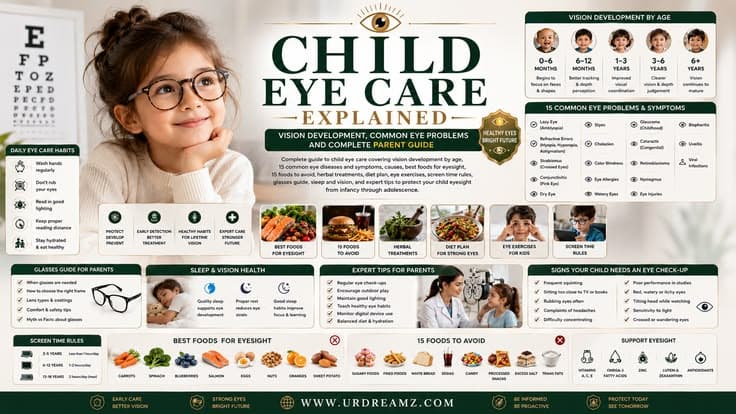
Child Eye Care Explained: Vision Development, Common Eye Problems and Complete Parent Guide
Of all the gifts we hope to give our children, the gift of clear, healthy vision is one of the most profound. Vision is the dominant sense through which children explore, learn, and connect with the world. Approximately 80 percent of what children learn in the classroom arrives through their eyes. Yet eye health is one of the most neglected areas of child healthcare, with millions of children worldwide going undetected with significant vision problems simply because they have never known what clear vision feels like and therefore do not report anything wrong.
This creates a particular challenge for parents. Unlike a fever that announces itself with a thermometer reading, or a broken bone that makes a child cry, many childhood eye conditions develop gradually and silently. A child with amblyopia may never complain about their vision because the brain has learned to suppress the weak eye and they experience what feels like normal sight. A child with myopia may not understand that they should be able to read the board clearly from the back of the classroom. Only a comprehensive eye examination can reveal what these children are missing.
This detailed guide gives parents a complete understanding of how children's eyes develop from birth, what the most common eye conditions are and how to recognize them, which foods support eye health, what screen time really does to young eyes, how to build daily eye care habits that protect vision, and when professional eye care is essential. Whether your child is a newborn or a teenager, this guide has what you need to protect the most precious sense they have.
1. Why Child Eye Health Matters
The visual system is the most complex sensory system the human body possesses, and its development during childhood is both remarkable and profoundly time-sensitive. Unlike some aspects of development that can be addressed successfully at any age, the visual system has critical periods during which the brain must receive clear visual input to develop normal vision. If a problem prevents clear visual input during these critical windows, the visual connections in the brain do not develop normally, and the resulting vision impairment may be difficult or impossible to fully correct later in life.
Globally, it is estimated that approximately 19 million children under 15 have significant visual impairment, and the vast majority of these cases are preventable or treatable if identified early enough. In Pakistan and similar developing countries, the challenges of accessing pediatric eye care combined with low awareness of childhood vision problems mean that many children reach school age with undiagnosed conditions that significantly impair their ability to learn and develop.
The consequences of untreated childhood vision problems extend far beyond the eyes themselves. Children with uncorrected vision problems struggle academically because they cannot see the board, read comfortably, or process visual information efficiently. They may be labeled as inattentive, slow, or unmotivated when in reality they simply cannot see what they are being asked to learn. They may avoid reading and near work, falling behind in literacy. They may have poor coordination and spatial awareness. Understanding these connections helps parents prioritize their children's eye health appropriately.
2. How Children's Eyes Work
The eye is essentially a biological camera that captures light and converts it into electrical signals that the brain interprets as vision. Light enters through the cornea (the clear curved front surface of the eye), passes through the pupil (the adjustable opening in the iris), is focused by the lens, and falls on the retina at the back of the eye. The retina contains two types of light-sensitive cells: rods (which respond to low light and provide peripheral vision) and cones (which provide detailed central vision and color perception, concentrated in the macula at the center of the retina). The optic nerve carries the electrical signals from the retina to the visual cortex of the brain where they are processed into the images we see.
For clear vision, the eye must be the correct length and shape so that the focused image falls precisely on the retina. When the eye is too long (as in myopia), the image falls in front of the retina and distant objects appear blurry. When the eye is too short (as in hyperopia), the image falls behind the retina and close objects are harder to focus. When the cornea or lens is not uniformly curved (astigmatism), light rays focus at different points producing distorted or blurred vision at all distances.
Children's eyes differ from adult eyes in several important ways that parents should understand. The visual system is not fully mature at birth and continues developing throughout childhood and into early adolescence. A newborn's vision is very limited, perhaps 20/400 or worse (meaning they need to be 20 feet from something an adult with normal vision can see at 400 feet). Clear, focused visual input from both eyes is required for the brain to develop normal visual processing. Any disruption to this clear input during the critical periods of visual development can have permanent consequences.
| Eye Structure | Function | Common Problems |
|---|---|---|
| Cornea | Transparent front surface that provides most of the eye's focusing power. Light enters here first. The clarity and curvature of the cornea are critical for vision quality | Astigmatism from irregular curvature. Keratoconus (progressive thinning). Corneal infections |
| Pupil and Iris | The iris controls the size of the pupil, regulating how much light enters the eye. In bright conditions the pupil constricts to protect the retina. In dim conditions it dilates to allow more light | Anisocoria (unequal pupil size). Certain medications affect pupil response |
| Lens | Flexible structure behind the pupil that changes shape to focus on objects at different distances, a process called accommodation. Children have very flexible lenses with excellent accommodation capacity | Childhood cataracts (cloudiness of lens). Accommodative esotropia related to hyperopia |
| Retina | Light-sensitive tissue lining the back of the eye containing rods and cones. Converts light into electrical signals sent to the brain. The macula at the center provides sharp central vision | Retinal detachment (rare in children without severe myopia or trauma). Retinopathy of prematurity in premature babies |
| Optic Nerve | Transmits visual signals from the retina to the brain. Where the optic nerve connects to the retina there is a natural blind spot with no photoreceptors | Optic neuritis. Glaucoma (increased eye pressure damaging the nerve) |
| Eye Muscles (6 per eye) | Control eye movement and maintain alignment. Both eyes must work together perfectly for single, clear, comfortable binocular vision | Strabismus (misalignment). Amblyopia resulting from misalignment or unequal refractive errors |
3. Vision Development by Age: Complete Milestones
Understanding normal visual development helps parents recognize when their child is developing normally and when there may be cause for concern. Vision does not simply appear at birth as a fully formed sense. It develops gradually through the first decade of life as the visual system matures through use.
| Age | Normal Visual Development | Possible Concern If Absent |
|---|---|---|
| Birth to 4 weeks | Can detect light and dark contrast. Prefers faces over other patterns. Pupils respond to light. Vision approximately 20/400, meaning only high-contrast objects very close (20 to 30 cm) are visible. Eyes may appear to wander independently (intermittently) | No response to light. Does not blink in response to sudden light. Does not fixate briefly on face during alert periods |
| 1 to 2 months | Begins tracking moving objects horizontally with eyes. Starts to show social smile in response to faces. Eyes begin working more together though some occasional wandering may still be normal | No tracking movement. Eyes consistently deviated inward or outward after 2 months. No social smile by 8 weeks |
| 3 to 4 months | Follows moving objects smoothly through full range of motion. Reaches toward objects showing emerging depth perception. Color vision developing and improving. Eyes should be consistently aligned now | Constant eye turn in any direction after 3 months is never normal and always warrants referral. Not reaching for objects by 4 months |
| 5 to 6 months | Depth perception (stereopsis) well established. Can track across midline smoothly. Shows interest in smaller objects at a distance. Recognizes familiar faces at a distance | No reaching for objects. Does not track across midline. Eyes not consistently aligned |
| 6 to 12 months | Vision improving rapidly. Develops excellent ability to judge distance. Binocular vision (both eyes working as a team) well established. Begins to distinguish between complex patterns. Crawling provides excellent depth perception training | Eyes consistently turned. Not interested in faces or objects. No reaching for objects |
| 1 to 2 years | Visual acuity improving toward approximately 20/60 by age 2. Looks at pictures in books with interest. Recognizes familiar people across a room. Follows fast-moving objects. Hand-eye coordination developing through play | Not pointing to pictures in books. Not looking at objects at different distances. Any eye turn noticed by caregivers |
| 2 to 3 years | Visual acuity approximately 20/40. Can match shapes and identify simple pictures. Good color vision. Beginning to develop visual attention for reading readiness. Improved depth perception allows more complex physical play | Squinting frequently. Sitting very close to television. Holding books very close |
| 4 to 5 years | Visual acuity should be approximately 20/30, approaching adult levels. Ready for detailed visual tasks. Letter and shape matching abilities emerging. Good eye-hand coordination for writing preparation | Difficulty with matching tasks. Squinting or eye rubbing. Avoiding near tasks |
| 6 years and above | Adult visual acuity of 20/20 achievable by age 6 to 7 in most children. All aspects of visual function including convergence, accommodation, and tracking should be fully developed. Visual demands increase significantly with school reading requirements | Reading avoidance. Complaining of headaches or blurry vision with reading. Covering one eye. Academic difficulties not explained by other causes |
4. Warning Signs of Vision Problems in Children
Children rarely tell their parents that their vision is poor. They do not have a reference point for clear vision if they have never had it, and many simply adapt to their visual world assuming their experience is universal. This is why parental observation of behavioral and physical signs is so critical for catching vision problems early.
| Sign or Behavior | What It May Indicate | Action to Take |
|---|---|---|
| Sitting very close to the television or holding books and devices very close to the face | Myopia (nearsightedness). Child is bringing objects closer to compensate for inability to focus at normal distances | Schedule comprehensive eye examination |
| Squinting frequently when looking at distant objects or during reading | Any refractive error. Squinting temporarily improves focus by acting like a pinhole that reduces the scatter of unfocused light | Schedule eye examination. Squinting is one of the most reliable behavioral signs of a vision problem |
| Frequently rubbing eyes when not tired | Eye strain, fatigue from working hard to maintain focus. Also seen in eye allergies and dry eyes. May indicate a focusing problem | Note if rubbing increases during near work. Schedule eye examination if persistent |
| Headaches, particularly after reading, school work, or screen use | Convergence insufficiency, accommodative esotropia, or any condition requiring excessive effort to maintain focus. Eye strain headaches typically occur around or behind the eyes or in the forehead | Schedule eye examination. Mention headache pattern specifically to the eye doctor |
| One eye turning inward, outward, upward, or downward, either constantly or intermittently | Strabismus (eye misalignment). This always requires prompt professional evaluation as it can cause amblyopia if left untreated | Referral to pediatric ophthalmologist urgently. Do not wait for the next routine checkup |
| Tilting the head or covering one eye when looking at things | Strabismus, amblyopia, ptosis, or a refractive difference between the two eyes. Children tilt their head to find the position where their eyes work best together | Schedule eye examination promptly |
| Difficulty reading, losing place frequently, skipping lines or words | Convergence insufficiency, tracking problems, undiagnosed refractive error, or reading difficulties related to visual processing | Eye examination to rule out vision causes before attributing to reading or learning difficulties |
| Drooping of one eyelid (ptosis) | Ptosis. Can obstruct vision and cause amblyopia if vision is blocked during critical developmental period | Pediatric ophthalmology referral |
| Excessive tearing or watery eyes not related to crying | Blocked tear duct in infants. Eye infection, allergy, or irritation in older children | Discuss with pediatrician. Persistent tearing warrants eye examination |
| Red, swollen, or crusty eyes especially in the morning | Conjunctivitis (pink eye), blepharitis, or allergy | Pediatrician evaluation for potential infection treatment |
| Difficulty with hand-eye coordination activities | Poor depth perception from strabismus, amblyopia, or other binocular vision problems | Schedule comprehensive eye examination including binocular vision assessment |
| Sensitivity to bright light or frequent blinking | Photophobia associated with various conditions. Frequent blinking may indicate dry eyes, eye strain, or tic | Eye examination to identify cause |
5. 15 Common Eye Diseases and Conditions in Children
Children can experience a wide variety of eye conditions, ranging from the very common (myopia, conjunctivitis) to the rare but serious (pediatric cataracts, glaucoma). The following overview covers the fifteen conditions parents are most likely to encounter, with detailed information in separate sections for the most common ones.
| # | Condition | Who It Affects | Key Characteristic | Urgency |
|---|---|---|---|---|
| 1 | Myopia (Nearsightedness) | Very common. Increasing rapidly globally. Often begins age 6 to 12 | Clear near vision but blurry distance. Squinting at boards and distant objects | Non-urgent but affects learning. Monitor and manage actively |
| 2 | Hyperopia (Farsightedness) | Very common in young children. Many self-correct with age | Some children have no symptoms, others have eye strain and headaches. Significant amounts cause reduced near vision | Non-urgent unless severe. Can cause accommodative esotropia requiring prompt treatment |
| 3 | Astigmatism | Very common. Often coexists with myopia or hyperopia | Blurred or distorted vision at all distances due to irregular corneal or lens curvature | Non-urgent. Treated with corrective lenses |
| 4 | Amblyopia (Lazy Eye) | Affects approximately 2 to 3 percent of children. Most common cause of single-eye vision loss in childhood | Reduced vision in one eye (or rarely both) due to abnormal visual development during the critical period | Urgent. Treatment is much more effective before age 7 to 10. Early detection is critical |
| 5 | Strabismus (Crossed or Turned Eyes) | Affects approximately 4 percent of children. Can be constant or intermittent | One or both eyes turn in an abnormal direction. Can cause amblyopia if untreated | Urgent. Refer to pediatric ophthalmologist promptly |
| 6 | Conjunctivitis (Pink Eye) | Very common at all ages. Highly contagious viral and bacterial forms | Red eye with discharge. Crusting. Tearing. May affect one or both eyes | Usually not urgent but needs treatment to prevent spread and identify cause |
| 7 | Digital Eye Strain | Increasingly common in school-age children with screen use | Eye fatigue, headaches, blurry vision, dry eyes after screen use. Not associated with permanent damage but causes significant discomfort | Non-urgent but warrants lifestyle modification |
| 8 | Blocked Tear Duct | Affects approximately 5 to 6 percent of newborns | Persistent watery eye with or without discharge from birth. Often resolves spontaneously before age 1 | Low urgency usually. Discuss with pediatrician for management guidance |
| 9 | Ptosis (Drooping Eyelid) | Can be congenital or acquired. Present from birth or developing later | Eyelid droops covering part of pupil. If covering visual axis can cause amblyopia | Urgent if covering pupil significantly. Referral to pediatric ophthalmologist |
| 10 | Color Blindness | Affects approximately 8 percent of boys and 0.5 percent of girls | Difficulty distinguishing certain colors, most commonly red and green. Usually genetic | Non-urgent. No treatment but important for educational awareness |
| 11 | Eye Allergies (Allergic Conjunctivitis) | Increasingly common. Associated with environmental allergies | Itchy red watery eyes associated with allergen exposure. Often seasonal | Usually non-urgent. Identify triggers and manage allergies |
| 12 | Dry Eye Syndrome | Less common in children than adults but increasing with screen use | Eye discomfort, redness, burning, excessive blinking. Worsened by screen use and low-humidity environments | Non-urgent. Managed with lifestyle changes and lubricating drops |
| 13 | Convergence Insufficiency | Affects approximately 5 percent of school-age children. Often undiagnosed | Eyes do not work together well for near work. Causes eye strain, headaches, double vision during reading | Non-urgent but significantly impacts reading ability and school performance |
| 14 | Retinopathy of Prematurity | Affects premature babies, particularly those born before 30 weeks gestation | Abnormal blood vessel development in the retina of premature infants. Can cause permanent vision loss if untreated | Urgent. Screened routinely in neonatal units. Requires follow-up |
| 15 | Pediatric Cataracts | Rare but serious. Can be congenital or develop in childhood | Clouding of the lens causing vision obstruction. White or grey appearance to pupil (leukocoria) | Urgent. White reflex in pupil is always a medical emergency requiring immediate evaluation |
6. Myopia (Nearsightedness): Causes, Symptoms and Treatment
Myopia is becoming one of the most significant public health challenges of the 21st century. Globally, the prevalence of myopia in children has increased dramatically over the past three decades, driven primarily by changes in lifestyle including reduced time outdoors, increased near work, and extensive screen use. It is estimated that by 2050 approximately 50 percent of the world's population will have myopia, with high myopia associated with serious long-term risks to eye health.
Myopia occurs when the eyeball grows too long from front to back, or when the cornea or lens are too curved. This causes light rays from distant objects to focus in front of the retina rather than on it, making distant objects appear blurry while near objects remain clear. The tendency toward myopia is partly genetic (children of myopic parents have significantly higher myopia risk) but is powerfully influenced by environmental factors during the childhood years when the eye is still growing.
The most consistent finding in myopia research is the protective effect of outdoor time. Children who spend two or more hours per day outdoors have significantly lower rates of myopia development and slower myopia progression compared to those who spend little time outside. The mechanism is believed to involve the bright natural light outdoors stimulating the release of dopamine in the retina, which inhibits the excessive eye growth that leads to myopia. This single finding has enormous practical implications: one of the most effective myopia prevention strategies available to parents costs nothing and involves simply sending their children outside.
| Aspect | Detail |
|---|---|
| Key Symptoms | Squinting at distant objects. Sitting close to television and whiteboards. Complaints that the board is blurry at school. Headaches after looking at distant objects. Holding books and devices at normal distance but struggling with distance vision |
| Age of Onset | Typically begins between ages 6 and 12 and progresses most rapidly through adolescence. Most stabilizes between ages 18 and 21 as the eye stops growing |
| Risk Factors | Parents with myopia (risk doubles with one myopic parent, significantly higher with both). Asian ethnicity (particularly high rates in East and South Asia). Limited outdoor time. Extensive near work and screen time. Indoor lifestyle |
| Treatment | Corrective spectacles or contact lenses restore clear distance vision. Myopia management (orthokeratology, myopia management contact lenses, low-dose atropine eye drops, specific spectacle lens designs) can slow progression rate and reduce final prescription |
| Prevention and Management | Minimum 2 hours outdoor time daily. Regular breaks from near work (20-20-20 rule). Good reading distance (minimum 30 to 40 cm). Adequate lighting. Discuss myopia management with eye care provider |
7. Hyperopia (Farsightedness) in Children
Hyperopia is the most common refractive error in young children, though it often causes no symptoms in mild to moderate amounts because children have highly flexible lenses that can compensate for the refractive error through extra focusing effort (accommodation). This compensation works well for distance vision but creates a constant focusing burden for near work that can lead to eye strain, headaches, and fatigue particularly during reading and other close tasks.
In significant amounts, hyperopia can cause the eyes to turn inward as the extra focusing effort for near tasks triggers excess convergence of the eyes, a condition called accommodative esotropia. This is one of the most common forms of childhood strabismus and responds well to optical correction with glasses that reduce the accommodative demand and allow the eyes to remain straight.
Many children are born with some degree of hyperopia and naturally outgrow it as the eye grows and the refractive error decreases. However, significant hyperopia that causes symptoms, vision difficulties, or strabismus requires treatment with corrective lenses. Parents should not assume that farsightedness is normal in young children and does not need treatment. A comprehensive eye examination is the only way to determine whether a child's hyperopia is within the expected range or requires intervention.
8. Astigmatism in Children Explained
Astigmatism occurs when the cornea (the front surface of the eye) or the lens inside the eye is not uniformly curved. Instead of having a spherical surface like a football, the cornea in astigmatism has an oval shape more like a rugby ball, with different curvatures in different directions. This means that light rays entering the eye focus at different points rather than at a single point on the retina, producing blurred or distorted vision at all distances.
Astigmatism commonly coexists with myopia or hyperopia and is treated as part of the same corrective lens prescription. Symptoms include blurred vision, ghosting or double images, eye strain, headaches, and difficulty reading. Children with significant astigmatism may tilt their head to use the less-affected axis of their cornea, a sign parents may notice. Astigmatism is usually stable or changes slowly over time and is managed effectively with glasses or contact lenses that have cylinder-correcting components in their prescription.
9. Amblyopia (Lazy Eye): Everything Parents Should Know
Amblyopia is the most common cause of single-eye vision impairment in children and represents a fundamental neurodevelopmental problem rather than simply a problem with the eye itself. It occurs when the visual pathway between one eye and the brain fails to develop normally during the critical period of visual development. The brain, rather than receiving conflicting or unclear information from one eye, learns to suppress and ignore the input from that eye, and the connections in the visual cortex that should have developed for that eye simply do not form properly.
The result is an eye that appears structurally normal but has significantly reduced best-corrected visual acuity. Even with the correct glasses prescription in place, the eye with amblyopia cannot see as well as the normal eye because the problem is in the brain's visual processing, not in the optics of the eye itself. This distinction is important for parents to understand: amblyopia cannot be corrected by glasses alone in established cases, though glasses are always the starting point of treatment.
Amblyopia can result from three main causes: strabismus (when an eye turn causes the brain to suppress one eye to avoid double vision), significant refractive difference between the two eyes (when one eye is much more short-sighted, long-sighted, or astigmatic than the other, the brain prefers the clearer eye and suppresses the other), or deprivation (when a physical obstruction such as a cataract, ptosis, or dense corneal scar prevents clear visual input to one eye).
| Treatment | How It Works | Best Age |
|---|---|---|
| Corrective glasses | First step always. Full optical correction for both eyes including any refractive error. In some cases of refractive amblyopia, glasses alone produce significant vision improvement over months | From time of diagnosis at any age, but most effective when started young |
| Eye patching (occlusion therapy) | The stronger (good) eye is patched for a prescribed number of hours per day, forcing the brain to use and develop the amblyopic eye. Patching during visually engaging activities (reading, homework, art) increases effectiveness | Most effective under age 7 to 8 but can produce some improvement up to age 12 to 14 |
| Atropine penalization | Atropine eye drops are placed in the better eye several times per week. The drops temporarily blur the better eye's near vision, encouraging use of the amblyopic eye for close tasks. An alternative to patching for children who resist the patch | Similar effectiveness to patching for moderate amblyopia in studies. Any age in the treatment window |
| Vision therapy | Structured program of visual exercises and activities designed to improve visual skills and encourage better use of the amblyopic eye. Often used as adjunct to patching rather than replacement | Primarily used in older children after patching phase |
10. Strabismus (Crossed Eyes) Explained
Strabismus refers to any misalignment of the eyes, whether inward (esotropia), outward (exotropia), upward (hypertropia), or downward (hypotropia). It affects approximately 4 percent of children and is one of the most visually significant conditions of childhood because untreated strabismus leads to amblyopia, loss of stereoscopic depth perception, and significant social and psychological consequences from the cosmetic appearance of the eye turn.
The most important thing parents should know about strabismus is that it is never normal after 3 to 4 months of age and always requires professional evaluation. The popular belief that a child will outgrow a crossed eye without treatment is unfortunately incorrect for persistent strabismus. While some intermittent outward turns in infancy resolve spontaneously, any constant eye turn or eye turn in a child over 4 months warrants prompt referral to a pediatric ophthalmologist.
Treatment depends on the type and cause of the strabismus. Accommodative esotropia (inward turn caused by excessive focusing effort from hyperopia) responds well to glasses correction. Non-accommodative strabismus may require surgery to realign the eye muscles, often combined with glasses and amblyopia treatment if amblyopia has developed. Surgery repositions the eye muscles to bring the eyes into alignment and is generally safe and effective with high success rates in experienced pediatric hands.
11. Conjunctivitis (Pink Eye) in Children
Conjunctivitis is the most common eye condition parents encounter in children. It refers to inflammation of the conjunctiva, the clear membrane covering the white of the eye and lining the inner eyelids. The inflammation produces the characteristic redness (from dilated blood vessels), watering, and discharge that give the condition its common name of pink eye. Conjunctivitis can be caused by viruses (most commonly), bacteria, or allergens, and the distinction matters because the treatment differs.
Viral conjunctivitis is the most common form and is typically caused by the same adenoviruses responsible for the common cold. It usually accompanies or follows a cold, causes watery discharge, and often affects one eye before spreading to the other. It is highly contagious and resolves on its own within 1 to 2 weeks without specific treatment. Antibiotic eye drops do nothing for viral conjunctivitis.
Bacterial conjunctivitis typically causes a thicker, more purulent (pus-like) discharge, often causing the eyelids to stick together especially after sleep. The most common culprits in children include Haemophilus influenzae and Streptococcus pneumoniae in school-age children. Antibiotic eye drops or ointment are appropriate and speed resolution. Neonatal conjunctivitis (occurring in the first month of life) requires urgent evaluation as it can involve more serious organisms including Neisseria gonorrhoeae and Chlamydia trachomatis.
12. Digital Eye Strain in Children
Digital eye strain (also called computer vision syndrome) is a rapidly growing problem in children worldwide as screen use has expanded to encompass more and more of daily life. Unlike myopia which involves structural changes in the eye, digital eye strain is a functional problem: the visual system becomes fatigued from the particular demands of sustained screen use, causing a cluster of symptoms that are uncomfortable but do not cause permanent damage.
When looking at a screen, the eyes must maintain sustained convergence (turning inward to focus on the near screen), sustained accommodation (adjusting lens focus for the near distance), and reduced blink rate (screen users blink approximately 50 to 66 percent less frequently than normal, leading to increased evaporation of the tear film and dry eye symptoms). The combination of these demands sustained over hours, with the typically poor ergonomics, variable lighting, and high blue light emission of modern screens, produces the symptom complex of digital eye strain.
| # | Sign | Why It Happens |
|---|---|---|
| 1 | Frequent rubbing of eyes | Eye fatigue and dryness from reduced blinking and prolonged accommodation effort causes the eyes to feel irritated, prompting rubbing |
| 2 | Complaints of headaches | Sustained muscle tension from accommodation and convergence, combined with tension in the neck and shoulder muscles from poor device posture, produces headaches that typically resolve when screen use stops |
| 3 | Blurry or tired eyes after screen use | Accommodative fatigue causes temporary blurring of vision, particularly at near distances, that usually resolves with rest. Also called post-screen blur |
| 4 | Difficulty focusing between near and distance | Sustained near focus makes the accommodative system slow to shift from near to distance, causing temporary difficulty refocusing when looking up from a screen |
| 5 | Watery or dry eyes | The dramatic reduction in blink rate during screen use means the tear film is not being refreshed adequately. This leads to tear film instability, dry patches on the eye surface, and paradoxically excessive watering as a reflex response to dryness |
| 6 | Sensitivity to light after screen use | Extended exposure to the bright light of screens temporarily lowers the threshold for light discomfort, causing increased sensitivity when moving from the screen to normal environmental light |
| 7 | Irritability or mood changes | Physical discomfort from eye strain, combined with disruption of sleep from blue light effects, produces irritability and mood changes that parents often attribute to other causes without recognizing the eye strain connection |
13. Blocked Tear Duct in Infants
A blocked tear duct (dacryostenosis) is one of the most common eye conditions in newborns, affecting approximately 5 to 6 percent of infants. Tears drain from the eye through a narrow channel that runs from the inner corner of the eye through the nose. In some newborns this channel is not fully open at birth, typically because a thin membrane at the lower end (the valve of Hasner) has not yet perforated. This causes tears to overflow from the eye rather than draining normally, and the stagnant tear fluid can become infected leading to a yellowish or greenish discharge.
The good news is that the vast majority (approximately 90 percent) of blocked tear ducts in infants resolve spontaneously without any treatment before the end of the first year of life. The standard management involves gentle massage of the lacrimal sac area (the small bump at the inner corner of the eye) several times daily, which helps push fluid through the obstruction and encourages the membrane to open. If the blockage persists beyond 12 to 13 months, a simple office procedure under general anaesthesia where a fine probe is passed through the tear drainage system to open the obstruction provides resolution in approximately 90 percent of cases.
14. Ptosis (Drooping Eyelid) in Children
Ptosis refers to drooping of the upper eyelid beyond its normal position. Congenital ptosis (present from birth) occurs due to abnormal development of the levator muscle that lifts the upper eyelid. The degree of drooping varies from mild (barely noticeable) to severe (the eyelid covers most or all of the pupil). The severity determines the urgency of treatment.
When ptosis is severe enough that the drooping eyelid covers the pupil, it physically blocks visual input to that eye, preventing normal visual development and causing visual deprivation amblyopia. This is the most urgent form of amblyopia as it requires prompt treatment (surgical elevation of the eyelid) to restore visual input before the critical period of visual development is compromised. Even after eyelid surgery, close follow-up for amblyopia treatment is usually required.
Milder ptosis that does not cover the visual axis may not require immediate surgery but should be monitored carefully as even partially obstructed vision can cause astigmatism from lid pressure on the cornea and potentially mild amblyopia. Parents who notice any drooping of an eyelid in their child, whether present from birth or appearing later (which can indicate a nerve or muscle problem), should seek a pediatric ophthalmology referral.
15. Color Blindness in Children
Color blindness (more accurately called color vision deficiency) refers to difficulty distinguishing between certain colors, not the inability to see any color at all as is commonly believed. The most common form is red-green color blindness, where the red cones or green cones in the retina are either absent or function abnormally, making it difficult to distinguish between red, green, orange, and brown hues. Blue-yellow color blindness is much rarer, and complete color blindness (monochromacy) is extremely rare.
Color blindness affects approximately 8 percent of boys and 0.5 percent of girls worldwide and is almost always genetic, inherited through the X chromosome, which is why it is so much more common in boys (who have only one X chromosome and cannot compensate with a second normal copy). There is currently no treatment that restores normal color vision, though special tinted lenses can enhance color contrast for some activities.
For parents, the most important thing to understand about color blindness is that early awareness significantly helps. Children with undiagnosed color blindness may struggle in school with color-coded activities, maps, graphs, and materials. Teachers and parents who know about the condition can adapt materials and teaching approaches accordingly. Color blindness has no effect on visual acuity and does not progress over time. Testing for color vision is typically included in comprehensive eye examinations.
16. Eye Allergies in Children
Allergic conjunctivitis is the most common eye allergy condition in children and results from the immune system responding to harmless environmental allergens (pollen, pet dander, dust mites, mold spores) by releasing histamine and other inflammatory chemicals in the conjunctival tissue. This produces the characteristic itchy, watery, red eyes that children with allergies experience, often seasonally or in association with specific exposures.
The hallmark symptom of eye allergies is intense itching, which distinguishes it from most other causes of red eyes. Children with eye allergies rub their eyes vigorously, which can become habitual and paradoxically worsen symptoms by releasing more histamine from mast cells in the tissue. Managing the underlying allergy with antihistamine medications (oral or eye drop form) reduces symptoms significantly. Identifying and avoiding specific allergen triggers where possible, and using allergen-reducing measures at home (air purifiers, regular vacuuming, keeping pets out of the bedroom, frequent bedding washing) reduces the allergen load the child is exposed to.
17. Dry Eyes in Children
Dry eye disease, once considered almost exclusively an adult condition, is increasingly recognized in children, particularly with the dramatic increase in screen use. The tear film covering the eye surface is critical for clear vision, comfortable eye function, and protection of the corneal surface. When tear production is inadequate or the tears evaporate too quickly (evaporative dry eye, the most common form), the eye surface becomes dry, producing discomfort, redness, blurry vision, and paradoxically sometimes excessive watering as a reflex response.
Screen use is the most common trigger of dry eye symptoms in children because digital screens dramatically reduce the blink rate. Blinking refreshes and redistributes the tear film. Children using screens blink 50 to 66 percent less frequently than normal, meaning the tear film is not being maintained adequately, particularly over the lower exposed corneal surface. Dry environments (air conditioning, heating, and dry climates) exacerbate this by increasing tear evaporation.
Management of dry eyes in children focuses primarily on reducing screen time and increasing blink frequency during screen use, using preservative-free lubricating eye drops during screen sessions, ensuring adequate humidity in the environment, encouraging adequate hydration and omega-3 fatty acid intake (which supports the quality of the lipid layer of the tear film), and increasing outdoor time in natural air rather than air-conditioned environments.
18. Convergence Insufficiency
Convergence insufficiency is a common and frequently overlooked binocular vision problem in which the eyes have difficulty turning inward (converging) to focus on near objects. When both eyes do not converge accurately on the same near point, the visual images from each eye do not fully merge, producing symptoms of eyestrain, headaches, blurred or double vision during near work, and difficulty maintaining focus during reading.
Convergence insufficiency is estimated to affect approximately 5 percent of school-age children and is one of the leading vision-related causes of reading difficulties. Because the symptoms occur specifically during reading and close tasks, children with convergence insufficiency are often observed avoiding near work, losing their place when reading, re-reading lines, using a finger to track, and complaining of tiredness or headaches after short periods of reading. This pattern can easily be attributed to learning difficulties or attention problems without recognizing the underlying vision cause.
Convergence insufficiency responds well to vision therapy (a structured program of exercises to strengthen convergence ability) and pencil push-up exercises (focusing on a small letter or target as it is moved gradually toward the nose until it begins to blur or double, then repeating). Unlike many eye conditions, convergence insufficiency is primarily treated with exercises rather than glasses, though reading glasses can sometimes be helpful as an adjunct.
19. Retinopathy of Prematurity
Retinopathy of prematurity (ROP) is a potentially blinding condition affecting premature infants, particularly those born before 31 weeks gestation and those with very low birth weight. During fetal development, blood vessels grow from the center of the retina outward to supply the peripheral retina. This process is not complete at full term and is interrupted when a baby is born prematurely. In some premature babies, the vascular development goes abnormally, with abnormal new blood vessels growing that can pull on and eventually detach the retina.
ROP ranges from mild (stages 1 to 2, which often resolve spontaneously without treatment) to severe (stages 4 to 5, which involve partial or complete retinal detachment and can cause permanent blindness if untreated). Treatment of significant ROP with laser therapy or anti-VEGF injections, applied to prevent the abnormal vessel growth from progressing to retinal detachment, has dramatically improved outcomes for affected infants.
All premature babies meeting risk criteria are routinely screened for ROP in hospital neonatal units, with first examination typically around 4 to 6 weeks after birth or at 31 to 32 weeks corrected gestational age, whichever is later. Parents of premature babies should ensure ongoing eye follow-up is maintained after hospital discharge, as even successfully treated ROP increases the long-term risk of myopia, strabismus, and amblyopia requiring monitoring and management.
20. Pediatric Cataracts
A cataract is a cloudiness or opacity in the normally clear lens of the eye. While cataracts are commonly associated with aging, they can also occur in children, either present from birth (congenital cataracts) or developing during childhood. Pediatric cataracts can affect one eye (unilateral) or both eyes (bilateral) and range from small peripheral opacities that may not significantly affect vision to dense central opacities that completely block the passage of light to the retina.
The white or grey appearance in the pupil that results from a dense pediatric cataract (called leukocoria or a white pupil reflex) is a serious warning sign that parents and pediatricians must act on immediately. Leukocoria can be caused by pediatric cataracts but also by retinoblastoma (a serious childhood eye cancer), retinal detachment, and other serious conditions. Any white reflex observed in a child's pupil, whether seen directly or noticed in photographs, requires urgent ophthalmological evaluation.
Treatment of visually significant pediatric cataracts requires prompt surgery to remove the cloudy lens, followed by optical rehabilitation (contact lens or glasses to replace the focusing function of the removed lens) and almost always intensive amblyopia treatment because the deprived eye develops amblyopia rapidly during the early critical period. The younger the child at surgery and the longer the deprivation before treatment, the more intensive the subsequent amblyopia treatment required.
21. 15 Best Foods for Children's Eye Health
| # | Food | Key Eye Nutrients | How It Protects Eyes | Child-Friendly Ways to Include |
|---|---|---|---|---|
| 1 | Carrots | Beta-carotene (very high), vitamin A, vitamin K | Beta-carotene converts to vitamin A in the body. Vitamin A is essential for producing rhodopsin, the photosensitive pigment in rod photoreceptors that enables vision in low light. Deficiency causes night blindness | Raw sticks as snack with hummus. Roasted with honey. Grated into muffins and cakes. Carrot soup. Mixed into curries |
| 2 | Sweet Potatoes | Beta-carotene (very high, one of the richest sources), vitamin C, vitamin E, potassium | Exceptional vitamin A precursor source. One medium sweet potato provides over 100 percent of the daily vitamin A requirement. Also provides antioxidants that protect photoreceptors from oxidative damage | Baked wedges, mashed, in soups, as puree for young children. Sweet potato pancakes. In curries |
| 3 | Spinach and Kale | Lutein and zeaxanthin (very high), vitamin C, beta-carotene, vitamin K, folate | Lutein and zeaxanthin accumulate in the macula (the central retina responsible for sharp vision) where they act as natural filters of high-energy visible blue light and as antioxidants protecting against photo-oxidative damage | Hidden in smoothies (spinach adds no taste to fruit smoothies). In pasta sauces. Wilted in eggs. In daal and soups |
| 4 | Eggs | Lutein and zeaxanthin (highly bioavailable form), vitamin A, vitamin D, omega-3, zinc, choline | The lutein and zeaxanthin in egg yolks are in a fat-soluble form that is significantly more bioavailable than from plant sources. Eggs provide a complete package of eye-supporting nutrients in a child-friendly food | Daily. Scrambled, boiled, in omelets, in egg fried rice. Excellent first complementary food for infants |
| 5 | Salmon and Fatty Fish | Omega-3 DHA and EPA (very high), vitamin D, vitamin A, selenium, complete protein | DHA is a major structural component of retinal photoreceptors and is required for normal visual signal transduction. Adequate omega-3 intake is associated with better visual acuity development in infants and supports the quality of the tear film reducing dry eye | Baked with lemon and herbs. In pasta. In fish cakes. Sardines on toast. Tuna in sandwiches (canned is acceptable) |
| 6 | Blueberries and Dark Berries | Anthocyanins (high), vitamin C, vitamin E, resveratrol, zinc | Anthocyanins are flavonoids that have been shown to support regeneration of rhodopsin in the retina, potentially improving night vision and reducing oxidative stress in retinal tissue. Vitamin C protects the lens from oxidative damage associated with cataracts | On yogurt at breakfast. In smoothies. As snack. In oatmeal. Mixed with other fruits |
| 7 | Oranges and Citrus Fruits | Vitamin C (high), flavonoids, folate, hesperidin | Vitamin C is one of the most important antioxidants in the eye, concentrated in particularly high amounts in the aqueous humor (fluid inside the eye) and lens. It protects the lens proteins from oxidative damage that leads to cataract formation. Also essential for healthy blood vessels in the retina | Fresh orange segments. Kiwi (even higher vitamin C). Grapefruit. Freshly squeezed juice occasionally |
| 8 | Almonds and Nuts | Vitamin E (high in almonds), omega-3 (walnuts), zinc (cashews), selenium | Vitamin E is a fat-soluble antioxidant that protects the fatty acid-rich photoreceptor cell membranes from lipid peroxidation, a damaging process driven by oxidative stress and light exposure. Regular nut consumption is associated with reduced risk of age-related macular degeneration in long-term studies | Small handful as snack. Almond butter on whole grain toast. Ground into porridge. Mixed into trail mix |
| 9 | Sunflower Seeds | Vitamin E (very high, one of richest sources), selenium, zinc, magnesium | Outstanding vitamin E source providing powerful antioxidant protection to photoreceptor membranes and lens proteins. Selenium acts as a cofactor for glutathione peroxidase, a critical antioxidant enzyme protecting retinal cells | Sprinkled on yogurt or salad. In homemade granola. Mixed into nut butter. As snack for older children |
| 10 | Legumes (Chickpeas, Lentils, Kidney Beans) | Zinc (significant source), plant protein, iron, folate, B vitamins | Zinc is an essential mineral concentrated in the retina and choroid (the layer under the retina). It plays a critical role in vitamin A metabolism in the retina and in the proper functioning of many enzymes in the eye. Zinc deficiency can impair night vision and the eye's antioxidant defenses | In daal, soups, curries, hummus, as salad addition. Chickpea pasta as a protein-rich alternative |
| 11 | Bell Peppers (especially red) | Vitamin C (highest vegetable source), vitamin A (from beta-carotene), vitamin B6, zeaxanthin | Red bell peppers contain three times more vitamin C than oranges and are an outstanding source of the antioxidants that protect the lens and retina from oxidative damage. Zeaxanthin content directly supports macular health | Raw strips with hummus in lunch box. Roasted in pasta. In stir fries and omelets |
| 12 | Broccoli | Lutein and zeaxanthin (significant amounts), vitamin C, vitamin K, sulforaphane | Good source of both macular protective carotenoids. Sulforaphane activates the NRF2 pathway which upregulates multiple antioxidant enzymes including those protecting retinal cells from light-induced oxidative damage | Roasted (becomes sweeter), steamed as trees, in pasta and soups, in cheesy bakes, hidden in sauces |
| 13 | Dairy (Milk, Yogurt, Cheese) | Vitamin A (preformed retinol, immediately usable), vitamin D, riboflavin, calcium, protein | Dairy provides preformed vitamin A (retinol) that does not require conversion like plant sources, making it immediately available to the visual system. Riboflavin (B2) is particularly concentrated in the lens where it supports antioxidant function and is involved in energy metabolism in retinal cells | Milk at meals. Yogurt as daily snack. Cheese in cooking. Full-fat for young children for vitamin A absorption |
| 14 | Tomatoes | Lycopene (very high, especially when cooked), vitamin C, beta-carotene, vitamin E | Lycopene is a powerful carotenoid antioxidant that protects retinal cells from UV-induced oxidative damage. Cooking tomatoes significantly increases lycopene bioavailability. Tomatoes also provide multiple vitamins with established eye-protective antioxidant roles | In pasta sauces and curries (cooking increases lycopene). Roasted tomatoes. Fresh in salads and sandwiches |
| 15 | Liver and Organ Meats | Vitamin A (retinol, extremely high), zinc, riboflavin, B12, iron | Liver is the most concentrated dietary source of preformed vitamin A available. A small serving provides several times the daily requirement. Also very high in zinc which is essential for retinal function. A small weekly serving provides outstanding nutritional value for eye health | In keema (minced meat dishes) mixed with other meats. In pate style dishes. Small amounts in savory cooking. Once weekly is sufficient given the very high vitamin A content |
22. 15 Foods and Habits to Avoid for Healthy Eyes
| # | Food or Habit | Why It Harms Eye Health | Better Alternative |
|---|---|---|---|
| 1 | Excessive refined sugar and sugary drinks | High sugar intake promotes oxidative stress that damages retinal cells and blood vessels. High glycemic diets are associated with increased myopia risk in multiple studies. Sugar also promotes systemic inflammation that affects small blood vessels throughout the body including those supplying the retina | Fresh whole fruits for sweetness. Water as primary drink. Reserve sweets for occasional treats at mealtimes |
| 2 | Ultra-processed and junk foods | These foods are high in trans fats, omega-6 fats, sugar, and salt while being low in the eye-protective nutrients (vitamins A, C, E, lutein, zeaxanthin, zinc, omega-3) that the developing visual system requires. Regular consumption displaces nutritious foods | Whole food-based meals cooked at home. Healthy snacks from whole food sources |
| 3 | Fast food consumed frequently | Typically high in unhealthy fats, salt, and refined carbohydrates. Very low in the antioxidants, vitamins, and omega-3 fatty acids that protect retinal cells and support visual development. Studies link frequent fast food consumption in children with higher myopia rates | Home-cooked meals. When eating out, choose options with vegetables, lean protein, and whole grain components |
| 4 | Excessive screen time beyond age-appropriate guidelines | Extended near focus causes accommodative fatigue and promotes eye elongation associated with myopia development. Reduced blink rate causes dry eye symptoms. Blue light may affect sleep with knock-on effects on overall health including eye health | Age-appropriate screen limits. Regular breaks. Outdoor time as counterbalance |
| 5 | Continuous phone or tablet use without breaks | No-break screen use is more damaging than the same total time with regular breaks. The eyes need recovery periods from sustained near focus. The 20-20-20 rule (a 20-second break every 20 minutes) significantly reduces eye strain accumulation | Regular break reminders. Timer-based screen limits. Device-free periods built into the daily schedule |
| 6 | Using devices in very low light or complete darkness | High screen luminance against a dark background creates extreme contrast that strains the eyes as they try to adapt simultaneously to the bright screen and the dark surroundings. Pupil management is also compromised in this situation | Always use screens in a well-lit environment. Never allow screens in a completely dark bedroom |
| 7 | Holding devices very close to the face | Close viewing distance increases the accommodative and convergence demand on the eye muscles, increasing eye strain and potentially contributing to myopia development. The recommended minimum screen distance is 40 to 50 cm for tablets and phones | Establish minimum screen distances. Large-screen devices kept at appropriate distances. Desk or stand for devices rather than hand-holding |
| 8 | Sleeping with lights on or bright night light exposure | Light exposure during sleep suppresses melatonin production and may affect eye growth patterns. Some research suggests sleeping with the light on in infancy and early childhood may be associated with higher myopia rates, though evidence is still evolving | Sleep in a dark room. If night light is needed for safety or comfort, use a very dim red or amber light which has minimal melatonin-suppressing effect |
| 9 | Rubbing eyes vigorously and habitually | Vigorous eye rubbing can cause mechanical trauma to the cornea and over time can cause keratoconus (progressive corneal thinning and distortion) in susceptible individuals. Also increases risk of infection by transferring hand bacteria to the eye surface | If itching drives rubbing (allergy is the most common cause), address the allergy. Teach children to use a clean tissue to blot the eye rather than rubbing |
| 10 | Insufficient outdoor time | Reduced outdoor time is the single most consistently identified modifiable risk factor for myopia development and progression. At least 2 hours daily of outdoor time in natural light significantly reduces myopia incidence in multiple large population studies | Minimum 2 hours daily outdoor time as a family priority. Outdoor activities, sports, and unstructured play in natural light |
| 11 | Not getting enough quality sleep | During sleep the eyes undergo recovery and repair from the day's visual demands. Tear secretion and ocular surface repair occur during sleep. Chronic sleep deprivation is associated with dry eye symptoms, eye fatigue, and impaired visual processing | Age-appropriate consistent sleep duration. Screen-free bedroom. Consistent bedtime routine |
| 12 | Poor reading posture and inadequate reading distance | Reading with the book held very close to the face, reading while lying down, or reading in a moving vehicle all increase the visual demand and may contribute to visual fatigue and potentially to myopia development | Read with book held at arm's length minimum 30 to 40 cm. Good upright posture. Well-lit reading environment. Take regular breaks |
| 13 | Staring at digital screens continuously without blinking | Reduced blink rate during screen use means the tear film dries out on the eye surface. Teaching conscious blinking during screen use helps maintain tear film integrity and reduces dry eye symptoms | Remind children to blink regularly during screen use. Put a blinking reminder near the computer. Use the 20-20-20 rule to create regular blink and rest opportunities |
| 14 | Delaying or missing eye examinations | Many significant childhood eye conditions including amblyopia, strabismus, and significant refractive errors cause no obvious symptoms obvious to parents. Regular eye examinations catch these conditions during their most treatable windows when intervention is most effective | First eye examination by age 1 or when first tooth appears. Comprehensive exam at age 3 to 4. Annual exams from school age |
| 15 | Going outside without appropriate UV eye protection | Chronic ultraviolet radiation exposure to the eyes is a known risk factor for cataracts and other ocular surface changes later in life. Children receive proportionally more UV exposure than adults because they spend more time outdoors and have clearer lenses that transmit more UV to the retina | Quality sunglasses with UV400 or 100% UV protection for outdoor activities in bright sunlight. Brimmed hats provide additional protection |
23. Essential Nutrients for Children's Vision
| Nutrient | Role in Eye Health | Signs of Deficiency | Best Food Sources |
|---|---|---|---|
| Vitamin A (Retinol) | Essential for rhodopsin synthesis in rod photoreceptors for vision in dim light. Maintains corneal surface health and tear production. Most critical single nutrient for basic visual function. Severe deficiency causes preventable blindness | Night blindness (first sign). Dry, rough corneal surface. Bitot's spots on conjunctiva. Severe deficiency causes corneal ulceration and blindness | Liver (highest source), whole milk, egg yolks, butter, cheese. Beta-carotene from carrots, sweet potato, mango, leafy greens converts to vitamin A |
| Lutein and Zeaxanthin | The only carotenoids that accumulate specifically in the macula. Act as macular pigment that filters blue light and high-energy visible light before it reaches the photoreceptors. Also function as antioxidants protecting macular cells from photo-oxidative damage | No acute deficiency signs but lower macular pigment density associated with increased long-term risk of macular degeneration | Egg yolks (most bioavailable), spinach, kale, peas, broccoli, yellow corn, orange and yellow peppers, courgette |
| Omega-3 Fatty Acids (DHA) | DHA is the most abundant fatty acid in the retina, particularly in the photoreceptor outer segments. Essential for normal visual signal transduction. Required for normal visual acuity development in infants. Also supports tear film quality reducing dry eye | Impaired visual acuity development in infants with DHA-deficient diets. Dry eye symptoms. Impaired contrast sensitivity | Fatty fish (salmon, sardines, mackerel, trout). Fish oil supplements. Algae-based DHA for those avoiding fish. Walnuts, flaxseeds, chia seeds (ALA form with limited conversion) |
| Vitamin C | Concentrated in unusually high amounts in the aqueous humor and lens. Critical antioxidant protecting lens proteins from oxidative damage associated with cataract formation. Also important for collagen synthesis in the cornea and sclera | Increased cataract risk with chronic deficiency. Impaired corneal wound healing | Bell peppers (highest), kiwi, guava, citrus fruits, strawberries, broccoli, papaya |
| Vitamin E | Fat-soluble antioxidant that protects the fatty acid-rich photoreceptor cell membranes from lipid peroxidation. Works synergistically with vitamin C and other antioxidants. High concentration in the retina and lens | Rare in food-sufficient populations. Severe deficiency causes retinal degeneration in some genetic conditions affecting vitamin E absorption | Almonds, sunflower seeds, avocado, wheat germ, spinach, broccoli, peanut butter |
| Zinc | Very high concentration in the retina, particularly the photoreceptor layer and retinal pigment epithelium. Essential for vitamin A metabolism (converts retinol to retinal for use in photopigments). Cofactor for many retinal antioxidant enzymes. Night vision impairment associated with zinc deficiency | Impaired night vision. Poor wound healing. Increased infection susceptibility | Oysters and shellfish (highest), red meat, poultry, legumes, pumpkin seeds, cashews, yogurt |
| Vitamin D | Emerging evidence suggests vitamin D may play a role in myopia development and progression. The outdoor light exposure that protects against myopia also triggers vitamin D synthesis, making the two effects difficult to separate, but some evidence suggests vitamin D receptors in the eye play a direct role in eye growth regulation | Frequent respiratory infections. Fatigue. Bone pain. Deficiency extremely common | Sunlight exposure (primary source). Fatty fish, egg yolks, fortified dairy and plant milks |
24. Vitamin A and Children's Eyesight
Of all the nutrients involved in eye health, vitamin A holds the most critical and direct role. It is the precursor to retinal, the light-sensitive molecule at the heart of both rod and cone photopigments. Without adequate vitamin A, the eye literally cannot process light normally. The most striking demonstration of this dependency is night blindness (nyctalopia), the inability to see adequately in dim light, which is often the first and most noticeable sign of vitamin A deficiency because rod photoreceptors (which function in low light) are more sensitive to deficiency than cones.
Globally, vitamin A deficiency is the leading cause of preventable childhood blindness, affecting an estimated 250,000 to 500,000 children annually. In countries like Pakistan, where dietary diversity is limited for many families and where the conversion of plant-source beta-carotene to vitamin A may be impaired by intestinal parasitism and malnutrition, vitamin A deficiency remains a significant public health concern. Vitamin A supplementation programs for children in high-risk areas have been one of the most cost-effective public health interventions available.
The two forms of dietary vitamin A are retinol (preformed vitamin A found in animal products including liver, dairy, and eggs, which is immediately usable by the body) and carotenoids (provitamin A found in colored plant foods including carrots, sweet potatoes, mango, and leafy greens, which must be converted to retinol in the body). The conversion efficiency varies significantly between individuals and is reduced by fat malabsorption, zinc deficiency, and certain medical conditions, making animal-source vitamin A particularly valuable when available.
25. Omega-3 Fatty Acids and Eye Health
DHA (docosahexaenoic acid), the long-chain omega-3 fatty acid found in fatty fish, is one of the most important nutrients for eye development in infants and young children. The photoreceptor outer segments (the light-sensitive tips of the rod and cone cells that actually absorb light) are among the most DHA-rich tissues in the entire body, containing approximately 50 percent DHA by composition of their fatty acids. This extraordinary enrichment reflects the critical importance of DHA for the physical structure and function of photoreceptors.
Research in infants fed breast milk (which contains DHA) versus formula (which historically did not contain DHA) showed measurably better visual acuity development in breastfed infants, demonstrating the functional significance of DHA availability during the earliest period of visual development. DHA is now added to most infant formulas based on this evidence. Throughout childhood, continued adequate omega-3 intake supports the maintenance of the retina's DHA-rich structure and the quality of the tear film.
The practical message for parents is to include fatty fish in their child's diet at least twice weekly from the time solid foods are introduced. Salmon, sardines, mackerel, and trout are all excellent sources. For families who do not eat fish, algae-based DHA supplements (which contain the same DHA found in fish, from the original marine algae source) can provide this critical nutrient. The plant-source omega-3 found in walnuts and flaxseeds (ALA) has limited conversion to DHA in the body and cannot substitute adequately for direct DHA from fish or supplements.
26. Lutein and Zeaxanthin for Children's Eyes
Lutein and zeaxanthin are carotenoid pigments that humans cannot synthesize themselves and must obtain entirely from dietary sources. Unlike most carotenoids that are broadly distributed in tissues, lutein and zeaxanthin are selectively concentrated in the macula of the retina, where they form the macular pigment, a yellow filter visible with ophthalmoscopy as the yellow-orange color of the macula. This selective accumulation reflects their specific protective role in the part of the retina most critical for detailed central vision.
The macular pigment formed by lutein and zeaxanthin serves two protective functions. First, it acts as a blue light filter, absorbing high-energy short-wavelength visible light (blue light in the 400 to 500 nm range) before it reaches the photoreceptors. This reduces the photo-oxidative stress that blue light causes in retinal cells, making it directly relevant in the context of the increased blue light exposure children now receive from digital devices. Second, lutein and zeaxanthin function directly as antioxidants in the retinal tissue, neutralizing reactive oxygen species generated by the combination of high light intensity and high metabolic activity in the retina.
The egg yolk is the most bioavailable single food source of lutein and zeaxanthin, providing these carotenoids in a fat-soluble form that is significantly better absorbed than the forms found in vegetables. Spinach, kale, peas, broccoli, and corn are excellent plant sources. The key practical insight for maximizing lutein and zeaxanthin absorption is to consume plant sources with fat (such as adding olive oil or avocado to a spinach salad) as these fat-soluble carotenoids require dietary fat for absorption from the digestive tract.
27. Complete Eye-Healthy Diet Plan for Children
| Day | Breakfast | Lunch | Dinner | Key Eye Nutrients Provided |
|---|---|---|---|---|
| Monday | Scrambled eggs with spinach. Whole grain toast. Fresh orange juice | Carrot and lentil soup. Whole grain bread. Apple | Baked salmon with sweet potato wedges and steamed broccoli | Lutein, zeaxanthin, vitamin C, DHA, beta-carotene, vitamin A, zinc |
| Tuesday | Yogurt with blueberries and chopped almonds. Milk | Whole grain sandwich with tuna, cucumber, and tomato. Orange | Chicken and vegetable curry with spinach, carrots, and tomatoes over brown rice | Anthocyanins, vitamin E, omega-3, vitamin C, lycopene, beta-carotene, lutein |
| Wednesday | Oatmeal with walnuts, chopped dates, and milk | Chickpea and sweet potato salad with kale and lemon dressing. Kiwi | Sardines with pasta and roasted cherry tomatoes and bell pepper | Omega-3, vitamin A, lutein, zeaxanthin, vitamin C, lycopene, zinc |
| Thursday | Egg omelet with chopped red bell pepper, tomato, and a little cheese. Whole grain toast | Lentil daal with spinach. Brown rice. Mango slices | Baked chicken with roasted sweet potato, carrots, and peas | Vitamin C, lutein, zeaxanthin, beta-carotene, vitamin A, DHA, zinc |
| Friday | Smoothie with spinach, mango, milk, banana, and chia seeds | Brown rice with mixed vegetable stir fry including broccoli, carrots, peas | Baked salmon or mackerel with steamed broccoli and mashed sweet potato | Lutein, beta-carotene, omega-3, DHA, vitamin A, vitamin C, zinc |
| Weekend | Family breakfast with eggs, baked tomatoes, whole grain toast, and fresh fruit | Varied lunch featuring colorful vegetables and lean protein | Family dinner with oily fish or eggs as protein, colorful vegetables, whole grain | Full range of eye nutrients across the day |
Throughout each day, ensure the child drinks plenty of water for tear film hydration and eye surface health. Include a small handful of almonds or sunflower seeds as daily snack for vitamin E. Aim for at least 3 to 5 servings of colorful fruits and vegetables across the day. Include eggs most mornings for the most bioavailable source of lutein and zeaxanthin, and fatty fish at minimum twice weekly for DHA.
28. Herbal and Natural Support for Eye Health
Several herbs and plant extracts have traditional use and some degree of scientific evidence for supporting eye health. Parents should understand that these are supportive measures to complement a nutrient-rich diet and good eye care habits, not treatments for diagnosed eye conditions, which always require professional medical management.
| Herb or Natural Remedy | Claimed Benefit | Evidence and Safety | How to Use |
|---|---|---|---|
| Bilberry (Vaccinium myrtillus) | Contains high concentrations of anthocyanins claimed to support night vision, retinal circulation, and retinal adaptation to light changes. Widely used in traditional European medicine for eye support | Some evidence from small studies that bilberry extract improves visual acuity, contrast sensitivity, and adaptation to darkness. Rich anthocyanin content is plausible mechanism. Fresh bilberries or blueberries are an excellent food alternative | Fresh or frozen bilberries and blueberries daily in diet. Bilberry supplements for older children only with healthcare provider guidance |
| Saffron (Crocus sativus) | Contains crocin and crocetin which have been studied for potential protective effects on retinal photoreceptors and support of visual acuity in early macular conditions | Several small randomized controlled trials show promising results for saffron supplementation improving visual acuity in early age-related macular degeneration in adults. Evidence in children is limited but the culinary use of saffron in cooking is safe and provides food-source crocin | Added to cooking as culinary spice (traditional in South Asian cooking). Saffron-infused milk as a traditional drink |
| Turmeric (Curcuma longa) | Curcumin has anti-inflammatory and antioxidant properties. May protect retinal cells from oxidative stress and inflammatory damage | Laboratory and animal studies show interesting retinal protective effects. Human clinical evidence specifically for eye conditions in children is limited. Culinary use in Indian cooking is traditional and safe | Used freely as a cooking spice. Added to milk (golden milk). Added to rice, curries, soups |
| Fennel (Foeniculum vulgare) | Traditional Ayurvedic and folk medicine use for eye strength and vision support. Contains vitamin C, beta-carotene, and various phytochemicals | Limited direct scientific evidence for eye-specific benefits beyond its nutritional content. Safe as culinary herb and in small amounts as tea for older children | Seeds used in cooking. Fennel tea for older children (over 5 years) in small amounts |
| Amla (Indian Gooseberry, Phyllanthus emblica) | One of the richest natural sources of vitamin C. Used in Ayurvedic medicine for eye health. Also contains emblicanin A and B, unique tannins with antioxidant properties | Excellent vitamin C source. The antioxidant properties are well-established even if specific eye clinical trials in children are limited. Widely used in traditional medicine for centuries | Fresh amla in small amounts. Amla powder in smoothies or juices. Amla candy (without excessive sugar) for older children |
29. Screen Time and Children's Eyes
The explosion of digital device use among children represents one of the most significant changes in childhood lifestyle in human history, and its effects on developing visual systems are being studied with increasing urgency. While the short-term effects of screen use (digital eye strain symptoms including fatigue, headaches, and dry eyes) are well established and largely reversible, the longer-term effects on myopia development and progression have become one of the most important questions in pediatric ophthalmology.
The relationship between screen time and myopia is complex because screen use and outdoor time are inversely correlated: children who spend more time on screens spend less time outdoors, and it is primarily the reduced outdoor time rather than the screen use itself that drives myopia. Research studies that have carefully separated screen time from outdoor time suggest that outdoor time is the protective factor, with screen time being a concern primarily through its displacement of outdoor time rather than through any direct myopia-inducing effect of the screens themselves.
However, the near work demand of screens (the eyes must converge and accommodate continuously for near-distance screens in a way they do not during walking, playing sports, or other activities where the gaze frequently shifts to various distances) does contribute to accommodative fatigue and likely to myopia progression in children who are already myopic. The evidence is strong enough that most pediatric eye care guidelines recommend deliberate breaks from near work and screen use and strong encouragement of outdoor time as the most important behavioral modifications for protecting children's eye health in the digital age.
30. Blue Light and Children's Eyes
Blue light occupies the short-wavelength, high-energy end of the visible light spectrum (approximately 400 to 500 nm). It is found in natural sunlight (which is actually the most significant source of blue light exposure) and is emitted by the LED backlights of digital screens, LED lighting, and modern energy-efficient lightbulbs. The interest in blue light stems from two main concerns: its potential effects on retinal health from oxidative stress, and its established effects on the circadian rhythm and sleep through suppression of melatonin production.
On the retinal health question, high-intensity blue light exposure in laboratory settings can cause oxidative photoreceptor damage, but the actual levels of blue light emitted by consumer devices are dramatically lower than those used in laboratory damage studies. The scientific consensus at present is that normal screen use does not cause clinically significant retinal damage from blue light in healthy eyes. The macular pigment formed by lutein and zeaxanthin in well-nourished children provides natural blue light filtering that offers meaningful protection.
On the sleep question, however, the evidence is much clearer and more concerning. Blue light is the primary wavelength that suppresses melatonin production through specialized photoreceptors in the eye called intrinsically photosensitive retinal ganglion cells (ipRGCs). Evening and night-time screen use, which produces blue light at exactly the time when the body should be producing melatonin to initiate sleep, significantly delays sleep onset and reduces sleep quality. Given that adequate sleep is important for overall health, stress management, academic performance, and potentially for eye health through overnight recovery, this is a genuine concern that parents should act on.
31. The 20-20-20 Rule Explained
The 20-20-20 rule is the most widely recommended and easily applied strategy for reducing digital eye strain during screen use. It is simple and memorable: every 20 minutes of screen time, take a 20-second break, and look at something at least 20 feet (approximately 6 meters) away.
The rule works through two distinct mechanisms. The 20-second break allows the accommodation system (the focusing muscle that holds the lens in the near-focus position for screen viewing) to relax from its sustained effort. Looking into the distance for 20 seconds allows the lens to return to its natural flatter resting shape, relieving the muscular tension of sustained near focus. The distance viewing (6 meters or more) is the key: objects at this distance require essentially zero accommodation, allowing the focusing system to fully relax.
Additionally, during the 20-second break, the person typically blinks more normally than they do during screen use, helping to refresh the tear film that has been depleted during the screen session. The combination of reduced accommodative fatigue and improved tear film maintenance makes the 20-20-20 rule a simple but genuinely effective tool for reducing eye strain symptoms during screen use.
| # | Strategy | How It Helps |
|---|---|---|
| 1 | Use the 20-20-20 rule consistently | Allows accommodation system to relax and tear film to refresh every 20 minutes during extended screen sessions |
| 2 | Adjust screen brightness to match the room lighting | Extreme contrast between a bright screen and a dim room increases glare and eye strain. Room should be at least half as bright as the screen when in use |
| 3 | Encourage daily outdoor time | At least 2 hours daily of outdoor natural light exposure is the most evidence-supported protective factor against myopia development. Natural light also promotes healthy circadian rhythm |
| 4 | Establish a device bedtime at least 1 hour before sleep | Blue light from screens suppresses melatonin and delays sleep. A consistent device-off time at least 1 hour before sleep protects sleep quality which is important for overall health and potentially for eye health |
| 5 | Use lubricating eye drops if dry eye symptoms occur during screen use | Preservative-free artificial tear drops refresh the tear film when screen-induced reduced blinking causes dry eye discomfort |
| 6 | Model healthy screen habits as a parent | Children mirror parental behavior. A parent who takes screen breaks, goes outside, and has device-free times demonstrates these behaviors as normal and expected |
| 7 | Set screens at eye level or slightly below | Looking slightly downward at a screen reduces the area of exposed eye surface, which reduces tear evaporation and dry eye symptoms compared to looking straight ahead or upward at a screen |
| 8 | Keep screens at appropriate minimum distances | Mobile phones and tablets minimum 40 to 50 cm. Computers minimum 50 to 70 cm. Televisions appropriate room distance |
| 9 | Use blue light filter settings in evening hours | Most devices have a night mode or blue light reduction setting that shifts screen color toward warmer tones in evening hours, reducing blue light exposure when melatonin suppression is most consequential |
| 10 | Teach conscious blinking during screen use | Remind children to blink fully during screen use. Some people even place a small blink reminder sticker near their computer monitor |
| 11 | Ensure adequate and appropriate room lighting | Working in a well-lit room reduces pupil dilation and reduces the contrast burden on the visual system compared to screen use in a dim room |
| 12 | Avoid screens in moving vehicles | Reading or screen use in a moving vehicle creates a visual-vestibular mismatch that causes motion sickness in susceptible children and significant visual effort to compensate for the moving background |
| 13 | Use larger devices where possible for near work | A tablet held at appropriate distance is better than a phone for near tasks. A desktop or laptop is better than a tablet. The larger the display at a given distance, the less visual effort required to see content clearly |
| 14 | Maintain adequate hydration | Good overall hydration supports tear film production and prevents the tear film from becoming too concentrated, which would irritate the eye surface during screen use |
| 15 | Ensure the child's vision correction is up to date | A child using a screen with an outdated or incorrect glasses prescription works much harder to see clearly, generating significantly more eye strain and fatigue than a child with correct vision correction |
32. 7 Signs of Digital Eye Strain in Children
Digital eye strain in children often goes unrecognized because children may not have the vocabulary to describe visual discomfort accurately, or they simply adapt to the discomfort without mentioning it. Parents and teachers need to be alert to behavioral and physical signs that suggest a child is experiencing digital eye strain.
The seven most common signs include: frequent rubbing of eyes during or after screen use which indicates eye fatigue and dryness. Complaints of headaches after screen sessions, particularly localized around the eyes, temples, or forehead. Reports of blurry or tired eyes when looking up from screens. Difficulty focusing between the screen and distant objects. Watery eyes (from reflex tearing in response to dryness) or dry eyes (from reduced blinking). Increased sensitivity to light after extended screen sessions. And changes in mood or irritability that correlate with extended screen use periods.
Most of these symptoms resolve with adequate rest from screens, which helps parents distinguish digital eye strain from other causes of eye discomfort. If symptoms persist even with adequate screen rest, a comprehensive eye examination should be scheduled to rule out an underlying refractive error or other eye condition that the screen use is revealing rather than causing.
33. Protecting Children's Eyes From Digital Devices
The goal is not to eliminate screen use from children's lives, which is neither realistic nor necessary. The goal is to manage screen use thoughtfully so that it provides the educational and entertainment value that makes it worthwhile without causing the eye strain, sleep disruption, and displacement of health-promoting activities (outdoor play, face-to-face interaction, physical activity) that occur when screen use is unmanaged.
The most protective single action parents can take is ensuring that children spend adequate time outdoors in natural daylight. This cannot be overemphasized. The extensive research on myopia prevention consistently identifies outdoor time as the intervention with the strongest protective effect. A child who spends 2 or more hours daily outdoors has significantly reduced myopia risk regardless of their total screen time, because the natural light exposure provides the protective signal that regulates eye growth.
34. Screen Time Guidelines by Age
| Age | Maximum Recommended Screen Time | Content Guidance | Eye Protection Priorities |
|---|---|---|---|
| Under 18 months | No recreational screen time except video calling with family. A video call is beneficial for relationship. Passive screen entertainment is not | Not applicable. Even high-quality content provides minimal benefit at this age | No screen time minimizes eye strain and melatonin disruption entirely. Maximize outdoor time |
| 18 to 24 months | No more than 1 hour of high-quality content daily and only when an adult is watching together to help the child understand and engage | Educational programs watched with a parent who engages with the content. Not background television | Keep devices at appropriate distance. No screens in bedroom or at bedtime. Outdoor time daily |
| 2 to 5 years | Maximum 1 hour daily of high-quality content | Age-appropriate educational content. Parent co-viewing and discussion where possible | 20-20-20 rule even at this age. No screens 1 hour before bedtime. Daily outdoor play |
| 6 to 12 years | Maximum 2 hours recreational screen time daily. Educational use in addition. Consistent limits that are maintained | Age-appropriate content. Monitor online activity. Family agreements about device use times and locations | 20-20-20 rule. No devices in bedroom. Screens off 1 hour before sleep. Minimum 2 hours daily outdoor time |
| 13 to 18 years | No strict hour limit but screen use should not displace sleep, physical activity, homework, or face-to-face interaction. Screen time agreements developed collaboratively with teenager | Discuss content choices. Monitor concerning content. Maintain family agreements about bedtime screen habits | 20-20-20 rule for extended sessions. Phone charges outside bedroom overnight. Blue light filter in evenings. Regular eye examinations as myopia often worsens fastest in teen years |
35. Eye Exercises for Children
Eye exercises can help strengthen specific visual skills and reduce eye strain, though their role varies significantly depending on the specific skill being targeted. They are most clearly beneficial for conditions involving eye teaming and coordination difficulties (such as convergence insufficiency) and are used extensively in vision therapy programs. They do not correct refractive errors (myopia, hyperopia, astigmatism) and cannot replace glasses when glasses are indicated.
| Exercise | Purpose | How to Do It | Frequency |
|---|---|---|---|
| Palming | Relaxes eye muscles and rests the visual system. Excellent after extended near work or screen use | Rub palms together briskly to warm them. Cup warmed palms gently over closed eyes without pressing on the eyes. Sit quietly in darkness for 1 to 2 minutes. Breathe slowly | 2 to 3 times daily especially after school work and screen sessions |
| Eye Rolling | Exercises the six extraocular muscles that control eye movement in all directions. Helps maintain the flexibility and range of motion of eye muscles | Look up, then slowly roll the eye clockwise through all positions (up, right, down, left) completing a full circle slowly. Repeat in the opposite direction. Do this 5 times in each direction | Once or twice daily as a general eye exercise |
| Pencil Push-Ups (for convergence) | Specifically strengthens convergence ability. Most effective for convergence insufficiency under guidance of an eye care provider | Hold a pencil vertically at arm's length. Focus on the tip of the pencil. Slowly bring the pencil toward the nose while keeping focus on the tip. Stop when the tip begins to appear double or blurry. Hold for a second, then move the pencil back to arm's length. Repeat | 15 repetitions twice daily for convergence weakness as directed by eye care provider |
| Near-Far Focusing | Trains the accommodation system (the focusing muscle) to shift rapidly between near and far distances. Helps reduce the sluggishness of accommodation that contributes to post-screen blur | Hold a finger 20 to 30 cm from the face. Focus on the finger for 5 seconds. Then shift focus to a distant object (window, tree, or wall pattern at 6 or more meters) for 5 seconds. Alternate between near and far 10 times | Once daily especially after periods of extended near work |
| Blinking Exercise | Restores normal blink rate which is dramatically reduced during screen use. Maintains tear film integrity | Blink slowly and fully (ensuring the eyelids fully close) 10 times in a row. Then perform 10 rapid blinks. Repeat this sequence 3 times. Can be done at any time during screen use | Every 20 minutes during screen sessions as part of the 20-20-20 rule |
| Butterfly Blink Meditation | A relaxation and blink exercise particularly appealing to younger children. Combines imaginative play with eye relaxation | Sit comfortably and imagine your eyelashes are butterfly wings. Blink your butterfly wings slowly and gently 20 times, allowing your eyes to close fully each time. Then close eyes and rest for 30 seconds imagining a beautiful garden or peaceful place | Once or twice daily. Excellent as a transition activity after screen time |
36. Outdoor Play and Eye Health
The relationship between outdoor time and myopia prevention is one of the strongest and most consistently replicated findings in vision research over the past two decades. Studies across multiple countries and population groups consistently show that children who spend more time outdoors have significantly lower rates of myopia development, and that increasing outdoor time can slow the progression of myopia in children who already have it.
Multiple biological mechanisms likely contribute. Natural outdoor light is typically many times brighter than indoor environments (50,000 to 100,000 lux on a sunny day versus 300 to 500 lux in a well-lit room). This bright natural light stimulates the production of dopamine in the retina, and retinal dopamine is believed to inhibit the excessive axial eye growth that leads to myopia by acting on receptors in the sclera (the white outer coat of the eye). When children spend most of their time indoors under dim artificial light, this dopamine signal is insufficient to brake eye growth normally.
Additionally, when outdoors children look at objects at varying distances constantly, including many far-distance targets that require no accommodation. This provides the visual system with regular exposure to distance viewing that the indoor near-work-dominated lifestyle does not provide. The practical recommendation based on this evidence is a minimum of 2 hours of daily outdoor time for all children. This does not need to be structured sport, any outdoor activity in natural daylight (walking, playing, gardening, cycling) provides the protective exposure.
37. Sleep and Children's Vision
The relationship between sleep and eye health operates through several distinct pathways. During sleep, the eyes are closed and the visual system rests from its daytime demands. The rate of blinking is essentially zero, and the tear secretion glands (lacrimal glands) continue secreting tears, which bathe and maintain the health of the corneal surface throughout the night. Children who sleep with their eyes partially open (lagophthalmos), a condition that is more common than parents realize, may develop dry eye-related problems from inadequate overnight ocular surface protection.
Sleep deprivation increases eye strain symptoms. A tired visual system is less efficient, fatigues more quickly during near work, and recovers more slowly between near and distance tasks. Children who are chronically sleep-deprived may experience significantly more eye strain symptoms during school work and screen use than their adequately rested peers. Addressing sleep quality and duration is therefore part of a comprehensive approach to managing eye strain in children.
The connection to screen use and blue light creates a vicious cycle that parents should be aware of: blue light from evening screen use delays sleep onset, reduced sleep leads to eye strain during the next day's screen use, eye strain makes screens uncomfortable which may paradoxically lead to the child seeking more passive, less visually demanding screen content (such as passive video watching rather than reading) in a pattern that can worsen overall screen habits while reducing educational content engagement.
38. Proper Lighting for Children's Eye Health
| Activity | Ideal Lighting | Why It Matters |
|---|---|---|
| Reading and close work | Bright, even illumination from the side or above. Natural daylight from a window (without direct glare) is excellent. Supplement with a task lamp positioned to illuminate the page from the side the child does not write with | Inadequate lighting forces the visual system to work harder to resolve fine details. The eye's pupil dilates in dim light, which increases optical aberrations and reduces depth of focus, making sustained near work harder and more fatiguing |
| Computer and tablet use | Room should be comfortably lit at approximately half the brightness of the screen. Avoid dark rooms with a bright screen | The contrast between a very bright screen and a dark room creates glare and forces the eye to adapt simultaneously to very different luminance levels, increasing strain |
| Sleep | As dark as possible. Blackout curtains or blinds. If a nightlight is required, use very dim red or amber light which has minimal circadian rhythm disruption compared to white or blue light | Darkness is needed for appropriate melatonin production and the circadian signal that initiates sleep. Light during sleep can disrupt sleep quality and the overnight visual recovery period |
| Outdoor activities in strong sunlight | Quality sunglasses with UV400 protection and wraparound or close-fitting frames that minimize UV entering from the sides and top | UV radiation damages the corneal surface, lens, and retina with cumulative long-term effects. Children are particularly vulnerable because their lenses are clearer and transmit more UV to the retina than adult lenses |
39. Sunglasses and UV Protection for Children
Many parents are diligent about applying sunscreen to protect their children's skin from UV radiation but do not consider the equivalent need to protect their children's eyes. Children's eyes are actually more vulnerable to UV damage than adult eyes because their crystalline lenses are clearer and transmit a significantly higher proportion of UV radiation to the retina. The same UV exposure that an adult's slightly yellowed lens partially filters passes through a child's clear lens largely unimpeded.
Cumulative UV exposure to the eyes over a lifetime contributes to the development of cataracts, pterygium (a fleshy growth on the conjunctiva), and may contribute to macular degeneration. Most of this cumulative exposure occurs during childhood and adolescence when children spend more time outdoors than at any other period of life. Protecting children's eyes from UV during these years is therefore a genuinely significant long-term health investment.
When choosing sunglasses for children, the most important features are UV protection (look for labels stating UV400, 100% UV protection, or meeting EN ISO 12312-1 standard), close-fitting frames that minimize UV entering from the sides and top, and durable construction appropriate for active children. The shade or tint of the lenses does not directly indicate UV protection. A light tint with full UV coating protects as well as a very dark tint with the same coating. In fact, very dark lenses without UV protection are worse than wearing no sunglasses because they cause pupil dilation (allowing more UV into the eye) while providing no UV filtering.
40. Eye Hygiene for Children
Basic eye hygiene habits protect children from infection and reduce irritation from environmental exposure. The most fundamental rule is to avoid touching or rubbing the eyes with unwashed hands. The hands are the primary vehicle for transferring pathogens from contaminated surfaces to the eye mucous membranes, and regular thorough handwashing is the most effective infection prevention measure for the eyes.
Children should be taught never to share eye care items including eye drops, eye masks, eye makeup (in teenage girls), sunglasses, and contact lenses if applicable. All of these items can transfer eye infections between individuals. In school and day-care settings where conjunctivitis spreads rapidly, children with active eye infections should be excluded until the discharge has resolved (for bacterial conjunctivitis after 24 hours of antibiotic treatment, or until symptoms resolve for viral conjunctivitis).
Eye makeup considerations become relevant in adolescence. Using non-irritating hypoallergenic products, removing makeup completely before sleep (sleeping in eye makeup increases the risk of eye irritation, chalazion formation, and infection), and replacing eye makeup regularly (products used near the eyes have a short shelf life and harbor bacteria quickly) are all important hygiene practices for teenagers who use eye cosmetics.
41. When Should a Child Have Their First Eye Exam
The recommended timing for a child's first eye examination is not at school age when vision screening is commonly done, but significantly earlier. The American Academy of Ophthalmology, the American Academy of Pediatric Ophthalmology, and most international equivalents recommend the first comprehensive eye examination between 6 months and 1 year of age. This early examination allows detection of conditions including significant refractive errors, strabismus, amblyopia risk factors, and less common but serious conditions like pediatric cataract and retinoblastoma during their most treatable windows.
The argument that a baby cannot cooperate with an eye test is a common misconception. Pediatric eye care providers are trained in age-appropriate testing methods that assess visual fixation, eye alignment, the red reflex, and refractive error in infants without requiring any verbal response from the child. These examinations provide remarkably accurate and clinically valuable information.
The second key examination milestone is between ages 3 and 5 years when visual acuity can be tested more formally using picture charts and age-appropriate acuity tests, and when the screening for amblyopia and strabismus should be formally documented. From school age (approximately 6 years), annual comprehensive eye examinations are appropriate given the increasing visual demands of formal education and the age range in which myopia most commonly begins.
42. What Happens During a Child's Eye Exam
| Test | What It Checks | How It Is Done |
|---|---|---|
| Red Reflex Test | Checks for conditions blocking the passage of light through the eye including cataracts, retinoblastoma, and large refractive errors. The normal red-orange reflex seen in a photograph (red eye effect) should be present and equal in both eyes | Ophthalmoscope or retinoscope directed at the pupil. Can be done in any age infant. Pediatricians should perform this at every well-child visit |
| Visual Acuity Testing | How clearly the child sees at distance and near. The primary measure of overall visual function | Standard letter chart for children who know the alphabet. Picture chart or tumbling E for children who do not. Preferential looking tests (using grating cards) for infants and non-verbal children |
| Ocular Alignment and Eye Movement | Whether the eyes are straight and work together properly. Tests for strabismus in all positions of gaze | Cover-uncover test (covering one eye while watching the other for movement indicates strabismus). Corneal light reflex. Eye movement testing in all directions |
| Retinoscopy or Autorefraction | The objective measurement of refractive error (the prescription). Does not require any verbal response from the child and can be done accurately in infants | Light shone into the eye and the reflection from the retina is analyzed. Cycloplegic refraction (after dilating drops that relax accommodation) gives the most accurate result in children |
| Slit Lamp Examination | Detailed examination of the front of the eye including cornea, lens, and anterior chamber | Biomicroscope illuminates and magnifies the front of the eye. Requires child to sit at the slit lamp, which is manageable for most children over 3 to 4 years |
| Fundus Examination | Examination of the retina, optic nerve, macula, and retinal blood vessels | Dilating eye drops are given (they temporarily blur vision and make the eyes light-sensitive for a few hours). After dilation, the fundus is examined with an ophthalmoscope or slit lamp and condensing lens. Explains why parents should plan not to have the child do close work for the rest of the examination day |
| Color Vision Testing | Screens for color vision deficiency. Particularly important in boys where it affects approximately 8 percent | Ishihara color plates (numbers or patterns hidden within colored dot patterns) for school-age children. Simpler versions exist for younger children |
43. How Often Should Children Have Eye Checkups
| Age | Recommended Frequency | Priority Checks at This Stage |
|---|---|---|
| 6 months to 1 year | Once (first comprehensive examination) | Red reflex, eye alignment, refractive error assessment, overall eye health |
| 3 to 5 years | Once comprehensive examination if no concerns identified earlier | Visual acuity with chart, eye alignment, color vision, refractive error with cycloplegia, amblyopia screening |
| 6 to 18 years (school age and adolescence) | Annually, particularly during the years of active myopia development and progression | Visual acuity, updated refraction, myopia progression monitoring, binocular vision assessment |
| Any time a concern arises | Promptly regardless of when the last examination was | Any sign of eye turn, squinting, rubbing, headaches, vision complaints, or other concerning signs should prompt prompt examination rather than waiting for the next scheduled visit |
| Children with known eye conditions | As often as the managing eye care provider recommends. May be every 3 to 6 months for active amblyopia treatment or myopia management | Condition-specific monitoring and treatment adjustment |
44. Children's Glasses: Complete Guide
Being told your child needs glasses can feel like a significant moment, but in reality glasses represent a straightforward, safe, and highly effective solution to refractive errors that allows children to see the world clearly and develop visually without limitation. The vast majority of children adapt to glasses quickly and find that seeing clearly is an immediate, obvious improvement in their experience of the world.
When selecting glasses for children, frame durability is the top priority. Children's glasses take significant physical stress from daily wear and play. Flexible frames made from materials like titanium or flexible plastic, with spring hinges that flex without breaking, survive children's active lives much better than rigid adult-style frames. Many parents choose a backup pair given the propensity for glasses to be lost, broken, or left at school.
| Consideration | Guidance |
|---|---|
| Frame material | Flexible TR-90 plastic or titanium with spring hinges are the most durable options for active children. Avoid rigid metallic frames for young children |
| Lens material | Polycarbonate or Trivex lenses (both impact-resistant) are strongly recommended for children. They are significantly safer than glass or standard plastic in the event of physical impact and are required for children involved in contact sports |
| Lens coatings | Anti-reflection coating reduces glare from artificial lighting and screens. Blue light filter coating is available (evidence for benefit in children is limited but some parents prefer it). Photochromic (light-responsive) lenses that darken outdoors provide convenient UV protection |
| Getting children to wear glasses consistently | Allow the child to choose between two pre-approved options (color, style). Praise the child specifically when wearing glasses rather than fighting over it. Children typically self-motivate once they realize how much better they see with glasses. Some initial resistance is normal, particularly in younger children |
| When glasses are required | For distance tasks: always when attending school, watching boards, sport, television. For near tasks: when prescribed for near. Bifocals or progressive lenses: according to optician guidance. Generally, wear as prescribed, which for most refractive corrections means most of the waking day |
| Review frequency | Children's prescriptions can change significantly within a year, particularly in the myopia-developing years. Annual examinations allow the prescription to be updated and prevent a child from spending months struggling to see through an outdated prescription |
45. Contact Lenses for Children
Contact lenses can be an excellent option for older children and adolescents and the appropriate age for starting contact lenses is determined more by the child's maturity and motivation than by a specific birthday. Most eye care providers consider children from approximately 10 to 12 years old for contact lenses if they demonstrate the motivation to care for them properly, the dexterity to insert and remove them safely, and the responsibility to follow hygiene and wear schedule guidelines.
Contact lenses require a significantly higher level of daily hygiene commitment than glasses. Improper contact lens care is the leading cause of serious corneal infections (microbial keratitis) that can threaten vision. Children who wear contact lenses must be taught and consistently follow the hygiene protocols: washing hands before handling lenses, not sleeping in lenses not approved for overnight wear, not topping up contact lens solution (always replacing with fresh solution), replacing lenses at the recommended frequency, and removing lenses immediately if the eye becomes red or uncomfortable.
For myopia management specifically, certain specialized contact lenses including orthokeratology (OK) lenses (worn overnight to reshape the cornea, providing clear vision during the day without daytime lens wear) and myopia management soft contact lenses have become an important category. These lenses do more than correct current vision: they actively slow the progression of myopia, potentially reducing the final prescription the child reaches and thereby reducing the long-term risks associated with high myopia.
46. Myopia Management Strategies
| Strategy | How It Works | Effectiveness | Best Candidate |
|---|---|---|---|
| Increased outdoor time (minimum 2 hours daily) | Bright natural light stimulates retinal dopamine release which inhibits axial eye elongation. The most accessible and zero-cost intervention available | Studies show 50 percent or more reduction in new myopia onset with 2 or more hours outdoor time daily | All children regardless of current refractive status. Prevention and management |
| Low-dose atropine eye drops (0.01% to 0.05%) | Atropine, a muscarinic receptor blocker, reduces eye elongation through mechanisms that are not fully understood. Low concentrations minimize side effects (pupil dilation and near blur) that occur with higher concentrations used historically | Studies show approximately 50 to 60 percent reduction in myopia progression rate. One of the most evidence-supported pharmaceutical options | Children with progressing myopia. Typically one drop in each eye at bedtime. Requires ongoing monitoring by eye care provider |
| Orthokeratology (OK) lenses | Specially designed rigid contact lenses worn during sleep that temporarily reshape the cornea to correct vision during the day. The reshaped cornea also appears to reduce the peripheral defocus signal that drives eye elongation | Studies show approximately 50 percent reduction in myopia progression rate. Provides good day-time vision without daytime lens wear | Motivated older children and adolescents. Requires significant hygiene commitment. Higher initial cost than spectacles |
| Myopia management contact lenses (soft) | Specially designed multifocal or dual-focus soft contact lenses that correct central myopia while simultaneously creating a specific peripheral optical environment that reduces the signal for eye elongation | Studies show approximately 50 percent reduction in myopia progression. More convenient daily wear than OK lenses for some children | Children old enough to manage daily disposable contact lens wear responsibly |
| Myopia management spectacle lenses (D.I.M.S. and similar) | Special spectacle lens designs that provide clear central vision while simultaneously producing a defocused signal in the peripheral retina that appears to slow eye elongation. Various proprietary designs available | Studies of specific designs (such as DIMS lenses) show approximately 50 to 60 percent reduction in progression rate | Any age child who wears spectacles. Simplest management option requiring no additional compliance beyond wearing glasses |
47. Habits That Harm and Habits That Protect Children's Eyes
| Habit That Protects | vs | Habit That Harms |
|---|---|---|
| Spending 2 or more hours daily outdoors in natural light | vs | Spending all leisure time indoors on screens or in dim environments |
| Following the 20-20-20 rule during all screen sessions | vs | Continuous screen use for hours without any breaks |
| Eating a varied diet rich in colorful fruits and vegetables, eggs, and fatty fish | vs | Diet dominated by processed foods, sugar, and refined carbohydrates with few whole foods |
| Wearing quality UV-protective sunglasses in bright sunlight | vs | No eye protection during outdoor activities in strong sunshine |
| Reading with the book at proper distance (minimum 30 cm) in good light | vs | Reading in poor light or holding books very close to the face |
| Devices charging outside the bedroom overnight | vs | Phone or tablet in the bedroom and used after lights out |
| Washing hands before touching eyes or handling contact lenses | vs | Touching eyes with unwashed hands routinely |
| Annual comprehensive eye examinations from school age | vs | Only seeing an eye doctor when vision problems are already affecting function |
| Adequate and consistent quality sleep | vs | Chronic sleep deprivation worsening eye strain and impairing visual recovery |
| Drinking adequate water throughout the day | vs | Inadequate hydration contributing to reduced tear film quality |
48. Child Eye Care Myths vs Facts
| Myth | Scientific Fact |
|---|---|
| Sitting close to the television damages children's eyes | Sitting close to the television does not damage the eyes but may indicate myopia. A child who consistently sits very close to the television to see it clearly should have an eye examination to assess for nearsightedness. The closeness is a symptom of a vision problem, not the cause of one |
| Reading in dim light ruins eyesight | Reading in dim light causes temporary eye strain and fatigue but does not cause any permanent damage to the eyes or worsen refractive errors. The recommendation for good lighting during reading is about comfort and efficiency, not damage prevention |
| Children will outgrow a squint (eye turn) | An eye turn that persists beyond 3 to 4 months of age rarely resolves spontaneously without treatment. It may require glasses, patching, or surgery. Waiting to see if the squint resolves delays treatment during the critical period when amblyopia prevention is most effective |
| Screen time is the main cause of myopia | The primary driver of the myopia epidemic is reduced time outdoors, not screen time directly. Screen use contributes primarily by displacing outdoor time. Increasing outdoor time is the most important preventive measure, more so than reducing screen time in isolation |
| Glasses make children's eyes worse and create dependence | Glasses do not weaken the eyes or create dependence. They simply correct the optical error that exists in the eye. The sensation that vision is worse without glasses after starting to wear them is because the brain has recalibrated to the clarity experienced with glasses, making the uncorrected vision feel worse by comparison |
| Children with good school performance cannot have vision problems | Many vision problems including amblyopia, convergence insufficiency, and mild to moderate refractive errors do not prevent academic success but do make it harder. A child may be performing adequately while working significantly harder than they should due to an unaddressed vision problem |
| Eye exercises can cure myopia and eliminate the need for glasses | Eye exercises do not change the shape or length of the eyeball that causes myopia. They cannot reduce refractive errors. Specific exercises may help with some binocular vision problems (like convergence insufficiency) and reduce eye strain, but they are not treatments for myopia, hyperopia, or astigmatism |
49. How Vision Problems Affect Learning
The connection between undetected vision problems and academic difficulties is one of the most underappreciated relationships in childhood health and education. Approximately 80 percent of classroom learning involves the visual system, and any disruption to comfortable, efficient visual function creates a direct and immediate handicap to the learning process. Yet children rarely report visual difficulties specifically because they have no reference point for what clear, comfortable, efficient vision feels like.
Myopia (nearsightedness) in a child who cannot see the board from the back of the classroom means that a significant portion of classroom instruction is invisible to them. They may copy homework assignments inaccurately, miss written explanations, and fail to absorb visual demonstrations. All of this results in academic underperformance that has nothing to do with intelligence or effort.
Convergence insufficiency and other binocular vision problems make sustained reading and near work uncomfortable and effortful. Children with convergence insufficiency typically show reduced reading fluency, difficulty tracking across lines, frequent re-reading of lines, words moving or overlapping on the page, and headaches or fatigue after short reading periods. These children are commonly misdiagnosed with dyslexia or attention difficulties when a comprehensive vision examination would reveal the underlying binocular vision problem.
| Vision Problem | Effect on Learning | How Teacher or Parent May Notice |
|---|---|---|
| Uncorrected Myopia | Cannot see board or screen displays. Misses visual teacher instruction. Poor copying from board. Incorrect homework from not seeing board clearly | Squinting, moving closer to board, saying cannot see the board, poor performance specifically on board-based tasks |
| Uncorrected Hyperopia (significant amounts) | Eye strain and headaches during near work. Avoidance of reading. Reluctance to do homework. Difficulty sustaining reading for required periods | Rubbing eyes during reading. Putting book down frequently. Headaches on school days more than weekends. Reading avoidance |
| Convergence Insufficiency | Words appear to move or blur when reading. Difficulty tracking across lines. Frequent headaches with reading. Very slow reading pace | Reading avoidance. Finger tracking. Moving head rather than eyes when reading. Losing place frequently. Complaining that reading is tiring or gives a headache |
| Amblyopia (undetected) | Poor depth perception affects hand-eye coordination for writing and lab work. Missing visual details important for math (fractions, graphs). Limited visual field awareness | Often no obvious signs until formal testing. May show poor fine motor skills |
50. Frequently Asked Questions About Child Eye Health
| Question | Answer |
|---|---|
| When should my child have their first eye exam? | Between 6 months and 1 year of age for a comprehensive examination by an eye care provider. Then between ages 3 and 5, and annually from school age. Do not wait until problems are obvious |
| What are the signs of poor eyesight in children? | Squinting, sitting close to the television, rubbing eyes, tilting the head, covering one eye, headaches after school work, avoiding reading, complaints of blurry vision, poor academic performance particularly for board-based tasks |
| How can I improve my child's eyesight naturally? | Provide a nutrient-rich diet with vitamin A, omega-3, lutein, zeaxanthin, and vitamins C and E. Ensure minimum 2 hours of daily outdoor time. Manage screen time with regular breaks. Ensure adequate sleep. These measures support eye health but cannot correct established refractive errors which require glasses |
| Why does my child sit so close to the TV? | This is the most common behavioral sign of myopia. The child is compensating for blurry distance vision by moving closer to see the image more clearly. Schedule an eye examination |
| How much screen time is safe for children's eyes? | Follow WHO and AAP guidelines: no recreational screen time under 18 months, maximum 1 hour daily ages 2 to 5, maximum 2 hours recreational daily ages 6 to 12. More important than total time is ensuring regular breaks (20-20-20 rule) and balancing with outdoor time |
| Can too much screen time damage children's eyes permanently? | Screen time does not directly cause permanent eye damage but causes significant reversible discomfort (digital eye strain) and contributes to myopia development primarily by displacing outdoor time. The myopia itself can cause long-term eye health risks if it progresses to high levels |
| What causes myopia in children? | A combination of genetic factors (family history) and environmental factors, primarily reduced outdoor time and extensive near work. East and South Asian children have particularly high rates. Myopia rates are increasing globally |
| Can myopia be prevented? | Not completely, but the risk and rate of progression can be meaningfully reduced by ensuring minimum 2 hours daily outdoor time in natural light, and through myopia management strategies (atropine drops, specialized lenses) for children who are already myopic |
| What foods are best for children's eyesight? | Eggs (lutein and zeaxanthin), fatty fish (DHA omega-3), carrots and sweet potatoes (vitamin A), spinach and kale (lutein), oranges and bell peppers (vitamin C), almonds and sunflower seeds (vitamin E), dairy (vitamin A and riboflavin) |
| Does vitamin A improve eyesight? | Vitamin A is essential for the rhodopsin in rod photoreceptors enabling vision in dim light. Deficiency causes night blindness. Adequate vitamin A maintains normal visual function but does not improve vision beyond normal in already-sufficient individuals |
| Why does my child rub their eyes constantly? | Common causes include eye strain (from near work or screens), eye allergies (most common cause of persistent itching), dry eyes, eye fatigue, and habit. If rubbing is frequent and vigorous, an eye examination and allergy assessment are warranted |
| How do I know if my child needs glasses? | Signs include squinting, sitting close to TV, holding books very close, headaches, rubbing eyes, tilting head, or academic difficulties. A comprehensive eye examination is the only definitive way to know if glasses are needed |
| What is lazy eye (amblyopia)? | Amblyopia is reduced vision in one eye due to abnormal visual development during the critical period. The eye appears normal but the brain-eye connection is not fully developed. Early detection and treatment (glasses, patching) is essential as it is much more effectively treated before age 7 to 10 |
| What causes crossed eyes (strabismus)? | Most commonly caused by imbalance in the eye muscle forces or by significant uncorrected hyperopia. Can also result from neurological conditions. Always warrants prompt professional evaluation regardless of age after 4 months |
| Can eye exercises improve children's vision? | Eye exercises cannot correct myopia, hyperopia, or astigmatism. They can help with convergence insufficiency, general eye teaming problems, and reducing eye strain when used appropriately under professional guidance. Vision therapy is an evidence-based treatment for specific binocular vision conditions |
| Are blue light glasses necessary for kids? | The evidence for blue light glasses specifically protecting against retinal damage from device use is not strong. The primary evidence for blue light concern relates to sleep disruption, which is better addressed by not using devices in the evening rather than by wearing blue light glasses during use |
| How often should children get eye checkups? | First at 6 months to 1 year, then 3 to 5 years, then annually from school age for most children. Children with known eye conditions may need more frequent monitoring |
| What are the symptoms of digital eye strain? | Eye fatigue and soreness during or after screen use, headaches, temporarily blurry vision when looking up from screens, difficulty refocusing from near to distance, dry or watery eyes, and increased light sensitivity after extended screen sessions |
| Can poor vision affect learning at school? | Significantly yes. Vision is used for approximately 80 percent of classroom learning. Undetected vision problems cause academic underperformance that can be misattributed to learning difficulties or attention problems. Eye examination should be part of any workup for learning difficulties |
| Why are my child's eyes watery or red? | Watery eyes in infants are commonly caused by blocked tear ducts. In older children, watery red eyes are typically caused by conjunctivitis (viral or bacterial), allergy, dry eye (paradoxical reflex tearing), or irritation. Persistent symptoms warrant professional evaluation |
| What causes headaches after reading? | The most common visual causes include uncorrected hyperopia (farsightedness requiring extra focusing effort), convergence insufficiency (eyes struggling to work together for near tasks), uncorrected astigmatism, and outdated glasses prescription. Eye examination identifies the cause |
| Can children wear contact lenses? | Yes, from approximately age 10 to 12 if the child demonstrates the maturity, motivation, and hygiene compliance required. Contact lenses for myopia management (orthokeratology or myopia management soft lenses) can even be appropriate from younger ages in some cases |
| How can parents protect children's vision? | Ensure minimum 2 hours daily outdoor time. Provide nutrient-rich diet including eggs, fish, colorful vegetables, and dairy. Manage screen time with regular breaks. Ensure quality sunglasses in bright sunlight. Schedule regular eye examinations. Respond promptly to any vision concerns |
| What are healthy eye habits for kids? | Daily outdoor play, 20-20-20 rule during screen use, reading at appropriate distance in good light, colorful nutritious diet, adequate sleep, UV-protective sunglasses, regular eye examinations, and not touching eyes with unwashed hands |
| When should I see a pediatric eye specialist? | Any eye turn at any age over 4 months. White reflex in pupil (requires urgent evaluation to rule out retinoblastoma). Any significant concern about vision. Any symptom that persists after initial assessment. Children with high-risk factors including prematurity, family history of childhood eye disease, or systemic conditions associated with eye disease |
Your child's eyes are their most important learning tool, their window to the beauty of the world, and their means of connecting with the faces of the people they love. The time and attention you invest in protecting and monitoring their vision is one of the most meaningful health investments you can make. Healthy eyes do not happen by accident. They are the result of deliberate daily choices: nutritious food, daily outdoor time, screen breaks, quality sleep, UV protection, regular eye examinations, and the prompt attention to any sign that something might need looking at. Start today. The windows to your child's world deserve nothing less.
Internal links for further reading:
- Newborn Baby Care Guide for First Time Parents
- Breastfeeding Guide for First Time Mothers
- Healthy Nutrition for Children
- Positive Parenting Guide
- Child Development Guide
- Child Immunity Guide
- Healthy Sleep for Children
- Child Mental Health Guide
- Child Vaccination Guide
- Child Growth Chart Guide
- Child Dental Care Guide
Medical Disclaimer: This article provides general educational information about child eye health and does not constitute professional medical or optometric advice. Any concerns about your child's vision or eye health should be evaluated by a qualified eye care professional. A white reflex in a child's pupil or any constant eye turn requires urgent medical evaluation. Do not delay seeking professional assessment for eye concerns based on information in this or any general health article.