Healthy Sleep for Children: Complete Guide to Sleep Hours, Habits, Benefits and Bedtime Routines
Sleep is not simply the absence of wakefulness. It is one of the most biologically active and critically important periods in a child's day, a time when the brain consolidates memories, the body releases growth hormone, the immune system repairs and strengthens itself, and the emotional experiences of the day are processed and integrated. Yet despite being essential for every dimension of child health and development, sleep is one of the most commonly neglected aspects of family wellness. Screens compete with bedtime, schedules push later, and the idea that a well-rested child is simply a less cranky child dramatically undersells what adequate sleep actually does for children. This comprehensive guide gives parents a thorough understanding of how much sleep children need at every age, what happens to their brains and bodies during sleep, the evidence-based habits that support healthy sleep, the foods that promote better rest, the common problems that disrupt it, and practical strategies for creating bedtime routines that work for real families in real life.
1. Why Sleep Is Essential for Children
Every parent knows that a tired child is an unhappy child. But the consequences of insufficient sleep in children extend far beyond crankiness and difficult behavior. Adequate sleep is foundational to every dimension of child health and development: physical growth, cognitive development, emotional regulation, immune function, memory consolidation, creativity, and academic performance all depend on children sleeping the right amount at the right times.
Children spend approximately 40 percent of their childhood asleep. This is not wasted time. During sleep, the brain is extraordinarily active, performing maintenance and development functions that simply cannot happen while the child is awake. The hippocampus replays and consolidates the day's learning, transferring information from short-term to long-term memory. The glymphatic system clears metabolic waste products including those associated with neurological disease from brain tissue. Growth hormone is released in pulses during deep sleep, driving the physical development that characterizes childhood. The immune system produces cytokines, the signaling proteins that coordinate immune responses, in significantly greater quantities during sleep than during wakefulness.
Understanding this biological reality transforms how parents think about bedtime. Sleep is not a break from childhood development. It is a central engine of it. Protecting children's sleep time is one of the most impactful health investments parents can make.
| Body System | What Happens During Sleep | What Is Lost Without Enough Sleep |
|---|---|---|
| Brain and Cognition | Memory consolidation transfers learning to long-term storage. Glymphatic system clears brain waste products. Neural pruning selects which connections to strengthen. Problem-solving circuits reset | Poor memory retention of school learning. Reduced attention and concentration. Impaired problem-solving and creativity. Increased risk of cognitive difficulties |
| Physical Growth | Growth hormone released in largest pulses during slow-wave (deep) sleep. Tissue repair and muscle development occur. Metabolic restoration happens | Reduced growth hormone production. Slower physical development. Longer recovery from illness or injury |
| Immune System | Cytokine production increases significantly. Natural killer cell activity increases. Inflammatory regulation occurs. Immunological memory of vaccines and past infections is reinforced | Reduced cytokine production. Lower natural killer cell activity. Increased infection susceptibility. Slower recovery from illness |
| Emotional Regulation | Emotional experiences of the day are processed by the amygdala and prefrontal cortex. Emotional memories are appropriately stored. Stress hormones reset | Poor emotional regulation. Increased emotional reactivity. Greater difficulty managing frustration. Higher rates of anxiety and mood problems |
| Appetite and Metabolism | Hunger hormones leptin and ghrelin are balanced. Insulin sensitivity is maintained. Metabolic restoration occurs | Increased hunger especially for high-calorie foods. Disrupted appetite regulation. Increased obesity risk with chronic sleep deprivation |
2. How Sleep Works: REM and Non-REM Sleep Cycles
Sleep is not a single uniform state. It cycles through distinct stages throughout the night, each serving different biological functions. Understanding these stages helps parents appreciate why both the quantity and the quality of sleep matter, and why disruptions at different points in the night have different consequences.
Sleep is divided into two main categories: Non-REM (NREM) sleep and REM (Rapid Eye Movement) sleep. Within NREM there are three stages of progressively deeper sleep. Stage 1 is the light transition between wakefulness and sleep, lasting only a few minutes. Stage 2 is a deeper light sleep where heart rate slows and body temperature drops, and the brain begins producing sleep spindles that are thought to support memory consolidation. Stage 3 is deep slow-wave sleep, the most restorative stage, where growth hormone is released, immune system maintenance occurs, and the body undergoes its most significant physical repair and restoration.
REM sleep, which occurs approximately 90 minutes after sleep onset and recurs in increasingly longer periods throughout the night, is characterized by rapid eye movements, near-total muscle paralysis (preventing the body from acting out dreams), and intense brain activity similar to wakefulness. REM sleep is critical for emotional processing, creativity, procedural memory consolidation (learning new skills), and the integration of new learning with existing knowledge. Infants spend approximately 50 percent of their sleep in REM, which reflects the extraordinary pace of early brain development.
| Sleep Stage | Duration in Each Cycle | Key Functions | What Disrupts It |
|---|---|---|---|
| Stage 1 NREM (Light Sleep) | 1 to 5 minutes per cycle | Transition from wakefulness to sleep. Easy to wake from this stage. Muscle activity slows | Noise, light, temperature changes. Children woken from this stage are usually alert quickly |
| Stage 2 NREM | 10 to 25 minutes per cycle, longer in later cycles | Heart rate and breathing slow. Body temperature drops. Sleep spindles support memory consolidation. Most time is spent in this stage overall | Noise, stress hormones, inconsistent sleep schedule disrupts the efficient entry into Stage 2 |
| Stage 3 NREM (Deep Sleep) | 20 to 40 minutes. Mostly in first half of the night | Growth hormone release. Physical restoration and immune maintenance. Hardest to wake from. Children often disoriented if woken from this stage (sleep terrors can occur here) | Alcohol or sedatives paradoxically suppress deep sleep. Irregular sleep timing. Fever and illness |
| REM Sleep | 10 minutes in first cycle, up to 60 minutes in later cycles. Most REM in second half of night | Emotional processing. Creative thinking. Skill and procedural memory consolidation. Dream sleep. Brain activity similar to wakefulness | Alcohol suppresses REM. Waking in early morning cuts REM short. This is why sleeping in has significant benefit during recovery |
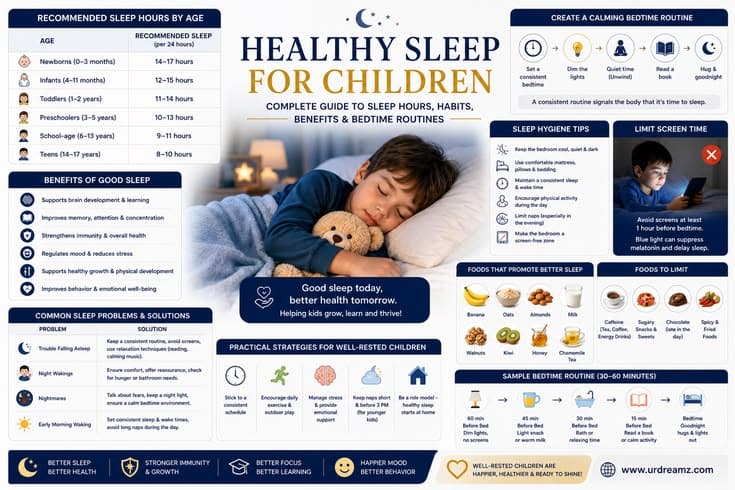
3. Recommended Sleep Hours by Age: Complete Chart
| Age Group | Age Range | Recommended Sleep | Includes Naps | Ideal Bedtime |
|---|---|---|---|---|
| Newborns | 0 to 3 months | 14 to 17 hours total | Yes. Sleep is distributed throughout day and night in 2 to 4 hour cycles | No set bedtime. Feed and sleep on demand. Circadian rhythm not yet established |
| Infants | 4 to 11 months | 12 to 15 hours total | Yes. 2 to 3 naps daily gradually reducing to 2 | Bedtime gradually emerges around 7 to 8 pm as circadian rhythm develops |
| Toddlers | 1 to 2 years | 11 to 14 hours total | Yes. One nap daily (typically 1 to 3 hours in the early afternoon) | 7 to 7:30 pm typical bedtime |
| Preschoolers | 3 to 5 years | 10 to 13 hours total | Nap optional. Many preschoolers still benefit from one nap until age 4 to 5 | 7 to 8 pm typical bedtime |
| School Age Children | 6 to 12 years | 9 to 12 hours | Naps generally not needed. Daytime napping in school-age children may indicate insufficient night sleep | 7:30 to 9 pm depending on age and wake time |
| Teenagers | 13 to 18 years | 8 to 10 hours | No naps needed. Brief nap under 30 minutes before 3 pm acceptable | 9 to 10 pm for most school-night needs. Biological sleep phase delay makes earlier bedtimes difficult for many teens |
A critical practical note about elementary school-aged children that surprises many parents: most children aged 5 to 11 years need to be in bed between 7:30 and 8:00 pm to get the 9 to 11 hours of sleep they require before a typical 6:30 to 7:00 am school morning wake time. This earlier-than-expected bedtime is often underestimated by parents who assume children this age can stay up until 9 or 10 pm and still wake well for school. The sleep debt that accumulates from even one hour less per night compounds significantly over a school week.
4. Ten Science-Backed Benefits of Adequate Sleep for Children
| # | Benefit | The Science Behind It |
|---|---|---|
| 1 | Better Learning and Memory | During sleep the hippocampus replays the day's learning experiences and transfers information to the cortex for long-term storage. Children who sleep adequately after learning new material retain significantly more than those who are sleep-deprived. Well-rested children also have better working memory capacity during the school day |
| 2 | Improved Attention and Focus | Sleep deprivation reduces activity in the prefrontal cortex, the brain region responsible for sustained attention, inhibitory control, and executive function. Sleep-deprived children have attention difficulties indistinguishable from ADHD in some studies, and chronically poor sleep can both mimic and worsen genuine ADHD symptoms |
| 3 | Reduced Stress and Better Mood | Sleep regulates cortisol (the primary stress hormone) and allows emotional memories to be processed appropriately by the amygdala and prefrontal cortex. Well-rested children have greater emotional regulation capacity, lower baseline stress levels, and better ability to recover from emotional upsets |
| 4 | Stronger Immune System | Sleep drives significant increases in cytokine production, enhances natural killer cell activity, and reinforces immunological memory of vaccines and previous infections. Research consistently shows that sleep-deprived people get sick more often, recover more slowly, and mount weaker responses to vaccination |
| 5 | Healthy Physical Growth | The majority of growth hormone secretion occurs during slow-wave (deep) sleep in pulses approximately 90 minutes after sleep onset. Adequate sleep is essential for achieving the physical growth potential encoded in the child's genes. Chronic sleep deprivation measurably reduces growth hormone levels |
| 6 | Better Problem-Solving and Creativity | REM sleep appears to be particularly important for insight and creativity. The brain during REM makes novel associations between distantly related concepts, a process that supports the creative problem-solving that is increasingly important for academic and career success |
| 7 | Improved Social Skills and Relationships | Well-rested children are better at reading others' facial expressions and emotional cues, a skill directly linked to social competence. Sleep-deprived children are more likely to have negative social interactions, misread social situations, and have peer relationship difficulties |
| 8 | Better Appetite Regulation and Healthy Weight | Sleep regulates the hunger hormones ghrelin (appetite stimulator) and leptin (appetite suppressor). Insufficient sleep raises ghrelin and lowers leptin, increasing hunger especially for high-calorie foods. Multiple studies show a dose-dependent relationship between sleep deprivation and childhood obesity risk |
| 9 | Better Academic Performance | Meta-analyses of multiple studies consistently find significant positive correlations between adequate sleep and academic performance across all age groups. Even small increases in nightly sleep duration produce measurable improvements in academic outcomes |
| 10 | Reduced Behavioral Problems | Inadequate sleep in children is among the most reliable predictors of behavioral difficulties including aggression, hyperactivity, defiance, and emotional dysregulation. In multiple studies, simply increasing children's sleep by 30 to 60 minutes per night produced significant behavioral improvements |
5. What Happens When Children Do Not Get Enough Sleep
| Domain | Short-Term Effects | Long-Term Effects of Chronic Deprivation |
|---|---|---|
| Behavior | Irritability, tantrums, hyperactivity, impulsivity, emotional outbursts, defiance, poor frustration tolerance | Increased risk of behavioral disorders, anxiety, depression, and social difficulties |
| Academic | Poor concentration, slow reaction time, reduced memory retention, difficulty with new learning | Lower academic achievement, reduced cognitive development, impaired executive function |
| Physical Health | Weakened immune response, more frequent illness, fatigue, headaches | Increased obesity risk, impaired growth, higher risk of type 2 diabetes, cardiovascular effects |
| Development | Slower development, slower processing speed | Measurable developmental delays with chronic insufficient sleep in early childhood when brain development is most rapid |
| Safety | Slower reaction time increases accident risk | For teenagers: significantly elevated risk of car accidents. Drowsy driving is as dangerous as drunk driving |
| Irregular bedtimes specifically | Worse behavior than simply reduced sleep in some studies. Inconsistency itself appears harmful beyond just the total hours | Slower development, lower academic test scores, more health problems. The predictability of bedtime matters alongside the duration |
6. Creating the Perfect Sleep Environment
The bedroom environment powerfully influences how easily children fall asleep, how deeply they sleep, and how often they wake during the night. Children's nervous systems are more sensitive to environmental stimuli than adults, making the sleep environment even more important for them than for their parents.
| Environmental Factor | Ideal Setup | Why It Matters |
|---|---|---|
| Temperature | Cool room between 18 and 20 degrees Celsius (65 to 68 degrees Fahrenheit). Slightly warmer for infants who cannot regulate temperature well | Body temperature naturally drops during sleep initiation. A cool room supports this physiological process. Overheating disrupts sleep and is a SIDS risk factor in infants |
| Darkness | As dark as possible. Blackout curtains or blinds are worth the investment. Any light including from streetlights or night lights suppresses melatonin production | Melatonin (the sleep hormone) is suppressed by light and requires darkness for appropriate production. Even dim ambient light meaningfully impairs melatonin release |
| Noise | Quiet is ideal. If outside noise is an issue, consistent white noise or a fan provides a sound masking background that many children sleep better with than complete silence in a noisy environment | Sudden sounds trigger brief arousal from sleep. Consistent background sound masks variable noises that would otherwise cause awakening |
| Bedding and Comfort | Comfortable mattress and pillow appropriate for the child's age. Natural breathable fabrics like cotton. Weighted blanket for some children, particularly those with anxiety or sensory sensitivities | Physical comfort directly affects how easily children fall asleep and stay asleep. Weighted blankets have shown benefits for sleep in children with anxiety and autism spectrum disorder |
| Screens in the Bedroom | No screens in the bedroom. This includes televisions, tablets, computers, and smartphones with notifications on | Screen presence in the bedroom is consistently associated with later bedtimes, shorter sleep duration, and poorer sleep quality even when not actively being used before bed |
| Calming Scents | Lavender has modest but genuine sleep-supporting evidence. Chamomile is another calming option. Use sparingly and ensure no allergies | The olfactory system has direct connections to the limbic system and can support relaxation when consistently associated with sleep through a conditioned response |
| Bedroom Purpose | The bedroom should be associated primarily with sleep. Avoid homework, screens, or stimulating activities in the bedroom | The brain builds associations between environments and behavioral states. Bedroom associated exclusively with sleep creates a strong cue that supports sleep onset |
7. Building an Effective Bedtime Routine
A consistent, calming bedtime routine is one of the most evidence-supported interventions for children's sleep across every age group. The routine itself becomes a powerful physiological and psychological signal: as children move through the familiar sequence of steps, their nervous system begins preparing for sleep before they even get into bed. The predictability of the routine is as important as the specific activities it contains.
Research shows that children with consistent bedtime routines fall asleep faster, wake less during the night, sleep longer total hours, and show better emotional regulation and behavior the following day compared to children without regular routines. The benefits begin when routines are introduced in infancy and persist throughout childhood and even into adolescence.
| Age Group | Routine Duration | Recommended Steps in Order | Key Principle |
|---|---|---|---|
| Infants 3 to 12 months | 15 to 30 minutes | Bath or gentle wash, pajamas and sleep sack, feeding, brief gentle singing or story, put down drowsy but awake | Same sequence every night. The consistency itself is the signal. Putting down drowsy but awake teaches self-settling |
| Toddlers 1 to 3 years | 20 to 30 minutes | Small light snack if needed, bath, pajamas and teeth brushing, one or two stories, brief prayer or gratitude moment, quiet songs or cuddle, lights out | Toddlers thrive on predictability. Involve them in the routine (choosing pajamas, choosing the story) to satisfy autonomy needs without disrupting the structure |
| Preschoolers 3 to 5 years | 20 to 30 minutes | Warm bath, pajamas, teeth brushing, one story (longer at this age), quiet conversation about the day, a special goodnight ritual unique to your family, lights out | The story and conversation time builds security and gives children a chance to process the day before sleep. Keep to the same order |
| School Age 6 to 12 years | 30 to 45 minutes | Screens off one hour before target bed time, bath or shower, pajamas and teeth brushing, light reading (self-chosen), brief check-in conversation with parent, lights out | Shift toward more independence while maintaining the connection element. Reading independently in bed is excellent. Screens in bed are not |
| Teenagers 13 to 18 years | 30 to 60 minutes wind-down | Devices charging outside the bedroom from agreed time, shower or bath, brief low-key activity (reading, journal, light stretching), lights out or minimal light | Teens need the routine too but it looks different. Negotiate the elements. The non-negotiable is devices out of the bedroom and screens off before sleep |
8. Sleep Hygiene: Daily Habits That Support Good Sleep
Sleep hygiene refers to the daily habits and practices that either support or undermine sleep quality and duration. Good sleep hygiene does not begin at bedtime. It is built throughout the day through consistent choices about light exposure, physical activity, meal timing, caffeine, and the overall structure of the day.
| Category | Habit | Why It Supports Sleep |
|---|---|---|
| Sleep Schedule | Keep consistent sleep and wake times every day including weekends. Maximum deviation from weekday schedule should be no more than one hour even on weekends | The circadian rhythm (internal body clock) is set by consistent timing. Irregular schedules create social jet lag, the equivalent of crossing time zones repeatedly each week |
| Morning Light | Expose children to bright natural light within 30 minutes of waking each morning | Morning light is the strongest signal that resets the circadian clock. It anchors the sleep-wake cycle and ensures melatonin production begins at the right time in the evening |
| Physical Activity | At least 60 minutes of moderate to vigorous physical activity daily. Time exercise to avoid very vigorous exercise within 2 to 3 hours of bedtime for sensitive children | Physical activity during the day increases sleep pressure (the biological drive to sleep), promotes deeper slow-wave sleep, and reduces the time it takes to fall asleep |
| Nap Management | Keep naps age-appropriate and not too late in the afternoon. School-age children should generally not nap. Toddler naps should end by 3 pm | Naps reduce sleep pressure and make it harder to fall asleep at the appropriate bedtime if taken too late or for too long |
| Meal Timing | Avoid large meals within 2 hours of bedtime. A small light snack is acceptable and may help some children | Digestion requires energy and activity that interferes with the body's ability to settle into deep sleep. Heavy meals close to bedtime are associated with more nighttime waking |
| Caffeine Avoidance | No caffeine for younger children at all. For teenagers, no caffeine after noon. Caffeine sources include tea, coffee, chocolate, cola drinks, and energy drinks | Caffeine has a half-life of approximately 5 to 6 hours. A caffeinated drink at 3 pm leaves half the caffeine in the system at 9 pm, directly interfering with sleep onset |
| Wind-Down Period | One hour of calm, low-stimulation activity before the bedroom phase of the routine begins. This means transitioning away from screens, active play, and emotionally intense content | The nervous system needs time to shift from alert wakefulness to the calm state from which sleep can begin. Abrupt transitions from high stimulation to expected sleep do not work well |
9. Screen Time and Children's Sleep
The relationship between screens and sleep is one of the most robustly established findings in modern sleep science, and it is consistently negative. Screens disrupt children's sleep through three distinct mechanisms that together create a powerful triple-threat to sleep quality and duration.
The first mechanism is blue light suppression of melatonin. The short-wavelength blue light emitted by smartphone, tablet, computer, and television screens is detected by specialized retinal cells called melanopsin-containing ganglion cells that are particularly sensitive to this wavelength. These cells signal directly to the suprachiasmatic nucleus (the master circadian clock) that it is daytime, suppressing melatonin production. Even 30 minutes of screen exposure in the hour before bed measurably delays melatonin onset and sleep onset.
The second mechanism is psychological and cognitive stimulation. Screen content, especially social media, video games, and fast-paced entertainment, activates the arousal systems of the brain, elevating alertness and making it harder to settle toward sleep. The emotional engagement of screen content, whether social anxiety from social media or excitement from gaming, extends into the bedroom and disrupts the calm state needed for sleep.
The third mechanism is simple displacement. Every minute spent on screens in the evening is a minute not spent on the sleep-supporting activities like reading, conversation, warm bathing, and relaxation that help children prepare for sleep. Even if screen content and blue light were not inherently sleep-disruptive, they displace the activities that are sleep-supportive.
| Age | Screen Time Limits | Sleep-Protecting Screen Rules |
|---|---|---|
| Under 2 years | No recreational screen time except video calls with family | No screens ever near sleep times. Screens do not support sleep in any way at this age |
| 2 to 5 years | Maximum 1 hour of high-quality content per day | No screens in the two hours before bedtime. No screens in the bedroom |
| 6 to 12 years | 2 hours maximum recreational screen time. Consistent daily limit | No screens one hour before bed. No devices in bedroom at night. Charging station outside bedroom. No television in bedroom |
| 13 to 18 years | No specific hour limit but screens should not displace sleep, physical activity, or face-to-face interaction | Phone charges outside the bedroom at night. No social media or stimulating content in the 30 to 60 minutes before intended sleep. Develop this as a family agreement not an imposed rule |
10. Foods That Promote Better Sleep in Children
Nutrition affects sleep through multiple pathways. Certain foods contain compounds that directly support the production of melatonin and serotonin (the sleep-related neurotransmitter from which melatonin is made), provide the minerals that support nervous system relaxation, or provide the stable blood sugar that prevents hunger-related nighttime waking. Understanding which foods support sleep and incorporating them into the evening routine can meaningfully improve sleep quality.
| # | Food | Active Sleep-Supporting Compounds | How It Helps Sleep | Child-Friendly Evening Uses |
|---|---|---|---|---|
| 1 | Warm Milk | Tryptophan (melatonin and serotonin precursor), calcium (sleep-regulating), magnesium | Tryptophan is converted to serotonin and then melatonin. Warmth has additional calming psychological effect. Traditional bedtime drink with genuine biochemical basis | Warm cup of milk as part of bedtime routine. Golden milk with a pinch of turmeric for added anti-inflammatory benefit |
| 2 | Bananas | Tryptophan, potassium, magnesium, vitamin B6 (needed to convert tryptophan to serotonin) | Potassium and magnesium relax muscles. Tryptophan and B6 support serotonin and melatonin production. Natural carbohydrates increase brain availability of tryptophan | With a small amount of nut butter as a light evening snack. Sliced in warm milk |
| 3 | Oats | Complex carbohydrates, melatonin (oats contain small amounts directly), magnesium, tryptophan | Oats are a natural source of small amounts of melatonin. Complex carbohydrates trigger insulin response that facilitates tryptophan entry into the brain | Small bowl of warm oatmeal as early evening snack. Overnight oats with banana and almond butter |
| 4 | Almonds | Magnesium (very high), melatonin, tryptophan, healthy fats | Magnesium is a natural muscle relaxant and has been shown to improve sleep quality in multiple studies. Low magnesium is directly linked to poor sleep and more nighttime wakings | Small handful as evening snack. Almond butter on whole grain toast. Almond milk in warm drinks |
| 5 | Walnuts | Melatonin (one of the richest natural food sources), omega-3 ALA, tryptophan, magnesium | Walnuts are among the very few plant foods providing directly usable melatonin rather than just precursors. Omega-3 supports serotonin signaling | Small handful as evening snack. In oatmeal. In a nut mix with dried cherries |
| 6 | Chamomile Tea | Apigenin (anxiolytic flavonoid), antioxidants | Apigenin binds to benzodiazepine receptors in the brain promoting relaxation and sleepiness. Multiple studies confirm chamomile tea improves sleep quality and reduces the time to fall asleep | Weak chamomile tea with a small amount of honey for children over 1 year. Served warm as part of the wind-down routine |
| 7 | Tart Cherries or Cherry Juice | Melatonin (direct and significant), anthocyanins (anti-inflammatory), tryptophan | Tart cherries are one of the few natural concentrated sources of melatonin. Multiple small studies show tart cherry juice increases sleep duration and quality | Small glass of unsweetened tart cherry juice with dinner. Fresh tart cherries as a dessert alternative when in season |
| 8 | Kiwi | Serotonin precursors, antioxidants (especially vitamin C and flavonoids), folate | Studies have shown that consuming kiwi before bed reduces time to fall asleep and improves sleep quality and duration. The mechanism involves serotonin precursors and antioxidant reduction of oxidative stress that disrupts sleep | One or two kiwi fruits eaten 30 to 60 minutes before bed. With yogurt. Sliced in a fruit bowl |
| 9 | Turkey | Tryptophan (very high), complete protein, B vitamins | Turkey is famous for its tryptophan content. The tryptophan-to-sleep pathway requires carbohydrates to work efficiently, so pairing turkey with whole grains maximizes effectiveness | Turkey sandwich on whole grain bread as an early dinner. In soups or pasta dishes. The dinner timing matters |
| 10 | Eggs | Tryptophan, complete protein, vitamin D, B vitamins, magnesium | Provide multiple sleep-supporting nutrients simultaneously. Protein from eggs sustains stable blood sugar through the night preventing hunger waking | Scrambled eggs for dinner. Boiled egg as evening snack. In an omelet with vegetables |
11. Foods and Drinks That Disrupt Children's Sleep
| Food or Drink | How It Disrupts Sleep | What to Do Instead |
|---|---|---|
| Caffeine (tea, chocolate, cola, energy drinks) | Blocks adenosine receptors that promote sleepiness. With a 5 to 6 hour half-life, afternoon caffeine consumption still interferes with sleep onset at bedtime. Chocolate contains theobromine which has mild caffeine-like effects | No caffeine for younger children at all. Caffeine-free herbal teas. Water, milk, or diluted fruit juice. Caffeine-free chocolate alternatives if needed |
| High-sugar foods and drinks | Blood sugar spikes followed by crashes can trigger cortisol release that wakes children. Sugar also promotes inflammatory gut bacteria changes that may affect sleep regulation. Sugary foods before bed are associated with more nighttime waking | Light healthy snacks that include protein and complex carbohydrates. A banana with almond butter rather than a biscuit or sweets |
| Spicy or heavy meals close to bedtime | Spicy food can cause acid reflux and heartburn that disrupts sleep. Heavy meals require significant digestive activity that conflicts with the body's shift toward sleep mode | Have the main dinner meal at least 2 hours before bedtime. If a bedtime snack is needed, keep it small and bland |
| Very large amounts of any fluid close to bedtime | Excessive fluid intake in the evening increases the likelihood of needing to urinate during the night, causing waking. Bladder pressure is a significant cause of nighttime waking in all ages | Ensure adequate hydration throughout the day. Offer the last larger drink of the day about an hour before bed and limit fluid to small sips after that |
| Ice cream and cold desserts | High sugar combined with cold temperature that stimulates the digestive system. Sugar spikes as described above. Often consumed late in the evening | If serving dessert, time it at least 2 hours before intended sleep. Opt for warm milk with honey or fruit as a sleep-friendly alternative |
12. Sleep and Brain Development
The relationship between sleep and brain development is so fundamental that inadequate sleep during sensitive periods of brain growth creates measurable and sometimes lasting changes in brain structure and function. The brain grows most rapidly in the first five years of life, making adequate sleep in the early childhood years particularly critical.
During sleep, particularly during deep slow-wave sleep and REM sleep, the brain undergoes two essential processes: myelination and synaptic pruning. Myelination is the coating of nerve fibers with a myelin sheath that dramatically speeds up neural signal transmission, essentially upgrading the brain's communication infrastructure. Synaptic pruning eliminates neural connections that are not being used, strengthening the ones that are and creating a more efficient neural architecture. Both of these processes, which are fundamental to healthy brain development, occur predominantly during sleep.
The glymphatic system, discovered only in 2012, performs another critical brain maintenance function during sleep. This system uses cerebrospinal fluid to flush metabolic waste products from the brain tissue, including amyloid-beta and tau proteins that accumulate with wakefulness and are associated with neurological disease when they are not cleared efficiently. The glymphatic system is nearly ten times more active during sleep than during wakefulness, which is one reason that chronic sleep deprivation is increasingly recognized as a significant risk factor for cognitive decline.
13. Sleep and Child Immunity
The connection between sleep and immunity is bidirectional and profound. The immune system regulates sleep, and sleep in turn regulates the immune system. During sleep, the body produces cytokines including interleukin-1, interleukin-6, and tumor necrosis factor, all of which promote sleep while simultaneously coordinating immune responses. When the body is fighting an infection, increased cytokine production drives increased sleep duration, which is why sick children (and adults) sleep more. This is not a side effect of illness to be overcome but a deliberate biological strategy for fighting it.
Research consistently demonstrates that sleep-deprived children are significantly more susceptible to viral infections. In one classic study, participants who slept less than 7 hours per night were nearly three times more likely to develop a cold after viral exposure compared to those sleeping 8 or more hours, even when controlling for other factors. Similar findings apply to children, with multiple studies showing that inadequate sleep is one of the strongest predictors of how frequently children get sick and how severely.
Vaccination effectiveness is also meaningfully influenced by sleep. Children who sleep adequately in the days surrounding vaccination develop significantly stronger antibody responses than sleep-deprived children, meaning the vaccine provides substantially better protection. This is not a minor effect. Studies show sleep-deprived individuals may produce only half the antibody response of well-rested individuals following the same vaccine.
14. Sleep and Physical Growth
Growth hormone, the primary hormone driving the physical development that characterizes childhood, is released in pulses during sleep with the largest pulses occurring during slow-wave (deep) sleep, typically in the first half of the night approximately 90 minutes after sleep onset. The relationship between sleep and growth hormone is so direct that pediatric endocrinologists routinely assess sleep patterns when evaluating children for growth concerns.
Adequate sleep is particularly important during infancy, toddlerhood, and puberty, the three periods of most rapid physical growth in childhood. Chronic sleep deprivation during these windows measurably reduces growth hormone levels and can impact the achievement of full height potential. While genetics sets the range of possible height, adequate sleep is one of the environmental factors that determines where within that range a child lands.
Physical performance and motor skill development are also significantly affected by sleep. The procedural memory consolidation that occurs during REM sleep is the primary mechanism through which motor skills learned during waking practice are refined and integrated into reliable physical performance. Children who sleep well after learning new physical skills (a sport technique, a musical instrument, a physical education activity) show significantly greater skill retention and improvement than those who are sleep-deprived.
15. Sleep and Emotional Wellbeing
Of all the connections between sleep and child wellbeing, the sleep-emotion relationship is perhaps the most immediately visible to parents. Every parent has observed the dramatic transformation in a child's emotional state that follows a poor night of sleep. Tears over trivial frustrations, explosive anger in response to minor limit-setting, inability to recover from disappointments that would normally be handled with equanimity: these are the visible behavioral signatures of a sleep-deprived emotional regulation system.
The brain mechanisms underlying this connection are well understood. The amygdala, which generates emotional responses, is significantly more reactive when sleep-deprived. The prefrontal cortex, which modulates amygdala responses and enables emotional regulation, executive function, and rational decision-making, is one of the brain regions most sensitive to sleep deprivation. Sleep deprivation essentially disconnects the brakes from the emotional accelerator, which is precisely what parents observe in their overtired children.
REM sleep specifically plays a critical role in emotional processing. During REM, the brain replays emotionally significant memories in a neurochemical environment with lower noradrenaline levels than wakefulness, which allows the emotional charge to be processed and reduced without the full stress response that would accompany the same processing while awake. This is one reason why we often feel better about upsetting events after sleeping on them. Children who miss REM sleep (which occurs predominantly in the second half of the night, making early wake-ups particularly damaging) carry unprocessed emotional experiences into the next day.
16. Sleep Tips for Toddlers Ages 1 to 3
| Challenge | Why It Happens | Positive Approach |
|---|---|---|
| Bedtime resistance and stalling | Toddlers' strong drive for autonomy combined with fear of missing out (FOMO) makes bedtime resistance developmentally normal and very common | Involve them in the routine (choosing pajamas, choosing the story). Offer two acceptable choices rather than open negotiation. Maintain firm, calm follow-through |
| Nighttime waking | Normal sleep cycles cause brief partial arousals several times per night. Toddlers who have not learned to self-settle call for a parent during these arousals | Consistent, brief response to check they are safe. Gradually increase the response time. Ensure the bedtime routine ends with the child drowsy but in their own sleep space |
| Early morning waking | Very common at this age. May relate to light exposure, hunger, or the end of sleep cycles occurring at the early morning REM-rich period | Blackout curtains. Ensure adequate total sleep by compensating earlier bedtime if needed. White noise may help. A small snack closer to bedtime if hunger is a factor |
| Transitioning from cot to bed | Most toddlers are ready between 18 months and 3 years. Too early increases nighttime waking and wandering | Wait until the child is climbing out of the cot. Make the transition with consistent expectations about staying in bed. A simple gating system may help initially |
| Nap refusal | Many toddlers resist naps even when they genuinely need them. Nap need persists longer than nap acceptance | Maintain a daily quiet time in the same sleep environment whether or not sleep occurs. Many children will sleep if the conditions and timing are right. Do not give up naps too early |
17. Sleep Tips for Preschoolers Ages 3 to 5
Preschool years bring new sleep challenges as children's imaginations become more vivid. Fears of the dark, monsters, and being alone are genuinely common at this age and are a normal part of cognitive development, not manipulation or willfulness. A child who is afraid at bedtime is experiencing a real emotional state that deserves compassion and practical support, not dismissal.
| Tip | How to Implement |
|---|---|
| Follow a consistent bedtime routine every single night | The same order of activities at the same time. A visual chart of the routine steps can help preschoolers feel in control and know what comes next |
| Create a calming atmosphere during the wind-down period | Dim lights, quiet voices, calm activities. Move away from active play and stimulating content at least 30 minutes before the bedtime routine begins |
| Address nighttime fears directly and practically | Validate the fear ("I understand you feel scared"). Check under the bed and in the cupboard together. Provide a nightlight if needed. Avoid dismissing fears as silly which increases anxiety |
| Limit screens in the 60 minutes before bed | Preschoolers are particularly susceptible to the arousing effects of screen content. The content often features monsters, conflict, and excitement that directly feeds bedtime fears |
| Read a bedtime story | Daily reading builds language, imagination, and the association between stories and sleep. Choose calm stories in the evening. Save exciting stories for daytime reading |
| Offer comfort and reassurance on their terms | Brief check-ins after being tucked in. A special comfort object. The promise of a morning hug. What feels reassuring varies by child. Discover what works for yours |
| Encourage active play during the day | Children who are physically active during the day fall asleep faster and sleep more deeply. Outdoor play with natural light exposure during the day also supports circadian rhythm |
| Preschoolers need 10 to 13 hours total including any nap | If bedtime is 7:30 pm and wake time is 7:00 am, that is 11.5 hours. Add a 1-hour nap and the total is 12.5 hours, which is well within the healthy range |
18. Sleep Tips for School-Age Children Ages 6 to 12
The school years bring the dual challenge of increasing academic demands (homework, reading, school projects) combined with growing social engagement through extracurricular activities, digital communication, and a wider peer world. All of this competes with sleep, and most school-age children in modern societies are sleeping significantly less than the 9 to 11 hours recommended for their age group.
| Area | Best Practice |
|---|---|
| Bedtime | Set a consistent bedtime that allows 9 to 11 hours before the school morning wake time. For a 7:00 am wake, bedtime should be 7:30 to 8:00 pm for most school-age children. Later than 9:00 pm consistently means insufficient sleep |
| Homework timing | Homework should be completed before the wind-down period, not immediately before bed. Mentally challenging work close to bedtime increases arousal and makes sleep onset harder |
| Device management | All devices including phones, tablets, and gaming consoles should be charged in a central location outside the bedroom overnight. This is a non-negotiable for optimal sleep |
| Independent reading | Reading (physical books or e-ink readers without blue light at low brightness) in bed is an excellent pre-sleep activity. It is calming, has no blue light concerns if using print, and builds literacy simultaneously |
| Weekend schedule | Limit weekend sleep-in to no more than one hour beyond the weekday wake time. Greater deviation creates Monday morning sleep difficulty and cumulative weekday sleep deprivation |
| Exercise timing | Vigorous exercise close to bedtime can make it harder to fall asleep for some children. Move intense physical activity to earlier in the day. Gentle stretching close to bedtime is fine |
19. Sleep Tips for Teenagers Ages 13 to 18
Teenagers face a uniquely challenging sleep situation created by a genuine collision between biology and social expectation. During puberty, the circadian rhythm undergoes a biological shift toward a later sleep phase, meaning that many teenagers genuinely cannot feel sleepy before 11:00 pm regardless of when they go to bed. This is not laziness or defiance. It is a hormonally driven biological reality. Simultaneously, school start times that demand early rising, combined with social media engagement, academic pressure, and extracurricular activities, create a chronic sleep deprivation situation for most teenagers in modern educational systems.
Teenagers who regularly sleep 8 to 10 hours, compared to those sleeping 6 to 7 hours, show measurable differences in academic performance, mental health, risk-taking behavior, emotional regulation, reaction time, immune function, and athletic performance. Given the biological sleep phase delay, achieving adequate sleep for many teenagers requires either later school start times or significant lifestyle management to protect sleep despite the biological push toward lateness.
| Strategy | How to Implement | Why It Matters |
|---|---|---|
| Phone in a different room at night | Negotiate and agree that phones charge in the hallway, kitchen, or another room after an agreed time. Frame as a family rule not a punishment | Notification sounds, the temptation to check, and the blue light of the screen all disrupt both sleep onset and sleep maintenance |
| Protect morning sleep on weekends | Allow a moderate sleep-in of no more than 90 minutes to two hours on weekends to partially repay sleep debt | Teens accumulate significant sleep debt during school weeks. Some recovery sleep on weekends, while not ideal, is more realistic than expecting perfect schedule adherence |
| Manage social media in the evening | Discuss the impact of social media on sleep and negotiate screen-free periods. The emotional engagement of social media is particularly sleep-disruptive | Social media-induced anxiety, FOMO, and social comparison are particularly active in teenagers and their activation before bed makes sleep onset very difficult |
| Power nap strategically if needed | A 20 to 30 minute nap before 3 pm can help with afternoon alertness and study effectiveness without significantly impacting nighttime sleep | Short naps reduce sleep pressure minimally while restoring alertness meaningfully. Longer naps cause grogginess and significantly reduce nighttime sleep pressure |
| Morning sunlight exposure | Encourage outdoor activity or bright light exposure in the morning, even just a short walk to school without sunglasses when safe | Morning light is the primary signal that anchors the circadian clock and prevents further drift toward late-night sleep timing |
20. Common Sleep Problems and Solutions
| Sleep Problem | Common Cause | Practical Solution |
|---|---|---|
| Cannot fall asleep | Overtired (past the optimal sleep window), insufficient wind-down time, anxiety, inconsistent schedule, too much screen stimulation before bed, caffeine | Earlier bedtime (overtiredness paradoxically makes sleep harder). One-hour screen-free wind-down. Consistent relaxing routine. Check for caffeine sources. If anxiety, address underlying cause |
| Cannot stay asleep | Normal sleep cycle arousal without self-settling skills, hunger, temperature too warm or too cold, noise or light changes during night, anxiety | Ensure bedroom temperature is appropriate. Blackout curtains. White noise. Address hunger with a protein-containing evening snack. Teach self-settling skills if absent |
| Difficulty waking up | Insufficient total sleep, sleep phase delay (common in teenagers), inconsistent sleep schedule, poor sleep quality | Earlier bedtime. Consistent wake time even on weekends. Morning light exposure immediately on waking. Address sleep quality issues if suspected |
| Snoring | Nasal congestion, enlarged tonsils or adenoids, obesity, sleep position | Clear nasal passages with saline rinse before bed. Side sleeping. If snoring is loud and persistent especially with observed pauses in breathing, seek medical evaluation for obstructive sleep apnea |
| Bedwetting (Enuresis) | Normal up to age 6 to 7. Deep sleep that prevents waking to bladder sensations. Genetic component. Developmental maturation | Limit fluids 2 hours before bed. Ensure bathroom trip immediately before bed. Enuresis alarms are effective for older children. Reassure child. It is not their fault. Resolve naturally for most children by age 7 |
| Early morning waking | End of sleep cycles in the early morning, light exposure, hunger, phase advance in younger children | Blackout curtains. Ensure adequate total sleep by moving bedtime earlier if needed. Small protein-containing bedtime snack. OK-to-wake clock for younger children |
21. Night Waking and Night Terrors
Night terrors are one of the most distressing sleep phenomena for parents to witness, precisely because they look so alarming while actually being largely benign. A night terror occurs during deep slow-wave sleep, typically in the first one to two hours after a child falls asleep. The child appears to wake up in a state of extreme distress, screaming, crying, thrashing, with eyes open and pupils dilated, but is not actually conscious. They cannot be comforted or engaged, and they will usually not remember the episode in the morning.
Night terrors are more common in children ages 3 to 12, occur more frequently when children are overtired or ill, and are associated with a family history of parasomnias including sleepwalking. The cause is an incomplete arousal from deep sleep, a brief mismatch between the sleeping and waking states. The appropriate response is to stay with the child for safety, not try to wake them fully (which can extend the episode), speak quietly and calmly, ensure they cannot hurt themselves, and allow the episode to run its natural course which is usually 5 to 15 minutes.
Night terrors differ from nightmares in that nightmares occur during REM sleep in the second half of the night, the child is fully awake and distressed, can describe what frightened them, needs comfort, and does remember the experience. Nightmares are addressed through emotional reassurance, making the bedroom feel safe, and if recurring, gently discussing any underlying worries or stressors during calm daytime moments.
22. Sleep and Neurodivergent Children
Children with autism spectrum disorder (ASD), attention deficit hyperactivity disorder (ADHD), sensory processing differences, and other neurodevelopmental conditions experience sleep difficulties at rates far exceeding the general population. Research suggests 50 to 80 percent of autistic children have significant sleep problems, compared to 25 to 40 percent of neurotypical children. Understanding why these difficulties arise is essential for addressing them effectively.
For many autistic children, sleep is not simply about being physically tired. It is about feeling safe enough neurologically for the vigilant nervous system to relax into sleep. The sensory experience of the sleep environment, the texture of pajamas and sheets, the temperature of the room, background sounds that neurotypical children ignore, light levels that seem minimal to parents, can all be experienced as overwhelming by a child with heightened sensory sensitivity. Bedtime is also a transition, a type of change that is reliably difficult for many autistic children regardless of how tired they are.
Additionally, many autistic children have measurably different melatonin production patterns, with melatonin released later in the evening and in smaller quantities than neurotypical children. This biological difference means that even well-intentioned bedtime routines may be working against the child's neurological reality rather than with it.
| Strategy | How to Implement | Who It Helps Most |
|---|---|---|
| Low sensory environment | Dim lights well before bedtime begins. Reduce noise to minimum. Minimize visual clutter in the bedroom. Experiment with different lighting types including amber or red light which suppresses melatonin less than white or blue light | Children with sensory sensitivities to light and noise |
| Deep pressure and proprioceptive input | Weighted blanket sized appropriately (typically 10 percent of body weight). Firm hugs and squeezes before bed. Wall push-ups. Carrying heavy objects. Proprioceptive input calms the nervous system | Children who seek deep pressure or who seem unable to settle |
| Movement before bed | Trampoline, swings, bouncing on therapy ball, yoga, or animal walks. Heavy physical input approximately 30 to 60 minutes before the sleep routine begins | Children who need significant physical input to transition out of arousal state |
| Visual routine schedule | A picture-based or written list of bedtime steps in order. Predictability through a visual schedule reduces the anxiety of the transition significantly for many autistic children | Children who need predictability and find verbal instructions inadequate |
| Comfortable clothing and bedding | Allow child to choose pajamas and bedding materials. Seamless socks if foot texture is an issue. Softness level of sheets and blankets matters. Many children have very specific preferences that deserve respect | Children with tactile sensitivities |
| Extra time to unwind | Begin the wind-down process earlier than typical. Rushing a nervous system that needs more time to shift state makes sleep much harder | Children with slow nervous system transitions |
23. Naps: When They Help and When to Stop
| Age | Nap Need | Ideal Nap Timing | Signs the Child Is Ready to Drop the Nap |
|---|---|---|---|
| Under 12 months | Multiple naps daily are essential. Typically 2 to 3 naps reducing to 2 by around 8 months | Watch wake windows (time between naps) rather than clock times. Wake windows increase with age from approximately 60 minutes at birth to 3 to 4 hours by 12 months | Not applicable. All infants need multiple daily naps |
| 12 to 18 months | Transitioning from two naps to one. Some children make this transition as early as 12 months, others not until 18 months | One nap ideally in the early afternoon (around 12:00 to 1:00 pm). Length of 1 to 2.5 hours | Consistently resisting the morning nap while still sleeping well for the afternoon nap |
| 18 months to 3 years | One nap daily is typically needed throughout this age range. Many parents drop naps too early | Early afternoon, ending by 3 pm at latest. Later than this disrupts nighttime sleep | Consistently taking more than 60 minutes to fall asleep at bedtime. Consistently not falling asleep during nap time despite calm quiet environment. Nighttime sleep remaining excellent without nap |
| 3 to 5 years | Variable. Many children still benefit from a nap or at least a quiet rest period. Between 3 and 5, nap need gradually reduces for most children | Early afternoon if still napping. Not past 3 pm | Falling asleep easily at bedtime without a nap. Taking very long to sleep at nap time. Nighttime sleep becoming fragmented or delayed |
| 6 years and above | Naps are generally not needed and can indicate insufficient nighttime sleep. A short nap for a sick or unusually tired child is fine | If a nap is given, before 3 pm and under 30 minutes | School-age children who consistently need naps may have insufficient nighttime sleep. Investigate and improve nighttime sleep rather than continuing the nap |
24. Healthy Sleeping Positions for Children
| Position | Safety and Benefits | Considerations |
|---|---|---|
| Back sleeping (supine) | For infants under 12 months, back sleeping is the only recommended safe sleep position. Dramatically reduces SIDS risk. Older children who roll to back may find it comfortable | Some older children and children with acid reflux may be uncomfortable on their back. For infants, back is always safest |
| Side sleeping | Often the most comfortable position for older children and adults. Generally associated with fewer pressure points, better spinal alignment, and reduced snoring compared to back sleeping in some individuals. Left side sleeping may reduce acid reflux symptoms | Not recommended for infants under 12 months due to SIDS risk. For older children, may contribute to shoulder pressure if mattress is not supportive. Comfortable for most children |
| Stomach sleeping (prone) | Not recommended for infants under 12 months due to significantly elevated SIDS risk. Some older children prefer stomach sleeping and it is generally safe from toddlerhood onward. May reduce snoring in some children | Can cause neck pain if head is turned to one side for the full night. Use a pillow appropriate for the child's size. For infants: always avoid |
25. Weekend Sleep and Social Jet Lag
Social jet lag is the term for the misalignment between the body's circadian rhythm and the social schedule imposed by school and activity commitments. It is called jet lag because its effects on the body are similar to travelling across time zones: fatigue, difficulty concentrating, mood disruption, and metabolic effects.
Children who sleep and wake at significantly different times on school days versus weekends are constantly shifting their circadian rhythm backward and forward, never allowing it to stabilize. Monday mornings are genuinely physiologically similar to Monday jet lag for children whose weekend involved sleeping two or more hours later than the school-week schedule. Research shows that social jet lag is independently associated with poorer academic performance, more behavioral difficulties, and worse metabolic health outcomes even when total sleep hours are adequate.
The practical goal is to limit the deviation between weekday and weekend sleep timing to no more than one hour, ideally at the wake-up end (sleeping in slightly rather than staying up significantly later). While this is a difficult message for parents who want their children to enjoy weekend freedoms, the physiological cost of large schedule shifts is real and meaningful.
26. Sunlight, Exercise and the Sleep-Wake Cycle
| Factor | Effect on Sleep | How to Use It |
|---|---|---|
| Morning sunlight | Morning bright light is the strongest circadian time cue available. Exposure within 30 to 60 minutes of waking signals the master clock, suppresses lingering melatonin, raises cortisol to appropriate daytime levels, and begins the countdown to evening melatonin production 12 to 16 hours later | Encourage outdoor time or bright window exposure in the morning. A brief morning walk is one of the most powerful sleep-supporting habits for any age |
| Daytime natural light | Consistent bright light exposure during the day maintains robust circadian signal strength and improves the contrast between day and night that helps the body know when to sleep | Outdoor recess and outdoor play are sleep-supporting activities beyond their obvious physical and mental benefits |
| Evening light reduction | Reducing light intensity in the hour or two before bedtime supports the natural rise of melatonin that signals sleep onset. Dimming household lights in the evening is a practical sleep-supporting habit | Dim lights in the home after dinner. Use amber or warm-toned bulbs in evening hours. Reduce screen brightness if screens must be used |
| Daytime physical activity | Exercise increases adenosine accumulation (the sleep pressure signal), raises body temperature during activity (the subsequent drop supports sleep onset), and improves the depth and quality of slow-wave sleep that night | 60 minutes of moderate to vigorous activity daily. Earlier in the day is generally better though most children are not sensitive to moderate evening exercise timing |
27. Melatonin: What Parents Should Know
Melatonin is a hormone produced by the pineal gland in response to darkness that signals to the body that it is night and supports sleep onset. It is not a sleep hormone in the sense of causing sleep but rather a darkness signal that facilitates the transition into sleep. Melatonin supplements have become increasingly popular among parents dealing with children's sleep difficulties, and there are important things parents should understand before considering their use.
Melatonin supplements in appropriate doses can genuinely help with sleep onset difficulties related to circadian rhythm issues, including jet lag, shift of sleep timing, and the biological sleep phase delay that characterizes adolescence. Research also supports melatonin use for sleep difficulties in autistic children, where endogenous melatonin production is often genuinely lower and delayed. For these specific applications, low-dose melatonin (0.5 to 1 mg for younger children, 1 to 5 mg for older children and teenagers) taken 30 to 60 minutes before the intended sleep time can help shift the sleep-wake cycle and improve sleep onset.
However, melatonin is not appropriate as a routine sleep aid for children with typical sleep difficulties caused by poor sleep hygiene, inconsistent routines, excessive screen time, or insufficient sleep pressure. In these cases, melatonin addresses a symptom while leaving the cause entirely unaddressed. The correct first approach for most childhood sleep difficulties is sleep hygiene improvement, consistent bedtime routines, and environmental optimization. Melatonin use in children should always be discussed with a pediatrician who can evaluate whether it is appropriate for the specific situation.
28. Sleep Problems That Need Medical Attention
| Symptom | Possible Cause | Action Required |
|---|---|---|
| Loud, habitual snoring with gasping or observed breathing pauses during sleep | Obstructive sleep apnea (OSA), enlarged tonsils or adenoids | Medical evaluation promptly. Untreated OSA significantly impacts growth, cognitive development, behavior, and cardiovascular health. Highly treatable when identified |
| Excessive daytime sleepiness despite adequate nighttime sleep | OSA, narcolepsy, other sleep disorders, medical conditions causing poor sleep quality | Medical evaluation to rule out underlying disorders. Keep a sleep diary to bring to the appointment |
| Significant bedtime anxiety or sleep fears that do not respond to routine parenting approaches | Anxiety disorder, generalized anxiety, post-traumatic stress | Pediatrician referral and potentially child psychologist if anxiety is significantly impairing daily function |
| Very frequent nightmares, especially if traumatic in content and persistent | Anxiety, post-traumatic stress, significant psychological stressor | Discussion with pediatrician or child mental health professional, especially if nightmares began after a traumatic or upsetting event |
| Restless legs or uncomfortable sensations in legs at night that prevent sleep | Restless legs syndrome, which does occur in children. Iron deficiency is associated | Medical evaluation including iron level check. Restless legs syndrome is underdiagnosed in children and effectively treatable |
| Bedwetting in a child over age 7 who was previously dry | Secondary enuresis may indicate urinary tract infection, diabetes, sleep apnea, or psychological stressor | Medical evaluation to identify and address underlying cause |
29. How Parents' Sleep Habits Affect Children
Children learn their attitudes toward sleep, their beliefs about bedtime, and many of their sleep habits from observing the adults in their household. Parents who openly value and prioritize their own sleep model to their children that sleep is important, not something to be sacrificed for productivity or entertainment. Parents who routinely stay up late and wake tired, complain about not sleeping enough while making no changes to address it, or dismiss their own sleep needs as less important than other activities are inadvertently teaching their children that sleep is optional rather than fundamental.
The parental sleep environment also directly affects children. A household where everyone goes to bed at dramatically different times, where television or phone noise from parental screens can be heard from children's rooms, or where adult stress and conflict spills into the evening hours all create environmental and psychological conditions that make children's sleep more difficult. Parents who address their own sleep issues (including perhaps speaking to a doctor about their own sleep apnea, insomnia, or chronic sleep deprivation) are doing their children a genuine service by improving the household's overall sleep culture.
30. Complete Child Sleep Action Plan for Parents
| Priority | Action | When to Start |
|---|---|---|
| Priority 1 | Calculate whether your child is getting the right amount of sleep for their age. Work backward from the school morning wake time to determine what bedtime delivers the recommended hours. If there is a gap, begin moving bedtime earlier by 15 minutes every few nights until the target is reached | Today |
| Priority 2 | Establish a consistent bedtime routine with the same activities in the same order every night. This is the single most impactful sleep-supporting intervention with the strongest research backing across all age groups | This week |
| Priority 3 | Remove all devices including phones, tablets, and televisions from the bedroom. Create a family charging station outside sleeping areas and make this a non-negotiable family rule | This week |
| Priority 4 | Implement a one-hour screen-free wind-down period before the bedroom phase of the routine begins. This means screens off and calm activities only in the hour before bed | This week |
| Priority 5 | Optimize the sleep environment: blackout curtains or blinds, comfortable cool temperature (18 to 20 degrees Celsius), minimal noise or consistent white noise, and comfortable bedding appropriate for the child's sensory preferences | This month |
| Priority 6 | Ensure morning sunlight exposure within 30 to 60 minutes of waking to anchor the circadian rhythm. A short outdoor walk or bright window exposure in the morning is one of the simplest sleep-supporting habits available | Starting tomorrow |
| Priority 7 | Address any caffeine sources in the child's diet. Remember that chocolate, cola drinks, and tea all contain caffeine. For younger children, eliminate entirely. For teenagers, cut off all caffeine after midday | This week |
| Priority 8 | Incorporate a small sleep-supporting evening snack if your child is consistently hungry before bed or wakes from hunger. A banana with almond butter, warm milk, or a small portion of oatmeal are all good options | As needed |
| Priority 9 | Maintain consistent sleep and wake times on weekends, deviating by no more than one hour from the weekday schedule. Explain to older children and teenagers why this matters so they understand rather than just resisting | Ongoing |
| Priority 10 | If sleep problems persist despite consistent implementation of these strategies for 2 to 4 weeks, consult a pediatrician. Some sleep difficulties have medical causes including sleep apnea, restless legs, anxiety, or circadian rhythm disorders that require professional assessment | After 4 weeks of consistent effort without improvement |
Good sleep is not a luxury and it is not something children will simply sort out when they are ready. It is a biological necessity that requires intentional daily support from the adults in their lives. The investment of time and consistency in protecting children's sleep pays dividends in every dimension of their health, development, mood, learning, and quality of life. Start with whatever feels most achievable from this guide and build from there. Your child's rested, regulated, healthy future self is worth the daily effort.
Internal links for further reading:
- Newborn Baby Care Guide for First Time Parents
- Breastfeeding Guide for First Time Mothers
- Healthy Nutrition for Children: Essential Foods, Vitamins and Balanced Diet Guide
- Positive Parenting Guide: Effective Discipline, Communication and Building Strong Family Relationships
- Child Development Guide: Physical, Cognitive, Emotional and Social Growth Milestones
- Child Immunity Guide: Best Foods, Healthy Habits and Natural Ways to Strengthen Kids Immune System
Medical Disclaimer: This article provides general educational information about child sleep and does not constitute medical advice. Individual children have unique sleep needs and circumstances. If your child has persistent sleep difficulties, snoring, behavioral concerns related to sleep, or any other worrying sleep symptoms, consult a qualified pediatrician for professional assessment and guidance tailored to your child's specific situation.