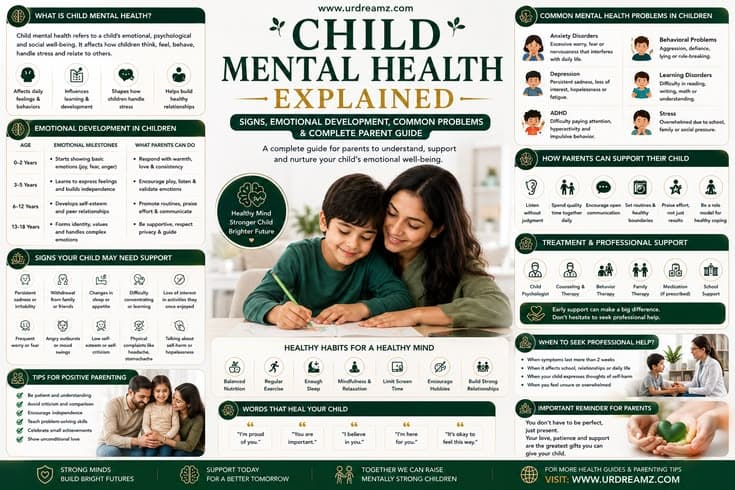
Child Mental Health Explained: Signs, Emotional Development, Common Problems and Complete Parent Guide
Mental health is not something that begins in adulthood. It begins at birth. Every child is born into a world they must learn to understand emotionally, socially, and psychologically, and the experiences, relationships, and support they receive during childhood lay the foundation for their mental wellbeing not just through childhood but across their entire lifetime. Yet despite this profound importance, mental health remains one of the least discussed aspects of child development in most families. Parents who monitor their children's weight, height, nutrition, sleep, and academic progress often give little deliberate attention to the emotional and psychological development happening simultaneously.
This comprehensive guide changes that. It gives parents a thorough, practical understanding of how children's mental health develops at each age, what signs might indicate a child is struggling, what the most common childhood mental health challenges look like and how they are addressed, and most importantly what parents can do every single day to build the emotional foundations that will support their children through everything life brings. Mental health is not something children either have or do not have. It is something that is actively shaped by the environment, relationships, and habits that surround them.
1. What Is Child Mental Health
Child mental health refers to the overall psychological, emotional, and social wellbeing of a child. It encompasses how children think, feel, and behave, how they manage their emotions, how they form and maintain relationships, how they handle challenges and stress, how they see themselves, and how they engage with the world around them. Good mental health does not mean a child is always happy or never has problems. It means the child has the inner resources and outer support to navigate the difficulties of growing up in a healthy and adaptive way.
Mental health in children is best understood not as a single dimension but as a set of interconnected capacities: the ability to recognize and express emotions appropriately, the ability to form secure and trusting attachments to caregivers and later to peers, the ability to manage frustration and disappointment without being overwhelmed, the ability to develop a positive and realistic sense of self, the ability to engage in age-appropriate learning and social activities, and the ability to recover from setbacks without being destabilized.
These capacities do not emerge spontaneously. They are built through the day-to-day experiences of childhood, and the quality of those experiences, particularly the quality of the child's relationships with their primary caregivers, is the single most powerful determinant of mental health outcomes in the short and long term.
| Dimension | What It Means | How It Develops |
|---|---|---|
| Emotional Health | Ability to recognize, express, and manage a range of emotions including difficult ones. Emotional awareness and appropriate expression | Through secure attachment with caregivers. Through responsive parenting that acknowledges emotions. Through practice and modelling |
| Psychological Wellbeing | Positive sense of self. Ability to find meaning and enjoyment in activities. Inner security and self-worth that does not depend entirely on external validation | Through consistent love and acceptance. Through appropriate challenge and mastery experiences. Through positive feedback that focuses on effort and growth |
| Social Wellbeing | Ability to form and maintain relationships. Social skills and empathy. Conflict resolution. A sense of belonging | Through peer interactions and play. Through adult modelling of healthy relationships. Through teaching and practicing social skills explicitly |
| Behavioral Regulation | Ability to manage impulses, delay gratification, follow routines, and behave appropriately across different contexts | Through consistent, warm, and clear boundaries. Through executive function development supported by sleep and nutrition. Through practice in regulated environments |
| Cognitive and Learning Health | Engagement and motivation in learning. Ability to concentrate and persist with challenges. Curiosity and exploration | Through a secure emotional base from which to explore. Through appropriate academic challenge. Through adequate sleep, nutrition, and physical activity |
2. Why Child Mental Health Matters
Half of all lifetime mental health conditions emerge by age 14 and three-quarters by age 24. This means that childhood and adolescence are the critical windows during which the brain architecture underlying mental health is being constructed, and during which early experiences of difficulty or support have their most profound and lasting effects. Addressing mental health early, during these developmental windows, is dramatically more effective than attempting to address it later.
Beyond preventing future mental illness, good mental health in childhood supports virtually every other dimension of child development and functioning. Mental health and physical health are inseparable: chronic stress and emotional difficulties directly affect immune function, cardiovascular health, and physical growth. Mental health and cognitive development are deeply intertwined: anxiety, depression, trauma, and chronic stress all directly impair the brain regions responsible for learning, memory, and executive function. Mental health and academic performance are closely linked: emotionally struggling children cannot access their full cognitive capacity regardless of their innate intelligence. And mental health and social development are inseparable: children's ability to form healthy relationships, navigate conflict, develop empathy, and experience the belonging and connection that sustain wellbeing all depend on their mental health foundations.
Investing in children's mental health is not a luxury or a response to crisis. It is the foundational infrastructure of healthy human development, as essential as physical nutrition.
3. Emotional Development by Age
| Age Stage | Normal Emotional Development | What Parents Can Do |
|---|---|---|
| Infants 0 to 12 months | Expresses distress through crying and comfort through calming. Recognizes and responds to caregiver faces and voices. Begins to show pleasure, disgust, and interest. Develops basic trust vs mistrust through the consistency of caregiver responses to needs. Attachment to primary caregiver forms | Respond consistently and warmly to crying and distress. Hold, comfort, and engage regularly. Talk, sing, and make eye contact. The foundation of all future emotional development is built here through responsive caregiving |
| Toddlers 1 to 3 years | Strong and rapid emotional experiences with limited regulation capacity. Separation anxiety is normal and expected. Tantrums are developmentally normal expressions of emotional overwhelm. Beginning to recognize self as separate individual with own preferences. Parallel play (playing alongside but not yet with other children). Strong attachment to caregivers | Validate emotions even when managing behavior. Stay calm during tantrums. Name emotions to help develop emotional vocabulary. Maintain predictable routines. Begin teaching simple coping strategies like deep breaths. Offer choices within appropriate limits |
| Preschoolers 3 to 5 years | Vocabulary for emotions expands significantly. Beginning to develop empathy and understand others have different feelings. Make-believe play helps process emotions and experiences. Fears become more prominent, particularly of imaginary or unknown things. Beginning to regulate emotions more effectively with adult support. Strong need for parental approval and security | Encourage play as emotional processing. Read books about feelings. Discuss emotions in stories and in real life. Address fears with validation and calm reassurance rather than dismissal. Begin teaching problem-solving approaches. Model emotional regulation |
| School Age 6 to 12 years | Emotional experiences become more complex and less openly expressed. Peer relationships become increasingly central to emotional wellbeing. Developing more sophisticated empathy. Beginning to understand that feelings and expressions can differ. Self-concept expands to include academic, social, and athletic dimensions. Comparing self to peers begins. More capable of emotional regulation with appropriate tools | Stay connected and available even as children seek more independence. Show genuine interest in their world including friendships and school experiences. Teach specific emotional regulation skills. Monitor peer relationships and school wellbeing. Create safe space for discussing difficult feelings |
| Teenagers 13 to 18 years | Intense emotional experiences driven by significant brain development in the limbic (emotional) system while the prefrontal cortex (regulation) is still maturing. Identity formation is the central developmental task. Peer relationships become dominant. Risk-taking and sensation seeking are biologically driven. Emotional intensity can feel overwhelming and is genuinely physiologically different from adult emotional experience | Maintain connection without overcontrolling. Respect growing autonomy while maintaining appropriate limits. Listen without immediate problem-solving or judgment. Be curious about their world and validate the intensity of their experience. Monitor for concerning symptoms while normalizing typical teenage struggles |
4. Signs of Good Mental Health in Children
Recognizing mental health involves knowing not just what problems look like but what health looks like. A mentally healthy child is not a perfectly behaved or uniformly happy child. Children experience the full range of human emotions including sadness, anger, fear, and frustration, and these are healthy and appropriate. What characterizes good mental health is not the absence of these emotions but the child's capacity to experience them, express them, and recover from them without being derailed.
| Domain | Signs of Healthy Mental Wellbeing |
|---|---|
| Emotional | Experiences a range of emotions and expresses them age-appropriately. Recovers from upsets within a reasonable timeframe. Does not stay stuck in negative emotional states. Generally has more positive than negative emotional experiences |
| Behavioral | Behavior is generally appropriate for their age. Can follow reasonable rules and routines with expected resistance. Manages transitions and changes with manageable difficulty. Able to delay gratification age-appropriately |
| Social | Has at least one meaningful friendship. Shows empathy and interest in others. Engages comfortably in peer interactions. Can handle conflict and disappointment without disproportionate distress |
| Self-concept | Generally positive view of self overall even while recognizing areas for growth. Comfortable seeking help when needed. Not excessively self-critical. Feels generally loved and valued |
| Engagement | Shows interest and enthusiasm in at least some activities. Engages with learning. Participates in family and social activities. Curious about the world |
| Physical | Sleeping and eating reasonably well. Has adequate energy for age-appropriate activities. Physical complaints are within expected range without excessive somatic symptoms |
5. Ten Signs a Child May Be Struggling Emotionally
These signs do not automatically indicate a serious mental health problem. Many are normal responses to specific stressors or developmental phases. However, when these signs are persistent, intensify over time, or significantly interfere with the child's daily functioning and quality of life, they deserve closer attention and possibly professional evaluation. The key questions are: how long has this been happening, how significantly is it affecting the child's daily life, and is it getting better or worse over time.
| # | Sign | What It May Look Like | What to Do |
|---|---|---|---|
| 1 | Social withdrawal | Spending significantly less time with family and friends than usual. Preferring isolation consistently. Giving up previously enjoyed social activities. Pulling away from relationships that used to matter | Gently notice and name what you observe without pressure. Create low-pressure one-on-one time. Listen without immediately trying to fix. If withdrawal is persistent and intensifying, consult a professional |
| 2 | Loss of interest in previously enjoyed activities | Hobbies, sports, creative activities, or social interests that the child previously engaged in enthusiastically are now avoided or met with apparent indifference. This is distinct from the normal shifting of interests | Distinguish normal interest change from withdrawal. Explore gently what the child is experiencing. If accompanied by other signs, take seriously as a potential symptom of depression |
| 3 | Increased emotional reactivity | Small frustrations trigger disproportionately large emotional responses. Difficulty recovering from upset. Low frustration tolerance that represents a notable change from the child's usual pattern | Validate the emotion while maintaining calm. Avoid dismissing as overreacting. Explore what might be happening underneath the surface. Ensure sleep and nutrition are adequate as both significantly affect emotional regulation |
| 4 | Persistent worry or fear | Anxiety about specific things or generalized worry that is frequent, intense, and difficult for the child to manage. Fear that prevents participation in age-appropriate activities. Reassurance that does not last | Listen and validate rather than dismiss or minimise. Avoid accommodating all avoidance as this can reinforce anxiety. Seek professional evaluation if anxiety is significantly limiting the child's life |
| 5 | Changes in sleep | Significant difficulty falling asleep, staying asleep, or sleeping much more than usual. Nightmares that are frequent and distressing. Resistance to sleeping alone that is new or escalating beyond the developmental norm | Review sleep hygiene. Address specific fears if present. If sleep changes are significant and persistent, discuss with a pediatrician as sleep and mental health are bidirectionally connected |
| 6 | Avoiding talking about feelings | Child who was previously open becomes emotionally closed. Active resistance to discussing inner experience. Shutting down conversations about emotions or difficult topics | Create safety through low-pressure connection. Share your own emotions appropriately to model openness. Avoid forcing conversations. Build the relationship that makes sharing possible. Seek professional support if emotional shutdown is concerning |
| 7 | Difficulty concentrating | School work becomes harder. Teacher reports of attention difficulties that are new or escalating. Child seems preoccupied, distracted, or forgetful in ways that represent a change from their baseline | Rule out practical causes including sleep deprivation and excessive screen time. Discuss with teacher to understand the full picture. Consider professional evaluation for learning or attention difficulties if persistent |
| 8 | Negative self-talk and low self-worth | Frequent statements suggesting negative self-evaluation: I am stupid, nobody likes me, I cannot do anything right. Excessive self-criticism. Visible shame or humiliation in response to mistakes. Reluctance to try new things due to fear of failure | Notice and gently challenge negative self-talk without dismissing it. Focus on effort and growth rather than outcomes. Provide genuine specific positive feedback. If negative self-talk is intense or persistent, seek professional evaluation |
| 9 | Persistent low energy or motivation | Energy levels that stay significantly low for extended periods unrelated to obvious physical illness. Pervasive lack of motivation. Everything feels effortful. This is distinct from normal tiredness or temporary slumps | Ensure adequate sleep and nutrition. Discuss with pediatrician to rule out physical causes including anemia and thyroid issues. If low energy persists without physical explanation, consider mental health evaluation |
| 10 | Becoming less willing to come to parents for support | Child who previously sought parental comfort in difficult moments now manages entirely alone or goes to no one. This can be a sign that the child does not believe support will be available or helpful, which warrants relationship repair | Examine whether the parent-child relationship has created safety for vulnerability. Reduce responses that discourage sharing (dismissing, overreacting, problem-solving before listening). Rebuild the bridge of connection through reliable, non-judgmental availability |
6. Child Anxiety: Symptoms, Causes and Support
Anxiety is the most common mental health challenge in childhood, affecting approximately 10 to 20 percent of children at some point in their development. It is important to distinguish between the normal anxiety that is part of healthy development (separation anxiety in toddlers, fear of the dark in preschoolers, worry about school performance in school-age children) and clinical anxiety that is persistent, disproportionate, and significantly interferes with the child's daily functioning.
Anxiety in children often does not look like adult anxiety. Rather than describing worry or fear, children frequently express anxiety through physical symptoms (stomach aches, headaches, nausea before school or social events), behavioral avoidance (refusing to attend school, avoiding social situations, clinging excessively), emotional outbursts, sleep problems, and excessive reassurance-seeking. Parents who understand these varied presentations are better positioned to identify anxiety early and respond effectively.
| Type of Anxiety | Age It Most Commonly Appears | Key Symptoms | Support Approaches |
|---|---|---|---|
| Separation Anxiety | Peaks between 8 and 14 months, typically again at school entry. Problematic if intense beyond preschool years | Extreme distress when separated from parent. Refusal to attend school or activities. Physical symptoms before separation. Clinging and difficulty settling | Consistent warm goodbyes rather than sneaking away. Predictable reunion. Gradually building tolerance. Professional support if severely impairing |
| Social Anxiety | Becomes more prominent in middle childhood and escalates in adolescence | Intense fear of embarrassment or judgment. Avoiding social situations. Physical symptoms in social settings. Excessive concern about others' opinions | Gradual exposure to feared social situations with support. Teaching social skills explicitly. Cognitive behavioral approaches. Professional therapy for severe cases |
| Generalized Anxiety | Can begin at any age. Often becomes more prominent in school-age children | Pervasive worry about multiple topics including school, health, family, world events. Difficulty controlling worry. Physical symptoms including muscle tension, headaches, stomach aches, sleep difficulties | Teaching worry management strategies. Challenging catastrophic thinking. Physical activity and sleep as anxiety reducers. Professional CBT therapy for moderate to severe cases |
| Specific Phobias | Can emerge at any age. Different fears are more common at different developmental stages | Intense disproportionate fear of a specific object or situation that causes avoidance. Extreme distress on exposure. Recognition in older children that the fear is excessive | Graduated exposure therapy is the most effective evidence-based approach. Professional support for severe phobias that significantly limit functioning |
| Health Anxiety | More common in school age and adolescence | Excessive worry about having or developing serious illness. Frequent checking of body for symptoms. Reassurance-seeking that provides only temporary relief | Reduce excessive medical consultations that reinforce anxiety. Address underlying fear rather than repeatedly reassuring. CBT approaches specifically for health anxiety |
The physical symptoms of anxiety deserve particular mention because they are often the reason children are brought to medical attention without anxiety being initially suspected. Racing heartbeat, shortness of breath, trembling, sweating, stomach pain, nausea, and dizziness are all genuine physical manifestations of the stress response being activated. Children experiencing these symptoms are not making them up. Understanding this helps parents respond with compassion rather than skepticism.
7. Childhood Depression: What Parents Should Know
Depression in children is often misunderstood and underrecognized because it frequently does not look the same as depression in adults. While adult depression is characterized by persistent sadness, childhood depression may be more visible as irritability, angry outbursts, physical complaints, social withdrawal, or loss of motivation. A depressed child may appear moody, difficult, or lazy rather than visibly sad, which means that depression can be missed or misattributed to behavioral problems or adolescent attitude.
Childhood depression is real, common, and treatable. Approximately 2 to 3 percent of children and 5 to 8 percent of adolescents experience clinical depression at any given time. It is not a character weakness, a result of bad parenting, or something children should simply be able to push through. It involves genuine neurochemical changes in the brain that affect mood, motivation, energy, sleep, appetite, and cognitive function.
| Symptom Area | How It Appears in Children | How It Appears in Adults |
|---|---|---|
| Mood | May appear primarily as irritability, crankiness, or emotional explosiveness rather than visible sadness. The underlying low mood is present but expressed differently | Persistent sadness, emptiness, or hopelessness is more typically the presenting mood |
| Energy | Persistent fatigue, reluctance to do activities, seems tired all the time without clear physical cause. May appear as laziness to observers | Fatigue and loss of energy. Feeling slowed down |
| Sleep | Can involve either too much sleep, difficulty sleeping, or early morning waking | Often insomnia, early waking, or hypersomnia |
| Physical symptoms | Frequent headaches, stomach aches, and other physical complaints without clear medical explanation are common presentations of depression in children | Less commonly the primary presenting complaint |
| School and activities | Declining academic performance, increasing school refusal, loss of interest in sports, hobbies, and friendships | Difficulty working, reduced productivity, social withdrawal |
| Self-talk | Negative statements about self, believing they are worthless or that nothing will get better. In severe cases, comments about death or not wanting to be alive should always be taken seriously and evaluated professionally | Persistent negative thoughts, worthlessness, hopelessness, suicidal ideation in severe cases |
Any statements by a child about not wanting to be alive, about death being better, or about feeling like a burden to others must be taken seriously and evaluated by a mental health professional promptly. These statements should never be dismissed as attention-seeking. Even if the child does not have active suicidal intent, these expressions indicate a level of distress that deserves immediate professional attention and a compassionate, non-panicked response from the parent that communicates that they are heard, taken seriously, and not alone.
8. ADHD Explained for Parents
Attention Deficit Hyperactivity Disorder (ADHD) is one of the most common neurodevelopmental conditions of childhood, affecting approximately 5 to 10 percent of children. Despite its prevalence and the substantial research base supporting its reality as a brain-based condition, ADHD remains subject to significant misconception and stigma. Understanding ADHD accurately helps parents advocate effectively for their children and provide the support that genuinely helps.
ADHD is not a problem of willpower, motivation, or parenting. It reflects genuine neurological differences in how the brain develops and functions, particularly in the prefrontal cortex regions responsible for executive function including attention regulation, impulse control, working memory, time management, and emotional regulation. Children with ADHD are not choosing to be inattentive or impulsive. Their brains are genuinely less efficient at the self-regulatory functions that these tasks require.
| Presentation | Primary Features | How It Looks in Children | Common Misconceptions |
|---|---|---|---|
| Predominantly Inattentive | Difficulty sustaining attention, easily distracted, forgetful in daily activities, does not seem to listen, difficulty organizing tasks, loses things | The daydreamer who cannot keep track of homework, forgets instructions, and seems to be physically present but mentally elsewhere. More common in girls and often missed because behavior is not disruptive | Often described as lazy or not trying. Girls with this presentation are frequently missed entirely or diagnosed much later than boys |
| Predominantly Hyperactive-Impulsive | Fidgeting and squirming, difficulty staying seated, running or climbing at inappropriate times, excessive talking, blurting out answers, difficulty waiting turns, interrupting | The child who cannot sit still in class, seems to have a motor that never stops, acts before thinking, and has difficulty in structured environments | Assumed to be a discipline problem or poor parenting rather than a neurological difference. This presentation is often overdiagnosed in boys and underdiagnosed in girls |
| Combined Presentation | Significant symptoms of both inattention and hyperactivity-impulsivity | Both the distractibility and focus difficulties of inattentive type combined with the physical restlessness and impulsivity of the hyperactive type | The most commonly recognized presentation but still frequently attributed to willpower or discipline rather than neurological differences |
Effective ADHD support typically involves a combination of approaches: educational accommodations that adjust the learning environment to support rather than constantly challenge the child's neurological differences, behavioral strategies that build executive function skills explicitly and provide external structure, parenting approaches that are warm and consistent rather than punitive, and for moderate to severe cases, consideration of evidence-based medication that helps the brain regulate the neurotransmitter systems involved in attention and impulse control. The goal is not to cure ADHD but to help the child develop their strengths while managing the genuine challenges effectively.
9. Autism Spectrum Disorder and Emotional Wellbeing
Autism Spectrum Disorder (ASD) is a neurodevelopmental condition characterized by differences in social communication and interaction, and the presence of restricted and repetitive patterns of behavior, interests, and activities. It is called a spectrum because it encompasses an extraordinarily wide range of presentations, abilities, and support needs, from children who are largely non-speaking with significant daily living support needs to highly articulate individuals with strong intellectual capabilities who nonetheless experience significant social and sensory challenges.
The emotional wellbeing of autistic children is a distinct and critically important topic. Autistic children experience the full range of human emotions, often with great intensity, but may have difficulty identifying their own emotional states (alexithymia), expressing emotions in neurotypical ways, or regulating emotional experiences that can escalate rapidly from manageable to overwhelming. The sensory environment plays a significant role in autistic children's emotional wellbeing: sensory overload from lights, sounds, textures, or smells that others might barely notice can create genuine physiological distress that builds toward emotional and behavioral crisis.
Understanding autistic children's behavior through a neurodivergent lens rather than a behaviorist deficit lens fundamentally changes how parents and educators respond. A meltdown is not a manipulative behavior choice. It is the visible expression of a nervous system that has exceeded its capacity to process and regulate. What these children need in those moments is safety, reduced sensory input, calm presence, and time, not consequences or lectures.
10. Anger and Behavioral Problems in Children
| Behavior | What Is Usually Happening Underneath | Effective Response | Approaches That Make Things Worse |
|---|---|---|---|
| Tantrums (toddlers and preschoolers) | Emotional overwhelm in a nervous system that lacks the regulatory capacity to manage big feelings. The emotional experience is real even if the trigger seems minor to adults. Hunger, tiredness, and transitions make tantrums more likely | Stay calm. Do not try to reason during the peak. Ensure physical safety. After the storm passes, reconnect warmly and then briefly name what happened. Prevention through adequate sleep and routine | Yelling, threatening, or punishing during the tantrum itself. Excessive reasoning during peak upset. Shame-based responses that make the child feel bad for having emotions |
| Explosive anger in older children | Often indicates difficulty with emotional regulation that is beyond the child's current coping capacity. May be response to accumulated stress, underlying anxiety or depression, neurodevelopmental differences like ADHD, or trauma response | Address triggers if identifiable. Teach anger management strategies during calm times, not in the heat of the moment. Validate the feeling while maintaining limits on harmful behavior. Explore what is driving the intensity | Responding to the child's anger with parental anger which escalates rather than de-escalates. Punishing without addressing the underlying need or skill gap. Shaming the child for the emotion rather than the behavior |
| Oppositional behavior | Developmentally normal assertion of autonomy (especially toddlers and adolescents). Can also indicate anxiety, depression, ADHD, or response to excessively controlling environments. The need for autonomy and agency is a genuine psychological need | Offer appropriate choices within non-negotiable limits. Pick battles thoughtfully. Examine whether the environment is providing appropriate autonomy for the child's developmental stage. Seek assessment if oppositional behavior is severe and consistent | Power struggles over every issue. Environments where a child has no genuine agency. Punitive responses that escalate the power dynamic |
| Lying | Normal developmental behavior reflecting cognitive development (children under 4 often cannot clearly distinguish reality from wishful thinking). Older children lie primarily to avoid punishment, protect themselves, or achieve desired outcomes. Habitual lying in older children can indicate anxiety or significant fear of consequences | Examine whether punishment for honesty is encouraging lying. Praise honesty even when the truth is uncomfortable. Address the underlying issue rather than focusing exclusively on the lie. Create an environment where truth is safer than lying | Extreme punishment that makes honesty feel too risky. Calling children liars as an identity label. Excessive focus on catching lies rather than building honesty |
11. Stress in Children: Causes, Signs and Solutions
Stress is not exclusively an adult experience. Children of all ages experience stress, and the physiological stress response in children is as real and as taxing on the body as it is in adults. What causes stress, how it is expressed, and how it is best addressed varies by age and individual temperament, but the fundamental biology of stress and its consequences for health and development are the same across the lifespan.
A critical distinction for parents is between acute stress and chronic stress. Brief, manageable stressors in the context of supportive relationships can actually build resilience by giving children practice managing and recovering from challenges. This is sometimes called tolerable stress. Chronic or severe stress, particularly without the buffer of supportive adult relationships, is genuinely damaging to developing brains and bodies. It keeps the stress response system in a state of chronic activation that directly damages the hippocampus (memory and learning center), impairs the prefrontal cortex (executive function), and dysregulates the immune system.
| Age Group | Common Stress Sources | How Stress Typically Shows Up | Parental Support Strategies |
|---|---|---|---|
| Toddlers 1 to 3 years | Transitions and change. Separations from parents. New siblings. Moving. Changes in routine. Parental conflict or stress | Regression (returning to earlier behaviors like thumb-sucking or bed-wetting). Increased clinginess. Sleep difficulties. Increased tantrums | Maintain routine as much as possible. Increase physical connection and reassurance. Name feelings. Protect from adult stress where possible. Limit screen exposure to adult conflict or distressing news |
| Preschoolers 3 to 5 years | Starting preschool or childcare. Social conflicts. Family changes including divorce, illness, or bereavement. Sensory overwhelm. Parental conflict | Nightmares and sleep difficulties. Regression. Physical complaints (tummy aches). Behavioral outbursts. Increased fears | Consistent routine and predictability. Emotional validation and open conversations at an age-appropriate level. Play as the primary processing medium for stress. Physical activity and outdoor play |
| School Age 6 to 12 years | Academic pressure. Peer relationships and conflict. Bullying. Family stress. Extracurricular overwhelm. News and world events. Parental conflict or mental health issues | Physical complaints before school. Declining academic performance. Sleep difficulties. Increased irritability. Withdrawal. Worry and rumination | Regular check-ins about school and social life. Teach specific stress management strategies. Review schedule for genuine overwhelm. Maintain family connection time. Discuss world events honestly at age-appropriate level |
| Teenagers 13 to 18 years | Academic pressure and future uncertainty. Social media and peer comparison. Romantic relationships. Identity questions. Family dynamics. World events. Substance use pressure | Irritability, withdrawal, sleep changes, mood instability. Physical complaints. Declining academic performance. Risk-taking behavior | Maintain connection without surveillance. Listen more than advise. Validate the genuine difficulty of their experience. Model healthy stress management. Monitor for concerning symptoms without overreacting to normal teen struggles |
12. Bullying and Children's Mental Health
Bullying is not a normal part of growing up that children should simply endure and overcome. It is a significant and documented risk factor for a range of mental health difficulties including depression, anxiety, low self-esteem, school refusal, and in severe cases, suicidal ideation. Understanding what bullying actually is, how it manifests in the digital age, and how to support a child who is experiencing it is essential knowledge for today's parents.
Bullying is defined by three characteristics: it is intentional (not an accident), it involves a power imbalance (the bully has some advantage whether social, physical, or numerical over the target), and it is repeated over time (not a single conflict). Bullying can take physical forms (hitting, pushing), verbal forms (name-calling, humiliation, threats), relational forms (exclusion, rumor-spreading, social manipulation), and increasingly, cyberbullying forms that can reach children in their own homes at any time of day or night, making it uniquely intrusive and hard to escape.
| Category | Possible Signs |
|---|---|
| Behavioral changes | Reluctance or refusal to go to school. Choosing unusual routes to or from school. Loss of interest in school activities they previously enjoyed |
| Emotional changes | Coming home consistently upset, withdrawn, or distressed. Increased irritability and anxiety. Unexplained crying |
| Physical signs | Unexplained injuries. Frequently lost or damaged belongings. Complaints of headaches or stomach aches particularly on school days |
| Social changes | Sudden loss of friends. Changes in social media use or distress following phone or device use. Avoiding social situations they previously enjoyed |
| Self-esteem | Increasing negative self-talk. Feeling worthless or unwanted. Statements suggesting they feel different or inferior to peers |
The parent's response to disclosure of bullying significantly determines whether the child continues to seek help. Responding with panic, anger, or immediate aggressive action (going to confront the other child's parents, threatening consequences) can make children less likely to share because they fear losing control of the situation. The most helpful initial response is calm, validating listening that communicates: I believe you, I am glad you told me, and I am going to help you. Then working collaboratively with the child and the school to address the situation systematically.
13. School Stress and Academic Pressure
Academic pressure has increased substantially over recent decades. Children face more testing, more homework, higher stakes assessments, and greater parental and societal expectations at younger ages than previous generations. While some academic challenge is developmentally appropriate and beneficial, there is clear evidence that excessive academic pressure, particularly in the early years, is harmful to children's mental health and can paradoxically undermine the intrinsic motivation for learning that is the foundation of long-term academic success.
Children who are chronically stressed about academic performance show measurable changes in the brain regions responsible for learning and memory. The hippocampus, which is critical for the formation and consolidation of new memories, is directly impaired by chronic stress hormones. A stressed child is not just emotionally distressed but genuinely less neurologically capable of learning efficiently. This is the paradox of excessive academic pressure: it impairs the very brain functions it is trying to improve.
Parents can support healthy academic wellbeing by emphasizing effort and growth over results and comparison, maintaining open communication about school without interrogating for performance, ensuring adequate sleep and physical activity which are two of the most evidence-supported determinants of both academic performance and mental wellbeing, and watching for signs that academic pressure has crossed from motivating to distressing.
14. Social Media and Child Mental Health
| Risk Factor | How It Affects Mental Health | Protective Strategies |
|---|---|---|
| Social comparison and inadequacy | Social media presents highly curated, filtered highlights of others' lives. Repeated exposure creates unrealistic benchmarks and generates feelings of inadequacy, envy, and low self-worth. Particularly damaging for adolescent girls whose self-image is already vulnerable during identity formation | Discuss the curated nature of social media content openly. Help children understand the difference between online presentation and real life. Encourage real-world activities and relationships as the foundation of self-worth |
| Cyberbullying and harassment | Online environments create opportunities for cruelty with reduced inhibition (perpetrators feel less real accountability). Cyberbullying reaches children in their own homes at any time, making escape impossible and sleep particularly vulnerable | Establish clear agreements about device use times and locations. Keep lines of communication open. Know children's online social worlds without surveilling in ways that destroy trust. Have phones out of bedrooms at night |
| Sleep disruption | Blue light suppresses melatonin. Social media engagement keeps the emotional and cognitive brain activated. Notification anxiety disrupts sleep. Evening social media use consistently associated with significantly later sleep onset, shorter sleep duration, and poorer sleep quality | Devices charged outside the bedroom overnight. No social media in the hour before intended sleep. Consistent family agreements rather than individual rules that can be negotiated |
| Anxiety and FOMO | Fear of missing out drives compulsive checking and constant connectivity that increases baseline anxiety. Social exclusion visible on social media (seeing photos of events not invited to) is uniquely painful | Support real-world social connection as the primary social foundation. Discuss FOMO openly and normalise taking breaks from social media. Model healthy relationship with technology yourself |
| Exposure to harmful content | Algorithms designed to maximize engagement serve increasingly extreme content. Children can encounter content about self-harm, eating disorders, extremist ideas, and graphic violence through algorithm-driven recommendations | Maintain age-appropriate parental oversight especially for younger users. Use available parental controls. Create open communication so children can tell you when they encounter disturbing content |
15. Childhood Trauma: Types and Healing
Trauma in childhood is more common than many parents and professionals realize. Research suggests that approximately two-thirds of children experience at least one potentially traumatic event before age 16. Trauma does not mean only the catastrophic or obvious events that come to mind first. It includes anything that overwhelms a child's capacity to cope and leaves lasting effects on how they see themselves, others, and the world.
The impact of a traumatic event depends not only on the event itself but on the child's age, temperament, prior experiences, and crucially on the quality of support they receive afterward. Children with at least one stable, responsive adult relationship consistently show better outcomes after trauma than children without such a relationship, even when the trauma itself was severe. This is the core insight that drives trauma-informed approaches to child support: healing happens in the context of safe, consistent, caring relationships.
| Type | Examples | Possible Impact |
|---|---|---|
| Physical Abuse | Any non-accidental physical harm to a child including hitting, shaking, burning, or excessive physical punishment | Fear responses, aggression, post-traumatic stress, difficulty trusting adults, shame |
| Emotional or Psychological Abuse | Persistent patterns that harm a child's sense of self including constant criticism, humiliation, rejection, threats, and emotional unavailability | Low self-worth, anxiety, depression, difficulty regulating emotions, problems with trust and attachment |
| Sexual Abuse | Any sexual activity involving a child, including exposure, touching, exploitation, and exposure to pornography | Post-traumatic stress, shame, anxiety, depression, behavioral changes, sexual behavior problems |
| Neglect | Failure to provide a child's basic physical needs (food, shelter, clothing, medical care) or emotional needs (warmth, attention, stimulation) | Developmental delays, attachment difficulties, low self-worth, difficulty trusting, chronic health problems |
| Witnessing Violence | Seeing or hearing domestic abuse, community violence, or other traumatic events even when the child is not the direct target | Post-traumatic stress, anxiety, hypervigilance, sleep problems, behavioral difficulties |
| Medical Trauma | Painful or frightening medical procedures, serious illness, accidents, hospitalization | Medical anxiety, avoidance, post-traumatic stress responses, fear of related triggers |
| Complex Trauma | Repeated, prolonged trauma in interpersonal relationships, often beginning in early childhood in caregiving relationships | Pervasive effects on attachment, self-regulation, self-concept, relationships, and biological systems including the stress response system |
| Natural Disasters and War | Earthquakes, floods, fires, displacement, conflict, refugee experiences | Post-traumatic stress, grief, anxiety, depression, developmental disruption |
Signs of trauma responses in children include sudden behavioral changes, regression to earlier developmental stages, nightmares and sleep problems, hypervigilance (seeming always on guard), avoidance of trauma-related reminders, emotional numbness or detachment, and in some children the paradoxical presentation of seeming fine initially followed by delayed emergence of symptoms. Children who have experienced trauma benefit most from professional trauma-focused therapy, particularly approaches with strong evidence bases such as Trauma-Focused Cognitive Behavioral Therapy (TF-CBT) for school-age children and adolescents.
16. Grief and Loss in Children
Children grieve, but they grieve differently from adults and their grief is frequently misunderstood as a result. Adults often expect grief to look consistently sad and withdrawn. Children's grief is frequently intermittent: a child can be visibly distressed one moment and playing happily the next, which can lead adults to incorrectly conclude that the child is not really grieving or does not fully understand the loss. In reality, children move in and out of grief because their developing brains and emotional systems cannot sustain intense grief for extended periods as adults can.
Children's understanding of death and loss changes dramatically with developmental stage. Toddlers and young preschoolers understand very little about permanence and may ask repeatedly when a deceased person is coming back. School-age children develop more accurate understanding of the permanence, universality, and inevitability of death. Teenagers understand death as adults do but their grief may be complicated by the identity and social concerns of adolescence.
Helpful responses to grieving children include honest age-appropriate explanations (avoiding confusing euphemisms like gone to sleep or lost for younger children), consistent routine and normal activities alongside appropriate space for sadness, maintaining the child's memories of the person who died, allowing all emotions including anger and relief without judgment, and maintaining the stability of remaining relationships and routines. Professional grief support is warranted when grief is significantly impairing functioning for an extended period or when the child has risk factors for complicated grief.
17. Emotional Intelligence: Building It in Children
Emotional intelligence, the ability to recognize, understand, manage, and effectively use emotions in ourselves and in our relationships with others, is one of the most powerful predictors of life success and wellbeing, arguably more consistently predictive than traditional cognitive intelligence in many domains. The good news for parents is that emotional intelligence is not fixed at birth. It is actively built through experience, teaching, and practice throughout childhood.
| Component | What It Means | How to Build It in Children |
|---|---|---|
| Self-awareness | Ability to recognize and accurately identify one's own emotional states | Name emotions regularly: it looks like you are feeling frustrated right now. Use feelings charts with younger children. Model your own emotional awareness by naming your feelings appropriately. Encourage journaling in older children |
| Self-regulation | Ability to manage emotional experiences and expressions appropriately. Not suppressing emotions but channeling them constructively | Teach specific regulation strategies: deep breathing, counting to ten, the body scan. Co-regulate with children (stay calm yourself so they can borrow your regulation). Practice strategies during calm times so they are available during storms |
| Motivation | Ability to manage emotions in service of goals. Persisting despite setbacks | Focus praise on effort and growth rather than fixed abilities. Share stories of your own setbacks and persistence. Encourage age-appropriate challenges that build mastery and the resilience that comes from overcoming difficulty |
| Empathy | Ability to recognize and understand others' emotional experiences. The foundation of compassion and healthy relationships | Discuss the feelings of characters in books and films. Ask how others might have felt in real situations. Model genuine empathy in your own relationships. Encourage perspective-taking exercises |
| Social skills | Ability to manage relationships effectively, communicate well, resolve conflicts, and work cooperatively | Provide regular, varied social experiences. Teach and practice specific social skills explicitly. Role-play difficult social situations. Address social problems collaboratively rather than solving them for children |
18. Building Self-Esteem and Confidence in Children
Self-esteem, a child's overall subjective evaluation of their own worth and value, develops through the accumulation of experiences and messages across childhood. It is built not through praise alone, and certainly not through indiscriminate or exaggerated praise that children can sense is not grounded in reality, but through the genuine experience of competence, connection, and contribution.
Competence is the experience of successfully doing something challenging. Children who are never allowed to struggle, fail, or problem-solve independently cannot build genuine competence-based self-esteem. The parent who rescues immediately at the first sign of difficulty, while well-intentioned, deprives the child of the foundational experience of mastery that builds authentic confidence. Allowing appropriate struggle within a supportive environment is one of the most important gifts parents can give.
Connection is the experience of being genuinely known, accepted, and valued by the important people in one's life. The parental relationship is the primary source of this connection in childhood. A child who feels genuinely seen, loved unconditionally, and valued for who they are rather than only for their achievements has a stable foundation of self-worth that becomes increasingly robust over time.
Contribution is the experience of mattering, of having a meaningful role and making a real difference. Children who have genuine responsibilities (age-appropriate chores, caring for a pet, helping younger siblings) experience themselves as genuinely needed and capable, which builds self-esteem in ways that no amount of verbal praise can replicate.
19. Emotional Resilience in Children
Resilience is not the absence of difficulty or the immunity to distress. It is the capacity to experience adversity and recover, to be bent without being broken, and to continue growing in and through difficult experiences. Resilience in children is not an innate fixed trait that some children have and others do not. It is a set of capacities and conditions that are actively built through experience, relationship, and appropriate challenge.
The research on resilience consistently identifies several key protective factors that buffer children against the potentially damaging effects of adversity. The single most consistently identified factor across all resilience research is the presence of at least one stable, caring, responsive adult relationship. When children have even one adult who genuinely knows them, reliably responds to their needs, believes in their capacity, and provides consistent connection, their ability to navigate even significant adversity is substantially enhanced.
| Resilience Factor | How to Build It |
|---|---|
| At least one stable, caring adult relationship | The parent is the primary resilience builder. Consistent presence, genuine knowing of the child, responsive support, and unconditional love build the secure base from which resilience grows |
| Belief in own capacity | A growth mindset that views abilities as developable through effort. Praise focused on process and strategy rather than fixed trait labels like smart or talented. Experience of overcoming manageable challenges |
| Problem-solving skills | Teach and practice a problem-solving process explicitly: identify the problem, brainstorm options, evaluate each option, choose and try, evaluate the result. Give children real problems appropriate to their age to work through |
| Ability to regulate emotions | The self-regulation skills discussed throughout this guide. Children who can manage their emotional responses to difficulty are better positioned to think clearly and act effectively in challenging situations |
| Sense of meaning and purpose | Activities, relationships, and values that create a sense of mattering and belonging. Spiritual or cultural frameworks that provide context for difficulty. Family narratives that include examples of overcoming hardship |
| Healthy routines and physical health | Adequate sleep, nutrition, physical activity, and consistent daily routines provide the biological and structural foundation from which emotional resilience is possible |
20. Twenty Ways Parents Can Support Child Mental Health Daily
| # | Action | Why It Matters |
|---|---|---|
| 1 | Listen to your child without interrupting or immediately problem-solving | Feeling genuinely heard is one of the most powerful mental health supports available. Most children need to feel understood before they can accept help |
| 2 | Give your full, undivided attention in regular one-on-one time, even 10 to 15 minutes daily | Undivided attention communicates that the child matters. Brief but consistent focused attention is more impactful than longer distracted presence |
| 3 | Validate their feelings even when you are setting a limit on their behavior | Validation communicates that feelings are acceptable even when certain actions are not. This is the distinction between emotions and behavior that is central to emotional health |
| 4 | Encourage open conversations by sharing your own feelings appropriately | Parents who model emotional openness give children permission to be open. Children learn from what they see at least as much as from what they are told |
| 5 | Praise effort and growth rather than innate ability or performance outcomes | Outcome praise creates anxiety about maintaining performance. Effort praise builds the growth mindset that supports resilience and intrinsic motivation |
| 6 | Create a safe, loving home environment where the child knows they are unconditionally valued | Unconditional love is the psychological home base from which all exploration, learning, and resilience become possible |
| 7 | Maintain consistent, predictable routines especially around meals, sleep, and transitions | Predictability reduces anxiety and creates the felt sense of safety that allows children to invest in learning and relationships rather than managing uncertainty |
| 8 | Encourage active play and physical movement every day | Physical activity directly reduces stress hormones, improves mood through endorphin release, improves sleep quality, and supports brain development in ways that benefit mental health |
| 9 | Teach and practice specific emotion management strategies during calm moments | Skills must be taught and practiced when the child is regulated. They are not available during emotional storms unless they have been well-practiced during calm |
| 10 | Protect adequate sleep as a non-negotiable daily priority | Sleep deprivation is one of the most direct and reliably documented impairments to emotional regulation, mood, behavior, and mental health in children of all ages |
| 11 | Provide nutritious food that supports brain health | Nutrition directly affects mood, energy, concentration, and the neurochemical systems involved in mental health. Poor nutrition compromises the biological substrate of mental wellbeing |
| 12 | Create appropriate boundaries around screen time and social media | Excessive screen time and unrestricted social media access are independently associated with poorer mental health outcomes in children especially adolescents |
| 13 | Support positive friendships and social opportunities | Peer connection is a critical source of belonging and wellbeing in childhood. Healthy friendships buffer against stress and build social competence |
| 14 | Give age-appropriate responsibilities and genuine roles in the family | Contribution builds self-worth and the experience of being genuinely needed and capable that no amount of verbal praise can replicate |
| 15 | Guide rather than solve: help children work through problems rather than fixing them | Supporting problem-solving builds competence and resilience. Immediately solving all problems for children communicates that they are not capable, which undermines confidence |
| 16 | Model healthy coping, emotional expression, and self-care yourself | Children learn what they live. Parents who model healthy mental health practices are providing one of the most powerful mental health interventions available |
| 17 | Cultivate gratitude and positive attention regularly | Gratitude practices shift attentional bias toward positive experiences and build the positive emotional resources that buffer against difficulty |
| 18 | Avoid comparison with siblings or peers | Comparison is one of the most reliable destroyers of self-worth. Each child is on their own developmental trajectory and deserves to be celebrated as an individual |
| 19 | Be patient and consistent in your support without expecting immediate change | Mental health develops slowly through the accumulation of many experiences. Sustainable change in children's emotional wellbeing requires sustained, patient, consistent parental support |
| 20 | Remind your child frequently and specifically that they are loved | Unconditional love, communicated explicitly and consistently, is the bedrock of mental health. Children can never hear this too often and the message must be backed by consistent behavior |
21. Fifteen Activities to Teach Children About Emotions
| # | Activity | What It Teaches | Best Age |
|---|---|---|---|
| 1 | Emotion Charades: Act out different emotions without words and have the child guess | Emotion recognition from physical cues. Body language and facial expression reading | 4 and above |
| 2 | Feelings Chart: A visual display of different emotions with faces for children to identify how they feel | Emotion vocabulary and self-awareness. Making emotions visible and nameable | 2 and above |
| 3 | Feelings Collage: Create a collage from magazine images representing different emotional experiences | Creative processing of emotions. Visual representation of the emotional world | 5 and above |
| 4 | Empathy Role Play: Act out different situations and explore how each character might feel | Perspective-taking. Empathy and understanding of others' emotional experiences | 4 and above |
| 5 | Emotion Journal: A private journal for recording feelings and experiences | Self-reflection, emotional processing, and the habit of noticing inner experiences | 7 and above |
| 6 | Mindful Breathing Exercises: Teaching different breathing techniques as emotion regulation tools | Practical self-regulation skill. The connection between breathing and emotional state | 4 and above |
| 7 | Emotion Sorting: Sort scenario cards into emotion categories and discuss different perspectives | That the same situation can produce different emotions in different people. Emotional complexity | 5 and above |
| 8 | Feelings Dice: A dice with different emotions; roll it and share a time you felt that emotion | Emotional vocabulary and comfortable sharing of emotional experiences. Family connection | 5 and above |
| 9 | Feelings Thermometer: A visual scale from calm to extremely upset for rating emotional intensity | Emotional intensity awareness. Gradations of feeling rather than all-or-nothing experience | 6 and above |
| 10 | Gratitude Jar: Write or draw something to be grateful for and add to a jar regularly | Positive attention focus. Gratitude as a daily practice. Building positive emotional resources | 5 and above |
| 11 | How Would You Feel Game: Present different hypothetical situations and discuss the feelings that would result | Emotional prediction and perspective-taking. Discussing emotions in a low-stakes hypothetical context | 4 and above |
| 12 | Emotion Memory Game: Match cards with different emotions as a paired card game | Emotion recognition and vocabulary in a playful engaging format | 3 and above |
| 13 | Role-Playing Difficult Conversations: Practice challenging social situations including disagreements and apologies | Social communication skills. Navigating conflict constructively. Building confidence in difficult interactions | 6 and above |
| 14 | Storytelling About Emotions: Create and share stories where characters experience and navigate different emotions | Narrative as a processing tool. Emotional problem-solving. Distancing through story that makes difficult topics approachable | 4 and above |
| 15 | Body Scan Meditation: Guide children to notice physical sensations associated with different emotional states | The physical dimension of emotions. Body awareness as an early emotional signal. The mind-body connection | 6 and above |
22. Healthy Lifestyle Habits That Support Mental Wellbeing
| Habit | Mental Health Benefit | How to Build It |
|---|---|---|
| Daily physical activity | Exercise reduces cortisol and adrenaline (stress hormones), releases endorphins, dopamine, and serotonin (wellbeing neurotransmitters), improves sleep quality, and provides natural outlet for physical stress energy. Multiple meta-analyses confirm that exercise has clinically significant antidepressant and anxiolytic effects in children | 60 minutes daily minimum. Outdoor play as default. Family exercise together. Sports and activities the child genuinely enjoys |
| Outdoor time in nature | Exposure to natural environments reduces cortisol, reduces rumination, restores attentional capacity, and exposes children to natural microbes that support gut-brain axis health. Even brief nature exposure produces measurable mood and stress improvements | Outdoor free play as priority. Walks in parks or natural areas. Gardening. Any genuine time in natural rather than built environments |
| Regular family mealtimes | Family mealtimes are one of the most consistently identified protective factors for child mental health in research. They provide connection, predictability, and the daily opportunity for family communication that builds relationship and belonging | Prioritize at least one family meal daily. Phones away from the table. Family conversation as the norm. Protect this time from schedule encroachment |
| Creative expression | Art, music, writing, drama, and other creative activities provide outlets for emotional processing, build identity and self-worth, generate the flow state that is profoundly beneficial for mental wellbeing, and provide alternatives to screen-based entertainment | Support children's creative interests without pressure for performance. Provide materials. Make creative activities part of family life. Value process over product |
| Adequate and consistent sleep | Sleep is foundational to every dimension of mental health as detailed in the previous article in this series. Emotional regulation, mood stability, stress management, and resilience all depend on adequate sleep | Age-appropriate consistent bedtimes. Screen-free bedroom. Consistent routine. Protect sleep as a health necessity |
23. Sleep and Child Mental Health
The bidirectional relationship between sleep and mental health is one of the most robustly established findings in child mental health research. Mental health difficulties reliably disrupt sleep, and sleep difficulties reliably worsen mental health. Anxiety, depression, ADHD, and autism spectrum disorder all commonly include significant sleep problems as part of their presentation. And inadequate sleep in children without pre-existing mental health difficulties significantly increases the risk of developing anxiety and depression over time.
The mechanisms are well understood. Sleep deprivation increases amygdala reactivity (the emotional alarm system) and impairs prefrontal cortex function (the rational regulation system) in ways that are directly analogous to the brain changes seen in anxiety and depression. A sleep-deprived child's brain is in a state that closely resembles an anxious or depressed brain in terms of emotional reactivity, cognitive rigidity, and social sensitivity.
When a child is experiencing mental health difficulties, addressing sleep should be one of the first priorities because sleep improvement reliably leads to measurable improvements in mood, emotional regulation, and behavioral functioning. This does not mean that sleep improvement alone is sufficient treatment for significant mental health conditions, but it means that any mental health support plan that ignores sleep is missing one of the most impactful available interventions.
24. Nutrition and Brain Health
The gut-brain axis, the complex bidirectional communication network between the digestive system and the brain, is increasingly recognized as profoundly relevant to mental health. Approximately 95 percent of the body's serotonin, one of the primary neurotransmitters involved in mood regulation, is produced in the gut. The diversity and health of the gut microbiome directly influence the production of neurotransmitters and neurochemicals that affect mood, cognition, and stress resilience.
Key dietary factors for brain and mental health include adequate omega-3 fatty acids from fatty fish, walnuts, and flaxseeds, which are essential structural components of brain cell membranes and which reduce the inflammatory signaling associated with depression. Adequate protein provides the amino acid tryptophan that is the precursor for serotonin production. The B vitamins, particularly folate, B6, and B12, are essential cofactors in neurotransmitter synthesis. Magnesium supports the calming GABA neurotransmitter system and is found in nuts, seeds, legumes, and dark leafy greens. And dietary fiber from diverse plant foods nourishes the gut microbiome that influences the gut-brain axis communication.
Conversely, diets high in ultra-processed foods, refined sugars, and artificial additives are increasingly associated with poorer mental health outcomes in children. High sugar intake promotes inflammatory gut microbiome changes and contributes to blood sugar dysregulation that directly affects mood and energy stability. Ensuring that children eat a broadly nutritious diet rich in diverse whole foods is not just a physical health intervention but a mental health one.
25. Mindfulness and Relaxation for Children
| Activity | How to Do It | Mental Health Benefit | Best Age |
|---|---|---|---|
| Belly Breathing (Deep Breathing) | Place a stuffed animal on the belly. Breathe in slowly to make the animal rise. Breathe out slowly to make it fall. Repeat five times | Activates the parasympathetic nervous system, reducing stress hormones and promoting calm. Gives child a concrete physical tool for managing emotional escalation | 3 and above |
| Five Senses Grounding | Name five things you can see, four you can hear, three you can touch, two you can smell, one you can taste. Present moment focus | Interrupts rumination and worry by anchoring attention in the present sensory moment. Particularly helpful for anxiety | 6 and above |
| Body Scan | Slowly move attention through each part of the body from feet to head, noticing sensations without judgment. Often done lying down | Develops body awareness and the ability to notice early physical stress signals. Promotes relaxation and connection between physical and emotional experience | 7 and above |
| Mindful Walking | Walk slowly, noticing each step, the feeling of feet on the ground, the sounds around, the things you can see. No talking or device use | Combines the benefits of physical movement and present-moment attention. Reduces anxiety and rumination. Accessible to all ages | 4 and above |
| Progressive Muscle Relaxation | Tense each muscle group for five seconds then relax for ten seconds. Move systematically through the whole body. Notice the difference between tension and relaxation | Releases physical muscle tension that accumulates with stress. Creates direct experience of the contrast between tension and relaxation as a practical skill | 8 and above |
| Guided Visualization | Close eyes and listen to a calm, detailed description of a peaceful imaginary place. Engage all the senses in the visualization. Often done with calm background music | Mental rehearsal of calm and safety. Useful for sleep, pre-performance anxiety, and general stress reduction. Builds the imagination as a mental health resource | 6 and above |
26. Positive Parenting Strategies for Mental Health
The quality of the parent-child relationship is the single most powerful determinant of children's mental health outcomes. This is not hyperbole or opinion but one of the most consistent findings across decades of developmental psychology research. Children who have warm, responsive, consistent parents who set clear and loving limits are significantly better protected against a wide range of mental health difficulties compared to children in less supportive parenting environments, even when controlling for genetics and life experiences.
Positive parenting does not mean permissive parenting without limits or without consequences for behavior. Children need both warmth and structure. The combination of high warmth and appropriate firmness, sometimes called authoritative parenting in the research literature, consistently produces the best outcomes across every dimension of child development including mental health, academic achievement, peer relationships, and behavioral adjustment.
| Practice | How to Implement | Mental Health Impact |
|---|---|---|
| Emotion coaching | When children express emotions: notice and name the emotion, validate it, set a limit if needed on behavior rather than emotion, then support problem-solving if appropriate. This four-step process builds emotional intelligence over thousands of repetitions | Children who receive emotion coaching are better at regulating their own emotions, have more stable friendships, and show fewer behavioral and psychological difficulties |
| Repair after conflict | No parent is consistently patient and responsive. After a difficult interaction, return to the child when both are calm and acknowledge what happened. Modeling repair teaches children that relationships can survive conflict | The security children need does not require perfection but it does require reliable repair. Children who experience consistent repair learn that relationships are resilient |
| Play together regularly | Follow the child's lead in play without directing, correcting, or taking over. Child-led play builds connection and communicates that the child's inner world is interesting and valued | Play is children's primary language. A parent who plays with genuine engagement builds the secure attachment that underlies mental health |
| Warmth and physical affection | Consistent physical affection appropriate to the child's preferences and age. Hugs, cuddles, hand-holding, and physical closeness communicate love in a language that precedes words | Physical affection releases oxytocin, reduces cortisol, and communicates unconditional love in a deeply embodied way that verbal messages cannot fully replicate |
27. When to Seek Professional Help
Knowing when to seek professional support for a child's mental health is one of the most important decisions parents face. The general principle is that professional evaluation is warranted when a child's difficulties are significant in intensity, persistent over time (generally more than two to four weeks), and significantly interfering with daily functioning including school, friendships, family relationships, or the child's overall quality of life.
| Situation | Why Professional Help Is Needed |
|---|---|
| Any statements about wanting to die, not wanting to be alive, or being a burden | These statements indicate a level of distress that requires immediate professional evaluation regardless of how casually they are made. Always take these seriously |
| Any evidence of self-harm including cutting, burning, or hitting self | Self-harm indicates that the child's distress has exceeded their coping capacity and requires professional support to address both the behavior and the underlying pain |
| Significant decline in academic functioning or persistent school refusal | If a child who was previously managing school begins significantly struggling or refusing attendance, professional evaluation can identify the underlying causes and appropriate supports |
| Significant behavioral changes that persist for more than two to four weeks without clear explanation | Persistent behavioral change is one of the most reliable indicators that something significant is happening for a child and professional evaluation can clarify what |
| Signs of eating disorder: significant restriction, purging, binge eating, or excessive preoccupation with food and weight | Eating disorders have the highest mortality rate of any mental health condition and require prompt professional intervention |
| Significant anxiety that is preventing participation in age-appropriate activities despite parental support and consistency | Clinical anxiety that significantly impairs functioning responds well to evidence-based treatment and should not be allowed to consolidate by avoiding all exposure |
| Suspected developmental concerns including ADHD, autism spectrum disorder, or learning disabilities | Proper assessment identifies the specific nature of the challenge and guides appropriate support at home and school |
| Child who has experienced significant trauma, loss, or abuse | Trauma-focused professional support significantly improves outcomes and reduces the risk of long-term mental health consequences |
28. Types of Professional Support Available
| Type of Support | What It Involves | Best For |
|---|---|---|
| Pediatrician or Family Doctor | First point of contact for mental health concerns. Can assess for physical contributors to symptoms, provide referrals, and in some cases basic guidance on common issues | Initial assessment, ruling out physical causes, referral to appropriate specialist |
| Child Psychologist | Doctoral-level professional specializing in assessment and therapy for children and families. Cannot prescribe medication. Provides evidence-based psychological therapy | Assessment and diagnosis, cognitive behavioral therapy, trauma-focused therapy, family therapy, play therapy |
| Child Psychiatrist | Medical doctor specializing in child mental health. Can assess, diagnose, and prescribe medication when appropriate. Often works in combination with psychological therapy | Complex cases involving potential medication, diagnosis of neurodevelopmental conditions, situations where medical assessment is important |
| Child and Adolescent Psychotherapist | Specialist in psychological therapy for children and adolescents using various approaches depending on training including play therapy, cognitive behavioral approaches, and psychodynamic approaches | Ongoing therapeutic relationship for processing emotional difficulties, trauma, relationship problems |
| Cognitive Behavioral Therapy for Children | An evidence-based structured therapy that helps children recognize and change unhelpful thought patterns and behavioral responses. Particularly well-supported for anxiety and depression | Anxiety, depression, obsessive compulsive disorder, specific phobias |
| Play Therapy | Therapy that uses play as the medium of therapeutic communication, allowing children to process experiences and emotions through their natural language of play | Younger children who cannot engage with talk-based approaches. Children who have experienced trauma. Children with behavioral difficulties |
| Family Therapy | Therapy that works with the family system rather than the individual child alone, recognizing that the child's difficulties both affect and are affected by family dynamics | Family conflict and communication difficulties. Situations where family dynamics are contributing to the child's difficulties. Supporting parents in supporting their child |
29. Common Mental Health Myths Parents Should Know
| Myth | Fact |
|---|---|
| Children are too young to have real mental health problems | Mental health conditions can and do appear in very young children. The signs look different than in adults but the experiences and their developmental consequences are real and significant |
| Good parenting prevents all mental health problems | While parenting profoundly influences mental health, many conditions have significant biological components including genetics, neurodevelopmental differences, and neurological factors. Mental health difficulties in a child are not automatically a parenting failure |
| Seeking therapy means the family has failed | Seeking professional help is a sign of insight and investment in the child's wellbeing. It is analogous to taking a child with a broken arm to an orthopedic specialist rather than managing alone |
| Children will grow out of it | Some difficulties do resolve with development and time. Others consolidate and worsen if left unaddressed. Professional evaluation helps distinguish which situation a particular child is in |
| Medication is always harmful or always necessary | Medication is neither a cure-all nor inherently harmful. For specific conditions and situations, evidence-based medication used appropriately can be a valuable part of a comprehensive treatment plan. The decision should always be made with professional guidance |
| Talking about suicide or self-harm plants the idea | Research consistently shows that asking directly and compassionately about suicidal thoughts does not increase risk and in fact reduces it by opening communication and reducing shame and isolation |
| Children with mental health difficulties are dangerous or unpredictable | The vast majority of children with mental health conditions pose no danger to others. Stigma based on this myth is harmful and prevents children from receiving the support and belonging they need |
30. Complete Child Mental Health Action Plan
| Priority | Action | When |
|---|---|---|
| Foundation 1 | Build and protect the parent-child relationship as your primary mental health tool. Regular one-on-one time, consistent availability for emotional moments, repair after conflict, and unconditional love communicated in words and actions daily | Daily. This is the most important and ongoing action |
| Foundation 2 | Ensure adequate sleep for your child's age. Review and improve the sleep environment and bedtime routine if needed. Protect sleep time from encroachment by screens and activities | Immediate and ongoing |
| Foundation 3 | Provide a broadly nutritious diet with diversity of whole foods. Reduce ultra-processed and high-sugar foods. Prioritize fatty fish, colorful vegetables and fruits, legumes, whole grains, and nuts and seeds | Ongoing daily habit |
| Foundation 4 | Ensure 60 minutes of physical activity and outdoor time daily. Protect this time as you would any other health appointment. Outdoor play in natural environments is the optimal form | Daily non-negotiable |
| Foundation 5 | Create family agreements about screen time that protect sleep, physical activity, face-to-face connection, and emotional wellbeing. Implement these consistently and model them yourself | Establish and maintain |
| Learning | Learn the basics of emotion coaching and begin implementing in daily interactions. Name emotions, validate before managing, distinguish emotion from behavior | Begin this week and practice consistently |
| Monitoring | Stay connected to your child's emotional world through regular low-pressure check-ins. Know their friends. Stay in contact with teachers. Watch for the warning signs discussed in this guide | Ongoing awareness |
| Professional Support | Do not wait until a crisis to seek professional evaluation if you have significant concerns. Early intervention produces significantly better outcomes than delayed help-seeking | When concerning signs appear and persist |
Children's mental health is not a destination to be reached and then maintained unchanged. It is a living, dynamic process that evolves as children grow, as life circumstances change, and as the relationship between children and the adults who love them deepens. The most important thing parents can know is that the daily investment they make in their child's emotional life, through attentive listening, warm connection, consistent support, and the many specific practices described in this guide, builds something real and lasting. Every conversation that helps a child feel heard, every difficult emotion that is validated rather than dismissed, every moment of genuine connection between parent and child contributes to the mental health foundation that will support them for life.
Internal links for further reading:
- Newborn Baby Care Guide for First Time Parents
- Breastfeeding Guide for First Time Mothers
- Healthy Nutrition for Children: Essential Foods, Vitamins and Balanced Diet Guide
- Positive Parenting Guide: Effective Discipline, Communication and Building Strong Family Relationships
- Child Development Guide: Physical, Cognitive, Emotional and Social Growth Milestones
- Child Immunity Guide: Best Foods, Healthy Habits and Natural Ways to Strengthen Kids Immune System
- Healthy Sleep for Children: Complete Guide to Sleep Hours, Habits, Benefits and Bedtime Routines
Medical Disclaimer: This article provides general educational information about child mental health and does not constitute professional psychological or medical advice. If you have concerns about your child's mental health or behavior, consult a qualified pediatrician or child mental health professional for assessment and guidance tailored to your child's individual situation. In situations involving any mention of self-harm, suicidal thoughts, or immediate safety concerns, seek professional help immediately.