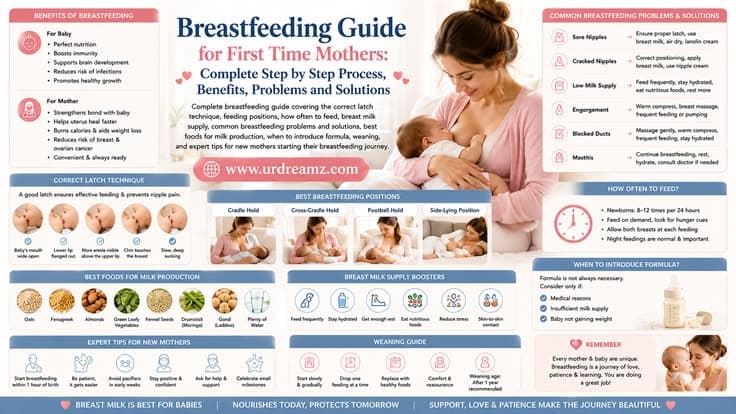
Breastfeeding Guide for First Time Mothers: Complete Step by Step Process, Benefits, Problems and Solutions
Becoming a mother for the first time is one of the most extraordinary experiences a woman can have, and breastfeeding is perhaps the most intimate and physiologically remarkable part of that beginning. Breast milk is not simply food for a newborn. It is a living, biologically complex fluid that contains hundreds of components including antibodies, immune cells, hormones, enzymes, growth factors, and beneficial bacteria that work together to nourish, protect, and guide the development of a human infant in ways that no formula can fully replicate. Yet despite this biological miracle, breastfeeding does not always feel natural or easy at first, particularly for a first-time mother who has never done it before.
The reality that many new mothers discover with surprise and sometimes distress is that breastfeeding is a learned skill requiring practice, support, and patience from both mother and baby. The early days and weeks involve a significant learning curve for both parties, and this is completely normal. A baby who has never breastfed and a mother who has never breastfed are both beginners learning together, and the first days should be understood as a practice period rather than a performance evaluation.
This comprehensive guide walks you through every aspect of breastfeeding from the first feed minutes after birth through the months of your breastfeeding journey. Whether you are still pregnant and planning to breastfeed, days postpartum and struggling with the early challenges, or further along and facing specific difficulties, this guide has the information and practical guidance you need. The goal is not to create pressure or guilt but to provide the knowledge that gives you the best possible chance of achieving the breastfeeding experience you want for yourself and your baby.
1. Why Breastfeeding Matters: Benefits for Baby and Mother
Breast milk is often called the most perfect food ever created, and this is not poetic exaggeration. Over millions of years of human evolution, the composition of breast milk has been refined by natural selection to meet the precise nutritional, immunological, and developmental needs of human infants at every stage of their early growth. No formula manufacturer, regardless of research investment, can recreate the full complexity of breast milk because many of its components are living cells and biologically active molecules that cannot survive the manufacturing process.
For the baby, the benefits of breastfeeding span every major body system. The immune benefits are perhaps the most immediately significant in the newborn period: colostrum and breast milk contain maternal IgA antibodies, white blood cells, lactoferrin, lysozyme, and dozens of other immune factors that provide the newborn with passive protection against infections during the period when their own immune system is still developing. Breastfed babies have significantly lower rates of ear infections, respiratory tract infections, gastrointestinal infections, and urinary tract infections. They have lower rates of sudden infant death syndrome (SIDS). They have lower rates of later-life obesity, type 1 and type 2 diabetes, asthma, and allergic disease. They show better neurodevelopmental outcomes in multiple studies, with higher cognitive scores and better academic performance on average.
| Benefit Area | Benefits for Baby | Benefits for Mother |
|---|---|---|
| Immune System | Antibodies from breast milk protect against ear infections, respiratory infections, gastroenteritis, meningitis, and many other infections. Lower risk of SIDS | Breastfeeding reduces the mother's lifetime risk of breast cancer significantly. Risk reduction correlates with duration of breastfeeding across her lifetime |
| Metabolic Health | Reduced risk of childhood and adult obesity. Better insulin regulation. Lower risk of type 1 and type 2 diabetes. Better cholesterol profiles in later life | Faster return to pre-pregnancy weight. Reduced risk of type 2 diabetes. Lower risk of metabolic syndrome |
| Brain Development | DHA, cholesterol, and other brain-building nutrients in breast milk support optimal neurological development. Multiple studies show cognitive advantages in exclusively breastfed children | Oxytocin released during feeding promotes maternal bonding and has calming, anti-anxiety effects |
| Cardiovascular | Lower blood pressure in childhood and adolescence. Better cardiovascular profiles in adult studies of people who were breastfed | Reduced risk of ovarian cancer. Reduced risk of heart disease. Breastfeeding is associated with better long-term cardiovascular health for mothers |
| Gut Health | Breast milk contains prebiotics (human milk oligosaccharides) that feed beneficial bacteria, establishing a healthy microbiome that influences immune development, allergy risk, and lifelong health | Promotes uterine involution through oxytocin release. Reduces postpartum blood loss |
| Bone Health | Appropriate calcium delivery and bone development support. Lower risk of childhood rickets in exclusively breastfed babies who also receive vitamin D supplementation | Despite temporary decrease in bone density during breastfeeding, studies show breastfeeding mothers have lower rates of osteoporosis and hip fracture after menopause |
| Practical and Economic | Always at the right temperature. Perfectly sterile. Automatically adjusts composition to meet changing needs. Available immediately without preparation | No formula costs (significant over months or years). No bottle preparation time or sterilization burden. Convenience for night feeds |
2. How Breast Milk Production Works
Understanding the physiology of milk production helps mothers work with their bodies rather than against them, and helps them understand why certain practices (like feeding frequently) increase supply while others (like supplementing with formula unnecessarily) can undermine it. Breast milk production is controlled by two primary hormones: prolactin and oxytocin.
Prolactin, produced by the pituitary gland, is the hormone that drives milk synthesis in the breast tissue. Prolactin levels rise during pregnancy but milk production is suppressed by high progesterone levels from the placenta. When the placenta is delivered, progesterone drops rapidly and prolactin is free to trigger milk production. Prolactin levels are highest in the first days postpartum and remain elevated throughout breastfeeding, with levels rising in response to each feeding. The most important fact about prolactin for new mothers is that it rises most in response to suckling at the breast, which is why frequent feeding from the very first day is essential for establishing good milk supply.
Oxytocin triggers the milk ejection reflex (also called letdown), the process by which milk is squeezed from the milk-producing cells (alveoli) through the ducts toward the nipple during feeding. Letdown may be felt as a tingling or warm sensation in the breast, or it may be entirely unnoticed, particularly in the first days before the reflex is well established. Oxytocin release can be triggered not just by suckling but by seeing the baby, hearing the baby cry, thinking about the baby, or having a warm shower. It can be inhibited by stress, pain, embarrassment, and cold. Understanding the oxytocin reflex explains why a tense, anxious, or uncomfortable mother may find letdown difficult, and why creating a calm, warm, private feeding environment supports successful breastfeeding.
Milk supply is fundamentally governed by supply and demand. The breast produces milk in proportion to how much milk is removed from it. When a baby feeds effectively and frequently, milk production increases to match demand. When feeding is infrequent, interrupted, or ineffective, the breast receives the signal that less milk is needed and production decreases. This is the fundamental principle that underlies all advice about milk supply: frequent, effective removal of milk from the breast is the foundation of good supply.
3. Colostrum: The Liquid Gold of the First Days
Colostrum is the first milk produced by the breasts, present from approximately 16 weeks of pregnancy and produced in small amounts for the first two to four days after birth before transitional milk and then mature milk come in. It is sometimes called liquid gold, both for its yellow-orange color and for its extraordinary nutritional and immunological value. A newborn's stomach is tiny at birth (approximately the size of a marble on day one, a walnut by day three) and colostrum is produced in exactly the right volumes to meet those small stomach needs.
Colostrum is a thick, concentrated fluid that is produced in small amounts of approximately 7 to 14 ml per feed in the first day or two, increasing to 30 to 60 ml per feed by days three to four as transitional milk begins to come in. These amounts seem tiny to many new mothers who worry their baby is not getting enough, but they are perfectly calibrated to the newborn stomach size. The concentration of colostrum is dramatically higher than mature milk, meaning the small volume contains an enormous amount of nutritional and immune value.
| Component | What It Does |
|---|---|
| Secretory IgA antibodies | The primary immune protection in colostrum. IgA coats the lining of the baby's immature gut, respiratory tract, and other mucosal surfaces, blocking pathogens from attaching and entering the body. This protection is particularly critical in the first days when the baby is first exposed to the microbial world outside the womb |
| Lactoferrin | An iron-binding protein with powerful antimicrobial properties. Lactoferrin binds iron that bacteria need for growth, starving pathogenic bacteria. Also has direct antiviral and antifungal properties and promotes beneficial immune responses |
| White blood cells (leukocytes) | Colostrum contains large numbers of living maternal immune cells including macrophages, neutrophils, and lymphocytes that directly protect the newborn gut and stimulate the baby's own immune system development |
| Epidermal Growth Factor (EGF) | Stimulates the maturation of the newborn gut lining. At birth the baby's intestinal lining has large gaps between cells (gut permeability) that could allow pathogens to pass through. EGF and other growth factors in colostrum promote rapid gut closure, reducing infection risk |
| High protein and low fat | Colostrum is higher in protein than mature milk and lower in fat, providing concentrated nutrition in a form that is easy for the immature newborn digestive system to process |
| Laxative effect | Colostrum has a mild laxative property that helps the baby pass meconium (the first dark stools from the digestive tract). This clearance of meconium is important because meconium contains bilirubin, and clearing it promptly reduces the severity of newborn jaundice |
| Prebiotic oligosaccharides | Human milk oligosaccharides in colostrum begin establishing the healthy gut microbiome from the very first feed, promoting growth of protective Bifidobacterium species that will be the backbone of the infant microbiome |
4. Foremilk and Hindmilk: Understanding the Composition of a Feed
Within a single feeding session, the composition of breast milk changes progressively from the beginning to the end of the feed. Understanding this change helps mothers appreciate why it is important for the baby to feed long enough at each breast to access the full range of what breast milk offers across a complete feeding.
Foremilk is the milk available at the beginning of a feeding session. It has been present in the ducts since the previous feed and is relatively thin and watery in appearance, with lower fat content and higher water content. Foremilk is rich in lactose and protein and serves importantly to hydrate the baby, which is why exclusively breastfed babies in the first six months do not need additional water even in hot climates. Foremilk has a bluish tinge that sometimes alarms mothers who see it expressed, but this appearance is entirely normal.
Hindmilk is the milk produced as the feed progresses. As more milk is removed from the breast, the fat content gradually increases throughout the feed, and the milk that comes toward the end is called hindmilk. Hindmilk has significantly higher fat content than foremilk and provides more calories per volume, contributing importantly to the baby's feeling of satiety and to weight gain. Hindmilk is creamier and whiter in appearance than foremilk.
The practical implication for mothers is that the baby should always be allowed to feed until they come off the breast on their own rather than being taken off after a set time. This ensures they receive both the hydrating foremilk and the calorie-rich hindmilk within each feeding session. Consistently switching breasts before the baby has finished the first breast, or feeding for very brief periods, may result in the baby receiving more foremilk than hindmilk and potentially not getting the calories they need.
5. The First Feed: Breastfeeding in the First Hour After Birth
The first hour after birth, sometimes called the golden hour, is the optimal window for the first breastfeed. During this period, most healthy term newborns are in a quiet alert state, highly receptive to feeding cues and skin-to-skin contact. Research consistently shows that skin-to-skin contact immediately after birth and feeding within the first hour are associated with higher rates of successful breastfeeding establishment, longer duration of breastfeeding, and better outcomes for both mother and baby.
When placed on their mother's chest immediately after birth, newborns display a remarkably instinctive sequence of behaviors called the breast crawl. Over approximately 30 to 60 minutes, many newborns placed on the mother's abdomen will gradually move toward the breast through a combination of reflexive movements, guided by the scent of the areola (which resembles the amniotic fluid the baby has been exposed to throughout pregnancy) and by rooting reflexes. This demonstration of newborn instinct shows that the first feed is something the baby is biologically prepared to participate in, not something that requires the mother to know exactly what to do from the start.
In reality, not every birth situation allows for immediate skin-to-skin and early first feeding. Cesarean sections, maternal or neonatal complications, or other circumstances may mean the first feed happens later than the golden hour. This does not mean breastfeeding will not be successful. While early first feeding is associated with better outcomes on average, many mothers whose circumstances did not allow it have gone on to breastfeed fully and successfully. The important thing is to initiate breastfeeding as soon as safely possible whatever the circumstances, and to seek support from hospital lactation consultants or midwives during the early days.
| Step | What to Do | Why It Matters |
|---|---|---|
| Skin to skin immediately after birth | Baby placed directly on mother's bare chest, covered with a warm blanket over both. Allows the baby to feel the warmth and heartbeat and smell the mother | Skin-to-skin regulates the newborn's temperature, heart rate, blood sugar, and cortisol levels. Triggers oxytocin in the mother promoting letdown and bonding |
| Wait for feeding cues | Allow the baby to move toward the breast and show feeding interest rather than immediately forcing the baby to the breast. Look for rooting (turning head, opening mouth), sucking movements, hands to mouth | Allowing the baby to show readiness respects the natural sequence of feeding preparation. Forcing a feed before the baby is ready often results in a poor latch and frustration for both |
| Support the breast and baby | Shape the breast into a wide C-hold with thumb above and fingers below the areola, well back from the nipple. Support the baby's head at the base of the skull rather than the back of the head | Shaping the breast helps the baby achieve a wide gape. Supporting at the skull allows the head to tip back slightly which opens the mouth wider and improves latch |
| Aim nipple toward baby's nose | Align the nipple toward the baby's nose rather than the center of the mouth. This encourages the baby to tilt their head back, open wide, and latch with more breast tissue in the lower jaw | This alignment is one of the most important and least intuitive aspects of achieving a deep latch. An asymmetric latch with more areola in the lower jaw reduces nipple pain significantly |
| Wait for the wide gape | Touch the nipple to the baby's upper lip or philtrum area to trigger the rooting reflex. Wait for a wide open mouth with the tongue visible on the lower gum before bringing the baby to the breast | A wide gape is essential for a deep latch. If the baby's mouth is not open wide enough before latching, the nipple ends up in a shallow position causing pain and ineffective milk transfer |
| Bring baby to breast not breast to baby | Keep the breast in a stable comfortable position and move the baby to the breast rather than leaning forward and bringing the breast to the baby | Bringing the breast to the baby typically results in the mother leaning forward in an uncomfortable position, which makes sustained feeding difficult and often results in the nipple being misaligned |
6. How to Achieve a Correct Latch: Step by Step
The latch is the single most important technical element of breastfeeding. A correct, deep latch means the baby has a large mouthful of breast tissue, the nipple is far back in the baby's mouth at the junction of the hard and soft palate where there is no compression, the baby's tongue is underneath the breast tissue providing a wave-like motion to extract milk, and the baby's lips are flanged outward like fish lips rather than tucked inward. A correct latch is essentially painless for the mother (there may be a brief pulling sensation in the first seconds as the nipple is drawn back, but this should not be painful) and allows effective milk transfer to the baby.
A poor or shallow latch is the root cause of the majority of early breastfeeding problems including sore and cracked nipples, ineffective milk transfer leading to a hungry unsettled baby, and inadequate breast stimulation leading to reduced milk supply. Many new mothers assume that pain during breastfeeding is inevitable and simply part of the experience, but persistent pain during feeding almost always indicates a latch problem that can be improved with guidance.
| Step | Action | How It Helps |
|---|---|---|
| 1. Choose a comfortable position | Sit upright or semi-reclined with back support. Ensure arms are supported to avoid fatigue. Have everything needed (water, phone, nursing pillow) within reach before starting | A tense or uncomfortable mother cannot relax enough for effective oxytocin release and letdown. Comfort is foundational to good breastfeeding |
| 2. Position the baby body to body | The baby's entire body should face the mother, tummy to tummy. The baby's ear, shoulder, and hip should be in alignment. The baby should not need to turn their head sideways to reach the breast | A twisted body makes swallowing difficult and reduces the depth of latch achievable. Body alignment allows the jaw to open maximally |
| 3. Hold the breast with C-hold | Form a C-shape with thumb above and fingers below the areola, keeping fingers well back from the nipple and areola to avoid blocking the baby's mouth access. Compress the breast slightly to create an oval shape that matches the orientation of the baby's mouth | Shaping the breast makes it easier for the baby to get a large mouthful. Think of shaping a sandwich to fit in your mouth |
| 4. Trigger rooting reflex | Touch the nipple to the baby's philtrum (the area between upper lip and nose) or gently stroke the cheek toward the mouth. Wait for the baby to open their mouth wide with tongue visible and extended down over lower gum | Waiting for the full wide gape is critical. A partial gape results in a shallow latch. Patience at this step prevents the need for repeated relatch attempts |
| 5. Move baby quickly to breast at the wide gape moment | When the mouth is fully open wide, move the baby quickly to the breast so the lower lip contacts the areola well below the nipple first. The chin should touch the breast first, then the nose should just touch or be very close to the top of the breast | The asymmetric latch with more areola in the lower jaw positions the nipple far back in the mouth where there is no compression. This is the key to pain-free feeding |
| 6. Check the latch | Verify lips are flanged outward. Cheeks are rounded and full not hollow or sucked in. You can hear swallowing sounds after letdown. Baby chin is pressing into breast. Feeding is not painful beyond the brief initial pulling | These are the reliable signs of a correct latch. If any are absent, break the seal with a clean finger in the corner of the mouth and try again |
| 7. Breaking the seal to relatch | If the latch is not correct, do not pull the baby off while they are actively suckling as this creates strong suction force on the nipple. Insert a clean finger into the corner of the baby's mouth to break the seal, then remove from breast and begin again | Pulling a baby off mid-feed without breaking the seal causes significant nipple pain and can contribute to nipple damage |
7. Signs of a Good Latch vs Poor Latch
| Aspect | Signs of a Good Latch | Signs of a Poor Latch |
|---|---|---|
| Baby's mouth position | Mouth is wide open covering a large portion of areola with more below the nipple than above. Lips are flanged outward. Chin presses into lower breast | Mouth barely open. Only nipple visible in baby's mouth. Lips tucked inward. Chin not touching breast |
| Baby's cheeks | Cheeks are full and rounded during feeding. No dimpling visible on cheeks | Cheeks appear hollow or dimpled inward during suckling, indicating vacuum not effective milk extraction |
| Mother's comfort | Initial brief pulling sensation in the first 30 seconds may occur but feeding is comfortable thereafter. No nipple pain during feeding | Significant nipple or breast pain that continues throughout the entire feed. Pain that worsens over a feed rather than settling |
| Nipple appearance after feed | Nipple comes out of baby's mouth round and same shape as before, perhaps slightly elongated. Nipple is not compressed or misshapen | Nipple comes out flattened, lipstick-shaped, wedge-shaped, or creased. This shape indicates the nipple was compressed between the baby's gum ridges during feeding |
| Swallowing sounds | Rhythmic swallowing sounds audible after letdown, approximately every one to two sucks as mature milk comes in | No audible swallowing. Only rapid shallow sucking without pauses for swallowing |
| Baby behavior at end of feed | Baby releases the breast spontaneously when finished and appears relaxed and satisfied. May fall asleep | Baby seems frustrated or constantly unsettled at the breast. Coming on and off repeatedly. Not settling after lengthy time at breast |
| Breast fullness before and after | Breast feels softer and lighter after feeding compared to before, indicating milk has been transferred | Breast remains equally full after feeding, suggesting milk has not been effectively removed |
8. Seven Breastfeeding Positions
There is no single correct breastfeeding position. The best position is whatever allows both mother and baby to be comfortable, allows the baby to latch deeply, and can be sustained comfortably for the duration of the feed. Different positions work better for different mothers, babies, breast sizes, and situations. Learning more than one position gives mothers flexibility to use different positions for different circumstances.
| Position | How to Do It | Best For |
|---|---|---|
| Cradle Hold | Baby lies across mother's front, head resting in the crook of the arm on the same side as the feeding breast. Baby's body and head are at the same level facing the breast. Baby's body is turned toward mother tummy to tummy | Classic daytime feeding position. Works well once latch is established. Good for older babies who can support some of their own weight |
| Cross-Cradle Hold | Similar to cradle hold but baby's head is supported by the opposite hand to the feeding breast. The hand supports the baby's skull at the base, allowing fine control of head positioning. The same-side arm supports the baby's body | Excellent for newborns and early breastfeeding when precise latch guidance is needed. Gives the mother more control over head positioning |
| Football Hold (Clutch Hold) | Baby is tucked under the mother's arm like a football with the baby's body alongside the mother's body, feet pointing behind. Mother's hand at the same side as the feeding breast supports the baby's head. Baby faces the breast with body parallel to mother's torso | After cesarean section (no pressure on incision). Large breasts. Flat or inverted nipples. Twins feeding simultaneously |
| Side-Lying Position | Mother and baby lie facing each other on their sides. Bottom breast is offered to baby whose body is aligned with mother's. Top arm can guide baby to breast | Night feeds without needing to sit up. Recovery from childbirth. Fatigue. Cesarean recovery. Very comfortable for extended feeds |
| Laid-Back Position (Biological Nurturing) | Mother reclines at 45 degrees with baby lying on the mother's chest and abdomen face down, head near breast. Baby's whole front surface rests on mother's body. Gravity helps baby stay in position | Sore nipples (gravity reduces pressure on nipple). Overactive letdown. Strong rooting babies. Mothers who find other positions uncomfortable. Very helpful for newborns in the early days |
| Upright or Koala Hold | Baby sits straddling the mother's thigh or knee, facing the breast, upright. Baby's spine is straight or slightly leaning toward the mother. Mother supports baby's back | Babies with reflux or colic where upright feeding reduces wind and discomfort. Older babies who prefer to look around. Babies with ear infections where horizontal feeding is uncomfortable |
| Twin Feeding Position | Two babies fed simultaneously using football hold for both babies, one on each side. A specialist twin nursing pillow helps support both babies at the right height simultaneously | Twin feeding efficiency. Saves significant time compared to sequential feeding. Allows milk supply to develop to meet two babies' demands |
9. Cradle Hold: The Classic Position Explained
The cradle hold is the most widely recognized breastfeeding position and the one most commonly shown in images of breastfeeding mothers. When used correctly by a mother who has established a good latch, it is a comfortable and practical feeding position. However, it is often the most difficult position for new mothers in the early days because it provides less precise control over the baby's head positioning compared to alternatives like the cross-cradle hold.
In the cradle hold, the baby lies across the mother's lap or on a nursing pillow at breast height. The baby's head rests in the crook of the elbow of the arm on the same side as the feeding breast. The baby's body runs along the mother's forearm and is supported by the hand. The baby's face, chest, and tummy are turned in toward the mother's body, not facing upward toward the ceiling. The mother's other hand is free to shape the breast or assist with the latch.
Common cradle hold errors include the baby's body not being turned fully toward the mother (the baby is partly on their back looking up at the ceiling rather than facing the breast), the mother holding the back of the baby's head rather than the base of the skull (which restricts the head tipping back motion needed for a deep latch), and holding the baby too low so the nipple has to angle downward toward the baby's mouth, which changes the angle of entry.
10. How Often to Breastfeed: Feeding Frequency by Age
Newborns need to breastfeed frequently. This is not a sign that the mother does not have enough milk or that the baby is not satisfied. It is a reflection of the small stomach size of a newborn, the rapid digestibility of breast milk compared to formula, the need for frequent breast stimulation to establish good milk supply, and the high metabolic needs of a rapidly growing brain and body.
In the early days, the most common reason breastfeeding fails is simply that mothers do not feed frequently enough because they are not expecting or prepared for how often a newborn needs to feed. A newborn who is fed infrequently because the parents believe they should be spacing feeds out will not provide adequate breast stimulation to establish good supply, will become excessively hungry between feeds leading to ineffective frantic feeding, and may not regain birth weight at the expected rate.
| Age | Feeds Per 24 Hours | Feed Interval | Notes |
|---|---|---|---|
| Days 1 to 3 (colostrum period) | 8 to 12 feeds per 24 hours | Every 1.5 to 3 hours from start of one feed to start of next | Very small stomach, colostrum in small volumes. Frequent feeding essential for stimulating milk supply and clearing meconium. Do not let newborn sleep more than 4 hours without feeding in first 2 weeks |
| Days 3 to 14 (milk coming in) | 8 to 12 feeds per 24 hours | Every 1.5 to 3 hours, some variation | Milk volume increases rapidly in this period. Breast engorgement often peaks around day 3 to 5. Feeding frequently helps manage engorgement. Baby may have a growth spurt around day 7 to 10 |
| 2 to 8 weeks | 8 to 12 feeds per 24 hours | Every 2 to 3 hours during the day. Longer stretches at night may emerge but many newborns still feed 1 to 3 times at night | Feed on demand, not on clock schedule. Watch baby for hunger cues rather than watching the clock |
| 2 to 4 months | 7 to 9 feeds per 24 hours | Every 2 to 3 hours with some longer stretches | Some babies begin sleeping longer stretches at night. Cluster feeding in evenings before a longer sleep stretch is very common |
| 4 to 6 months | 6 to 8 feeds per 24 hours | More predictable intervals emerging. Every 3 to 4 hours during day | Many babies are more efficient feeders by this age and may complete a feed in 10 to 15 minutes. This does not mean insufficient feeding |
| 6 to 12 months | 4 to 6 breastfeeds per 24 hours alongside complementary foods from 6 months | Breastfeeding becomes more flexible alongside solid food introduction | Breast milk remains the primary nutrition source until 12 months even as solid foods are introduced |
11. How Long Should Each Feed Last
One of the most common anxieties new mothers have is about whether each individual feed is long enough. There is a widespread belief that feeds should last a specific minimum number of minutes, which leads mothers to watch the clock and feel anxious when feeds are shorter than they expect. The truth is that the appropriate length of a breastfeeding session is not defined by clock time but by the baby finishing one breast and indicating they want more or are satisfied.
A newborn may take 30 to 45 minutes to complete a full feed in the early days, partly because they are learning to feed effectively and partly because their suckling bouts are separated by frequent pauses for rest. By 6 to 8 weeks, an experienced feeder may complete the same effective feed in 10 to 15 minutes because they have learned to suckle more efficiently and the letdown reflex has become more immediate and reliable.
The practical guidance is to always offer both breasts at each feed, starting with the breast that was not offered first at the previous feed (some mothers use a simple reminder like a bracelet on the wrist of the last used side). Allow the baby to finish the first breast before offering the second. Finishing the first breast means the baby spontaneously releases it or pauses long enough to indicate they have finished. Many babies do not take the second breast at every feed, which is fine. The next feed starts on the side not fully finished at the previous feed.
12. Feeding on Demand vs Feeding on Schedule
In the early months of breastfeeding, feeding on demand (also called responsive or cue-based feeding) is strongly recommended by all major health organizations including the World Health Organization, the American Academy of Pediatrics, and the United Kingdom National Health Service. Feeding on demand means feeding the baby whenever they show hunger cues, regardless of how much time has passed since the last feed.
Early hunger cues that mothers should learn to recognize include rooting (turning the head side to side with mouth open looking for the breast), sucking on hands or fingers, bringing hands to mouth, making sucking noises, turning toward the breast when held, and becoming more alert and active. Crying is a late hunger cue that indicates the baby has been hungry for some time already. By the time a baby is crying from hunger, they are often in a more distressed state that makes latching harder. Responding to early hunger cues produces calmer, more effective feeding sessions.
Strict feeding schedules in the early weeks can undermine breastfeeding establishment by reducing the frequency of breast stimulation needed to build adequate supply, causing a hungry baby who feeds frantically when finally fed (making latch harder), and missing the natural cluster feeding patterns that help establish supply. A predictable loose rhythm typically emerges naturally after 6 to 8 weeks without imposing it. The early weeks require flexibility and responsiveness, not rigidity.
13. Night Feeding: Why It Matters and How to Manage
Night feeding is one of the most challenging aspects of early breastfeeding for new mothers, and it is the factor that many mothers struggle with most in terms of fatigue. Understanding why night feeds are important helps mothers approach them with greater acceptance even when exhaustion makes them feel overwhelming.
Prolactin levels, the hormone that drives milk production, are highest at night. Night feeds are therefore not just meeting the baby's nutritional needs at that particular moment; they are also providing the strongest stimulation for milk production. Mothers who consistently miss night feeds by supplementing with formula at night often find their supply decreases, because the period of highest prolactin potential is being bypassed.
In the early weeks, night feeds are essential for both adequate baby nutrition and milk supply establishment. Newborns cannot distinguish day from night and their stomach capacity does not allow them to go more than 3 to 4 hours without food in the first weeks. As babies grow, their stomach capacity increases and they gradually develop the ability to sleep longer stretches at night, but this should be baby-led rather than imposed through scheduled night waking cessation.
| Strategy | How to Implement |
|---|---|
| Safe bedside feeding setup | Set up everything needed for a night feed within arm's reach of the bed: water, burp cloth, dim night light. Minimizing the effort required for night feeds reduces sleep disruption and makes it easier to return to sleep quickly |
| Side-lying feeding position | Once breastfeeding is well established (typically 4 to 6 weeks), many mothers find they can feed in a side-lying position without fully waking, making night feeds significantly less disruptive to sleep |
| Sleep when the baby sleeps in the day | The classic advice is clichéd because it is genuinely valuable. Night sleep deprivation is compensated most effectively by daytime naps when the baby sleeps rather than by using that time for chores |
| Share the night responsibility where possible | The breastfeeding mother must do the actual feeding, but a partner or support person can bring the baby to the mother and settle the baby back after feeding, significantly reducing the mother's movement and awake time |
| Keeping the light and stimulation low | Night feeds should be as boring as possible for the baby. Dim lights only, no talking or play, quiet and calm environment signals to the baby that nighttime is not for social interaction |
14. Signs That Your Baby Is Getting Enough Milk
One of the most common and anxiety-provoking concerns for breastfeeding mothers is whether the baby is getting enough milk. Unlike bottle feeding where the volume consumed is visible, breastfeeding offers no such reassurance by volume. Learning to assess milk adequacy through reliable objective signs rather than through the breast-feel (which is unreliable and changes as supply regulates) helps mothers trust the process.
| Sign | What to Look For | Age Context |
|---|---|---|
| Wet nappies (diapers) | Day 1: at least 1 to 2 wet nappies. Day 2: at least 2 to 3. Day 3: at least 3 to 4. From day 5 onward: at least 6 to 8 heavily wet nappies per 24 hours. Urine should be pale yellow to almost clear | The most reliable daily indicator of adequate milk intake. Dark concentrated urine in small amounts indicates dehydration and inadequate intake |
| Stools (poo) | Meconium (black-green) in first 2 days transitioning to changing green then mustard-yellow seedy stools by days 3 to 5. From 4 to 6 weeks: may become less frequent but still present | The stool transition from meconium to yellow seedy stools by day 4 to 5 is a positive sign of adequate colostrum and milk intake |
| Weight | All newborns lose some weight in the first 3 to 5 days, typically up to 7 to 10 percent of birth weight. Birth weight should be regained by 10 to 14 days. After this, average gain is approximately 150 to 200 grams per week for the first 3 months | Weight is the gold standard measure of adequate intake. Weighed by healthcare provider at regular intervals. Not necessary to weigh at home daily as this causes excessive anxiety |
| Feeding behavior | Baby feeds 8 to 12 times in 24 hours with swallowing sounds audible after letdown. Appears satisfied after feeds. Has some alert, content periods during the day | A baby who feeds constantly without any settled periods may not be transferring milk effectively and should be assessed by a lactation consultant |
| Breast changes after feeding | Breasts feel softer and less full after feeding compared to before feeding (in the early weeks when engorgement is a feature) | After 6 to 8 weeks when supply regulates, the breasts may feel soft most of the time even with good supply, so this sign is less reliable later |
| Baby's general appearance and development | Skin tone good. Alert and interactive during awake periods. Developing normally on growth charts. Reasonable periods of content wakefulness | General thriving including normal developmental milestones is the overall picture of adequate nutrition |
15. Growth Spurts and Cluster Feeding Explained
Growth spurts are predictable periods of more intense growth that occur at regular intervals throughout infancy. During a growth spurt, the baby's increased growth requires more milk, and the baby's way of requesting this increased supply is to feed more frequently and for longer periods. This increased feeding stimulates greater prolactin response in the mother and within a day or two the supply increases to meet the new demand. This elegant biological calibration ensures supply always keeps pace with demand, but it requires the mother to follow the baby's lead and feed more frequently during these periods.
Common growth spurt times include approximately 7 to 10 days, 3 weeks, 6 weeks, 3 months, and 6 months of age. During these spurts, a baby who was previously feeding every 3 hours may suddenly want to feed every hour or even more frequently for a period of 1 to 3 days. This intense feeding behavior is sometimes called cluster feeding, where feeds happen in rapid succession over several hours typically in the late afternoon and evening.
Many mothers experiencing their first growth spurt assume they have suddenly lost their milk supply and begin supplementing with formula. This is one of the most common causes of breastfeeding failure: the supplement reduces the breast stimulation needed for supply to increase, the supply does not increase to meet the baby's growing needs, more supplement is required, and a cycle of decreasing supply follows. The correct response to a growth spurt is to continue feeding on demand as frequently as the baby requests, drink plenty of water, rest as much as possible, and trust that the supply will increase within a few days to meet the new demand.
16. Breast Milk Supply: How to Increase Low Supply
True low milk supply (medically called insufficient milk syndrome) is relatively uncommon but perceived low supply is one of the most common reasons mothers give for supplementing with formula or stopping breastfeeding entirely. Understanding the difference, and knowing the evidence-based strategies for genuinely increasing supply, empowers mothers to address real supply issues effectively and avoid unnecessary supplementation that undermines supply further.
| Strategy | How It Works | Priority |
|---|---|---|
| Feed more frequently | More frequent feeding means more prolactin stimulation and more demand signal to the breast. Even adding one or two extra feeds in a 24-hour period can make a meaningful difference to supply. Aiming for 8 to 12 feeds in 24 hours in the early weeks is the single most important supply strategy | Highest priority. Foundation of all other supply strategies |
| Ensure effective latch and milk transfer | A poor latch means the breast is not being adequately drained even with frequent feeding. A lactation consultant can assess and improve the latch, which may have more impact than any other intervention | Very high. Poor latch is the most common addressable cause of supply problems |
| Feed from both breasts at each session | Offering both breasts ensures both sides receive adequate stimulation and draining. A breast that is rarely fully used will reduce production on that side | High. Simple habit change |
| Breast compression during feeds | Gently compressing the breast during feeding increases milk flow and encourages the baby to suckle more actively, improving milk transfer per session | High. Particularly useful for sleepy or inefficient feeders |
| Pumping after feeds | Adding a brief pumping session (10 to 15 minutes) after one or more daily feeds provides additional breast stimulation and draining beyond what the baby removes, signaling to the body to produce more. Particularly useful when supply is genuinely low or when building supply for return to work | Moderate to high. Very effective but adds significant time commitment |
| Power pumping | A specific pumping protocol designed to mimic cluster feeding: pump 20 minutes, rest 10, pump 10, rest 10, pump 10, for a total of one hour. Done once daily for several consecutive days, power pumping significantly stimulates supply increase | Moderate to high. Effective for genuine supply building. Time-intensive |
| Ensure adequate rest and reduced stress | Stress hormones (cortisol and adrenaline) inhibit oxytocin and can impair letdown and milk flow. Chronic sleep deprivation and stress are genuine contributors to supply issues | Important supporting factor. Often overlooked |
| Stay very well hydrated | Breast milk is primarily water. Adequate fluid intake (drink to thirst, minimum 2 to 2.5 liters daily) is necessary for adequate milk production. Dehydration directly reduces milk output | Important basic requirement |
| Galactagogues (supply-boosting foods and herbs) | Certain foods including fenugreek, moringa, oats, and others have traditional and some scientific evidence for supporting milk supply. These are discussed in detail in the next section | Supportive measure alongside the above. Not a substitute for frequent effective feeding |
17. Foods That Increase Breast Milk Production
Galactagogues are substances, foods, herbs, or medications that support or increase milk production. They have been used by breastfeeding mothers across cultures for centuries, and while the scientific evidence for many is limited by the small scale of studies, their traditional use and plausible mechanisms make them reasonable supportive measures alongside the foundational strategy of frequent effective feeding.
| Food | How It Supports Supply | How to Include |
|---|---|---|
| Oats (particularly steel cut and rolled oats) | High in iron (iron deficiency is associated with reduced milk supply), beta-glucan fiber that may support prolactin levels, and minerals including magnesium. One of the most widely recommended and commonly reported helpful galactagogues by mothers. Also provides good energy for tired mothers | Daily oatmeal for breakfast. Lactation cookies and energy balls made with oats. Overnight oats. Oat-based smoothies |
| Fenugreek (Methi) seeds | One of the most studied herbal galactagogues. Contains compounds including diosgenin (a plant estrogen-like compound) that may stimulate milk ducts. Also rich in iron and other minerals. Traditional use across South Asian, Middle Eastern, and Mediterranean cultures | Methi daal (lentil dish with fenugreek). Fenugreek seeds soaked overnight and consumed. Added to roti dough. As tea. Note: large amounts may make both mother and baby's sweat smell like maple syrup |
| Moringa (Drumstick leaves) | Rich in vitamins, minerals, amino acids, and phytochemicals. Small clinical studies suggest moringa leaf powder significantly increases milk volume. One of the most nutrient-dense plants available and well-suited to postpartum nutritional needs generally | Moringa leaf powder in smoothies, daal, or warm milk. Moringa leaves cooked in curry or soup. Moringa capsules as supplement |
| Fennel seeds (Saunf) | Traditionally used across South Asia and the Middle East for milk production. Contains anethole, a phytoestrogen compound that may support milk production. Also has carminative properties that reduce gas in both mother and baby | Fennel seed tea (brew whole seeds). Added to cooking. Fennel seed water soaked overnight. As part of postpartum recipes |
| Garlic | Research suggests babies of mothers who consume garlic feed for longer periods, possibly because they prefer the change in milk flavor. Garlic has long been used traditionally to support milk supply. Also rich in allicin with antimicrobial properties beneficial to both mother and baby | Added generously to cooking throughout the day. As part of normal South Asian cooking style |
| Dark leafy greens (Spinach, Fenugreek leaves, Methi) | Rich in iron, calcium, folate, and phytoestrogens. Multiple green leafy vegetables have traditional use as milk supply supporters and their nutritional richness supports the high nutritional demands of lactation | Daily saag, palak daal, or other green vegetable dishes. Spinach in smoothies. Methi parathas |
| Ajwain (Carom seeds) | Traditional postpartum food across South Asia. Believed to support milk production, aid digestion, and provide warmth and recovery energy postpartum. Also has anti-inflammatory properties | Ajwain water (boiled in water and consumed warm). Added to khichdi, daal, and postpartum recipes. Ajwain laddoos common in South Asian postpartum tradition |
| Gond (Edible gum) and Dry Fruit Laddoos | Traditional South Asian postpartum sweet made with edible gum (gond), ghee, whole wheat flour, nuts, and dry fruits. Provides concentrated calories, healthy fats, and minerals needed during the high-energy-demand period of lactation | Traditional postpartum sweet given by families. One or two laddoos daily provides excellent calorie and nutrient support for lactating mothers |
| Dill (Sowa) | Used in South Asian and Middle Eastern traditions for milk supply support. Contains diosgenin and other compounds with potential galactagogue properties. Also supports digestion in mother and may reduce colic symptoms transferred through milk | Added to fish and vegetable dishes. Dill water as tea. In raita and yogurt dishes |
| Almonds and nuts | Almonds in particular are traditional milk supply supporters in South Asian cultures. High in healthy fats, protein, calcium, and vitamin E. The high healthy fat content supports the production of fat-rich hindmilk. Also provide excellent nutrition for the lactating mother | Soaked almonds first thing in the morning (traditional). Almond milk. Almond laddoos. Mixed nuts as snack throughout the day |
18. Foods and Drinks to Avoid While Breastfeeding
| Item | Why to Limit or Avoid | What to Do Instead |
|---|---|---|
| Alcohol | Alcohol passes into breast milk and reaches approximately the same concentration in milk as in the mother's blood. The newborn's liver is immature and cannot metabolize alcohol efficiently. Alcohol is associated with reduced milk letdown, reduced milk intake by the baby, and altered baby sleep patterns. No safe level of alcohol in breast milk has been established | Complete abstinence is safest particularly in the first months. If occasionally consuming alcohol, time feeds to minimize transfer (alcohol in milk peaks 30 to 60 minutes after drinking and a small amount for a body weight of 60kg is eliminated in approximately 2 to 3 hours) |
| High-caffeine drinks (strong coffee, energy drinks) | Caffeine passes into breast milk. Newborns metabolize caffeine very slowly (half-life of 80 to 100 hours in newborns versus 5 hours in adults). Caffeine accumulation can cause infant irritability, poor sleep, and jitteriness. Moderate coffee consumption (1 to 2 cups daily) is generally considered acceptable but high caffeine intake is not | Limit to 200 to 300mg caffeine per day (approximately 1 to 2 standard cups of coffee). Herbal teas without caffeine as alternatives. Decaffeinated options |
| High-mercury fish | Mercury passes into breast milk and can affect the developing infant nervous system. High-mercury fish include shark, swordfish, king mackerel, and tilefish | Safe fish to eat while breastfeeding (maximum 2 to 3 servings per week): salmon, sardines, trout, tilapia, pollock, canned light tuna. Avoid the high-mercury varieties listed |
| Highly processed and junk foods | Not harmful to the baby directly but displace the nutritious foods the high nutritional demands of lactation require. A lactating mother's nutritional needs are higher than at any other time in her life including pregnancy. Filling up on nutrient-poor foods means both mother and milk quality suffer | Whole food-based diet with emphasis on protein, healthy fats, colorful vegetables, whole grains, and dairy for calcium |
| Foods that cause wind in the baby (variable) | Some babies appear sensitive to specific foods in the mother's diet that cause them digestive discomfort. Common reported culprits include cruciferous vegetables (cabbage, broccoli, cauliflower), dairy, onions, and spicy foods, though the evidence for this is inconsistent and most babies are not affected by these foods | If the baby consistently appears distressed after the mother eats a particular food, eliminating that food for two weeks and observing for improvement is reasonable. However, do not eliminate multiple foods without cause as this unnecessarily restricts the mother's nutrition |
| Excess vitamin A supplements | Excess preformed vitamin A is fat-soluble and accumulates in body stores. Very high vitamin A intake can be teratogenic in pregnancy and may affect the breastfed infant. Routine vitamin A supplementation beyond a standard prenatal multivitamin is not recommended during breastfeeding without medical indication | Continue prenatal multivitamin. Add vitamin D supplement (commonly recommended for breastfed babies and mothers). Discuss any additional supplements with a healthcare provider |
19. Breastfeeding Diet and Nutrition for Mothers
A breastfeeding mother's nutritional needs are higher than at any other point in her life, including during pregnancy. The body prioritizes milk production to such an extent that if dietary intake is inadequate, it will draw on the mother's own body stores to maintain milk quality. This means a malnourished breastfeeding mother may produce milk of adequate quality for the baby in the short term at the expense of her own nutritional reserves, leading to maternal depletion that has long-term health consequences.
Breastfeeding requires approximately 500 extra calories per day beyond the mother's non-pregnant, non-breastfeeding needs. These calories should come from nutritious whole foods that also provide the additional vitamins, minerals, and macronutrients needed for optimal milk production. The emphasis should be on quality as well as quantity: 500 calories of biscuits and tea does not provide the iron, calcium, omega-3, and vitamins that 500 calories of eggs, lentils, vegetables, and dairy does.
| Nutrient | Why It Is Critical | Best Sources |
|---|---|---|
| Calcium 1000mg daily | Milk is rich in calcium. If maternal dietary calcium is inadequate, the body draws calcium from the mother's bones to maintain milk calcium content. Breastfeeding mothers who do not consume adequate calcium lose measurable bone density during lactation | Dairy (milk, yogurt, cheese), calcium-set tofu, almonds, sesame seeds, sardines with bones, dark leafy greens |
| Iron 9 to 10mg daily | Iron deficiency is associated with reduced milk supply and maternal fatigue. Blood loss in childbirth increases postpartum iron deficiency risk. Iron supports the energy demands of new motherhood | Red meat, poultry, lentils, dark leafy greens, fortified cereals. Always with vitamin C to enhance absorption |
| DHA Omega-3 200 to 300mg daily | DHA concentrations in breast milk are directly influenced by maternal dietary DHA intake. DHA is critical for infant brain and visual development. Western and South Asian diets are often low in DHA | Fatty fish twice weekly (salmon, sardines, mackerel). Fish oil supplement if not consuming fish regularly |
| Iodine 290mcg daily | Iodine concentrates in breast milk to support infant thyroid function and brain development. Iodine requirements increase significantly during lactation. Deficiency is surprisingly common even in countries where iodized salt is used | Iodized salt. Dairy products. Seafood. Iodine-containing prenatal supplement |
| Vitamin D 600 IU daily for mother; baby needs separate supplement | Breastfed babies need supplemental vitamin D because breast milk contains very little vitamin D regardless of maternal status. Most major health organizations recommend 400 IU vitamin D daily for breastfed infants from birth | Sunlight for mother. Fatty fish and fortified foods. Vitamin D drops for baby separately |
| B12 2.8mcg daily | Vitamin B12 is critical for infant brain development and is found only in animal foods. Vegan and vegetarian mothers may have inadequate B12, and B12 in breast milk correlates directly with maternal B12 status. Infants of B12-deficient mothers can develop serious neurological damage | Meat, dairy, eggs, fish. Mandatory B12 supplement for vegan mothers |
| Choline 550mg daily | Choline is critical for infant brain development. Breast milk is a concentrated source of choline that reflects maternal intake. The requirement for choline increases significantly during lactation | Eggs (especially yolks), liver, meat, fish, legumes, nuts |
20. Hydration While Breastfeeding
Breastfeeding mothers need to drink significantly more fluid than they did before pregnancy and breastfeeding. Breast milk is approximately 87 percent water, and producing it requires drawing substantially on the mother's fluid stores. Inadequate hydration can contribute to reduced milk output, maternal fatigue, headaches, constipation (very common in the postpartum period), and poor concentration.
The recommendation is to drink to thirst, which is a reliable guide because the breastfeeding mother's thirst mechanism is upregulated during lactation. Many mothers experience a strong thirst sensation when they sit down to breastfeed, which is the body's way of prompting fluid intake at the time of peak need. Having a large glass of water beside the mother every time she breastfeeds is one of the simplest and most effective hydration strategies.
The best fluid is water. Other acceptable fluids include milk (which additionally provides calcium and protein), herbal teas (particularly those traditionally associated with milk supply support like fennel, fenugreek, or blessed thistle), diluted fruit juice occasionally, and broths and soups. Caffeine-containing drinks should be limited to moderate amounts. Sugary drinks and sodas provide hydration but displace the nutritious drinks and foods the lactating body needs.
21. Common Breastfeeding Problems and Solutions
The reality of breastfeeding is that it involves a learning curve, and during that learning period most mothers experience at least some of the common challenges. The important message is that almost all common breastfeeding problems have solutions, and having difficulty does not mean breastfeeding is impossible or that the mother is failing. Seeking support early, before a problem escalates, makes resolution much easier.
| Problem | Key Cause | First Step to Resolve |
|---|---|---|
| Sore and cracked nipples | Almost always caused by a shallow or poor latch. The nipple is being compressed between the baby's gum ridges rather than resting comfortably at the junction of hard and soft palate | Latch assessment and correction is the primary treatment. Addressing the cause resolves the pain; treating only the symptoms without fixing the latch means pain continues |
| Breast engorgement | Milk coming in on day 3 to 5 combined with more milk being produced than the baby is removing. Engorged breasts are very firm, swollen, and painful. The swelling of the surrounding tissue can make latching harder | Feed frequently to drain the breasts. Before feeding, soften the areola with gentle hand expression or a warm compress to allow baby to latch. Cold compresses and cabbage leaves between feeds for comfort |
| Blocked milk duct | A duct becomes blocked when milk is not efficiently drained. Presents as a firm tender lump in part of the breast that does not resolve after feeding | Continue frequent feeding from the affected side. Gently massage the lump toward the nipple during feeding. Warm compress before feeding. Change feeding positions |
| Mastitis | Inflammation of breast tissue, usually secondary to a blocked duct, with or without infection. Presents as a red, hot, very painful area of the breast with flu-like symptoms including fever | Continue breastfeeding from the affected side (essential). Rest. Warm compresses. If not improving within 24 hours or if severe, antibiotics from a doctor. Do not stop breastfeeding as this worsens mastitis |
| Thrush | Candida fungal infection in the nipple or breast duct. Causes deep, burning, shooting breast pain after feeds and may cause white patches in baby's mouth | Treatment requires antifungal medication for both mother (nipple cream) and baby (oral gel) simultaneously. Good hygiene. Continue breastfeeding throughout treatment |
| Low milk supply | Usually related to infrequent or ineffective feeding. True physiological low supply is uncommon. Most cases are related to addressable feeding management factors | Increase feeding frequency. Assess and improve latch. Consider power pumping. See lactation consultant |
| Oversupply | Too much milk produced. Can cause the baby to struggle with fast milk flow, gassiness, and green frothy stools from excessive foremilk | Feed from one breast per feed allowing it to be fully drained before switching. Laid-back feeding position uses gravity to slow flow. Consult lactation consultant if severe |
22. Sore and Cracked Nipples: Causes and Healing
Nipple soreness is the most common reason new mothers seek breastfeeding help and the most common reason cited for stopping breastfeeding in the early weeks. A brief initial tenderness as the nipple is first drawn into the baby's mouth is normal in the first days, but persistent pain throughout the feed, or pain that worsens over the first days rather than improving, always indicates a problem that needs addressing rather than simply tolerating.
The primary cause of nipple pain in the early weeks is an incorrect latch. When the nipple is not far enough back in the baby's mouth, it is repeatedly compressed by the baby's gum ridges during suckling, causing the characteristic nipple damage including cracks, blisters, and bleeding. The shape the nipple comes out of the baby's mouth tells the story: a nipple that comes out flattened, wedge-shaped, or creased like a new lipstick indicates the nipple was being compressed and the latch must be improved.
Secondary causes of nipple pain include thrush infection (described in section 26), Raynaud's phenomenon of the nipple (blood vessel spasm causing color changes and burning pain in the nipple after feeding), and less commonly tongue tie in the baby (a tight frenulum under the tongue that restricts tongue movement needed for effective feeding).
Healing cracked nipples while continuing to breastfeed requires addressing the underlying latch problem, applying expressed breast milk to the nipples after each feed and allowing to air dry (breast milk contains antibacterial and healing properties), applying lanolin nipple cream (safe for the baby and does not need to be wiped off before feeding), and using hydrogel pads between feeds for severe cracking which provide moist wound healing conditions and soothe pain.
23. Breast Engorgement: What It Is and How to Relieve It
Breast engorgement typically occurs around day 3 to 5 postpartum when the mature milk comes in and the breasts experience the initial surge of milk production. The breasts may become extremely full, hard, heavy, warm, and very tender. The swelling is not just from the milk itself but from increased blood flow and lymphatic fluid in the breast tissue as it transitions to milk production. Severe engorgement can make the breasts feel rock hard and the nipples may become flat and difficult for the baby to latch onto.
The primary treatment for engorgement is frequent effective feeding, because removing milk is the only thing that reduces milk pressure and signals the body to regulate supply appropriately. However, a severely engorged breast may be difficult for the baby to latch onto because the firm swollen areola prevents the baby from getting a mouthful of breast tissue. In this case, softening the areola before feeding by hand-expressing a small amount of milk (just enough to soften the areola, not the whole breast) or by gentle reverse pressure softening (pressing the areola inward toward the chest with fingertips to push fluid away from the immediate area around the nipple) allows the baby to latch more effectively.
Between feeds, cold compresses (cold gel pads, a bag of frozen peas wrapped in a cloth, or well-chilled cabbage leaves placed inside the bra) can significantly reduce swelling and relieve pain. Chilled cabbage leaves have been used for centuries for engorgement relief and have some research evidence supporting their effectiveness, believed to be related to the phytochemicals in cabbage that reduce inflammation. The engorgement period typically resolves within a few days as supply adjusts to the baby's actual intake.
24. Blocked Milk Ducts: Prevention and Treatment
A blocked milk duct (also called a plugged duct) occurs when milk within a duct becomes thick and does not drain freely, creating a lump in the breast. The lump is typically tender and firm, located in a specific area of the breast, and does not move when pressed. Unlike the general fullness of engorgement which involves the whole breast, a blocked duct is a localized firm area that may feel warm to the touch.
Blocked ducts are more likely to occur when feeding frequency is reduced, when the bra is too tight (compressing ducts), when the baby is not fully draining one area of the breast consistently (due to feeding position that always leaves one quadrant less well-drained), when the mother is fatigued and stressed, and after any abrupt reduction in feeding (such as missing feeds due to separation). Sleeping on the front can sometimes compress ducts and contribute to blockage.
Treatment focuses on encouraging milk to flow through and clear the blocked area. Continue feeding frequently from the affected side. Before feeding, apply a warm compress for several minutes to soften the duct and encourage flow. During feeding, gently massage the blocked area with firm circular motions toward the nipple. Positioning the baby with their chin pointing toward the blocked area (which ensures that area is the most effectively drained) can be achieved by using different feeding positions. A blocked duct that is treated promptly and effectively should resolve within 24 to 48 hours. A blocked duct that is not effectively cleared within this time can progress to mastitis.
25. Mastitis: Symptoms, Causes and Treatment
Mastitis is an inflammation of the breast tissue that causes a very painful, red, hard, warm area in the breast combined with flu-like systemic symptoms including fever (often 38.5 degrees Celsius or higher), body aches, chills, and significant fatigue. Many mothers describe feeling suddenly very unwell, as if they have developed a severe flu, with the breast symptoms appearing alongside or shortly before the systemic symptoms.
Mastitis most commonly develops from an unresolved blocked duct where the milk that cannot flow becomes a medium for bacterial growth, usually Staphylococcus aureus which enters through cracked nipples. It can also develop from generalized breast inflammation without bacteria (non-infective mastitis). Mastitis typically affects one breast and one area of that breast rather than both breasts simultaneously.
The most counterintuitive and most important treatment instruction for mastitis is to continue breastfeeding from the affected breast. Stopping feeding, or feeding less often, causes milk to remain in the inflamed breast, worsening the condition and increasing the risk of abscess formation. The affected breast must be drained frequently. Rest, adequate fluid intake, pain relief (ibuprofen is preferred over paracetamol as it also has anti-inflammatory effects), and warm compresses before feeding all support recovery. If symptoms do not begin improving within 12 to 24 hours, or if symptoms are severe, antibiotics are required (typically a penicillin-class antibiotic) and should be started promptly as untreated mastitis can progress to a breast abscess requiring surgical drainage.
26. Thrush in Breastfeeding: Recognition and Treatment
Thrush is a Candida fungal infection that can affect both the mother's nipples and breast ducts and the baby's mouth and sometimes nappy area simultaneously. It is less common than a poor latch as a cause of nipple pain but is significant because it causes distinctive symptoms and requires specific antifungal treatment that differs from latch-related pain management.
The breast pain of thrush is distinctively burning, itching, and shooting in nature. It typically occurs after feeds rather than being limited to the moments when the baby is actively latching. Mothers describe a deep, stabbing, shooting pain in the breast that radiates toward the back and armpit. The nipples may be shiny, pink, or flaky in appearance. If the nipple thrush extends to the deeper breast ducts, the shooting pain may be felt deep within the breast throughout the feed.
In the baby, oral thrush appears as white patches on the inner cheeks, tongue, and roof of the mouth that cannot be wiped off with a cloth (this distinguishes them from milk residue). The baby may be fussy at the breast or have a nappy rash with a raised red edge. Risk factors for thrush include recent antibiotic use (either by mother or baby), very sore or cracked nipples providing a site for fungal entry, and immune compromise.
Treatment requires treating both mother and baby simultaneously. If only one is treated, the infection will be passed back and forth. The baby receives oral antifungal gel (nystatin or miconazole) applied to the inside of the mouth several times daily. The mother applies antifungal cream to the nipples after each feed. In deep-duct thrush that does not respond to topical treatment, oral fluconazole prescribed by a doctor may be needed. Continue breastfeeding throughout treatment. Wash hands thoroughly after nappy changes. Wash bras and breast pads in hot water and dry thoroughly.
27. Nipple Confusion and the Introduction of Bottles
Nipple confusion refers to the difficulty some breastfed babies have in switching between the breast and an artificial nipple on a bottle. Breastfeeding and bottle feeding require different oral mechanics: breastfeeding requires the baby to perform a complex tongue-wave motion to extract milk from a breast that requires active work to stimulate letdown, while a bottle delivers milk with much less effort, and the nipple shape means the baby's mouth position is different. Some babies, particularly in the early weeks before breastfeeding is well established, may have difficulty returning to effective breastfeeding after receiving bottles.
The World Health Organization and most major breastfeeding support organizations recommend avoiding artificial nipples (bottles and pacifiers/dummies) for the first four to six weeks while breastfeeding is being established. If supplementation is needed before four to six weeks for medical reasons (such as poor weight gain or extreme maternal illness), expressed breast milk can be given through a small cup, syringe, or supplemental nursing system to avoid the nipple confusion risk.
After breastfeeding is well established (typically by six weeks for most babies), the majority of babies can switch between breast and bottle without confusion. If a bottle is introduced, using a slow-flow nipple that requires the baby to work to extract milk (more similar to breastfeeding) reduces the risk of the baby developing a preference for the faster flow of a regular bottle and subsequently refusing the breast.
28. Expressing and Storing Breast Milk
Expressing breast milk, whether by hand or by pump, allows a breastfeeding mother to provide breast milk when she cannot be present to feed directly. This enables partners and caregivers to participate in feeding, allows the mother to be away from the baby for periods, supports returning to work while maintaining breastfeeding, and allows milk to be provided for a baby who cannot yet feed at the breast (such as premature babies).
| Aspect | Guideline |
|---|---|
| Hand Expression | Cup the breast with thumb above and fingers below just behind the areola. Push gently back toward the chest then compress thumb and fingers together toward the nipple in a C-shape. Rotate position around the breast to drain all areas. Effective for small amounts and for softening the areola before latching |
| Electric Breast Pump | Most efficient method for regular expressing. Double pumping (both breasts simultaneously) saves time and increases prolactin response. Begin with a let-down stimulation phase (rapid gentle cycling) then move to extraction phase. Total pumping session 15 to 20 minutes |
| Storage at room temperature (up to 25 degrees Celsius) | 4 to 6 hours. Room temperature storage is only appropriate in clean environments at moderate temperatures |
| Storage in refrigerator | 3 to 5 days at 4 degrees Celsius or below. Store at the back of the fridge away from the door where temperature is most stable |
| Storage in freezer | 6 months is the optimal storage time in a standard freezer (-18 degrees Celsius). Up to 12 months in a deep freezer. Freeze in small amounts (60 to 120 ml) to minimize waste from partial use |
| Thawing frozen milk | Thaw overnight in the refrigerator or hold the sealed bag under warm running water. Never microwave breast milk as this destroys immune components and creates uneven hot spots. Thawed milk can be stored in the fridge for 24 hours but should not be refrozen |
| Labeling | Always label expressed milk with the date and time expressed. Use oldest milk first |
29. Returning to Work and Continuing to Breastfeed
Returning to work is one of the most challenging transitions for breastfeeding mothers, and many women stop breastfeeding earlier than they intended because they do not know how to maintain their milk supply while working. With preparation and planning, most mothers can continue breastfeeding successfully after returning to work, even if the feeding pattern changes to direct breastfeeding at home and expressed milk given by caregivers at work times.
Preparation should begin two to three weeks before the planned return to work date. During this time, the mother practices pumping to begin building a small freezer supply of expressed milk, introduces the bottle to the baby while breastfeeding is still well-established (some babies resist bottles initially and need time to accept them), and establishes which feeding sessions will be direct breastfeeding at home and which will be covered by expressed milk or formula while she is at work.
At work, the mother needs to pump approximately as often as the baby would normally feed (typically every 2 to 3 hours for infants under 6 months). Maintaining pumping frequency at work is the key to maintaining milk supply for home feeding. A private, comfortable pumping space with access to a refrigerator for milk storage, and break times that accommodate pumping, are important requirements. In many countries, employers are legally required to provide suitable facilities for breastfeeding mothers, and knowing your rights in this regard can make the conversation with an employer easier.
30. Breastfeeding and Formula Supplementation
There are circumstances where formula supplementation becomes medically necessary or where a mother chooses to combine breastfeeding with formula. It is important for parents to have accurate information about the implications of supplementation so they can make informed decisions and, if they choose to supplement, do so in ways that best preserve their breastfeeding relationship.
Medically indicated supplementation includes cases where the baby is losing too much weight and not regaining it despite frequent effective feeding, where there is significant jaundice requiring increased fluid intake, where the mother has a documented condition affecting milk production, or where infant safety requires it. In these situations, supplementing is the right decision and should not be associated with guilt.
When supplementing, using expressed breast milk as the supplement (if the mother can pump) preserves all the benefits of breast milk while addressing volume. If formula supplementation is needed, each formula feed replaces the breast stimulation that would have occurred at that feeding time, so milk supply is likely to decrease over time as formula feeds replace breast feeds. To minimize this effect, pump when giving formula to maintain the breast stimulation signal, choose formula feeds strategically (for example, one formula feed at night to allow the mother more sleep), and do not introduce more formula than genuinely necessary.
31. Breastfeeding After Cesarean Section
A cesarean section is major abdominal surgery, and recovery from it adds significant challenges to the early breastfeeding period. However, cesarean delivery is not a barrier to successful breastfeeding. Many mothers who have had cesarean sections breastfeed successfully and for the recommended duration. The key is knowing what adjustments are needed and seeking appropriate support.
Skin-to-skin contact, while commonly delayed immediately after cesarean due to surgical procedures, can usually be initiated in the operating theatre if the mother and baby are both stable, with the baby placed on the mother's chest while the surgery is completed. This is called skin-to-skin on the table and is becoming increasingly offered in cesarean-friendly hospitals. If this is not possible immediately, skin-to-skin should be initiated as soon as the mother is in recovery and the baby is assessed as stable.
The milk coming in may be slightly delayed (by 12 to 24 hours) after cesarean compared to vaginal birth, possibly because the hormonal cascade of natural labor plays a role in initiation. More frequent feeding and pumping in the first 24 to 48 hours helps compensate for this. Pain from the surgical incision makes some positions uncomfortable: the football hold and laid-back position are often most comfortable after cesarean as they avoid pressure on the lower abdomen incision. Adequate pain relief (the most appropriate medications for breastfeeding women should be prioritized) helps the mother be comfortable enough to feed frequently and for the oxytocin letdown reflex to function well.
32. Breastfeeding Premature or Unwell Babies
Breast milk is arguably even more important for premature babies than for term babies. Premature infants who receive human milk have significantly better outcomes including lower rates of necrotizing enterocolitis (a devastating intestinal condition), lower rates of sepsis, better neurodevelopmental outcomes, and shorter hospital stays. The colostrum and milk of mothers who deliver prematurely has a different composition from term milk, with higher concentrations of immunological factors specifically appropriate for the premature infant's needs. A mother's own milk is the best possible nutrition for her premature baby.
Premature babies are often unable to feed at the breast directly in the early period due to immaturity and medical fragility. In this situation, the mother can pump to provide expressed milk for tube feeding. Beginning to pump within an hour or two of birth and pumping frequently (8 to 12 times per 24 hours including at least once at night) establishes and maintains milk supply for when the baby is ready to attempt breastfeeding. Most preterm babies are able to begin attempting breastfeeding from approximately 30 to 32 weeks corrected gestation, initially with the breast for comfort suckling and the main feeding volume given through a tube, then gradually transitioning as strength and coordination improve.
33. Breastfeeding Twins or Multiple Babies
Breastfeeding twins is challenging but achievable. The most important principle is that the breast milk supply system is supply-and-demand: two babies providing twice the stimulation and demand will cause the body to produce twice as much milk. The body is capable of producing sufficient milk for twins and in some cases triplets, provided the stimulation is frequent and effective enough.
Simultaneous feeding of both babies saves time but requires practice and coordination. A firm twin nursing pillow that holds both babies at breast height simultaneously, positioned in the football hold on each side, allows both babies to be fed at the same time. Many mothers alternate between simultaneous feeding (for efficiency) and individual feeding (for focused attention to latch for each baby).
Given the much higher demands of twin feeding on the mother's body, nutritional support is even more critical. Twin breastfeeding mothers need significantly more calories, fluids, and all the key nutrients discussed in section 19. Professional lactation support is particularly valuable for twin breastfeeding mothers given the additional complexity.
34. Medications and Breastfeeding Safety
A very common reason mothers stop breastfeeding is being told by a healthcare provider that a medication they need is not safe while breastfeeding. While caution with medications during breastfeeding is appropriate, the reality is that the majority of commonly used medications are compatible with breastfeeding, and unnecessarily advising mothers to stop breastfeeding for a medication that is actually safe deprives both mother and baby of the benefits of breastfeeding.
The principle of medication transfer to breast milk involves several factors: how much of the drug enters the milk (determined by the drug's molecular size, protein binding, and milk-to-plasma ratio), how much the baby actually ingests through the milk, and whether that amount is significant relative to the dose that would affect the baby. For most medications, the amount the baby receives through breast milk is a tiny fraction of a therapeutic dose.
Reliable resources for assessing medication safety in breastfeeding include the LactMed database (free, maintained by the US National Library of Medicine), the Hale's Medications and Mothers' Milk reference, and the UK Drugs in Lactation Advisory Service. These resources provide evidence-based guidance that often differs from the overly cautious advice that appears in medication package inserts (which typically state caution in breastfeeding to avoid liability rather than based on actual evidence of harm). Mothers who are told a medication is not safe while breastfeeding should feel empowered to ask for evidence or to consult one of these resources.
35. Alcohol and Breastfeeding
Alcohol passes freely into breast milk and reaches concentrations similar to those in the mother's blood, peaking approximately 30 to 60 minutes after drinking (or slightly later if consumed with food). A newborn's immature liver cannot metabolize alcohol efficiently (the alcohol metabolizing enzyme activity in newborns is only about 10 percent of adult levels) meaning that even relatively small amounts of alcohol in breast milk may affect a newborn more than would be expected.
Complete abstinence is the safest option particularly in the first months when the baby is youngest and alcohol elimination is slowest. If a mother chooses to occasionally drink alcohol during a breastfeeding period, timing is important: drinking immediately after a feed and waiting for the alcohol to be fully eliminated before the next feed minimizes infant exposure. As a rough guide, one standard drink (10g alcohol) in a woman of average body weight takes approximately 2 to 3 hours to be fully eliminated. Pumping and discarding milk does not speed alcohol elimination from the body because alcohol levels in milk mirror blood levels, and pumping just produces more milk with the same alcohol concentration. The practice of pumping and dumping to remove alcohol from milk is therefore ineffective.
36. Sleep and Rest for Breastfeeding Mothers
Sleep deprivation is the most universally experienced challenge of new motherhood, and it affects breastfeeding in several important ways. Chronic sleep deprivation elevates cortisol (stress hormone) levels which can inhibit the oxytocin letdown reflex, contributing to poor milk flow. It reduces the mother's energy and motivation to respond to night feeds, increasing the temptation to supplement or reduce feeding frequency. And it affects the mother's mental health, increasing the risk of postnatal depression and anxiety, which in turn affect breastfeeding.
Protecting maternal sleep, particularly consolidated sleep periods of sufficient length, is genuinely important for breastfeeding success. The traditional advice to sleep when the baby sleeps during the day, while sometimes difficult to implement, is genuinely the most effective short-term strategy. Asking a partner or support person to take responsibility for settling the baby after a night feed so the mother can return to sleep quickly, and sharing nighttime settling responsibilities in ways that are breastfeeding-compatible, helps protect the mother's sleep as much as possible.
37. Emotional Challenges of Breastfeeding
Breastfeeding is not purely physical. It has a significant emotional and psychological dimension that is often not adequately prepared for or supported. The early weeks of breastfeeding can be intensely emotionally challenging, with the combination of physical discomfort, sleep deprivation, hormonal fluctuations, new responsibilities, and the emotional weight of feeling that the baby's wellbeing depends directly on the mother's body creating significant stress for many new mothers.
A specific phenomenon experienced by some breastfeeding mothers is called D-MER (Dysphoric Milk Ejection Reflex). Some mothers experience a sudden wave of intense negative emotions including sadness, anxiety, or a sense of dread that lasts for a minute or two beginning just as the letdown reflex occurs and resolving as quickly as it appeared. D-MER is believed to be related to a drop in dopamine associated with the letdown reflex. Many mothers with D-MER do not know it has a name or that others experience it, and feel confused and ashamed by the negative feelings during what they expect to be a positive bonding experience. Simply knowing D-MER exists and is physiological, not a reflection of their feelings about their baby or breastfeeding, can be profoundly reassuring.
Postnatal depression affects approximately 10 to 20 percent of new mothers and does not improve on its own without support. A mother who is experiencing persistent low mood, inability to feel joy or connection, excessive anxiety, or thoughts of harming herself or the baby should seek help from a healthcare provider immediately. Postnatal depression is treatable and there are antidepressant medications that are compatible with breastfeeding if medication is part of the recommended treatment.
38. Breastfeeding in Public
Breastfeeding in public is a natural necessity when a mother and baby are out and the baby needs to feed. Many mothers feel anxious about breastfeeding in public, partly due to social discomfort and partly due to concerns about exposure. With practice, most mothers find discreet public feeding very manageable, and the ability to feed wherever needed gives a breastfeeding mother far greater freedom and flexibility than the alternative of planning all outings around feeding times or carrying prepared formula and bottles.
Practical strategies for discreet public breastfeeding include wearing two-layer outfits where the top layer can be lifted while the underlayer drops down, covering the exposed midriff while the baby's head covers the breast. Nursing tops with hidden openings provide additional discreet access. A muslin or light scarf can provide cover if desired. Baby carriers and slings can allow breastfeeding while the carrier provides discreet coverage, and many mothers breastfeed continuously while walking with a confident baby in a carrier.
39. Partner Support for Breastfeeding
Research consistently identifies partner support as one of the most significant predictors of breastfeeding success and duration. A partner who is informed about breastfeeding, actively supportive of the decision to breastfeed, and practically involved in creating the conditions that allow breastfeeding to succeed makes an enormous difference, particularly in the exhausting early weeks when the mother is most vulnerable to giving up.
| Area of Support | Practical Actions |
|---|---|
| Learning about breastfeeding before birth | Attending antenatal breastfeeding classes or reading about breastfeeding together. Understanding the normal challenges and what responses help |
| Creating the right feeding environment | Ensuring the mother has everything needed for a comfortable feed (water, cushions, phone) without her needing to ask. Managing visitors and noise during feeding sessions |
| Taking over non-feeding baby care | Nappy changes, settling after feeds, bathing, bedtime routine, daytime naps. These contributions directly protect the mother's rest and reduce her total physical and mental load |
| Providing encouragement | Acknowledging that breastfeeding is hard work. Expressing gratitude for what the mother is doing. Providing encouragement particularly in the difficult early weeks when giving up is most tempting |
| Advocating for breastfeeding support | Helping the mother access lactation consultants, support groups, or other professional help. Being present at appointments |
| Managing well-intentioned but unhelpful advice | Extended family and friends may suggest supplementing with formula or stopping breastfeeding based on outdated beliefs. A supportive partner can deflect this advice and protect the breastfeeding space |
40. When Breastfeeding Hurts: Pain Guide
Pain is the most important signal in breastfeeding that something needs addressing. While a brief initial pulling sensation in the first seconds of latching is normal in the early days, breastfeeding should not be persistently painful. Pain that continues throughout a feed, worsens over time, occurs between feeds, or is severe enough to be dreaded, always needs investigating and addressing.
| Type of Pain | Characteristics | Most Likely Cause |
|---|---|---|
| Pain during latching that continues through the entire feed | Nipple pain that starts when the baby latches and persists throughout feeding, often with the nipple coming out compressed or misshapen | Poor latch. Latch assessment and correction is the primary treatment |
| Deep burning or shooting pain in the breast, often after feeds | Burning, stabbing, or shooting pain radiating into the breast after a feed rather than being limited to the moment of latching | Thrush. Raynaud's phenomenon of the nipple (associated with color change of nipple to white or blue after feeding in response to cold). Deep-duct thrush |
| Localized tender lump in the breast | A hard, tender area in part of the breast that may be warm. Does not resolve after feeding | Blocked milk duct. If accompanied by fever and flu symptoms, mastitis |
| Whole breast very firm, swollen, and painful, peaking around day 3 to 5 | Both breasts or one breast extremely hard, heavy, swollen, and painful. May have low-grade temperature. May coincide with milk coming in | Breast engorgement. Treat with frequent feeding, gentle expression to soften areola for latching, cold compresses between feeds |
| Nipple color changes (white, blue, or purple) with burning pain | Nipple turns white, then blue or purple after a feed, accompanied by intense burning or aching. More common in cold conditions | Raynaud's phenomenon of the nipple. Treat with warmth to nipple immediately after feed, avoiding cold exposure |
41. Introducing Solid Foods Alongside Breastfeeding
The World Health Organization recommends exclusive breastfeeding for the first six months of life, meaning no other foods or drinks except breast milk and any medically indicated supplements such as vitamin D. At six months, complementary solid foods are introduced alongside breastfeeding, not to replace it. Breast milk continues to be the primary nutrition source and an important part of the diet through the first year and can continue alongside a solid food diet through the second year and beyond.
The introduction of solid foods is a gradual process. First foods are exploratory, providing the baby with experience of flavors and textures while the majority of their nutrition continues to come from breast milk. The amount of solid food gradually increases through the second half of the first year as the baby develops chewing and swallowing skills and shows increasing interest in food.
When solid foods are introduced, breast milk feeds may gradually decrease as the baby's food intake increases, or the baby may continue feeding at a similar frequency with the solid food simply being an addition. Follow the baby's cues. Breastfeeding before offering solid food (rather than after) in the first months of solid introduction helps ensure the baby maintains their milk intake. By 12 months, solid foods become the primary nutrition source and breast milk transitions to a complementary fluid and comfort food rather than the primary nutrition.
42. Breastfeeding Through Illness in Mother or Baby
A very common misconception is that a breastfeeding mother with a cold, flu, or gastrointestinal illness must stop or pause breastfeeding to avoid infecting the baby. This misconception has unfortunately caused many mothers to unnecessarily stop breastfeeding during illness, when in fact continuing to breastfeed during maternal illness is protective for the baby rather than harmful.
When a mother develops an infection, her body begins producing specific antibodies against the pathogen causing her illness within hours of exposure. These antibodies appear in breast milk very quickly and are transferred to the baby with each feed. Continuing to breastfeed while ill therefore provides the baby with specific immune protection against the very pathogen the mother is fighting, at a time when the baby has likely already been exposed (the mother was most contagious in the period before symptoms appeared). Studies consistently show that breastfed babies of ill mothers have lower rates of developing the same illness and milder illness if they do get it.
When the baby is ill, breastfeeding is particularly important to continue. An ill baby may not want to feed as frequently, but breast milk provides hydration, immune support, and easily digestible nutrition for a baby whose appetite is reduced. If a sick baby refuses the breast due to a blocked nose making feeding difficult, try the laid-back position which uses gravity differently, clear the nose gently before feeding, and offer short frequent feeds rather than long sessions. Hydration from breast milk is particularly critical when a baby has a fever, vomiting, or diarrhea.
43. Breastfeeding After Breast Surgery
Previous breast surgery does not automatically mean breastfeeding is impossible, but the outcome depends significantly on the type of surgery, the technique used, and the individual anatomy of the breast and its nerve and duct supply. This is an important topic to discuss with healthcare providers before or early in pregnancy for women who have had breast surgery.
Breast augmentation with implants generally has a relatively small impact on breastfeeding ability, particularly when implants were placed beneath the muscle (sub-pectoral placement) rather than directly beneath the breast tissue, as this placement affects the breast ducts and nerves less. Many women with implants breastfeed successfully. Breast reduction surgery carries a higher risk of impact on breastfeeding ability because it often involves removal of breast tissue and relocation of the nipple, which may sever ducts and nerves critical for lactation. However, even after reduction many women produce some milk, and partial breastfeeding supplemented with formula is possible and valuable.
Women who have had surgery for breast cancer face unique challenges depending on the type of surgery and whether the breast has been irradiated. Mastectomy on one side allows breastfeeding from the remaining breast. Breast conservation surgery with radiotherapy on one side may affect the ability of the treated breast to produce milk due to radiation damage to the glands.
44. Weaning: How and When to Stop Breastfeeding
Weaning is the gradual process of transitioning the baby from breast milk to other foods and fluids. The World Health Organization recommends breastfeeding for a minimum of two years, with the baby leading the process of gradual reduction as their intake of solid foods and other appropriate fluids increases. However, many mothers wean before two years for a variety of personal, practical, and health-related reasons, and the decision about when and how to wean is personal and should be made without pressure or judgment.
Gradual weaning is strongly preferable to abrupt weaning whenever circumstances allow. Gradual weaning involves slowly reducing the number of breastfeeds over weeks or months rather than stopping suddenly. This gentler approach reduces the risk of engorgement, blocked ducts, and mastitis for the mother (which occur when milk production does not have time to reduce in step with demand), and gives the baby time to adjust emotionally and nutritionally to the change in feeding pattern and relationship.
| Approach | How to Implement | Best For |
|---|---|---|
| Baby-led weaning | Allow the baby or toddler to gradually lose interest in breastfeeding as solid food intake increases. Do not offer feeds proactively but continue to offer when the baby requests. Over time feeds naturally reduce | When there is no time pressure to complete weaning. Most gentle approach for baby |
| Mother-led gradual weaning | Drop one feed every week or every few weeks, starting with the feed the baby seems least attached to. Replace dropped feeds with cup feeding of appropriate fluid (milk for children under 1 year). Continue until comfortable with final feeds | When the mother wants to reduce feeding while maintaining some breastfeeding or achieving weaning over a planned timeframe |
| Distraction and delay technique | When the baby or toddler requests a feed, offer a distraction, alternative comfort, snack, or cup of milk before offering the breast. Gradually the child learns to have their needs met in other ways | Older babies and toddlers who are increasingly able to be distracted and whose attachment to breastfeeding is part of a wider comfort-seeking behavior |
| Managing engorgement during weaning | Express just enough milk to relieve discomfort (not to empty the breast fully as this maintains supply). Cold compresses and anti-inflammatory pain relief help. Sage tea in large amounts has traditional use for reducing milk supply during weaning | All weaning situations where engorgement occurs |
45. WHO and UNICEF Recommendations on Breastfeeding
The World Health Organization and UNICEF have clear, evidence-based recommendations on breastfeeding that represent the global scientific and public health consensus. These recommendations are the result of extensive review of the research evidence on breastfeeding outcomes for both infants and mothers, and they are consistent across international pediatric health bodies including the American Academy of Pediatrics, the European Society for Paediatric Gastroenterology, Hepatology and Nutrition, and national health authorities worldwide.
The core WHO recommendations are: initiation of breastfeeding within one hour of birth; exclusive breastfeeding for the first six months of life with no other foods or drinks (except medically required medications and supplements) given to the baby; introduction of appropriate complementary solid foods at six months alongside continued breastfeeding; and continued breastfeeding alongside complementary foods for two years or beyond as the mother and child desire.
These recommendations are supported by a large body of evidence demonstrating that adherence to them produces significant reductions in childhood mortality (particularly from diarrheal disease and pneumonia which are two of the leading causes of under-5 child death globally), reductions in childhood malnutrition and its consequences for development, and multiple long-term health benefits for both children and mothers. Universal adherence to these recommendations is estimated to save approximately 820,000 children's lives globally each year.
46. Breastfeeding Myths vs Facts
| Myth | Scientific Fact |
|---|---|
| Small breasts produce less milk | Breast size has nothing to do with milk production capacity. Breast size is determined by fat content, not by the number or capacity of milk-producing glands. Women with small breasts can and commonly do produce full milk supplies |
| You cannot breastfeed if your nipples are flat or inverted | The baby should latch onto the breast tissue not just the nipple. Many women with flat or inverted nipples breastfeed successfully, though they may need additional support with latch technique. Nipples often draw out naturally with breastfeeding, and a lactation consultant can advise on strategies for specific nipple anatomy |
| Breastfeeding makes breasts sag | Breast ptosis (sagging) is caused by pregnancy itself, genetics, age, and weight changes, not by breastfeeding. Studies comparing women who breastfed and those who did not find no significant difference in breast ptosis attributable to breastfeeding |
| You cannot get pregnant while breastfeeding | While exclusive breastfeeding does suppress ovulation and menstruation for many women (Lactational Amenorrhea Method), this effect is not reliable enough to be used as the sole contraceptive method. Ovulation can return before the first postpartum period, meaning a woman can become pregnant before she realizes her fertility has returned |
| If you are ill you must stop breastfeeding | As described in section 42, continuing to breastfeed when a mother is ill with a common infection actually protects the baby by transferring specific antibodies. Very few maternal illnesses require stopping breastfeeding. Individual advice based on specific illness should be sought |
| Breastfed babies need additional water in hot weather | Exclusively breastfed babies under 6 months do not need additional water even in hot climates. Breast milk is 87 percent water and is produced on demand, meaning the baby receives adequate fluid from breast milk alone. Offering water to an exclusively breastfed baby under 6 months fills the stomach with nutrient-free fluid and reduces breast milk intake |
| Breastfeeding has to be all or nothing | Any amount of breastfeeding provides benefits proportional to the amount given. A mother who can only breastfeed part of the time or who provides expressed milk alongside formula is still giving her baby genuine benefits. There is no minimum threshold below which breastfeeding has no value |
| A baby who feeds very frequently must not be getting enough milk | Frequent feeding is normal and expected in newborns and during growth spurts. Frequency of feeding alone is not a reliable indicator of inadequate supply. Wet nappies, weight gain, and general thriving are the reliable indicators |
47. Breastfeeding Checklist for New Mothers
| Time | Checklist Items |
|---|---|
| Before each feed | Ensure a comfortable sitting or lying position with back supported. Have a large glass of water beside you. Have everything needed within reach. Observe baby for hunger cues and begin feeding before crying starts |
| During each feed | Check the latch in the first few seconds (is there pain beyond a brief initial pull?). Listen for swallowing sounds after letdown. Allow baby to finish the first breast before offering the second. Note which side was last offered to start on the other side next time |
| After each feed | If nipples are sore, apply expressed breast milk or lanolin cream. Note wet nappies across the day. Note any changes in baby behavior that might signal hunger, illness, or other concerns. Rest if possible |
| Daily | Count wet nappies (should be 6 to 8 per 24 hours after day 5). Eat three nutritious meals including protein, calcium-rich foods, and colorful vegetables. Drink water throughout the day (minimum 8 to 10 glasses). Take any recommended supplements (vitamin D, iron as needed) |
| Weekly | Attend scheduled weight checks for the baby in the first month. Note overall feeding pattern and any changes. Seek support proactively if experiencing any pain, concerns about supply, or emotional difficulties |
48. When to Seek Professional Breastfeeding Support
Seeking help early, before a breastfeeding problem escalates, is one of the most important pieces of advice for new mothers. Many mothers struggle in silence with a solvable problem because they do not want to appear to be failing, or because they assume that what they are experiencing is normal and must simply be endured. Breastfeeding support from a trained lactation consultant (International Board Certified Lactation Consultant or IBCLC) can often resolve problems in one or two sessions that a mother has been struggling with for weeks.
| Situation | Action |
|---|---|
| Persistent nipple pain that does not improve with position adjustment | See lactation consultant for latch assessment. Pain should not be accepted as inevitable |
| Baby not regaining birth weight by 10 to 14 days | Urgent lactation assessment and possibly medical review. Weight gain is the most important indicator of adequate feeding |
| Fewer than 6 wet nappies per 24 hours in a baby over 5 days old | Contact healthcare provider promptly. May indicate inadequate intake or dehydration |
| Feeling of a firm painful lump in the breast lasting more than 24 hours | Seek advice to prevent progression from blocked duct to mastitis |
| Fever above 38 degrees Celsius with breast symptoms | Contact doctor promptly. May indicate mastitis requiring antibiotics |
| Deep burning or shooting breast pain not explained by latch | Assess for thrush. Seek specialist advice |
| Feeling very overwhelmed, depressed, or anxious about breastfeeding | Contact healthcare provider. Postnatal depression is real and treatable. Emotional wellbeing is part of breastfeeding success |
| Concerns about milk supply despite frequent effective feeding | See lactation consultant for supply assessment before introducing supplementation that may further reduce supply |
49. Breastfeeding in Pakistan: Cultural Context and Support
Pakistan has a strong cultural tradition of breastfeeding, with family elders, grandmothers, and the community generally supportive of the practice. However, cultural beliefs about breastfeeding are not always aligned with current evidence, and well-intentioned family advice can sometimes undermine breastfeeding. Understanding the cultural context helps mothers navigate between valuable traditional wisdom and practices that modern evidence suggests are less helpful.
Common traditional practices in Pakistan that align with evidence include the emphasis on giving colostrum (the first milk), the use of herbal foods including ajwain water, fenugreek preparations, and almond and dry fruit laddoos to support new mothers and milk supply, and the general expectation that mothers will breastfeed. These traditions carry genuine value and should be respected and continued where they do not conflict with safety.
Areas where traditional practices may need updating include the giving of honey, ghee, or formula in the first days before the milk comes in (which is not necessary as colostrum provides all the baby needs, and honey carries botulism risk for newborns), early introduction of water or herbal drinks to breastfed babies (not needed and displaces nutritious breast milk), and family pressure on mothers whose babies seem to cry frequently to supplement with formula rather than first investigating whether the feeding technique needs support.
The Pakistan government and health authorities recognize the importance of breastfeeding and have policies supporting it including the Baby Friendly Hospital Initiative which encourages hospitals to implement practices that support breastfeeding initiation. However, access to trained lactation consultants outside of major urban centers remains limited, and building on the existing strong cultural support for breastfeeding with more evidence-based knowledge dissemination is an important public health priority.
50. Frequently Asked Questions About Breastfeeding
| Question | Answer |
|---|---|
| How do I know if my baby is latching correctly? | A correct latch is wide open, with the baby's lips flanged outward and chin pressing into the breast. The nipple should not be painful during the feed (a brief pull in the first seconds is normal). You should hear swallowing. The nipple comes out round-shaped not compressed |
| Is it normal for breastfeeding to hurt at first? | A brief pulling sensation in the first 30 seconds of latching is normal in the early days. Persistent pain throughout feeds, pain that worsens over days, or nipple damage all indicate a latch problem that needs correcting, not simply tolerating |
| How do I increase my milk supply? | The most effective approach is feeding more frequently. Ensure latch is good. Stay well hydrated. Rest. Consider adding a brief pumping session after one or two feeds daily. See a lactation consultant if supply concerns persist |
| How often should a newborn feed? | 8 to 12 times in 24 hours in the early weeks, approximately every 1.5 to 3 hours. Never let a newborn go more than 4 hours without a feed in the first 2 weeks |
| Should I feed from both breasts at every feed? | Offer both breasts at every feed but let the baby fully finish the first before offering the second. The baby may or may not take the second breast. Start on the unfinished side at the next feed |
| My baby wants to feed every hour. Is something wrong? | Very frequent feeding can be normal cluster feeding during a growth spurt. Ensure the latch is good so milk is being transferred effectively. If the baby seems very distressed or is not gaining weight, seek lactation assessment |
| When does breast milk come in? | Colostrum is present from birth. Transitional milk comes in around days 3 to 5, with breasts often feeling much fuller and heavier. Full mature milk is established by around 2 weeks |
| Can I breastfeed with flat or inverted nipples? | Yes. Many mothers with flat or inverted nipples breastfeed successfully. The baby feeds on the breast not just the nipple. A lactation consultant can offer specific techniques and supports |
| How long should I breastfeed? | The WHO recommends exclusive breastfeeding for 6 months and continued breastfeeding alongside solid foods for 2 years or beyond. Even breastfeeding for shorter periods provides real benefits |
| Can I take medications while breastfeeding? | Most common medications are compatible with breastfeeding. Always check with your doctor or a reliable resource like LactMed rather than assuming a medication requires stopping breastfeeding |
| Will breastfeeding prevent pregnancy? | Exclusive breastfeeding suppresses ovulation for many women (Lactational Amenorrhea Method) but is not reliable enough as a sole contraceptive. Discuss contraception with your healthcare provider |
| How do I handle engorged breasts? | Feed frequently to drain the breasts. Before feeding, soften the areola by expressing a little milk or gentle reverse pressure softening. Cold compresses and cabbage leaves provide relief between feeds |
| Is it safe to breastfeed when I have mastitis? | Yes and very important. Continue breastfeeding from the affected side. Stopping feeding worsens mastitis. If you have a fever that does not improve within 24 hours, see a doctor for antibiotics |
| What should I eat while breastfeeding? | A varied nutritious diet including protein, calcium-rich dairy, oily fish for omega-3, colorful fruits and vegetables, and whole grains. Take vitamin D supplement. Stay very well hydrated |
| My breast feels soft and does not seem full. Has my supply decreased? | Breasts feeling soft and less full after the first 6 to 8 weeks is normal and does not mean supply has decreased. It means supply has regulated to match demand and the breast is no longer storing large reserves between feeds. Monitor wet nappies and weight gain, not breast feel |
| Can I breastfeed after breast augmentation? | Many women breastfeed successfully after augmentation, particularly if implants are placed beneath the muscle. Discuss your specific surgery with your doctor |
| Should I wake my baby to feed at night? | In the first 2 weeks, never let a newborn go more than 4 hours without feeding. After the first 2 weeks if the baby is gaining weight well, the baby can be allowed to wake naturally at night |
| My baby seems to prefer one breast. Is this a problem? | One-sided preference is common. Continue to offer both sides and encourage the baby to feed from the less-preferred side first when hungry. If supply on one side is significantly lower, see a lactation consultant |
| When should I introduce a bottle if I plan to go back to work? | Introduce a bottle after breastfeeding is established (typically around 4 to 6 weeks) to allow the baby to accept a bottle before you return to work. Waiting too long may mean the baby refuses the bottle |
| Can I breastfeed if I have COVID-19 or another respiratory illness? | Yes. Continue breastfeeding with appropriate hygiene measures (handwashing, mask wearing if possible). Your breast milk will contain antibodies against the illness that protect the baby |
Breastfeeding is one of the most powerful things a mother can do for her child's health and development, and it is also one of the most demanding and sometimes one of the most difficult journeys a new mother takes. The difficulty is real, the challenges are common, and the support that makes the difference between giving up and successfully continuing is available. You do not need to breastfeed perfectly. You need to breastfeed consistently, with support when you need it and information that helps you understand what is happening and why. Every feed you give your baby is a gift, however many or few, and whatever the circumstances.
Internal links for further reading:
- Newborn Baby Care Guide for First Time Parents
- Healthy Nutrition for Children: Essential Foods, Vitamins and Balanced Diet Guide
- Positive Parenting Guide
- Child Development Guide
- Child Immunity Guide
- Healthy Sleep for Children
- Child Vaccination Guide
- Child Growth Chart Guide
- Child Dental Care Guide
- Child Eye Care Guide
Medical Disclaimer: This article provides general educational information about breastfeeding and does not constitute professional medical or lactation advice. Every mother and baby pair has unique circumstances. For specific breastfeeding concerns, difficulties, or medical questions related to breastfeeding, always consult a qualified healthcare provider or International Board Certified Lactation Consultant. If you or your baby are experiencing any urgent health concerns, seek medical attention promptly.