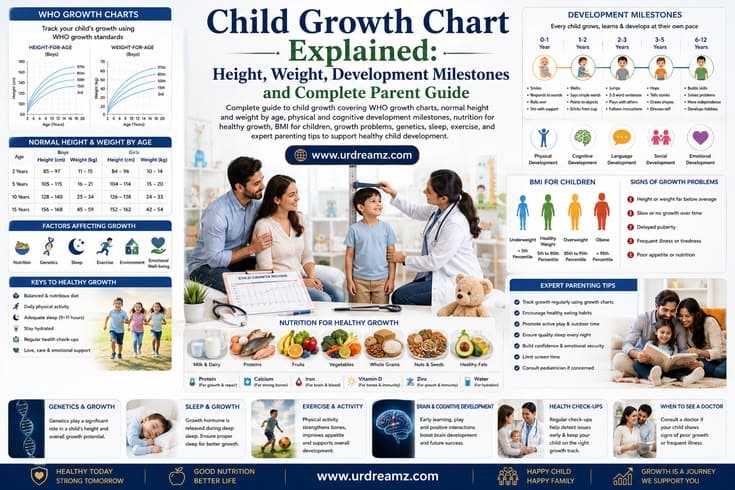
Child Growth Chart Explained: Height, Weight, Development Milestones and Complete Parent Guide
Watching a child grow is one of the most profound experiences of parenthood. In the first eighteen years of life, a human being transforms from a newborn weighing just a few kilograms into a young adult who stands, thinks, communicates, and navigates the world with increasing independence and sophistication. This transformation is not random. It follows patterns and sequences that researchers and pediatric scientists have studied for decades, producing tools and standards that allow parents and healthcare providers to understand whether a particular child is growing and developing within healthy parameters.
Understanding child growth means understanding two distinct but deeply related processes. Growth refers to the measurable, quantitative changes in the body: the increase in height, weight, head circumference, and the physical dimensions of organs and tissues. Development refers to the qualitative improvements in functioning and capability: the emerging ability to walk, talk, reason, regulate emotions, form relationships, and engage with the world. Both are essential to monitor, both are influenced by the same set of factors including genetics, nutrition, sleep, activity, and emotional environment, and both provide valuable information about the child's overall health and wellbeing.
This comprehensive guide gives parents a thorough practical understanding of what healthy child growth looks like at every stage, how to read and use growth charts, what developmental milestones to expect and how much variation is normal, what influences growth most powerfully, what signs might indicate a concern worth discussing with a pediatrician, and most importantly what parents can do every day to support optimal growth and development in their children.
1. Growth vs Development: Key Difference
Parents and healthcare providers commonly use the words growth and development interchangeably, but they actually describe two distinct processes that together constitute the complete picture of how a child changes over time. Understanding this distinction helps parents know what different measurements and observations are actually telling them about their child.
Growth is quantitative. It refers to measurable physical increases in the body's dimensions: height increases, weight increases, head circumference increases, the physical enlargement of organs and tissues. Growth can be measured with a ruler, a scale, and a tape measure. It is physical and concrete. Growth follows a generally predictable trajectory but is also finite: most people reach their adult height by their late teenage years, and many physical growth measures plateau at that point.
Development is qualitative. It refers to improvements in functioning, capability, and behavior. The child who could not walk can now walk. The toddler who could not speak in sentences now tells stories. The preschooler who could not manage frustration without a meltdown can now negotiate and wait their turn. Development is holistic, meaning it encompasses physical functioning, cognitive ability, emotional maturity, social competence, and language. Development is lifelong and continues well into adulthood and even old age, though the pace and nature of change differs across the lifespan.
| Basis | Growth | Development |
|---|---|---|
| Nature | Quantitative (measurable in numbers) | Qualitative (observable in functioning and behavior) |
| What Changes | Increase in height, weight, size of organs, body dimensions | Improvement in skills, abilities, behaviors, cognitive capacity, emotional maturity |
| Aspect of Child | Primarily physical and structural | Physical, cognitive, emotional, social, and linguistic |
| Duration | Limited period. Most physical growth completes by late teenage years | Continuous and lifelong process that never fully stops |
| Measurement | Directly measurable with tools: scale, ruler, tape | Not always directly measurable. Assessed through observation, screening tools, and behavioral criteria |
| Influenced By | Primarily genetics and nutrition with significant input from sleep and activity | Genetics, environment, learning experiences, relationships, nutrition, sleep, stimulation |
| Result | Increase in physical size and structural capacity | Improvement in functioning, capability, independence, and complexity of engagement with the world |
| Examples | Child grows from 50cm to 100cm. Child gains from 3kg to 15kg. Head circumference increases from 34cm to 50cm | Child learns to walk, talk, read, reason, empathize, make friends, solve problems, manage emotions |
| Key Principle | Growth is about SIZE | Development is about QUALITY and FUNCTIONING |
2. Principles of Child Growth and Development
Child development follows consistent principles across all children, regardless of culture, geography, or individual variation. Understanding these principles helps parents interpret what they observe in their children and why development unfolds in the order and manner that it does.
| # | Principle | Explanation | Example |
|---|---|---|---|
| 1 | Development Is Continuous | Development is a lifelong process that starts before birth and continues throughout the entire lifespan. There is no point at which development simply stops | A child keeps learning, adapting, and developing new capacities from conception through old age. Even adults continue to develop emotionally and intellectually |
| 2 | Development Follows a Definite Sequence | Development occurs in a predictable order. Certain abilities must develop before others can emerge. The sequence is consistent across children even though the timing varies | A child must be able to sit before standing, stand before walking, walk before running. A child understands words before speaking them. This sequence does not change |
| 3 | Cephalocaudal Direction (Head to Toe) | Development proceeds from the head downward. Parts of the body closer to the head develop first, with control and development progressing toward the feet | A newborn can hold their head up before they can sit. They can sit before they can stand. They can stand before they can walk. Head control comes first |
| 4 | Proximodistal Direction (Near to Far) | Development proceeds from the center of the body outward toward the extremities. Core stability develops before fine peripheral control | A child gains control of the trunk and shoulder before the forearm, wrist, and fingers. A child can make large arm movements before learning to pinch with two fingers |
| 5 | From General to Specific | Development moves from broad, generalized responses to increasingly specific, refined abilities | A young infant moves the whole arm in an undifferentiated sweep. Later the child learns to reach deliberately. Later still they learn the precise pincer grip to pick up tiny objects |
| 6 | Rate of Development Varies Between Children | While the sequence of development is consistent, the rate at which individual children progress through it varies significantly and normally. No two children develop at exactly the same pace | One child walks at 9 months, another at 15 months. Both are within the normal range. One child speaks in sentences at 18 months, another not until age 2.5. Both may be entirely typical |
| 7 | Development Is Holistic and Interrelated | All domains of development (physical, cognitive, emotional, social, linguistic) are interconnected and influence each other. Progress in one area supports progress in others | Good physical health supports cognitive learning. Emotional security supports social development. Language development supports emotional expression and regulation. All domains interact continuously |
| Factor | How It Affects Growth and Development |
|---|---|
| Heredity and Genetics | Sets the biological potential for height, weight, cognitive development, and temperament. Parents who are tall tend to have taller children. Genetic factors account for approximately 60 to 80 percent of height variation between individuals |
| Nutrition | Provides the raw materials for physical growth and brain development. Adequate protein, calories, vitamins, and minerals are essential for achieving genetic growth potential. Malnutrition is the most common cause of stunted growth globally |
| Environment | The home, community, school, and broader social environment shape cognitive, emotional, and social development profoundly. A stimulating, safe, and supportive environment enables children to reach their developmental potential |
| Health Status | Chronic illness, recurrent infections, and untreated medical conditions can significantly impair growth and development. Children who are frequently ill may have periods of catch-up growth when health improves |
| Sleep | Growth hormone is released primarily during deep sleep. Adequate sleep is essential for physical growth, brain development, emotional regulation, and overall health |
| Physical Activity | Exercise supports healthy bone and muscle development, promotes healthy weight, supports brain development through increased blood flow and neuroplasticity, and contributes to emotional and social development |
| Socioeconomic Status | Influences access to nutritious food, healthcare, safe environments for play, educational resources, and reduced exposure to chronic stress. Socioeconomic inequality is a major driver of developmental disparities between children |
| Emotional Relationships | The quality of early attachment relationships, particularly with primary caregivers, profoundly shapes brain architecture, emotional development, stress response systems, and all subsequent relationships |
3. Five Stages of Child Growth and Development
| Stage | Age Range | Growth Characteristics | Development Characteristics |
|---|---|---|---|
| Infancy | Birth to 12 months | The most rapid period of postnatal growth. Birth weight typically triples by 12 months. Height increases by approximately 50 percent in the first year. Head circumference increases significantly as the brain grows rapidly | Development from complete dependence to remarkable independence in just 12 months. From reflexive to intentional behavior. Begins sitting, crawling, pulling to stand, and often taking first steps. First words emerge. Attachment to caregivers forms and deepens |
| Toddlerhood | 1 to 3 years | Growth slows significantly after the rapid infant year. Children gain approximately 2 to 2.5 kg per year and grow approximately 7 to 13 cm per year. Baby fat diminishes and body proportions begin shifting toward more childlike appearance | Walking becomes confident and running emerges. Language explodes from single words to two-word combinations to simple sentences. Symbolic play begins. Strong drive for autonomy and independence alongside continued need for parental security. Tantrums are developmentally normal as emotional regulation is immature |
| Preschool | 3 to 5 years | Steady growth of approximately 5 to 7.5 cm per year and 2 to 3 kg per year. Body proportions become more adult-like. Primary teeth are all present | Motor skills become more refined and coordinated. Language becomes sophisticated with complex sentences and expanding vocabulary. Imaginative play reaches its peak. Learning to share, take turns, and navigate peer relationships. Emerging self-concept and gender identity. Increasing emotional vocabulary and regulation capacity |
| School Age | 5 to 12 years | Slow, steady growth of approximately 5 to 6 cm and 2 to 3 kg per year throughout most of this period. Body begins preparing for puberty toward the end of this stage, particularly in girls. Permanent teeth replace primary teeth | Physical skills become more refined, coordinated, and specialized for sports and other activities. Logical thinking emerges and gradually replaces intuitive thinking. Reading, writing, and mathematical reasoning develop. Peer relationships and social standing become increasingly important. Moral reasoning develops |
| Adolescence | 12 to 18 years | Puberty brings the second major growth acceleration. Boys can grow 7 to 12 cm per year during peak puberty growth. Girls typically grow 6 to 11 cm per year during their peak. Body composition changes significantly with increasing muscle in boys and increasing body fat in girls. Growth in height typically completes by age 16 to 18 in girls and 17 to 21 in boys | Abstract thinking, hypothetical reasoning, and complex moral reasoning emerge. Identity formation is the central developmental task. Peer relationships are paramount. Increasing emotional intensity due to hormonal changes combined with still-developing prefrontal cortex regulation. Increasing autonomy and preparation for adult independence |
4. Understanding Growth Charts: WHO and CDC Standards
Growth charts are tools that allow healthcare providers and parents to compare an individual child's measurements to a reference population of healthy children, determining whether the child's growth is within the range considered normal and healthy for their age and sex. Growth charts are not meant to provide a single ideal number but a range of normal, reflecting the natural biological variation that exists between healthy children.
Two major sets of growth standards are used internationally. The World Health Organization (WHO) Child Growth Standards, published in 2006, were developed using data from children raised in optimal conditions for growth in six countries across different world regions. The WHO charts describe how children should grow under optimal conditions, meaning they represent a prescriptive standard based on healthy breastfed children growing in ideal environments. These charts are used for children from birth to 5 years and are recommended for international use including in Pakistan.
The Centers for Disease Control and Prevention (CDC) growth charts, developed using data from American children, describe how American children actually grew rather than how children optimally should grow. The CDC charts cover birth to 20 years and are commonly used in the United States. For children birth to 2 years, the CDC recommends using the WHO charts. For children 2 years and older in the United States, the CDC charts are used. Parents in Pakistan will most commonly encounter WHO-based charts in government health facilities and from pediatricians using international standards.
It is critical to understand that growth charts show population distributions, not targets. A child at the 10th percentile is not unhealthy simply because of being at the 10th percentile. It means that 10 percent of healthy children of the same age and sex are smaller than this child, and 90 percent are larger. As long as the child is growing consistently along their own percentile curve, they are demonstrating healthy growth. Concern arises when a child crosses percentile lines (particularly two or more major percentile lines) rather than maintaining their own growth trajectory.
5. WHO Child Growth Chart: Height and Weight by Age
| Age | Girls Weight (kg) | Girls Height (cm) | Boys Weight (kg) | Boys Height (cm) |
|---|---|---|---|---|
| At Birth | 2.4 to 4.2 | 45.6 to 53.7 | 2.5 to 4.3 | 46.1 to 53.7 |
| 3 Months | 4.0 to 6.7 | 54.4 to 64.0 | 4.5 to 7.2 | 55.3 to 64.6 |
| 6 Months | 5.1 to 8.1 | 61.2 to 71.8 | 5.6 to 8.7 | 61.9 to 72.6 |
| 9 Months | 6.0 to 9.3 | 65.3 to 76.5 | 6.4 to 9.9 | 65.9 to 77.3 |
| 1 Year (12 months) | 6.7 to 10.1 | 68.0 to 79.7 | 7.0 to 10.8 | 69.2 to 80.7 |
| 2 Years | 8.1 to 12.2 | 80.1 to 88.3 | 8.6 to 12.9 | 81.1 to 89.7 |
| 3 Years | 9.2 to 14.3 | 88.6 to 96.8 | 9.7 to 15.3 | 89.7 to 97.9 |
| 4 Years | 10.6 to 16.7 | 95.4 to 104.1 | 11.3 to 17.7 | 96.7 to 105.3 |
| 5 Years | 12.0 to 19.2 | 101.8 to 111.0 | 12.7 to 20.4 | 102.7 to 112.0 |
| 6 Years | 13.3 to 21.9 | 107.6 to 117.7 | 14.1 to 23.0 | 108.6 to 118.6 |
| 7 Years | 15.0 to 24.6 | 112.7 to 123.6 | 15.9 to 25.8 | 114.0 to 124.6 |
| 8 Years | 16.6 to 27.5 | 117.6 to 129.4 | 17.7 to 28.6 | 119.3 to 130.7 |
| 9 Years | 18.7 to 31.0 | 122.0 to 134.1 | 19.9 to 32.5 | 123.9 to 136.6 |
| 10 Years | 20.7 to 34.0 | 125.8 to 138.7 | 22.4 to 36.9 | 127.9 to 141.3 |
| 11 Years | 23.3 to 38.9 | 128.6 to 143.8 | 25.0 to 42.0 | 132.1 to 146.0 |
| 12 Years | 27.8 to 45.8 | 133.4 to 151.0 | 28.9 to 47.8 | 137.2 to 151.7 |
These ranges represent the middle portion of the WHO growth distribution, approximately the 3rd to 97th percentile range for healthy children. Every child grows at their own individual pace. A child whose measurements fall within these ranges is considered to be growing within the normal healthy range. However, the most important indicator is not a single measurement but the child's own growth trend over time. A child consistently at the lower end of the range who is healthy, energetic, eating well, and developing normally is generally not a concern. Consult your pediatrician with any growth-related questions specific to your child.
6. Understanding Growth Percentiles
Growth percentiles are the language of growth charts, and understanding them helps parents interpret what their child's measurements actually mean. A percentile is a statistical measure that shows where a child's measurement falls relative to other children of the same age and sex in the reference population.
If a child is at the 50th percentile for height, this means that out of every 100 children of the same age and sex, approximately 50 are shorter and 50 are taller than this child. If a child is at the 25th percentile, 25 children are shorter and 75 are taller. If a child is at the 75th percentile, 75 children are shorter and 25 are taller. None of these percentile positions is inherently better or worse than the others. Being at the 25th percentile is not less healthy than being at the 75th percentile.
What pediatricians watch most carefully is not the absolute percentile position but the consistency of the percentile over time. A child who has been consistently at the 25th percentile since birth is following their own healthy growth curve. A child who was at the 50th percentile and drops to the 10th percentile over several measurements has crossed percentile lines, which warrants investigation even if the absolute measurement is within the normal range. Similarly, a child at the 3rd percentile who has always been there and whose parents are small in stature is likely constitutionally small and healthy. The same measurement in a child who was previously at the 50th percentile suggests something has changed that needs to be evaluated.
| Percentile Range | What It Means | When to Be Concerned |
|---|---|---|
| Above 97th percentile | Child is taller or heavier than 97 percent of peers. May represent constitutional large stature especially if parents are tall. May warrant evaluation if growth is very accelerated | If height is advancing much faster than bone age or if other signs of precocious puberty are present |
| 85th to 97th percentile | Child is in the larger-than-average range. Often reflects familial growth patterns. For weight, between 85th and 95th percentile is the overweight range requiring monitoring | For weight specifically, crossing into this range warrants discussion with pediatrician about healthy weight management |
| 5th to 85th percentile | This is the normal healthy growth range for both height and weight. Any child consistently within this range and following their own curve is growing healthily | Concern if crossing major percentile lines downward or if inconsistent with parental stature without explanation |
| 3rd to 5th percentile | Child is small but within the lower end of the normal range. May reflect constitutional small stature, particularly if parents are small. Requires monitoring and evaluation if crossing from higher percentiles | If the child has always been here and is healthy and growing consistently, may not require intervention. If new, requires evaluation |
| Below 3rd percentile | Child is smaller than 97 percent of peers. May indicate growth concerns that warrant medical evaluation | Always warrants discussion with pediatrician. May or may not indicate a pathological cause but should be assessed |
7. BMI for Children Explained
Body Mass Index (BMI) is a calculation that relates weight to height and is used as a screening tool to identify whether a child's weight may be appropriate, low, or high for their height. The mathematical formula for BMI is the same in children and adults: weight in kilograms divided by height in meters squared. However, unlike adult BMI which uses fixed categories, BMI in children must be interpreted using age and sex-specific percentile charts because the appropriate ratio of weight to height changes as children grow and their body composition changes.
For example, a child who weighs 35 kg and is 1.45 meters tall has a BMI of 16.6. But whether 16.6 is healthy for that child depends entirely on their age and sex. A BMI that is normal for a 7-year-old may indicate underweight in a 12-year-old. This is why BMI for children is always expressed as a percentile relative to peers of the same age and sex, not as an absolute number.
| BMI Percentile Range | Category | What It Means |
|---|---|---|
| Below 5th percentile | Underweight | Child's weight is low relative to height and age. May indicate inadequate nutrition, underlying illness, or constitutional leanness. Warrants evaluation |
| 5th to below 85th percentile | Healthy Weight | Child's weight is appropriate for their height and age. This is the target range for most children |
| 85th to below 95th percentile | Overweight | Child's weight is higher than average relative to height and age. Lifestyle interventions including improved nutrition and increased activity are recommended. Monitoring warranted |
| 95th percentile and above | Obesity | Child's weight is significantly high relative to height and age. Comprehensive evaluation and management by healthcare team is recommended |
Parents should understand that BMI has important limitations as a measure of health in children. It cannot distinguish between fat and muscle: an athletic child with significant muscle development may have a high BMI despite having very healthy body composition. Rapid growth spurts can temporarily cause BMI to appear high as weight sometimes increases before height catches up. And BMI tells nothing about where body fat is distributed, which affects health risk more than the total amount. BMI should be used as a screening discussion-starter with a pediatrician, not as a definitive health assessment on its own.
8. Physical Development Milestones: Month by Month
| Age | Key Physical Milestones | What It Looks Like |
|---|---|---|
| 1 Month | Lying on back, turning head side to side. Primitive reflexes present including sucking, grasping, rooting | Baby lies on back but can briefly turn head. Reflexive grip when palm is touched. Rooting toward the breast when cheek is stroked |
| 2 Months | Beginning to lift head briefly when placed on tummy. Fists are beginning to open | When placed on tummy, baby can briefly lift head. Starts to notice and track faces with eyes |
| 3 Months | Lifting head and chest off floor when on tummy. Opening and closing hands. Pushing down legs when feet touch surface | Baby can now hold head up for several seconds when on tummy. Beginning to bat at dangling objects with hands |
| 4 to 6 Months | Sitting with support. Rolling over front to back. Bringing hands to mouth. Reaching for objects. Beginning to bear weight on legs when supported | Can sit supported in a chair or with help. Rolls over. Reaches deliberately for toys. Puts everything in mouth |
| 7 to 8 Months | Sitting independently without support. Beginning to crawl or scoot. Transferring objects from hand to hand | Sits unsupported on the floor and plays with toys. May begin a form of crawling though styles vary enormously |
| 8 to 9 Months | Crawling (in most but not all children). Pulling to stand. Beginning to cruise along furniture | Crawls efficiently. Pulls up to standing at furniture. Moves along furniture holding on |
| 9 to 10 Months | Standing while holding onto furniture. Beginning pincer grip (thumb and index finger) | Stands holding on. Can pick up small objects with pincer grip. Explores everything by touching and mouthing |
| 11 Months | Walking with help, holding two hands or one hand of adult. Standing briefly alone | May take steps when both hands are held. Can stand momentarily without support |
| 12 to 13 Months | Standing independently. May take first independent steps | First independent steps are a major milestone but normal range extends to 15 months. Some children walk at 9 months, others not until 15 months or slightly beyond |
| 14 to 15 Months | Walking independently, though with a wide-based toddler gait. Beginning to climb stairs with help | Walks well enough to explore independently. Attempts stairs with both hands held |
9. Gross Motor Development: From Lying to Running
| Age | Gross Motor Milestones | What Children Can Do |
|---|---|---|
| 15 Months | Walking independently. Beginning to run (stiffly) | Walks well. Stoops and stands without falling over. Beginning to pull toy while walking |
| 18 Months | Running (not yet smooth). Climbing onto furniture. Walking up stairs with hand held | Runs but falls often. Climbs onto chairs and couches. Carries and pushes large toys while walking |
| 2 Years | Running well. Jumping with both feet. Kicking ball. Walking up and down stairs (both feet on each step) | Runs more smoothly. Jumps in place. Kicks a ball forward. Throws ball overhand |
| 3 Years | Riding tricycle. Running smoothly. Jumping and hopping briefly on one foot. Climbing well | Pedals tricycle. Climbs ladders and jungle gym equipment. Runs with good coordination. Catches ball with arms extended |
| 4 Years | Hopping on one foot consistently. Skipping. Catching ball with hands. Balancing briefly on one foot | Hops on one foot 4 to 8 times. Begins skipping. Catching a thrown ball with hands rather than body. Stands on one foot for several seconds |
| 5 Years | Skipping smoothly. Hopping confidently. Catching ball well. Good balance | Skips smoothly. Hops on one foot 10 or more times. Catches ball reliably. Pumps on swings independently. Shows mature running pattern |
| 6 Years | Mature walking and running patterns. Riding bicycle. Complex coordination skills beginning | Can ride bicycle without training wheels. Performs complex coordinated activities like skipping rope, sports-specific skills. Good general motor coordination |
| 36 Months specifically | Hopping on one foot is a key milestone at this age | The ability to hop on one foot (briefly) typically emerges around 3 years and reflects the balance and strength development of this period |
10. Fine Motor Development: Hands and Fingers
| Age | Fine Motor Milestone | Practical Example |
|---|---|---|
| 3 to 4 months | Holds and shakes rattle. Opens and closes hands deliberately | Can hold a rattle placed in the hand and shake it. Bats at dangling toys with increasing intentionality |
| 6 months | Transfers object between hands. Raking grasp of small objects | Can move a toy from one hand to the other. Rakes at cheerios or raisins with whole hand |
| 9 months | Pincer grasp emerging (index finger and thumb). Bangs objects together | Can pick up small objects between index finger and thumb. Deliberately bangs two blocks together |
| 12 months | Mature pincer grasp. Puts objects in and takes them out of containers. May attempt crayon | Picks up tiny objects precisely. Enjoys dropping things into containers and taking them out. May make marks with crayon with whole fist grip |
| 18 months | Stacks 3 to 4 blocks. Turning pages of a book. Beginning to use spoon | Can make a tower of a few blocks. Turns pages (often several at once). Uses spoon though with significant spilling |
| 2 Years | Builds tower of 6 blocks. Turning single pages. Drawing vertical lines and circles | Stacks 6 or more blocks. Turns single pages. Imitates drawing lines and circular scribbles. Better spoon use |
| 3 Years | Drawing circle on request. Beginning to hold pencil with fingers (rather than fist). Cutting with scissors | Can copy a circle. Pencil grip transitioning toward finger control. Can snip paper with scissors |
| 4 Years | Drawing cross shape. Cutting along a line. Beginning to draw recognizable human figure | Copies cross and square shapes. Cuts along a straight line. Draws a person with 2 to 4 body parts |
| 5 to 6 Years | Drawing person with 6 body parts. Writing some letters. Tying shoelaces beginning | Draws recognizable person. Writes own name. Increasingly precise pencil control. Beginning to manage shoe laces |
11. Cognitive Development Milestones by Age
| Age | Cognitive Milestone | What It Looks Like |
|---|---|---|
| Birth to 3 months | Recognizes caregiver faces and voices. Tracks moving objects with eyes. Shows surprise | Turns head toward familiar voice. Follows moving face with eyes. Startles at loud sounds |
| 3 to 6 months | Shows curiosity. Looks for partially hidden objects. Begins to understand cause and effect | Reaches for toys. Shakes rattle to hear sound and repeats. Shows interest in looking at and exploring objects |
| 6 to 9 months | Object permanence beginning to develop (understanding objects exist when out of sight) | Looks for a toy that has been hidden. Recognizes familiar people and shows stranger anxiety. Imitates sounds and simple actions |
| 10 to 12 months | Object permanence well established. Understands simple words and commands. Imitates gestures | Searches for hidden toys. Waves bye-bye when asked. Points to indicate interest. Understands no |
| 12 to 18 months | Symbolic play beginning. Problem-solving by trial and error. Exploring cause and effect | Begins to use objects representationally (uses a banana as a phone). Puts round block in round hole after experimentation |
| 18 months to 2 years | Make-believe play beginning. Can solve simple problems mentally rather than by trial and error. Beginning of representational thinking | Pretends to feed doll. Can find object moved out of sight. Scribbles and calls it something specific |
| 2 to 3 years | Symbolic play becoming more elaborate. Beginning to understand past and future. Still primarily egocentric perspective | Elaborate pretend play scenarios. Asks many why questions. Counts to three or more. Matches basic shapes and colors |
| 3 to 5 years | Beginning of classification and categorization. Can understand some non-literal language. Theory of mind developing (understanding others have different thoughts) | Can sort objects by color, shape, and size. Counts 10 or more objects. Names most letters. Understanding of yesterday and tomorrow improving |
| 5 to 7 years | Logical thinking for concrete situations emerging. Conservation beginning (understanding that quantity does not change when appearance changes) | Can do simple addition. Understands that the same amount of water is in both a tall thin glass and a short wide glass. More systematic thinking |
| 7 to 12 years | Logical thinking increasingly systematic and less tied to concrete examples. Classification, seriation, and number concepts develop fully | Can think through problems logically. Understands that actions can be reversed mentally. Academic skills of reading, writing, and mathematics develop through this period |
12. Language Development Milestones
| Age | Expected Language Development | Possible Concern If Not Present |
|---|---|---|
| 1 to 2 months | Cooing sounds. Social smile in response to voice. Recognizes caregiver voice | No response to sounds. No social smile by 2 months |
| 4 to 6 months | Babbling begins. Consonant-vowel combinations (ba, ma, da). Laughs and squeals. Responds to name | No babbling by 6 months. Does not respond to name or loud sounds |
| 9 months | Jargon babbling with speech-like intonation. Understands no. Waves bye-bye. Points | No babbling with consonants. Does not respond to name |
| 12 months | First meaningful words (typically mama, dada plus one to two other words). Understands several familiar words. Points to communicate interest | No words by 12 months. No pointing or waving. Loss of previously acquired speech |
| 15 months | Vocabulary of approximately 3 to 5 words. Points to ask for what is wanted. Understands simple instructions | No words at 15 months |
| 18 months | Vocabulary of 10 to 25 words. Beginning to point to pictures in books. Follows two-step instructions | Fewer than 10 words at 18 months. Not pointing to pictures or objects on request |
| 2 Years | Vocabulary of 50 or more words. Two-word combinations beginning. Strangers understand approximately 50 percent of speech. Names familiar pictures | Fewer than 50 words. No two-word combinations at 24 months. Loss of previously acquired speech is always a concern at any age |
| 3 Years | Three to four word sentences. Vocabulary of 200 or more words. Strangers understand approximately 75 percent of speech | Not speaking in sentences. Strangers understand less than 50 percent of speech |
| 4 to 5 Years | Four to six word sentences. Complex grammar developing. Tells stories. Strangers understand nearly all speech | Very unclear speech by age 4. Not speaking in full sentences by age 4 |
13. Emotional and Social Development
| Age | Emotional Development | Social Development |
|---|---|---|
| 0 to 6 months | Expresses distress, contentment, and pleasure. Social smile emerges at 6 to 8 weeks. Begins showing excitement and disgust | Prefers caregiver faces and voices. Beginning attachment forming through repeated responsive caregiving |
| 6 to 12 months | Broader emotional range. Stranger anxiety (normal) from 6 to 9 months onward. Separation anxiety intensifies. Begins showing joy, fear, sadness, and anger more distinctly | Clear preference for primary caregiver. Plays games like peekaboo. Imitates simple social gestures |
| 1 to 2 years | Tantrums are developmentally normal (emotional overflow, not manipulation). Strong attachment and protests separation. Beginning of empathy (responds to others' distress) | Parallel play (plays alongside but not with other children). Imitates adult behavior. Separation anxiety common but should reduce through 2nd year |
| 2 to 3 years | More complex emotions (jealousy, pride, shame). Beginning of self-concept. Tantrums continue but beginning to respond to adult regulation support | Beginning of cooperative play with familiar peers. Shows affection for familiar people. Some defiance of authority is normal and developmentally appropriate |
| 3 to 5 years | Increasing emotional vocabulary. Beginning to understand that feelings can differ between people. Pride in achievements. Fears (dark, monsters) common and normal | Cooperative play developing. Beginning to choose friends. Shows interest in peers. Enjoys group play |
| 5 to 12 years | Emotional regulation improving. More complex understanding of emotions. Pride, shame, guilt, and empathy all more sophisticated | Peer relationships increasingly central. Best friendships form. Social comparison begins. Group belonging becomes important |
14. Factors That Influence Child Growth
| Factor | Impact on Growth | What Parents Can Do |
|---|---|---|
| Genetics and Heredity | Sets the biological ceiling for height and the tendency for body type. Accounts for approximately 60 to 80 percent of height variation between individuals | Cannot be changed but can understand family growth patterns. Genetic potential is maximized by ensuring all other factors (nutrition, sleep, health) are optimized |
| Nutrition | The single most modifiable factor for physical growth. Adequate protein, calories, vitamins, and minerals are required to build tissue, bone, and all body structures. Malnutrition causes stunted growth regardless of genetic potential | Provide a varied, nutrient-dense diet appropriate to the child's age. Ensure adequate calories and protein. Include calcium, vitamin D, iron, and zinc consistently |
| Sleep | Growth hormone is released primarily during deep slow-wave sleep, in the largest pulses approximately 90 minutes after sleep onset. Chronic sleep deprivation measurably reduces growth hormone levels and can impair linear growth | Protect age-appropriate sleep duration. Consistent bedtimes. Sleep-friendly environment. Non-negotiable sleep schedule |
| Physical Activity | Weight-bearing exercise stimulates bone formation and density. Activity supports healthy muscle development. Exercise promotes healthy body composition. Children who are physically active have stronger bones and healthier growth patterns | 60 minutes of physical activity daily including running, jumping, and active play that loads the bones. Outdoor play provides additional benefits through sun exposure for vitamin D |
| Hormones | Growth hormone (produced by the pituitary gland), thyroid hormone, and sex hormones at puberty are the primary hormonal drivers of growth. Deficiency in any of these can cause significantly impaired growth | Regular pediatric checkups catch hormonal growth problems early. If growth is significantly slow, thyroid function and growth hormone levels can be assessed |
| Chronic Illness and Recurrent Infection | Children who are frequently ill or who have chronic health conditions may have significantly impaired growth. Energy and nutrients that would otherwise go toward growth go instead toward fighting illness. Chronic inflammation also directly suppresses growth | Complete vaccinations. Treat infections promptly. Address chronic conditions with medical support. Children often have catch-up growth when chronic illness is managed effectively |
| Emotional Wellbeing and Attachment | Psychosocial dwarfism, a condition where emotional deprivation significantly impairs growth, demonstrates the profound connection between emotional health and physical growth. Children in loving, secure environments grow better than those under chronic stress | Secure attachment, warmth, emotional availability, and safety at home support optimal growth through complex pathways involving stress hormone regulation |
15. Genetics and Family Height
A child's final adult height is determined more by genetics than by any other single factor. The concept of mid-parental height provides a useful estimate of a child's genetic height potential: the average of the parents' heights adjusted for sex. For boys, add 13 centimeters to the mother's height, add this to the father's height, and divide by two. For girls, subtract 13 centimeters from the father's height, add this to the mother's height, and divide by two. The result is the child's predicted adult height, with a range of approximately plus or minus 10 centimeters reflecting additional genetic and environmental influences.
This calculation helps parents understand what is realistic for their child's height. A child whose parents are both of short stature is unlikely to be tall regardless of diet or exercise, and being at a lower growth percentile reflects their genetic reality rather than a health problem. Conversely, a child whose parents are tall who is falling well below expected height percentiles may warrant investigation regardless of the absolute measurement.
It is important to remember that genetic potential sets the ceiling, not the floor. Environmental factors including nutrition, sleep, and health can prevent a child from reaching their genetic height potential, but cannot create height beyond that potential. The goal is to ensure every child has the nutrition, sleep, physical activity, and healthcare they need to fully express their genetic growth potential, whatever that happens to be.
16. Nutrition for Healthy Child Growth
Adequate nutrition is the most powerful modifiable determinant of physical growth. The body cannot build bone, muscle, organ tissue, or any other structure without the raw materials provided by food. Every dimension of growth, from height to weight to brain development to immune function, depends on consistent daily nutrition that provides the necessary macronutrients (protein, carbohydrates, and fats) and the essential micronutrients (vitamins and minerals) in appropriate quantities.
Protein deserves particular emphasis as the building material for all body tissues. Children need more protein per kilogram of body weight than adults because they are actively building new tissue in addition to replacing worn tissues. Adequate protein intake is essential for muscle development, organ growth, immune function, enzyme production, and hundreds of other biological processes. The quality of protein matters: animal proteins (meat, poultry, fish, eggs, dairy) contain all essential amino acids in appropriate proportions, while plant proteins may need to be combined thoughtfully to ensure complete amino acid availability.
Energy (calorie) adequacy is equally fundamental. A child who does not consume enough total energy will use dietary protein for fuel rather than for tissue building, compromising growth regardless of protein quantity in the diet. Children have high energy needs relative to their body size due to the combined demands of physical activity, growth, and brain development. Ensuring children eat enough overall is the foundation on which all other nutritional advice rests.
17. Essential Vitamins and Minerals for Growth
| Nutrient | Role in Growth | Deficiency Consequences | Best Food Sources |
|---|---|---|---|
| Calcium | Primary mineral for bone formation and density. Also essential for muscle contraction, nerve transmission, and hundreds of cellular functions. Childhood and adolescence are critical periods for building peak bone mass that will last a lifetime | Inadequate bone density, increased fracture risk, impaired growth in severe deficiency. Affects peak bone mass permanently | Dairy products (milk, yogurt, cheese), fortified plant milks, calcium-set tofu, almonds, broccoli, kale, dried figs |
| Vitamin D | Essential for calcium absorption from the digestive tract. Without adequate vitamin D, calcium cannot be properly absorbed and used for bone building regardless of how much calcium is consumed. Also directly affects immune function, muscle function, and gene expression in multiple body systems | Rickets in young children (soft, deformed bones). Impaired bone density. Impaired immune function. Low vitamin D is extremely common, even in sunny countries | Sunlight on skin (primary source). Fatty fish, egg yolks, liver, fortified dairy and plant milks |
| Protein | Building material for all body tissues including muscle, bone matrix, organs, enzymes, and immune proteins. Essential for growth hormone production and signaling | Stunted growth, reduced muscle mass, impaired immune function, delayed development. Protein deficiency combined with calorie deficiency is the most common cause of growth failure in developing countries | Meat, poultry, fish, eggs, dairy, legumes, lentils, nuts, seeds, quinoa |
| Iron | Essential for oxygen transport in the blood to all growing tissues. Required for brain development and cognitive function. Iron deficiency anemia is the most common nutritional deficiency worldwide and significantly impairs development | Anemia, fatigue, impaired cognitive development, reduced attention and learning capacity, impaired growth | Red meat, chicken, fish (heme iron, highly bioavailable). Lentils, beans, spinach, fortified cereals (non-heme iron, needs vitamin C for absorption) |
| Zinc | Required for cell division and protein synthesis, making it directly essential for physical growth. Involved in taste and appetite, meaning zinc deficiency can reduce food intake and compound its growth effects. Essential for immune function | Growth retardation, poor appetite, delayed sexual development, impaired immune function. Zinc deficiency is common in diets lacking meat and legumes | Meat, shellfish (particularly oysters), chickpeas, lentils, pumpkin seeds, cashews, dairy |
| Vitamin A | Essential for bone growth and remodeling, immune function, vision, and the maintenance of epithelial tissues | Night blindness, increased infection susceptibility, impaired growth | Liver, egg yolks, dairy, fatty fish. Beta-carotene from sweet potato, carrots, mango, leafy greens converts to vitamin A |
| Vitamin E | Powerful antioxidant that protects cell membranes including in rapidly dividing growth cells. Supports immune function and brain development | Nerve damage in severe deficiency. Impaired immune function | Almonds, sunflower seeds, avocado, spinach, broccoli, peanuts, kiwi, mango, olive oil, butternut squash, chia seeds |
| Iodine | Essential for thyroid hormone production. Thyroid hormone directly regulates metabolic rate, brain development, and growth. Iodine deficiency is the most common preventable cause of intellectual disability worldwide | Impaired brain development, cognitive deficits, goiter, impaired growth. Critical in pregnancy and early childhood | Iodized salt, seafood, dairy, eggs. Many areas of Pakistan have iodine-deficient soil making iodized salt particularly important |
18. Best Foods for Child Growth
| Food | Key Growth Nutrients | Why It Supports Growth | How to Include |
|---|---|---|---|
| Eggs | Complete protein, vitamin D, vitamin A, choline, iron, zinc, selenium, all B vitamins | One of the most nutrient-dense single foods available. Complete protein contains all essential amino acids for tissue building. Choline is critical for brain development | Daily or most days. Scrambled, boiled, in omelets. Introduced early in complementary feeding |
| Dairy (milk, yogurt, cheese) | Calcium, protein, vitamin D (if fortified), vitamin B12, phosphorus, potassium | Unparalleled source of bioavailable calcium for bone building combined with protein for tissue growth. Studies consistently show dairy consumption correlates with better linear growth in children | Milk at meals. Yogurt as daily snack. Cheese in cooking and as snack. Full-fat versions for younger children |
| Lean meat and poultry | Complete protein, heme iron (highly bioavailable), zinc, vitamin B12, B6 | Provides the two nutrients most commonly limiting growth in developing country children: iron and zinc, in their most bioavailable forms. Complete protein supports all tissue building | Several times per week as part of main meals. In soups, curries, and rice dishes |
| Fatty fish (salmon, sardines, mackerel) | Complete protein, omega-3 DHA and EPA, vitamin D, selenium, calcium (sardines with bones) | Vitamin D from fatty fish supports calcium absorption and bone growth. Omega-3s are essential for brain development and have anti-inflammatory effects that support healthy growth | Twice weekly minimum. Baked, in pasta, as fish cakes |
| Legumes (lentils, chickpeas, beans) | Plant protein, iron, zinc, folate, fiber, complex carbohydrates | Important protein and mineral source particularly for families with limited meat consumption. Combining with vitamin C-rich vegetables maximizes iron absorption from plant sources | Daily in daal, soups, curries, hummus. As rice accompaniment |
| Whole grains (oats, whole wheat, brown rice) | Complex carbohydrates, B vitamins, iron, zinc, fiber, protein | Provide sustained energy for growth and activity. B vitamins support metabolism and cell division essential for growth. Better nutrient density than refined grains | Oatmeal for breakfast. Whole grain bread and roti. Brown rice as base for meals |
| Nuts and seeds | Protein, healthy fats, vitamin E, zinc, iron, calcium, magnesium | Nutrient-dense energy source important for supporting the high calorie and micronutrient needs of active growing children. Almonds particularly high in calcium and vitamin E | Small handful daily as snack for school-age children. Ground or as butter for younger children. Mixed into oatmeal and baking |
| Colorful vegetables and fruits | Vitamins A, C, K, folate, antioxidants, fiber, varied phytonutrients | Provide the vitamins and antioxidants that protect growing cells, support immune function, support bone and tissue building, and contribute to overall health that enables growth | Different colored vegetable every day. Fresh fruit at every meal. Aim for variety of colors through the week |
19. Healthy Food Habits for Growing Children
| Habit | Why It Matters for Growth | How to Build It |
|---|---|---|
| Eat three nutritious meals daily including breakfast | Children cannot sustain the energy and nutrient intake needed for healthy growth on two meals or on erratic eating. Breakfast specifically is linked to better growth, cognitive performance, and school attendance | Same meal times daily. Nutritious breakfast before school every morning. Sit down family meals as the norm |
| Drink 8 to 10 glasses of water daily | Adequate hydration supports all metabolic processes including those involved in tissue building. Dehydration impairs digestion and nutrient absorption that are essential for growth | Water at every meal and snack. Water bottle always available. Replace sugary drinks with water |
| Eat a balanced diet including all food groups | No single food provides all the nutrients needed for growth. The combination of proteins, carbohydrates, healthy fats, and diverse vitamins and minerals from varied food groups collectively supports all dimensions of growth | Half the plate should be vegetables and fruits. Quarter should be protein foods. Quarter should be whole grains. Include dairy daily |
| Include dairy or calcium-rich foods daily | Childhood and adolescence are the critical periods for bone mineralization. The calcium deposited in bones during childhood and adolescence determines bone density for life. Missing this window has permanent consequences | Milk at meals. Yogurt daily. Cheese in cooking. For lactose intolerance, fortified plant milks and other calcium sources |
| Limit junk food, cold drinks, and excessive sugar | Junk food displaces nutritious food, providing calories without the vitamins, minerals, and protein needed for growth. Sugary drinks in particular are strongly linked to displacing milk and nutrient-dense foods while contributing to obesity risk | Junk food as occasional treat not daily staple. Water as default drink. Home-cooked meals as the norm |
| Include protein at every meal | Protein cannot be stored in the body the way fat and carbohydrates can. The body needs a consistent supply throughout the day for tissue building that is happening continuously in growing children | Eggs or dairy at breakfast. Legumes or meat at lunch. Fish, meat, or legumes at dinner |
| Wash hands before eating and chew food well | Proper hygiene prevents infections that compromise growth through illness and reduced absorption. Thorough chewing improves nutrient extraction from food | Hand washing routine before all meals. Teach children to eat slowly and chew thoroughly. No rushing at mealtimes |
| Sleep 8 to 10 hours every night | Growth hormone is released during sleep. This is not a minor factor: adequate sleep is essential for achieving genetic growth potential | Consistent bedtime. Sleep-friendly bedroom. No screens before bed |
20. Sleep and Child Growth
The relationship between sleep and physical growth is direct and well-established. Growth hormone, the primary hormonal driver of linear growth in childhood, is secreted in its largest daily pulses during slow-wave (deep) sleep, typically in the first few hours after a child falls asleep. This is not a coincidence of timing. The neuroendocrine systems governing both sleep and growth hormone release are closely interlinked, and adequate deep sleep is a necessary condition for appropriate growth hormone secretion.
Research has demonstrated that children who chronically sleep less than the recommended amount for their age show measurably lower growth hormone levels. Children with obstructive sleep apnea, which fragments sleep and reduces deep sleep stages, frequently show growth impairment that resolves after the sleep apnea is treated. These observations confirm that sleep is not simply correlated with growth but is mechanistically connected to it.
| Age | Recommended Sleep Duration | Growth Hormone Release Timing |
|---|---|---|
| Newborns 0 to 3 months | 14 to 17 hours total across day and night | Growth hormone secretion in newborns is not yet fully coupled to sleep cycles, which is why newborns grow at similar rates during both sleeping and waking periods |
| Infants 3 to 12 months | 12 to 15 hours including naps | Sleep-growth hormone coupling begins to establish. The large first-year growth rate requires both adequate nutrition and adequate sleep |
| Toddlers 1 to 3 years | 11 to 14 hours including nap | Peak growth hormone release occurs in the first deep sleep cycle, approximately 90 minutes after sleep onset. A consistent, adequate nighttime sleep duration is essential |
| Preschoolers 3 to 5 years | 10 to 13 hours including possible nap | Night sleep provides the primary growth hormone secretion opportunity. Missing hours at the beginning of sleep, which contains the most slow-wave sleep, particularly impairs growth hormone release |
| School Age 6 to 12 years | 9 to 11 hours | Multiple growth hormone pulses occur during the night. Adequate sleep duration and quality are both important |
| Teenagers 13 to 18 years | 8 to 10 hours | Puberty growth requires adequate sleep for growth hormone release at this critical period. Teenage sleep deprivation can impair the full expression of pubertal growth |
21. Physical Activity and Exercise for Healthy Growth
Physical activity is essential for healthy child growth and development through multiple direct mechanisms. Weight-bearing exercise, which includes all activities where children support their own body weight against gravity (running, jumping, climbing, dancing, sports), provides the mechanical stimulus that drives bone formation and increases bone density. Children who are physically active build stronger, denser bones during childhood that reduce their lifelong fracture risk and provide better bone reserve against age-related bone loss in adulthood.
Physical activity also supports healthy muscle development, body composition, cardiovascular health, brain development, and emotional wellbeing, all of which indirectly support optimal growth. Exercise increases blood flow to the brain and promotes neuroplasticity through mechanisms including increased production of brain-derived neurotrophic factor (BDNF), directly supporting the cognitive development that is a central component of healthy child development.
| Age | Recommended Activity | Types of Activity That Support Growth |
|---|---|---|
| Infants 0 to 12 months | Encourage movement throughout the day. Tummy time when awake and supervised from birth. No screen time for recreational purposes | Floor play in various positions. Supervised tummy time. Exploration of environment. Reaching, grasping, rolling, and eventually crawling |
| Toddlers 1 to 3 years | At least 3 hours of physical activity spread throughout the day. Active play is the primary vehicle | Free active play indoors and outdoors. Walking, running, climbing, jumping. Water play. Dancing. Active exploration of the environment |
| Preschoolers 3 to 5 years | At least 3 hours of physical activity daily including at least 1 hour of energetic play | Active outdoor play. Tricycle riding. Climbing equipment. Ball play. Dancing. Swimming. Anything that gets the child moving energetically |
| School Age 6 to 12 years | At least 60 minutes of moderate to vigorous physical activity daily | Running, jumping, and skipping that loads bones. Team sports. Swimming. Martial arts. Cycling. Outdoor play. Family walks and activities |
| Teenagers 13 to 18 years | At least 60 minutes of moderate to vigorous physical activity daily including bone-strengthening activities 3 days per week | Weight-bearing sports and activities (basketball, football, running, gymnastics, dancing). Resistance training with appropriate guidance for teens 15 and above. Swimming. Team sports |
22. Bone Development and Skeletal Growth
Bones are living tissues that are constantly being built and broken down in a process called remodeling. During childhood and adolescence, bone formation outpaces bone breakdown, resulting in the net addition of bone mass that produces growth in height and increasing bone density. Understanding how bones grow helps parents understand why certain nutrients, activities, and habits are particularly important during the growing years.
Bones grow in length through growth plates (also called epiphyseal plates), specialized areas of cartilage located at the ends of long bones (the arms and legs) where new bone tissue is continuously being produced. When a child's growth plates close, which happens at different times for different bones but typically between ages 14 to 16 for girls and 16 to 18 for boys, that bone cannot grow longer. This is why height growth eventually stops while other growth processes continue.
Peak bone mass, the maximum bone density a person achieves in their lifetime, is built primarily during childhood and adolescence with the majority accumulated before age 20. The bone mass built during growing years determines bone strength for the rest of life. Adequate calcium and vitamin D, regular weight-bearing physical activity, and avoiding smoking and alcohol are the most important determinants of peak bone mass. Parents who ensure their children have these during the growing years are providing protection against osteoporosis and fractures decades into the future.
23. Brain Development in Children
The brain undergoes its most remarkable growth and development during the first years of life. At birth, the brain contains approximately 100 billion neurons and most of the brain cells the person will ever have. However, these neurons are poorly connected compared to the adult brain. The first years of life involve an extraordinary expansion of neural connections (synapses) followed by a pruning process that selectively strengthens frequently used connections and eliminates those that are not used. This experience-dependent brain development means that the quality and richness of experiences during early childhood literally shapes the physical architecture of the developing brain.
The brain grows most rapidly in the first five years of life. By age 3, the brain has reached approximately 80 percent of its adult volume. By age 5, approximately 90 percent. The prefrontal cortex, the region responsible for executive function, decision-making, and emotional regulation, is the last brain region to fully mature, not completing development until the mid-twenties. This extended developmental timeline for the prefrontal cortex explains both the impulsivity of toddlers and the sometimes still impulsive decision-making of teenagers.
Specific nutrients are particularly critical for brain development: DHA omega-3 fatty acids (from fatty fish and fish oil) are structural components of brain cell membranes. Iron is essential for myelination (the process of coating nerve fibers that speeds up signal transmission). Iodine is critical for thyroid hormone production which drives brain development, and deficiency causes permanent intellectual disability. Choline (from eggs, meat, and dairy) supports memory and learning center development. Adequate total nutrition, including protein and calories, is essential for the enormous energy demands of the rapidly developing brain.
24. Common Growth Problems and Concerns
| Growth Problem | Definition | Common Causes | Medical Approach |
|---|---|---|---|
| Short Stature | Height significantly below the normal range for age and sex (typically below the 3rd percentile). May or may not indicate a medical problem depending on context | Constitutional short stature (normal variant, small family), familial short stature, growth hormone deficiency, thyroid disorders, chronic illness, nutritional deficiency, genetic syndromes | Evaluation including family height history, growth velocity assessment, bone age X-ray, blood tests for thyroid and growth hormone if indicated |
| Growth Failure or Failure to Thrive | Pattern of inadequate weight gain and growth that falls significantly below expected rates, particularly in infants and young children | Inadequate calorie or nutrient intake (most common cause), feeding problems, gastrointestinal absorption problems, chronic illness, psychosocial deprivation | Dietary assessment, evaluation for underlying medical causes, nutritional intervention, monitoring, and support for family |
| Stunting | Height-for-age below -2 standard deviations from the median. Reflects chronic nutritional deprivation or recurrent illness during critical growth periods | Chronic malnutrition beginning in the first 1000 days (from conception to 2 years). Recurrent infections. Inadequate complementary feeding in infancy | Nutritional rehabilitation. Infection treatment and prevention. The first 1000 days are the critical window. Stunting after age 2 is difficult to reverse |
| Growth Hormone Deficiency | Insufficient production of growth hormone by the pituitary gland, causing significantly slowed linear growth | May be idiopathic (no identifiable cause), related to pituitary gland abnormality, consequence of brain tumor or its treatment, or genetic. Often presents as normal birth size followed by progressive growth deceleration | Diagnosis requires growth hormone stimulation testing. Treatment with synthetic growth hormone injections is effective and well-studied for GH deficiency |
| Precocious Puberty | Puberty beginning before age 8 in girls and age 9 in boys. Can cause initial tall stature followed by premature growth plate closure and adult short stature | More commonly idiopathic (no cause found) in girls. In boys, more often has an underlying cause including brain tumors, testicular tumors, or other hormonal conditions requiring investigation | Evaluation including bone age and hormone levels. Treatment depends on cause and severity. GnRH analogs can pause puberty and preserve growth potential if indicated |
25. Signs of Healthy vs Delayed Development
| Domain | Signs of Healthy Development | Signs of Cognitive or Developmental Delay |
|---|---|---|
| Visual and Social (2 months) | Smiles responsively to faces. Makes eye contact. Recognizes caregiver. Coos in response to talking | Rarely or never smiles. Avoids eye contact. Does not coo or respond to voice. Does not focus on faces |
| Motor (6 months) | Rolls over. Reaches for objects intentionally. Sits with some support. Bears weight on legs when held | Cannot roll over in either direction. Does not reach for objects. Seems very stiff or very floppy |
| Language and Social (12 months) | Says at least 1 to 2 words with meaning. Points to things. Waves. Responds to name | No words at all. Does not point, wave, or gesture. Does not respond to name. No babbling |
| Motor (12 months) | Pulls to stand. Cruises along furniture. May take first steps | Cannot stand with support. Does not bear weight on legs |
| Language (24 months) | Has at least 50 words. Beginning two-word combinations. Strangers understand half of speech | Has fewer than 15 to 25 words. No two-word combinations. Loss of previously acquired words at any age is always a concern |
| Cognitive (2 years) | Plays simple pretend play. Understands two-step instructions. Points to named pictures. Imitates behavior | No pretend play. Does not follow simple instructions. Does not point to pictures |
| Motor (3 years) | Runs smoothly. Climbs well. Rides tricycle. Walks up and down stairs | Falls very frequently. Cannot jump with both feet. Cannot climb stairs without support |
| Social (3 years) | Shows interest in other children. Plays alongside peers. Shows affection for familiar adults. Expresses emotions in words | Prefers to be alone. No interest in other children. Does not show affection. Cannot separate emotions from behavior |
26. Underweight Children: Causes and Solutions
A child is considered underweight when their weight falls below the 5th percentile for their age and sex on appropriate growth charts, or when weight loss or failure to gain weight is crossing percentile lines downward. Underweight in children has real health consequences: insufficient calorie and nutrient intake impairs brain development, growth, immune function, energy and activity capacity, and academic performance.
| Cause | Signs to Recognize | Approach |
|---|---|---|
| Insufficient calorie intake | Small portions at meals. Filling up on low-calorie foods or drinks before nutritious meals. Frequent skipping of meals | Increase calorie density of foods (add healthy oils, nut butters, avocado, dairy). Offer nutritious snacks between meals. Structure meal times and limit low-calorie drinks between meals |
| Picky eating limiting food variety | Child accepts very limited range of foods and resists most new foods offered | Continue offering refused foods without pressure. Expose to foods repeatedly. Eat meals together as family eating the same foods. Seek occupational therapy input if severe sensory-based food refusal |
| Recurrent illness | Frequent infections leading to periods of poor appetite and increased metabolic demand | Ensure vaccinations complete. Address infection sources. Nutritional rehabilitation with calorie-dense foods after each illness to achieve catch-up growth |
| Malabsorption or gastrointestinal issues | Loose stools, fatty stools, abdominal distension, constipation alternating with diarrhea despite adequate intake | Medical evaluation for celiac disease, inflammatory bowel disease, parasitic infections, or other gastrointestinal conditions causing malabsorption |
| Psychological or psychosocial factors | Feeding environment is stressful. Child has history of forced feeding or negative feeding experiences. Anxiety around eating | Create positive, low-pressure mealtimes. Feeding therapy if feeding relationship has become adversarial. Address family stress that may be impacting the child |
27. Childhood Obesity: Prevention and Management
Childhood obesity is defined as a BMI at or above the 95th percentile for age and sex. It is one of the most significant and rapidly growing public health concerns affecting children globally. Children with obesity are at significantly elevated risk for type 2 diabetes, cardiovascular disease, sleep apnea, orthopedic problems, fatty liver disease, and significant psychological consequences including low self-esteem, depression, and social difficulties. Perhaps most concerning, childhood obesity strongly predicts adult obesity, meaning its health consequences extend across the entire lifespan.
The causes of childhood obesity are complex and multifactorial, reflecting the interplay of genetics (which influences susceptibility to weight gain), nutrition environment (the availability and marketing of calorie-dense, nutrient-poor foods), physical activity environment (increasing sedentary behavior), sleep (insufficient sleep is an independent risk factor for obesity), and broader socioeconomic factors.
| Strategy | Practical Implementation |
|---|---|
| Prioritize whole foods over processed foods | Home-cooked meals with whole food ingredients. Limit ultra-processed snack foods, fast food, and sugary drinks. Provide fruits and vegetables as default snacks |
| Eliminate sugary drinks | Water as the default drink for children. Limit fruit juice to small amounts or eliminate entirely. No sugary carbonated drinks, energy drinks, or sweetened milk flavors |
| Ensure at least 60 minutes of physical activity daily | Active outdoor play. Limit screen time. Family activity together. Sports and active hobbies. Walk or cycle rather than car for local journeys |
| Protect adequate sleep | Insufficient sleep is an independent risk factor for obesity through its effects on hunger hormones. Age-appropriate consistent sleep is a genuine obesity prevention measure |
| Limit screen time | Screen time displaces physical activity and is associated with increased exposure to food advertising, increased snacking in front of screens, and reduced sleep, all of which contribute to obesity risk |
| Family meals together | Regular family meals are associated with lower obesity rates, better dietary quality, and better overall health outcomes in children. Family meals also provide opportunity to model healthy eating behaviors |
| Focus on health not weight in family culture | Avoid weight-focused language that promotes body image concerns and disordered eating. Focus on healthy foods and active fun rather than weight-related goals |
28. Growth Hormone and Child Development
Growth hormone (GH) is a protein hormone produced by the pituitary gland, a small gland located at the base of the brain. It is the primary hormonal driver of linear growth in childhood, acting directly on bone growth plates to stimulate the production of new bone tissue, and also acting indirectly through the stimulation of insulin-like growth factor 1 (IGF-1) produced primarily by the liver.
Growth hormone secretion is episodic rather than continuous, occurring in pulses throughout the day and night with the largest pulse occurring in the first period of deep sleep after falling asleep. This sleep-growth hormone relationship explains why adequate sleep is so fundamental to growth: missing the early deep sleep period specifically impairs the most important daily growth hormone secretion event.
Beyond its direct growth-promoting effects, growth hormone has important metabolic functions including promoting fat breakdown and muscle building, supporting immune function, and influencing mood and cognitive function. Growth hormone deficiency (GHD) causes characteristic features including very slow linear growth (often less than 4 centimeters per year when the normal rate is 5 to 7 centimeters per year), normal body proportions, delayed bone age, and often slightly chubby body composition. GHD is diagnosed through specialized testing and treated effectively with synthetic GH injections that can restore normal growth velocity and allow children to reach near-normal adult heights.
It is important for parents to know that growth hormone injections are only appropriate and effective for children with a genuine diagnosed GH deficiency or certain other specific medical conditions. Using GH to increase height in children who are short but growing normally and do not have GH deficiency is not medically recommended, has limited efficacy, and carries health risks.
29. When to See a Pediatrician About Growth
| Growth Concern | When to Seek Evaluation |
|---|---|
| Growth velocity slowing | If a child grows less than 5 cm per year during the school-age years (approximately 6 to 12 years), this warrants evaluation regardless of their current percentile position |
| Crossing percentile lines | If a child's height or weight crosses two or more major percentile lines (3rd, 10th, 25th, 50th, 75th, 90th, 97th) over the course of several measurements, this warrants assessment even if the measurements remain within the overall normal range |
| Height significantly below family pattern | If a child's height is substantially below what would be expected based on the mid-parental height calculation, this discrepancy deserves investigation |
| Significant weight loss | Any significant unintentional weight loss in a child always warrants prompt medical evaluation to identify the underlying cause |
| Failure to regain weight after illness | Children normally lose some weight when ill but should regain it during recovery. If a child repeatedly fails to fully regain weight after illness, this is a concern |
| Early puberty signs | Signs of puberty appearing before age 8 in girls (breast development, pubic hair) or before age 9 in boys warrant prompt evaluation as precocious puberty can impair final adult height |
| Developmental delays | Not meeting developmental milestones in any domain warrants evaluation. Early intervention for developmental delays consistently produces better outcomes than waiting |
| Very overweight | A child with BMI at or above the 95th percentile benefits from medical assessment to evaluate health consequences and guide appropriate management |
30. Complete Child Growth Monitoring Checklist
| Area | What to Do | Frequency |
|---|---|---|
| Growth Monitoring | Attend all scheduled pediatric checkups where height, weight, and head circumference are measured. Keep a copy of the child's growth chart over time. Learn to read the growth percentiles so you understand your child's trend | According to recommended pediatric schedule: monthly in first year, quarterly in second year, then annually or as recommended |
| Nutrition | Provide three nutritious meals daily including breakfast. Include protein, calcium-rich foods, iron-rich foods, and colorful fruits and vegetables daily. Limit junk food and sugary drinks. Ensure adequate total calorie intake | Daily ongoing commitment |
| Sleep | Protect age-appropriate sleep duration with consistent bedtimes, sleep-friendly environment, and bedtime routines. Treat sleep as a non-negotiable health priority | Every night consistently |
| Physical Activity | Ensure at least 60 minutes of active physical play daily including weight-bearing activities. Outdoor play is ideal. Limit screen time which competes with physical activity | Daily minimum |
| Development Monitoring | Learn age-appropriate developmental milestones. Observe your child's development across all domains. Discuss any concerns with your pediatrician rather than waiting to see what happens | Ongoing awareness with formal developmental screening at recommended ages |
| Vaccination | Complete the full EPI vaccination schedule on time. Vaccinations protect against infections that impair growth through illness and its effects on appetite and nutrient absorption | According to vaccination schedule |
| Emotional Environment | Provide secure, warm, responsive parenting. Children grow better in loving, secure environments. Address chronic stress and family difficulties that may be affecting the child | Daily ongoing commitment |
| Sunlight | Ensure the child gets at least 20 to 30 minutes of outdoor sunlight exposure daily for vitamin D synthesis, which is essential for calcium absorption and bone growth | Daily when possible |
Every child grows and develops at their own unique pace, on their own unique trajectory, shaped by the combination of their genetic inheritance and the environment in which they are raised. Growth charts and developmental milestones provide useful guides and reference points, but they are not rigid targets. A child who is consistently following their own growth curve, eating well, sleeping adequately, playing actively, and thriving emotionally is almost certainly growing and developing as they should, regardless of exactly which percentile they inhabit.
The parent's role in supporting healthy growth and development is not complicated but it does require consistency: nutritious food every day, adequate sleep every night, active play and outdoor time daily, regular medical checkups, complete vaccination, and the warm, responsive, emotionally available parenting that gives children the security from which all growth and development ultimately springs. These daily commitments, sustained over years, are what give every child the best possible chance of reaching their full growth and developmental potential.
Internal links for further reading:
- Newborn Baby Care Guide for First Time Parents
- Breastfeeding Guide for First Time Mothers
- Healthy Nutrition for Children: Essential Foods, Vitamins and Balanced Diet Guide
- Positive Parenting Guide: Effective Discipline, Communication and Building Strong Family Relationships
- Child Development Guide: Physical, Cognitive, Emotional and Social Growth Milestones
- Child Immunity Guide: Best Foods, Healthy Habits and Natural Ways to Strengthen Kids Immune System
- Healthy Sleep for Children: Complete Guide to Sleep Hours, Habits, Benefits and Bedtime Routines
- Child Mental Health Explained: Signs, Emotional Development, Common Problems and Complete Parent Guide
- Child Vaccination Explained: Immunization Schedule, Benefits, Side Effects and Complete Parent Guide
Medical Disclaimer: This article provides general educational information about child growth and development and does not constitute medical advice. Every child is unique and growth concerns should always be discussed with a qualified pediatrician who can evaluate your individual child's growth pattern in the context of their complete health history, family background, and clinical examination. If you have any concerns about your child's growth or development, consult your healthcare provider promptly.