Dark Circles Under Eyes: Causes, Prevention, Home Remedies and Best Treatments
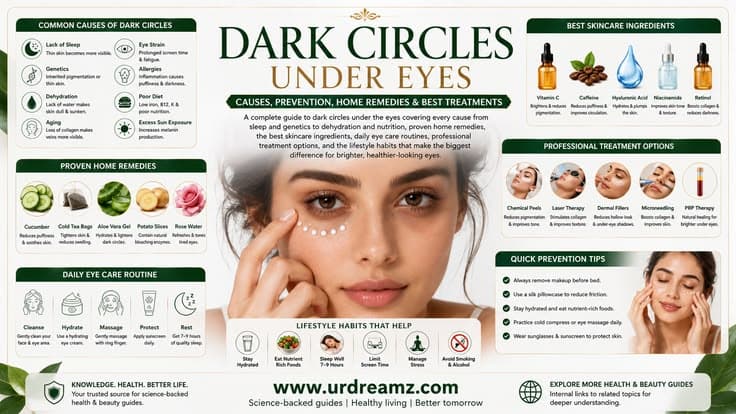
Dark circles under the eyes are among the most commonly searched skincare concerns in the world, and also among the most frequently misunderstood. They're blamed entirely on sleep in most casual conversations, yet many people sleep perfectly well and still have prominent darkness under their eyes. This guide covers every genuine cause — from genetics and anatomy to dehydration, allergies and nutritional gaps — alongside practical home remedies, the skincare ingredients that actually help, professional treatment options, and the daily habits that make the most meaningful difference over time. For further context on broader skincare topics that connect to this guide, you can also explore our articles on the daily skincare routine, anti-aging skincare and skin brightening.
1. What Dark Circles Actually Are
Dark circles are areas of discoloration beneath the lower eyelid that make the under-eye area appear darker than the surrounding skin. The term covers several different underlying conditions that look similar on the surface but have different causes and require different approaches to address effectively. This is why treatments that work well for one person sometimes produce no improvement at all for another person with an equally prominent case — the visible result might look the same, but what's driving it can be completely different.
2. Dark Circles vs Eye Bags: Understanding the Difference
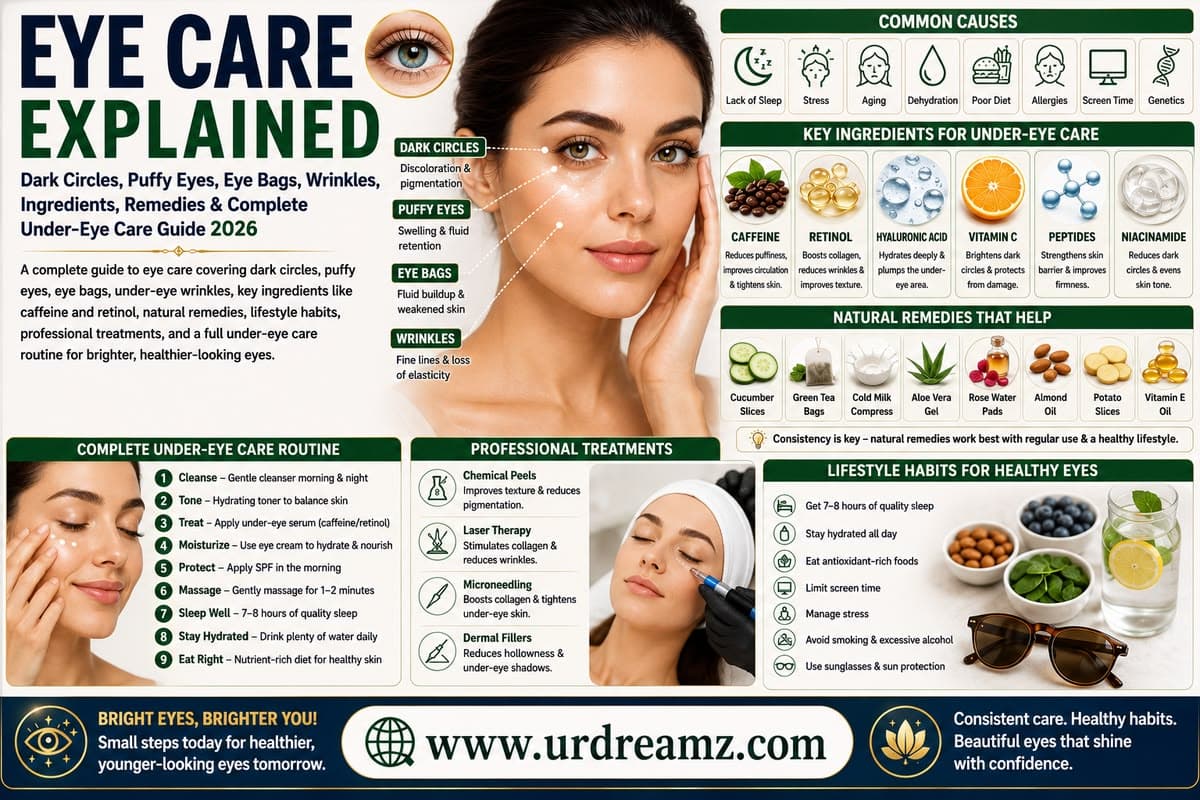
Dark circles and eye bags are distinct conditions that frequently appear together and are often confused for each other. Dark circles are primarily about color — the under-eye area appearing darker due to pigmentation, thin skin, visible blood vessels or shadowing. Eye bags are primarily about structure — a mild puffiness or swelling caused by fluid accumulation or forward displacement of the small fat pads that naturally sit beneath the eye. Some people have one without the other, some have both, and the appropriate treatment differs between them. This guide focuses primarily on the discoloration aspect, with some discussion of puffiness where the two overlap.
3. The Main Reasons Dark Circles Develop
| Cause | How It Creates Darkness Under the Eyes |
|---|---|
| Genetics and inherited pigmentation | Some people naturally have more melanin in the under-eye skin or thinner skin in this area, both of which cause visible darkness |
| Thin, translucent under-eye skin | Blood vessels beneath the skin show through as a bluish or purplish tint |
| Volume loss and structural change | As fat pads beneath the eye reduce, a hollow forms that creates a shadowed, darkened appearance |
| Excess melanin production | Sun exposure or post-inflammatory response can cause pigmentation under the eyes |
| Poor circulation and venous pooling | Blood that pools in the capillaries beneath the thin under-eye skin shows as bluish-dark discoloration |
| Sleep deprivation | Poor circulation and dilation of blood vessels makes discoloration more visible |
| Dehydration | Skin loses plumpness, making blood vessels and pigmentation more visible |
| Allergies | Histamine released during allergic reactions dilates blood vessels; eye rubbing causes inflammation and discoloration |
4. Genetics: The Factor That No Product Can Fully Override
Genetic factors are among the most significant contributors to dark circles, which explains why some people wake up after eight hours of excellent sleep and still have prominent under-eye darkness, while others can look relatively bright-eyed on far less rest. Genetics influence both the thickness and melanin content of the skin in this area — thinner skin allows underlying blood vessels to show through more visibly, while naturally higher melanin concentration in the under-eye area simply creates inherently darker skin in that zone. Understanding whether genetics is a primary driver helps set realistic expectations: professional treatments and consistent skincare can meaningfully improve the appearance, but for genetically prominent dark circles, "reduction" is a more accurate goal than "elimination."
5. How Lack of Sleep Contributes to Dark Circles
Sleep deprivation dilates the blood vessels beneath the under-eye skin, increasing the pooling of blood in this area and making the discoloration more visible through the thin skin. It also causes overall skin pallor, which creates a higher contrast between lighter surrounding skin and the darker under-eye zone. Additionally, poor sleep prevents the body's overnight fluid regulation and repair processes from completing fully, contributing to puffiness and a general tired appearance around the eyes. Seven to eight hours of consistent, quality sleep is one of the most impactful and cost-free improvements anyone can make for under-eye appearance — not because it erases structural or genetic causes, but because it stops the blood pooling that makes every other cause look worse than it otherwise would.
6. Dehydration and Under-Eye Darkness
When the body is chronically under-hydrated, skin loses plumpness throughout the body, but the under-eye area shows this loss particularly obviously because the skin there is already the thinnest on the face. Dehydrated under-eye skin becomes more translucent, allowing discoloration from underlying blood vessels or pigmentation to appear more prominently than it would in well-hydrated skin. Consistent water intake throughout the day, not just a single large glass in the morning, keeps the skin more plump and resilient, modestly reducing the visible severity of under-eye darkness related to poor hydration.
7. Stress, Cortisol and the Under-Eye Area
Chronic stress keeps cortisol levels elevated, which among other effects impairs blood flow to the skin's surface and disrupts the quality of sleep — both of which directly worsen the appearance of dark circles. The connection between stress and under-eye appearance is real even if it's indirect: it rarely creates dark circles that weren't there before, but it reliably makes existing ones more prominent. Stress management through sleep prioritization, physical activity, or whatever approach an individual finds effective isn't a skincare product, but it's arguably one of the more impactful interventions available for the overall appearance of the under-eye area.
8. Allergies and Eye Rubbing
Allergies cause the release of histamine, which dilates blood vessels throughout the body including those beneath the eye. This on its own adds to the discoloration visible in the under-eye area. But the secondary effect, eye rubbing triggered by the itching that accompanies allergies, often causes more lasting damage — mechanical rubbing of the delicate under-eye skin over time increases melanin production as a response to repeated irritation, causing genuine pigmentation that persists long after the allergy symptoms themselves subside. Managing the allergy effectively rather than just resisting the urge to rub is the more useful long-term approach.
9. Screen Time and Digital Eye Strain
Extended screen time strains the muscles and blood vessels around the eyes, contributing to tired-looking eyes and, over extended periods, increased visibility of the vascular discoloration beneath the under-eye skin. The 20-20-20 rule, looking at something twenty feet away for twenty seconds every twenty minutes, helps reduce eye strain during long screen sessions. Reducing blue light exposure in the evening also supports better sleep quality, which indirectly reduces the overnight blood pooling that worsens dark circles.
10. Sun Exposure and Melanin-Driven Pigmentation
UV exposure triggers melanin production in the skin as a protective response, and the under-eye area is no exception. Repeated, cumulative sun exposure to the delicate skin around the eyes over years can produce genuine hyperpigmentation in this area, creating a brownish discoloration distinct from the bluish or purplish tint caused by visible blood vessels. Daily sunscreen around the eye area, sunglasses with UV protection, and avoiding direct sun exposure during peak hours all reduce this particular driver of dark circles, and it's one of the few causes where prevention is genuinely more effective than correction after the fact.
11. Age-Related Changes Around the Eyes
Aging contributes to dark circles through several mechanisms simultaneously. The skin under the eyes naturally becomes thinner as collagen and elastin decline, making underlying blood vessels more visible. The fat pads beneath the eye that provide cushioning and a smooth contour gradually shift and reduce, creating a hollow or groove that casts a shadow and appears as darkness even without any genuine pigmentation present. Volume loss in the mid-face generally also contributes to a hollowed, shadowed appearance around the eyes. These structural changes are among the more challenging drivers of dark circles to address through topical skincare alone, which is why professional treatment options become more relevant as the primary cause shifts toward volume and structure.
12. Nutrition, Vitamin Deficiencies and Iron
Iron deficiency anemia reduces the oxygen-carrying capacity of red blood cells, and when tissues including those around the eyes receive less oxygen, the deoxygenated blood gives a darker, more blueish appearance visible through the thin under-eye skin. Iron deficiency is one of the few nutritional causes that can be directly assessed through a blood test and corrected through diet or supplementation under medical guidance. Vitamin K plays a role in blood clotting and vessel health; while the evidence for topical vitamin K's effectiveness against dark circles is mixed, adequate dietary vitamin K from leafy greens and similar foods supports overall vascular health. Vitamin C deficiency weakens blood vessel walls, making them more prone to leakage and discoloration that shows through the skin. A varied, nutrient-dense diet supports all of these pathways simultaneously even where individual supplementation of a specific nutrient wouldn't be warranted.
13. Foods That Support Healthier Under-Eye Skin
| Food or Nutrient | How It Helps |
|---|---|
| Iron-rich foods (spinach, lentils, lean meat) | Support healthy blood oxygenation, reducing the deoxygenated appearance under the eyes |
| Vitamin C sources (citrus, bell peppers, kiwi) | Strengthen blood vessel walls and support collagen production |
| Vitamin K sources (leafy greens, broccoli) | Support blood vessel health and normal clotting |
| Omega-3 fatty acids (fatty fish, walnuts, flaxseeds) | Reduce inflammation that can worsen discoloration |
| Antioxidant-rich foods (berries, green tea, nuts) | Protect against oxidative damage that accelerates skin thinning and discoloration |
| Collagen-supporting foods (eggs, bone broth, citrus) | Support the skin's structural thickness, reducing visibility of underlying vessels |
| Water and hydrating foods | Maintain skin plumpness, reducing visibility of underlying discoloration |
14. Skincare Ingredients That Actually Help Dark Circles
| Ingredient | Mechanism | Best For |
|---|---|---|
| Caffeine | Constricts blood vessels, reducing vascular discoloration and puffiness | Bluish or purplish dark circles, morning puffiness |
| Vitamin C | Brightens pigmentation, strengthens vessels, supports collagen | Brownish pigmentation, overall dullness |
| Retinol | Thickens the under-eye skin over time by stimulating collagen, making vessels less visible | Age-related thinning, fine lines alongside discoloration |
| Hyaluronic acid | Plumps and hydrates skin, reducing the visible contrast of discoloration | All types, particularly dehydration-related |
| Niacinamide | Reduces pigment transfer, calms inflammation, strengthens barrier | Brownish pigmentation, general improvement |
| Peptides | Signal skin to produce more collagen, thickening the under-eye area | Age-related thinning and structural dark circles |
| Kojic acid | Inhibits melanin production to reduce pigment-based darkness | Brownish, pigmentation-driven dark circles |
| Licorice extract | Gently inhibits melanin production, suitable for sensitive skin | Pigment-driven discoloration in sensitive skin types |
| Ceramides | Reinforce the skin barrier, helping the skin retain moisture and resilience | Dry or sensitive under-eye skin |
| Vitamin E | Antioxidant protection and moisturizing, supportive alongside other actives | Dry skin, general nourishment |
15. Caffeine Eye Products in Detail
Caffeine is the ingredient most specifically associated with under-eye puffiness and vascular dark circles. When applied topically, it causes blood vessels to constrict, which temporarily reduces the volume of blood pooled in the visible capillaries beneath the thin under-eye skin — this is the mechanism behind the "wakes up your eyes" reputation of caffeine eye products. The effect is genuinely real but also genuinely temporary, usually lasting a few hours rather than producing lasting change. Regular, consistent use is needed for sustained visible improvement, and caffeine tends to work best for the bluish or purplish tint specifically associated with visible blood vessels rather than the brownish pigmentation driven by melanin.
16. Retinol Around the Eyes: What to Know
Retinol stimulates collagen production and speeds cell turnover, which over consistent use gradually thickens the under-eye skin and makes underlying blood vessels less visible through it. This makes it one of the most structurally meaningful topical ingredients for age-related dark circles. The main caution is that the under-eye skin is the thinnest and most sensitive skin on the face, so starting with a very low concentration — lower than what would be used on other parts of the face — and applying it only every other night at first is the standard recommendation to avoid irritation. The slightly higher sensitivity of retinol around the eyes doesn't make it off-limits, just worth approaching with a bit more care than elsewhere.
17. Vitamin C for Under-Eye Pigmentation
Vitamin C's brightening mechanism — inhibiting tyrosinase, the enzyme central to melanin production — makes it useful specifically for the brownish, pigment-driven type of dark circles rather than the bluish, vascular type. It also supports collagen synthesis, which over time contributes to slightly thicker, more resilient under-eye skin. Most people find the under-eye area more tolerant of vitamin C than some other active ingredients, though choosing a well-formulated eye serum rather than a high-percentage facial serum for this sensitive area is generally the more comfortable approach. You can explore more detail about this ingredient in our skin brightening guide.
18. Hyaluronic Acid and Under-Eye Hydration
Hyaluronic acid plumps the skin by drawing water into it, and for the under-eye area this hydration benefit has a direct visual impact: well-plumped skin sits fuller over the underlying blood vessels and structures, making them less visible through the surface. It won't fix structural hollow or significant pigmentation on its own, but as a foundation layer beneath other active ingredients it meaningfully improves overall under-eye appearance and the skin's ability to tolerate those actives consistently.
19. Home Remedies With Genuine Soothing Value
A realistic expectation for home remedies is that they provide soothing, hydrating and temporarily de-puffing effects rather than permanently reducing dark circles, particularly structurally or genetically driven ones. That said, they're low-cost, low-risk, and genuinely pleasant additions to an eye care routine when expectations are appropriately calibrated.
20. Cucumber Slices
Chilled cucumber slices placed over closed eyes for ten to fifteen minutes provide a combination of cooling, mild astringency from the cucumber's natural compounds, and hydration from their high water content. The cold temperature primarily constricts blood vessels temporarily, reducing puffiness and visible vascular discoloration for a short window. This makes cucumber slices most effective as a quick, refreshing morning ritual for eyes that are puffy or look tired, rather than as a long-term treatment for structural dark circles.
21. Cold Tea Bags
Chilled tea bags, particularly green or black tea, provide the same cooling vascular-constricting effect as a cold compress alongside the additional benefit of caffeine and tannins from the tea itself. Tannins help tighten and firm the skin temporarily, and caffeine's vessel-constricting effect in topical application has modest research support for reducing puffiness. Allow used tea bags to cool fully in the refrigerator before applying to closed eyes for ten to fifteen minutes for the most noticeable effect.
22. Potato Juice or Slices
Raw potato contains an enzyme called catecholase that has some mild skin-lightening properties, which is the basis for its traditional use on dark circles. The effect is mild and works only on the pigmentation component of dark circles rather than the vascular or structural aspects. Applying chilled potato juice or thin slices on closed eyes for ten to fifteen minutes provides some degree of cooling and a modest brightening effect over time with consistent use, without the risk of irritation that some chemical brightening agents can cause.
23. Almond Oil for Under-Eye Nourishment
Almond oil is rich in vitamin E and emollient fatty acids that nourish and soften the delicate under-eye skin, helping it retain moisture and remain supple. It's best applied in a very small amount, gently patted rather than rubbed, and left overnight to absorb. As a moisturizing and barrier-supportive treatment it's genuinely useful, though its lightening properties are modest and primarily benefit people whose dark circles are worsened by very dry or poorly nourished under-eye skin rather than by pigmentation or structural causes.
24. Aloe Vera for the Under-Eye Area
Pure aloe vera gel is soothing, hydrating and mildly anti-inflammatory, making it a gentle option for calming the under-eye area during allergy-related flares or after accidental irritation. Applied gently and left for fifteen minutes before rinsing, it provides temporary relief and hydration. Its brightening effect is mild at best, but as a calming, easily tolerated daily option for sensitive under-eye skin it earns its long-standing reputation.
25. Rose Water
Chilled rose water applied on cotton pads placed over the eyes provides hydration, mild toning and a noticeably refreshing cooling sensation. It's well tolerated by almost all skin types including sensitive skin, and its anti-inflammatory properties offer modest soothing benefit for eyes that are irritated or puffy from allergies or fatigue. Rose water won't address pigmentation or structural dark circles, but as a calming, hydrating step it works well alongside other products in an under-eye care routine.
26. Cold Milk, Chamomile Tea Bags and Turmeric
Cold milk applied on cotton pads over closed eyes provides cooling and the mild exfoliating effect of naturally occurring lactic acid, soothing skin that feels irritated or fatigued. Chamomile tea bags work similarly to green tea bags — the cooling combined with chamomile's well-documented anti-inflammatory compounds makes them a gentle choice for sensitive or reactive under-eye skin. Turmeric mixed to a paste with a small amount of milk and applied briefly under the eyes provides curcumin's anti-inflammatory properties alongside traditional brightening reputation, though it needs to be kept well away from the inner eye and rinsed thoroughly to avoid staining the surrounding skin yellow.
27. How to Apply Any Under-Eye Remedy Safely
The skin under the eyes is the thinnest and most delicate on the face, and it responds poorly to rubbing, tugging, or aggressive application of anything. When applying any remedy, natural or product-based, the correct motion is a gentle press or pat rather than a rub, applied with the ring finger which naturally exerts the lightest pressure. Always ensure the product or remedy is at a comfortable temperature — very cold is fine for de-puffing, but nothing that might be irritating goes near the inner eye area. If any stinging, redness or swelling occurs, rinse immediately with cool water.
28. A Simple Morning Under-Eye Routine
| Step | Product | Purpose |
|---|---|---|
| 1 | Gentle cleanser (full face) | Clean skin for better product absorption |
| 2 | Cold water rinse or cold compress on eyes | Reduce any overnight puffiness, constrict blood vessels |
| 3 | Caffeine or vitamin C eye serum | Temporarily brighten and de-puff, or address pigmentation |
| 4 | Hydrating eye cream with hyaluronic acid or peptides | Plump and support the under-eye skin structure |
| 5 | Broad-spectrum sunscreen around the orbital area | Prevent further UV-driven pigmentation |
29. A Simple Night Under-Eye Routine
| Step | Product | Purpose |
|---|---|---|
| 1 | Gentle eye makeup remover (if applicable) | Remove products without rubbing or tugging |
| 2 | Gentle face cleanser | Thorough clean before treatment |
| 3 | Retinol eye cream or low-concentration retinol serum (applied carefully) | Stimulate collagen and thicken under-eye skin over time |
| 4 | Nourishing eye cream with ceramides, vitamin E or peptides | Support overnight repair and maintain skin barrier |
30. How Sleeping Position Affects Under-Eye Appearance
Sleeping face-down or on one side allows gravity to pull fluid toward the face, contributing to morning under-eye puffiness. Sleeping on the back with the head slightly elevated reduces this fluid accumulation and often produces noticeably less puffy, less darkened eyes in the morning than side or front sleeping, particularly for people whose under-eye concern has a strong vascular or puffiness component. A satin or silk pillowcase reduces friction on the delicate under-eye area compared to cotton, which is a minor but genuine advantage for people who sleep on their sides.
31. When Professional Treatment Becomes Worth Considering
Professional treatments become the more relevant conversation when home care and lifestyle improvements have been given a genuine, consistent chance over several months and the improvement has either plateaued or the underlying cause is predominantly structural or genetic. A dermatologist can accurately identify which type of dark circle is present — vascular, pigmented, structural or mixed — and match the appropriate professional approach to that specific type rather than taking a generic approach.
| Treatment | Primary Mechanism | Most Useful For |
|---|---|---|
| Laser treatment | Targets pigment or blood vessels specifically depending on the laser type used | Pigmentation-driven or vascular dark circles |
| Chemical peel | Removes pigmented outer skin layers to reveal less discolored skin beneath | Superficial, pigmentation-driven darkness |
| PRP (Platelet-Rich Plasma) | Uses growth factors from the patient's own blood to stimulate collagen and tissue regeneration | Structural thinning, overall rejuvenation |
| Dermal fillers | Restore volume to the hollow (tear trough) that creates shadowed dark circles | Age-related hollow and volume loss beneath the eye |
| Microneedling | Micro-injuries stimulate collagen production, gradually thickening skin | Thin under-eye skin, fine lines alongside discoloration |
| Microdermabrasion | Physical exfoliation of the skin surface | Mild surface pigmentation improvement |
32. What to Expect From Professional Treatments
Professional treatments for dark circles, particularly fillers and laser, can produce dramatic improvements for the right type of dark circle and the right candidate. Fillers for the tear trough — the hollow that develops beneath the eye with age — often produce an immediate, visible improvement in the shadowed, hollow type of dark circles, though results typically last one to two years before requiring maintenance. Laser treatments typically require a series of sessions rather than a single appointment, and results develop gradually over weeks after treatment as the body responds. All professional procedures carry some risk of side effects and should be performed by qualified, experienced practitioners after a thorough assessment of which specific type of dark circle is present.
33. Dark Circles in Men vs Women
Dark circles affect men and women equally in terms of prevalence, though the type and severity often differ somewhat. Men's skin tends to be slightly thicker due to higher androgen levels, which can make the vascular component slightly less visually prominent in earlier years, but this difference narrows significantly with age. Women are more commonly affected by hormonal changes — including those related to menstruation, pregnancy and menopause — that can influence fluid retention, iron levels and skin behavior around the eyes. The treatments and home care approaches effective for both are fundamentally the same, with adjustments for individual skin type and the specific type of dark circle present. You can read more on general skincare approaches across different needs in our acne treatment guide and hair growth guide.
34. Teenage Dark Circles
Dark circles in teenagers and young adults are most commonly driven by sleep deprivation — a chronic pattern among students with demanding academic and social schedules — alongside genetic factors and sometimes iron deficiency, particularly in teenage girls. The structural and volume-loss components that become relevant later in life are rarely significant at this age. Prioritizing sleep, staying hydrated, eating iron-rich foods and using a simple gentle eye moisturizer alongside daily sunscreen covers most of what helps for this age group, without needing anything more complex.
35. Dark Circles Around the Eyes in Children and Toddlers
Dark circles in young children are almost always related to allergies or genetics rather than lifestyle factors, and they tend to be more prominent in children with lighter skin tones where underlying vessels are more visible. Allergic shiners — a type of under-eye darkening specifically associated with nasal congestion and allergies, caused by slowed blood drainage from the area — are among the most common causes in this age group. If dark circles in a child appear suddenly, worsen, or are accompanied by other symptoms, a pediatrician's evaluation is appropriate rather than any cosmetic approach.
36. Skin Types and Under-Eye Care
| Skin Type | Under-Eye Care Consideration |
|---|---|
| Dry skin | Prioritize rich hydrating eye creams with ceramides; avoid alcohol-based products |
| Oily skin | Lightweight gel-based eye products; oil-free formulas avoid adding weight to already active sebaceous glands |
| Sensitive skin | Fragrance-free, minimal-ingredient eye products; patch test; avoid high concentrations of actives |
| Combination skin | A moderate, balanced eye cream works for most; avoid very rich formulas that might mig rate into eyes |
| Mature skin | More emphasis on firming peptides, retinol and collagen-supporting ingredients |
37. Common Mistakes That Make Dark Circles Worse
- Rubbing the eyes: Even gentle, habitual rubbing causes inflammation and gradually increases melanin production in the under-eye area, worsening pigmentation over time.
- Sleeping with eye makeup on: Makeup residue left overnight can migrate into the eye and cause irritation that contributes to inflammation and subsequent discoloration.
- Skipping sunscreen around the eyes: UV exposure to the under-eye area adds to or worsens the pigmentation component of dark circles that took years to develop.
- Using undiluted harsh skincare directly under the eyes: Strong serums formulated for thicker facial skin often irritate the thinner, more sensitive under-eye area.
- Excessive caffeine and alcohol consumption: Both dehydrate the body and disrupt sleep quality, both of which visibly worsen under-eye appearance.
- Ignoring allergies: Untreated allergies that lead to repeated eye rubbing are one of the more preventable causes of darkening and skin thickening in the under-eye area.
- Applying eye products too close to the inner corner: This is a common route for products to migrate into the eye itself, causing irritation.
38. Daily Lifestyle Habits That Help Most
- Seven to eight hours of consistent sleep, with the head slightly elevated if puffiness is a concern.
- Sufficient daily water intake, targeting a minimum of eight glasses and more in warmer conditions or with physical activity.
- A diet that includes iron-rich foods, vitamin C, leafy greens and omega-3 sources regularly rather than sporadically.
- Broad-spectrum sunscreen every morning including the area around the eyes, supplemented by sunglasses outdoors.
- Regular breaks from screens throughout the day to reduce eye strain and associated blood vessel dilation.
- Treating allergies proactively to reduce eye rubbing and the vascular congestion that worsens under-eye appearance.
- Avoiding sleeping with makeup and keeping hands away from the eyes during the day.
39. Dark Circles Myths Worth Addressing Directly
| Myth | More Accurate Reality |
|---|---|
| Dark circles are always caused by poor sleep | Sleep is one contributor but genetics, anatomy, pigmentation and allergies are equally or more significant for many people |
| Dark circles can be permanently removed by any one product | Improvement is achievable; permanent elimination depends on the type and underlying cause, and structural or genetic causes may resist full correction |
| Expensive eye creams work dramatically better than affordable ones | Ingredient choice and formulation matter far more than price; affordable well-formulated options exist |
| Under-eye fillers are dangerous | When performed by a qualified, experienced practitioner after appropriate assessment, fillers for the tear trough are a widely performed and generally safe procedure |
| Home remedies can permanently fix dark circles | They provide soothing, temporary de-puffing and modest brightening; they don't address structural or deeply pigmented causes permanently |
40. When to See a Dermatologist
Dark circles that have been present for a long time and haven't responded to consistent home care, lifestyle improvements and appropriate over-the-counter ingredients over several months are worth discussing with a dermatologist. So are dark circles that appear suddenly or change significantly without any obvious lifestyle cause, or those accompanied by other symptoms like swelling, itching or pain, which might point to an underlying medical cause rather than a cosmetic one. A dermatologist can correctly classify which type of dark circle is present — vascular, pigmented, structural or hollow — and recommend the most efficient treatment path based on that assessment rather than trial-and-error with multiple products. For related skin health topics, see also our guides on anti-aging skincare and hair fall treatment.
41. Frequently Asked Questions
Can dark circles be removed permanently?
For some people and some types of dark circles, significant and lasting improvement is achievable. Vascular dark circles often improve substantially with consistent lifestyle changes and caffeine or retinol-based products. Pigmentation-driven circles may fade considerably with vitamin C, niacinamide and rigorous sun protection. Structural and genetic dark circles, particularly those driven by volume loss or inherited skin thickness, are the most challenging to fully resolve and may benefit most from professional procedures like fillers or PRP.
Which vitamin deficiency causes dark circles?
Iron deficiency is the most commonly linked nutritional deficiency to visible dark circles, through its effect on blood oxygenation. Vitamin K deficiency affects blood vessel health. Vitamin C deficiency weakens vessels and skin structure. A doctor's blood panel can identify whether any specific deficiency is present and worth correcting rather than supplementing speculatively.
Is retinol safe to use around the eyes?
Yes, with appropriate caution around concentration and frequency. Starting with a low-percentage product applied every other night, keeping it away from the inner eye area, and moisturizing afterward makes retinol around the eyes both safe and genuinely effective for the thickening and collagen-stimulating benefits relevant to age-related dark circles.
Do home remedies for dark circles actually work?
They provide genuine soothing, temporary de-puffing and modest brightening effects. They are not capable of structurally thickening skin, reversing significant pigmentation, or addressing the underlying vascular or volumetric causes that drive prominent dark circles. They're a valuable and low-risk supporting measure rather than a primary treatment for more pronounced cases.
Why do I have dark circles even after sleeping well?
Sleep is only one factor. Genetics, inherited skin thickness, natural melanin distribution in the under-eye area, age-related volume loss, allergies, dehydration and nutritional deficiencies can all cause prominent dark circles entirely independently of how much or how well someone sleeps.
42. Final Thoughts
Dark circles are a genuinely multi-factorial concern, and the most common reason approaches fail to produce satisfying results is that the treatment doesn't match the type. Addressing a vascular dark circle with a brightening serum, or trying to fade a structural hollow with home remedies, produces disappointment not because the products are wrong but because they're being applied to the wrong problem. The most useful starting point is understanding which driver is most significant for your own eyes — sleep and lifestyle factors that genuinely improve with behavioral changes, pigmentation that responds to appropriate topical ingredients over consistent weeks, or structural concerns that may benefit from a professional consultation. From there, a simple, appropriately matched routine applied consistently over enough time will almost always produce some degree of meaningful improvement, even if the nature of your particular dark circles means that "significant reduction" is a more accurate goal than "complete removal."