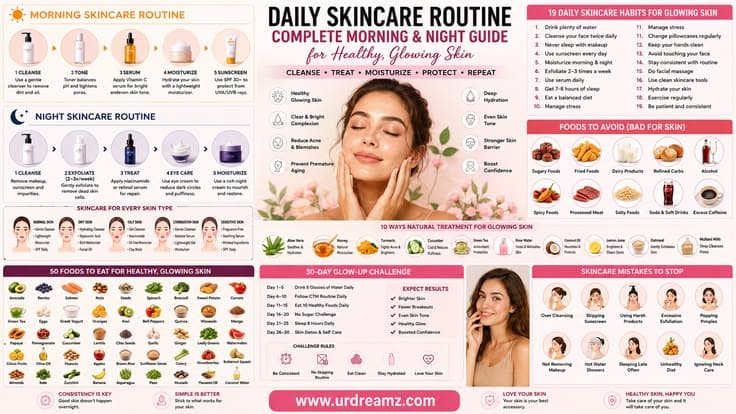
Daily Skincare Routine: Complete Morning & Night Guide for Healthy, Glowing Skin
Great skin is not a lucky accident — it is the result of smart, consistent daily habits. Whether you are a complete beginner wondering where to start, someone frustrated that your routine is not working, or an enthusiast looking to level up, this comprehensive guide covers everything you need for genuinely healthy, glowing skin. From morning steps and night-time repair to the right foods, natural remedies, the biggest skincare mistakes, and a full 30-day glow-up challenge — it is all here, in one place.
1. Why a Daily Skincare Routine Matters
Your skin is the largest organ in your body. Every single day it is exposed to UV radiation, pollution, wind, temperature changes, bacteria, and the stress hormones circulating through your bloodstream. Without a consistent daily routine to cleanse, protect, and repair it, your skin gradually accumulates damage that shows up as dullness, premature wrinkles, dark spots, uneven texture, and chronic breakouts.
A daily skincare routine is not about vanity — it is about maintenance. Just as you brush your teeth twice a day to prevent decay, you cleanse, moisturize, and protect your skin to prevent long-term damage. The good news is that an effective routine does not need to be complicated or expensive. A simple, consistent four-step routine — cleanse, treat, moisturize, protect — is far more powerful than an elaborate routine followed inconsistently.
Research in dermatology consistently shows that prevention is dramatically more effective than correction. Wearing SPF daily from your twenties, for example, prevents the vast majority of skin aging that would otherwise require expensive treatments to address in your forties. The habits you build today determine how your skin looks and feels ten, twenty, and thirty years from now. Every good habit you adopt today is an investment your future self will thank you for.
2. How to Identify Your Skin Type
Before building any skincare routine, you must understand what kind of skin you have. Using the wrong products for your skin type — no matter how premium — will deliver poor results and may even cause irritation or breakouts. The most reliable way to determine your skin type is the "bare face test": wash your face gently, pat it dry, and leave it completely bare for one hour without applying anything. Then observe what happens.
| Skin Type | What You Notice After 1 Hour | Common Issues | Key Need |
|---|---|---|---|
| Oily | Shiny all over, especially T-zone. Noticeable grease on blotting paper | Enlarged pores, blackheads, frequent breakouts | Oil control + lightweight hydration |
| Dry | Tight, dull, possibly flaky or rough to touch | Flakiness, redness, fine lines appear early | Deep moisture + barrier repair |
| Combination | Oily on forehead, nose, chin (T-zone); normal or dry on cheeks | Blackheads on nose, dryness on cheeks simultaneously | Balanced routine for two zones |
| Sensitive | Redness, stinging, or itching — even without products applied | Reacts to many products, rosacea tendencies, easily irritated | Gentle, fragrance-free, minimal ingredients |
| Normal | Comfortable, balanced — no excess oil, no tightness | Minimal — prone to seasonal changes | Maintenance + protection |
| Acne-Prone | Breakouts appear regularly regardless of oil level | Pimples, cysts, post-acne marks, clogged pores | Non-comedogenic products + acne-fighting actives |
3. The Basic Skincare Routine: Core Steps Everyone Needs
Regardless of your skin type, budget, or lifestyle, every effective skincare routine is built on the same four foundational steps. Everything else — serums, toners, masks, eye creams, mists — is optional and builds on this core. Master these four steps first, and add extras only when your skin is comfortable and your core routine is consistent.
| Step | Product Type | Morning | Night | Purpose |
|---|---|---|---|---|
| 1 | Cleanser | Yes (gentle) | Yes (thorough) | Remove dirt, oil, makeup, and pollutants |
| 2 | Treatment / Serum | Optional (e.g. Vitamin C) | Optional (e.g. Retinol) | Target specific concerns like acne, dark spots, aging |
| 3 | Moisturizer | Yes | Yes (richer formula) | Lock in hydration, support skin barrier |
| 4 | Sunscreen | Yes — always | No | Protect from UV damage, prevent premature aging |
Think of these four steps as non-negotiable. Cleansing removes what has accumulated on your skin. Treating addresses what is going wrong beneath the surface. Moisturizing maintains your skin's protective barrier. And sunscreen shields all of that work from being undone by UV radiation every morning.
4. Morning Skincare Routine: Step-by-Step
Your morning routine is about protection and preparation. While you sleep, your skin goes into repair mode — producing new cells, regenerating, and balancing itself. Your morning job is to gently refresh the skin, add antioxidant protection, lock in moisture, and — most critically — apply sunscreen before you face the day.
| Step | Product | How to Apply | Wait Time Before Next Step |
|---|---|---|---|
| 1 | Gentle Cleanser | Wet face with lukewarm water, work in small amount of cleanser for 30–60 seconds, rinse thoroughly. Pat dry — never rub. | 30 seconds |
| 2 | Toner (optional) | Apply to a cotton pad or press directly into skin with palms. Choose hydrating, alcohol-free formula. | 30 seconds |
| 3 | Vitamin C Serum | 2–3 drops, press gently into skin. Start with every other day if you are new to it. Let absorb fully. | 60–90 seconds |
| 4 | Eye Cream (optional) | Tiny amount, pat gently with ring finger around orbital bone. Never drag. | 30 seconds |
| 5 | Moisturizer | Pea-sized to marble-sized amount depending on skin. Massage upward and outward. Include neck. | 60 seconds |
| 6 | Sunscreen SPF 30–50+ | Last step always. 1/4 to 1/2 teaspoon for face and neck. Apply evenly. Do not miss hairline, ears, and lip area. Reapply every 2 hours outdoors. | — |
The single most impactful change you can make to your morning routine today is simply to wear sunscreen every single day — rain or shine, indoors or outdoors. UV rays penetrate clouds, glass windows, and car windshields. If you do one thing for your skin, let it be this.
5. Night Skincare Routine: Step-by-Step
Night is when your skin does the vast majority of its repair and regeneration work. Cell turnover is significantly higher at night, and your skin produces collagen and other structural proteins while you sleep. Your night routine's job is to give it clean conditions to work in, supply targeted actives that work best overnight, and provide deep hydration to support the recovery process.
| Step | Product | How to Apply | Notes |
|---|---|---|---|
| 1 | Oil / Micellar Cleanser (1st cleanse) | Apply to dry skin. Massage to dissolve makeup, SPF, and sebum. Rinse or wipe off. | Essential if wearing makeup or SPF |
| 2 | Water-Based Cleanser (2nd cleanse) | Follow up with your regular gel or cream cleanser to remove remaining residue. | Double cleanse is important at night |
| 3 | Exfoliant (2–3x per week only) | AHA (glycolic/lactic acid) for dull or dry skin, BHA (salicylic acid) for oily or acne-prone. Apply to clean skin, leave, do not rinse unless instructed. | Never exfoliate and use retinol in the same night |
| 4 | Toner (optional) | Hydrating toner to balance skin pH after cleansing. | Choose alcohol-free |
| 5 | Treatment Serum (e.g. Retinol / Niacinamide) | Apply retinol serum on nights you are not exfoliating. Start with once a week, build up. Niacinamide can be used nightly. | Retinol causes sensitivity — always follow with moisturizer |
| 6 | Eye Cream | Pat gently with ring finger. Slightly richer formula than day version if desired. | Optional but beneficial |
| 7 | Night Moisturizer / Sleeping Mask | Richer or same moisturizer as day. Apply generously including neck and décolletage. Sleeping masks can be applied as final step once or twice a week. | Skin loses more water at night — do not skip |
6. The Right Order to Apply Skincare Products
The order you apply skincare products matters enormously. The general rule is to go from thinnest to thickest consistency, allowing each layer to absorb before applying the next. Applying a thick cream before a serum physically blocks the serum from penetrating the skin, wasting its active ingredients.
- Thinnest first: micellar water, toners, essence, watery serums
- Then treatments: vitamin C serum, niacinamide, retinol, AHA/BHA (on appropriate nights)
- Then thicker: eye cream, moisturizer, face oil (oils go after water-based products and before or after moisturizer depending on formulation)
- Last in AM: sunscreen — always the absolute final step in the morning, over everything
Give each product 30–60 seconds to sink in before applying the next. You do not need to wait a full hour between steps — just enough time that the product is no longer wet on your skin and has had a chance to start absorbing.
7. Cleansers: How to Choose and Use Them Correctly
A cleanser is the first step of every routine, and choosing the wrong one can undo everything else you do. The most important rule is to use a cleanser that thoroughly cleans without stripping your skin's natural moisture barrier. If your skin feels tight, squeaky-clean, or slightly uncomfortable after cleansing — your cleanser is too harsh.
| Cleanser Type | Best For | Key Characteristic | What to Look For |
|---|---|---|---|
| Gel Cleanser | Oily and acne-prone skin | Clear, lightweight, deep-cleaning | Salicylic acid, niacinamide, tea tree |
| Foam Cleanser | Normal to oily skin | Foams up, removes oil effectively | Gentle surfactants, no sulfates ideally |
| Cream Cleanser | Dry and sensitive skin | Milky texture, hydrating while cleansing | Ceramides, glycerin, aloe vera |
| Oil Cleanser / Balm | All skin types — especially for makeup/SPF removal | Dissolves oil-based products effectively | No synthetic fragrances, emulsifies with water |
| Micellar Water | Sensitive skin, light makeup days | No-rinse option, very gentle | Micelle technology, fragrance-free |
| Clay Cleanser | Oily skin with enlarged pores | Draws out impurities and excess oil | Kaolin clay, bentonite, charcoal |
Use lukewarm — never hot — water when cleansing. Hot water strips the skin's natural oils aggressively. Massage your cleanser in gentle, circular upward motions for at least 30–60 seconds before rinsing. Pat your face dry with a clean, soft towel — never rub vigorously, which causes mechanical irritation and long-term damage.
8. Double Cleansing: What It Is and Who Needs It
Double cleansing is the practice of using two different cleansers in sequence — first an oil-based cleanser to dissolve makeup, sunscreen, and sebum, then a water-based cleanser to remove the remaining residue and deeply clean the pores. This method originated in Korean skincare and has become mainstream worldwide for very good reason: a single water-based cleanser alone cannot effectively dissolve oil-based products like sunscreen and long-wear makeup.
Double cleansing is essential for anyone who wears makeup or SPF (which should be everyone). If you simply rinse off SPF with a standard gel cleanser, a significant amount of UV-filter residue remains on your skin, sitting in your pores overnight and contributing to congestion and dullness over time. The oil cleanser dissolves these oil-based products on contact, making the second cleanse's job much easier and more effective.
Double cleansing is a night-only practice. In the morning, unless your skin is very oily or you are sweating heavily, a single gentle cleanser — or even just rinsing with water — is sufficient, as your skin has not been exposed to makeup or SPF overnight.
9. Moisturizers: Why Every Skin Type Needs One
One of the most persistent skincare myths is that oily skin does not need moisturizer. In reality, oily skin that is also dehydrated (lacks water, not oil) produces even more sebum to compensate for the dryness — making the oiliness worse, not better. Every skin type needs hydration. The key is simply using the right texture and formula for your skin type.
Moisturizers work in three ways: humectants (like hyaluronic acid and glycerin) draw water from the air and deeper skin layers to the surface; emollients (like ceramides, fatty acids, and plant oils) fill gaps in the skin barrier and make skin softer and smoother; and occlusives (like petroleum jelly, shea butter, and beeswax) form a physical layer on the skin surface to prevent water evaporation. The best moisturizers for most people contain all three types of ingredients.
| Skin Type | Ideal Texture | Key Ingredients to Look For | What to Avoid |
|---|---|---|---|
| Oily | Lightweight gel or gel-cream | Hyaluronic acid, niacinamide, aloe vera | Heavy oils, shea butter, petrolatum |
| Dry | Rich cream or balm | Ceramides, shea butter, squalane, glycerin | Alcohol-heavy formulas, astringents |
| Combination | Light to medium lotion | Hyaluronic acid, ceramides, lightweight oils | Very heavy creams on T-zone |
| Sensitive | Fragrance-free cream or gel | Centella asiatica, oat extract, allantoin, ceramides | Fragrance, essential oils, alcohol |
| Acne-Prone | Oil-free, non-comedogenic gel or lotion | Niacinamide, hyaluronic acid, salicylic acid | Comedogenic oils (coconut, cocoa butter) |
| Mature / Anti-Aging | Rich cream with active ingredients | Peptides, retinol, ceramides, squalane, antioxidants | Overly stripping formulas |
10. Sunscreen: Your Non-Negotiable Daily Shield
If you could do only one thing for your skin for the rest of your life, dermatologists universally agree: wear sunscreen every single day. Up to 90% of visible skin aging — wrinkles, dark spots, uneven tone, loss of elasticity — is caused not by the passage of time but by cumulative UV radiation exposure. Sunscreen is the most powerful anti-aging product in existence, and it is also one of the most affordable.
UV radiation comes in two main forms: UVA rays penetrate deep into the skin and are responsible for premature aging, collagen breakdown, and long-term DNA damage; UVB rays affect the surface and cause sunburn and directly contribute to skin cancer risk. Always choose a broad-spectrum sunscreen, which means it protects against both UVA and UVB rays.
| SPF Level | UVB Blocked | UVA Protection | Who Should Use It |
|---|---|---|---|
| SPF 15 | 93% | Low | Minimum — not recommended for daily facial use |
| SPF 30 | 97% | Moderate (if broad-spectrum) | Good for indoor workers with brief sun exposure |
| SPF 50 | 98% | High (if broad-spectrum) | Recommended for daily facial use — the sweet spot |
| SPF 50+ | 98–99% | Very high | Ideal for outdoor activities, fair skin, high altitudes |
| SPF 100 | 99% | Very high | Marginal improvement over SPF 50 — more important to reapply |
Apply sunscreen as the absolute last step of your morning skincare routine, generously enough to cover your entire face, neck, and any exposed ears or décolletage. The commonly recommended amount for the face alone is half a teaspoon (about 2.5ml). Reapply every two hours if you are outdoors, and immediately after swimming or heavy sweating.
11. Face Serums: The Power-Packed Extras
Serums are lightweight, highly concentrated formulas designed to deliver potent active ingredients deeper into the skin than a moisturizer can. They are not a replacement for a moisturizer — they are a treatment layer applied before it. Because serums have smaller molecules and higher concentrations of actives, they are where you can really address specific skin concerns: dark spots, fine lines, acne, dullness, dehydration, or hyperpigmentation.
You do not need a serum for a healthy basic routine — but if you want to target specific concerns, the right serum can deliver dramatically faster and more visible results than any moisturizer or cleanser alone. The key is to choose serums based on your specific concern and to understand which ones should be used in the morning versus at night and which ones should not be used together.
| Serum Type | Key Benefit | Best Time to Use | Who Benefits Most |
|---|---|---|---|
| Vitamin C | Brightening, antioxidant, dark spot fading, collagen support | Morning | Dull skin, dark spots, anti-aging |
| Niacinamide | Pore-minimizing, oil control, redness reduction, barrier support | Morning or night | Oily, acne-prone, sensitive skin |
| Retinol | Cell turnover, wrinkle reduction, acne treatment, texture refinement | Night only | Anti-aging, acne, uneven texture |
| Hyaluronic Acid | Deep hydration, plumping, dehydration relief | Morning or night | All skin types, especially dry or dehydrated |
| Peptides | Collagen support, firming, anti-aging | Morning or night | Mature or aging skin |
| Salicylic Acid (BHA) | Unclogs pores, reduces blackheads and breakouts | Night preferred | Oily, acne-prone, congested skin |
| Glycolic / Lactic Acid (AHA) | Exfoliates surface, fades pigmentation, smooths texture | Night (2–3x per week) | Dull skin, hyperpigmentation, dry skin |
12. Vitamin C Serum: Benefits and How to Use It
Vitamin C (ascorbic acid) is one of the most scientifically validated skincare ingredients available. As a powerful antioxidant, it neutralizes free radicals generated by UV radiation and pollution — free radicals that would otherwise break down collagen and cause pigmentation. Vitamin C also directly inhibits the enzyme tyrosinase, which produces melanin, making it one of the most effective evidence-based ingredients for fading dark spots and achieving a brighter, more even skin tone.
Vitamin C should be used in the morning because its antioxidant properties work best as a daytime shield against environmental damage. Apply it before your moisturizer and sunscreen. Begin with a lower concentration (10%) if you are new to it and work up to 15–20% as your skin adjusts. Store your vitamin C serum in a cool, dark place — it oxidizes when exposed to light and air. When the serum turns orange or brown, it has oxidized and is no longer effective.
Vitamin C pairs beautifully with sunscreen (they work synergistically to protect skin from UV damage) and with niacinamide (despite older claims of incompatibility, modern formulations can be used together effectively). Avoid using vitamin C on the same routine step as retinol — use vitamin C in the morning and retinol at night.
13. Niacinamide Serum: The Multitasking Ingredient
Niacinamide (vitamin B3) is one of the most versatile and well-tolerated active ingredients in skincare. It is suitable for virtually all skin types, including sensitive skin, and addresses a remarkable range of concerns simultaneously. At concentrations of 4–10%, niacinamide visibly minimizes the appearance of pores, reduces sebum production in oily skin, strengthens the skin barrier by stimulating ceramide synthesis, fades hyperpigmentation and post-acne marks, calms redness and inflammation, and improves overall skin texture and tone.
Niacinamide can be used morning and night and pairs well with almost every other skincare ingredient, making it an excellent foundation ingredient for any routine. It is particularly powerful when combined with retinol (it buffers retinol's potential irritation) and with hyaluronic acid (enhanced hydration and barrier support).
14. Retinol: The Gold Standard for Anti-Aging
Retinol (a form of vitamin A) is the most extensively studied and clinically proven anti-aging ingredient in existence. Decades of peer-reviewed research demonstrate that retinol accelerates skin cell turnover, stimulates collagen and elastin production, reduces the appearance of fine lines and wrinkles, fades hyperpigmentation, treats acne, refines skin texture, and improves overall skin radiance. It is the single most powerful over-the-counter active ingredient you can use.
Retinol is a night-only ingredient because it degrades in sunlight. Begin very slowly — once per week for the first 2 weeks, then twice per week, gradually building to nightly use over 2–3 months. Most people experience a "retinol purge" period of 4–8 weeks where skin may appear slightly worse before it improves — this is normal and expected as accelerated cell turnover pushes congestion to the surface. Manage this by starting low and slow, always applying a moisturizer afterward, and always wearing SPF during the day (retinol increases sun sensitivity).
Retinol should not be used on the same night as AHA or BHA exfoliants, and should not be applied directly to broken, irritated, or sunburned skin. If you are pregnant or breastfeeding, retinol is contraindicated — use bakuchiol as a gentler, pregnancy-safe alternative.
15. Hyaluronic Acid: Deep Hydration for All Skin Types
Hyaluronic acid (HA) is a naturally occurring molecule in your skin that can hold up to 1,000 times its weight in water. As we age, our skin's natural HA content decreases, contributing to dryness, dullness, and the formation of fine lines. Topical hyaluronic acid draws water from the environment and deeper skin layers to the surface, dramatically improving skin hydration, plumpness, and the appearance of dehydration lines.
The critical trick to using hyaluronic acid effectively is to apply it to damp skin. If your skin is completely dry when you apply HA, it can actually draw water out of your skin rather than into it — especially in low-humidity environments. Apply HA serum immediately after cleansing while your skin is still slightly damp, then seal it in with your moisturizer on top.
Hyaluronic acid is suitable for all skin types including oily, acne-prone, and sensitive skin. It is one of the few active ingredients with virtually no risk of irritation, making it an excellent starting point for skincare beginners and an indispensable component of routines for people with reactive or compromised skin.
16. Exfoliation: AHA vs BHA and How Often to Exfoliate
Exfoliation is the process of removing dead skin cells from the surface of your skin. Without regular exfoliation, dead cells accumulate, creating a dull, rough, uneven complexion, clogged pores, and reduced effectiveness of the moisturizers and serums you apply (they cannot penetrate through a layer of dead skin cells). There are two main types of exfoliation: physical (scrubs, brushes) and chemical (acids).
Chemical exfoliation is generally recommended over physical for most people because it exfoliates more evenly and gently without the micro-tears that aggressive physical scrubs can cause. The two main categories of chemical exfoliants are AHAs (alpha-hydroxy acids) and BHAs (beta-hydroxy acids).
| Type | Examples | How It Works | Best For | Frequency |
|---|---|---|---|---|
| AHA (Alpha-Hydroxy Acid) | Glycolic acid, lactic acid, mandelic acid | Works on the surface to dissolve the bonds holding dead skin cells together | Dull skin, dry skin, hyperpigmentation, surface texture, anti-aging | 2–3 times per week maximum |
| BHA (Beta-Hydroxy Acid) | Salicylic acid | Oil-soluble — penetrates into pores to clear out sebum and dead cells from inside | Oily skin, acne-prone skin, blackheads, enlarged pores, congestion | 2–3 times per week maximum |
| PHA (Poly-Hydroxy Acid) | Gluconolactone, lactobionic acid | Larger molecules, work more gently on surface | Sensitive skin that cannot tolerate AHAs | Up to daily for some PHAs |
Over-exfoliation is one of the most common skincare mistakes. Signs include persistent redness, stinging when applying products, skin that feels paper-thin or raw, increased breakouts, and unusual sensitivity. If you experience these, stop all exfoliation for 1–2 weeks and focus entirely on gentle cleansing, moisturizing, and SPF to allow your skin barrier to recover.
17. Skin Barrier: What It Is and How to Repair It
Your skin barrier — technically called the stratum corneum — is the outermost layer of your skin. Think of it as a brick wall: the "bricks" are your skin cells (corneocytes), and the "mortar" holding them together is a mixture of lipids including ceramides, fatty acids, and cholesterol. This barrier's primary job is to keep water in and harmful substances (bacteria, pollutants, allergens) out.
When the skin barrier is damaged — through over-cleansing, over-exfoliating, using harsh products, excessive sun exposure, or environmental stress — the lipid "mortar" breaks down. The result is increased water loss, redness, stinging, sensitivity, frequent breakouts, and a chronically dull or irritated complexion. Barrier damage is extremely common and is frequently misidentified as a skin type issue rather than a routine issue.
To repair a damaged skin barrier: immediately stop all exfoliants, active serums, and any products that sting or cause discomfort. Simplify your routine to three steps — gentle cleanser, ceramide-rich moisturizer, and SPF (morning only). Use lukewarm water only. Look for ingredients like ceramides, cholesterol, fatty acids, centella asiatica, oat extract, and panthenol, which directly rebuild the lipid matrix. Most mild barrier damage heals within 1–2 weeks of proper care; more severe cases may take 4–8 weeks.
18. Skincare Routine for Oily Skin
Oily skin overproduces sebum — often due to genetics, hormonal fluctuations, humidity, or paradoxically, using overly stripping cleansers that trigger compensatory oil production. The goal of an oily skin routine is to control excess oil without stripping the skin, keep pores clear, and maintain hydration with lightweight products.
Morning routine for oily skin: gel or foam cleanser → niacinamide serum → lightweight oil-free moisturizer → SPF 50 (gel or fluid sunscreen formulations are best). Evening routine: oil cleanser (even oily skin needs to remove SPF) → gel cleanser → BHA toner or salicylic acid serum (2–3 nights per week) → niacinamide serum → lightweight gel moisturizer. Key ingredients to include: niacinamide, salicylic acid, hyaluronic acid, retinol (at night, 1–3x per week after building tolerance). Key ingredients to avoid: heavy oils, coconut oil, lanolin, heavy occlusives.
19. Skincare Routine for Dry Skin
Dry skin lacks lipids and has a naturally less effective moisture barrier, causing water to evaporate from the skin more rapidly than in other skin types. The goal of a dry skin routine is to cleanse without stripping, deliver deep hydration with humectants, seal that hydration in with rich emollients and occlusives, and protect the barrier from further damage.
Morning routine for dry skin: cream or gentle milk cleanser → hyaluronic acid serum (applied to damp skin) → rich ceramide moisturizer → SPF 50 with hydrating base. Evening routine: oil cleanser or cleansing balm → cream cleanser → optional AHA serum (2x per week maximum, lactic acid is gentler than glycolic for dry skin) → rich night moisturizer or sleeping mask → optional face oil as final step to seal everything in. Key ingredients: ceramides, shea butter, squalane, hyaluronic acid, lactic acid, peptides. Avoid: alcohol-heavy toners, gel cleansers, clay masks more than very occasionally.
20. Skincare Routine for Combination Skin
Combination skin is the most common skin type — oily in the T-zone (forehead, nose, chin) and normal to dry on the cheeks. The challenge is meeting the different needs of different zones without overdrying the cheeks or under-managing the T-zone oiliness. The good news is that a balanced, moderate routine typically works well for combination skin without needing separate products for each zone.
Morning routine for combination skin: gel or gentle foam cleanser → hyaluronic acid serum → lightweight lotion moisturizer (gel on T-zone if needed) → SPF 50. Evening routine: oil cleanser → gentle cleanser → niacinamide serum (balances both zones) → BHA on T-zone only (2–3x per week) → medium-weight moisturizer. Retinol can be used 1–3 nights per week across the whole face. The key for combination skin is "zone-treating" — applying BHA only where oiliness and congestion are an issue, and a slightly richer moisturizer to the drier cheek areas if needed.
21. Skincare Routine for Sensitive Skin
Sensitive skin reacts easily to products, environmental changes, and stressors with redness, stinging, itching, or breakouts. The most common causes of skin sensitivity are a compromised skin barrier, using too many products, using products with fragrance or essential oils, and over-exfoliating. A sensitive skin routine should prioritize minimal, fragrance-free, hypoallergenic products and should introduce new products very slowly — one at a time, with at least a week between introductions.
Morning routine for sensitive skin: gentle, fragrance-free cream cleanser → hyaluronic acid serum → ceramide moisturizer → mineral SPF (titanium dioxide or zinc oxide — these sit on top of skin and are less irritating than chemical UV filters). Evening routine: gentle oil or micellar cleanser → gentle cream cleanser → centella asiatica or oat-based soothing serum → rich ceramide moisturizer. Avoid: fragrance, essential oils, alcohol, exfoliating acids until skin is strong and stable, retinol until barrier is repaired, physical scrubs.
22. Skincare Routine for Acne-Prone Skin
Acne is a complex skin condition involving excess sebum production, clogged pores, bacterial growth (Cutibacterium acnes), and inflammation. An effective acne-prone skin routine targets all four factors simultaneously while being careful not to over-strip or irritate the skin, which can actually worsen breakouts. The foundation is a consistent, non-comedogenic routine with proven acne-fighting actives.
Morning routine for acne-prone skin: gentle gel cleanser → niacinamide serum → oil-free, non-comedogenic moisturizer → SPF 50 (non-comedogenic, gel-based). Evening routine: double cleanse → salicylic acid (BHA) serum or toner (2–3 nights) → on non-BHA nights: retinol serum (build gradually) → oil-free moisturizer. Spot treatment (benzoyl peroxide, salicylic acid) applied directly to active spots as needed. Never pick or squeeze pimples — this drives bacteria deeper, causes inflammation, and creates post-acne scarring that can last months to years. If acne is painful, cystic, or leaving significant scarring after 8–12 weeks of consistent treatment, consult a dermatologist.
23. 10 Skincare Mistakes That Are Ruining Your Skin
You might be doing everything you believe is right — and still wondering why your skin is not improving. Often, the answer lies in what you are doing wrong. These are the ten most common skincare mistakes and exactly how to fix each one.
| # | Mistake | What Goes Wrong | Result | The Fix |
|---|---|---|---|---|
| 1 | Over-cleansing | Washing more than twice a day or using harsh cleansers | Strips natural oils, triggers more oil production, causes dryness and irritation | Cleanse once in the morning and once at night with a gentle, pH-balanced cleanser |
| 2 | Skipping moisturizer | Believing oily skin does not need moisture | Dehydration, oil overproduction, weakened barrier, more breakouts | Moisturize every day, morning and night — choose the right texture for your skin type |
| 3 | Skipping sunscreen | Not applying SPF daily or applying too little | Premature aging, dark spots, worsened hyperpigmentation, increased cancer risk | Apply SPF 30–50 every single morning as the final step, indoors and outdoors |
| 4 | Using too many actives at once | Layering retinol, AHA, BHA, vitamin C, and niacinamide all in one routine | Redness, peeling, sensitivity, barrier damage, paradoxical breakouts | Introduce one new active ingredient at a time, spaced 2 weeks apart. Alternate actives on different nights |
| 5 | Popping pimples | Squeezing breakouts manually | Bacteria spread to surrounding pores, deeper inflammation, post-acne dark spots and permanent scars | Use a spot treatment with salicylic acid or benzoyl peroxide. Let it heal on its own |
| 6 | Over-exfoliating | Exfoliating daily or multiple times per day | Stripped barrier, redness, sensitivity, stinging, and actually more breakouts | Exfoliate a maximum of 2–3 times per week. If your skin stings, stop and focus on barrier repair |
| 7 | Not removing makeup before bed | Sleeping with foundation, mascara, and sunscreen on the skin | Clogged pores, blackheads, dull complexion, accelerated skin aging | Always double cleanse at night. Keep micellar water and cotton pads for nights when you are too tired |
| 8 | Ignoring neck and chest | Applying skincare only to the face and stopping at the jawline | Visible age difference between face and neck, wrinkles, and uneven tone on décolletage | Always extend cleanser, moisturizer, serum, and sunscreen down the neck and chest |
| 9 | Expecting overnight results | Switching products frequently when you do not see instant results | Skin never has time to adapt, constant irritation from new ingredients, wasted money | Give any new skincare routine at least 6–8 weeks before judging results. Skin cell turnover takes 28–40 days |
| 10 | Neglecting sleep and diet | Expecting products alone to compensate for poor sleep and diet | Dull skin, dark circles, persistent breakouts, accelerated aging | No product can replace 7–8 hours of quality sleep, adequate hydration, and a balanced diet rich in antioxidants |
24. 17 Habits That Give You "That Girl" Glowing Skin
Glowing skin is not about luck or genetics alone — it is the accumulated result of daily micro-habits that compound over weeks and months into a visible, lasting transformation. Here are 17 specific habits that genuinely make a difference.
- Wake up early. An early morning gives you unhurried time for your skincare routine, reduces cortisol from rushing, and sets a disciplined tone for the day that carries over into better dietary and lifestyle choices.
- Drink your water first thing. Before coffee, before breakfast — drink a large glass of water the moment you wake up. Your skin (like your whole body) is mildly dehydrated after 7–8 hours without water.
- Move your body daily. Exercise increases circulation, delivers oxygen and nutrients to skin cells, flushes out toxins through sweat, and reduces cortisol. 30 minutes is enough — walking, yoga, dancing, or gym work.
- Follow a consistent skincare routine. Consistency beats luxury. A simple 4-step routine done every single day outperforms an elaborate one done three times per week.
- Plan your meals. What you eat directly feeds your skin cells. Planning meals around skin-friendly foods — protein, antioxidants, healthy fats — prevents defaulting to processed, inflammatory food choices.
- Journal daily. Stress is one of the biggest triggers for acne, dullness, and premature aging. Journaling — even 5 minutes per day — is scientifically shown to reduce cortisol levels and improve emotional regulation.
- Get 7–8 hours of quality sleep. During deep sleep, your skin produces 70% of its daily collagen. Human Growth Hormone (HGH) peaks at night, driving cell repair and renewal. Poor sleep shows on your face within 24 hours.
- Read daily. Reading reduces stress and keeps your mind sharp — both of which reflect in reduced stress-related skin issues like breakouts, redness, and inflammation.
- Limit screen time before bed. Blue light from phones and screens suppresses melatonin production, delaying sleep and shortening deep sleep phases — robbing your skin of its peak repair time.
- Stay consistent — especially when you do not feel motivated. Consistency is the single most underrated skincare habit. Showing up for your routine when you are tired or busy is what separates people who get results from those who do not.
- Eat antioxidant-rich foods every day. Berries, leafy greens, colorful vegetables, green tea — these foods deliver the antioxidants your skin needs to fight free radical damage from UV and pollution at the cellular level.
- Practice gratitude. A positive mental state measurably reduces inflammatory markers in the body — and chronic inflammation is a primary driver of accelerated skin aging and breakouts.
- Think positively about your skin. Negative self-talk about your skin creates stress, which worsens the very skin issues you are stressed about. Approach skincare from a place of care, not frustration.
- Focus on your own journey. Social media comparison creates unrealistic expectations and stress. Edited, filtered images are not reality. Your skin at its healthiest, natural best is enough.
- Cleanse your pillowcase weekly. Your pillowcase accumulates dead skin cells, hair oils, sweat, and bacteria. Sleeping on a dirty pillowcase is like not washing your face before bed.
- Keep your hands off your face. Your hands carry bacteria, oils, and environmental pollutants. Touching your face frequently transfers all of these directly to your pores.
- Reapply sunscreen. Morning SPF application wears off within 2–3 hours, especially with sweating, touching, and makeup application over it. Reapply every 2 hours if you are outdoors.
25. 27 Tips to Stop Overthinking and Get Better Skin
Overthinking your skincare routine — buying too many products, switching too frequently, obsessing over every pore — is itself a source of stress that directly worsens skin health. And beyond skincare specifically, mental overwhelm elevates cortisol, which drives breakouts, inflammation, and accelerated aging. Here are 27 practical ways to calm your mind and, by extension, calm your skin.
- Read a novel before bed instead of scrolling — it shifts your brain out of analytical mode
- Create a calming, predictable bedtime routine that signals your nervous system it is time to rest
- Make your bedroom a cool, dark, screen-free sanctuary dedicated only to sleep and rest
- Leave all devices outside the bedroom at night
- Practice 5–10 minutes of meditation or mindfulness daily — even basic breath awareness lowers cortisol measurably
- Write your thoughts in a journal every evening to process the day and empty your mental load
- Set aside a specific daily "reflection time" so you are not processing continuously throughout the day
- Listen to calming instrumental music, nature sounds, or binaural beats when winding down
- Practice 4-7-8 deep breathing (inhale 4 counts, hold 7, exhale 8) when anxiety spikes
- Do gentle yoga for 15–20 minutes in the evening — the combination of movement and breath work is powerfully calming
- Use guided visualization before sleep — picturing a calm, peaceful place activates the parasympathetic nervous system
- Eat light, skin-friendly snacks in the evening rather than heavy meals that disrupt sleep quality
- Try aromatherapy — lavender, chamomile, and bergamot essential oils in a diffuser measurably reduce anxiety
- Reduce caffeine intake, especially after 2 PM — caffeine stays in your system for 6–10 hours
- Take a warm (not hot) bath or shower 1–2 hours before bed — the subsequent body temperature drop triggers sleepiness
- Listen to audiobooks on topics you love — it engages the mind pleasantly without the stress of social media
- Practice progressive muscle relaxation — systematically tensing and releasing muscle groups from toes to head
- Keep a consistent sleep schedule — same bedtime and wake time every day, including weekends
- Seek professional support if anxiety or rumination is significantly affecting your quality of life
- Be kind to yourself — perfectionism is overthinking's closest ally
- Exercise regularly — movement is one of the most effective evidence-based anxiolytics known to science
- Simplify your skincare routine — 3–5 well-chosen products outperform 15 poorly-matched ones
- Stop comparing your skin to filtered social media images — they are not reality
- Give new products a full 4–6 weeks before deciding if they work
- Write a simple skincare plan and follow it without second-guessing for 60 days
- Remember that good skin is a long-term journey — there is no perfect single day, only consistent progress
- Celebrate small wins — improved hydration, one less breakout, a little more glow — they matter
26. 19 Things Every Girl Should Learn for Healthy Skin
Healthy, confident skin starts with knowledge. Here are 19 fundamental things worth learning and practicing — ideally before your twenties, but valuable at any age.
- How to manage money — skincare does not have to be expensive, and smart spending on a few great products beats impulse buying many mediocre ones
- How to communicate confidently about your skin with a dermatologist — describe symptoms specifically, not vaguely
- Time management — a consistent 5-minute routine done daily beats a 30-minute routine done twice a month
- How to cook simple, skin-friendly meals at home using fresh, whole ingredients
- How to build a reading habit — mental calm reduces stress-induced skin flares
- Practical self-respect — including not picking your skin, and choosing skincare from a place of care rather than shame
- How to manage stress in healthy ways before it manifests as acne, dullness, or inflammation on your skin
- Basic digital skills — reading clinical studies, understanding ingredient lists, recognizing marketing hype from genuine science
- How to set healthy boundaries — including with your own routine (more products is not better)
- How to set and track goals — such as giving a new routine 60 days and tracking results with photos
- How to keep a skincare journal — noting new products, reactions, diet changes, and sleep quality to identify patterns
- How to stay physically active — exercise improves circulation and skin clarity more than most topical products
- How to read a skincare ingredient list — understanding what INCI names mean and what to avoid
- How to learn a new relevant skill each year — first aid for burns or irritation, basic nutrition, etc.
- How to think critically before buying a product — ask for evidence, not just influencer endorsement
- How to believe in your own skin's natural capacity to heal and recover when given the right support
- How SPF works — and why it is the single most important daily product you can use
- How to identify your skin type accurately — and understand that it can change with seasons, hormones, and age
- How to recognize when to see a dermatologist — and to do so without hesitation when your skin needs professional help
27. 50 Foods to Eat for Glowing Skin
Your skin is built from what you eat. Every skin cell, every collagen fiber, every drop of sebum — all of it comes from nutrients in your food. No serum can fully compensate for a diet that consistently deprives your skin of the building blocks it needs. The foods below deliver antioxidants to fight free radical damage, healthy fats to maintain the skin's lipid barrier, protein for collagen synthesis, and anti-inflammatory compounds to keep skin calm, clear, and radiant.
| # | Food | Key Skin Benefit | Key Nutrients |
|---|---|---|---|
| 1 | Salmon | Keeps skin plump, hydrated, and reduces inflammation | Omega-3 fatty acids, astaxanthin |
| 2 | Blueberries | Fights free radical damage, brightens complexion | Antioxidants, vitamin C |
| 3 | Avocado | Nourishes skin barrier, keeps skin soft and supple | Healthy monounsaturated fats, vitamin E |
| 4 | Spinach | Supports collagen production, clears skin | Iron, vitamins A, C, K, antioxidants |
| 5 | Sweet Potato | Gives a natural healthy glow, repairs skin cells | Beta-carotene (provitamin A) |
| 6 | Greek Yogurt | Reduces inflammation, improves skin texture | Probiotics, protein, zinc |
| 7 | Walnuts | Reduces inflammation, supports skin barrier | Omega-3, omega-6, vitamin E, zinc |
| 8 | Green Tea | Reduces redness, protects from UV damage, anti-aging | EGCG catechins, antioxidants |
| 9 | Tomatoes | Protects from sun damage, improves skin texture | Lycopene, vitamin C |
| 10 | Oranges | Boosts collagen synthesis, brightens skin | Vitamin C, flavonoids |
| 11 | Broccoli | Anti-aging, protects skin cells from UV damage | Sulforaphane, vitamin C, zinc |
| 12 | Eggs | Builds collagen and skin-strengthening proteins | Protein, biotin, selenium, zinc |
| 13 | Pumpkin Seeds | Reduces acne, repairs skin, anti-inflammatory | Zinc, selenium, vitamin E |
| 14 | Flaxseeds | Keeps skin soft, clear, and youthful | Omega-3 fatty acids, lignans |
| 15 | Bell Peppers (red) | Boosts collagen, evens skin tone | Vitamin C, beta-carotene, antioxidants |
| 16 | Dark Chocolate (70%+) | Improves skin hydration and blood flow to skin | Flavonoids, antioxidants |
| 17 | Watermelon | Hydrates deeply, reduces puffiness | Water (92%), lycopene, vitamin C |
| 18 | Cucumber | Cooling, hydrating, reduces puffiness and inflammation | Water, silica, vitamin K |
| 19 | Carrots | Promotes skin cell repair and healthy glow | Beta-carotene, vitamin A |
| 20 | Chia Seeds | Hydrates skin from within, anti-inflammatory | Omega-3, fiber, protein, zinc |
| 21 | Lentils (Dal) | Fights acne, supports collagen synthesis | Protein, zinc, folate, iron |
| 22 | Chickpeas | Reduces pimples, supports skin renewal | Zinc, folate, protein, manganese |
| 23 | Kiwi | Boosts collagen, brightens and firms skin | Vitamin C (highest per gram of any common fruit) |
| 24 | Turmeric | Reduces blemishes, evens tone, powerful anti-inflammatory | Curcumin |
| 25 | Ginger | Anti-inflammatory, improves circulation to skin | Gingerol, antioxidants |
| 26 | Garlic | Antibacterial, fights acne-causing bacteria | Allicin, selenium, vitamin C |
| 27 | Olive Oil (extra virgin) | Hydrates skin, anti-inflammatory, antioxidant | Oleocanthal, squalene, vitamin E |
| 28 | Almonds | Protects skin from UV and oxidative damage | Vitamin E, healthy fats, magnesium |
| 29 | Sunflower Seeds | Nourishes skin barrier, anti-aging | Vitamin E, selenium, linoleic acid |
| 30 | Bone Broth | Directly supplies collagen and gelatin to support skin structure | Collagen peptides, glycine, proline |
| 31 | Pomegranate | Protects collagen, anti-aging, brightening | Punicalagins, ellagic acid, vitamin C |
| 32 | Beetroot | Improves blood flow, detoxifies, brightens complexion | Betalains, folate, iron, vitamin C |
| 33 | Oatmeal | Soothes sensitive skin (inside and out), anti-inflammatory | Beta-glucan, zinc, avenanthramides |
| 34 | Guava | Powerful collagen booster, brightener | Vitamin C (higher than oranges), lycopene |
| 35 | Papaya | Gentle exfoliation from within, brightens skin | Papain enzyme, vitamin C, beta-carotene |
| 36 | Coconut Water | Hydrates deeply, balances electrolytes | Potassium, electrolytes, cytokinins |
| 37 | Mango | Promotes collagen synthesis, brightens skin | Vitamin C, beta-carotene, vitamin A |
| 38 | Mushrooms | Vitamin D supports skin health and barrier function | Vitamin D, selenium, B vitamins |
| 39 | Celery | Hydrating, reduces puffiness, alkalizing | Water, vitamin K, polyacetylenes |
| 40 | Amla (Indian Gooseberry) | One of the highest natural sources of vitamin C — powerful collagen booster | Vitamin C, tannins, ellagic acid |
| 41 | Kale | Anti-inflammatory, reduces dark circles under eyes | Vitamins A, C, K, antioxidants |
| 42 | Brown Rice | Provides slow-release energy without blood sugar spikes | Selenium, B vitamins, fiber |
| 43 | Kimchi / Fermented Foods | Improves gut health → directly improves skin clarity via the gut-skin axis | Probiotics, enzymes, vitamins |
| 44 | Quinoa | Complete protein for skin repair and collagen synthesis | All essential amino acids, zinc, iron |
| 45 | Pumpkin | Beta-carotene protects and gives skin a healthy glow | Beta-carotene, vitamin C, zinc |
| 46 | Strawberries | Brightens skin, high in skin-protecting antioxidants | Vitamin C, ellagic acid, anthocyanins |
| 47 | Sardines | Anti-inflammatory, supports skin hydration | Omega-3, vitamin D, protein |
| 48 | Cinnamon | Improves circulation to skin, antimicrobial | Cinnamaldehyde, antioxidants |
| 49 | Lettuce / Leafy Greens | Hydrating, delivers vitamins directly to skin cells | Water, vitamin K, folate |
| 50 | Whole Milk / Full-fat Dairy (in moderation) | Provides fat-soluble vitamins A and D essential for skin cell renewal | Vitamin A, D, calcium (if tolerated) |
28. 50 Foods to Avoid for Clear Skin
Just as certain foods nourish skin from the inside out, other foods actively promote inflammation, blood sugar spikes, hormonal disruption, and oxidative stress — all of which manifest visibly on your skin as breakouts, dullness, accelerated aging, and worsened hyperpigmentation. These are the 50 foods most consistently associated with skin damage.
| # | Food to Avoid | Why It Harms Skin |
|---|---|---|
| 1 | Regular Soda / Cola | Massive sugar spike → insulin surge → inflammation and breakouts |
| 2 | Energy Drinks | High sugar + caffeine → dehydration and elevated cortisol |
| 3 | Sweetened Fruit Juices | No fiber, all sugar — identical glycemic impact to soda |
| 4 | Flavored Milk / Milkshakes | Dairy + sugar combination strongly linked to acne in research |
| 5 | Bubble Tea | Extremely high sugar content, often with added artificial colors |
| 6 | Candy and Hard Sweets | Pure refined sugar — drives glycation, which destroys collagen fibers |
| 7 | Milk Chocolate | High sugar + dairy — double acne trigger for many people |
| 8 | Cakes and Pastries | Refined flour + sugar + trans fats — triple inflammation driver |
| 9 | Ice Cream | Saturated fat + sugar + dairy — promotes inflammation and breakouts |
| 10 | Donuts | Deep-fried + sugar-coated — worst combination for skin clarity |
| 11 | White Bread | High glycemic index — rapidly converts to glucose and spikes insulin |
| 12 | White Rice (large portions) | High GI — causes blood sugar spikes that trigger sebum production |
| 13 | Instant Noodles | Refined flour + high sodium + preservatives — promotes puffiness and inflammation |
| 14 | Pastries (store-bought) | Refined flour + trans fats + sugar — glycation and inflammation |
| 15 | French Fries | Deep-fried in inflammatory vegetable oils, high in acrylamide |
| 16 | Fried Chicken | Oxidized fats from high-heat frying cause systemic inflammation |
| 17 | Burgers (fast food) | Saturated fat + refined bun + processed meat — inflammatory combination |
| 18 | Pizza (processed) | Refined flour + processed cheese + high sodium — inflammation and puffiness |
| 19 | Onion Rings | Battered, deep-fried — high in oxidized fats and refined carbs |
| 20 | Potato Chips | High in trans fats, acrylamide, and refined carbs — destroys collagen |
| 21 | Packaged Snack Foods | Ultra-processed with artificial additives, high sodium, and unhealthy fats |
| 22 | Instant Soups | Extremely high sodium causes water retention, puffiness, and dull skin |
| 23 | Sausages | Processed meat with nitrates and preservatives — pro-inflammatory |
| 24 | Processed Meats (bacon, deli) | High in saturated fat, sodium, and nitrites — chronic inflammation |
| 25 | Salted Crackers / Papad | High sodium causes water retention and puffy, dull skin |
| 26 | Soy Sauce (in excess) | Very high sodium — dehydrates skin and promotes puffiness |
| 27 | Margarine / Hydrogenated Oils | Trans fats directly destroy collagen and promote systemic inflammation |
| 28 | Whole Milk (in excess) | Hormones in dairy may increase IGF-1 and stimulate oil glands |
| 29 | Cream and Butter (in excess) | High saturated fat promotes inflammatory prostaglandins |
| 30 | Cheese (in excess) | High in saturated fat and dairy hormones — potential acne trigger |
| 31 | Cocktails / Spirits | Alcohol dehydrates skin, dilates blood vessels, reduces collagen synthesis |
| 32 | Beer | High glycemic + alcohol — double skin-damaging effect |
| 33 | Wine (in excess) | Moderate amounts may have antioxidant benefits, but excess promotes redness and dehydration |
| 34 | Coffee in excess (4+ cups/day) | Elevates cortisol, dehydrates, and can trigger hormonal breakouts |
| 35 | Strong Tea (in excess) | Tannins interfere with iron absorption needed for skin health |
| 36 | Pickles (high sodium) | Extremely high sodium contributes to water retention and dull skin |
| 37 | Ketchup / Store-bought Sauces | Hidden sugar and high fructose corn syrup — promotes glycation |
| 38 | Microwave Popcorn | Often contains artificial butter flavoring (diacetyl) and high sodium |
| 39 | Artificial Sweeteners (in excess) | May disrupt gut microbiome — poor gut health directly impacts skin clarity |
| 40 | Refined Vegetable Oils (canola, soybean) | High in omega-6 fatty acids that promote inflammatory pathways when consumed in excess |
| 41 | Fried Indian Snacks (samosa, pakora) | Reused frying oils, refined flour, and deep frying — highly inflammatory |
| 42 | Sugary Breakfast Cereals | Marketed as healthy but often as high in sugar as candy |
| 43 | Flavored Yogurt | Added sugars often exceed 15–20g per serving — undermines gut health benefits |
| 44 | Sports Drinks | Unnecessary sugar for non-athletes — same glycemic impact as soda |
| 45 | Granola Bars (processed) | Often high in sugar, refined oats, and unhealthy oils despite health halo |
| 46 | Peanut Butter (sweetened/processed) | Aflatoxins in low-quality peanut butter may trigger breakouts in sensitive individuals |
| 47 | Excess Salt (in any form) | Sodium draws water out of skin cells, reducing plumpness and glow |
| 48 | Pre-packaged Meals | Ultra-processed with preservatives, high sodium, and inflammatory additives |
| 49 | Refined Flour Products (maida) | Extremely high GI — rapid blood sugar spike drives insulin and acne |
| 50 | Deep-fried Street Food | Reused cooking oil forms aldehydes and oxidized compounds that damage skin cells |
29. Best Natural Ingredients for Skincare
Before modern cosmetic science, people maintained healthy, glowing skin using natural ingredients — many of which are still among the most effective and safest skincare actives available today. These natural ingredients are supported by both traditional use and growing scientific research.
| Ingredient | Key Properties | Best Used For | How to Use |
|---|---|---|---|
| Aloe Vera | Soothing, hydrating, antimicrobial, anti-inflammatory | Sunburn, irritation, acne, daily hydration | Fresh gel applied directly to clean skin or look for it as a key ingredient in gel moisturizers |
| Honey (raw) | Humectant, antimicrobial, gentle exfoliant via enzymes | Dry skin, acne, brightening, wound healing | Apply as a 15-minute face mask or mix with other natural ingredients |
| Green Tea Extract | EGCG antioxidant, anti-inflammatory, reduces redness and UV damage | Sensitive skin, anti-aging, acne redness | Cooled green tea as a toner or look for it in serums and moisturizers |
| Coconut Oil | Deeply moisturizing, antimicrobial (lauric acid), nourishing | Dry skin, body moisturizing, oil cleansing | Best for body use or oil cleansing — may clog pores for acne-prone facial skin |
| Tea Tree Oil | Antimicrobial, antifungal, anti-inflammatory | Acne, fungal conditions, scalp issues | Always dilute to 1–2% with a carrier oil or water before applying. Never use undiluted |
| Rosehip Oil | Rich in vitamin C, vitamin A (retinoic acid precursor), and essential fatty acids | Hyperpigmentation, anti-aging, dry skin, scars | A few drops pressed into skin before moisturizer at night |
| Oatmeal (colloidal) | Soothes irritation, anti-inflammatory, gently exfoliates, barrier support | Eczema, sensitive skin, irritation, dryness | Added to bath water, used in masks, or look for it in sensitive skin cleansers and creams |
| Shea Butter | Rich emollient, softens and nourishes skin, improves elasticity | Very dry skin, eczema, body moisturizing | Excellent as body butter or in rich face creams for dry skin types |
| Turmeric | Curcumin is powerfully anti-inflammatory and brightening | Blemishes, hyperpigmentation, uneven tone | Mixed into DIY masks (use sparingly — can stain). Also effective when consumed in food |
| Centella Asiatica (Cica) | Wound healing, barrier repair, anti-inflammatory, soothing | Damaged barrier, sensitive skin, acne healing | Common in Korean skincare products — seek it in serums, toners, and moisturizers |
30. Glowing Skin DIY Remedy Chart
Natural DIY skincare remedies, when used correctly with the right ingredients and appropriate frequency, can be highly effective supplements to your regular routine. They are especially valuable for brightening, gentle exfoliation, soothing, and deep hydration — without harsh chemicals or expensive price tags.
| Remedy Name | Ingredients | How to Make | How to Use | Benefits | Frequency |
|---|---|---|---|---|---|
| Honey Glow Mask | 1 tbsp raw honey + 1 tsp fresh lemon juice | Mix honey and lemon juice thoroughly in a clean bowl | Apply on clean face, leave for 15 minutes, rinse with lukewarm water | Brightens skin, fades dark spots, gives natural glow, gentle antibacterial action | 2–3 times per week |
| Yogurt Glow Pack | 2 tbsp plain yogurt + 1 tsp honey + 1 tsp gram flour | Mix all ingredients into a smooth, even paste | Apply evenly, leave for 15–20 minutes, wash off gently | Gentle lactic acid exfoliation, brightens, softens, improves texture | 2 times per week |
| Turmeric Brightening Pack | 1 tsp turmeric + 1 tbsp full-fat milk + 1 tsp honey | Mix all ingredients until smooth paste forms | Apply on face, leave for 10–15 minutes, rinse with lukewarm water | Reduces blemishes, evens skin tone, gives a golden glow, anti-inflammatory | 1–2 times per week |
| Aloe Vera Soothing Gel | 2 tbsp fresh aloe vera gel + 1 tsp rose water | Blend or stir gel and rose water together until combined | Apply gently all over face, massage in, leave overnight as a sleeping mask | Hydrates, soothes irritation, reduces redness, gives fresh natural glow | Daily at night |
| Oatmeal Glow Scrub | 2 tbsp colloidal oatmeal + 1 tbsp full-fat milk + 1 tsp honey | Combine all ingredients to form a textured, gently exfoliating paste | Apply to damp face, gently massage in circular motions for 2–3 minutes, rinse thoroughly | Removes dead skin cells, brightens, smooths and softens skin, anti-inflammatory | 1–2 times per week |
| Cucumber Cooling Pack | ½ cucumber (grated or blended) + 1 tsp fresh lemon juice | Blend or grate cucumber finely, mix in lemon juice | Apply on face, leave for 15 minutes, rinse with cool water | Deeply hydrates, cools, reduces puffiness around eyes, gives fresh glow | 2–3 times per week |
31. 7-Day DIY Skincare Remedy Routine
Rather than using natural remedies randomly, following a structured 7-day approach allows each remedy to target a different skin concern systematically — delivering cleansing, brightening, hydrating, and toning benefits in a well-rounded weekly cycle.
| Day | Focus | Ingredients | Method | Time |
|---|---|---|---|---|
| Day 1 | Deep Cleansing & Exfoliation | Gram flour (besan) + honey | Mix into paste, apply to face, massage gently in circular motions for 2 minutes, leave for 5 minutes, rinse | 5–7 minutes |
| Day 2 | Tan Removal Mask | Curd + fresh lemon juice | Mix, apply evenly to face and neck, leave for 10–15 minutes, rinse with lukewarm water | 15 minutes |
| Day 3 | Tomato Glow Facial | Ripe tomato (blended or sliced) + aloe vera gel | Blend tomato, mix with aloe vera gel, apply evenly, leave for 15 minutes, rinse gently | 15 minutes |
| Day 4 | Brightening & Smoothing Pack | Rice flour + raw milk | Mix into a smooth paste, apply to face, leave for 15 minutes, then gently scrub in circular motions before rinsing | 15 minutes |
| Day 5 | Antioxidant Refresh Toner | Brewed green tea (cooled) in a spray bottle | Spray directly onto clean face or apply with cotton pad, leave for 10 minutes, let dry naturally | 10 minutes |
| Day 6 | Vitamin C Brightness Boost | Dried orange peel powder + plain yogurt | Mix into paste, apply to face, leave for 15 minutes, rinse off with gentle circular motions | 15 minutes |
| Day 7 | Hydrating & Soothing Recovery Mask | Cucumber pulp + aloe vera gel + 1 Vitamin E capsule (contents) | Blend cucumber, mix with aloe vera and vitamin E oil, apply, leave for 15 minutes, rinse | 15 minutes |
After each DIY treatment, always follow up with your regular lightweight moisturizer and SPF (if doing in the daytime). Consistency over a full 4-week cycle of this 7-day rotating routine produces visible improvement in brightness, texture, and overall skin clarity.
32. Pimple-Free Skin: Complete Habits Guide
Achieving and maintaining pimple-free skin is rarely the result of a single product — it is the outcome of a collection of consistent daily habits that together create an environment where acne cannot easily take hold. These are the evidence-based habits that dermatologists consistently recommend for clear skin.
- Cleanse gently, twice a day: Use a mild, pH-balanced cleanser morning and night. Avoid harsh soaps and over-washing — cleansing more than twice daily strips natural oils and triggers compensatory sebum overproduction, worsening acne.
- Do not touch your face: Your hands transfer bacteria, dirt, and oil directly onto your skin throughout the day. This single habit change alone can meaningfully reduce the frequency of breakouts for many people.
- Use only non-comedogenic products: Every skincare product and makeup item you use should say "non-comedogenic" or "oil-free" or "won't clog pores." Check your moisturizer, foundation, primer, and sunscreen.
- Exfoliate 1–2 times per week: Use a BHA like salicylic acid to dissolve the dead skin cells and sebum that clog pores and trigger breakouts. Do not over-exfoliate — it damages the skin barrier and paradoxically causes more breakouts.
- Never skip moisturizer: Dehydrated skin overproduces oil to compensate, worsening acne. Use a lightweight, oil-free, non-comedogenic moisturizer every morning and evening.
- Wear SPF 30+ daily: Sun exposure darkens post-acne marks (PIH — post-inflammatory hyperpigmentation) and slows their healing. Sunscreen is essential for both acne management and scar fading.
- Eat skin-friendly foods: High-glycemic foods and excess dairy are associated with increased acne severity in multiple studies. Reduce refined carbohydrates, sugar, and processed foods. Increase vegetables, whole grains, and omega-3-rich foods.
- Manage stress and prioritize sleep: Stress hormones (particularly cortisol) increase sebum production and inflammation — directly causing breakouts. Sleep 7–9 hours per night and practice active stress management techniques.
- Treat spots correctly: Apply targeted spot treatments containing benzoyl peroxide (kills acne bacteria), salicylic acid (unclogs pores), or niacinamide (reduces redness). Never squeeze or pick — this drives bacteria deeper, causes inflammation, and creates lasting scars.
- Be patient and consistent: Acne treatments take a minimum of 6–8 weeks to show meaningful improvement. If you are not seeing any change after 12 weeks of a consistent, well-designed routine, consult a dermatologist who can prescribe more targeted treatments.
33. 20 Tips for Healthier Skin Every Day
Beyond your product routine, the daily choices you make about your body, environment, and habits profoundly shape your skin's health and appearance over time. These 20 tips represent the broader lifestyle framework for genuinely healthy skin.
- Do not smoke — smoking significantly accelerates skin aging, causes collagen destruction, reduces skin oxygen, and leads to premature wrinkles
- Avoid or strictly limit alcohol — it dehydrates skin, causes blood vessel dilation leading to chronic redness, and inhibits the liver's ability to metabolize toxins that otherwise show up on your skin
- Get 7–8 hours of quality sleep every night as a non-negotiable priority
- Avoid the sun during peak UV hours (10 AM to 4 PM) or seek shade when outdoors
- Use a broad-spectrum sunscreen that protects against both UVA and UVB rays every single day
- Wear sun-protective clothing (long sleeves, wide-brimmed hat) when prolonged sun exposure is unavoidable
- Get your eyes checked regularly — chronic squinting from poor eyesight causes lines around the eyes faster than UV exposure alone
- Cleanse your skin thoroughly each day — but gently
- Moisturize consistently if your skin is dry or combination — do not let dryness go unaddressed
- Always remove all makeup before sleeping — never go to bed with foundation, mascara, or SPF on your skin
- Rinse your skin thoroughly after washing to remove all cleanser residue — leftover product breaks down the skin barrier over time
- Prefer water-based skincare products where possible — they are less likely to clog pores
- Eat organic, minimally processed whole foods as the foundation of your diet
- Eliminate trans fats and added sugars from your diet — both directly accelerate skin aging through glycation
- Exercise regularly — it improves skin circulation, reduces stress hormones, and promotes overall metabolic health
- Shave with a clean, sharp razor and use a gentle shaving gel — dull blades cause micro-cuts and irritation
- Discard old makeup and applicators every 6–12 months (every 3 months for eye makeup) — expired products harbor bacteria
- Practice facial exercises or gua sha massage regularly to promote lymphatic drainage and muscle tone
- Drink 8–10 glasses of water daily — hydration shows on your skin within 24 hours
- Meditate, practice deep breathing, or spend time in nature regularly to reduce cortisol — the stress hormone that ages skin faster than almost anything else
34. Korean Skincare Routine Explained
Korean skincare (K-beauty) has transformed global skincare culture by introducing the concept that skin should be treated with prevention, hydration, and layering — not just correction. The renowned "10-step" Korean skincare routine is not necessarily 10 steps every single day — rather, it is a comprehensive framework of steps from which you select what is relevant to your skin on any given day or evening.
The core philosophy of K-beauty is "glass skin" — skin so healthy, hydrated, and clear that it appears luminous and translucent, like glass. This is achieved not through heavy makeup or filters, but through consistent barrier support, deep hydration, and gentle, preventive daily care over months and years. The key K-beauty principles are: gentle cleansing (never stripping), layering multiple thin hydrating products instead of one heavy one, protecting the skin barrier fiercely, and treating the skin with patience and consistency rather than aggressive interventions.
The classic Korean skincare steps in order: (1) Oil cleanser, (2) Water-based cleanser, (3) Exfoliant (2–3x per week), (4) Toner, (5) Essence, (6) Ampoule or serum, (7) Sheet mask (2–3x per week), (8) Eye cream, (9) Moisturizer, (10) Sunscreen (morning) or sleeping mask (night). Not all steps are needed every day — the core is double cleanse, toner, essence, moisturizer, and SPF.
35. Glass Skin Routine: How to Achieve It
Glass skin is not a specific product or a single magical serum — it is a state of optimal skin health characterized by near-perfect hydration, poreless-looking clarity, and a natural luminosity that makes the skin appear almost translucent. Achieving it requires a combination of consistent internal and external care over time, not a single overnight treatment.
The glass skin routine prioritizes: deep and layered hydration (using hyaluronic acid, essence, and a ceramide moisturizer), a flawlessly repaired skin barrier (no redness, no dry patches, no reactive areas), regular but gentle exfoliation (2–3x per week to maintain smooth, even texture), daily antioxidant protection (vitamin C serum + SPF), and supporting nutrition (adequate water, omega-3s, antioxidant-rich foods, and quality sleep). Consistently following a glass skin routine for 8–12 weeks produces visible results — and maintaining those results is simply a matter of making these habits permanent.
36. Anti-Aging Skincare Routine for Every Age
Anti-aging skincare is not something you start at 40 — it is something you maintain from your twenties onward. The habits that preserve youthful skin are the same habits that improve skin at any age: daily SPF, consistent hydration, adequate sleep, a nutritious diet, stress management, and targeted active ingredients appropriate to your stage.
| Age Group | Skin Changes | Priority Ingredients | Key Habits |
|---|---|---|---|
| Teens (13–19) | Hormonal acne, oily skin, sensitivity | Salicylic acid, niacinamide, SPF | Build cleansing and SPF habits early; no retinol needed yet |
| 20s | First fine lines beginning, sun damage accumulating | Vitamin C, SPF 50, hyaluronic acid, retinol (from mid-20s) | Establish consistent routine; SPF is the anti-aging cornerstone |
| 30s | Collagen decline begins, first visible fine lines, loss of radiance | Retinol, peptides, vitamin C, ceramides, SPF | Introduce retinol; prioritize sleep and nutrition; reduce sugar |
| 40s | Accelerated collagen loss, deeper wrinkles, hormonal changes | Retinol/retinoids, peptides, growth factors, ceramides, antioxidants | Consider prescription retinoids; strengthen routine; consult a dermatologist |
| 50s+ | Significant collagen and elastin loss, increased dryness, pigmentation | Rich emollients, retinoids, growth factors, collagen-stimulating ingredients | Focus on barrier support; professional treatments (laser, peels) may complement |
37. Men's Daily Skincare Routine
Men's skin has some physiological differences from women's skin: it is generally about 25% thicker due to higher collagen density, produces more sebum due to higher testosterone levels, and ages differently — often maintaining more structural integrity for longer but then aging more rapidly once collagen loss begins. Daily shaving also creates unique skincare needs including razor irritation, ingrown hairs, and post-shave sensitivity.
A complete and effective men's daily skincare routine needs only five steps. Morning: (1) Gentle face wash (gel for oily skin, cream for dry skin), (2) Lightweight moisturizer with SPF 30–50. Evening: (1) Cleanser (double cleanse if wearing SPF), (2) Optional treatment serum (niacinamide for oily skin, retinol for anti-aging), (3) Moisturizer. Post-shave care: apply an alcohol-free soothing aftershave balm or a niacinamide serum to calm razor irritation immediately after shaving.
Men do not need "men's skincare products" — the gendered labeling is mostly marketing. Effective ingredients are effective regardless of the packaging they come in. Look for the same proven ingredients: niacinamide, hyaluronic acid, vitamin C, retinol, ceramides, and SPF.
38. Teenage Skincare Routine
The teenage years bring significant hormonal changes that directly affect skin — increased androgen hormones trigger the sebaceous glands to produce more oil, leading to clogged pores, blackheads, and acne. While it is tempting for teens to try every product available, the most effective teenage skincare approach is a simple, consistent, evidence-based routine with age-appropriate ingredients — and the discipline to follow it daily.
A safe and effective teenage skincare routine: Morning — gentle gel or foam cleanser, lightweight oil-free moisturizer, SPF 30–50 (non-negotiable). Evening — gentle cleanser, optional niacinamide serum (safe for teens and highly effective for acne and oiliness), lightweight moisturizer. Spot treatments with 2% salicylic acid can be applied directly to active breakouts.
Ingredients that are safe and beneficial for teens: salicylic acid (BHA), niacinamide, benzoyl peroxide (for active acne spots), hyaluronic acid, and SPF. Ingredients teens should avoid: retinol (skin is not mature enough to need it yet and is more sensitive to it), glycolic acid (can be too harsh), high-concentration vitamin C (10%+ can irritate young skin), and anything with significant fragrance.
39. Why Healing Skin Takes Time: A Timeline
One of the most important things to understand about skincare — and one that prevents the most people from achieving results — is that skin does not change overnight. Your skin cells complete a full turnover cycle approximately every 28–40 days (longer as you age). This means that any new skincare routine needs at least one full cell cycle — 4–8 weeks — before you can reliably evaluate its effects. Products that claim to transform your skin in 3 days are either exaggerating or delivering only temporary surface-level changes.
| Timeframe | What You Can Realistically Expect |
|---|---|
| Week 1–2 | Small improvements in hydration and immediate surface glow. Skin may have an adjustment period — slight purging or sensitivity with new actives is normal |
| Week 3–4 | Texture begins to feel smoother, dullness starts to reduce, hydration feels more stable, fewer new breakouts if using acne-targeted products |
| Week 5–6 | Visible improvement in overall clarity, reduction in active breakouts, early signs of brightening and tone-evening begin to show |
| Week 7–8 | Noticeable improvement in acne, dark spots beginning to fade, skin barrier feeling more resilient, glow becoming consistent |
| Week 9–12 | Significant improvement in texture, tone, and clarity. Post-acne marks visibly lighter. Retinol users begin to see anti-aging benefits |
| 3–6 months | Healthy, strong skin barrier established. Consistent glow. Dark spots substantially faded. Routine is working optimally |
| Ongoing maintenance | Results maintained and improved with consistent habits. Skin aging slowed measurably by daily SPF and actives |
Healing is not linear. Your skin will have better days and harder days. Hormonal fluctuations, seasonal changes, stress, and diet variations will all affect your skin week to week. The only reliable path to lasting results is consistent habits maintained through the good weeks and the difficult ones alike. Trust the process. Your future skin is watching every choice you make today.
40. 30-Day Glow-Up Challenge
Committing to 30 days of intentional self-care — combining skincare, nutrition, movement, and mental health habits — produces a transformation that is genuinely visible in the mirror. This challenge is designed to be realistic and sustainable, building micro-habits one day at a time.
| Day | Challenge | Skin Benefit |
|---|---|---|
| Day 1 | Drink 8–10 glasses of water | Immediate hydration and plumping |
| Day 2 | Morning stretch (10 minutes) | Improves circulation to skin |
| Day 3 | Eat clean, whole foods all day | Reduces inflammation and breakouts |
| Day 4 | 10-minute workout of any kind | Flushes toxins through sweat, boosts glow |
| Day 5 | Commit to your full skincare routine morning and night | Consistency begins to show in texture |
| Day 6 | Sleep 7–8 hours tonight | Skin repair and collagen production peak |
| Day 7 | Full self-care day — face mask, rest, nourishing meal | Deep hydration and stress reduction |
| Day 8 | 10-minute workout | Continued circulation improvement |
| Day 9 | No sugar all day | Reduces glycation and inflammation |
| Day 10 | Read 10 pages of a book instead of scrolling | Mental calm reduces cortisol-related breakouts |
| Day 11 | Drink 8–10 glasses of water again | Reinforces hydration habit |
| Day 12 | Morning stretch and journal | Stress reduction shows on skin |
| Day 13 | Eat clean and add one new skin-friendly food | Nutritional support for skin renewal |
| Day 14 | 15-minute workout | Lymphatic drainage, improved glow |
| Day 15 | Digital detox — no phone after 8 PM | Better sleep = better skin repair |
| Day 16 | Double cleanse tonight + full night routine | Deep pore clearing, improved absorption |
| Day 17 | 7–8 hours sleep priority tonight | HGH peaks — maximum repair overnight |
| Day 18 | Write 5 things you are grateful for | Gratitude measurably lowers inflammatory markers |
| Day 19 | 15-minute workout — increase intensity | Sweat clears skin, mood hormones boost glow |
| Day 20 | Eat more vegetables today — at least 5 servings | Antioxidants flood skin cells with protection |
| Day 21 | Full self-care day — DIY mask + rest + walk outside | Vitamin D from sunlight + deep hydration |
| Day 22 | Hydrate — water only as your primary drink today | Flushes inflammatory compounds, plumps skin |
| Day 23 | Morning stretch and 5 minutes of deep breathing | Cortisol reduction, improved circulation |
| Day 24 | No junk food today | Visible reduction in puffiness within 24–48 hours |
| Day 25 | Read 10 pages — quiet mind, calm skin | Stress management habit solidifies |
| Day 26 | 20-minute workout — push yourself | Strongest glow from exercise achieved |
| Day 27 | Full morning and night skincare routine with sunscreen | SPF habit reinforced for long-term protection |
| Day 28 | 7–8 hours priority sleep | Final week skin repair push |
| Day 29 | Reflect on changes — take a photo and compare to Day 1 | Acknowledge and celebrate real progress |
| Day 30 | Celebrate you — continue the best habits permanently | The glow is yours to keep with consistency |
41. Skincare Ingredients That Should Not Be Mixed
Layering the wrong skincare ingredients together can neutralize their effectiveness, cause irritation, damage the skin barrier, or even cause chemical burns in extreme cases. Understanding ingredient compatibility is not optional — it is essential for any routine that uses active ingredients.
- Retinol + AHA/BHA: Using both on the same night creates intense exfoliation that rapidly strips the skin barrier. Use one or the other — retinol on some nights, AHA or BHA on others.
- Vitamin C + AHA/BHA: Both are acidic and used together increase the risk of irritation and sensitivity significantly. Use vitamin C in the morning and AHAs or BHAs at night.
- Retinol + Benzoyl Peroxide: Benzoyl peroxide oxidizes and deactivates retinol, making it completely ineffective. Never use these in the same routine step.
- Multiple high-concentration actives at once: Using retinol + glycolic acid + niacinamide + vitamin C all in one routine overwhelms the skin. Rotate and alternate — simplicity wins.
- Niacinamide + Vitamin C (older concern — largely outdated): Older studies suggested incompatibility, but modern formulations of both are generally safe to use together. Start with alternating if you have sensitive skin.
- SPF + anything else applied after it: Sunscreen is always the final step in the morning. Applying anything over your sunscreen — foundation excepted — can break down the UV-filter matrix and reduce protection.
42. Sleep, Stress and Hydration: The Invisible Skincare Trio
No product in the world can replicate what quality sleep, effective stress management, and consistent hydration do for your skin. These three factors operate at the cellular and hormonal level — influencing how your skin cells renew, how much sebum your glands produce, how well your barrier holds together, and how efficiently your skin can repair daily damage.
Sleep is when the majority of your skin's collagen production occurs, when cell division peaks, and when growth hormone (which drives repair and renewal) reaches its highest daily level. Even one night of poor sleep (under 6 hours) measurably increases skin water loss, reduces barrier function, increases inflammatory markers, and visibly affects complexion radiance within 24 hours. Chronic sleep deprivation accelerates skin aging significantly faster than most environmental factors.
Chronic stress elevates cortisol, which increases sebum production (leading to breakouts), breaks down collagen and elastin (accelerating aging), impairs the skin barrier (increasing sensitivity and inflammation), delays wound healing including acne healing, and disrupts gut microbiome balance — which has a direct and increasingly well-understood impact on skin health through the gut-skin axis. Daily stress management practices — even 10 minutes of meditation, a 20-minute walk, or consistent journaling — are genuinely among the most powerful skincare interventions available.
Hydration maintains the water content of your skin cells, supports the enzymatic processes that drive skin renewal, helps flush inflammatory compounds through the lymphatic system, and keeps your complexion plump and visibly radiant. Drink a minimum of 8 glasses (2 liters) of water per day, increase by 500ml for every hour of exercise, and eat water-rich foods like cucumber, watermelon, celery, and leafy greens to supplement.
43. Nutrition and Lifestyle for Glowing Skin
Your skin reflects your internal environment. Chronically inflamed, nutritionally deficient bodies produce dull, reactive, breakout-prone skin regardless of how sophisticated the topical routine applied on top of them is. Building skin health from the inside out is not complementary to your skincare routine — it is foundational to it.
The most skin-supportive dietary pattern is one rich in diverse whole plant foods (for antioxidants, fiber, and micronutrients), adequate lean protein (for collagen synthesis and skin cell repair), omega-3 fatty acids (from fatty fish, walnuts, and flaxseeds — for anti-inflammatory effects and barrier lipid support), and minimally processed carbohydrates with a low glycemic index (to prevent blood sugar spikes that trigger insulin-driven acne). It is also low in refined sugars, trans fats, excess sodium, alcohol, and ultra-processed foods.
Beyond diet, regular aerobic exercise improves skin blood flow and oxygenation, reduces systemic inflammation, improves sleep quality, and reduces cortisol — a quadruple benefit for skin health. Quitting or avoiding smoking is one of the single most impactful things any person can do for their skin at any age. And protecting yourself from excessive UV exposure through consistent SPF use, protective clothing, and seeking shade is the only truly preventive anti-aging intervention supported by overwhelming clinical evidence.
44. Common Skincare Questions Answered
| Question | Answer |
|---|---|
| How many skincare products do I actually need? | For a healthy, effective routine: cleanser, moisturizer, and sunscreen (morning). That is 3 products. Everything else is an optional upgrade based on specific concerns. |
| Can I use vitamin C and retinol together? | Not in the same routine step. Use vitamin C in the morning and retinol at night. They address different concerns and work better separated. |
| Should I do skincare twice a day? | Yes — a minimal morning routine (cleanse, moisturize, SPF) and a more thorough evening routine (double cleanse, treat, moisturize) is the ideal structure. |
| How long does it take to see skincare results? | Minimum 4–6 weeks for noticeable change, 8–12 weeks for significant improvement. Commit to any new routine for at least 60 days before evaluating. |
| Do I need sunscreen if I stay indoors? | Yes — UVA rays penetrate glass windows and cause skin aging and pigmentation even indoors, especially if you sit near windows or a car windshield regularly. |
| Can I use natural oils instead of moisturizer? | Oils are emollients but lack humectants (hyaluronic acid, glycerin) that draw water into skin. They work best layered on top of a water-based moisturizer, not instead of one. |
| Is expensive skincare always better? | No — effectiveness is determined by ingredients and formulation, not price. Many pharmacy-brand products with ceramides, niacinamide, and hyaluronic acid outperform luxury alternatives at a fraction of the cost. |
| Why is my skin purging after starting a new serum? | Purging is a temporary increase in cell turnover caused by active ingredients like retinol and AHAs. It typically lasts 4–6 weeks and should resolve. If breakouts are worsening after 8 weeks, the product may not suit your skin. |
45. Your Long-Term Skincare Action Plan
Building genuinely healthy skin is a long-term project — not a 7-day challenge or a product purchase. The following action plan breaks down what to focus on across different time horizons to build a routine that serves you for life.
| Timeframe | Focus | Specific Actions |
|---|---|---|
| This week | Identify your skin type and establish core 3–4 step routine | Cleanser + moisturizer + SPF (morning); cleanser + moisturizer (night). That is enough to start. |
| Weeks 2–4 | Build consistency | Follow your core routine every single day without skipping. Take a photo for comparison later. |
| Month 2 | Add first active ingredient | Introduce one serum based on your primary concern: niacinamide (oily/acne), vitamin C (dullness), hyaluronic acid (dryness) |
| Month 3 | Evaluate and refine | Compare current photos to Day 1. Note what is improving. Identify any gaps. Introduce a second active if skin is stable. |
| Month 4–6 | Optimize with targeted treatments | Consider retinol (for anti-aging or persistent acne), AHA exfoliation (for texture and pigmentation), or address any remaining specific concerns |
| 6+ months | Maintenance and lifestyle integration | Routine is consistent and habitual. Focus shifts to nutrition, sleep, stress management, and regular SPF reapplication as the ongoing foundation of healthy skin |
| Ongoing | Adapt as your skin changes | Skin changes with seasons, hormones, age, and life circumstances. Revisit and adjust your routine seasonally. Consult a dermatologist annually if possible. |
Remember the golden rules: be gentle with your skin barrier. Be consistent — small daily steps add up to results that no single product can deliver. Never skip SPF — it is your single best long-term investment in skin health. And above all, listen to your skin. It tells you every day what it needs. Pay attention, respond with care, and the glow you are working toward will come — and stay.
Disclaimer: This article is for general educational purposes only and does not constitute medical or dermatological advice. For persistent skin concerns, acne, or suspected skin conditions, please consult a qualified dermatologist or healthcare professional.