Hair Growth Guide 2026: Causes of Hair Loss, Natural Remedies, Vitamins, Oils and Treatments
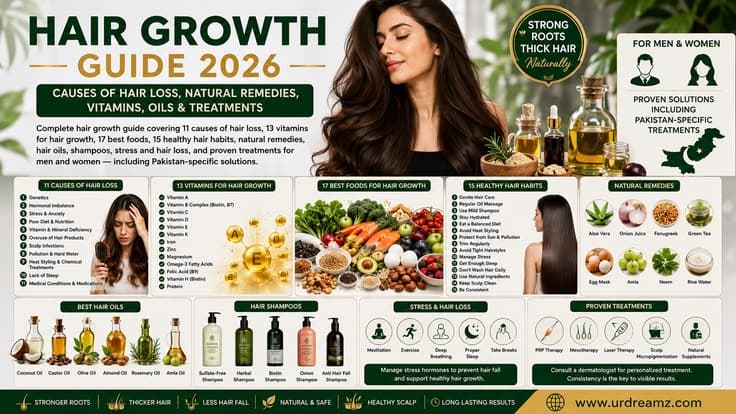
Healthy, strong hair is something everyone wants — but when hair starts thinning or falling excessively, it can be deeply distressing. This complete hair growth guide covers everything you need to know: why hair falls, what vitamins and foods help it grow, which natural remedies actually work, and what medical treatments are available. Whether you are dealing with stress-related shedding, nutritional gaps, or genetic hair loss, this guide gives you a clear, evidence-based path forward — including solutions widely available in Pakistan.
It is completely normal to shed 50 to 100 hairs per day. When shedding exceeds this consistently, it becomes a concern that requires identifying and addressing the root cause.
How Hair Grows: The Hair Growth Cycle Explained
Before addressing hair loss, it helps to understand how hair actually grows. Each strand of hair on your scalp goes through four distinct phases:
- Anagen (Growth Phase): This is the active growth phase, lasting 2 to 7 years. The longer the anagen phase, the longer your hair can grow. About 85 to 90 percent of your hairs are in this phase at any time.
- Catagen (Transition Phase): A short, 2 to 3 week phase in which growth stops and the hair follicle shrinks.
- Telogen (Resting Phase): This phase lasts about 3 months. The old hair rests while a new hair begins forming beneath it.
- Exogen (Shedding Phase): The old hair sheds and falls out. This is when the 50 to 100 daily hairs you lose leave your scalp.
When a disruption — whether from stress, nutritional deficiency, hormones, or illness — pushes too many follicles into the resting or shedding phase simultaneously, you experience noticeable hair thinning or excessive hair fall.
11 Common Causes of Hair Loss
Hair loss can stem from one or multiple causes happening at the same time. Identifying your specific trigger is the most important first step toward effective treatment.
-
Genetics and Androgenetic Alopecia
The most common cause of hair loss worldwide. Also called male-pattern or female-pattern baldness, this hereditary condition causes a gradually receding hairline in men and a widening of the hair part in women. It is driven by a hormone called DHT (dihydrotestosterone) that shrinks hair follicles over successive growth cycles.
-
Nutritional Deficiencies
A shortage of iron, zinc, protein, biotin (B7), B12, folate, or vitamin D can directly weaken hair roots and disrupt the growth cycle. Iron deficiency anemia is one of the most common nutritional causes of hair shedding, particularly in women. Hair is made almost entirely of a protein called keratin, so insufficient protein intake causes strands to weaken and shed.
-
Chronic Stress and Emotional Trauma
Significant emotional or physical stress pushes large numbers of hair follicles prematurely into the resting phase. This condition is called Telogen Effluvium. The shedding typically appears 2 to 4 months after the stressful event, and hair usually regrows within 3 to 6 months once the stress is managed.
-
Hormonal Changes
Pregnancy, childbirth, menopause, and stopping hormonal contraceptives can all cause significant temporary hair shedding due to estrogen and progesterone fluctuations. Postpartum hair loss is extremely common and usually self-resolving within 6 to 12 months.
-
Thyroid Disease
Both hypothyroidism (underactive thyroid) and hyperthyroidism (overactive thyroid) can cause diffuse hair thinning all over the scalp. Thyroid hormones regulate the growth phase of hair follicles, so imbalances disrupt the entire cycle.
-
PCOS (Polycystic Ovary Syndrome)
PCOS in women causes elevated androgens (male hormones), which can trigger the same DHT-driven follicle miniaturization seen in male-pattern baldness. Women with PCOS often experience thinning at the crown or temples. Managing PCOS hormonally often improves hair loss in parallel.
-
Alopecia Areata (Autoimmune Hair Loss)
An autoimmune condition in which the body's immune system mistakenly attacks healthy hair follicles, resulting in smooth, coin-shaped bald patches that can appear suddenly anywhere on the scalp. In severe cases it can affect the entire scalp (alopecia totalis) or the whole body (alopecia universalis).
-
Scalp Infections and Skin Conditions
Fungal infections like ringworm of the scalp (tinea capitis) cause localized, scaly patches of hair loss. Conditions like seborrheic dermatitis (dandruff) can inflame the scalp and weaken hair follicles when left untreated. Psoriasis of the scalp can cause temporary hair loss in affected areas.
-
Medications and Medical Treatments
Certain prescription medications cause hair loss as a side effect. These include chemotherapy drugs, beta-blockers, some antidepressants, blood thinners, and medications for arthritis or gout. Cancer treatment-related hair loss (from chemotherapy) is often temporary and hair typically regrows after treatment ends.
-
Traction Alopecia and Physical Damage
Consistently wearing hair in tight ponytails, braids, cornrows, or buns puts chronic tension on the hair follicles at the hairline, causing a type of permanent hair loss called traction alopecia if the tension is maintained for too long. Excessive heat styling, bleaching, and chemical relaxers also cause mechanical and structural hair damage, leading to breakage.
-
Sudden Weight Loss and Crash Dieting
Rapid, extreme weight loss deprives the body of sufficient protein, calories, and micronutrients. Hair is considered a low-priority tissue by the body, so when resources become scarce, the body diverts them away from hair follicles, triggering telogen effluvium within 3 to 4 months of the dietary restriction. Sustainable, gradual weight loss avoids this problem.
Early Warning Signs of Hair Loss
Recognizing the early signs allows you to seek help before the loss becomes significant. The main warning signs include:
- Gradual Thinning: Men notice a receding hairline at the temples. Women notice a widening of their natural hair part at the crown.
- Circular or Patchy Bald Spots: Coin-shaped smooth patches on the scalp, beard, or eyebrows (typical of alopecia areata). The skin may feel itchy or slightly painful beforehand.
- Increased Daily Shedding: Finding clumps of hair on pillows, in the shower drain, or when combing — noticeably more than usual.
- Sudden Loosening: Handfuls of hair loosening simultaneously after physical or emotional shock.
- Visible Scalp: The scalp becoming increasingly visible through thinning hair across the crown or top.
- Scalp Scaling or Redness: Scaly, red, or itchy patches accompanied by broken hairs may indicate a fungal infection or inflammatory skin condition.
If you experience persistent hair loss, sudden bald patches, or scalp pain or itching alongside shedding, consult a board-certified dermatologist for a proper diagnosis and blood tests to identify any underlying cause.
13 Key Vitamins and Minerals for Hair Growth
Nutritional deficiencies are among the most common and most correctable causes of hair loss. Getting the right vitamins and minerals through diet — and supplements where needed — can significantly improve hair health. Always consult a doctor before supplementing, as over-supplementation of certain nutrients (like vitamin A or selenium) can actually cause more hair loss.
| Nutrient | Role in Hair Health | Deficiency Signs | Best Food Sources |
|---|---|---|---|
| Biotin (Vitamin B7) | Essential for keratin production — the protein that forms the hair shaft | Brittle hair, hair thinning, and in severe cases hair loss | Eggs, almonds, whole grains, sweet potatoes, nuts |
| Vitamin D | Stimulates new and old hair follicles. Low levels strongly linked to alopecia areata and pattern baldness | Excessive shedding, thinning across the scalp, slow regrowth | Sunlight, fatty fish, egg yolks, fortified dairy and cereals |
| Iron | Helps red blood cells carry oxygen to hair follicles; anemia is a leading cause of rapid hair shedding | Diffuse hair thinning, fatigue, pale skin, frequent cold hands | Red meat (lean), spinach, lentils (daal), kidney beans (rajma), liver |
| Zinc | Crucial for hair tissue growth and repair; helps oil glands around follicles function properly | Hair shedding, dry flaky scalp, slow wound healing | Oysters, beef, pumpkin seeds, chickpeas (chana), cashews |
| Vitamin C | Helps absorb iron; essential for collagen synthesis which strengthens hair structure | Dry, brittle hair, slow healing, reduced iron absorption | Citrus fruits, guava (amrood), strawberries, bell peppers, amla |
| Vitamin A | Helps scalp produce sebum (natural oil) to keep hair moisturized; too much causes hair loss | Dry scalp, dull lifeless hair | Carrots, sweet potatoes, spinach, liver (in moderation) |
| Vitamin E | Powerful antioxidant protecting scalp cells from oxidative stress and UV damage | Hair breakage, dull hair, fragile strands | Sunflower seeds, almonds, avocados, wheat germ oil |
| Vitamin B12 | Aids in red blood cell production ensuring oxygen supply to hair follicles | Hair thinning, anemia, fatigue, numbness | Meat, fish, eggs, dairy products (deficiency common in vegetarians) |
| Folate (B9) | Supports cell division and DNA synthesis within hair follicles | Hair thinning, premature graying, fatigue | Dark leafy greens, lentils, chickpeas, fortified grains |
| Omega-3 Fatty Acids | Nourishes hair follicles from within, reduces scalp inflammation, adds shine and luster | Dry, dull hair, flaky scalp, brittle strands | Salmon, mackerel, sardines, walnuts, flaxseeds (alsi), chia seeds |
| Protein / Keratin | Hair is 80 to 95% protein. Insufficient intake directly weakens and thins hair strands | Excessive shedding, hair becoming thinner in diameter | Eggs, chicken, fish, lentils (daal), paneer, Greek yogurt |
| Selenium | Supports antioxidant enzymes protecting follicles; caution — excess selenium causes hair loss | Hair thinning (both deficiency AND excess cause problems) | Brazil nuts (1-2 daily is sufficient), tuna, eggs, sunflower seeds |
| Magnesium | Helps regulate hormones and reduce scalp inflammation; also involved in protein synthesis | Hair thinning, muscle cramps, poor sleep | Dark chocolate, pumpkin seeds, almonds, spinach, black beans |
17 Best Foods for Faster Hair Growth
The right diet is one of the most powerful tools for improving hair health. Hair is primarily made of keratin protein, so the body needs adequate protein, vitamins, and minerals to build healthy hair strands and maintain an active growth cycle. Include these 17 foods regularly in your diet for measurable results.
| Food | Key Nutrients | Hair Growth Benefit |
|---|---|---|
| Eggs | Biotin, Protein, Zinc, Selenium | Essential for keratin production — the structural protein of hair |
| Salmon / Fatty Fish | Omega-3, Protein, Vitamin D, B12 | Reduces scalp inflammation, adds shine, nourishes follicles |
| Spinach | Iron, Folate, Vitamin A and C | Delivers oxygen to follicles via iron; promotes sebum production |
| Sweet Potatoes | Beta-Carotene (Vitamin A) | Keeps scalp naturally moisturized, promotes cell turnover |
| Avocados | Vitamin E, Healthy Fats, Biotin | Protects follicles from oxidative damage, deeply nourishes scalp |
| Berries (Blueberries, Strawberries) | Vitamin C, Antioxidants | Promotes collagen to strengthen hair; boosts iron absorption |
| Walnuts | Omega-3, Vitamin E, Zinc | Reduces scalp inflammation, prevents hair breakage |
| Greek Yogurt | Protein, Vitamin B5, Calcium | Boosts blood flow to scalp; supports keratin formation |
| Lentils (Daal) | Protein, Iron, Zinc, Biotin, Folate | Excellent plant-based source of hair growth nutrients for vegetarians |
| Pumpkin Seeds | Zinc, Magnesium, Iron, Omega-3 | Strengthens follicles, reduces shedding, balances hormones |
| Chickpeas (Chana) | Protein, Zinc, Iron, B6 | Versatile legume that provides keratin-building protein and hair minerals |
| Almonds | Vitamin E, Magnesium, Biotin | Protects hair from UV damage and environmental stressors |
| Guava (Amrood) | Vitamin C (4x more than orange), Vitamin A | Exceptional iron absorber; promotes collagen and hair strength |
| Carrots | Beta-Carotene, Biotin | Promotes scalp sebum production and healthy hair follicle cycling |
| Dark Chocolate (70%+ Cacao) | Iron, Zinc, Magnesium, Antioxidants | Improves blood circulation to the scalp via flavonoid compounds |
| Oysters | Zinc (highest food source), Protein, Iron | One of the single best foods for strengthening follicles and reducing shedding |
| Flaxseeds (Alsi) | Omega-3, Zinc, Fiber, Lignans | Reduces scalp inflammation, locks in moisture, affordable local option |
Best Natural Remedies for Hair Growth at Home
Natural hair growth remedies are gaining popularity because they may be gentler and have fewer side effects than pharmaceutical options. While most need more large-scale human studies, many have promising evidence and are safe to incorporate into your routine. Here are the most effective and well-researched natural options:
1. Scalp Massage
A simple 5 to 10 minute daily scalp massage using your fingertips or a scalp massager tool can stimulate blood circulation to hair follicles, improve nutrient delivery, and promote hair thickness. One study of daily 4-minute scalp massages over 24 weeks showed increased hair thickness. A separate survey of 300 men found that nearly 70 percent experienced less hair loss or more regrowth after 7+ months of daily scalp massage.
2. Rosemary Oil
One of the most science-backed natural remedies. Rosemary oil inhibits 5-alpha-reductase (the enzyme that converts testosterone into DHT — the hormone responsible for hair loss). A landmark 2015 study on 100 people with androgenetic alopecia found rosemary oil equally effective to topical minoxidil 2% after 6 months, with less scalp itching. Always dilute 2 to 3 drops in a carrier oil (coconut, jojoba, or almond oil) before applying to the scalp. Available at Saeed Ghani and Conatural in Pakistan.
3. Onion Juice
High in sulfur, onion juice may improve collagen production and strengthen hair roots. Apply freshly extracted onion juice to the scalp, leave for 15 to 30 minutes, and wash out thoroughly with a mild shampoo. The strong smell is a drawback, but some small studies show meaningful improvement in hair regrowth when used consistently for 4 to 8 weeks.
4. Aloe Vera Gel
Aloe vera contains proteolytic enzymes that unclog hair follicles, vitamins A, C, E, and B12, and has anti-inflammatory properties that soothe an irritated scalp. While it does not directly accelerate hair growth speed (which is genetically determined), it creates an optimal scalp environment by reducing dandruff, controlling excess sebum, and preventing breakage. Apply pure aloe gel to the scalp for 20 to 30 minutes before washing.
5. Castor Oil
Rich in ricinoleic acid, castor oil may boost blood circulation to the scalp and has antibacterial and anti-inflammatory properties. It is an excellent moisturizer for the hair shaft and can reduce breakage. While there is no strong direct evidence for hair regrowth, it creates a healthier scalp environment. Commonly mixed with coconut oil for easier application. Available widely across Pakistan.
6. Coconut Oil
Coconut oil's unique chemical composition allows it to penetrate the hair shaft better than most other oils, reducing protein loss from hair. It is excellent for preventing breakage and maintaining hair strength. It is best used as a pre-wash treatment (apply 30 minutes before shampooing) to protect hair during washing. Note: can clog scalp pores if used excessively, especially on oily scalp types.
7. Pumpkin Seed Oil
Like rosemary oil, pumpkin seed oil may work by inhibiting the 5-alpha-reductase enzyme that produces DHT. A 2014 study on 76 men with androgenetic alopecia found a 40 percent increase in average hair count after 24 weeks of pumpkin seed oil use (vs. 10 percent in the placebo group). Available as a supplement capsule or topical oil.
8. Rice Water Rinse
Used for centuries across East Asian cultures, fermented rice water is believed to improve hair elasticity and reduce surface friction. Lab studies suggest rice-bran extract may support hair growth. It is inexpensive, easy to make at home (soak rice in water for 30 minutes, strain, and use as a final rinse), and completely risk-free to try.
9. Herbal DIY Hair Mask (Desi Nuskha)
Mix 2 tablespoons of fresh aloe vera gel + 1 tablespoon of coconut oil + 2 drops of diluted rosemary essential oil. Massage into the scalp and leave for 30 to 45 minutes before washing with a mild sulfate-free shampoo. This combination provides scalp nourishment, circulation boost, and follicle stimulation in one treatment.
Best Hair Oils for Hair Fall and Growth
Hair oils nourish the scalp, strengthen strands, prevent breakage, and create an optimal environment for growth. The right oil depends on your specific hair concern. Here is a complete guide to choosing the best oil for your needs:
| Hair Concern | Best Oil Choice | Key Benefit | How to Use |
|---|---|---|---|
| Hair Loss and Thinning | Rosemary Oil (diluted) | Blocks DHT, stimulates follicles, comparable to minoxidil in studies | 2–3 drops in carrier oil, massage into scalp, leave 30–60 minutes |
| Scalp Circulation and Thickness | Castor Oil | Ricinoleic acid boosts blood flow, reduces scalp inflammation | Warm slightly, massage into scalp, leave 1–2 hours or overnight |
| Dry and Damaged Hair | Coconut Oil | Penetrates hair shaft to prevent protein loss and breakage | Pre-wash treatment; apply 30 minutes before shampoo |
| Frizzy and Heat-Damaged Hair | Argan Oil | Tames frizz, adds shine, protects from heat without greasiness | 2–3 drops on mid-lengths and ends after washing, or as heat protectant |
| Oily Scalp and Fine Hair | Jojoba Oil | Mimics natural sebum, balances oil production, lightweight | Few drops on scalp, no need to wash out immediately |
| Scalp Health and Dandruff | Tea Tree Oil (diluted) | Antifungal and antibacterial, reduces dandruff and scalp irritation | 5 drops in 30ml carrier oil, massage into scalp, rinse after 30 minutes |
| DHT Blocking and Regrowth | Pumpkin Seed Oil | 5AR inhibitor, shown to increase hair count in clinical study | As oral supplement (400mg/day) or diluted topical scalp treatment |
How to Oil Your Hair Correctly
- Warm the oil slightly before applying — never boiling hot. Warm oil penetrates better and is more comfortable on the scalp.
- Apply to the scalp, not just the hair lengths. Use fingertips to massage in circular motions for 5 to 10 minutes to boost blood circulation.
- Leave on for 30 minutes to 2 hours (or overnight for a deep treatment). Cover with a shower cap to trap heat and enhance absorption.
- Use 2 to 3 times per week for best results. More frequent oiling can clog pores and cause buildup.
- Always wash out with a mild sulfate-free shampoo after the treatment period.
- Always patch test essential oils on your wrist before applying to the scalp to check for any allergic reaction.
Popular Hair Oil Brands in Pakistan
For locally available quality hair oils, look for products from Conatural, Mama Organic, Saeed Ghani, Chiltan Pure, and Just Amna. These brands offer herbal and organic formulations with ingredients like onion extract, rosemary, amla (amla), bhringraj, and sweet almond oil that are suited to South Asian hair types. Browse Daraz.pk or visit Medishop.pk for a wide selection of anti-hair fall oils.
Stress and Hair Loss: The Hidden Connection
One of the most overlooked causes of sudden hair thinning in young adults is chronic stress. Understanding how stress triggers hair loss helps you address the root cause rather than just the symptoms.
How Stress Causes Hair Loss
- Cortisol Spike: Stress releases the hormone cortisol, which constricts blood vessels in the scalp, reducing oxygen and nutrient delivery to hair follicles.
- Telogen Effluvium: High stress forces large numbers of follicles into the resting (telogen) phase simultaneously. Instead of the normal 50 to 100 daily hairs shed, you may lose up to 300 hairs per day. Shedding typically begins 2 to 4 months after the triggering stressful event.
- Hormonal Disruption: Stress hormones alter estrogen, progesterone, and androgen levels, disrupting the hair growth cycle.
- Trichotillomania: In some individuals, extreme anxiety creates an irresistible urge to pull out hair from the scalp or eyebrows as a coping mechanism.
- Alopecia Areata Trigger: Severe stress can trigger the immune system to mistakenly attack hair follicles, causing patchy hair loss.
- Premature Graying: Chronic stress has been linked to depletion of melanin-producing stem cells in hair follicles, accelerating the graying process.
The Good News: Stress-Related Hair Loss Is Temporary
Telogen effluvium caused by stress is typically reversible. Once the underlying stress is managed and addressed, hair usually begins regrowing within 3 to 6 months. Combining stress management techniques with proper nutrition and scalp care accelerates recovery.
Best Ways to Reduce Stress-Related Hair Loss
- Daily meditation, deep breathing exercises, or yoga to normalize cortisol levels
- Regular aerobic exercise (walking, swimming, cycling) to release tension and boost circulation
- 7 to 9 hours of quality sleep nightly to normalize stress hormones
- Eating a protein and iron-rich diet to replenish follicle-building nutrients
- Gentle scalp massages with a calming oil (lavender or rosemary) to reduce anxiety and improve blood flow
- Seeking professional counseling or therapy if stress is chronic and overwhelming
15 Healthy Hair Habits for Stronger, Longer Hair
Daily habits have a profound impact on hair health and length retention. These 15 science-backed habits collectively prevent breakage, promote growth, and keep hair strong and shiny over the long term.
| Habit | Category | Why It Matters |
|---|---|---|
| Shampoo only 2 to 3 times per week | Washing | Over-washing strips natural protective oils (sebum) from the scalp |
| Apply shampoo to the scalp only, not the lengths | Washing | Protects hair lengths from drying out; suds naturally clean ends as you rinse |
| Always condition after every shampoo | Conditioning | Restores hydration, smoothes the cuticle, reduces breakage and split ends |
| Wash with lukewarm water, never hot | Washing | Hot water strips natural oils and dries out both scalp and hair shaft |
| Never aggressively towel-dry wet hair | Drying | Wet hair is 3x more vulnerable to breakage; gently squeeze with a microfiber towel instead |
| Always detangle with a wide-tooth comb, starting from the ends | Detangling | Prevents breakage and tearing that occurs when combing from roots down on tangled hair |
| Never brush soaking wet hair | Detangling | Wet hair stretches and breaks easily; wait until at least 80% dry before brushing |
| Always use heat protectant before heat styling | Heat Protection | Reduces damage to hair proteins from blow dryers, flat irons, and curling tools |
| Air-dry instead of blow-drying whenever possible | Heat Protection | Eliminates heat damage entirely and improves hair health over time |
| Sleep on a silk or satin pillowcase | Sleep Care | Reduces friction, prevents tangles and breakage, retains hair moisture overnight |
| Avoid tight hairstyles (tight ponytails, cornrows, braids) | Styling | Persistent tension on hairline follicles causes traction alopecia — a permanent form of hair loss |
| Trim hair every 10 to 12 weeks | Maintenance | Removes split ends before they travel up the shaft and cause more damage |
| Use a deep conditioning hair mask weekly | Conditioning | Deeply nourishes and repairs the hair shaft, restoring strength and elasticity |
| Eat a balanced, protein-rich diet daily | Nutrition | Hair is protein; without adequate protein, vitamin, and mineral intake, hair cannot grow healthily |
| Limit harsh chemical treatments (bleach, perms, relaxers) | Chemical Care | Chemical treatments weaken the hair shaft and increase breakage, preventing length retention |
Hair Loss Treatments: Natural vs Medical
Effective hair loss treatment requires matching the solution to the cause. Here is a comprehensive comparison of the main options available today.
Natural and Lifestyle-Based Treatments
- Rosemary Oil: Studies show it can match topical minoxidil 2% in effectiveness for androgenetic alopecia over 6 months.
- Scalp Massage: Daily 5 to 10 minute massages improve follicle stimulation and blood flow.
- Pumpkin Seed Oil: Shows a 40% improvement in hair count in clinical trials for male pattern baldness.
- Saw Palmetto: A plant-based extract that inhibits 5-alpha-reductase, reducing DHT. Studies show improvement in hair density for both men and women.
- Dietary Correction: Correcting iron, B12, vitamin D, or zinc deficiencies through diet or targeted supplements is often highly effective for deficiency-related hair loss.
- Red Light Therapy (LLLT): FDA-cleared devices using low-level wavelength light (630 to 800 nm) can stimulate hair follicles and increase hair density. Requires 10 to 25 minute sessions, 2 to 3 times per week for several months.
Medical Treatments
- Minoxidil (Rogaine): The FDA-approved gold standard topical or oral medication for hair loss. Applied directly to the scalp, it stimulates follicles and slows shedding. Available over the counter in 2% and 5% strengths. Takes at least 6 months to see results and must be continued to maintain benefits. Available in Pakistan through pharmacies and Medishop.pk.
- Finasteride (Propecia): A prescription oral medication for men that blocks DHT by inhibiting 5-alpha-reductase. Highly effective for androgenetic alopecia but requires medical prescription and has potential side effects — always consult a doctor.
- Platelet-Rich Plasma (PRP) Therapy: A clinical procedure where your own blood plasma is injected into the scalp. The growth factors in the plasma stimulate dormant hair follicles. Effective for early-stage androgenetic alopecia and telogen effluvium.
- Hair Transplant Surgery: For advanced hair loss where other treatments have been insufficient. Healthy follicles from the back of the scalp (donor area) are transplanted to thinning areas. Results are permanent but the procedure is surgical, costly, and requires recovery time.
- Microneedling: A roller with fine needles creates tiny punctures in the scalp, triggering wound-healing and promoting new blood vessel formation. When combined with minoxidil, it significantly enhances drug penetration and follicle stimulation. Best done by a dermatologist.
Hair Loss Shampoos
Hair loss shampoos primarily strengthen existing strands and prevent breakage rather than growing new hair. Look for formulas containing biotin, ketoconazole, Pro-Vitamin B5, or caffeine. Popular options available in Pakistan include Sunsilk Hairfall Solution (Soya vitamin complex), Dove Hair Fall Rescue (Nutrilock actives), Anagrow Anti Hairfall Shampoo (Jenpharm), Biogain Shampoo (The Hair Pantry), and Set and Touch Hair Fall Solution (Golden Pearl). Use consistently for 4 to 12 weeks to assess effectiveness.
Hair Loss in Women: Special Considerations
Women experience hair loss differently from men and for different reasons. Understanding these differences is critical for choosing the right approach.
- Postpartum Hair Loss: Extremely common in the 3 to 6 months after delivery due to dropping estrogen levels pushing follicles into the shedding phase. Almost always self-resolving within 12 months. Iron supplementation and a nutrient-rich diet support recovery.
- Menopause and Hair Thinning: Declining estrogen and progesterone during menopause allow androgens to have a relatively greater effect on follicles, causing gradual thinning at the crown similar to male-pattern baldness but more diffuse.
- PCOS-Related Hair Loss: Elevated androgens in PCOS cause hair thinning at the temples and crown. Treatment focuses on managing PCOS hormonally through medication, diet, and lifestyle.
- Young Women Under 30: Nutritional deficiencies (especially iron, vitamin D, and protein), crash dieting, stress, or undiagnosed thyroid conditions are the most common causes. Blood tests to identify deficiencies are the essential first step.
Frequently Asked Questions About Hair Growth
How much hair fall is normal per day?
Losing 50 to 100 hairs per day is completely normal. This is part of the natural hair growth cycle and does not cause visible thinning because new hairs are continuously replacing them. Concern arises when shedding consistently exceeds this range or when new hairs are not regrowing to replace fallen ones.
How fast does hair grow?
On average, hair grows approximately 1.25 cm (half an inch) per month, or about 15 cm (6 inches) per year. The rate is determined largely by genetics, age, hormonal health, and nutritional status. Optimizing diet, scalp health, and avoiding damage are the best ways to maximize your hair's natural growth potential.
Will hair loss from stress grow back?
In most cases, yes. Stress-induced hair loss (telogen effluvium) is typically temporary and reversible. Once the underlying stressor is managed, hair usually begins regrowing within 3 to 6 months. If hair loss persists beyond 6 months or worsens, consult a dermatologist to rule out other conditions.
Can hair oils alone regrow hair?
Hair oils create a healthy scalp environment and can support growth, but they cannot reverse genetic hair loss on their own. For significant regrowth in androgenetic alopecia, medical treatments like minoxidil or finasteride remain more effective. Natural oils are best used alongside dietary optimization and stress management for comprehensive hair health.
How long does it take to see results from hair loss treatment?
Most hair growth treatments — whether natural or medical — require a minimum of 3 to 6 months of consistent use before visible results appear. This is because the hair growth cycle itself takes months to complete. Patience and consistency are the two most important factors for success.
What is the best herbal solution for hair loss in Pakistan?
Clinically speaking, diluted rosemary oil massaged into the scalp 3 to 4 times per week has the strongest scientific backing among herbal options. Locally available brands like Conatural, Mama Organic, Saeed Ghani, and Chiltan Pure offer quality herbal hair oils with rosemary, onion, amla, and bhringraj that are appropriate for Pakistani hair types. For persistent or severe hair loss, consulting a dermatologist and discussing medical options remains the most effective route regardless of age or gender.
Is there a herbal pack available for hair loss?
For those aged 18 to 45 dealing with hair loss issues, a combination approach works best: a good herbal anti-hair fall oil (massaged into scalp 3x per week), a gentle sulfate-free shampoo, and internal support through diet and vitamins. For personalized product recommendations for your hair type and concerns, contact +923471936923 on WhatsApp.
Final Thoughts: A Complete Hair Growth Plan
Healthy, thick hair is the result of addressing multiple factors simultaneously — not a single magic product or remedy. Here is a simple, actionable framework to build on:
- Identify the cause: Get blood tests for iron, ferritin, vitamin D, B12, thyroid, and zinc if you have significant hair loss. Treat any deficiencies first.
- Eat for your hair: Prioritize protein (eggs, daal, fish, paneer), iron (spinach, lentils, meat), omega-3s (walnuts, flaxseeds, fish), and vitamin C (citrus, amla, guava) every day.
- Manage stress actively: Chronic cortisol is one of the most damaging forces for hair follicles. Walk daily, sleep 7 to 9 hours, and practice a stress-reduction technique consistently.
- Build a gentle hair care routine: Wash 2 to 3 times per week with a sulfate-free shampoo, always condition, detangle gently, and minimize heat styling.
- Add targeted scalp treatments: Oil the scalp with diluted rosemary oil or a quality herbal hair oil 2 to 3 times per week with 5 to 10 minutes of scalp massage.
- Be patient and consistent: Hair growth is slow and steady. Allow 3 to 6 months of consistent habits before evaluating results. If loss continues or worsens, consult a dermatologist.
Always consult a qualified healthcare provider or dermatologist for severe, sudden, or patchy hair loss before self-treating. Some forms of hair loss require medical diagnosis and prescription treatment for best outcomes.