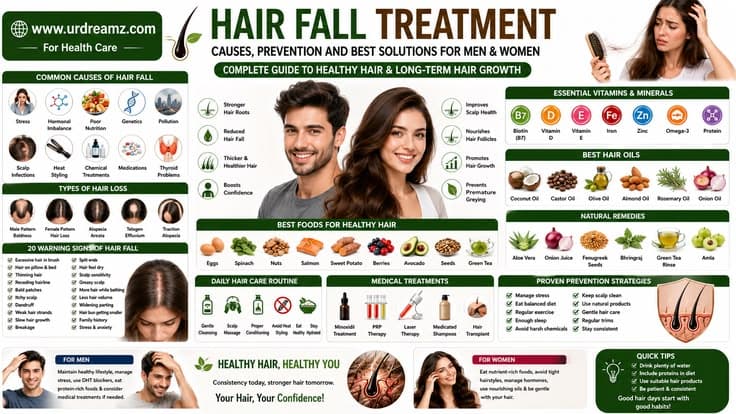
Hair Fall Treatment: Causes, Prevention and Best Solutions for Men and Women
Your hair is often described as your crowning glory, and for good reason. A full, healthy head of hair contributes significantly to appearance, self-confidence, and overall well-being. Yet hair fall is one of the most common health complaints worldwide, affecting an estimated 50 percent of men and 40 percent of women at some point in their lives. The challenge is that hair loss rarely has a single cause and rarely has a single solution. Understanding why your hair is falling, what type of hair loss you are experiencing, and which combination of approaches works best for your specific situation is the foundation of effective treatment. This complete guide covers everything from the biology of hair growth to natural remedies, medical treatments, dietary strategies, and daily care routines, all written in plain language so you can take action starting today.
1. What Is Hair Fall and How Much Is Normal
Hair fall, also called hair shedding or alopecia in medical terms, refers to the loss of hair from the scalp or body. It is important to distinguish between normal shedding and problematic hair loss, because losing some hair every day is a completely healthy biological process that reflects your hair's natural growth cycle.
The American Academy of Dermatology states that losing between 50 and 100 hairs per day is entirely normal for most adults. With roughly 100,000 hair follicles on the average scalp, losing 50 to 100 represents less than one-tenth of one percent of your total hair on any given day, which is insignificant from a volume standpoint.
However, you should start paying attention when you notice significantly larger amounts of hair on your pillow in the morning, hair accumulating in shower drains after washing, visible thinning of your part line or overall hair volume, bald patches developing on your scalp, your hairline visibly receding, or hair breaking off in large amounts when you brush or comb. These signs suggest that your shedding has moved beyond normal and into the territory of pathological hair loss that deserves investigation.
To understand why hair falls and how to address it, you need to understand that every single hair follicle on your scalp independently cycles through four distinct phases. Disruption of this cycle at any phase is what causes hair to shed prematurely or stop growing properly.
The Four Phases of the Hair Growth Cycle
Phase
Name
Duration
What Happens
Percentage of Hairs in This Phase
Phase 1
Anagen (Active Growth)
2 to 7 years
The hair follicle is actively producing a new hair shaft. The longer your anagen phase the longer your hair can grow
85 to 90 percent
Phase 2
Catagen (Transition)
2 to 3 weeks
Growth slows and the hair follicle begins to shrink and detach from the blood supply
1 to 2 percent
Phase 3
Telogen (Resting)
3 to 4 months
The hair follicle is completely at rest. The old hair remains in the follicle but is no longer growing
10 to 15 percent
Phase 4
Exogen (Shedding)
2 to 5 months
The resting hair is pushed out by the new growing hair beneath it. This is when you see hairs on your pillow or in the shower
Overlaps with Telogen
When stress, nutritional deficiency, hormonal disruption, or illness occurs, large numbers of follicles can be simultaneously pushed into the telogen resting phase, causing what feels like sudden dramatic hair loss approximately three to four months after the triggering event. This phenomenon is called telogen effluvium and is one of the most common types of temporary hair loss.
3. Twenty Common Causes of Hair Fall
20 Common Causes of Hair Fall
#
Cause
Who Is Affected Most
Type of Hair Loss
Is It Reversible
1
Hereditary or Genetic Hair Loss (Androgenetic Alopecia)
Men and women with family history of baldness
Patterned, progressive thinning
Partially with treatment
2
Chronic Emotional or Physical Stress
Anyone experiencing prolonged stress, trauma, or major life events
Diffuse shedding (telogen effluvium)
Yes once stress is managed
3
Iron Deficiency and Anemia
Women of reproductive age, vegetarians, frequent blood donors
Diffuse thinning throughout the scalp
Yes with iron supplementation
4
Thyroid Disorders (Both Overactive and Underactive)
Women over 35, those with autoimmune conditions
Diffuse shedding across the entire scalp
Yes once thyroid is treated
5
Hormonal Changes During Menopause
Women in perimenopause and menopause
Gradual thinning particularly at the crown and part line
Partially manageable
6
Polycystic Ovary Syndrome (PCOS)
Women with PCOS due to elevated androgens
Male-pattern type thinning in women
Improves with PCOS management
7
Pregnancy and Postpartum Changes
Women in the months after giving birth
Dramatic shedding typically beginning 3 months postpartum
Yes usually resolves within a year
8
Vitamin D Deficiency
People with limited sun exposure or absorption problems
Diffuse thinning and increased shedding
Yes with vitamin D correction
9
Biotin Deficiency
Rare in general population but can occur with poor diet or certain medications
Brittle hair, diffuse thinning
Yes with biotin restoration
10
Protein Deficiency and Crash Dieting
Anyone following very low calorie or low protein diets
Diffuse shedding occurring weeks to months after dietary restriction
Yes with adequate nutrition
11
Alopecia Areata (Autoimmune Hair Loss)
Any age, gender, or ethnicity. Often begins in childhood or young adulthood
Sudden patchy circular bald spots
Sometimes. Unpredictable with spontaneous regrowth possible
12
Scalp Infections Including Ringworm
Children more commonly though adults can be affected
Patchy hair loss with scalp scaling and inflammation
Yes once infection is treated
13
Traction Alopecia from Tight Hairstyles
Anyone who regularly wears very tight braids, ponytails, or extensions
Hair loss along the hairline and temples
Yes if detected early and style changed
14
Chemical and Heat Damage
Anyone who frequently uses chemical relaxers, dyes, bleach, or high-heat styling tools
Hair breakage, thinning and loss particularly of hair shaft not follicle
Yes with proper care and reduced chemical exposure
15
Medications
People taking blood thinners, chemotherapy drugs, antidepressants, beta-blockers, or retinoids
Diffuse shedding that begins weeks to months after starting medication
Often yes after medication change or completion
16
Zinc Deficiency
Those with poor dietary variety, digestive disorders, or pregnancy
Diffuse thinning, brittle hair
Yes with zinc supplementation
17
Dihydrotestosterone Sensitivity (DHT)
Men and women with genetic sensitivity to this androgen hormone
Progressive miniaturization of hair follicles leading to patterned baldness
Slowed with DHT-blocking treatments
18
Dandruff and Scalp Inflammation
People with seborrheic dermatitis or psoriasis of the scalp
Increased shedding with visible scalp flakes and itching
Yes with proper scalp treatment
19
Poor Sleep and Circadian Disruption
Shift workers, people with insomnia, those with irregular schedules
Gradual thinning through cortisol elevation and growth hormone disruption
Yes with improved sleep quality
20
Smoking and Heavy Alcohol Use
Smokers and heavy drinkers of any gender
Accelerated genetic hair loss and reduced blood flow to follicles
Improves significantly after stopping
4. The Four Main Categories of Hair Loss Causes
Medical professionals and trichologists organize the causes of hair loss into four primary categories. Understanding which category or combination of categories applies to your situation helps you target the right treatments rather than guessing.
Four Main Categories of Hair Loss Causes
Category
Specific Causes
Key Markers
Primary Treatment Approach
1. Hormonal Imbalances
Thyroid imbalance (both overactive and underactive), high testosterone and DHT, polycystic ovary syndrome (PCOS), insulin resistance, estrogen dominance, high cortisol from chronic stress, menopause-related estrogen decline
Often presents as diffuse or patterned thinning. May accompany other hormonal symptoms like fatigue, weight changes, mood changes, or irregular periods
Identify and treat the underlying hormonal condition. May include thyroid medication, PCOS management, stress reduction, or hormonal therapy in consultation with an endocrinologist
2. Micronutrient Deficiencies
Vitamin B12 deficiency, biotin (Vitamin B7) deficiency, iron deficiency, zinc deficiency, silica deficiency, gamma linolenic acid (GLA) deficiency, protein deficiency, vitamin D deficiency
Typically presents as diffuse shedding. Blood tests can confirm specific deficiencies. May be accompanied by fatigue, brittle nails, pale skin, or other nutrient deficiency symptoms
Dietary correction combined with targeted supplementation. Results typically visible within 3 to 6 months of consistent nutritional improvement
3. Environmental and Lifestyle Factors
Heavy metal toxicity from contaminated water or occupational exposure, chemical hair treatments including bleaching, dyeing, and perming, scalp mites, pollution, heat styling damage, tight hairstyles, poor hair care habits, smoking, excessive alcohol
Hair breakage rather than root loss in many cases. Scalp condition often visibly poor. Hair shaft appears brittle, rough, or dull
Remove or reduce the offending environmental factor. Improve scalp and hair care habits. Allow hair to recover with gentle care and nutrient support
4. Autoimmune Conditions
Alopecia areata where the immune system attacks hair follicles, creating patchy baldness on the scalp and sometimes other body areas
Sudden appearance of smooth round or oval bald patches. Hair at the edge of patches may show exclamation mark appearance. No scarring of the scalp
Corticosteroid injections, topical immunotherapy, systemic medications including JAK inhibitors which are newer approved treatments, or observation since spontaneous remission is possible
5. Types of Hair Loss: Patterned, Diffuse and Focal
Dermatologists and trichologists classify hair loss into three main patterns based on how the hair loss is distributed across the scalp. Identifying your pattern is the first step toward the correct diagnosis and treatment.
Three Main Types of Hair Loss
Type
Pattern of Loss
Most Common Cause
Distinguishing Features
Typical Treatment
Patterned Hair Loss
Progressive and symmetric thinning that follows a predictable pattern. In men typically begins at the temples and crown. In women typically shows as widening of the central part with maintained frontal hairline
Androgenetic alopecia: a hereditary condition caused by sensitivity of hair follicles to dihydrotestosterone (DHT), a byproduct of testosterone
Gradual onset over years. Clear family history usually present. Hair follicles miniaturize progressively rather than being destroyed. Occiput (back of head) typically spared
Loss of hair evenly distributed across the entire scalp rather than following a specific pattern. More than 200 scalp hairs per day are shed
Telogen effluvium triggered by an acute stressor such as severe illness, thyroid disease, pregnancy, malnutrition, rapid weight loss, iron deficiency anemia, or vitamin D deficiency
Often begins 2 to 4 months after the triggering event rather than immediately. Positive hair pull test throughout the scalp not just in certain areas
Identify and correct the underlying trigger. Nutritional support. Most cases resolve within 6 to 12 months once the cause is addressed
Focal Hair Loss
Loss of hair in distinct patches or localized areas on the scalp, and sometimes on the face or body
Alopecia areata: an autoimmune disorder where the immune system attacks the hair follicle matrix cells. Often develops in childhood or young adulthood
Sudden appearance of smooth, round or oval bald patches. No visible scalp scaling or inflammation. May affect individuals of any age, sex, or racial background
Intralesional steroid injections, topical immunotherapy, systemic corticosteroids, JAK inhibitors for severe cases
6. Male Pattern Baldness: Stages, Causes and Treatment
Male pattern baldness, medically termed androgenetic alopecia, is the most common form of hair loss in men and affects approximately 50 percent of men by age 50 and up to 85 percent by age 70. The condition is driven by a combination of genetic predisposition and sensitivity to the hormone DHT.
Male Pattern Baldness Stages and Treatment Options
Stage
Description
Typical Age of Onset
Best Treatment
Stage 1
No significant hairline recession. Minimal or no hair loss visible to others
Late teens to mid-twenties
Prevention focused: healthy lifestyle, scalp care, monitoring
Stage 2
Slight recession at the temples creating a mature hairline appearance
DHT, or dihydrotestosterone, is produced when the enzyme 5-alpha reductase converts testosterone into DHT. In genetically susceptible men, DHT binds to receptors in hair follicles and causes them to progressively miniaturize over time, producing thinner and shorter hairs until the follicle eventually stops producing hair altogether. Finasteride works by blocking the 5-alpha reductase enzyme, preventing testosterone from converting to DHT.
7. Female Hair Loss Disorders: Types, Causes and Diagnosis
Hair loss in women is often more emotionally distressing than in men because it is less socially accepted and can be more difficult to diagnose due to the many possible underlying causes. Female hair loss encompasses several distinct disorders with different causes, patterns, and treatment approaches.
Major Female Hair Loss Disorders
Condition
Patient Population
Pattern of Loss
Key Distinguishing Features
Treatment
Female Pattern Hair Loss (FPHL)
After puberty through menopause, all racial backgrounds
Central or frontal accentuation with widening of the part line. Occiput typically spared. Variation in hair shaft diameter visible on close examination
No loss of follicular openings in early stages. No scalp inflammation. Gradual onset. Family history often present. Scalp biopsy recommended if diagnosis uncertain
Topical minoxidil (FDA approved for women), anti-androgen medications, PRP therapy, nutritional support
Chronic Telogen Effluvium
Middle-aged women are most commonly affected though any age is possible
Global hair loss with central or frontal accentuation. Present for more than 6 months
Diffusely positive hair pull test for telogen hairs throughout the scalp. No follicular depletion. May overlap with FPHL. Common triggers include nutritional deficiency, thyroid disease, or significant life stressors
Identify and correct underlying trigger. Iron, vitamin D, and protein optimization. Usually resolves once cause is addressed
Frontal Fibrosing Alopecia (FFA)
Typically postmenopausal White women though any age or racial background can be affected
Progressive recession of the anterior hairline combined with possible bitemporal and parietal hairline recession. Possible eyebrow loss
Loss of follicular openings (ostia) in the affected area. Perifollicular erythema and hyperkeratosis. Prominent facial veins and facial papules in some patients. Scalp biopsy is diagnostic when clinical diagnosis uncertain
Topical corticosteroids, hydroxychloroquine, 5-alpha reductase inhibitors. Early treatment is critical to halt progression
Fibrosing Alopecia in a Pattern Distribution (FAPD)
Typically middle-aged or older women though any age or race possible
Central hair loss pattern similar to FPHL but with evidence of scalp scarring
Loss of follicular openings. May mimic FPHL especially advanced FPHL with follicular depletion. Perifollicular erythema common. Scalp biopsy strongly recommended to confirm diagnosis
Similar to FFA. Anti-inflammatory treatments. Early intervention important
Central Centrifugal Cicatricial Alopecia (CCCA)
Typically women of African descent though any age is possible
Central or vertex spreading hair loss beginning at the crown and gradually expanding outward. Balding is common in advanced cases
Loss of follicular openings. Variable perifollicular inflammation. Early stage may be difficult to clinically distinguish from FPHL. Scalp biopsy strongly recommended for confirmation
Topical and intralesional corticosteroids, tetracycline antibiotics, avoidance of certain hairstyling practices. Minoxidil to promote remaining follicle activity
8. Hair Loss Progression: Early to Advanced Stages
Understanding where you currently are in the hair loss journey helps you choose the most effective intervention at the right time. Early intervention consistently produces the best outcomes because follicles that are miniaturizing can still be rescued, while follicles that have been completely destroyed cannot regrow hair.
Hair Loss Progression Stages
Stage
What You Notice
What Is Happening
Best Response
Stage 1: Early Hair Thinning
Slightly more hair than usual in the shower drain or on your pillow. Part line may look a little wider. Hair feels slightly less dense
Follicles are beginning to miniaturize or the hair growth cycle is being disrupted. No permanent damage yet
Ideal time to intervene. Start nutritional optimization, scalp care, and DHT-blocking measures if patterned loss is suspected
Stage 2: Noticeable Hair Loss
Others may begin to notice. The part line is visibly wider. Temples may be receding. Crown area may show increased scalp visibility
Significant miniaturization of follicles is underway. Hair density has decreased by an estimated 15 to 30 percent from peak
Medical treatment becomes increasingly important. Minoxidil and finasteride (or their alternatives) show the strongest benefit at this stage
Stage 3: Advanced Hair Loss
Visible bald spots or thinning is apparent without effort to conceal. Large areas of scalp become visible in certain lighting
Many follicles have completed the miniaturization process and may no longer be capable of producing visible hair
Medical treatment to preserve remaining follicles. Hair transplant assessment becomes relevant for affected areas where follicles have been depleted
9. Six Root Causes of Hair Thinning
Hair thinning differs from acute hair loss in that it develops gradually and results in reduced hair shaft diameter and density rather than complete bald spots. The six root causes below account for the vast majority of hair thinning cases seen by dermatologists worldwide.
6 Root Causes of Hair Thinning
#
Root Cause
Mechanism
Key Signs
Solution
1
Chronic Stress and Elevated Cortisol
Persistent stress keeps cortisol levels chronically elevated, which disrupts the hair growth cycle by prematurely pushing follicles into the telogen resting phase and reducing blood flow to the scalp
Hair feels thinner overall. Thinning began or worsened during a period of high stress. May notice hair thinning 2 to 4 months after the stressful period
Stress management through regular exercise, mindfulness, adequate sleep, and social support. Hair typically recovers within 6 to 12 months once stress is controlled
2
Hormonal Imbalances
DHT causes follicle miniaturization in genetically susceptible individuals. Thyroid hormones directly regulate hair growth cycles. Estrogen decline after menopause reduces its hair-protective effects. PCOS increases androgen levels causing male-pattern type thinning in women
Gradual thinning over months to years. Pattern often follows a predictable distribution. May have other hormonal symptoms
Address the specific hormonal imbalance with appropriate medical treatment. Anti-androgen approaches for DHT-driven thinning
3
Damaging Lifestyle Habits
Smoking reduces blood flow to hair follicles and generates free radicals that accelerate follicle aging. Excessive alcohol depletes zinc and other nutrients critical for hair growth. Poor sleep disrupts growth hormone release which occurs primarily during deep sleep
Gradual thinning without a clear alternative cause. Often combined with other smoking or alcohol related health changes
Smoking cessation, alcohol moderation, sleep quality improvement. Results take months to become visible
4
Natural Aging
As the body ages, hair follicle cycling slows, the anagen growth phase shortens, and hair shafts become progressively finer and fewer in number. This process begins subtly in the thirties and becomes more noticeable in the forties and beyond
Gradual reduction in hair volume and density over years. Hairs appear finer than in youth. Part line gradually widens
Cannot be fully stopped but can be significantly slowed through excellent nutrition, scalp care, and medical intervention where appropriate
5
Poor Nutrition and Specific Deficiencies
Hair is a non-essential tissue from the body's perspective, meaning nutritional resources are directed to vital organs first. Iron deficiency reduces oxygen delivery to follicles. Protein deficiency deprives follicles of the building material for keratin. Zinc and biotin deficiencies impair the enzymatic processes of hair growth
Diffuse thinning throughout the scalp. Often accompanied by fatigue, brittle nails, or other deficiency symptoms. Blood tests can confirm
Dietary improvement and targeted supplementation. Results typically visible within 3 to 6 months of consistent nutritional correction
6
Metabolic Conditions and Thyroid Issues
Hypothyroidism slows all cellular metabolism including hair follicle cycling, causing diffuse thinning and a dry, coarse texture to remaining hair. Hyperthyroidism causes hair to become very fine and fall more rapidly. Diabetes impairs circulation to the scalp and may alter follicle sensitivity to hormones
Thinning often accompanied by other metabolic symptoms such as fatigue, weight changes, temperature sensitivity, or blood sugar irregularities
Treat the underlying metabolic condition with appropriate medical care. Hair recovery typically follows within months of achieving normal metabolic function
10. Essential Vitamins and Nutrients for Hair Growth
Essential Vitamins and Nutrients for Healthy Hair
Nutrient
Role in Hair Growth
Signs of Deficiency
Best Food Sources
Supplementation Note
Protein
Hair is made of keratin which is 95 percent protein. Inadequate protein directly reduces hair shaft production and thickness
Most people do not need protein supplements if eating a balanced diet with adequate total calories
Iron
Red blood cells carry oxygen to hair follicles. Iron deficiency is one of the most common nutritional causes of diffuse hair loss
Excessive diffuse shedding, fatigue, pale skin, cold hands and feet
Red meat, lentils, spinach, fortified cereals, pumpkin seeds
Test ferritin levels before supplementing. Target ferritin above 70 ng/mL for hair health
Vitamin D
Vitamin D receptors are present in hair follicles and play a role in the hair growth cycle. Deficiency has been linked to both telogen effluvium and alopecia areata
Biotin supplements are popular but only helpful if you are actually deficient. Can interfere with lab test results at high doses
Zinc
Zinc supports protein synthesis and cell division in hair follicles. It also helps maintain oil glands around follicles
Hair loss, delayed wound healing, poor sense of taste and smell
Oysters, beef, pumpkin seeds, chickpeas, lentils
Take with food to avoid nausea. Do not exceed recommended doses as excess zinc can paradoxically cause hair loss
Vitamin B12
B12 supports red blood cell formation which delivers oxygen and nutrients to hair follicles
Hair loss, fatigue, weakness, neurological changes, pale skin
Meat, fish, dairy, eggs. Vegetarians and vegans are at higher risk of deficiency
Critical for vegans and vegetarians to supplement. Injections available for those with absorption problems
Omega-3 Fatty Acids
Reduce scalp inflammation, support follicle function, and may help hair grow thicker and longer
Dry scalp, dull hair, inflammation-related hair loss
Fatty fish, walnuts, flaxseeds, chia seeds
Fish oil supplements are effective and well-tolerated for most people
Vitamin E
An antioxidant that protects hair follicle cells from oxidative damage and supports healthy scalp circulation
Rare. Vitamin E deficiency is uncommon in most populations
Almonds, sunflower seeds, spinach, avocado
Supplements are generally not necessary unless deficiency is confirmed
11. Best Foods to Stop Hair Fall Naturally
Best Foods for Healthy Hair Growth
Food
Key Nutrients
Hair Health Benefit
Eggs
Protein, biotin, zinc, selenium
Complete protein and biotin in one food. Among the best single foods for supporting hair structure and growth
Spinach
Iron, folate, vitamins A and C
Iron delivers oxygen to follicles. Vitamin A helps skin glands produce sebum which moisturizes the scalp
Fatty Fish (Salmon, Mackerel, Sardines)
Omega-3 fatty acids, protein, vitamin D, selenium
Omega-3s reduce scalp inflammation and support thicker stronger hair. Also provides vitamin D which is often deficient in hair loss patients
Sweet Potatoes
Beta-carotene, vitamin A, potassium, fiber
Beta-carotene converts to vitamin A in the body which promotes sebum production and healthy cell growth in follicles
Berries
Vitamin C, antioxidants
Vitamin C helps build collagen which strengthens hair. Antioxidants protect follicles from free radical damage
Avocado
Vitamin E, healthy fats, biotin
Vitamin E protects scalp skin from oxidative stress. Healthy fats support scalp moisture and shine
Nuts (Almonds, Walnuts)
Vitamin E, zinc, omega-3s, biotin
Deliver multiple hair-critical nutrients in concentrated form. Particularly beneficial for people with varied deficiencies
Seeds (Pumpkin, Chia, Flax)
Zinc, omega-3 ALA, vitamin E, protein
Pumpkin seeds are exceptionally rich in zinc which supports follicle protein synthesis
Lentils and Legumes
Iron, protein, zinc, folate, biotin
Excellent plant-based source of multiple hair nutrients simultaneously. Particularly important for vegetarians
Greek Yogurt
Protein, vitamin B5, vitamin D
Vitamin B5 (pantothenic acid) has been used in hair care products for its ability to support hair strength and flexibility
Oysters
Zinc (exceptionally rich source)
Among the highest zinc content of any food. Zinc deficiency is directly linked to hair loss and oysters can correct it rapidly
Liver and Organ Meats
Iron, zinc, vitamin B12, biotin, protein
The most nutrient-dense animal food available. Extremely effective for correcting multiple deficiencies simultaneously
12. Foods That Make Hair Fall Worse
Foods That Can Worsen Hair Fall
Food Category
Examples
How It Harms Hair
Sugary foods and drinks
Sodas, sweets, white bread, pastries
High sugar spikes insulin and IGF-1 which can increase androgen production and accelerate DHT-driven hair loss. Also promotes inflammation that damages follicles
Mercury-rich fish
Swordfish, king mackerel, shark, tilefish
Mercury is a heavy metal that competes with zinc and selenium, two minerals critical for hair growth. High mercury levels have been linked to hair loss
Excessive alcohol
Beer, wine, spirits consumed regularly in large amounts
Alcohol depletes zinc, biotin, and other B vitamins. Also dehydrates the scalp and impairs nutrient absorption from food
Ultra-processed foods
Fast food, instant noodles, packaged snacks, processed meats
High in sodium, unhealthy fats, and additives while being low in the nutrients hair follicles need. Promote the inflammatory environment that worsens hair loss
Crash diet foods
Very low calorie meal replacements, extreme restriction programs
Severe caloric restriction is interpreted by the body as a survival stress, diverting nutrients away from non-essential tissues like hair to protect vital organs
13. Natural Home Remedies for Hair Fall
Natural Remedies for Hair Fall with Evidence and Usage
Remedy
Active Compounds
Evidence Level
How to Use
Expected Results
Onion Juice
Quercetin, sulfur compounds that support collagen production and keratin strength
A small clinical study showed significantly improved regrowth compared to water in alopecia areata patients after 6 weeks
Blend half an onion, strain the juice, apply directly to scalp, leave 15 to 30 minutes, wash thoroughly. Use 2 to 3 times weekly
Noticeable improvement in 6 to 8 weeks for some users. Works best for alopecia areata type loss. Strong odor is the main drawback
Rosemary Oil
Ursolic acid, rosmarinic acid, carnosic acid which stimulate blood circulation and may block DHT
A 2023 randomized controlled trial found rosemary oil as effective as 2% minoxidil for androgenetic alopecia after 6 months
Mix 5 to 6 drops of rosemary essential oil in 30ml of carrier oil (jojoba or coconut). Massage into scalp. Leave for minimum 30 minutes or overnight. Wash out. Use 3 to 4 times weekly
Comparable to minoxidil 2% in clinical studies. Requires consistent 6-month use to assess results
Aloe Vera
Proteolytic enzymes that repair dead scalp skin cells, reduce dandruff, and unblock follicles
Moderate evidence for reducing scalp inflammation and dandruff-related hair loss. Less evidence for androgenetic hair loss
Apply fresh gel from the aloe vera leaf directly to scalp and hair. Leave 30 to 60 minutes. Wash out with mild shampoo. Use 2 to 3 times weekly
Best for scalp health, dandruff reduction, and seborrheic dermatitis related hair loss. Conditions hair and reduces breakage
Castor Oil
Ricinoleic acid with anti-inflammatory and antimicrobial properties
Limited clinical evidence but widely used traditionally. Mainly effective for scalp health rather than directly stimulating growth
Apply a small amount to scalp only (it is very thick and difficult to wash out of hair). Massage gently. Leave overnight. Wash out in morning. Use once weekly maximum
Helps with scalp moisture and health. May reduce breakage. Does not directly stimulate follicle growth in the same way as rosemary oil or minoxidil
Small studies show some benefit. Traditionally used across South Asia for hair health
Soak 2 tablespoons in water overnight. Blend into a paste. Apply to scalp and hair. Leave 30 to 60 minutes. Wash out. Use weekly
Helps condition hair, reduces breakage, and may reduce shedding when used consistently over 2 to 3 months
Green Tea Rinse
EGCG catechins that may inhibit 5-alpha reductase (the enzyme that converts testosterone to DHT)
Limited human studies but in vitro research shows EGCG can stimulate hair follicles and inhibit DHT production
Brew 2 green tea bags. Cool completely. Pour over scalp after shampooing as a final rinse. Leave in without rinsing. Use 3 to 4 times weekly
Modest benefit as a complementary approach. Particularly interesting for DHT-driven patterned hair loss where it may provide mild anti-androgen effects
14. Best Hair Oils for Hair Fall and Regrowth
Best Hair Oils for Hair Fall Prevention and Regrowth
Apply small amount to scalp only due to thickness. Use once weekly maximum
Limited direct hair growth evidence. Strong anti-inflammatory and scalp conditioning effects
Jojoba Oil
Scalp health, moisturizing, unblocking follicles from sebum buildup
Apply to scalp before shampooing. Leave 20 to 30 minutes. Can also use as carrier oil for essential oils
Most similar to the scalp's natural sebum. Helps maintain optimal scalp moisture balance
Peppermint Oil (Essential Oil diluted)
Stimulating scalp circulation, treating dandruff
3 to 5 drops in 30ml carrier oil. Massage into scalp. Provides a cooling tingling sensation indicating circulation is being stimulated
Animal studies and one small human study showed peppermint oil increased follicle depth and number. More evidence needed
Onion Oil (Extracted from Onions)
Alopecia areata, sulfur-deficient hair
Apply to scalp, massage gently, leave 30 minutes, wash thoroughly to remove odor
The sulfur in onion extracts supports collagen synthesis and keratin production
15. Daily Hair Care Routine to Reduce Hair Fall
Daily and Weekly Hair Care Routine to Minimize Hair Fall
Time
Step
Why It Matters
Morning
Gently detangle with a wide-tooth comb starting from the ends and working upward to the roots
Starting from the roots creates knots and unnecessary breakage. Working from ends first prevents this
Morning
Avoid tight hairstyles that pull at the hairline (tight buns, braids, ponytails) whenever possible
Consistent tension on follicles causes traction alopecia which damages the follicle over time
Morning
If using heat styling tools, apply a quality heat protectant spray first and keep temperature below 180 degrees Celsius
Heat above 180 degrees Celsius begins to denature the keratin proteins in hair shafts, causing irreversible structural damage
Hair Washing Day
Use lukewarm water rather than hot water throughout the wash
Hot water strips the scalp of natural oils, causes scalp dryness, and opens the hair cuticle leading to frizz and breakage
Hair Washing Day
Apply shampoo to the scalp only, not the hair lengths. Let it rinse down through the hair naturally
The scalp produces sebum and accumulates pollution. The hair lengths only need the rinsed-through suds to cleanse them
Hair Washing Day
Rinse very thoroughly to remove all shampoo residue
Shampoo residue left on the scalp can clog follicles and cause irritation that worsens hair fall
Hair Washing Day
Apply conditioner from mid-lengths to ends only. Leave for 2 to 3 minutes before rinsing
Conditioner on the scalp can weigh hair down and contribute to follicle congestion
After Washing
Gently squeeze water out of hair with a microfiber towel. Never rub vigorously
Rough towel rubbing creates friction that roughens the hair cuticle and causes mechanical breakage
After Washing
Allow hair to air dry whenever possible. If using a blow dryer use it on the cool setting or keep it at least 15cm from the hair
High-heat drying repeatedly damages the hair shaft's moisture balance and protein structure
Evening
Sleep on a silk or satin pillowcase rather than cotton
Satin and silk create far less friction against hair than cotton, reducing the mechanical breakage that occurs during sleep
Evening
If oiling overnight, apply oil to scalp only (not the lengths) and use only a small amount
Excess oil can clog follicles if left too long or applied too heavily
Weekly
Perform a 5 to 10 minute scalp massage during or before shampooing
Scalp massage has clinical evidence for increasing hair thickness through mechanical stimulation of dermal papilla cells
Monthly
Trim hair ends by 1 to 2 centimeters
Trimming removes split ends before they travel up the hair shaft causing breakage that appears as hair loss
16. Hair Washing Mistakes That Cause Hair Fall
Common Hair Washing Mistakes and Their Consequences
Mistake
What Happens
Correct Approach
Washing with very hot water
Strips natural oils, irritates and dries the scalp, swells the hair cuticle leading to frizz and breakage
Use lukewarm water for washing and finish with a cool water rinse to close the cuticle
Over-washing (washing daily when not needed)
Strips protective sebum, causes scalp dryness or compensatory excess oil production, and stresses already fragile hair shafts
For most hair types, 2 to 4 times per week is optimal. Oily scalps may need more frequent washing
Under-washing (less than once weekly)
Allows sebum, pollution, and product buildup to clog follicles, creating an environment that impairs healthy hair growth
Wash at least once every 7 days even if hair does not appear dirty
Rubbing hair vigorously with a rough towel
Creates severe friction on the already swollen and vulnerable wet hair cuticle, causing massive mechanical breakage
Gently squeeze water out with a microfiber towel or an old soft cotton T-shirt
Applying shampoo directly to hair lengths
Over-dries the already drier hair lengths while neglecting the sebum and pollution on the scalp where cleaning is actually needed
Apply shampoo only to the scalp. The hair lengths will be adequately cleaned by the rinse water
Brushing or combing immediately after washing
Wet hair is in its most vulnerable, elastic state. Brushing wet hair stretches it beyond its elastic limit and causes breakage
Allow hair to dry at least partially before detangling. Start with a wide-tooth comb from ends to roots
Using shampoos with harsh sulfates on fragile hair
Sodium lauryl sulfate and similar harsh detergents strip the scalp's moisture barrier and roughen the hair cuticle
Choose sulfate-free shampoos for fine, fragile, or chemically treated hair
17. Scalp Massage Benefits and Techniques
Scalp massage is one of the most underrated yet evidence-supported approaches to reducing hair fall. A 2016 study published in the journal ePlasty found that a 4-minute daily scalp massage performed over 24 weeks significantly increased hair thickness in participants. The mechanism involves mechanical stimulation of dermal papilla cells, increased blood flow delivering more nutrients to follicles, and stress reduction which itself benefits hair health.
Scalp Massage Techniques and Best Practices
Technique
How to Do It
Duration
Best Time
Fingertip Circular Massage
Use the pads of all ten fingers placed on the scalp. Apply firm but comfortable pressure and move in small circular motions. Work systematically across the entire scalp from front to back and sides
4 to 10 minutes daily
Before shampooing, before bed, or while watching TV
Oil Massage
Warm a tablespoon of your chosen oil between your palms. Part hair into sections. Apply oil along each part with your fingertips directly onto the scalp. Once oil is distributed massage using circular motions
10 to 15 minutes 2 to 3 times weekly
30 to 60 minutes before shampooing or overnight
Scalp Massager Tool
Use a silicone scalp massager with flexible bristles. Apply to scalp and move in circular patterns with gentle pressure. Can be used dry or on wet hair in the shower with shampoo
3 to 5 minutes daily
During shampooing or anytime as a dry massage
18. Hair Fall in Men: Complete Guide
Hair Fall in Men: Causes, Signs, Treatments
Category
Details
Most Common Cause
Androgenetic alopecia (male pattern baldness) driven by genetic sensitivity to DHT. Accounts for approximately 95 percent of male hair loss
Early Warning Signs
Widening part line, temples beginning to recede, crown appearing thinner in photographs, more hair than usual in shower drain or on pillow
Best Medical Treatments
Finasteride (oral DHT blocker, requires prescription), minoxidil topical (over the counter), combination of both shown to be more effective than either alone, PRP therapy, hair transplant in advanced cases
Natural Approaches
Rosemary oil (clinically comparable to 2% minoxidil), saw palmetto extract (natural DHT blocker with some evidence), zinc and vitamin D optimization, stress management, scalp massage
If hair loss is sudden and patchy (may be alopecia areata), if it begins before age 20, if accompanied by other health changes, or if hair loss is causing significant psychological distress
Widening of the center hair part, increased scalp visibility at the crown, more hair on pillow and in shower drain, ponytail noticeably thinner than it used to be
PCOS and Hair Loss
PCOS causes elevated androgens that produce male-pattern type thinning in women. Treatment addresses PCOS directly through anti-androgen medications, dietary changes to reduce insulin resistance, and weight management
Menopause Hair Loss
Declining estrogen after menopause reduces its hair-protective effects. Hair becomes thinner and grows more slowly. Hormone replacement therapy may help some women but carries risks to discuss with a doctor
Best Treatments for Women
Topical minoxidil 2% (FDA approved for women), anti-androgen medications (spironolactone, finasteride with caution in women of childbearing age), iron and vitamin D correction, PRP therapy
Natural Approaches
Rosemary oil, scalp massage, iron-rich diet, stress reduction, avoiding tight hairstyles and chemical treatments, biotin-rich foods
20. Medical Treatments for Hair Loss
Medical Treatments for Hair Loss: Complete Overview
Treatment
How It Works
Who It Helps Most
Typical Results
Important Considerations
Minoxidil (Topical)
Prolongs the anagen growth phase and increases blood flow to follicles. Exact mechanism not fully understood but well established clinically
Androgenetic alopecia in both men and women. Also helps some types of diffuse hair loss
Visible results typically seen at 4 to 6 months. Maximum benefit at 12 months. Hair loss returns if treatment is stopped
Must be continued indefinitely to maintain results. Common side effect is initial increased shedding for first few weeks
Finasteride (Oral)
Blocks 5-alpha reductase enzyme preventing testosterone from converting to DHT. Reduces DHT levels in the scalp by approximately 70 percent
Men with androgenetic alopecia. Not recommended for women of childbearing age due to birth defect risk
Slows or stops progression in most men. Regrowth in some. Requires 12 months to assess full benefit
Requires prescription. Rare side effects include sexual dysfunction in a small percentage of users. Must continue indefinitely
PRP (Platelet-Rich Plasma) Therapy
Patient's own blood is centrifuged to concentrate growth factors. This platelet-rich plasma is injected into the scalp where it stimulates follicle activity
Androgenetic alopecia in both sexes. Works best in early to moderate stages when follicles are still present
Multiple sessions required (typically 3 sessions one month apart). Results visible 3 to 6 months after treatment
Not covered by insurance in most countries. Costs vary widely by clinic. Results may need maintenance sessions every 6 to 12 months
Laser Therapy (LLLT)
Low-level laser light stimulates cytochrome c oxidase in follicle mitochondria, increasing cellular energy production and promoting hair growth
Androgenetic alopecia in men and women as a complementary treatment
Modest results when used consistently. Works best combined with other treatments
Requires very consistent use (typically 3 times weekly) to maintain any benefit. Available as clinic devices and home-use laser caps or combs
Hair Transplant (FUE and FUT)
Follicular unit extraction (FUE) or follicular unit transplantation (FUT) moves healthy donor follicles from the permanent zone at the back and sides of the scalp to thinning areas
Advanced androgenetic alopecia with stable donor areas. Not suitable for diffuse hair loss or when the cause is not yet stabilized
High success rates in experienced hands. Transplanted hairs shed after surgery then grow permanently from 6 months onwards
Significant cost investment. Requires thorough research to choose an experienced surgeon. Results depend heavily on skill of the surgical team
21. Minoxidil vs Natural Hair Fall Treatments
Minoxidil vs Natural Treatments Comparison
Factor
Minoxidil
Rosemary Oil (Best Natural Alternative)
Evidence Level
Very strong. Multiple large randomized controlled trials
Growing. One RCT showed equivalence to 2% minoxidil. More studies needed
Effectiveness
High for androgenetic alopecia. Results in majority of users
Moderate. Comparable to 2% minoxidil in one study. Less potent than 5% minoxidil
Side Effects
Initial increased shedding, scalp irritation, rare cases of unwanted facial hair in women
Very minimal. Possible scalp irritation if not diluted properly
Cost
Moderate ongoing cost for branded versions. Generic versions are affordable
Low. A small bottle of rosemary essential oil lasts months
Convenience
Apply twice daily to scalp. Takes a few minutes
Requires dilution in carrier oil. Best left on for extended periods
Results Timeline
Visible improvement at 4 to 6 months. Maximum at 12 months
Studies showed comparable results at 6 months
Permanence
Hair loss returns if stopped
Results also likely depend on continued use
Best Candidate
Anyone willing to commit to a consistent medical regimen for significant androgenetic hair loss
Those preferring a natural approach, milder hair loss, or as a complementary addition to other treatments
22. PRP Hair Treatment Explained
Platelet-Rich Plasma therapy represents one of the most significant advances in hair loss treatment in recent decades. The procedure uses the healing properties already present in your own blood to stimulate dormant or weakening hair follicles.
PRP Hair Treatment: Process, Results, and Costs
Aspect
Details
How It Works
Blood is drawn from the patient and placed in a centrifuge machine that separates blood components. The resulting platelet-rich plasma contains growth factors including PDGF, VEGF, IGF-1, and EGF at concentrations 3 to 5 times higher than normal blood. This concentrated growth factor solution is injected into the scalp at the level of the hair follicles
Who Benefits Most
People with early to moderate androgenetic alopecia who still have active (though miniaturizing) follicles. PRP cannot regrow hair where follicles are completely destroyed. Works in both men and women
Treatment Protocol
Typically 3 sessions spaced one month apart for the initial course. Followed by maintenance sessions every 6 to 12 months
Expected Results
Reduced hair shedding typically noticed after the first or second session. Visible regrowth or increased density at 3 to 6 months after the initial course
Cost Range
Varies widely by country and clinic. Generally between 300 and 1000 USD per session. Multiple sessions needed
Contraindications
Blood thinning medications, platelet dysfunction disorders, active scalp infection, active cancer, very low platelet count
23. Hair Transplant Guide
Hair Transplant Methods Compared
Aspect
FUE (Follicular Unit Extraction)
FUT (Follicular Unit Transplantation / Strip)
Technique
Individual follicular units extracted one by one from donor area using a micro-punch tool
A strip of scalp is removed from the donor area. Follicular units are then dissected from the strip under microscope
Scarring
Tiny circular scars scattered across donor area. Invisible when hair grows back to normal length
Linear scar across the back of the head. Can be covered by hair but visible if head is shaved
Recovery Time
7 to 14 days for most social activities
10 to 14 days. Stitches removed after 10 to 14 days
Graft Numbers
Up to 3000 to 4000 grafts in skilled hands per session
Potentially higher graft numbers in one session
Cost
Generally higher per graft due to more labor-intensive extraction
Generally lower cost per graft
Best For
People who want to wear very short hair, those with limited donor area, smaller transplants
Large transplant needs where maximum graft yield is the priority
24. Hair Fall Due to Stress: Symptoms and Recovery
Stress-related hair loss is one of the most common types of temporary hair fall and one of the most misunderstood. When people experience a major physical or emotional stressor, the body responds by shifting resources away from non-essential functions including hair growth, and channeling them toward survival and recovery. The result is a condition called telogen effluvium.
Stress-Related Hair Loss: Key Facts
Aspect
Details
Delay Before Shedding
Hair typically begins shedding 2 to 4 months after the stressful event, not immediately. This delay confuses many people who cannot connect their current hair loss to something that happened months ago
Common Triggers
Major illness, high fever, surgery, significant emotional trauma, divorce or bereavement, sudden extreme weight loss, stopping or starting certain medications, postpartum hormonal changes
Symptoms
Diffuse shedding throughout the entire scalp rather than in a specific pattern. Positive hair pull test (more than 6 hairs come out when gentle traction is applied to 40 to 60 hairs)
Duration
Typically runs its course within 6 to 9 months once the triggering stress is resolved. The new hair growth cycle begins once stress hormones normalize
Recovery Support
Address the underlying stress directly. Optimize nutrition especially iron, protein, and vitamin D. Gentle scalp massage to improve circulation. Patience since new hair growth is visible as short regrowth hairs along the hairline and throughout the scalp
25. Postpartum Hair Loss: Why It Happens and How to Treat
Postpartum hair loss affects up to 50 percent of women in the months following childbirth and can be one of the most alarming experiences for new mothers. Understanding why it happens helps put the experience into perspective.
During pregnancy, elevated estrogen levels prolong the anagen (growth) phase of the hair cycle, meaning hair that would normally have shed during the pregnancy instead stays on the head. This is why many women enjoy lush, thick hair during pregnancy. However, in the weeks and months after delivery, estrogen levels drop dramatically and all of those hairs that were held in the growth phase are released simultaneously into the shedding phase. The result is a dramatic episode of diffuse shedding that typically peaks at approximately 3 to 4 months postpartum.
Postpartum hair loss is not true hair loss in the permanent sense. No follicles are damaged or destroyed. It is essentially a return to your pre-pregnancy hair cycling pattern, just compressed into a shorter timeframe. The shedding typically resolves on its own within 6 to 12 months as the hair cycle reestablishes its normal rhythm. Breastfeeding can prolong the period of lower estrogen and may extend the shedding period.
Supporting your hair through this period involves optimizing nutrition especially iron which is often depleted during childbirth, ensuring adequate protein intake, taking postnatal vitamins, practicing gentle scalp massage, and using gentle hair care products. Avoid harsh chemical treatments and tight hairstyles during this vulnerable period.
26. Hair Fall Due to Vitamin D Deficiency
Vitamin D deficiency has emerged as an increasingly recognized contributor to hair loss as researchers have identified vitamin D receptors within hair follicle cells. These receptors suggest that vitamin D plays a direct role in regulating the hair growth cycle, not merely an indirect one through overall health.
Vitamin D Deficiency and Hair Loss
Aspect
Details
Link to Hair Loss
Low vitamin D levels have been found in patients with both telogen effluvium and alopecia areata in multiple studies. Vitamin D may play a role in creating new follicles and maintaining existing ones in the anagen growth phase
Who Is At Risk
People who spend most time indoors, those living in high latitude countries with limited sunlight, people with darker skin tones who produce vitamin D less efficiently, those with fat malabsorption conditions, anyone with chronic kidney or liver disease
How to Test
A simple blood test measuring serum 25-hydroxyvitamin D. Optimal levels for hair health are generally considered to be above 40 to 60 ng/mL
Treatment
Sunlight exposure (15 to 30 minutes of midday sun on arms and legs most days). Vitamin D-rich foods including fatty fish, egg yolks, and fortified dairy. Supplementation of 1000 to 4000 IU daily under medical guidance
Expected Recovery
Hair shedding typically improves over 3 to 6 months once vitamin D levels are restored to optimal range
27. Seasonal Hair Fall Explained
Many people notice that their hair seems to fall more at certain times of the year, particularly in autumn and early winter. This observation is supported by research and is called seasonal hair fall or seasonal telogen effluvium.
Studies have found that the proportion of hair follicles in the telogen (resting and shedding) phase peaks in September in the Northern Hemisphere, leading to increased shedding in autumn. This is thought to be an evolutionary remnant from our primate ancestors who grew thicker hair in spring and summer for sun protection and shed it in autumn. The exact trigger may be related to changing daylight hours affecting melatonin levels which in turn influence hair cycling.
Seasonal hair fall is temporary and self-resolving. It typically lasts 4 to 8 weeks before the increased shedding naturally subsides. Distinguishing it from other causes of hair fall is important. If hair fall persists beyond 2 to 3 months, it is likely not purely seasonal and other causes should be investigated. Maintaining good nutrition and scalp care during the seasonal shedding period helps minimize the visible impact.
28. Hair Fall Myths vs Facts
Hair Fall Myths vs Scientific Facts
Myth
Scientific Fact
Hair loss genes come only from the mother's side of the family
Androgenetic alopecia is influenced by genes from both parents. The androgen receptor gene is on the X chromosome (inherited from mother) but other hair loss genes come from both sides
Wearing hats causes baldness
Normal hat wearing does not cause hair loss. Only extremely tight hats worn constantly for very long periods could theoretically cause traction-related issues
Cutting hair makes it grow back thicker
Trimming the ends has no effect whatsoever on the follicle or the rate and thickness of new hair growth. Hair thickness is determined entirely by the follicle
Shampooing too often causes hair loss
Washing hair frequently does not damage follicles or cause hair loss. You are simply collecting the hairs that were already in the shedding phase. However, using harsh shampoos can damage hair shafts
Dandruff directly causes permanent hair loss
Dandruff itself does not destroy follicles but the associated scalp inflammation and scratching can worsen shedding. Treating dandruff effectively reduces this secondary shedding
Natural remedies are always safe
Some natural ingredients can cause allergic reactions, scalp irritation, or interact with medications. Test all new ingredients on a small patch of skin before widespread use
Hair loss only affects older people
Hair loss can begin as early as the teens for those with strong genetic predisposition. Stress-related hair loss can affect any age
More blood flow to the scalp always means more hair growth
While adequate blood flow is necessary for follicle health, exceeding normal levels through head standing or other extreme measures provides no additional hair growth benefit
29. Hair Care Mistakes That Cause Hair Fall
Top Hair Care Mistakes and How to Fix Them
Mistake
Harm Caused
Better Alternative
Tight ponytails, buns, and braids worn daily
Traction alopecia from constant tension on follicles, particularly at the hairline and temples
Wear hair loosely when at home. Vary hairstyle positioning. Avoid elastic bands with metal clasps
Using heat styling tools without heat protection
Direct heat denatures keratin proteins in the hair shaft leading to brittleness, breakage, and eventually significant length loss
Always apply heat protectant spray before any heat tool. Keep temperature below 180 degrees Celsius. Limit heat styling to 2 to 3 times weekly
Chemical overlapping (applying new chemical to previously treated hair)
Repeated chemical processing on the same hair sections causes extreme protein loss, porosity damage, and eventual breakage
Apply chemical treatments only to new growth. Allow minimum 6 to 8 weeks between chemical processes
Sleeping with hair tied tightly
Hours of consistent tension in the same position while sleeping causes gradual traction damage
Sleep with hair in a very loose braid or completely down on a silk pillowcase
Using the wrong brush for your hair type
Boar bristle brushes used aggressively on wet or tangled hair cause extensive breakage
Use a wide-tooth comb on wet hair. Start detangling from the ends and work toward the roots
Skipping conditioner to avoid greasiness
Conditioner seals the hair cuticle and reduces friction-caused breakage. Hair without conditioner is more vulnerable to environmental damage and mechanical breakage
Use a lightweight conditioner on mid-lengths and ends only. Avoid the scalp if greasiness is a concern
30. Complete Hair Fall Prevention Plan for Beginners
Step-by-Step Hair Fall Prevention Plan
Week
Focus Area
Actions to Take
Expected Outcome
Week 1 to 2
Assessment and Baseline
Get blood tests done: ferritin, vitamin D, thyroid function, complete blood count, zinc. Document current hair fall by counting hairs on pillow and in shower drain over 3 days. Photograph part line and hairline
Clear understanding of any nutritional deficiencies or medical causes that need addressing
Week 3 to 4
Nutrition Optimization
Based on test results, start targeted supplementation. Increase protein intake to minimum 0.8 to 1.0 grams per kilogram body weight. Add iron-rich foods and vitamin D sources to daily meals
Foundation for hair recovery begins at the cellular level
Month 2
Scalp Care and Routine
Establish a consistent gentle hair washing routine 2 to 4 times weekly. Begin daily 5-minute scalp massage. Switch to a sulfate-free shampoo if using harsh products
Improved scalp environment and blood flow to follicles
Month 3
Natural Treatment Integration
Begin rosemary oil scalp treatments 3 to 4 times weekly. Reduce heat styling to maximum 2 times weekly with protectant. Eliminate tight hairstyles from your routine
Reduction in mechanical damage and addition of evidence-based natural stimulation
Month 4 to 6
Medical Treatment Consideration
If hair fall has not improved significantly after 3 months of lifestyle and nutritional optimization, consult a dermatologist about minoxidil, PRP, or other appropriate medical treatments
Medical intervention when lifestyle measures alone are insufficient
Month 6 onward
Long-Term Maintenance
Continue proven treatments indefinitely. Recheck nutritional levels every 6 months. Annual dermatologist visit if pattern hair loss is present
Sustained hair health and early detection of any concerning changes
For personalized herbal hair loss treatment and consultation contact: +923472936923
Medical Disclaimer: This article is for educational and informational purposes only. It does not constitute medical advice or replace consultation with a qualified dermatologist or trichologist. If you are experiencing significant hair loss, please consult a licensed healthcare professional for proper diagnosis and treatment. Some conditions causing hair loss require medical treatment that cannot be adequately addressed by lifestyle or natural remedies alone.
How to Remove Pimples Overnight and Prevent Acne Naturally: Complete Acne Care Guide
What acne actually is and why it happens, how to prevent pimples before they ever appear (diet, hygiene, sun protection, hair-removal and shaving aftercare), natural home remedies like aloe vera, honey, lemon, and ice therapy for existing pimples, a full acne-friendly skincare routine, foods to eat and avoid, common mistakes that make acne worse, acne face mapping, and when to see a dermatologist for scarring or chronic acne — all explained in one complete guide.
What a Barber Taught Me About Hair Oil: The Truth About Coconut, Rosemary, Onion & 6 More Oils, Rated Out of 10
Every brand promises its oil will make hair "grow back," yet the shelves keep filling and the bald spots stay put. This deep, honest breakdown rates nine popular hair oils — coconut, mustard, sesame, amla, bhringraj, almond, castor, onion, and rosemary — out of 10, backed by real published research (not marketing copy), and explains exactly what oil can and cannot do for falling, thinning, or genetically balding hair.
Affordable Skin Care Secrets Revealed: Budget-Friendly Home Remedies for Clear, Glowing Skin
Discover affordable, budget-friendly skincare secrets using milk, lemon, rose water, glycerin, and dry fruits to fade dark spots, brighten dark circles, and achieve naturally glowing skin — plus a complete home-remedy routine, cost comparisons, and expert precautions.