Grilled Lemon Garlic Chicken Recipe: Complete Low-Carb High-Protein Guide
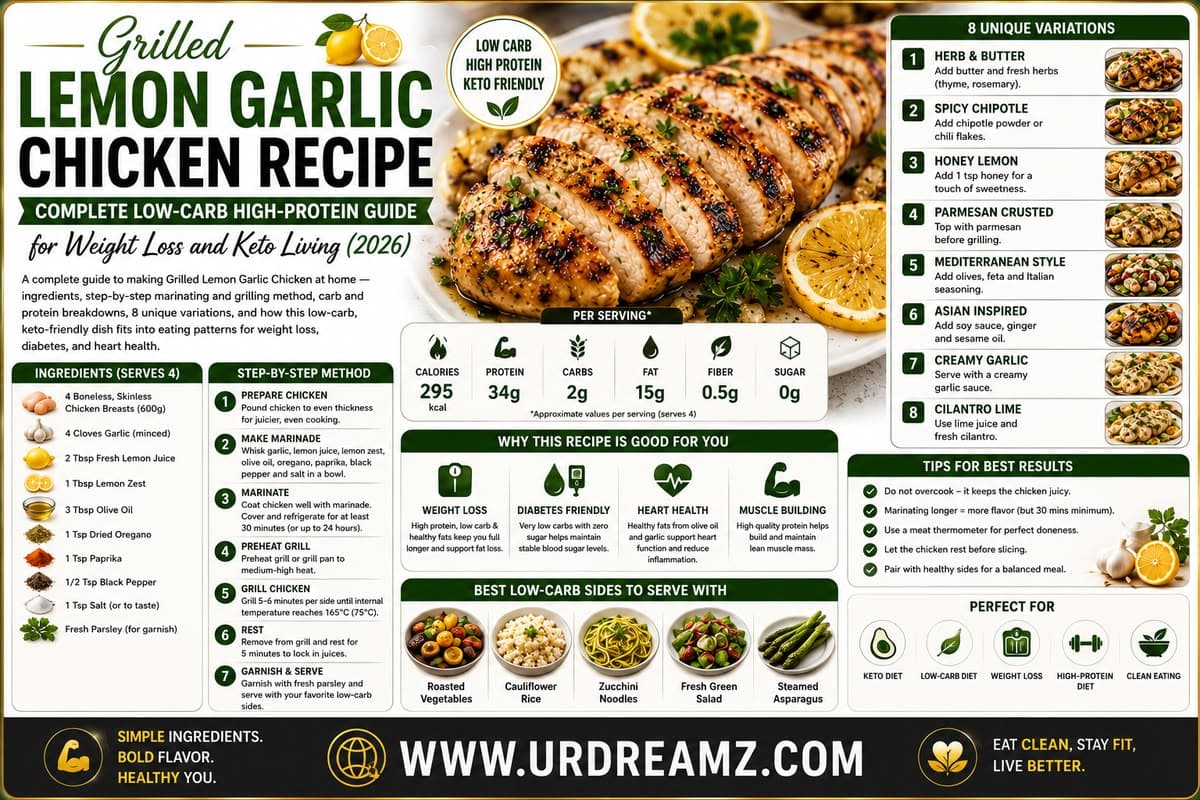
Everything you need to know about making Grilled Lemon Garlic Chicken at home — ingredients, step-by-step marinating and grilling method, carb and protein breakdowns, 8 variations, and how this low-carb, keto-friendly dish fits into eating patterns for weight loss, diabetes, and heart health.
Introduction: The Low-Carb Dinner That Never Gets Boring
Grilled Lemon Garlic Chicken solves one of the most common frustrations with low-carb eating: the sense that "healthy" has to mean bland. Built from just chicken, lemon, garlic, olive oil, and a handful of herbs, this dish delivers bright, punchy flavor without needing a single gram of sugar, breading, or heavy sauce to get there. It's naturally low in carbohydrates, high in protein, and simple enough to make on a weeknight, which is exactly why it shows up so consistently across keto, low-carb, and general weight-loss meal plans.
This guide covers the complete process — how to build a marinade that actually penetrates the chicken, the exact grilling steps for consistently juicy results, and a full breakdown of carbohydrates, protein, and keto macros. We also walk through eight distinct variations of the recipe, from a classic version to a spicy take and a keto butter-based approach, along with how this dish fits into eating patterns for weight loss, diabetes, and heart health.
Whether you're building a strict keto dinner, a general low-carb weeknight meal, or simply looking for a chicken recipe that doesn't rely on heavy sauce for flavor, the same core marinade and grilling method covered here applies across every variation in this guide.
What Is Grilled Lemon Garlic Chicken?
Grilled Lemon Garlic Chicken is exactly what the name suggests: chicken breast or thigh marinated in a mixture of lemon juice, garlic, olive oil, and herbs, then grilled until charred on the outside and juicy on the inside. The lemon juice acts as both a flavor component and a mild tenderizer, while the garlic and herbs build layers of savory depth that don't rely on added sugar or heavy sauces.
Because the marinade is built entirely from whole, low-carb ingredients, this dish fits naturally into low-carb, keto, paleo, and Mediterranean-style eating patterns without requiring any modification to the base recipe at all.
This is also one of those recipes that improves with familiarity — once you've made it a few times, you'll likely start adjusting the ratio of lemon to garlic to herbs by instinct, without needing to measure anything precisely at all.
Why This Recipe Is a Low-Carb Favorite
This dish checks every box that matters for low-carb cooking: it contains essentially no carbohydrates on its own, it's high in protein, it's quick to prepare, and it pairs effortlessly with almost any low-carb vegetable side. Because the marinade relies on citrus and aromatics rather than sugar-based glazes, there's no need to strip anything out or make substitutions to keep it keto-friendly — the base recipe already works.
It's also a dish that rewards very little effort with a lot of flavor payoff, which is part of why it appears so often across keto meal plans, bodybuilding meal prep guides, and general weeknight dinner rotations alike.
Because it's built from just a handful of pantry-friendly ingredients, it's also one of the easier low-carb recipes to keep in regular rotation without needing to plan an elaborate grocery trip every time you want to make it.
Who This Recipe Is Best For
Grilled Lemon Garlic Chicken suits anyone following a low-carb or ketogenic eating plan, people focused on weight loss or high-protein eating, athletes needing a reliable lean protein source, and families looking for a fast dinner that doesn't require heavy sauces or sides. Its simplicity also makes it a strong starting recipe for anyone new to cooking chicken at home.
This guide includes general nutrition information related to common health considerations such as diabetes, heart health, and weight management. This information is educational and not a substitute for personalized medical advice — always check with your doctor or a registered dietitian before making significant dietary changes.
If you've never cooked chicken from scratch before, this is also a reasonable recipe to build confidence with, since the marinating and grilling technique here transfers directly to countless other chicken dishes once you've practiced it a few times.
Kitchen Equipment You Will Need
You'll need a mixing bowl for the marinade, a resealable bag or shallow dish for marinating the chicken, a grill pan or outdoor grill, tongs for flipping, and a meat thermometer to confirm doneness. None of this equipment is specialized, making the recipe accessible in almost any kitchen.
Main Ingredients Overview
The base recipe needs just a handful of ingredients: chicken breast or thighs, fresh lemon juice and zest, garlic, olive oil, and a simple blend of herbs like oregano, thyme, or parsley. Everything else — chili flakes, butter, specific herb blends — is where the eight variations covered later in this guide diverge.
Because the ingredient list is short and built from pantry and produce staples, this is one of the easier low-carb recipes to make on short notice, without needing to plan a special grocery trip beforehand.
Table: Full Ingredient List and Substitutes
| Ingredient | Purpose | Possible Substitute |
|---|---|---|
| Chicken breast (4 pieces) | Main protein | Boneless chicken thighs |
| Lemon juice and zest (2 lemons) | Brightness, mild tenderizing | Lime juice |
| Garlic (4 cloves, minced) | Core aromatic | Garlic powder |
| Olive oil (3 tbsp) | Marinade base, moisture | Avocado oil |
| Dried oregano | Herbal depth | Italian seasoning |
| Fresh parsley | Garnish, freshness | Fresh dill or basil |
| Black pepper and salt | Seasoning | To taste |
| Paprika (optional) | Color, mild warmth | Smoked paprika |
The Role of Lemon in This Recipe
Lemon juice contributes bright acidity that balances the richness of the olive oil and mellows the sharpness of raw garlic, while its mild acidity also helps slightly tenderize the surface of the chicken during marinating. Lemon zest adds a more concentrated citrus aroma without the additional liquid, which is why many versions of this recipe call for both juice and zest together.
Because lemon is such a low-calorie, essentially carb-free way to add bold flavor, it's one of the most valuable tools in low-carb cooking generally — a habit worth carrying over into other recipes beyond just this one.
The Role of Garlic in This Recipe
Garlic is the second defining flavor in this dish, providing a savory, aromatic backbone that pairs naturally with lemon's brightness. Using fresh minced garlic rather than garlic powder produces a sharper, more pronounced flavor, though garlic powder works as a reasonable substitute when fresh garlic isn't available.
Crushing the garlic rather than mincing it finely, and letting it sit for a few minutes before mixing into the marinade, allows more of its natural aromatic compounds to develop, resulting in a slightly more pronounced garlic flavor throughout the finished dish.
Best Herbs for Lemon Garlic Chicken
Oregano, thyme, rosemary, and parsley all pair naturally with the lemon-garlic flavor base, each bringing a slightly different character — oregano and thyme lean savory and slightly earthy, rosemary adds a piney depth, and parsley contributes fresh, green brightness when added at the end.
Table: Herb and Marinade Options
| Herb | Flavor Note | Best Used |
|---|---|---|
| Oregano | Savory, slightly earthy | In the marinade |
| Thyme | Herbal, subtle | In the marinade |
| Rosemary | Piney, robust | In the marinade, used sparingly |
| Parsley | Fresh, bright | As a finishing garnish |
| Dill | Light, slightly tangy | As a finishing garnish |
Table: Recipe At a Glance
| Detail | Information |
|---|---|
| Prep Time | 10 minutes (plus marinating) |
| Marinate Time | 30 minutes to 4 hours |
| Cook Time | 12–14 minutes |
| Total Time | ~45 minutes to 4.5 hours |
| Servings | 4 |
| Skill Level | Beginner-friendly |
| Calories (approx.) | 250–300 kcal per serving |
Step 1: Prepare the Marinade
Whisk together olive oil, lemon juice, lemon zest, minced garlic, oregano, salt, and pepper in a bowl until fully combined. This simple marinade comes together in under five minutes and forms the base flavor for the entire dish.
Tasting the marinade before adding the chicken is a useful habit, since it's much easier to adjust the balance of lemon, garlic, and salt at this stage than after the chicken has already absorbed it.
Step 2: Marinate the Chicken
Place the chicken in a resealable bag or shallow dish, pour the marinade over it, and make sure every piece is well coated. Refrigerate for at least thirty minutes, or up to four hours for a more pronounced flavor, turning the bag or chicken once partway through if possible.
Using a resealable bag rather than a dish makes it easier to ensure even coverage, since you can simply massage the bag from the outside to redistribute the marinade around every piece of chicken.
Step 3: Preheat the Grill
Preheat a grill or grill pan to medium-high heat before adding the chicken. A properly preheated surface is essential for a good sear and helps prevent the chicken from sticking once it's placed down.
Step 4: Grill the Chicken
Remove the chicken from the marinade, letting excess liquid drip off, then grill for five to seven minutes per side, depending on thickness, until it develops a light char and is cooked through. Avoid pressing down on the chicken while it cooks, since this pushes out moisture that should stay in the meat.
Letting excess marinade drip off before grilling is an important step, since too much liquid dripping onto the grill can cause flare-ups and uneven cooking, particularly on an open flame grill.
Step 5: Check Doneness
Use a meat thermometer inserted into the thickest part of the chicken to confirm it has reached a safe internal temperature. Visual cues like clear juices and no remaining pink can help, but a thermometer remains the most reliable way to avoid both undercooking and overcooking.
Step 6: Rest and Serve
Let the chicken rest for three to five minutes before slicing or serving whole. This resting period allows the juices to redistribute through the meat, resulting in a noticeably more moist final bite. Garnish with fresh parsley and a few extra lemon wedges before serving.
How Long Should You Marinate Chicken?
Thirty minutes is enough time to add meaningful flavor, while up to four hours allows for a more deeply infused result. Marinating much longer than that, particularly with a citrus-heavy marinade, can begin to break down the chicken's texture through the acid, resulting in a slightly mushier bite once cooked.
If you're short on time, even a fifteen-minute marinade at room temperature (rather than refrigerated) can still add noticeable flavor, since the chicken absorbs marinade slightly faster when it isn't ice cold.
What Temperature Should Grilled Chicken Reach?
Chicken breast and thighs should reach an internal temperature of 165°F (74°C) at the thickest part to be considered safely cooked. Using a meat thermometer removes any guesswork and is the most reliable way to confirm doneness without cutting into the chicken and losing moisture.
Can You Grill Frozen Chicken?
It's best to fully thaw chicken before marinating and grilling, since frozen or partially frozen chicken won't absorb the marinade evenly and tends to cook unevenly on the grill. Thawing overnight in the refrigerator or using a cold-water thaw for about thirty minutes both work well before starting this recipe.
Oven-Baked Alternative
If you don't have access to a grill, this recipe bakes just as well in the oven. Bake the marinated chicken at 400°F (200°C) for twenty to twenty-five minutes, or until it reaches a safe internal temperature, optionally finishing under the broiler for the last two to three minutes for extra color.
Air Fryer Alternative
The air fryer is another excellent option for this recipe, using very little added oil while still producing a well-browned exterior. Cook marinated chicken breasts at 380°F (193°C) for twelve to fifteen minutes, flipping halfway through, until fully cooked.
How to Keep Grilled Chicken Juicy
Pounding chicken breast to an even thickness before marinating, not skipping the resting period after cooking, and using a thermometer rather than guessing by eye are the three most reliable habits for consistently juicy grilled chicken. Avoiding overcooking is by far the single biggest factor in whether the finished chicken turns out moist or dry.
A quick brine — even just fifteen minutes in lightly salted water before marinating — can also help chicken breast specifically retain more moisture during grilling, which is a useful trick for anyone who finds their chicken breast tends to dry out more than they'd like.
Nutrition Facts Overview
A serving of Grilled Lemon Garlic Chicken made with a lean chicken breast and a modest amount of olive oil delivers a strong dose of protein with very few carbohydrates and a moderate amount of fat, making it one of the more nutritionally efficient dinners you can make at home.
This nutritional profile is part of why the dish is so frequently recommended across both bodybuilding and keto communities simultaneously — it satisfies the high-protein priority of one group and the low-carbohydrate priority of the other without any conflict between the two.
Table: Nutrition Facts Per Serving (Approximate)
| Nutrient | Amount |
|---|---|
| Calories | ~270 kcal |
| Protein | ~33 g |
| Carbohydrates | ~2 g |
| Fat | ~14 g |
| Fiber | ~0.3 g |
| Sugar | ~0.5 g |
Note: Values are estimates and will vary based on chicken cut, portion size, and amount of oil used.
Is Grilled Chicken Low-Carb?
Yes. Chicken itself contains no carbohydrates, and the marinade in this recipe — lemon juice, garlic, olive oil, and herbs — contributes only a negligible amount of carbohydrate per serving. This makes Grilled Lemon Garlic Chicken one of the more reliably low-carb proteins you can build a meal around, as long as it isn't breaded or served with a high-carb sauce.
The main way this dish could shift away from being low-carb is through the sides served alongside it, which is exactly why we've dedicated an entire section of this guide specifically to low-carb side dish pairings.
Table: Carbohydrate Count of Common Ingredients (Per Typical Serving)
| Ingredient | Approx. Carbohydrates |
|---|---|
| Chicken breast (6 oz) | 0 g |
| 1 tbsp lemon juice | ~1 g |
| 2 cloves garlic | ~2 g |
| 1 tbsp olive oil | 0 g |
| 1 tsp dried oregano | ~1 g |
| 1 cup cauliflower rice (side) | ~5 g |
Protein Content Explained
A standard 6-ounce serving of grilled chicken breast provides roughly 33 to 40 grams of protein, depending on the exact cut and cooking method. This makes the dish one of the most efficient ways to hit a high daily protein target without needing a large overall portion size.
For anyone specifically tracking protein intake for muscle building or general health goals, this dish is one of the easiest to scale — simply increasing the chicken portion proportionally increases the total protein delivered, without meaningfully changing the preparation process.
Table: Protein Content Breakdown (Per 6 oz Cooked)
| Chicken Cut | Approx. Protein |
|---|---|
| Chicken breast (skinless) | ~40 g |
| Chicken thigh (skinless, boneless) | ~35 g |
| Chicken breast (bone-in) | ~36 g |
| Chicken thigh (bone-in, skin-on) | ~30 g |
Is Grilled Lemon Garlic Chicken Keto-Friendly?
Yes. With well under 5 grams of carbohydrates per serving and a solid amount of both protein and fat, this dish fits comfortably within a ketogenic macro target, especially when paired with a low-carb side like cauliflower rice or roasted non-starchy vegetables instead of grains or potatoes.
For anyone following stricter ketogenic macros that call for a higher fat percentage, the Keto Butter variation covered later in this guide is specifically built to shift the fat ratio higher while keeping carbohydrates just as low as the classic version.
Table: Keto Macros Per Serving (Approximate, Classic Recipe)
| Macro | Amount | % of Calories (approx.) |
|---|---|---|
| Protein | ~33 g | ~49% |
| Fat | ~14 g | ~47% |
| Net Carbs | ~2 g | ~4% |
Grilled Lemon Garlic Chicken for Different Health Goals: An Overview
Because this dish is built from a short list of whole, naturally low-carb ingredients, it adapts easily to a wide range of health goals with only minor adjustments. Below, we walk through how it fits weight loss, diabetes management, heart health, and muscle-building goals specifically. As with all health-related content in this guide, this is general, educational information — always consult your doctor or a registered dietitian for advice specific to your own situation.
For Weight Loss
Why it's useful: This dish is naturally low in calories and carbohydrates while being extremely high in protein, a combination that supports strong satiety per calorie consumed. Best build: Use skinless chicken breast, measure the olive oil in the marinade rather than pouring freely, and pair with a large portion of non-starchy vegetables. What to watch: Butter-based variations and creamy sauces added later in a meal can quickly increase the calorie count, so these are best treated as occasional additions rather than everyday defaults.
For Diabetes and Blood Sugar
Why it's useful: With virtually no carbohydrates in the chicken and marinade itself, this dish has minimal direct impact on blood sugar, making it a reliable base for a diabetes-conscious dinner. Best build: Pair with non-starchy, low-carb vegetables like broccoli, zucchini, or a green salad rather than rice or potatoes. What to watch: The overall meal's carbohydrate content depends heavily on the side dishes chosen, so the chicken itself should be seen as a strong low-carb anchor rather than the only factor to consider.
For Heart Health
Why it's useful: Lean chicken breast combined with olive oil, garlic, and lemon aligns closely with Mediterranean-style eating patterns commonly associated with heart health, offering a favorable ratio of unsaturated to saturated fat when made with breast meat and olive oil. Best build: Choose skinless chicken breast, use olive oil rather than butter as the primary fat, and season with herbs and citrus rather than salt-heavy blends. What to watch: The butter-based keto variation, while still low-carb, is higher in saturated fat and is better treated as an occasional variation rather than an everyday choice for anyone specifically focused on heart health.
For Muscle Building
Why it's useful: The high protein density of this dish makes it a practical, easy-to-scale option for anyone with elevated protein needs due to strength training. Best build: Increase the chicken portion, and pair with a modest amount of complex carbohydrates like sweet potato or quinoa around training times to support recovery. What to watch: Athletes with higher total calorie needs may need to add healthy fats or additional carbohydrate sources elsewhere in the day, since the base recipe alone is relatively light in calories.
Table: Health Condition Suitability Summary
| Health Goal | General Suitability | Key Adjustment |
|---|---|---|
| Weight Loss | Generally suitable | Skinless breast, measured oil |
| Diabetes / Blood Sugar | Generally suitable | Pair with non-starchy vegetables |
| Heart Health | Generally suitable | Olive oil over butter, skinless breast |
| Muscle Building | Generally suitable | Larger portion, add carbs around training |
| Keto / Low-Carb | Highly suitable | Naturally fits without adjustment |
Best Low-Carb Side Dishes
Cauliflower rice, zucchini noodles, roasted broccoli, asparagus, a simple green salad, and sautéed spinach all pair naturally with this dish while keeping the overall meal firmly within low-carb territory.
Table: Low-Carb Side Dish Pairing Guide
| Side Dish | Approx. Carbs (per cup) |
|---|---|
| Cauliflower rice | ~5 g |
| Zucchini noodles | ~4 g |
| Roasted broccoli | ~6 g |
| Sautéed spinach | ~3 g |
| Green salad (no dressing) | ~2–4 g |
| Roasted asparagus | ~5 g |
Cauliflower Rice as a Side
Cauliflower rice is one of the most popular low-carb rice substitutes, made by pulsing raw cauliflower into rice-sized pieces and sautéing briefly in olive oil or butter. It absorbs the flavors of whatever it's cooked with, making it a natural pairing for the lemon-garlic flavor profile of this chicken.
Zucchini Noodles as a Side
Zucchini noodles, often called "zoodles," are made by spiralizing fresh zucchini into thin, noodle-like strands, offering a low-carb alternative to pasta. A quick sauté in olive oil and garlic turns them into a simple, complementary side for this chicken in just a few minutes.
8 Ways to Make Grilled Lemon Garlic Chicken
Once you're comfortable with the base technique, it becomes easy to shift the flavor profile in different directions. Below are eight variations, each suited to a slightly different taste, cooking method, or goal.
1. Classic Lemon Garlic Chicken
Ingredients: Chicken breast, lemon juice and zest, garlic, olive oil, oregano, salt, pepper. Method: Marinate for thirty minutes to an hour, then grill over medium-high heat until cooked through. This is the most versatile, all-purpose version and the best starting point for anyone new to the recipe.
2. Mediterranean Style
Ingredients: Chicken breast, lemon, garlic, olive oil, oregano, cherry tomatoes, Kalamata olives, feta cheese. Method: Grill the marinated chicken as usual, then top with a quick mix of tomatoes, olives, and crumbled feta for a Mediterranean-inspired finish that stays low in carbohydrates.
3. Spicy Lemon Garlic Chicken
Ingredients: Chicken breast, lemon, garlic, olive oil, chili flakes, smoked paprika, cayenne pepper. Method: Add chili flakes and a pinch of cayenne to the base marinade for a version with noticeable heat, without adding any carbohydrates from sugar-based hot sauces.
4. Keto Butter Lemon Garlic Chicken
Ingredients: Chicken breast or thighs, lemon, garlic, butter instead of olive oil, thyme. Method: Baste the chicken with melted butter and garlic during the final minutes of grilling for a richer, more indulgent version that increases the fat content to better fit a higher-fat ketogenic macro target.
5. Herb-Crusted Lemon Garlic Chicken
Ingredients: Chicken breast, lemon, garlic, olive oil, a generous mix of fresh chopped herbs (parsley, thyme, rosemary) pressed onto the surface before grilling. Method: After marinating, press the fresh herb mixture directly onto the chicken before it goes on the grill, creating a fragrant, herb-forward crust.
6. Lemon Garlic Chicken Thighs
Ingredients: Boneless, skinless chicken thighs, lemon, garlic, olive oil, oregano. Method: Follow the same marinating and grilling process as the classic version; thighs tend to stay juicier than breast meat and are more forgiving if slightly overcooked, making this a good option for beginners.
7. Grilled Lemon Garlic Chicken Skewers
Ingredients: Cubed chicken breast, lemon, garlic, olive oil, bell peppers, red onion. Method: Marinate cubed chicken as usual, then thread onto skewers alternating with bell pepper and onion pieces before grilling for eight to ten minutes, turning occasionally. This version is especially popular for gatherings and meal prep portioning.
8. Low-Carb Lemon Garlic Chicken Bowl
Ingredients: Sliced grilled lemon garlic chicken, cauliflower rice, roasted broccoli, avocado, a drizzle of olive oil. Method: Assemble the grilled chicken over a base of cauliflower rice with roasted vegetables and avocado for a complete, low-carb, one-bowl meal that's easy to meal prep in bulk.
Table: Comparing All 8 Variations
| Variation | Key Feature | Best Suited For |
|---|---|---|
| Classic | Balanced, versatile | Everyday dinner |
| Mediterranean | Feta, olives, tomatoes | Mediterranean-style eating |
| Spicy | Chili flakes, cayenne | Spice lovers |
| Keto Butter | Higher fat content | Strict ketogenic macros |
| Herb-Crusted | Fresh herb crust | Fragrant, herb-forward flavor |
| Thighs | Extra juicy, forgiving | Beginners |
| Skewers | Portioned, grill-friendly | Gatherings, meal prep |
| Low-Carb Bowl | Complete one-bowl meal | Meal prep, balanced macros |
Meal Prep Guide
Grilled Lemon Garlic Chicken is an excellent meal-prep option, since it reheats reasonably well and pairs with a wide variety of low-carb sides that can be rotated throughout the week without repeating the same meal twice.
Storage Tips
Store cooked chicken in an airtight container in the refrigerator for up to four days. Slicing the chicken before storing makes it faster to portion into meal-prep containers and quicker to reheat evenly.
Freezing Instructions
Grilled chicken freezes well for up to two to three months. Cool completely before transferring to a freezer-safe, airtight container or bag, and thaw in the refrigerator overnight before reheating.
Reheating Tips
Reheat gently in a covered skillet over low-medium heat with a small splash of water or broth to help restore moisture, or use short bursts in the microwave to avoid drying the chicken out.
Table: Storage and Shelf Life
| Storage Method | Shelf Life |
|---|---|
| Refrigerator (airtight container) | 3–4 days |
| Freezer (airtight, freezer-safe) | 2–3 months |
| Room temperature | Not recommended beyond 2 hours |
Common Mistakes to Avoid
Marinating for too long and breaking down the chicken's texture, overcooking until the chicken turns dry, skipping the resting period after grilling, and not preheating the grill fully are the most common mistakes home cooks run into with this recipe.
Table: Mistakes and Quick Fixes
| Mistake | Quick Fix |
|---|---|
| Mushy texture from over-marinating | Limit citrus marinades to 4 hours or less |
| Dry, overcooked chicken | Use a thermometer, pull at 165°F |
| Chicken sticking to the grill | Preheat fully, oil the grates |
| Bland flavor | Season generously, don't skip the marinade |
| Uneven cooking | Pound chicken to an even thickness |
Who Should Limit or Avoid This Dish
While this dish is broadly suitable for most people, a few specific situations call for caution or modification. As with all health-related content in this guide, this is general, educational information rather than personal medical advice.
Table: Conditions Requiring Caution
| Condition / Situation | Why It Requires Caution |
|---|---|
| Poultry allergy | Chicken should be avoided entirely; substitute a plant-based or fish protein instead |
| Citrus allergy or severe acid reflux | The lemon-based marinade may need to be reduced or replaced with a milder herb marinade |
| Very early ketogenic adaptation with kidney concerns | High-protein diets should be discussed with a doctor for anyone with existing kidney disease |
This table is general educational information, not a diagnosis or personalized medical recommendation.
Pro Tips for the Best Flavor
Zest the lemon before juicing it, since it's much easier to zest a whole lemon than a juiced one, use fresh garlic rather than jarred for a sharper flavor, and always finish with a fresh squeeze of lemon right before serving to brighten the dish one final time.
Family-Friendly Adaptations
For picky eaters, reduce the garlic slightly and skip the chili flakes, serving any spicy or bold toppings on the side instead. Cutting the chicken into smaller pieces before or after cooking also makes it more approachable for younger children.
Budget and Meal Planning Tips
Chicken breast or thighs, lemons, and garlic are all relatively inexpensive and widely available, making this one of the more budget-friendly low-carb dinners to keep in regular rotation. Buying chicken in bulk and freezing individual portions helps stretch the budget further over time.
How We Put This Guide Together
This guide combines tested marinating and grilling technique with practical, general nutrition information, written to answer the real questions people search for when looking into low-carb grilled chicken. Rather than repeating any single source, we brought together common preparation methods, macro data, and health-condition considerations into one comprehensive reference, explained in plain, straightforward language for cooks at any experience level.
Frequently Asked Questions
How do you make grilled lemon garlic chicken?
Marinate chicken in lemon juice, garlic, olive oil, and herbs for thirty minutes to a few hours, then grill over medium-high heat until fully cooked.
Is grilled lemon garlic chicken low-carb?
Yes, it contains close to zero carbohydrates, since chicken and the marinade ingredients are all naturally low-carb.
Is lemon garlic chicken keto-friendly?
Yes, with well under 5 grams of carbohydrates per serving and a solid protein and fat profile, it fits comfortably within most ketogenic meal plans.
How long should you marinate grilled chicken?
Thirty minutes to four hours is ideal; marinating much longer with a citrus-based marinade can affect the texture.
What temperature should grilled chicken reach?
165°F (74°C) at the thickest part is the safe internal temperature for fully cooked chicken.
Can I bake lemon garlic chicken instead of grilling?
Yes, bake at 400°F (200°C) for twenty to twenty-five minutes, optionally finishing under the broiler for extra color.
Is grilled chicken good for weight loss?
Yes, it's naturally low in calories and carbohydrates while being very high in protein, which supports satiety.
Can diabetics eat grilled chicken?
Generally yes, since the chicken and marinade contain minimal carbohydrates; overall meal carb content depends mainly on the side dishes chosen.
Can I meal prep grilled chicken?
Yes, it stores well in the refrigerator for three to four days and can also be frozen for two to three months.
What vegetables pair well with grilled chicken?
Cauliflower rice, zucchini noodles, roasted broccoli, asparagus, and a simple green salad all pair well while keeping the meal low-carb.
Is grilled chicken good after a workout?
Yes, its high protein content supports muscle recovery, and pairing it with a modest carbohydrate source helps replenish energy after training.
What is the best chicken cut for this recipe?
Chicken breast offers a leaner option, while boneless thighs tend to stay juicier and are more forgiving for beginners.
Table: Quick-Answer FAQ Summary
| Question | Short Answer |
|---|---|
| Low-carb? | Yes, close to 0 net carbs |
| Keto-friendly? | Yes |
| Good for weight loss? | Yes |
| Good for diabetics? | Generally yes |
| Freezer-friendly? | Yes, 2–3 months |
| Good for meal prep? | Yes |
Conclusion
Grilled Lemon Garlic Chicken earns its place as a low-carb staple because it proves that cutting carbohydrates doesn't mean cutting flavor. Whether you stick with the classic version, lean into a Mediterranean-style topping, or build a richer keto butter variation, the underlying technique of marinating, grilling, and resting stays simple enough to repeat weekly without ever feeling repetitive. Pair it with cauliflower rice, zucchini noodles, or a simple salad, and you have a complete, low-carb meal that works for weight loss, keto eating, or simply a satisfying family dinner.
As with any general dietary guidance, the health-condition information in this guide is meant to support informed everyday choices rather than replace personalized medical or nutritional advice. If you are managing diabetes, heart disease, kidney concerns, or any other health condition, working with your doctor or a registered dietitian will give you guidance tailored specifically to your own needs.