Face Masks Explained: Types, Benefits, Ingredients and Complete Guide for Healthy Glowing Skin
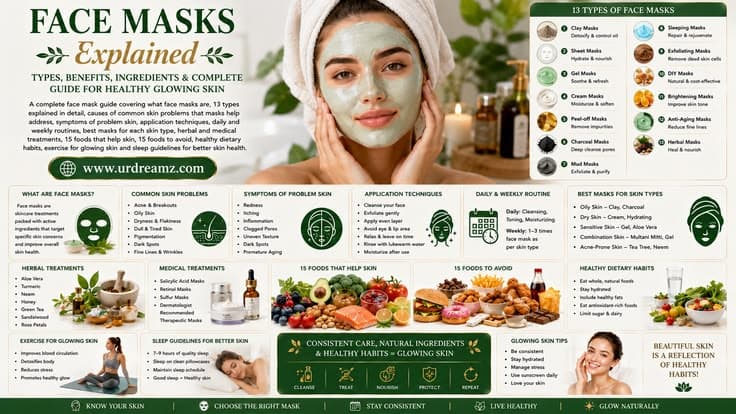
Face masks are one of the oldest forms of skin care used across cultures for centuries, and yet they remain genuinely useful in a modern skincare routine when the right formula is chosen for the right skin concern and used with the right technique. A face mask is not a daily step like a cleanser or moisturizer — it's a targeted treatment applied for a specific window of time to deliver a concentrated dose of benefit that a serum or moisturizer alone wouldn't achieve as quickly or intensely. This guide covers everything: what face masks actually are, the thirteen most significant types, which skin conditions they help, why problem skin develops in the first place, how to apply masks correctly, routine schedules, herbal and clinical approaches, foods that support the skin masks are treating, foods that work against skin health, dietary principles, exercise and sleep guidelines. This guide connects naturally with the face cleansing guide, skin exfoliation guide, facial serums guide, skin barrier guide, acne treatment guide, skin brightening guide and sunscreen guide.
1. What a Face Mask Actually Is
A face mask is a skincare product applied to the face in a layer, left on for a defined period typically ranging from ten minutes to overnight, and then either rinsed off, peeled away or absorbed completely depending on the formula. Unlike a cleanser that is immediately rinsed, or a serum and moisturizer that stay on the skin continuously, a mask creates a concentrated, extended-contact session between the skin and its active ingredients — allowing deeper penetration, stronger hydration draw, more thorough pore-clearing or more intense treatment than the same ingredients could deliver in a leave-on daily product.
The elevated contact time is the defining mechanism. Leaving a kaolin clay mask on for fifteen minutes allows it to adsorb excess oil from the pore surface far more completely than a clay-containing cleanser that is rinsed in thirty seconds. Wearing a hydrating sheet mask for twenty minutes allows hyaluronic acid to load the skin with water at a level that a serum applied and immediately covered with moisturizer doesn't quite match. This extended exposure is what justifies face masks as a distinct step in a skincare routine rather than a redundant repetition of serum or moisturizer benefits.
2. Why Skin Problems Develop: The Causes Face Masks Address
Understanding why skin problems appear in the first place makes it much easier to choose the appropriate mask type rather than selecting based on packaging alone. Most of the conditions that face masks help address share a small set of underlying drivers:
- Excess sebum production: Triggered by hormones, genetics, heat, humidity and certain dietary patterns. Excess oil creates the environment in which blackheads, congestion and acne develop.
- Dead skin cell accumulation: The natural shedding cycle slows with age, stress and dehydration, leaving a dull, rough surface layer that blocks pores and dulls skin's reflectivity.
- Bacterial overgrowth: Cutibacterium acnes bacteria naturally inhabit skin but multiply more aggressively inside oil-clogged pores, triggering the inflammation that turns a clogged pore into a red, painful breakout.
- Dehydration: Insufficient water in skin cells reduces plumpness, increases visible fine lines and dulls the skin's natural luminosity.
- Hormonal imbalance: Androgens increase sebaceous gland activity, particularly during puberty, menstrual cycles, pregnancy and stress, causing cyclical breakouts or persistent oiliness.
- Environmental damage: UV radiation, pollution, temperature extremes and low humidity each degrade the skin's structural proteins and disrupt its barrier integrity over time.
- Poor nutrition: Diets high in refined sugar, processed foods and low in essential fatty acids, antioxidants and zinc produce skin that lacks the cellular building blocks for healthy function and self-repair.
- Disrupted sleep: The skin's primary repair and collagen synthesis cycle runs overnight; consistent poor sleep interrupts this process and shows up as dullness, increased sensitivity and slower recovery from damage.
- Stress: Elevated cortisol increases oil production, drives inflammation and impairs barrier function simultaneously — creating conditions favorable for both acne and dullness.
- Allergies and sensitivities: Reactions to ingredients, environmental allergens or contact irritants cause the inflammation and redness that some calming masks address.
3. Symptoms That Signal Skin Needs a Face Mask Treatment
| Visible Sign | What It Suggests |
|---|---|
| Dull, flat complexion | Dead skin cell accumulation or dehydration; needs exfoliating or hydrating mask |
| Blackheads and visibly open pores | Oil and dead cell buildup inside follicles; clay or charcoal mask addresses this |
| Active pimples and inflammatory acne | Bacterial activity and clogged pores; antibacterial and clay masks help |
| Persistent shine and greasiness | Excess sebum production; clay or kaolin mask most effective |
| Tight, dry or flaky skin | Insufficient hydration or barrier disruption; cream or sheet hydrating mask most appropriate |
| Rough, uneven texture | Dead cell buildup and reduced cell turnover; gentle exfoliating mask or enzyme mask |
| Redness and irritation | Inflammation from barrier damage or sensitivity; calming oatmeal or aloe mask |
| Dark spots and uneven tone | Pigmentation from sun, acne or inflammation; brightening mask with vitamin C or kojic acid |
| Fine lines more visible than usual | Dehydration making existing lines more pronounced; intensive hydrating mask |
| Congested T-zone with dry cheeks | Combination skin; multi-masking with different formulas for different zones |
4. The 13 Main Types of Face Masks Explained
Each mask type works through a different mechanism and is suited to different skin needs. Knowing the difference makes choosing the right formula practical rather than guesswork.
5. Type 1: Clay Face Mask
Clay masks are the most widely used category for oily and acne-prone skin, and for good reason — clay is among the most effective natural materials for adsorbing (binding to and drawing out) excess oil and impurities from the pore surface. The two most commonly used clays are kaolin clay, which is the gentler option with a finer particle size better suited to combination or sensitive-oily skin, and bentonite clay, which is more strongly oil-absorbing and better suited to genuinely very oily skin. Multani mitti (fuller's earth), widely used across South Asia, operates on the same adsorption principle and is effective for oil control and skin cooling.
Clay masks should be left on until they begin to dry and tighten but should be removed before they crack completely dry, since the stage of over-drying pulls moisture from the skin alongside oil. Used one to two times weekly, clay masks prevent the oil accumulation that leads to blackheads and breakouts without stripping the skin's barrier when removed at the right stage.
6. Type 2: Charcoal Face Mask
Activated charcoal is charcoal that has been processed at high temperatures to increase its surface area enormously, creating a highly porous structure that attracts and binds to impurities, excess oil, bacteria and surface toxins. In a face mask context, this makes charcoal effective at drawing out pore congestion and surface debris. Charcoal masks are often combined with clay for a dual-action cleansing and drawing effect. They're generally appropriate for oily, congested and acne-prone skin. The dramatic deep-cleaning reputation of charcoal is somewhat exaggerated in marketing — charcoal is an excellent surface-adsorbing ingredient but doesn't "detoxify" the skin in any meaningful medical sense.
7. Type 3: Hydrating Sheet Mask
Sheet masks are pre-cut fabric, cotton, gel or bio-cellulose sheets saturated in a concentrated serum of active ingredients. The sheet creates an occlusive seal over the face that prevents the serum from evaporating during the application window, forcing it to penetrate more deeply into the skin than the same serum applied with fingertips would. The result is a pronounced hydration boost, immediate plumping and often a visible improvement in radiance that lasts hours after the mask is removed. Sheet masks are appropriate for virtually every skin type, with the specific formula choice varying by concern — hyaluronic acid sheets for hydration, niacinamide sheets for oily or uneven skin, vitamin C sheets for brightening. They are a staple of Korean skincare routines and tend to be used once or twice a week rather than daily.
8. Type 4: Hydrating Cream or Mask
Cream masks are thick, rich formulas that provide intense moisturization to dry, dehydrated or mature skin. They typically contain emollients like shea butter, oils and ceramides alongside humectants, and are left on for fifteen to twenty minutes to allow deep moisture penetration before being rinsed off — or in some formulations used as sleeping masks that are left on overnight. They're the most appropriate mask type for skin that is chronically dry, tight or flaky, and they also provide meaningful comfort for any skin type during winter or in very dry climates where the air consistently pulls moisture from the skin surface.
9. Type 5: Peel-Off Mask
Peel-off masks are applied as a liquid or gel that dries to a flexible film which is then peeled from the face in one piece. The peeling action removes dead skin cells and some surface debris that adhere to the film during drying. They provide a satisfying physical result and do offer some mild exfoliation. However, peel-off masks — particularly charcoal peel-off types — can be too aggressively adhesive for sensitive skin and should be avoided around the eyes and on very reactive or compromised skin. They work better as an occasional exfoliating treat for normal to oily skin rather than as a regular skincare step.
10. Type 6: Overnight Sleeping Mask
Overnight or sleeping masks are leave-on formulas designed to be the final step of an evening routine, providing extended-contact intensive treatment while the skin undergoes its natural overnight repair cycle. They typically create a light occlusive or semi-occlusive layer that prevents the moisture loss that occurs during sleep and allows active ingredients to work for hours rather than the fifteen to twenty minutes of a typical rinse-off mask. Sleeping masks are used once or twice a week rather than nightly for most people, and they're particularly beneficial for dry, dehydrated or aging skin that needs more intensive overnight nourishment than a standard moisturizer provides.
11. Type 7: Gel Face Mask
Gel masks have a cooling, lightweight consistency that provides soothing and hydration without the heaviness of cream formulas. They often contain ingredients like aloe vera, centella asiatica, cucumber extract and hyaluronic acid. The cooling effect of a chilled gel mask, particularly one stored in the refrigerator, is noticeably soothing for inflamed, sunburned or reactive skin. Gel masks tend to suit oily, combination and sensitive skin better than very dry skin, which needs the richer emollient content of cream formulas.
12. Type 8: Exfoliating Enzyme Mask
Enzyme masks use proteolytic enzymes — most commonly derived from papaya (papain), pineapple (bromelain) or pumpkin — that break down the keratin proteins holding dead skin cells to the surface, dissolving them without the mechanical friction of a physical scrub or the deeper penetration of AHA or BHA acids. This makes enzyme masks one of the gentlest ways to encourage cell turnover and address dullness, appropriate for most skin types including those too sensitive for conventional chemical exfoliants. Enzyme masks improve luminosity and surface smoothness and are typically used once a week.
13. Type 9: AHA or BHA Chemical Exfoliating Mask
Chemical exfoliating masks use alpha hydroxy acids (glycolic, lactic or mandelic acid) or beta hydroxy acids (salicylic acid) at concentrations higher than typical daily products, left on for a defined time to produce more intensive exfoliation than a serum or toner would. AHA masks improve surface texture, brightness and mild pigmentation; BHA masks penetrate into oily pores to dissolve congestion from inside. They increase photosensitivity and should always be followed by sunscreen the following morning. Starting with a short contact time and increasing gradually reduces the risk of irritation when first introducing this type of mask.
14. Type 10: Brightening Face Mask
Brightening masks are formulated to address uneven skin tone, dark spots, post-acne marks and a generally dull complexion. They typically contain some combination of vitamin C (ascorbic acid or a stable derivative), niacinamide, alpha arbutin, kojic acid, licorice extract or tranexamic acid — all of which work through various mechanisms to inhibit or interrupt melanin production. Regular use of a brightening mask once or twice a week, consistently paired with daily sunscreen, produces visible fading of surface-level pigmentation over weeks to months. The skin brightening approach is covered more comprehensively in the skin brightening guide.
15. Type 11: Anti-Aging Face Mask
Anti-aging masks typically focus on two overlapping concerns: hydration, which makes fine lines less visible, and structural support for the skin's collagen and elastin. Common ingredients include peptides that signal collagen production, retinol at lower concentrations than a daily serum, hyaluronic acid for plumping, and antioxidants like vitamin C that protect existing collagen from free radical damage. Because mask application time is limited, the collagen-building effects of anti-aging masks are more gradual and less pronounced than daily serums with the same ingredients — but as a weekly intensive treatment alongside a strong daily routine, they add a meaningful supplementary layer of care. Full anti-aging skincare strategy is addressed in the anti-aging guide.
16. Type 12: Multi-Masking (Zone-Based Application)
Multi-masking is the practice of applying different masks simultaneously to different areas of the face based on the specific needs of each zone. This approach is particularly relevant for combination skin, where the T-zone (forehead, nose and chin) tends to be oilier and more congested while the cheeks are often drier or more sensitive. A classic multi-masking approach might apply a clay or charcoal mask to the nose and T-zone while applying a hydrating sheet mask serum or cream mask to the cheeks and outer face simultaneously. The result is a more customized treatment than any single formula could provide for mixed skin types.
17. Type 13: Korean Glass Skin Masks
Korean beauty routines have popularized a category of masks focused specifically on achieving the "glass skin" appearance — skin so well-hydrated, evenly toned and smooth that it appears luminous and almost translucent. These masks are typically intensive hydrating bio-cellulose or silicone sheet masks with multiple layers of humectants, skin-brightening ingredients and skin-barrier support, used as a weekly treatment alongside a comprehensive multi-step routine. Bio-cellulose sheet masks, made from a fermentation-derived material that conforms closely to facial contours, are particularly effective in this category because the tight fit maximizes ingredient penetration and minimizes evaporation during the wearing period.
18. All 13 Mask Types: Quick Reference
| Mask Type | Key Ingredient | Best For | Frequency |
|---|---|---|---|
| Clay mask | Kaolin or bentonite clay | Oily skin, blackheads, congestion | 1-2 times/week |
| Charcoal mask | Activated charcoal | Deep pore cleansing, oil absorption | 1-2 times/week |
| Sheet mask | Hyaluronic acid, niacinamide, vitamin C | Hydration, brightening, all types | 2-3 times/week |
| Cream/hydrating mask | Ceramides, shea butter, glycerin | Dry, dehydrated, mature skin | 1-2 times/week |
| Peel-off mask | Varied; often charcoal or clay | Mild exfoliation, normal to oily skin | Once a week |
| Sleeping/overnight mask | Occlusive + repair actives | Intensive overnight recovery | 1-2 times/week |
| Gel mask | Aloe vera, centella, hyaluronic acid | Soothing, cooling, oily/combo skin | 2-3 times/week |
| Enzyme mask | Papain, bromelain, pumpkin enzyme | Gentle exfoliation, sensitive types | Once a week |
| AHA/BHA mask | Glycolic, lactic or salicylic acid | Texture, congestion, pigmentation | Once a week |
| Brightening mask | Vitamin C, niacinamide, alpha arbutin | Dark spots, dullness, uneven tone | 1-2 times/week |
| Anti-aging mask | Peptides, retinol, hyaluronic acid | Fine lines, loss of firmness | 1-2 times/week |
| Multi-masking | Multiple formulas simultaneously | Combination skin, mixed concerns | Once a week |
| Glass skin/bio-cellulose | Intensive humectants + brighteners | Maximum hydration, luminosity | 1-2 times/week |
19. Choosing the Right Mask for Your Skin Type
| Skin Type | Best Mask Choices | Avoid |
|---|---|---|
| Oily skin | Clay, charcoal, AHA/BHA, gel masks | Heavy cream masks; rich oil-based formulas |
| Dry skin | Cream hydrating masks, sleeping masks, sheet masks | Clay masks used too often; peel-off masks |
| Combination skin | Multi-masking; gel mask on cheeks, clay on T-zone | Single formula applied uniformly across all zones |
| Sensitive skin | Oatmeal gel masks, aloe vera masks, enzyme masks | AHA/BHA masks; peel-off masks; fragrance-heavy formulas |
| Acne-prone skin | Clay, salicylic acid, tea tree, niacinamide masks | Heavy oil-based masks; comedogenic ingredients |
| Mature skin | Peptide sleeping masks, hyaluronic acid sheet masks | Heavily drying formulas; aggressive peels |
| Dull or uneven skin | Brightening vitamin C masks, enzyme exfoliating masks | Skipping sunscreen after brightening masks |
| Dehydrated skin | Sheet masks, hydrating gel masks, sleeping masks | Clay masks without adequate moisturizer afterward |
20. How to Apply a Face Mask Correctly: Step by Step
The technique of applying a face mask affects its results as much as the formula itself. Applying over uncleansed skin significantly reduces penetration and effectiveness. Leaving a mask on longer than recommended usually produces diminishing or counterproductive results.
- Cleanse thoroughly first: A mask applied over makeup, sunscreen residue or surface oil has to work through that barrier before reaching the skin. Cleansing first ensures the active ingredients make direct contact with the skin surface.
- Optionally tone or apply a hydrating mist: Slightly damp skin allows some mask types to adhere more evenly and some water-based ingredients to penetrate more efficiently.
- Exfoliate if appropriate: For deep-cleansing or brightening masks specifically, gentle exfoliation before the mask removes the surface layer of dead cells that might otherwise block the mask's access to the pore or pigmented cells below.
- Apply evenly with fingers or a mask brush: A brush allows an even, hygienic layer without the warmth and bacteria transfer of fingers — particularly relevant for acne masks.
- Avoid the eye area and lips: The skin around the eyes is too thin and sensitive for most mask formulas, and the lips are already naturally exfoliated and moisturized.
- Leave on for the stated time: Clay masks should be removed when they begin to tighten but before they crack dry. Sheet masks should not be left until they start to dry on the face, as they can then draw moisture back out rather than continuing to deposit it.
- Rinse thoroughly with lukewarm water: Complete removal is important to prevent residue from the mask interfering with products applied after.
- Apply serum and moisturizer immediately after: Skin is clean, slightly more permeable and primed for absorption immediately after a mask — this is the ideal window to apply a targeted serum and seal it in with moisturizer.
21. Daily Skincare Routine Including a Weekly Face Mask
| Time | Steps |
|---|---|
| Morning (daily) | Gentle cleanser → Hydrating toner → Serum → Moisturizer → Sunscreen |
| Evening (daily) | Double cleanse → Toner → Treatment serum → Moisturizer |
| Monday or Tuesday evening (once weekly) | Cleanse → Exfoliate gently → Clay or BHA mask (15 min) → Rinse → Serum → Moisturizer |
| Thursday or Friday evening (once weekly) | Cleanse → Sheet mask or hydrating mask (20 min) → Absorb remaining serum → Moisturizer |
| Sunday evening (intensive care) | Cleanse → Gentle enzyme or brightening mask → Rinse → Full serum routine → Sleeping mask |
22. Weekly Face Mask Schedule by Skin Type
| Skin Type | Monday | Wednesday | Friday/Sunday |
|---|---|---|---|
| Oily/acne-prone | Clay or charcoal mask | BHA/salicylic mask | Niacinamide brightening sheet mask |
| Dry skin | Hydrating cream mask | Sheet mask (HA) | Sleeping/overnight mask |
| Combination | Multi-mask (clay on T-zone, sheet on cheeks) | Brightening gel mask | Hydrating sleeping mask |
| Sensitive | Oatmeal soothing mask | Aloe vera gel mask | Bio-cellulose sheet mask |
| Mature skin | Peptide or collagen sheet mask | Hyaluronic acid cream mask | Anti-aging sleeping mask |
23. Homemade Face Masks That Actually Work
Several kitchen ingredients have genuine skincare properties that make them useful in simple home mask preparations, particularly as gentle alternatives for people with sensitivities to synthetic formulations or for regular maintenance of healthy skin alongside commercial products. All homemade masks should be patch-tested before full-face application, used fresh rather than stored, and never applied in or around the eye area.
| Mask Recipe | Ingredients | Skin Benefit | Best For |
|---|---|---|---|
| Honey and yogurt glow mask | 1 tbsp honey + 2 tbsp plain yogurt | Hydrates, mildly exfoliates via lactic acid, brightens | Normal to dry skin |
| Turmeric and milk brightening mask | 1/2 tsp turmeric + 2 tbsp milk | Anti-inflammatory, mild brightening via curcumin | Dull, uneven skin |
| Multani mitti oil control mask | 2 tbsp multani mitti + rose water to paste | Absorbs excess oil, deep cleanses pores | Oily skin |
| Neem and turmeric acne mask | 1 tsp neem powder + 1/4 tsp turmeric + rose water | Antibacterial, anti-inflammatory | Acne-prone skin |
| Oatmeal soothing mask | 2 tbsp ground oats + 2 tbsp milk or yogurt | Calms irritation, gentle exfoliation | Sensitive and dry skin |
| Aloe vera cooling mask | 2 tbsp fresh aloe gel + 1 tsp rose water | Soothing, hydrating, anti-inflammatory | All types, especially reactive |
| Honey and cinnamon acne mask | 1 tsp honey + 1/4 tsp cinnamon | Antibacterial, reduces redness | Mild acne |
| Cucumber hydrating mask | Half cucumber grated + 1 tbsp yogurt | Hydrating, cooling, reduces puffiness | All types, dehydrated skin |
| Green tea anti-acne mask | 1 tsp cooled green tea + 2 tbsp yogurt | Antioxidant, anti-inflammatory | Acne-prone and oily skin |
| Papaya tan-removal mask | 2 tbsp mashed ripe papaya + 1 tsp honey | Enzyme exfoliation, brightening, tan reduction | Dull, sun-exposed skin |
24. Herbal Treatments for Skin Concerns That Face Masks Address
Alongside commercial and DIY face masks, several plant-based ingredients have a documented history of use for the skin conditions that masks target, and are increasingly present in clinically formulated mask products as well as traditional home remedies.
- Neem: Contains nimbidin and nimbin with antibacterial, antifungal and anti-inflammatory properties that specifically target the bacteria implicated in acne. Applied as a neem leaf paste or neem powder mixed with rose water, used two to three times weekly on acne-prone skin.
- Turmeric: Curcumin has meaningful anti-inflammatory and mild tyrosinase-inhibiting properties, addressing both acne inflammation and minor pigmentation. Must be used at low concentrations to avoid temporary skin staining.
- Aloe vera: Contains acemannan and other polysaccharides with soothing and mild wound-healing activity; one of the most broadly safe herbal ingredients for direct skin application.
- Sandalwood (chandan): Traditional South Asian herbal treatment for cooling, soothing and mildly brightening inflamed or sun-exposed skin. Used as a paste mixed with rose water.
- Rose water: Mild astringent and anti-inflammatory; provides pH balancing and soothing effect particularly valuable as a mixing medium for masks applied to sensitive or reactive skin.
- Green tea: Catechins provide antioxidant protection and some anti-inflammatory and antibacterial activity relevant to acne management.
- Multani mitti (Fuller's earth): Traditional South Asian clay with documented oil-absorbing and pore-cleansing properties comparable to commercial kaolin and bentonite formulas.
- Licorice root extract: Contains glabridin that gently inhibits melanin production; used in traditional and modern herbal skincare for brightening without the irritation of stronger synthetic depigmenting agents.
25. Clinical and Medical Treatments for Skin Problems Alongside Masks
Face masks support skin health as a maintenance and treatment tool but some skin conditions require or benefit significantly from clinical intervention, particularly when home care has not produced adequate improvement after a reasonable period of consistent effort.
- Prescription topical treatments: Retinoids like tretinoin, prescription-strength azelaic acid and antibiotic gels address acne, pigmentation and aging at a level that over-the-counter masks cannot match for more pronounced cases. These can be used alongside masks as complementary steps rather than alternatives.
- Chemical peels: In-clinic chemical peels use higher concentrations of glycolic acid, salicylic acid, mandelic acid or trichloroacetic acid than any home product safely can, producing more intensive exfoliation, pigmentation clearing and collagen stimulation over a series of sessions.
- LED light therapy masks: Home and clinic LED devices — red light for collagen stimulation and anti-aging, blue light for acne-causing bacteria — are increasingly validated by research as useful adjuncts to topical skincare.
- Microdermabrasion: Professional mechanical exfoliation that produces a more thorough surface renewal than any home mask, useful for persistent rough texture, dullness and superficial scarring.
- Dermatologist consultation: Persistent or severe acne, melasma, rosacea and eczema all benefit from medical evaluation, since appropriate prescription treatment often produces more efficient results than home care alone.
26. Are Face Mask Results Temporary or Permanent?
This is one of the most commonly asked questions about face masks, and the honest answer is: it depends on the concern being addressed. Hydration benefits from a sheet or cream mask are largely temporary — the plumping, smoothing and glow produced by a well-chosen hydrating mask is visible for hours to a day or two before the skin returns to its baseline hydration unless the daily routine consistently maintains it. The mask itself accelerates hydration but doesn't change the skin's baseline water-retaining capacity permanently.
Ongoing consistent use of brightening masks, over weeks and months, can produce lasting improvement in pigmentation as the skin's melanin production is progressively interrupted and affected cells complete their cycle and shed naturally — but only if paired with daily sunscreen that prevents new UV-triggered pigmentation from continuously forming. Acne reduction from regular clay and antibacterial masks is maintained only as long as the habit continues — stopping the mask routine typically allows oil accumulation and congestion to resume. Anti-aging mask benefits are similarly maintained through consistent use rather than from a fixed number of applications. The conclusion is that face masks produce ongoing benefits through ongoing consistent use rather than delivering permanent change from a limited number of sessions.
27. How Often Should You Use a Face Mask
The right frequency depends on the mask type and skin type. Most masks are designed for once or twice weekly use. Using a clay mask or exfoliating mask more than twice a week typically leads to over-exfoliation and barrier disruption rather than accelerated results. Sheet masks and hydrating masks can safely be used more frequently — two to three times weekly — because they add rather than remove from the skin. The principle is that less-intensive hydrating masks require more frequency to build cumulative benefit, while more intensive treatments like clay, acid and enzyme masks need adequate recovery time between uses.
28. Face Masks for Specific Conditions
Certain systemic and skin conditions create specific mask requirements. Eczema-prone skin, for example, benefits significantly from oatmeal-based and ceramide-rich calming masks but cannot tolerate AHA, BHA or peel-off formulas, which would worsen the barrier disruption underlying eczema. Rosacea-prone skin benefits from cooling, anti-inflammatory gel or cream masks but should avoid anything that increases skin temperature or contains alcohol, fragrance or menthol. Psoriasis patches require medical-grade treatment rather than cosmetic masks. Melasma responds to brightening masks but progress is slow and strictly dependent on parallel daily sunscreen use. The acne treatment guide provides detailed guidance on skin conditions related to congestion and breakouts.
29. Common Face Mask Mistakes to Avoid
- Applying to uncleansed skin: Product residue blocks mask ingredients from reaching the skin surface.
- Leaving a clay mask until it cracks completely: The over-dried stage dehydrates rather than simply cleanses.
- Not applying moisturizer after a mask: Particularly after clay or exfoliating masks, which can leave skin temporarily more porous and moisture-prone to evaporation.
- Using the wrong mask type for the skin concern: A clay mask on chronically dry skin worsens dryness; a heavy cream mask on very oily skin worsens congestion.
- Using a sheet mask until it dries on the face: Once the sheet dries, it can draw moisture back out rather than depositing it.
- Skipping sunscreen the following morning after exfoliating or brightening masks: Both increase photosensitivity.
- Using homemade masks with undiluted lemon juice: Direct lemon juice is too acidic and regularly causes chemical burns and PIH, particularly on sensitive skin.
- Over-masking: Using three or four different masks every week overwhelms the skin and makes it impossible to identify which product is causing any reaction.
30. Face Mask Myths vs Facts
| Myth | More Accurate Reality |
|---|---|
| Face masks can permanently shrink pores | Pore size is genetically determined; masks can temporarily minimize their appearance by clearing congestion and tightening the surrounding skin temporarily |
| Clay masks detoxify the skin | They adsorb excess oil and surface impurities; "detoxification" in the medical sense occurs in the liver and kidneys, not through a face mask |
| More expensive masks always work better | Ingredient choice and concentration determine effectiveness; many affordable masks outperform luxury alternatives when the formula is appropriate for the skin type |
| Face masks can replace a daily skincare routine | Masks are weekly intensive treatments, not substitutes for daily cleansing, moisturizing and sun protection |
| Homemade masks are always safer than store-bought | Some natural ingredients cause irritation, photosensitivity or allergic reactions; patch testing applies equally to both |
| You should feel your mask working (tingling) | Tingling from a mask typically indicates irritation, not efficacy |
31. Fifteen Foods That Support Healthy Skin and Face Mask Results
What is eaten daily provides the structural raw materials for skin cell production, barrier lipid synthesis, collagen formation and the inflammatory regulation that determines whether skin is reactive or resilient. These fifteen foods consistently appear at the intersection of nutritional research and dermatological guidance for skin health.
| Food | Key Nutrient | Skin Benefit |
|---|---|---|
| Salmon and fatty fish | Omega-3 fatty acids | Reduce inflammation that drives acne and redness; support barrier lipid structure |
| Blueberries | Anthocyanin antioxidants | Protect collagen from free radical breakdown; support overall skin resilience |
| Avocado | Healthy fats, vitamins E and C | Dietary fats support skin barrier lipid production; vitamin E protects skin cells |
| Sweet potatoes | Beta-carotene | Converted to vitamin A in the body; supports healthy cell turnover from within |
| Spinach | Vitamins A, C, K, iron, folate | Multiple skin-supporting vitamins; iron ensures oxygen delivery to skin cells |
| Walnuts | Omega-3s, zinc, vitamin E | Reduce inflammation; zinc supports skin repair and sebum regulation |
| Citrus fruits (oranges, kiwi, lemon) | Vitamin C | Essential cofactor for collagen synthesis; supports brightening processes |
| Eggs | Protein, biotin, zinc, vitamin D | Amino acids for collagen; biotin supports keratin structure; zinc for skin repair |
| Pumpkin seeds | Zinc, magnesium, omega-3 | Zinc for sebum regulation and wound healing; magnesium reduces stress-related acne |
| Green tea | Catechins, EGCG | Anti-inflammatory; antibacterial relevant to acne; antioxidant protection |
| Tomatoes | Lycopene | Protection against UV-induced cellular damage; reduces sun-driven pigmentation |
| Plain yogurt | Probiotics, lactic acid, protein | Gut microbiome health connects to reduced skin inflammation; lactic acid benefits |
| Lentils and chickpeas | Zinc, iron, protein | Zinc for acne control and healing; protein for skin cell turnover |
| Bone broth | Collagen peptides, glycine, proline | Provides amino acids specifically used in the body's collagen synthesis |
| Dark chocolate (70%+ cocoa) | Flavanols, antioxidants | Improves skin hydration and circulation; antioxidant protection against UV stress |
32. Fifteen Foods to Avoid for Better Skin Health
| Food or Pattern | How It Harms Skin |
|---|---|
| Refined white sugar and sweets | Glycation attaches sugar to collagen fibers, stiffening and breaking them — directly counteracting anti-aging mask work |
| Sugary drinks (soft drinks, energy drinks) | High glycemic load spikes insulin, which increases sebaceous activity and worsens oiliness |
| Fried and fast food | Trans fats and oxidized oils generate inflammatory compounds that worsen acne and accelerate skin aging |
| Dairy milk (for acne-prone individuals) | Contains IGF-1 and hormones that stimulate sebaceous glands; particularly associated with jawline and chest acne |
| Whey protein powder | Highly anabolic; in predisposed individuals triggers the same hormonal pathways as dairy at higher intensity |
| White bread, white pasta and pastries | High-glycemic carbohydrates spike blood sugar, increasing oil production and inflammation |
| Processed snack foods (chips, crackers) | High in refined carbohydrates, salt and pro-inflammatory fats with no skin-supporting nutrition |
| Alcohol | Dehydrates the body, depletes zinc and antioxidants, disrupts sleep quality and worsens skin inflammation |
| Very spicy foods (for rosacea-prone skin) | Trigger vasodilation and flushing that worsens rosacea redness even when topical treatment reduces it |
| Iodine-rich foods in excess | Very high iodine intake has been associated with acne in some individuals, though this applies primarily to extreme overconsumption |
| Heavily salted foods | Contribute to water retention and puffiness; counteract the de-puffing effect of hydrating masks |
| Margarine and hydrogenated oils | Provide trans fats that drive systemic inflammation and compete with anti-inflammatory omega-3 pathways |
| Excessive caffeine without hydration | Contributes to systemic dehydration that reduces the plumping effects of hydrating masks |
| Artificially colored and preserved foods | Some synthetic additives and preservatives worsen sensitivity in reactive skin, reducing tolerance for active mask ingredients |
| Smoking (as a habit) | Generates enormous free radical load; depletes vitamin C essential to collagen synthesis; accelerates facial aging faster than any mask can compensate |
33. A Skin-Healthy Diet Guide: What to Prioritize
Rather than following a rigid meal plan, the following dietary principles reflect the patterns most consistently associated with healthy, well-functioning, mask-receptive skin when followed over weeks and months.
| Dietary Category | Proportion | Key Examples |
|---|---|---|
| Colorful vegetables | 35-40% of daily intake | Spinach, sweet potato, carrots, bell peppers, tomatoes |
| Lean protein | 20-25% of daily intake | Eggs, chicken, fish (especially salmon), lentils, Greek yogurt |
| Healthy fats | 15-20% of daily intake | Avocado, walnuts, olive oil, chia seeds, flaxseeds |
| Complex carbohydrates | 20% of daily intake | Brown rice, oats, whole wheat bread, quinoa |
| Fresh fruits | 2-3 servings daily | Berries, citrus, kiwi, papaya, pomegranate |
| Water and herbal teas | 2-3 litres daily | Plain water, green tea, chamomile, cucumber water |
| Probiotics | Daily or near-daily | Plain yogurt, kefir, fermented foods |
| Sugar, processed food, alcohol | Minimal — occasional | Keep to less than 10% of total food intake |
34. Exercise and Its Effect on Skin Health
Regular physical activity has several direct and indirect benefits for skin that complement what face masks deliver topically. Exercise increases blood circulation, delivering more oxygen and nutrients to skin cells across the entire body — the flush of colour that appears during moderate exercise is the skin receiving more oxygenated blood than at rest. This increased delivery supports more efficient cellular metabolism and waste removal in skin cells, contributing to the clearer, more luminous appearance that consistent exercisers often report compared to their sedentary periods.
Exercise also significantly reduces cortisol over time, which has meaningful downstream benefits for skin — lower chronic cortisol means less sebaceous gland overstimulation, less inflammatory signaling and a better-functioning skin barrier. Sweating during exercise also provides a minor secondary skin clearing effect when the face is properly cleansed immediately afterward before the salt and impurities in sweat dry back onto the skin surface.
The most beneficial exercise types for skin include brisk walking and jogging, yoga and mindful movement that reduces stress, resistance training that supports overall body composition and circulation, and swimming with proper post-swim cleansing to remove chlorine before it dries on the skin. The recommendation is at least 150 minutes of moderate physical activity weekly alongside face mask and skincare routines, not as a replacement for them but as a systemic complement that makes the topical treatments more effective on better-circulated, less-inflamed skin.
35. Sleep and Its Direct Relationship to Skin Health
Sleep is possibly the most underutilized skincare intervention available, and its connection to face mask results is direct — many of the concerns that masks address worsen measurably with consistent poor sleep. Seven to nine hours of quality sleep in most adults is the standard recommendation from dermatologists and sleep researchers alike for optimal skin health.
During deep sleep the body releases growth hormone, which drives cellular repair and protein synthesis throughout the body including in skin cells. Collagen is produced and structural maintenance of the skin occurs primarily during this overnight phase. Inadequate sleep reduces this repair cycle's completeness, producing the characteristic dull, sallow, fine-line-accentuated appearance that appears visibly after even one or two nights of poor rest. Chronically poor sleep accumulates into measurably reduced skin collagen content, poorer barrier function, increased inflammatory markers and slower healing from acne and other skin damage.
Practical sleep hygiene for skin health includes maintaining a consistent sleep and wake schedule seven days a week, keeping the bedroom cool and dark, avoiding blue light exposure from screens for an hour before bed, and sleeping on a clean satin or silk pillowcase that reduces friction on the face during sleep. The nightly skincare routine applied before sleep — cleanser, serum, moisturizer and optionally a sleeping mask — works in direct partnership with the body's overnight repair processes, making both the skincare and the sleep more effective than either would be independently.
36. Systemic Diseases and Conditions That Cause Skin Problems Requiring Masks
Several underlying medical conditions are responsible for the skin concerns that face masks help address, and understanding whether a skin problem is cosmetically driven or symptom-driven by a medical condition shapes whether home care alone is sufficient or professional evaluation is appropriate.
- Polycystic ovarian syndrome (PCOS): Elevated androgens significantly increase sebaceous gland activity, causing persistent hormonal acne particularly along the jawline and chin that often doesn't respond fully to topical treatment without addressing the underlying hormone imbalance.
- Thyroid conditions: Hypothyroidism slows cellular metabolism throughout the body, producing dry, dull skin, puffy appearance and hair thinning. Hyperthyroidism can cause excessive sweating and oiliness. Both conditions affect skin in ways that complement topical mask care but are primarily addressed medically.
- Anemia (iron deficiency): Produces pallor and dullness from reduced skin oxygenation; no mask can replace adequate iron intake for addressing anemia-related skin dullness.
- Digestive disorders: Inflammatory bowel conditions and leaky gut syndrome have an emerging connection to skin inflammation, rosacea and acne in some individuals, suggesting that gut health management alongside topical skincare produces better results than either alone.
- Diabetes: Impairs skin's healing and immune responses; diabetic skin tends to be drier, more prone to infection and slower to repair — meaning hydrating and barrier-repair masks take on greater relevance while healing and antibacterial masks need more careful application to avoid irritation.
- Autoimmune conditions (lupus, psoriasis): Both produce characteristic skin manifestations that require medical management; face masks addressing general skin health can provide comfort and support but don't treat the underlying condition.
- Chronic stress and anxiety: Persistent psychological stress has well-documented skin consequences through the cortisol pathway; stress management is as relevant to skin health as any topical product.
37. Face Mask Application Timeline: What to Expect
| Timeline | Visible Change |
|---|---|
| Immediately after use | Hydration, temporary plumping, oil reduction or soothing effect depending on mask type |
| After 2-4 weeks of weekly use | Progressively clearer pores, more even tone beginning to emerge, reduced surface dullness |
| After 1-2 months consistent use | Meaningful improvement in the specific concern addressed; texture improvement; reduced frequency of breakouts |
| After 3+ months consistent use | Sustained improvement maintained by ongoing routine; combination of mask and daily routine delivering cumulative benefit |
38. Frequently Asked Questions
What does a face mask do for your skin?
A face mask delivers a concentrated dose of active ingredients to the skin during an extended application window, achieving deeper penetration or more intensive treatment than the same ingredients would deliver in a serum or moisturizer applied briefly and immediately covered. Depending on the type, masks deeply cleanse, intensively hydrate, gently exfoliate, brighten, soothe inflammation or repair the barrier — one concern per mask rather than all at once.
How often should you use a face mask?
Once to twice weekly is appropriate for most mask types, including clay, charcoal, exfoliating and anti-aging masks. Hydrating and gel masks can be used two to three times weekly without risk of over-treating. Daily face masking is rarely beneficial and sometimes counterproductive, particularly for more active formulas.
Should I moisturize after using a face mask?
Always. Applying serum and moisturizer immediately after removing a mask takes advantage of the window when skin is clean, slightly more permeable and best positioned to absorb the products that follow. Leaving the skin bare after a mask — particularly a clay or exfoliating mask — allows more moisture to evaporate than during a normal routine step.
Can I use a face mask every day?
Gentle hydrating sheet masks can be used frequently, even daily for some formulas and skin types. Clay, exfoliating and acid masks should not be used daily — the over-exfoliation and oil-stripping effect accumulates into barrier damage within weeks. Most masks are designed for weekly or twice-weekly use.
Are homemade face masks safe?
Many home ingredients have genuine skin benefits, but several precautions apply: always patch test before full-face application, use fresh rather than stored preparations, avoid undiluted lemon juice (too acidic for direct skin application), and recognize that "natural" doesn't guarantee allergy-free for every individual.
Which face mask is best for acne?
Clay masks reduce surface oil that contributes to congestion; salicylic acid masks penetrate inside the pore to dissolve congestion; neem and tea tree masks address the bacterial component; and niacinamide masks reduce the inflammation and sebum production that drives breakouts. A clay or salicylic acid mask used once or twice weekly alongside a good daily acne routine is the most broadly effective combination.
Can face masks help dark spots?
Yes, over time. Brightening masks containing vitamin C, alpha arbutin, niacinamide or kojic acid gradually reduce melanin production in affected areas. Results take consistent use over weeks to months, and daily sunscreen is essential to prevent UV from creating new pigmentation faster than the mask can address existing marks.
What is multi-masking?
Multi-masking applies different masks to different areas of the face simultaneously, tailoring the treatment to each zone's specific needs. A classic approach uses clay on the oily T-zone and a hydrating formula on the drier cheeks and outer face in the same session.
Should I exfoliate before applying a face mask?
For deep-cleansing and brightening masks specifically, a gentle exfoliation beforehand removes the dead cell layer that might otherwise block the mask's access to the pore or pigmented cells below. However, exfoliating and then applying a strong acid mask in the same session stacks too many active steps and risks over-exfoliation.
What is the best face mask for glowing skin?
A brightening vitamin C or niacinamide mask used consistently alongside a hydrating sheet mask in the same weekly routine, paired with daily sunscreen and adequate dietary antioxidants, produces the most sustained and meaningful improvement in skin luminosity and evenness over time.
39. Final Thoughts
Face masks are one of the most enjoyable steps in a skincare routine precisely because their results are often visible immediately — the cleared pores after a clay mask, the plumped glow after a hydrating sheet mask, the soothed, calm skin after an oatmeal treatment — making them one of the most motivating steps to maintain. But their long-term value comes from consistent, appropriately chosen use rather than from occasional sessions with whatever mask is available. Matching the right type to the specific skin concern, using it at the right frequency, following with proper post-mask care, and supporting the results with healthy diet, adequate hydration, reasonable sleep and movement — this complete picture is where the genuine, lasting improvement in skin health that face masks contribute to actually comes from.