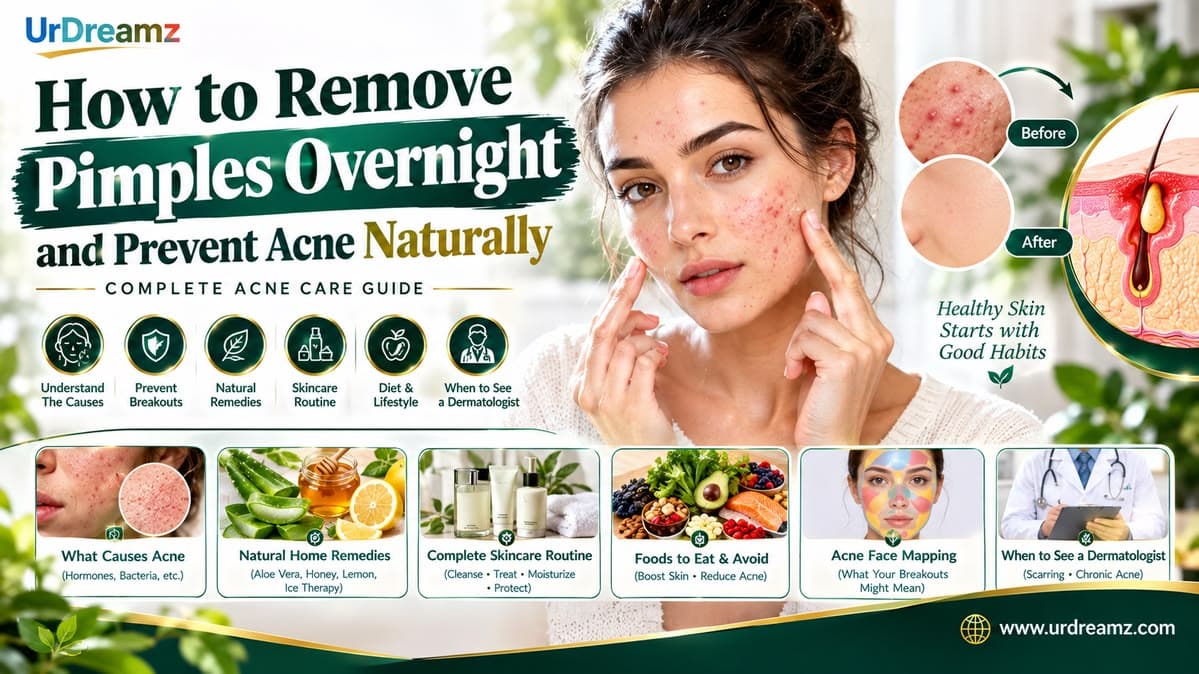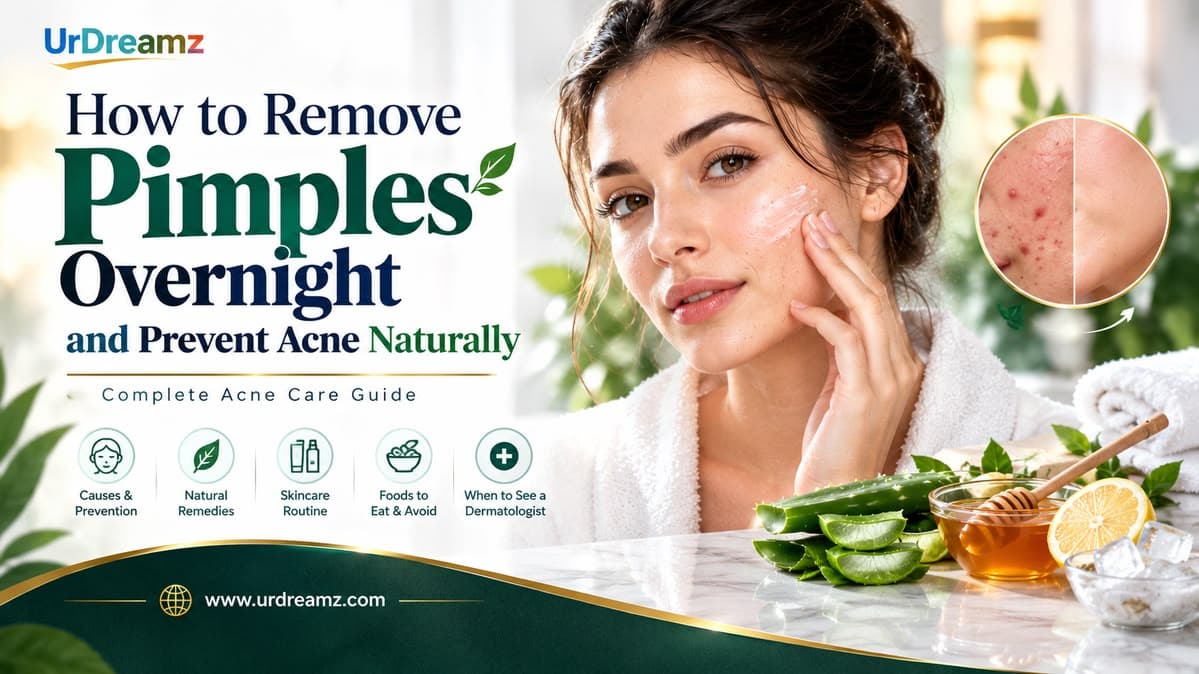
How to Remove Pimples Overnight and Prevent Acne Naturally
Struggling with pimples, dark spots, or oily skin? This guide covers what acne actually is and why it happens, how to prevent it before it ever appears, natural home remedies for pimples that are already there, a full acne skincare routine, acne face mapping, the mistakes that quietly make breakouts worse, and when it's time to see a dermatologist for scarring or chronic acne.
Introduction
Almost everyone deals with a pimple, a breakout, or persistently oily skin at some point, yet acne remains one of the most misunderstood skin conditions — surrounded by half-true home remedies on one side and overly aggressive product marketing on the other. This guide takes a calmer, more practical approach. It walks through what acne actually is at a basic level, how pimple location on the face can offer clues about possible triggers, the everyday prevention habits that stop breakouts before they start, natural remedies that genuinely help once a pimple has already appeared, and a realistic picture of when home care is enough versus when it's time to see a dermatologist.
One idea runs through the entire guide: acne responds far better to consistent, gentle daily habits than to aggressive, occasional intervention. Picking at a pimple once in a moment of frustration, or scrubbing the face raw after a bad breakout, tends to do more damage than the acne itself would have caused on its own. Almost everything that follows in this guide builds on that single principle.
What Is Acne and Why It Happens
Acne develops when hair follicles on the skin become clogged with a combination of excess oil (sebum), dead skin cells, and sometimes bacteria. Every hair follicle has a tiny gland attached to it that produces oil to keep the skin lubricated; when that gland produces more oil than usual, or when dead skin cells aren't shed normally, the follicle opening can become blocked. This blockage is the starting point for nearly every kind of pimple, from a small whitehead to a larger, more inflamed breakout.
Several factors influence how much oil the skin produces and how often follicles become blocked. Hormonal changes are one of the biggest drivers, which is why acne is so closely associated with puberty and adolescence, but adult acne linked to hormonal fluctuation is also extremely common, especially around the menstrual cycle. Genetics play a role too — a family history of acne makes an individual somewhat more likely to experience it themselves. Diet, particularly a diet very high in refined sugar and processed, oily fast food, has been linked in research to more frequent and more severe breakouts in some people, though the relationship varies from person to person. Stress doesn't directly cause acne, but it can worsen existing breakouts by increasing the production of stress hormones that, in turn, stimulate oil glands. Finally, external factors such as humidity, pollution, sun exposure, and skin irritation from certain products or fabrics can all contribute to clogged pores.
It also helps to know that not all acne looks the same or comes from exactly the same trigger. Non-inflammatory acne includes blackheads and whiteheads, which are clogged pores without significant redness or swelling. Inflammatory acne includes papules, pustules, and in more severe cases, nodules and cysts, which involve deeper irritation and often bacterial involvement, and which carry a higher risk of leaving a mark or scar behind if mishandled.
Understanding this progression matters because it explains why the same general advice — gentle cleansing, avoiding picking, and consistent care — applies across nearly every type of acne, even though the visible appearance can look quite different from one type to another. A blackhead and a deep, painful cyst both begin with the same basic blockage process; what differs is how far that blockage has progressed and whether bacteria and inflammation have become involved. This is also why early, consistent care tends to prevent milder acne from progressing into more severe, harder-to-treat forms in the first place.
It's worth briefly touching on the bacteria involved as well, since it's a commonly misunderstood part of the picture. A bacterium called Cutibacterium acnes (formerly known as Propionibacterium acnes) naturally lives on everyone's skin in small amounts and isn't inherently harmful. Problems arise when a clogged, oxygen-poor follicle creates an environment where this bacterium multiplies more than usual, triggering the immune system's inflammatory response — which is what produces the redness, swelling, and sometimes pus associated with more severe pimples. This is also part of why over-washing or overusing harsh antibacterial products doesn't necessarily help and can sometimes disrupt the skin's overall microbial balance in ways that make things worse rather than better.
Acne Face Mapping: What Pimple Location Means
Acne face mapping is a popular way of thinking about breakouts based on where on the face they tend to appear, and while it isn't a strict medical diagnosis, it can offer useful, general clues worth paying attention to.
| Face Zone | Common Associated Triggers |
|---|---|
| Forehead | Hair products, sweat, and oily hair touching the skin; digestion and hydration are sometimes discussed anecdotally |
| Between the eyebrows | Product buildup, touching the face frequently, or irritation from eyebrow grooming |
| Nose | Larger pores and higher oil production in this zone; blackheads are especially common here |
| Cheeks | Phone screens, pillowcases, dirty makeup brushes, and general surface contact throughout the day |
| Chin and jawline | Hormonal fluctuation, especially around the menstrual cycle in women |
| Chest and back (body acne) | Sweat trapped under tight clothing, friction, and heavy body lotions or oils |
Face mapping is best treated as a general awareness tool rather than a diagnostic one — persistent breakouts in a specific zone are worth mentioning to a dermatologist, who can consider them alongside a full picture of skin type, hormones, and habits rather than location alone.
How to Prevent Acne Before It Starts
Prevention matters most for people who haven't yet developed noticeable acne, including many teenagers approaching puberty, but the same habits also help reduce new breakouts for people who already deal with occasional pimples. The good news is that most effective prevention comes down to a small number of consistent, low-cost daily habits rather than expensive products.
Reduce oily, fried, and fast food. A diet heavy in deep-fried snacks, fast food, and processed meals has been associated with more frequent breakouts in many people, likely due to its effect on blood sugar and inflammation. This doesn't mean such food needs to be eliminated entirely, but cutting back on frequency is a sensible, low-risk first step.
Stay physically active. Regular exercise supports healthy circulation and helps regulate the hormones connected to oil production, and it's a genuinely useful, low-cost acne-prevention habit alongside its many other health benefits. Washing the face soon after a sweaty workout, rather than leaving sweat to sit on the skin, adds an extra layer of protection against clogged pores.
Wash the face with clean water regularly. A simple, gentle face wash with clean water in the morning and evening removes surface oil, sweat, and light dirt buildup before it has a chance to clog pores. This doesn't need to involve harsh scrubbing or a long list of products — gentle consistency matters more than intensity.
Protect the skin from excess sun and irritation. Spending long periods in direct, strong sunlight without protection can irritate the skin and, over time, worsen dark spots left behind by old breakouts. Limiting unnecessary midday sun exposure, and using sun protection when it can't be avoided, supports both acne prevention and overall skin tone.
Be deliberate about anything that touches the face. Pillowcases, phone screens, and hands all carry oil and bacteria that transfer directly onto the skin throughout the day. Changing pillowcases regularly, wiping down a phone screen periodically, and being mindful about resting the chin or cheek on a hand for long periods are small habits that add up.
Special Care After Hair Removal and Shaving
Facial hair removal — whether through threading, waxing, or plucking, which many women use to manage hormone-related facial hair growth — and shaving for men both create tiny areas of irritation on the skin that are more prone to breaking out if not cared for properly immediately afterward.
After threading, waxing, or plucking, it's generally better to rinse the treated area with lukewarm to slightly warm water rather than cold water, since warm water helps keep the freshly opened pores clear rather than closing them over trapped oil or bacteria. Following this with a gentle, fragrance-free antiseptic or soothing lotion suited for sensitive, freshly treated skin helps calm redness and reduces the chance of small irritation bumps developing into full breakouts.
The same general principle applies to shaving. Using a clean, sharp razor or blade every time — rather than reusing a dull one — significantly reduces skin irritation and the small nicks that can become infected or inflamed. Shaving in the direction of hair growth, using a gentle shaving product rather than plain soap, and following up with a soothing, non-comedogenic aftercare product all help prevent shaving-related breakouts along the jawline and neck.
For anyone who regularly rides a motorcycle or spends long periods outdoors exposed to dust, wind, and sun — a very common daily reality for many commuters — wearing sunglasses, a cap, and a face mask or scarf provides meaningful protection against the combination of pollution, sweat, and sun exposure that can otherwise trigger new breakouts along exposed areas of the face.
It's also worth mentioning that men who shave regularly sometimes deal with a related but slightly different issue known as razor bumps or ingrown hairs, which can be mistaken for acne but actually stem from hair curling back into the skin after shaving rather than from clogged oil glands. Shaving in the direction of hair growth, avoiding excessively close shaves, and gently exfoliating the area a day or two before shaving can reduce ingrown hairs, while the same gentle aftercare routine described above helps calm any resulting irritation either way.
Prevention Priority Chart
The chart below is a general awareness summary of how much impact each prevention habit tends to have, based on how consistently it addresses the core triggers discussed above.
Natural Home Remedies for Pimples
For pimples that have already appeared, several traditional and natural remedies are widely used to calm redness, reduce oil, and support faster healing. As with any acne treatment, results vary from person to person, and severe or persistent acne should ultimately be evaluated by a dermatologist rather than relying on home remedies indefinitely.
| Remedy | How to Use | Benefit |
|---|---|---|
| Aloe vera gel | Apply fresh gel directly to the affected area and leave for 15–20 minutes before rinsing | Soothes inflammation and supports skin healing |
| Honey | Apply a thin layer to the pimple or as a face mask for 10–15 minutes | Natural antibacterial and soothing properties |
| Ice therapy | Wrap ice in a clean cloth and hold gently on the pimple for a few seconds at a time | Reduces swelling and redness quickly |
| Cucumber slices | Place chilled cucumber slices on the face for 10–15 minutes | Cools and hydrates irritated skin |
| Lemon juice (diluted) | Use in small, diluted amounts, and always with sun protection afterward | Mild natural exfoliant, sometimes used for dark spot fading |
| Yogurt and milk masks | Apply a thin layer as a mask for 10–15 minutes, then rinse | Gently soothes and moisturizes without heavy oil |
A few practical cautions make these remedies safer and more effective. Lemon juice in particular should always be diluted and used sparingly, since it can increase skin sensitivity to the sun — applying sun protection afterward, or using it only in the evening, reduces this risk. Any new remedy is worth testing on a small area of skin first, since even natural ingredients can occasionally cause irritation in sensitive skin. And as with the medical treatments discussed later in this guide, patience matters — most natural remedies work gradually over days rather than producing an overnight transformation, despite what some product marketing suggests.
It also helps to understand roughly why each of these remedies works at a basic level, since that context makes it easier to use them appropriately rather than as a random grab-bag of folk tips. Aloe vera contains compounds that have both a mild anti-inflammatory effect and a soothing, moisturizing quality, which is why it's commonly recommended not just for acne but for sunburn and general skin irritation as well. Honey's antibacterial properties come partly from its naturally low water content and slightly acidic pH, both of which make it a difficult environment for many bacteria to thrive in, alongside specific enzymes it contains. Ice therapy works simply through temperature — cold constricts blood vessels near the surface of the skin, which is what visibly reduces redness and puffiness in the short term, similar to how an ice pack reduces swelling from a bruise. None of these mechanisms are as strong or as fast-acting as a prescription treatment, but understanding them helps set realistic expectations for what a natural remedy can and can't do.
Foods to Eat and Avoid
| Category | Examples | Why It Matters |
|---|---|---|
| Foods to eat more of | Fresh fruits, leafy vegetables, cucumber, citrus fruits, yogurt, nuts, water-rich foods | Support hydration, antioxidants, and lower overall inflammation |
| Foods to reduce | Deep-fried snacks, fast food, heavily processed meals, sugary drinks and desserts | Linked in many people to more frequent or more severe breakouts |
| Hydration | Plain water throughout the day | Supports overall skin health and helps the skin recover from irritation |
Diet is not the sole cause of acne for most people, and no single food will trigger or cure a breakout on its own — but as a general pattern, a diet built around whole, minimally processed foods with less frequent fried and sugary food tends to support clearer skin over time, alongside good hygiene and an appropriate skincare routine.
Daily Acne Skincare Routine
| Step | What to Do | Frequency |
|---|---|---|
| Cleanse | Wash the face with a gentle cleanser suited to acne-prone skin | Once or twice daily — avoid over-washing |
| Treat | Apply a dermatologist-recommended or well-suited spot treatment to active pimples | As directed, typically once daily |
| Moisturize | Use a lightweight, non-comedogenic (won't clog pores) moisturizer | Daily, even for oily skin |
| Protect | Apply sunscreen suited to acne-prone skin during the day | Every morning, reapplied if outdoors for long periods |
The core idea behind an effective acne skincare routine is balance rather than aggression. Washing the face too often, or using a harsh, stripping cleanser, can actually push oil glands to overcompensate by producing even more oil, which can make breakouts worse rather than better. A gentle, consistent routine — cleanse, treat, moisturize, protect — repeated daily tends to outperform an inconsistent routine built around expensive but harsh products used only occasionally.
Common Mistakes That Make Acne Worse
Popping or picking at pimples. This is one of the most common and most damaging habits. Squeezing a pimple pushes bacteria and debris deeper into the skin rather than out of it, which frequently makes the area more inflamed and increases the chance of a permanent scar or dark mark once the pimple eventually heals on its own. Pimples generally have a natural life cycle and tend to resolve fastest when left alone.
Using too many different soaps or products at once. Switching between multiple harsh soaps, scrubs, or new products frequently can irritate the skin barrier and actually trigger more breakouts rather than fewer. A simple, consistent routine using one gentle cleanser is generally more effective than rotating through many products.
Sleeping in makeup or using heavy, oily products. Leaving makeup on overnight, or using heavy oil-based moisturizers and cosmetics on already acne-prone skin, contributes directly to clogged pores. Looking for "non-comedogenic" labeling on cosmetics and moisturizers, and always removing makeup before bed, meaningfully reduces this risk.
Over-washing the face. As mentioned in the routine section above, washing more than twice a day, or scrubbing too hard, strips the skin's natural protective oils and can trigger a rebound increase in oil production.
Ignoring early acne until it becomes chronic. Mild, occasional breakouts that are left completely unmanaged for a long period can, in some people, gradually become more frequent and severe, eventually leading to more persistent, chronic acne that's harder to treat and more likely to leave lasting marks. Addressing mild acne early with a consistent gentle routine is generally easier than treating severe, long-standing acne later.
Constantly touching the face throughout the day. Resting the chin or cheek on a hand, frequently touching the face out of habit, or repeatedly checking skin in a mirror and pressing on it all transfer additional oil and bacteria from the hands to the face, undoing some of the benefit of an otherwise good skincare routine.
Skipping sunscreen because the skin is oily or acne-prone. Some people avoid sunscreen out of concern that it will worsen oiliness or breakouts, but unprotected sun exposure tends to make dark marks left behind by old pimples darker and more stubborn, and modern lightweight, oil-free sunscreen formulas are specifically designed not to clog pores.
Chasing quick fixes instead of a sustainable routine. It's tempting to switch to a new product the moment the last one doesn't show results within a few days, but as covered in the healing timeline section of this guide, most treatments genuinely need several weeks of consistent use before their real effect becomes visible. Frequently switching products before giving any of them a fair trial often just keeps the skin in a constant state of mild irritation from adjusting to new ingredients.
Acne Skincare by Skin Type and Tone
Acne-prone skin care isn't one-size-fits-all, and adjusting a routine to actual skin type and tone tends to produce better, more comfortable results.
| Skin Type / Tone Consideration | Care Approach |
|---|---|
| Oily skin | Lightweight, oil-free products; gentle cleansing twice daily; avoid heavy creams |
| Dry or sensitive skin | Fragrance-free, gentle cleansers; avoid over-washing; prioritize a non-comedogenic moisturizer |
| Combination skin | Balance products across different face zones rather than treating the whole face identically |
| Deeper skin tones | Extra attention to dark spot and post-acne mark care, since hyperpigmentation can be more pronounced and longer-lasting; consistent sun protection is especially important |
| Lighter skin tones | Redness and irritation are often more visible; gentle, soothing ingredients and daily sun protection help manage visible inflammation |
Medical and Dermatologist Treatment
Once acne becomes more persistent, inflamed, or starts leaving marks and scars, a dermatologist can offer treatment options that go beyond what home remedies and over-the-counter products can achieve. In general terms, dermatologists categorize acne treatment into two broad approaches, chosen based on the type and severity of acne present.
| Treatment Category | General Purpose |
|---|---|
| Anti-inflammatory treatment | Targets redness, swelling, and the inflammatory process behind papules, pustules, cysts, and nodules |
| Exfoliating / pore-clearing treatment | Targets clogged pores, blackheads, and whiteheads by encouraging normal skin cell turnover |
| Prescription topical treatment | Dermatologist-prescribed creams or gels tailored to the specific acne type and skin sensitivity |
| Oral treatment (in more severe or hormonal cases) | Considered by a dermatologist for widespread, severe, or hormonally-driven acne that hasn't responded to topical care |
| Scar and dark-spot treatment | Includes options such as chemical peels or in-clinic procedures, considered once active acne is under control |
The right combination, dosage, and duration of any of these treatments should always be decided by a qualified dermatologist based on an in-person assessment of skin type, acne severity, and any other relevant health factors — self-prescribing prescription-strength treatments based on general online advice is not recommended.
It's useful to have a general sense of what a first dermatologist visit for acne typically looks like, since many people delay going simply because the process feels unfamiliar. A dermatologist will usually start by examining the skin closely, asking about how long the acne has been present, what's been tried already, whether there's a family history of acne, and for women, whether breakouts follow a pattern connected to the menstrual cycle. Based on this, they'll typically recommend starting with a specific topical routine, and if needed, follow up after several weeks to assess progress and adjust the plan. For more severe or treatment-resistant acne, this process may extend over several months, since — as covered in the healing timeline section — skin genuinely needs that much time to show a clear, stable improvement, and dermatologists generally prefer to give one treatment plan a full, fair trial before switching to a different approach.
Skin Healing Timeline
Skin cells naturally renew on a cycle of roughly four to six weeks, which is part of why most acne treatments — whether natural remedies or dermatologist-prescribed options — take a number of weeks of consistent use before a clear improvement becomes visible.
When to See a Dermatologist
Occasional mild pimples are a normal part of most people's skin at some point and are usually manageable through the prevention habits and home remedies covered throughout this guide. It's time to see a dermatologist, rather than continuing with home care alone, when acne becomes chronic and keeps recurring over months despite consistent gentle care, when breakouts are painful, deep, or cystic rather than small surface pimples, when acne is leaving visible dark marks or textured scars behind, or when a strong emotional impact on confidence and daily life is part of the picture. A dermatologist can also help identify whether a hormonal or other underlying medical factor is contributing to persistent acne, which home remedies alone cannot address.
Acne Myths vs Facts
A great deal of confusion around acne comes from long-standing myths that keep circulating despite not holding up well. Separating myth from fact helps people spend their time and effort on habits that actually help rather than ones that don't.
| Myth | Fact |
|---|---|
| Acne is only caused by poor hygiene | Hygiene plays a role, but hormones, genetics, and diet are usually bigger drivers; over-washing can actually make acne worse |
| Chocolate directly causes acne | No single food is a universal trigger, though very high sugar and processed food intake is linked to more frequent breakouts in some people |
| Popping a pimple makes it heal faster | Popping typically slows healing and significantly increases the risk of a permanent scar or dark mark |
| Only teenagers get acne | Adult acne, especially hormonal acne along the jawline, is extremely common in both men and women well into adulthood |
| Tanning or sun exposure clears acne | Sun exposure may temporarily mask redness but tends to worsen dark spots and long-term skin damage |
| Expensive products always work better | Consistency and suitability for a specific skin type matter far more than price |
| Oily skin doesn't need moisturizer | Skipping moisturizer can trigger the skin to overproduce oil; a lightweight, non-comedogenic moisturizer is still recommended |
Acne at Different Life Stages
Acne doesn't look the same at every stage of life, and understanding these differences helps set realistic expectations for both prevention and treatment.
Teenage acne. This is the most well-known form, driven primarily by the hormonal surges of puberty, which increase oil gland activity across the face, chest, and back. It often appears first on the forehead and nose and tends to gradually improve as hormone levels stabilize in the late teens or early twenties, though good skincare habits established during this period carry benefits well beyond adolescence.
Adult hormonal acne. Many adults, particularly women, experience breakouts concentrated along the chin and jawline that flare in a fairly predictable pattern around the menstrual cycle. This type of acne is closely tied to hormonal fluctuation rather than hygiene or diet alone, and it often responds well to a combination of a consistent gentle routine and, when needed, dermatologist-guided hormonal or topical treatment.
Acne during pregnancy. Hormonal shifts during pregnancy can trigger new or worsened acne in some women, and it's especially important during this time to avoid certain acne ingredients that aren't considered safe during pregnancy — this is a case where checking with a doctor or dermatologist before starting any new treatment is particularly important, more so than with most other forms of acne.
Stress-related and lifestyle-triggered acne. Periods of high stress, disrupted sleep, or major lifestyle change — such as starting a new job, exams, or travel — can trigger temporary flare-ups even in people who don't otherwise struggle with regular breakouts. This type of acne often improves on its own once the underlying stressor eases, supported by the same gentle routine recommended throughout this guide.
Building Confidence While Treating Acne
Acne can affect more than just the skin — for many people, especially during the teenage years but well into adulthood too, it can take a real toll on confidence and self-image. It's worth saying directly: having acne is an extremely common, normal experience, not a personal failing or a sign of poor self-care, and the growing conversation around acne positivity reflects a healthier, more realistic view of skin than the heavily filtered images many people compare themselves to online.
That said, wanting clearer skin and feeling comfortable managing acne are not contradictory goals. It's entirely reasonable to actively work on treatment and prevention while also not tying self-worth to the state of one's skin on any given day. Simple, practical steps — a consistent routine, sun protection to prevent dark spots from lingering longer than necessary, and seeing a dermatologist when home care isn't enough — tend to support both clearer skin and a calmer, more confident relationship with one's appearance over time.
Frequently Asked Questions
How can I remove pimples overnight naturally?
A true overnight disappearance isn't realistic for most pimples, but ice therapy to reduce swelling, along with a spot treatment like diluted aloe vera or honey applied before bed, can visibly calm redness and size by morning.
How do I remove acne fast?
Consistent gentle cleansing, avoiding picking, using a suitable spot treatment, and reducing oily and sugary food all contribute to faster visible improvement, typically over one to a few weeks rather than overnight.
What is the best acne treatment at home?
A simple, consistent routine — gentle cleansing, a suitable spot treatment, a lightweight moisturizer, and daily sun protection — combined with avoiding picking at pimples, is generally the most effective at-home approach.
What is a good natural remedy for pimples?
Aloe vera gel, honey, and ice therapy are among the most commonly used and well-tolerated natural remedies for calming an active pimple.
How can I get clear skin overnight?
While a complete transformation overnight isn't realistic, reducing visible redness and swelling overnight through ice therapy and a gentle overnight treatment is achievable.
What are the best acne removal tips?
Avoid picking at pimples, keep the skin clean without over-washing, use non-comedogenic products, protect the skin from sun and pollution, and be patient with the natural healing timeline.
What is the best face acne treatment?
The best approach combines a gentle daily skincare routine with, for persistent or severe acne, a dermatologist-guided treatment plan suited to the specific acne type.
What are effective home remedies for acne?
Aloe vera, honey, ice therapy, cucumber, and gentle yogurt masks are widely used home remedies that can help calm and support healing of existing pimples.
Is aloe vera good for pimples?
Yes, aloe vera gel is commonly used to soothe inflammation and support the skin's natural healing process when applied to an active pimple.
Does honey help treat acne?
Honey has natural antibacterial and soothing properties, which is why it's a commonly used natural remedy applied directly to pimples or as a short face mask.
Is lemon good for skin care and acne?
Diluted lemon juice is sometimes used as a mild natural exfoliant and for dark spot fading, but it should always be used sparingly and followed by sun protection, since it can increase skin sensitivity to sunlight.
How can I remove dark spots naturally?
Consistent sun protection, along with natural options like diluted lemon juice or aloe vera used carefully over time, can gradually help fade post-acne dark spots for many people.
What are some glowing skin tips?
Consistent hydration, a diet rich in fruits and vegetables, a gentle daily skincare routine, adequate sleep, and daily sun protection all contribute to healthier, more even-looking skin over time.
What is a good skincare routine for acne?
A simple four-step routine — gentle cleanse, targeted treatment, lightweight moisturizer, and daily sun protection — is generally recommended as an effective, sustainable acne skincare routine.
What is the best pimple treatment at home?
Ice therapy for swelling, a suitable spot treatment such as diluted aloe vera or honey, and simply avoiding picking at the pimple are the most effective and lowest-risk at-home approaches.
How is acne scar treatment done?
Mild post-acne marks often fade gradually with consistent sun protection and time, while more noticeable, textured scars are typically addressed by a dermatologist through in-clinic treatments once active acne is under control.
What are the best overall skincare tips for acne-prone skin?
Keep the routine simple and consistent, avoid over-washing, never pick at pimples, use non-comedogenic products, and protect the skin from sun and pollution every day.
What are some natural beauty remedies for skin?
Cucumber slices for cooling, aloe vera for soothing, honey for gentle antibacterial support, and yogurt masks for hydration are among the most widely used natural beauty remedies for acne-prone skin.
What are the secrets to healthy skin?
Consistency, gentleness, hydration, a balanced diet, and daily sun protection are the real "secrets" behind healthy-looking skin over time — more than any single product.
What does acne face mapping tell you?
Acne face mapping links different face zones — like the forehead, chin, or cheeks — to commonly associated triggers such as hair products, hormones, or surface contact, offering general clues rather than a strict diagnosis.
What foods should I eat for acne-prone skin?
Fresh fruits, leafy vegetables, water-rich foods, and yogurt are generally supportive, while reducing fried, processed, and sugary foods tends to help many people manage breakouts.
What foods should I avoid to prevent acne?
Deep-fried snacks, fast food, heavily processed meals, and sugary drinks and desserts are the categories most commonly associated with more frequent breakouts.
Why shouldn't I pop my pimples?
Popping pushes bacteria and debris deeper into the skin rather than out, which increases inflammation and significantly raises the risk of a permanent scar or dark mark once the pimple heals.
How should I care for my skin after threading or waxing?
Rinse the area with lukewarm water rather than cold water, and follow with a gentle, fragrance-free soothing or antiseptic lotion to calm irritation and reduce the risk of small breakouts.
When should I see a dermatologist for acne?
When acne becomes chronic, painful, or cystic, when it leaves visible scars or dark marks, or when it's significantly affecting confidence and daily life, it's time to move from home care to professional dermatologist treatment.
Conclusion
Acne is one of the most common skin concerns there is, and for most people it responds well to a combination of consistent, gentle daily habits and, when needed, proper dermatologist-guided treatment. Prevention — through diet, hygiene, sun protection, and careful aftercare following hair removal or shaving — goes a long way toward stopping breakouts before they start. For pimples that have already appeared, natural remedies like aloe vera, honey, ice therapy, and gentle masks can genuinely help calm the skin, provided they're paired with patience and a routine that avoids picking, over-washing, and heavy products. And for acne that's become chronic, painful, or is leaving lasting marks, a dermatologist can offer treatment options that home care alone can't match. Clear, healthy-looking skin is, in almost every case, the result of steady, gentle consistency rather than any single overnight fix.