Lip Care Explained: Types of Lips, Causes of Dry and Chapped Lips, Best Treatments and Complete Guide to Healthy Lips
Lips are one of the most visible and sensitive features of the face, and yet lip care is the most frequently overlooked step in most people's skincare routines. Unlike the rest of the face, lips have no sebaceous glands, which means they cannot produce their own protective oil layer. They have a thinner outer skin than any other part of the face, fewer melanin-producing cells to protect against UV radiation, and they are constantly exposed to friction, temperature extremes, food, drink and the habits that unconsciously damage them every day. This guide covers everything from the anatomy of lip types to the diseases and conditions that affect lips, causes and symptoms of the most common lip problems, herbal and clinical treatment approaches, nutrition, foods to embrace and avoid, exercise and sleep for lip health, and a complete daily and weekly care routine. It connects with the face masks guide, skin barrier guide, sunscreen guide and skin brightening guide.
1. Understanding the Anatomy of Lips
Before understanding what goes wrong with lips, understanding what makes them structurally unique from the rest of the face matters. Lips consist of three distinct zones: the outer skin (cutaneous area), which is the normal skin around the lip border; the vermilion border, the clearly defined line between outer skin and the colored lip surface; and the vermilion zone, the visible red or pink area most people consider the "lip" itself. The vermilion zone has no sweat glands, no sebaceous glands and only a thin, semi-transparent outer layer. The reddish color comes from blood vessels showing through this very thin covering rather than from significant pigmentation.
This structure explains why lips are so prone to dryness — they have no self-moisturizing mechanism. They also have more limited UV protection, making sun damage a genuine and often underappreciated concern for lips specifically.
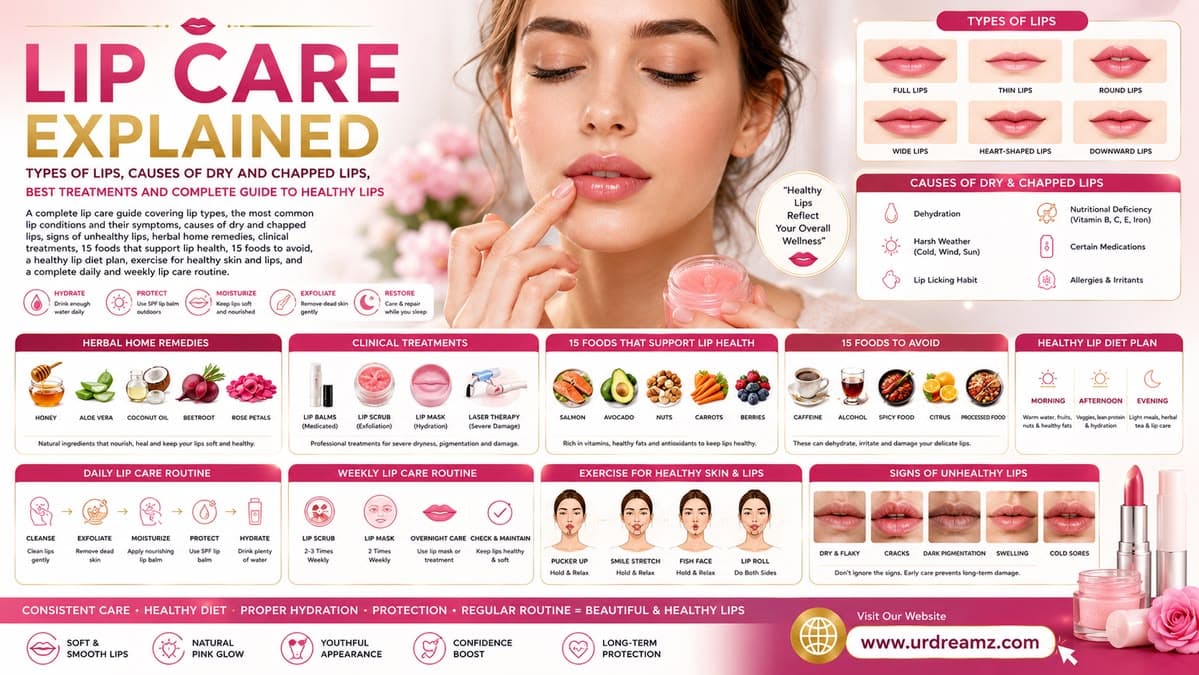
2. The Six Main Lip Types
Just as skin types vary from person to person, lips present in recognizably different natural types that influence which care approach benefits them most.
| Lip Type | Characteristics | Primary Care Need |
|---|---|---|
| Naturally dry lips | Frequently feel tight or rough even without environmental triggers; tendency toward chronic flaking | Heavy occlusive balms and overnight lip masks consistently |
| Normal lips | Generally comfortable, soft and pink; occasional dryness in extreme weather | Daily light balm and weekly exfoliation to maintain condition |
| Thin lips | Less volume and vermilion border definition; may show fine lines earlier due to less natural padding | Hydrating serums and plumping ingredients; collagen-support |
| Full or voluminous lips | More prominent vermilion surface; may be more prone to horizontal fissuring when dry | Regular hydration and SPF to protect the larger exposed surface |
| Pigmented or darker lips | Naturally higher melanin content in the vermilion zone; can deepen further with triggers like smoking, sun or iron deficiency | Sunscreen, vitamin C support, avoidance of drying agents |
| Sensitive lips | React easily to flavors, fragrances or ingredients; prone to swelling or tingling from contact allergens | Fragrance-free, minimal-ingredient lip products; patch testing |
3. Common Lip Conditions and Diseases
Beyond ordinary dryness, several distinct medical and skin conditions affect the lips, and understanding whether a lip problem is cosmetic or clinical makes a meaningful difference to the appropriate response.
| Condition | Description |
|---|---|
| Cheilitis | The medical term for inflammation of the lips — covers a family of conditions including dry, angular, contact and exfoliative cheilitis |
| Angular cheilitis | Cracking, redness and soreness specifically at the corners of the mouth; often caused by fungal infection (candida), vitamin B deficiency or ill-fitting dental appliances |
| Exfoliative cheilitis | Persistent scaling and peeling of the lip surface, often linked to lip-licking habit, nutritional deficiencies or underlying systemic conditions |
| Contact dermatitis of the lips | Allergic or irritant reaction causing swelling, redness, burning or blistering from a specific substance — commonly toothpaste ingredients, lip products, foods or metals |
| Herpes labialis (cold sores) | Viral blisters caused by herpes simplex virus type 1; highly contagious; triggered by sun exposure, stress or immune suppression |
| Lip pigmentation (melanosis) | Darkening of the lips from excess melanin production, triggered by sun exposure, smoking, iron deficiency or hormonal changes |
| Solar cheilitis (actinic cheilitis) | Sun damage to the lips, particularly the lower lip; more common in fair-skinned individuals with significant sun exposure; associated with pre-cancerous changes if ignored |
| Lip eczema | Chronic inflammatory condition causing dryness, scaling, redness and itching on and around the lips; often associated with atopic dermatitis |
| Vitamin deficiency lip symptoms | Dry, cracked, pale or inflamed lips as visible signs of deficiency in B vitamins, iron, vitamin C or zinc |
| Fordyce spots | Harmless white or yellowish spots on the lip surface caused by visible sebaceous glands; require no treatment but are sometimes cosmetically concerning |
4. Signs of Unhealthy Lips
Healthy lips are typically smooth, evenly pigmented, adequately plump, free of cracks or scaling, and comfortable — they don't feel tight, burn or itch. Any departure from this baseline that persists beyond a short period of increased environmental exposure is a sign worth paying attention to.
- Visible flaking or peeling: Dead skin cells accumulating because the lip surface can't shed them efficiently or is losing moisture faster than it can retain it.
- Cracking or fissures: More severe moisture loss causing the lip surface to crack, ranging from minor lines to painful deep splits that can bleed.
- Redness or pinkish discoloration beyond the normal vermilion border: May indicate contact irritation, allergy or inflammatory cheilitis.
- Significant darkening of the lip color beyond natural variation: Suggests pigmentation changes driven by sun damage, smoking, iron deficiency or hormonal factors.
- Persistent swelling: May indicate allergic reaction, infection or, rarely, more significant inflammatory conditions.
- Bleeding at the corners or across cracked areas: Indicates cheilitis or significant barrier disruption needing medical attention rather than only cosmetic care.
- Persistent pain, numbness or unusual texture changes: Warrants dermatological evaluation to rule out conditions beyond typical dryness.
- White patches or scaly texture that doesn't resolve: Requires professional evaluation to rule out leukoplakia or actinic cheilitis, both of which have serious associations if untreated.
5. The Main Causes of Dry, Chapped and Damaged Lips
| Cause | Mechanism |
|---|---|
| Dehydration | Insufficient water intake reduces skin cell hydration throughout the body; lips, with no self-moisturizing ability, show this quickly |
| Cold and dry weather | Low-humidity air draws moisture from the lip surface continuously; cold temperatures further reduce circulation and natural repair |
| Sun exposure without protection | UV radiation damages the thin lip surface and suppresses natural repair capacity; particularly affects the lower lip which faces skyward |
| Lip-licking habit | Saliva contains digestive enzymes (amylase and others) that actively break down the lip's thin outer layer; temporary moisture sensation leads to worse dryness as saliva evaporates |
| Vitamin and mineral deficiency | Deficiencies in iron, B vitamins (B2, B3, B6, B12), vitamin C and zinc all have specific connections to lip health and cracking |
| Mouth breathing | Constant airflow over the lips during mouth breathing strips moisture continuously, causing dry cracked lips particularly around the upper lip |
| Allergic reactions to products | Flavored lip balms, scented toothpastes, citrus foods and certain metals can trigger contact cheilitis in sensitive individuals |
| Smoking | Restricts blood flow to the lip surface, depletes vitamin C needed for tissue repair and introduces direct chemical damage to lip cells |
| Certain medications | Isotretinoin (acne treatment), diuretics, antihistamines and some blood pressure medications have documented dry lip side effects |
| Hormonal changes | Pregnancy, menstruation and thyroid conditions can alter skin hydration and pigmentation patterns including on the lips |
6. Symptoms of Lip Problems: What Each Indicates
Different lip symptoms point toward different underlying causes, and identifying which symptom is primary helps target the most appropriate treatment approach.
| Symptom | Most Common Cause |
|---|---|
| Dry, flaky, peeling lip surface | Dehydration, weather, lip-licking or mildly insufficient lip balm use |
| Cracking at the corners of the mouth | Angular cheilitis — vitamin B deficiency, fungal infection or saliva accumulation |
| Painful deep cracks in the center of the lip | Severe dehydration, cold weather damage or more significant cheilitis |
| Lip swelling or puffiness | Allergic reaction, contact irritation or lip biting |
| Burning or tingling before blisters | Herpes simplex virus reactivation (cold sore); dental nerve involvement |
| Progressive darkening of lip color | Sun damage, smoking, iron deficiency anemia, hormonal pigmentation |
| Pale, washed-out lip color | Iron deficiency anemia, poor circulation, vitamin B12 deficiency |
| Persistent scaling that cycles through | Exfoliative cheilitis; lip-licking habit; nutritional deficiency |
| Itching around the lip border | Contact allergen, eczema or lip licker's dermatitis |
| White patches on the lip surface | Fordyce spots (harmless) or leukoplakia (requires evaluation) |
7. Herbal and Natural Home Remedies for Lip Care
Several kitchen and herbal ingredients have genuine efficacy for maintaining or restoring lip health, especially for mild to moderate dryness and routine maintenance. All natural remedies should be patch-tested before wide application, particularly for sensitive lip types.
| Natural Remedy | How It Helps Lips | How to Use |
|---|---|---|
| Coconut oil | Rich in medium-chain fatty acids that provide emollient moisture; mild antimicrobial properties; forms a light protective film | Apply a thin layer to clean lips before bed and as needed through the day |
| Raw honey | Natural humectant that draws water to the lip surface; mild antibacterial properties; supports healing of minor cracks | Apply pure honey, leave for 10-15 minutes, rinse gently |
| Aloe vera gel | Soothing and cooling; provides acemannan for mild healing; hydrating without heaviness | Apply fresh aloe gel directly; leave on for 15 minutes or overnight |
| Vitamin E oil | Antioxidant that protects lip cells from oxidative damage; rich emollient that softens dry tissue | Puncture a vitamin E capsule and apply oil directly; best at night |
| Shea butter | Contains fatty acids and vitamins A and E; excellent emollient that softens and repairs dry lip tissue | Apply as a thick layer before sleep; also good under other balms |
| Ghee (clarified butter) | Traditional South Asian remedy; rich in fatty acids and fat-soluble vitamins that nourish very dry lips | Apply small amount before sleep; absorbed overnight |
| Rose petal paste | Mild astringent; contains natural oils and pigments; traditionally used for natural pinkness and softness | Soak rose petals in raw milk overnight, grind into paste, apply for 20 minutes |
| Beetroot and honey | Beetroot provides natural pigment and antioxidants for darkened lips; honey provides healing moisture | Mix grated beetroot with honey; apply as a weekly lip mask for 15 minutes |
| Almond oil | Lightweight oil rich in vitamin E and essential fatty acids; softening and nourishing without feeling heavy | Apply a few drops to lips morning and night |
| Sugar scrub (honey and sugar) | Physical exfoliation to remove dead cells; honey moisturizes as sugar buffs | Mix 1 tsp fine sugar with 1 tsp honey; gently massage on lips for 1 minute; rinse. Use once or twice weekly |
8. Homemade DIY Lip Packs and Treatments
- Sugar and honey scrub: One teaspoon of fine sugar mixed with one teaspoon of raw honey, gently massaged on the lips for sixty seconds and rinsed with warm water. Removes dead surface cells while honey softens simultaneously. Use once or twice weekly, not daily.
- Rose petal and milk pack: Rose petals soaked overnight in whole milk, then ground to a paste and applied to lips for twenty minutes. Softens, provides a subtle natural tint and soothes irritation.
- Beetroot and honey brightening pack: Grated fresh beetroot juice mixed with equal honey applied for fifteen minutes. The natural pigment provides a rosy tint; repeated weekly use over months can visibly reduce the appearance of darkened lips.
- Coconut oil and vitamin E overnight treatment: Mix coconut oil with the contents of a vitamin E capsule, apply generously before sleep. One of the simplest and most consistently effective overnight lip repair approaches.
- Aloe vera and cucumber soothing pack: Blend cucumber and aloe vera gel together; apply to lips and surrounding skin for fifteen minutes. Particularly useful for irritated, inflamed or sun-exposed lips.
- Turmeric and cream brightening pack: A pinch of turmeric in one teaspoon of cream; applied for ten minutes and rinsed carefully. Avoid excessive application or leaving too long as turmeric can temporarily stain fair skin.
9. Clinical and Medical Treatments for Lip Problems
When natural remedies and consistent home care don't resolve a lip problem, or when a condition requires more targeted treatment than home products can provide, clinical approaches offer more intensive options.
- Prescription emollient ointments: Heavy occlusive ointments like petroleum jelly-based medical preparations or tacrolimus ointment for lip eczema and severe cheilitis provide barrier repair and anti-inflammatory effect beyond what cosmetic products achieve.
- Antifungal treatment: Angular cheilitis caused by Candida infection responds to topical antifungal creams (clotrimazole or miconazole) prescribed by a physician, often alongside addressing the underlying vitamin deficiency that allowed the fungal overgrowth.
- Antibiotics: Bacterial infection contributing to cheilitis or infected lip cracks responds to prescription topical or oral antibiotics under medical supervision.
- Antiviral treatment: Cold sores (herpes labialis) respond to topical acyclovir cream applied at the earliest tingling sensation or, for frequent recurrences, to oral antiviral medications prescribed by a doctor.
- Vitamin supplementation: Iron deficiency anemia, B vitamin deficiencies and zinc deficiency contributing to lip problems are best corrected through medically tested supplementation with appropriate doses under medical guidance rather than self-directed high-dose supplementation.
- Chemical exfoliation or laser treatment: For persistent lip pigmentation that doesn't respond to topical depigmenting treatments and consistent sun protection, a dermatologist may recommend glycolic acid peels, Q-switched laser treatment or intense pulsed light for more significant improvement.
- Dermatologist evaluation for persistent cases: Any lip condition that persists beyond four to six weeks of appropriate home treatment, worsens despite care, or presents with unusual changes in texture or color warrants professional evaluation — particularly to rule out actinic cheilitis or other conditions with more serious implications.
10. SPF for Lips: Why Sun Protection Matters
The lower lip is consistently one of the most sun-exposed areas of the face because of its position and angle — it faces the sky at a favorable angle for direct UV reception during most of the day. The vermilion zone has significantly less melanin protection than surrounding facial skin, making it more susceptible to UV-induced damage, including accelerated aging, persistent dryness and, in chronic sun exposure cases, actinic cheilitis — a condition with pre-cancerous potential that warrants dermatological monitoring.
Using a lip balm containing broad-spectrum SPF 30 or higher as part of the morning routine, reapplied during extended sun exposure, provides meaningful protection against all of these UV-driven lip concerns. The same approach to sunscreen discussed in the sunscreen guide applies to lips: daily use prevents cumulative damage far more effectively than trying to treat damage after it has accumulated over years.
11. Lip Exfoliation: How Often and How to Do It Safely
Lip exfoliation removes the accumulated layer of dead cells that makes lips look flaky and rough and that prevents moisture from reaching the fresh skin beneath. Unlike facial exfoliation with acids and scrubs, lip exfoliation should be very gentle — the lip surface is thinner and more sensitive than facial skin, and aggressive scrubbing causes more harm than accumulated dead cells do.
Once or twice weekly is the appropriate frequency for most people; daily lip scrubbing can damage the fragile lip surface and worsen the peeling it's meant to reduce. A fine sugar scrub applied with the fingertip in gentle circular motions for thirty to sixty seconds, followed by immediate application of a moisturizing balm while the lips are still slightly damp, is the safest and most effective approach. People with already-cracked or inflamed lips should delay exfoliation until the acute damage has healed.
12. Addressing Dark Lips and Lip Pigmentation
Darker lip pigmentation beyond the natural color range is common and has several distinct causes, each of which determines the most effective approach. Sun exposure causes UV-triggered melanin production in the lip surface, progressively darkening it over years — this responds well to daily SPF lip balm combined with vitamin C or licorice extract in a lip serum. Smoking causes both the direct chemical damage of tar and the vascular restriction of nicotine to darken lips; stopping smoking is the most effective treatment, with topical care playing a supporting role. Iron deficiency produces a different, more bluish or pale discoloration rather than darkening, and is most effectively addressed through diet and supplementation.
For cosmetically significant lip darkening, a combination of consistent sun protection, vitamin C lip products, the beetroot or aloe-based home packs described earlier, and patience for consistent improvement over weeks to months represents the safest home approach. For more pronounced or persistent pigmentation, a dermatologist can evaluate whether a prescription or procedural treatment is appropriate. The skin brightening principles covered in the skin brightening guide apply to lip pigmentation management.
13. Best Ingredients to Look for in Lip Balm
| Ingredient | What It Does for Lips |
|---|---|
| Beeswax | Creates a protective film over the lip surface that seals in moisture; the backbone of most effective lip balm formulas |
| Shea butter | Rich emollient with vitamins A and E; softens and nourishes dry lip tissue |
| Petrolatum (Vaseline) | One of the most effective occlusives available; forms a near-impermeable moisture seal; dermatologist-recommended for severely dry lips |
| Hyaluronic acid | Draws and holds water in lip tissue; adds plumping moisture beyond surface-level occlusion |
| Ceramides | Support the lip's thin barrier structure; particularly useful for lips compromised by weather or frequent licking |
| Coconut oil | Emollient, mild antimicrobial, pleasant texture; good daily maintenance ingredient |
| Vitamin E (tocopherol) | Antioxidant protection for lip cells alongside emollient moisture |
| Zinc oxide (in SPF balms) | Mineral UV protection for the lip surface; gentle and well-tolerated on sensitive lips |
Ingredients to avoid in lip products: Strong flavors (mint, peppermint, cinnamon, citrus) — these feel pleasant briefly but cause contact irritation in many people and worsen dryness over time. Camphor, eucalyptus and menthol cause a cooling sensation but are genuinely drying. Fragrance and high alcohol content are common sensitizers for lip skin. Salicylic acid in significant concentrations is too harsh for the thin lip surface.
14. The Lip-Licking Habit: Why It Must Stop
Lip licking is one of the most universally damaging lip habits, yet it's done unconsciously by almost everyone who has dry lips, because it provides immediate temporary relief. The problem is that saliva contains digestive enzymes including amylase that actively break down the thin outer protective layer of the lip surface. When the saliva evaporates — which it does within seconds to minutes — it takes whatever moisture was in the lip surface along with it, leaving the lips more dehydrated than before the licking. This creates a cycle: dry lips prompt licking, licking damages the protective layer and accelerates drying, more drying prompts more licking. Breaking the habit completely is one of the most impactful single changes for anyone struggling with persistently dry or chapped lips, and replacing the automatic reach for the tongue with a reach for a lip balm is the most practical substitute.
15. Fifteen Foods That Support Healthy Lips
| Food | Key Nutrient | Benefit to Lips |
|---|---|---|
| Spinach and dark leafy greens | Iron, vitamins A, C and B12 | Iron deficiency is directly linked to pale and cracked lips; these foods address multiple deficiencies simultaneously |
| Lentils and chickpeas | Iron, zinc, B vitamins | Excellent plant-based sources of lip-supporting minerals; zinc supports tissue repair |
| Eggs | Biotin, B12, iron, protein | Biotin deficiency causes cracking around the mouth; eggs provide multiple B vitamins in one food |
| Salmon and fatty fish | Omega-3, B12, vitamin D | Omega-3s reduce inflammation; B12 supports mucous membrane health including lips |
| Citrus fruits (oranges, kiwi, lemon) | Vitamin C | Essential for collagen synthesis in lip tissue; antioxidant protection for lip cells |
| Avocado | Healthy fats, vitamin E, B vitamins | Dietary fats support barrier function; vitamin E protects lip cell membranes from oxidative damage |
| Walnuts and almonds | Vitamin E, omega-3, zinc | Combined antioxidant and anti-inflammatory nutrients that support overall skin and lip health |
| Sweet potatoes | Beta-carotene, vitamin C | Beta-carotene converts to vitamin A, which supports healthy cell turnover in lip tissue |
| Chicken and lean meat | Niacin (B3), B6, zinc, protein | Niacin deficiency causes cracking and inflammation; adequate protein provides amino acids for tissue repair |
| Whole grains (oats, brown rice) | B vitamins (B1, B2, B3), iron | Multiple B vitamins that support mucous membrane integrity and prevent cheilitis related to deficiency |
| Berries (blueberries, strawberries) | Vitamin C, antioxidants | Antioxidant protection for lip cells; vitamin C for collagen; strawberries also provide natural AHA in dietary form |
| Dairy products (milk, yogurt, cheese) | B12, riboflavin (B2), calcium | Riboflavin deficiency specifically causes cracking at the corners of the mouth (angular cheilitis) |
| Pumpkin seeds | Zinc, magnesium, omega-3 | Zinc supports tissue repair and immune function; magnesium reduces inflammation |
| Pomegranate | Vitamin C, antioxidants, ellagic acid | Ellagic acid has shown some evidence for reducing UV-induced pigmentation including in lip skin |
| Water and hydrating fluids | Hydration | Chronically insufficient water intake is one of the most direct causes of dry, dull lips; no topical product compensates for systemic dehydration |
16. Fifteen Foods to Avoid for Healthy Lips
| Food or Habit | Why It Harms Lips |
|---|---|
| Excessive salt (very salty snacks and foods) | High sodium intake draws water from tissue systemically; also causes direct dehydration of the lip surface when salty foods are frequently licked off the lips |
| Very spicy foods | Capsaicin and other spice compounds can irritate and inflame the lip surface, worsening existing dryness or sensitivity |
| Citrus fruits consumed in excess directly on lips | The natural acidity of citrus applied repeatedly directly to the lip surface erodes the thin outer layer; consumption as food is fine but avoid squeezing citrus onto lips directly |
| Alcohol | Dehydrates the body systemically; depletes B vitamins and zinc that support lip health; worsens existing lip dryness |
| Caffeinated drinks without adequate water | Coffee and tea consumed without sufficient parallel water intake contribute to overall dehydration that shows in lip dryness |
| Highly processed foods with no nutritional value | Replace nutritious foods in the diet without providing any of the B vitamins, iron, zinc or antioxidants that lips depend on for health |
| Foods high in refined sugar | Promote inflammation throughout the body and contribute to glycation that damages skin proteins including those in lip tissue |
| Deep-fried and trans-fat foods | Provide pro-inflammatory fatty acids that promote systemic inflammation affecting skin and lip health |
| Unripe or very acidic fruits applied directly | Fruit acids on already-dry or cracked lip skin worsen damage rather than brightening it |
| Flavored chips and processed snacks with artificial flavoring | Artificial flavorings, particularly artificial citrus or mint, are common contact irritants for sensitive lip skin |
| Very hot beverages consumed frequently | Repeated heat exposure to the lip surface from very hot drinks contributes to lip barrier disruption over time |
| Smoking (tobacco) | Restricts blood flow, depletes vitamin C, introduces carcinogenic compounds to lip tissue and is the most significant preventable cause of lip darkening and damage |
| Excess vitamin A from supplements | Paradoxically, very high supplemental vitamin A can cause dryness and peeling of lips — a documented side effect of high-dose vitamin A supplementation and retinoid medications |
| Foods with cinnamon, mint or peppermint flavoring | Common contact allergens that cause irritant cheilitis in sensitive individuals; often present in lip balms, gum and candies |
| Whey protein powder (for some acne-prone individuals) | In people where dairy worsens inflammation, whey protein has the same effect at higher intensity; inflamed skin is more prone to barrier damage including on the lips |
17. A Healthy Lip-Supporting Diet Plan
Rather than prescribing a rigid meal plan, the following principles build a dietary pattern that consistently provides the nutrients lips depend on for health.
| Nutrient Priority | Daily Targets | Best Food Sources |
|---|---|---|
| Iron | Adequate daily through varied diet | Leafy greens, lentils, meat, eggs |
| B vitamins (B2, B3, B6, B12) | Daily from varied food sources | Whole grains, dairy, eggs, meat, legumes |
| Vitamin C | 2-3 servings of citrus or bell pepper daily | Citrus, kiwi, bell peppers, berries |
| Vitamin E | Daily from nuts, seeds or avocado | Almonds, sunflower seeds, avocado |
| Zinc | Daily from varied protein sources | Pumpkin seeds, chickpeas, eggs, meat |
| Omega-3 fatty acids | 3-4 servings per week | Salmon, sardines, walnuts, flaxseeds |
| Water | 2-3 litres daily | Plain water, herbal tea, water-rich foods |
18. Exercise for Healthy Lips and Overall Skin
Exercise doesn't directly target the lips, but its systemic effects meaningfully support lip health through several mechanisms. Regular physical activity increases blood circulation to all tissues including the lip surface, improving nutrient and oxygen delivery and supporting the cellular processes that maintain healthy, well-colored, well-hydrated lips. The post-exercise flush that appears in the face and lips reflects this increased blood flow — and regular exercisers tend to have better-oxygenated skin circulation overall, which contributes to a more naturally rosy, healthy lip color than sedentary individuals with sluggish circulation.
Exercise also reduces chronic cortisol, the stress hormone that drives inflammation and impairs skin barrier function throughout the body. Lower chronic cortisol produces healthier barrier function in the skin and lips, meaning less moisture loss and better resilience to environmental stressors like cold weather and dry air. The most lip-relevant exercise types include:
- Cardio and brisk walking: Improves circulation, reduces inflammation and supports cardiovascular health that underpins good skin color and oxygenation.
- Yoga and breathing exercises: Reduce stress and cortisol; diaphragmatic breathing also reduces mouth breathing patterns that dry the lips chronically.
- Resistance training: Supports overall metabolic health and the hormonal balance that influences skin quality.
- Facial exercises (targeted): Some evidence suggests regular facial muscle movement through gentle exercise maintains circulation and muscle tone around the lips, potentially delaying the development of lip lines.
One important post-exercise lip care note: sweat contains salt, which dries the lip surface. Rinsing the face and applying lip balm after vigorous exercise prevents salt dehydration from accumulating on the lip surface after the session.
19. Sleep and Lip Health
Overnight is when the body performs its most intensive cellular repair — and the lips, with their limited self-repair capacity during waking hours, particularly benefit from consistent sleep quality. Seven to nine hours of sleep allows full completion of the overnight repair cycle that includes tissue maintenance throughout the body. Consistently poor sleep shows up in the lips as dullness, paleness and reduced plumpness from inadequate completion of overnight moisture regulation.
Two specific overnight lip care habits that support sleep's benefits: applying a thick occlusive lip balm, shea butter or overnight lip mask as the last step of the bedtime routine prevents the transepidermal moisture loss that accelerates during the hours of sleep; and sleeping on a clean satin or silk pillowcase reduces friction on the lip surface compared to cotton, which reduces the mechanical damage that can worsen lip dryness overnight. Breathing through the nose rather than the mouth during sleep preserves lip moisture — mouth breathing is a significant but often overlooked overnight lip-drying factor, and if mouth breathing is persistent during sleep, discussing it with a physician may be worthwhile.
20. Daily Lip Care Routine
| Time | Steps |
|---|---|
| Morning | 1. Remove any lip balm applied overnight with a damp cloth. 2. Apply hydrating lip serum or aloe vera gel and allow to absorb. 3. Apply SPF 30+ lip balm as the final face routine step. Reapply through the day. |
| Afternoon | Reapply SPF lip balm every two to three hours during outdoor exposure. Keep a lip balm within reach to replace the urge to lick. |
| Evening | 1. Gently remove any lip color with a gentle oil cleanser or micellar water. 2. Apply a nourishing lip oil or serum. 3. Follow with a rich occlusive balm or shea butter. 4. Use an overnight lip mask two to three times weekly. |
21. Weekly Lip Care Routine
| Day | Special Lip Care Step |
|---|---|
| Monday | Gentle sugar scrub exfoliation (once this week only) followed by honey or aloe soothing pack for 10 minutes |
| Wednesday | Beetroot and honey brightening pack if addressing dark lips (leave 15 minutes); plain coconut oil pack for general care |
| Friday | Overnight intensive lip mask application before sleep for deeper repair after the week |
| Sunday | Complete lip care check — note whether lip condition has improved, maintained or needs a product or routine adjustment |
22. Lip Care for Men
Men are as susceptible to dry lips, cheilitis and sun damage as women but are significantly less likely to carry or consistently apply lip balm. For men specifically, a tinted-free, unflavored SPF balm that can be used without being conspicuous tends to be the product most likely to be used consistently. The essentials are the same: daily SPF balm, a thick occlusive balm at night, once-weekly gentle exfoliation and avoiding the lip-licking habit. Shaving regularly can also cause mild mechanical irritation to the skin just below the lower lip where razors pass, making moisturizing that area alongside lip care an additional relevant habit.
23. Lip Care for Children and Teenagers
Children's lips are particularly vulnerable to chapping during cold weather and from persistent lip-licking, which is common at young ages. A simple fragrance-free, child-safe lip balm without active ingredients like menthol or strong flavors applied after meals and before going outside in cold weather covers most of what children need. Encouraging adequate water intake and discouraging the lip-licking habit with gentle redirection are the most impactful behavioral elements. Teenagers dealing with acne and using isotretinoin (Roaccutane) will almost universally experience severe dry lips as a medication side effect, making consistent high-quality lip balm use essential throughout the treatment course.
24. When to See a Dermatologist
Most lip dryness responds to consistent home care within a few weeks. The situations where professional evaluation becomes appropriate include: persistent lip cracking or cheilitis that doesn't improve after four to six weeks of appropriate treatment; recurrent cold sores that significantly impact quality of life, warranting preventative oral antiviral treatment; lip pigmentation that doesn't respond to sun protection and home brightening approaches; any white patch, scaly area or unexplained persistent texture change on the lips; significant swelling or blistering suggesting allergic reaction; or any lip symptom that is progressing or accompanied by other health changes. The skin barrier guide at urdreamz.com provides complementary guidance on barrier disruption that may contribute to persistent lip problems.
25. Common Lip Care Mistakes to Avoid
- Licking the lips for moisture relief — provides five seconds of comfort followed by accelerated dryness.
- Using flavored or strongly scented lip balms — pleasant in the moment but common irritants that worsen dryness over time.
- Exfoliating cracked or bleeding lips — exfoliation is for maintenance of healthy lips, not treatment of actively damaged ones.
- Applying lemon juice directly to lighten dark lips — the direct acidity causes chemical burns and worsens damage.
- Not wearing SPF on the lips — the lower lip specifically is one of the most sun-exposed areas of the face.
- Peeling off flaking skin — removes healthy cells along with dead ones and can cause bleeding and scarring.
- Applying too little product — lip balm applied in a thin, barely visible layer provides significantly less occlusive benefit than a fuller application.
- Neglecting the corners of the mouth — angular cheilitis specifically begins at the corners and is often missed in lip care routines that focus only on the central vermilion.
26. Frequently Asked Questions
Why are my lips always dry even when I use lip balm?
Persistent dryness despite regular lip balm use usually indicates one of several issues: the lip balm is too thin or contains irritating ingredients (fragrance, mint, camphor) that worsen dryness; the lip-licking habit is undoing the balm's effect; there's an underlying vitamin deficiency particularly B vitamins or iron; or the balm is being applied without an occlusive outer layer to seal it in. Switching to a thick, fragrance-free, occlusive formula and applying before the urge to lick arises usually produces improvement within days.
How can I get naturally pink and soft lips?
Consistently adequate hydration, daily SPF balm to prevent UV-driven darkening, weekly gentle exfoliation to remove dead cells, and nourishing overnight treatment with coconut oil or shea butter, combined over weeks and months, produces the most reliable and lasting natural improvement in lip color and softness. Home packs with beetroot and honey, rose petal and milk, or aloe vera add gentle natural benefit alongside this foundation.
Is Vaseline (petroleum jelly) good for lips?
Yes — petroleum jelly is one of the most effective occlusive ingredients available, forming a near-impermeable seal over the lip surface that prevents transepidermal moisture loss with exceptional efficiency. It doesn't add moisture itself but traps whatever moisture is already present. Applied over a hydrating balm or on damp lips after rinsing, it provides excellent overnight repair for severely dry lips.
Is coconut oil better or worse than Vaseline for lips?
They serve different roles. Coconut oil provides emollient fatty acids that soften lip tissue and have mild antimicrobial properties; it's pleasant for daily daytime use. Petrolatum (Vaseline) is a stronger occlusive for sealing in moisture, particularly useful overnight or during very dry weather when maximum moisture retention is needed. The two work well in combination.
How often should I exfoliate my lips?
Once or twice a week is appropriate for most people with healthy lips. Daily exfoliation damages the thin lip surface and worsens peeling rather than reducing it. Anyone with currently cracked, bleeding or very inflamed lips should wait for healing before resuming exfoliation.
Can dark lips become pink again?
In many cases, yes — particularly when the darkening is caused by factors that can be addressed directly: stopping smoking, correcting iron deficiency, consistently using daily SPF lip balm, and applying brightening home treatments regularly over weeks to months. Deep, long-standing pigmentation may not fully return to natural color but significant lightening is typically achievable. Dermatologist-guided treatment accelerates this for more pronounced cases.
Which vitamin deficiency causes dry and cracked lips?
Several: iron deficiency is the most commonly linked; riboflavin (B2) deficiency specifically causes cracking at the corners of the mouth (angular cheilitis); niacin (B3) and B6 deficiency cause similar symptoms; B12 deficiency produces pale lips alongside other symptoms; vitamin C deficiency weakens the collagen in lip tissue. A dietary assessment covering all of these is more useful than supplementing any single one without knowing which applies.
Should I apply lip balm before sleeping?
Yes. Nighttime is one of the most valuable windows for lip care — applying a thick occlusive lip balm or overnight lip mask before sleep allows the active ingredients to work for hours without being wiped off by eating, drinking or talking, and prevents the nighttime moisture loss that worsens lip dryness by morning.
27. Final Thoughts
Lip care is simpler in structure than face skincare but requires the same consistency to produce lasting results. The lips lack the self-protecting mechanisms that the rest of the face has — no oil glands, thinner outer layer, less UV protection — and they're subject to more constant friction, temperature exposure and habitual damage than most people realize. A daily SPF balm, a thick occlusive treatment at night, once-weekly gentle exfoliation, adequate nutrition particularly around the B vitamins and iron that directly influence lip health, and eliminating the lip-licking habit are the five actions that would improve most people's lip condition within weeks of committing to them consistently. Everything else — the brightening packs, the seasonal adjustments, the clinical treatments — builds on this foundation rather than replacing it.