Why Testicular Temperature Matters: Heat, Sperm Health, and How Modern Lifestyle Habits Are Quietly Hurting Male Fertility
Rising global temperatures, more hours spent sitting at desks or behind the wheel, tighter clothing trends, and laptops resting directly on laps have quietly created a fertility risk that almost nobody talks about openly. The testes are one of the most temperature-sensitive organs in the human body, engineered by evolution to run several degrees cooler than everything else — and when that cooling system is overridden day after day, the consequences show up not immediately, but months later, in reduced sperm count, weaker motility, and in some cases, real difficulty conceiving.
This guide explains exactly how the body's natural cooling system for the testes works, what happens when that system is overwhelmed by heat, which everyday habits are the biggest offenders, and what can actually be done about it. This is general health education, not a diagnosis — anyone experiencing fertility difficulties should speak with a urologist or fertility specialist rather than relying on lifestyle changes alone.
1. Why This Topic Deserves More Attention
Male fertility issues are still talked about far less openly than they should be, even though heat-related damage to sperm production is one of the most preventable contributing factors involved. Many people carry daily habits — from clothing choices to work routines — for years without ever realizing they're working directly against the body's own cooling system, until fertility difficulties eventually bring the issue to light.
2. Where the Testes Are Located and Why
The testes sit outside the main body cavity, inside the scrotum, specifically because sperm production requires a cooler environment than the rest of the body provides. This external placement isn't incidental — it's a deliberate evolutionary design that positions the most temperature-sensitive part of male reproductive biology away from the body's own internal heat.
3. Core Body Temperature vs Testicular Temperature
| Location | Typical Temperature |
|---|---|
| Core Body Temperature | Approximately 37°C (98.6°F) |
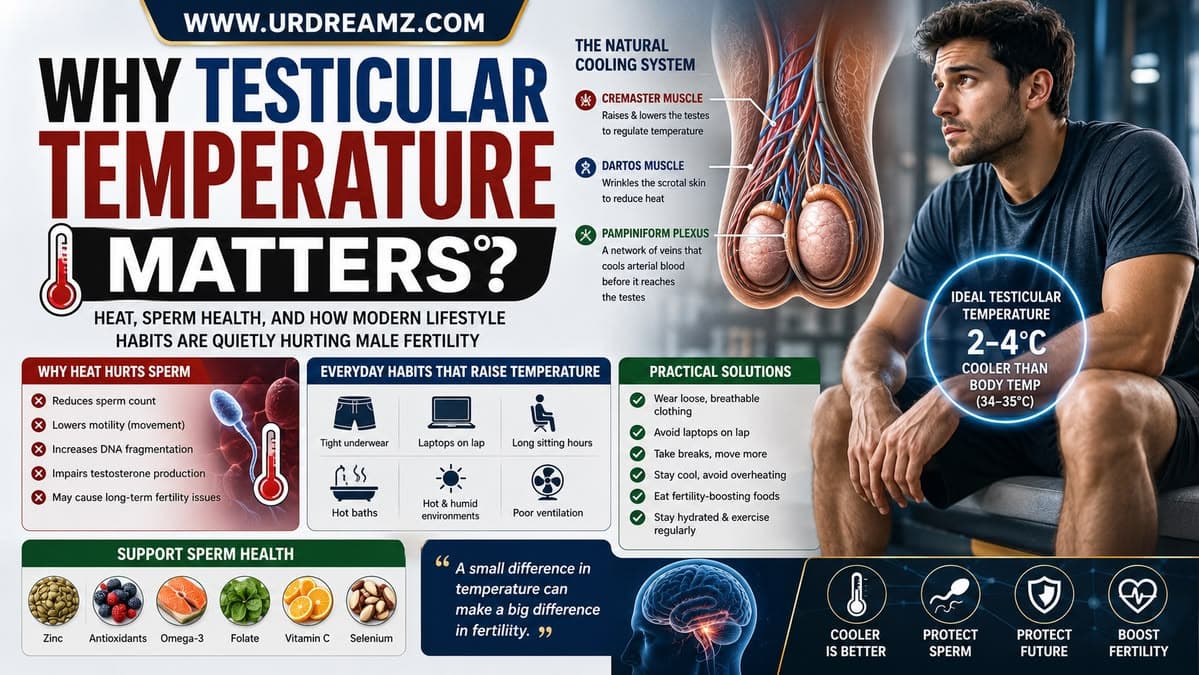
| Healthy Testicular Temperature | Approximately 34°C to 35°C (93°F to 95°F) |
That two-to-three-degree gap is not a small detail — it's a precisely maintained difference the body works continuously to preserve, because sperm-producing cells are simply not built to function correctly at full core body temperature.
4. The Simple Bath-Time Experiment
You've likely noticed this without ever thinking about why: step into a cold shower or pour cool water over your body, and the scrotum visibly tightens and draws upward; step into a hot bath, and it visibly relaxes and hangs lower. This isn't random — it's the scrotum's muscles actively adjusting the distance between the testes and the warm body core in direct response to temperature, pulling them closer for warmth in the cold and letting them hang farther away to cool down in the heat.
5. What's Actually Happening Inside the Testes
Inside each testicle, specialized tissue continuously carries out two related but distinct jobs: producing testosterone, the primary male hormone, and producing sperm cells through a process called spermatogenesis. Both processes are sensitive to their environment, but sperm production in particular is remarkably vulnerable to even small increases in temperature.
6. Testosterone Production Overview
Testosterone is produced by specialized cells within the testes and plays a central role in male reproductive development, sperm production support, and a range of other bodily functions, including muscle mass, bone density, and libido. While testosterone production is somewhat less heat-sensitive than sperm production itself, chronic heat stress can still indirectly affect hormonal balance over time.
7. Sperm Production Overview
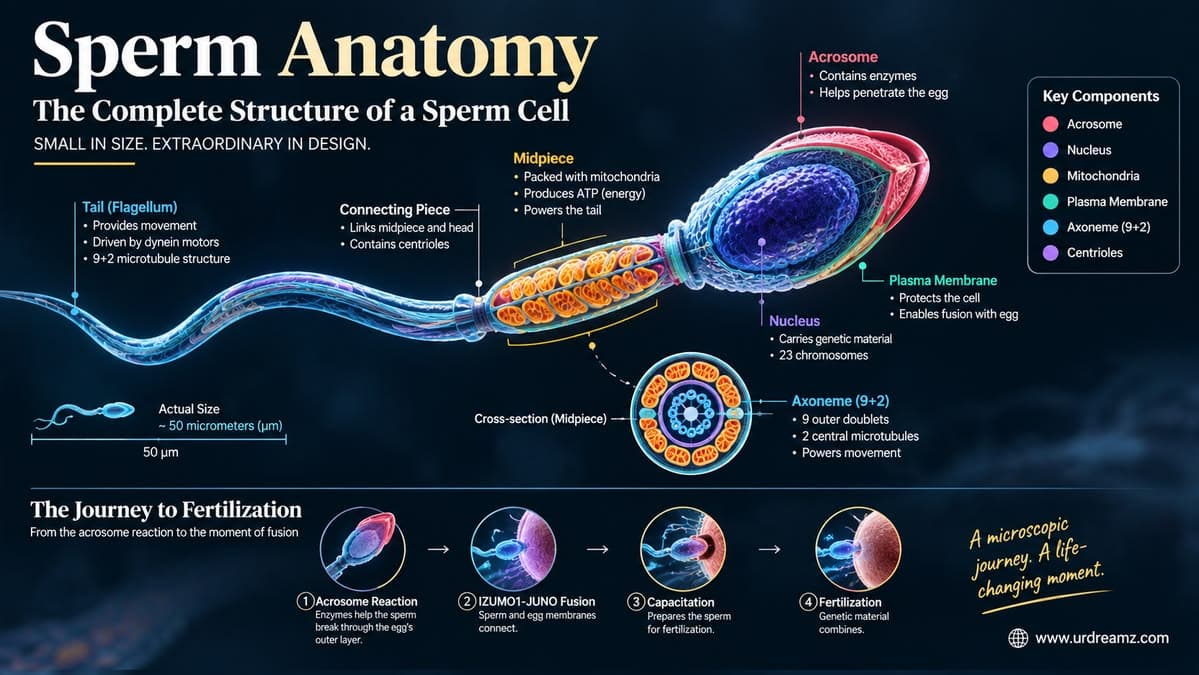
Sperm production takes place in tiny, tightly coiled structures inside the testes called seminiferous tubules, where developing sperm cells go through several distinct stages of maturation before becoming fully functional. This entire process depends heavily on a stable, cooler-than-body-core temperature to proceed correctly at every stage.
8. How Long Spermatogenesis Actually Takes
A single sperm cell takes roughly 64 to 74 days to fully develop from an early precursor cell into a mature sperm cell, with additional time needed afterward for transport and further maturation — bringing the full process to around 90 days in total. This is an important detail for understanding heat exposure: the sperm present in an ejaculate today reflects conditions the body experienced roughly three months earlier, not just recent behavior.
9. Daily Sperm Production Numbers
A healthy adult male typically produces somewhere between roughly 100 million and 300 million sperm cells per day, though this figure varies meaningfully based on age, overall health, genetics, and lifestyle factors, including the heat exposure discussed throughout this guide. This is a continuous, ongoing process, not a one-time event, which is exactly why sustained heat exposure over time causes cumulative rather than one-off damage.
10. Factors That Influence Sperm Count Besides Heat
| Factor | General Effect |
|---|---|
| Age | Sperm quality and count generally decline gradually with age |
| Diet and Nutrition | Deficiencies in key nutrients like zinc and antioxidants can impair sperm health |
| Smoking and Alcohol | Both are linked to reduced sperm count and motility |
| Stress | Chronic stress can affect hormone levels involved in sperm production |
| Underlying Medical Conditions | Conditions like varicocele or hormonal imbalances can directly impair production |
11. The Scrotum as a Natural Cooling System
The scrotum isn't just a protective pouch — it functions as an active, responsive climate-control system, constantly adjusting to keep the testes within their narrow optimal temperature range regardless of what the surrounding environment is doing. This system relies on a combination of muscles and specialized blood vessels working together continuously, without any conscious effort required.
12. The Cremaster Muscle Explained
The cremaster muscle surrounds each testicle and controls how close or far it sits relative to the warm body core. When the surrounding temperature drops, the cremaster contracts, pulling the testicle upward and closer to the body for warmth; when temperature rises, it relaxes, allowing the testicle to drop lower and further from the body's internal heat.
13. The Dartos Muscle Explained
The dartos muscle sits directly within the wall of the scrotal skin itself, and its job is to adjust the scrotum's surface area rather than the testicle's position. In cold conditions, it contracts, wrinkling and tightening the skin to reduce surface area and retain heat; in warm conditions, it relaxes, smoothing the skin out to increase surface area and allow more effective cooling.
14. How These Two Muscles Work Together
The cremaster and dartos muscles work as a coordinated team rather than independently: the cremaster adjusts distance from the body, while the dartos adjusts surface area for heat exchange. Together, they give the body fine, continuous control over testicular temperature, responding within minutes to changes in the surrounding environment.
15. The Pampiniform Plexus Explained
The pampiniform plexus is a network of veins surrounding the artery that carries blood into each testicle, and it plays a critical role in temperature regulation that goes beyond what the cremaster and dartos muscles alone can achieve. Blood arriving from the heart is at full core body temperature, roughly 37°C, and without intervention, this incoming warm blood would continuously heat the testes from the inside.
16. Counter-Current Heat Exchange Explained
The pampiniform plexus works through a mechanism called counter-current heat exchange: the cooler venous blood leaving the testicle flows in close contact with the warmer arterial blood entering it, allowing heat to transfer from the incoming warm blood to the outgoing cooler blood before it ever reaches the testicular tissue. By the time blood actually arrives at the testicle, its temperature has already dropped closer to the testicle's target range, protecting the delicate sperm-producing tissue from being warmed by blood flow itself.
17. Why Even a Small Temperature Rise Matters So Much
Because spermatogenesis is so finely tuned to operate within a narrow temperature window, even a seemingly small rise of just one or two degrees can meaningfully disrupt the process. This sensitivity is precisely why the body invests in such an elaborate, multi-layered cooling system in the first place — the margin for error in testicular temperature is genuinely small.
18. Correcting a Common Number You May Have Heard
A frequently repeated claim suggests that a 1°C rise in testicular temperature destroys around 40% of sperm cells — this figure is not accurate and considerably overstates the effect. The research actually available on this topic points to a roughly 14% decline in sperm production efficiency per 1°C increase in testicular temperature, a meaningful and well-documented effect, but a smaller one than the 40% figure sometimes circulated. It's still a significant enough drop to explain why sustained heat exposure over months and years can add up to real fertility consequences.
19. Oxidative Stress Explained
Oxidative stress occurs when unstable molecules called free radicals accumulate faster than the body's natural antioxidant defenses can neutralize them, damaging nearby cells in the process. Elevated testicular temperature is known to increase oxidative stress in developing sperm cells, which is one of the key biological mechanisms behind heat-related fertility damage.
20. DNA Fragmentation in Sperm Cells
DNA fragmentation refers to breaks or damage within a sperm cell's genetic material, which can impair its ability to fertilize an egg successfully or contribute to poor embryo development if fertilization does occur. Heat-induced oxidative stress is one of the recognized contributors to increased DNA fragmentation in sperm, making it a meaningful concern for couples trying to conceive.
21. Apoptosis: When Developing Sperm Cells Self-Destruct
Apoptosis is a programmed, controlled process of cell death that the body uses to eliminate damaged or abnormal cells before they can cause further problems. Under excess heat stress, developing sperm cells are more likely to trigger this self-destruct process, which is actually a protective mechanism — the body eliminating compromised cells rather than allowing damaged sperm to mature and potentially cause fertility issues.
22. Heat Risk #1: Tight Underwear and Clothing
Tight-fitting underwear and pants hold the scrotum closer to the body and restrict the natural movement needed for the cremaster and dartos muscles to regulate temperature effectively. Over time, consistently wearing tight, restrictive clothing can contribute to sustained elevated testicular temperature, particularly when combined with other heat risk factors.
23. Heat Risk #2: Laptops Resting on the Lap
Laptops generate real, measurable heat, and resting one directly on the lap for extended periods places that heat source in close, sustained contact with the scrotum. Regular, prolonged laptop use in this position — especially daily, for years, particularly common among remote and online workers — can meaningfully raise testicular temperature well above its optimal range.
24. Heat Risk #3: Long Sitting and Sedentary Jobs
Prolonged sitting reduces airflow around the scrotum, traps body heat against the groin, and limits the natural movement the scrotum needs to regulate temperature effectively. Desk-based, sedentary jobs involving many consecutive hours of sitting are a significant, often overlooked contributor to chronic testicular heat exposure.
25. Heat Risk #4: Professional Drivers
Professional drivers face a particularly concentrated version of this risk: hours of continuous sitting combined with proximity to a vehicle engine, which generates substantial heat directly beneath the driver's seat. Long-haul drivers and others who spend the majority of their working hours behind the wheel are considered a higher-risk group for heat-related fertility concerns specifically because of this combination.
26. Heat Risk #5: Hot Tubs, Saunas, and Long Hot Baths
Hot tubs, saunas, and extended hot baths expose the entire body, including the testes, to temperatures well above what's optimal for sperm production, and unlike ambient room heat, these environments actively work against the scrotum's cooling mechanisms rather than simply limiting them. Frequent, regular use of these can measurably affect sperm parameters, though effects are generally temporary and tend to improve after exposure stops.
27. Heat Risk #6: Occupational Heat Exposure
Certain occupations involve routine exposure to high ambient heat — commercial baking, steel and metal manufacturing, foundry work, and similar industrial settings — placing workers in these fields at meaningfully elevated risk for heat-related fertility effects over the course of a career. Protective measures and workplace cooling practices are particularly important for people in these roles.
28. Heat Risk #7: Rising Global Temperatures
As average temperatures climb in many parts of the world, including regions across Europe, the United States, and Australia experiencing increasingly extreme heat, everyday ambient heat exposure has become a more significant factor in overall testicular heat load than it once was. Combined with air-conditioned indoor lifestyles that reduce the body's natural heat adaptation, this represents a genuinely modern and growing contributor to the broader heat-and-fertility picture.
29. Heat Risk #8: Varicocele
A varicocele is an enlargement of veins within the scrotum, similar to varicose veins elsewhere in the body, and it's one of the more common medical causes of localized testicular heat elevation. By disrupting normal blood flow and the pampiniform plexus's cooling function, a varicocele can raise local testicular temperature and is a well-recognized, treatable cause of male infertility.
30. Heat Risk #9: Fever and Illness
A high fever raises core body temperature, and because the testes' cooling system is designed to work against a normal 37°C baseline, a sustained fever can temporarily impair sperm production during and for some weeks after the illness. This effect is generally temporary, with sperm parameters typically recovering over the following months as new sperm cells complete their roughly 90-day development cycle.
31. How Long-Term Heat Exposure Adds Up Over Years
Because individual sperm cells take around three months to fully develop, the effects of heat exposure aren't usually immediate — they show up gradually, often only becoming apparent after months or years of consistent exposure through daily habits like tight clothing, laptop use, or prolonged sitting. Prolonged exposure over ten to twenty years, as can happen with certain unaddressed occupational or lifestyle patterns, has the potential to cause more lasting impairment that may be harder to reverse and could ultimately require medical treatment.
32. Signs That Heat Might Be Affecting Fertility
| Sign | Why It May Be Relevant |
|---|---|
| Difficulty conceiving after a year of trying | May warrant a semen analysis to check count, motility, and quality |
| Known consistent heat exposure (occupation, habits) | A relevant factor a doctor will want to know about during evaluation |
| Visible scrotal swelling or a "bag of worms" texture | Can indicate a varicocele, a treatable cause of heat-related fertility issues |
| Testicular discomfort or heaviness | Worth medical evaluation to rule out an underlying condition |
33. When to See a Doctor
Anyone experiencing persistent difficulty conceiving, noticeable scrotal swelling, discomfort, or a change in testicular size or texture should see a doctor or urologist rather than assuming lifestyle changes alone will resolve the issue. A semen analysis and physical examination can identify whether heat exposure, a varicocele, or another underlying cause is contributing to the problem, and can guide appropriate treatment.
34. Solution #1: Rethinking Clothing Choices
Choosing looser-fitting underwear and pants, particularly during long workdays or in warmer climates, allows the scrotum's natural cooling mechanisms to function as intended rather than working against them. This is one of the simplest and lowest-effort changes available, and it costs nothing beyond a clothing preference.
35. Solution #2: Better Laptop Habits
Using a laptop cooling pad, a table, or any solid surface between the laptop and the lap significantly reduces direct heat transfer to the groin area. For people who use laptops for many hours daily, this small adjustment can meaningfully reduce cumulative heat exposure over months and years.
36. Solution #3: Breaking Up Long Sitting
Standing up and moving for a few minutes every hour, particularly during long desk-based workdays, helps restore normal airflow and reduces the sustained heat buildup that comes with hours of continuous sitting. Even short, regular breaks make a meaningful difference compared to remaining seated for an entire shift without interruption.
37. Solution #4: Limiting Hot Tubs and Saunas
Reducing the frequency and duration of hot tub, sauna, and prolonged hot bath use, particularly for those actively trying to conceive, allows testicular temperature to stay closer to its optimal range more consistently. This doesn't require eliminating these activities entirely, but moderating frequency can meaningfully help.
38. Solution #5: Precautions for High-Heat Occupations
For drivers, industrial workers, and others in occupations with significant heat exposure, taking regular breaks away from the heat source, wearing breathable clothing, and staying well hydrated all help reduce cumulative heat load over a working career. Where possible, seated cooling accessories or scheduled breaks away from heat-generating equipment can also meaningfully help.
39. Solution #6: Cooling Habits After Long Work Days
Changing out of tight or heat-trapping clothing promptly after a long shift, and allowing the groin area some time without restrictive clothing, gives the scrotum's cooling system a chance to reset rather than staying under sustained heat stress for the entire day and into the evening as well.
40. Diet and Lifestyle Support for Sperm Health
| Habit | Why It Helps |
|---|---|
| Antioxidant-rich foods (fruits, vegetables, nuts) | Help counter oxidative stress that damages developing sperm cells |
| Adequate zinc intake | Zinc plays a supporting role in healthy sperm production |
| Regular moderate exercise | Supports overall hormonal balance and circulation |
| Limiting alcohol and avoiding tobacco | Both are independently linked to reduced sperm quality |
| Managing chronic stress | Supports healthy hormone levels involved in sperm production |
| Staying well hydrated | Supports overall reproductive and general health |
41. Myths vs Facts About Heat and Fertility
| Myth | Fact |
|---|---|
| A single hot bath will cause permanent infertility | Occasional heat exposure typically causes only temporary effects; it's sustained, repeated exposure over months and years that carries more lasting risk |
| A 1°C rise destroys 40% of sperm | Research points to roughly a 14% decline in sperm production efficiency per 1°C increase, a meaningful but smaller effect |
| Heat exposure effects show up immediately | Because sperm take around 90 days to fully develop, effects typically show up months later, not right away |
| Only occupational heat exposure matters | Everyday habits like tight clothing, laptop use, and long sitting are just as relevant for most people |
| Heat-related fertility effects are always permanent | Many effects improve once heat exposure is reduced, though very prolonged, severe exposure can cause more lasting impairment |
42. Quick Glossary of Terms
| Term | Meaning |
|---|---|
| Spermatogenesis | The process by which sperm cells are produced and mature |
| Cremaster Muscle | Muscle that raises or lowers the testicle relative to the body for temperature control |
| Dartos Muscle | Muscle within the scrotal skin that adjusts surface area for heat regulation |
| Pampiniform Plexus | A network of veins that cools incoming arterial blood before it reaches the testicle |
| Counter-Current Heat Exchange | A mechanism where warm and cool fluids flowing in opposite directions transfer heat between them |
| Varicocele | An enlargement of veins in the scrotum that can raise local temperature and impair fertility |
| Oxidative Stress | Cell damage caused by an imbalance between free radicals and the body's antioxidant defenses |
43. Frequently Asked Questions
Why are the testes located outside the body?
Sperm production requires a temperature roughly two to three degrees cooler than the body's core, so the testes sit outside the body in the scrotum, where a dedicated system of muscles and blood vessels can maintain that cooler environment.
What is the ideal testicular temperature?
Healthy sperm production generally functions best when testicular temperature stays around 34°C to 35°C, compared to a core body temperature of about 37°C.
How much does heat actually reduce sperm production?
Research suggests roughly a 14% decline in sperm production efficiency for each 1°C increase in testicular temperature, a significant effect, though smaller than some commonly repeated but inaccurate figures suggest.
Do laptops really affect sperm health?
Yes, resting a laptop directly on the lap for extended periods transfers real heat to the scrotum, and regular long-term use in this position can meaningfully raise testicular temperature over time.
How long does it take for sperm to recover after heat exposure?
Since a full cycle of sperm development takes around 90 days, most heat-related effects that aren't caused by an ongoing structural issue like a varicocele tend to improve within a few months of reducing heat exposure.
Does sitting for long periods affect fertility?
Prolonged sitting reduces airflow and traps heat around the groin, and consistent long-term sitting, such as in desk jobs or professional driving, is a recognized contributor to elevated testicular temperature.
What is a varicocele and how is it related to heat?
A varicocele is an enlargement of veins in the scrotum that disrupts normal blood flow and cooling, raising local testicular temperature, and it's one of the more common treatable medical causes of male infertility.
Can heat-related fertility damage be reversed?
In many cases, yes — reducing heat exposure allows sperm parameters to improve over the following months, though very prolonged or severe exposure over many years may cause more lasting effects that could require medical evaluation.
44. Conclusion
The human body didn't place the testes outside its protective core by accident — it built an entire, continuously active climate-control system around them, involving muscles that adjust position and surface area, and a specialized network of blood vessels that cools incoming blood before it can do any harm. That level of biological investment says something important on its own: sperm production is genuinely fragile in the face of heat, and the margin for error is smaller than most people realize.
The good news is that most of the everyday risk factors driving this problem — tight clothing, laptops on the lap, hours of uninterrupted sitting, frequent hot tub or sauna use — are habits, not fixed conditions, and habits can be adjusted. None of these changes require dramatic lifestyle overhauls; they're small, sustainable shifts that give the body's own cooling system room to do the job it was already built to do.
If fertility concerns persist despite these changes, or if there are signs like scrotal swelling, discomfort, or a suspected varicocele, the right next step is a conversation with a doctor or urologist, not continued self-management alone. Heat is one meaningful, modifiable piece of the fertility picture — but it's one piece among several, and a proper medical evaluation is the only way to see the full picture clearly.