"It's Just Gas": The Midnight Chest Pain That Kills More South Asians Than Any Other Single Mistake
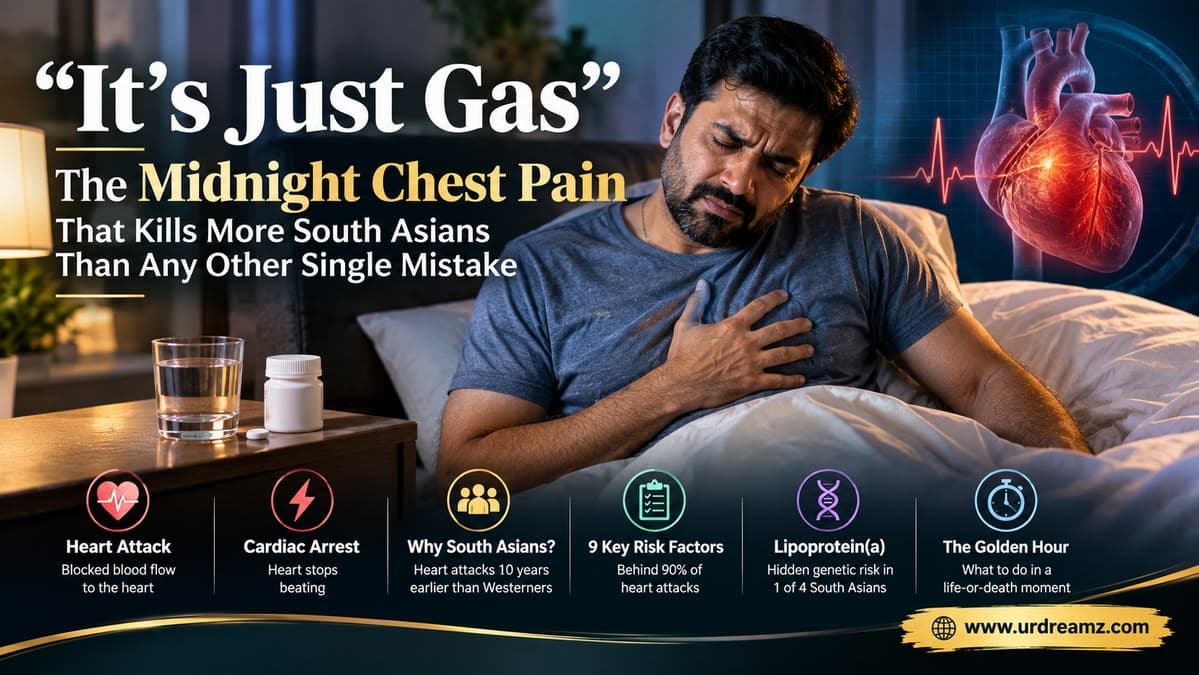
It's midnight. A man is asleep in bed when a sudden burning pain starts in his chest. He gets up, walks to the washroom, takes an antacid or a gas tablet, assuming it's just indigestion. His wife wakes up, makes him a cup of green tea, and he tells her, "Go back to sleep, I'll be fine by morning." She does. He never wakes up. This isn't a scene from a film — it is a true story that repeats itself, in some version, in households across Asia, night after night. And the most heartbreaking detail is this: that man had roughly an hour — what doctors call the "golden hour" — during which real, life-saving action could have been taken. Instead, he spent that entire hour hoping a stomach tablet and a good night's sleep would fix what was actually a blocked artery.
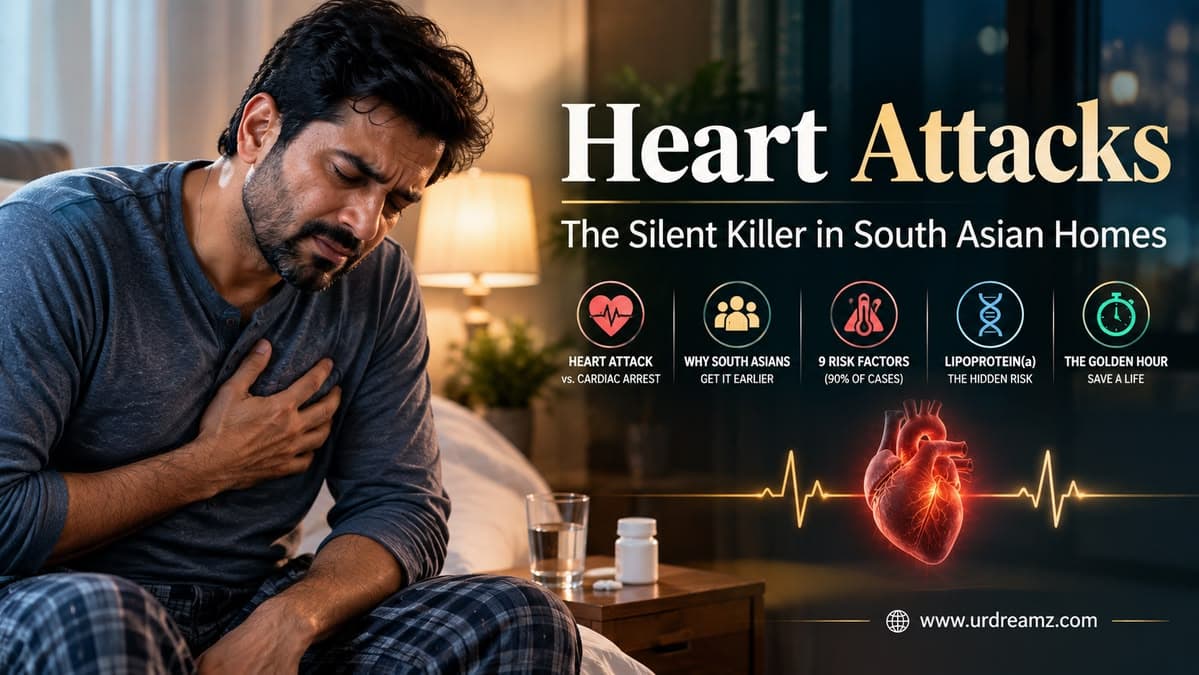
This isn't only a story about misreading symptoms. It's also a story about never having checked, in years, whether those symptoms had any reason to appear at all. In this article, we're going to break down exactly what a heart attack is, how it's genuinely different from cardiac arrest, why South Asian bodies seem to hit this crisis roughly a decade earlier than Western populations, the nine specific, measurable factors responsible for the overwhelming majority of heart attacks worldwide, a hidden genetic risk factor that affects roughly one in four South Asians and doesn't show up on a standard cholesterol test, and precisely what to do if you ever find yourself standing next to someone in that critical golden hour.
Quick Answer
Last updated: September 2026
A heart attack happens when a blocked coronary artery cuts off blood flow to part of the heart muscle, which begins to die from lack of oxygen — the person is usually conscious, often in pain, and still has a heartbeat. Cardiac arrest is different and more immediately deadly: it's an electrical malfunction that causes the heart to stop beating altogether, leading to sudden collapse and loss of consciousness within seconds. A heart attack can trigger cardiac arrest, but they are not the same event. The landmark INTERHEART study, spanning 52 countries, found that just nine measurable, controllable factors — smoking, an abnormal cholesterol/lipid ratio, high blood pressure, diabetes, abdominal obesity, stress, poor diet, physical inactivity, and alcohol — account for roughly 90% of all first heart attacks worldwide. South Asians also carry a distinct genetic risk factor called elevated Lipoprotein(a), present in about 25% of the South Asian population, which doesn't appear on a routine cholesterol panel and requires a separate blood test. If a heart attack is suspected, calling emergency services immediately — not waiting, not self-medicating, not driving yourself — is the single most important action in that first "golden hour."
1. The Blocked Pipe: How Arteries Actually Get Clogged
Picture the pipe that carries water into your home. Over years, without anyone noticing, mineral deposits can slowly build up along the inside of that pipe. From the outside, the pipe looks completely normal. Then, one day, a piece of that internal buildup breaks loose, lodges itself somewhere further down the line, and the water supply stops entirely. Your heart's arteries work in a strikingly similar way — except instead of water, it's blood, and instead of mineral deposits, it's a slow buildup of cholesterol, fat, and sugar-related deposits along the artery walls, called plaque.
This plaque builds up silently over years, without producing any warning signal at all. The real danger arrives when a piece of that plaque ruptures. When it does, the body's natural clotting response kicks in at exactly the wrong location, forming a blood clot right at the rupture site. That clot can fully block the artery, cutting off blood flow entirely. Beyond that point, the heart muscle downstream of the blockage begins to die from lack of oxygen — and that is what a heart attack actually is.
(Years, No Symptoms)
2. Heart Attack vs. Cardiac Arrest: The Critical Difference
These two terms are used almost interchangeably in everyday conversation, but medically, they describe genuinely different events — and understanding the difference matters, because the appropriate emergency response differs too.
| Aspect | Heart Attack | Cardiac Arrest |
|---|---|---|
| What's happening | A blocked artery cuts off blood flow to part of the heart muscle | An electrical malfunction causes the heart to stop beating entirely |
| Consciousness | Usually conscious, often in significant pain | Sudden loss of consciousness, collapse |
| Heartbeat | Still present, though the heart is under strain | Absent or dangerously chaotic (commonly ventricular fibrillation) |
| Onset | Often gradual, building over minutes to hours | Sudden, often without warning |
| Immediate action needed | Emergency medical care; call for help right away | CPR and an AED (defibrillator) immediately; every minute without CPR sharply lowers survival odds |
| Relationship between the two | Can trigger a cardiac arrest | Can be caused by a heart attack, but also by other conditions |
2b. What About a Stroke? Same Family of Disease, Different Organ
Strokes and heart attacks share the exact same underlying disease process — the buildup and rupture of arterial plaque, followed by a blood clot — but the location differs entirely. A heart attack happens when this process blocks an artery feeding the heart muscle; a stroke happens when it blocks (or, less commonly, ruptures) an artery feeding the brain. This is precisely why someone with significant heart attack risk factors, such as high blood pressure, diabetes, or elevated Lipoprotein(a), also carries meaningfully elevated stroke risk — the underlying vascular disease doesn't respect organ boundaries, and the same lifestyle and testing recommendations covered throughout this article for heart attack prevention apply almost identically to stroke prevention.
3. Heart Attack vs. Stroke, Angina, Panic Attack, and Gastric Pain
Because chest and body discomfort can come from so many different sources, confusion in the moment is genuinely common — which is exactly why the man in our opening story reached for a gas tablet instead of calling for help. Here's a general comparison to help tell these apart, though any genuine uncertainty should always be treated as a medical emergency rather than self-diagnosed.
| Condition | Typical Pattern |
|---|---|
| Heart Attack | Chest pressure/squeezing, often spreading to the arm, jaw, back, or neck; cold sweat, nausea, breathlessness; discomfort often persistent, not tied to swallowing or position |
| Stroke | Sudden face drooping, arm weakness, slurred speech — affects the brain, not typically chest pain |
| Angina | Chest discomfort similar to a heart attack but usually triggered by exertion and relieved by rest; a warning sign of underlying artery narrowing |
| Panic/Anxiety Attack | Rapid heartbeat, chest tightness, often with intense fear, tingling, and hyperventilation; typically peaks and eases within minutes |
| Gastric/Acid Reflux Pain | Burning sensation, often related to eating, lying down, or specific foods; may improve with antacids (though this overlap is exactly why gastric pain is so dangerously easy to misjudge) |
The critical takeaway isn't to become a confident self-diagnostician — it's the opposite. Given how much these conditions can overlap, especially in the confusing, half-asleep moments of a midnight symptom, the only safe default is to treat unexplained chest pain as a potential emergency and seek medical evaluation, rather than trying to reason your way into the least alarming explanation, the way our opening story's central figure did.
3b. And Where Does Heart Failure Fit In?
Heart failure is a third, distinct term that often gets confused with the other two, so it's worth clarifying directly. Heart failure isn't a sudden event at all — it's a chronic condition in which the heart muscle has become too weak or too stiff to pump blood efficiently, often developing gradually over months or years, sometimes as a lasting consequence of one or more previous heart attacks that damaged the heart muscle permanently. Someone with heart failure typically experiences ongoing symptoms like breathlessness during everyday activity, persistent fatigue, and swelling in the legs or abdomen, rather than the sudden, acute crisis of a heart attack or the immediate collapse of cardiac arrest. In simple terms: a heart attack is a sudden blockage event, cardiac arrest is a sudden electrical stoppage, and heart failure is the heart's gradually weakening ability to do its job over time — three related but genuinely distinct conditions, sometimes connected as cause and long-term consequence of one another.
4. The Golden Hour: Why Every Minute Genuinely Counts
Doctors refer to the period immediately following the onset of heart attack symptoms as the "golden hour" — roughly the first sixty minutes, during which timely medical intervention has the greatest chance of limiting permanent heart muscle damage or preventing death entirely. This isn't a loose figure of speech; it reflects the biological reality that heart muscle cells, once cut off from oxygen, begin dying within a relatively short window, and the sooner blood flow is restored — typically through emergency procedures like angioplasty or clot-dissolving medication — the more heart muscle can potentially be saved. Delaying that first call for help, even by "waiting to see if it gets better," directly eats into this critical window, which is precisely what makes this specific mistake so devastatingly common and so preventable at the same time.
4b. Why Waiting "To See If It Gets Better" Is the Deadliest Instinct
It's worth understanding exactly why the instinct our opening story's central figure followed — take a tablet, wait, hope for the best — is so specifically dangerous in this scenario, beyond simply "wasting time." Chest pain that comes from indigestion or gas typically responds, at least partially, to an antacid within a reasonable window, giving false reassurance that the treatment "worked." Heart attack pain, by contrast, often persists or worsens regardless of any digestive remedy, precisely because the underlying cause has nothing to do with the stomach at all. The dangerous trap is that a person experiencing genuine heart attack pain can still convince themselves the discomfort is easing simply because they're lying still, breathing more calmly, or distracted by conversation — none of which reflects the blocked artery underneath actually improving. Every additional minute spent in this false reassurance is a minute the heart muscle downstream of the blockage continues to be starved of oxygen, quietly and irreversibly.
5. The Alarming Asia Data: Young, Healthy-Looking, and Still at Risk
One of the more unsettling patterns emerging from research on cardiac events across Asia is how young many of the affected individuals actually are. Research examining sudden cardiac deaths across the region has found that a striking proportion of those who died suddenly were between 18 and 45 years of age — a finding that directly challenges the common assumption that heart attacks are primarily an "older person's problem." This data underscores a genuinely important point: someone can look young, fit, and outwardly healthy while carrying years of silent arterial plaque buildup underneath, invisible without specific testing.
6. What Hospital Data Reveals About Sudden Cardiac Deaths
Hospital-based research examining causes of sudden death has found that heart attacks account for a substantial share of all sudden deaths overall, with the large majority of those specifically attributable to artery blockage — the exact mechanism described earlier in this article. Men over the age of 30 were consistently found to be among the most affected groups. What makes this data particularly important isn't just the raw numbers — it's the underlying message: these were not people who were suddenly, inexplicably struck down. In the overwhelming majority of cases, the underlying disease process — arterial plaque buildup — had been developing silently for years before the fatal event, which is precisely the theme running through this entire article.
7. The INTERHEART Study: 9 Factors Behind 90% of Heart Attacks
Perhaps the single most important piece of research to understand in this entire discussion is the INTERHEART study — a landmark investigation spanning 52 countries and tens of thousands of participants, published in The Lancet. Its central finding was remarkable in both its scale and its simplicity: just nine measurable, controllable risk factors account for approximately 90% of the risk of a first heart attack in men, and 94% in women, consistently across every region and ethnic group studied. Every single one of these nine factors relates directly to daily lifestyle and routine, testable health markers — not to anything requiring specialized hospital equipment to identify or begin addressing.
| Risk Factor | Approximate Contribution to Risk |
|---|---|
| Abnormal cholesterol/lipid ratio | Largest single contributor, roughly half of attributable risk |
| Smoking | Second largest contributor |
| Psychosocial stress | Substantial contributor, greater than hypertension alone |
| Abdominal obesity | Significant contributor |
| High blood pressure | Significant, consistent contributor |
| Lack of daily fruits and vegetables | Meaningful contributor |
| Diabetes | Meaningful contributor |
| Physical inactivity | Meaningful contributor |
| Alcohol consumption pattern | Smaller but still measurable contributor |
*Based on the INTERHEART study (Yusuf et al., The Lancet, 2004), 52 countries.
8. Factor 1 — Tobacco: Even "Just a Little" Adds Up
Smoking remains one of the two single largest contributors to heart attack risk identified in the INTERHEART study. Research has consistently shown a dose-response relationship — meaning risk climbs progressively with the amount smoked, but even light, "just a couple of cigarettes a day" smoking meaningfully raises risk above that of a non-smoker; some estimates suggest even a single daily cigarette can raise heart attack risk by a measurable margin. There is no genuinely "safe" low threshold of tobacco use when it comes to cardiovascular risk specifically.
9. Factor 2 — Cholesterol and Lipid Imbalance
An unhealthy ratio between "bad" and "good" cholesterol-carrying particles in the blood emerged as the single largest contributor to heart attack risk in the INTERHEART study, ahead of every other factor including smoking. In South Asia specifically, survey data indicates that a very large share of the adult population has some form of cholesterol imbalance — a genuinely striking figure that highlights just how widespread this particular risk factor already is across the region, often without the individuals affected being aware of it at all.
9b. The Cholesterol Number Most Standard Tests Don't Emphasize
Most routine cholesterol panels report LDL ("bad" cholesterol), HDL ("good" cholesterol), and triglycerides, and doctors typically focus conversation around the LDL number specifically. The INTERHEART study, however, found that a different measurement — the ratio between two specific proteins called ApoB and ApoA1, which reflects the balance between harmful and protective cholesterol-carrying particles in the blood — was an even stronger predictor of heart attack risk than LDL alone. This ratio isn't part of every routine lipid panel by default in many clinics, meaning a person can have a technically "acceptable" LDL number while still carrying a meaningfully elevated risk that a more complete lipid workup would have revealed. This is part of why a single "normal" cholesterol report shouldn't automatically be treated as a full, reassuring clearance — asking a doctor specifically about a more complete lipid or apolipoprotein assessment, particularly for anyone with a family history of early heart disease, can surface risk that a basic panel alone might miss entirely.
10. Factor 3 — High Blood Pressure: South Asia's Silent Epidemic
National health survey data from South Asia indicates that roughly a third of adults have high blood pressure. Perhaps more concerning than the prevalence itself is the awareness and treatment gap: among people with high blood pressure, national survey data suggests only about a third are even aware of their condition, and of those, only a small fraction have it properly controlled and treated — meaning the large majority of people with elevated blood pressure across the region are, quite literally, walking around with damaged arteries and no idea it's happening. Notably, blood pressure testing is inexpensive and widely available, including free of charge at many government health facilities — meaning cost is rarely the real barrier to finding out.
11. Factor 4 — Diabetes
Diabetes roughly doubles individual heart attack risk according to INTERHEART's findings, and survey data suggests a meaningful share of South Asian adults live with diabetes, a substantial portion of whom remain undiagnosed. Diabetes damages blood vessels throughout the body over time, including the coronary arteries specifically, compounding whatever other risk factors happen to be present simultaneously.
12. Factor 5 — Abdominal Fat and Obesity
Unlike overall body weight, abdominal (visceral) fat specifically was identified in the INTERHEART study as a particularly significant contributor to heart attack risk, consistent with broader research linking visceral fat to direct metabolic and inflammatory effects on the cardiovascular system. This is part of why waist circumference, discussed in earlier articles in this series, is often considered a more meaningful risk indicator than body weight or BMI alone.
13. Factor 6 — Psychosocial Stress
Chronic stress, anxiety, and a perceived loss of control over one's life circumstances were found in the INTERHEART study to contribute more to heart attack risk than high blood pressure alone — a genuinely striking finding that challenges the common assumption that stress is a "soft," secondary factor compared to more clinical risk markers. Chronic stress affects the cardiovascular system through multiple pathways, including elevated stress hormones, increased blood pressure, and unhealthy coping behaviors like smoking, overeating, or poor sleep that often cluster together with high-stress lifestyles.
14. Factor 7 — Diet: The Fruits and Vegetables Gap
The absence of regular daily fruit and vegetable consumption was independently linked to meaningfully higher heart attack risk in the INTERHEART study, while consistent daily consumption was associated with a notably lower risk. This is a genuinely low-cost, widely accessible protective factor compared to several others on this list, making it one of the more achievable starting points for meaningful risk reduction.
15. Factor 8 — Physical Inactivity
Regular physical activity was consistently associated with lower heart attack risk across every region studied in the INTERHEART research. This doesn't necessarily require intense training — the protective association held for people engaging in consistent, moderate activity, reinforcing that meaningful risk reduction doesn't require becoming an athlete, only becoming consistently, moderately active rather than largely sedentary.
16. Factor 9 — Alcohol
Alcohol consumption pattern was the ninth and final factor identified in the INTERHEART study, with a smaller but still statistically measurable contribution to overall heart attack risk compared to the other eight factors. This factor interacts with several others already discussed — including its established links to high blood pressure and disrupted metabolism — compounding risk rather than acting in complete isolation.
17. Lipoprotein(a): The Hidden Genetic Bomb Your Cholesterol Test Misses
Here's a critical piece of the puzzle that explains a great deal about why heart attacks can strike relatively young, otherwise healthy-looking South Asians with no obvious lifestyle risk factors at all. Lipoprotein(a), often abbreviated Lp(a), is a genetically determined particle in the blood that independently raises cardiovascular risk — and crucially, it is not included in a standard cholesterol panel, meaning a person can receive a completely "normal" lipid report and still be carrying this specific, significant hidden risk.
Research indicates that approximately 25% of the South Asian population has elevated Lp(a) levels — a notably higher prevalence than in White European populations (around 20%) or East Asian populations (around 10%), though somewhat lower than in African populations (around 30%). This elevated Lp(a) burden appears to exist largely independent of standard cholesterol (LDL) levels, meaning it functions as a genuinely separate, additional risk pathway. Research has found that elevated Lp(a) increases heart attack risk by more than twofold specifically in South Asian populations — a notably stronger effect than observed in several other ethnic groups. Because it isn't part of routine testing, anyone with a family history of early heart disease is generally well advised to specifically request an Lp(a) test rather than assuming a standard cholesterol panel has already covered this risk.
18. Why South Asians Face Heart Attacks a Decade Earlier
Pulling several threads from this article together, research has consistently found that South Asian populations tend to experience heart attacks roughly a decade earlier, on average, than Western populations, alongside more severe presenting pain in many cases. This earlier onset appears to result from a combination of factors discussed throughout this piece working together: the notably higher prevalence of elevated Lipoprotein(a), a widespread but poorly controlled burden of high blood pressure and diabetes, dietary patterns often heavy in refined carbohydrates and reused cooking oils, and comparatively lower average levels of structured physical activity relative to some other regions — a combination of genetic vulnerability and modern lifestyle change arriving together, rather than any single isolated cause.
18b. Heart Attacks in Young Adults: What's Actually Different
Heart attacks occurring before age 40 or 45 deserve their own specific discussion, since the contributing picture can differ somewhat from the classic profile. Beyond the standard risk factors already covered, young-onset heart attacks are more frequently linked to a combination of heavy smoking or vaping, genetic factors like elevated Lipoprotein(a) or other inherited lipid disorders, unmanaged stress and poor sleep patterns common in demanding early-career years, recreational stimulant drug use in some cases, and, less commonly, underlying inflammatory or clotting disorders. The presence of any heart attack in a first-degree relative under 55 (men) or 65 (women), discussed further in this article, is a particularly important flag specifically for younger individuals to discuss proactively with a doctor, well before any symptoms ever appear, rather than waiting for a routine checkup driven by age alone.
19. Know Your Numbers: The Tests You Actually Need
| Test | What It Checks | Widely Available at Low Cost? |
|---|---|---|
| Blood Pressure Check | Hypertension | Yes, often free at government facilities |
| Fasting Blood Sugar / HbA1c | Diabetes and prediabetes | Yes |
| Lipid Profile | Standard cholesterol (LDL, HDL, triglycerides) | Yes |
| Lipoprotein(a) Test | Genetic cardiovascular risk not shown on standard lipid panel | Less commonly available; must be specifically requested |
| ECG (Electrocardiogram) | Heart's electrical activity and rhythm | Yes |
| Echocardiogram | Heart structure and pumping function | Widely available, moderate cost |
| Treadmill (Stress) Test | Heart's response to physical exertion | Widely available, moderate cost |
A doctor's guidance is generally recommended before starting a new, intense exercise routine after age 30, especially for anyone who has been largely sedentary — an ECG, echocardiogram, and treadmill test can help identify underlying issues before they're exposed by sudden physical strain.
20. Trans Fat and the Hidden Danger of Reused Kitchen Oil
The World Health Organization recommends limiting trans fat intake to less than 2 grams a day, and ideally under 1% of total daily energy intake. Trans fats are especially concentrated in vanaspati ghee, commercially baked goods, and deep-fried fast food and packaged snacks. Many South Asian countries have regulations limiting trans fat content in cooking oil to below a small percentage threshold — but this regulation typically applies to the oil as sold, not to oil that has already been repeatedly reheated on a stove or in a street-food fryer until it has visibly darkened, a process well known to increase harmful compound formation regardless of what the original bottle's label claimed.
21. Salt: The Hidden Source Isn't Your Salt Shaker
The World Health Organization recommends limiting salt intake to under 5 grams a day. As discussed in earlier coverage of blood pressure in this series, most excess salt doesn't come from what's sprinkled on at the table — it comes pre-loaded into fried snacks, packaged foods, and preserved condiments, often at levels far exceeding what most people would consciously choose to add themselves.
22. Sleep, Snoring, and Heart Risk
Research has found a consistent association between heavy, habitual snoring and increased heart attack risk, and the same pattern holds for people regularly getting fewer than six hours of sleep per night. Snoring is frequently treated as a harmless, even comedic, nightly habit, but it can actually be an early sign of obstructive sleep apnea — a condition involving repeated pauses in breathing during sleep that places real, repeated strain on the cardiovascular system throughout the night, often without the sleeper ever being aware it's happening.
23. Air Pollution (PM2.5) and Cardiovascular Death
Fine particulate air pollution, known as PM2.5, is linked to a substantial number of deaths across South Asia each year, and research indicates that roughly half of these pollution-related deaths are attributable specifically to heart and blood vessel disease rather than respiratory illness alone. This makes air quality a genuinely significant, if often overlooked, cardiovascular risk factor for anyone living in the region's larger, more polluted cities — a background risk factor operating quietly alongside diet, activity, and the other factors already discussed.
24. Exercise: A Genuine Friend, but Not an Overnight Hero
There's no meaningful debate that regular exercise genuinely protects heart health over the long term. The real danger lies specifically in sudden, dramatic changes in activity level — someone who has been largely sedentary for years suddenly deciding to push hard at the gym without any prior medical clearance. Research has found that unusually intense physical exertion shortly before a cardiac event is a recognizable pattern in some heart attack cases — not because exercise itself is harmful, but because an unconditioned cardiovascular system, potentially already carrying undetected plaque buildup, can be pushed past its limits by an abrupt, dramatic increase in demand. The message here isn't "avoid exercise" — it's "don't suddenly become a hero without a medical check first," particularly for anyone over 30 who hasn't been consistently active and doesn't yet know their own numbers.
25. Family History: What Actually Counts as a Genetic Red Flag
Not every case of heart disease in the family tree carries the same genetic significance. The clinically meaningful red flag is a first-degree relative — a parent or sibling — experiencing a heart attack or related cardiac event at an unusually young age: generally defined as before 55 for male relatives and before 65 for female relatives. A grandparent who developed heart disease at 85, for instance, doesn't carry nearly the same genetic weight as a father who had a heart attack at 48 — the age at onset is what transforms "heart disease runs in the family" from a vague concern into a specific, clinically actionable red flag worth discussing directly with a doctor.
26. Silent Heart Attacks: Why Women and Diabetics Are at Higher Risk
Research indicates that roughly one in every five heart attacks is "silent" — occurring with minimal or no classic chest pain at all. This pattern is notably more common among women and among people with diabetes, and the underlying reason connects back to a mechanism discussed earlier in this series: diabetes damages the nerves responsible for carrying pain signals to the brain, which can blunt or entirely mute the chest pain that would otherwise serve as the body's primary warning sign. In women specifically, silent or atypical heart attacks often present instead as breathlessness, upper abdominal fullness or pressure, back discomfort, or overwhelming, unusual fatigue — symptoms very easily dismissed as ordinary tiredness or a stressful day, which is exactly why they're so dangerously easy to overlook until it's too late.
| Symptom Pattern | More Typical In |
|---|---|
| Classic chest pain/pressure radiating to the arm | Men, and many but not all women |
| Breathlessness without obvious chest pain | Women, diabetic patients |
| Upper abdominal pressure or fullness | Women |
| Unusual, overwhelming fatigue | Women |
| Minimal or no pain at all ("silent" heart attack) | Diabetic patients, women, older adults |
27. The Golden Hour Action Plan: What to Actually Do
If someone near you shows signs of a possible heart attack — chest discomfort, especially during rest or light activity, cold sweat, pain radiating down the left arm, or unusual breathlessness — the golden-hour action plan is straightforward, even if it isn't always instinctive in the panic of the moment.
| Step | Why It Matters |
|---|---|
| Call emergency services immediately | Ambulances typically carry oxygen, initial medication, and can alert the hospital in advance, saving critical time |
| Do not drive the person yourself | A private vehicle has no emergency equipment and driving distracts from monitoring the patient |
| Do not delay searching for a specific medication | Aspirin should only be given if and when a doctor or emergency operator specifically advises it — don't waste critical minutes hunting for a particular tablet |
| If the person becomes unresponsive, begin CPR | Chest compressions keep oxygenated blood moving to the brain until professional help arrives |
| Call an emergency helpline for real-time guidance if unsure | Emergency operators can talk you through CPR step-by-step if you haven't been trained |
27b. What Actually Happens at the Hospital: Angioplasty and Stents
Once someone having a heart attack reaches appropriate medical care, the priority is restoring blood flow through the blocked artery as quickly as possible. The most common emergency procedure is angioplasty, in which a thin tube called a catheter is threaded through a blood vessel, usually from the wrist or groin, up to the specific blocked point in the coronary artery. A small balloon at the catheter's tip is then inflated to compress the blockage and reopen the artery, and in most cases, a small mesh tube called a stent is left in place to help keep the artery propped open going forward. In situations where angioplasty isn't immediately available, clot-dissolving medication may be used instead to break down the blockage pharmacologically. Both approaches are significantly more effective the sooner they're administered after symptoms begin, which circles directly back to why the golden hour, and the decision to call for help immediately rather than waiting, matters so profoundly to the actual outcome.
28. CPR: The Skill That Saves Lives — And the Gap That Costs Them
When someone in cardiac arrest collapses, immediate chest compressions — delivered at roughly 100 to 120 compressions per minute, firmly, in the center of the chest — can keep blood carrying oxygen circulating to the brain until professional help arrives, meaningfully improving survival odds. Globally, research indicates that roughly half of cardiac arrest patients receive bystander CPR before medical professionals arrive. In South Asia specifically, that figure has been reported as dramatically lower — in some reports, well under 10% — representing a genuinely significant, preventable gap in survival outcomes across the region, not because people don't care, but because most people were simply never taught this skill.
*Illustrative comparison based on commonly cited emergency medicine research; figures vary by specific study and region.
Learning basic CPR — through a short course offered by many hospitals, Red Cross/Red Crescent chapters, and community health organizations — is one of the single most impactful, low-cost skills anyone can acquire, precisely because it directly addresses this specific, well-documented gap.
28b. Understanding the AED: Why It Works Alongside CPR
An Automated External Defibrillator (AED) is a portable device designed specifically to address the most common underlying cause of cardiac arrest — ventricular fibrillation, a chaotic, ineffective electrical rhythm in which the heart quivers rapidly instead of pumping blood in an organized way. An AED analyzes the heart's rhythm automatically and, if it detects a shockable rhythm, delivers a controlled electric shock intended to briefly stop this chaotic activity, giving the heart a chance to resume a normal, organized beat on its own. Modern AEDs are specifically designed for use by untrained bystanders — they provide clear voice instructions step by step and will not deliver a shock unless the device itself detects a rhythm that requires one, making them considerably safer and more approachable to use than most people assume. CPR and an AED work as a team, not as alternatives to each other: CPR keeps oxygenated blood circulating in the meantime, while the AED addresses the actual underlying electrical problem, and using both together, as soon as possible, offers a meaningfully better chance of survival than either alone.
29. The Cardiologist Shortage: A Systemic Problem Worth Knowing About
Beyond individual choices and family history, it's worth being aware of a genuine systemic constraint: in many parts of South Asia, the ratio of cardiologists to the general population is reported to be extremely stretched, with figures in some regions suggesting roughly one cardiologist for every 150,000 people or more. This has direct, practical implications for the golden-hour discussion throughout this article — in many real-world emergencies, a specialist simply may not be immediately available, which places even greater weight on the actions of ordinary bystanders: the speed of the emergency call, the willingness to perform CPR, and the decision not to waste precious minutes waiting and hoping symptoms will resolve on their own.
29b. Life After a Heart Attack: Recovery Is Not the End of the Story
For anyone who survives a heart attack, or is close to someone who has, it's worth understanding that surviving the acute event is the beginning of a longer recovery process, not the end of the risk. Cardiac rehabilitation programs — typically involving medically supervised exercise, dietary guidance, and psychological support — have been shown to meaningfully reduce the risk of a second cardiac event and improve long-term quality of life, yet remain underused in many parts of the world simply because awareness of their existence and benefit is limited. Medication adherence matters just as much as any lifestyle change discussed throughout this article; many prescribed post-heart-attack medications work specifically to stabilize plaque, control blood pressure, or reduce clotting risk, and stopping them independently, even after feeling completely recovered, meaningfully raises the risk of a repeat event. Emotional recovery deserves attention too — anxiety and depression are common after a serious cardiac event, understandably so, and addressing this alongside physical recovery is now widely recognized as a genuine part of comprehensive cardiac care, not an optional afterthought.
30. Frequently Asked Questions
What is the main difference between a heart attack and cardiac arrest?
A heart attack is caused by a blocked artery cutting off blood flow to part of the heart muscle, while cardiac arrest is an electrical malfunction that causes the heart to stop beating entirely. A heart attack can trigger cardiac arrest, but they are distinct events.
What are the classic symptoms of a heart attack?
Chest pain or pressure, discomfort spreading to the arm, jaw, back, or neck, shortness of breath, cold sweat, nausea, and sudden fatigue are common symptoms, though presentation can vary, especially in women.
Why do South Asians have heart attacks at a younger age?
A combination of factors including a higher prevalence of elevated Lipoprotein(a), widespread but poorly controlled high blood pressure and diabetes, dietary patterns, and lower average physical activity levels contribute to earlier onset compared to some Western populations.
What is the "golden hour" in a heart attack?
It refers to the first roughly 60 minutes after symptom onset, during which timely medical intervention has the greatest chance of limiting heart muscle damage or preventing death.
What is Lipoprotein(a) and why does it matter?
Lipoprotein(a), or Lp(a), is a genetically determined blood particle that independently raises cardiovascular risk. It is not included in standard cholesterol tests and affects roughly 25% of South Asians.
What are the 9 main risk factors identified by the INTERHEART study?
Smoking, abnormal cholesterol/lipid ratio, high blood pressure, diabetes, abdominal obesity, psychosocial stress, low fruit and vegetable intake, physical inactivity, and alcohol consumption together account for about 90–94% of first heart attack risk.
Can a heart attack happen without chest pain?
Yes. Roughly one in five heart attacks is "silent," more commonly in women and people with diabetes, who may instead experience breathlessness, fatigue, or abdominal discomfort.
Should I drive someone to the hospital myself during a suspected heart attack?
No. Calling emergency services is strongly recommended, since ambulances can provide oxygen and initial treatment en route and alert the hospital in advance.
How is a heart attack different from a panic attack?
Panic attacks often involve intense fear, rapid heartbeat, and tingling, typically peaking and easing within minutes, whereas heart attack discomfort tends to persist and often spreads to the arm, jaw, or back. When in doubt, it should be treated as a medical emergency.
Is it safe to start intense exercise suddenly after being inactive for years?
Not without a medical check first, especially after age 30. A sudden, dramatic increase in physical exertion has been linked to short-term cardiac risk in previously sedentary individuals with undetected underlying issues.