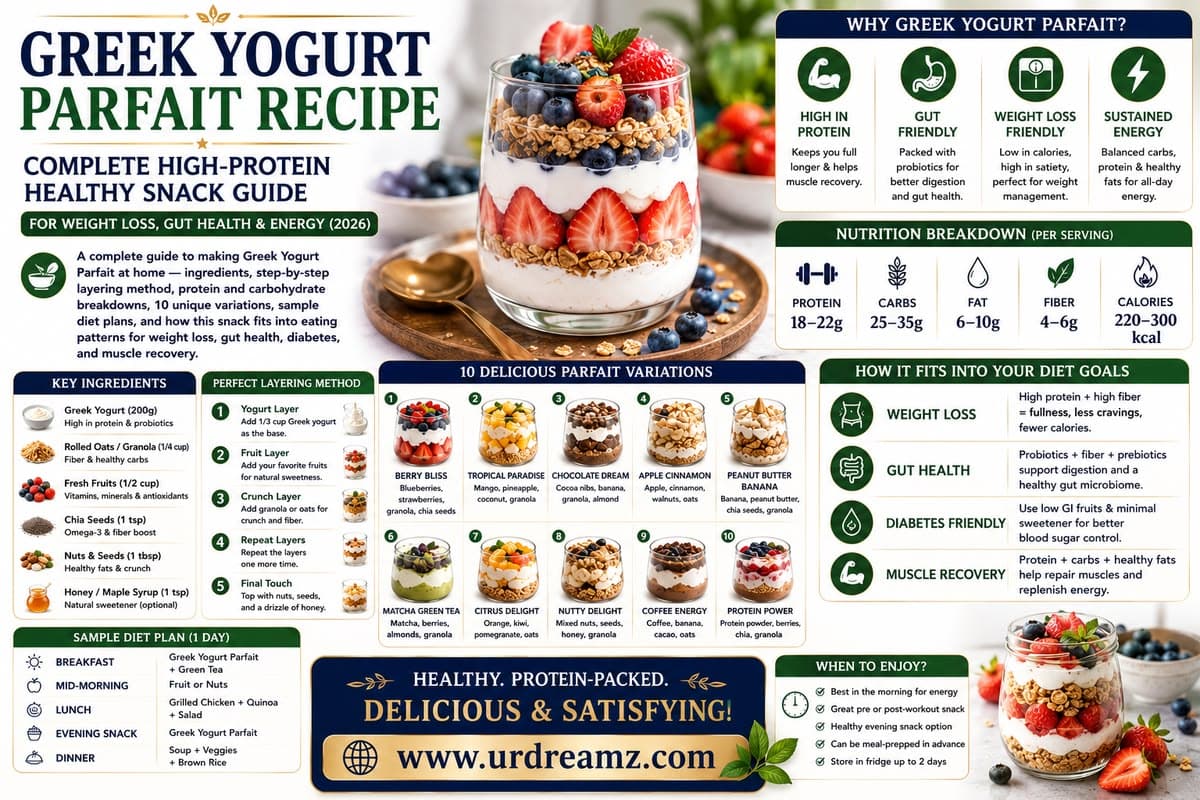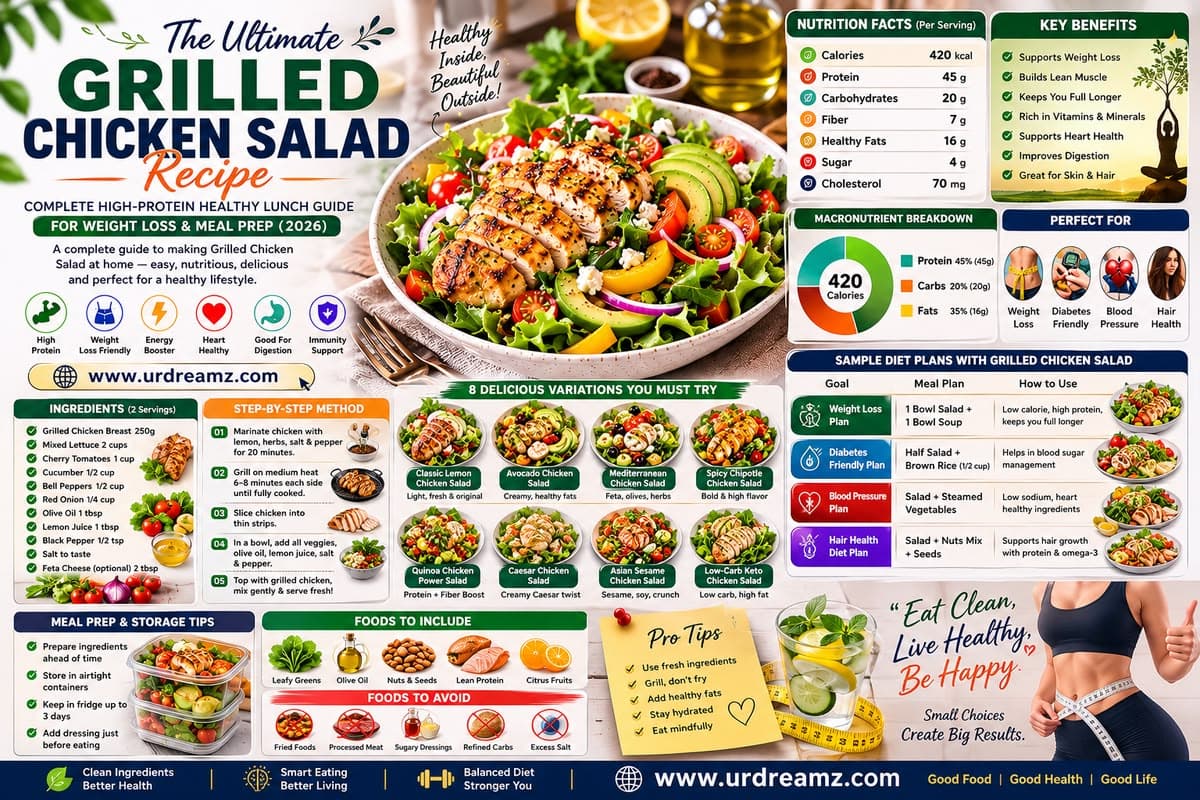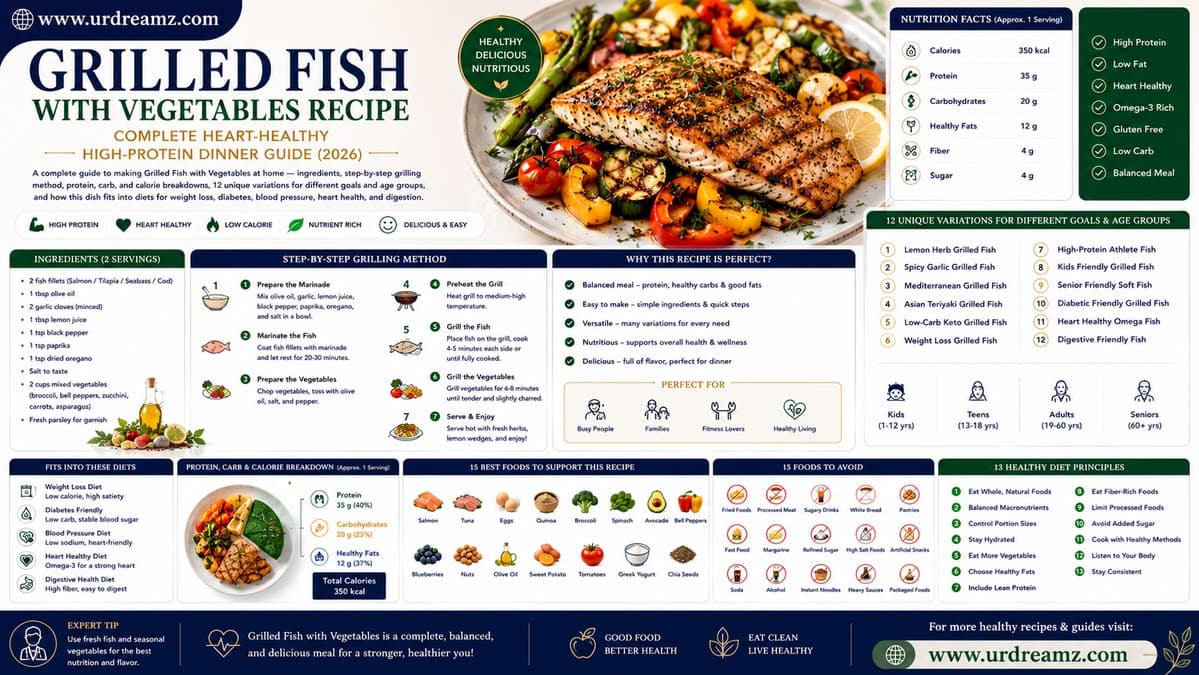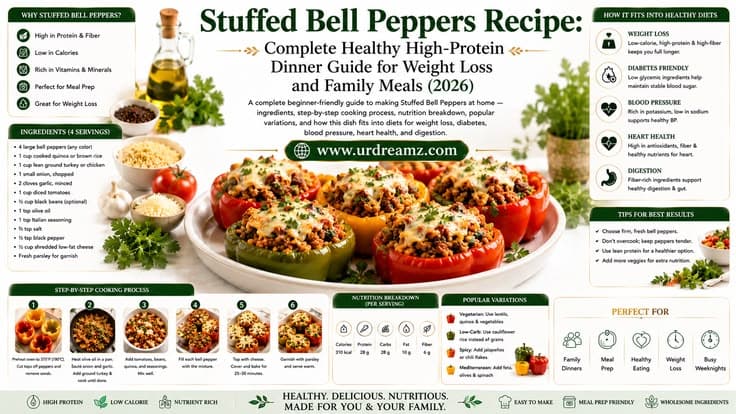
Stuffed Bell Peppers Recipe: Complete Healthy High-Protein Dinner Guide
A complete, beginner-friendly walkthrough of Stuffed Bell Peppers — ingredients, step-by-step method, nutrition, health-condition breakdowns, variations, and frequently asked questions.
Introduction: A One-Dish Dinner That Actually Delivers
Stuffed Bell Peppers solve a very specific dinner problem: how do you get protein, vegetables, and a satisfying, filling meal onto one plate without juggling multiple pots and pans? The bell pepper itself becomes the serving dish, holding a warm, well-seasoned mixture of protein, grains or beans, and melted cheese, all baked together until tender. It looks impressive on the table, but the actual process behind it is simple enough for a complete beginner to follow from start to finish.
This guide walks through everything — how to choose and prepare the peppers, how to build a filling that fits your goals, the exact baking process step by step, and how the dish can be adapted for people managing blood sugar, blood pressure, weight loss, digestive sensitivity, or heart health. By the end, you should be able to make this dish confidently on your first try, and know exactly how to adjust it for your own needs.
We also cover the small questions that trip up beginners most often — whether to boil the peppers first, whether to cover the dish while baking, and why some batches of stuffed peppers turn out watery while others hold together perfectly. These details matter more than they might seem, and understanding the reasoning behind each one will make you a more confident cook well beyond this single recipe.
What Are Stuffed Bell Peppers?
Stuffed Bell Peppers are whole or halved bell peppers filled with a cooked mixture — typically a protein like ground turkey, chicken, or beef, combined with rice or another grain, vegetables, and seasoning — then baked in the oven until the pepper softens and the filling is hot and often topped with melted cheese. The pepper acts as both the container and part of the meal, adding natural sweetness and a satisfying bite to every forkful.
Variations of this dish appear across many cuisines, from Mexican-style versions with black beans and chili spices to Italian versions built around tomato sauce and mozzarella, which is part of why it remains such a flexible, endlessly repeatable dinner.
What makes stuffed peppers particularly appealing for beginners is that the technique separates cleanly into two simple stages: cooking a filling in a skillet, and baking it inside the pepper. Neither stage requires advanced skills, and mistakes at one stage rarely ruin the other, which makes this a forgiving recipe to learn on.
Because the pepper holds its shape throughout cooking, this is also one of the more visually satisfying beginner recipes — even a first attempt tends to look intentional and put-together on the plate, which can be a nice confidence boost for anyone newer to cooking full dinners from scratch.
Why Stuffed Bell Peppers Are a Healthy Meal Choice
This dish naturally balances lean protein, fiber from the pepper and any added vegetables, and a controlled portion of grains or beans, all in one self-contained serving. Because the pepper itself provides built-in portion control, it is easier to keep an eye on total calories compared to a dish served loosely on a plate.
Bell peppers are also notably rich in vitamin C and antioxidants, adding real nutritional value beyond simply being an edible container for the filling. Combined with a thoughtfully built filling, this dish can be adjusted to fit almost any dietary goal without losing its core appeal.
Another underrated advantage is how easy it is to sneak in extra vegetables without anyone noticing. Diced mushrooms, zucchini, or spinach can be folded into the filling alongside the protein and grain, boosting the fiber and micronutrient content of the dish without changing its familiar flavor or appearance.
Who This Recipe Is Best For
Stuffed Bell Peppers suit busy families looking for a comforting one-dish dinner, anyone meal-prepping for the week, people following high-protein or low-carb eating plans, and beginner cooks who want a recipe that looks more advanced than it actually is to make. Because the filling can be swapped and adjusted so easily, it is also a strong option for households where different family members have different dietary needs.
This guide includes general nutrition information related to common health conditions such as diabetes, high blood pressure, and heart disease. This information is educational, not a substitute for personal medical advice — anyone managing a diagnosed health condition should speak with their doctor or a registered dietitian before making significant dietary changes.
If you have never cooked a full dinner from scratch before, this is also a reasonable recipe to start with. The individual steps — browning meat, mixing a filling, and baking — are all foundational cooking skills you will use again and again in other recipes once you've practiced them here.
Kitchen Equipment You Will Need
You will need a baking dish large enough to hold the peppers upright, a sharp knife for cutting the tops off (or slicing them in half lengthwise), a spoon for removing the seeds and membranes, a skillet for cooking the filling, and aluminum foil for covering the dish during the first part of baking. None of this equipment is specialized, which makes the recipe accessible even for a very basic home kitchen.
A meat thermometer is optional but useful if you are new to cooking ground meat, since it can confirm the filling has reached a safe internal temperature before it goes into the peppers, removing any guesswork for beginner cooks.
Understanding Bell Pepper Colors
Green bell peppers are harvested before they fully ripen, giving them a slightly bitter, more vegetal flavor. Red, yellow, and orange peppers are left on the vine longer, which makes them sweeter and, in the case of red peppers, notably higher in vitamin C and antioxidants. All colors work well for this recipe — the choice mostly comes down to personal taste and how sweet or savory you want the finished dish to taste.
Mixing colors in the same batch is also a simple way to make the dish more visually appealing, especially if you are serving guests or trying to make a weeknight dinner feel a little more special without any extra effort. A tray with all four colors together also makes it easy to tell servings apart if different peppers are stuffed with slightly different fillings for different family members.
Main Ingredients Overview
At its core, this recipe needs just a handful of ingredient categories: bell peppers, a protein source, a starch or bean filler (or none, for a lower-carb version), tomatoes for moisture and flavor, cheese, and a simple blend of seasonings like cumin, paprika, and oregano. Everything else is optional and can be adjusted based on the variation you are making.
Because the recipe is built from categories rather than one fixed set of ingredients, it is one of the easier dishes to make from whatever is already in your kitchen. A different protein, a different bean, or a different grain will still produce a satisfying result as long as the basic ratio of protein, filler, and seasoning stays roughly balanced.
Table: Full Ingredient List and Substitutes
| Ingredient | Purpose | Possible Substitute |
|---|---|---|
| Bell peppers (4 large) | Base and serving dish | Any color, or smaller peppers halved |
| Ground turkey or beef | Main protein | Ground chicken, lentils, or tofu crumbles |
| Cooked rice | Filler, texture | Quinoa, cauliflower rice, or extra beans |
| Black beans (optional) | Fiber and plant protein | Kidney beans or pinto beans |
| Diced tomatoes | Moisture and acidity | Tomato sauce or fresh chopped tomatoes |
| Shredded cheese | Richness, topping | Dairy-free cheese alternative |
| Onion and garlic | Aromatic base | Onion powder and garlic powder |
| Olive oil | Cooking fat | Avocado oil |
| Cumin, paprika, chili powder | Flavor base | Italian seasoning for a different flavor profile |
| Fresh parsley or cilantro | Garnish, freshness | Fresh basil |
Protein Filling Options
The protein you choose has the biggest impact on both flavor and nutrition. Ground turkey and chicken are leaner options that work well for anyone watching saturated fat intake, while ground beef offers a richer, more traditional flavor. Plant-based options like lentils, black beans, or crumbled tofu make the dish vegetarian or vegan while still delivering a meaningful amount of protein and fiber.
You can also combine two proteins in the same filling — for example, mixing lean ground turkey with black beans — to increase both the protein and fiber content of the dish while keeping the overall fat content moderate. This blended approach is popular with anyone trying to stretch a smaller amount of meat further without sacrificing how filling the meal feels.
Table: Comparing Protein Options
| Protein Option | Fat Level | Best For |
|---|---|---|
| Ground turkey (lean) | Low | Weight loss, heart-conscious eating |
| Ground chicken | Low to moderate | General healthy eating |
| Ground beef (lean) | Moderate | Traditional flavor, higher iron content |
| Lentils | Very low | Vegetarian, high fiber |
| Black beans | Very low | Vegetarian, blood sugar friendly |
| Tofu crumbles | Low to moderate | Vegan, plant-based protein |
Rice, Quinoa, or No Rice at All?
White rice is the traditional filler in many stuffed pepper recipes, but it is far from the only option. Quinoa adds extra protein and fiber compared to white rice, cauliflower rice significantly lowers the carbohydrate count for anyone following a low-carb or keto plan, and skipping the grain entirely and adding extra beans or vegetables instead works well for both low-carb eating and simply using up what's already in your kitchen.
If you are new to cooking with quinoa or cauliflower rice, both can typically be prepared in advance and stored in the refrigerator for a few days, which makes them just as convenient as pre-cooked rice when it comes time to assemble the filling.
Table: Rice Alternatives Comparison
| Base Option | Carbohydrate Level | Notes |
|---|---|---|
| White rice | Higher | Traditional, mild flavor |
| Brown rice | Higher, more fiber | Whole grain option |
| Quinoa | Moderate | Higher protein and fiber than rice |
| Cauliflower rice | Very low | Best for keto and low-carb diets |
| No grain (extra beans/veg) | Lowest (or bean-dependent) | Good for strict low-carb needs |
Choosing the Right Cheese
Mozzarella melts smoothly and has a mild flavor that doesn't overpower the filling, while cheddar or Monterey Jack add a sharper, bolder taste that pairs especially well with Mexican-style variations. For anyone watching saturated fat or sodium, using a smaller amount of a more flavorful cheese, such as a sharp cheddar, can deliver plenty of flavor without needing a heavy topping.
If you prefer a dairy-free version, several plant-based shredded cheese alternatives melt reasonably well in the oven and can be used as a direct substitute, though the flavor and texture will differ somewhat from traditional dairy cheese.
Herbs and Seasonings That Build Flavor
Cumin, chili powder, smoked paprika, and oregano form the backbone of most stuffed pepper seasoning blends, while fresh garlic and onion build a savory base. Fresh parsley or cilantro added at the end brightens the dish and keeps it from tasting one-note after a long bake.
Because bell peppers are naturally mild, don't be afraid to season the filling more assertively than you might for other dishes — the finished pepper mellows some of that seasoning during baking, so a filling that tastes well-seasoned before stuffing usually results in a perfectly balanced final dish.
Table: Recipe At a Glance
| Detail | Information |
|---|---|
| Prep Time | 20 minutes |
| Cook Time | 30–45 minutes |
| Total Time | 50–65 minutes |
| Servings | 4–6 |
| Skill Level | Beginner-friendly |
| Oven Temperature | 375°F (190°C) |
| Calories (approx.) | 280–350 kcal per pepper |
Step 1: Preparing the Peppers
Wash the bell peppers, then either slice off the tops and remove the seeds and membranes from the inside, or cut each pepper in half lengthwise and scoop out the seeds — both methods work, and the choice mostly comes down to presentation preference. Place the prepared peppers cut-side up (or standing upright) in a baking dish that fits them snugly, which helps them hold their shape during baking.
If you cut off the tops, save any usable flesh from around the stem and dice it into the filling rather than discarding it — this reduces waste and adds a bit more pepper flavor throughout the dish.
Step 2: Should You Pre-Bake the Peppers?
Pre-baking the empty peppers for ten to fifteen minutes before stuffing them softens the pepper's texture and shortens the final baking time. This step is optional but especially helpful if you prefer a softer pepper or are short on time for the final bake. If you skip this step, simply plan for a slightly longer total baking time once the peppers are stuffed.
Step 3: Cooking the Protein Filling
Heat olive oil in a skillet over medium heat, then add diced onion and cook until softened, about three to four minutes. Add your ground protein of choice and cook, breaking it apart with a spatula, until fully browned and no longer pink. Add the minced garlic during the last minute of cooking so it doesn't burn.
If you are using a leaner protein like ground turkey or chicken, you may notice less rendered fat in the pan compared to beef — this is normal and simply means the filling will be slightly less rich, which many people prefer for a lighter, everyday version of the dish.
Step 4: Seasoning the Filling
Stir in the diced tomatoes, tomato paste, cumin, chili powder, smoked paprika, salt, and pepper. Let the mixture simmer for about five minutes so the flavors combine and any excess liquid reduces slightly, which helps prevent the finished dish from becoming watery.
Step 5: Mixing in Rice, Grains, or Beans
Once the filling is seasoned, stir in your cooked rice, quinoa, or cauliflower rice, along with black beans and corn if using. Mix thoroughly so every bite of the final filling has a balance of protein, grain (or grain substitute), and vegetables.
Step 6: Stuffing the Peppers
Spoon the filling generously into each prepared pepper, pressing down gently to pack it in without crushing the pepper's structure. Filling them all the way to the top ensures every bite has plenty of filling once baked and slightly settled.
Step 7: Baking Covered, Then Uncovered
Cover the baking dish with foil and bake at 375°F (190°C) for twenty to twenty-five minutes. Remove the foil, top each pepper generously with shredded cheese, and bake uncovered for another ten to fifteen minutes, until the cheese is melted and the peppers are tender when pierced with a fork.
If you pre-baked the peppers in step two, you can shorten the covered baking time slightly, since the peppers will already be partway softened. A fork inserted into the side of the pepper should meet gentle resistance rather than feeling completely firm — that is the best sign the peppers are ready.
Step 8: Garnishing and Serving
Let the peppers rest for a few minutes after coming out of the oven, then top with fresh parsley or cilantro before serving. A squeeze of lime, a dollop of sour cream, or sliced avocado can be added at the table depending on the variation you're making.
Should You Boil the Peppers First?
Boiling is not necessary for this recipe, since baking (with or without a short pre-bake) softens the peppers just as effectively while preserving more of their flavor and structure. Boiling tends to make the peppers softer and slightly waterlogged, which can work against the goal of a hearty, well-textured finished dish.
Should You Cover Stuffed Peppers While Baking?
Yes, covering the dish with foil for the first portion of baking traps steam and heat, which helps the peppers soften evenly without drying out the filling. Removing the foil only in the final stretch, once the cheese goes on, allows the top to brown and melt properly without overcooking the filling underneath.
How to Avoid Watery Stuffed Peppers
Watery stuffed peppers usually come from one of two sources: excess liquid in the filling, or liquid released by the peppers themselves as they bake. Draining canned tomatoes well, simmering the filling briefly before stuffing to reduce moisture, and tilting the baking dish slightly to drain any accumulated liquid halfway through baking all help keep the final dish from turning soupy.
Salting the inside of the peppers lightly and letting them sit for ten minutes before stuffing, then patting them dry with a paper towel, can also draw out some of the natural moisture from the pepper itself before it goes into the oven, further reducing the chance of a watery result.
Nutrition Facts Overview
A single stuffed pepper made with lean ground turkey, a moderate amount of rice or a lower-carb alternative, and a reasonable portion of cheese delivers a solid balance of protein, fiber, and micronutrients, particularly vitamin C from the pepper itself.
Because portion size in this dish is naturally capped by the size of the pepper, it is also one of the easier recipes to estimate calories for consistently — once you know the approximate nutrition for your specific filling recipe, it tends to stay fairly predictable from batch to batch.
Table: Nutrition Facts Per Serving (Approximate)
| Nutrient | Amount |
|---|---|
| Calories | ~300 kcal |
| Protein | ~24 g |
| Carbohydrates | ~22 g |
| Fat | ~13 g |
| Fiber | ~5 g |
| Sugar | ~6 g |
Note: Values are estimates and vary based on protein choice, grain choice, and portion size.
Are Stuffed Bell Peppers Healthy?
Yes, especially when made with lean protein, a reasonable portion of grain or a lower-carb alternative, and a moderate amount of cheese. The dish naturally combines protein, fiber, and vegetables in a single portion-controlled serving, which makes it easier to fit into most healthy eating patterns compared to many casserole-style dinners.
High Protein Benefits Explained
Protein supports muscle maintenance, a healthy metabolism, and helps keep you full for longer after eating. Because the filling is built around a protein source at its core, a single stuffed pepper can deliver a meaningful portion of an adult's daily protein needs, especially when made with lean turkey, chicken, or a combination of beans and lentils.
For anyone specifically trying to increase daily protein intake, doubling the protein portion in the filling relative to the grain — while keeping the pepper size the same — is a simple way to raise the protein content of each serving without needing to eat an additional pepper.
Weight Loss Benefits
The pepper itself acts as a natural portion-control tool, since it is difficult to overstuff without the filling spilling out. Combined with the fiber from the pepper and any beans or vegetables in the filling, this dish tends to be satisfying at a reasonably low calorie count, especially when made with lean protein and a lighter hand with cheese.
Heart Health Benefits
Using lean protein, moderate cheese, and olive oil instead of heavier fats supports a heart-conscious version of this dish. Bell peppers themselves also contain antioxidants that have been studied for their potential role in supporting overall cardiovascular health, adding a layer of nutritional value beyond the filling.
Fiber and Digestive Benefits
Bell peppers, beans, and whole grains like quinoa or brown rice all contribute fiber, which supports healthy digestion and can help regulate blood sugar response after eating. Adding extra vegetables to the filling, such as diced zucchini or mushrooms, is an easy way to boost fiber content further without significantly changing the flavor.
Adequate fiber intake is also associated with feeling fuller for longer after meals, which ties back into why this dish works so well for weight management goals in addition to general digestive health.
Table: General Diet Compatibility
| Diet Type | Compatible? | Notes |
|---|---|---|
| High-Protein | Yes | Depends on protein choice |
| Low-Carb / Keto | Yes, with adjustments | Use cauliflower rice, skip beans |
| Vegetarian / Vegan | Yes, with substitution | Use beans, lentils, or tofu |
| Gluten-Free | Yes | Naturally gluten-free with standard ingredients |
| Low-Sodium | Yes, with adjustments | Use low-sodium tomatoes and less added salt |
| Mediterranean-Style | Yes | Use olive oil, add extra vegetables |
Stuffed Bell Peppers for Different Health Conditions: An Overview
Because the filling in this dish is fully customizable, Stuffed Bell Peppers can be adapted for a wide range of health goals and conditions, more so than many single-protein dinners. Below, we walk through how the recipe can be adjusted for common conditions like diabetes, high blood pressure, weight management, digestive sensitivity, and heart disease. As with any dietary guidance, this section is educational and general in nature — always consult your doctor or a registered dietitian for advice specific to your own health situation.
For Diabetes and Blood Sugar (Sugar Patients)
Best ingredients: Lean ground turkey or chicken, black beans, extra non-starchy vegetables, and a smaller portion of rice or quinoa in place of a large scoop of white rice. Why it works: The fiber from beans, peppers, and vegetables slows down how quickly sugar enters the bloodstream, and swapping white rice for quinoa or cauliflower rice further reduces the carbohydrate load. What to watch: Keep the grain portion modest, avoid sugary sauces like sweet barbecue glazes, and choose canned tomatoes without added sugar.
Portion size matters just as much as ingredient choice here. Even a diabetes-friendly filling can shift a meal's overall impact on blood sugar if the pepper is stuffed with a very large amount of rice — keeping the grain portion to roughly a third of the filling, with the rest made up of protein, beans, and vegetables, tends to produce a more balanced result.
For High Blood Pressure (BP)
Best ingredients: Fresh garlic, onion, and herbs used generously for flavor, low-sodium canned tomatoes, and a reduced amount of added salt and cheese. Why it works: Sodium is one of the main dietary factors linked to blood pressure, and this recipe's flavor comes largely from spices and aromatics rather than salt, making it easy to adapt. What to watch: Cheese and canned beans can both be higher in sodium than expected, so rinsing canned beans and choosing a reduced-sodium cheese or using less of it helps keep the dish blood-pressure-friendly.
Bell peppers themselves also naturally contain potassium, a mineral that works alongside reduced sodium intake to support healthy blood pressure. This makes the base of the dish naturally supportive of a blood-pressure-conscious eating pattern, even before any other adjustments are made.
For Weight Loss and Obesity
Best ingredients: Lean ground turkey or chicken, a generous ratio of vegetables and beans to grain, and a lighter amount of cheese. Why it works: The built-in portion control of the pepper itself, combined with a high-protein, high-fiber filling, tends to be filling at a moderate calorie count. What to watch: Be mindful of how much cheese and oil are used, since both are calorie-dense and easy to add more of than intended.
One practical strategy for weight loss is to serve one stuffed pepper alongside a large side salad rather than two peppers on their own — this increases the overall volume of the meal without significantly increasing calories, which can help with feeling satisfied after eating.
For Stomach and Digestive Issues
Best ingredients: Well-cooked, softer vegetables in the filling, a milder spice blend, and a smaller amount of beans if they tend to cause bloating for you personally. Why it works: Baking the peppers thoroughly softens their texture, making them gentler to digest than raw peppers, and a milder seasoning blend avoids triggering discomfort for anyone sensitive to spicy food. What to watch: Beans and certain cruciferous additions can cause gas or bloating for some individuals; if this applies to you, start with a smaller portion of beans or skip them in favor of extra rice or quinoa.
Removing the pepper's skin after baking, by gently peeling it back if it separates easily, can also make the dish easier to tolerate for anyone who finds pepper skins specifically harder to digest, without changing the flavor of the filling underneath.
For Heart Disease and Cholesterol
Best ingredients: Lean ground turkey or a plant-based protein like lentils, olive oil instead of butter, and a lighter portion of cheese. Why it works: Reducing saturated fat from the protein and cheese, while increasing fiber from beans and vegetables, supports a heart-conscious eating pattern. What to watch: Fattier ground beef and heavy cheese toppings can add up in saturated fat, so choosing leaner options and measuring cheese rather than piling it on helps keep the dish aligned with heart-health goals.
Adding extra vegetables such as diced mushrooms, spinach, or zucchini to the filling increases the overall fiber and antioxidant content of the meal, which is a simple way to make a heart-healthy version feel just as hearty as the original without relying on extra fat for satisfaction.
For Kidney Concerns
Best ingredients: Fresh herbs and spices for flavor instead of salt-heavy seasoning blends, and a very low-sodium tomato product. Why it works: Controlling sodium is often a priority for people managing kidney-related conditions, and this dish's flavor can be built almost entirely from aromatics and spices rather than salt. What to watch: Beans, tomatoes, and cheese can all contribute meaningful amounts of potassium, phosphorus, or sodium depending on the stage of kidney disease, so anyone with a kidney condition should work with a renal dietitian to determine appropriate portions of these ingredients.
Because dietary needs for kidney disease vary significantly depending on the stage of the condition and whether someone is on dialysis, this is one of the areas in this guide where individualized professional guidance matters most — general recipe adjustments can only go so far.
For PCOS and PCOD
Best ingredients: Lean protein, beans or lentils for fiber and plant protein, and a smaller portion of a lower-glycemic grain like quinoa instead of white rice. Why it works: A filling built around protein and fiber, with a controlled amount of refined carbohydrates, aligns with commonly recommended approaches for supporting insulin sensitivity in PCOS. What to watch: Avoid sugary sauces and keep the grain portion moderate rather than heaping the pepper with rice.
Adding a source of healthy fat, such as a drizzle of olive oil or a few slices of avocado on the side, can also help round out the meal in a way that supports steady energy levels rather than a quick spike and crash after eating.
Table: Health Condition Suitability Summary
| Health Condition | General Suitability | Key Adjustment |
|---|---|---|
| Diabetes / Blood Sugar | Generally suitable | Use quinoa or cauliflower rice, add beans |
| High Blood Pressure | Generally suitable | Use low-sodium tomatoes, reduce cheese |
| Weight Loss | Generally suitable | Lean protein, generous vegetables |
| Digestive Sensitivity | Generally suitable | Milder spices, smaller bean portion |
| Heart Disease | Generally suitable | Olive oil, lean protein, less cheese |
| Kidney Disease | Requires medical guidance | Monitor sodium, potassium, phosphorus |
| PCOS / PCOD | Generally suitable | Lower-glycemic grain, avoid sugary sauces |
Popular Stuffed Bell Pepper Variations
Once you are comfortable with the base recipe, it becomes easy to shift the flavor profile entirely by changing the protein, spices, and add-ins. Below are eight popular variations, each suited to a slightly different taste or dietary goal.
Think of these variations as a starting menu rather than a fixed list — once you understand how each one changes the flavor and nutrition profile, you can freely mix elements from different versions to build a stuffed pepper that fits exactly what you're craving or what your specific goals call for that week.
Mexican Stuffed Peppers (No Rice)
Built around ground beef or turkey, black beans, diced tomatoes with green chiles, cumin, chili powder, and smoked paprika, then topped with cheddar or Monterey Jack cheese. Skipping the rice keeps the carbohydrate count lower while beans and extra vegetables like corn add volume and fiber. This version is popular for its bold, satisfying flavor without needing a starchy filler.
Serving this variation with fresh toppings like avocado, a squeeze of lime, and a bit of salsa at the table lets everyone customize their own plate, which also makes it a good option for family dinners with a range of spice preferences.
Italian Stuffed Peppers
This version swaps the Mexican spice blend for Italian seasoning, uses marinara or tomato sauce instead of diced tomatoes with chiles, and tops the peppers with mozzarella and a sprinkle of parmesan. Ground turkey or Italian-style sausage both work well here, and fresh basil at the end brightens the finished dish.
Vegetarian and Vegan Stuffed Peppers
Replacing the ground meat with a combination of lentils, black beans, and extra vegetables like mushrooms creates a filling and protein-rich vegetarian version. For a fully vegan version, skip the cheese or use a plant-based alternative, and rely on nutritional yeast for a cheesy flavor note if desired.
Keto and Low-Carb Stuffed Peppers
This version skips rice entirely in favor of cauliflower rice or extra ground meat and cheese, keeping the carbohydrate count as low as possible while still delivering a hearty, satisfying filling. It is well suited to strict low-carb or ketogenic eating plans.
Quinoa Stuffed Peppers
Quinoa replaces rice as the grain base in this variation, adding more protein and fiber than a traditional white rice filling. This version pairs particularly well with black beans, corn, and a lighter Mexican-inspired spice blend, and works well for both vegetarian and meat-based fillings.
Chicken Stuffed Peppers
Made with ground or shredded chicken breast, this version is one of the leanest options in terms of fat content while still delivering a strong protein punch. It pairs well with almost any seasoning blend, from Italian to Mexican to a simple garlic-herb combination.
Turkey Stuffed Peppers
Similar to the chicken version, ground turkey offers a leaner alternative to beef while still providing a rich, savory flavor once seasoned well. This is often the go-to choice for anyone specifically building a weight-loss or heart-health-focused version of the recipe.
Spicy Stuffed Peppers
This variation adds diced jalapeños, extra chili powder, and a pinch of cayenne to the filling for a noticeably spicier finished dish. Topping with pepper jack cheese instead of a milder cheese reinforces the heat. This version is best limited or adjusted for anyone with acid reflux or a sensitive stomach.
Table: Variations Comparison
| Variation | Key Feature | Best Suited For |
|---|---|---|
| Mexican (No Rice) | Black beans, chili spices | Low-carb, bold flavor lovers |
| Italian | Marinara, mozzarella, basil | Classic comfort food |
| Vegetarian / Vegan | Lentils, beans, no meat | Plant-based eating |
| Keto / Low-Carb | Cauliflower rice, extra cheese | Ketogenic diets |
| Quinoa | Quinoa instead of rice | Extra protein and fiber |
| Chicken | Lean ground or shredded chicken | Lean, everyday eating |
| Turkey | Lean ground turkey | Weight loss, heart health |
| Spicy | Jalapeños, pepper jack cheese | Spice lovers |
Best Side Dishes for Stuffed Peppers
Because Stuffed Bell Peppers are already a fairly complete meal, they pair best with lighter sides. A simple mixed salad, steamed broccoli, roasted vegetables, or a small side of soup rounds out the plate without overwhelming it.
Table: Side Dish Pairing Guide
| Side Dish | Why It Works |
|---|---|
| Mixed green salad | Light, fresh contrast |
| Steamed broccoli | Extra fiber without heaviness |
| Roasted vegetables | Complements the baked flavor profile |
| Garlic green beans | Adds texture and color |
| Light vegetable soup | Warming, low-calorie addition |
Meal Prep Guide
Stuffed Bell Peppers are an excellent meal-prep option since they hold their shape and flavor well over several days. Preparing a full batch on the weekend and storing individual peppers in containers makes for an easy grab-and-reheat lunch or dinner throughout the week.
For anyone prepping for a full week, it can help to prepare a large batch of filling and only assemble and bake the peppers in smaller groups every few days, rather than baking all of them at once — this keeps the peppers from sitting fully baked and cooling for a long stretch before being eaten.
Storage Tips
Store leftover stuffed peppers in an airtight container in the refrigerator for up to three to four days. Keeping them upright in the container helps prevent the filling from spilling out during storage.
Freezing Instructions (Before or After Baking)
Stuffed peppers can be frozen either before or after baking. To freeze before baking, assemble the stuffed peppers, wrap them tightly, and freeze for up to three months, then bake from frozen with extra time added. To freeze after baking, let the peppers cool completely before freezing in an airtight container, and thaw in the refrigerator before reheating.
Freezing before baking tends to preserve the pepper's texture slightly better than freezing after baking, since the pepper hasn't yet gone through a full baking cycle. If texture matters most to you, this is generally the preferred approach for longer-term freezer storage.
Reheating Tips Without Drying Them Out
Reheat stuffed peppers in the oven at a moderate temperature, covered with foil, until warmed through — this helps retain moisture better than microwaving. If using a microwave for convenience, cover the pepper loosely and reheat in shorter bursts to avoid drying out the filling.
Table: Storage and Shelf Life
| Storage Method | Shelf Life |
|---|---|
| Refrigerator (airtight container) | 3–4 days |
| Freezer, unbaked | Up to 3 months |
| Freezer, baked | Up to 3 months |
| Room temperature | Not recommended beyond 2 hours |
Common Mistakes to Avoid
The most common issues home cooks run into with this dish include watery filling from undrained tomatoes, peppers that stay too firm because they weren't pre-baked or baked long enough, overstuffing to the point the filling spills during baking, and under-seasoning the filling since the pepper itself doesn't add much flavor on its own.
Another subtle mistake is assembling the filling while it's still very hot and then baking it immediately without tasting it first — tasting and adjusting seasoning before stuffing the peppers is much easier than trying to fix an underseasoned filling once it's already baked inside the pepper.
Table: Mistakes and Quick Fixes
| Mistake | Quick Fix |
|---|---|
| Watery filling | Drain tomatoes well, simmer filling before stuffing |
| Peppers too firm | Pre-bake peppers for 10–15 minutes first |
| Filling spilling over | Pack peppers snugly, don't overfill past the rim |
| Bland flavor | Season the filling generously before stuffing |
| Cheese burning | Add cheese only in the final uncovered bake stage |
Pro Tips for Beginners
Choose peppers that can stand upright on their own for easier baking and serving, taste the filling before stuffing since it's much easier to adjust seasoning at that stage, and don't skip draining canned tomatoes and beans, since excess liquid is the most common cause of a watery final dish. Cutting a very thin slice off the bottom of each pepper (without cutting all the way through) can also help them stand steady in the baking dish.
It also helps to slightly overcook the filling ingredients before stuffing, since the filling will continue to cook only gently inside the pepper during baking. A filling that's fully cooked and well-seasoned before it goes into the pepper practically guarantees a good final result, since baking mostly just needs to soften the pepper and melt the cheese.
Family-Friendly Adaptations
For picky eaters, keep the spice level mild and offer extra cheese or a mild salsa on the side rather than baking heat directly into the filling. Cutting peppers into smaller pieces after baking, rather than serving them whole, can also make the dish feel more approachable for younger children.
Budget and Meal Planning Tips
Bell peppers, ground turkey, rice, and canned beans and tomatoes are all relatively affordable and widely available, making this a budget-friendly dinner to keep in regular rotation. Buying peppers when they are in season, or substituting frozen bell pepper halves when fresh ones are expensive, can help manage cost without sacrificing the dish's core appeal.
Buying ground meat in bulk and freezing individual portions, or stretching one pound of meat further with an extra can of beans, are both simple ways to lower the per-meal cost of this recipe while barely changing how filling or satisfying it tastes.
How We Put This Guide Together
This guide combines tested baking technique with practical, general nutrition information, written to walk a complete beginner through the entire process from start to finish. Rather than repeating any single source, we brought together common preparation methods, ingredient adjustments for different health goals, and troubleshooting tips into one comprehensive reference, explained in plain, step-by-step language.
Frequently Asked Questions
What ingredients are in stuffed peppers?
Most versions include bell peppers, a protein like ground turkey or beef, rice or another grain, tomatoes, seasoning, and cheese, though the exact ingredients vary widely by variation.
Should I boil my bell peppers before stuffing them?
No. Pre-baking them briefly is a better option if you want a softer texture, since boiling can make the peppers watery.
Are stuffed bell peppers healthy for weight loss?
Yes. They combine lean protein and fiber in a naturally portion-controlled serving, which tends to be filling at a moderate calorie count.
Can I make stuffed peppers without rice?
Yes. Cauliflower rice, extra beans, or additional vegetables all work well as substitutes for a lower-carb version.
Can stuffed peppers be frozen?
Yes, either before or after baking, for up to three months when stored in an airtight container or tightly wrapped.
Should I cover stuffed peppers while baking?
Yes, for most of the baking time. Cover with foil to soften the peppers evenly, then uncover for the last part of baking once cheese is added.
Are stuffed peppers keto-friendly?
Yes, when made with cauliflower rice or no grain at all, and a filling built around meat, cheese, and non-starchy vegetables.
Are stuffed peppers good for diabetics?
Generally yes, especially when made with a modest portion of a lower-glycemic grain like quinoa, plenty of fiber from beans and vegetables, and no added sugar in the sauce.
What is the best meat for stuffed peppers?
Lean ground turkey or chicken are popular choices for a lighter dish, while ground beef offers a richer, more traditional flavor.
How long do stuffed peppers last in the fridge?
Up to three to four days when stored in an airtight container.
Why are my stuffed peppers watery?
This usually happens from undrained canned tomatoes or beans, or from the peppers releasing liquid as they bake. Draining ingredients well and simmering the filling briefly before stuffing helps prevent this.
Can stuffed peppers be made vegetarian?
Yes. Replacing the meat with lentils, black beans, or a mix of extra vegetables makes a filling and nutritious vegetarian version.
Table: Quick-Answer FAQ Summary
| Question | Short Answer |
|---|---|
| Healthy? | Yes, especially with lean protein and vegetables |
| Freezer-friendly? | Yes, up to 3 months |
| Keto-friendly? | Yes, with cauliflower rice |
| Gluten-free? | Yes, with standard ingredients |
| Diabetic-friendly? | Yes, with a modest grain portion |
| Good for meal prep? | Yes, holds well for several days |
Conclusion
Stuffed Bell Peppers earn their place as a reliable dinner because they combine ease, presentation, and genuine nutritional balance in a single dish. Whether you make the classic version, a Mexican-style pepper loaded with black beans and spice, or a low-carb version built around cauliflower rice, the underlying process stays the same and stays simple enough for a complete beginner to follow confidently from the very first attempt.
As with any general dietary guidance, the health-condition information in this guide is meant to support informed everyday choices rather than replace personalized medical or nutritional advice. If you are managing a specific health condition such as diabetes, high blood pressure, kidney disease, or heart disease, working with your doctor or a registered dietitian will give you the most accurate guidance for your individual needs.
Once you've made this recipe a handful of times, you'll likely find yourself adjusting it instinctively — a bit more spice one week, a different bean or grain the next — without needing to follow exact measurements at all. That flexibility is really the heart of what makes Stuffed Bell Peppers such a lasting addition to a home cook's regular rotation.