Quinoa Power Bowl Recipe: Complete High-Protein Healthy Dinner Guide
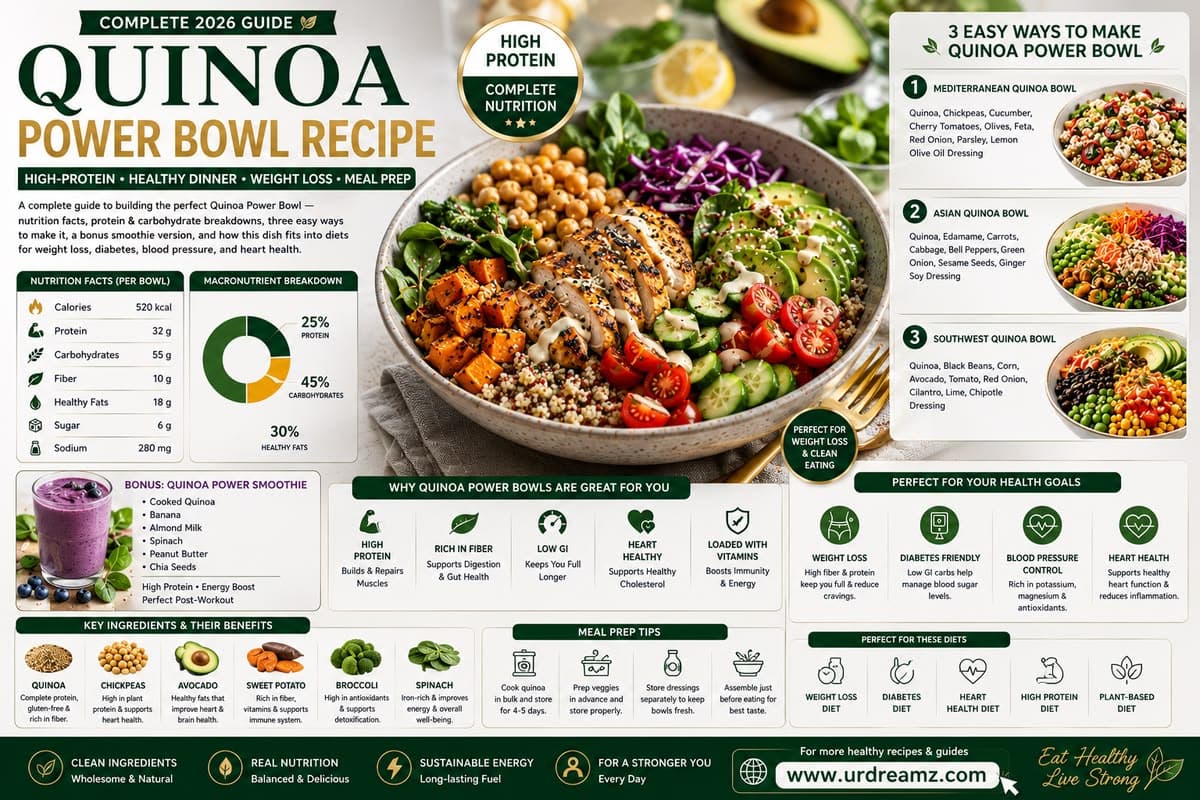
Everything you need to know about building the perfect Quinoa Power Bowl — nutrition, protein and carbohydrate breakdowns, three easy cooking methods, a bonus smoothie recipe, and how this dish fits into diets for weight loss, diabetes, blood pressure, and heart health.
Introduction: One Bowl, Endless Possibilities
A Quinoa Power Bowl is less a single recipe and more a flexible formula: a base of fluffy, protein-rich quinoa, topped with a protein of your choice, a mix of colorful vegetables, a source of healthy fat, and a simple dressing to tie it all together. It works for lunch, dinner, and with a small tweak, even breakfast — which is part of why it has become one of the most searched healthy meals of the last several years.
This guide covers the full picture: what quinoa actually is and why it's nutritionally different from rice or pasta, exactly how much protein and carbohydrate you're getting per serving, three genuinely different ways to build the bowl depending on your schedule, a bonus smoothie version for anyone who wants their quinoa in drinkable form, and a detailed breakdown of how this dish fits into diets for diabetes, blood pressure, weight loss, heart health, and more.
We also walk through fifteen specific health situations where a high-fiber whole grain like quinoa calls for a bit more caution or professional guidance, so you leave this guide not just with a recipe, but with a genuinely well-rounded understanding of where this dish fits — and doesn't quite fit — into different health needs.
What Is a Quinoa Power Bowl?
At its simplest, a Quinoa Power Bowl is cooked quinoa served as the base of a meal, topped with protein, vegetables, healthy fats, and a dressing — assembled in one bowl rather than served as separate plated components. The term "power bowl" refers to the way these components are chosen specifically to deliver a strong balance of protein, fiber, and micronutrients in a single, satisfying serving.
Unlike a fixed recipe, a power bowl is really a template. Once you understand the balance of components that make it work, you can rebuild it endlessly with whatever protein, vegetables, and dressing you have on hand, which is exactly why it has become such a popular meal-prep staple.
This template-style approach is also why the dish translates so well across cuisines — the same basic structure of grain, protein, vegetables, fat, and dressing shows up in Mediterranean mezze bowls, Mexican-inspired burrito bowls, and Asian-style rice bowls alike, just with different specific ingredients layered in.
Why Quinoa Power Bowls Are Worth Making Regularly
This dish checks several boxes at once: it is naturally gluten-free, provides a rare source of plant-based complete protein, comes together quickly once the quinoa is cooked, and can be entirely customized for whatever dietary goal you're working toward. It also travels and reheats well, making it one of the more practical options for weekly meal prep.
Because the base ingredient — quinoa — is nutritionally distinct from more common grains like white rice, building meals around it regularly can meaningfully shift the overall protein and fiber content of your diet without requiring any dramatic lifestyle changes.
There is also a psychological advantage to a dish this customizable: because you can change the protein, vegetables, and dressing every time, it avoids the sense of monotony that often causes people to abandon "healthy eating" routines after a few weeks. Variety, built into the very structure of the meal, tends to support consistency over the long run.
Who This Recipe Is Best For
Quinoa Power Bowls suit anyone looking for a quick, balanced meal-prep option, vegetarians and vegans looking for a complete plant protein source, people managing weight loss or blood sugar goals, and busy professionals who want a formula they can rebuild differently every day without getting bored. Its naturally gluten-free profile also makes it a safe base for anyone with celiac disease or gluten sensitivity.
This guide includes general nutrition information related to common health conditions such as diabetes, high blood pressure, and heart disease, along with a section on conditions that call for extra caution. This information is educational and not a substitute for personalized medical advice — always check with your doctor or a registered dietitian before making significant dietary changes.
If you are new to cooking with quinoa specifically, this is also a forgiving dish to start with, since even a slightly imperfect batch of quinoa still tastes reasonably good once combined with a flavorful protein, vegetables, and dressing.
Understanding Quinoa: A Quick Background
Quinoa is technically a seed, not a true cereal grain, though it is cooked and eaten in much the same way as rice or couscous. It has been cultivated for thousands of years in the Andean regions of South America and has become popular worldwide largely because of its unusually complete amino acid profile and gluten-free nature.
There are several varieties of quinoa, most commonly white, red, and black, which differ slightly in texture and cooking time but are nutritionally very similar. White quinoa tends to be the mildest in flavor and the fluffiest once cooked, while red and black varieties hold their shape a bit more and add visual contrast to a finished bowl.
Quinoa Nutrition Facts Overview
Compared to many other grains, quinoa stands out for offering a meaningful amount of protein alongside its carbohydrate content, plus a solid dose of fiber, iron, magnesium, and B vitamins. This combination is part of why it is frequently labeled a "superfood," even though that term is more of a marketing label than a formal nutritional category.
What matters more than any single label is the overall nutrient density of quinoa relative to its calorie content — for a given number of calories, it delivers meaningfully more protein, fiber, and minerals than many refined grain alternatives, which is the real, substantive reason it has earned such a strong reputation.
Table: Quinoa Nutrition Per Cup (Cooked, Approximate)
| Nutrient | Amount |
|---|---|
| Calories | ~220 kcal |
| Protein | ~8 g |
| Carbohydrates | ~39 g |
| Fiber | ~5 g |
| Fat | ~3.5 g |
| Iron | ~15% of daily value |
| Magnesium | ~30% of daily value |
Protein Content in Quinoa Power Bowls
Quinoa itself provides about 8 grams of protein per cooked cup, which is more than most grains but still needs a protein-rich topping to turn the bowl into a truly high-protein meal. Adding grilled chicken, salmon, tofu, or a combination of beans and eggs is what pushes the total protein content of the bowl up to a level that supports muscle maintenance, satiety, and general high-protein eating goals.
For most adults aiming for a high-protein meal, a well-built quinoa bowl combining the grain with an animal or plant protein source can reasonably deliver between 30 and 45 grams of protein in a single serving, which is a substantial portion of the daily protein target for many people.
Table: Protein Content of Common Add-Ins (Approximate)
| Ingredient | Protein Content |
|---|---|
| 4–6 oz chicken breast | 27–39 g |
| 4 oz salmon | ~23 g |
| 3 oz shrimp | ~17 g |
| 1 cup lentils | ~18 g |
| 1 cup black beans | ~15 g |
| 1 cup chickpeas | ~15 g |
| 1 cup edamame | ~17 g |
| 1 large egg | ~6 g |
| 1 cup Greek yogurt (2%) | ~20 g |
| 1 cup quinoa (cooked) | ~8 g |
Carbohydrate Content Explained
A cup of cooked quinoa contains roughly 39 grams of carbohydrates, a meaningful portion of which comes from fiber rather than sugar or starch alone. This distinguishes it somewhat from white rice, where the carbohydrate content is almost entirely starch with very little fiber. The fiber content of quinoa is part of why it tends to have a gentler effect on blood sugar compared to more refined grains.
For anyone tracking carbohydrates closely, it helps to remember that portion size has a much bigger impact on total carbohydrate intake than the choice between quinoa and rice alone — a smaller portion of either will always contain fewer carbohydrates than a large portion of the other.
Table: Carbohydrate Breakdown by Component (Per Standard Bowl)
| Component | Approx. Carbohydrates |
|---|---|
| 1/2 cup cooked quinoa | ~20 g |
| 1 cup mixed roasted vegetables | ~10–15 g |
| 1/2 cup black beans | ~20 g |
| 1/2 avocado | ~6 g (mostly fiber) |
| 2 tbsp dressing (varies) | ~2–5 g |
Is Quinoa a Complete Protein?
Yes. Quinoa is one of the few plant foods that contains all nine essential amino acids in meaningful amounts, which is why it is often described as a "complete protein" — a label usually reserved for animal proteins like meat, eggs, and dairy. This makes it a particularly valuable base for vegetarian and vegan power bowls, since it contributes a more complete amino acid profile than most other plant-based staples on its own.
That said, "complete protein" doesn't mean quinoa alone provides enough total protein for a full meal — it simply means the protein it does provide contains a well-rounded amino acid mix. Pairing it with an additional protein source, whether animal or plant-based, is still the best way to reach a genuinely high-protein total for the meal.
Quinoa vs Rice vs Pasta
Compared to white rice and regular pasta, quinoa offers meaningfully more protein and fiber per serving, along with a broader range of micronutrients like iron and magnesium. It also has a naturally gluten-free profile, unlike traditional wheat pasta. Brown rice narrows some of this gap compared to white rice, but quinoa still generally comes out ahead on protein content.
Flavor and cooking time are also worth factoring in: quinoa has a slightly nutty taste and a shorter cooking time than brown rice, which makes it a convenient middle ground between the neutral flavor of white rice and the denser, chewier texture of many whole grains.
Table: Quinoa vs Rice vs Pasta Comparison (Per Cooked Cup)
| Grain | Protein | Fiber | Gluten-Free? |
|---|---|---|---|
| Quinoa | ~8 g | ~5 g | Yes |
| White rice | ~4 g | ~0.6 g | Yes |
| Brown rice | ~5 g | ~3.5 g | Yes |
| Regular pasta | ~7 g | ~2.5 g | No |
Kitchen Equipment You Will Need
You need a fine-mesh strainer for rinsing quinoa, a medium saucepan with a lid for cooking it, a baking sheet if you plan to roast vegetables or protein, and a mixing bowl for assembling the final dish. None of this equipment is specialized, which makes this an accessible recipe for almost any home kitchen.
Main Ingredients Overview
The core components of any Quinoa Power Bowl are the quinoa itself, a protein source, a mix of fresh or roasted vegetables, a healthy fat like avocado or nuts, and a simple dressing. Everything beyond that — specific spices, specific vegetables, specific protein — is where the variations covered later in this guide come into play.
Table: Full Ingredient List and Substitutes
| Ingredient | Purpose | Possible Substitute |
|---|---|---|
| Quinoa | Base grain, protein and fiber | Bulgur, farro (not gluten-free) |
| Grilled chicken or salmon | Protein | Tofu, chickpeas, lentils |
| Cherry tomatoes | Freshness, vitamin C | Diced regular tomatoes |
| Cucumber | Crunch, hydration | Zucchini ribbons |
| Spinach or kale | Fiber, micronutrients | Arugula or mixed greens |
| Avocado | Healthy fat, creaminess | Olive oil drizzle |
| Feta or nuts/seeds | Flavor, texture, extra fat | Pumpkin or sunflower seeds |
| Olive oil and lemon | Simple dressing base | Store-bought vinaigrette |
How to Cook Perfect Fluffy Quinoa
Rinse the quinoa, then combine it with water or broth in a saucepan, bring to a boil, reduce to a simmer, and cover. Cook for about fifteen minutes, or until the liquid is fully absorbed and the grains have released their characteristic small white spiral. Remove from heat and let it sit, covered, for five minutes before fluffing with a fork — this resting step is what gives quinoa its light, fluffy texture rather than a dense, clumped one.
Resist the urge to lift the lid and stir frequently while it cooks, since this releases steam the quinoa needs to cook evenly and can result in a mix of undercooked and overcooked grains in the same pot.
Should You Rinse Quinoa First?
Rinse quinoa under cold water before cooking to remove most of its natural coating of saponins, a bitter-tasting compound that can make unrinsed quinoa taste slightly soapy or bitter. Many packaged quinoa brands are pre-rinsed, but giving it a quick rinse at home is a simple habit that reliably improves the final flavor.
If you're using a fine-mesh strainer specifically made for grains, thirty seconds of running water and a quick shake is usually enough — you don't need to soak or scrub the quinoa, just make sure the water runs mostly clear before moving on to cooking.
Quinoa-to-Water Ratio Explained
The standard ratio is one part quinoa to two parts liquid — for example, one cup of quinoa to two cups of water or broth. This ratio produces tender, fully cooked grains without excess liquid left in the pot. Using broth instead of water is a simple way to add extra flavor to the base without any additional effort.
If you prefer a firmer, slightly chewier texture rather than very soft quinoa, reducing the liquid very slightly — to around 1.75 cups per cup of quinoa — can give you more control over the final bite without straying too far from the standard ratio.
Table: Recipe At a Glance
| Detail | Information |
|---|---|
| Prep Time | 10 minutes |
| Cook Time | 15–20 minutes |
| Total Time | 25–30 minutes |
| Servings | 2–4 |
| Skill Level | Beginner-friendly |
| Best For | Lunch, dinner, or meal prep |
| Calories (approx.) | 400–500 kcal per bowl |
3 Easy Ways to Make a Quinoa Power Bowl
There is no single correct way to build this dish, and different methods suit different schedules. Below are three genuinely different approaches: one for a quick weeknight dinner, one for a bigger weekend batch, and one designed specifically for grab-and-go meal prep.
Choosing between them mostly comes down to how much time you have on a given day and whether you're cooking for one meal or planning ahead for several — all three produce a genuinely satisfying bowl, so there's no wrong choice here, only the one that fits your schedule best.
Method 1: The Classic Stovetop Build Bowl
Cook the quinoa on the stovetop while you pan-sear a protein like chicken or shrimp in a separate skillet. Once both are ready, assemble the bowl with fresh vegetables, a handful of greens, and a quick dressing. This method takes about twenty-five to thirty minutes total and is best for a same-day dinner when you want everything freshly made and warm.
This approach also gives you the most control over texture and temperature, since everything is finished and served immediately rather than sitting or being reheated, making it the best choice when quality and freshness matter more than convenience.
Method 2: The Sheet-Pan Roasted Bowl
Toss vegetables and a protein like chicken thighs or tofu in olive oil and seasoning, then roast everything together on one sheet pan while the quinoa cooks separately on the stovetop. This method requires slightly more oven time but far less hands-on effort, and it produces a deeper, more caramelized flavor than the stovetop method. It is a good choice for a larger batch meant to last several meals.
Because everything roasts together with minimal supervision, this method also frees you up to prep other parts of your meal, wash dishes, or simply step away from the kitchen while the oven does most of the work.
Method 3: The No-Cook Meal-Prep Jar Bowl
Using quinoa cooked in advance, assemble individual bowls or jars with pre-cooked protein (such as canned chickpeas, pre-cooked shredded chicken, or hard-boiled eggs), raw vegetables, and dressing kept separate until ready to eat. This method requires no same-day cooking at all and is ideal for anyone prepping a full week of lunches in one sitting.
Layering ingredients thoughtfully in a jar — dressing on the bottom, sturdier vegetables next, then quinoa, protein, and delicate greens on top — keeps everything crisp until you're ready to shake or flip the jar into a bowl right before eating.
Table: Comparing the 3 Methods
| Method | Time Needed | Best For |
|---|---|---|
| Classic Stovetop Build Bowl | ~25–30 minutes | Same-day fresh dinner |
| Sheet-Pan Roasted Bowl | ~35–40 minutes | Bigger batches, deeper flavor |
| No-Cook Meal-Prep Jar Bowl | ~10 minutes (using pre-cooked components) | Grab-and-go weekly lunches |
Best Protein Add-Ins
Grilled chicken, salmon, shrimp, tofu, chickpeas, black beans, lentils, and hard-boiled eggs are all popular protein choices for this bowl. Choosing a protein that matches your dietary goals — leaner options for calorie-conscious eating, or a combination of protein sources for vegetarian and vegan bowls — is the single biggest factor in how filling and nutritionally complete the final bowl turns out.
Best Vegetables and Toppings
Cherry tomatoes, cucumber, roasted broccoli, spinach, kale, corn, and bell peppers all work well in this dish, offering a mix of textures from crunchy to tender. Adding both a raw vegetable and a roasted or cooked one gives the bowl more textural variety than relying on just one type of preparation.
Best Healthy Fats to Add
Avocado, olive oil, pumpkin seeds, sunflower seeds, walnuts, and almonds all contribute healthy fats that help the body absorb certain fat-soluble nutrients from the vegetables and add lasting satiety to the meal. A small amount goes a long way, so these are typically added in modest portions rather than piled on generously.
Best Dressings and Sauces
A simple olive oil and lemon dressing keeps things light, while a tahini-based dressing adds richness and a nutty flavor that pairs particularly well with Mediterranean-style bowls. An avocado-lime dressing works well for Mexican-inspired variations, and a light soy-ginger dressing suits an Asian-inspired bowl.
Table: Dressing Options Compared
| Dressing | Flavor Profile | Best Paired With |
|---|---|---|
| Olive oil and lemon | Light, bright | Mediterranean bowls |
| Tahini dressing | Rich, nutty | Mediterranean, Middle Eastern bowls |
| Avocado-lime dressing | Creamy, tangy | Mexican or Southwestern bowls |
| Soy-ginger dressing | Savory, umami | Asian-inspired bowls |
| Greek yogurt dressing | Creamy, protein-rich | Any bowl, extra protein boost |
Can You Make a Quinoa Smoothie?
Yes. Cooked and cooled quinoa can be blended into a smoothie to add plant protein, fiber, and a subtle nutty flavor without significantly changing the overall taste of the drink. This is a popular option for anyone who wants the nutritional benefits of quinoa in a faster, drinkable format, especially at breakfast or right after a workout.
Because quinoa blends smoothly once cooked, it doesn't add any noticeable grittiness to the drink — most people find it simply adds a bit of thickness and staying power compared to a smoothie made with fruit and liquid alone.
Quinoa Smoothie Recipe
Blend half a cup of cooked, cooled quinoa with a banana, a cup of milk or a plant-based milk alternative, a spoonful of nut butter, a handful of spinach, and a few ice cubes until completely smooth. The quinoa adds body and a small protein boost, while the banana and nut butter keep the flavor naturally sweet and satisfying.
Table: Quinoa Smoothie Ingredients
| Ingredient | Amount |
|---|---|
| Cooked, cooled quinoa | 1/2 cup |
| Banana | 1 medium |
| Milk or plant-based milk | 1 cup |
| Nut butter | 1 tbsp |
| Spinach | 1 handful |
| Ice cubes | 4–5 |
Step-by-Step Quinoa Power Bowl Recipe
Rinse and cook one cup of quinoa according to the ratio described earlier. While it cooks, season and cook your chosen protein, whether that's pan-searing chicken, roasting chickpeas, or simply draining a can of black beans. Prepare your vegetables, whether raw, roasted, or a mix of both. Once everything is ready, divide the quinoa between bowls, top with the protein and vegetables, add avocado or another healthy fat, and finish with your dressing of choice.
Nutrition Facts Overview (Full Bowl)
A complete Quinoa Power Bowl built with a lean protein, a cup of vegetables, quinoa, and a modest amount of healthy fat and dressing typically lands in a moderate calorie range while delivering a strong dose of protein and fiber, making it a well-rounded option for most healthy eating plans.
Table: Nutrition Facts Per Serving (Approximate, With Grilled Chicken)
| Nutrient | Amount |
|---|---|
| Calories | ~450 kcal |
| Protein | ~35 g |
| Carbohydrates | ~40 g |
| Fat | ~16 g |
| Fiber | ~9 g |
| Sugar | ~5 g |
Note: Values are estimates and will vary significantly depending on the protein, dressing, and portion sizes used.
A Simple Method for Weight Loss With Quinoa Bowls
For a weight-loss-focused version, use a smaller portion of quinoa (around half a cup cooked), a larger portion of non-starchy vegetables, a lean protein like grilled chicken or shrimp, and a lighter hand with dressing and added fat. This shifts the overall calorie density of the bowl down while keeping the protein and fiber content high enough to stay satisfying.
Table: Weight-Loss-Focused Bowl Build
| Component | Suggested Portion |
|---|---|
| Quinoa | 1/2 cup cooked |
| Lean protein | 4–5 oz |
| Non-starchy vegetables | 1.5–2 cups |
| Healthy fat (avocado, seeds) | 1–2 tbsp |
| Dressing | 1 tbsp, measured |
Sample Diet Plan Using Quinoa Bowls
Quinoa bowls can anchor lunch or dinner within a broader daily eating plan that also includes a protein-rich breakfast and a lighter, vegetable-forward second meal. Rotating between different variations throughout the week — a Mediterranean bowl one day, a Mexican-style bowl the next — helps keep the diet varied while still supporting whatever primary goal you're working toward, whether that's weight loss, muscle building, or general healthy eating.
Building a week's worth of meals around two or three core quinoa bowl variations, rather than a completely different recipe every single day, also tends to make grocery shopping and prep considerably simpler without sacrificing variety at the table.
Table: Sample One-Day Diet Plan
| Meal | Example |
|---|---|
| Breakfast | Quinoa smoothie or Greek yogurt with fruit |
| Lunch | Quinoa Power Bowl with chicken and vegetables |
| Snack | Handful of nuts or a piece of fruit |
| Dinner | Smaller quinoa bowl with fish and greens |
This is a general example, not a prescribed plan — individual calorie and nutrient needs vary and are best discussed with a healthcare provider or dietitian.
Quinoa Power Bowls for Different Health Conditions: An Overview
Because quinoa is a nutrient-dense, naturally gluten-free whole food, it fits into a wide range of health-conscious eating plans more easily than many other grains. Below, we walk through how a Quinoa Power Bowl can be built to support several common health goals and conditions. As always, this section is educational and general — individual needs vary, and anyone managing a diagnosed condition should consult their doctor or a registered dietitian.
For Diabetes and Blood Sugar (Sugar Patients)
Why it's useful: Quinoa's fiber and protein content help slow the rise in blood sugar after eating compared to more refined grains like white rice. Best build: Pair a modest portion of quinoa with a lean protein, plenty of non-starchy vegetables, and a fiber-rich topping like beans, while avoiding sweet dressings or added sugar. What to watch: Even healthy carbohydrate sources add up in larger portions, so keeping the quinoa serving to about half a cup cooked is generally more appropriate than a large, heaping portion for anyone closely managing blood sugar.
Adding a source of healthy fat, such as avocado or a drizzle of olive oil, alongside the protein and fiber can further help slow digestion and smooth out the overall blood sugar response to the meal.
For High Blood Pressure (BP)
Why it's useful: Quinoa is naturally low in sodium, and it also contains potassium and magnesium, two minerals commonly associated with healthy blood pressure regulation. Best build: Season the quinoa and vegetables with herbs, garlic, and lemon rather than salt-heavy seasoning blends, and choose a lower-sodium dressing or make one from scratch. What to watch: Pre-made dressings, canned beans, and cheese toppings can all add hidden sodium, so check labels or rinse canned ingredients when sodium is a concern.
Cooking the quinoa itself in unsalted or low-sodium broth, rather than a heavily salted stock, is another simple way to control sodium at the very base of the dish before any toppings are even added.
For Weight Loss and Obesity
Why it's useful: The combination of protein and fiber in a well-built quinoa bowl supports satiety, which can make it easier to manage overall calorie intake without feeling deprived. Best build: Follow the weight-loss-focused portion guide described earlier, emphasizing lean protein and vegetables over a large grain portion. What to watch: Dressings, cheese, and nuts are calorie-dense and easy to overuse, so measuring rather than free-pouring these components helps keep the bowl aligned with a calorie-conscious goal.
Building the bowl with a large volume of vegetables relative to grain and protein is one of the simplest ways to increase the overall size and visual satisfaction of the meal without significantly increasing its calorie count.
For Heart Disease and Cholesterol
Why it's useful: Quinoa's fiber content, combined with healthy fats from olive oil, avocado, or nuts, supports a heart-conscious eating pattern, and its naturally low sodium content is an advantage over many processed grain products. Best build: Use olive oil as the primary added fat, choose a lean or plant-based protein, and load the bowl with vegetables. What to watch: Fatty dressings and large amounts of cheese can offset some of the dish's heart-healthy advantages if used generously.
Choosing salmon as the protein in a heart-health-focused bowl adds omega-3 fatty acids on top of quinoa's existing fiber benefits, making it one of the strongest variations specifically for cardiovascular-conscious eating.
For Digestive Health and Gut Health
Why it's useful: The fiber in quinoa supports regular digestion and feeds beneficial gut bacteria, and its gluten-free nature makes it a safe base for anyone with celiac disease or gluten sensitivity. Best build: Combine quinoa with easily digestible vegetables and a moderate amount of healthy fat. What to watch: Introducing quinoa in large amounts suddenly can cause temporary bloating for some people simply due to the increase in fiber; starting with a smaller portion and increasing gradually tends to be more comfortable.
Drinking enough water alongside a higher-fiber meal like this one also supports smoother digestion, since fiber relies on adequate hydration to move through the digestive system comfortably.
For PCOS and PCOD
Why it's useful: A filling meal built around protein, fiber, and a moderate portion of a lower-glycemic grain like quinoa is commonly recommended as part of a balanced approach to supporting insulin sensitivity, a common concern with PCOS. Best build: Combine quinoa with a lean protein and healthy fats, and avoid sugary dressings. What to watch: As with diabetes, keeping the total grain portion moderate rather than very large supports more stable blood sugar and insulin response throughout the day.
Adding cinnamon to the cooked quinoa, or to a quinoa smoothie, is a small flavor addition some people enjoy that also pairs well with a lower-glycemic approach to eating, without adding any meaningful sugar to the dish.
For Thyroid Conditions
Why it's useful: Quinoa itself does not contain notable goitrogenic compounds the way some cruciferous vegetables do, making it a generally safe grain choice for anyone managing thyroid conditions. Best build: A standard quinoa bowl with lean protein and a variety of vegetables fits well into a thyroid-conscious diet. What to watch: If your bowl includes large raw amounts of cruciferous vegetables like raw kale, lightly cooking them rather than eating them raw in large quantities is a simple precaution some people with thyroid conditions choose to take.
Quinoa's iron and magnesium content can also be a helpful addition to a thyroid-conscious diet, since both minerals play supporting roles in normal thyroid hormone function, though quinoa should be seen as one part of a varied diet rather than a targeted treatment for any thyroid condition.
Table: Health Condition Suitability Summary
| Health Condition | General Suitability | Key Adjustment |
|---|---|---|
| Diabetes / Blood Sugar | Generally suitable | Moderate grain portion, lean protein |
| High Blood Pressure | Generally suitable | Low-sodium seasoning, watch dressings |
| Weight Loss | Generally suitable | Smaller grain portion, more vegetables |
| Heart Disease | Generally suitable | Olive oil, lean or plant protein |
| Digestive Health | Generally suitable | Increase fiber gradually |
| PCOS / PCOD | Generally suitable | Moderate grain, avoid sugary dressings |
| Thyroid Conditions | Generally suitable | Cook cruciferous vegetables lightly |
15 Conditions That Require Extra Caution
While quinoa is a nutritious whole food suitable for most people, there are specific situations and health conditions where a high-fiber, whole-grain dish like this one needs extra thought, a smaller portion, or a doctor's guidance before being added freely to the diet. These are not blanket instructions to avoid quinoa forever, but rather signals that professional, individualized advice matters more than general recipe guidance in these cases.
It's worth noting that many of these fifteen situations are temporary — an active flare of a digestive condition, or a short recovery period after surgery — rather than permanent restrictions. In many cases, quinoa can be reintroduced gradually once the acute situation has resolved, again under the guidance of a treating doctor or dietitian.
Table: 15 Conditions Requiring Caution
| # | Condition | Why It Requires Caution |
|---|---|---|
| 1 | Active diverticulitis flare-up | High fiber may be advised against during an active flare |
| 2 | Gastroparesis | High-fiber foods can slow gastric emptying further |
| 3 | Bowel obstruction or stricture | A low-residue diet is often required |
| 4 | Early post-abdominal-surgery recovery | Doctors often recommend a low-fiber diet at first |
| 5 | IBS with fructan/FODMAP sensitivity | Quinoa can trigger symptoms in some sensitive individuals |
| 6 | Calcium oxalate kidney stones | Quinoa contains a moderate amount of oxalates |
| 7 | Advanced chronic kidney disease / dialysis | Potassium and phosphorus often need to be limited |
| 8 | Gout | Quinoa contains a moderate level of purines |
| 9 | Infants under 12 months | Texture and digestion concerns for very young children |
| 10 | Known quinoa or saponin sensitivity | Rare, but can cause digestive discomfort |
| 11 | Severe active GERD flare | Large, high-fiber meals can worsen symptoms for some |
| 12 | Active Crohn's disease flare | High-fiber, high-residue foods may need to be limited |
| 13 | Active ulcerative colitis flare | Similar high-fiber caution during flares |
| 14 | Acute pancreatitis | A low-fat, low-fiber diet is often required during recovery |
| 15 | Swallowing difficulties (dysphagia) | Quinoa's small, loose texture can be a choking risk |
This table is general educational information, not a diagnosis or personalized medical recommendation. Anyone managing one of these conditions should follow guidance from their own doctor or dietitian regarding quinoa and fiber intake.
Popular Quinoa Bowl Variations
Once you understand the basic formula, it becomes easy to shift the flavor profile of your quinoa bowl entirely. Below are eight popular variations, each built around a different cuisine, protein, or dietary focus.
1. Mediterranean Quinoa Bowl
Built with chickpeas, cherry tomatoes, cucumber, Kalamata olives, and a tahini or lemon-olive oil dressing, this version leans into fresh, bright Mediterranean flavors and is naturally rich in fiber and healthy fats.
2. Mexican Quinoa Bowl
Made with black beans, corn, diced tomatoes, avocado, and a lime-cilantro dressing, this variation brings bold, zesty flavor and pairs well with grilled chicken or a plant-based protein like extra beans.
3. Chicken Quinoa Power Bowl
A straightforward, protein-forward version built around grilled or roasted chicken breast, roasted vegetables, and a simple olive oil dressing. This is one of the most versatile variations and a good starting point for beginners.
4. Salmon Quinoa Bowl
Topped with baked or pan-seared salmon, this version adds a source of heart-healthy omega-3 fats alongside the quinoa's fiber and protein, making it a particularly strong choice for anyone focused on heart health.
5. Tofu Quinoa Bowl (Vegan)
Pan-seared or baked tofu replaces animal protein in this fully plant-based version, which pairs well with a soy-ginger dressing and a mix of roasted vegetables for a satisfying vegan meal.
6. Spicy Southwestern Quinoa Bowl
This variation adds jalapeños, chili powder, and a spicy avocado-lime dressing to a base of black beans, corn, and grilled chicken, delivering a bold, heat-forward flavor profile.
7. Breakfast Quinoa Bowl
Swapping savory toppings for a fried or poached egg, avocado, and a sprinkle of chili flakes turns this into a satisfying, high-protein breakfast option that still uses quinoa as its base.
8. Protein-Packed Egg and Quinoa Bowl
Combining a hard-boiled egg, spinach, feta cheese, and pine nuts with quinoa creates a particularly protein-dense variation that works well for either breakfast or a light dinner.
Table: Variations Comparison
| Variation | Key Feature | Best Suited For |
|---|---|---|
| Mediterranean | Chickpeas, olives, tahini | Heart-healthy, high-fiber eating |
| Mexican | Black beans, corn, lime | Bold flavor lovers |
| Chicken | Lean grilled protein | Everyday, versatile meals |
| Salmon | Omega-3 fats | Heart health focus |
| Tofu (Vegan) | Plant-based protein | Vegan or vegetarian eating |
| Spicy Southwestern | Chili, jalapeño heat | Spice lovers |
| Breakfast | Egg-topped, lighter | High-protein breakfast |
| Egg and Quinoa | Extra protein density | Muscle building, light dinners |
Meal Prep Guide
Quinoa Power Bowls are one of the easiest dishes to meal prep, since the quinoa, protein, and vegetables can all be cooked in bulk and stored separately, then assembled fresh each day. This keeps textures from getting soggy and allows you to mix and match toppings throughout the week rather than eating the exact same bowl every day.
A useful approach is to cook one large batch of quinoa and two different proteins at the start of the week, then rotate which protein and which vegetables go into each day's bowl — this single trick alone can make five days of meals feel like five genuinely different dishes rather than the same bowl on repeat.
Storage Tips
Store cooked quinoa, protein, and vegetables in separate airtight containers in the refrigerator for up to four to five days. Keeping the dressing separate until just before eating helps prevent the vegetables and quinoa from becoming soggy over time.
Freezing Instructions
Cooked quinoa freezes well on its own for up to two to three months, making it convenient to batch-cook a large amount and freeze portions for later use. Fresh vegetables and dressings are best added after thawing rather than frozen together with the quinoa, since their texture doesn't hold up as well in the freezer.
Reheating Tips
Reheat quinoa gently in the microwave with a small splash of water to restore moisture, or warm it briefly in a skillet over low heat. Cold quinoa can also simply be added straight into a no-cook bowl if you prefer a cold or room-temperature meal.
Table: Storage and Shelf Life
| Component | Shelf Life |
|---|---|
| Cooked quinoa (refrigerator) | 4–5 days |
| Cooked quinoa (freezer) | 2–3 months |
| Cooked protein (refrigerator) | 3–4 days |
| Fresh vegetables (refrigerator) | 2–4 days, best kept crisp |
| Dressing (refrigerator) | Up to 1 week, homemade |
Common Mistakes When Cooking Quinoa
Skipping the rinse, using too much water, lifting the lid frequently while it cooks, and not letting it rest before fluffing are the most common mistakes that lead to mushy or bitter-tasting quinoa. Overloading the bowl with too many competing flavors at once is another common issue that can make an otherwise well-cooked bowl taste muddled.
Table: Mistakes and Quick Fixes
| Mistake | Quick Fix |
|---|---|
| Bitter-tasting quinoa | Rinse thoroughly before cooking |
| Mushy texture | Use the correct 1:2 ratio, avoid extra water |
| Undercooked, crunchy quinoa | Cook a few extra minutes, covered |
| Bland bowl overall | Season the quinoa itself, not just the toppings |
| Soggy meal-prepped bowls | Store dressing separately until serving |
Pro Tips for the Best Flavor
Cook quinoa in vegetable or chicken broth instead of water for a noticeable flavor boost, toast the dry quinoa briefly in a pan before adding liquid for a nuttier taste, and always season the quinoa itself with a pinch of salt while cooking rather than relying entirely on toppings for flavor.
Budget and Meal Planning Tips
Quinoa, canned beans, and frozen vegetables are all relatively affordable and shelf-stable, making this an economical dish to build a weekly meal plan around. Buying quinoa in bulk and batch-cooking a large pot at the start of the week lowers both cost and prep time for every bowl that follows.
How We Put This Guide Together
This guide combines tested cooking technique with practical, general nutrition information, written to answer the real questions people search for when looking into Quinoa Power Bowls. Rather than repeating any single source, we brought together common preparation methods, nutrition data, and health-condition considerations into one comprehensive reference, explained in plain, straightforward language for readers at any cooking skill level.
Frequently Asked Questions
What is a quinoa power bowl?
It's a bowl built around cooked quinoa, topped with a protein, vegetables, healthy fat, and a dressing, assembled together as one balanced meal.
Is quinoa better than rice for weight loss?
Quinoa generally offers more protein and fiber per serving than white rice, which can support satiety more effectively as part of a weight-loss plan.
Is quinoa a complete protein?
Yes, quinoa contains all nine essential amino acids, making it one of the few plant-based complete protein sources.
Is quinoa gluten-free?
Yes, quinoa is naturally gluten-free, making it a safe grain choice for people with celiac disease or gluten sensitivity.
Can diabetics eat quinoa?
Generally yes, in moderate portions, since its fiber and protein content help slow the rise in blood sugar compared to more refined grains.
How do you cook quinoa perfectly?
Rinse it first, use a 1:2 quinoa-to-water ratio, simmer covered for about fifteen minutes, then let it rest before fluffing with a fork.
Should quinoa be rinsed before cooking?
Yes, rinsing removes the natural saponin coating that can otherwise make quinoa taste slightly bitter or soapy.
Can quinoa bowls be meal prepped?
Yes, quinoa, protein, and vegetables can all be cooked in advance and stored separately, then assembled fresh throughout the week.
Can quinoa bowls be frozen?
Cooked quinoa on its own freezes well for up to two to three months, though fresh vegetables and dressing are best added after thawing.
Can quinoa bowls be vegetarian or vegan?
Yes, using tofu, beans, lentils, or chickpeas as the protein source makes this dish fully vegetarian or vegan.
How many calories are in a quinoa power bowl?
A typical bowl with a lean protein, vegetables, and moderate dressing generally falls between 400 and 500 calories, though this varies by ingredients and portion size.
Can I eat quinoa every day?
For most people, yes, quinoa can reasonably be part of daily meals as part of a varied diet, though anyone with a specific digestive or medical condition should check with their doctor first.
Table: Quick-Answer FAQ Summary
| Question | Short Answer |
|---|---|
| Complete protein? | Yes |
| Gluten-free? | Yes |
| Good for diabetics? | Yes, in moderate portions |
| Freezer-friendly? | Yes, quinoa alone freezes well |
| Vegan-friendly? | Yes, with plant protein toppings |
| Good for meal prep? | Yes, store components separately |
Conclusion
The Quinoa Power Bowl earns its popularity honestly — it delivers a rare combination of complete plant protein, meaningful fiber, and near-endless customization in a single, satisfying meal. Whether you build it the classic stovetop way for a quick dinner, roast everything on a sheet pan for a bigger batch, or assemble it cold from meal-prepped components, the underlying formula stays simple enough to repeat all week without ever feeling repetitive.
As with any general dietary guidance, the health-condition information in this guide is meant to support informed everyday choices rather than replace personalized medical or nutritional advice. If you are managing diabetes, high blood pressure, a digestive condition, or any of the conditions flagged for extra caution, working with your doctor or a registered dietitian will give you guidance tailored specifically to your own needs.
Once you've made a few different variations from this guide, you'll likely find yourself building your own combinations instinctively — swapping in whatever protein and vegetables are on hand that day, without needing to follow an exact recipe at all. That flexibility, more than any single ingredient, is what makes the Quinoa Power Bowl such a lasting addition to a healthy, sustainable way of eating.