Malaria Disease: The Parasite Behind Malaria & The Mosquito That Spreads It
Malaria has shaped human history for thousands of years, and even today it remains one of the world's most persistent infectious diseases, claiming hundreds of thousands of lives every year. Yet very few people actually understand what happens biologically — inside the mosquito, and then inside the human body — from the moment of a single bite to the moment fever strikes. This guide breaks the entire story down step by step: the mosquito species involved, why only females bite, the full parasite life cycle inside the mosquito gut, the liver invasion, red blood cell destruction, the science behind the fever cycle, the discovery of Artemisinin, and how malaria is treated and prevented today.
1. What Is Malaria? An Introduction
Malaria is a life-threatening disease caused by microscopic single-celled parasites belonging to the genus Plasmodium. It is not caused by a virus or bacterium in the traditional sense, but by a true parasite that spends part of its life cycle inside a mosquito and the other part inside a human host. Malaria has existed for thousands of years and has influenced the course of human civilization, from ancient Rome to modern sub-Saharan Africa. Despite being preventable and curable, malaria continues to infect hundreds of millions of people every year, disproportionately affecting children under five and pregnant women in tropical and subtropical regions.
What makes malaria unique compared to many other infectious diseases is that it requires two living hosts to complete its life cycle: a female mosquito and a human being (or other vertebrate host, depending on the species). Without the mosquito, the parasite cannot reproduce sexually; without the human, the parasite cannot multiply asexually to the degree needed to sustain transmission. Understanding this dual-host dependency is the key to understanding everything else about malaria — from how it spreads, to why it causes cyclical fevers, to how it can be prevented.
2. Why Mosquitoes Matter: The Silent Carrier
A common misconception is that mosquitoes themselves "cause" malaria. In reality, mosquitoes are not the origin of the disease — they are the vehicle. In everyday language, we can call the mosquito the "driver" that transports the disease from one infected human to another healthy human. The mosquito's body, especially its gut and salivary glands, is simply the vessel in which the malaria parasite completes a crucial stage of its life cycle before being delivered into a new victim.
This is why controlling mosquito populations — not just treating human patients — is considered one of the most effective ways to break the chain of malaria transmission. If there is no mosquito to carry the parasite from an infected person to a healthy person, the disease cannot spread, no matter how many infected individuals exist in a community.
3. Meet the Culprits: Types of Disease-Carrying Mosquitoes
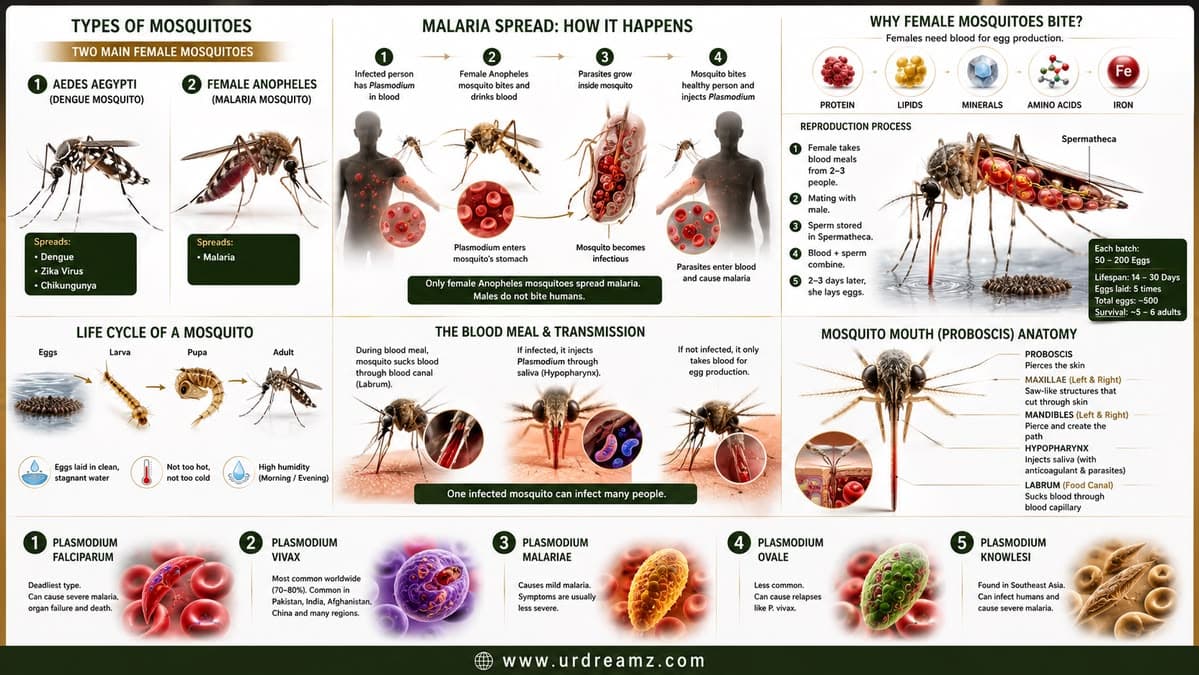
Not all mosquitoes are dangerous, and not all dangerous mosquitoes carry the same disease. Two genera are responsible for the overwhelming majority of mosquito-borne illness in humans: Anopheles and Aedes. The Anopheles mosquito — specifically the female Anopheles — is the sole carrier of human malaria. The Aedes mosquito, particularly Aedes aegypti, is responsible for spreading dengue fever, Zika virus, and chikungunya, but it does not transmit malaria.
Visually, these two mosquitoes can be told apart. Anopheles mosquitoes tend to rest with their abdomen tilted upward at an angle when they land, while Aedes mosquitoes rest almost parallel to the surface. Aedes mosquitoes are also easily recognized by the distinctive black-and-white striped pattern on their legs and body, earning them the nickname "tiger mosquito" in many regions.
4. Anopheles vs Aedes: Key Differences
Because these two mosquitoes are so frequently confused with one another, a side-by-side comparison makes the differences much clearer.
| Feature | Anopheles Mosquito | Aedes Mosquito |
|---|---|---|
| Disease Transmitted | Malaria | Dengue, Zika, Chikungunya |
| Resting Position | Abdomen tilted upward | Body parallel to surface |
| Body Markings | Plain or spotted wings | Black-and-white striped legs and body |
| Biting Time | Dusk to dawn (nocturnal) | Early morning and late afternoon (daytime) |
| Breeding Ground | Clean or stagnant natural water bodies | Small stagnant water containers near homes |
| Responsible Sex for Biting | Female only | Female only |
5. Male vs Female Mosquitoes: Who Really Bites?
One of the most important facts people overlook is that male mosquitoes never bite humans. Male mosquitoes feed exclusively on nectar and plant juices for energy, and they play no role whatsoever in spreading malaria. It is only the female Anopheles mosquito that bites humans and animals, and she does so for one biological reason: she needs blood to develop her eggs. This single fact explains the entire chain of malaria transmission — because the female needs blood for reproduction, she inevitably comes into contact with infected human blood, and in doing so, she can pick up and later transmit the malaria parasite.
6. Why Female Mosquitoes Need Blood
Female mosquitoes do not need blood to survive on a daily basis — like males, they too can live on nectar for general energy. Blood is needed specifically for reproduction. A female mosquito's eggs cannot fully mature without the nutrients found in vertebrate blood. This is why a mosquito bite is often referred to scientifically as a "blood meal" — it is, quite literally, dinner in preparation for egg production.
7. Nutrients Female Mosquitoes Extract From Blood
Human blood is rich in exactly the building blocks a female mosquito needs to produce viable eggs. Five categories of nutrients are especially critical:
| Nutrient | Role in Egg Development |
|---|---|
| Protein | Forms the structural building blocks of developing eggs |
| Lipids | Provides stored energy reserves for the egg and larva |
| Minerals | Supports cellular development and enzymatic processes |
| Amino Acids | Essential for yolk protein synthesis |
| Iron | Supports oxygen transport and cellular metabolism in developing embryos |
Because these five components exist abundantly in human blood, a female mosquito that has fed on a person now carries everything she biologically needs to lay a healthy batch of eggs.
8. The Mosquito Reproductive System Explained
The female mosquito's reproductive system is a delicate but highly efficient structure. It includes paired ovaries, each made up of many individual ovarioles where eggs mature, a calyx that connects the ovarioles to the lateral oviducts, and a common oviduct where mature eggs are funneled before being laid. Alongside this system sit accessory glands, which secrete substances that coat and protect the eggs, and the spermatheca, a small storage sac that plays a central role in fertilization.
9. The Role of the Spermatheca
The spermatheca is one of the most important — and least understood — structures inside a female mosquito's body. It is essentially a storage sac located within her reproductive tract. When mating occurs between a male and female mosquito, the male's sperm is transferred and stored inside this spermatheca. Remarkably, this stored sperm can remain viable for the female's entire lifespan, meaning a female mosquito typically mates only once but can fertilize multiple batches of eggs across her life using the sperm reserve held in the spermatheca.
10. Mating, Fertilization, and Egg Formation
Before mating occurs, the female mosquito often takes her first blood meal — feeding on two or three hosts, which may include both malaria-infected and healthy individuals. Once mating takes place, sperm from the male is deposited and stored in the spermatheca as described above. A few days after the blood meal, the stored sperm and the maturing eggs unite, triggering the female to begin laying eggs, generally within two to three days of feeding.
11. Egg-Laying Behavior and Conditions
Female mosquitoes are highly selective about when and where they lay eggs. A single batch typically consists of anywhere from 50 to 200 eggs, deposited on or near still water. Egg-laying tends to happen during the cooler, more humid parts of the day — typically early morning or evening — since mosquitoes avoid laying eggs during periods of extreme heat or extreme cold, both of which reduce egg viability.
12. Mosquito Life Cycle Duration
The average lifespan of a mosquito ranges from roughly 14 to 30 days, depending on environmental conditions such as temperature, humidity, and availability of blood meals. Within this relatively short lifespan, however, a single female can go through the blood-feeding and egg-laying cycle multiple times — often up to five separate egg-laying batches — making her reproductive output far larger than a single 50–200 egg batch would suggest.
13. How Many Eggs Can One Mosquito Lay?
If a female mosquito lays around 100 eggs per batch and repeats this process five times across her life, the theoretical total can reach approximately 500 eggs from a single female. However, survival rates are far from perfect. Roughly 80% of eggs are lost to unfavorable conditions — extreme heat, improper laying locations, predators, or desiccation — meaning that out of 500 eggs, only a small fraction, often just five or six individuals per batch, survive to adulthood. Even with this heavy natural loss, mosquito populations remain enormous due to the sheer volume of eggs produced.
| Stage | Approximate Figure |
|---|---|
| Eggs per batch | 50–200 (commonly ~100) |
| Egg-laying cycles per lifetime | Up to 5 |
| Theoretical lifetime egg total | ~500 |
| Estimated egg loss rate | ~80% |
| Surviving adults per batch | ~5–6 |
14. Anatomy of the Mosquito Proboscis
The mosquito's mouthpart, called the proboscis, is a remarkable piece of biological engineering. Far from being a single simple needle, it is actually a bundle of several specialized structures working together, each with a distinct function: the labium, the maxillae, the mandibles, the hypopharynx, and the labrum. Together, these components allow the mosquito to locate a blood vessel, pierce the skin with minimal resistance, and draw blood efficiently — all while the human host often remains completely unaware.
15. The Labium: The Protective Sheath
The labium is the outer sheath of the proboscis — the visible part that folds backward like a bent straw once the mosquito begins to feed. It does not actually penetrate the skin. Instead, it acts as a protective guide and support structure, buckling outward so that the finer piercing components inside can be driven into the skin with precision and stability.
16. Maxillae and Mandibles: The Cutting Tools
Inside the labium lie the maxillae — a pair of structures on the left and right — along with the mandibles, which function like tiny serrated blades. Together, the maxillae and mandibles saw through the layers of the skin (the epidermis) to create a path. This cutting action is what allows the much finer feeding tube to travel deep enough to reach a capillary, without requiring brute force that would otherwise alert the host to the bite.
17. The Hypopharynx: Saliva Delivery System
The hypopharynx is a slender tube responsible for injecting the mosquito's saliva into the human body. This saliva serves several biological purposes: it contains anticoagulant compounds that keep blood from clotting during feeding, and it also acts locally to briefly suppress the immune system's inflammatory response at the bite site, giving the mosquito a short, uninterrupted feeding window. It is precisely through this saliva — not through the blood the mosquito draws out — that an infectious mosquito delivers malaria parasites (sporozoites) into a new human host.
18. The Labrum: The Feeding Tube
The labrum is the actual channel through which blood is drawn up from the human capillary into the mosquito's gut. This is the structure responsible for locating and accessing the blood vessel itself. So while the mosquito draws blood in through the labrum, it delivers parasites and anticoagulant saliva out through the hypopharynx — two separate one-way channels operating side by side within the same bite.
| Mouthpart | Function |
|---|---|
| Labium | Outer protective sheath; folds back during feeding |
| Maxillae | Paired cutting structures that create an entry path |
| Mandibles | Serrated blades that help pierce the skin |
| Hypopharynx | Delivers saliva and, if infected, malaria sporozoites |
| Labrum | Draws blood from the capillary into the mosquito's gut |
19. What Happens When a Mosquito Bites You
When a female Anopheles mosquito lands on human skin, she uses her mouthparts as described above to locate a capillary. If she is not carrying malaria parasites, the encounter is harmless beyond the itching caused by the immune reaction to her saliva. However, if she has previously fed on a malaria-infected person and is now carrying sporozoites in her salivary glands, every subsequent bite she takes has the potential to transmit malaria to a new, healthy individual. This is why a single infectious mosquito can spread malaria to dozens of people over the course of her life — she does not need to be reinfected each time; once she is carrying sporozoites, she remains infectious for the rest of her life.
20. Introducing Plasmodium: The Real Enemy
The true cause of malaria is not the mosquito itself, but a genus of parasites called Plasmodium. These are single-celled organisms belonging to a group known as apicomplexans, and they are biologically complex, requiring two hosts and multiple life stages to complete their reproductive cycle. There are over a hundred known species of Plasmodium that infect various animals, but only a handful are capable of causing disease in humans.
21. The Five Species of Human Malaria Parasites
Of the many Plasmodium species that exist in nature, five are known to cause malaria in humans: Plasmodium falciparum, Plasmodium vivax, Plasmodium malariae, Plasmodium ovale, and Plasmodium knowlesi. Each species differs slightly in geography, severity, and clinical behavior, but all share the same fundamental life cycle involving a mosquito vector and a human host.
| Species | Severity | Notable Trait |
|---|---|---|
| Plasmodium falciparum | Most severe / deadliest | Causes cerebral malaria, rapid progression |
| Plasmodium vivax | Moderate | Most widespread globally; can relapse via hypnozoites |
| Plasmodium malariae | Mild, chronic | Longest fever cycle (quartan, every 72 hours) |
| Plasmodium ovale | Mild | Rare; can also relapse via hypnozoites |
| Plasmodium knowlesi | Can be severe | Zoonotic — transmitted from macaque monkeys in Southeast Asia |
22. Plasmodium falciparum: The Deadliest Strain
Plasmodium falciparum is widely regarded as the most dangerous of all human malaria parasites. It is responsible for the vast majority of malaria-related deaths worldwide, particularly across sub-Saharan Africa. What makes falciparum so lethal is its ability to cause infected red blood cells to become sticky and adhere to the walls of small blood vessels — a process that can obstruct blood flow to vital organs, including the brain, leading to the life-threatening condition known as cerebral malaria.
23. Plasmodium vivax: The Most Widespread Strain
While Plasmodium falciparum is the deadliest, Plasmodium vivax is the most geographically widespread cause of malaria on Earth. It is estimated to be responsible for a large majority of malaria cases across South Asia, including Pakistan, India, and Afghanistan, as well as parts of China and Latin America. Although generally less deadly than falciparum, vivax malaria has one particularly troublesome trait: it can lie dormant in the liver as hypnozoites and trigger relapses months or even years after the initial infection appears to have cleared.
24. Plasmodium malariae, ovale, and knowlesi
Plasmodium malariae causes a milder but more chronic form of malaria, with a distinctive 72-hour fever cycle known as quartan malaria, and infections can persist at low levels in the blood for years if untreated. Plasmodium ovale is relatively rare and closely resembles vivax malaria in its ability to form dormant liver-stage hypnozoites that cause relapse. Plasmodium knowlesi is a more recently recognized threat — it is a zoonotic parasite, meaning it naturally infects long-tailed and pig-tailed macaque monkeys in Southeast Asia and is transmitted to humans through the same Anopheles mosquitoes that feed on both monkeys and people. Because knowlesi has a rapid 24-hour replication cycle in the blood, cases can escalate to severe illness faster than expected.
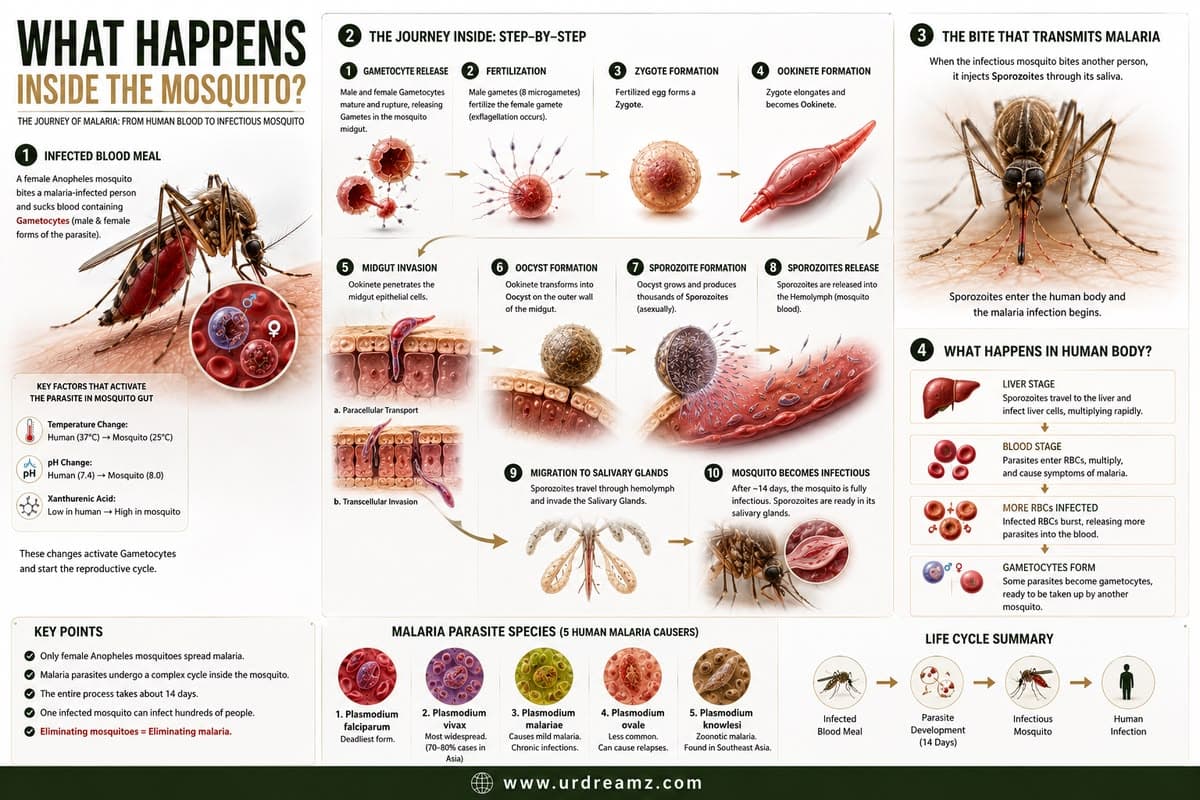
25. The Malaria Transmission Cycle Overview
The full malaria transmission cycle can be broken into two broad phases: the sexual phase, which occurs inside the mosquito, and the asexual phase, which occurs inside the human host. The cycle begins when a female Anopheles mosquito bites a person already infected with malaria and ingests blood containing sexual-stage parasites called gametocytes. Inside the mosquito's gut, these gametocytes undergo a complex transformation, ultimately producing thousands of infectious sporozoites that migrate to the mosquito's salivary glands. When this now-infectious mosquito bites a healthy person, it injects sporozoites into the bloodstream, beginning the human phase of infection — first in the liver, and then in the red blood cells.
26. Step One: The Mosquito Ingests Gametocytes
When a female Anopheles mosquito bites an individual who is already infected with malaria, she draws up red blood cells along with the rest of the blood meal. Some of these red blood cells contain a sexual-stage form of the parasite known as a gametocyte. Gametocytes exist in two distinct sexes — male (microgametocyte) and female (macrogametocyte) — though never both within the same red blood cell. It is this ingestion of gametocyte-infected blood that transforms an otherwise harmless mosquito into a potential future carrier of malaria.
27. Environmental Shock: Temperature, pH, and Xanthurenic Acid
The moment blood leaves a human body and enters a mosquito's gut, the gametocytes experience a sudden and dramatic environmental shift. This shift acts as the biological trigger that "wakes up" the parasite and pushes it toward its next developmental stage.
| Factor | Inside Human Body | Inside Mosquito Gut |
|---|---|---|
| Temperature | ~37°C | Drops to ~25°C |
| pH Level | ~7.4 | Rises to ~8.0 |
| Xanthurenic Acid (XA) | Low | Sharply elevated |
This combination of a drop in temperature, a rise in pH, and a surge in xanthurenic acid acts as a biochemical signal that activates the dormant gametocytes, prompting them to transform into mature, mobile gametes within minutes of entering the mosquito's midgut.
28. Gametogenesis: Male and Female Gametes Form
Once activated by the environmental shift described above, the gametocytes begin a process called gametogenesis. The female gametocyte, or macrogametocyte, matures into a single, non-motile female gamete known as a macrogamete. The male gametocyte, or microgametocyte, undergoes a much more dramatic transformation — its nucleus divides rapidly to produce up to eight individual flagellated male gametes, called microgametes, from a single parent cell.
29. Exflagellation: The Dramatic Release of Male Gametes
The process by which a single male microgametocyte produces eight whip-tailed, motile microgametes is known as exflagellation. Under a microscope, this process looks almost explosive — the eight flagella burst outward from the parent cell and begin whipping through the surrounding fluid in search of a female macrogamete. This entire event happens within roughly 10 to 20 minutes of the blood meal entering the mosquito's gut, making it one of the fastest transformations in the entire malaria life cycle.
30. Fertilization and Zygote Formation
Once free-swimming, a single microgamete locates and fuses with a macrogamete in a process called fertilization — this is the only truly sexual reproductive event in the entire malaria life cycle, and it happens exclusively inside the mosquito, never inside the human body. The fusion of the male and female gametes produces a single diploid cell called a zygote. This is a critical turning point: for the first time, the parasite carries genetic material from two different parent cells, which is also how genetic diversity and drug-resistance traits can be exchanged between different parasite strains.
31. The Ookinete: A Traveling Parasite
Within about 18 to 24 hours of fertilization, the zygote elongates and transforms into a motile, worm-like structure known as an ookinete. Unlike the zygote, the ookinete is capable of independent movement, using this mobility to travel through the blood meal that still sits inside the mosquito's midgut, searching for the gut wall it must penetrate to continue its development.
32. Crossing the Gut Wall: Transcellular Invasion
To continue developing, the ookinete must cross the epithelial lining of the mosquito's midgut — a barrier of tightly packed cells. It does this by physically penetrating individual epithelial cells, a process referred to as transcellular invasion. As the ookinete works its way through and eventually emerges on the opposite side of the gut wall (a stage sometimes called paracellular or transcellular transport, depending on the exact route taken), it reaches the outer surface of the midgut, just beneath a thin membrane called the basal lamina.
33. Oocyst Formation and Protective Shielding
Once safely through the gut wall, the ookinete settles beneath the basal lamina and rounds up into a spherical structure called an oocyst. The oocyst builds a tough, protective outer wall around itself, effectively shielding the developing parasite from the mosquito's immune defenses while it undergoes the next, most productive phase of multiplication.
34. Sporozoite Formation Inside the Oocyst
Inside its protective shell, the oocyst undergoes repeated asexual divisions in a process called sporogony. A single oocyst can generate anywhere from several hundred to several thousand individual infectious cells known as sporozoites — some oocysts have been documented producing several thousand sporozoites from one original zygote. Once mature, the oocyst wall ruptures, releasing this massive population of sporozoites directly into the mosquito's body cavity, known as the hemolymph (the insect equivalent of blood, which — unlike human blood — is typically colorless or pale).
35. Migration to the Salivary Glands
Released sporozoites drift through the mosquito's hemolymph until they reach and actively invade the mosquito's paired salivary glands. This entire process — from the initial ingestion of gametocytes to sporozoites reaching the salivary glands — takes approximately 10 to 14 days, depending on temperature and the specific Plasmodium species involved. This waiting period is known scientifically as the extrinsic incubation period. Only once sporozoites have successfully colonized the salivary glands does the mosquito become capable of transmitting malaria to a human.
36. The Infectious Bite: Sporozoites Enter the Human Body
Once sporozoites are established in the salivary glands, every subsequent bite from that mosquito becomes a potential transmission event. As described earlier, the hypopharynx delivers saliva laced with sporozoites directly into the human bloodstream during feeding. A single infectious bite can inject anywhere from a handful to several hundred sporozoites, and it takes only one viable sporozoite reaching the liver to establish an infection.
37. Circumsporozoite Protein and the Journey to the Liver
Once inside the human bloodstream, sporozoites do not wander aimlessly — they travel with striking precision toward the liver. This targeting is made possible by a specific surface protein coating each sporozoite, called the circumsporozoite protein (CSP). This protein binds specifically to receptors found on liver cells, effectively acting as a homing signal that guides the parasite past the heart, lungs, and every other organ, straight to the liver — the only organ where this next stage of development can successfully occur.
38. Liver Stage: Exo-Erythrocytic Schizogony
Upon reaching the liver, sporozoites invade individual liver cells, known as hepatocytes. Inside each hepatocyte, the sporozoite transforms and begins to divide repeatedly through a process called exo-erythrocytic schizogony — "exo-erythrocytic" simply meaning this stage occurs outside the red blood cells. The parasite, now called a schizont, multiplies asexually inside the hepatocyte for approximately one to two weeks. Remarkably, during this entire liver stage, the infected person typically experiences absolutely no symptoms — no fever, no fatigue, nothing — making this a completely silent phase of infection.
39. Kupffer Cells and the Liver's Immune Defense
The liver is not defenseless against invading parasites. It houses a specialized population of resident immune cells called Kupffer cells — a type of macrophage found exclusively in the liver, unlike other macrophages that circulate throughout the rest of the body. Kupffer cells attempt to detect and destroy invading sporozoites before they can successfully establish themselves inside hepatocytes. While many sporozoites are indeed eliminated by this defense, a fraction manage to evade detection and successfully invade liver cells, going on to complete the schizogony process described above.
40. Hypnozoites: The Hidden Cause of Malaria Relapse
In two specific species — Plasmodium vivax and Plasmodium ovale — some sporozoites that reach the liver do not immediately begin dividing. Instead, they enter a dormant state, forming structures known as hypnozoites. These dormant parasites can remain inactive inside liver cells for months or even years before spontaneously reactivating and triggering a fresh wave of infection — this is precisely why vivax and ovale malaria are notorious for causing relapses long after a patient appears to have fully recovered, even without a new mosquito bite.
41. Merozoites Enter the Bloodstream
Eventually, the mature liver-stage schizont ruptures the hepatocyte that has housed it, releasing thousands of new parasite forms called merozoites directly into the bloodstream. This single event marks the definitive end of the silent liver stage and the beginning of the far more destructive blood stage, which is responsible for essentially all of the clinical symptoms associated with malaria.
42. Invasion of Red Blood Cells
Merozoites released into the bloodstream are coated with specialized surface molecules that recognize and bind specifically to receptors on red blood cells (RBCs). Within seconds of contact, a merozoite attaches to and actively invades an RBC, sealing itself inside a protective vacuole. Once inside, the parasite first takes on a distinctive ring-like shape when viewed under a microscope — this early intra-erythrocytic form is referred to as the ring stage.
43. Ring Stage to Trophozoite: The Parasite Feeds
As the ring-stage parasite matures inside the red blood cell, it develops into a rounder, more metabolically active form known as a trophozoite. At this stage, the parasite requires nourishment to continue growing, and its primary food source is hemoglobin — the oxygen-carrying protein that fills red blood cells. A single infected red blood cell may contain roughly 27 to 30 crore (hundreds of millions) of hemoglobin molecules, each composed of four globin protein chains and four heme groups.
44. Hemoglobin Digestion and Hemozoin Formation
The trophozoite digests the globin portion of hemoglobin, breaking it down into amino acids that fuel the parasite's continued growth. However, the heme component left behind after digestion is actually toxic — not just to the human red blood cell, but to the parasite itself. To neutralize this threat, the parasite converts free heme into an inert, crystallized byproduct known as hemozoin (sometimes referred to as "malaria pigment"). This detoxification step is essential for the parasite's survival and is, notably, one of the biological targets exploited by several classes of antimalarial drugs.
45. Erythrocytic Schizogony and RBC Rupture
After feeding and growing inside the red blood cell, the trophozoite undergoes multiple rounds of asexual division, becoming a schizont packed with numerous daughter merozoites — this process is called erythrocytic schizogony. Once the red blood cell can no longer contain the growing parasite mass, it ruptures, releasing a fresh wave of merozoites into the bloodstream. These new merozoites immediately go on to invade healthy red blood cells, repeating the entire cycle. It is this rupture event, occurring simultaneously across millions of infected red blood cells, that triggers the immune response responsible for malaria's hallmark symptom: fever.
46. The Fever Cycle: Cytokines and the Hypothalamus
When infected red blood cells rupture en masse, they release parasite debris and metabolic byproducts, including hemozoin, into the bloodstream. The immune system's white blood cells detect these foreign substances as a threat and respond by releasing inflammatory signaling molecules called cytokines — most notably TNF-alpha, IL-1, and IL-6. These cytokines travel to the brain and act on the hypothalamus, the body's internal thermostat, instructing it to raise the body's core temperature. This is what produces the shaking, chills, and high fever — often reaching 39–40°C — that are the classic signs of a malaria attack. Once the immune system clears the wave of parasites from that cycle, the hypothalamus resets, triggering sweating as the body cools back down to normal.
47. Fever Periodicity: Why Malaria Fever Comes in Cycles
Because red blood cell rupture happens in synchronized waves, malaria fever tends to follow a predictable, repeating pattern rather than remaining constantly high. The length of this cycle depends on how long each species of Plasmodium takes to complete one full round of erythrocytic schizogony.
| Species | Cycle Length | Common Name |
|---|---|---|
| Plasmodium falciparum | ~48 hours (can be irregular) | Malignant tertian |
| Plasmodium vivax | ~48 hours | Benign tertian |
| Plasmodium ovale | ~48 hours | Ovale tertian |
| Plasmodium malariae | ~72 hours | Quartan |
| Plasmodium knowlesi | ~24 hours | Quotidian |
48. Cerebral Malaria: When Plasmodium falciparum Turns Deadly
Plasmodium falciparum possesses a uniquely dangerous trait not shared by the other human malaria species: it causes infected red blood cells to display sticky adhesion proteins on their surface. These sticky red blood cells begin clumping together and adhering to the walls of small blood vessels throughout the body, a phenomenon called cytoadherence and sequestration. When this occurs in the brain's blood vessels, it restricts oxygen delivery to brain tissue, resulting in a severe, life-threatening condition known as cerebral malaria. Left untreated, cerebral malaria can rapidly progress to seizures, coma, and death, which is why falciparum infections are treated as medical emergencies.
49. Other Severe Complications of Malaria
Beyond cerebral malaria, severe infection — particularly with Plasmodium falciparum — can lead to a range of other dangerous complications, including severe anemia from the destruction of large numbers of red blood cells, acute kidney injury, respiratory distress from fluid buildup in the lungs, low blood sugar (hypoglycemia), and multi-organ failure. Pregnant women and young children are at particularly elevated risk of these severe outcomes.
50. Recognizing the Symptoms of Malaria
Malaria symptoms typically begin 10 to 15 days after an infectious mosquito bite, though this can vary by species. The illness commonly presents with cycles of high fever, shaking chills, profuse sweating, headache, muscle aches, fatigue, nausea, and vomiting. In more advanced or severe cases, symptoms can progress to confusion, difficulty breathing, dark or bloody urine, jaundice (yellowing of the skin and eyes), and abnormal bleeding.
| Stage | Typical Symptoms |
|---|---|
| Early / Uncomplicated | Fever, chills, sweating, headache, fatigue, muscle aches, nausea |
| Progressing | Vomiting, abdominal pain, mild anemia, general weakness |
| Severe / Complicated | Confusion, seizures, breathing difficulty, jaundice, dark urine, organ dysfunction |
51. How Malaria Is Diagnosed
Malaria is diagnosed primarily through laboratory testing of a blood sample. The traditional gold-standard method is microscopic examination of a blood smear, where a trained technician looks directly for Plasmodium parasites inside red blood cells. Rapid diagnostic tests (RDTs) are also widely used, especially in areas with limited laboratory access, and can detect malaria antigens within minutes. Polymerase chain reaction (PCR) testing offers the highest sensitivity and can identify the specific Plasmodium species involved, which is important for guiding appropriate treatment.

52. Tu Youyou and the Discovery of Artemisinin
One of the most important breakthroughs in the history of malaria treatment came from a Chinese scientist named Tu Youyou. In 1970, while researching potential malaria treatments, she turned to traditional Chinese medicine texts for guidance and identified a plant called Artemisia annua, commonly known as sweet wormwood. After extracting and testing compounds from this plant in the laboratory, she successfully isolated a chemical compound named Artemisinin, which proved remarkably effective at killing the malaria parasite. For this discovery, Tu Youyou was awarded the Nobel Prize in Physiology or Medicine in 2015 — becoming one of the few scientists honored specifically for advancing the treatment of a parasitic disease.
53. From Sweet Wormwood to Modern Medicine
Artemisia annua had actually been used in Chinese herbal medicine for centuries to treat fevers, long before its active compound was scientifically identified. Tu Youyou's contribution was bridging traditional knowledge with modern pharmacology — extracting, purifying, and scientifically validating Artemisinin as a genuinely effective antimalarial compound. This discovery transformed malaria treatment worldwide and remains, to this day, the backbone of modern first-line malaria therapy.
54. Artemisinin-Based Combination Therapies (ACTs)
Because Artemisinin itself acts very quickly but is cleared from the body rapidly, it is rarely used alone in modern treatment. Instead, it is combined with a longer-acting partner drug to ensure that any surviving parasites are eliminated and to reduce the risk of the parasite developing resistance. These combination regimens are collectively known as Artemisinin-based Combination Therapies (ACTs) and are currently recommended by global health authorities as the first-line treatment for uncomplicated falciparum malaria.
| Artemisinin Derivative | Common Use |
|---|---|
| Artemether | Often combined with lumefantrine; used orally and by injection |
| Artesunate | Preferred for severe malaria; available intravenously |
| Dihydroartemisinin | Active metabolite; combined with piperaquine in ACT regimens |
55. A Brief History of Antimalarial Drugs
Before the discovery of Artemisinin, malaria treatment relied heavily on other compounds discovered across different eras. Quinine, extracted from the bark of the cinchona tree native to South America, was used for centuries and remains in use today for certain cases. In the 20th century, synthetic drugs such as chloroquine became the dominant treatment due to their affordability and effectiveness — until widespread parasite resistance to chloroquine emerged across much of the world, prompting the search for new solutions that ultimately led to Artemisinin's discovery and adoption.
| Era | Primary Treatment | Status Today |
|---|---|---|
| Pre-20th century | Quinine (from cinchona bark) | Still used in select severe cases |
| Mid-20th century | Chloroquine | Largely ineffective due to resistance in many regions |
| Late 20th century – present | Artemisinin & ACTs | Current global first-line standard |
56. Modern Malaria Treatment Protocols
Modern malaria treatment is guided by the infecting species, the severity of illness, and local drug-resistance patterns. Uncomplicated falciparum malaria is typically treated with an oral ACT regimen. Severe malaria, including cerebral malaria, requires urgent hospitalization and treatment with intravenous artesunate. Vivax and ovale infections additionally require a course of a drug such as primaquine or tafenoquine to clear dormant liver-stage hypnozoites and prevent future relapse — a step that is not necessary for falciparum, malariae, or knowlesi infections, since those species do not form hypnozoites.
57. Preventing Malaria: Vector Control and Personal Protection
Because malaria depends entirely on mosquito transmission, prevention strategies focus heavily on reducing human-mosquito contact and controlling mosquito populations. Effective measures include sleeping under insecticide-treated bed nets, applying mosquito repellent to exposed skin, using indoor residual spraying in high-risk regions, eliminating stagnant water where mosquitoes breed, wearing long sleeves and trousers during peak biting hours, and, for travelers heading to endemic regions, taking prescribed antimalarial prophylactic medication.
| Prevention Method | How It Helps |
|---|---|
| Insecticide-treated bed nets | Physical barrier plus insecticide contact kill during sleep hours |
| Indoor residual spraying | Kills mosquitoes that rest on treated indoor surfaces |
| Eliminating standing water | Removes mosquito breeding sites |
| Repellents and protective clothing | Reduces direct skin exposure to bites |
| Antimalarial prophylaxis | Suppresses parasite development if a bite does occur |
58. Malaria Vaccines: A New Hope
For decades, developing an effective malaria vaccine proved extraordinarily difficult due to the parasite's complex, multi-stage life cycle. That changed with the development of the RTS,S/AS01 vaccine (marketed as Mosquirix), which targets the circumsporozoite protein described earlier in this article, and more recently the R21/Matrix-M vaccine, which has shown even higher efficacy in clinical trials. Both vaccines are now being rolled out across malaria-endemic regions, particularly targeting young children, who bear the greatest burden of severe disease and death.
59. Aedes-Borne Diseases: Dengue, Zika, and Chikungunya
While this article focuses primarily on malaria, it is worth understanding how the Aedes mosquito compares, since the two are frequently confused. Aedes mosquitoes, especially Aedes aegypti, transmit an entirely different set of diseases, none of which are caused by Plasmodium parasites.
| Disease | Causative Agent | Vector |
|---|---|---|
| Malaria | Plasmodium parasite | Female Anopheles mosquito |
| Dengue Fever | Dengue virus | Female Aedes aegypti mosquito |
| Zika Virus | Zika virus | Female Aedes aegypti mosquito |
| Chikungunya | Chikungunya virus | Female Aedes aegypti / albopictus mosquito |
60. Global Burden of Malaria: Facts and Figures
Malaria remains one of the leading causes of infectious disease death globally, with the overwhelming majority of cases and deaths concentrated in sub-Saharan Africa. Children under five years old and pregnant women remain the groups most vulnerable to severe disease and death. Despite this heavy toll, sustained global investment in prevention, diagnosis, and treatment has led to significant declines in malaria mortality over the past two decades, demonstrating that with continued effort, the disease's burden can be substantially reduced.
61. Common Myths About Malaria
Several persistent myths continue to circulate about malaria. Some believe malaria spreads through casual contact with an infected person — this is false; malaria requires a mosquito vector and cannot spread person-to-person through touch, coughing, or shared food. Others believe malaria only affects people in extremely poor countries — while endemic regions are concentrated in tropical and subtropical zones, travelers from anywhere in the world can contract malaria if bitten in an endemic area. Another common myth is that once you have had malaria, you become permanently immune — in reality, immunity is partial, temporary, and species-specific, meaning reinfection remains possible.
62. Frequently Asked Questions
- Q1: Do male mosquitoes spread malaria?
- No. Male mosquitoes feed only on nectar and never bite humans. Only female Anopheles mosquitoes bite and can transmit malaria.
- Q2: Can malaria spread directly from person to person?
- No, under normal circumstances malaria requires a mosquito vector to transmit the parasite from one person to another. Rare exceptions include blood transfusion or mother-to-child transmission during pregnancy.
- Q3: Which Plasmodium species is the most dangerous?
- Plasmodium falciparum is considered the most dangerous species due to its ability to cause cerebral malaria and rapid disease progression.
- Q4: Which Plasmodium species is the most common worldwide?
- Plasmodium vivax is the most geographically widespread species, especially prevalent across South Asia.
- Q5: Why does malaria cause fever in cycles rather than constantly?
- Fever spikes coincide with the synchronized rupture of infected red blood cells, which releases parasite material that triggers the immune system's fever response. Between rupture events, the fever subsides.
- Q6: What is a hypnozoite, and why does it matter?
- A hypnozoite is a dormant liver-stage form of Plasmodium vivax or Plasmodium ovale that can reactivate months or years later, causing a relapse without a new mosquito bite.
- Q7: What is Artemisinin, and why is it important?
- Artemisinin is a compound derived from the Artemisia annua plant, discovered by Tu Youyou, and it forms the backbone of modern first-line malaria treatment through Artemisinin-based Combination Therapies (ACTs).
- Q8: How long after a mosquito bite do malaria symptoms appear?
- Symptoms typically begin 10 to 15 days after an infectious bite, though this can vary depending on the Plasmodium species involved.
- Q9: Is there a vaccine for malaria?
- Yes. The RTS,S/AS01 (Mosquirix) and R21/Matrix-M vaccines are now being administered in malaria-endemic regions, primarily targeting young children.
- Q10: How can I protect myself from malaria while traveling?
- Use insecticide-treated bed nets, apply mosquito repellent, wear protective clothing during peak biting hours, and take prescribed antimalarial prophylaxis if recommended for your destination.
63. Conclusion
Malaria is a striking example of how a microscopic parasite can orchestrate an intricate, multi-host survival strategy — moving between the gut of a mosquito and the liver and bloodstream of a human with remarkable biological precision. From the female Anopheles mosquito's need for blood to nourish her eggs, to the elaborate transformation of gametocytes into sporozoites inside the mosquito gut, to the silent liver invasion and the destructive red blood cell cycle that produces malaria's signature fever, every stage of this disease reflects millions of years of parasite evolution. Yet despite this complexity, malaria is both preventable and treatable. Simple measures like bed nets and repellents, combined with rapid diagnosis and access to Artemisinin-based therapies — a discovery the world owes to Tu Youyou's pioneering research into traditional medicine — have already saved millions of lives. Continued investment in vector control, treatment access, and the newly available vaccines offers real hope that the global burden of malaria can be driven down even further in the years ahead.