Low vs High Testosterone: Causes, Health Effects & Male Baldness Explained
The body maintains testosterone within a specific, deliberate range — and moving too far in either direction, whether too low or too high, causes real, measurable problems. When levels drop, people often describe it simply as "mardana kamzori," or male weakness. But dropping too low is only half of the story; pushing levels too high, often through anabolic steroid use, causes its own distinct set of problems, including one of the most visible: male pattern baldness. This guide walks through exactly why testosterone falls with age, stress, and poor sleep, what happens to the body when it does, why artificially raising it through steroids can backfire in a genuinely counterintuitive way, and the precise mechanism connecting excess testosterone to hair loss.
1. Why the Body Needs a Specific Testosterone Range
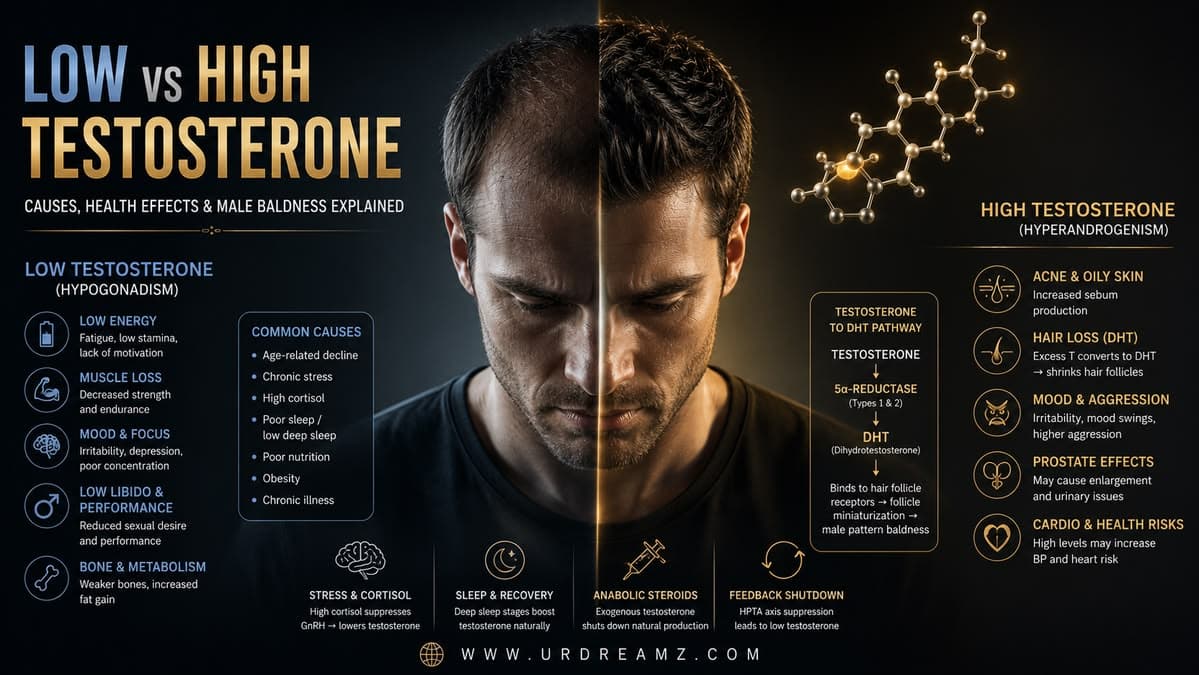
The human body is designed to maintain testosterone within a specific, healthy range — not simply "more is better." Moving outside this range in either direction, whether too low or too high, produces genuine health consequences. When levels fall too low, this is commonly described as "male weakness" or reduced masculine vigor. But it is just as important to understand what happens when levels rise too high, since several specific factors can push testosterone in either direction, each with its own distinct set of causes and consequences.
2. What Is Hypogonadism?
The medical term for abnormally low testosterone is hypogonadism. In males, this refers to reduced hormone output specifically from the testes — the body's primary testosterone "factory." In females, the equivalent reduction relates to hormone output from the ovaries. Several distinct factors can drive this decline, discussed one by one below.
3. Cause 1: Age
Age is one of the most significant and universal causes of declining testosterone. Testosterone levels are typically at their highest and most favorable during the years between roughly 21 and 25. Once a man passes age 30, testosterone begins a slow, steady annual decline of approximately 1% per year.
4. The 1% Per Year Decline After 30
To put this decline in concrete terms: if a 35-year-old man has a testosterone level of, say, 11 (on a relative scale), that level might drop to around 10 by age 36. By the time he reaches age 40, roughly four to five years later, that level could have declined by a further 5-6%. This steady, incremental decline is a completely normal and expected part of the male aging process.
5. Decline Is Not Destiny
Importantly, this age-related decline is not entirely fixed or unavoidable. Through consistent attention to diet and overall lifestyle, it is genuinely possible for a man to maintain a healthier testosterone level — even at age 40 — closer to where it might otherwise have been at a younger age. The decline curve is real, but its steepness can be meaningfully influenced by the other lifestyle factors discussed throughout this guide.
6. Cause 2: Lifestyle
Beyond age, overall lifestyle represents a second major, broad category of influence on testosterone levels. Diet quality, physical activity levels, body composition, and general daily habits can each meaningfully push testosterone levels either upward or downward over time, making lifestyle one of the more genuinely modifiable factors in this entire discussion.
7. Cause 3: Stress and the Cortisol Connection
Following lifestyle, stress represents another major factor capable of significantly affecting testosterone levels, precisely because the brain maintains a direct connection to the body's testosterone-producing "factory." During periods of stress or anxiety, levels of two important brain chemicals — serotonin and dopamine — tend to decline. At the same time, a separate hormone directly associated with stress and tension — cortisol — rises, and it is cortisol that directly interferes with testosterone production.
8. How Cortisol Directly Shuts Down the Hypothalamus
Cortisol works by directly targeting the hypothalamus in the brain, specifically suppressing the release of GnRH (Gonadotropin-Releasing Hormone). Since GnRH is the very first signal in the entire hormonal cascade that ultimately drives testosterone production down in the testes, suppressing this signal at its source means the entire downstream chain of command effectively goes silent — no signal reaches the testosterone factory below.
9. Why Chronic Stress Also Reduces Sperm Count
Because GnRH suppression doesn't just affect testosterone production, but also disrupts the broader hormonal signaling chain involved in sperm production, a man experiencing sustained, chronic stress often also experiences a meaningful reduction in sperm count alongside his declining testosterone levels — both problems tracing back to the exact same disrupted signal originating in the hypothalamus.
10. Cause 4: Insomnia and Poor Sleep
Insomnia, or generally inadequate sleep, represents another major, well-documented cause of reduced testosterone. Sleep occurs across several distinct stages, and understanding these stages helps clarify exactly why poor sleep quality specifically undermines testosterone production.
11. The Sleep Stages That Matter Most
The sleep cycle includes several distinct stages. The first major stage involves the eyes closing while still showing rapid movement beneath closed eyelids, known as REM sleep (Rapid Eye Movement). Following this comes a separate, deeper stage known as Deep Sleep.
12. Why Deep Sleep Specifically Matters for Testosterone
It is specifically during this Deep Sleep stage that the majority of the body's daily testosterone production actually takes place. This means that if a person is not getting adequate total sleep — commonly cited as five to six hours or fewer — or if their sleep quality is poor enough that they are not reaching sufficient deep sleep, testosterone production is directly and measurably compromised, regardless of how much total time was spent lying in bed.
13. Cause 5: Smoking and Alcohol
People who are dependent on smoking or alcohol commonly experience disrupted testosterone production, with corresponding disruption to sperm quality as well. Both substances interfere with testosterone through distinct but equally damaging mechanisms.
14. How Smoking Chemicals Reach the Testes
Cigarette smoke contains numerous carcinogenic chemical compounds that are absorbed into the bloodstream with every inhalation. Once circulating in the blood, these harmful compounds can reach the testes directly, disrupting the delicate cellular environment responsible for testosterone production.
15. How Alcohol Damages Testosterone Through the Liver
Alcohol primarily exerts its damaging effect through the liver. The liver houses numerous enzymes directly involved in hormone metabolism and regulation, and sustained alcohol use damages liver function significantly, which in turn has a substantial negative knock-on effect on overall testosterone levels.
16. The Six Major Effects of Low Testosterone
When testosterone levels drop significantly, several distinct physical and psychological effects tend to follow, discussed individually below.
17. Effect 1: Reduced Muscle Mass
The first major effect of low testosterone is a noticeable reduction in muscle mass. Since testosterone directly supports protein synthesis and muscle tissue maintenance, declining levels translate fairly directly into a visibly reduced amount of muscle on the body.
18. Effect 2: Obesity and Its Diabetes Connection
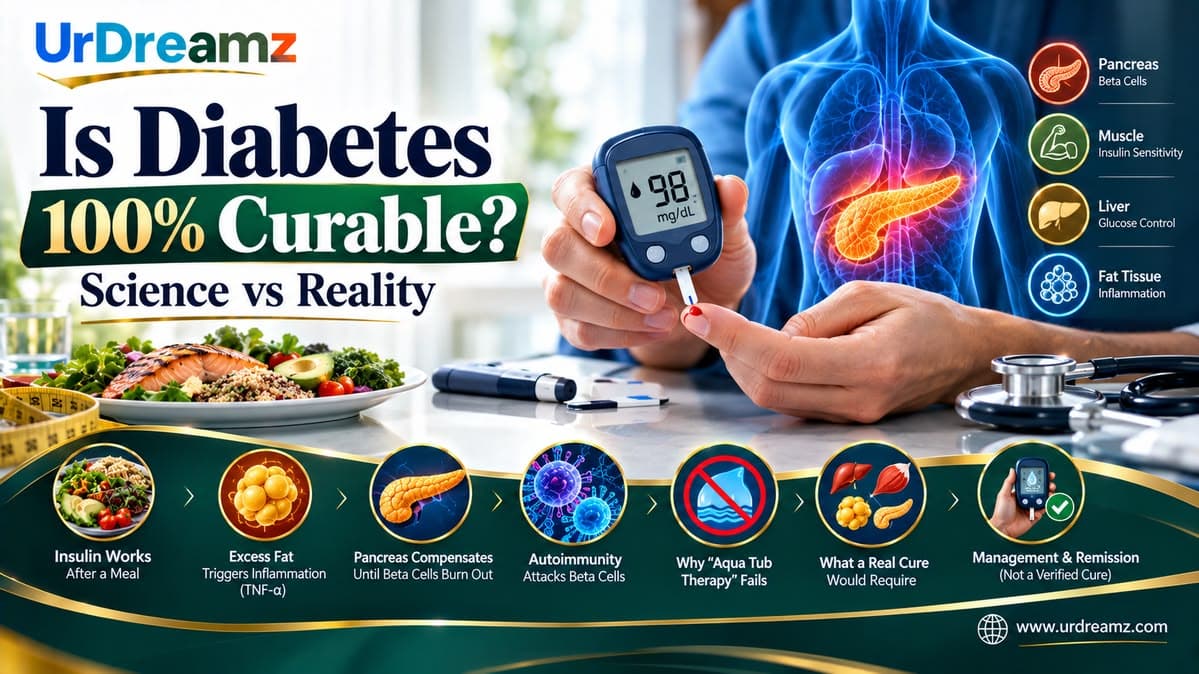
As muscle mass declines, body fat tends to increase correspondingly — a second major effect of low testosterone. This increased body fat and obesity is itself closely connected to an elevated risk of developing Type 2 Diabetes, a condition involving disrupted insulin function and blood sugar regulation. You can read a complete guide to diabetes, its symptoms, causes, and treatment here.
19. Effect 3: Low Libido
The third major effect is a noticeable decline in libido — sexual desire, drive, and the underlying physical and psychological energy associated with sexual interest. Testosterone plays a central, direct role in maintaining healthy libido, and declining levels are one of the most commonly reported symptoms among men experiencing hypogonadism.
20. Effect 4: Reduced Bone Density
The fourth major effect involves the bones becoming progressively weaker and less dense. Since healthy, strong bones also play a role in supporting blood cell production, weakened bone density resulting from low testosterone can, in turn, contribute to broader circulatory and blood-related weakness throughout the body.
21. Effect 5: Mood Disturbances
The fifth major effect involves noticeable mood disturbances. Since mood is closely tied to serotonin activity in the brain, and testosterone decline is often accompanied by disrupted serotonin levels, low testosterone frequently correlates with worsened mood, irritability, or a generally flatter emotional state.
22. Effect 6: Fatigue
The sixth and final major effect is persistent fatigue. When organs throughout the body do not receive adequate blood flow — partly a downstream consequence of the weakened bone density and reduced blood-supporting function discussed above — the body responds with pain, sluggishness, and an overall sense of tiredness and reduced physical vitality.
23. Low Testosterone Effects: Summary Table
| # | Effect | Underlying Mechanism |
|---|---|---|
| 1 | Reduced Muscle Mass | Decreased protein synthesis support |
| 2 | Obesity | Muscle loss shifts body composition toward fat, raising diabetes risk |
| 3 | Low Libido | Testosterone's direct role in sexual desire is reduced |
| 4 | Reduced Bone Density | Weaker bone structure and blood-supporting function |
| 5 | Mood Disturbances | Linked disruption of serotonin activity |
| 6 | Fatigue | Reduced blood flow and delivery to organs |
24. The Other Extreme: What Is Hyperandrogenism?
Having covered what happens when testosterone drops too low, it's equally important to understand the opposite scenario: what happens when levels rise too high, a condition referred to as hyperandrogenism. Several distinct causes can drive this elevation, each discussed below.
25. Cause 1: Bodybuilding and Anabolic Steroids
The first major cause of elevated testosterone is deliberate use of substances during bodybuilding. While bodybuilding itself is a healthy and constructive activity, some individuals use additional powders or injections specifically to accelerate muscle growth — most commonly, a class of substances called anabolic steroids.
26. Why Anabolic Steroids Backfire: The Feedback Shutdown
Here is the genuinely counterintuitive part: anabolic steroids are structurally similar enough to natural testosterone that, once they enter the bloodstream, they function as a kind of artificial testosterone. The brain detects this elevated hormone level and responds exactly as it would to genuinely elevated natural testosterone — by shutting down the GnRH signal from the hypothalamus. Once GnRH is suppressed, the pituitary gland's downstream release of LH and FSH is also shut down, which means spermatogenesis (sperm production) stops, and the body's own natural testosterone synthesis stops as well. This is precisely why many serious, long-term bodybuilders using anabolic steroids experience problems like erectile dysfunction — since the body's own, natural testosterone production has been suppressed, and the artificial substitute cannot fully replicate every function of natural testosterone, spermatogenesis suffers significantly as a direct consequence.
27. Cause 2: Tumors
The second major cause of elevated testosterone involves tumors — either forming directly on the testes (the primary testosterone "factory") or on the adrenal glands sitting atop the kidneys. Either type of tumor can drive testosterone levels significantly higher than normal.
28. Cause 3: Genetics
The third major cause is genetics. Certain individuals may simply be genetically predisposed toward naturally elevated testosterone production, independent of any lifestyle choice, medical condition, or substance use.
29. The Four Major Effects of Hyperandrogenism
When testosterone levels rise significantly above the healthy range, four major effects commonly follow, each discussed in detail below.
30. Effect 1: Infertility From Steroid Use
The first major effect, particularly relevant to bodybuilders using injected anabolic steroids, is infertility. Because the brain determines that testosterone levels are already sufficiently — or excessively — elevated, it suppresses the natural signaling cascade responsible for spermatogenesis, resulting in reduced sperm count. Alongside this, the Leydig cells themselves can shrink, and testicular size can noticeably decrease. A third related consequence is erectile dysfunction, which occurs specifically because natural testosterone production has been suppressed, and — importantly — because DHT, a hormone closely tied to erectile function, also declines as a downstream consequence of this suppression.
31. Effect 2: Acne
The second major effect of elevated testosterone is acne — the small breakouts and blemishes commonly observed on the face, particularly among young people between roughly 21 and 25 years old. Beneath the small pores on the face sit glands called sebaceous glands, which secrete natural skin oils. Elevated testosterone increases oil production from these glands significantly. Combined with the naturally occurring dead skin cells on facial skin, this excess oil creates an environment where bacteria can colonize and reproduce, triggering localized inflammation — which is precisely what produces the visible bumps and blemishes recognized as acne.
32. Effect 3: Male Pattern Baldness
The third major effect — and arguably the most visible long-term consequence of elevated testosterone — is male pattern baldness, also known scientifically as androgenic alopecia. Understanding exactly how this happens requires walking through a specific hormonal mechanism.
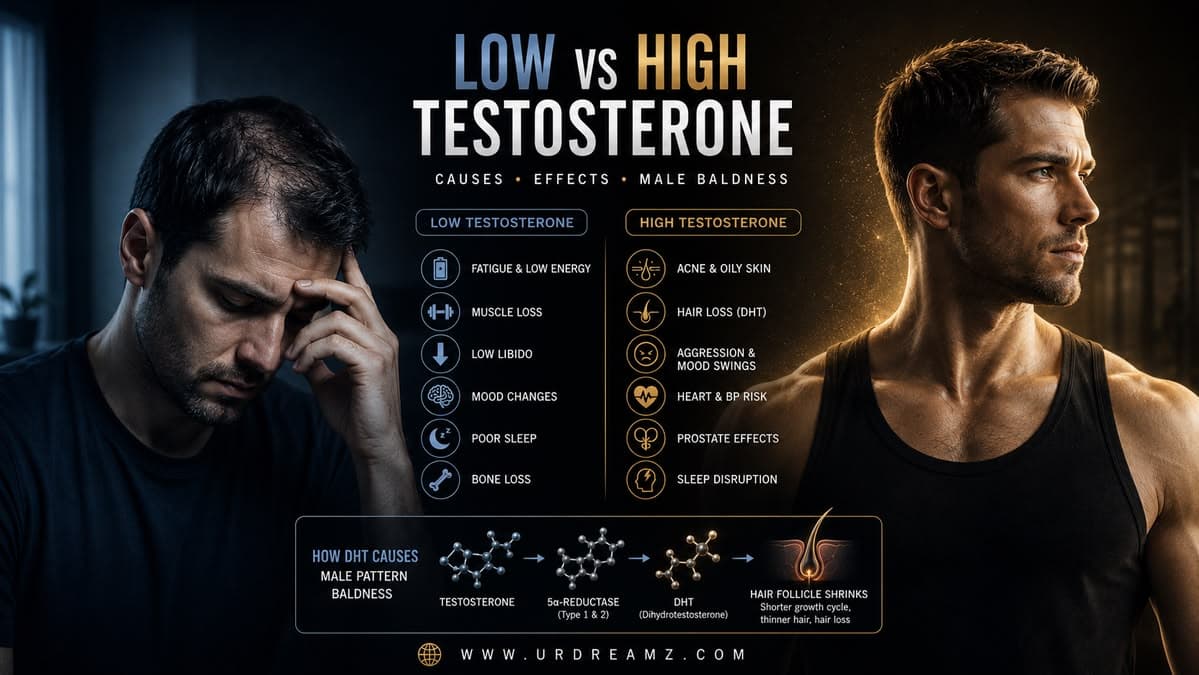
33. The DHT Mechanism Behind Hair Loss
When testosterone levels rise and circulate through the bloodstream, some of it reaches the scalp, where it interacts with individual hair follicles — the small structures from which each individual hair grows. At the follicle level, testosterone is converted into a considerably more potent related hormone called DHT (Dihydrotestosterone) — roughly five times stronger than testosterone itself — through the action of a specific enzyme, 5-alpha-reductase. Once converted, DHT directly affects the size of the hair follicle itself, gradually shrinking it over time.
34. Terminal Hair vs Vellus Hair
Healthy, normal, full-thickness hair growing from a follicle unaffected by this process is referred to as terminal hair. As DHT progressively shrinks the affected follicle over successive growth cycles, the hair it produces becomes progressively thinner, finer, and shorter — eventually becoming what is called vellus hair, the faint, barely visible fuzz that offers minimal coverage, often mistaken for simply "no hair" once the process has advanced far enough.
35. Why Baldness Isn't Caused by Testosterone Alone
It is important to note that male pattern baldness is not attributable to elevated testosterone and DHT in isolation — several contributing factors typically work together, including chronic stress, anxiety, depression, and underlying genetic predisposition. A man can have perfectly normal testosterone levels and still experience significant hair loss if he is genetically predisposed and combines that predisposition with high stress or other contributing lifestyle factors.
36. Why You Can't Simply "Turn Off" DHT
Given DHT's clear role in hair loss, it might seem logical to simply eliminate it entirely. However, DHT also plays an important, genuinely beneficial role elsewhere in the body — specifically in supporting libido and healthy erectile function. Certain medications do exist that work by blocking the 5-alpha-reductase enzyme responsible for converting testosterone into DHT, and while these medications can indeed help slow or prevent further hair loss by reducing DHT production, they also carry the risk of side effects related to libido and sexual function, precisely because they interfere with a hormone that serves multiple, sometimes competing, purposes throughout the body.
37. Effect 4: Aggressive Behavior
The fourth and final major effect of significantly elevated testosterone is increased aggressive behavior. Elevated testosterone is well-documented to correlate with heightened irritability, impulsivity, and a greater likelihood of aggressive or confrontational responses, adding a behavioral dimension to the physical effects already discussed throughout this guide.
38. Low vs High Testosterone: Side-by-Side Comparison
| Feature | Low Testosterone (Hypogonadism) | High Testosterone (Hyperandrogenism) |
|---|---|---|
| Energy & Mood | Fatigue, low mood, poor focus | Irritability, aggression, mood swings |
| Body Composition | Reduced muscle mass, increased fat | Increased muscle mass; fluid retention risk |
| Sexual Health | Low libido, reduced sexual desire | Erectile dysfunction from steroid-suppressed natural production |
| Skin & Hair | Reduced body/facial hair | Acne, male pattern baldness |
| Fertility | Reduced sperm count from suppressed signaling | Reduced sperm count from steroid-induced feedback shutdown |
| Common Causes | Age, stress, poor sleep, smoking, alcohol | Anabolic steroids, tumors, genetics |
39. Frequently Asked Questions
- Q1: What is hypogonadism?
- Hypogonadism is the medical term for abnormally low testosterone production, resulting from reduced output from the testes in men or the ovaries in women.
- Q2: At what age does testosterone start declining?
- Testosterone typically peaks between ages 21-25 and begins declining by approximately 1% per year after age 30.
- Q3: How does stress lower testosterone?
- Stress raises cortisol, which directly suppresses GnRH release from the hypothalamus, disrupting the entire downstream hormonal chain that drives testosterone production.
- Q4: Why does poor sleep reduce testosterone?
- Most testosterone production occurs specifically during the Deep Sleep stage; inadequate total sleep or insufficient deep sleep directly reduces testosterone output.
- Q5: What are the six major effects of low testosterone?
- Reduced muscle mass, obesity, low libido, reduced bone density, mood disturbances, and fatigue.
- Q6: What is hyperandrogenism?
- Hyperandrogenism refers to abnormally elevated testosterone (or related androgen) levels, commonly caused by anabolic steroid use, tumors, or genetics.
- Q7: Why do anabolic steroids cause infertility despite raising testosterone?
- The brain detects the artificially elevated hormone level and suppresses natural GnRH, LH, and FSH release, shutting down the body's own spermatogenesis and natural testosterone production.
- Q8: What causes acne related to high testosterone?
- Elevated testosterone increases oil production from facial sebaceous glands, creating conditions where bacteria multiply and trigger inflammation.
- Q9: What causes male pattern baldness?
- Testosterone is converted to DHT at hair follicles via the enzyme 5-alpha-reductase; DHT progressively shrinks follicles, turning healthy terminal hair into thin, short vellus hair.
- Q10: Is male pattern baldness caused by testosterone alone?
- No. Genetics, chronic stress, anxiety, and depression also contribute significantly alongside DHT's direct effect on hair follicles.
- Q11: Can DHT simply be blocked to prevent baldness?
- Medications can reduce DHT production, but since DHT also supports libido and erectile function, blocking it carries potential sexual side effects.
- Q12: Does high testosterone cause aggressive behavior?
- Yes, significantly elevated testosterone is associated with increased irritability, impulsivity, and aggressive behavior.
- Q13: How does obesity connect to low testosterone?
- Low testosterone reduces muscle mass, shifting body composition toward increased fat, which raises the risk of conditions like Type 2 Diabetes.
- Q14: Can low testosterone decline be slowed through lifestyle changes?
- Yes. Diet, exercise, stress management, and adequate sleep can help maintain healthier testosterone levels even as natural age-related decline occurs.
- Q15: What is the difference between terminal hair and vellus hair?
- Terminal hair is healthy, full-thickness hair from an unaffected follicle; vellus hair is the thin, short, faint hair produced by a follicle that has been progressively shrunk by DHT exposure.
40. Conclusion
Testosterone health is fundamentally a story about balance, not simply "more is better" or "less is worse." Too little — driven by age, chronic stress, poor sleep, smoking, or alcohol — leads to reduced muscle mass, obesity, low libido, weaker bones, mood disturbances, and fatigue. Too much — driven by anabolic steroid use, tumors, or genetics — leads to its own distinct set of problems: infertility through the body's own feedback shutdown, acne, aggressive behavior, and, through the specific conversion of testosterone into DHT at the hair follicle, male pattern baldness. Understanding both directions of this imbalance, and the precise hormonal mechanisms driving each one — from cortisol silencing GnRH to DHT shrinking hair follicles — makes clear why maintaining testosterone within its intended, balanced range matters so much more than simply chasing higher numbers.