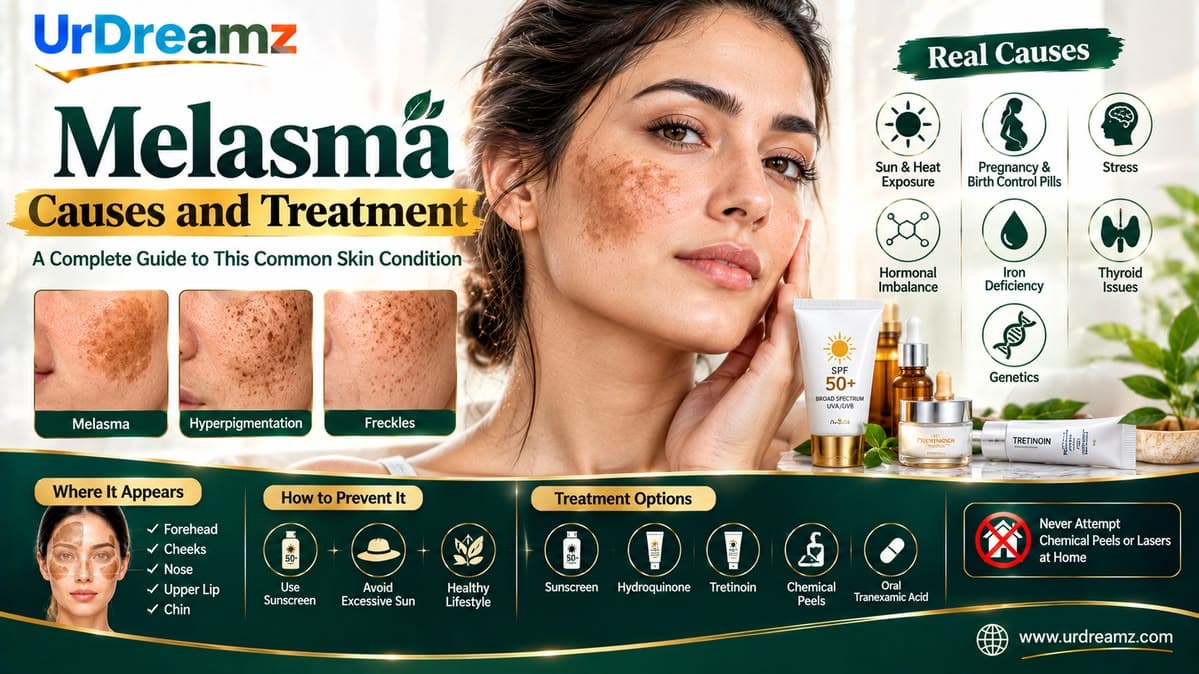
Melasma Causes and Treatment: A Complete Guide
Melasma is one of the most common — and most frequently misunderstood — causes of dark, uneven patches on the face. It's not simply "sun damage" or ordinary hyperpigmentation, and treating it that way often leads to frustration and worsening patches. This guide covers exactly what triggers melasma, why hormones and heat matter just as much as sun exposure, how it differs from freckles and general hyperpigmentation, and the real, dermatologist-guided treatment options that actually work.
Introduction
Melasma is one of the most common skin concerns dermatologists see, yet it remains widely misunderstood. Many people assume the dark, patchy discoloration on their face is simple sun damage or ordinary hyperpigmentation that any brightening cream will fix — but melasma behaves differently, is triggered by a wider range of factors than sun exposure alone, and can actually worsen with the wrong treatment approach, including some home remedies and even certain in-clinic procedures done incorrectly.
This guide walks through melasma in real depth: what it actually is, why it develops, the full range of triggers — from sun and heat exposure to pregnancy, birth control, stress, iron deficiency, and thyroid problems — where it typically shows up on the face, how it's different from freckles and general hyperpigmentation, and the complete, evidence-based range of treatment options available today, from daily sun protection to prescription creams, chemical peels, oral medication, and in-clinic procedures.
It's worth saying clearly at the outset why understanding the full picture matters so much for this specific condition. Melasma is notorious for being frustrating to treat precisely because so many people approach it the same way they'd approach an ordinary dark spot or acne mark — with a single brightening product and a bit of sun avoidance — without realizing that hormones, heat, and even nutritional or thyroid factors can be actively working against that single-pronged approach the whole time. Treating melasma effectively generally means treating it as the multi-factor condition it actually is, which is exactly the framework this guide is built around.
What Is Melasma
Melasma is a common skin condition that causes dark, discolored patches to form, most often on the face. It happens when the skin's pigment-producing cells, called melanocytes, begin producing too much melanin in specific, localized areas, resulting in patches that are typically brown, grayish-brown, or tan in color and often appear roughly symmetrical on both sides of the face.
Melasma vs. Hyperpigmentation vs. Freckles
| Condition | Key Characteristics |
|---|---|
| Melasma | Larger, often symmetrical patches, strongly linked to hormones, heat, and sun exposure; tends to be more stubborn and prone to recurrence |
| General hyperpigmentation | A broader term for any area of skin darker than the surrounding skin, which can result from acne marks, injury, or inflammation, not necessarily hormonal |
| Freckles | Small, scattered spots, primarily genetic and sun-related, generally not linked to hormonal triggers the way melasma is |
Understanding this distinction matters because melasma often requires a different, more comprehensive treatment approach than ordinary sun spots or freckles, precisely because its causes are more varied and its tendency to return, especially with any sun or heat exposure, is considerably stronger.
Where Melasma Typically Appears
Melasma most commonly appears on the cheeks, forehead, upper lip and around the mouth, chin, and bridge of the nose. Some people also develop patches around the eyes. The relatively symmetrical, patchy distribution across these areas is itself one of the more recognizable visual clues that distinguishes melasma from other, more randomly scattered forms of pigmentation.
Causes and Triggers
Melasma rarely has a single cause — it typically develops from a combination of triggers working together, which is exactly why effective treatment usually needs to address more than sun exposure alone.
| Trigger | How It Contributes |
|---|---|
| Sun exposure (UV light) | The single biggest trigger; ultraviolet light directly stimulates melanin production |
| Heat and infrared exposure | Heat from the sun, stoves, styling tools, and electronic equipment emitting heat can worsen melasma even without direct UV exposure |
| Pregnancy and birth control pills | Elevated estrogen and progesterone levels are strongly linked to melasma, which is why it's sometimes called the "mask of pregnancy" |
| Stress | Chronic stress can influence hormone levels in ways that contribute to melasma flare-ups |
| Hormonal imbalance | Beyond pregnancy and birth control specifically, broader hormonal imbalance can also trigger or worsen melasma |
| Iron deficiency | Low iron levels have been associated with a higher likelihood of developing melasma in some people |
| Thyroid issues | Thyroid dysfunction is linked to a higher risk of melasma in some individuals |
| Genetics | A family history of melasma makes an individual more likely to develop it themselves |
| Skin irritation | Harsh cosmetics or improper skin treatments can trigger inflammation that contributes to dark patches |
Why Sun and Heat Are the Biggest Triggers
Among all the triggers listed above, sun exposure remains the single most significant. People who regularly work outdoors in direct sunlight, or in environments with significant heat and electromagnetic exposure, without wearing sunscreen, are at meaningfully higher risk, since UV light directly stimulates the pigment-producing cells responsible for melasma.
Heat itself, separate from UV light specifically, also plays a real role — infrared heat from the sun, from cooking over a stove, from hair styling tools, and even from some electronic devices can worsen melasma, which is exactly why sun protection alone isn't always enough; minimizing unnecessary heat exposure to the face matters too.
Hormones, Pregnancy, and Birth Control
Hormonal changes are one of the most well-established melasma triggers. Elevated estrogen and progesterone, whether from pregnancy or from hormonal birth control pills, frequently trigger melasma in people who are otherwise not prone to significant pigmentation issues. This hormonal connection is exactly why melasma is sometimes called the "mask of pregnancy," and why some women notice it appearing or worsening specifically after starting or stopping hormonal contraception.
Stress, Iron Deficiency, and Thyroid Issues
Beyond sun and hormones, several less commonly discussed factors can also contribute to melasma. Chronic stress can influence hormonal balance in ways that make melasma more likely or more severe. Iron deficiency has similarly been linked to a higher likelihood of developing melasma in some people, and thyroid dysfunction is another recognized contributing factor. Anyone dealing with persistent, treatment-resistant melasma may benefit from being evaluated for these underlying factors, rather than only focusing on topical, skin-level treatment.
Melasma on Darker Skin Tones
Melasma is particularly common, and often more visually pronounced, in people with darker skin tones, since these skin types naturally have more active melanocytes. Treatment for melasma on darker skin requires extra care, since some treatments that work well on lighter skin — particularly certain aggressive chemical peels or lasers — carry a higher risk of triggering further pigmentation changes, including post-inflammatory hyperpigmentation, if not handled carefully by an experienced dermatologist familiar with treating pigmentation on deeper skin tones.
Prevention: Your Daily Defense
Given how strongly sun and heat exposure drive melasma, consistent daily prevention is genuinely one of the most powerful tools available, arguably more important than any single treatment product.
| Prevention Habit | Why It Helps |
|---|---|
| Broad-spectrum sunscreen (SPF 50) | Blocks UV rays directly at the source, the single biggest melasma trigger; tinted, iron-oxide-containing sunscreens offer added protection against visible light as well |
| Sunglasses and a wide-brimmed hat | Provide additional physical protection for the face when outdoors |
| Limiting direct sun exposure during peak hours | Reduces cumulative UV exposure that drives melanin overproduction |
| Minimizing unnecessary heat exposure | Reduces the infrared and heat contribution to melasma, separate from UV light alone |
Sunscreen should be applied daily, rain or shine, indoors or outdoors, and reapplied throughout the day when spending extended time outside — this single habit, done consistently, is one of the most effective things anyone prone to melasma can do.
Treatment Overview
Melasma treatment focuses on two main goals: protecting the skin from further triggering, and gradually fading existing pigment. It's important to set realistic expectations from the start — melasma treatment takes time, often months, and consistency matters far more than any single, one-time treatment.
Topical Medications
| Treatment | Role |
|---|---|
| Hydroquinone | Widely considered a first-line prescription bleaching agent that reduces melanin production |
| Tretinoin | A retinoid that supports skin cell turnover, often used alongside hydroquinone |
| Azelaic acid | An alternative or additional option that helps reduce pigment production with a generally gentler profile |
| Vitamin C | An antioxidant that can help brighten skin and support overall treatment |
| Triple-combination creams | Formulations combining hydroquinone, tretinoin, and a corticosteroid, often prescribed for more resistant cases |
All of these should be used under a dermatologist's guidance, since incorrect use — particularly of hydroquinone over long periods without supervision — carries its own risks.
Chemical Peels: Types and Why DIY Is Dangerous
Chemical peels are a commonly used melasma treatment, generally categorized into three depths.
| Peel Type | Depth |
|---|---|
| Superficial (light) peel | Affects only the outermost skin layer, generally the gentlest option |
| Medium peel | Reaches deeper into the skin, offering more noticeable results with more downtime |
| Deep peel | The most intensive option, reaching the deepest skin layers, used selectively and with significant care |
Oral Medication: Tranexamic Acid
For more stubborn cases that don't respond adequately to topical treatment alone, doctors sometimes prescribe oral tranexamic acid. This medication works through a different mechanism than topical treatments, helping to reduce melanin production from within, and is used strictly under medical supervision due to specific contraindications and the need to screen for factors like blood clotting risk beforehand.
Procedures: Microneedling and the Laser Caution
Certain microneedling treatments can help with melasma by supporting skin renewal and improving the penetration of topical treatments. Lasers, however, deserve a specific caution: some laser types generate heat as part of their mechanism, and since heat itself is a known melasma trigger, certain lasers used incorrectly or on inappropriate candidates can actually worsen melasma rather than improve it. This is exactly why laser treatment for melasma should only be performed by a dermatologist experienced specifically in treating pigmentation disorders, who can select an appropriate device and settings for the individual's skin type and melasma severity.
Building a Melasma-Friendly Skincare Routine
A consistent, gentle daily routine supports every treatment discussed in this guide. This generally means a gentle, non-irritating cleanser, a treatment product as prescribed by a dermatologist (such as hydroquinone or tretinoin), a suitable moisturizer, and, critically, broad-spectrum sunscreen every single morning without exception. Avoiding harsh, irritating products and unnecessary friction or heat exposure to the face rounds out a routine genuinely supportive of melasma management.
Is Melasma 100% Curable?
Melasma is a manageable condition, but it isn't always a simple, one-time "cure." For many people, particularly when the underlying trigger (such as pregnancy or a specific medication) resolves, melasma can fade substantially or even disappear over time. For others, especially where sun and heat exposure remain ongoing triggers, melasma can be a more chronic, recurring condition requiring long-term, consistent management rather than a single fix. Setting realistic expectations — meaningful improvement and control, rather than guaranteed permanent elimination — helps avoid the frustration and repeated treatment-switching that often makes melasma harder to manage over time.
When to See a Dermatologist
Anyone noticing new, unexplained dark patches on the face, or patches that don't respond to basic sun protection and over-the-counter brightening products after a reasonable trial period, should see a dermatologist for proper evaluation. This is especially important before attempting any chemical peel, laser treatment, or prescription-strength product, since a dermatologist can accurately diagnose melasma (rather than confusing it with another pigmentation condition) and build an appropriately tailored treatment plan.
Frequently Asked Questions
What is the best treatment for melasma?
A combination of consistent daily sun protection and dermatologist-prescribed topical treatment, such as hydroquinone or tretinoin, is generally considered the most effective foundation, with additional procedures used for more stubborn cases.
What are the main causes of melasma?
Sun and heat exposure, pregnancy and hormonal birth control, stress, hormonal imbalance, iron deficiency, thyroid issues, and genetics are the most commonly recognized causes.
How to stop melasma from spreading?
Consistent, daily broad-spectrum sunscreen use, minimizing heat exposure, and following a dermatologist-guided treatment plan are the most effective ways to prevent melasma from worsening or spreading.
What foods should I avoid if I have melasma?
There's no single universally required food restriction, though maintaining a balanced diet that supports healthy iron levels and overall hormonal balance is generally supportive of melasma management.
Which cream removes melasma?
Hydroquinone is widely considered the first-line prescription cream for melasma, often used alongside tretinoin, azelaic acid, or triple-combination formulations.
Is melasma 100% curable?
Not always guaranteed as a permanent cure; it's more accurately described as manageable, with some cases fading substantially once triggers resolve, and others requiring ongoing, long-term management.
What is the difference between melasma and hyperpigmentation?
Melasma is a specific, hormonally and heat-influenced condition causing larger, often symmetrical patches, while hyperpigmentation is a broader term for any area of skin darker than the surrounding skin.
What is the difference between melasma and freckles?
Freckles are small, scattered, primarily genetic and sun-related spots, while melasma tends to appear in larger, more symmetrical patches linked to hormonal and heat triggers.
Can melasma appear around the mouth and eyes?
Yes, melasma commonly appears around the mouth, on the upper lip, cheeks, forehead, and sometimes around the eyes.
What vitamins help with melasma?
Vitamin C is commonly used topically to support brightening, and addressing any underlying iron deficiency, under medical guidance, may also help in some cases.
Is it safe to do a chemical peel at home for melasma?
No, chemical peels should never be done at home for melasma; incorrect application can cause burns, scarring, and can actually worsen pigmentation.
Can lasers make melasma worse?
Yes, certain lasers generate heat, which is a known melasma trigger, so laser treatment should only be performed by a dermatologist experienced specifically in treating pigmentation disorders.
Conclusion
Melasma is common, genuinely manageable, and — importantly — not simply a matter of sun damage that any generic cream can fix. Its causes span sun and heat exposure, hormones, stress, iron levels, thyroid function, and genetics, which is exactly why effective treatment usually requires addressing more than one factor at once, under the guidance of a dermatologist who can accurately diagnose the specific pattern and severity involved.
Consistent daily sun protection remains the single most powerful tool available, paired with appropriate topical treatment and, for more stubborn cases, professionally administered chemical peels, oral medication, or carefully selected procedures. Patience and consistency, rather than searching for a single overnight fix, are what genuinely make the difference in managing melasma successfully over time.