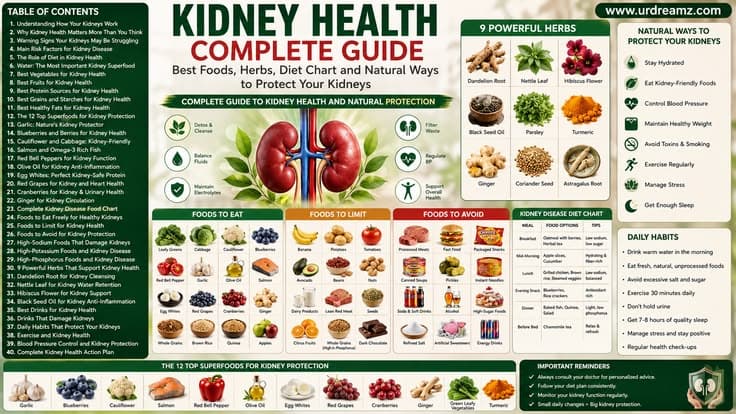
Kidney Health Complete Guide: Best Foods, Herbs, Diet Chart and Natural Ways to Protect Your Kidneys
Your kidneys are two remarkably sophisticated organs, each roughly the size of a fist, quietly working around the clock to keep you alive and healthy. Every single day your kidneys filter approximately 200 liters of blood, remove waste products and excess fluids, regulate blood pressure, balance minerals and electrolytes, produce hormones that control red blood cell production, and activate vitamin D for bone health. They are among the hardest-working organs in your entire body, and yet most people give them almost no attention until something goes wrong. The global burden of kidney disease is staggering, with over 850 million people worldwide estimated to have some form of kidney disease, and chronic kidney disease representing one of the most rapidly growing health crises of our time. The most powerful strategy against this epidemic is prevention, and prevention starts with what you eat, drink, and how you live every day. This complete guide gives you everything you need to protect, nourish, and strengthen your kidneys for life.
1. Understanding How Your Kidneys Work
Before you can protect your kidneys, you need to appreciate what they actually do. Most people understand that kidneys filter waste from the blood and produce urine, but this description dramatically undersells the complexity and importance of these organs. Your kidneys perform at least seven distinct and critical functions simultaneously, every hour of every day of your entire life.
Blood filtration is the most well-known function. Each kidney contains approximately one million tiny filtering units called nephrons. Inside each nephron, blood passes through a microscopic cluster of blood vessels called the glomerulus, where waste products, excess minerals, and excess water are filtered out of the blood into a collecting tube. Useful substances like glucose, amino acids, and the right amounts of minerals are then reabsorbed back into the bloodstream. What is not reabsorbed continues through the collecting system and eventually exits the body as urine.
Blood pressure regulation is the second major function. The kidneys produce a hormone called renin that is central to regulating blood pressure. They also control blood volume by determining how much water to retain in the body versus how much to excrete. When blood pressure rises too high, the kidneys respond by excreting more sodium and water to bring it down. When blood pressure drops too low, the kidneys retain more fluid and activate systems to raise it. This bidirectional control makes the kidneys the primary long-term regulators of blood pressure in the human body.
The kidneys also produce erythropoietin, a hormone that signals the bone marrow to produce red blood cells. When kidneys are damaged, erythropoietin production falls and anemia develops. They activate vitamin D from its inactive form into the active form that the body can use to absorb calcium and maintain bone strength. They regulate the blood levels of electrolytes including sodium, potassium, calcium, and phosphorus, which are critical for heart rhythm, muscle contraction, and nerve function. And they produce prostaglandins, hormone-like substances that influence blood flow to the kidneys themselves and throughout the body.
| # | Function | What Happens When It Fails |
|---|---|---|
| 1 | Blood filtration and waste removal | Toxic waste products accumulate in the blood, causing uremia with symptoms of nausea, confusion, and organ damage |
| 2 | Blood pressure regulation through fluid and renin management | Uncontrolled hypertension that is difficult to manage with medication and further damages kidney tissue |
| 3 | Red blood cell production via erythropoietin | Anemia causing fatigue, weakness, and reduced oxygen delivery to tissues |
| 4 | Vitamin D activation for bone and immune health | Bone disease, weakened immunity, and increased cardiovascular risk |
| 5 | Electrolyte balance including potassium, sodium, and phosphorus | Dangerous heart rhythm abnormalities, muscle weakness, and bone deterioration |
| 6 | Acid-base balance maintaining blood pH | Metabolic acidosis causing fatigue, muscle wasting, and accelerated kidney damage |
| 7 | Fluid balance in the body | Fluid retention causing swelling in legs, ankles, and lungs |
2. Why Kidney Health Matters More Than You Think
Chronic kidney disease (CKD) affects an estimated 10 to 15 percent of the global adult population. That means roughly one in every seven to ten adults has some degree of reduced kidney function, and the majority of them have no idea. The insidious nature of kidney disease is that it causes almost no noticeable symptoms until kidneys have lost approximately 60 to 70 percent of their filtering capacity. By the time most people are diagnosed, significant and often irreversible damage has already occurred.
The consequences of kidney disease extend far beyond the kidneys themselves. Damaged kidneys lose the ability to regulate blood pressure, which in turn accelerates cardiovascular disease. People with CKD have dramatically elevated risks of heart attack and stroke compared to the general population. Kidney disease is also a leading cause of adult-onset anemia, bone disease, and immune dysfunction. In its most advanced form, kidney failure or end-stage renal disease requires dialysis three times weekly or a kidney transplant to survive, both of which are associated with dramatically reduced quality of life and significant healthcare costs.
The encouraging reality is that early and even moderate kidney disease can be significantly slowed and sometimes partially reversed through dietary change, blood pressure management, blood sugar control, and lifestyle modification. The earlier you begin protecting your kidneys, the more function you preserve. This guide is about giving you the knowledge to act before symptoms appear rather than after damage is done.
3. Warning Signs Your Kidneys May Be Struggling
Because kidneys are remarkably adaptable and compensate for damage over long periods, recognizing early warning signs requires paying attention to subtle changes that most people dismiss or attribute to other causes. If you notice several of these signs together, consult a healthcare provider and request kidney function tests.
| Warning Sign | Why It Happens | When to Be Concerned |
|---|---|---|
| Persistent fatigue and weakness | Reduced erythropoietin production leads to anemia. Accumulated waste products in blood reduce energy production at the cellular level | Fatigue that does not improve with rest and has no other obvious explanation |
| Swelling in ankles, feet, or around the eyes | Damaged kidneys retain excess sodium and fluid, causing it to accumulate in tissues especially in dependent areas like the feet | Any unexplained swelling that persists or worsens, particularly morning puffiness around the eyes |
| Changes in urination frequency or appearance | Damaged nephrons may allow protein or blood to pass into urine, or may reduce the kidneys ability to concentrate or dilute urine properly | Foamy urine (indicating protein), blood in urine, needing to urinate very frequently especially at night, or producing very little urine |
| Persistent itching | Phosphorus and other waste products accumulate in the blood when kidneys cannot filter them adequately, irritating nerve endings in the skin | Generalized itching with no skin rash, particularly if it is worse at night and does not respond to moisturizers |
| Loss of appetite, nausea, or a metallic taste in the mouth | Accumulated waste products in the blood, a condition called uremia, interfere with normal digestive function and alter taste perception | Unexplained loss of appetite or nausea that is not related to digestive illness, particularly with a persistent metallic or ammonia-like taste |
| Difficulty concentrating or brain fog | Anemia reduces oxygen delivery to the brain. Accumulated toxins also directly impair brain function when kidney filtration is severely compromised | Unusual difficulty focusing, remembering things, or making decisions in someone with other kidney warning signs |
| Shortness of breath | Fluid accumulation in the lungs from poor fluid balance regulation, combined with anemia-related reduced oxygen carrying capacity | Breathlessness on minimal exertion or when lying flat without an obvious cardiac or pulmonary explanation |
| Back or flank pain | Kidney infections, kidney stones, or cysts can cause pain in the area below the ribcage on either side of the spine | A persistent dull ache or sharp pain in the flank area, particularly if accompanied by fever or urinary changes |
4. Main Risk Factors for Kidney Disease
| Risk Factor | How It Damages Kidneys | Action to Take |
|---|---|---|
| Diabetes (Type 1 and Type 2) | High blood glucose damages the tiny blood vessels of the glomeruli in the kidneys over time. Diabetic nephropathy is the single leading cause of kidney failure worldwide | Maintain HbA1c below 7%. Monitor blood glucose regularly. Follow a low-glycemic diet |
| High Blood Pressure (Hypertension) | Elevated pressure in kidney blood vessels damages the delicate filtration structures. Hypertension is both a cause and consequence of kidney disease | Target blood pressure below 130/80 mmHg. Follow a low-sodium diet. Exercise regularly |
| Family History of Kidney Disease | Several kidney conditions including polycystic kidney disease are directly inherited. General susceptibility to kidney damage is also partly genetic | Disclose family history to your doctor. Get regular kidney function screening from an earlier age |
| Obesity | Excess body weight increases blood pressure, promotes diabetes, causes direct mechanical pressure on kidneys, and creates a chronic inflammatory state harmful to kidney tissue | Achieve and maintain a healthy body weight through diet and physical activity |
| Chronic NSAID Use | Frequent use of non-steroidal anti-inflammatory drugs like ibuprofen and naproxen reduces blood flow to kidneys and can cause direct nephrotoxic damage | Use NSAIDs sparingly. Prefer acetaminophen for pain relief when possible. Never use them if you already have reduced kidney function |
| Recurrent Kidney Infections | Repeated bacterial infections cause progressive scarring of kidney tissue that reduces function over years | Treat urinary tract infections promptly and completely. Stay well hydrated to flush bacteria from the urinary system |
| Kidney Stones | Recurrent stones cause obstruction, infection, and physical damage to kidney tissue during passage | Stay well hydrated. Identify the type of stones you form and follow dietary recommendations to prevent recurrence |
| Smoking | Nicotine reduces blood flow to kidneys, accelerates loss of kidney function, and doubles the risk of kidney failure in people already diagnosed with CKD | Quit smoking completely. No safe level of smoking exists for kidney health |
5. The Role of Diet in Kidney Health
Diet influences kidney health through multiple pathways simultaneously. What you eat determines your blood pressure, blood glucose levels, body weight, and the degree of inflammation in your body, all of which directly affect kidney function. For people with healthy kidneys, the goal of dietary choices is prevention of the risk factors that lead to kidney damage. For people with existing kidney disease, the goals are more specific and include controlling the levels of potassium, phosphorus, sodium, and protein that the kidneys must process each day.
The key dietary principles for kidney health are consistent across virtually all major guidelines. Reduce sodium intake to lower blood pressure and reduce the kidneys' filtration burden. Choose foods that support healthy blood glucose and blood pressure. Consume an abundance of antioxidant-rich plant foods that reduce the oxidative stress and inflammation that damage kidney tissue. Stay well hydrated with clean water to support the kidneys' filtration and waste removal functions. Moderate protein intake since excess protein increases the kidneys' workload. And avoid or strictly limit highly processed foods, which are invariably high in sodium, phosphate additives, and other compounds that stress the kidneys.
For people with diagnosed chronic kidney disease, the dietary requirements become more nuanced and specific based on the stage of disease, blood test results, and other individual factors. What is generally healthy for kidneys may need modification in CKD. For example, spinach and avocado are excellent health foods in general but are high in potassium, which can be dangerous when kidneys cannot regulate potassium levels properly. This guide presents both the general kidney-healthy diet for prevention and the modified diet recommendations relevant to kidney disease management.
6. Water: The Most Important Kidney Superfood
If you could choose only one thing to do to protect your kidneys, drinking enough clean water every single day would be the most powerful choice available. Water is the medium through which your kidneys carry out virtually all of their filtration and waste removal functions. Without adequate water, urine becomes highly concentrated, toxins and minerals cannot be efficiently excreted, and the risk of kidney stones increases dramatically.
The kidneys filter approximately 200 liters of fluid daily but produce only 1 to 2 liters of urine because most filtered fluid is reabsorbed. When you are well hydrated, this process runs smoothly and efficiently. When you are even mildly dehydrated, the kidneys must work harder to concentrate waste into a smaller volume of urine, creating a more corrosive environment in the urinary tract and increasing the likelihood of stone formation from crystallizing minerals.
Most healthy adults benefit from approximately 2 to 3 liters of total fluid daily, though needs vary based on body size, activity level, climate, and diet. A practical guide is to monitor your urine color. Pale yellow urine indicates good hydration. Dark yellow to amber urine indicates you need to drink more. Colorless urine may indicate overhydration which, though less common, is also problematic. The single most effective daily habit you can develop for long-term kidney health is drinking a large glass of water first thing every morning before eating or drinking anything else, and maintaining regular fluid intake throughout the day rather than drinking large volumes infrequently.
| Situation | Recommended Daily Intake | Notes |
|---|---|---|
| Healthy adult with no kidney issues | 2.0 to 3.0 liters (8 to 12 cups) | More in hot weather or during exercise. Includes water from food |
| History of kidney stones | 2.5 to 3.5 liters minimum | High fluid intake is the single most effective stone prevention strategy |
| Urinary tract infection prevention | 2.5 to 3.0 liters | Adequate fluid flushes bacteria from the urinary system before infections establish |
| CKD Stage 1 to 3 | Generally 2.0 to 3.0 liters unless advised otherwise | Individual recommendations vary. Follow nephrologist guidance |
| CKD Stage 4 to 5 or dialysis | Strictly as prescribed by nephrologist | May need fluid restriction to prevent dangerous fluid overload |
7. Best Vegetables for Kidney Health
| Vegetable | Key Nutrients | Kidney Benefit | Notes for CKD Patients |
|---|---|---|---|
| Cauliflower | Vitamin C, folate, fiber, glucosinolates | Low in potassium and phosphorus, making it an excellent choice even for people with kidney disease. Glucosinolates support the liver's detoxification of waste products that the kidneys must then excrete | Excellent choice at all CKD stages |
| Cabbage | Vitamin K, Vitamin C, B6, folate, fiber | Very low in potassium and phosphorus. Contains phytochemicals that help break down free radicals before they can damage kidney tissue. High fiber supports gut health which reduces uremic toxin production | Excellent choice at all CKD stages |
| Red Bell Peppers | Vitamin C, Vitamin A, Vitamin B6, folate, fiber | Exceptionally high in vitamin C and antioxidants with very low potassium content compared to most vegetables. The antioxidants directly protect glomerular cells from oxidative damage | Excellent choice. Low potassium |
| Cucumber | Water, vitamin K, small amounts of B vitamins | Extremely high water content supports kidney hydration and flushing. Very low in all minerals that need restriction in kidney disease | Excellent choice. Very kidney friendly |
| Garlic | Allicin, sulfur compounds, manganese, vitamin C, B6 | Powerful anti-inflammatory effects through allicin and related sulfur compounds. Reduces LDL cholesterol. Acts as a natural blood pressure modulator. Adds significant flavor allowing reduction of salt use | Good choice. Moderate amounts |
| Onions | Quercetin, flavonoids, chromium, vitamins C and B6 | Quercetin is a potent antioxidant and anti-inflammatory compound that has shown kidney-protective effects in multiple studies. Low in potassium making them safe across CKD stages | Good choice at all CKD stages |
| Zucchini | Vitamins C and B6, manganese, riboflavin | Very low in potassium and phosphorus. Provides good dietary fiber to support digestion and reduce uremic toxin production. Versatile and easily incorporated into many recipes | Excellent choice for CKD |
| Lettuce and Arugula | Vitamin K, folate, vitamin A, small B vitamins | Very low in all minerals of concern in kidney disease. Provides good hydration from high water content. Excellent base for kidney-friendly salads | Excellent choice at all CKD stages |
| Green Beans | Vitamins C, K, and A, folate, fiber | Relatively low in potassium and phosphorus compared to many other vegetables. Provide good fiber and antioxidant support | Good choice in moderate portions |
| Eggplant | Fiber, vitamins B1 and B6, copper, manganese | Good source of fiber with moderate potassium. The nasunin antioxidant in eggplant skin has shown protective effects on cell membranes | Moderate portions for CKD |
8. Best Fruits for Kidney Health
| Fruit | Key Nutrients | Kidney Benefit | Notes for CKD Patients |
|---|---|---|---|
| Blueberries | Anthocyanins, vitamins C and K, manganese, fiber | Among the highest antioxidant content of any fruit. Anthocyanins specifically protect kidney cells from oxidative damage. May help reduce inflammation in kidney tissue. Blood sugar neutral despite natural sweetness | Excellent choice. Low potassium |
| Strawberries | Vitamin C, manganese, folate, anthocyanins | High vitamin C content provides antioxidant protection. Anti-inflammatory flavonoids support kidney function. Low glycemic index supports blood sugar stability which protects kidneys | Good choice in moderate portions |
| Cranberries | Proanthocyanidins, vitamin C, fiber | Unique proanthocyanidin compounds prevent certain bacteria from adhering to urinary tract walls, significantly reducing urinary tract infection risk. Also provide antioxidant support to kidney tissue | Excellent choice. Choose unsweetened |
| Apples | Fiber (pectin), vitamin C, quercetin, catechins | Pectin fiber may help reduce cholesterol and blood sugar, both of which protect kidneys indirectly. Quercetin provides direct anti-inflammatory kidney protection. Easy to incorporate daily | Good choice. Moderate potassium |
| Red Grapes | Resveratrol, flavonoids, vitamins C and K, potassium | Resveratrol and other flavonoids provide powerful antioxidant and anti-inflammatory protection to both kidney and cardiovascular tissue simultaneously | Moderate portions. Watch potassium |
| Cherries | Anthocyanins, melatonin, vitamins C and A, potassium | Strong anti-inflammatory effects through anthocyanins. Melatonin may help reduce oxidative stress in kidney tissue. May help reduce uric acid levels, reducing gout and kidney stone risk | Moderate portions. Moderate potassium |
| Watermelon | Lycopene, citrulline, vitamins A and C, high water content | Very high water content supports kidney hydration and flushing. Lycopene is a powerful antioxidant. Citrulline may help reduce blood pressure which protects kidneys | Small portions due to moderate potassium in large amounts |
| Pineapple | Bromelain, vitamin C, manganese, fiber | Bromelain has anti-inflammatory properties. Relatively lower in potassium than many tropical fruits. Provides vitamin C for antioxidant support | Good choice for CKD. Lower potassium than many fruits |
9. Best Protein Sources for Kidney Health
Protein is essential for muscle maintenance, immune function, and tissue repair, but the waste products of protein metabolism, particularly urea and creatinine, must be filtered by the kidneys. For people with healthy kidneys, this is not a problem. For those with kidney disease, managing protein type and quantity becomes important to reduce the filtration burden without causing malnutrition.
| Protein Source | Key Benefit | Kidney Consideration |
|---|---|---|
| Egg Whites | Complete high-quality protein with all essential amino acids. Very low in phosphorus compared to egg yolks. The most kidney-friendly concentrated protein source available | Excellent for CKD. Limit egg yolks which are high in phosphorus |
| Skinless Chicken Breast | Lean complete protein. Versatile and widely available. Lower in phosphorus than many other animal proteins when fresh (not processed or marinated) | Good choice in moderate portions. Avoid processed or pre-marinated versions with added phosphates and sodium |
| Salmon and Fatty Fish | Complete protein plus omega-3 fatty acids that reduce kidney inflammation. Omega-3s have shown direct kidney-protective effects in research studies | Good choice in moderate portions. Choose fresh or frozen without added sodium |
| Turkey Breast | Very lean complete protein. Lower fat content than many other animal proteins | Good choice. Choose fresh unprocessed turkey over deli meats which are very high in sodium |
| Tuna and White Fish | Lean high-quality protein. Low in fat and phosphorus additives when purchased fresh | Good choice. Fresh or packed in water without salt. Avoid canned with high sodium |
| Tofu | Plant-based complete protein. May be preferable to animal protein for kidney health in some research as it produces less uremic waste | Good choice in moderation. Watch portion size for potassium management in advanced CKD |
10. Best Grains and Starches for Kidney Health
| Grain or Starch | Kidney Benefit | Notes |
|---|---|---|
| White Rice | Low in potassium and phosphorus compared to brown rice. Easily digested with minimal kidney burden. Good calorie source for maintaining healthy weight | Preferred over brown rice for CKD patients who need to limit phosphorus and potassium |
| White Bread and Plain Pasta | Lower in phosphorus and potassium than whole grain versions. Provides energy without excessive mineral load for those with kidney disease | Choose varieties without added phosphate preservatives or high sodium |
| Unsalted Crackers and Rice Cakes | Low-sodium snack options that provide energy without significant potassium or phosphorus burden | Always choose unsalted versions. Check labels for phosphate additives |
| Couscous | Lower in potassium than many grains. Quick cooking and versatile. Provides good carbohydrate energy | Good choice for CKD meal planning. Prepare without added salt |
| Oats (in moderate portions) | Provides excellent soluble fiber (beta-glucan) that lowers cholesterol and stabilizes blood sugar, both of which protect kidneys indirectly | Limit portions in CKD due to moderate phosphorus content. Good for kidney health prevention in healthy individuals |
11. Best Healthy Fats for Kidney Health
| Fat Source | Key Benefit | How to Use |
|---|---|---|
| Olive Oil (Extra Virgin) | Rich in oleocanthal, a natural anti-inflammatory compound with effects similar to ibuprofen but without kidney toxicity. Monounsaturated fats support heart health which is directly linked to kidney health | Use as primary cooking oil and for salad dressings. A tablespoon or two daily provides significant benefit |
| Flaxseed Oil | Excellent source of plant-based omega-3 ALA. Anti-inflammatory. Supports healthy blood pressure and lipid levels | Add to smoothies, salad dressings, or drizzle over cooked vegetables. Do not use for high-heat cooking |
| Fish Oil (from fatty fish or supplements) | Omega-3 EPA and DHA have direct kidney-protective effects shown in multiple clinical studies. Reduce proteinuria (protein in urine) and slow CKD progression | Consume fatty fish 2 to 3 times weekly or take omega-3 supplements under medical guidance |
12. The 12 Top Superfoods for Kidney Protection
| # | Superfood | Primary Active Compounds | Main Kidney Benefit |
|---|---|---|---|
| 1 | Blueberries | Anthocyanins, vitamin C, pterostilbene | Powerful antioxidant protection to kidney cells |
| 2 | Garlic | Allicin, diallyl sulfide, ajoene | Anti-inflammatory, blood pressure reduction, sodium reduction enabler |
| 3 | Salmon | Omega-3 EPA and DHA, complete protein, vitamin D | Reduces kidney inflammation and proteinuria |
| 4 | Cauliflower | Glucosinolates, vitamin C, folate, fiber | Kidney-friendly low-potassium vegetable with detox support |
| 5 | Cabbage | Vitamin K, glucosinolates, fiber | Very low in restricted minerals. Gut health support reduces uremic toxins |
| 6 | Red Bell Peppers | Vitamin C, vitamin A, lycopene | High antioxidant protection with very low potassium |
| 7 | Olive Oil | Oleocanthal, oleuropein, monounsaturated fats | Anti-inflammatory without kidney toxicity |
| 8 | Egg Whites | Complete protein, minimal phosphorus per unit protein | High-quality protein without excessive phosphorus burden |
| 9 | Cranberries | Proanthocyanidins, vitamin C | Prevents urinary tract infections, kidney antioxidant support |
| 10 | Red Grapes | Resveratrol, quercetin, flavonoids | Cardiovascular and kidney antioxidant protection |
| 11 | Apples | Pectin, quercetin, vitamin C | Blood sugar and cholesterol support protecting kidneys indirectly |
| 12 | Ginger | Gingerols, shogaols, zingerone | Circulation improvement, anti-inflammatory support |
13. Garlic: Nature's Kidney Protector
Garlic has been used medicinally for over 5,000 years across cultures ranging from ancient Egypt to traditional Chinese and Ayurvedic medicine, and modern science is increasingly validating what traditional healers have always known. For kidney health specifically, garlic offers several distinct and well-documented benefits that make it one of the most powerful dietary protectors available.
The primary active compound in garlic is allicin, produced when garlic is chopped or crushed and the enzyme alliinase converts alliin into allicin. Allicin provides garlic's characteristic odor and also its most potent health benefits. Research has demonstrated that allicin and related sulfur compounds have direct anti-inflammatory effects that reduce the chronic low-grade inflammation that is a major driver of progressive kidney damage. Garlic also reduces LDL cholesterol and triglycerides, improving the blood lipid environment that affects kidney blood vessel health.
From a practical kidney health perspective, one of garlic's most important roles is as a salt replacement. Most people consume far too much sodium because food tastes bland without seasoning. Garlic provides an intense, complex flavor that makes food deeply satisfying without any sodium. People who use garlic generously in cooking can reduce their salt use dramatically, which directly reduces kidney filtration burden and helps control blood pressure. Add fresh crushed or chopped garlic to stir fries, soups, salad dressings, marinades, and vegetable dishes. Two to four cloves daily is a reasonable and effective target for most healthy adults.
14. Blueberries and Berries for Kidney Health
Blueberries consistently rank among the most antioxidant-rich foods available, and their specific combination of compounds makes them particularly valuable for kidney health. The anthocyanins that give blueberries their deep blue-purple color are potent antioxidants that protect against oxidative stress, one of the primary mechanisms through which kidney cells are damaged in both kidney disease and in aging kidneys.
Research has shown that the pterostilbene in blueberries, a compound similar to but more bioavailable than resveratrol, has shown kidney-protective effects in animal studies at doses achievable through regular dietary consumption. Blueberries also provide vitamin C and fiber in a package that is relatively low in potassium and phosphorus, making them genuinely kidney-friendly even for people with mild to moderate chronic kidney disease.
Beyond blueberries, strawberries, raspberries, and cranberries all offer kidney health benefits through their respective antioxidant profiles. Cranberries deserve special mention because their proanthocyanidin compounds have a unique structural feature that prevents certain strains of bacteria, particularly E. coli, from adhering to the walls of the urinary tract. This anti-adhesion effect reduces the risk of urinary tract infections that, when recurrent, cause progressive kidney damage through scarring. Drink unsweetened cranberry juice or eat fresh cranberries rather than sweetened versions which provide much of the sugar without concentrated proanthocyanidins.
15. Cauliflower and Cabbage: The Kidney-Friendly Cruciferous Pair
Cauliflower and cabbage together form what might be called the perfect kidney vegetables. They share an important characteristic that makes them stand out from most other nutritious vegetables: they are genuinely low in both potassium and phosphorus while still delivering impressive quantities of vitamins, fiber, and phytochemicals. For people with healthy kidneys this means they can be eaten freely as part of a kidney-protective diet. For those with chronic kidney disease, they represent rare vegetables that do not require careful portion restriction.
Cauliflower is extraordinarily versatile and has become increasingly popular as a substitute for rice, mashed potatoes, pizza crust, and other high-starch foods. As a kidney food it provides vitamin C, folate, and glucosinolates, sulfur-containing compounds that support the liver's ability to process and prepare toxins for elimination through the kidneys. This indirect support reduces the overall waste burden the kidneys must manage.
Cabbage provides particularly notable levels of vitamin K and vitamin C along with a range of B vitamins. The fiber in cabbage supports a diverse and healthy gut microbiome, which is now understood to play an important role in kidney health. A healthy gut produces less of the uremic toxins like indoxyl sulfate and p-cresyl sulfate that accumulate in the blood when kidneys are damaged and contribute to the progression of kidney disease. Fermented cabbage in the form of sauerkraut provides probiotic bacteria in addition to these nutrients, though sodium content in commercial sauerkraut must be considered for those managing kidney disease.
16. Salmon and Omega-3 Rich Fish for Kidney Protection
Among all protein sources, fatty fish like salmon, mackerel, sardines, and trout offer uniquely comprehensive kidney protection. The omega-3 fatty acids EPA and DHA found in these fish have been shown in multiple clinical studies to reduce proteinuria, the leakage of protein into the urine that signals kidney damage and predicts further kidney function decline. They also reduce the systemic inflammation that drives progressive kidney damage and independently lower blood pressure, one of the two primary causes of kidney disease.
Salmon specifically provides a complete high-quality protein that supplies all essential amino acids in an easily digestible form. It also provides vitamin D in a food form, which is particularly valuable for kidney patients since damaged kidneys cannot activate vitamin D from sun exposure, creating a deficiency state that worsens bone disease and cardiovascular risk. The selenium in salmon functions as an antioxidant cofactor that works alongside vitamin E to protect cell membranes throughout the body including in kidney tissue.
For kidney health benefits, choose fresh or frozen salmon rather than smoked or canned varieties which are significantly higher in sodium. If using canned, rinse the fish before eating to reduce sodium content. Aim to include fatty fish in your diet at least twice a week. Baking, broiling, grilling, or steaming salmon are all excellent preparation methods that preserve the omega-3 content without adding unhealthy fats or excess sodium.
17. Red Bell Peppers for Kidney Function
Red bell peppers are a remarkable nutritional paradox: they are exceptionally rich in vitamins and antioxidants while being very low in the minerals that people with kidney disease must carefully manage. A single medium red bell pepper provides more than 200 percent of the daily recommended vitamin C intake, significant amounts of vitamin A, vitamin B6, and folate, plus lycopene and beta-carotene antioxidants, all with very low potassium and minimal phosphorus.
This nutritional profile makes red bell peppers one of the very few foods that nephrologists and dietitians consistently recommend without reservation for people at all stages of kidney disease. The antioxidant combination protects kidney cells from the oxidative damage that drives progressive function loss. Vitamin B6 supports immune function and helps regulate homocysteine levels, an amino acid that at elevated levels damages blood vessel walls throughout the body including the delicate blood vessels of the kidney glomeruli.
Red bell peppers are also more nutritious than green, yellow, or orange peppers because they have been allowed to fully ripen on the plant. The ripening process dramatically increases lycopene content, more than doubles the vitamin C, and increases beta-carotene significantly. Eat them raw in salads or with hummus, roasted as a side dish, stuffed with kidney-friendly fillings, or incorporated into stir fries and pasta sauces. Raw provides somewhat higher vitamin C content than cooked since vitamin C is heat-sensitive.
18. Olive Oil for Kidney Anti-Inflammation
Olive oil deserves special consideration in any kidney health discussion because of its unique anti-inflammatory profile and its ability to satisfy the human need for fat and flavor without any of the specific nutrients that kidney patients must restrict. Unlike most processed cooking oils and fats that are high in sodium and phosphate additives, extra virgin olive oil is a pure, naturally extracted oil that contains no sodium, minimal phosphorus, and no potassium.
The oleocanthal in extra virgin olive oil acts as a natural inhibitor of the same inflammatory enzymes (COX-1 and COX-2) that are blocked by ibuprofen and similar NSAIDs. The crucial difference is that while ibuprofen and other NSAIDs can cause significant kidney damage with regular use by reducing blood flow to the kidneys, oleocanthal provides similar anti-inflammatory benefits without any nephrotoxic effects. For people with kidney disease who need to avoid NSAIDs entirely, olive oil provides a genuinely alternative anti-inflammatory intervention through diet.
The polyphenol oleuropein in olive oil has shown direct protective effects on kidney cells in research settings, and the monounsaturated oleic acid supports healthy cholesterol levels that protect the kidney's blood vessel supply. Use extra virgin olive oil generously as your primary cooking and flavoring fat, replacing butter, margarine, and vegetable oils wherever possible in your daily cooking.
19. Egg Whites: The Perfect Kidney-Safe Protein
Protein is a necessary nutrient that the body cannot function without, but for people with kidney disease, choosing the right protein sources and managing total protein intake carefully is one of the most important dietary interventions available. Egg whites have become recognized as among the most kidney-friendly protein options available because of a unique combination of properties.
Egg whites provide all nine essential amino acids making them a complete protein, comparable in quality to the most premium animal proteins. However, unlike egg yolks which are high in phosphorus, egg whites contain very little phosphorus per gram of protein provided. Since phosphorus management is critical in kidney disease, egg whites allow kidney patients to meet protein needs without significantly loading the kidneys with excess phosphorus that damaged kidneys struggle to excrete.
Egg whites also contain no cholesterol, very little fat, and essentially no potassium. They are neutral in flavor and extremely versatile in cooking. They can be scrambled alone or in combination with a small number of yolks, used in omelets with kidney-friendly vegetables, added to smoothies for protein without flavor, or used in baking as a protein-rich binding agent. When buying eggs, choose fresh eggs and separate whites from yolks at home rather than buying commercial egg white products which may contain added sodium or phosphate preservatives.
20. Red Grapes for Kidney and Heart Health
Red and purple grapes contain an impressive array of polyphenolic antioxidants including resveratrol, quercetin, catechins, and anthocyanins that work synergistically to protect both kidney and cardiovascular tissue from oxidative damage and inflammation. This joint benefit is particularly important for kidney patients since cardiovascular disease is the leading cause of death in people with CKD, making cardiovascular protection as important as kidney protection itself.
Resveratrol has received significant scientific attention for its potential to activate sirtuins, proteins involved in cellular stress resistance and longevity. In kidney-specific research, resveratrol has shown ability to reduce fibrosis, the scarring process through which damaged kidney tissue is replaced with non-functional connective tissue that characterizes progressive CKD. Quercetin independently demonstrates anti-inflammatory effects in kidney tissue and may help protect against the oxidative burst associated with urinary tract infections.
Consume red grapes fresh or as 100 percent red grape juice without added sugars. Note that grapes do contain moderate amounts of potassium, so people with advanced kidney disease should consume them in moderate portions rather than freely. A small bowl of red grapes or a small glass of unsweetened grape juice two to three times weekly is a reasonable target for most people seeking kidney health benefits.
21. Cranberries for Kidney and Urinary Tract Health
Cranberries occupy a special position in kidney health nutrition because they address a specific and common threat to kidney health that other foods do not: urinary tract infections. Recurrent UTIs, particularly those involving the kidneys themselves (pyelonephritis), are a significant cause of progressive kidney damage through the scarring they produce in kidney tissue. Preventing infections prevents this category of kidney damage entirely.
The active compounds responsible for cranberries' anti-infection properties are A-type proanthocyanidins, a specific structural form of proanthocyanidin that is distinct from the B-type found in most other berries and foods. These A-type proanthocyanidins interfere with the ability of uropathogenic bacteria, primarily certain E. coli strains, to attach to the cells lining the urinary tract. Bacteria that cannot attach cannot establish an infection. This anti-adhesion mechanism is fundamentally different from antibiotics which kill bacteria, meaning cranberries work as prevention rather than treatment of active infections.
To benefit from cranberries' kidney-protective effects, choose forms that are low in added sugar since sugar independently compromises immune function and contributes to the conditions that increase UTI risk. Unsweetened cranberry juice, fresh or frozen cranberries, or cranberry supplements providing at least 36 milligrams of A-type proanthocyanidins are the most clinically studied forms. Sweetened cranberry cocktails provide little of the A-type proanthocyanidins responsible for the benefit.
22. Ginger for Kidney Circulation and Anti-Inflammation
Ginger has been used for kidney health in traditional medicine systems across Asia, the Middle East, and South America for thousands of years, and modern pharmacological research is providing mechanisms that help explain these traditional uses. The primary active compounds in ginger are gingerols in fresh ginger and shogaols in dried ginger, both of which provide anti-inflammatory effects through inhibition of inflammatory signaling molecules.
For kidney health specifically, ginger's anti-nausea and digestive properties are particularly relevant because nausea and loss of appetite are significant symptoms of advancing kidney disease that can lead to malnutrition. Ginger's ability to settle the stomach and stimulate appetite can help kidney patients maintain adequate nutrition during periods of uremia-related nausea. Ginger also improves peripheral circulation, ensuring adequate blood flow to the kidneys for optimal filtration function.
Animal research has shown ginger extracts may help reduce kidney fibrosis and oxidative damage, though human clinical evidence specifically for kidney protection remains more limited than for some other kidney-friendly foods. Nevertheless, given its safety profile, anti-inflammatory properties, digestive benefits, and value as a zero-sodium flavor enhancer, ginger is an excellent addition to a kidney-healthy diet. Use fresh ginger in stir fries, soups, and teas. Ginger tea made from freshly grated ginger root steeped in hot water is an excellent kidney-friendly beverage with anti-inflammatory and digestive benefits.
23. Complete Kidney Disease Food Chart: Eat, Limit, Avoid
The following comprehensive food chart provides guidance for both kidney disease prevention in healthy individuals and dietary management in those with diagnosed kidney disease. The categories of Eat, Limit, and Avoid reflect the balance between nutritional value and the mineral management considerations that become increasingly important as kidney function declines. Individual requirements vary based on kidney disease stage, blood test results, and other health conditions, so this chart should be used as a framework to discuss with your nephrologist or renal dietitian.
| Food Category | EAT Freely | LIMIT (Moderate Portions) | AVOID or Strictly Restrict |
|---|---|---|---|
| Vegetables | Cauliflower, cabbage, cucumber, lettuce, arugula, onions, garlic, red bell peppers, green beans, zucchini, eggplant | Potatoes (boiled and soaked to reduce potassium), sweet potatoes in small portions, tomatoes, cooked spinach, Brussels sprouts, broccoli, carrots | Large portions of beet greens, Swiss chard, pumpkin, artichokes, large amounts of tomato paste or sauce, baked potatoes without leaching |
| Fruits | Apples, blueberries, strawberries, cranberries, grapes, pineapple, peaches, plums, watermelon in small portions, pears, raspberries | Banana (half of a small), orange (one small), mango in small portions, kiwi, papaya, cantaloupe and honeydew in half cup portions, pomegranate in half cup portions | Avocado, dried fruits including raisins, dates, prunes, figs and apricots, banana chips, large portions of plantains, jackfruit in large amounts |
| Grains and Starches | White rice, white bread, plain pasta, rice noodles, unsalted crackers, unsalted tortillas, rice cakes, couscous | Brown rice in half cup portions, whole wheat bread one slice, oatmeal in half cup cooked portions, whole grain pasta in half cup portions, barley | Bran cereal in large amounts, whole grain products in excessive quantities for those with advanced CKD requiring phosphorus restriction |
| Protein | Egg whites, skinless chicken breast, turkey breast, fish including cod and tilapia in moderate portions | Lean beef in 2 to 3 ounce portions, pork in small amounts, salmon in 2 to 3 ounce portions, shrimp in small portions, whole eggs with limit on yolks, tofu in moderate amounts, beans and lentils in half cup portions (for those not restricting potassium and phosphorus heavily) | Processed meats including bacon, sausage, hot dogs, salami, and deli meats, fatty beef cuts, pork ribs, chicken with skin, duck and goose, fried chicken and other fried meats |
| Dairy and Alternatives | Unsweetened almond milk (low phosphorus), rice milk (unenriched), oat milk (low phosphorus versions) | Low-fat milk in quarter cup portions, low-fat plain yogurt in quarter cup portions, Greek yogurt in small serving, cottage cheese in half cup, low-fat cheese in one ounce portions | Processed cheese slices and spreads, evaporated milk, condensed milk, chocolate milk, regular ice cream, milkshakes, high-phosphorus dairy products |
| Fats and Oils | Extra virgin olive oil, flaxseed oil, small amounts of unsalted butter | Small handful of almonds, cashews, or peanuts, one tablespoon of sunflower seeds, one tablespoon of peanut butter | Coconut oil in large amounts, palm oil, salted nuts of any kind, large amounts of butter or margarine |
| Condiments and Flavoring | Fresh garlic, fresh ginger, lemon juice, apple cider vinegar, fresh herbs including basil, parsley, and oregano, black pepper, turmeric | Small amounts of unsalted butter, very small amounts of low-sodium soy sauce | Table salt, salt substitutes containing potassium chloride, soy sauce, teriyaki sauce, BBQ sauce, ketchup in large amounts, bouillon cubes, seasoning salts, pickles, olives in brine, mayonnaise, gravy mixes, processed cheese spreads |
| High-Sodium Packaged Foods | None (all highly processed packaged foods should be minimized or avoided) | Low-sodium versions of certain canned goods, occasionally | Fast food, canned soups with regular sodium, instant noodles and ramen, frozen dinners, salted chips and pretzels, canned meats, processed cheese |
24. Foods to Eat Freely for Healthy Kidneys
The following foods can generally be consumed generously as part of a kidney-healthy dietary pattern for people with normal or mildly reduced kidney function. They provide significant nutritional value while placing minimal burden on kidney filtration and containing low levels of the minerals that require restriction in kidney disease.
| Food Group | Specific Foods | Primary Benefit |
|---|---|---|
| Low-Potassium Vegetables | Cabbage, cauliflower, cucumber, lettuce, onions, red and green bell peppers, green beans, zucchini, eggplant, asparagus | Rich in vitamins and antioxidants without significant potassium or phosphorus load |
| Low-Potassium Fruits | Apples, blueberries, strawberries, grapes, pineapple, peaches, plums, pears, raspberries, cranberries | Antioxidant-rich with natural fiber and relatively low potassium content |
| Low-Phosphorus Proteins | Egg whites, skinless chicken and turkey (fresh, not processed) | Complete protein with minimal phosphorus burden compared to other animal proteins |
| Refined Grains (unsalted) | White rice, white bread, plain pasta, unsalted crackers, rice cakes | Low in potassium and phosphorus compared to whole grain alternatives |
| Healthy Flavoring | Fresh garlic, onions, ginger, lemon juice, fresh herbs, black pepper, olive oil | Add flavor without sodium or significant mineral burden |
| Kidney-Friendly Drinks | Water, herbal teas without phosphate additives, small amounts of unsweetened cranberry juice | Hydration support and antioxidant benefits without phosphorus or potassium concerns |
25. Foods to Limit for Kidney Health
Limiting a food does not mean eliminating it entirely but rather being mindful of portion sizes and frequency. The following foods offer nutritional value that makes them worth including in the diet but contain levels of potassium, phosphorus, or other compounds that require portion awareness, particularly for people with any degree of kidney disease.
| Food | Why Limit | Reasonable Portion Guide |
|---|---|---|
| Banana | High potassium content can be problematic when kidneys cannot regulate potassium effectively | Half of a small banana occasionally rather than daily |
| Orange and orange juice | Moderate to high potassium. Orange juice is particularly concentrated | One small orange or 120ml of fresh-squeezed juice on occasion |
| Cooked spinach | Cooking concentrates potassium significantly compared to raw spinach. Also high in oxalate which can contribute to kidney stones | Small portions of cooked spinach occasionally. Raw spinach in salads is less concentrated |
| Tomatoes and tomato products | Moderate potassium in fresh tomatoes. Tomato sauce, paste, and juice concentrate both potassium and sodium | Half cup of fresh tomatoes, two tablespoons of sauce maximum for CKD patients |
| Potatoes | High potassium. Can be significantly reduced (up to 50 percent) through leaching, a process of peeling, cubing, soaking in water for several hours, and boiling in fresh water | Half cup of leached boiled potato. Avoid baked potato skin which concentrates potassium |
| Whole grains | Higher in phosphorus and potassium than refined grain equivalents. Valuable for healthy individuals but need portion management in CKD | Half cup portions of brown rice or oatmeal. One slice of whole wheat bread |
| Low-fat dairy | Contains phosphorus and potassium that need management in kidney disease | Quarter cup of milk, quarter cup of yogurt, one ounce of cheese as maximum daily portions in CKD |
| Beans, lentils, and chickpeas | Contain moderate to high potassium and phosphorus. Also high in protein producing more uremic waste | Half cup cooked portion for people with earlier stage CKD. Discuss with nephrologist for advanced CKD |
26. Foods to Avoid for Kidney Protection
The following foods either provide extreme levels of the minerals that stressed kidneys cannot manage, contain ingredients that directly damage kidney tissue, or are so nutritionally poor relative to their kidney burden that they offer no reasonable place in a kidney-healthy diet.
| Food Category | Specific Items | Primary Reason to Avoid |
|---|---|---|
| Processed Meats | Bacon, sausage, hot dogs, salami, pepperoni, deli meats, processed luncheon meats | Extremely high in sodium. Contain phosphate preservative additives that are nearly 100 percent absorbed (unlike natural food phosphorus). Saturated fat contributes to cardiovascular disease |
| Fast Food | Burgers, fried chicken sandwiches, French fries, most pizza | Extremely high in sodium, phosphate additives, and unhealthy fats. A single fast food meal can contain more sodium than the entire daily recommended limit for kidney patients |
| Canned Soups and Instant Noodles | Regular canned soups, ramen, instant noodle packets | Sodium content is often 800 to 1,500 milligrams per serving, representing much of the daily sodium limit in one dish. Also contain phosphate additives |
| Dried Fruits | Raisins, dates, prunes, figs, apricots, cranberry raisins | Drying concentrates all minerals including potassium dramatically. A small handful of raisins contains the potassium equivalent of multiple cups of fresh grapes |
| Salt Substitutes | Products replacing sodium chloride with potassium chloride | While these reduce sodium, they dramatically increase potassium intake. For kidney patients who cannot regulate potassium, this can cause dangerously elevated blood potassium levels that affect heart rhythm |
| Dark Colas and Phosphate-Containing Drinks | Cola soft drinks, most energy drinks, chocolate drinks, many bottled smoothies | Phosphoric acid in colas directly adds significant phosphorus. Energy drinks contain stimulants that raise blood pressure. These drinks are nutritionally valueless while adding significant mineral burden |
| High-Potassium Vegetables in Large Portions | Baked potatoes, pumpkin, artichokes, large amounts of butternut squash | These vegetables are nutritious but contain potassium levels that can be dangerous when consumed in large quantities by those with limited kidney function |
| Avocado in CKD | Avocado, guacamole | Despite being an excellent general health food, avocado is exceptionally high in potassium. Half an avocado can contain 345 to 485 milligrams of potassium, representing a significant portion of the daily limit in kidney disease |
27. High-Sodium Foods That Damage Kidneys
Sodium management is arguably the single most impactful dietary intervention for both kidney health prevention and kidney disease management. Every milligram of excess sodium that enters the body must be filtered and excreted by the kidneys, increasing their workload. Excess sodium also raises blood pressure through fluid retention, which then damages kidney blood vessels in a vicious cycle. The recommended sodium intake for kidney health is generally below 2,300 milligrams daily, and for those with existing kidney disease or hypertension, below 1,500 milligrams is often targeted.
| Food Item | Typical Sodium Content | Impact on Kidneys |
|---|---|---|
| Canned soups (regular) | 800 to 1,300 mg per cup | A single serving can represent more than half the daily sodium limit. Many people consume more than one serving |
| Soy sauce | 900 to 1,100 mg per tablespoon | Even small amounts dramatically increase sodium intake. Just one tablespoon in cooking adds nearly a full serving of sodium |
| Processed deli meats | 500 to 800 mg per 2-ounce serving | A typical sandwich contains 1,000 to 1,500 mg of sodium from the meat alone before adding condiments or bread |
| Fast food burger with fries | 1,500 to 2,500 mg per meal | A single fast food meal can contain the entire daily recommended sodium limit in one sitting |
| Pickles | 800 to 1,200 mg per large pickle | The brining process requires enormous amounts of salt. Even one pickle can contain close to 1,000 mg of sodium |
| Instant noodles (ramen) | 1,500 to 2,400 mg per package | One of the highest-sodium food products available. The flavor packet alone contributes most of this |
| Salted snacks (chips, pretzels) | 150 to 300 mg per ounce | Portion sizes are very small and easy to greatly exceed, accumulating significant sodium quickly |
| Frozen dinners | 600 to 1,800 mg per serving | Sodium is used as a preservative and flavor enhancer in nearly all frozen convenience meals |
28. High-Potassium Foods and Kidney Disease
Healthy kidneys precisely regulate blood potassium levels within a very narrow range through continuous filtration and selective excretion. When kidney function declines, this regulation capability is lost and blood potassium can accumulate to dangerous levels. Hyperkalemia, high blood potassium, causes dangerous and potentially fatal heart rhythm abnormalities. This is why potassium management becomes critical in kidney disease, even though potassium-rich foods are generally considered highly healthy.
It is important to note that potassium restriction is NOT necessary for people with healthy kidneys. High-potassium foods like bananas, avocados, and spinach are excellent choices for kidney health prevention in people with normal kidney function. The restriction applies to those diagnosed with kidney disease, particularly Stage 3 and above, and must be guided by blood potassium test results rather than blanket restriction.
| Food | Potassium per Serving | Notes for CKD Patients |
|---|---|---|
| Avocado (half medium) | 345 to 485 mg | One of the highest potassium fruits. Avoid or strictly limit in CKD |
| Baked potato with skin | 900 to 1,100 mg | Skin contains most of the potassium. Leaching reduces content significantly |
| Dried apricots (quarter cup) | 480 to 520 mg | Drying concentrates all minerals. Very small portions have large potassium impact |
| Banana (one medium) | 420 to 450 mg | Well-known high-potassium food. Half of a small banana is maximum for many CKD patients |
| Tomato paste (quarter cup) | 670 to 700 mg | Concentrated tomato products have dramatically more potassium than fresh tomatoes |
| Prune juice (one cup) | 700 to 720 mg | Avoid entirely in CKD. Fresh prunes in very small amounts only |
| Cooked sweet potato (one cup) | 950 to 1,000 mg | Very high in potassium. Small portions with leaching for CKD if consumed |
| Swiss chard cooked (half cup) | 480 to 500 mg | Cooking concentrates minerals significantly versus raw |
29. High-Phosphorus Foods and Kidney Disease
Phosphorus management in kidney disease is critically important and is often the most underappreciated dietary mineral concern. Healthy kidneys excrete excess dietary phosphorus efficiently. When kidney function declines, phosphorus accumulates in the blood, causing parathyroid hormone to be released in an attempt to restore balance. This secondary hyperparathyroidism draws calcium out of bones to balance blood phosphorus, leading to bone weakening, vascular calcification, and dramatically increased cardiovascular risk.
A crucial distinction in phosphorus management is between naturally occurring organic phosphorus in whole foods and phosphate additives in processed foods. Organic phosphorus in whole foods like beans, nuts, and whole grains is absorbed at approximately 40 to 60 percent efficiency because it requires digestive enzymes to be released. Inorganic phosphate additives in processed foods are absorbed at nearly 100 percent efficiency because they are already in a fully available form. This means phosphate additives are much more dangerous gram for gram than natural food phosphorus, and reading ingredient labels for any form of phosphate is essential for people with kidney disease.
| Food Category | Examples | Reason to Restrict |
|---|---|---|
| Dairy products | Regular milk, yogurt, cheese, ice cream, condensed milk | Dairy is among the most phosphorus-dense food categories available |
| Dark colas and chocolate drinks | Cola soft drinks, chocolate milk, hot chocolate mixes | Phosphoric acid in colas adds directly available inorganic phosphate. Chocolate is naturally high in phosphorus |
| Processed meats | Hot dogs, bacon, deli meats, sausages | Phosphate additives are used as preservatives and texture enhancers. Nearly 100 percent absorbed |
| Fast food and packaged foods | Most fast food, many packaged snack foods | Phosphate additives are used throughout the processed food industry as leavening agents, emulsifiers, and preservatives |
| Whole grains in large amounts | Brown rice, bran cereals, whole wheat bread in excessive portions | Naturally higher in phosphorus than refined grain counterparts. Phytate-bound phosphorus is less bioavailable than phosphate additives |
| Nuts and seeds in large portions | All nuts and seeds if consumed in large quantities | Natural food phosphorus that requires portion awareness in advanced CKD |
30. Nine Powerful Herbs That Support Kidney Health
Herbal medicine traditions around the world have long recognized certain plants as specifically beneficial for kidney function. Modern phytochemical research is providing the mechanistic explanations for many of these traditional uses, identifying compounds that reduce kidney inflammation, support detoxification pathways, reduce urinary tract infection risk, and may help protect kidney cells from oxidative damage. The following nine herbs represent those with the most established evidence and traditional use specifically for kidney health support. Note that while herbs can be valuable supportive tools, they are not substitutes for medical care, and people with diagnosed kidney disease should consult their healthcare provider before beginning any herbal supplement regimen.
31. Dandelion Root for Kidney Cleansing
Dandelion root (Taraxacum officinale) is among the most widely used and well-studied herbs for kidney and liver support. The root has been used in European and Native American herbal traditions for centuries as a natural diuretic to increase urine production and support the kidneys' waste elimination function. Unlike pharmaceutical diuretics which can deplete potassium, dandelion root provides natural potassium along with its diuretic action, helping to maintain electrolyte balance during increased urination.
The root contains taraxacin, taraxacerin, and taraxasterol, compounds that support liver function which in turn reduces the waste burden on the kidneys. Dandelion root also provides inulin, a prebiotic fiber that supports a healthy gut microbiome, which as noted earlier has important implications for reducing uremic toxin production. The antioxidants in dandelion root including luteolin and apigenin provide direct protective effects against oxidative damage in kidney tissue.
Dandelion root can be consumed as a roasted root tea that has a pleasantly coffee-like flavor, as a fresh root tincture, or in capsule form. Dandelion root tea is one of the most accessible kidney-supportive herbal preparations. However, because it does increase urine output and potassium excretion is altered, people on diuretic medications or with advanced kidney disease should consult their doctor before regular use.
32. Nettle Leaf for Kidney Water Retention
Stinging nettle leaf (Urtica dioica) is a nutritionally remarkable herb that functions as a gentle but effective diuretic while also providing an impressive array of minerals and vitamins. Nettle has been used in traditional European, Middle Eastern, and Asian medicine for kidney support, water retention, and urinary tract health for at least two thousand years.
The diuretic action of nettle leaf helps reduce fluid retention by increasing urine output, which is particularly beneficial for people with mild edema from early kidney dysfunction or cardiovascular issues. Unlike some diuretic herbs, nettle simultaneously provides iron, calcium, magnesium, and vitamins A, C, and K, preventing the nutritional depletion that can accompany increased urination. The anti-inflammatory compounds in nettle, including beta-sitosterol and quercetin, also address the underlying inflammatory processes that drive kidney damage progression.
Nettle leaf tea is prepared by steeping 1 to 2 teaspoons of dried nettle leaves in hot water for 5 to 10 minutes. The resulting tea is mild, green, and slightly earthy in flavor. Drinking two to three cups daily is a common traditional recommendation for supporting kidney function and reducing water retention. Nettle is generally very well tolerated and safe for most healthy adults, though pregnant women and those on blood thinners or blood pressure medications should consult their healthcare provider before regular use.
33. Hibiscus Flower for Kidney Antioxidant Support
Hibiscus sabdariffa, the tropical flowering plant whose dried calyces are used to make the brilliantly crimson hibiscus tea known as Agua de Jamaica, sorrel, or karkade in different cultures, has accumulated significant scientific evidence as a kidney-supportive herb, particularly for blood pressure management and antioxidant protection.
Multiple clinical trials have demonstrated that hibiscus tea significantly reduces both systolic and diastolic blood pressure in people with mild to moderate hypertension. Given that hypertension is one of the two primary causes of kidney disease and worsening kidney function, this blood pressure-lowering effect translates directly into kidney protection. The mechanism involves inhibition of angiotensin-converting enzyme (ACE), the same pathway targeted by some of the most commonly prescribed blood pressure medications.
The anthocyanins and other polyphenols in hibiscus provide powerful antioxidant protection to blood vessel walls and kidney tissue. Research has specifically found that hibiscus consumption reduces markers of oxidative stress in the blood and may help reduce proteinuria. Hibiscus tea is prepared by steeping dried hibiscus flowers in hot or cold water. It is naturally caffeine-free, delicious both hot and iced, and provides a striking ruby-red color. It contains natural organic acids that give it a pleasant tartness and do not require any added sugar to be enjoyable. Two to three cups daily is a reasonable supportive dose for kidney health.
34. Black Seed Oil for Kidney Anti-Inflammation
Black seed oil, pressed from the seeds of Nigella sativa and known in Arabic as Habbatus Sauda or Kalonji in South Asian languages, has been described in Islamic and Middle Eastern traditional medicine as a cure for everything except death. While that assessment is clearly hyperbolic, the phytochemical evidence for Nigella sativa's broad health benefits including specific kidney-protective effects is genuinely substantial.
Thymoquinone, the primary active compound in black seed oil, has demonstrated impressive kidney-protective effects in multiple research studies. It reduces oxidative stress in kidney tissue, decreases inflammatory cytokines that drive kidney damage progression, and may help protect against the nephrotoxic effects of certain medications. In animal studies, thymoquinone has shown protective effects against cisplatin-induced kidney damage and gentamicin nephrotoxicity, suggesting potential protective value for people undergoing treatments that carry kidney risk.
Black seed oil also lowers blood pressure through several mechanisms, reduces blood glucose levels through improving insulin sensitivity, and has anti-inflammatory properties that address the chronic inflammatory state underlying most chronic kidney disease progression. For practical use, one teaspoon of cold-pressed black seed oil can be taken daily, either directly or mixed into honey, yogurt, or warm water with lemon. It has a distinctive, strong, slightly bitter flavor that most people find most acceptable when mixed with honey.
35. Best Drinks for Kidney Health
| Drink | Kidney Benefit | How to Use |
|---|---|---|
| Water (clean, filtered) | Primary vehicle for kidney filtration and waste excretion. Most important kidney health drink by far | 8 to 12 cups daily spread throughout the day. First glass of the morning before anything else |
| Hibiscus Tea | Lowers blood pressure through ACE inhibition. High in antioxidants protective of kidney tissue. May reduce proteinuria | 2 to 3 cups daily hot or cold. Naturally caffeine-free and needs no sweetening |
| Dandelion Root Tea | Natural diuretic support. Liver support reducing kidney waste burden. Contains prebiotic inulin for gut health | 1 to 2 cups of roasted dandelion root tea daily. Good coffee alternative |
| Ginger Tea | Anti-inflammatory. Improves circulation to kidneys. Helps with uremia-related nausea | Fresh ginger sliced or grated, steeped in hot water 5 to 10 minutes. One to two cups daily |
| Nettle Leaf Tea | Gentle diuretic to reduce fluid retention. Provides minerals to replenish what is lost through increased urination | 1 to 2 cups daily using dried nettle leaf |
| Unsweetened Cranberry Juice | Prevents UTI bacteria from adhering to urinary tract walls. Antioxidant support for kidney tissue | 120 to 250ml of pure unsweetened cranberry juice daily or several times weekly |
| Lemon Water | Increases urinary citrate which prevents kidney stone formation by binding calcium before it can crystallize. Provides vitamin C | Juice of half to one lemon in a glass of water. Drink first thing in the morning and between meals |
| Green Tea (moderate amount) | EGCG catechins have shown kidney-protective effects in research. Anti-inflammatory. Mild natural diuretic | One to two cups daily. Avoid very high quantities due to caffeine and oxalate content |
36. Drinks That Damage Kidneys
| Drink | Why It Damages Kidneys | Better Alternative |
|---|---|---|
| Dark Cola Soft Drinks | Phosphoric acid adds directly absorbable inorganic phosphate. Very high sugar raises blood glucose. Associated with increased kidney stone risk and faster CKD progression | Water, hibiscus tea, or unsweetened herbal teas |
| All Sugary Soft Drinks | High fructose corn syrup raises uric acid which promotes kidney stones and gout. Excess sugar promotes obesity, diabetes, and hypertension, all primary kidney disease causes | Water with lemon, herbal teas, or small amounts of 100 percent fruit juice |
| Energy Drinks | Very high caffeine raises blood pressure transiently. Many contain significant phosphorus. High sugar. The combination creates substantial kidney stress | Green tea for natural caffeine with antioxidants, or lemon water for alertness support |
| Excessive Alcohol | Directly toxic to kidney cells in large amounts. Causes dehydration. Raises blood pressure. Excess drinking significantly increases CKD risk | Non-alcoholic alternatives. If alcohol is consumed, limit to very moderate amounts |
| Packaged Fruit Juices and Smoothies | Often contain phosphate additives. Very high in sugar despite fruit labeling. May be high in potassium from concentrated fruit | Fresh whole fruits which contain fiber that moderates sugar absorption, or small amounts of 100 percent fresh-pressed juice |
| Excessive Coffee | Multiple cups daily raises blood pressure and may increase calcium excretion in urine, promoting stone formation. Mild diuretic effect can contribute to dehydration if water intake is not maintained | One to two cups daily is generally acceptable. Compensate by drinking extra water |
37. Daily Habits That Protect Your Kidneys
| Habit | Kidney Benefit | Implementation |
|---|---|---|
| Drink 2 to 3 liters of water throughout the day | Supports efficient filtration and waste removal. Prevents kidney stone formation. Reduces UTI risk | Start morning with a large glass of water. Keep a water bottle visible throughout the day. Check urine color regularly |
| Limit sodium to under 2,300 mg daily | Reduces blood pressure, reduces kidney filtration burden, prevents fluid retention | Cook from scratch using herbs and spices instead of salt. Read labels on all packaged foods. Avoid adding salt at the table |
| Cook with garlic and herbs instead of salt | Flavor food without sodium. Garlic provides active anti-inflammatory kidney protection | Use fresh garlic, onion, ginger, lemon juice, fresh herbs, and spices as primary seasoning tools |
| Maintain a healthy body weight | Obesity directly increases kidney disease risk through blood pressure, blood glucose, and inflammatory mechanisms | Focus on whole food dietary patterns. Regular physical activity. Aim for BMI between 18.5 and 24.9 |
| Never hold your urine for long periods | Full bladder creates back pressure that can damage kidneys. Concentrated urine held too long creates ideal conditions for bacterial growth | Respond to urge to urinate within reasonable time. Do not routinely hold urine for hours |
| Avoid over-the-counter NSAID pain relievers for minor pain | Regular ibuprofen and naproxen use reduces blood flow to kidneys and can cause direct kidney tissue damage | Use acetaminophen (paracetamol) for most minor pain. Reserve NSAIDs for specific situations and short-term use only |
| Get adequate sleep (7 to 9 hours nightly) | Blood pressure regulation occurs during sleep. Growth and repair processes that maintain kidney tissue occur during deep sleep. Sleep deprivation raises blood pressure and promotes inflammation | Consistent bedtime and wake time. Dark, cool, quiet sleep environment. Limit screens before bed |
| Do not smoke | Smoking reduces kidney blood flow, accelerates kidney function loss, and doubles kidney failure risk in those with existing CKD | Seek cessation support if currently smoking. There is no safe level of smoking for kidney health |
38. Exercise and Kidney Health
Regular physical activity provides kidney health benefits through multiple interconnected mechanisms. Exercise reduces blood pressure, improves blood glucose control, reduces body weight, lowers inflammation, improves cardiovascular function, and reduces stress, addressing almost all of the major risk factors for kidney disease simultaneously. For people with already diagnosed CKD, exercise has been shown to improve physical function, reduce cardiovascular risk, improve anemia, and enhance quality of life without accelerating kidney function decline.
| Exercise Type | Kidney Health Benefit | Recommended Frequency |
|---|---|---|
| Brisk Walking | Most accessible form of exercise. Reduces blood pressure, improves cardiovascular health, supports healthy weight, reduces stress. Can be done with minimal equipment at any fitness level | 30 minutes daily or 150 minutes weekly at a pace where you can speak but are slightly breathless |
| Swimming or Water Exercise | Non-impact aerobic exercise ideal for those with joint problems or edema from kidney disease. Improves cardiovascular fitness without joint stress | 2 to 3 sessions of 30 minutes weekly |
| Cycling (stationary or outdoor) | Non-impact aerobic exercise with excellent cardiovascular and blood pressure benefits. Easily adjusted to any fitness level | 3 to 5 sessions of 20 to 30 minutes weekly |
| Resistance or Strength Training | Builds and preserves muscle mass which improves glucose metabolism, reducing diabetes risk. Improves insulin sensitivity directly protecting kidneys. Important for CKD patients who are prone to muscle wasting | 2 to 3 sessions of 20 to 30 minutes weekly on non-consecutive days |
| Yoga and Stretching | Reduces cortisol and stress hormones that raise blood pressure. Improves circulation. Supports mental health which is strongly connected to chronic disease management | Daily practice of 20 to 30 minutes or several sessions weekly |
39. Blood Pressure Control and Kidney Protection
The relationship between high blood pressure and kidney disease is a bidirectional and self-reinforcing cycle that represents one of the most dangerous aspects of both conditions. High blood pressure damages the delicate blood vessels of the kidney glomeruli, reducing filtration capacity. As kidney function falls, the kidneys lose their ability to regulate blood pressure through fluid balance and renin production, causing blood pressure to rise further. This vicious cycle can be interrupted but requires consistent and sustained management.
Dietary approaches to blood pressure control that simultaneously protect kidneys include dramatically reducing sodium intake to below 1,500 to 2,300 milligrams daily, following the DASH diet pattern (Dietary Approaches to Stop Hypertension) which emphasizes fruits, vegetables, low-fat dairy, and reduced sodium, maintaining a healthy body weight through every 10 kilograms of weight loss reduces systolic blood pressure by approximately 5 to 20 points, regular aerobic exercise, limiting alcohol, quitting smoking, and managing stress through evidence-based practices.
Specific foods with blood pressure-lowering evidence include beetroot juice through dietary nitrates (note that whole beets are high in oxalate and potassium), hibiscus tea, garlic, celery, fatty fish through omega-3 mechanisms, and dark chocolate with very high cocoa content. These dietary approaches are most powerful when implemented together as part of a comprehensive lifestyle pattern rather than using any single food as a remedy while maintaining an otherwise unhealthy diet.
40. Complete Kidney Health Action Plan
The following action plan synthesizes the most evidence-supported strategies from this guide into a practical framework that you can begin implementing immediately. Kidney health is a long-term commitment that rewards consistency over intensity. Small improvements in daily habits, sustained over months and years, produce dramatic differences in long-term kidney function and overall health.
| Priority | Action | Start When | Expected Benefit |
|---|---|---|---|
| Priority 1 | Drink at least 2 liters of water daily. Begin with a large glass of water every morning before eating | Today | Immediate improvement in kidney filtration efficiency and waste removal |
| Priority 2 | Reduce sodium intake dramatically. Stop adding salt to food, remove salt shaker from table, and begin reading labels on all packaged foods | Today | Blood pressure reduction within 2 to 4 weeks with consistent application |
| Priority 3 | Add garlic, onion, ginger, and fresh herbs to daily cooking as the primary seasoning strategy replacing salt | This week | Anti-inflammatory benefit begins immediately. Reduced sodium intake supports blood pressure within weeks |
| Priority 4 | Add one kidney superfood to every meal. Blueberries at breakfast, garlic at lunch and dinner, a kidney-friendly vegetable like cauliflower or red bell pepper as a side dish | This week | Antioxidant and anti-inflammatory protection builds with consistent daily consumption over weeks to months |
| Priority 5 | Begin 30 minutes of daily walking. If unable to do 30 minutes continuously, start with three 10-minute walks daily | This week | Blood pressure improvements measurable within 4 to 8 weeks. Blood glucose improvement within 2 to 4 weeks |
| Priority 6 | Eliminate dark colas, energy drinks, and sugary sodas completely. Replace with water, hibiscus tea, ginger tea, and lemon water | This week | Reduced phosphorus intake, improved blood glucose, and improved hydration immediately |
| Priority 7 | Incorporate one to two cups of hibiscus tea or other kidney-supportive herbal tea daily | This month | Blood pressure support and antioxidant protection building over 4 to 8 weeks of daily consumption |
| Priority 8 | Get regular kidney function testing. Request serum creatinine, eGFR, urine protein, and blood pressure monitoring from your doctor annually | Next medical appointment | Early detection of any kidney function changes enables intervention before significant damage occurs |
| Priority 9 | Manage blood glucose if at risk for or diagnosed with diabetes through dietary carbohydrate management, weight control, and physical activity | This month | Preventing or controlling diabetes eliminates the single largest cause of kidney failure |
| Priority 10 | Review all medications and supplements with your doctor and identify any that carry kidney toxicity risk, particularly NSAIDs, certain antibiotics, and contrast dyes used in imaging | Next medical appointment | Preventing medication-induced kidney damage is entirely preventable with awareness and medical guidance |
Your kidneys have served you silently and faithfully every moment of your life. They ask nothing of you except that you give them clean water, anti-inflammatory foods, a manageable blood pressure, and protection from unnecessary chemical stress. The investment of attention and dietary awareness described in this guide is modest compared to the extraordinary work your kidneys perform for you daily. Begin with whatever feels most manageable today, and build gradually toward the complete kidney health lifestyle. Every improvement you make, no matter how small, is a direct investment in the quality and length of your healthy years.
Internal links for further reading:
- Heart Health Explained: Causes of Heart Disease, Warning Signs and Prevention Guide
- Blood Pressure Lifestyle Management: Stress Reduction, Sleep, Daily Habits and Long-Term Heart Health
- Diabetes Explained: Symptoms, Causes, Blood Sugar Levels and Complete Treatment Guide
- High Blood Pressure Explained: Symptoms, Causes, Risks and Complete Treatment Guide
Medical Disclaimer: This article is for educational and informational purposes only and does not constitute medical advice. Kidney disease management, particularly dietary management, requires individualized guidance from a nephrologist and registered renal dietitian because requirements vary significantly based on stage of disease and individual blood test results. Always consult your healthcare provider before making significant dietary changes, especially if you have diagnosed kidney disease, diabetes, or hypertension. Do not use herbal supplements without discussing them with your doctor if you are on prescription medications.