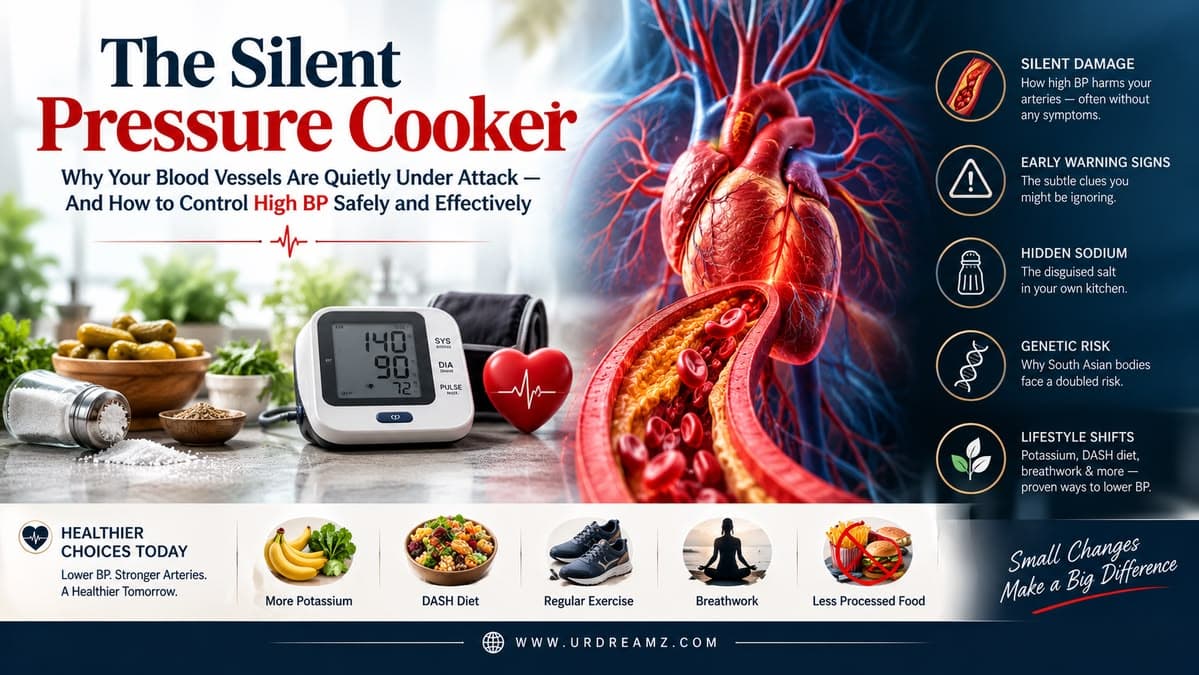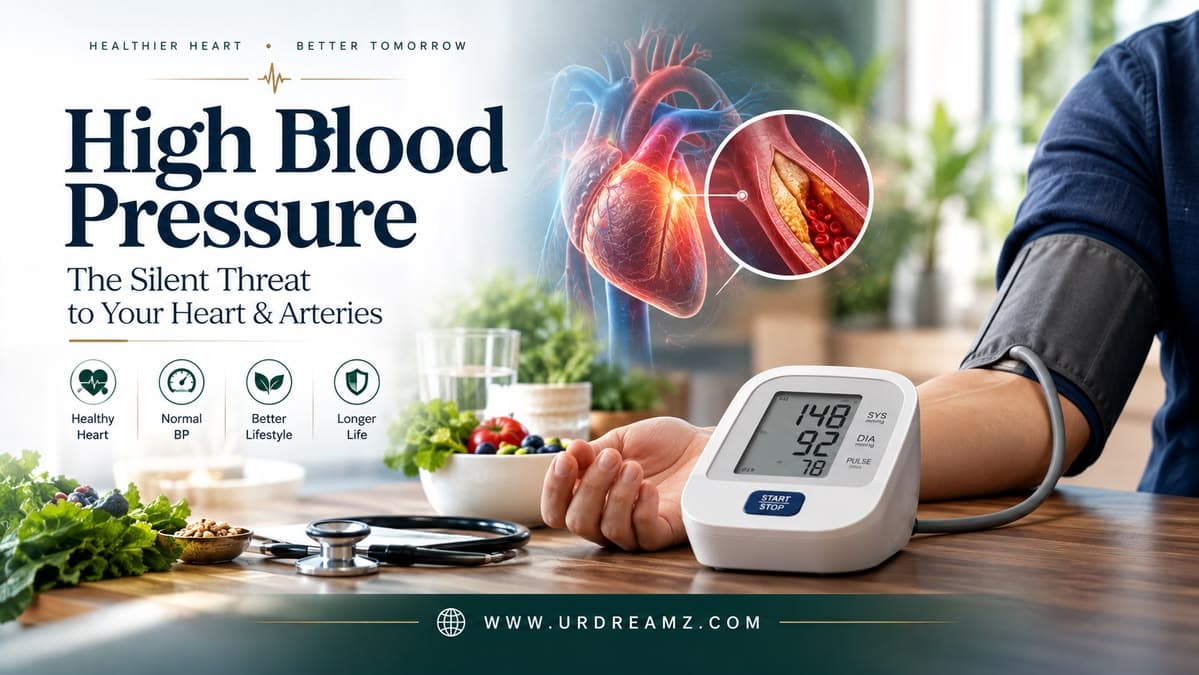
The Silent Pressure Cooker: Why Your Blood Vessels Are Quietly Under Attack — And How to Control High BP Safely and Effectively
Fifty years ago, our grandparents ate pickles by the fistful, cooked with generous handfuls of salt, and never once counted a milligram of sodium — yet somehow, their blood pressure stayed remarkably steady well into old age. Today, we scan every food label for the words "low sodium," we buy diet foods, we go to the gym several times a week, and yet, every other household seems to have a strip of blood pressure tablets sitting in the kitchen cabinet. Across Asia, roughly one in every four adults is now living with high blood pressure — and a large number of them don't even know it, because their body has been carrying this silent, unrelenting pressure without a single obvious warning sign. This condition has earned the nickname "the silent killer" for a very specific reason — it damages your arteries, your heart, your kidneys, and your brain quietly, patiently, for years, before announcing itself all at once, often through a stroke or a heart attack that seems to arrive without warning, even though the underlying process had been building for a very long time.
And it isn't only older adults anymore. Increasingly, young people in their twenties and thirties are collapsing from heart attacks in the middle of a gym workout — a reality that would have sounded almost unbelievable a generation ago. So the real question worth asking is this: why have we tied our own blood vessels into a pressure cooker that could, quite literally, burst at any moment? In this article, we're going to investigate high blood pressure honestly and thoroughly — the quiet signs your body sends out that are so easy to dismiss, the disguised villains hiding in your own kitchen, the way the market quietly misleads you with clever labeling, and finally, the real, doctor-backed lifestyle changes that can bring this condition genuinely under control.
Quick Answer
Last updated: September 2026
High blood pressure (hypertension) develops when the force of blood pushing against artery walls stays persistently elevated, gradually stiffening and narrowing blood vessels until the heart, brain, and kidneys are placed under lasting strain. It is called the "silent killer" because more than half of those affected show no symptoms at all until significant damage has already occurred. The most effective, doctor-recommended ways to control it without solely relying on medication include: losing even a modest amount of excess weight, following a low-sodium, potassium-rich diet such as the DASH diet, getting 150 minutes of moderate exercise weekly, limiting alcohol, quitting smoking and vaping, managing chronic stress through deep breathing, and getting 7 to 9 hours of quality sleep nightly. Even small, consistent changes — such as keeping daily salt intake under 5 grams — have been shown to meaningfully lower stroke and heart disease risk. Anyone currently on prescribed BP medication should never stop or adjust it without a doctor's guidance, even while making these lifestyle improvements.
1. Why Our Grandparents Ate Freely, Yet We're the Ones on Pills
It's a genuinely strange paradox once you sit with it. Fifty years ago, meals were cooked with generous amounts of ghee, salt was added by the fistful, pickles were eaten alongside nearly every plate, and yet high blood pressure was, comparatively, far less common. Today, we count our sodium, we choose "diet" and "low-fat" labeled products, many of us exercise regularly, and yet blood pressure medication has become a near-permanent fixture in a huge number of households. Something has clearly shifted in the years between their lifestyle and ours — and as this article will show, it isn't really about how much salt is added at the dinner table. It's about a much wider set of changes: how much we move, how much stress we silently carry, how processed our food supply has become, and how much sleep we're actually getting each night.
2. Think of Your Body as a City: The Heart-and-Pipeline Analogy
To understand high blood pressure properly, it helps to picture your entire circulatory system as a city's water infrastructure. Your heart is the city's main water pump, working continuously to push water — in this case, blood — through an enormous network of pipelines, which are your blood vessels, reaching every corner of the city, right down to the smallest neighborhoods, which represent your organs and tissues. As long as the pipes stay clear and flexible, the pump doesn't have to strain, and the whole system runs smoothly, delivering exactly what's needed, exactly where it's needed.
The trouble begins when our daily habits — the food we eat, the stress we carry, the sleep we skip — start narrowing and stiffening those pipelines. When pipes narrow, the pump (your heart) has to work considerably harder to force the same amount of water through a smaller space. That extra force pressing against the pipeline walls is precisely what we call blood pressure, and when it stays elevated for too long, it stops being a temporary spike and becomes a chronic, damaging condition.
3. What Actually Happens Inside a Narrowing Blood Vessel
When blood repeatedly strikes the walls of a narrowed or stiffened artery with excess force, it creates ongoing, low-grade physical stress on those vessel walls. Over time, this constant pressure can cause tiny areas of damage — microscopic tears in the otherwise smooth, flexible lining of the artery. In response, the body attempts to repair this damage the same way it would patch any wound, and cholesterol deposits are often drawn to these damaged sites as part of that repair process. Ironically, this "patching" process makes the artery even narrower and stiffer than before, setting up a worsening cycle: narrower vessels create more pressure, more pressure creates more damage, and more damage attracts more cholesterol buildup.
4. When the System Finally Fails: Stroke vs. Heart Attack
Eventually, one of two things tends to happen if this cycle continues unaddressed. Either the heart, having compensated for years by working harder than it should, begins to enlarge and weaken under the constant strain, or a severely narrowed or weakened blood vessel simply cannot withstand the pressure any longer and ruptures or becomes fully blocked. If this happens in a vessel supplying the brain, the result is a stroke. If it happens in a vessel supplying the heart itself, the result is a heart attack. In both cases, the underlying story is the same: years of quiet, unaddressed pressure damage finally reaching a breaking point in one specific location.
5. Understanding the Numbers: What Counts as "High" Blood Pressure
A blood pressure reading always comes as two numbers. The top number, called systolic pressure, measures the force in your arteries when your heart beats. The bottom number, called diastolic pressure, measures the force when your heart rests between beats. Understanding where your own numbers fall on the standard classification chart is one of the simplest ways to know exactly where you stand.
| Category | Systolic (top number) | Diastolic (bottom number) |
|---|---|---|
| Normal | Less than 120 mm Hg | Less than 80 mm Hg |
| Elevated | 120–129 mm Hg | Less than 80 mm Hg |
| Hypertension Stage 1 | 130–139 mm Hg | 80–89 mm Hg |
| Hypertension Stage 2 | 140 mm Hg or higher | 90 mm Hg or higher |
| Hypertensive Crisis (seek emergency care) | Higher than 180 mm Hg | Higher than 120 mm Hg |
6. The Silent Killer: Why Most People Don't Know They Have It
More than half of people living with high blood pressure are believed to be completely unaware of it, because the condition very often produces no symptoms at all, even as it steadily damages arteries, the heart, the kidneys, and the brain in the background. This silent progression is precisely why hypertension has earned its well-known nickname — it does its damage patiently, without fanfare, until a major event like a stroke or heart attack forces the issue into the open, often after years of preventable harm had already accumulated unnoticed.
7. The Early Warning Signs Your Body Is Already Sending
While high blood pressure often produces no symptoms in its earlier stages, a number of signs can appear, particularly once blood pressure has climbed significantly. Recognizing these early is genuinely valuable, since they're commonly brushed aside as unrelated, minor discomforts.
| Warning Sign | Why It Can Happen |
|---|---|
| Heaviness at the back of the head, especially in the morning | Elevated pressure affecting blood flow to the brain overnight |
| Breathlessness without exertion | The heart working harder than normal to circulate blood against resistance |
| Blurred or dimmed vision | Pressure changes affecting the small blood vessels of the eyes |
| Nosebleeds | Fragile nasal blood vessels under excess pressure |
| Ringing or whooshing sounds in the ears | Altered blood flow near structures of the inner ear |
| Restlessness or difficulty settling at night | The nervous system remaining in a heightened, alert state |
| Unexplained sweating, especially around the neck | The body's stress response staying persistently activated |
| A sense of heaviness or fullness in the chest | The heart working under sustained, elevated resistance |
These signs don't appear in every single person, and when they do appear, it's often only after blood pressure has already climbed considerably. This is exactly why relying on symptoms alone to "know" whether something is wrong is a genuinely risky approach.
8. Why You Shouldn't Wait for Symptoms Before Checking Your BP
Because the majority of people show no clear warning signs until blood pressure has already reached a dangerous level, waiting to "feel" something wrong before getting checked is one of the most common and costly mistakes people make. A home blood pressure monitor is inexpensive, widely available without a prescription, and takes less than a minute to use. Checking periodically — even without any symptoms at all — is one of the simplest, most effective habits anyone can build into a normal routine, particularly for anyone with a family history of hypertension, heart disease, or diabetes.
8b. How the Kidneys Regulate Sodium and Why That Matters
To understand why sodium plays such an outsized role in blood pressure, it helps to look at what the kidneys actually do all day. Every minute, the kidneys filter blood and decide how much sodium and water to keep in the body versus how much to excrete through urine. When sodium intake is consistently high, the kidneys work to excrete the excess, but this process has limits — and when those limits are repeatedly pushed, the body tends to retain more fluid than it should. That extra retained fluid increases overall blood volume, and a larger volume moving through the same network of blood vessels directly translates into higher pressure against those vessel walls. This is precisely why kidney health and blood pressure are so tightly linked in both directions: chronically high blood pressure can damage the delicate filtering structures inside the kidneys over time, while impaired kidney function, in turn, makes it harder to regulate sodium and fluid balance, further worsening blood pressure — a feedback loop that tends to accelerate rather than stay static once it begins.
This is also why doctors so often ask about family history of kidney disease alongside family history of heart disease when assessing blood pressure risk — the two systems are so interdependent that a weakness in one frequently shows up, eventually, as a problem in the other. Understanding this connection can also be genuinely motivating: protecting your kidneys through adequate hydration, moderate sodium intake, and regular checkups is, in a very real sense, the same project as protecting your long-term blood pressure and cardiovascular health.
9. The Kitchen Villains: It's Not Just the Salt Shaker
Most people, when asked what causes high blood pressure, immediately picture the salt they sprinkle onto rice, lentils, or vegetables at the table. In reality, the far bigger culprit is often invisible: sodium hidden throughout packaged and processed foods, in forms and quantities most people never think to check. Salt causes the body to retain extra water, which increases overall blood volume — and a larger volume of fluid moving through the same network of vessels directly increases the pressure against those vessel walls.
10. Refined Flour, Refined Oil, and Inflamed Blood Vessels
Beyond sodium, two other very common kitchen staples quietly contribute to the problem. Refined flour, stripped of its natural fiber, and heavily refined or repeatedly reused cooking oils can both promote low-grade inflammation within blood vessel walls. This inflammation makes it physically harder for blood to flow smoothly, adding to the resistance the heart already has to work against — meaning the damage isn't only coming from sodium, but from the overall quality and processing level of everyday cooking ingredients.
11. Chronic Stress and the Fight-or-Flight Trap
When stress becomes a near-constant background presence — a looming deadline, financial pressure, family tension — the body shifts into what's known as "fight or flight" mode. In this state, stress hormones like adrenaline are released, which tighten blood vessels and increase heart rate, both of which are meant to be short-term, protective responses to an immediate threat. The problem in modern life is that this state rarely gets a genuine chance to switch off. Constant low-grade tension keeps blood vessels persistently constricted and the heart persistently working overtime — not for the few minutes evolution designed this response for, but for hours, days, and years at a stretch.
11b. A Closer Look: Adrenaline, Cortisol, and Vessel Constriction
It's worth understanding exactly what stress hormones do to blood vessels, because the mechanism is genuinely specific rather than vague. Adrenaline, released almost instantly during a perceived threat, causes blood vessels to constrict and the heart to beat faster and harder — a response that made complete sense for a short burst of physical danger our ancestors might have faced, but which becomes damaging when triggered repeatedly by modern stressors like a difficult email or a traffic jam. Cortisol, a slower-acting stress hormone, adds to this by promoting sodium retention in the kidneys and increasing sensitivity to other hormones that constrict blood vessels further. Together, these two hormones create a compounding effect: adrenaline tightens vessels immediately, while cortisol works in the background to keep the body primed for continued tension. When stress becomes chronic rather than occasional, this hormonal duo essentially keeps the cardiovascular system operating in a persistently constricted, high-alert state, which over months and years contributes meaningfully to sustained high blood pressure, independent of diet or physical activity levels.
12. Poor Sleep: The Hidden Multiplier
Getting fewer than seven hours of sleep on a regular basis has been directly linked to higher blood pressure. Poor or interrupted sleep — whether from stress, screen use late at night, or an underlying issue like sleep apnea — keeps the nervous system from ever fully downshifting out of that heightened, alert state described above. Left unaddressed over months and years, chronically poor sleep compounds every other risk factor already discussed, making the whole system work overtime around the clock.
12b. Blood Pressure and Mental Health: The Overlooked Connection
The relationship between mental health and blood pressure deserves more attention than it typically receives. Beyond the direct hormonal effects of stress described earlier, ongoing anxiety or low mood can also indirectly worsen blood pressure by disrupting sleep, reducing motivation for regular exercise, and increasing reliance on comfort foods that tend to be high in sodium, refined carbohydrates, and unhealthy fats. Conversely, living with a chronic condition like hypertension — particularly after a frightening reading or a health scare — can itself contribute to anxiety, creating a cycle where mental and physical health each make the other somewhat harder to manage. Recognizing this connection matters because it broadens what "treatment" can reasonably include: for some people, addressing underlying anxiety or low mood through counseling, social support, or simply a more balanced daily routine may end up supporting blood pressure control just as meaningfully as dietary changes alone, particularly when stress has been a significant driving factor from the start.
13. The "Low Fat" Label Trap: Where Sodium Actually Hides
Walk down any supermarket aisle and you'll see "low fat" printed proudly across countless packaged snacks, sauces, and ready-to-eat meals. What most shoppers don't realize is that reducing fat content often means manufacturers compensate with additional salt or sodium-based preservatives to maintain flavor and extend shelf life. Bread, ketchup, packaged sauces, instant noodles, and even seemingly "healthy" snack bars frequently carry a surprisingly high sodium content — often enough, on their own, to use up a significant portion of an entire day's recommended limit in just one serving.
| Common Packaged Item | Hidden Risk |
|---|---|
| "Low-fat" flavored snacks | Fat reduction often compensated with added sodium for flavor |
| Bread and packaged bakery items | Sodium used as a preservative, often overlooked by consumers |
| Ketchup and packaged sauces | High sodium content per serving, easy to use in large quantities |
| Instant noodles and ready meals | Extremely high sodium designed for taste and shelf stability |
| Salted snacks and namkeen mixes | Sodium content often far exceeds what a "light snack" implies |
The next time you reach for a packaged item, resist the urge to look only at the calorie count on the front of the box — turn it over and check the sodium content specifically, since that number is frequently the real story being quietly left out of the marketing.
14. Processed Food, Sugar, and the Vessel Connection
Beyond sodium alone, diets heavy in processed foods and added sugar are linked with broader metabolic changes — including insulin resistance and increased vascular stiffness — that make blood vessels less flexible and more prone to elevated pressure over time. Highly processed foods are also digested and absorbed far more rapidly than whole foods, triggering sharper spikes in blood sugar that, repeated meal after meal, place cumulative stress on the same blood vessels already dealing with excess sodium and reduced flexibility. This is part of why heavily processed diets are so consistently linked with hypertension risk — the effect isn't caused by any single ingredient acting alone, but by the combined, repeated burden of sodium, refined carbohydrates, and inflammation working together.
15. A Cultural Habit Worth Examining: Adding Extra Salt at the Table
One specific habit worth honestly examining, particularly common across South Asian households, is the practice of adding extra salt directly onto food at the table, on top of whatever salt was already used during cooking. This habit is worth reconsidering not because occasional seasoning is dangerous on its own, but because it adds an extra, often unmeasured layer of sodium intake on top of a diet that, as discussed above, is frequently already high in hidden sodium from packaged foods, pickles, and processed condiments. Small, repeated additions like this, across every single meal, add up meaningfully over the course of a week, a month, and a year.
16. Why South Asian Bodies Face a Doubled Risk
Genetics and generations of dietary adaptation also play a meaningful role. South Asian populations have historically relied on diets naturally higher in salt-preserved foods like pickles and salted condiments, and bodies adapted accordingly over many generations. But the last several decades have brought a dramatically different lifestyle — far less physical labor, far more sedentary daily routines, and far more processed food — layered directly on top of that older dietary pattern, without the corresponding physical activity that once helped balance it out. Many South Asian individuals also experience a pattern sometimes called "thin-fat syndrome," where visceral fat accumulates around the abdomen even in people who appear slim overall — and this visceral fat has been linked to impaired kidney function related specifically to how efficiently the kidneys filter and excrete excess sodium, meaning the same amount of salt intake can have a proportionally larger effect on blood pressure.
16b. Common Myths About High Blood Pressure
A number of persistent myths make it harder for people to take the right steps toward managing this condition. One common myth is that only overweight or older people need to worry about high blood pressure — as discussed earlier, young, seemingly fit individuals are increasingly affected too, often due to chronic stress, poor sleep, and hidden dietary sodium rather than visible weight gain alone. Another myth is that a person would definitely "feel" it if their blood pressure were dangerously high — as the earlier section on silent symptoms explained, this is very often not the case at all. A third myth is that cutting out the salt shaker at the table is enough on its own to control sodium intake — in reality, as discussed, the majority of dietary sodium for many people comes from packaged and processed foods rather than salt added during cooking or at the table. And finally, there's a common myth that natural remedies and lifestyle changes can fully replace prescribed medication in every case — while lifestyle change is genuinely powerful and can reduce or delay the need for medication in many cases, some individuals require ongoing medical treatment regardless of how disciplined their lifestyle becomes, and that is not a personal failure.
16c. Genetics vs. Lifestyle: Why Two People With Similar Habits Can Have Different Outcomes
It's worth addressing directly why two people who seem to eat similarly, exercise similarly, and live under comparable stress can end up with very different blood pressure outcomes. Family history plays a real, measurable role — having a parent or sibling with hypertension meaningfully raises personal risk, both through shared genetics affecting how the kidneys handle sodium and blood vessels respond to stress hormones, and through shared household habits around food and daily routine. However, a genetic predisposition functions more like a lower threshold than a fixed destiny. It means the same amount of dietary sodium, the same level of chronic stress, or the same degree of inactivity may push a genetically predisposed person toward elevated blood pressure considerably faster than someone without that family history. This is precisely why one relative in a family might need medication in their thirties while a sibling remains unaffected well into their sixties despite a broadly similar upbringing — genetics sets the underlying sensitivity of the system, while daily lifestyle choices determine how hard and how often that sensitivity is actually tested.
17. Waist Size Matters More Than the Scale
Because of this visceral fat pattern, waist circumference is often a more meaningful indicator of blood pressure risk than overall body weight alone.
| Group | Increased Risk Threshold |
|---|---|
| Men | Waist measurement greater than 40 inches (102 cm) |
| Women | Waist measurement greater than 35 inches (89 cm) |
Reducing waist circumference specifically — rather than focusing purely on the number on a scale — is one of the most direct ways to ease pressure on the kidneys' sodium-regulating function and, by extension, on blood pressure itself, and it's a measurement anyone can track at home with nothing more than a simple tape measure.
18. Can High BP Actually Be Reversed, or Only Managed?
A common belief is that once someone starts blood pressure medication, they are locked into taking it for the rest of their life with no room for improvement. In reality, for many people — particularly in earlier stages of hypertension — sustained lifestyle changes can meaningfully lower blood pressure, sometimes enough that a doctor may consider reducing medication dosage over time. This should always happen under medical supervision rather than independently, but the broader point stands: lifestyle change is not a hopeless afterthought once medication has started — it remains one of the most powerful tools available throughout the entire course of managing this condition.
19. Potassium: Sodium's Natural Enemy
Potassium works almost like sodium's direct counterbalance in the body. It helps relax and widen blood vessel walls, and it assists the kidneys in flushing out excess sodium through urine, easing the fluid retention responsible for so much of the pressure buildup described earlier. Foods particularly rich in potassium include bananas, leafy greens like spinach, coconut water, and a wide range of fresh fruits — all inexpensive, widely available, and easy to incorporate into an everyday diet without requiring any specialized products or supplements.
20. The DASH and Mediterranean Diets: What the Research Actually Shows
Two specific, well-researched eating patterns are consistently recommended by cardiologists for blood pressure management: the DASH diet (Dietary Approaches to Stop Hypertension) and the Mediterranean diet. Both emphasize whole grains, fruits, vegetables, and low-fat dairy, while minimizing saturated fat, added sugar, and sodium. Research has found that following an eating pattern like DASH can lower the top (systolic) blood pressure number by as much as 11 mm Hg — a genuinely significant reduction achievable through diet alone, without any medication involved.
| Food Group | Emphasize | Minimize |
|---|---|---|
| Grains | Whole grains, oats, brown rice | Refined white flour products |
| Protein | Fish, legumes, poultry, nuts | Processed and cured meats |
| Fats | Olive oil, avocado, nuts | Trans fats, heavily reused frying oils |
| Dairy | Low-fat dairy in moderation | High-sodium cheeses and processed dairy |
| Seasoning | Herbs, spices, lemon | Table salt, sodium-based sauces |
21. Breathwork and the Nervous System
Slow, deep breathing activates the parasympathetic nervous system — the body's natural "rest and digest" mode, which directly counters the fight-or-flight state discussed earlier. When this system is engaged, heart rate slows, blood vessels relax slightly, and the whole body shifts out of the tense, constricted state that chronic stress tends to maintain. This is precisely why the American Heart Association specifically recommends meditation and deep breathing exercises as part of a broader stress-management approach to blood pressure control.
22. Alternate Nostril Breathing: A Traditional Technique for Temporary Calm
One specific breathing technique with roots in traditional yogic practice involves gently closing one nostril and breathing slowly through the other for a few minutes at a time. Some smaller studies and traditional practitioners suggest this kind of controlled, slow breathing may offer a short-term calming effect on the nervous system and a brief, temporary dip in blood pressure readings, likely through the same relaxation-response mechanism described above. It's worth being clear, however, that this is a calming technique to complement — never a replacement for — proper medical management, consistent lifestyle change, and any prescribed medication.
23. Sweating It Out: Why Suppressing Perspiration May Work Against You
Sweating is one of the body's several natural pathways for excreting excess sodium, alongside the kidneys. Physical activity that induces a healthy amount of sweating — brisk walking, light jogging, or any moderate exercise — supports the body's ability to offload some of that excess sodium burden naturally, working alongside dietary changes rather than replacing them. This is one of several reasons regular physical movement offers benefits for blood pressure that go beyond simply "burning calories."
24. Exercise: How Much and What Kind Actually Helps
Regular aerobic exercise has been shown to lower high blood pressure by roughly 5 to 8 mm Hg — a meaningful reduction on its own. The general recommendation is around 150 minutes of moderate aerobic activity per week, or 75 minutes of more vigorous activity, combined with strength training at least two days a week. Simple, accessible options like brisk walking, cycling, swimming, and dancing are all effective starting points, and consistency matters considerably more than intensity — the benefit fades if exercise stops, meaning this needs to become a lasting habit rather than a short-term fix undertaken only until a target reading is reached.
*Based on commonly cited clinical research ranges (e.g., Mayo Clinic); individual results vary and effects are often cumulative when changes are combined.
24b. How to Get an Accurate Blood Pressure Reading at Home
Since home monitoring plays such an important role in catching this "silent" condition early, it's worth knowing how to actually get an accurate reading, since a poorly taken measurement can be misleadingly high or low. Sit quietly for about five minutes before measuring, with your back supported and both feet flat on the floor rather than crossed. Rest your arm on a table at roughly heart height, and avoid talking during the measurement itself, since even conversation can temporarily raise the reading. It's best to avoid caffeine, exercise, and smoking for at least 30 minutes beforehand, and to take the reading at a similar time each day for consistency, since blood pressure naturally fluctuates somewhat throughout the day. Taking two or three readings a minute apart and noting the average tends to give a more reliable picture than relying on a single measurement, particularly for anyone tracking trends over weeks and months rather than reacting to any single number in isolation.
25. The Sodium Number That Actually Matters
Most health authorities recommend limiting sodium to 2,300 mg a day or less, with 1,500 mg a day considered a better target for most adults, particularly those already dealing with elevated blood pressure. In everyday terms, many doctors simplify this guidance to roughly 5 grams of salt per day. Sticking to this limit consistently has been linked to a meaningful reduction — commonly cited at around 20 to 30 percent — in the risk of stroke and hypertension-related complications over time.
26. Weight Loss and Blood Pressure: The Real Numbers
Weight loss is considered the single strongest lifestyle factor for lowering blood pressure in people who are overweight. As a general pattern, blood pressure tends to drop by approximately 1 mm Hg for every kilogram of weight lost. Research has also found that losing around 5 kilograms can lower the overall risk of hypertension-related complications by roughly 20 to 25 percent — a substantial impact from a genuinely achievable, gradual amount of weight loss, especially when combined with the dietary and activity changes already discussed.
*Illustrative summary of commonly cited clinical research ranges; individual results vary.
27. Alcohol, Smoking, and Vaping: Why They Matter So Much
Drinking alcohol in excess raises blood pressure directly and can also interfere with how well prescribed blood pressure medications work. Anyone who chooses to drink is generally advised to keep it to one drink or fewer per day, and not necessarily every day. Tobacco and nicotine — including vaping devices and e-cigarettes, not just traditional cigarettes — raise blood pressure and place additional strain on the cardiovascular system. Secondhand smoke carries similar risks, meaning exposure matters even for those who don't smoke themselves. Quitting, in either case, is consistently ranked among the single most impactful things a person can do for long-term heart health.
28. Managing Cholesterol and Blood Sugar Alongside BP
While high blood sugar and elevated non-HDL ("bad") cholesterol don't directly cause high blood pressure in a simple, one-to-one way, they significantly raise the overall risk of heart disease when combined with hypertension. Encouragingly, many of the same habits already discussed throughout this article — a whole-food, lower-sodium diet, regular exercise, weight management, and quitting smoking — simultaneously help manage cholesterol and blood sugar as well, meaning a single set of consistent lifestyle changes addresses multiple cardiovascular risk factors at once rather than requiring an entirely separate approach for each one, which makes the overall task considerably more manageable than it might first appear.
28b. The Kidney-Heart Connection: A Two-Way Relationship
It's worth returning briefly to the kidneys, because their relationship with blood pressure genuinely runs in both directions, and understanding this loop helps explain why untreated hypertension can become progressively harder to manage the longer it goes unaddressed. High blood pressure, sustained over years, gradually damages the small blood vessels within the kidneys responsible for filtering blood, reducing their efficiency over time. As kidney function declines, the body becomes less able to properly excrete excess sodium and fluid, which in turn drives blood pressure even higher — creating a self-reinforcing cycle that becomes progressively more difficult to interrupt the longer it continues unchecked. This is one of the key reasons doctors so often check kidney function as part of routine blood pressure management, and why catching and addressing elevated blood pressure early, well before this cycle has a chance to establish itself, makes such a meaningful long-term difference.
29. High BP During Pregnancy: A Different Situation Entirely
It's worth addressing separately, because it comes up often: high blood pressure during pregnancy — including conditions like gestational hypertension and preeclampsia — is a distinct medical situation that requires close monitoring by an obstetrician, and should never be managed through general lifestyle advice alone. These pregnancy-specific conditions can develop quickly and carry risks to both mother and baby, so any noticeable rise in blood pressure during pregnancy, along with symptoms like swelling, headaches, or vision changes, needs prompt medical evaluation rather than a wait-and-see approach.
30. Building a Sustainable Daily Routine
None of this information is genuinely useful if it stays abstract, so it helps to picture what a realistic day might actually look like. It might start with a walk of 25 to 30 minutes, well within the range research links to stronger, healthier blood vessels over time. It might mean swapping one processed snack for a piece of fresh fruit or a handful of nuts. It might mean pausing for a few minutes of slow, deep breathing during a stressful afternoon rather than reaching for another cup of coffee. It might mean checking a home blood pressure monitor once a week, simply as a matter of routine, rather than only after feeling unwell. None of these individual steps require dramatic upheaval — but repeated consistently, day after day, they are exactly the kind of small, sustainable choices that research consistently links to meaningfully lower blood pressure over time.
31. When to See a Doctor — And Why You Should Never Stop Medication Alone
Regular checkups with a healthcare professional are an important part of managing blood pressure, regardless of whether symptoms are present. It's especially important to seek medical attention if you experience sudden, severe headache, chest pain, difficulty breathing, or vision changes, as these can signal a hypertensive emergency requiring immediate care. For anyone already prescribed blood pressure medication, it bears repeating clearly: even significant lifestyle improvements should never be a reason to stop or reduce medication independently. Any adjustment to a treatment plan should always be made together with a doctor, based on regular monitoring and professional judgment.
31b. A Final Word: Small, Consistent Choices Add Up
If everything covered in this article feels like a lot to take in at once, that reaction is completely understandable — but it isn't the intended takeaway. Nobody needs to overhaul their entire diet, sleep schedule, and exercise routine starting tomorrow morning. Real, lasting improvement in blood pressure almost always comes from picking one or two changes at a time — perhaps starting with a daily 25-minute walk, or simply checking a home monitor once a week — and allowing those changes to become comfortable, ordinary habits before adding anything further on top. The blood vessels described throughout this article have often taken years of accumulated pressure to reach a concerning state, and it's entirely reasonable to give the body real time to recover in the other direction as well. What matters most, far more than any single perfect day, is the overall pattern sustained across months and years — which is, in the end, exactly how this "silent pressure cooker" built up in the first place, and exactly how, with patience and consistency, it can be gradually and safely brought back under control.
32. Frequently Asked Questions
What is considered high blood pressure?
A reading of 130/80 mm Hg or higher is generally classified as Stage 1 hypertension, while 140/90 mm Hg or higher is classified as Stage 2, according to standard blood pressure category guidelines.
Can high blood pressure be controlled without medicine?
In many earlier-stage cases, sustained lifestyle changes — including weight loss, a low-sodium diet, regular exercise, and stress management — can meaningfully lower blood pressure, sometimes enough to reduce or delay the need for medication, though this should always be guided by a doctor.
What foods should I eat to help lower blood pressure?
Potassium-rich foods like bananas, leafy greens, and coconut water, along with whole grains, fresh fruits and vegetables, and low-fat dairy as emphasized in the DASH diet, are commonly recommended.
Why is high blood pressure called the silent killer?
Because more than half of people with hypertension experience no noticeable symptoms at all, even as it steadily damages the heart, arteries, kidneys, and brain in the background.
What are the early warning signs of high blood pressure?
Morning heaviness at the back of the head, unexplained breathlessness, blurred vision, nosebleeds, ringing in the ears, and restlessness at night can all be signs, though many people show no symptoms at all.
How quickly can I lower my blood pressure?
Some techniques like slow, deep breathing or alternate nostril breathing may offer a short-term, temporary calming effect, but meaningful, lasting reduction generally comes from consistent lifestyle changes maintained over weeks and months, not instant fixes.
Why are South Asians at higher risk for high blood pressure?
A combination of genetic adaptation to historically salt-preserved diets, a modern shift toward sedentary lifestyles and processed foods, and a tendency toward visceral fat accumulation that affects kidney sodium regulation all contribute to elevated risk.
How much salt should I eat per day?
Most health authorities recommend limiting sodium to 2,300 mg a day or less, with 1,500 mg being a better target for many adults, roughly equivalent to about 5 grams of salt.
Does weight loss really lower blood pressure?
Yes. Blood pressure often drops by about 1 mm Hg for every kilogram of weight lost, and losing around 5 kilograms has been linked to a meaningful reduction in overall hypertension-related risk.
Is high blood pressure during pregnancy the same as regular hypertension?
No. Pregnancy-related conditions like gestational hypertension and preeclampsia are distinct medical situations requiring close obstetric monitoring, not general lifestyle management alone.
Can stress alone cause high blood pressure?
Chronic stress keeps the body in a "fight or flight" state that constricts blood vessels and raises heart rate. While research is still clarifying the long-term causal role of stress alone, managing it is consistently recommended as part of blood pressure control.
Is it safe to stop blood pressure medication once lifestyle changes start working?
No. Any changes to prescribed medication should only be made in consultation with a doctor, based on regular monitoring, even if lifestyle improvements are going well.
Can two people with similar diets have very different blood pressure due to genetics?
Yes. Family history can lower the threshold at which lifestyle factors like sodium intake or stress trigger elevated blood pressure, meaning genetically predisposed individuals may be affected sooner than others with similar habits.
Does mental health affect blood pressure?
Yes. Chronic anxiety or stress can disrupt sleep, reduce motivation for exercise, and increase reliance on high-sodium comfort foods, all of which can indirectly worsen blood pressure over time.
What is the best way to check blood pressure accurately at home?
Sit quietly for about five minutes beforehand, keep your back supported and feet flat, rest your arm at heart height, avoid talking during measurement, and take two or three readings a minute apart to get a reliable average.