Chicken Stir Fry Recipe: Complete Healthy High-Protein Dinner Guide with Fresh Vegetables
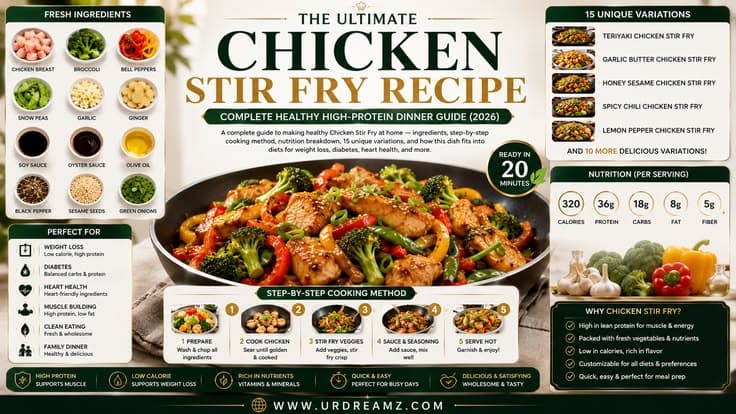
Everything you need to know about making Chicken Stir Fry at home — ingredients, step-by-step method, nutrition, health-condition breakdowns, 15 unique variations, and frequently asked questions.
Introduction: Why Chicken Stir Fry Deserves a Spot on Your Weekly Menu
Chicken Stir Fry is one of those dinners that manages to be fast, colorful, and genuinely nourishing all at once. It combines lean chicken breast with a mix of fresh, crunchy vegetables and a light, savory sauce, all cooked together in one pan in under thirty minutes. Because the ingredients and cooking time are so flexible, it works equally well for a quick weeknight dinner, a weekend meal-prep session, or a dish tailored to a specific health goal.
This guide goes beyond a simple ingredient list. We walk through the full cooking process step by step, explain the nutrition behind the dish, break down how it fits into different health conditions and diet plans, and share fifteen unique variations so you never get bored making it. Whether you are cooking for weight loss, muscle building, diabetes-friendly eating, or simply a faster weeknight dinner, there is a version of this recipe built for you.
What Is Chicken Stir Fry?
Chicken Stir Fry is a dish where thin strips of chicken and a mix of vegetables are cooked quickly over high heat in a small amount of oil, then tossed together with a savory sauce. The technique originated in Chinese cooking traditions, where fast, high-heat cooking in a wok preserves the color, crunch, and nutrients of the vegetables while giving the chicken a light sear.
Unlike slow-braised dishes, stir fry depends on speed and preparation. Because everything cooks so quickly once it hits the pan, having all your ingredients sliced, measured, and ready to go before you start cooking — a practice often called "mise en place" — is essential to getting the texture and timing right.
Why Chicken Stir Fry Is a Healthy Meal Choice
This dish naturally balances lean protein, fiber-rich vegetables, and a controlled amount of fat, which is part of why it shows up so often on healthy-eating recommendations. The high-heat, short cooking time also helps vegetables retain more of their vitamins compared to boiling or long roasting.
Because you control every ingredient that goes into the pan, Chicken Stir Fry is also one of the easier dishes to adjust for sodium, sugar, and fat content — a major advantage over restaurant or takeout versions, which often use large amounts of oil, sugar, and sodium-heavy sauces.
Who This Recipe Is Best For
Chicken Stir Fry suits busy professionals who want a fast dinner, families looking for a colorful and balanced meal, fitness-focused cooks tracking protein and calories, and anyone trying to eat more vegetables without extra effort. Its adaptability also makes it a strong option for people managing specific health goals, which we cover in detail later in this guide.
This article includes general nutrition information for common health conditions such as diabetes, high blood pressure, and heart disease. This information is educational and not a substitute for personalized medical advice — anyone managing a diagnosed health condition should check with their doctor or a registered dietitian before making significant changes to their diet.
Kitchen Equipment You Will Need
A large wok or a wide, heavy-bottomed frying pan works best for stir frying, since it allows ingredients to be tossed and cooked evenly over high heat. A sharp knife and cutting board are essential for slicing chicken and vegetables thinly and uniformly, and a wooden spatula or tongs make tossing the ingredients easier without scratching a non-stick surface.
Main Ingredients Overview
The base of this recipe includes boneless chicken breast, a mix of colorful vegetables, garlic, ginger, and a simple sauce built around low-sodium soy sauce and a touch of sesame oil. Everything else — chili flakes, black pepper, spring onions — is there to round out the flavor and can be adjusted freely based on taste or dietary needs.
Table: Full Ingredient List and Substitutes
| Ingredient | Purpose | Possible Substitute |
|---|---|---|
| Chicken breast (boneless, thinly sliced) | Main protein | Chicken thigh, tofu, shrimp |
| Garlic cloves | Core aromatic | Garlic powder |
| Fresh ginger | Warmth and aroma | Ground ginger |
| Low-sodium soy sauce | Umami base | Coconut aminos (gluten-free) |
| Sesame oil | Finishing aroma | Extra olive oil |
| Olive oil | Cooking fat | Avocado oil |
| Bell peppers | Color, crunch, vitamin C | Any seasonal pepper |
| Broccoli | Fiber, texture | Cauliflower florets |
| Carrots | Sweetness, fiber | Snap peas |
| Chili flakes (optional) | Heat | Fresh chili slices |
| Cornstarch (optional) | Sauce thickener | Arrowroot powder |
Best Vegetables for Stir Fry
The best stir fry vegetables are ones that hold their texture under high heat: broccoli, bell peppers, carrots, snap peas, mushrooms, onions, and baby corn all work well. Leafy vegetables like spinach can be added, but they should go in at the very end since they wilt almost instantly.
Cutting vegetables into similar-sized pieces helps them cook evenly, and slicing denser vegetables like carrots thinner than softer ones like bell peppers ensures everything finishes cooking around the same time.
Table: Vegetables and Their Health Benefits
| Vegetable | Key Benefit |
|---|---|
| Broccoli | High in fiber and vitamin C |
| Bell Peppers | Rich in antioxidants and vitamin C |
| Carrots | Good source of beta-carotene |
| Mushrooms | Low calorie, adds umami depth |
| Onions | Contains plant compounds linked to heart health |
| Snap Peas | Fiber and plant protein |
| Zucchini | Low carbohydrate, high water content |
| Cabbage | High fiber, low calorie bulk |
Chicken Breast as the Protein Base
Chicken breast is used in this recipe because it is lean, mild in flavor, and cooks quickly when sliced thin — all qualities that suit the fast pace of stir frying. It also absorbs marinades well, which helps flavor the meat evenly in a short amount of time.
Understanding Stir Fry Sauce
The sauce in this recipe is intentionally simple: low-sodium soy sauce, a touch of sesame oil, black pepper, and optional chili flakes. Keeping the sauce light allows the natural flavor of the vegetables and the seared chicken to come through, rather than masking everything under a heavy, sugary glaze the way many restaurant versions do.
Table: Recipe At a Glance
| Detail | Information |
|---|---|
| Prep Time | 15 minutes |
| Cook Time | 15 minutes |
| Total Time | 30 minutes |
| Servings | 4 |
| Skill Level | Beginner-friendly |
| Best Cooking Method | Wok or wide skillet |
| Calories (approx.) | 320–380 kcal per serving |
Step 1: Preparing the Ingredients
Wash all vegetables thoroughly, then slice the chicken breast into thin, even strips so it cooks quickly and evenly. Cut broccoli into small florets, slice the bell peppers, onion, and carrot into thin pieces, and mince the garlic while grating the ginger. Having everything ready before you turn on the heat is the single most important step in stir fry cooking.
Step 2: Marinating the Chicken
In a mixing bowl, combine the sliced chicken with a tablespoon of soy sauce, black pepper, and a pinch of salt. Mix well and let it rest for fifteen to twenty minutes. This short marinade time is enough to season the meat without breaking down its texture the way a longer marinade might.
Step 3: Heating the Pan Correctly
Heat olive oil in a large wok or frying pan over medium-high heat, and allow the oil to become fully hot before adding any ingredients. A properly heated pan is what creates the light sear on the chicken and prevents vegetables from turning soggy as they cook.
Step 4: Cooking the Chicken
Add the marinated chicken to the hot pan and cook for five to seven minutes, stirring occasionally, until it turns golden brown and is fully cooked through. Remove the chicken from the pan and set it aside — cooking it separately first prevents it from overcooking while the vegetables finish.
Step 5: Cooking the Vegetables
In the same pan, add the garlic and ginger and cook for about thirty seconds until fragrant, being careful not to let them burn. Add the onion, carrots, broccoli, and bell peppers, and stir-fry for four to five minutes. The vegetables should remain slightly crisp rather than fully soft.
Step 6: Combining Everything with the Sauce
Return the cooked chicken to the pan along with the remaining soy sauce, sesame oil, and chili flakes if using. Mix everything thoroughly and cook for another two to three minutes, until all the ingredients are evenly coated in the sauce and heated through.
Step 7: Final Touches and Garnish
Taste the dish and adjust the seasoning if needed, then turn off the heat. Garnish with chopped spring onions or fresh parsley before serving. This final layer of freshness helps balance the savory depth of the sauce.
Tips for Tender, Juicy Chicken
Slicing the chicken thinly and against the grain shortens the muscle fibers, which makes each bite more tender. A short marinade with a bit of soy sauce also helps season the meat and slightly tenderizes the surface. Avoid overcrowding the pan, since too much chicken at once lowers the pan temperature and causes the meat to steam instead of sear.
Tips to Keep Vegetables Crisp
Cooking vegetables over high heat for a short amount of time is the key to keeping their crunch. Adding denser vegetables like carrots first and quicker-cooking ones like bell peppers a minute or two later helps everything finish at the same time without turning mushy.
Wok vs Skillet: Which Should You Use?
A wok's curved shape allows heat to concentrate at the bottom while giving you more surface area to toss ingredients, which is ideal for traditional stir frying. That said, a wide, heavy skillet works nearly as well for home cooking, especially on stovetops not designed for the high output that traditional wok cooking requires.
Nutrition Facts Overview
A single serving of Chicken Stir Fry made with lean chicken breast, a moderate amount of oil, and a generous portion of vegetables delivers a strong balance of protein, fiber, and healthy fats, with a manageable amount of carbohydrates coming mostly from the vegetables themselves.
Table: Nutrition Facts Per Serving (Approximate)
| Nutrient | Amount |
|---|---|
| Calories | ~350 kcal |
| Protein | ~35 g |
| Carbohydrates | ~14 g |
| Fat | ~15 g |
| Fiber | ~4 g |
| Sugar | ~5 g |
Note: Values are estimates and will vary based on portion size, exact vegetables used, and sauce ingredients.
Is Chicken Stir Fry Healthy?
Yes, when made at home with lean chicken breast, a moderate amount of oil, low-sodium soy sauce, and a generous portion of vegetables, this dish fits comfortably into a balanced diet. It tends to be significantly healthier than restaurant or takeout versions, which often use excess oil, sugar, and sodium.
High Protein Benefits Explained
Protein supports muscle repair, a healthy metabolism, and helps you feel fuller for longer after eating. Because chicken breast delivers a large amount of protein relative to its calorie content, a single serving of this dish can cover a substantial portion of an adult's daily protein needs.
Weight Loss Benefits
The combination of lean protein, fiber-rich vegetables, and controlled fat makes this dish naturally satiating without being calorie-dense. Loading the pan with extra vegetables and keeping the oil and sauce measured are simple ways to lower the calorie count further while keeping the meal filling.
Muscle Building and Recovery Benefits
For anyone training regularly, this dish offers a convenient way to hit a high-protein target in a single meal. Pairing it with a modest portion of rice or quinoa adds carbohydrates that support glycogen recovery after exercise.
Heart Health Considerations
Using olive oil instead of heavily saturated fats, choosing low-sodium soy sauce, and loading the pan with vegetables all support a heart-healthy version of this dish. Anyone managing a diagnosed heart condition should still monitor total sodium and oil intake and consult their healthcare provider about specific dietary needs.
Low-Carb and Keto Compatibility
Chicken Stir Fry is naturally low in carbohydrates when made without a starchy sauce or served without rice. Swapping cornstarch-thickened sauces for a lighter version and serving the dish with cauliflower rice keeps it well within most low-carb and keto meal plans.
Table: General Diet Compatibility
| Diet Type | Compatible? | Notes |
|---|---|---|
| High-Protein | Yes | Naturally protein-dense |
| Low-Carb / Keto | Yes, with adjustments | Skip rice, use low-carb sauce |
| Gluten-Free | Yes, with substitution | Use tamari or coconut aminos |
| Low-Sodium | Yes, with adjustments | Use reduced-sodium soy sauce |
| Mediterranean-Style | Yes | Use olive oil as the primary fat |
| Vegetarian / Vegan | No (as written) | Substitute tofu for chicken |
Chicken Stir Fry for Different Health Conditions: An Overview
Because this dish is built from whole, simple ingredients that can each be adjusted independently, it is one of the more flexible dinner options for people managing specific health conditions. Below, we walk through how the basic recipe can be adapted for several common conditions, what to emphasize, and what to be mindful of. This section is educational in nature and is not a substitute for individual medical or dietary advice — always check with a doctor or registered dietitian before changing your diet to manage a health condition.
For Diabetes and Blood Sugar Management
Best ingredients: Chicken breast, non-starchy vegetables like broccoli, peppers, and mushrooms, garlic, ginger, and a sugar-free soy sauce or tamari. Why it works: The dish is naturally low in refined carbohydrates and sugar when made without a sweetened sauce, and the fiber from the vegetables helps slow down how quickly sugar enters the bloodstream after eating. What to watch: Avoid sweet stir fry sauces like teriyaki or honey garlic versions, which often contain added sugar, and be mindful of portion size if serving with rice. Pairing the dish with a smaller portion of a whole grain like brown rice, rather than white rice, is generally a better choice for blood sugar stability.
For Heart Disease and High Cholesterol
Best ingredients: Olive oil instead of heavier saturated fats, skinless chicken breast, garlic, and a wide variety of colorful vegetables. Why it works: Olive oil provides heart-supportive monounsaturated fats, garlic has been studied for a possible modest role in supporting healthy cholesterol levels, and the fiber in the vegetables supports overall cardiovascular health. What to watch: Limit sodium from soy sauce, avoid deep-fried preparations, and keep added oil to a measured amount rather than a generous, unmeasured pour.
For High Blood Pressure (Hypertension)
Best ingredients: Low-sodium soy sauce or coconut aminos, fresh garlic and ginger for flavor instead of salt, and potassium-rich vegetables like broccoli and mushrooms. Why it works: Reducing sodium is one of the most direct dietary steps for supporting healthy blood pressure, and this recipe is easy to adapt since the sauce is simple and fully controlled by the cook. What to watch: Standard soy sauce is high in sodium, so always choose a low-sodium version, and avoid adding extra salt during cooking.
For Weight Loss and Obesity Management
Best ingredients: A generous ratio of vegetables to chicken, a light hand with oil, and a sauce built around soy sauce, garlic, and ginger rather than sugar-based glazes. Why it works: The combination of protein and fiber increases fullness per calorie, which can help support a calorie-controlled eating plan without feeling restrictive. What to watch: Be mindful of portion sizes for oil and any starchy sides, since these can add up in calories even though the base dish itself is relatively light.
For PCOS and PCOD
Best ingredients: Lean chicken breast, non-starchy vegetables, and healthy fats from olive oil or sesame oil. Why it works: Meals that combine protein, fiber, and healthy fat while limiting refined carbohydrates and added sugar are commonly recommended as part of a balanced approach to managing insulin sensitivity, which is often a concern with PCOS. What to watch: Skip sugary sauces and pair the dish with a smaller portion of a lower-glycemic side, such as quinoa, rather than white rice.
For Kidney Concerns (Use Caution)
Best ingredients: Fresh herbs, garlic, and ginger used generously for flavor, along with a very low-sodium soy sauce substitute. Why it works: Controlling sodium intake is a common priority for people managing kidney-related conditions, and building flavor from aromatics rather than salt-heavy sauces supports that goal. What to watch: Depending on the stage of kidney disease, potassium and phosphorus intake may also need to be monitored, which can affect how much of certain vegetables or how much chicken is appropriate. This is an area where individualized guidance from a nephrologist or renal dietitian is especially important, since needs vary significantly by individual and by stage of disease.
For Thyroid and Hypothyroidism
Best ingredients: Lean chicken breast for protein, along with a mix of cooked (rather than large amounts of raw) cruciferous vegetables like broccoli. Why it works: Adequate protein intake supports metabolism, and lightly cooking cruciferous vegetables (instead of eating them raw in very large quantities) is often suggested as a simple precaution for people managing thyroid function, since cooking reduces certain naturally occurring compounds in these vegetables. What to watch: This dish is generally well-suited to a thyroid-conscious diet in normal portions; anyone with specific dietary restrictions related to thyroid medication timing should follow their doctor's guidance on food and medication spacing.
For Athletes and Muscle Building
Best ingredients: A larger portion of chicken breast, extra vegetables for micronutrients, and a side of rice or quinoa for recovery carbohydrates. Why it works: The dish delivers a concentrated dose of protein alongside complex carbohydrates when paired with a grain, supporting both muscle repair and glycogen replenishment after training. What to watch: Athletes with higher calorie needs may want to increase portion size or add a healthy fat source, such as extra sesame oil or a handful of nuts on the side, to meet total energy requirements.
For Digestive Sensitivity and IBS
Best ingredients: Well-cooked, easily digestible vegetables like carrots and zucchini, lean chicken breast, and a mild sauce without excess garlic or onion if these are personal trigger foods. Why it works: Stir frying cooks vegetables just enough to soften them slightly while keeping nutrients intact, which can be gentler on digestion than raw vegetables for some people. What to watch: Garlic and onion are common trigger foods for some individuals with IBS; if this applies to you, garlic-infused oil can provide flavor without the same digestive effect as whole garlic and onion.
Table: Health Condition Suitability Summary
| Health Condition | General Suitability | Key Adjustment |
|---|---|---|
| Diabetes | Generally suitable | Skip sweet sauces, watch rice portion |
| Heart Disease | Generally suitable | Use olive oil, limit sodium |
| High Blood Pressure | Generally suitable | Use low-sodium soy sauce |
| Weight Loss | Generally suitable | Increase vegetable ratio, measure oil |
| PCOS / PCOD | Generally suitable | Avoid sugary sauces |
| Kidney Disease | Requires medical guidance | Monitor sodium, potassium, phosphorus |
| Thyroid Conditions | Generally suitable | Cook cruciferous vegetables well |
| IBS / Digestive Sensitivity | Generally suitable | Watch personal trigger ingredients |
15 Unique Ways to Make Chicken Stir Fry
One of the biggest advantages of this recipe is how many directions you can take it while keeping the same core technique. Below are fifteen distinct variations, each with a different flavor profile or dietary focus, so you can rotate through them without the dish ever feeling repetitive.
1. Classic Garlic Chicken Stir Fry
Built around generous amounts of fresh garlic, this version keeps the sauce simple with soy sauce, a touch of sesame oil, and black pepper. It is a good all-purpose starting point and works well for almost anyone, including general weight management and everyday family dinners.
2. Teriyaki Chicken Stir Fry
This variation adds a homemade teriyaki-style sauce made from soy sauce, a small amount of honey, garlic, and ginger, simmered until slightly thickened. It has more natural sugar than the base recipe, so it is better suited to active individuals with higher calorie and carbohydrate needs than to those managing blood sugar closely.
3. Honey Garlic Chicken Stir Fry
A sweeter, sticky variation made with honey, garlic, and a splash of vinegar for balance. This version is flavorful but higher in natural sugar, making it a better occasional treat than an everyday option for anyone watching sugar intake closely, including people managing diabetes or PCOS.
4. Spicy Chili Chicken Stir Fry
Made with chili flakes, fresh chili slices, or a small amount of chili paste, this version adds heat without added sugar. It is a good option for anyone who enjoys spice and wants to keep the dish low in sugar while still being flavorful.
5. Sesame Chicken Stir Fry
This variation leans on toasted sesame oil and a sprinkle of sesame seeds for a nutty, aromatic finish. It pairs particularly well with steamed vegetables and brown rice, and the healthy fats from sesame oil make it a reasonable choice for heart-conscious eating in moderate amounts.
6. Ginger Chicken Stir Fry
Built around a generous amount of fresh ginger, this version has a warming, slightly spicy flavor without relying on chili. Ginger is often used in traditional food practices to support digestion, making this a comfortable option for anyone with mild digestive sensitivity.
7. Low-Sodium Chicken Stir Fry
This version replaces regular soy sauce with a low-sodium alternative and relies more heavily on garlic, ginger, and citrus for flavor instead of salt. It is specifically built with hypertension and kidney-conscious eating in mind, and it is one of the more universally safe variations for anyone monitoring sodium intake.
8. Diabetic-Friendly Sugar-Free Stir Fry
This variation avoids any sweetened sauces entirely, relying on soy sauce, garlic, ginger, and a splash of vinegar for balance. Paired with a smaller portion of a whole grain or cauliflower rice, it is designed to have a minimal impact on blood sugar compared to sweeter versions of the dish.
9. Keto Low-Carb Chicken Stir Fry
Served without rice and paired with cauliflower rice instead, this version keeps carbohydrates to a minimum while increasing the proportion of healthy fats slightly through extra sesame oil. It fits well within a ketogenic or strict low-carb eating plan.
10. Gluten-Free Chicken Stir Fry
This variation swaps traditional soy sauce for tamari or coconut aminos, both of which are naturally gluten-free. It is otherwise identical to the base recipe and is a safe option for anyone with celiac disease or gluten sensitivity, as long as all sauce ingredients are confirmed gluten-free.
11. High-Fiber Chicken Stir Fry
This version increases the vegetable-to-chicken ratio significantly, adding extra broccoli, cabbage, and snap peas. The higher fiber content supports digestive health and can be particularly useful for anyone managing cholesterol or looking to increase satiety on a lower-calorie plan.
12. Thai-Style Chicken Stir Fry
Inspired by Thai flavors, this version adds fresh basil, a squeeze of lime, and a small amount of fish sauce alongside the usual garlic and chili. It brings a brighter, more herbal flavor profile while keeping the dish just as quick to prepare.
13. Chinese-Style Chicken Stir Fry
This version leans into traditional Chinese stir fry technique, using a small amount of cornstarch to coat the chicken before cooking (a method called "velveting") for an extra-tender texture, along with a light soy-based sauce and a touch of rice wine.
14. Heart-Healthy Olive Oil Stir Fry
Built specifically with cardiovascular health in mind, this version uses olive oil as the primary fat instead of sesame oil, skips added salt beyond a measured amount of low-sodium soy sauce, and loads the pan with extra vegetables for fiber and antioxidants.
15. High-Protein Muscle-Building Stir Fry
This version increases the chicken portion relative to vegetables and is typically served with a larger side of rice or quinoa to support higher calorie and protein needs. It is designed for athletes or anyone with an active training schedule who needs more total protein and carbohydrates in a single meal.
Table: Comparing the 15 Variations
| Variation | Best Suited For |
|---|---|
| Classic Garlic | General everyday dinner |
| Teriyaki | Active individuals, occasional treat |
| Honey Garlic | Occasional treat, not for tight sugar control |
| Spicy Chili | Spice lovers, low-sugar preference |
| Sesame | Heart-conscious eating in moderation |
| Ginger | Mild digestive sensitivity |
| Low-Sodium | Hypertension, kidney-conscious eating |
| Diabetic-Friendly | Blood sugar management |
| Keto Low-Carb | Ketogenic or strict low-carb plans |
| Gluten-Free | Celiac disease, gluten sensitivity |
| High-Fiber | Cholesterol management, satiety focus |
| Thai-Style | Fans of brighter, herbal flavors |
| Chinese-Style | Extra-tender chicken texture |
| Heart-Healthy Olive Oil | Cardiovascular-conscious eating |
| High-Protein Muscle-Building | Athletes, higher-calorie needs |
Best Times of Day to Eat Chicken Stir Fry
Because this dish is balanced in protein, fiber, and fat, it works well at almost any meal, though it is most commonly served at dinner or lunch. For anyone training in the evening, eating a protein-forward version an hour or two after a workout can support muscle recovery. For blood sugar management, spacing this meal evenly with other meals throughout the day, rather than eating a very large portion late at night, tends to support more stable digestion and glucose response.
How Often You Can Eat This Dish
Because the ingredients are simple, whole, and easy to vary, Chicken Stir Fry can reasonably be eaten several times a week as part of a varied diet. Rotating between the different variations described above — for example, alternating a low-sodium version with a high-fiber version — helps keep the meal nutritionally varied even if you are eating some form of it frequently.
Table: Suggested Weekly Frequency by Goal
| Goal | Suggested Frequency |
|---|---|
| General healthy eating | 2–4 times per week |
| Weight loss | 3–5 times per week (high-fiber version) |
| Muscle building | Up to daily (high-protein version) |
| Diabetes management | 2–4 times per week (sugar-free version) |
| Heart health focus | 2–3 times per week (olive oil version) |
These are general suggestions, not medical guidance — individual needs vary and should be discussed with a healthcare provider or dietitian.
Protein Content Breakdown by Variation
Protein content varies slightly across the fifteen variations depending on the chicken-to-vegetable ratio and any added ingredients like extra sauce or nuts. Versions built specifically for muscle building naturally contain more protein per serving than versions with a higher vegetable ratio, such as the high-fiber variation.
Table: Protein Content Comparison (Approximate, Per Serving)
| Variation | Approx. Protein |
|---|---|
| Classic Garlic | ~34 g |
| Low-Sodium | ~34 g |
| High-Fiber | ~28 g |
| Keto Low-Carb | ~36 g |
| High-Protein Muscle-Building | ~42 g |
Who Should Limit or Avoid Certain Versions
While the base recipe is broadly suitable for most people, certain variations are better avoided or limited for specific groups. Sweetened versions like teriyaki and honey garlic are best limited for anyone managing diabetes or insulin resistance. High-sodium preparations should be avoided by anyone managing hypertension or kidney disease unless specifically approved by their care team. Spicy versions may need to be toned down for anyone with acid reflux or certain digestive conditions.
Table: Conditions That Require Extra Caution
| Condition | Versions to Limit |
|---|---|
| Diabetes / Insulin Resistance | Teriyaki, Honey Garlic |
| Hypertension | Any version with regular (non-low-sodium) soy sauce |
| Kidney Disease | High-sodium and high-potassium versions |
| Acid Reflux / GERD | Spicy Chili version |
| IBS with garlic/onion sensitivity | Classic Garlic, Ginger version (adjust as needed) |
Best Side Dishes for Chicken Stir Fry
Depending on your goals, this dish pairs well with brown rice, cauliflower rice, quinoa, whole wheat noodles, or a simple side salad. The right choice depends largely on whether you are prioritizing lower carbohydrates, extra fiber, or additional calories for higher energy needs.
Table: Side Dish Pairing Guide
| Side Dish | Why It Works |
|---|---|
| Brown rice | Whole grain, more fiber than white rice |
| Cauliflower rice | Low-carb, keto-friendly base |
| Quinoa | Adds plant protein and fiber |
| Whole wheat noodles | Heartier option for higher-calorie needs |
| Steamed vegetables | Adds extra volume without many calories |
Meal Prep Guide
Chicken Stir Fry is an excellent meal-prep option because it reheats well and holds its flavor for several days. Cooking a large batch and portioning it into containers with a side of rice or quinoa can cover multiple lunches or dinners throughout the week.
Storage Tips
Store leftovers in an airtight container in the refrigerator for up to three days. If meal-prepping in bulk, cooking the vegetables slightly less than usual helps prevent them from becoming too soft after a few days of storage and reheating.
Freezing Instructions
Chicken Stir Fry can be frozen for up to two months, though the vegetables may soften somewhat after thawing. For the best texture, consider freezing the cooked chicken and sauce separately from freshly stir-fried vegetables added at reheating time.
Reheating Tips Without Losing Texture
Reheat gently in a pan over medium heat rather than the microwave when possible, since a pan helps revive some of the original texture rather than steaming everything into a uniformly soft consistency. A small splash of water or broth can help loosen the sauce as it reheats.
Table: Storage and Shelf Life
| Storage Method | Shelf Life |
|---|---|
| Refrigerator (airtight container) | 3 days |
| Freezer (airtight, freezer-safe) | 2 months |
| Room temperature | Not recommended beyond 2 hours |
Common Stir Fry Mistakes to Avoid
Overcooking the chicken, using too much soy sauce, cooking vegetables until they turn soft instead of staying crisp, stirring too constantly without letting ingredients brown, and cooking on low heat throughout are the most common mistakes that lead to a disappointing stir fry.
Table: Mistakes and Quick Fixes
| Mistake | Quick Fix |
|---|---|
| Soggy vegetables | Cook on higher heat for a shorter time |
| Overcooked, dry chicken | Cook chicken separately, remove promptly |
| Watery stir fry | Avoid overcrowding the pan, drain excess liquid |
| Too salty | Use low-sodium soy sauce, measure carefully |
| Bland flavor | Season generously with garlic, ginger, pepper |
Pro Tips for Restaurant-Style Flavor
Use high heat for an authentic sear, avoid overcooking the vegetables to keep them crunchy, and always use fresh garlic and ginger rather than dried versions for the best flavor. Adding mushrooms or zucchini can boost the nutrition profile further, and marinating the chicken for at least twenty minutes noticeably improves flavor.
Family-Friendly Adaptations
For picky eaters, reduce the amount of chili and garlic, and consider serving the sauce on the side so each family member can adjust to their own taste. Cutting vegetables into smaller, more familiar shapes can also make the dish more approachable for younger children.
Budget and Meal Planning Tips
Chicken breast, frozen mixed vegetables, and pantry staples like soy sauce and garlic make this one of the more budget-friendly dinners to keep in regular rotation. Buying vegetables in season or using frozen vegetables, which are often flash-frozen at peak freshness, can lower cost without significantly sacrificing nutrition.
How We Put This Guide Together
This guide combines tested stir fry technique with practical, general nutrition information, written to answer the real questions people search for when looking up healthy Chicken Stir Fry recipes. Rather than repeating any single source, we brought together common cooking methods, ingredient adjustments for different health goals, and troubleshooting tips into one comprehensive reference, explained in plain language so it is useful whether you are a beginner or an experienced home cook.
Frequently Asked Questions
How do you make chicken stir fry at home?
Marinate thinly sliced chicken, sear it in a hot pan, remove it, stir-fry your vegetables with garlic and ginger, then combine everything with a light sauce and cook for a few more minutes.
What vegetables are best for chicken stir fry?
Broccoli, bell peppers, carrots, mushrooms, onions, snap peas, and baby corn all hold their texture well under high heat.
Is chicken stir fry healthy?
Yes, especially when made at home with lean chicken, measured oil, low-sodium soy sauce, and a generous portion of vegetables.
Can chicken stir fry help with weight loss?
Yes. Its combination of protein and fiber makes it satiating, and increasing the vegetable ratio while measuring oil can help keep the meal lower in calories.
What is the best sauce for chicken stir fry?
A simple mix of low-sodium soy sauce, sesame oil, garlic, and ginger works well for most people and keeps added sugar and sodium in check.
How do you keep chicken tender in stir fry?
Slice it thinly against the grain, marinate briefly, and avoid overcrowding the pan so it sears instead of steams.
Can I meal prep chicken stir fry?
Yes. It stores well in the refrigerator for up to three days and reheats easily in a pan.
Can you freeze chicken stir fry?
Yes, for up to two months, though the vegetables may soften slightly after thawing.
Is chicken stir fry good for muscle building?
Yes. It is naturally high in protein, and increasing the chicken portion or pairing it with rice or quinoa can support higher training needs.
What oil is best for stir frying?
Olive oil or avocado oil work well for home cooking, while a small finishing touch of sesame oil adds authentic flavor.
Can I make chicken stir fry without soy sauce?
Yes. Coconut aminos or tamari are common substitutes, especially for anyone avoiding soy or gluten.
Is chicken stir fry gluten-free?
It can be, as long as you use tamari or coconut aminos instead of regular soy sauce, which typically contains wheat.
Is chicken stir fry good for diabetics?
Generally yes, when made without sweetened sauces and paired with a modest portion of a whole grain or low-carb side.
Table: Quick-Answer FAQ Summary
| Question | Short Answer |
|---|---|
| Healthy? | Yes, especially homemade |
| Freezer-friendly? | Yes, up to 2 months |
| Keto-friendly? | Yes, with cauliflower rice |
| Gluten-free? | Yes, with tamari or coconut aminos |
| Diabetic-friendly? | Yes, without sweet sauces |
| Good for weight loss? | Yes, high-fiber version recommended |
Conclusion
Chicken Stir Fry earns its place as a weekly dinner staple because it is fast, adaptable, and genuinely nutritious. Whether you stick with the classic garlic version or explore one of the fifteen variations covered in this guide — built for everything from blood sugar management to muscle building — the underlying technique stays simple enough to repeat again and again. Pair it with the right side dish for your goals, adjust the sauce to fit your health needs, and you have a complete, balanced meal that works for nearly every table.
As always, general dietary information like what's shared here is meant to support informed everyday choices, not replace personalized medical or nutritional advice. If you are managing a specific health condition, working with your doctor or a registered dietitian will give you guidance tailored to your individual needs.