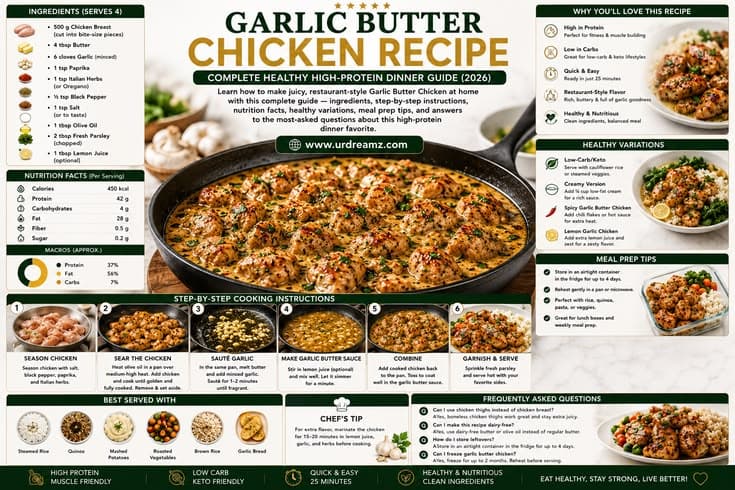
Garlic Butter Chicken Recipe: Complete Healthy High-Protein Dinner Guide
Everything you need to know about making juicy, flavorful Garlic Butter Chicken at home — ingredients, step-by-step method, nutrition, variations, meal prep, and frequently asked questions.
Introduction: Why Garlic Butter Chicken Belongs on Your Weekly Menu
Few dinners manage to be quick, healthy, and genuinely craveable at the same time — Garlic Butter Chicken is one of them. It takes simple pantry staples like chicken breast, garlic, and butter, and turns them into a dish that tastes like it came from a restaurant kitchen. Whether you are cooking for a busy weeknight, prepping meals for the week, or trying to hit a daily protein target, this recipe fits almost every lifestyle. In this guide, we break the dish down completely: ingredients, method, nutrition, variations, and the small details that separate an average plate of chicken from a genuinely great one.
What makes this guide different from a quick recipe card is the depth — we cover not just the steps, but the reasoning behind them. You will learn why searing at the right temperature matters, why garlic should go in after the chicken comes out, how to adjust the recipe for different diets, and how to store and reheat it without losing that just-cooked texture. By the end, you should be able to make this dish confidently from memory, and adapt it to whatever ingredients you have on hand.
We also include real nutrition numbers, honest notes on where the dish can go wrong, and a full set of frequently asked questions, so this page can double as both a recipe and a reference guide you come back to whenever you need a refresher.
What Is Garlic Butter Chicken?
Garlic Butter Chicken is exactly what it sounds like — chicken that is seared until golden and then coated in a rich, aromatic sauce made from melted butter and fresh garlic. The chicken develops a light crust on the outside while staying tender inside, and the butter sauce clings to every bite, carrying the flavor of garlic, herbs, and a touch of lemon or parsley. It is not a complicated dish, but the balance of textures and flavors makes it feel special enough for guests while being easy enough for a Tuesday night.
The dish can be served in several formats depending on how you cut the chicken. Whole seared breasts sliced on top of a bed of rice or vegetables make an elegant presentation, while cutting the chicken into bite-sized pieces before cooking turns it into "garlic butter chicken bites," a format that is especially popular for meal prep containers because it portions and reheats evenly. Either way, the underlying technique — sear, then sauce — stays the same.
A Short Story Behind the Dish
Garlic and butter have been paired together in kitchens across the world for centuries, from French garlic butter sauces to South Asian butter-based curries. Garlic Butter Chicken borrows from this shared culinary language — it takes the comforting richness of butter-based cooking and applies it to a lean, everyday protein. Its rise in popularity on food blogs and social media comes down to one thing: it delivers big flavor without requiring advanced skills or unusual ingredients.
In recent years, the recipe has also become closely associated with the fitness and meal-prep community, largely because chicken breast is already a staple protein for anyone tracking macros. Home cooks looking for a way to make "plain grilled chicken" less repetitive found that a garlic butter sauce could completely transform the same base ingredient into something that feels indulgent, without adding significant carbohydrates or sugar. That combination of practicality and flavor is a big part of why the dish continues to trend across recipe blogs, cooking videos, and social platforms.
Why This Recipe Works So Well
There are three reasons this dish keeps showing up on healthy dinner lists. First, it is fast — most versions are ready in under thirty minutes. Second, it is flexible — you can bake it, pan-sear it, grill it, or air-fry it, and pair it with almost any side. Third, it is naturally high in protein and low in carbohydrates, which makes it easy to fit into a wide range of eating patterns, from weight-loss plans to muscle-building diets.
There is also a practical reason this recipe performs so well for repeat cooking: it uses ingredients that most households already keep on hand. You rarely need a special grocery trip to make it, which lowers the barrier to actually cooking a homemade dinner instead of ordering takeout. Recipes that combine convenience, health value, and strong flavor tend to become permanent fixtures in a weekly rotation, and Garlic Butter Chicken checks all three boxes at once.
Finally, the dish scales effortlessly. Doubling or tripling the ingredients works without changing the technique, which makes it just as easy to cook for one person as it is to prepare for a full family or a small dinner gathering.
Who This Recipe Is Best For
This dish suits busy professionals who need a fast dinner, families looking for something everyone will eat, fitness-focused cooks tracking protein intake, and anyone following a low-carb or gluten-free lifestyle. It is also a great starting point for beginner cooks, since the technique — searing chicken and building a pan sauce — is a foundational skill that carries over into many other recipes.
It is also worth mentioning who should be more cautious with this recipe. People managing sodium-restricted diets should adjust the added salt, and anyone monitoring saturated fat intake closely — such as individuals managing certain heart conditions — should speak with their healthcare provider about how much butter fits into their personal dietary plan.
Kitchen Tools You Will Need
You do not need specialty equipment for this recipe. A heavy-bottomed skillet (cast iron or stainless steel works best for a good sear), a sharp knife, a cutting board, tongs for flipping the chicken, and a meat thermometer to confirm doneness are all you really need. If you plan to bake or air-fry the chicken instead, a baking dish or air fryer basket will replace the skillet.
A garlic press is optional but convenient if you cook this dish often — it saves time compared to hand-mincing and produces a fine, even texture that melts smoothly into the butter. If you prefer a more rustic sauce with visible garlic pieces, hand-mincing with a sharp knife is still the better choice.
Main Ingredients Overview
At its core, Garlic Butter Chicken relies on just a handful of ingredients: chicken breast, garlic, butter, olive oil, and a few herbs. Everything else — lemon juice, paprika, parsley, chili flakes — is there to round out the flavor. Because the ingredient list is short, the quality of each component matters more than usual, so fresh garlic and good chicken make a noticeable difference in the final result.
It is worth buying whole garlic bulbs rather than pre-minced garlic in a jar whenever possible. Freshly minced garlic has a sharper, more fragrant aroma that mellows beautifully once it hits warm butter, while jarred garlic tends to taste flatter and can turn bitter faster during cooking. Similarly, using real butter rather than a butter-flavored spread makes a noticeable difference in how the sauce comes together, since spreads often contain added water that can make the sauce thinner and less rich.
Table: Full Ingredient List and Substitutes
| Ingredient | Purpose | Possible Substitute |
|---|---|---|
| Chicken breast (skinless, boneless) | Main protein | Chicken thighs |
| Garlic cloves | Core flavor | Garlic powder (in a pinch) |
| Unsalted butter | Rich sauce base | Dairy-free butter alternative |
| Olive oil | Searing fat, healthy fats | Avocado oil |
| Lemon juice | Brightness | White wine vinegar |
| Fresh parsley | Garnish, freshness | Fresh basil or cilantro |
| Paprika | Color and mild warmth | Smoked paprika |
| Italian seasoning | Herbal depth | Mixed dried oregano and thyme |
| Salt and black pepper | Seasoning | To taste |
| Chili flakes (optional) | Heat | Cayenne pepper |
Understanding Chicken Breast as a Protein Source
Chicken breast is one of the most efficient sources of lean protein available, offering a high amount of protein relative to its calorie and fat content. It also provides B vitamins that support energy metabolism. Because it is mild in flavor, it absorbs the garlic butter sauce well, which is part of why this cut works so well in this particular recipe.
Compared to fattier cuts like chicken thighs or wings, chicken breast contains significantly less fat per serving, which is why it remains the go-to choice for anyone tracking strict macros. That said, the mild flavor of chicken breast means it depends more heavily on seasoning and sauce for taste — which is exactly the gap that a well-made garlic butter sauce fills.
The Role of Garlic in This Dish
Garlic is more than a flavor booster here — it is the defining ingredient of the recipe. When gently sautéed in butter, garlic releases natural aromatic compounds that give the sauce its signature smell and taste. Garlic also contains sulfur-based plant compounds that have been studied for their potential role in supporting heart health, though the amount used in a single serving of this dish is primarily for flavor rather than a therapeutic dose.
The way garlic is cut also changes its flavor. Finely minced garlic releases more of its natural compounds and produces a sharper, more pronounced taste, while thin slices or lightly crushed cloves give a milder, sweeter flavor once cooked. For this recipe, finely minced garlic is generally recommended so it distributes evenly throughout the butter sauce.
Butter vs Olive Oil: Which Is Healthier Here?
This recipe intentionally uses both. Olive oil is used for searing because it has a favorable fat profile and handles moderate heat well, while butter is added toward the end to build the sauce and add richness. Using a measured amount of butter rather than a large, unmeasured pour keeps the dish balanced — you get the flavor of butter without turning it into a heavy, calorie-dense sauce.
Butter alone can burn more easily at high heat because of its milk solids, which is why it is best added after the initial sear rather than used for the entire cooking process. Combining a small amount of olive oil with butter — sometimes called using a "fat blend" — is a common professional kitchen trick that raises the smoke point slightly while still preserving that classic buttery flavor.
Herbs and Seasonings That Make It Shine
Beyond garlic, this dish leans on a small set of herbs and spices: parsley for freshness, paprika for color and mild warmth, and Italian seasoning (oregano, thyme, basil) for herbal depth. Black pepper and a pinch of chili flakes add a gentle kick without overpowering the garlic butter base. These seasonings do the job of a supporting cast — present, but never louder than the main flavor.
Fresh herbs and dried herbs behave differently in this recipe. Dried herbs like oregano and thyme hold up well to the heat of searing and are best added during cooking, while delicate fresh herbs like parsley are best added at the very end, right before serving, so their color and flavor stay bright instead of wilting into the sauce.
Table: Recipe At a Glance
| Detail | Information |
|---|---|
| Prep Time | 10 minutes |
| Cook Time | 15–20 minutes |
| Total Time | 25–30 minutes |
| Servings | 2–4 |
| Skill Level | Beginner-friendly |
| Best Cooking Method | Skillet (pan-seared) |
| Diet Compatibility | High-protein, low-carb, gluten-free (naturally) |
Step-by-Step Instructions
Begin by patting the chicken breasts dry and seasoning both sides with salt, pepper, and paprika. Heat olive oil in a skillet over medium-high heat and sear the chicken for five to six minutes per side, until golden brown and cooked through to an internal temperature of 165°F (74°C). Remove the chicken and set it aside. Lower the heat, add butter and minced garlic to the same pan, and sauté for about a minute until fragrant but not browned. Return the chicken to the pan, spoon the garlic butter sauce over it, add a squeeze of lemon juice if using, and finish with chopped parsley before serving.
If your chicken breasts are uneven in thickness, consider pounding the thicker end gently with a meat mallet or the bottom of a heavy pan before seasoning. This helps the chicken cook evenly, so the thinner end does not dry out while the thicker end finishes cooking. It also shortens the overall cooking time slightly, which helps keep the outside from over-browning before the inside is fully done.
Once plated, taste the sauce before serving and adjust as needed — a little extra lemon juice can lift a sauce that tastes too rich, while an additional pinch of salt can bring flat flavors into focus. Small adjustments at the very end often make the biggest difference in how balanced the finished dish tastes.
How to Make the Perfect Garlic Butter Sauce
The sauce is built in the same pan the chicken was cooked in, which allows it to pick up the browned bits left behind — a technique that adds extra depth of flavor. Keep the heat moderate when adding garlic to butter; garlic can turn bitter within seconds if the pan is too hot. A gentle sizzle for about a minute is all it needs before the sauce is ready to be spooned over the chicken.
Tips for Extra Juicy Chicken
Juicy chicken comes down to three things: not overcooking it, using an even thickness of meat (pounding thicker parts of the breast to match the thinner end), and letting it rest for a few minutes after cooking. A meat thermometer removes the guesswork — pulling the chicken at 165°F (74°C) guarantees it is safe without drying it out from extra cooking time.
Brining or a short salt-water soak before cooking is another technique worth trying if you frequently end up with dry chicken breast. Even a quick 15-minute soak in lightly salted water can help the meat retain more moisture during cooking, making the final result noticeably juicier.
How to Avoid Burning the Garlic
Burnt garlic turns bitter and can ruin an otherwise good sauce. To avoid this, always add garlic after the pan has been slightly cooled from searing the chicken, keep the heat at medium or lower, and stir constantly. If you notice the garlic turning brown quickly, pull the pan off the heat immediately.
If you accidentally burn a small amount of garlic, it is often better to remove the burnt pieces and start the sauce again with fresh garlic rather than trying to mask the bitterness with extra butter or seasoning — bitterness from scorched garlic tends to spread through the whole sauce and is difficult to fully cover up.
Resting the Chicken Before Serving
Letting cooked chicken rest for three to five minutes before slicing allows the juices to redistribute throughout the meat rather than spilling out onto the cutting board. This small step noticeably improves how moist the final dish tastes, and it is one of the most overlooked details in home cooking.
Tenting the chicken loosely with foil while it rests helps keep it warm without trapping so much steam that the crust turns soft. This is especially useful if you are cooking multiple pieces and need to hold the first batch warm while finishing the rest.
Cooking Methods Overview
Garlic Butter Chicken adapts well to several cooking methods, each offering a slightly different texture and flavor profile. The right method for you depends on the equipment you have, how much time you want to spend, and whether you are cooking for one person or meal-prepping for the week.
Skillet Method
The skillet method is the classic approach and the one most commonly used for this recipe. It develops a golden crust on the chicken and allows the garlic butter sauce to be made directly in the same pan, maximizing flavor with minimal cleanup.
For the best sear, make sure the pan is fully preheated before adding the chicken, and avoid moving the chicken around too much in the first few minutes. Letting it sit undisturbed allows a proper crust to form, which not only improves texture but also helps lock in juices during the rest of the cooking process.
Oven-Baked Method
Baking is ideal when cooking a larger batch. Coat the chicken in the garlic butter mixture, place it in a baking dish, and bake at 400°F (200°C) for 25–30 minutes. This method is more hands-off and works well for meal prep since multiple portions can cook evenly at once.
Because baking does not produce the same browned crust as pan-searing, some cooks like to broil the chicken for the last two to three minutes to add color and a bit of char on top. Basting the chicken with the pan juices halfway through baking also helps keep it moist and adds extra garlic butter flavor throughout.
Air Fryer Method
The air fryer produces a crisp exterior using very little added oil, making it a good option for anyone watching total fat intake. Cook seasoned chicken at 380°F (193°C) for roughly 12–15 minutes, flipping halfway, then toss in warm garlic butter sauce afterward.
Avoid overcrowding the air fryer basket, since pieces that touch each other will steam rather than crisp up. If you are cooking a large batch, work in two rounds rather than piling everything in at once — the slight extra time is worth the improved texture.
Grilled Method
Grilling adds a smoky char that pairs beautifully with garlic butter. Marinate the chicken briefly, grill over medium-high heat until cooked through, then brush with garlic butter sauce right before serving so the butter doesn't burn on the grates.
If you do not have an outdoor grill, a stovetop grill pan works as a close substitute and still produces attractive char marks. Just be sure to preheat the grill pan thoroughly, since a cold pan will cause the chicken to stick and prevent those characteristic grill lines from forming.
Table: Comparing Cooking Methods
| Method | Texture | Best For | Approx. Time |
|---|---|---|---|
| Skillet | Golden crust, juicy center | Everyday dinner | 15–18 min |
| Oven-Baked | Even, tender | Meal prep batches | 25–30 min |
| Air Fryer | Crisp exterior, low oil | Lighter meals | 12–15 min |
| Grilled | Smoky char | Outdoor cooking | 12–16 min |
Nutrition Facts Breakdown
A standard serving of Garlic Butter Chicken made with lean chicken breast, measured butter, and olive oil delivers a strong dose of protein with a moderate amount of fat and very few carbohydrates. The exact numbers shift depending on portion size and how much butter is used, but the dish generally fits comfortably into high-protein and low-carb eating patterns.
For context, most adults need somewhere between 0.6 and 1 gram of protein per pound of body weight per day, depending on activity level and goals. A single serving of this recipe can cover roughly a third to half of that target in one meal, which is part of why it is frequently recommended in high-protein and muscle-building meal plans. Pairing it with a fiber-rich side also helps round out the overall nutritional profile of the meal.
Table: Nutrition Facts Per Serving (Approximate)
| Nutrient | Amount |
|---|---|
| Calories | ~380 kcal |
| Protein | ~34 g |
| Carbohydrates | ~3 g |
| Fat | ~25 g |
| Fiber | ~0.5 g |
| Sugar | ~0.2 g |
Note: Values are estimates and will vary based on exact portion sizes and ingredient brands.
These figures assume a single chicken breast (roughly 6 ounces) cooked with about a tablespoon of butter and a tablespoon of olive oil, divided across the sauce. If you increase the butter, add cream, or use a larger portion of chicken, adjust the totals proportionally rather than assuming these numbers apply universally to every version of the recipe.
Is Garlic Butter Chicken Healthy?
Yes, when made with lean chicken breast, a moderate amount of butter, and olive oil, and served alongside vegetables or whole grains, this dish fits comfortably into a balanced diet. Its high protein content and low carbohydrate count make it a practical option for a wide range of health and fitness goals, as long as portion sizes are kept reasonable.
High Protein Benefits Explained
Protein plays a central role in building and repairing muscle tissue, supporting a healthy metabolism, and helping you feel fuller for longer after a meal. Because chicken breast delivers a large amount of protein per gram of fat, Garlic Butter Chicken is a convenient way to meet daily protein targets without excess calories.
Weight Loss Benefits
Meals high in protein and low in carbohydrates tend to be more satiating, which can help reduce overall calorie intake throughout the day. When paired with non-starchy vegetables and a controlled amount of butter, Garlic Butter Chicken can be a satisfying, lower-calorie dinner option for those working toward a calorie deficit.
Protein-rich meals also require more energy to digest compared to meals higher in fat or refined carbohydrates, an effect sometimes referred to as the thermic effect of food. While this effect is modest on its own, combining it with a high-satiety meal like this one can make it easier to stick to a calorie target without feeling deprived.
Muscle Building and Recovery Benefits
For anyone strength training or engaging in regular exercise, protein intake after a workout supports muscle repair and growth. A serving of Garlic Butter Chicken delivers a substantial amount of protein in one sitting, making it a practical post-workout or general training-day dinner.
Distributing protein intake evenly across meals throughout the day, rather than loading most of it into one sitting, is generally considered a more effective approach for muscle maintenance and growth. Garlic Butter Chicken makes this easier to achieve, since a single serving already provides a meaningful, concentrated dose of protein without requiring a large volume of food.
Heart Health Considerations
Butter contains saturated fat, so moderation matters if you are watching your cholesterol intake. Using measured amounts of butter, balancing it with olive oil, and pairing the dish with fiber-rich vegetables can help keep the meal heart-conscious without sacrificing flavor. Anyone with a diagnosed heart condition should check with their healthcare provider about appropriate fat intake.
If heart health is a top priority, consider reducing the butter slightly and increasing the proportion of olive oil in the sauce, since olive oil is richer in monounsaturated fats. Adding garlic generously is also a good move here, as it is one of the few ingredients in this dish that adds flavor without contributing any saturated fat at all.
Low-Carb and Keto Compatibility
Garlic Butter Chicken is naturally low in carbohydrates, since the core ingredients — chicken, garlic, butter, and herbs — contain very little starch or sugar. This makes it an easy fit for keto and low-carb eating plans, especially when served with cauliflower rice, roasted vegetables, or a simple salad instead of grains.
The main place carbohydrates can sneak into this dish is through added sauces or glazes, such as honey garlic variations or store-bought sauces with added sugar. If you are strictly tracking carbs, stick to the base garlic butter sauce or double-check nutrition labels on any pre-made sauce you add.
Table: Diet Compatibility Overview
| Diet Type | Compatible? | Notes |
|---|---|---|
| High-Protein | Yes | Naturally protein-dense |
| Low-Carb / Keto | Yes | Pair with low-carb sides |
| Gluten-Free | Yes | Naturally gluten-free |
| Dairy-Free | With substitution | Replace butter with olive oil or dairy-free butter |
| Mediterranean | Yes | Use olive oil generously, add vegetables |
| Vegetarian / Vegan | No | Chicken-based recipe |
Best Side Dishes for Garlic Butter Chicken
Because the chicken itself is rich and flavorful, it pairs well with sides that add contrast — something fresh, something starchy, or something light. Steamed vegetables, whole grains, and simple salads all work well, and the choice largely depends on your dietary goals for the meal.
A good rule of thumb is to build the plate around three elements: a lean protein (the chicken), a source of fiber (vegetables), and, if your goals allow it, a modest portion of complex carbohydrates (rice, quinoa, or potatoes). This structure makes the meal feel complete without requiring much extra thought about balance.
Table: Side Dish Pairing Guide
| Side Dish | Why It Works |
|---|---|
| Steamed broccoli | Fresh contrast to the rich sauce |
| Roasted asparagus | Adds texture and color |
| Brown rice | Absorbs the garlic butter sauce |
| Quinoa | Adds fiber and plant protein |
| Cauliflower rice | Low-carb, keto-friendly base |
| Mixed green salad | Light and refreshing |
| Mashed sweet potatoes | Comforting, nutrient-dense option |
Healthy Vegetable Pairings
Vegetables like broccoli, green beans, spinach, and zucchini add fiber, vitamins, and volume to the plate without significantly increasing calories. Roasting them with a bit of olive oil and garlic keeps the flavor profile consistent with the main dish.
Timing matters when pairing vegetables with this recipe. Quick-cooking vegetables like spinach or asparagus can go into the same skillet after the chicken comes out, picking up flavor from the leftover garlic butter, while heartier vegetables like broccoli or Brussels sprouts are usually better roasted separately so they have time to caramelize properly.
Whole Grain and Carb Pairings
If your goals include more balanced carbohydrate intake, brown rice, quinoa, or whole wheat couscous work well alongside Garlic Butter Chicken. These grains also do a great job of soaking up any extra sauce left on the plate, and they add a slower-digesting carbohydrate source that can help extend satiety after the meal.
Low-Carb Pairings
For a lower-carb plate, cauliflower rice, zucchini noodles, or a simple leafy salad keep the meal light while still feeling complete. These options are especially useful for anyone following a keto or low-carb approach, and they also reheat well, which makes them practical additions to a meal-prep container alongside the chicken.
Healthy Variations of Garlic Butter Chicken
One of the best things about this recipe is how easily it adapts. With small ingredient swaps, you can shift the flavor profile entirely or make it suitable for a different dietary need, all while keeping the same basic technique.
Because the core method — sear the chicken, then build a butter-based sauce in the same pan — stays constant across every variation below, you do not need to learn a new recipe each time. Instead, think of the base recipe as a template, and treat the additions in each variation as flavor layers you can mix and match depending on what you are in the mood for or what you already have in the fridge.
Lemon Garlic Butter Chicken
Adding extra lemon juice and a bit of lemon zest brightens the dish and cuts through the richness of the butter, giving it a fresher, slightly tangy finish that works especially well in warmer months. This version pairs particularly well with a simple green salad or a light quinoa bowl, since the acidity keeps the overall meal from feeling too heavy.
Mediterranean Garlic Chicken
Stir in chopped olives, sun-dried tomatoes, and fresh spinach for a Mediterranean-inspired twist. This variation adds extra fiber and healthy fats while keeping the dish within the same general nutrition profile. A drizzle of extra virgin olive oil and a sprinkle of crumbled feta cheese right before serving rounds out the Mediterranean flavor profile even further.
Creamy Garlic Butter Chicken
For a richer version, add a splash of cream, chicken broth, and grated parmesan to the garlic butter sauce. This turns the dish into something closer to a Tuscan-style chicken, ideal for special occasions or comfort-food cravings. Keep in mind this version is higher in calories and fat than the base recipe, so it works best as an occasional treat rather than an everyday meal if you are watching your intake closely.
Spicy Garlic Chicken
Adding chili flakes, cayenne pepper, or a dash of hot paprika brings heat to the dish without changing its core technique. This version pairs particularly well with cooling sides like a cucumber salad or plain yogurt-based sauce. Start with a small amount of heat and taste as you go, since it is much easier to add more spice than to tone it down once it's in the sauce.
Keto Garlic Butter Chicken
The base recipe is already low-carb, so making it keto-friendly mostly comes down to what you serve alongside it. Pairing the chicken with cauliflower rice or roasted low-carb vegetables keeps the entire meal within typical keto macros. Because keto diets emphasize higher fat intake, this is also one of the few variations where you can lean into a slightly more generous amount of butter without straying from the diet's core principles.
Gluten-Free Version
Garlic Butter Chicken is naturally gluten-free as long as no flour-based thickeners or breaded coatings are used. Double-check that any store-bought seasoning blends or broths used in variations are labeled gluten-free, since some pre-mixed seasoning blends and soy sauces can contain hidden gluten from wheat-based fillers or additives.
Dairy-Free Version
Replacing butter with olive oil or a plant-based butter alternative keeps the same basic flavor structure while making the dish suitable for those avoiding dairy. The garlic and herbs still carry most of the dish's character. Many store-bought dairy-free butter alternatives are formulated to melt and behave similarly to real butter, which makes the substitution fairly seamless in this recipe compared to baked goods, where butter's structural role matters more.
Honey Garlic Chicken Twist
For a sweet-savory variation, add a spoonful of honey along with a splash of soy sauce to the garlic butter sauce. This creates a sticky glaze that works particularly well with rice and steamed vegetables. Since this version adds natural sugar, it is worth using a lighter hand with the honey if you are trying to keep the dish more aligned with a low-carb or weight-loss goal, and pairing it with extra vegetables to balance out the plate.
Table: Variations Comparison
| Variation | Key Addition | Flavor Profile |
|---|---|---|
| Lemon Garlic | Lemon juice + zest | Bright, tangy |
| Mediterranean | Olives, tomatoes, spinach | Savory, herby |
| Creamy | Cream + parmesan | Rich, indulgent |
| Spicy | Chili flakes | Hot, bold |
| Keto | Low-carb sides | Same, lighter plate |
| Honey Garlic | Honey + soy sauce | Sweet, sticky |
Meal Prep Guide
Garlic Butter Chicken holds up well in the fridge and freezer, making it a strong candidate for weekly meal prep. Cooking a larger batch on a Sunday and portioning it into containers with vegetables and a grain can cover several lunches or dinners during the week.
When prepping in bulk, it helps to slightly undercook the chicken during the initial batch cook, since it will continue cooking a bit during reheating later in the week. Cutting the chicken into smaller pieces before cooking also makes portioning into containers faster and more consistent, and it reheats more evenly than large whole breasts.
Storage Tips
Store cooked chicken in an airtight container in the refrigerator for up to three to four days. Keeping the sauce separate from any fresh salad components, if included, helps maintain better texture throughout the week.
Letting the chicken cool to room temperature before sealing it in a container helps prevent condensation from building up inside, which can make the texture slightly soggy over time. Shallow containers also cool food faster and more evenly than deep ones, which is a small but useful detail for food safety.
Freezing Instructions
Garlic Butter Chicken freezes well for up to two to three months. Let the chicken cool completely before transferring it to freezer-safe containers or bags, and label them with the date so you can track freshness.
Removing as much air as possible from freezer bags before sealing helps prevent freezer burn, which can dull both the texture and flavor of the chicken over time. Flattening bags before freezing also makes them stack more efficiently and thaw faster than a thick, rounded block.
Reheating Tips Without Drying It Out
Reheat gently over low-medium heat in a covered skillet with a small splash of water or broth to help restore moisture. Microwaving works too, but shorter bursts with a damp paper towel over the plate help prevent the chicken from turning rubbery.
If reheating from frozen, it is best to thaw the chicken in the refrigerator overnight first rather than reheating directly from frozen, which tends to cook the outside before the center has warmed through evenly. Adding a small extra pat of butter while reheating can also help revive some of the sauce's original richness.
Table: Storage and Shelf Life
| Storage Method | Shelf Life |
|---|---|
| Refrigerator (airtight container) | 3–4 days |
| Freezer (airtight, freezer-safe) | 2–3 months |
| Room temperature | Not recommended beyond 2 hours |
Common Mistakes to Avoid
Even a simple recipe like this can go wrong in a few predictable ways. Overcooking the chicken, using too much butter, burning the garlic, skipping a meat thermometer, overcrowding the pan, and slicing the chicken immediately after cooking (instead of letting it rest) are the most common issues home cooks run into.
Another frequent mistake is seasoning only the surface of the chicken right before cooking. Seasoning a little in advance — even just 15 to 20 minutes — gives the salt time to penetrate slightly into the meat, which improves flavor throughout rather than just on the outside layer.
Table: Mistakes and Quick Fixes
| Mistake | Quick Fix |
|---|---|
| Overcooked, dry chicken | Use a meat thermometer, pull at 165°F |
| Burnt garlic | Lower the heat before adding garlic |
| Too greasy sauce | Measure butter instead of free-pouring |
| Uneven cooking | Pound chicken to an even thickness |
| Overcrowded pan | Cook in batches if needed |
| Bland flavor | Season generously and taste as you go |
Weight Loss Tips for This Recipe
If your goal is weight management, choose skinless chicken breast over thighs, measure the butter rather than adding it freely, bulk up the plate with extra non-starchy vegetables, and lean on herbs and lemon juice for flavor instead of extra fat. Practicing portion control and avoiding sugary sauces will also keep the meal aligned with weight-loss goals.
Using a kitchen scale for the first few times you make this recipe can be a useful habit if you are tracking calories closely — it takes the guesswork out of "how much butter did I actually use" and helps you build an accurate sense of portioning over time, even after you stop measuring for every meal.
Family-Friendly Adaptations
For picky eaters, reduce the garlic slightly, skip the chili flakes, and serve the sauce on the side so everyone can adjust to their own taste. Cutting the chicken into smaller, bite-sized pieces before cooking also makes it more appealing to younger kids and cooks a little faster.
Turning the dish into "chicken bites" also opens the door to fun serving styles, like skewers or a build-your-own bowl station with rice, vegetables, and sauce set out separately. This kind of interactive setup tends to work particularly well for families with a mix of picky and adventurous eaters at the same table.
Budget and Meal Planning Tips
Chicken breast, garlic, and butter are all relatively inexpensive and widely available, which makes this recipe budget-friendly for regular rotation. Buying chicken in bulk and freezing individual portions, along with prepping garlic and herbs in advance, can save both time and money over a full week of cooking.
Buying whole heads of garlic instead of small pre-packaged amounts is usually more economical per clove, and garlic keeps for weeks in a cool, dry place. Watching for sales on chicken breast and stocking up when prices drop, then portioning and freezing immediately, is one of the simplest ways to keep this recipe affordable over time.
How We Put This Guide Together
This guide combines tested kitchen techniques with practical nutrition information, written to answer the real questions people search for when looking up Garlic Butter Chicken. Rather than repeating a single source, we pulled together common variations, cooking methods, and troubleshooting tips seen across many home cooks' approaches, then explained them in plain, straightforward language so the recipe is easy to follow regardless of your cooking experience.
Our goal with this format is to make the article useful both as a step-by-step recipe and as a reference you can return to later — whether you need a quick reminder on internal cooking temperature, a side dish idea, or a variation to try when the base recipe starts feeling routine.
Frequently Asked Questions
Is Garlic Butter Chicken healthy?
Yes, especially when made with lean chicken breast, a measured amount of butter, olive oil, and served with vegetables or whole grains. It is high in protein and naturally low in carbohydrates.
Can I use chicken thighs instead of chicken breast?
Yes. Chicken thighs work well and add extra flavor, though they generally contain more fat and calories than skinless chicken breast.
Can I freeze Garlic Butter Chicken?
Yes. Store it in an airtight, freezer-safe container for up to two to three months, and thaw it in the refrigerator before reheating.
What vegetables go best with Garlic Butter Chicken?
Broccoli, asparagus, green beans, spinach, zucchini, and roasted mixed vegetables all pair well with the rich garlic butter sauce.
Is Garlic Butter Chicken good for meal prep?
Yes. It reheats well and stores easily, making it a convenient choice for lunches and dinners throughout the week.
How do I make Garlic Butter Chicken dairy-free?
Replace the butter with olive oil or a dairy-free butter alternative — the garlic and herbs still provide most of the dish's flavor.
Can I make this recipe in an air fryer?
Yes. Cook the seasoned chicken at 380°F (193°C) for about 12–15 minutes, then toss it in warm garlic butter sauce before serving.
How long should I cook chicken breast for this recipe?
Cook chicken breast for about five to six minutes per side in a hot skillet, or until it reaches an internal temperature of 165°F (74°C).
What can I use instead of butter for a lighter version?
Olive oil can replace some or all of the butter for a lighter sauce, though it will change the richness and flavor slightly.
Is this recipe suitable for a keto diet?
Yes, the base recipe is naturally low-carb. Pair it with cauliflower rice or roasted low-carb vegetables to keep the full meal keto-friendly.
How many calories are in Garlic Butter Chicken?
A typical serving made with measured butter and lean chicken breast contains roughly 350 to 400 calories, though this varies based on portion size and exact ingredients used.
Can I marinate the chicken ahead of time?
Yes. Marinating the chicken in olive oil, garlic, and herbs for 30 minutes to a few hours in the refrigerator can add extra flavor before cooking.
What's the best pan to use for this recipe?
A heavy-bottomed skillet, such as cast iron or stainless steel, gives the best sear and helps build a flavorful sauce directly in the pan.
Can I double the recipe for a larger family?
Yes. Simply scale the ingredients proportionally, and cook the chicken in batches if needed to avoid overcrowding the pan, which can cause steaming instead of searing.
Does garlic butter chicken taste good the next day?
Yes, the flavors often deepen slightly overnight as the garlic and butter continue to infuse the chicken, making it a great leftovers option.
Table: Quick-Answer FAQ Summary
| Question | Short Answer |
|---|---|
| Healthy? | Yes, with lean chicken and moderate butter |
| Freezer-friendly? | Yes, 2–3 months |
| Keto-friendly? | Yes, naturally low-carb |
| Gluten-free? | Yes, naturally |
| Dairy-free option? | Yes, swap butter for olive oil |
| Best for meal prep? | Yes, reheats well |
Conclusion
Garlic Butter Chicken earns its place as a go-to dinner because it checks nearly every box: quick to make, high in protein, easy to adapt, and genuinely delicious. Whether you stick with the classic skillet version or try one of the healthy variations covered in this guide, the technique is simple enough to repeat weekly without ever getting boring. Pair it with your favorite vegetables or grains, and you have a complete, balanced meal that works for weight loss, muscle building, or simply a satisfying family dinner.
As with most simple recipes, the biggest gains in quality come from small habits — resting the chicken, controlling the heat when cooking garlic, and seasoning thoughtfully rather than heavily. Once those habits become second nature, this recipe stops being something you follow from a page and becomes something you simply know how to cook, adapting it naturally to whatever ingredients and mood the week brings.