Introduction: Why a Proper Skincare and Hair Care Routine Matters
Beauty is not just about appearance — it is a reflection of your health, your habits, and how well you care for yourself from the inside out. Whether you are searching for a complete skincare routine for beginners, looking to understand the Korean skincare routine, or desperately trying to find hair growth tips that actually work, this guide is your all-in-one answer. Millions of people every day type questions like "how to get clear skin naturally", "how to stop hair fall immediately at home", "best oils for hair growth", and "how to glow in 7 days naturally" into search engines — and today, we answer every single one.
The truth is that natural skincare and natural hair care work. You do not need to spend a fortune on expensive products when your kitchen is full of powerful, scientifically-backed remedies. From aloe vera benefits for skin to homemade face masks, from dandruff treatment at home to anti-aging tips that help you look 10 years younger naturally — everything you need is right here.
This comprehensive guide covers skincare, hair care, makeup tips, natural remedies, men's grooming, women's beauty, anti-aging secrets, acne care, and herbal beauty solutions. Whether you are a teenager struggling with pimples, a woman over 50 seeking anti-aging skincare, or a man looking for simple men's grooming tips, this guide has something for you.
Part 1: Complete Skincare Routine for Beginners — Step by Step
If you have never followed a structured skincare routine, do not worry. The basic skincare routine for beginners does not have to be complicated. Dermatologists around the world agree that consistency beats complexity every time. Before diving into specific products, you must understand your skin type: oily, dry, combination, sensitive, or normal. This is the foundation of every effective daily skin care routine at home.
What Are the 7 Steps of Skin Care?
The classic 7 steps of skin care that dermatologists and beauty experts recommend are:
- Cleansing — The first and most critical step. Use a gentle face wash suited to your skin type. The correct way to cleanse your face is to use lukewarm water (never hot), apply cleanser in circular motions for 60 seconds, and rinse thoroughly. Proper cleansing removes dirt, excess oil, pollutants, and old makeup that clog pores and cause acne.
- Toning — Apply a toner immediately after cleansing. Toners restore the skin's natural pH balance. Rose water benefits make it an excellent natural toner — it reduces redness, hydrates the skin, and prepares it to absorb the next products better. This is a key part of the Korean skincare routine.
- Exfoliation (2–3 times per week) — Natural exfoliation removes dead skin cells, unclogs pores, and reveals fresher, brighter skin underneath. You can use homemade scrubs like sugar and honey, oatmeal paste, or besan (gram flour) mixed with milk. Over-exfoliating is one of the most common skincare mistakes to avoid.
- Serum — Serums are concentrated treatments. Vitamin C skin serums help with brightening and dark spots. Niacinamide skin serums control oil production and reduce pores. Hyaluronic acid serums provide deep hydration. Apply serum after toning and before moisturising.
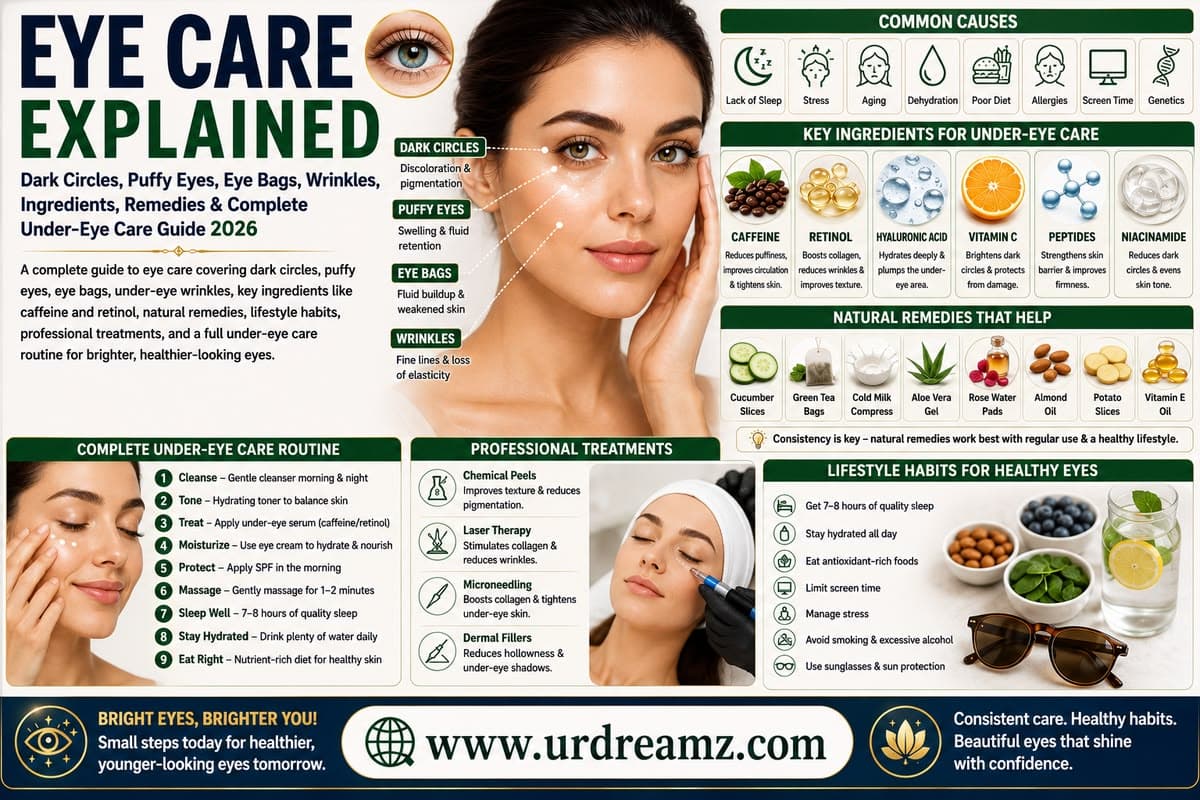
- Eye Cream — The skin around your eyes is the thinnest and most delicate. Using an eye cream helps treat dark circles, puffiness, and fine lines. This is especially important as part of an anti-aging skincare routine.
- Moisturising — Every skin type needs moisturiser — yes, even oily skin. Skipping moisturiser causes your skin to produce more oil to compensate, which worsens breakouts. Choose a lightweight gel moisturiser for oily skin and a rich cream for dry skin.
- SPF / Sun Protection — SPF protection is the single most important anti-aging step. UV radiation causes 80% of visible skin aging. Apply a broad-spectrum SPF 30 or higher every single morning, rain or shine, indoors or outdoors.
Skin Care Routine Steps Night
Your night skincare routine should be slightly different from your morning routine because nighttime is when your skin repairs itself. Follow these skin care routine steps for night:
- Remove makeup thoroughly — never sleep with makeup on. This is one of the worst skincare mistakes to avoid.
- Double cleanse: first with micellar water or cleansing oil, then with your regular face wash.
- Apply toner.
- Use a retinol serum (if you are over 25). Retinol benefits include stimulating collagen production, reducing fine lines, and improving skin texture. Start with a low concentration to avoid irritation.
- Apply a rich night moisturiser or face oil. Coconut oil for hair can also be used on the face for dry skin types — it is deeply nourishing.
- Apply eye cream.
What Is the 4-2-4 Rule in Skincare?
The 4-2-4 rule in skincare refers to a Japanese cleansing method: massage a cleansing oil onto dry skin for 4 minutes, add water and emulsify for 2 minutes, then rinse with water for 4 minutes. This method ensures deep and thorough cleansing, removes sunscreen and makeup completely, and leaves the skin soft and clear. It is rooted in Japanese skincare philosophy — which is why Japanese skin is so flawless.
What Is the Korean 7 Method?
The Korean 7 method — also called the 7 skin care method — involves applying toner (or a lightweight essence) to your face 7 times in layers, allowing each layer to absorb before applying the next. The result is intensely hydrated, plump, glass-like skin. This technique is at the heart of the Korean skincare routine and explains why Korean skin looks so dewy and youthful.
What Is the 1% Rule in Skincare?
The 1% rule in skincare means that active ingredients like niacinamide, retinol, or AHAs can be effective even at concentrations as low as 1%. This teaches us not to fall for marketing that promotes extremely high concentrations — often they cause irritation without added benefit. Understanding this rule helps you choose products wisely, especially if you have sensitive skin or are building a skincare routine for teenagers.
What Is the 3 Second Rule in Skincare?
The 3 second rule in skincare comes from Korean beauty traditions: you should apply your toner or essence within 3 seconds of washing your face, while your skin is still slightly damp. This maximises absorption and locks moisture into the skin cells before they have a chance to lose hydration to the air.
Daily Skin Care Routine at Home Naturally
A truly effective daily skin care routine at home naturally requires only simple ingredients. Here is a complete natural routine anyone can follow:
- Morning: Wash face with cold water or gentle cleanser → Apply rose water as toner → Apply aloe vera gel as serum → Moisturise with a light natural moisturiser → Apply sunscreen.
- Evening: Double cleanse → Apply rose water → Apply natural oil (such as argan, rosehip, or jojoba) → Moisturise with shea butter or coconut oil (for dry skin).
- Weekly: Exfoliate with a sugar-honey scrub → Apply a homemade face mask suited to your skin concern.
Part 2: 10 Natural Ways to Get Glowing Skin — The Complete Guide
Everyone wants glowing skin — that lit-from-within radiance that makes you look healthy, rested, and vibrant. The good news? You do not need expensive treatments. Here are the definitive 10 natural ways to get glowing skin at home, including methods that work overnight and strategies for the 7 days glowing skin challenge.
1. Hydration: The Foundation of Glowing Skin
What drink is good for skin? The answer is water — and plenty of it. Drinking at least 8–10 glasses of water daily flushes toxins from your body, keeps cells plump and hydrated, and directly improves the radiance of your skin. Skin cells that are well-hydrated reflect light better, giving you that natural glow. Add cucumber, lemon, or mint to your water for extra detoxifying and brightening benefits. Green tea is another excellent drink for skin — packed with antioxidants, it reduces inflammation, fights free radicals, and supports collagen production. Green tea skin benefits are well-documented in dermatological research.
2. Vitamin C — The Glow Booster
Vitamin C skin benefits are extraordinary. As both a topical ingredient and a dietary nutrient, vitamin C is essential for collagen synthesis, brightening dark spots, and creating a luminous complexion. Apply a vitamin C serum in the morning before sunscreen. Eat foods rich in vitamin C: oranges, guavas, amla (Indian gooseberry), bell peppers, strawberries, and kiwis. Which fruit is number 1 for skin whitening? Amla (Indian gooseberry) tops the list — it has the highest concentration of natural vitamin C of any fruit, making it a powerful skin brightener and anti-aging food.
3. Turmeric Face Mask
The turmeric face mask is an ancient Ayurvedic beauty secret that has stood the test of time. Mix half a teaspoon of turmeric powder with 2 tablespoons of besan (gram flour) and enough milk or rose water to form a smooth paste. Apply to the face, leave for 15–20 minutes, and rinse with cool water. Curcumin — the active compound in turmeric — is a powerful anti-inflammatory and antioxidant that brightens the complexion, reduces hyperpigmentation, and fights acne-causing bacteria. This is one of the best homemade face masks for glowing skin tips.
4. Honey for Skin
Honey for skin is a miracle worker. Raw, unpasteurised honey is naturally antibacterial, anti-inflammatory, and deeply moisturising. Apply raw honey directly to your face as a mask, leave for 20 minutes, and rinse. Honey draws moisture into the skin (it is a humectant), kills acne-causing bacteria, soothes irritation, and leaves skin incredibly soft and glowing. Mix honey with lemon juice for a brightening mask, or with oatmeal for a soothing, exfoliating treatment.
5. Lemon for Skin Brightening
Lemon for skin is a classic natural brightener. The citric acid in lemon juice acts as a natural AHA (alpha-hydroxy acid), gently exfoliating the skin, fading dark spots, and brightening the complexion. However, use lemon carefully: always dilute it with water or mix with honey before applying to avoid irritation, and never go into the sun after applying lemon juice. How to get fair and glowing skin at home in 7 days: Apply a diluted lemon and honey mask three times a week, drink lemon water every morning, and follow a consistent moisturising and SPF routine.
6. Natural Face Masks for Glowing Skin
Here are the best natural face masks for glowing skin you can make at home:
- Banana and Honey Mask: Mash one ripe banana with a tablespoon of honey. Apply for 15 minutes. Rich in potassium and vitamins, this mask deeply moisturises and brightens.
- Papaya Mask: Mash fresh papaya and apply for 20 minutes. Papain enzyme gently exfoliates dead skin cells, revealing brighter skin beneath.
- Multani Mitti (Fuller's Earth) Mask: Mix with rose water for oily skin. Absorbs excess sebum, tightens pores, and leaves skin matte and refreshed.
- Coffee Scrub Mask: Mix ground coffee with coconut oil. Coffee stimulates circulation, reduces puffiness, and temporarily tightens the skin — perfect for an instant glow before an event.
- Aloe Vera and Cucumber Mask: Blend cucumber and mix with fresh aloe vera gel. Cool, soothing, and intensely hydrating for sensitive skin.
7. Daily Routine for Glowing Skin Naturally
A proper daily routine for glowing skin naturally must address sleep, diet, hydration, exercise, and skincare together. Here is a full-day plan:
- Morning: Drink warm lemon water → Cleanse face → Apply toner → Vitamin C serum → Moisturiser → SPF
- Afternoon: Snack on fruits rich in antioxidants (berries, amla, citrus)
- Evening: Exercise for 30 minutes (sweating promotes circulation and skin glow)
- Night: Double cleanse → Toner → Night serum → Rich moisturiser → 7–8 hours of quality sleep
8. The 7 Day Skin Reset
The 7 day skin reset is a popular challenge designed to dramatically improve your skin in just one week. Here is how the 7 days glowing skin challenge works:
- Day 1: Deep cleanse + exfoliation + honey mask
- Day 2: Double hydration — apply toner 7 times (Korean method) + drink 3 litres of water
- Day 3: Turmeric and besan face mask + vitamin C serum introduction
- Day 4: Focus on sleep — aim for 9 hours. Sleep deprivation causes dull, puffy skin
- Day 5: Aloe vera mask + cold green tea as toner
- Day 6: Exfoliate gently + apply niacinamide serum
- Day 7: Full luxury routine: cleanse → tone → serum → eye cream → mask → moisturise → SPF
9. Diet for Glowing Skin — Which Food Makes You Look Younger?
Which food makes you look younger? Foods rich in antioxidants, healthy fats, and collagen-boosting nutrients are the answer. Foods for glowing skin include:
- Avocados — Rich in vitamin E and healthy fats that keep skin supple and moisturised
- Walnuts — Contain omega-3 fatty acids that reduce inflammation and keep skin glowing
- Sweet potatoes — High in beta-carotene, which the body converts to vitamin A — essential for skin cell turnover
- Dark chocolate (70%+ cocoa) — Antioxidants in cocoa improve blood flow to the skin and protect against UV damage
- Tomatoes — Lycopene in tomatoes protects skin from sun damage and promotes collagen production
- Green leafy vegetables — Spinach and kale are loaded with vitamins A, C, and K, all vital for skin health
- Fish (salmon, sardines) — Omega-3 fatty acids keep skin moisturised and reduce inflammation linked to acne
10. How to Look 10 Years Younger Naturally — How to Take 20 Years Off Your Face
How to look 10 years younger naturally? The answer combines consistent skincare habits with lifestyle choices. 4 habits to slow aging that science confirms work are: wearing SPF daily (the single most effective anti-aging measure), sleeping 7–9 hours per night (during sleep, growth hormone repairs skin cells), staying hydrated, and avoiding smoking and excessive alcohol (both accelerate skin aging dramatically). For your skincare routine, incorporate retinol benefits by using a retinol serum nightly — it is the most scientifically proven topical anti-aging ingredient. Hyaluronic acid plumps fine lines by filling them with moisture. Regular facial massage improves circulation and lymphatic drainage, reducing puffiness and giving skin a lifted, youthful appearance.
What Makes a Woman Beautiful? The 4 Pillars of Beauty
The 4 pillars of beauty — skincare, nutrition, sleep, and mental wellness — form the true foundation of beauty. What makes a woman beautiful? Beyond physical appearance, it is confidence, health, and a consistent self-care practice. The clean girl aesthetic — the popular minimalist beauty look embraced by Gen Z — centres on healthy, glowing skin with minimal makeup. It emphasises skin health over coverage: clear skin, groomed brows, a natural flush, and glossy lips. This look is achieved through consistent skincare, not heavy products.
Part 3: How to Remove Acne Naturally — Complete Acne Care Guide
Acne affects over 85% of people at some point in their lives. Whether you are a teenager dealing with breakouts or an adult struggling with hormonal acne, this section covers everything: how to reduce acne naturally, how to cure acne in 7 days, what naturally kills acne, foods to avoid for acne, and the 7 types of acne you should know about.
What Are the 7 Types of Acne?
Understanding your acne type helps you treat it correctly. The 7 types of acne are:
- Whiteheads — Closed comedones. Pores clogged with oil and dead skin cells, with a white or flesh-coloured bump.
- Blackheads — Open comedones. The clog oxidises when exposed to air, turning dark. Contrary to myth, they are not caused by dirt.
- Papules — Small, raised, red bumps caused by infected or inflamed hair follicles.
- Pustules — Papules with a white or yellow centre filled with pus — the classic "pimple."
- Nodules — Large, solid, painful lumps deep within the skin. Require medical treatment.
- Cysts — The most severe form. Large, painful, pus-filled lumps that can cause permanent scarring. Often requires prescription medication.
- Hormonal Acne — Typically appears along the jawline and chin, caused by hormonal fluctuations. Common during menstrual cycles, pregnancy, and menopause.
What Naturally Kills Acne? Best Home Remedies
What naturally kills acne? Several natural ingredients have proven antibacterial and anti-inflammatory properties:
- Tea Tree Oil: A powerful natural antibacterial. Dilute 1–2 drops in a carrier oil and apply directly to pimples. Studies show it is nearly as effective as benzoyl peroxide for mild to moderate acne.
- Aloe Vera Gel: Anti-inflammatory, antibacterial, and soothing. Apply fresh aloe vera gel directly to acne spots. It reduces redness and swelling while healing the skin.
- Honey: Raw honey's antibacterial properties make it one of the best home remedies for acne overnight. Apply a small amount to a pimple, cover with a bandage overnight, and wake up to reduced inflammation.
- Apple Cider Vinegar (diluted): Contains organic acids that kill acne-causing bacteria. Always dilute 1:3 with water before applying to avoid skin damage.
- Green Tea: Apply cooled green tea as a toner or compress. Its EGCG antioxidants significantly reduce sebum production and acne inflammation.
- Ice: Apply an ice cube wrapped in cloth to a pimple for 2 minutes. Reduces redness and swelling immediately — perfect for how to remove pimples overnight.
- Neem: A traditional Ayurvedic remedy. Neem paste, neem oil, or neem face wash is highly effective for all types of acne due to its powerful antibacterial compounds.
How to Cure Acne in 7 Days — How to Clear 100% Acne
How to cure acne in 7 days? While complete clearing in 7 days depends on severity, a focused routine can produce dramatic improvements:
- Wash your face twice daily with a salicylic acid or neem face wash.
- Apply diluted tea tree oil as a spot treatment every night.
- Do not pick or squeeze pimples — this spreads bacteria and causes scarring.
- Change your pillowcase every 2 days — pillowcases accumulate oil and bacteria.
- Apply aloe vera gel as a light moisturiser morning and night.
- Drink 3 litres of water daily.
- Eliminate the 10 foods to avoid for acne (listed below) from your diet.
What Are the 10 Foods to Avoid for Acne?
Diet plays a massive role in acne. 10 foods to avoid for acne:
- Refined sugar and sweets
- White bread and white rice (high glycaemic index)
- Dairy milk (particularly skimmed milk, which has been linked to acne in multiple studies)
- Fast food (high in trans fats and refined carbohydrates)
- Chocolate with high sugar content (not dark chocolate)
- Whey protein supplements (linked to hormonal acne)
- Chips and processed snacks
- Fizzy drinks and sodas
- Spicy fried foods
- Alcohol (dehydrates skin and disrupts hormone balance)
What to drink to clear acne? Green tea, spearmint tea (especially for hormonal acne), water with lemon, fresh vegetable juices, and warm turmeric milk (golden milk) are all excellent choices for clear skin.
What Fruit Is Good for Acne?
What fruit is good for acne? Papayas contain the enzyme papain, which reduces inflammation and dead skin cell buildup. Blueberries and strawberries are loaded with antioxidants that fight oxidative stress linked to breakouts. Kiwis provide vitamin C for collagen repair. Avocados provide healthy fats that maintain the skin's natural oil barrier without triggering acne. Pomegranates contain punicalagin, a powerful antioxidant that reduces skin inflammation.
Skincare Routine for Teenagers — How to Get Rid of Teenage Pimples Naturally at Home
A skincare routine for teenagers should be simple and gentle. Teen skin is already active and producing adequate oil, so avoid harsh, stripping products. The ideal routine for teens: gentle cleanser twice daily → alcohol-free toner → lightweight gel moisturiser → sunscreen in the morning. Spot treat with diluted tea tree oil. Use a clay mask (multani mitti or kaolin) once a week to control oil. Avoid touching your face — hands carry bacteria. Keep hair clean and off the face — hair oils can clog pores.
Common Skincare Mistakes to Avoid — The 7 Sins of Skincare
What are the 7 sins of skincare? These are the most damaging habits that undermine your skin health:
- Skipping SPF — UV damage is the leading cause of premature aging and skin cancer.
- Over-exfoliating — Exfoliating more than 3 times per week damages the skin barrier.
- Sleeping with makeup on — Clogs pores and causes breakouts, dullness, and accelerated aging.
- Using hot water — Strips skin's natural oils and causes redness and irritation.
- Not moisturising oily skin — Leads to overproduction of oil as the skin tries to compensate.
- Mixing incompatible actives — For example, retinol and vitamin C used together can cause irritation.
- Ignoring the neck and hands — These areas show aging as much as the face but are often neglected.
What is Gen Z looking for in skincare? Gen Z prioritises skin health over makeup coverage, embracing the clean girl aesthetic. They seek multi-functional, minimalist products with proven active ingredients, sustainable packaging, and cruelty-free formulas. Niacinamide skin serums, SPF moisturisers, and hyaluronic acid serums are top Gen Z skincare picks.
Part 4: Aloe Vera Benefits for Skin and Hair — The Complete Guide
Aloe vera benefits for skin and hair are so extensive that this plant is often called the "plant of immortality" in traditional medicine. What is 100% aloe vera good for? An enormous range of things — from sunburn relief to acne treatment, from hair growth to anti-aging. Here is everything you need to know about using aloe vera in your natural skincare routine and natural hair care regimen.
What Are the 10 Benefits of Aloe Vera for Skin?
- Deep Moisturisation: Aloe vera gel contains 99% water along with polysaccharides that lock moisture into the skin without leaving a greasy residue — making it ideal for oily skin hydration.
- Acne Treatment: Natural salicylic acid and antibacterial compounds in aloe vera kill acne-causing bacteria, reduce inflammation, and unclog pores.
- Sunburn Healing: Aloe vera is the gold standard for soothing sunburned skin. It reduces redness, inflammation, and pain while speeding up skin repair.
- Anti-Aging: Aloe vera stimulates collagen and elastin production, reducing the appearance of fine lines and wrinkles. It is a powerful addition to any anti-aging skincare routine.
- Skin Brightening: Regular use of aloe vera, especially combined with lemon juice, can gradually reduce dark spots and hyperpigmentation. How to use aloe vera for skin whitening: apply fresh gel mixed with a few drops of lemon juice for 15 minutes, 3 times a week.
- Dark Circle Reduction: Applying aloe vera gel under the eyes reduces puffiness and dark circles due to its anti-inflammatory and skin-lightening properties.
- Wound Healing: Aloe vera accelerates wound healing by stimulating skin cell proliferation and collagen synthesis.
- Eczema and Psoriasis Relief: Its anti-inflammatory properties soothe the itching, redness, and scaling associated with these skin conditions.
- Pore Minimising: Regular application tightens pores and controls sebum production, giving skin a smoother, more refined appearance.
- Natural Makeup Primer: Aloe vera gel applied before makeup acts as a natural primer — creating a smooth base, reducing oil breakthrough, and helping makeup last longer.
Can We Apply Aloe Vera Gel on Face Daily?
Can we apply aloe vera gel on face daily? Yes — for most skin types, daily application of pure aloe vera gel is completely safe and beneficial. Apply it as a morning moisturiser, use it as a toner, or leave it overnight as a sleeping mask for intensive hydration. The benefits of aloe vera on skin overnight are especially notable: the gel deeply penetrates skin cells during sleep, providing intense hydration and cellular repair. Most people see noticeably softer, brighter skin after just a few nights of overnight aloe vera application.
What Are the 7 Benefits of Aloe Vera?
Beyond skin, the 7 benefits of aloe vera across different uses include: skincare treatment, hair growth stimulation, digestive health support (when consumed as juice), immune system support, anti-inflammatory effects throughout the body, wound and burn healing, and dental health (aloe vera in mouthwash reduces plaque as effectively as chemical formulas in studies).
Side Effects of Aloe Vera on Face
Side effects of aloe vera on face are rare but can occur in people with aloe allergies. Before applying aloe vera to your entire face, do a patch test: apply a small amount to your inner arm and wait 24 hours. If you experience redness, itching, or rash, avoid use. Some people with very sensitive skin may find that prolonged use of aloe vera causes mild dryness — if this happens, mix aloe vera with a few drops of jojoba or argan oil before applying.
How to Use Aloe Vera for Hair and Skin
How to use aloe vera for hair and skin:
- For scalp health: Apply pure aloe vera gel directly to the scalp. Leave for 30 minutes to an hour, then wash out. Reduces dandruff, soothes itchy scalp, and promotes hair growth.
- For hair conditioning: Mix aloe vera gel with coconut oil and apply as a deep conditioning mask. Benefits of aloe vera on hair overnight: leave the mixture on overnight under a shower cap for intense conditioning and frizz control.
- For hair growth: Aloe vera contains enzymes that promote hair growth by removing dead skin cells from the scalp and improving scalp circulation. Apply regularly to see results within 4–6 weeks.
- Side effects of aloe vera on hair overnight: Generally safe, but for very fine or low-porosity hair, leaving aloe vera on overnight can occasionally cause buildup. Always wash thoroughly in the morning.
List of Diseases Cured by Aloe Vera
Aloe vera has been used in traditional medicine for centuries. Conditions it has been used to address include: minor burns and wounds, acne and inflammatory skin conditions, constipation (aloe latex as a laxative — use carefully and sparingly), mouth ulcers (canker sores), irritable bowel syndrome (IBS), high blood sugar (some studies suggest aloe vera juice may help manage type 2 diabetes), high cholesterol, and gum disease. Always consult a healthcare professional before using aloe vera internally.
Part 5: Complete Hair Care Guide — Hair Growth Tips, Hair Fall Treatment & Home Remedies
Your hair is your crown. Whether you are dealing with hair fall, seeking hair growth remedies, battling dandruff, or simply wanting a healthy hair routine, this comprehensive section covers the best home remedies for hair fall, the big 3 for hair regrowth, best oils for hair growth, and how to build a complete hair care routine at home.
Which Home Remedy Is Best to Stop Hair Fall?
Which home remedy is best to stop hair fall? The answer depends on the cause, but the most universally effective home remedies for hair fall are:
- Onion Juice: The most researched natural remedy for hair fall. Onion juice hair treatment involves applying freshly extracted onion juice to the scalp, leaving for 30–60 minutes, and washing out. The high sulphur content improves blood circulation to hair follicles and nourishes them. Studies show it can be effective for alopecia areata. Apply 3 times per week for best results.
- Egg Hair Mask: Eggs are rich in protein, biotin, and essential nutrients that strengthen hair from the inside out. The egg mask hair treatment: beat 1–2 eggs, apply to scalp and hair, leave for 30 minutes, wash with cool water (never hot — it will cook the egg). Use weekly.
- Castor Oil: Castor oil hair treatment is legendary for hair growth. Ricinoleic acid in castor oil improves scalp circulation, reduces scalp inflammation, and delivers intense moisture to hair follicles. Mix castor oil with coconut oil (50/50) to make it easier to apply. Massage into scalp for 5 minutes, leave for 1–2 hours or overnight, wash out.
- Methi (Fenugreek) Seeds: Soak overnight, grind into a paste, apply to scalp. Rich in protein and nicotinic acid that strengthen hair roots and reduce hair fall significantly.
- Amla (Indian Gooseberry): One of the most powerful Indian home remedies for hair growth and thickness. Apply amla oil or fresh amla paste to the scalp. Amla strengthens hair follicles, prevents premature greying, and stimulates new hair growth.
What Are the Big 3 for Hair Regrowth?
What are the big 3 for hair regrowth? In the context of medically proven hair loss treatments, the "Big 3" refers to: Minoxidil (a topical treatment that extends the hair growth phase and widens hair follicles), Finasteride (an oral medication that blocks DHT — the hormone responsible for male pattern baldness — for men only), and Ketoconazole shampoo (an antifungal that also has anti-androgenic properties, reducing scalp inflammation that contributes to hair loss). For natural alternatives, the Big 3 would be: onion juice, rosemary oil, and scalp massage.
Best Oils for Hair Growth
Which oil is best for hair fall? Here are the most effective oils for hair growth ranked by scientific evidence:
- Rosemary Oil: Clinical studies have shown rosemary oil to be as effective as 2% minoxidil for androgenetic alopecia (pattern baldness). It stimulates hair follicles, improves scalp circulation, and slows DHT-related hair loss. Mix 3–5 drops with a carrier oil and massage into scalp nightly.
- Coconut Oil: The only oil that actually penetrates the hair shaft rather than just coating it. Coconut oil for hair reduces protein loss, prevents breakage, and deeply moisturises. Warm slightly before applying for best penetration.
- Castor Oil: Thick, deeply nourishing, and stimulating. Use in a blend as a scalp treatment.
- Argan Oil: The "liquid gold" of hair care. Rich in vitamin E and fatty acids, it repairs damage, reduces frizz, and adds incredible shine without weighing hair down.
- Jojoba Oil: Chemically similar to the scalp's natural sebum. Perfectly balances oil production, unclogs hair follicles, and moisturises without greasiness.
- Bhringraj Oil: An Ayurvedic powerhouse for hair growth. Stimulates hair follicles, reduces stress-related hair fall, and prevents premature greying.
How to Stop Hair Fall in 7 Days
How to stop hair fall in 7 days? While completely stopping hair fall in 7 days is not realistic for chronic conditions, you can significantly reduce shedding and create an environment for recovery with this 7-day plan:
- Day 1–7: Scalp massage with rosemary + coconut oil every night for 5 minutes.
- Day 1, 4, 7: Apply onion juice to scalp, leave 45 minutes, wash.
- Day 2, 5: Egg hair mask for protein strengthening.
- Every day: Take a biotin supplement (consult a doctor), eat protein-rich meals, drink 8 glasses of water, and reduce heat styling completely.
- Switch to a sulphate-free, gentle shampoo and a silicone-free conditioner.
- Sleep on a silk or satin pillowcase to reduce friction and breakage.
Is a 100% Hair Fall Normal?
Is a 100% hair fall normal? Losing 50–100 hairs per day is completely normal — this is the natural hair growth cycle where old hairs shed to make way for new ones. If you are losing significantly more than this, or noticing visible thinning or patches, it is worth investigating the cause (iron deficiency, thyroid issues, nutritional deficiencies, hormonal imbalances, or alopecia) and consulting a dermatologist.
Hair Growth Tips That Actually Work — For Girls and Women
Hair growth tips that actually work for girls and females:
- Scalp massage: Daily 5-minute scalp massage with fingertips (or a scalp massage tool) significantly increases hair thickness by stretching hair follicle cells and stimulating growth. This is one of the most underrated hair growth tips that actually work at home.
- Protein intake: Hair is made of keratin — a protein. Without sufficient dietary protein, hair growth slows and shedding increases. Eat eggs, lentils, chicken, fish, and dairy for adequate protein.
- Iron and ferritin levels: Iron deficiency is the most common nutritional cause of hair fall, especially in women. Have your ferritin levels tested — low ferritin (below 70 ng/mL) significantly impairs hair growth even without anaemia.
- Trim regularly: Split ends travel up the hair shaft, causing breakage. Trim half an inch every 8–10 weeks to maintain healthy length.
- Protective hairstyles: Reduce tension on hair follicles by avoiding tight ponytails, buns, or braids. Repeated tension causes traction alopecia.
- How to grow hair faster naturally in a week: Use an onion juice scalp treatment every other day, do 10-minute scalp massages with rosemary oil every night, eat a biotin-rich diet, and stay fully hydrated. While you cannot dramatically increase hair length in a week, you can create optimal conditions for accelerated growth.
Natural Remedies for Hair Growth and Thickness
Natural remedies for hair growth and thickness that have strong evidence include: rosemary oil (as mentioned), peppermint oil (increases blood flow to scalp), ginseng extract (extends the anagen/growth phase of hair), saw palmetto (a natural DHT blocker), and viviscal (a marine protein supplement). Indian home remedies for hair growth and thickness include: amla oil massage, bhringraj oil, brahmi oil, regular shikakai hair wash (a natural cleanser that strengthens hair), and applying a mixture of coconut milk and methi paste to the scalp weekly.
Why Is Gen Z Losing Hair? Hair Loss in Young People
Why is Gen Z losing hair? This is an increasingly common concern. Several factors contribute: extreme stress and anxiety (stress-induced telogen effluvium is the most common cause of sudden hair loss in young people), nutritional deficiencies from restrictive diets and ultra-processed food consumption, over-styling with heat tools, tight hairstyles causing traction alopecia, hormonal disruptions from birth control pills, and the cumulative effects of environmental pollution. The solution involves addressing the root cause while supporting hair health with good nutrition, stress management, and a gentle hair care routine.
How to Stop Hair Fall Immediately at Home for Female and Male
How to stop hair fall immediately at home for female and how to stop hair fall immediately at home for male: Immediately switch to a sulphate-free shampoo and wash your hair no more than 3 times per week. Reduce or eliminate heat styling. Apply a scalp oil (rosemary or castor) twice weekly. Ensure you are eating enough protein and taking a multivitamin with biotin, iron, and zinc. Manage stress through exercise, meditation, or yoga. These steps will begin reducing excessive shedding within 2–4 weeks.
Does Evion 400 Regrow Hair?
Does Evion 400 regrow hair? Evion 400 is a vitamin E supplement. Vitamin E is a powerful antioxidant that reduces oxidative stress on the scalp, which is linked to hair loss. Some studies show vitamin E supplementation can increase hair growth by up to 34% in people with hair loss. You can also apply Evion 400 oil directly to the scalp — pierce the capsule and apply the contents for a topical treatment. However, Evion alone is not a complete solution; it works best as part of a comprehensive hair care and nutritional approach.
Dandruff Treatment at Home
Dandruff treatment at home: Apple cider vinegar rinse (diluted 1:1 with water, applied to scalp for 30 minutes) changes the pH of the scalp, inhibiting the Malassezia fungus that causes dandruff. Tea tree oil shampoo (look for 5% tea tree oil concentration) is clinically proven to reduce dandruff. Aloe vera scalp application soothes the flaking and itching. Neem oil is another excellent antifungal remedy from Ayurvedic tradition. What shampoo is good for lupus hair loss? Gentle, sulphate-free, fragrance-free shampoos are recommended — the scalp in lupus patients can be particularly sensitive. Ketoconazole shampoo may also help if a fungal component is present.
Part 6: Daily Beauty Routine for Women — Morning & Night
A consistent daily beauty routine for women is the cornerstone of long-term skin and hair health. This section provides a complete best daily beauty routine for women — including a morning beauty routine, night routine, and a daily, weekly and monthly skin care routine framework.
Morning Beauty Routine
The perfect morning beauty routine prepares your skin for the day ahead: protecting it from UV damage, pollution, and dehydration.
- 6:00 AM: Drink a large glass of warm water with lemon. This kickstarts digestion, hydrates cells, and provides vitamin C.
- 6:15 AM: Gentle cleanse with a mild face wash.
- 6:20 AM: Apply rose water toner.
- 6:22 AM: Vitamin C serum — apply 3–4 drops and gently press into skin.
- 6:25 AM: Eye cream — tap gently with ring finger around orbital bone.
- 6:27 AM: Moisturiser suited to your skin type.
- 6:30 AM: SPF 30+ sunscreen — the most important step for anti-aging and skin health.
Daily Beauty Routine for Women Over 50
A daily beauty routine for women over 50 should focus heavily on hydration, collagen support, and sun protection. Key additions for mature skin: a richer moisturiser with ceramides and peptides, a weekly hyaluronic acid sheet mask for intensive hydration, a retinol serum used 3 nights per week (lower concentration like 0.025% to start), facial massage to improve circulation and define contours, and a nutritious diet rich in collagen-boosting foods. Avoid heavy matte foundations that settle into fine lines — instead, use a hydrating tinted moisturiser with SPF.
Daily, Weekly and Monthly Skin Care Routine
Daily routine: cleanse + tone + serum + moisturise + SPF (morning); cleanse + tone + treatment serum + moisturise (night).
Weekly routine: exfoliate 2–3 times; apply a face mask once; do a scalp oil treatment; use a hair mask.
Monthly routine: reassess your skin — are products working? Change seasonally as needed. Professional facial if budget allows. Trim hair ends. Review diet and supplement intake.
Part 7: Natural Beauty Secrets for Healthy Skin — Ancient Wisdom and Modern Science
What Are the 4 C's of Happiness (Applied to Beauty)?
What are the 4 C's of happiness applied to beauty? The 4 C's — Confidence, Consistency, Care, and Connection — form the psychological foundation of a sustainable beauty practice. Confidence comes from feeling good in your skin; consistency in routine produces the best results; care — genuine self-care — extends beyond products to sleep, nutrition, and mental health; and connection to your heritage and natural traditions grounds you in beauty practices that have been proven over generations.
What Are the 7 Types of Beauty?
What are the 7 types of beauty? In traditional aesthetics, beauty is categorised as: natural beauty (unaltered physical appearance), inner beauty (personality, kindness, character), intellectual beauty (sharp mind and wisdom), physical beauty (healthy body and vitality), artistic beauty (creative expression), social beauty (grace, warmth, connection), and spiritual beauty (peace, contentment, authenticity). True beauty encompasses all of these — skincare and hair care are just the visible expression of how we care for ourselves holistically.
Why Is Japanese Skin So Flawless? The Secrets of Japanese Beauty
Why is Japanese skin so flawless? The secrets of Japanese skincare philosophy include: double cleansing (the 4-2-4 rule), layering lightweight hydrating products, religious daily SPF use from a very young age, a diet rich in fermented foods (miso, natto), green tea, and fish (omega-3s), very little alcohol, excellent sleep habits, and gentle, non-abrasive skincare methods that preserve the skin barrier. Japanese skincare is about prevention and long-term health rather than short-term fixes — a lesson the entire world is now embracing.
How to Glow in 7 Days — How to Make Your Skin Glow Naturally at Home
How to glow in 7 days naturally? Following the 7 day skin reset plan outlined in Part 2, combined with these accelerating habits, delivers visible results: eliminate all processed foods for 7 days; eat only whole, nutrient-dense foods; do 20–30 minutes of cardiovascular exercise daily (sweating through exercise improves circulation and delivers nutrients to skin cells); get 8+ hours of sleep each night; apply aloe vera gel every morning after cleansing; apply a honey and turmeric mask three times during the week; and drink 3 litres of water daily. The combination of these external and internal strategies produces a genuinely visible glow within 7 days.
Makeup Tips for Beginners — Natural Makeup Look
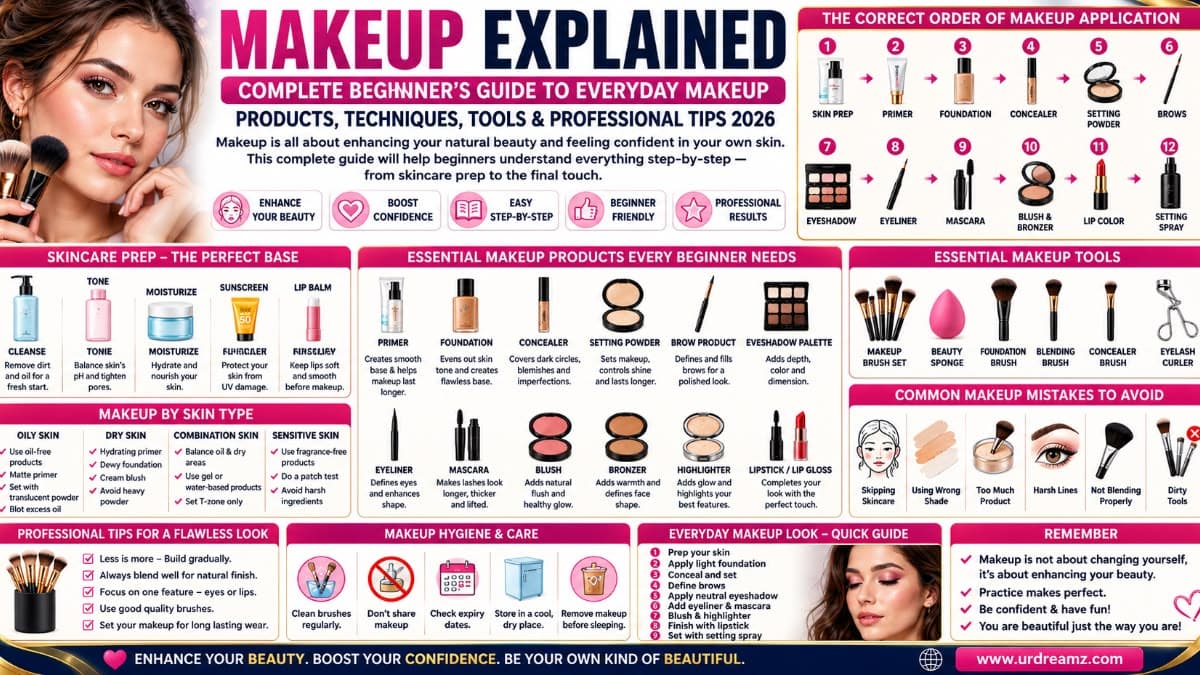
For those transitioning from skincare to makeup tips for beginners, the key is skin-first thinking. Makeup tips for a natural makeup look that complements great skin: start with a moisturiser and SPF base; use a tinted moisturiser or BB cream rather than heavy foundation; apply concealer only where needed (under eyes, over any blemishes); fill brows lightly with a brow pencil; apply a natural flush of cream blush to the cheeks; brush a light bronzer on the forehead, temples, and jawline; apply clear or tinted lip balm; and set with a light translucent powder only on the T-zone. The result is a clean girl aesthetic that looks effortlessly beautiful.
Bridal Makeup Tips — Looking Flawless on Your Wedding Day
Bridal makeup tips start months before the wedding day. Begin a dedicated skincare routine at least 3 months before: nightly retinol, daily SPF, monthly professional facials, and a clean diet with plenty of water and antioxidants. In the final week before the wedding, do not try any new products — stick to your known routine. Have a professional makeup trial at least a month before to test the look in daylight and photographs. On the day, prime your skin well, use a long-wearing foundation, set with setting spray, and bring blotting papers for touch-ups. The best bridal look starts with exceptional skin preparation.
Men's Grooming — Skincare and Hair Care Tips for Men
Men's grooming has evolved significantly. Men now understand that a basic skincare routine is not vanity — it is health. A simple but effective men's grooming routine: cleanse with a gentle face wash twice daily; moisturise morning and night; apply SPF every morning; use a targeted treatment for any specific concerns (salicylic acid for acne, niacinamide for oily skin). For hair, men benefit from the same scalp health principles: scalp massage, quality shampoo and conditioner, and a scalp oil treatment weekly. For beard care: use a beard oil to soften the beard and hydrate the skin beneath, and exfoliate the neck area regularly to prevent ingrown hairs.
Frequently Asked Questions — Skincare, Hair Care & Natural Beauty
What is the perfect skincare routine for beginners?
The perfect skincare routine for beginners consists of 4 essential steps: (1) Gentle cleanser twice daily, (2) Lightweight moisturiser suited to your skin type, (3) SPF 30+ sunscreen every morning, and (4) A targeted treatment like niacinamide for oily/acne-prone skin or hyaluronic acid for dry skin. Start with these basics and gradually add serums and treatments as your skin adjusts.
How to get glowing skin naturally at home?
To get glowing skin naturally at home: drink 8–10 glasses of water daily, eat antioxidant-rich foods, apply a honey and turmeric face mask 3 times per week, use aloe vera gel as a daily moisturiser, exfoliate twice weekly with a sugar-honey scrub, get 8 hours of sleep, exercise regularly to improve circulation, and apply vitamin C serum every morning.
What is the best home remedy to stop hair fall?
The best home remedy to stop hair fall is onion juice — apply freshly extracted juice to the scalp, leave 45 minutes, wash out. Use 3 times per week. Combine with regular scalp massage using rosemary oil (3 drops in coconut oil), weekly egg hair masks for protein, and a diet rich in iron, protein, and biotin.
How can I clear my acne fast at home?
To clear acne fast: apply diluted tea tree oil (1 drop mixed with 9 drops carrier oil) as a spot treatment nightly; use a salicylic acid or neem face wash twice daily; apply raw honey as an overnight spot treatment; never pick pimples; change your pillowcase every 2 days; avoid dairy, sugar, and processed foods; drink spearmint tea for hormonal acne; and apply aloe vera gel to reduce inflammation.
How to use aloe vera for glowing skin and hair growth?
For glowing skin: apply fresh aloe vera gel after cleansing as a serum, use daily. For hair growth: massage aloe vera gel directly into the scalp, leave for 45 minutes to 1 hour, then wash. For best results, mix with a few drops of rosemary oil. Use 3 times per week for visible results within 4–6 weeks.
How to look 10 years younger naturally?
To look 10 years younger naturally: wear SPF 30+ every single day (this alone is the most effective anti-aging measure), use retinol serum at night (start at 0.025%), apply hyaluronic acid for plumping, get 8 hours of quality sleep, eat an antioxidant-rich diet, stay hydrated, exercise regularly, avoid smoking and excessive alcohol, and do regular facial massage to improve circulation and maintain skin firmness.
What is the Korean 7 skin care method?
The Korean 7 skin method involves applying toner or a lightweight essence to your face in 7 consecutive layers. Between each application, gently pat the product into your skin and wait until it is fully absorbed before applying the next layer. The result is glass-like, intensely hydrated, plump skin. Use a hydrating, alcohol-free toner for this method.
What are the big 3 for hair regrowth?
The medically proven Big 3 for hair regrowth are: (1) Minoxidil — applied topically to stimulate follicles, (2) Finasteride — for men with DHT-related hair loss (consult a doctor), and (3) Ketoconazole shampoo — reduces scalp inflammation. Natural Big 3: (1) Rosemary oil (clinically equivalent to 2% minoxidil in studies), (2) Onion juice, and (3) Daily scalp massage.
Conclusion: Your Journey to Natural Beauty Starts Today
You now have everything you need: a complete skincare routine for beginners, the science behind glowing skin tips, the best home remedies for hair fall, a thorough understanding of aloe vera benefits for skin and hair, a complete daily beauty routine for women, proven methods for how to remove acne naturally, the most effective face masks for healthy skin, hair growth tips that actually work, awareness of common skincare mistakes to avoid, and timeless natural beauty secrets for healthy skin.
Whether you are following a Korean skincare routine, trying the 7 day skin reset, learning how to grow hair faster naturally, seeking anti-aging tips, or simply building your first basic skincare routine — the most important thing is to start. Consistency over perfection. A simple routine done daily will always outperform an elaborate one done sporadically.
Remember: true beauty begins from within. Sleep well. Eat nourishing food. Drink enough water. Manage stress. Move your body. And then support that inner health with a gentle, consistent external routine. The result? Skin that glows, hair that grows, and confidence that radiates — naturally, sustainably, and beautifully.
Bookmark this guide, share it with someone who needs it, and start your natural beauty journey today. Your best skin and hair — at any age — is absolutely within reach.