CAR-T Cell Therapy Explained: How Doctors Reprogram Your Own Immune Cells to Cure Blood Cancer
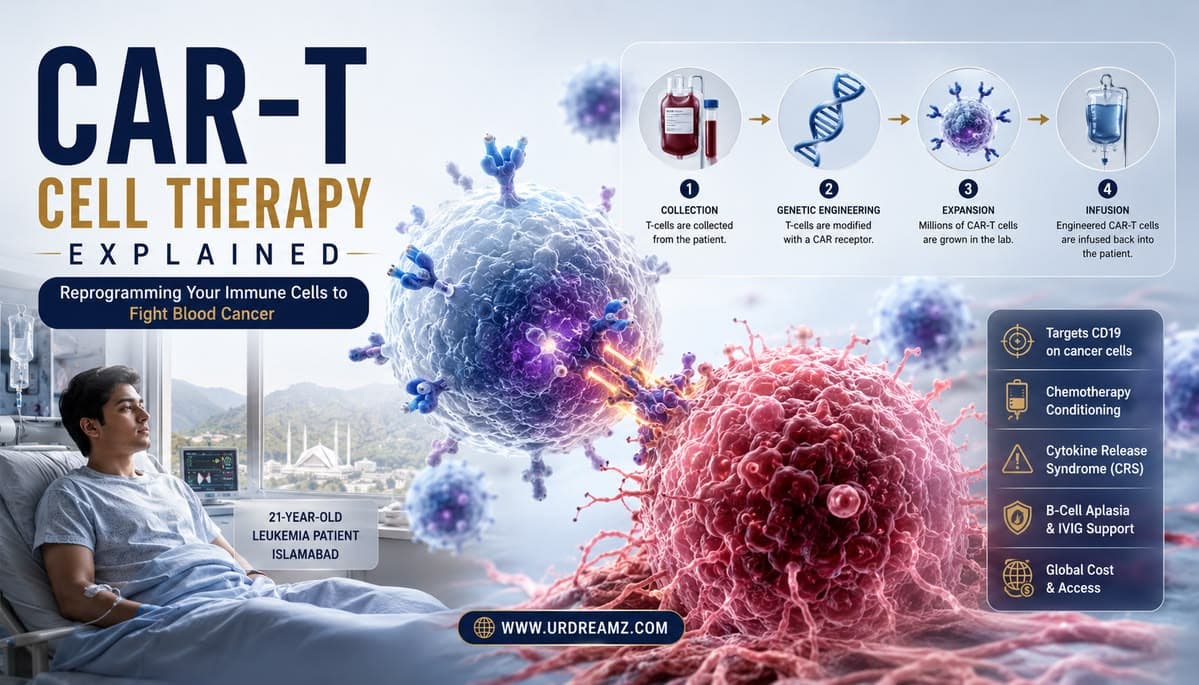
In Islamabad, Pakistan, a 21-year-old young man was diagnosed with a form of blood cancer called leukemia. Standard treatments alone were not enough. Instead, doctors turned to one of the most advanced weapons in modern oncology — a therapy that takes a patient's own immune cells, genetically reprograms them in a laboratory, and sends them back into the body as a living, targeted weapon against cancer. That therapy is called CAR-T Cell Therapy. This is the complete story of how it works — from the moment blood is drawn, to genetic engineering in a lab, to the final infusion that can put aggressive blood cancers into deep, lasting remission.
This guide walks through every stage of that journey in plain language: how a specific type of leukemia develops in the first place, why doctors reach for a patient's T-cells rather than any other cell type, how a genetically modified virus is used to install a brand-new targeting receptor onto those cells, what happens inside the body once the engineered cells are infused, the side effects that can follow, and what this life-changing treatment actually costs for families in different parts of the world, including Pakistan.
1. A Real Patient Story: Leukemia in a 21-Year-Old
A 21-year-old young man in Islamabad, Pakistan, was diagnosed with an aggressive form of blood cancer. Standard chemotherapy protocols had already been tried, and doctors were running out of conventional options. His diagnosis was a specific subtype of leukemia known as B-Cell Acute Lymphoblastic Leukemia. Rather than accepting a poor prognosis, his medical team pursued one of the most advanced cancer treatments available in the world today: CAR-T Cell Therapy. Remarkably, he recovered. His case is a real, local example of how a therapy once considered experimental and available only in the world's top cancer centers is now reaching patients in Pakistan through international medical collaboration — in his case, treatment coordinated with a center in China.
2. What Is CAR-T Cell Therapy?
CAR-T Cell Therapy stands for Chimeric Antigen Receptor T-Cell Therapy. It is a form of cancer immunotherapy that takes a patient's own T-cells — a type of white blood cell responsible for hunting down infected or abnormal cells — and genetically modifies them in a laboratory to recognize and attack cancer cells. Unlike chemotherapy or radiation, which attack cells indiscriminately, CAR-T cells are engineered to lock onto a very specific target found on the surface of cancer cells. Because the treatment uses a patient's own cells, modified and multiplied and then reintroduced into the same patient's body, it is often referred to as a "living drug" — one that can continue working and even multiply inside the body long after the initial infusion.
This approach falls under a broader category of treatment known as adoptive cell transfer, a strategy in which immune cells are collected, modified or expanded outside the body, and then returned to the patient to fight disease. What sets CAR-T apart from earlier adoptive cell transfer techniques is the precision of genetic engineering involved: rather than simply multiplying a patient's existing immune cells, scientists give those cells an entirely new, artificial targeting ability that did not exist in nature. This is also what distinguishes CAR-T from traditional cancer drugs — it is not a chemical compound at all, but a personalized, biological therapy manufactured individually for each patient using their own cellular material.
3. Understanding Leukemia: When Blood Cells Go Wrong
Leukemia is a cancer that originates in blood-forming tissue, most commonly the bone marrow. It occurs when the body produces abnormal white blood cells that fail to mature properly and multiply uncontrollably, crowding out healthy blood cells. Because white blood cells are central to the immune system, leukemia does not just create a tumor in one location — it disrupts the entire blood and immune system, circulating throughout the body from the very beginning.
Leukemia is broadly classified along two axes: how quickly it progresses, and which type of blood cell it originates from. "Acute" leukemias progress rapidly and require urgent treatment, while "chronic" leukemias tend to develop and worsen more slowly, sometimes over years. Separately, leukemia can arise from the lymphoid cell line, producing lymphocytic or lymphoblastic leukemias, or from the myeloid cell line, producing myeloid leukemias, which affect the precursors of red blood cells, platelets, and certain other white blood cells. The case discussed throughout this article — acute lymphoblastic leukemia of the B-cell lineage — sits at the intersection of "acute" and "lymphoblastic," meaning it develops quickly and originates from immature lymphoid cells, which is precisely why timely and aggressive treatment, including advanced options like CAR-T therapy, becomes so important.
4. T-Cells vs B-Cells: The Two Arms of the Immune System
White blood cells include two major categories of lymphocytes that are central to this story: T-cells and B-cells. Both originate from stem cells in the bone marrow, but they mature differently and perform very different jobs in the immune system.
| Cell Type | Primary Role | Relevance to CAR-T Therapy |
|---|---|---|
| T-Cells | Directly detect and destroy infected or abnormal cells; coordinate immune response | Extracted from the patient and genetically engineered to become CAR-T cells |
| B-Cells | Produce antibodies to fight infection | The target of the cancer in B-Cell ALL, and also the target destroyed by CAR-T cells |
In the case of B-Cell Acute Lymphoblastic Leukemia, the cancer originates specifically in the B-cell lineage. This is precisely why doctors turn to the patient's T-cells — a completely separate and unaffected immune cell population — to build the weapon that will be used against the cancerous B-cells.
5. Lymphoblast vs Lymphocyte: Where the Cancer Begins
To understand where leukemia actually goes wrong, it helps to understand the maturation stages of a B-cell. A young, immature B-cell is called a lymphoblast. As it matures and develops fully, it becomes a lymphocyte — a fully functional immune cell capable of circulating through the blood and producing antibodies. In B-Cell ALL, the lymphoblasts fail to mature into lymphocytes. Instead, they get biologically "stuck" at the immature lymphoblast stage and begin multiplying uncontrollably in this dysfunctional, immature form, flooding the bone marrow and bloodstream with cells that cannot perform any real immune function.
6. What Is B-Cell Acute Lymphoblastic Leukemia (B-ALL)?
B-Cell Acute Lymphoblastic Leukemia (B-ALL) is a cancer in which immature B-lymphoblasts multiply uncontrollably in the bone marrow and spill into the bloodstream. It is termed "acute" because it progresses rapidly, and "lymphoblastic" because it originates in lymphoblasts rather than mature lymphocytes. B-ALL is one of the most common cancers in children but also occurs in adults, and it is one of the specific cancers for which CAR-T cell therapy has shown the most dramatic results, particularly in patients who have relapsed after standard chemotherapy or stem cell transplant.
Because B-ALL originates in the bone marrow — the same tissue responsible for producing all of the body's blood cells — its symptoms often reflect a broader breakdown in normal blood function rather than a single, localized problem. Patients frequently experience persistent fatigue and pale skin due to a shortage of healthy red blood cells, unusual bruising or bleeding due to low platelet counts, and repeated infections due to a lack of functional, mature white blood cells, even though the total white blood cell count on a lab report may actually appear elevated because of the flood of non-functional lymphoblasts. Diagnosis typically involves a combination of blood tests, a bone marrow biopsy, and specialized laboratory techniques such as flow cytometry, which can confirm the presence of immature lymphoblasts and identify the specific surface markers — including CD19 — that will later become relevant if CAR-T therapy is considered.
7. Step 1: Collecting the Patient's Blood
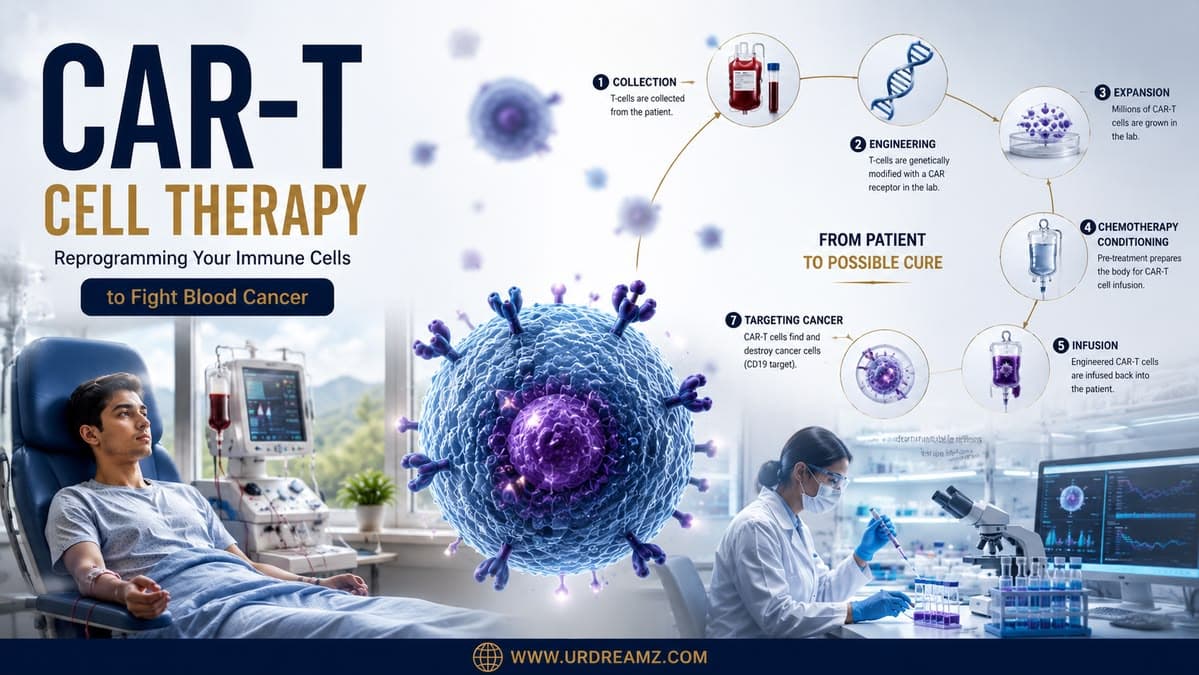
The CAR-T cell manufacturing process begins with a procedure called leukapheresis. Blood is drawn from the patient and passed through a machine that separates and collects white blood cells — including the T-cells that will later be engineered — while returning the rest of the blood components, including red blood cells and plasma, back into the patient's body. This entire collection process typically takes a few hours and does not require major surgery.
8. Step 2: Isolating T-Lymphocytes
Once the white blood cells are collected, laboratory technicians filter and separate the specific population of T-lymphocytes from the broader mixture of white blood cells, which also includes B-cells, monocytes, and other immune cell types. Only the T-cells move forward into the genetic engineering process — this is the raw material that will eventually become the CAR-T cells reinfused into the patient.
9. What Is CD19 and Why Does It Matter?
Every B-cell — whether healthy or cancerous — carries a distinctive surface protein called CD19. This protein acts almost like a name tag, present on the surface of nearly all cells in the B-cell lineage, from the earliest lymphoblast stage through to mature lymphocytes. Because CD19 is so reliably present on B-cells, and largely absent from other cell types in the body, it serves as an ideal target for engineered immune therapies. If a treatment can be built to recognize CD19, it can effectively identify and target the entire B-cell population, including the cancerous lymphoblasts responsible for B-ALL.
10. The Viral Vector: Lentivirus and Adenovirus
To genetically modify a T-cell, scientists need a delivery mechanism capable of inserting new genetic material into the cell's DNA. This is accomplished using a modified virus, known as a viral vector. Two commonly used vector types in CAR-T manufacturing are lentivirus and adenovirus. These viruses are naturally very efficient at inserting their own genetic material into host cells — a trait scientists exploit for therapeutic purposes rather than infection.
11. Genetic Engineering: Inserting the CAR Gene
Before the virus is ever introduced to a patient's T-cells, scientists first modify the virus itself. They insert a specific gene sequence into the viral DNA — one that codes for the chimeric antigen receptor, or CAR. Critically, the virus is also stripped of the genes responsible for its natural disease-causing ability, rendering it harmless while preserving its efficient gene-delivery mechanism. The result is what scientists call a genetically engineered viral vector — no longer a natural, infectious virus, but a repurposed delivery vehicle carrying a therapeutic gene.
12. What Is a Chimeric Antigen Receptor (CAR)?
A chimeric antigen receptor is an artificial, lab-designed protein receptor. The word "chimeric" refers to the fact that it is built by fusing together components from different natural proteins into a single new receptor that does not exist in nature. When this receptor sits on the surface of a T-cell, it functions like a highly specific antenna — in this case, designed to recognize and bind directly to the CD19 protein found on B-cells. This is the single innovation that transforms an ordinary T-cell into a targeted cancer-killing tool.
13. Infecting T-Cells With the Engineered Virus
Once the engineered viral vector carrying the CAR gene is ready, it is introduced to the patient's isolated T-cells in the laboratory. The virus delivers the CAR gene into the T-cell's DNA. Not every T-cell in the sample is successfully modified — some cells take up the new genetic material and begin expressing the CAR receptor on their surface, while others remain unmodified. Laboratory technicians then screen and select specifically for the T-cells that now express the CAR protein, discarding or setting aside the ones that were not successfully engineered.
14. Growing Millions of CAR-T Cells in the Lab
The successfully modified CAR-T cells — which may start as just a small handful of engineered cells — are then placed into a controlled growth environment where they are encouraged to divide and multiply. Over roughly one to two weeks, this small starting population expands into hundreds of millions of identical CAR-T cells, all carrying the same engineered CAR receptor targeting CD19. This large, uniform population is what will eventually be infused back into the patient.
15. Step 3: Chemotherapy Conditioning
Before the newly grown CAR-T cells are ever infused into the patient, a short course of chemotherapy — known as lymphodepleting conditioning chemotherapy — is administered. This is typically given through an IV drip over a few days. Unlike full-dose chemotherapy regimens aimed at directly destroying large tumor masses, this conditioning dose is specifically intended to reduce the number of existing lymphocytes in the patient's body, including the residual cancerous B-lymphoblasts circulating in the bone marrow and blood.
16. Why Conditioning Creates "Empty Space" for CAR-T Cells
The immune system operates under a form of internal regulation that limits how many lymphocytes can exist and expand at once — competing cell populations can suppress each other's growth. By clearing out a large portion of the existing lymphocyte population, including cancerous cells, the conditioning chemotherapy effectively creates biological "room," often described as immunological space or "conditioning" the body. This empty space allows the newly infused CAR-T cells to expand and multiply far more effectively once they are introduced, without being suppressed or crowded out by competing immune cells.
17. Step 4: The CAR-T Cell Infusion
Once conditioning chemotherapy is complete and the body has been prepared, the laboratory-grown CAR-T cells are infused back into the patient through an IV line, much like a blood transfusion. This single infusion may contain hundreds of millions of engineered T-cells, all carrying the CAR receptor targeting CD19. From this point forward, the CAR-T cells are inside the patient's bloodstream and begin actively searching for their target.
18. How CAR-T Cells Hunt and Destroy Cancer
Once inside the body, the CAR receptor on each engineered T-cell continuously scans nearby cells for the presence of CD19. When a CAR-T cell encounters a cell displaying CD19 on its surface — whether that cell is a cancerous lymphoblast or a normal, healthy B-lymphocyte — the CAR receptor binds tightly to it. This binding activates the T-cell's natural killing machinery, triggering it to destroy the CD19-positive cell. Because CAR-T cells can also continue dividing inside the body after infusion, their numbers can actually increase over the following days and weeks, amplifying their cancer-fighting effect well beyond the original infused dose.
Mechanistically, once the CAR receptor binds its CD19 target, it triggers an internal signaling cascade inside the T-cell that mimics the natural activation process a T-cell would normally undergo when it detects a genuine infection. This activation causes the T-cell to release cytotoxic granules containing enzymes such as perforin and granzymes, which puncture the target cell's membrane and trigger a controlled cell-death process. Because this killing mechanism is the T-cell's own natural biological weapon — simply redirected toward a new target — CAR-T cells can eliminate cancer cells with remarkable speed and efficiency once they make contact. In laboratory studies, a single activated CAR-T cell has been shown capable of destroying multiple target cells in sequence, moving on to the next CD19-positive cell shortly after completing one kill, which helps explain how a few hundred million infused cells can clear a body-wide cancer burden over a relatively short period of time.
19. Why CAR-T Cells Attack Healthy B-Cells Too
One important and unavoidable characteristic of CD19-targeted CAR-T therapy is that it cannot distinguish between a cancerous B-lymphoblast and a completely healthy, normal B-lymphocyte — both display the same CD19 marker. As a result, CAR-T cells eliminate the entire B-cell population in the body, not just the cancerous cells. While this sounds alarming, it is actually the mechanism that allows the therapy to eliminate the cancer at its root: by wiping out the entire B-cell lineage, including any hidden or dispersed cancerous lymphoblasts that might otherwise survive and cause relapse.
20. B-Cell Aplasia: The Expected Side Effect
The elimination of the entire B-cell population results in a condition called B-cell aplasia — a state in which the body temporarily produces no new B-cells at all. Because B-cells are the immune system's primary antibody producers, this leaves the patient without the ability to generate new antibodies during this period, increasing vulnerability to infections. Importantly, B-cell aplasia is not considered a dangerous malfunction — it is, in fact, viewed by doctors as a positive clinical sign, since it confirms that the CAR-T cells are actively present and working throughout the body.
Doctors routinely monitor for B-cell aplasia through follow-up blood tests, checking specifically for the presence or absence of circulating B-cells and immunoglobulin levels. As long as B-cell aplasia persists, it tells the clinical team that functional, CD19-targeting CAR-T cells remain active in the patient's system, continuously patrolling for any newly forming cancerous lymphoblasts. If, on a later blood test, the B-cell population is found to have started recovering, this can indicate that the CAR-T cells have declined in number or activity — information that helps guide decisions about whether closer surveillance for relapse, or even a second course of treatment, may be needed.
21. IVIG: Replacing Lost Antibodies
Since B-cell aplasia leaves patients without the ability to produce their own antibodies, doctors compensate by administering Intravenous Immunoglobulin (IVIG) — a treatment consisting of concentrated antibodies collected from healthy donor blood plasma, delivered directly into the patient's bloodstream through an IV line. IVIG infusions are typically given on a regular schedule, providing the patient with a temporary but functional level of antibody protection against infection while their natural B-cell population remains suppressed.
22. How Long Do CAR-T Cells Stay Active?
One of the defining features of CAR-T therapy is persistence. Unlike a drug that is metabolized and cleared from the body within hours or days, CAR-T cells can survive and remain functionally active in the bloodstream for months or even years after infusion, continuing to monitor for and eliminate any CD19-positive cells that reappear. This extended surveillance is a major reason why CAR-T therapy is associated with long-term, durable remission rather than temporary symptom control. IVIG replacement therapy typically continues throughout this entire period, only tapering off once the CAR-T cells themselves naturally decline in number and the patient's own healthy B-cell population is allowed to regenerate.
23. Cytokine Release Syndrome (CRS)
Cytokine Release Syndrome is one of the most common and well-recognized side effects of CAR-T cell therapy. As the infused CAR-T cells rapidly engage and destroy large numbers of target cells, they release a flood of inflammatory signaling molecules called cytokines into the bloodstream. This surge can trigger symptoms including high fever, low blood pressure, rapid heartbeat, and in more severe cases, difficulty breathing and organ stress. CRS typically emerges within the first one to two weeks following infusion and is closely monitored by the treating medical team, who can administer medications such as tocilizumab — a drug that blocks a specific cytokine receptor — to manage more severe cases.
24. Neurotoxicity and Brain-Related Side Effects
A second significant category of side effects involves the nervous system, sometimes referred to as Immune Effector Cell-Associated Neurotoxicity Syndrome (ICANS). Patients may experience confusion, difficulty speaking or finding words, headaches, tremors, or in rare severe cases, seizures. These neurological symptoms are believed to be linked to the same inflammatory cytokine surge responsible for CRS, and they are generally reversible and closely monitored during the critical post-infusion period, which typically requires patients to remain near a specialized treatment center for several weeks.
25. Other Risks and Side Effects
Beyond CRS and neurotoxicity, patients undergoing CAR-T therapy commonly experience low blood cell counts (cytopenias), which increase susceptibility to infection, fatigue, and low blood pressure during the acute treatment period. Because of these risks, CAR-T therapy is administered only at specialized treatment centers equipped to monitor and manage these complications around the clock during the critical weeks following infusion.
| Side Effect | What It Involves |
|---|---|
| Cytokine Release Syndrome (CRS) | High fever, low blood pressure, rapid heart rate from cytokine surge |
| Neurotoxicity (ICANS) | Confusion, speech difficulty, headache, rarely seizures |
| Low Blood Counts | Increased infection risk due to low white cells, red cells, or platelets |
| B-Cell Aplasia | Temporary loss of antibody-producing capacity, managed with IVIG |
26. Which Cancers Can CAR-T Cell Therapy Treat?
Currently, CAR-T cell therapy is approved specifically for certain blood cancers rather than solid tumors. This includes specific types of acute lymphoblastic leukemia (such as B-ALL), several forms of B-cell lymphoma including large B-cell lymphoma and mantle cell lymphoma, and multiple myeloma, which targets a different marker called BCMA instead of CD19. It is generally offered to patients whose cancer has relapsed or failed to respond to standard treatments such as chemotherapy or stem cell transplantation.
27. FDA-Approved CAR-T Cell Therapies
Several CAR-T products have received regulatory approval and are used in clinical practice around the world, each targeting specific blood cancers.
| Product Name | Target | Approved For |
|---|---|---|
| Kymriah (Tisagenlecleucel) | CD19 | B-ALL, certain lymphomas |
| Yescarta (Axicabtagene ciloleucel) | CD19 | Large B-cell lymphoma |
| Breyanzi (Lisocabtagene maraleucel) | CD19 | Large B-cell lymphoma |
| Tecartus (Brexucabtagene autoleucel) | CD19 | Mantle cell lymphoma |
| Abecma (Idecabtagene vicleucel) | BCMA | Multiple myeloma |
| Carvykti (Ciltacabtagene autoleucel) | BCMA | Multiple myeloma |
28. Success Rates: How Effective Is CAR-T Therapy?
Clinical studies have shown that CAR-T therapy can achieve deep remission even in patients whose blood cancers had already relapsed after multiple prior treatments, including chemotherapy and stem cell transplants. Many patients who receive CAR-T therapy for B-ALL or aggressive lymphomas achieve complete remission, meaning no detectable cancer remains, and a substantial proportion maintain this remission over the long term. However, outcomes vary by cancer type, disease burden at the time of treatment, and individual patient factors, and CAR-T therapy is not guaranteed to work for every patient — some cancers do return even after an initial strong response.
When cancer does return after CAR-T therapy, it typically happens through one of two mechanisms. In some cases, the CAR-T cells themselves gradually decline in number over time, losing their ability to keep newly forming cancerous cells in check — a phenomenon researchers refer to as loss of CAR-T cell persistence. In other cases, the cancer cells adapt by losing the CD19 marker altogether, a process called antigen escape, effectively becoming invisible to CAR-T cells that can only recognize that one specific target. This second mechanism is an active area of research, with scientists now developing CAR-T cells engineered to recognize two different markers simultaneously, reducing the chance that a cancer can escape detection by losing just one of them.
29. Why CAR-T Struggles Against Solid Tumors
Despite its success against blood cancers, CAR-T therapy has faced significant challenges when applied to solid tumors, such as those found in the lungs, breast, or colon. Blood cancer cells circulate freely in the bloodstream and bone marrow, making them relatively accessible to CAR-T cells. Solid tumors, by contrast, are physically dense masses often surrounded by a hostile microenvironment that can suppress immune cell activity, along with a lack of tumor-specific surface markers as reliable as CD19. Researchers are actively working on next-generation CAR-T designs intended to overcome these barriers.
Three specific obstacles are most often cited by researchers studying solid tumors. First, physical infiltration: CAR-T cells must actually travel into the dense structure of a solid tumor, which is often surrounded by a thick layer of connective tissue that can physically block immune cells from entering. Second, the tumor microenvironment itself is frequently oxygen-poor and filled with molecular signals that actively suppress T-cell activity, effectively disarming CAR-T cells even after they arrive. Third, antigen heterogeneity — the fact that different cells within the same solid tumor may express different surface markers, unlike the relatively uniform CD19 expression seen across B-cell cancers — means a single-target CAR-T cell may only be able to recognize and kill a fraction of the tumor's total cell population, allowing the rest to survive and regrow.
30. The Cost of CAR-T Cell Therapy Around the World
CAR-T cell therapy remains one of the most expensive medical treatments in the world, largely due to its highly individualized, labor-intensive manufacturing process. Costs vary significantly depending on the country and the specific product used.
| Region | Approximate Cost |
|---|---|
| United States | $5 million – $6 million (treatment package including hospital care) |
| United Kingdom / Europe | €4.5 million – €5.5 million |
| China | Approximately PKR 2.5 crore (significantly lower due to local manufacturing) |
| Pakistan (via international collaboration, e.g. with China) | Approximately PKR 4.5 crore |
| India | Approximately PKR 6–7 crore |
Note: These figures are approximate and vary widely by hospital, country, insurance coverage, and the specific CAR-T product used. Patients should always confirm current pricing directly with treating institutions.
It is also worth noting that the quoted figure for a CAR-T treatment package is rarely just the cost of the engineered cells themselves. It typically bundles together the leukapheresis collection procedure, laboratory manufacturing, the lymphodepleting conditioning chemotherapy, the hospital stay required for the infusion and the following weeks of close monitoring, any medications needed to manage side effects such as CRS or neurotoxicity, and follow-up IVIG antibody therapy for patients who develop B-cell aplasia. In countries where insurance systems or national health programs cover part or all of this cost, the out-of-pocket burden on the patient's family can be dramatically lower than the total treatment price quoted by the hospital, which is an important distinction for families researching this option.
31. Why Is CAR-T So Expensive?
The extraordinary cost of CAR-T therapy stems from several factors. Each treatment is manufactured individually for a single patient, using that patient's own cells — unlike a mass-produced pill, there is no economy of scale in the traditional sense. The manufacturing process requires highly specialized laboratory facilities, strict quality control, viral vector production, and weeks of cell culturing under sterile, regulated conditions. Additionally, the intensive hospital monitoring required during and after infusion — to manage risks like CRS and neurotoxicity — adds significantly to the overall cost of care. Countries that have developed local manufacturing capacity, such as China, have been able to substantially reduce costs by eliminating the expenses associated with importing therapy from abroad.
32. CAR-T Therapy in Pakistan: The Islamabad Case
The case of the 21-year-old patient in Islamabad illustrates how CAR-T therapy is becoming increasingly accessible outside of traditional Western medical hubs, largely through international medical partnerships. In this particular case, treatment was carried out in collaboration with a medical center in China, where local CAR-T manufacturing capabilities have significantly lowered costs compared to the United States or Europe. The total cost for this patient's treatment was reported at approximately PKR 4.5 crore — still an enormous sum for most families, but considerably more attainable than the multi-million-dollar price tags seen in Western countries. This case represents a hopeful sign that advanced cell therapies are gradually becoming more reachable for patients in South Asia.
33. Checkpoint Inhibitors: A Related but Different Approach
CAR-T therapy is often discussed alongside another major immunotherapy approach called checkpoint inhibitors. While CAR-T therapy actively engineers new receptors onto T-cells to give them a targeting ability they did not naturally have, checkpoint inhibitors work differently — they are drugs that block the "off switches" that cancer cells exploit to hide from a patient's already-existing T-cells. In simple terms, CAR-T creates entirely new hunting capability, while checkpoint inhibitors remove the disguise cancer cells use to evade detection by the immune system's normal T-cells. Both approaches fall under the broader umbrella of cancer immunotherapy, and in some treatment strategies, they may even be used in combination.
To understand why this distinction matters, it helps to know that healthy cells throughout the body naturally display certain "checkpoint" proteins that tell passing T-cells not to attack them — a safety mechanism that normally prevents the immune system from damaging the body's own healthy tissue. Some cancer cells learn to hijack this same protective signal, displaying checkpoint proteins on their own surface so that T-cells treat them as harmless and pass by without attacking. Checkpoint inhibitor drugs block this false "do not attack" signal, effectively removing the cancer's disguise and allowing the patient's own existing T-cells to recognize and attack it. Because checkpoint inhibitors work with a patient's unmodified T-cells rather than requiring laboratory engineering, they are generally far less expensive to produce than CAR-T therapy, though they are not effective against every cancer type and do not offer the same targeted precision that a CD19-specific CAR-T cell provides against B-cell cancers.
34. The Future of CAR-T and Cancer Immunotherapy
Cancer treatment is steadily shifting away from broad, toxic approaches like traditional chemotherapy toward precision, personalized therapies. Next-generation CAR-T research is exploring ways to make the therapy safer, more affordable, and effective against solid tumors — including "off-the-shelf" CAR-T products made from donor cells rather than the patient's own, which could dramatically reduce manufacturing time and cost. Researchers are also exploring combining CAR-T therapy with checkpoint inhibitors, personalized mRNA cancer vaccines, and AI-driven diagnostics that can detect cancer earlier through simple blood tests, known as liquid biopsies. Together, these advances point toward a future where immunotherapy plays an increasingly central role across many cancer types, not just blood cancers.
One particularly promising direction is the development of "armored" or "next-generation" CAR-T cells, which are engineered not only with the targeting receptor but with additional genetic modifications designed to help them resist the immune-suppressing signals that tumors — especially solid tumors — use to shut down attacking immune cells. Other research groups are working on CAR-T cells equipped with built-in safety switches, allowing doctors to deactivate the engineered cells on demand if severe side effects like CRS or neurotoxicity become dangerous, adding an extra layer of control to a therapy that currently cannot simply be "turned off" once infused. Genomic profiling and next-generation sequencing are also being used earlier in a patient's cancer journey, helping doctors identify which patients are most likely to benefit from CAR-T therapy before committing to the lengthy and expensive manufacturing process.
35. Living With CAR-T Therapy: What Happens After Treatment
Following infusion, patients typically remain close to their treatment center for several weeks so that medical staff can closely monitor for CRS and neurotoxicity, which most commonly appear within the first one to two weeks. Regular blood tests track the presence and activity of the CAR-T cells, as well as markers of B-cell aplasia. IVIG antibody replacement therapy is generally continued for as long as B-cell aplasia persists. Long-term follow-up scans and blood tests continue for months to years afterward to confirm sustained remission and to catch any early signs of relapse.
36. A Brief History of CAR-T Cell Development
The scientific journey toward CAR-T cell therapy stretches back more than three decades. The foundational concept of a chimeric antigen receptor was first proposed and tested in the late 1980s and early 1990s by researchers exploring whether a T-cell's natural receptor could be fused with an antibody-like targeting component. Early versions of these engineered receptors, sometimes called "first-generation" CARs, were able to recognize target proteins but often failed to fully activate the T-cell or persist long enough in the body to produce a lasting effect.
Over the following two decades, researchers refined the design through what are now called second- and third-generation CAR constructs, adding additional signaling components that dramatically improved the ability of engineered T-cells to survive, multiply, and sustain their attack once inside the patient. This refinement work, carried out across multiple research institutions, laid the groundwork for the first clinical trials in the early 2010s, in which children and adults with otherwise untreatable, relapsed leukemia achieved complete remission after receiving early CAR-T cell infusions. These striking early results generated global attention and accelerated regulatory review.
The first CAR-T cell therapy to receive formal regulatory approval was Kymriah, approved by the U.S. Food and Drug Administration in 2017 for pediatric and young adult patients with relapsed or refractory B-cell acute lymphoblastic leukemia — the very disease category discussed throughout this article. Since then, additional CAR-T products have received approval for a growing list of blood cancers, and the underlying technology continues to be refined at a rapid pace, with newer generations of CAR-T cells designed to be safer, more durable, and effective against an expanding range of targets.
37. CAR-T Therapy vs Bone Marrow Transplant
Before CAR-T therapy became available, patients with relapsed or treatment-resistant blood cancers were often directed toward a bone marrow transplant, also known as a hematopoietic stem cell transplant, as one of the few remaining options capable of achieving long-term remission. While both treatments aim to eliminate cancerous cells and rebuild a functioning immune system, they work through very different mechanisms and carry different risk profiles.
| Feature | CAR-T Cell Therapy | Bone Marrow Transplant |
|---|---|---|
| Cell Source | Patient's own T-cells (genetically engineered) | Donor stem cells (or occasionally the patient's own, harvested earlier) |
| Mechanism | Engineered T-cells directly target and destroy cancer cells expressing a specific marker | Donor stem cells rebuild the entire blood and immune system after high-dose chemotherapy or radiation |
| Preparation | Short course of lymphodepleting chemotherapy | Intensive, high-dose chemotherapy and/or full-body radiation |
| Major Risk | Cytokine release syndrome, neurotoxicity | Graft-versus-host disease, prolonged immune suppression |
| Recovery Time | Weeks of close monitoring | Months, with a longer period of vulnerability to infection |
In many current treatment protocols, the two approaches are not necessarily competitors but can be used sequentially — for example, a patient may receive CAR-T therapy to achieve remission, with a bone marrow transplant considered afterward in certain high-risk cases to further consolidate that remission. The decision between these approaches, or their combination, is made on a case-by-case basis by a hematology-oncology team based on the patient's specific cancer subtype, prior treatment history, and overall health.
38. Who Is Eligible for CAR-T Cell Therapy?
CAR-T cell therapy is generally not offered as a first-line treatment for newly diagnosed blood cancer. Instead, it is typically reserved for patients whose cancer has relapsed after standard chemotherapy, or who did not respond adequately to initial treatment — a category doctors describe as "relapsed or refractory" disease. Eligibility also depends on the specific cancer subtype and the presence of the target marker, such as CD19 for B-cell leukemias and lymphomas, or BCMA for multiple myeloma, confirmed through laboratory testing of a biopsy or blood sample.
Beyond the cancer itself, doctors also evaluate a patient's overall organ function, since the conditioning chemotherapy and the potential for cytokine release syndrome place real physiological demands on the heart, lungs, kidneys, and liver. Patients with severe uncontrolled infections or certain other active medical conditions may need those issues stabilized first. Because of the intensive monitoring required in the weeks following infusion, CAR-T therapy is only administered at specialized treatment centers with the necessary intensive care and neurology support readily available, which is also part of why access remains limited in many parts of the world.
39. Frequently Asked Questions
- Q1: What does CAR-T stand for?
- CAR-T stands for Chimeric Antigen Receptor T-Cell therapy, a treatment that genetically engineers a patient's own T-cells to recognize and attack cancer cells.
- Q2: Do CAR-T cells replicate in the body?
- Yes. Once infused, CAR-T cells can continue to divide and multiply inside the patient's body, which is part of what makes the therapy so effective and long-lasting.
- Q3: Do CAR-T cells release cytokines?
- Yes, as CAR-T cells engage and destroy target cells, they release cytokines, which can lead to Cytokine Release Syndrome (CRS), one of the therapy's most common side effects.
- Q4: What do CAR-T cells recognize?
- CAR-T cells recognize a specific surface protein, most commonly CD19 on B-cells (for leukemia and lymphoma) or BCMA on plasma cells (for multiple myeloma).
- Q5: Can CAR-T cell therapy be repeated?
- In some cases, a second CAR-T infusion or a different CAR-T product can be considered if the cancer relapses, though this depends on the individual patient's condition and prior response.
- Q6: Which cancers can be treated with CAR-T cell therapy?
- CAR-T therapy is currently approved for specific blood cancers, including certain types of leukemia (such as B-ALL), several forms of B-cell lymphoma, and multiple myeloma.
- Q7: Can CAR-T cell therapy cure blood cancer?
- In many cases, yes — CAR-T therapy can lead to long-term remission and is sometimes described as curative, though doctors are often cautious about using the word "cure" until a patient has remained relapse-free for several years.
- Q8: What is the biggest side effect of CAR-T therapy?
- Cytokine Release Syndrome (CRS) is the most common significant side effect, causing symptoms like high fever and low blood pressure due to a surge of inflammatory cytokines.
- Q9: How long does it take to manufacture CAR-T cells?
- The process — from collecting a patient's T-cells to infusing the final engineered product — typically takes about two to three weeks.
- Q10: Why do CAR-T cells attack healthy B-cells as well as cancerous ones?
- Because CAR-T cells target the CD19 protein, which is present on both healthy and cancerous B-cells, they cannot distinguish between the two and eliminate the entire B-cell population.
- Q11: What is B-cell aplasia?
- B-cell aplasia is a temporary condition in which the body stops producing new B-cells after CAR-T therapy, since the therapy eliminates the entire B-cell lineage, including cancerous cells.
- Q12: How is B-cell aplasia managed?
- Patients receive regular infusions of Intravenous Immunoglobulin (IVIG), which supplies donor-derived antibodies to protect against infection while the patient's own B-cells remain suppressed.
- Q13: How much does CAR-T cell therapy cost?
- Costs vary widely by country — from roughly $5–6 million in the United States, to significantly lower costs in countries like China, where local manufacturing has reduced expenses considerably.
- Q14: Why is CAR-T cell therapy so expensive?
- Each CAR-T treatment is individually manufactured for a single patient using their own cells, requiring specialized labs, viral vector production, weeks of cell culturing, and intensive post-treatment hospital monitoring.
- Q15: Why does CAR-T cell therapy work less well against solid tumors?
- Solid tumors are physically dense, surrounded by an immune-suppressing microenvironment, and often lack a single reliable surface marker like CD19, making them harder for CAR-T cells to reach and recognize compared to blood cancers.
40. Conclusion
CAR-T Cell Therapy represents one of the most remarkable achievements in modern medicine — a treatment that takes a patient's own immune cells, rebuilds them at the genetic level in a laboratory, and turns them into a precision weapon capable of hunting down cancer cells anywhere in the body. From a young patient's leukemia diagnosis in Islamabad to the intricate laboratory process of inserting a chimeric antigen receptor into T-cells using an engineered virus, every step of this therapy reflects decades of scientific progress in immunology and genetic engineering. While the treatment carries real risks — from cytokine release syndrome to B-cell aplasia — and remains extremely costly in most parts of the world, its ability to drive deep, lasting remission in patients who had run out of other options makes it one of the most important tools in the modern fight against blood cancer.
What makes this story especially meaningful is that it is no longer confined to research papers or elite hospitals in the West. Real patients, including a 21-year-old in Islamabad, are now walking, living proof that this science works outside a laboratory setting. As manufacturing costs continue to fall through local production in countries like China, as international medical collaboration expands access across South Asia, and as research pushes the boundaries of CAR-T design toward solid tumors and safer, more affordable "off-the-shelf" versions, CAR-T and the broader field of cancer immunotherapy are likely to play an even larger role in cancer care in the years ahead — offering a genuine second chance to patients who, only a decade ago, would have had nowhere else to turn.