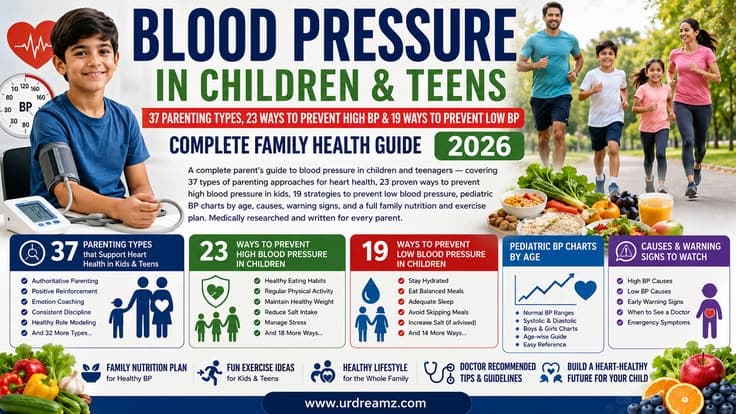
Blood Pressure in Children & Teens: 37 Parenting Types, 23 Ways to Prevent High BP & 19 Ways to Prevent Low BP — Complete Family Health Guide 2026
Most parents know their child's shoe size and favorite food — but do you know their blood pressure? High blood pressure (hypertension) now affects 2–5% of all children globally, and rates have nearly doubled in 20 years largely due to the obesity epidemic and sedentary screen-based lifestyles. This complete guide covers everything parents need: 37 detailed parenting approaches for building heart-healthy habits, 23 proven ways to prevent high BP in kids, 19 strategies to prevent low BP, pediatric blood pressure charts by age, causes, warning signs, and a full family nutrition and exercise framework.
Understanding Blood Pressure in Children — The Basics
Blood pressure in children is not a fixed number like it is for adults. It is highly personalized and depends on three factors: the child's age, gender, and height percentile. This makes childhood hypertension one of the most underdiagnosed conditions, because parents and even some clinicians apply adult thresholds to growing children.
For children under age 13, a reading is classified by comparing it to standard percentile charts. For adolescents aged 13 and over, adult thresholds apply — a reading at or above 130/80 mmHg is considered hypertension.
Pediatric Blood Pressure Classification Table
| Category | For Children Under 13 | For Adolescents 13+ | Action Required |
|---|---|---|---|
| Normal | Below 90th percentile | Below 120/80 mmHg | Maintain healthy lifestyle |
| Elevated | 90th–94th percentile | 120–129 / less than 80 mmHg | Lifestyle changes; recheck in 6 months |
| Stage 1 Hypertension | 95th–99th percentile | 130–139 / 80–89 mmHg | Doctor consultation required |
| Stage 2 Hypertension | Above 99th percentile | 140/90 mmHg or higher | Immediate evaluation and treatment |
Diagnosis requires confirmed elevated readings on at least three separate occasions. "White coat hypertension" — where anxiety in a clinic temporarily spikes BP — is common in children and must be ruled out.
Normal Blood Pressure Ranges for Children by Age
The following ranges represent typical healthy baselines in mmHg (systolic/diastolic). These are general averages — actual "normal" for your child depends on their specific height and gender percentile, which a pediatrician measures using official AAP charts.
| Age Group | Normal Systolic Range (mmHg) | Normal Diastolic Range (mmHg) | Notes |
|---|---|---|---|
| Newborns (0–28 days) | 60–76 | 31–45 | Monitored in NICU or well-baby exams |
| Infants (1–12 months) | 65–100 | 45–65 | Measured when clinically indicated |
| Toddlers (1–3 years) | 90–105 | 55–70 | Routine screening begins at age 3 |
| Preschoolers (3–5 years) | 95–110 | 60–75 | Screen at every annual well-child visit |
| School Age (6–9 years) | 95–110 | 60–73 | Any reading above 110/73 warrants monitoring |
| Pre-teens (10–12 years) | 100–119 | 65–76 | Obesity risk rises significantly at this stage |
| Early Teens (13–15 years) | 105–120 | 68–80 | Adult criteria begin to apply at 13 |
| Older Teens (16–18 years) | 110–120 | 70–80 | Treat like adults; target below 120/80 |
What Causes High Blood Pressure in Children and Teens?
Pediatric hypertension is divided into two main categories — primary and secondary. In older children and teenagers, the majority of cases are primary, driven by lifestyle. In younger children, secondary causes (underlying medical conditions) are more common.
Primary (Essential) Hypertension — Lifestyle Driven
- Obesity and Overweight: The single largest driver of childhood hypertension. Obese children are approximately 4.5 times more likely to develop elevated blood pressure. Excess fat compresses the kidneys, disrupts hormone balance, and promotes insulin resistance — all of which raise BP.
- High Sodium Diet: Kids with high-sodium diets are about 20% more likely to develop elevated BP. The biggest sources are processed snacks, fast food, pizza, canned soups, and packaged meats — not the salt shaker.
- Physical Inactivity and Excess Screen Time: Each extra hour of daily recreational screen time significantly increases the risk of hypertension in children. Research shows that 2+ hours per day nearly triples hypertension risk.
- Genetics and Family History: If one or both biological parents have hypertension, the child's risk is significantly higher.
- Chronic Stress: Academic pressure, family conflict, bullying, and social anxiety all activate the stress hormone cascade (adrenaline, cortisol), causing repeated BP spikes in teens.
- Poor Sleep: Children who consistently sleep less than recommended hours show higher BP levels than well-rested peers.
Secondary Hypertension — Medically Caused
- Chronic Kidney Disease (CKD): The most common cause of secondary hypertension in children under 10. The kidneys regulate fluid and sodium; when damaged, BP rises.
- Coarctation of the Aorta: A congenital heart defect where the aorta is narrowed, restricting blood flow and raising upper-body BP.
- Obstructive Sleep Apnea: Repeated nighttime breathing interruptions spike BP through sympathetic nervous system overactivation.
- Endocrine Disorders: Thyroid disease, Cushing's syndrome, and primary aldosteronism all cause secondary hypertension.
- ADHD Medications and Stimulants: Methylphenidate and amphetamine-based medications can raise BP and should be monitored.
- Birth Control Pills: Estrogen-containing oral contraceptives are a documented cause of hypertension in teenage girls.
Warning Signs of High Blood Pressure in Children and Teens
Childhood hypertension is almost always silent — most children feel completely normal even with significantly elevated readings. Symptoms, when they do appear, usually signal a severe or rapidly developing case. Parents should watch for:
| Warning Sign | Age Group Most Affected | Why It Happens | Parent Action |
|---|---|---|---|
| Frequent or persistent headaches (especially morning) | School-age to teens | Elevated intracranial pressure from high BP | Measure BP; see pediatrician if recurring |
| Unexplained nosebleeds | All ages | High pressure bursting fragile nasal vessels | Monitor BP; consult doctor if frequent |
| Blurred or fuzzy vision | Older children and teens | Hypertensive retinopathy — vessel damage in eyes | Urgent: seek pediatric evaluation |
| Dizziness or lightheadedness | Teens | Fluctuating BP or reduced cerebral blood flow | Rest; measure BP; doctor if recurring |
| Shortness of breath with minimal activity | Overweight/obese children | Heart and lungs under strain from elevated pressure | Seek medical evaluation |
| Chest tightness or palpitations | Teens | Heart muscle working against high vascular resistance | Emergency evaluation if severe |
| Persistent fatigue and poor concentration | School-age to teens | Brain receiving suboptimal oxygenated blood flow | Check BP; review sleep and diet |
| Seizures or sudden confusion (hypertensive crisis) | Younger children with severe secondary HTN | Acute hypertensive encephalopathy | EMERGENCY — call 911 immediately |
Critical Rule for Parents: Because hypertension rarely shows symptoms in children, routine blood pressure screening at every annual well-child visit starting at age 3 is the only reliable detection method. Never wait for symptoms — they appear only when things are already serious.
37 Types of Parenting for Raising Heart-Healthy Children
Parenting style profoundly shapes a child's relationship with food, exercise, stress, and health behaviors. The following 37 parenting approaches — each distinct in focus — work together to build a child who grows up with strong cardiovascular habits and a healthy relationship with their own body.
Group 1: Foundation Parenting Styles (1–8)
1. Authoritative Parenting
The most heart-health-promoting style overall. Authoritative parents set clear, consistent rules about diet and screen time while remaining warm and explaining the "why" behind each rule. Children raised this way develop better self-regulation around food and are significantly less likely to become obese.
2. Gentle Parenting
Focuses on empathy and cooperation rather than commands. Gentle parents model healthy eating by genuinely enjoying nutritious food themselves and involving children in meal preparation — creating intrinsic motivation rather than forced compliance.
3. Positive Parenting
Uses encouragement and praise to reinforce healthy behaviors. Instead of punishing unhealthy food choices, positive parents celebrate small wins — finishing a vegetable, drinking water instead of soda, going for a walk — building lasting associations between healthy habits and positive feelings.
4. Attachment Parenting
Prioritizes strong emotional bonding from infancy. Attachment-parented children tend to have lower anxiety and stress levels, which translates to lower cortisol and better blood pressure regulation throughout childhood and adolescence.
5. Mindful Parenting
Parents practice being fully present during meals, creating a calm, distraction-free eating environment. Mindful family meals are associated with better food choices, appropriate portion sizes, and lower rates of childhood obesity — all directly reducing hypertension risk.
6. Conscious Parenting
Parents focus on their own health behaviors first, recognizing that children mirror adult habits. A conscious parent who exercises regularly, eats vegetables visibly, and manages stress well gives children a living blueprint for a heart-healthy lifestyle.
7. Permissive Parenting
Characterized by few rules and high indulgence. Research consistently links permissive parenting to higher rates of childhood obesity, poor dietary habits, and elevated BP — largely because children are given unlimited access to high-calorie, high-sodium processed foods and unrestricted screen time. Understanding this risk helps parents consciously add structure around food and activity.
8. Authoritarian Parenting
Strict rule enforcement without explanation or warmth. While it may successfully limit junk food access at home, it can create unhealthy relationships with food — leading to overeating outside the home and emotional eating during teen years. Balance is essential.
Group 2: Nutrition-Focused Parenting (9–16)
9. Food-Positive Parenting
Never labels foods as "bad" or uses food as punishment/reward. Food-positive parents present all foods neutrally while emphasizing the joy of whole, colorful foods. This reduces the psychological "forbidden fruit" effect that causes binge eating in teens.
10. Intuitive Eating Parenting
Teaches children to recognize and respect their own hunger and fullness signals. Children who eat intuitively maintain healthier weights as they grow, directly reducing hypertension risk. Avoid forcing children to finish every last bite — this overrides satiety signals.
11. DASH Diet Parenting
Structures the family's entire diet around the Dietary Approaches to Stop Hypertension principles — whole grains, fruits, vegetables, low-fat dairy, lean protein, and strict sodium limits. The DASH diet is the most clinically proven dietary approach for preventing and treating pediatric hypertension.
12. Low-Sodium Parenting
Actively reads nutrition labels, avoids processed foods, and cooks from scratch using herbs and spices instead of salt. Children ages 2–3 should consume less than 1,200 mg of sodium daily; ages 4–8 less than 1,500 mg. Each gram of sodium reduction meaningfully lowers BP.
13. Potassium-Rich Parenting
Consistently incorporates potassium-rich foods — bananas, sweet potatoes, avocados, spinach, oranges, and lentils — into family meals. Potassium is the natural antagonist to sodium and one of the most powerful dietary tools for blood pressure control in children.
14. Meal-Planning Parenting
Dedicates time each week to plan family meals, create shopping lists, and batch-cook healthy ingredients. Meal-planned families eat less fast food, less processed food, and more whole vegetables and grains — all directly protective against hypertension.
15. Food-Label Parenting
Teaches children from a young age how to read Nutrition Facts labels — checking sodium content, added sugars, and serving sizes. A child who understands labels by age 10 will make far better independent food choices throughout their teen years.
16. Garden Parenting
Grows herbs, vegetables, or fruits at home — even in small pots or window boxes. Research consistently shows that children who grow their own food are dramatically more willing to eat it. Fresh homegrown vegetables contain no added sodium and are among the most heart-protective foods available.
Group 3: Physical Activity Parenting (17–22)
17. Active Role-Model Parenting
Parents who exercise visibly and consistently raise children who are 3 times more likely to be physically active themselves. Children watch parents more closely than they listen to them. An active parent is the most powerful predictor of an active child.
18. Outdoor-Priority Parenting
Prioritizes outdoor play, nature walks, parks, and unstructured physical activity over indoor screen entertainment. Children who spend more time outdoors have lower BMIs, healthier blood pressure levels, and better mental health outcomes than those who are primarily sedentary indoors.
19. Screen-Limiting Parenting
Sets firm, consistent limits on recreational screen time. The American Academy of Pediatrics recommends no screen time (except video calls) for children under 2; limited and supervised use for ages 2–5; and no more than 2 hours per day of recreational screen time for children 6 and older. Each hour over this threshold significantly increases cardiovascular risk.
20. Sports-Encouraging Parenting
Actively facilitates children's participation in team sports, martial arts, swimming, cycling, or dance. Organized sports combine aerobic exercise, strength building, stress relief, and social development — creating multiple simultaneous cardiovascular benefits.
21. Family Activity Parenting
Integrates physical activity into family culture — evening walks, weekend hikes, cycling trips, family yoga, or active vacations. When movement is presented as something families do together for fun rather than as punishment or chore, children adopt it as a lifelong identity.
22. Sleep-Structure Parenting
Establishes consistent, age-appropriate bedtime routines with fixed sleep and wake times. Children need 9–12 hours of sleep; teens need 8–10 hours. Adequate sleep is one of the most underappreciated cardiovascular protectors — it allows the BP "nocturnal dip" that rests the heart each night.
Group 4: Emotional and Stress Parenting (23–30)
23. Stress-Aware Parenting
Recognizes that childhood and teen stress is a real physiological threat, not just an emotional one. Academic pressure, social anxiety, family conflict, and bullying all elevate cortisol levels in children — chronically raising heart rate and blood pressure. Stress-aware parents create open, non-judgmental space for children to process difficult emotions.
24. Emotional Coaching Parenting
Teaches children to name, understand, and regulate their emotions rather than suppressing or reacting to them. Children with strong emotional regulation skills have measurably lower cortisol levels and better autonomic nervous system function — meaning their BP responds more moderately to stressors.
25. Boundary-Setting Parenting
Protects children from overcommitment — too many extracurriculars, excessive homework pressure, and unrealistic expectations. Chronic time pressure is a proven driver of sympathetic nervous system overactivation and elevated BP in adolescents.
26. Gratitude Parenting
Regularly practices and models gratitude — through journals, dinner conversations, or simple acknowledgment of good things. Gratitude practices are clinically associated with lower cortisol, better sleep, and reduced cardiovascular stress markers in both children and adults.
27. Nature-Based Parenting
Regularly exposes children to natural environments — parks, gardens, forests, or even houseplants. Spending time in nature demonstrably lowers cortisol, reduces heart rate, and improves blood pressure in children within minutes of exposure. Called "green prescriptions" in some medical contexts.
28. Mindfulness-Modeling Parenting
Practices and teaches basic breathing exercises, meditation, or progressive muscle relaxation to children. Even 5 minutes of controlled breathing (inhale 4 seconds, hold 2, exhale 6) daily significantly reduces sympathetic nervous system activation in children with anxiety-related BP elevation.
29. Routine Parenting
Establishes predictable daily routines for meals, sleep, homework, play, and relaxation. Predictability is profoundly stress-reducing for children — the nervous system functions best when it can anticipate what comes next. Chaotic households with irregular schedules produce chronically stressed, cortisol-elevated children.
30. Anti-Toxic-Stress Parenting
Actively shields children from adverse childhood experiences (ACEs) — domestic violence, substance abuse, severe neglect, or chronic family conflict — which are among the most powerful predictors of adult hypertension. Addressing family stressors proactively protects children's cardiovascular systems for decades.
Group 5: Medical and Monitoring Parenting (31–37)
31. Proactive Health Parenting
Schedules and attends all recommended well-child visits, ensuring BP is measured annually from age 3. Does not wait for symptoms before seeking evaluation, since childhood hypertension is by definition almost always symptom-free.
32. Family History Parenting
Actively knows and tracks the family's cardiovascular health history — including grandparents. Shares this information with the pediatrician, as family history of hypertension, early heart disease, or stroke significantly increases a child's screening priority and clinical risk level.
33. Weight-Awareness Parenting
Monitors children's growth curves (height-for-weight) at every well-child visit without creating shame or anxiety around body size. When a child's BMI consistently tracks above the 85th percentile for their age and gender, cardiovascular risk screening intensifies significantly.
34. Medication-Monitoring Parenting
If a child is prescribed ADHD medications, corticosteroids, birth control pills, or decongestants, actively ensures BP is monitored regularly — as these medications are documented causes of secondary hypertension in children and teens.
35. Kidney-Aware Parenting
Understands that chronic kidney disease is the most common underlying cause of secondary hypertension in young children. If a child has recurrent urinary tract infections, unexplained swelling, or a family history of kidney disease, proactive renal screening is essential.
36. Collaborative Parenting
Works as an equal partner with the child's pediatrician, dietitian, and school health team. Shares all medications, supplements, and observed symptoms at every visit. Collaborative parents produce the best clinical outcomes because no single provider has the full picture without parental input.
37. Educative Parenting
Teaches children about blood pressure in age-appropriate ways from an early age — what it is, why it matters, and how their daily choices affect it. A teenager who understands that every bag of chips raises their salt load or every hour of gaming raises their sitting time is equipped to make better choices independently when parents are not present.
23 Proven Ways to Prevent High Blood Pressure in Children
These 23 prevention strategies are grounded in guidelines from the American Academy of Pediatrics (AAP), American Heart Association (AHA), World Health Organization (WHO), and Mayo Clinic. They are most powerful when applied consistently together as a family lifestyle — not as isolated interventions.
Dietary Prevention (1–8)
1. Strictly Limit Daily Sodium Intake
Sodium is the number one dietary driver of childhood hypertension. For children ages 2–3, the daily limit is 1,200 mg; ages 4–8, 1,500 mg; ages 9–13, 1,800 mg; and teens, under 2,300 mg. More than three-quarters of a child's sodium comes from processed and packaged foods — not home cooking. Read every label.
2. Adopt the DASH Diet as a Family
The DASH (Dietary Approaches to Stop Hypertension) eating plan is the most clinically proven dietary approach for preventing and managing pediatric hypertension. It emphasizes 4–5 daily servings each of fruits and vegetables, whole grains, low-fat dairy, and limits saturated fats and added sugars. Research shows it can reduce blood pressure by up to 11 mmHg systolic.
3. Load Up on Potassium-Rich Foods
Potassium works directly against sodium to relax blood vessel walls and regulate fluid balance. Incorporate daily: bananas, avocados, sweet potatoes, spinach, oranges, lentils, yogurt, and beans. Aim for 3,500–5,000 mg of potassium per day across the family.
4. Increase Magnesium and Calcium Intake
Both minerals help blood vessels relax and regulate heart function. Excellent sources include low-fat dairy products (calcium), leafy greens like Swiss chard and spinach (magnesium), almonds, pumpkin seeds, and whole grains. Most children in processed-food-heavy households are deficient in both.
5. Eliminate Sugary Drinks Completely
Sodas, fruit juices, energy drinks, and sports drinks flood the body with excess fructose, which raises uric acid levels and impairs nitric oxide production in blood vessels — making them stiffer and raising BP. Replace all sugary drinks with water, plain milk, or unsweetened herbal teas.
6. Reduce Processed and Packaged Food Consumption
Processed foods — chips, instant noodles, packaged bread, canned soups, frozen meals, fast food — are the primary sources of both excess sodium and unhealthy fats in children's diets. Gradually replace packaged snacks with whole alternatives: fresh fruit, raw vegetables with hummus, unsalted nuts, and homemade options.
7. Cook at Home Consistently
Home-cooked meals give parents complete control over sodium, fat, sugar, and portion size. Children who regularly eat home-cooked meals have significantly lower rates of obesity and hypertension than those who frequently eat processed or restaurant food. Cook in batches on weekends to make weeknight meals easier.
8. Introduce Heart-Healthy Omega-3 Foods
Fatty fish (salmon, tuna, mackerel), walnuts, flaxseeds, and chia seeds are rich in omega-3 fatty acids that reduce arterial inflammation, improve blood vessel flexibility, and lower blood pressure. Aim for 2 servings of fatty fish per week for the family.
Physical Activity Prevention (9–14)
9. Ensure 60 Minutes of Daily Physical Activity
Children and teenagers (ages 6–17) need at least 60 minutes of moderate-to-vigorous physical activity every single day, according to the CDC and WHO. This includes aerobic activities that raise the heart rate — running, cycling, swimming, dancing, or active sports. This daily habit is the most powerful single lifestyle tool for preventing childhood hypertension.
10. Limit Recreational Screen Time to 2 Hours Maximum
Recreational screen time beyond 2 hours per day — including TV, video games, social media, and non-educational apps — is independently associated with higher BP, weight gain, poor sleep, and metabolic syndrome in children. Research shows that each additional 50 minutes of daily screen time increases hypertension risk by up to 17%.
11. Prioritize Aerobic Exercise for Teens
Aerobic exercise is the most powerful exercise modality for lowering blood pressure. Brisk walking, jogging, cycling, swimming, or playing team sports reduces systolic BP by 5–8 mmHg with consistent practice. For teens with elevated BP, 30–60 minutes of aerobic activity daily is recommended as a first-line non-drug intervention.
12. Include Muscle-Strengthening Activities
Resistance exercises — climbing, bodyweight exercises, gymnastics, and resistance bands — should be included at least 3 days per week. Building lean muscle mass improves insulin sensitivity, body composition, and metabolic function, all of which indirectly reduce hypertension risk.
13. Break Up Long Periods of Sitting
Sitting continuously for more than 60 minutes without movement is harmful regardless of how much a child exercises otherwise. During homework, screen time, or car journeys, build in mandatory 5–10 minute movement breaks every hour. Even brief walks or standing significantly offset the cardiovascular harm of prolonged sitting.
14. Make Physical Activity Fun and Social
Children who enjoy exercise continue it for life. Prioritize activities based on what the child genuinely loves — dance, martial arts, skateboarding, rock climbing, swimming, or team sports. Never use exercise as punishment, which creates lifelong negative associations with physical activity.
Weight and Metabolic Prevention (15–18)
15. Maintain a Healthy BMI-for-Age
Overweight children (BMI at or above the 85th percentile) are 4.5 times more likely to develop elevated blood pressure. Achieving and maintaining a healthy weight is the single most effective non-drug treatment for childhood hypertension. Even small amounts of weight loss — as little as 5% of body weight — produce measurable BP reductions.
16. Monitor Growth at Every Well-Child Visit
Track your child's height, weight, and BMI-for-age percentile at every annual checkup. Consistent tracking allows early identification of unhealthy weight trajectories before hypertension develops. Ask your pediatrician to plot growth on the standard CDC growth charts at every visit.
17. Address Insulin Resistance Early
Insulin resistance — common in overweight children — drives sodium retention, sympathetic nervous system activation, and BP elevation. A diet low in added sugars and refined carbohydrates, combined with regular exercise, is the most effective prevention for insulin resistance and its cardiovascular consequences.
18. Prevent and Screen for Sleep Apnea
Obstructive sleep apnea in children — often caused by enlarged tonsils and adenoids combined with obesity — is one of the most underdiagnosed causes of childhood hypertension. Warning signs include habitual snoring, gasping or pausing during sleep, and extreme daytime fatigue. If observed, refer for a pediatric sleep study.
Lifestyle and Environmental Prevention (19–23)
19. Ensure Age-Appropriate Sleep Hours
Children aged 6–12 need 9–12 hours of sleep per night; teens need 8–10 hours. During sleep, blood pressure naturally dips by 10–20% — a critical cardiovascular recovery period. Chronic sleep deprivation eliminates this dip, keeping BP elevated continuously and significantly raising hypertension risk.
20. Teach and Model Stress Management
Chronic stress in children and teens — from academic pressure, social anxiety, family conflict, or trauma — elevates cortisol and adrenaline, repeatedly raising BP. Teach age-appropriate stress management tools: deep breathing, journaling, mindfulness, talking to trusted adults, creative outlets, and regular outdoor time.
21. Eliminate Exposure to Tobacco and Secondhand Smoke
Children exposed to secondhand smoke experience accelerated vascular damage, increased oxidative stress, and elevated blood pressure even without direct smoking. If anyone in the household smokes, quitting completely is one of the most powerful cardiovascular gifts a parent can give their child.
22. Conduct Annual BP Screenings from Age 3
The American Academy of Pediatrics recommends measuring blood pressure at every routine well-child visit starting at age 3. For high-risk children — those with obesity, family history, kidney disease, or premature birth — screening should begin even earlier. Never assume a healthy-looking child has normal BP.
23. Create a Heart-Healthy Home Environment
Stock the kitchen with whole foods, fruits, and vegetables; remove sugary drinks and processed snacks from the home entirely; limit screen time through household rules and physical barriers (no phones at dinner, no TVs in bedrooms); create outdoor spaces for active play; and model the healthy behaviors you want your child to adopt. The environment shapes behavior — make the healthy choice the easy choice.
19 Ways to Prevent Low Blood Pressure (Hypotension) in Children
While high blood pressure receives most of the attention, low blood pressure (hypotension) is equally important to prevent and manage in children. Below 90/60 mmHg in adolescents, or below the 5th percentile in younger children, low BP can deprive the brain and organs of adequate oxygen — causing dizziness, fainting, extreme fatigue, and in severe cases, shock. These 19 strategies help prevent and manage hypotension in children and teens.
| # | Prevention Strategy | How It Helps | Best For |
|---|---|---|---|
| 1 | Maintain Adequate Daily Hydration | Adequate fluid intake ensures blood volume remains sufficient to maintain normal BP. Children should drink 1.5–2 liters of water daily; more in hot weather or during exercise. | All ages; especially active and outdoor children |
| 2 | Encourage Gradual Position Changes | Orthostatic hypotension (sudden BP drop when standing) is common in teens. Teaching children to sit up slowly before standing — especially after lying down — prevents the sudden head rush that causes fainting. | Teens; children on medications |
| 3 | Eat Small, Frequent Meals | Large meals trigger significant blood flow to the digestive system, temporarily reducing BP elsewhere. Smaller, more frequent meals prevent the post-meal BP drop (postprandial hypotension) that causes dizziness in some children. | Teens with recurring dizziness after meals |
| 4 | Include Adequate Sodium in Diet | Unlike hypertension management, children with hypotension may benefit from slightly higher sodium intake to help retain fluid and maintain blood volume. Consult a pediatrician before adjusting sodium for a hypotensive child. | Children diagnosed with clinical hypotension |
| 5 | Wear Compression Stockings During Prolonged Standing | Graduated compression stockings prevent blood from pooling in the legs during long periods of standing — a common trigger for vasovagal syncope (fainting) in teens at school assemblies, sports events, and long queues. | Teens prone to fainting while standing |
| 6 | Increase Salt Intake During Heat and Exercise | During hot weather or intense athletic activity, children lose significant sodium through sweat. This sodium loss reduces blood volume and BP. Replacing electrolytes through slightly salted foods or electrolyte drinks (not sugary sports drinks) during prolonged exercise prevents hypotension. | Active children and teen athletes |
| 7 | Treat Underlying Anemia | Iron-deficiency anemia is a common cause of low BP in children, particularly teenage girls. Low hemoglobin reduces blood's oxygen-carrying capacity and drops overall BP. A blood test can confirm anemia; iron-rich foods (red meat, lentils, fortified cereals) and supplements correct it. | Teenage girls; vegetarian children |
| 8 | Ensure Adequate Vitamin B12 and Folate | Deficiencies in B12 and folate impair red blood cell production, leading to anemia and low BP. Include eggs, dairy, meat, and fortified grains. Vegetarian families should supplement B12 proactively. | Vegetarian and vegan families |
| 9 | Monitor Medications that Lower BP | ADHD medications (particularly non-stimulant types), antidepressants, antihypertensive drugs, and some antihistamines can lower BP as a side effect. If a child on medication experiences recurrent dizziness, lightheadedness, or fainting, discuss dose or timing adjustments with the prescribing physician. | Children on regular medications |
| 10 | Treat and Manage Dehydrating Illnesses Promptly | Vomiting, diarrhea, and high fever rapidly deplete fluid and electrolytes — the most common acute cause of hypotension in children. Early oral rehydration (water with small amounts of salt and sugar) prevents BP from dropping to dangerous levels during illness. | All ages; especially toddlers |
| 11 | Recognize and Address Eating Disorders | Anorexia nervosa and bulimia nervosa cause severe electrolyte imbalances and nutritional deficiencies that drop BP dangerously. These conditions are rising among teenage girls and boys. Early recognition and professional treatment is critical — both for the mental health condition and its cardiovascular consequences. | Teenage girls and boys; pre-teens showing food restriction |
| 12 | Prevent Prolonged Standing in Heat | Prolonged standing in hot, enclosed environments (classrooms without air conditioning, outdoor assemblies) is a common trigger for vasovagal fainting in children. Regular movement, cool environments, and pre-hydration prevent BP drops in these situations. | School-age children and teens |
| 13 | Screen for Adrenal and Thyroid Disorders | Addison's disease (adrenal insufficiency) and hypothyroidism are rare but important secondary causes of low BP in children. If a child has persistent, unexplained low BP with fatigue, weight changes, or skin darkening, hormonal evaluation is warranted. | Children with persistent unexplained hypotension |
| 14 | Address Cardiac Causes | Bradycardia (abnormally slow heart rate), certain arrhythmias, and structural heart conditions reduce cardiac output and BP. Unexplained low BP in a child with a heart murmur or family history of arrhythmias warrants pediatric cardiology evaluation. | Children with known or suspected heart conditions |
| 15 | Recognize Signs of Vasovagal Syncope in Teens | Vasovagal syncope — fainting triggered by emotional stress, pain, blood, or prolonged standing — is the most common cause of fainting in teenagers. It is benign but frightening. Teaching teens to recognize warning signs (lightheadedness, nausea, tunnel vision) and immediately sit or lie down before fainting prevents injury. | Teenagers; common in girls aged 12–18 |
| 16 | Ensure Adequate Caloric Intake for Growth | Children and teens in rapid growth phases have high caloric and nutritional needs. Insufficient caloric intake — whether from restrictive eating, food insecurity, or excessive dieting — reduces blood volume and causes functional hypotension. Ensure children eat sufficient, balanced meals for their age and activity level. | Growing teens; children in growth spurts |
| 17 | Prevent Overheating During Exercise | Vigorous exercise in hot weather causes extensive vasodilation throughout the body as it attempts to cool itself, potentially dropping BP. Ensure children exercise in cool environments or early morning/evening, wear breathable clothing, and hydrate before, during, and after physical activity. | Young athletes; outdoor-active children |
| 18 | Manage Severe Allergic Reactions Proactively | Anaphylaxis — a severe allergic reaction to food, insect stings, or medications — causes a catastrophic BP drop that is life-threatening. Children with known severe allergies should carry an epinephrine auto-injector (EpiPen) at all times, and parents, teachers, and caregivers should know how to use it. | All children with known severe allergies |
| 19 | Schedule Regular Pediatric Blood Pressure Monitoring | Just as with high BP, low BP is often silent and discovered only through measurement. Routine BP monitoring at all well-child visits catches sustained hypotension before it causes symptoms or organ compromise. Any reading consistently below the 5th percentile for age, height, and gender deserves investigation. | All children ages 3 and above |
Family Nutrition Guide for Preventing Blood Pressure Problems
What a family eats together determines cardiovascular risk more powerfully than almost any other modifiable factor. These are the core nutritional principles every family should follow:
| Food Category | Best Heart-Healthy Options | Avoid or Minimize | Why It Matters for BP |
|---|---|---|---|
| Vegetables | Spinach, kale, broccoli, sweet potatoes, tomatoes, carrots | Canned vegetables with added salt; pickled vegetables | Rich in potassium, magnesium, and nitrates that lower BP |
| Fruits | Bananas, berries, oranges, kiwi, watermelon, avocados | Fruit juices with added sugar; canned fruit in syrup | Potassium, antioxidants, and anti-inflammatory compounds |
| Grains | Oats, brown rice, whole wheat bread, quinoa, barley | White bread, instant noodles, refined crackers, white rice | Whole grains reduce arterial stiffness; refined grains spike insulin |
| Protein | Salmon, tuna, chicken breast, lentils, beans, eggs | Processed meats (bacon, sausage, hot dogs), deli meats | Omega-3 fatty acids reduce inflammation; processed meats load sodium |
| Dairy | Low-fat yogurt, skim milk, low-fat cheese | Full-fat cheese, cream, butter, flavored milks | Calcium and probiotics in low-fat dairy lower BP |
| Fats and Oils | Olive oil, avocado oil, flaxseed, walnuts | Palm oil, coconut oil, margarine, fried foods, trans fats | Unsaturated fats improve arterial flexibility |
| Drinks | Water, plain milk, hibiscus tea, unsweetened green tea | Sodas, energy drinks, fruit juices, sports drinks | Sugary drinks raise insulin, weight, and BP; water maintains blood volume |
| Snacks | Unsalted nuts, fresh fruit, raw vegetables with hummus | Chips, pretzels, packaged biscuits, candy, sweetened cereals | Processed snacks are the primary hidden sodium sources in children's diets |
When Parents Should Seek Medical Help
Despite being primarily a preventable condition, pediatric hypertension sometimes requires urgent or emergency medical intervention. Seek immediate care if your child experiences:
- A confirmed BP reading at or above 180/120 mmHg on two consecutive checks five minutes apart
- Seizures, sudden severe vomiting with headache, sudden loss of balance or coordination, or facial drooping
- Fainting, especially during or immediately after exercise (potential cardiac arrhythmia)
- Persistent chest pain or pressure with shortness of breath
- A sudden severe headache described as "the worst headache of my life"
For routine concerns — consistent readings above normal, unexplained headaches, suspected medication side effects, or family history questions — schedule a standard pediatric appointment rather than an emergency visit. Bring a log of any readings you have taken at home to assist the doctor's assessment.
Conclusion — Heart Health Starts at Home
The habits children learn at home between ages 2 and 18 set the trajectory for their cardiovascular health for the rest of their lives. Blood pressure, once thought of as an adult problem, is now clearly recognized as a pediatric concern — one that is almost entirely preventable through consistent, loving, informed parenting.
The 37 parenting approaches in this guide are not rigid rules — they are a menu of evidence-based strategies that you can adapt to your family's culture, resources, and values. The 23 ways to prevent high BP and 19 ways to prevent low BP are your practical toolkit, most powerful when applied not as occasional interventions but as the fabric of daily family life.
Your child's heart health is not determined by genetics alone. It is built meal by meal, step by step, and conversation by conversation — starting today.