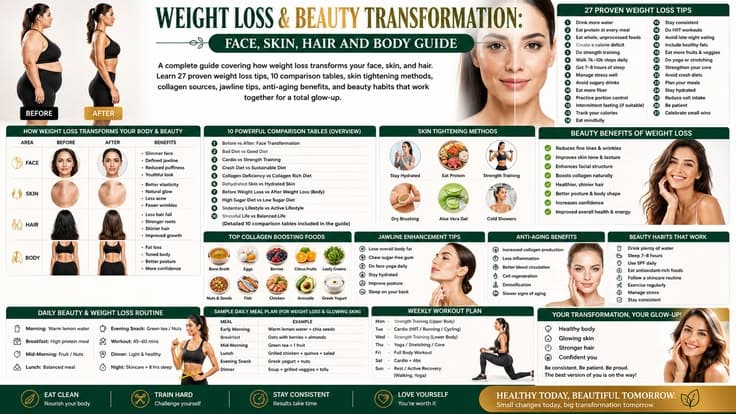
Weight Loss and Beauty Transformation: Face, Skin, Hair and Body Complete Guide
Weight loss is not just about a smaller number on the scale. It changes your face, transforms your skin, affects your hair, reshapes your body, and rebuilds your confidence from the inside out. This guide covers everything you need to know to make your transformation beautiful from every angle.
Introduction: The Beauty Side of Weight Loss Nobody Talks About
When most people think about weight loss, they picture a slimmer waistline or a lower number on the bathroom scale. But the real transformation goes much deeper than that. Losing excess body fat affects nearly every part of your appearance — your face looks more defined, your skin can glow or sag depending on how you lose the weight, your hair may change in thickness, and your body reshapes itself in ways that both excite and surprise people.
Understanding exactly what happens to your face, skin, hair, and body during and after weight loss allows you to prepare for these changes, prevent the ones you do not want, and maximize the beauty benefits you are working hard for. This guide brings together the latest research and practical advice on every aspect of weight loss and beauty transformation, from preventing Ozempic Face to building a jawline, from foods that make your skin glow to the supplements that tighten loose skin.
For those seeking additional natural support alongside these strategies, herbal and natural wellness guidance is available. You can reach a qualified wellness advisor directly on WhatsApp at +923471936923 for personalized herbal weight loss and beauty support.
27 Proven Weight Loss Tips (Highlighted)
These are the most effective, research-backed tips for losing weight in a way that protects your appearance, preserves your hair and skin, and builds lasting results.
Nutrition Tips
Tip 1 — Create a Moderate Calorie Deficit: Eat 300 to 500 fewer calories than you burn each day. This pace produces approximately half a kilogram of fat loss per week without triggering the metabolic slowdown and skin sagging that comes from extreme restriction.
Tip 2 — Prioritize Protein at Every Meal: Aim for 1.5 to 2 grams of protein per kilogram of body weight daily. Protein builds and preserves muscle, keeps you full, boosts the calorie burn of digestion, and most importantly for beauty, provides the amino acids your body uses to produce collagen and maintain hair and nail strength.
Tip 3 — Load Up on Fiber-Rich Vegetables: Fill at least half your plate with non-starchy vegetables at every meal. They add volume and fiber without significant calories, promote gut health, reduce inflammation, and supply skin-supporting vitamins A, C, and E.
Tip 4 — Eliminate Liquid Calories: Sugary drinks, flavored coffees, packaged juices, and alcohol contribute hundreds of hidden calories daily. Replace them with water, black coffee, green tea, or herbal infusions that actually benefit your skin and metabolism.
Tip 5 — Eat Collagen-Supporting Foods Daily: Include bone broth, salmon, chicken skin, eggs, and vitamin C-rich foods in your regular diet. These directly supply the building blocks your skin needs to stay firm as you lose fat.
Tip 6 — Reduce Sodium to Prevent Facial Bloating: High salt intake causes water retention throughout the body, including the face. Cutting processed foods and fast food dramatically reduces facial puffiness within days, making your facial structure appear more defined even before significant fat is lost.
Tip 7 — Eat Skin-Brightening Foods: Berries, oranges, kiwi, bell peppers, spinach, sweet potatoes, and avocados provide the antioxidants, vitamins, and healthy fats that promote a radiant, glowing complexion during weight loss.
Tip 8 — Include Healthy Fats, Not Zero Fat: Omega-3 fatty acids from salmon, walnuts, flaxseeds, and avocados are essential for maintaining the skin's moisture barrier, reducing inflammation, and preventing the dry, dull appearance that often accompanies restrictive low-fat diets.
Tip 9 — Do Not Skip Meals Haphazardly: Skipping meals without a structured plan drives hunger hormone surges, causes muscle breakdown, disrupts blood sugar, and paradoxically leads to greater calorie intake later in the day. If you want to fast, do so with a clear structure such as the 16:8 intermittent fasting method.
Exercise Tips
Tip 10 — Make Strength Training Non-Negotiable: Resistance training two to four times per week builds the lean muscle that fills space left by lost fat, gives your body a toned rather than sagging appearance, and raises your resting metabolic rate for sustained fat loss.
Tip 11 — Walk Every Single Day: Daily walking is the single most accessible and underrated fat-burning activity. Aim for 8,000 to 10,000 steps. Walking after meals specifically helps regulate blood sugar and prevents fat storage from post-meal glucose spikes.
Tip 12 — Add HIIT Sessions Weekly: High-intensity interval training burns significantly more calories in a short period, creates an afterburn effect that elevates metabolism for hours, and is particularly effective at targeting visceral abdominal fat.
Tip 13 — Do Facial Exercises Regularly: Exercises like cheek puffs, jaw stretches, chin tucks, neck curls, and vowel sound exercises strengthen and tone the muscles of your face and neck. They do not burn facial fat but they create a firmer, more defined appearance once fat is reduced.
Tip 14 — Fix Your Posture: Good posture instantly creates a more defined jawline, reduces the appearance of a double chin, and makes you look taller and leaner without losing a single kilogram.
Lifestyle Tips
Tip 15 — Sleep Seven to Nine Hours Every Night: Poor sleep raises ghrelin and lowers leptin, making you hungrier and less satisfied. It also elevates cortisol, which promotes belly and facial fat storage, and impairs the skin's overnight repair process that keeps it firm and radiant.
Tip 16 — Manage Stress Actively: Chronic stress maintains elevated cortisol levels that drive fat storage and skin inflammation. Daily meditation, yoga, deep breathing, or even regular time in nature significantly lowers cortisol and its fat-storing effects.
Tip 17 — Drink Two to Three Liters of Water Daily: Adequate hydration is essential for skin elasticity, reduces facial puffiness from water retention, supports kidney function for toxin clearance, and helps distinguish true hunger from thirst.
Tip 18 — Lose Weight Gradually: A rate of 0.5 to 1 kilogram per week gives your skin enough time to remodel its collagen framework and retract, dramatically reducing the loose skin and facial hollowing that accompanies rapid weight loss.
Tip 19 — Track Your Intake for at Least Four Weeks: Accurate food tracking reveals hidden calories in cooking oils, dressings, and beverages that silently sabotage progress. It also builds lasting awareness of portion sizes and nutritional balance.
Tip 20 — Build a Consistent Skincare Routine: Daily gentle cleansing, moisturizing with products containing retinol or hyaluronic acid, and consistent sunscreen use protect and support collagen during weight loss, preventing premature sagging and sun-induced aging.
Beauty and Supplement Tips
Tip 21 — Take Collagen Supplements: Marine collagen peptides or multi-collagen supplements, taken daily with vitamin C, provide the amino acids needed to rebuild and maintain skin firmness during and after fat loss. Consistency over three to six months produces visible results.
Tip 22 — Use Firming Skincare Products: Topical retinoids stimulate cell turnover and collagen production. Vitamin C serums protect existing collagen from oxidative damage. Together they form the most evidence-supported topical approach to skin firmness after weight loss.
Tip 23 — Supplement Key Nutrients: Biotin, zinc, iron, and vitamin D deficiencies directly cause hair thinning and loss during weight loss. A comprehensive multivitamin or targeted supplementation prevents these deficiencies that are common during calorie restriction.
Tip 24 — Consider Radiofrequency Treatments for Stubborn Sagging: For moderate skin laxity after significant weight loss, non-surgical radiofrequency treatments heat the deep layers of skin to stimulate collagen production, producing gradual but meaningful tightening without surgery or significant downtime.
Tip 25 — Update Your Wardrobe Progressively: Wearing well-fitting clothes that suit your current body immediately boosts confidence and self-image. Do not wait until you reach your goal weight to dress attractively. How you present yourself today affects your motivation to continue.
Tip 26 — Practice Self-Compassion Throughout: Body image takes time to catch up with physical changes. Many people who have lost significant weight still mentally perceive themselves as larger than they are. Daily positive affirmations, celebrating functional achievements, and focusing on what your body can do rather than how it looks accelerates psychological transformation alongside physical change.
Tip 27 — Consult Professionals When Needed: A registered dietitian can personalize your nutrition plan. A dermatologist can advise on skin treatments. A bariatric counselor addresses the psychological dimensions. For herbal and natural weight management support, reach out via WhatsApp at +923471936923.

How Weight Loss Changes Your Face and Appearance
The Positive Facial Changes
As body fat decreases, the subcutaneous fat that was masking your natural bone structure melts away progressively. This reveals your cheekbones, makes your eyes appear wider-set, creates a more defined chin, and produces a sharper, more angular jaw. Puffiness and facial bloating reduce significantly, and many people find that their face looks more awake and youthful once the excess fat is gone. The healthier eating habits that accompany successful weight loss also improve circulation, balance hormones, reduce systemic inflammation, and supply skin-supporting nutrients — all of which contribute to a naturally clearer complexion and a healthier glow.
The Potential Downsides: Ozempic Face
The term "Ozempic Face" describes the gaunt, aged, or hollow appearance that some people experience after rapid or significant weight loss, particularly with GLP-1 medications. The underlying cause is not the medication itself but the speed of weight loss. When fat is lost quickly, the facial fat pads — clusters of fat in the cheeks, temples, and under-eye area — shrink faster than the overlying skin can remodel. This leaves the skin looking loose, sagging, and aged, with deepened nasolabial folds, jowls, hollowed temples, and more pronounced wrinkles. The three main factors that determine whether you experience these changes are your age, how much weight you lose, and how quickly you lose it.
| Area | Positive Change | Potential Downside |
|---|---|---|
| Cheeks | Less round, more structured | Sunken or hollow appearance |
| Jawline | Sharper, more defined | Loose skin, jowls forming |
| Eyes | Appear wider and more open | Under-eye hollowing |
| Neck | More slender and elegant | Sagging or turkey neck skin |
| Overall | Better definition, less puffiness | Aged appearance if rapid loss |
How to Prevent the Gaunt Look
The most effective way to protect your facial appearance during weight loss is to lose weight gradually at 0.5 to 1 kilogram per week, maintain a high-protein diet to preserve the muscle beneath facial skin, follow a consistent skincare routine using retinoids and vitamin C, stay well-hydrated, and incorporate strength training. For those who experience significant facial volume loss despite these precautions, dermal fillers, radiofrequency skin tightening, and other non-surgical cosmetic treatments are effective and increasingly accessible options.
10 Ways to Tighten Loose Skin After Weight Loss
| Method | Best For | Timeline | Cost |
|---|---|---|---|
| Strength Training | Mild to moderate laxity | 3 to 6 months | Free to low |
| High Protein Diet | Prevention and support | Ongoing | Low |
| Hydration | Overall skin health | Immediate and ongoing | Free |
| Collagen Supplements | Mild sagging | 3 to 6 months | Moderate |
| Firming Creams | Surface texture improvement | 4 to 8 weeks | Low to moderate |
| Massage Therapy | Circulation and minor laxity | Regular sessions | Moderate |
| Radiofrequency Therapy | Moderate laxity | 3 to 6 months | High |
| Laser Resurfacing | Texture and moderate sagging | 6 to 12 months | High |
| Ultrasound (HIFU) | Moderate to significant sagging | 3 to 6 months | High |
| Body Contouring Surgery | Significant excess skin | Immediate, 6 weeks recovery | Very High |
Building lean muscle through strength training is the first and most accessible line of defense against loose skin. When fat leaves the body, muscle built underneath fills the space and provides structural support for the overlying skin. A protein-rich diet supplying the amino acids proline, glycine, and hydroxyproline gives your skin the raw materials for collagen synthesis. Consistent hydration keeps skin plump and maintains its natural elasticity. Collagen peptide supplements taken with vitamin C have shown meaningful improvements in skin firmness in multiple clinical studies. Firming creams containing retinoids stimulate collagen production from within the dermal layer. Massage therapy improves blood flow to the skin and activates fibroblasts — the cells responsible for making collagen and elastin. For those with more significant sagging, radiofrequency treatments, laser resurfacing, and high-intensity focused ultrasound produce measurable tightening without surgical risks. Body contouring surgery remains the most effective option for people who have lost more than 45 kilograms or where the excess skin is causing physical discomfort or hygiene challenges.
Does Weight Loss Improve Skin Health?
| Skin Condition | Effect of Weight Loss | Mechanism |
|---|---|---|
| Acne | Often improves | Reduced insulin resistance lowers sebum production |
| Eczema | May improve | Reduced systemic inflammation |
| Psoriasis | Often improves significantly | Lower inflammatory cytokines |
| Acanthosis nigricans | Improves with fat loss | Improved insulin sensitivity |
| Skin fold rashes | Resolves with fat loss | Reduced friction and moisture trapping |
| Cellulite | May reduce | Smaller fat cells create smoother surface |
| Wrinkles | May worsen temporarily | Loss of fat padding that was filling lines |
| Loose skin | May occur | Skin unable to retract after rapid fat loss |
Weight loss generally produces significant improvements in skin health through several interconnected mechanisms. Excess body fat is associated with chronic, low-grade systemic inflammation that worsens inflammatory skin conditions including acne, eczema, and psoriasis. As fat is lost, inflammatory markers in the blood decrease, and these skin conditions often improve substantially. High insulin levels — a common feature of obesity — stimulate oil glands to produce excess sebum, driving hormonal acne. Fat loss improves insulin sensitivity, reducing sebum production and clearing acne without topical treatments in many cases. Better circulation accompanying weight loss and increased physical activity delivers more oxygen and nutrients to skin cells, producing a healthier, more radiant appearance. However, rapid or extreme weight loss can produce the opposite effect, depleting nutrients needed for collagen synthesis, causing facial volume loss that emphasizes wrinkles, and leaving skin loose and sagging. The key is gradual, nutritionally sound weight loss combined with strength training and an appropriate skincare routine.
Best Foods for Glowing Skin During Weight Loss
| Food | Key Nutrients | Skin Benefit | Fat Loss Benefit |
|---|---|---|---|
| Salmon | Omega-3, Vitamin E, Protein | Reduces inflammation, moisturizes skin | High satiety, lean protein |
| Avocado | Healthy fats, Vitamin E, Fiber | Plumps and hydrates skin | Satiating healthy fats |
| Spinach | Beta-carotene, Lutein, Iron | Brightening and protective glow | Very low calorie, high volume |
| Broccoli | Vitamin C, K, Sulforaphane | Collagen production, sun protection | High fiber, very low calorie |
| Eggs | Complete protein, Biotin, Zinc | Skin repair, hair strength | Highly satiating protein |
| Berries | Vitamin C, Antioxidants, Fiber | Fights free radicals, boosts collagen | Low calorie, sweet craving fix |
| Sweet Potato | Beta-carotene, Fiber | Natural sunblock, healthy glow | Complex carb, keeps you full |
| Green Tea | Catechins, Antioxidants | Protects from UV damage | Modest metabolism boost |
| Walnuts | Omega-3, Zinc, ALA | Reduces skin inflammation | Satiating, portion-controlled snack |
| Red Bell Pepper | Vitamin C (156% DV), Beta-carotene | Collagen synthesis, skin firmness | Low calorie, filling fiber |
| Greek Yogurt | Protein, Probiotics, Calcium | Gut-skin axis improvement | High protein, keeps you full |
| Dark Chocolate (70%+) | Flavonoids, Antioxidants | Improves hydration, reduces UV damage | Satisfies sweet cravings |
The most effective dietary approach for achieving both glowing skin and fat loss prioritizes lean protein to maintain muscle and support collagen synthesis, omega-3 rich healthy fats to maintain the skin's moisture barrier, and a wide variety of colorful vegetables and fruits that supply antioxidants to fight the oxidative stress that both accelerates aging and impairs fat metabolism. Green tea is particularly valuable, providing catechins that modestly boost metabolic rate while simultaneously protecting skin cells from UV-induced collagen degradation. Staying consistently hydrated with two to three liters of water daily is the simplest and most immediately effective skin-brightening strategy available.
How to Prevent Hair Loss During Weight Loss
| Risk Factor | How It Causes Hair Loss | Prevention Strategy |
|---|---|---|
| Severe calorie deficit | Body diverts resources from non-essential hair growth | Eat above 1,200 calories daily minimum |
| Low protein intake | Hair is made of protein; deficiency causes shedding | 60+ grams of protein daily |
| Iron deficiency | Iron needed for oxygen delivery to follicles | Eat spinach, lentils, lean red meat |
| Zinc deficiency | Zinc required for hair follicle protein synthesis | Eat nuts, poultry, seeds |
| Biotin deficiency | Biotin is essential for keratin production | Supplement or eat eggs and nuts |
| Rapid weight loss | Physical stress triggers telogen effluvium | Lose weight at 0.5 to 1 kg per week |
| High stress | Cortisol shifts follicles to resting phase | Meditation, yoga, adequate sleep |
Hair loss during weight loss, medically known as telogen effluvium, is a temporary stress response where the body shifts a large proportion of hair follicles prematurely into the resting phase. This typically begins two to four months after the dietary or weight change that triggered it, and most people notice increased shedding for three to six months before hair growth normalizes. The good news is that this type of hair loss is almost always fully reversible once weight and nutrition stabilize. The best prevention combines adequate protein intake at every meal, avoiding extreme calorie deficits, supplementing with biotin, zinc, iron, and vitamin D where deficiencies exist, managing stress actively, and being gentle with hair care during this vulnerable period by avoiding tight hairstyles and harsh heat styling.
Face Fat Loss: Complete Guide
| Method | Effectiveness | Timeline | Notes |
|---|---|---|---|
| Overall calorie deficit | Essential — no substitute | 4 to 12 weeks visible change | Fat loss is systemic, not spot |
| Reducing sodium | Fast visible results | 2 to 5 days | Reduces water retention bloating |
| Reducing alcohol | High | 1 to 2 weeks | Alcohol causes facial inflammation |
| Hydration increase | Moderate | Days to weeks | Reduces water retention paradoxically |
| Facial exercises | Moderate for muscle tone | 4 to 8 weeks | Cannot spot-reduce fat |
| Better sleep | High for reducing puffiness | Immediate | Poor sleep causes facial bloating |
| Cardio exercise | High for overall fat loss | 4 to 12 weeks | Accelerates systemic fat loss |
| Kybella injections | High for double chin | 1 to 3 treatments | Medical procedure |
The most important truth about losing face fat is that you cannot choose to lose fat from your face specifically. Fat loss happens systemically based on your genetics, hormones, and overall energy deficit. However, you can accelerate the visibility of facial changes by combining an overall calorie deficit with reduced sodium intake to deflate water retention, limiting alcohol that causes inflammation and facial puffiness, staying well hydrated, and getting adequate sleep to prevent the morning puffiness that comes with poor rest. Facial exercises targeting the jaw, cheeks, and neck do not burn fat locally but do strengthen the underlying muscles, creating a more defined and toned appearance as fat is lost through your overall program.
Body Transformation Tips After Losing Weight
| Phase | Focus | Key Actions | Duration |
|---|---|---|---|
| Fat Loss Phase | Calorie deficit, cardio | Moderate deficit, high protein, cardio | Until goal weight reached |
| Recomposition Phase | Build muscle, maintain weight | Strength training, maintenance calories | 3 to 6 months |
| Toning Phase | Define muscles, tighten skin | Progressive overload, protein, hydration | Ongoing |
| Maintenance Phase | Sustain results | Balanced nutrition, consistent exercise | Lifelong |
Once you reach your target weight, the next challenge is reshaping your body composition — losing any remaining fat while building the lean muscle that creates a toned, defined physique rather than a smaller but soft one. This phase, known as body recomposition, requires shifting from a calorie deficit mindset to eating at or near maintenance while prioritizing resistance training. Progressive overload — consistently increasing the weight or resistance in your workouts over time — is the primary driver of muscle growth that fills out loose skin, shapes curves, and creates the athletic definition most people are seeking. High protein intake remains essential during this phase, with targets of 1.6 to 2.2 grams per kilogram of body weight daily. Prioritizing compound movements including squats, deadlifts, rows, and presses builds the most muscle across the largest areas of the body efficiently.
Weight Loss and Anti-Aging Benefits Explained
| Biological Change | Anti-Aging Effect | How Long it Takes |
|---|---|---|
| Reduced visceral fat | Lower systemic inflammation | 4 to 12 weeks |
| Improved insulin sensitivity | Less glycation, preserved collagen | 4 to 8 weeks |
| Clearance of senescent cells | Cellular renewal and repair | 3 to 6 months |
| Lower cortisol levels | Reduced stress-related aging | 2 to 4 weeks |
| Better sleep quality | Enhanced overnight skin repair | 1 to 4 weeks |
| Preserved telomere length | Slower cellular aging | 6 to 12 months |
| Improved circulation | Better nutrient delivery to skin | 2 to 6 weeks |
| Reduced joint load | Less pain, greater mobility | 2 to 8 weeks |
Healthy weight loss produces profound anti-aging effects at the cellular level. Excess fat tissue generates chronic low-grade inflammation that accelerates the aging of every organ including the skin. As fat is lost, inflammatory markers decrease and the body's natural cellular repair mechanisms become more active. The process of autophagy — cellular self-cleaning where damaged proteins and organelles are broken down and recycled — is enhanced by caloric restriction and intermittent fasting, clearing senescent cells that accumulate with age and drive tissue deterioration. Improved insulin sensitivity prevents glycation, the chemical process by which excess blood sugar binds to and degrades collagen and elastin, preserving skin firmness and reducing wrinkle formation. Research on bariatric weight loss has found that significant fat loss can preserve and potentially lengthen telomeres, the protective caps at the ends of chromosomes that shorten with aging. Every pound of excess weight lost also reduces the mechanical load on joints by approximately four pounds, dramatically slowing the progression of osteoarthritis and keeping you mobile and active for longer.
Best Collagen Sources for Skin Tightening
| Collagen Source | Type | Bioavailability | Best For |
|---|---|---|---|
| Marine collagen supplements | Type I and III | Very High | Skin, hair, nails |
| Multi-collagen powder | Type I, II, III, V | High | Skin, joints, overall |
| Bone broth (homemade) | Type I, II, III | High | Gut health and skin |
| Salmon and fatty fish | Type I | Moderate to High | Skin firmness and glow |
| Chicken with skin and cartilage | Type II | Moderate | Joint cartilage and skin |
| Egg whites | Contains proline (precursor) | Moderate | Collagen precursor amino acids |
| Vitamin C rich foods | Cofactor (not collagen itself) | Essential cofactor | All collagen synthesis |
Marine collagen supplements offer the highest bioavailability because their smaller molecular weight allows for easier absorption through the intestinal wall compared to bovine or porcine sources. They are particularly concentrated in Type I collagen, which is the primary structural protein of the skin, representing approximately 70 percent of the skin's dry weight. However, marine collagen from a supplement is not directly deposited into your skin. Instead, it is broken down into amino acids and peptides during digestion, which your body then uses as raw materials to synthesize new collagen wherever it is needed. This process requires vitamin C as an essential cofactor — without adequate vitamin C, collagen cannot be properly formed regardless of how much collagen you consume. For this reason, always pair collagen supplementation with vitamin C from citrus fruits, berries, bell peppers, or a supplement. Bone broth made from simmering animal bones for twelve to twenty-four hours is an excellent whole-food collagen source that also provides glycine, proline, and minerals that support the complete collagen synthesis pathway.
Jawline Transformation Through Fat Loss
| Body Fat Percentage | Jawline Visibility | Expected Timeline |
|---|---|---|
| Above 30% (men) / 40% (women) | Not visible, significant facial fat | Start of journey |
| 25 to 30% / 32 to 40% | Slight definition beginning | 2 to 4 months |
| 20 to 25% / 25 to 32% | Noticeable cheekbone emergence | 4 to 8 months |
| 15 to 20% / 20 to 25% | Clear jawline visible | 6 to 12 months |
| Below 15% / below 20% | Sharp, defined jawline | 12+ months sustained |
Achieving a defined jawline is one of the most motivating aesthetic goals for many people losing weight, and it is entirely achievable through consistent fat loss. The jawline is not built or created through diet and exercise — it is revealed by removing the layer of subcutaneous fat that covers your natural bone and muscle structure. As your overall body fat percentage drops, your face slims progressively, and the jaw, chin, and cheekbones emerge with increasing definition. The process is driven by your overall calorie deficit and body fat level, not by any specific face exercise or jaw-targeted technique. However, complementary strategies significantly accelerate and enhance the results. Reducing sodium intake deflates water retention that blurs facial contours. Limiting alcohol prevents inflammation-driven facial puffiness. Improving posture by holding your head high and keeping your chin parallel to the floor instantly creates a sharper profile. Facial exercises including neck curls and chin tucks strengthen the muscles of the jaw and neck, providing better structural definition once the overlying fat is reduced.
Beauty Benefits of Healthy Weight Loss
| Timeline | Beauty Benefit Expected | What Drives It |
|---|---|---|
| Week 1 to 2 | Reduced facial bloating | Lower sodium, better hydration |
| Week 2 to 4 | Clearer skin, reduced acne | Improved insulin, less inflammation |
| Week 4 to 8 | Visible facial structure emergence | Subcutaneous fat reduction |
| Month 2 to 3 | Stronger hair and nails | Better nutrition, protein intake |
| Month 3 to 6 | Improved skin tone and glow | Better circulation, diet quality |
| Month 6 to 12 | Skin adapts and firms | Collagen remodeling, gradual loss |
| 12+ months | Reduced cellulite, body toning | Muscle building, sustained fat loss |
Healthy weight loss produces a cascade of beauty improvements that build progressively over time. In the first weeks, reduced salt and alcohol intake combined with better hydration reduce facial bloating and water retention, creating a noticeably slimmer appearance. As fat loss continues over months, the skin benefits from reduced systemic inflammation and improved insulin balance. Acne often clears substantially as insulin-driven sebum overproduction normalizes. Circulation improves with regular physical activity, delivering more oxygen and nutrients to skin cells and creating the natural glow that no skincare product can replicate. Cellulite, which results from fat cells pushing through the connective tissue network of the skin, becomes less pronounced as fat cells shrink. Facial structure becomes more angular and defined. Body contours emerge with increasing clarity as fat is replaced by lean muscle. Throughout this process, maintaining consistent nutrition, adequate protein, healthy fats, and the vitamins and minerals that support skin and hair ensures that the beauty transformation is comprehensive rather than incomplete.
Women's Guide to Beauty After Weight Loss
| Life Stage | Key Beauty Challenge | Best Strategy |
|---|---|---|
| 20s | Acne from hormonal changes | High protein diet, zinc, reduce dairy |
| 30s | Beginning collagen decline | Collagen supplements, vitamin C, retinol |
| 40s | Skin laxity, hormonal fat shift | Strength training, slow weight loss, fillers |
| Post-pregnancy | Stretch marks, loose abdomen skin | Gradual loss, collagen, resistance training |
| Menopause | Accelerated collagen loss, dryness | HRT discussion with doctor, retinoids, omega-3 |
Women face unique beauty considerations during weight loss that differ from men in meaningful ways. Hormonal fluctuations across the menstrual cycle cause natural weight variation of one to three kilograms, making the scale an unreliable day-to-day indicator of progress. Menopause dramatically accelerates skin collagen loss — women lose approximately 30 percent of their skin collagen in the first five years following menopause — making skin care strategies particularly important for women over 45 losing weight. Post-pregnancy weight loss requires special attention to gradual reduction to allow the abdominal skin and connective tissue time to remodel, and nutritional adequacy must prioritize recovery and breastfeeding requirements before aesthetics. For all women, the psychological dimension of beauty transformation deserves as much attention as the physical. Body image takes time to update after significant weight loss, and many women continue to perceive themselves as larger than they are even after achieving their goal. Building a positive relationship with your changing body through self-compassion practices, celebrating non-scale achievements, and surrounding yourself with supportive relationships creates the emotional foundation that makes physical transformation sustainable and genuinely fulfilling.
How to Build Confidence After Weight Loss
Many people expect that reaching their goal weight will automatically deliver the confidence they were seeking, only to find that the scale changed but their inner voice did not. This is known as phantom fat syndrome — the brain's tendency to maintain the old self-image long after the body has changed. Building genuine confidence after weight loss requires deliberate effort alongside the physical transformation.
Shift your focus from how your body looks to what your body can do. Celebrate the ability to climb stairs without breathlessness, complete a workout that would have been impossible before, or carry groceries without joint pain. These functional victories anchor your self-worth to capability rather than appearance. Practice replacing self-critical thoughts when they arise — interrupting negative self-talk and deliberately replacing it with recognition of your discipline and achievement. Update your wardrobe progressively to clothes that fit your current body well, as ill-fitting clothing from your previous size keeps you visually anchored to the past. Expand your identity beyond the weight loss journey itself by investing in relationships, skills, creative pursuits, and professional goals that have nothing to do with your body size. Your worth was never determined by your weight, and lasting confidence comes from recognizing that truth rather than waiting for external validation from a number on a scale.
Healthy Beauty Habits for Weight Loss Success
The most powerful approach to weight loss beauty combines internal nutrition with external skincare into one holistic daily routine. Begin each morning by drinking one to two large glasses of water before eating, which hydrates your skin from within and reduces morning puffiness. Build each meal around a lean protein source with plenty of colorful vegetables and a moderate portion of complex carbohydrates. Move your body for at least thirty minutes daily through any activity you genuinely enjoy, as consistency matters far more than intensity. Follow your daily movement with two minutes of simple facial exercises — cheek puffs, jaw stretches, and neck curls — while your skin is warm and circulation is elevated. Cleanse your face gently every evening to remove makeup, sweat, and environmental pollutants that accelerate skin aging. Apply a vitamin C serum in the morning under sunscreen, and use a retinoid at night to stimulate collagen production during your skin's overnight repair cycle. Take your collagen supplement with a vitamin C-rich food or drink to optimize synthesis. Aim for bed at the same time every night to protect your sleep quality and the hormonal balance that drives both weight loss and skin health. These simple habits, performed consistently over months, produce cumulative beauty and health results that no single product or treatment can deliver.
Natural and Herbal Support for Weight Loss Beauty
Traditional herbal medicine and natural remedies offer complementary support for the skin, hair, and metabolic aspects of weight loss transformation. Green tea extract taken daily provides catechins that modestly boost fat oxidation while simultaneously protecting skin collagen from oxidative degradation. Ashwagandha root helps reduce cortisol levels, addressing the stress-driven fat storage and skin inflammation that undermines both weight loss and complexion quality. Turmeric contains curcumin, one of the most potent natural anti-inflammatory compounds available, which reduces the chronic inflammation associated with excess fat tissue and improves skin clarity. Amla (Indian gooseberry) is extraordinarily rich in vitamin C — far exceeding citrus fruits — and provides powerful collagen synthesis support alongside immune benefits. Fenugreek seeds contain soluble fiber that slows digestion, improves insulin sensitivity, and has been shown in some studies to reduce appetite. Aloe vera consumed internally or applied topically supports skin hydration and collagen metabolism. Hibiscus tea is rich in alpha-hydroxy acids and antioxidants that improve skin texture and tone. Rose hip oil applied topically provides vitamin C, vitamin A, and essential fatty acids that support skin firmness and reduce the appearance of fine lines during weight loss.
For personalized guidance on herbal weight loss and beauty support tailored to your specific health profile, reach out to a knowledgeable wellness advisor at +923471936923 via WhatsApp. Traditional and natural approaches can powerfully complement your healthy lifestyle changes for a more comprehensive transformation.
Weight Loss Before and After: What Really Changes
The transformation that accompanies meaningful weight loss affects virtually every aspect of life. Physically, blood pressure and blood sugar levels typically normalize, joint pain decreases significantly, breathing improves and sleep apnea often resolves, energy levels increase, and physical performance in everyday tasks improves dramatically. Cosmetically, the face becomes more defined, skin often clears and glows, body proportions shift to a more sculpted shape, and clothes fit and look better. Internally, hormonal balance improves, insulin sensitivity increases, inflammation decreases at the cellular level, and the risk of type 2 diabetes, cardiovascular disease, and several types of cancer reduces measurably. Psychologically, many people experience improved mood through the endorphin release of regular physical activity, greater confidence in social situations, improved body image, and a renewed sense of control over their health and future. The most profound transformations are those that address the physical, nutritional, psychological, and social dimensions simultaneously, creating changes that are sustainable because they are anchored in a genuinely healthier and more fulfilling lifestyle rather than a temporary dietary restriction.
Frequently Asked Questions
Will I look beautiful if I lose weight?
Weight loss generally enhances facial definition, improves skin clarity, and boosts confidence in ways that many people find make them feel more attractive. However, the most beautiful outcomes come from gradual, well-nourished weight loss combined with strength training and appropriate skincare rather than rapid restriction that can cause loose skin and a gaunt appearance. Beauty is also deeply influenced by confidence, posture, and self-presentation — all of which improve significantly with the habits that support healthy weight loss.
How long does it take to notice face changes after weight loss?
Most people begin noticing visible changes in facial definition after losing approximately five to ten kilograms, which typically takes six to twelve weeks at a safe pace. The exact timeline depends on where you personally carry facial fat, your starting weight, and how consistently you maintain your calorie deficit and exercise program.
Can loose skin tighten after weight loss?
Skin can naturally retract to some degree after weight loss, particularly in younger people and those who lost weight gradually. The extent of natural retraction depends on age, genetics, and the amount of weight lost. Mild to moderate loose skin often improves significantly over six to twelve months with adequate protein, strength training, and collagen support. More significant excess skin, particularly after losing more than 45 kilograms, typically requires professional treatments or surgical intervention to address fully.
Does weight loss cause permanent hair loss?
No. Weight loss-related hair loss is almost always temporary telogen effluvium, a stress response that causes excessive shedding for three to six months. Hair growth normalizes once weight and nutrition stabilize, and full regrowth typically occurs within six to twelve months after the shedding phase ends.
What is the best collagen supplement for skin after weight loss?
Marine collagen peptides offer the highest bioavailability and are most concentrated in Type I collagen, the primary structural protein of the skin. Look for hydrolyzed marine collagen sourced from wild-caught fish, taken daily at a dose of 10 grams mixed with a vitamin C-rich drink for optimal synthesis support.
Conclusion: Your Beauty Transformation Starts Today
Weight loss is a journey of transformation that extends far beyond the number on your scale. When approached with patience, proper nutrition, consistent exercise, and appropriate skin and hair care, it produces a comprehensive beauty and health renewal that affects how you look, how you feel, and how you experience your life every single day. The 27 tips in this guide, combined with the nutritional, skincare, and lifestyle strategies outlined throughout, give you a complete framework for achieving not just a lighter body but a more radiant, confident, and youthful version of yourself.
Remember that the most beautiful transformations are built on consistency rather than perfection. Every glass of water, every protein-rich meal, every strength training session, and every night of quality sleep is an investment in the body and the face you are becoming. The journey rewards those who show up consistently, take care of themselves holistically, and maintain patience through the inevitable slow periods and plateaus.
For personalized natural and herbal support on your weight loss and beauty transformation journey, connect with our wellness advisor on WhatsApp at +923471936923. Natural remedies, herbal medicine, and traditional wellness approaches are available to complement every step of your transformation.