Vitiligo Explained: Why White Patches Appear on Skin — And Why the Rumors Around Them Hurt More Than the Condition Itself
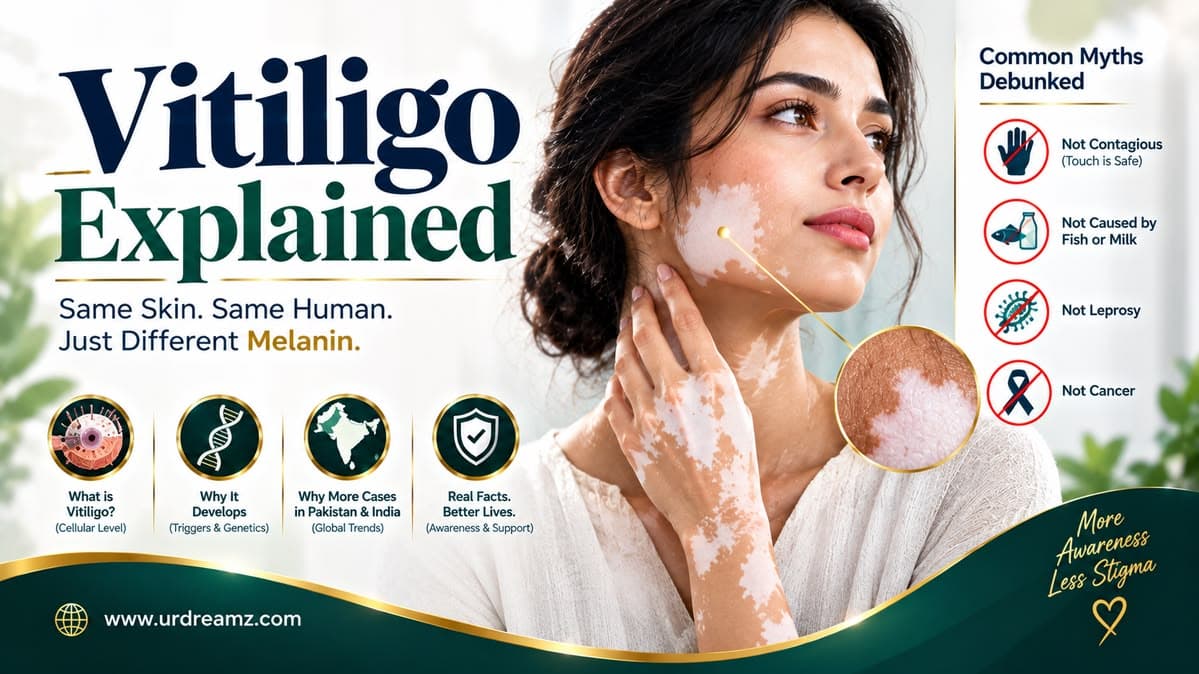
You've seen someone with pale, milky-white patches on their neck, hands, or face, and if you're honest with yourself, there's a good chance some quiet, unconscious instinct made you keep a small distance — just in case it "spreads" from a touch, a shared plate, a handshake. That instinct isn't your fault; it's the product of decades of whispered misinformation passed down through families and communities, none of it grounded in actual medicine. Some people insist it comes from eating fish and then drinking milk. Others quietly assume it's a form of leprosy. The truth is that vitiligo is neither contagious, nor caused by food combinations, nor related to leprosy at all — and the rumors surrounding it have, in many documented cases, caused patients genuinely more pain than the medical condition itself ever does.
In this article, we're going to explain exactly what those white patches actually are at a cellular level, why they develop, how doctors classify the different patterns vitiligo can take, just how common it genuinely is — including why Pakistan and India carry a disproportionately large share of the world's cases — and we're going to dismantle, one at a time, the specific myths that continue to cause real psychological harm to people living with this condition, particularly young women navigating marriage prospects in societies where misinformation still runs deep.
Quick Answer
Last updated: September 2026
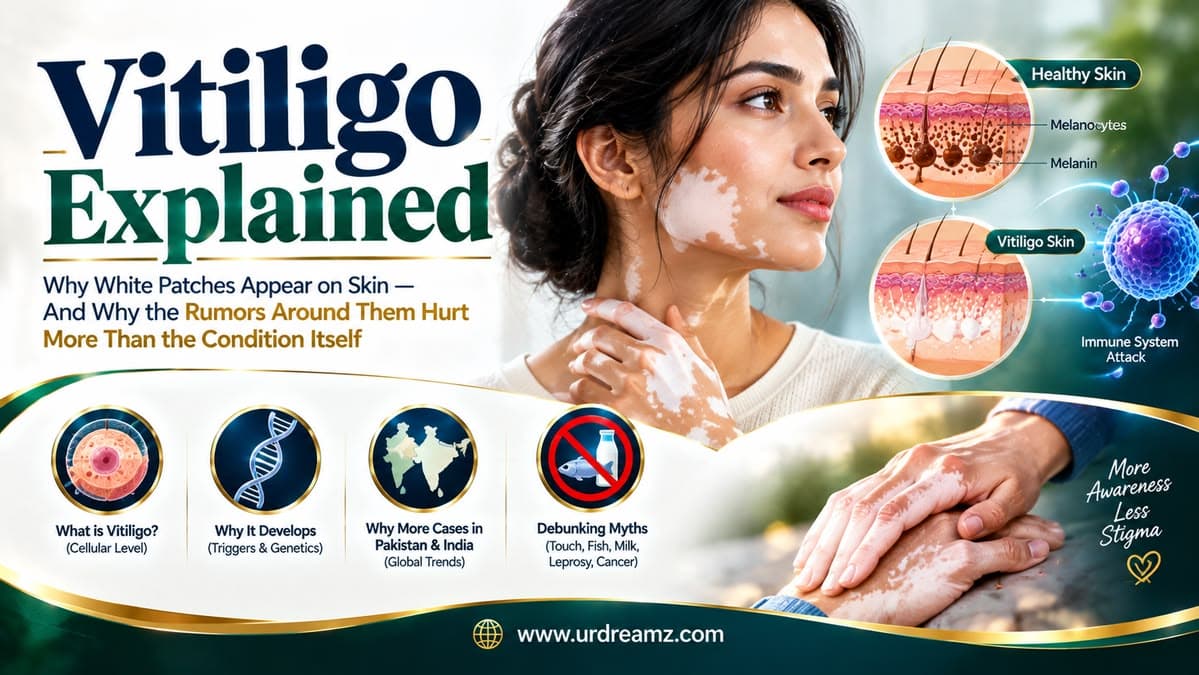
Vitiligo is a chronic autoimmune skin condition in which the immune system mistakenly attacks and destroys melanocytes, the cells responsible for producing melanin, the pigment that gives skin, hair, and eyes their color. This results in smooth, milky-white patches that can appear anywhere on the body, including inside the mouth. It affects roughly 1% of people worldwide, though Pakistan and India report notably higher rates, cited around 2 to 3% of their combined population of nearly 2 billion people. Vitiligo is classified into two broad types: segmental (affecting one side or a limited segment of the body, often starting younger and stabilizing after a period of spread) and non-segmental (affecting both sides symmetrically, including generalized, acrofacial, mucosal, universal, and focal subtypes). Vitiligo is not contagious, is not caused by eating fish with milk, is not a form of leprosy, and does not cause skin cancer. While there is currently no permanent cure, the condition can be effectively managed and pigment can often be restored through topical treatments, oral medications, phototherapy, and laser therapy, with genetics, sunburn, chemical exposure, skin trauma, and psychological stress all recognized as potential triggers.
1. What Vitiligo Actually Is: Skin's Color Factory Shutting Down
Skin color was never random or arbitrary — it's produced by a dedicated system of specialized cells working continuously within the skin. Vitiligo is what happens when a specific part of that system stops working in particular locations, leaving behind smooth, milky-white patches with no color at all. That, at its core, is the entire story: not an infection, not a punishment, not a curse — simply a localized breakdown in the body's own pigment-producing machinery.
2. Meet Melanocytes: The Cells Behind Every Skin Tone
The specific cells responsible for skin, hair, and eye color are called melanocytes, and they work by producing a pigment called melanin. Every human being's distinctive skin tone — from the deepest to the lightest — comes down to how much and what type of melanin these cells produce, not the number of melanocytes themselves, which is actually broadly similar across people of different skin tones. When melanocytes in a specific area are damaged or destroyed, that area of skin loses its ability to produce melanin entirely, and the result is precisely the white patch this article is centrally concerned with.
3. Why the Body Turns Against Its Own Color Cells
Vitiligo develops when the body's own immune system, ordinarily tasked with defending against genuine threats like bacteria and viruses, mistakenly identifies melanocytes as a threat and begins actively attacking and destroying them. This is precisely why vitiligo is classified as an autoimmune condition — a category of disease defined by exactly this kind of misdirected immune response, where the body's own defensive system turns against healthy, entirely normal tissue that was never actually dangerous at all.
4. The Immune System's Case of Mistaken Identity
Misidentifies Threat
Melanocytes
Destroyed
Produced
Appears
This entire sequence explains why vitiligo is sometimes informally described as a disease the body creates from within its own household — the "enemy," in this case, was never external at all. Understanding this mechanism is genuinely important, since it directly explains why touching a patch, sharing utensils, or any form of physical contact plays absolutely no role in this process, a myth we'll return to in detail later in this article.
5. Genetics: The Strongest Known Risk Factor
Vitiligo doesn't have a single fixed cause — rather, several distinct factors are known to increase risk or trigger onset, and genetics stands out as the single strongest of these. Having a close family member with vitiligo, or with certain other autoimmune conditions such as thyroid disease, meaningfully raises an individual's own risk of developing the condition, reflecting an inherited tendency toward this particular kind of misdirected immune activity, even though vitiligo itself doesn't follow a simple, single-gene inheritance pattern.
6. Environmental Triggers: Heat, Sunburn, and Chemical Exposure
Beyond genetic predisposition, a number of environmental factors are recognized as potential triggers capable of setting off or worsening vitiligo in someone already predisposed. Repeated sun exposure and sunburn, prolonged heat exposure, and repeated contact with certain industrial or cosmetic chemicals have all been associated with triggering or accelerating the onset of new patches, particularly in individuals with an underlying genetic vulnerability already in place.
7. The Koebner Phenomenon: When a Wound Becomes a Trigger
A particularly well-documented trigger is physical trauma to the skin — cuts, burns, or significant scrapes — which can sometimes cause new vitiligo patches to develop precisely at the site of the injury once it heals. This pattern is known in dermatology as the Koebner phenomenon, and it's a recognized feature not just of vitiligo but of several other skin conditions as well. It's a genuinely important detail for patients and families to understand, since it means protecting existing skin from unnecessary injury is a meaningful, practical part of managing this condition.
8. Stress as a Trigger, Not Just a Consequence
Significant emotional stress and psychological distress are also recognized by many dermatologists as a potential trigger for vitiligo onset or flare-ups, not merely a consequence of living with visible patches, discussed further later in this article. This relationship appears to run in both directions — stress can contribute to triggering or worsening the condition, while living with the condition itself, particularly amid the social misunderstanding covered throughout this article, can independently generate significant additional stress, creating a cycle that makes psychological support a genuinely important part of comprehensive treatment, not an optional afterthought.
9. How Common Is Vitiligo, Really?
Globally, vitiligo is estimated to affect roughly 1% of the world's population — a figure significant enough that most people, without realizing it, likely know someone living with the condition. This also means vitiligo, despite how unusual or rare it might seem to someone encountering it for the first time, is a genuinely well-documented, well-studied medical condition, not some obscure or mysterious ailment lacking real scientific understanding.
10. Why Pakistan and India See Disproportionately Higher Rates
Notably, Pakistan and India are frequently cited among the countries with the highest reported vitiligo prevalence worldwide, with estimates suggesting roughly 2 to 3% of the region's combined population of nearly 2 billion people are affected — meaningfully higher than the global average. Given the sheer size of the population involved, this percentage translates into a genuinely enormous absolute number of people living with the condition across the region, reinforcing just how far from rare or unusual vitiligo actually is within these specific countries.
*Commonly cited approximate figures from regional dermatology literature; individual studies vary.
11. Where Patches Appear: Skin, Hair, and Mucous Membranes
Vitiligo patches can genuinely develop anywhere on the body — the face, hands, arms, legs, back, and even inside the mouth or around the eyes. Areas that experience more frequent friction or movement, such as joints and skin folds, are also commonly affected. Beyond the skin itself, vitiligo can cause hair growing within an affected patch to turn white or silver, since hair follicles rely on the same melanocyte population responsible for skin pigmentation.
12. The Two Major Types: Segmental vs. Non-Segmental
Dermatologists broadly classify vitiligo into two major categories, based primarily on the distribution pattern of the patches across the body.
| Type | Distribution Pattern | Typical Course |
|---|---|---|
| Segmental Vitiligo | One side of the body, or a specific limited segment (e.g., one arm, one side of the face) | Often starts at a younger age; spreads for a limited period, then typically stabilizes |
| Non-Segmental Vitiligo | Both sides of the body, often symmetrically | The more common overall form; can continue spreading intermittently over a longer period |
13. Segmental Vitiligo: One-Sided and Often Early-Onset
Segmental vitiligo tends to follow a distinctly different pattern from its non-segmental counterpart. It typically affects only one side of the body, or a clearly defined segment, and often begins at a younger age than non-segmental vitiligo. A genuinely reassuring feature of this particular type is that it tends to spread for a relatively limited period before stabilizing, meaning the extent of the condition often becomes predictable and stable earlier in its course compared to the non-segmental form.
14. Non-Segmental Vitiligo: Five Recognized Patterns
Non-segmental vitiligo, the more common overall category, is itself further divided into five recognized subtypes, each with a distinct distribution pattern.
| Subtype | Description |
|---|---|
| Generalized | The most common form; white patches appear symmetrically on both sides of the body (such as both hands or both knees) |
| Acrofacial | Patches appear mainly on the face, hands, and feet |
| Mucosal | Affects the mucous membranes of the mouth, lips, or genitals |
| Universal | A rare form in which 80% or more of the body's skin loses pigment |
| Focal | A rare type involving one or a few small, scattered spots in a single area that do not spread further |
15. Every Patient's Story Is Different: Unpredictable Progression
One of the more genuinely challenging aspects of vitiligo, for both patients and the doctors treating them, is how unpredictable its individual course can be. Some people experience patches that remain stable, confined to a single small area, for years at a time without meaningful change. Others experience relatively rapid spread across larger areas of the body within a much shorter period. There is no single, universal timeline or pattern that applies to every patient — each individual case genuinely has its own distinct story, which is part of why personalized evaluation by a dermatologist matters so much in guiding appropriate treatment decisions.
16. Myth 1: Vitiligo Spreads Through Touch
17. Myth 2: Eating Fish and Then Milk Causes It
18. Myth 3: Vitiligo Is a Form of Leprosy
19. Myth 4: White Patches Lead to Skin Cancer
20. Myth 5: It's a Disease of Only One Age or One Kind of Person
21. The Real Damage: What Vitiligo Does to Mental Health
Perhaps the most important point this entire article can make is this: vitiligo's most significant impact is very often not physical at all — it's psychological. Living within a society saturated with the specific myths dismantled in the previous sections takes a genuine, measurable emotional toll. Patients frequently describe feeling watched, judged, or quietly avoided in public settings, and many report a significant, lasting impact on their own self-confidence and self-image, entirely separate from any physical symptom the condition itself actually produces.
22. Marriage, Society, and the Weight of Being Seen
This psychological burden becomes particularly pronounced in specific social contexts, and marriage prospects are frequently cited as one of the most difficult, high-stakes examples, especially for young women in communities where visible skin conditions are still widely, wrongly associated with the myths covered earlier in this article. This is precisely why addressing misinformation directly and publicly matters as much as, if not more than, medical treatment itself — the condition's social consequences are, in a very real sense, driven far more by widespread misunderstanding than by anything the condition medically does to a person's health or capability.
23. Can Vitiligo Be Treated? Setting Realistic Expectations
Here's the honest, medically accurate picture: vitiligo can genuinely be managed, and pigment can often be restored to affected areas through appropriate treatment. What isn't currently available is a treatment that permanently and completely eliminates the underlying condition in every patient, meaning realistic goals typically center on two specific outcomes: restoring color to existing white patches where possible, and preventing new patches from forming or existing ones from spreading further. Which specific approach a doctor recommends depends significantly on how much of the body is affected and the specific pattern of involvement discussed earlier in this article.
24. The Treatment Toolkit: Creams, Pills, Light Therapy, and Laser
| Treatment | How It's Used |
|---|---|
| Topical Creams/Ointments | Applied directly to smaller, localized patches to help restore pigment |
| Oral Medications | Used for more widespread involvement, working systemically across the body |
| Phototherapy (Light Therapy) | Uses specific wavelengths of light to stimulate pigment-restoring activity in affected skin |
| Laser Therapy | Used for smaller, more localized patches, delivering targeted, precise treatment |
| Immune-Modulating Medication | Prescribed in select cases to help calm the underlying misdirected immune activity and slow progression |
| Camouflage Makeup | Used cosmetically to cover visible patches, supporting confidence during ongoing treatment |
25. Why Patience Is a Genuine Part of the Treatment
One detail every patient and family should understand clearly from the outset: vitiligo treatment is genuinely slow. Restoring pigment to affected skin can take months, and in many cases, years of consistent, ongoing treatment before meaningful, visible improvement appears. Discontinuing treatment early, out of frustration or discouragement, is one of the most common and understandable mistakes patients make — but it directly undermines the gradual, cumulative process pigment restoration actually depends on. Starting treatment as early as possible after noticing new patches is also genuinely associated with a better overall response, reinforcing the value of prompt dermatologist consultation rather than delay.
26. A Message for Patients and Families
If you or someone close to you is living with vitiligo, the most useful thing this article can offer, beyond the medical facts already covered, is this: the condition is not a verdict, not a punishment, and not something to be endured in silence or shame. It is a well-understood, well-documented skin condition with real, evidence-based treatment options — and staying away from the specific rumors dismantled throughout this article, seeking out a qualified dermatologist, and leaning on genuine, patient family and social support all meaningfully improve both the medical and emotional experience of living with this condition. Managing the stress this condition can bring, rather than letting that stress compound the situation further, is itself a genuinely important, medically recognized part of the overall treatment picture.
27. Frequently Asked Questions
What causes vitiligo?
Vitiligo is caused by the immune system mistakenly attacking and destroying melanocytes, the pigment-producing cells in skin, hair, and eyes, resulting in white patches.
Is vitiligo contagious?
No. Vitiligo cannot spread from person to person through touch, shared items, or any form of physical contact.
Does eating fish and milk together cause vitiligo?
No. This is a long-standing cultural myth with no scientific basis whatsoever.
Is vitiligo the same as leprosy?
No. They are entirely different conditions. Leprosy is a bacterial infection, while vitiligo is an autoimmune pigment disorder with no infectious component at all.
Does vitiligo cause skin cancer?
No. Vitiligo itself does not cause skin cancer, though depigmented areas do sunburn more easily and require diligent sun protection.
What is the difference between segmental and non-segmental vitiligo?
Segmental vitiligo affects one side or segment of the body and typically stabilizes after a period of spread, while non-segmental vitiligo affects both sides symmetrically and can continue spreading intermittently.
How common is vitiligo?
It affects roughly 1% of the global population, with Pakistan and India reporting notably higher rates, around 2 to 3%.
Can vitiligo be cured?
There is currently no permanent cure, but it can be effectively managed, and pigment can often be restored through topical treatments, oral medications, phototherapy, and laser therapy.
What triggers vitiligo?
Recognized triggers include genetic predisposition, sunburn, chemical exposure, skin trauma (the Koebner phenomenon), and significant emotional stress.
Why does vitiligo affect mental health so significantly?
Widespread social misinformation and stigma around vitiligo, including myths about contagion and its false association with leprosy, cause significant psychological distress independent of the condition's physical effects.