The Tired Gatekeeper: The Real Reason Insulin Quietly Stops Working — And Why Diabetes Isn't the Sudden Enemy You Think It Is
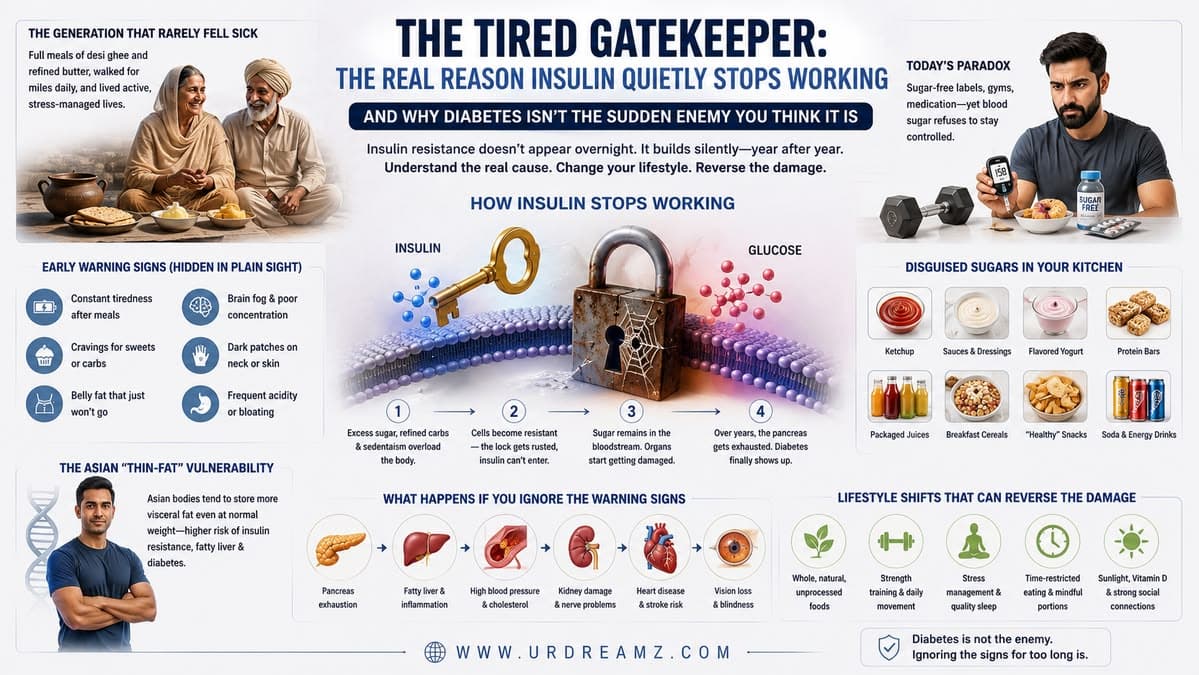
Our grandparents' generation ate full plates of desi ghee, refined butter, and heavy home-cooked meals without a second thought. They walked for miles as a normal, unremarkable part of daily life — to the market, to the mosque or temple, to visit relatives — well into their seventies, eighties, and sometimes nineties. Illness, by and large, seemed to leave them alone. Today, the picture looks almost inverted. We scan every biscuit packet, every bottle of cold drink, every snack box searching for the reassuring words "sugar-free" or "diet." We pay for gym memberships. We take our prescribed tablets religiously, on time, every single day. And yet, for a growing number of people, blood sugar simply refuses to stay under control. Something has clearly shifted in the years between their lifestyle and ours — and it isn't a shift in willpower or discipline. It's a shift in how our bodies are being asked to function, moment to moment, meal to meal, decade after decade.
This article is a genuine, patient attempt to expose that shift honestly, without leaning on the fear-based shortcuts, dramatic warnings, or oversimplified slogans that so much health content online tends to rely on for quick attention. We're going to walk through what diabetes actually is beneath the noise of quick-fix marketing; why insulin gradually, quietly stops doing its job; the early warning signs the body sends out that we so often dismiss as minor inconveniences; the disguised culprits hiding in plain sight inside our own kitchens; the genetic vulnerability that makes South Asian bodies particularly susceptible in ways that Western populations often aren't; what actually happens inside the body if all of this is ignored for years; and finally, the science-backed lifestyle changes that can genuinely help turn this condition around, sometimes dramatically.
Quick Answer
Last updated: September 2026
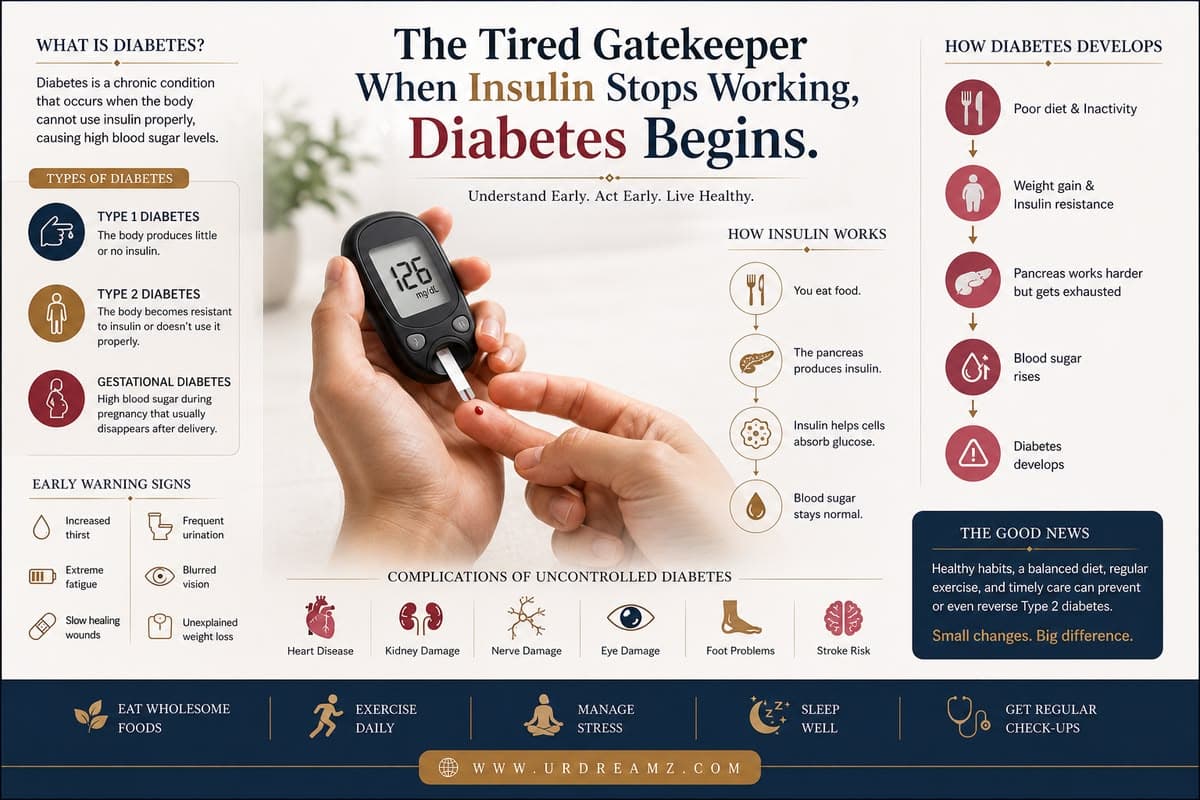
Diabetes, in its most common form (type 2), develops when cells stop responding properly to insulin — a state called insulin resistance — usually built up over years through frequent overeating, refined flour and oils, poor sleep, chronic stress, low physical activity, and genetic susceptibility. Type 1 diabetes, by contrast, is an autoimmune condition unrelated to diet or lifestyle. Early warning signs include frequent nighttime urination, unusual thirst, darkened skin at the neck or underarms, and slow-healing wounds. In many early cases, sustained changes — modest weight loss, better sleep, fiber-rich meals, and daily movement — can meaningfully improve or even reverse insulin resistance under medical supervision.
1. Diabetes Doesn't Attack Overnight — It Whispers for Years
One of the most important things to understand about diabetes is that it is not an enemy that strikes suddenly, in the middle of the night, without warning, the way a heart attack or a stroke might. It is closer to a slow, quiet knock on the door that continues, patiently, for years, while we simply choose — often without even realizing we're choosing — not to answer it. Long before any doctor ever writes the word "diabetes" onto a medical file, the body has usually already been sending small, easy-to-dismiss signals for a very long time: a little more thirst than usual, a little more fatigue after meals, a wound that seems to take just a bit longer to heal than it used to. None of these, on their own, feel alarming enough to interrupt a busy day.
Understanding this condition properly does not require years of medical training or a background in biochemistry. It only requires one simple, everyday analogy that almost anyone can picture clearly: imagine your body as a busy hotel, and think of glucose — the sugar your food eventually breaks down into — as the guest constantly arriving at its doors, morning, afternoon, and night.
2. The Hotel Analogy: Meet Your Body's Gatekeeper
Picture your body as a large, constantly operating hotel. Every single time you eat something — whether it's a full meal or a small snack — glucose arrives at the hotel's front entrance looking for a room to stay in. Standing at that gate, every single time, is a hardworking doorman whose name is insulin. His job description is simple on paper but genuinely demanding in practice: open the door for each new guest, personally escort that guest — that unit of glucose — to exactly the right room, and make sure it settles in properly. Those "rooms" are your muscles, your liver, your brain, your fat cells, and every other tissue in your body that depends on a steady, well-timed supply of energy to keep functioning normally.
As long as this doorman is healthy, alert, and unhurried, the entire hotel runs like clockwork. Guests arrive, get escorted to their rooms without delay, and the lobby stays clear and calm. This is exactly what a normally functioning metabolism looks like — glucose enters the blood after a meal, insulin is released right on cue, and within a reasonable window of time, blood sugar returns to a calm, steady baseline.
3. When the Gatekeeper Gets Overworked
The trouble begins the moment this doorman is never given a real moment of rest. Consider a fairly typical modern day: we wake up and eat a heavy breakfast — parathas, perhaps, with tea that already has sugar stirred into it. A couple of hours later, a biscuit appears at the office desk almost automatically, more out of habit than hunger. Then comes a samosa with the afternoon tea break. Then a full lunch. Then another snack mid-afternoon. Then dinner, often just as heavy as breakfast. Practically every couple of hours, another wave of guests shows up at the hotel's gate, demanding to be let in immediately, with barely any gap between one wave and the next.
The doorman keeps opening that door again and again, without a proper pause, hour after hour, day after day, year after year. Eventually, there comes a point — and this point is different for every individual, depending on genetics, weight, activity levels, and countless other factors — where he simply cannot keep up with the demand anymore. He starts moving more slowly. He starts fumbling with the lock. He starts struggling to open the door at all, even when there's plenty of insulin technically available in the bloodstream. In medical terms, this gradual exhaustion and reduced responsiveness of the system is called insulin resistance — the cells of your body no longer respond properly to insulin's signal, regardless of how much of it is circulating.
4. What Happens When the Guests Can't Get In
When insulin can no longer do its job effectively, glucose is left standing outside the rooms it's supposed to enter, unable to reach the muscles, liver, and organs that actually need it for energy. Instead of being efficiently absorbed, it begins piling up in the lobby — which, in this analogy, is your bloodstream. This unwanted, uncomfortable, and ultimately dangerous crowd of excess glucose sitting in your blood, unable to find its way "home," is precisely what doctors mean when they say high blood sugar. And the underlying exhaustion of the doorman that caused this pile-up in the first place — insulin resistance — is widely recognized in medicine as the very first real, measurable step on the road toward type 2 diabetes, often years or even a full decade before an official diagnosis is ever made.
*Illustrative representation of the general mechanism, not a diagnostic measurement scale.
5. Diabetes Is Not One Single Disease
Before going any further into lifestyle causes, it's important to be completely clear about one thing: diabetes is not one uniform condition with a single universal cause. Different types come from genuinely different biological problems, and confusing them — as often happens in casual conversation — can lead to unfair blame being placed where it doesn't belong, particularly toward people living with type 1 diabetes.
| Type | What Actually Goes Wrong | Main Drivers |
|---|---|---|
| Type 1 Diabetes | The immune system mistakenly attacks and destroys the insulin-producing cells in the pancreas | Autoimmune reaction, genetic predisposition, and environmental triggers — not caused by diet or lifestyle |
| Type 2 Diabetes | Insulin resistance develops gradually over time; the pancreas eventually can't keep up with the increased demand for insulin | Excess body weight, sedentary lifestyle, chronic overeating, genetics, family history |
| Gestational Diabetes | Pregnancy hormones from the placenta interfere with normal insulin function | Temporary insulin resistance during pregnancy; usually resolves after delivery, though it raises future risk of type 2 diabetes |
| Diabetes Insipidus (unrelated condition) | A separate, much rarer condition involving the kidneys' ability to regulate fluid balance | Not related to insulin or blood sugar at all, despite the similar name |
The story of the "tired gatekeeper" described throughout most of this article applies specifically to type 2 diabetes — the form most strongly connected to daily habits, body weight, and lifestyle patterns, and, encouragingly, the form that responds most meaningfully to lifestyle change. Type 1 diabetes, by contrast, typically develops in childhood or early adulthood and has nothing to do with diet, weight, or willpower; it requires lifelong insulin therapy regardless of lifestyle. Understanding this distinction matters, because it's common — and deeply unfair — for people with type 1 diabetes to be blamed for a condition they had no way of preventing.
6. The Warning Signs Your Body Sends Long Before Diagnosis
Most people only walk into a doctor's clinic once things have already gone seriously "over their heads" — once symptoms have become impossible to explain away or ignore any longer. But the truth is that your body usually sends fairly clear warning signals long before that tipping point, and they are very often dismissed as minor, everyday inconveniences that don't seem worth mentioning to anyone.
| Warning Sign | Why It Happens |
|---|---|
| Frequent urination at night | The kidneys try to flush out excess sugar circulating in the blood, pulling extra water along with it |
| Sudden, unusual thirst | The body is losing extra fluid through frequent urination and is trying to compensate for that loss |
| Darkened skin on the back of the neck or underarms | A sign called acanthosis nigricans, closely linked to insulin resistance and elevated insulin levels in the blood |
| Small wounds or cuts healing unusually slowly | Excess blood sugar can weaken and damage small blood vessels over time, slowing circulation and the healing process |
| Persistent fatigue after meals | Cells aren't receiving glucose efficiently for energy, despite it being abundantly present in the blood |
| Blurred vision that comes and goes | Fluctuating blood sugar levels can temporarily affect the lens of the eye |
| Increased hunger shortly after eating | Cells aren't "receiving" the glucose properly, so the body signals for more food despite adequate calorie intake |
These signs are exactly the small, easy-to-dismiss knocks on the door mentioned at the very beginning of this article. Recognizing them early is the real first meaningful step toward protecting your health — because by the time the condition has fully "settled in," undoing the damage becomes considerably harder, though, as we'll discuss later, still not impossible in many cases.
7. How Diabetes Is Actually Diagnosed
Doctors typically rely on a small set of standard blood tests rather than guesswork or symptoms alone. A fasting blood glucose test measures blood sugar after a period without eating, usually overnight. An oral glucose tolerance test (OGTT) measures how the body handles a specific amount of sugar over a couple of hours. And the HbA1c test, one of the most widely used today, measures average blood sugar levels over roughly the past two to three months by looking at how much sugar has attached itself to red blood cells — giving a much broader picture than a single-day reading ever could. Many people are first identified not as diabetic but as "prediabetic," a stage where blood sugar is higher than normal but not yet high enough for a full diabetes diagnosis. This prediabetic window is, in many ways, the single most valuable opportunity anyone gets to reverse course before the condition becomes more firmly established.
8. The Kitchen Villains: It's Not Just Sugar
When people think about what causes diabetes, sugar is almost always the first and only suspect that comes to mind. In reality, there are several other ingredients sitting quietly, almost invisibly, in most kitchens that are just as damaging, if not more so, and rarely get the same attention.
Refined Flour (Maida)
Refined white flour has had almost all of its natural fiber stripped away during processing, leaving behind mostly starch. Without fiber to slow digestion down, the carbohydrates in refined flour break down into glucose extremely quickly, hitting the bloodstream almost like a "glucose bomb" rather than the slow, gradual release that whole grains typically provide. Naan, white bread, many packaged bakery items, and most commercial biscuits are built almost entirely around this ingredient.
Refined and Reused Cooking Oils
Heavily refined cooking oils, and oils that have been reused multiple times for frying, can promote a kind of low-grade cellular inflammation that interferes with insulin's ability to properly "fit into the lock" at the cellular level. In simple terms, insulin may be present in perfectly sufficient quantity in the bloodstream, but the cells themselves simply stop responding to it correctly, which is functionally just as damaging as not having enough insulin at all.
Stress and Poor Sleep
Late nights spent scrolling on a phone, replying to messages, or simply unable to switch off do far more metabolic damage than most people realize. Poor sleep and chronic stress trigger the release of cortisol, a stress hormone whose job, among other things, is to signal the liver to release stored sugar into the bloodstream — essentially adding extra glucose into your system even if you haven't eaten anything sweet at all that day. Your body interprets ongoing stress as a threat requiring immediate extra energy reserves, floods the blood with glucose in response, and this repeated surge, layered on top of the pancreas's constant compensation for everyday meals, gradually exhausts the entire regulatory system over months and years.
Sedentary Habits Built Into Daily Life
Beyond food itself, the sheer amount of sitting built into modern daily routines plays its own quiet role. Muscles are one of the body's largest consumers of circulating glucose, and when they aren't regularly engaged through movement, they simply demand less glucose from the bloodstream, leaving more of it to linger and place ongoing pressure on the insulin system.
9. The "Sugar-Free" Label Trap
Walk down any supermarket aisle today and you'll find biscuits, teas, and cold drinks all proudly labeled "sugar-free," "diet," or "no added sugar." Many people build their entire daily eating pattern around these labels, genuinely believing they've solved the problem for good. But this is often exactly where companies quietly trap well-meaning consumers. Just because the word "sugar" doesn't appear on the front-of-pack ingredient list doesn't mean sugar, in some form, isn't actually there — it frequently appears under different, less recognizable names entirely, such as high-fructose corn syrup (HFCS) or dextrose, both of which are essentially sugar wearing a different disguise, and some of these can raise blood sugar levels even faster than ordinary table sugar itself.
| Hidden Name on Label | What It Actually Is |
|---|---|
| High-Fructose Corn Syrup (HFCS) | A concentrated form of sugar, often used to sweeten packaged drinks and snacks |
| Dextrose | A simple sugar that raises blood glucose very rapidly |
| Maltodextrin | A processed carbohydrate that behaves like sugar in the bloodstream |
| Corn Syrup Solids | Another concentrated sweetener derived from corn |
| Sucrose, Fructose, Glucose Syrup | All simply different chemical forms of sugar, listed separately to appear less prominent |
| Artificial Sweeteners (in excess) | May not raise blood sugar directly but have been linked in some research to gut health disruption and continued sugar cravings |
This label confusion works exactly as intended — it makes your mind relax, assuming "there's no tension here, sugar isn't even listed," while your cravings for something sweet often continue anyway, unaddressed. Until these disguised names are recognized for what they truly are, achieving full control over blood sugar remains genuinely difficult, no matter how carefully someone believes they're eating. The next time you're about to buy a packaged snack or drink, don't be swept away entirely by the bold marketing claims on the front of the box — turn it over and actually read the ingredient list in full, because that's where the real story is always told.
10. Why Asian Bodies Face a Doubled Risk
One factor that dramatically raises the stakes for South Asian populations specifically is the combination of genetics and body composition. For roughly a thousand years, South Asian populations endured repeated cycles of famine, drought, and food scarcity, and as a survival response, the body adapted to become extremely efficient at storing any available food as fat, in anticipation of future shortages that might never actually come, but that the body remained genetically "braced" for regardless. This adaptation means South Asian bodies generally cannot tolerate the same degree of excess weight as some Western populations without facing a significantly higher diabetes risk. Where a Western individual with a modestly protruding stomach might develop general obesity without a proportionally severe diabetes risk attached to it, the same visible abdominal fat in a South Asian individual is far more strongly and consistently linked to diabetes development.
11. Thin-Fat Syndrome: Looking Fit While Being at Real Risk
This genetic vulnerability produces a particularly deceptive pattern known as "thin-fat syndrome" — where a person's arms and legs appear slim, toned, and seemingly perfectly healthy, while a disproportionate amount of visceral fat quietly accumulates deep around the abdomen, directly surrounding and physically interfering with the liver and pancreas. This internal visceral fat is metabolically far more dangerous than fat stored just beneath the skin elsewhere on the body, precisely because of its direct proximity to the very organs responsible for regulating blood sugar. This pattern is one of the key, often overlooked reasons diabetes can appear even in individuals who don't look remotely "overweight" by typical visual standards, and it's a major reason waist circumference is often considered a more meaningful health indicator than overall body weight alone.
12. The Carbohydrate-Heavy Plate: A Cultural Contributor
Traditional South Asian meal patterns often lean very heavily toward carbohydrates across the entire day: paratha or naan in the morning, rice at lunch, roti again at dinner — with comparatively little protein or fiber-rich vegetables included across all three meals combined. Until this plate balance genuinely shifts to include a meaningfully larger proportion of protein and non-starchy vegetables, breaking free of this genetic vulnerability through diet alone becomes considerably harder, no matter how much willpower is applied elsewhere. Rebalancing meals to include more protein and fiber alongside carbohydrates — rather than eliminating carbohydrates altogether, which is rarely sustainable long-term — is one of the most practical, culturally realistic changes available to most households.
13. What Happens If All of This Is Ignored for Years
It's worth being honest about what's actually at stake if these early warning signs and lifestyle contributors are consistently ignored over an extended period. Chronically elevated blood sugar doesn't simply sit quietly in the blood — over years, it gradually damages blood vessels and nerves throughout the entire body. This is how diabetes, left unmanaged, can eventually contribute to diabetic retinopathy (damage to the small blood vessels in the eyes, which can affect vision), diabetic neuropathy (nerve damage, often first noticed as numbness or tingling in the feet), kidney damage that can progress toward kidney disease, and a significantly elevated risk of heart disease and stroke, since blood vessels throughout the entire circulatory system are affected, not just those in one isolated area. None of this happens overnight, and none of it is inevitable — but it is precisely why the "quiet knock on the door" described earlier deserves to be taken seriously rather than dismissed indefinitely.
| Long-Term Complication | What It Affects |
|---|---|
| Diabetic Retinopathy | Small blood vessels in the eyes; can affect vision over time |
| Diabetic Neuropathy | Nerves, especially in the feet and hands; often starts as numbness or tingling |
| Diabetic Nephropathy | The kidneys' filtering ability, potentially progressing toward kidney disease |
| Cardiovascular Disease | Blood vessels throughout the body, raising risk of heart attack and stroke |
| Slow Wound Healing / Poor Circulation | Particularly noticeable in the feet and lower limbs |
14. Can Diabetes Actually Be Reversed?
This is, understandably, the question almost everyone wants answered above all else. The conventional belief for a long time has been that once someone is diagnosed with diabetes, they are committed to medication for the rest of their life, with no real alternative path available. However, modern research increasingly discusses meaningful reversal — particularly in earlier stages of type 2 diabetes, and especially during the prediabetic window mentioned earlier — through consistent, sustained lifestyle change. This should always be approached under proper medical supervision and regular monitoring rather than by adjusting or stopping medication independently, since abruptly changing a treatment plan without guidance can be genuinely dangerous.
15. Intermittent Fasting: Giving the Gatekeeper a Break
One of the most widely discussed strategies today is intermittent fasting — specifically, maintaining a gap of around 14 hours between dinner and the next morning's breakfast, rather than the far shorter gap most people currently observe. During this extended fasting window, insulin gets a genuine opportunity to rest and recover from the constant demand placed on it throughout a typical day, and the body can start clearing out some of the older, accumulated glucose buildup that has been circulating in the blood. This extended overnight gap also encourages the muscles to draw more efficiently on stored blood sugar for energy during the fasting hours, much like a dry sponge finally getting the chance to properly soak up available water after being left untouched for a while.
16. Meal Order Matters More Than You'd Think
Beyond simple timing, the order in which food is eaten within a single meal also meaningfully affects how sharply blood sugar rises afterward. Eating salad or non-starchy vegetables first, followed by protein, and finishing with rice or roti last, has been shown in research to noticeably blunt the sharp glucose spike that typically follows eating carbohydrates first on an empty stomach. Your body isn't a bottomless container that can absorb anything thrown at it in any order without consequence — every choice, including something as seemingly small as meal sequencing, registers somewhere in your metabolic response.
*Illustrative pattern based on general glycemic-response research; individual responses vary.
17. Movement Matters Beyond Just Weight Loss
Physical activity is often discussed purely in terms of burning calories or losing weight, but its role in blood sugar management runs much deeper than that. A simple walk of just 10 to 15 minutes after a meal has been shown to meaningfully reduce the blood sugar spike that follows eating, because contracting muscles pull glucose directly out of the bloodstream for immediate use as fuel, largely independent of insulin's own signaling pathway. This means movement effectively opens up a second, parallel "door" for glucose to leave the bloodstream, taking some of the pressure off the overworked insulin-based door entirely. Even without any weight loss at all, regular movement has been shown to improve how effectively the body's cells respond to insulin.
18. What the WHO and Recent Research Say
Public health organizations, including the World Health Organization, have highlighted that a large majority of type 2 diabetes cases are potentially preventable through sustained diet and lifestyle changes — a figure often cited at around 80 percent in public health messaging. Recent research has also pointed to getting a full 7 to 8 hours of quality sleep each night as a meaningful support for insulin's effectiveness, since poor sleep has repeatedly been linked to worsened insulin sensitivity even in otherwise healthy individuals. It has also been well documented that even a modest 5 to 7 percent reduction in body weight can cut diabetes risk by more than half in people already at high risk. Because visceral abdominal fat sits in such direct physical proximity to the liver and pancreas, reducing waist circumference specifically is considered one of the simplest, most natural, and most effective ways to support long-term healthy blood sugar control — often more meaningful than the number on a bathroom scale alone.
| Lifestyle Change | Commonly Reported Benefit |
|---|---|
| 5–7% body weight reduction | Can lower diabetes risk by more than half in high-risk individuals |
| 7–8 hours of quality sleep nightly | Supports and improves insulin sensitivity |
| 14-hour overnight fasting window | Gives insulin recovery time; supports clearing excess circulating glucose |
| Eating vegetables/protein before carbs | Blunts post-meal blood sugar spikes |
| 10–15 minute walk after meals | Pulls glucose out of the bloodstream via active muscles, independent of insulin |
| Reducing waist circumference | Directly reduces visceral fat pressure on liver and pancreas function |
19. Practical Kitchen Swaps That Actually Help
| Instead Of | Try | Why It Helps |
|---|---|---|
| Refined white flour (maida) items | Whole wheat, oats, whole grains | Retains fiber, slows glucose release |
| Reused/heavily refined cooking oil | Fresh, minimally processed oils in moderation | Reduces cellular inflammation affecting insulin response |
| Packaged "sugar-free" snacks | Whole fruit, nuts, homemade options | Avoids hidden sugars like HFCS and dextrose |
| Carb-first meal plates | Salad/vegetables first, then protein, then carbs | Blunts blood sugar spikes |
| Late-night eating/scrolling | Earlier dinner, consistent sleep schedule | Lowers cortisol-driven blood sugar release |
| Sitting immediately after meals | A short 10–15 minute walk | Uses active muscles to clear glucose independent of insulin |
20. Common Myths That Keep People Stuck
A number of persistent myths make it harder for people to take the right steps. One common myth is that diabetes only affects people who are visibly overweight — as discussed earlier, thin-fat syndrome makes this simply untrue for a large portion of the South Asian population. Another myth is that fruit should be avoided entirely because it "contains sugar" — in reality, whole fruit contains fiber that slows sugar absorption considerably compared to fruit juice or processed sweets, and cutting out fruit entirely often removes valuable nutrients without meaningfully protecting blood sugar. A third myth is that once someone starts insulin injections, it means their diabetes has become as "serious as it can get" — in truth, insulin therapy is simply one of several tools available and is often introduced specifically to protect the body from further damage, not as a final, last-resort measure. And finally, many people believe that if they feel fine, their blood sugar must be fine too — but as this entire article has tried to explain, the earliest and most damaging years of insulin resistance frequently produce no dramatic symptoms at all.
21. A Closer Look Inside the Cell: Why Insulin Resistance Actually Happens
It helps to go one layer deeper than the hotel analogy for a moment, because understanding what's physically happening inside a single cell makes the whole picture click into place. Every cell in your body has tiny docking points on its surface called insulin receptors — think of them as individual locks. Insulin acts as the key that fits into that lock, and when it turns correctly, a doorway opens on the cell's surface that allows glucose transporters to move to the surface and pull glucose inside. When a cell is chronically exposed to very high insulin levels — exactly the situation created by constant snacking and frequent refined-carbohydrate meals — those locks don't disappear, but they become less sensitive to the key. Some receptors reduce in number, others become less responsive due to changes inside the cell caused by ongoing low-grade inflammation, and the overall effect is the same: insulin knocks, but the door opens more slowly, or barely at all. This is precisely why insulin resistance can exist quietly for years — the insulin is there, the receptors are technically there too, but the communication between them has broken down.
22. The Overlooked Role of Fiber and Gut Health
Fiber rarely gets mentioned in casual conversations about diabetes, yet it plays one of the most protective roles of any single dietary factor. Soluble fiber, found in foods like oats, lentils, chickpeas, and many vegetables, forms a gel-like substance in the digestive tract that physically slows down how quickly glucose from a meal enters the bloodstream, giving insulin a much more manageable, gradual task rather than a sudden flood to respond to. Fiber also feeds the beneficial bacteria living in the gut, and a growing body of research has connected a healthy, diverse gut microbiome with better insulin sensitivity overall. This is one of the quieter reasons refined flour is so much more problematic than whole grains — it isn't just about the speed of the sugar release, it's also about what's being taken away from the gut in the process.
23. Are Symptoms Different in Women, Men, and Children?
While the core mechanism of insulin resistance is the same across genders and age groups, the way diabetes shows up on the surface can differ somewhat. In women, diabetes is often linked with additional hormonal patterns, including a higher likelihood of recurring yeast or urinary infections, irregular menstrual cycles when insulin resistance is significant, and, during pregnancy, gestational diabetes, which itself raises long-term risk after delivery. In men, symptoms sometimes present with less obvious early warning and can include reduced energy, changes in weight distribution around the abdomen, and, in some cases, effects on reproductive hormone levels. In children, type 1 diabetes tends to appear more suddenly and dramatically — with rapid weight loss, extreme thirst, and fatigue developing over just days or weeks — because it stems from an autoimmune process rather than a slow build-up of insulin resistance, which is why parents are often advised not to wait and observe if these symptoms appear in a child, but to seek medical attention promptly.
24. Family History and Genetic Risk: What You Can and Can't Control
Family history matters, and it's worth being upfront about that rather than pretending lifestyle alone determines everything. Having a parent or sibling with type 2 diabetes meaningfully raises personal risk, partly through shared genetics and partly through shared household habits around food and activity. However, having a genetic predisposition is not the same as an unavoidable outcome — it functions more like a lower threshold, meaning the same amount of excess weight, poor sleep, or dietary pattern may push a genetically predisposed person toward insulin resistance faster than someone without that family history. This is precisely why two people can eat similarly and end up in very different places metabolically — genetics sets the sensitivity of the entire system, while daily choices determine how hard that sensitivity is actually tested.
25. Rebuilding a Realistic Daily Routine
None of this information is useful if it stays abstract, so it helps to picture what a genuinely realistic, sustainable day might look like for someone trying to protect their insulin function without turning their entire life upside down. It might start with a breakfast that includes some protein alongside carbohydrates rather than carbohydrates alone — eggs with toast rather than only toast, for instance. It might include closing the kitchen after dinner and allowing that 14-hour gap to happen naturally before breakfast, rather than reaching for something sweet late at night out of boredom or habit. It might mean taking a short walk after the largest meal of the day, even if it's just around the house or down the street and back. It might mean reordering a plate at lunch so that the salad or vegetables are eaten before the rice, rather than after. None of these changes require expensive supplements, extreme restriction, or hours at the gym — they simply require consistency, repeated day after day, which is ultimately what changes how the body responds over the long run.
25b. How to Actually Read a Nutrition Label in Under a Minute
Given how much of this article has focused on hidden sugars and misleading marketing, it's worth spelling out exactly what to look for the next time you pick up a packaged item at the store, because most people glance at the front of a box and never turn it over at all. Start with the ingredient list rather than the nutrition facts panel, because ingredients are listed in order of quantity — whatever appears first or second is what the product is mostly made of. If any form of sugar, syrup, or the disguised names discussed earlier appear within the first three or four ingredients, that product is, in practical terms, a sugar-heavy item regardless of what the front label claims. Next, check the total carbohydrate figure on the nutrition panel and specifically the "of which sugars" breakdown beneath it, comparing that sugar figure against the fiber figure listed nearby — a product with high sugar and almost no fiber will behave very differently in the body than one with a similar total carbohydrate count but meaningful fiber content, because fiber is precisely what slows the glucose release described earlier. Finally, be specifically alert to serving size. Some products list nutrition information per a small, unrealistic serving size — far smaller than what a typical person would actually eat in one sitting — which can make sugar and calorie figures look artificially low at first glance. Multiplying the listed figures by how much you would genuinely eat, rather than trusting the printed serving size at face value, gives a far more honest picture of what's actually being consumed.
26. The Emotional Weight Nobody Talks About
Living with diabetes, or even living with the fear of developing it because of a strong family history, carries an emotional weight that rarely gets discussed alongside the physical facts. There is often a quiet, persistent anxiety around eating in social settings — weddings, family gatherings, and celebrations built almost entirely around food can start to feel like minefields rather than moments of joy. There can be guilt after eating something "off plan," even when an occasional treat has little real long-term impact compared to overall daily patterns. There can be frustration when blood sugar numbers don't move the way expected despite genuine effort, since the body doesn't always respond on a predictable timeline. Acknowledging this emotional layer matters, because sustainable change is far more likely to come from a place of steady, patient self-respect than from strict, fear-driven restriction that eventually becomes exhausting to maintain. Diabetes management is a marathon built on daily habits repeated for years, not a short sprint that ends once a single test result improves.
27. Building a Support System That Actually Works
Very few people successfully change long-standing habits entirely alone, and there's no particular virtue in trying to. Sharing the goal with a spouse, parent, or close friend — especially one who also cooks or shares meals regularly — can make consistent changes to meal composition and timing far easier to sustain, because the whole household benefits rather than one person feeling singled out or deprived at the table. Involving a doctor or a qualified dietitian for periodic check-ins, rather than only after a diagnosis has already been made, can help catch small drifts in blood sugar trends early, while they're still easy to correct. For those managing an existing diagnosis, connecting with others navigating the same condition — whether through a local support group or an online community — can provide practical, lived-experience tips that no pamphlet or general article, including this one, can fully replace.
28. Putting It All Together: The Bigger Picture
Stepping back from all the individual mechanisms discussed throughout this article — the tired gatekeeper, the disguised sugars, the genetic vulnerability, the cultural plate patterns, the late-night cortisol surges — the bigger picture that emerges is actually a hopeful one, not a hopeless one. Diabetes is rarely the result of one single bad decision or one single "villain" ingredient. It's the cumulative result of thousands of small daily choices, repeated over years, gradually tipping a finely balanced system out of equilibrium. And because it builds gradually, it can also, in many cases, be gradually rebuilt in the other direction — not necessarily overnight, and not without effort, but through the same kind of small, repeated, consistent choices that caused the imbalance in the first place, just now working in the opposite, protective direction.
29. This Isn't About Fear — It's About Awareness
None of this information is meant to frighten anyone, but rather to hand back a genuine sense of control. Diabetes doesn't arrive as a sudden enemy attacking in the night — it is a condition that builds quietly, one overworked insulin response at a time, over months and years, while we repeatedly tell ourselves that the small signs surely don't matter enough to act on. Understanding your own body — treating it less like a bottomless dustbin that can absorb anything thrown into it without consequence, and more like a finely tuned system with real, finite limits — is the real first step toward lasting, sustainable health, long before any prescription pad ever needs to come out.
29b. A Final Word for Anyone Feeling Overwhelmed Right Now
If reading through all of this has left you feeling anxious rather than empowered, that reaction is understandable, but it isn't the intention behind any of it. Nobody is expected to overhaul every single habit described in this article starting tomorrow morning. Real, lasting change almost always comes from picking one or two changes at a time — perhaps starting with closing the kitchen earlier at night and allowing that natural overnight gap before breakfast, or simply reordering the plate at dinner so vegetables come first — and giving those changes a few weeks to become genuinely comfortable before adding anything else on top. The body has often taken years to arrive at a state of insulin resistance, and it's reasonable, even necessary, to give it real time to recover in the other direction as well. Progress here is rarely a straight line, and an occasional heavy meal or a missed walk does not undo weeks of consistent effort. What actually matters, far more than any single day, is the overall pattern maintained across months and years — which is, in the end, exactly how this condition developed in the first place, and exactly how it can be gradually, patiently unwound.
30. When to See a Doctor
It's advisable to get checked by a doctor if you notice frequent nighttime urination, unusual thirst, unexplained fatigue, darkened patches of skin at the neck or underarms, slow-healing wounds, tingling or numbness in the feet, blurred vision that comes and goes, or if you have a family history of diabetes. Simple blood tests — a fasting glucose test, an HbA1c test, or an oral glucose tolerance test — can detect insulin resistance or prediabetes long before it progresses into full-blown diabetes, and catching it at that earlier, more reversible stage is exactly when lifestyle changes have the greatest chance of making a genuinely lasting difference.
31. Frequently Asked Questions
Is sugar really the only cause of diabetes?
No. While added sugar plays a role, refined flour, refined oils, chronic stress, poor sleep, sedentary habits, and genetic predisposition all contribute significantly to insulin resistance and diabetes risk.
Is type 1 diabetes caused by eating too much sugar or being overweight?
No. Type 1 diabetes is an autoimmune condition where the immune system attacks insulin-producing cells in the pancreas. It is not caused by diet, weight, or lifestyle.
Are "sugar-free" products always safe for blood sugar?
Not necessarily. Many contain hidden sugars under different names, such as high-fructose corn syrup or dextrose, which can still significantly affect blood sugar levels despite the "sugar-free" label.
Why are South Asian people considered at higher risk for diabetes?
A combination of genetic adaptation from historical famine cycles and a tendency toward "thin-fat syndrome," where visceral fat accumulates around internal organs even in people who appear slim, raises risk significantly compared to some other populations.
Can diabetes actually be reversed?
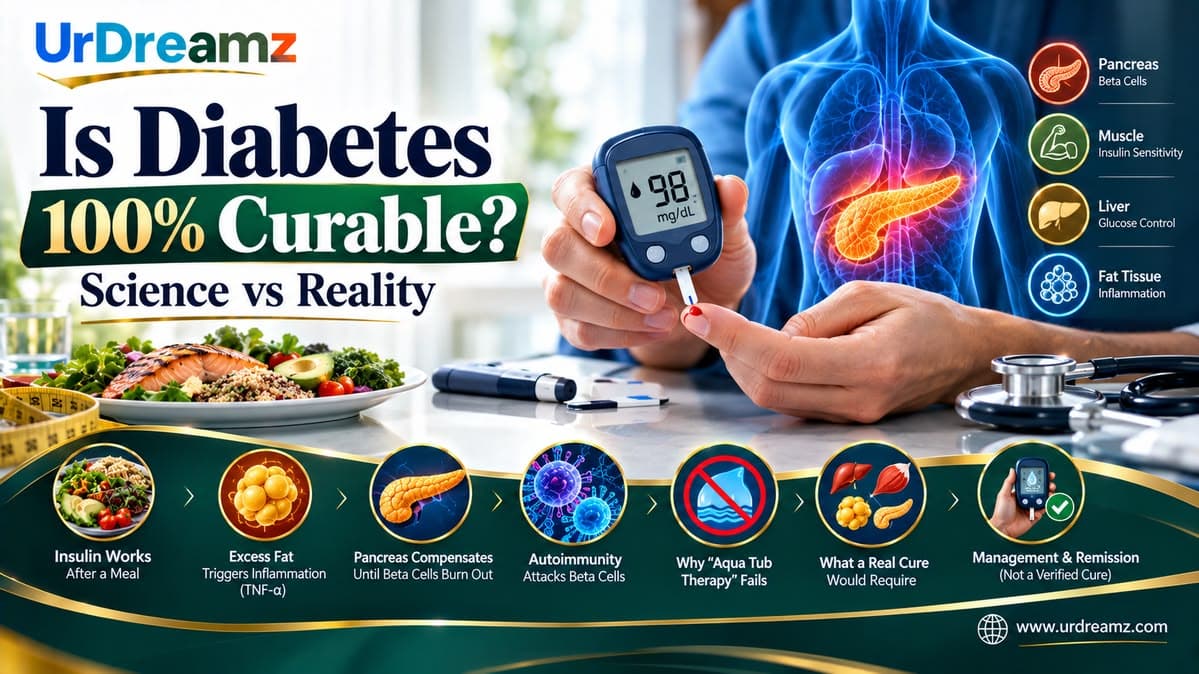
In many cases of early type 2 diabetes and prediabetes, sustained lifestyle changes — including weight loss, improved sleep, dietary changes, and regular movement — can significantly improve or reverse insulin resistance, though this should always be done under medical supervision.
Does eating order really affect blood sugar?
Yes. Eating vegetables and protein before carbohydrates has been shown to blunt the blood sugar spike that typically follows a carbohydrate-heavy meal eaten on an empty stomach.
What are the earliest warning signs of diabetes?
Frequent nighttime urination, unusual thirst, darkened skin at the neck or underarms, slow-healing wounds, blurred vision, and persistent fatigue after meals are among the earliest and most commonly overlooked signs.
Does walking after meals actually make a measurable difference?
Yes. Even a short 10 to 15 minute walk after eating can help active muscles pull glucose out of the bloodstream directly, reducing the size of the blood sugar spike that follows a meal.
What happens if prediabetes or early insulin resistance is left unaddressed for years?
Over time, chronically elevated blood sugar can damage blood vessels and nerves throughout the body, potentially contributing to eye damage, nerve damage, kidney problems, and an increased risk of heart disease and stroke.
Is starting insulin injections a sign that diabetes has become as bad as it can get?
No. Insulin therapy is simply one of several available treatment tools and is often introduced specifically to protect the body from further complications, not because the condition has reached a final stage.
Does fiber really make a meaningful difference to blood sugar?
Yes. Soluble fiber slows down how quickly glucose from a meal enters the bloodstream, easing the demand placed on insulin and also supporting a healthier gut microbiome, which research increasingly links to better insulin sensitivity overall.
Is it true that a family history of diabetes makes it unavoidable?
No. Family history raises risk and can lower the threshold at which insulin resistance develops, but it does not guarantee diabetes will occur. Lifestyle choices still meaningfully influence whether and how quickly that genetic risk plays out.
Do symptoms of diabetes look the same in men, women, and children?
Not exactly. Women may notice patterns tied to menstrual cycles or recurring infections, men sometimes have less obvious early signs, and children with type 1 diabetes often develop symptoms rapidly over days or weeks rather than gradually.
Can stress alone raise blood sugar even without eating anything sweet?
Yes. Chronic stress triggers cortisol release, which signals the liver to release stored sugar into the bloodstream, meaning blood sugar can rise even when no sugary food has been eaten at all.