Menstrual Cycle: Day-by-Day Hormonal & Molecular Mechanism Explained
Menstruation is often whispered about, hidden, and treated as a "problem" — but it is not a disease. It is the visible result of a precisely coordinated, month-long conversation happening between four organs in the body: the hypothalamus, the pituitary gland, the ovaries, and the uterus. If a woman menstruates regularly, that is, in fact, a sign that this entire internal communication system is working correctly. This guide walks through exactly what happens on each stretch of days in a typical cycle — which hormone is released, from where, what it targets, and what physical changes it produces — from the first day of bleeding all the way through ovulation, the fertile window, and back to the next period.
Along the way, this guide also covers what happens when the cycle does not follow this typical pattern — anovulatory cycles, PCOS, and the very real ways that stress, diet, and sleep can interrupt this otherwise reliable monthly rhythm — along with the practical basics of menstrual hygiene and knowing when a change in your cycle is worth mentioning to a doctor.
1. Menstruation Is Not a Disease
A common misunderstanding treats menstruation as though it were some kind of illness — as if bleeding meant something was wrong with the body. This is incorrect. Menstruation is a healthy, expected, monthly biological process. If every woman menstruated because something was medically "wrong," then every woman on Earth would be permanently sick, which is obviously not the case. Menstruation is simply the visible endpoint of a repeating, four-week internal cycle, and its regular occurrence is actually one of the clearest signs that the body's reproductive hormonal system is functioning correctly.
This distinction matters more than it might first appear, because the language used to describe menstruation shapes how it is understood and discussed, both medically and socially. Describing menstruation as a "secret illness" or something shameful contributes to stigma that can discourage open conversation, delay women from seeking help when something genuinely is wrong, and leave many without a clear understanding of their own bodies. Reframing menstruation correctly — as a normal, healthy, and even informative monthly process — is the first step toward understanding everything else this guide covers: the four organs involved, the hormones exchanged between them, and exactly what a healthy cycle looks like from start to finish.
2. The Four-Organ System Behind Every Cycle
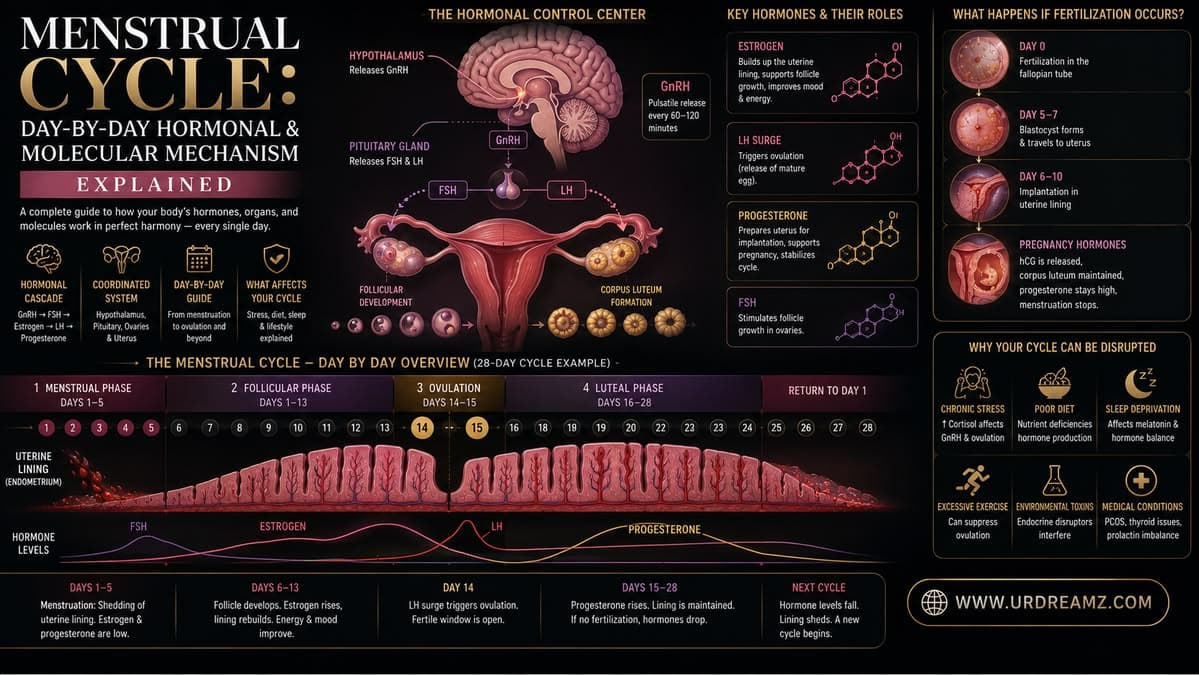
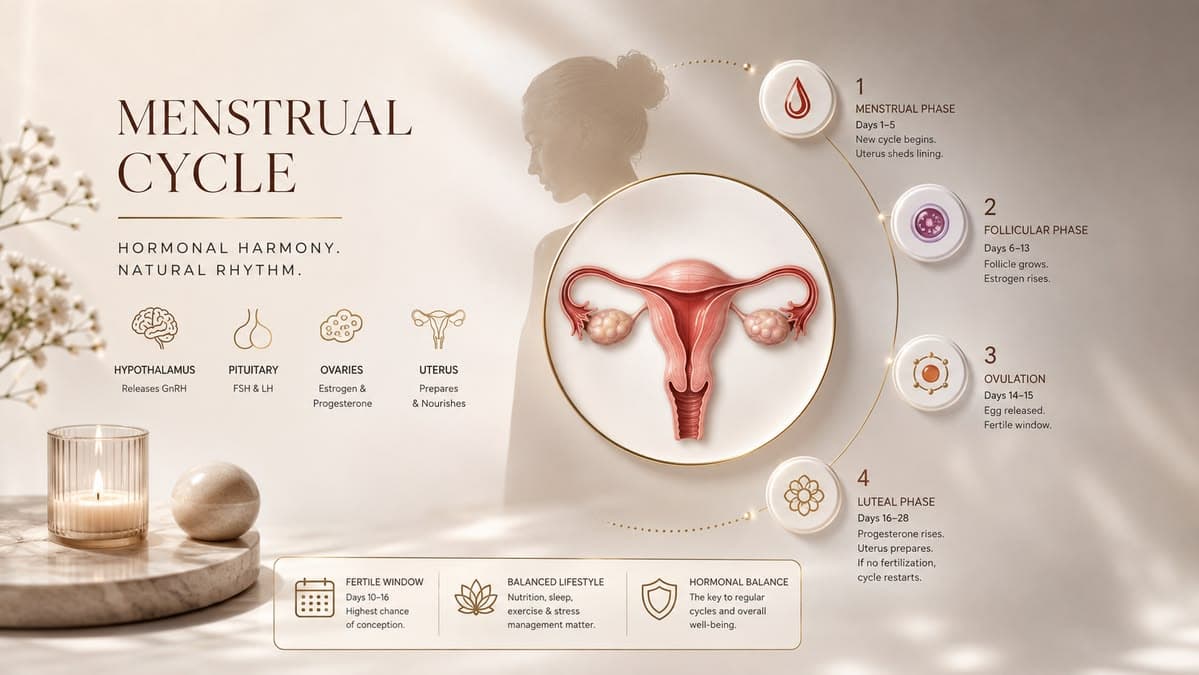
The menstrual cycle is not the work of a single gland or organ acting alone. It is the coordinated output of a system involving four distinct structures, sometimes referred to together as the HPO axis (hypothalamic-pituitary-ovarian axis), extended here to include its ultimate target: the uterus. Think of this system as a relay race: the hypothalamus passes a hormonal baton to the pituitary gland, the pituitary gland passes its own baton to the ovaries, and the ovaries, in turn, send hormonal signals both back up to the brain and down to the uterus. Each structure depends entirely on receiving the correct signal, at the correct time, from the structure before it — which is precisely why disruption at any single point in this chain, whether from stress, illness, or a hormonal disorder, can ripple forward and affect the entire remainder of the cycle.
| Organ | Role in the Cycle |
|---|---|
| Hypothalamus | Releases GnRH, the master signal that starts the entire hormonal cascade |
| Pituitary Gland | Releases FSH and LH in response to GnRH, directing the ovaries |
| Ovary | Matures follicles, releases the egg, produces estrogen and progesterone |
| Uterus | Builds and sheds its lining (endometrium) in response to ovarian hormones |
Every month, these four structures communicate back and forth through a precise sequence of hormone releases, each one triggering the next step in the cycle, until the process resets and begins again.
3. Why Intercourse Is Discouraged During Menstruation
Across multiple religious traditions, intimacy during menstruation is specifically discouraged, including guidance found in the Quran and Hadith. From a purely biological standpoint, this guidance aligns with two practical realities: first, conception is not physiologically possible during active bleeding, since no mature egg is present at this stage of the cycle; and second, the cervix and uterine lining are considered more vulnerable to bacteria and fungal organisms during active menstrual flow, since the open, actively shedding tissue and the presence of blood create conditions where introducing new bacteria carries a meaningfully elevated risk of infection.
4. Days 1 to 5: The Menstrual Phase Begins
By convention, Day 1 of the menstrual cycle is the first day visible bleeding begins. This bleeding typically continues for three to seven days, though this range varies from person to person and even cycle to cycle. Once bleeding stops — commonly around day 5 or 6, though this is not fixed — the hypothalamus, sitting deep within the brain, receives the signal that a new cycle needs to begin.
It is worth noting that this day-1 convention is not arbitrary — it is used specifically because it marks the single most reliably identifiable, externally visible event in the entire cycle. While the internal hormonal shifts leading up to menstruation begin days earlier, and are not something a person can directly observe without laboratory testing, the appearance of visible bleeding gives every woman a consistent, easily trackable starting point. This is exactly why period-tracking calendars and apps universally count from the first day of bleeding, rather than from any of the earlier, internally hidden hormonal events that actually set the process in motion.
5. The Hypothalamus Sends the First Signal: GnRH
The hypothalamus initiates the entire cascade by releasing Gonadotropin-Releasing Hormone (GnRH). This hormone does not act directly on the ovaries or uterus — instead, it travels a short distance to the nearby pituitary gland, where it delivers a clear instruction: begin preparing the body for the possibility of releasing an egg this cycle.
GnRH is not released as a single, steady stream — it is secreted in short, rhythmic bursts, or pulses, occurring roughly every 60 to 90 minutes depending on the specific phase of the cycle. This pulsatile pattern is not incidental; the pituitary gland's receptors actually require this on-off rhythm to respond correctly, and a continuous, non-pulsatile flood of GnRH would actually suppress, rather than stimulate, the downstream release of FSH and LH. This detail explains why certain medical treatments for fertility and hormone-sensitive conditions deliberately use continuous GnRH-based medications specifically to shut this pathway down, rather than to stimulate it.
6. The Pituitary Gland Responds: FSH Is Released
In response to the GnRH signal, the pituitary gland releases Follicle-Stimulating Hormone (FSH) into the bloodstream. As its name suggests, FSH's job is to travel to the ovaries and stimulate the development of follicles. Importantly, this entire signaling relationship is tightly regulated — if GnRH release becomes too frequent or too intense, it can actually disrupt the delicate balance of this system, which is part of why abnormal GnRH pulsing patterns are associated with fertility difficulties.
7. FSH Reaches the Ovary: Meet the Follicles
FSH travels through the bloodstream until it reaches the ovaries — often described as the body's "egg factory." Each ovary houses thousands of tiny structures called follicles, each one a small sac containing an immature egg. FSH's arrival marks the beginning of this month's competition among a select group of these follicles.
8. Understanding the Follicle and the Ovum
Each follicle contains an inner cell known as the ovum — the immature egg cell itself. The follicle functions as a protective, nurturing shell around this ovum, and it is the follicle's outer cells that respond directly to FSH stimulation, growing and maturing as a unit alongside the egg they contain.
9. Recruiting the Antral Follicles
When FSH arrives at the ovary, it does not stimulate just one follicle — it recruits and stimulates a cohort of somewhere between ten and twenty follicles simultaneously, prompting them to begin growing and maturing together. These developing, hormone-responsive follicles are referred to as antral follicles. At this stage, all of them are, in a sense, competing for the same limited resource: continued FSH stimulation.
10. Choosing the Dominant Follicle
Among this group of ten to twenty developing antral follicles, one will typically emerge as the strongest — the one that develops the greatest number of FSH-binding receptor sites on its surface, making it especially responsive and "hungry" for FSH compared to its competitors. This standout follicle becomes known as the dominant follicle, and it will go on to be the one that ultimately releases a mature egg this cycle, while the remaining follicles in the recruited group gradually stop growing and are reabsorbed by the body.
This selection process is sometimes described by researchers as a kind of internal competition or "survival of the fittest" playing out entirely within the ovary. As the dominant follicle pulls ahead, it begins producing enough estrogen and inhibin B (another hormone involved in this feedback system) to actually suppress FSH levels slightly — a clever mechanism that works against its own weaker competitors, since the dominant follicle's abundant FSH receptors allow it to remain well-stimulated even as overall circulating FSH begins to decline, while its less well-equipped rivals, with fewer receptors, cannot keep up with the reduced supply and begin to degenerate. By around day 7 of a typical cycle, this selection process is usually well underway, with the dominant follicle already clearly distinguishable in size from the rest of the cohort.
11. Estrogen Rises and Sends a Message Back to the Brain
As the dominant follicle and its companions mature, they begin producing increasing amounts of estrogen. This estrogen travels back through the bloodstream to the brain, reaching the hypothalamus and pituitary gland. For most of this phase, rising estrogen acts as a braking signal — it tells the hypothalamus and pituitary to slow down their release of GnRH and FSH, since the ovary has clearly received enough stimulation already. This is a classic example of negative feedback, a control loop the body uses throughout its hormonal systems to prevent overstimulation.
Negative feedback loops like this one are found throughout human physiology, not just in the reproductive system — the same basic principle regulates blood sugar, body temperature, and blood pressure, among many other processes. The underlying logic is always the same: when a system detects that a particular hormone or substance has reached a sufficient or excessive level, it sends a signal back to the source to reduce further production, maintaining a stable internal balance rather than allowing runaway, unchecked hormone release. In the ovarian cycle specifically, this negative feedback loop is what prevents FSH from continuing to stimulate an unlimited number of follicles indefinitely, helping ensure that, in a typical cycle, only a single dominant follicle ultimately reaches full maturity and ovulation.
12. The Switch: From Negative to Positive Feedback
As estrogen levels continue to climb, day after day, they eventually cross a critical threshold — and at this exact point, something remarkable happens: estrogen's effect on the brain flips from suppressing hormone release to actively boosting it. This shift from negative to positive feedback is one of the most fascinating quirks of the entire menstrual cycle, and it is precisely what triggers the next major event.
13. Day 13-14: The LH Surge and Ovulation
Once estrogen flips into positive feedback mode, the pituitary gland responds with a sudden, sharp surge in Luteinizing Hormone (LH), typically occurring around day 13 or 14 of a standard cycle. This LH surge travels to the ovary and acts specifically on the dominant follicle, causing it to rupture and release its mature egg into the fallopian tube — the event known as ovulation. Once released, the egg remains viable for fertilization for only about 24 hours.
The scale of this LH surge is genuinely dramatic compared to the hormone's baseline levels earlier in the cycle — LH concentrations can increase roughly tenfold within a very short window, making it one of the most abrupt hormonal shifts anywhere in the human body's normal physiology. This sudden surge is actually the biological signal that many home ovulation prediction kits are designed to detect, since identifying this spike allows a fairly precise prediction of exactly when ovulation is about to occur, typically within 24 to 36 hours of the surge being detected in urine testing. Alongside the LH surge, ovulation is also supported by the follicle itself releasing specific enzymes that help weaken and rupture its own outer wall, allowing the mature egg to be released into the surrounding pelvic cavity, where it is then guided into the fallopian tube.
14. From Follicle to Corpus Luteum
After releasing its egg, the ruptured dominant follicle does not simply disappear — it transforms into a new, temporary structure called the corpus luteum. Rather than being discarded, this structure takes on an entirely new hormonal job for the second half of the cycle.
The name "corpus luteum" comes from Latin, translating roughly to "yellow body," a reference to the distinctive yellowish color this structure takes on due to the accumulation of a fat-soluble pigment within its cells. This transformation from an egg-releasing follicle into a hormone-producing gland is a genuinely remarkable example of cellular repurposing — the same cluster of cells that spent the first half of the cycle nurturing a developing egg and producing estrogen switches its entire function within days, now specializing almost exclusively in progesterone production for as long as it remains active.
15. Progesterone Takes Over
The corpus luteum's primary function is to produce progesterone, which now becomes the dominant hormone of this second phase of the cycle. Progesterone travels to the uterus, where it delivers a clear physiological message: an egg has been released — prepare, in case a pregnancy is on the way.
16. Building a Nest: Spongy Cell Formation in the Uterus
Under progesterone's influence, the lining of the uterus — the endometrium — undergoes significant changes. Blood vessel growth increases, and the tissue develops a soft, spongy, glandular structure specifically suited to nourishing and supporting a fertilized egg, should one arrive and implant. This is the uterus actively preparing a nest, just in case.
This transformation of the endometrium is sometimes referred to in medical literature as the "secretory phase" of the uterine cycle, distinguishing it from the earlier "proliferative phase" driven primarily by estrogen during the first half of the cycle. During the earlier, estrogen-dominant proliferative phase, the endometrium primarily grows thicker through straightforward cell division. During this later, progesterone-dominant secretory phase, the emphasis shifts from simple growth to functional maturation — the uterine glands begin secreting glycogen and other nutrients, and the tissue becomes genuinely receptive to receiving and supporting an implanting embryo, rather than simply being thick in a structural sense.
17. The Corpus Luteum's Countdown
Unless pregnancy occurs, the corpus luteum has a strict, built-in lifespan of roughly four to five days beyond its typical short window of peak activity — commonly totaling about fourteen days after ovulation. Once this window closes, the corpus luteum degenerates, and progesterone production drops sharply. Without progesterone's continued support, the spongy, blood-vessel-rich uterine lining that had been built up can no longer be sustained.
18. Day 29-30: Back to Menstruation
As progesterone (and, by this point, estrogen as well) falls sharply, the uterine lining loses its structural support and begins to break down and shed — this shedding is what produces menstrual bleeding, restarting the entire cycle back at day 1. At the same time, the drop in estrogen and progesterone removes the negative feedback that had been suppressing the hypothalamus, allowing GnRH release to begin rising once again, setting the entire sequence back into motion for the next cycle.
19. If Fertilization Occurs: Enter hCG
If the released egg is fertilized by sperm and successfully implants into the uterine lining, the situation changes dramatically. The developing embryo begins producing a hormone called Human Chorionic Gonadotropin (hCG). This hCG signal travels to the corpus luteum with an urgent message: do not shut down — keep producing progesterone, because a pregnancy has begun.
hCG is, notably, the exact hormone that home pregnancy tests are designed to detect, typically in a urine sample. Because hCG production begins almost immediately after successful implantation — which itself typically occurs about six to ten days after fertilization — levels can become detectable by a home test within roughly one to two weeks after conception, which is why many pregnancy tests recommend waiting until at least the first day of a missed period before testing, in order to allow hCG levels enough time to rise to a reliably detectable concentration.
20. The Handover to the Placenta
Under hCG's instruction, the corpus luteum continues producing progesterone for approximately nine to ten weeks, well beyond its normal fourteen-day lifespan, preventing the uterine lining from breaking down and allowing the pregnancy to continue developing. Once the placenta has fully formed and matured enough to take over hormone production itself, hCG signals the corpus luteum that its job is complete. The corpus luteum then degenerates for good, while the placenta assumes full responsibility for progesterone production for the remainder of the pregnancy.
This transition period, often referred to as the "luteal-placental shift," typically occurs around week seven to ten of pregnancy, and it represents a genuinely important handoff in early pregnancy physiology. Some early pregnancy losses are understood to occur specifically around this transition window, in cases where the placenta does not develop robustly enough to fully take over progesterone production before the corpus luteum's extended lifespan naturally winds down, illustrating just how much this entire early pregnancy process still depends on the same fundamental hormonal machinery described throughout the ordinary, non-pregnant menstrual cycle.
21. The Fertile Window, Day by Day
Understanding exactly where in the cycle fertility rises and falls is one of the most practically useful parts of this entire mechanism, whether the goal is achieving or avoiding pregnancy. Below is a breakdown of a typical 28-day cycle, counting from day 1 as the first day of bleeding.
It is worth emphasizing that the specific day numbers used throughout this breakdown assume a standard 28-day cycle for the sake of clarity and consistency — in practice, since normal cycles can range anywhere from 24 to 38 days, the exact timing of ovulation and the fertile window will shift earlier or later depending on an individual's own typical cycle length. What remains constant, regardless of overall cycle length, is that ovulation reliably occurs roughly 14 days before the next period begins, rather than always falling on a fixed "day 14" from the start of bleeding — this is precisely why women with naturally longer or shorter cycles are encouraged to track their own individual pattern over several months, rather than assuming a generic day-14 rule will apply universally to their own body.
22. Days 1-5: Bleeding, Not Fertility
During the first several days of the cycle, active bleeding is occurring and no mature egg is present. Conception during this window is essentially not possible, and — as discussed earlier — this is also the period during which intimacy carries an elevated risk of introducing infection, which is part of the reasoning behind religious guidance discouraging intercourse during this specific window.
23. Days 6-10: Follicles Are Growing, Not Ready
Following the end of bleeding, the recruited antral follicles are actively growing and maturing under FSH stimulation, but no egg has yet been released. The chances of conception during this window remain very low, since ovulation has not yet occurred.
24. Days 10-15: The Peak Fertility Window
This is the window that matters most for anyone tracking fertility. Around day 13 or 14, the LH surge triggers ovulation, releasing the mature egg. Because the egg remains viable for roughly 24 hours after release, and because sperm can survive inside the female reproductive tract for a considerably longer period, the days immediately surrounding ovulation — commonly cited as day 14 or 15 in a standard cycle — represent by far the highest-probability window for conception.
25. Why Sperm Timing Matters So Much
Sperm cells, once inside the female reproductive tract, can remain viable and capable of fertilizing an egg for anywhere between 72 hours (three days) and up to five days under favorable conditions. This is significantly longer than the egg's own 24-hour viability window after ovulation. Because of this asymmetry, intercourse occurring in the days leading up to ovulation can still result in pregnancy, since surviving sperm may still be present and viable in the reproductive tract at the exact moment ovulation occurs.
This extended sperm survival is made possible by specialized glandular pockets within the cervix called cervical crypts, which can temporarily house and protect sperm from the otherwise hostile environment of the reproductive tract, gradually releasing them over the following days. Fertile-quality cervical mucus, produced under the influence of rising estrogen in the days leading up to ovulation, further supports sperm survival and movement, becoming thinner, more elastic, and more hospitable to sperm as ovulation approaches, compared to the thicker, less penetrable mucus typical of other phases of the cycle. Taken together, this combination of factors is precisely why the practical fertile window is often described as spanning roughly six days — the five days before ovulation, plus the day of ovulation itself — rather than being limited strictly to the 24-hour period during which the egg alone remains viable.
26. Days 15-22: Chances Drop Sharply
Once the roughly 24-hour post-ovulation window has closed without fertilization, the released egg is no longer viable, and the chances of conception during this stretch of the cycle fall sharply. During this window, the uterus is actively being prepared by rising progesterone from the corpus luteum, but without a fertilized egg to implant, this preparation will ultimately be reversed later in the cycle.
27. Days 22-28: Progesterone Falls, Cycle Resets
As the corpus luteum approaches the end of its natural lifespan, progesterone levels begin to decline sharply during this final stretch of the cycle. By days 29 or 30 (in a longer cycle) or somewhat earlier in a shorter one, this hormonal decline triggers the breakdown of the uterine lining, and bleeding begins once again — restarting the entire cycle back at day 1.
28. The Hormone Curve: A Visual Graph
The chart below offers a simplified visual approximation of how the four key hormones of the cycle rise and fall across a typical 28-day cycle. Bar height represents relative hormone concentration at each stage, not exact laboratory values.
29. The Four (or Five) Named Phases
Depending on how granularly the cycle is broken down, it is commonly described using either four or five named phases: the menstrual phase, the follicular phase, ovulation (sometimes split into a distinct "ovulatory phase"), and the luteal phase. It is worth noting that the menstrual phase technically overlaps with the early follicular phase, since FSH release and follicle recruitment begin even while bleeding from the previous cycle is still tapering off.
| Phase | Approximate Days | Dominant Hormone(s) |
|---|---|---|
| Menstrual Phase | Day 1-5 | Falling estrogen/progesterone (from previous cycle) |
| Follicular Phase | Day 1-13 | FSH, rising estrogen |
| Ovulation | Day 13-14 | LH surge |
| Luteal Phase | Day 15-28 | Progesterone |
30. Anovulatory Cycles: When No Egg Is Released
It is important to understand that not every menstrual cycle involves a successful ovulation, even in an otherwise healthy woman. Roughly 10 to 15% of menstrual cycles are what is known as anovulatory — meaning bleeding still occurs on a roughly regular schedule, but no egg is actually released that cycle. This can happen periodically even in women without any underlying condition, though it becomes more frequent in certain hormonal disorders.
In an anovulatory cycle, since no corpus luteum ever forms, progesterone is never significantly produced during that cycle. Without progesterone's usual role in preparing and eventually triggering the coordinated shedding of the uterine lining, estrogen continues to stimulate ongoing endometrial growth largely unopposed, until the lining eventually becomes too thick to sustain itself and breaks down on its own, in a less synchronized, less predictable manner than typical progesterone-triggered menstruation. This is part of why bleeding patterns during anovulatory cycles can sometimes appear noticeably different — lighter, heavier, or less predictably timed — compared to a person's usual ovulatory cycles, even though the person may not be aware, without specific testing, that ovulation did not actually occur that particular month. Anovulatory cycles are especially common in the first one to two years after a person begins menstruating, and again in the years leading up to menopause, reflecting the naturally less stable hormonal regulation present at both ends of the reproductive lifespan.
31. What Is PCOS?
Polycystic Ovary Syndrome (PCOS) is a condition in which male-associated hormones (androgens) become elevated in the female body, often producing symptoms such as excess body hair growth, weight gain, and irregular ovulation. In women with PCOS, the menstrual cycle frequently lengthens, sometimes stretching to 30 to 35 days or longer, reflecting the underlying hormonal imbalance disrupting the normal follicular development and ovulation process described earlier in this guide.
The name "polycystic" refers to a characteristic finding often seen on ultrasound imaging in women with this condition: numerous small, fluid-filled follicles accumulated within the ovaries, having failed to fully mature and release an egg through the normal process described earlier in this guide. Rather than one follicle successfully becoming dominant and completing ovulation, many follicles in PCOS remain in an arrested, partially developed state, contributing to the irregular or absent ovulation, longer cycle length, and associated fertility challenges commonly seen with this condition. PCOS also frequently involves insulin resistance, and the interplay between elevated insulin and elevated androgens is now understood to reinforce this disrupted follicular development in a self-perpetuating cycle, which is part of why lifestyle interventions targeting insulin sensitivity are often recommended alongside other PCOS treatments.
32. Understanding Irregular Cycles
Many women experience cycles that do not arrive on a consistent, predictable schedule — a pattern referred to as an irregular menstrual cycle. A wide range of underlying factors can contribute to this irregularity, spanning hormonal conditions like PCOS and thyroid disorders, lifestyle factors like stress and diet, and other reproductive health conditions requiring medical evaluation.
| Possible Cause | How It Disrupts the Cycle |
|---|---|
| PCOS | Elevated androgens disrupt normal follicular development and ovulation |
| Thyroid disorders | Thyroid hormone imbalance interferes with the broader hormonal regulatory system |
| Chronic stress | Elevated cortisol suppresses GnRH release from the hypothalamus |
| Extreme weight loss or eating disorders | Reduced body fat and energy signals suppress GnRH release |
| Excessive exercise | High energy expenditure without adequate intake mimics an energy-deficit signal |
| Perimenopause | Naturally declining, less predictable ovarian hormone production |
33. Stress, Cortisol, and a Disrupted Cycle
Chronic stress, anxiety, and depression can meaningfully disrupt the menstrual cycle through a specific, well-documented hormonal pathway. During periods of significant psychological stress, the body increases production of cortisol, the primary stress hormone. Cortisol travels directly to the hypothalamus and suppresses the release of GnRH — the very first signal in the entire cascade described throughout this guide. With GnRH release suppressed, the downstream release of FSH and LH is disrupted as well, which can delay ovulation, disrupt the regular timing of bleeding, or in more severe or prolonged cases of stress, halt menstruation altogether for a period of time.
From an evolutionary standpoint, this stress-suppression pathway likely served a genuinely protective purpose. In conditions of significant physical danger, famine, or extreme physiological hardship — all of which the body's stress response system was originally shaped to detect — delaying or pausing reproduction and the associated resource demands of a pregnancy would have offered a survival advantage, both for the individual and for any potential future offspring. The unfortunate side effect, in the context of modern life, is that this same ancient stress-detection system responds similarly to work pressure, emotional distress, and chronic anxiety, even when no genuine physical threat to survival is actually present, which is precisely why sustained psychological stress in modern daily life can produce the same disruptive hormonal effect on the menstrual cycle that our ancestors' bodies evolved to trigger only in situations of genuine physical hardship.
34. Diet, Oxidative Stress, and Cycle Disruption
Poor dietary habits and nutritional imbalances can also disrupt the menstrual cycle, partly through the generation of excess reactive oxygen species (ROS) — unstable molecules that can damage cells and disrupt normal hormonal signaling when produced in excess. Restrictive eating patterns, significant nutritional deficiencies, or extreme weight fluctuations can all contribute to this kind of internal oxidative stress, compounding the disruption to the hormonal cascade already vulnerable to outside interference.
Body fat percentage itself also plays a direct, measurable role in menstrual regulation, since fat tissue is involved in producing and metabolizing estrogen, and it also influences levels of a hormone called leptin, which communicates the body's overall energy status to the hypothalamus. When body fat drops too low — as can happen with very restrictive diets, eating disorders, or excessive exercise without adequate caloric intake — the hypothalamus can interpret this as a signal of insufficient energy reserves to safely support a pregnancy, and respond by suppressing GnRH release, sometimes leading to a complete absence of periods, a condition known as hypothalamic amenorrhea. This represents another clear example of the body's broader survival-oriented logic: reproduction is hormonally deprioritized whenever the body senses it does not have sufficient resources to support it safely.
35. Sleep and Hormonal Balance
Inadequate or poor-quality sleep is another significant, often underestimated factor capable of raising cortisol levels, which — as described above — can directly interfere with GnRH release from the hypothalamus. Prioritizing consistent, adequate sleep is therefore not simply a matter of general wellness, but a genuinely relevant factor in supporting a regular, well-functioning menstrual cycle.
36. Menstrual Hygiene: Why It Matters
During active bleeding, the area in continuous contact with menstrual blood creates conditions where bacteria, fungi, and other microorganisms can multiply relatively easily if hygiene is neglected. Many common menstrual-related irritations and infections can be traced back to inadequate menstrual hygiene practices. Using a clean, absorbent, breathable sanitary pad — and changing it regularly and frequently throughout the day — is one of the simplest and most effective ways to reduce this risk significantly.
| Hygiene Practice | Why It Matters |
|---|---|
| Change pads every 4-6 hours | Reduces bacterial growth from prolonged contact with blood |
| Wash hands before and after changing | Prevents introducing outside bacteria |
| Use breathable, quality sanitary products | Reduces moisture buildup that supports bacterial and fungal growth |
| Avoid scented products in the genital area | Reduces risk of irritation and disrupted natural pH balance |
| Shower or clean the area daily during menstruation | Removes accumulated bacteria and reduces odor and irritation |
Beyond preventing infection, consistent menstrual hygiene also plays an important role in comfort and skin health, since prolonged contact between skin and a saturated sanitary product can lead to irritation, rashes, or chafing, independent of any infection risk. Selecting a well-fitting, absorbent, and breathable product suited to an individual's own flow volume, and being attentive to changing it before it becomes fully saturated, addresses both the infection-prevention and comfort dimensions of menstrual hygiene simultaneously.
37. How Cycle Length Changes With Age
Menstrual cycle length is not fixed throughout a woman's life. In the first one to three years following the first period (menarche), cycles are commonly longer and more irregular, as the hormonal system is still maturing. Cycles generally become shorter and more consistently regular through a woman's twenties and thirties, before becoming irregular again during the years leading up to menopause, typically averaging around age 51.
38. Common Menstrual Symptoms
A range of physical and emotional symptoms commonly accompany the menstrual cycle, driven by the same hormonal fluctuations described throughout this guide. These include cramping (caused by the uterus contracting to help expel its lining), mood changes, fatigue, bloating, breast tenderness, headaches, and disrupted sleep. The intensity of these symptoms varies considerably from person to person, and even from cycle to cycle within the same individual.
Menstrual cramps specifically are caused by the release of hormone-like compounds called prostaglandins, which trigger the uterine muscle to contract, helping physically expel the shedding uterine lining during menstruation. Higher prostaglandin levels are generally associated with more intense cramping, which is part of why certain over-the-counter pain relievers that work by reducing prostaglandin production are commonly effective for managing typical menstrual cramps. Mood changes and fatigue, meanwhile, are closely tied to the sharp decline in estrogen and progesterone occurring in the days just before menstruation begins — the same hormonal drop responsible for triggering the shedding of the uterine lining also affects neurotransmitter activity in the brain, which is the underlying biological basis for the mood symptoms many people associate with the days leading up to their period, sometimes referred to as premenstrual syndrome, or PMS.
39. When to See a Doctor
While variation in menstrual experience is normal, certain signs warrant medical evaluation: periods that stop entirely for 90 days or more without pregnancy, cycles shorter than 21 days or longer than 38 days, bleeding lasting longer than seven to eight days, soaking through a pad or tampon every one to two hours, passing blood clots larger than a quarter, severe pain that disrupts daily activities, or bleeding occurring between periods. Any of these patterns can indicate an underlying condition that benefits from professional evaluation.
40. Frequently Asked Questions
- Q1: Is a normal menstrual cycle the same length for everyone?
- No. A typical cycle ranges from 24 to 38 days, and what is "normal" varies from person to person, though it should generally remain fairly consistent for the same individual over time.
- Q2: What triggers the start of a new cycle?
- The hypothalamus releases GnRH, which signals the pituitary gland to release FSH, beginning the process of follicle development in the ovaries.
- Q3: What causes ovulation to happen?
- A sharp surge in luteinizing hormone (LH), triggered by rising estrogen switching from negative to positive feedback on the brain, causes the dominant follicle to rupture and release its egg.
- Q4: How long does an egg survive after ovulation?
- The released egg remains viable for fertilization for approximately 24 hours after ovulation.
- Q5: How long can sperm survive inside the body?
- Sperm can survive inside the female reproductive tract for approximately 72 hours up to five days under favorable conditions.
- Q6: What is the corpus luteum?
- The corpus luteum is the structure the ruptured follicle transforms into after releasing its egg; it produces progesterone during the luteal phase of the cycle.
- Q7: What happens if the egg is fertilized?
- The developing embryo produces hCG, which signals the corpus luteum to keep producing progesterone until the placenta forms and takes over hormone production.
- Q8: What are anovulatory cycles?
- Anovulatory cycles are cycles in which menstrual bleeding occurs but no egg is actually released; these account for roughly 10-15% of cycles even in generally healthy women.
- Q9: How does stress affect the menstrual cycle?
- Chronic stress raises cortisol, which suppresses GnRH release from the hypothalamus, disrupting the entire downstream hormonal cascade and potentially delaying or halting menstruation.
- Q10: What is PCOS?
- Polycystic Ovary Syndrome is a condition involving elevated androgen (male-associated) hormones in women, often causing irregular ovulation and longer menstrual cycles.
- Q11: Why is menstrual hygiene important?
- Active bleeding creates conditions where bacteria and fungi can multiply more easily; using clean sanitary products and changing them regularly significantly reduces infection risk.
- Q12: Does cycle length change with age?
- Yes. Cycles are often longer and more irregular shortly after a person begins menstruating, become more regular through the twenties and thirties, and become irregular again approaching menopause.
- Q13: When during the cycle is pregnancy most likely?
- The days immediately before and during ovulation, roughly days 10 through 15 in a 28-day cycle, represent the peak fertility window.
- Q14: What symptoms are normal during menstruation?
- Cramping, mood changes, fatigue, bloating, breast tenderness, and headaches are all common and generally normal menstrual symptoms.
- Q15: When should irregular periods be evaluated by a doctor?
- If periods stop for 90+ days without pregnancy, cycles fall outside the 21-38 day range, bleeding lasts more than 7-8 days, or symptoms are severe, medical evaluation is recommended.
41. Conclusion
The menstrual cycle is not a monthly inconvenience or a sign of illness — it is a remarkably precise, four-organ hormonal conversation that repeats itself roughly every month throughout most of a woman's reproductive life. From the hypothalamus's opening signal of GnRH, to the ovary's careful selection of a single dominant follicle, to the dramatic LH surge that triggers ovulation, to the corpus luteum's temporary but essential production of progesterone, every stage of this cycle reflects an elegant, tightly regulated biological system working exactly as designed. Understanding this day-by-day mechanism — including how stress, diet, sleep, and hygiene can each influence it — offers real, practical insight into recognizing what is normal, what deserves attention, and how to work with the body's natural rhythm rather than treating it as a mystery or a burden.
Perhaps most importantly, understanding this mechanism transforms the menstrual cycle from something simply endured each month into something genuinely informative about overall health. A cycle that arrives on a fairly consistent schedule, accompanied by manageable symptoms, is a monthly confirmation that the hypothalamus, pituitary gland, ovaries, and uterus are all communicating and functioning as intended. A cycle that becomes noticeably irregular, unusually painful, or absent altogether is not something to be quietly tolerated or ignored — it is the body's own built-in signal, worth listening to and, when appropriate, worth discussing with a healthcare provider who can help identify and address whatever underlying factor may be disrupting this otherwise remarkably well-orchestrated monthly process.