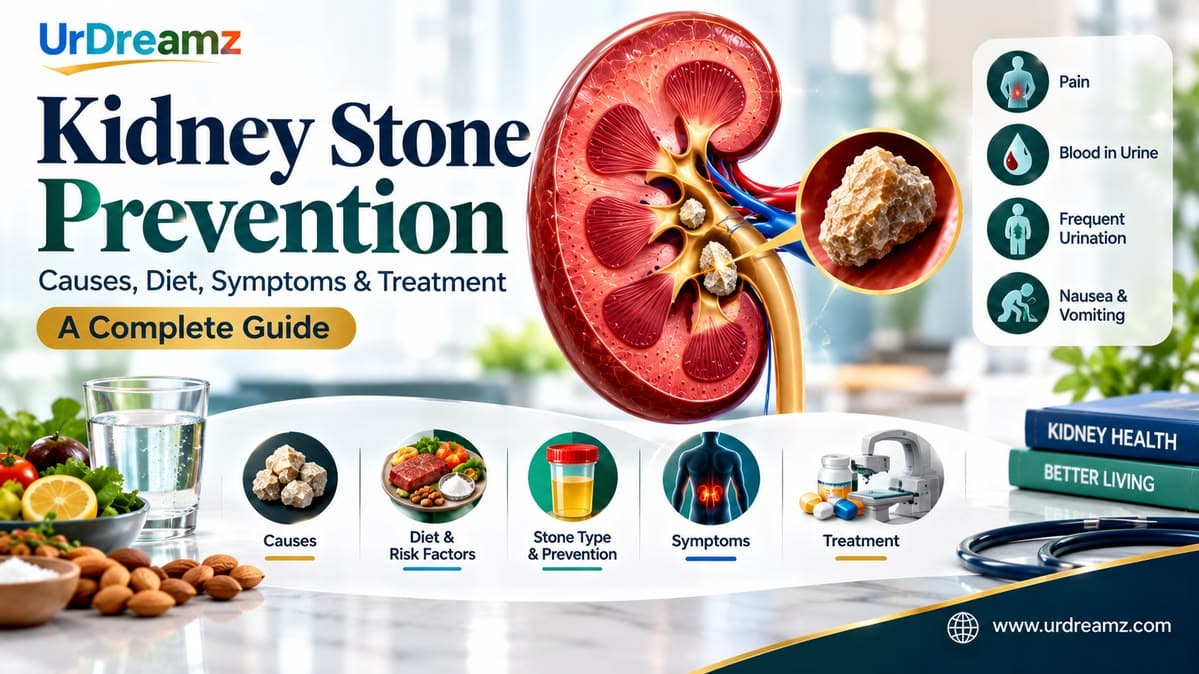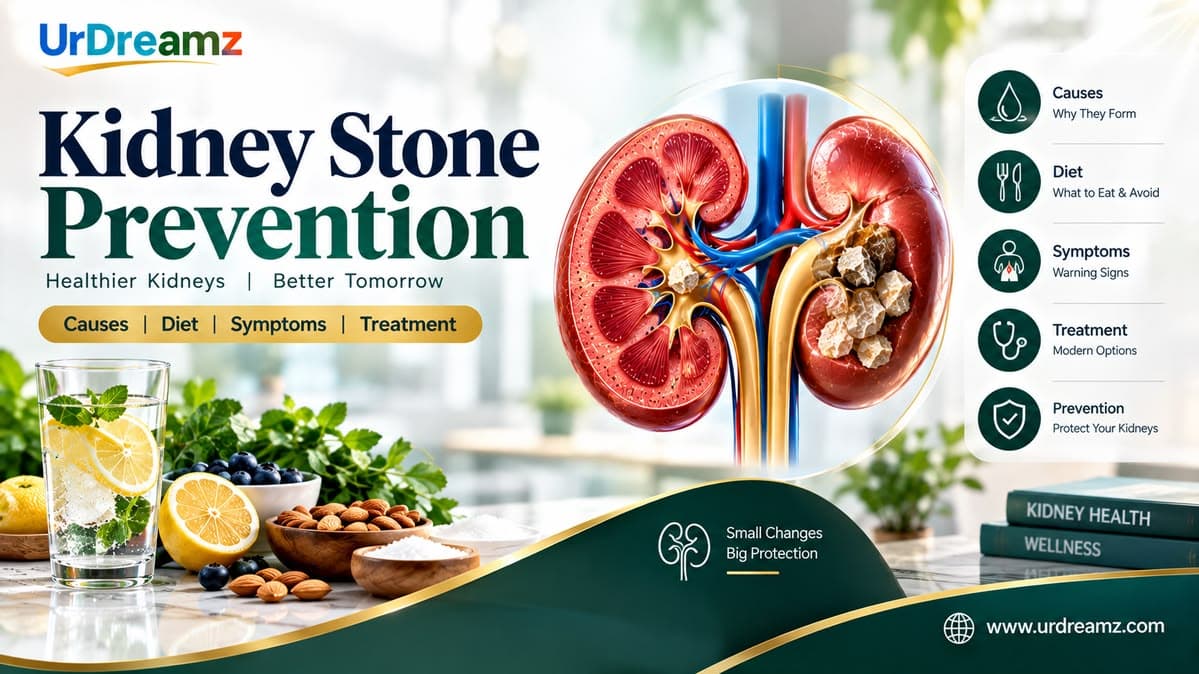
Kidney Stone Prevention: Causes, Diet, Symptoms, and Treatment
Anyone who has already had a kidney stone knows how much it can affect daily life — and the good news is that future stones are, in most cases, genuinely preventable once you understand exactly why they form. This guide explains what kidney stones are actually made of, the biggest risk factors behind them, how to figure out which type you're personally prone to, the warning symptoms to watch for, and what treatment actually involves when a stone won't pass on its own.
Introduction
Kidney stones are one of the most common urological problems worldwide, and anyone who has passed one will tell you it's an experience they never want to repeat. What many people don't realize, though, is that a first kidney stone is very often not the last one unless something specific changes — and that "something specific" is usually well within a person's control. This guide is built around exactly that idea: understanding precisely why stones form, in your own case, is the real key to making sure they don't come back.
This guide covers the full picture — what kidney stones are actually made of, the everyday habits and medical conditions that raise the risk of forming them, how to recognize the symptoms of an active stone, and what treatment genuinely involves once a stone is already there and isn't passing on its own. As with any medical topic, the goal here is to help you understand the condition clearly enough to have a well-informed conversation with a doctor — not to replace that conversation.
It's also worth saying at the outset just how common this condition really is. Kidney stones affect a significant portion of the adult population at some point in their lives, and rates have generally been rising in many parts of the world, partly linked to dietary patterns and partly to chronic under-hydration in daily life. For anyone who has already experienced one stone, research consistently shows a meaningfully elevated chance of forming another within the following several years if nothing about diet or hydration habits actually changes — which is exactly why this guide places so much emphasis on genuine prevention rather than only on how to deal with a stone once it's already there.
What Are Kidney Stones Made Of
To understand prevention, it helps to start with a clear picture of what a kidney stone actually is. Urine naturally carries a number of dissolved substances, and three of them are especially relevant here: calcium, oxalate, and uric acid. Under normal circumstances, these substances stay dissolved in urine and pass out of the body without any issue. A kidney stone forms when these particles stop staying dissolved and instead start clumping together in one specific area within the kidney, gradually building up into a hard, crystal-like mass.
A helpful way to picture this process is to think of urine the way you might think of a glass of water with sugar stirred into it. Up to a certain point, sugar dissolves completely and the water stays clear. But add too much sugar, or use too little water relative to the amount of sugar, and undissolved crystals start to settle out at the bottom instead of staying mixed in. Urine works in a broadly similar way with calcium, oxalate, and uric acid — enough water keeps everything properly dissolved and flowing out of the body, while too little water, or too much of these substances, allows solid crystals to begin forming instead.
The two conditions that make this clumping far more likely to happen are, first, having too much of these substances present in the urine at once, and second, the urine itself being too concentrated — meaning there isn't enough water present to keep everything properly dissolved and spread out. When both of these conditions occur together in the same area of the kidney, the particles bind to each other rather than staying separate, and a stone begins to form. Depending on which substance dominates, stones are generally classified as calcium-based, oxalate-based (often combined with calcium as calcium oxalate stones), or uric acid stones, and knowing which type a person tends to form is one of the most useful pieces of information for effective, targeted prevention — a topic covered in detail later in this guide.
It's worth noting that a stone doesn't appear overnight in most cases — it typically begins as microscopic crystals that gradually grow larger over weeks, months, or even years as more material continues to bind onto the original crystal structure, layer by layer. This slow, gradual process is actually good news from a prevention standpoint: it means there's usually a meaningful window of time during which correcting diet and hydration habits can prevent a small, early crystal from ever growing into a stone large enough to cause pain or block the urinary tract, well before any symptoms would otherwise appear.
Why Kidney Stones Form
Putting the two core conditions from the previous section together, kidney stones form when stone-forming substances are present in excess and urine is concentrated rather than diluted. Nearly every specific risk factor discussed throughout this guide — diet, hydration, medical conditions, and family history — ultimately works by tipping one or both of these two conditions in the wrong direction.
This is a genuinely useful mental model to hold onto while reading through the rest of this guide: any habit or condition that either adds more calcium, oxalate, or uric acid into the urine, or that reduces how much water is available to keep those substances dissolved, increases the risk of stone formation. Prevention, correspondingly, comes down to doing the opposite — reducing excess intake of the specific substances a person is prone to forming stones from, and consistently keeping urine dilute through adequate water intake.
There's also a third, less commonly discussed factor worth understanding: the body naturally produces certain substances, most notably citrate, that actively help prevent calcium from binding into stones in the first place, acting as a kind of built-in protective mechanism. Low citrate levels in urine — which can occur due to diet, certain medical conditions, or simply individual variation — reduce this natural protection, making stone formation more likely even when calcium and oxalate levels themselves aren't dramatically elevated. This is part of why some prevention approaches specifically focus on boosting citrate levels, whether through dietary changes such as citrus fruit intake or, in some cases, through a doctor-prescribed citrate supplement, rather than only focusing on reducing intake of the stone-forming substances themselves.
Major Risk Factors
Several everyday habits and health conditions are strongly associated with a higher risk of kidney stones. None of them guarantee a stone will form, and none of their absence guarantees one won't, but together they explain why some people form stones repeatedly while others never do.
It's worth reading through this list not as a checklist to worry over, but as a practical map of where to focus attention. Most people will recognize at least one or two of these factors in their own daily life, and the encouraging news is that the majority of them are genuinely modifiable through consistent, sustainable changes rather than requiring anything drastic or extreme.
| Risk Factor | How It Raises Risk |
|---|---|
| Low water/fluid intake | Produces concentrated urine, allowing stone-forming particles to clump together more easily |
| High animal protein intake (meat) | Increases uric acid and calcium excretion in urine while reducing a natural stone-inhibiting substance called citrate |
| High almond intake | Almonds are high in oxalate, directly contributing to oxalate-based stone formation in people prone to them |
| Excess salt intake | Increases calcium excretion into the urine, raising the concentration of calcium available to form stones |
| Excess sugar intake | Associated with increased calcium and oxalate excretion in some people |
| Obesity | Linked to changes in urine composition that favor stone formation |
| Diabetes and high blood pressure (and their medications) | Both conditions, along with some medications used to treat them, are associated with a higher tendency toward stone formation |
| Family history of kidney stones | A strong, independent risk factor, especially when combined with low water intake |
Water Intake: The Single Biggest Factor
Of every risk factor discussed in this guide, low water intake stands out as the single most significant and most consistently identified cause of kidney stones. People who habitually drink less water than their body needs have, by a wide margin, the highest likelihood of forming a stone at some point, regardless of most other factors.
The reasoning connects directly back to the basic mechanism described earlier: concentrated urine gives calcium, oxalate, and uric acid far less room to stay dissolved, making it dramatically easier for them to bind together into a stone. Adequate, consistent water intake throughout the day — not just occasionally, but as a steady daily habit — is widely considered the single most effective and lowest-cost prevention strategy available, and it remains important even for people who are also managing their diet or an underlying medical condition as part of their overall prevention plan.
It also helps to understand why "drinking a lot of water once in a while" isn't nearly as effective as steady, spread-out intake throughout the day. Urine concentration rises and falls fairly quickly based on how recently and how much fluid has been consumed, which means a large gap in water intake — for example, several hours during a busy workday, or simply forgetting to drink much before bed — can allow urine to become concentrated for a meaningful stretch of time even if total daily water intake looks adequate on paper. This is why the practical advice given by many urologists isn't just "drink enough water," but specifically "drink water consistently throughout the day," including a glass before bed and after waking, so that urine stays reasonably dilute around the clock rather than only for part of it.
Climate and activity level also matter here in a way that's easy to overlook. People living in hot climates, or anyone who sweats heavily through physical work or exercise, loses additional fluid through sweat on top of normal daily fluid needs, and this extra loss needs to be actively replaced with additional water intake, not just the same baseline amount recommended for someone in a cooler, more sedentary environment. This is particularly relevant across much of South Asia, where hot weather for large parts of the year, combined with physically demanding outdoor work for many people, creates exactly the conditions that make consistent, adequate hydration both more important and, unfortunately, more commonly overlooked.
Diet-Related Risk Factors
Diet plays a significant, well-documented role in kidney stone formation, though it's worth noting upfront that not every dietary trigger applies equally to every person — this is exactly why testing to identify a person's specific stone type, covered later in this guide, matters so much for effective prevention.
Rather than treating diet as a long list of forbidden foods, it's more useful and far more sustainable to think of it as a matter of proportion and balance. Very few people need to eliminate any single food entirely; what matters more is the overall pattern — how often high-risk foods appear in a typical week, and whether they're balanced by adequate water intake and other protective dietary habits, rather than any one meal or snack in isolation.
| Dietary Factor | Connection to Stones |
|---|---|
| Animal protein (red meat, organ meat) | Raises uric acid and can promote both uric acid stones and calcium stones |
| Almonds and other high-oxalate nuts | Contribute directly to oxalate-based stones |
| High salt intake | Increases urinary calcium, promoting calcium-based stones |
| High sugar intake | Associated with increased risk in some people, particularly alongside other risk factors |
| Low fluid intake | Concentrates urine regardless of what else is in the diet, amplifying every other dietary risk factor |
It's worth being specific about almonds here, since they're a commonly recommended "healthy snack" that many people wouldn't automatically connect to kidney stones. Almonds are naturally high in oxalate, a compound that, when it combines with calcium in the urine, forms the most common type of kidney stone. For someone who has already been identified as prone to oxalate or calcium oxalate stones, cutting back on almonds specifically — rather than nuts in general — can make a genuine, measurable difference.
It's also worth mentioning a handful of other commonly consumed high-oxalate foods, since almonds are far from the only source. Spinach, beets, certain nuts and seeds beyond almonds, chocolate, and tea are all relatively high in oxalate. This doesn't mean any of these foods need to be avoided entirely by everyone — for most people without a confirmed oxalate stone tendency, normal consumption of these foods poses little meaningful risk. But for someone who has specifically been identified, through the testing described later in this guide, as prone to oxalate-based stones, being aware of this broader list — rather than focusing on almonds alone — allows for a more genuinely effective prevention approach.
An important, often-missed detail about oxalate and calcium is that the relationship between them isn't simply "less calcium is always better." Counterintuitively, adequate dietary calcium — consumed together with meals, not as an isolated supplement — actually helps bind oxalate within the digestive tract before it's absorbed into the bloodstream, reducing the amount that ultimately ends up being excreted through the kidneys. This is why doctors generally recommend maintaining normal, adequate dietary calcium intake for most people prone to calcium oxalate stones, rather than drastically cutting calcium, and why any decision to specifically restrict calcium should be made together with a doctor based on actual testing results rather than general assumption.
Medical Conditions That Raise Risk
Beyond diet and hydration, certain existing medical conditions independently raise the risk of kidney stone formation, and understanding this connection matters for anyone already managing one of these conditions.
| Condition | Connection to Kidney Stones |
|---|---|
| Obesity | Associated with metabolic changes in urine composition that favor stone formation |
| Diabetes | Linked to a higher tendency toward uric acid stone formation in particular |
| High blood pressure (hypertension) | Associated with increased stone risk, and some blood pressure medications can further influence urinary calcium levels |
| Existing kidney conditions | Can affect how efficiently the kidneys process and excrete calcium, oxalate, and uric acid |
People managing diabetes or high blood pressure who are also on regular medication for these conditions may face a somewhat higher tendency toward stone formation, partly due to the underlying condition itself and, in some cases, partly related to the medications used to manage it. This isn't a reason to stop or adjust any prescribed medication independently — it's simply a reason to mention kidney stone history, or a family history of it, to the doctor managing these conditions, so that hydration and dietary prevention can be incorporated into the overall care plan.
The connection between obesity and kidney stones deserves a bit more explanation, since it's less immediately obvious than the connection with diet directly. Excess body weight is associated with changes in how the body processes and excretes several of the key substances discussed throughout this guide, including a tendency toward more acidic urine, which itself favors uric acid stone formation. Obesity is also frequently associated with insulin resistance, which independently affects how the kidneys handle calcium and uric acid. This is part of why gradual, sustainable weight management, alongside the dietary and hydration changes discussed elsewhere in this guide, is often recommended as part of a comprehensive kidney stone prevention plan for people carrying significant excess weight — not as an isolated goal, but as one contributing piece of the same overall picture.
Family History and Genetics
A family history of kidney stones is one of the strongest independent risk factors identified, separate from diet, hydration, or any existing medical condition. People with a parent or sibling who has had kidney stones face a meaningfully higher personal risk, and this risk becomes especially pronounced when combined with chronically low water intake — the combination of an inherited tendency and a daily habit that concentrates urine is, for many people, exactly how a first stone eventually forms.
Knowing about a family history of kidney stones is genuinely useful information, not just background trivia — it's a signal that hydration and dietary prevention habits deserve extra attention and consistency, and it's worth mentioning specifically to a doctor, since it may influence recommendations around testing and monitoring even before any symptoms appear.
The genetic side of kidney stones is an area that's still being actively researched, and while a single clear-cut "kidney stone gene" doesn't explain every case, certain inherited traits affecting how the body handles calcium, oxalate, and uric acid clearly run in families, alongside some less common but more directly hereditary kidney stone conditions. For most people, this doesn't mean a family history should be treated as a guarantee that stones are inevitable — it simply means that the daily habits discussed throughout this guide, particularly consistent hydration, deserve to be taken more seriously and started earlier, ideally well before a first stone ever has the chance to form, rather than only after it already has.
Risk Factor Impact Chart
Symptoms of a Kidney Stone
| Symptom | What It May Feel Like |
|---|---|
| Severe pain in the side or back | Often sharp and sudden, typically below the ribs, and can come in waves |
| Pain radiating to the lower abdomen or groin | Occurs as a stone moves further down the urinary tract |
| Pain during urination | A burning sensation, particularly if the stone has moved closer to the bladder |
| Pink, red, or brown urine | Indicates blood in the urine, a common sign of a stone irritating the urinary tract |
| Cloudy or foul-smelling urine | Can indicate a stone alongside a possible urinary infection |
| Frequent urge to urinate | Often occurs as a stone nears the bladder |
| Nausea and vomiting | Commonly accompanies severe stone-related pain |
| Fever and chills | A warning sign of a possible associated infection, requiring urgent medical attention |
Not every kidney stone causes noticeable symptoms — smaller stones can sometimes pass unnoticed, or be discovered incidentally during imaging done for another reason. Larger stones, or stones that become lodged somewhere along the urinary tract, are far more likely to cause the kind of sudden, severe pain kidney stones are widely known for.
It's worth describing what this pain characteristically feels like in a bit more detail, since it has a fairly distinctive pattern that many people find genuinely helpful to recognize in advance. Kidney stone pain, often called renal colic, typically comes in intense waves rather than staying constant — building to a sharp peak over several minutes, easing somewhat, and then building again, often described as some of the most severe pain a person can experience. Unlike many other types of abdominal or back pain, changing position generally doesn't provide meaningful relief, since the pain originates from the stretching and spasming of the ureter itself as it tries to push the stone along, rather than from muscular strain that might respond to rest or repositioning. This particular, restless, wave-like quality — combined with the fact that no position offers relief — is often one of the clearest clues pointing toward a kidney stone rather than another cause of abdominal or back pain.
Pain Location Chart
Kidney stone pain often changes location as the stone itself moves through the urinary tract, which is genuinely useful to understand rather than confusing.
This general pattern is part of why doctors ask detailed questions about exactly where pain is felt and how it has changed over time — the location genuinely helps narrow down roughly where a stone currently sits along its path out of the body.
Getting Tested: Know Your Stone Type
One of the most practical, actionable pieces of advice in this entire guide is simple: get tested to find out exactly which type of stone you personally tend to form, rather than guessing or applying generic advice that may not actually apply to your situation. Since calcium, oxalate, and uric acid stones each have somewhat different dietary triggers, knowing which one applies to you turns vague general advice into a specific, effective prevention plan.
| Test | What It Reveals |
|---|---|
| Stone analysis (if a stone has been passed or removed) | Directly identifies the exact composition of the stone — calcium oxalate, uric acid, or another type |
| 24-hour urine collection | Measures how much calcium, oxalate, uric acid, sodium, and citrate are being excreted, helping identify the specific underlying imbalance |
| Blood tests | Checks calcium, uric acid, and kidney function, and can help identify any underlying metabolic contributor |
| Imaging (ultrasound or CT scan) | Confirms the presence, size, and location of a stone |
Once the specific stone type is known, prevention becomes far more targeted: someone with confirmed oxalate stones has good reason to specifically reduce high-oxalate foods like almonds, while someone with confirmed uric acid stones benefits more from reducing animal protein and possibly managing blood sugar and weight. Testing removes the guesswork and makes every other prevention step in this guide meaningfully more effective.
It's genuinely worth emphasizing how often this step gets skipped in real life, and how much of a difference it can make when it isn't. Many people who experience a first kidney stone simply receive general, one-size-fits-all advice — "drink more water, eat less salt" — without ever actually finding out which specific type of stone they formed or why. While that general advice isn't wrong, it's also often incomplete, since it may miss the one or two factors that are actually driving stone formation in that particular person's body. A relatively simple, one-time stone analysis or 24-hour urine collection can turn years of vague, generic caution into a clear, specific, and far more effective prevention plan — which is exactly why this guide encourages treating that test not as an optional extra step, but as one of the most valuable things a person can do after a first kidney stone episode.
Prevention Diet by Stone Type
| Stone Type | Dietary Focus |
|---|---|
| Calcium oxalate stones | Reduce high-oxalate foods (such as almonds), moderate salt intake, maintain adequate (not excessive or deficient) dietary calcium, and drink plenty of water |
| Uric acid stones | Reduce animal protein and red meat intake, manage blood sugar and weight if relevant, and drink plenty of water |
| Calcium phosphate stones | Moderate salt and animal protein intake, and address any underlying metabolic or urinary pH imbalance identified through testing |
Across every stone type, one recommendation stays constant: consistent, adequate water intake throughout the day. Diet adjustments matter and can meaningfully reduce risk, but they work best as an addition to good hydration rather than a substitute for it.
Daily Prevention Habits
- Drink water consistently throughout the day rather than a large amount all at once, aiming for pale yellow urine as a simple, practical indicator of adequate hydration.
- Moderate animal protein intake, particularly red meat and organ meat, rather than eliminating protein entirely.
- Reduce high-oxalate foods like almonds specifically if testing has identified oxalate or calcium oxalate stones as your type.
- Cut back on added salt in cooking and processed foods, since excess sodium increases urinary calcium.
- Limit added sugar, particularly sugary drinks, as part of a broader healthy diet.
- Manage weight, blood sugar, and blood pressure in coordination with a doctor if any of these conditions are already present.
- Get tested after a first stone to identify the specific type and tailor prevention accordingly, rather than relying on generic advice alone.
Treatment When a Stone Won't Pass
Many smaller kidney stones eventually pass on their own with adequate hydration and time, but some stones become lodged somewhere along the ureter — the narrow tube carrying urine from the kidney to the bladder — and don't move on their own. When this happens, doctors have several treatment options available, chosen based on the stone's size, location, and how much discomfort it's causing.
Understanding Tamsulosin
One commonly used medication for a stone that's stuck in the ureter is called Tamsulosin. It works by relaxing the smooth muscle within the ureter and bladder area, effectively widening the passage and making it considerably easier for a stone to move through and pass naturally, without the need for a surgical procedure.
Tamsulosin belongs to a broader class of medications called alpha-blockers, originally developed for an unrelated condition affecting the prostate, and its usefulness for kidney stones was recognized because it happens to relax the same type of smooth muscle found in the ureter. This kind of medication repurposing is fairly common in medicine, and it's a good example of why understanding roughly how a medication works, rather than just its name, can make its use feel far less mysterious or intimidating.
When a doctor does confirm this is the right situation for it, Tamsulosin is generally given a reasonable window of time to work, since many stones treated this way do eventually pass on their own once the passage is relaxed and widened. If a stone still hasn't passed after this trial period, that's when doctors typically move on to considering a more direct procedure.
It's worth understanding, in general terms, what to expect during this Tamsulosin trial period, since knowing what's actually happening can make an uncomfortable waiting period feel considerably less uncertain. During this time, doctors typically recommend continuing to drink plenty of water, staying reasonably active (rather than resting in bed, since movement can genuinely help a stone work its way down), and managing pain with medication as advised, while watching for the stone to eventually pass, sometimes noticeably and sometimes without ever being directly seen. Straining urine through a fine mesh or cloth during this period is a simple, commonly recommended way to actually catch the stone once it passes, which then allows it to be sent for the stone analysis testing discussed earlier in this guide — turning what feels like just "waiting it out" into a genuinely useful diagnostic opportunity as well.
Lithotripsy and Surgical Options
| Treatment | How It Works |
|---|---|
| Extracorporeal shock wave lithotripsy (ESWL) | Uses focused shock waves from outside the body to break a stone into smaller fragments that can then pass naturally in urine |
| Ureteroscopy | A thin scope is passed through the urinary tract to locate and remove or break up a stone directly, often used for stones lodged in the ureter |
| Percutaneous nephrolithotomy | A more involved procedure used for larger stones, involving a small incision to access and remove the stone directly from the kidney |
The choice between these options depends on the stone's size, exact location, composition, and the patient's overall health, and this decision is always made by a urologist based on imaging and clinical judgment, taking into account the person's individual circumstances rather than a single fixed rule applied to everyone. — not something to self-select based on general information alone. It's genuinely reassuring to know, though, that even stones that don't pass naturally almost always have an effective treatment pathway available.
It's worth briefly clarifying how these procedures differ in terms of what a patient can generally expect, since the idea of a "kidney stone procedure" can sound far more daunting than most of these options actually are in practice. Shock wave lithotripsy is typically done without any incision at all, often on an outpatient basis, with the patient going home the same day once the stone has been fragmented into pieces small enough to pass naturally afterward. Ureteroscopy, while it does involve inserting a thin scope through the natural urinary passage, also generally requires no external incision and is commonly performed as a same-day or overnight procedure. Percutaneous nephrolithotomy is the more involved option of the three, reserved mainly for larger or more complex stones, and does involve a small incision along with a typically longer recovery period — but even this remains a far less invasive procedure today than older surgical approaches used in the past, reflecting how significantly kidney stone treatment has advanced in recent decades.
Treatment Pathway Chart
When to See a Doctor Urgently
Most kidney stone pain, while intense, is not itself a medical emergency, but a few specific signs mean urgent medical attention is needed right away: fever or chills alongside stone pain (which can indicate a serious infection), an inability to urinate at all, severe pain that isn't controlled by usual measures, or persistent vomiting that prevents staying hydrated. Even without these urgent signs, any new, significant flank or back pain, especially with blood in the urine, is worth having evaluated promptly by a doctor rather than waiting to see if it resolves.
The combination of fever and stone-related pain deserves particular emphasis, since it represents one of the few true urological emergencies related to kidney stones. When a stone blocks the normal flow of urine and an infection develops behind that blockage, the infection has no natural way to drain out of the body, which can allow it to progress rapidly and become serious within a relatively short period of time. This specific combination — stone symptoms plus fever — is generally treated as requiring same-day medical attention rather than something to monitor at home overnight, precisely because the standard treatment in this situation often involves urgently relieving the blockage, sometimes with a temporary drainage tube, alongside antibiotics, rather than simply waiting for pain medication and hydration to help the stone pass on its own as might be appropriate in less urgent situations.
A few specific situations where seeing a doctor sooner, rather than waiting, makes sense are worth restating clearly here as well: fever combined with stone pain, complete inability to urinate, uncontrolled pain, or vomiting severe enough to prevent adequate hydration all warrant urgent evaluation rather than a wait-and-see approach at home.Recurrence: Why Stones Come Back
One of the most important things to understand about kidney stones is that having one significantly raises the likelihood of having another, unless the underlying cause is specifically addressed. This isn't because the body is simply "prone" to stones in some vague, unchangeable way — it's because whatever combination of habits and conditions produced the first stone is very often still present afterward, quietly continuing to work in the background exactly as it did before.
This is precisely why the testing described earlier in this guide matters so much after a first stone, rather than only after several repeat episodes. Identifying the exact stone type and the specific dietary or metabolic factor behind it allows prevention efforts to be targeted and genuinely effective, rather than relying on generic advice that may not address the actual cause in a given person's case. Many people who go on to have repeated stones never actually had this kind of targeted evaluation done after their first episode, which is a genuinely avoidable gap in care that this guide is specifically trying to help close.
It's also worth mentioning that even with excellent prevention habits, no approach can guarantee a stone will never form again — genetics and individual body chemistry still play a role that isn't entirely within anyone's control. What consistent hydration, targeted diet changes, and appropriate testing can do is meaningfully reduce the frequency and severity of future episodes, which, for most people who have experienced the pain of a kidney stone, represents a very real and very worthwhile improvement in quality of life.
Kidney Stones and Kidney Health Long-Term
Beyond the immediate pain and inconvenience of an active stone, it's worth understanding why kidney stone prevention matters for long-term kidney health more broadly. Repeated kidney stones, particularly larger ones or ones that go untreated for extended periods, can in some cases contribute to kidney damage over time, either through direct physical injury to kidney tissue or through repeated urinary tract obstruction and associated infections.
This connection is part of why kidney stones are considered a genuine kidney health issue rather than simply an isolated, temporary episode of pain to be managed and then forgotten about. Maintaining good hydration and addressing the specific dietary or metabolic factors behind stone formation isn't just about avoiding the next painful episode — it's also a meaningful part of protecting overall kidney function over the course of a lifetime, particularly for people who already have other risk factors for kidney health concerns, such as diabetes or high blood pressure, both of which were discussed earlier in this guide as independent kidney stone risk factors as well.
For anyone who has experienced multiple kidney stones, or who has any other known kidney health concern, periodic check-ins with a kidney specialist, sometimes called a nephrologist, alongside the urologist typically involved in direct stone treatment, can help ensure that both the stones themselves and the kidneys' overall long-term health are being properly monitored together, rather than being treated as two entirely separate concerns.
It's also worth noting that most people who experience one or even several kidney stones over a lifetime never go on to develop significant, lasting kidney damage, particularly when stones are identified and treated appropriately rather than left to sit untreated for extended periods. This is a genuinely reassuring point worth holding onto: the goal of everything covered in this guide isn't to create unnecessary worry about long-term kidney damage, but simply to explain why consistent prevention habits are worth maintaining as an ordinary, sustainable part of daily life, rather than something to think about only during or immediately after a painful episode.
Frequently Asked Questions
What is the best diet for kidney stone prevention?
The best diet depends on the specific stone type, but generally involves adequate water intake, moderate animal protein, limited high-oxalate foods, and moderate salt and sugar intake.
What foods should I avoid for kidney stone prevention?
Depending on stone type, commonly limited foods include high-oxalate foods like almonds, excess red meat, excess salt, and excess added sugar.
Are there supplements for kidney stone prevention?
Citrate-based supplements are sometimes recommended by doctors for specific stone types, but supplement use should be guided by testing and a doctor's advice rather than general assumption.
Is there medication for kidney stone prevention?
Yes, depending on stone type and underlying cause, doctors may prescribe specific medications to reduce urinary calcium, oxalate, or uric acid levels.
What should I drink to prevent kidney stones?
Plain water is the most effective and consistently recommended fluid for kidney stone prevention, taken steadily throughout the day.
What are practical tips for kidney stone prevention?
Drink water consistently, moderate animal protein and salt, reduce high-oxalate foods if relevant, manage weight and blood sugar, and get tested to know your specific stone type.
What are the symptoms of a kidney stone?
Severe flank or back pain, pain radiating to the lower abdomen, blood in the urine, painful urination, nausea, and in some cases fever are common symptoms.
What is the treatment for kidney stones?
Treatment ranges from hydration and watchful waiting for small stones, to medication like Tamsulosin to help a stone pass, to lithotripsy or surgical procedures for stones that don't pass on their own.
What medicine is used for kidney stones?
Tamsulosin is commonly used to relax the ureter and help a stone pass naturally, but it should only be used under a doctor's guidance after imaging confirms the stone's location.
Where is kidney stone pain usually located?
Pain often starts in the back or side below the ribs and can radiate toward the lower abdomen or groin as the stone moves down the urinary tract.
What causes kidney stones?
Kidney stones form when calcium, oxalate, or uric acid become too concentrated in urine, often due to low water intake, high animal protein or salt intake, obesity, diabetes, high blood pressure, or family history.
Is there a tablet for kidney stones?
Tamsulosin is a commonly used tablet to help a stone pass through the ureter, and other medications may be prescribed depending on the specific stone type and underlying cause.
What does kidney stone removal surgery involve?
Depending on the stone's size and location, removal may involve ureteroscopy, shock wave lithotripsy, or a more involved procedure called percutaneous nephrolithotomy for larger stones.
What is a kidney stone operation like?
Most kidney stone procedures today are minimally invasive, using scopes or shock waves rather than large surgical incisions, though the specific approach depends on stone size and location.
Does drinking almond milk or eating almonds cause kidney stones?
Almonds are high in oxalate, which can contribute to oxalate-based stone formation in people prone to that stone type, so reducing almond intake is often recommended specifically for those individuals.
Does eating too much meat cause kidney stones?
Yes, high animal protein intake raises uric acid and calcium excretion while reducing citrate, a natural stone inhibitor, increasing the risk of both uric acid and calcium stones.
Can diabetes or high blood pressure cause kidney stones?
Both conditions are associated with a higher tendency toward kidney stone formation, and some medications used to manage them can further influence urinary calcium or other stone-forming factors.
Is kidney stone risk genetic?
Yes, a family history of kidney stones is a strong, independent risk factor, especially when combined with low water intake.
How much water should I drink to prevent kidney stones?
Enough to keep urine consistently pale yellow throughout the day is a practical general guide, though a doctor can advise a specific target based on individual health factors.
How do I know what type of kidney stone I have?
Stone analysis of a passed or removed stone, along with 24-hour urine testing and blood tests, can identify the exact stone type and the underlying imbalance causing it.
Conclusion
Kidney stones are common, often painful, and for many people, frustratingly recurrent — but they are also, in the large majority of cases, genuinely preventable once the underlying cause is properly understood. Nearly every major risk factor discussed in this guide, from low water intake to diet to underlying medical conditions, comes down to the same basic mechanism: too much calcium, oxalate, or uric acid concentrated in urine that isn't dilute enough to keep them properly dissolved.
The most practical, actionable takeaway is simple: drink water consistently, moderate the specific dietary triggers relevant to your situation, and — most importantly — get tested after a first stone to find out exactly which type you're prone to, rather than relying on generic advice alone. For stones that are already present and not passing on their own, effective treatment options exist, from doctor-guided medication like Tamsulosin to lithotripsy and other procedures, and none of them need to be approached with fear once the process is properly understood. Prevention, done consistently, remains the most powerful tool available — and it starts with something as simple as a glass of water.
If there's one message worth carrying away from this entire guide, it's that a kidney stone diagnosis is not simply bad luck to be endured and then forgotten about until the next one arrives. It's specific, usable information about your own body — information that, combined with proper testing and consistent daily habits, gives you a genuinely strong chance of making the next stone the last one, rather than simply the next in a series.