Human Testes Transplant: Reality or Myth? The Real History Behind a Persistent Rumor
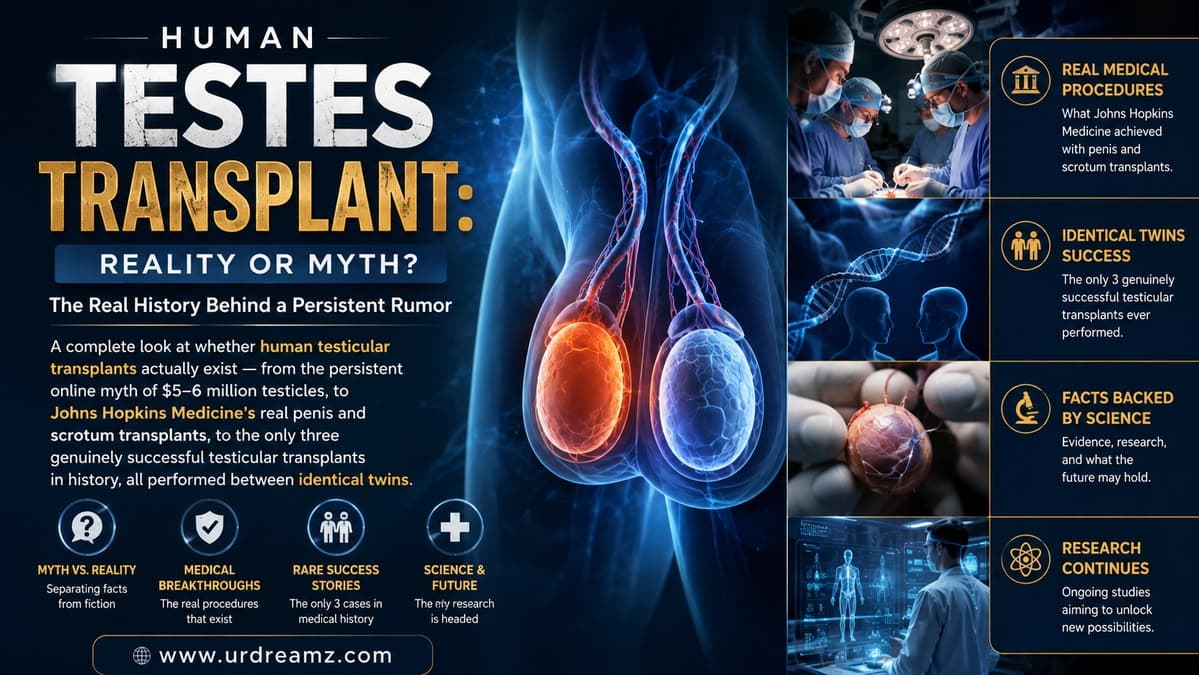
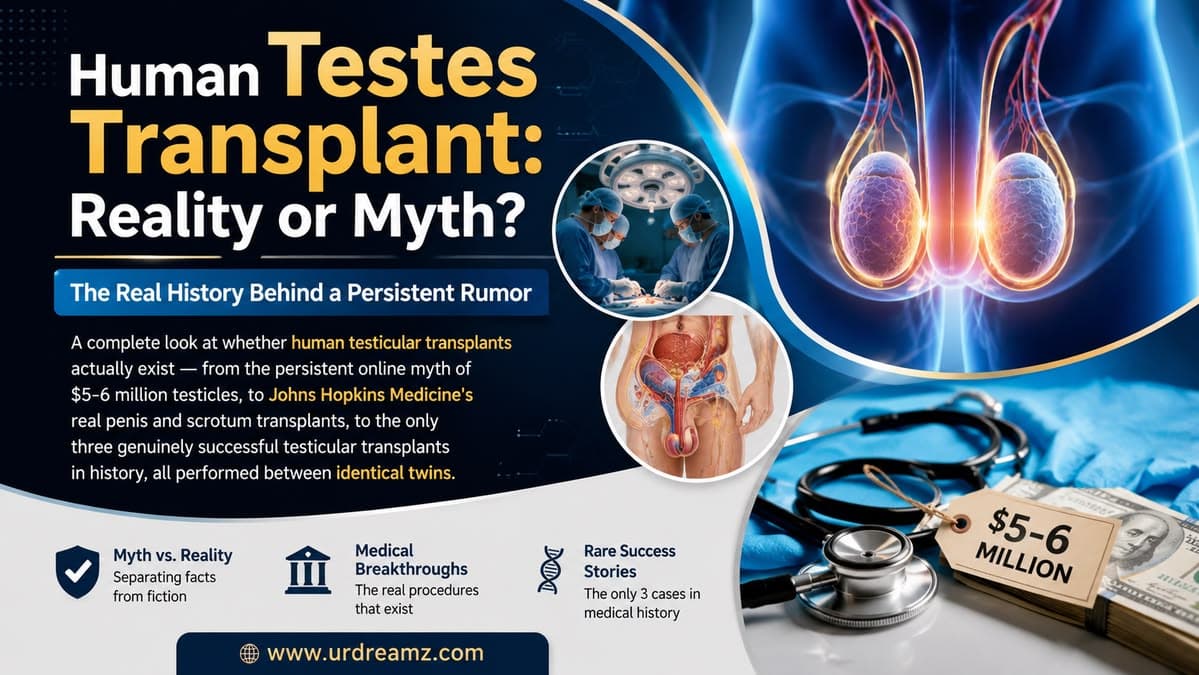
A rumor circulating widely online claims that a single human testicle costs somewhere between 5 and 6 million dollars, supposedly because testicular transplants are so rare and difficult to perform. This claim is entirely false — not because testicles don't have value in some abstract sense, but because a general testicular transplant between two unrelated people is, for deeply rooted biological and ethical reasons, something modern medicine essentially does not perform at all. This guide walks through the real history of testicular transplantation — including the only three genuinely successful cases ever recorded, all between identical twins — and explains exactly why this procedure remains almost entirely off-limits outside of those very specific circumstances.
1. The Viral Myth: Do Testicles Really Cost Millions of Dollars?
A persistent claim circulating on social media and in casual conversation suggests that a single human testicle is worth somewhere between 5 and 6 million dollars, with the implication that testicular transplants are simply an extremely expensive but otherwise normal medical procedure. This claim is fundamentally false. It is not that testicular transplants are merely expensive — it is that a general testicular transplant between two unrelated individuals is not a procedure that modern medicine performs at all, for reasons rooted far more deeply in biology, genetics, and ethics than in cost or surgical difficulty.
2. Testis vs Testes: Getting the Terminology Right
Before going further, it helps to clarify the terminology. A single organ is correctly referred to as a testis, while the pair together is referred to as the testes. These are the two egg-shaped male reproductive organs housed within the scrotum, responsible for two of the most fundamental aspects of male biology: sperm production and testosterone production.
3. What Do the Testes Actually Do?
The testes perform two distinct but related biological functions. First, they are the site of spermatogenesis — the continuous production of sperm cells, which carry a man's genetic material and are essential for biological reproduction. Second, they are the primary source of testosterone, the hormone responsible for male secondary sexual characteristics, muscle mass, bone density, libido, and numerous other aspects of male physiology. Understanding these two functions together is essential to understanding exactly why a testicular transplant between unrelated individuals presents such a profound biological problem.
4. The Core Problem: Whose Sperm Would It Really Be?
Imagine a scenario where a man with non-functional testes receives a testicular transplant from a different, unrelated donor. The transplanted testes would continue doing exactly what testes do: producing sperm. But whose sperm would this actually be? The sperm produced would carry the genetic material — the DNA — of the original donor, not the recipient. This means that if the recipient later fathered a child using this transplanted tissue, the resulting child would be genetically related to the donor, not to the recipient carrying the transplanted organ. This creates an extraordinary and almost unprecedented biological and identity dilemma: a man could technically raise a child who is, at the genetic level, actually the biological offspring of a completely different, often unknown man.
5. The Ethical Minefield of Testicular Transplantation
This genetic mismatch problem creates a genuinely unique ethical minefield that most other organ transplants simply do not face. A heart, kidney, or liver transplant does not alter the genetic identity of any child the recipient might have. A testicular transplant, by contrast, would directly transfer reproductive genetic material from donor to recipient's future offspring — raising deep questions about personal identity, biological fatherhood, informed consent from the donor regarding his genetic legacy, and the child's own right to know their genetic origins. These are not simple technical hurdles; they represent fundamental questions about what it means to be a biological parent.
6. Legal and Religious Dimensions of the Debate
Beyond the purely ethical concerns, testicular transplantation between unrelated individuals raises significant legal and religious questions in many jurisdictions and belief systems around the world. Questions surrounding legitimate parentage, inheritance rights, and religious definitions of lineage and paternity become deeply complicated when a child's genetic father and legal or social father are two entirely different people due to a transplanted organ. In many legal and religious frameworks, this scenario is considered deeply problematic or outright impermissible, which is part of why this procedure has never moved forward as a mainstream, approved medical practice.
7. Johns Hopkins Medicine: A Real Center for Transplant Innovation
Johns Hopkins Medicine, a major research and medical center in the United States, has genuinely performed numerous groundbreaking and highly complex transplant surgeries over the years, including procedures involving male reproductive anatomy. However, it is important to understand precisely what has and has not been accomplished at institutions like this, since the myths surrounding testicular transplants often blur these lines.
8. Penis Transplants: A Real and Established Procedure
Penis transplantation is a real, documented surgical procedure that has been successfully performed at major medical institutions, including Johns Hopkins Medicine. These procedures are typically performed for men who have lost their penis due to trauma, injury (including combat-related injuries), or cancer treatment. Because the penis itself does not produce sperm or carry a person's own reproductive genetic material in the way the testes do, transplanting this organ does not carry the same fundamental genetic-identity dilemma described earlier regarding testes.
9. Scrotum Transplants: Also Real, But Different From Testes
Similarly, transplantation of the scrotum — the external pouch of skin that houses the testes — has also been successfully performed at Johns Hopkins Medicine, often as part of the same complex reconstructive surgeries involving penis transplantation following severe injury. Critically, however, these scrotum transplants have specifically excluded transplanting the testes themselves. The recipient's own testes, when preserved and viable, are placed inside the newly transplanted scrotal tissue, meaning the reproductive and hormonal function still belongs entirely to the recipient's own original organs, while only the surrounding external tissue comes from a donor.
10. Why Individual Testicular Transplants Between Strangers Remain Unperformed
Despite these genuine advances in penis and scrotum transplantation, actual testicular transplantation between two unrelated, genetically distinct individuals has never been established as a standard or ethically approved medical procedure, and remains essentially impossible under current medical, ethical, and legal frameworks — precisely because of the genetic-identity issues described above. This is the central point that the viral "million-dollar testicle" myth gets fundamentally wrong: the rarity is not primarily about surgical cost or difficulty, but about a problem the medical and ethical community has, for the most part, deliberately chosen not to solve.
11. How Many Successful Testicular Transplants Exist in History?
Throughout the entire recorded history of medicine, there have been exactly three documented, genuinely successful testicular transplants performed between two separate individuals. All three of these successful cases share one critical common factor: in every single instance, the transplant took place between identical twins. This detail is not a coincidence — it is the entire reason these three cases succeeded where a transplant between unrelated individuals could not.
12. Dr. Lydston: The 1914 Pioneer
The first documented attempt at human testicular transplantation was performed in 1914 by a doctor named Lydston. At the time of this experiment, Dr. Lydston himself was 55 years old, and the entire endeavor was born out of a deeply personal motivation that had little to do with treating infertility or hormonal deficiency in a patient — it was, quite remarkably, an act of self-experimentation.
13. A Doctor's Desperate Search for Youth
Dr. Lydston, feeling the effects of aging at 55, became captivated by the idea that transplanting younger testicular tissue into his own body might restore some of the vigor and vitality of youth. This belief was consistent with a broader wave of pseudo-scientific interest in "rejuvenation" therapies that circulated in early 20th-century medicine, long before modern immunology and genetics were well understood, when many doctors held genuinely mistaken beliefs about what transplanted glandular tissue could accomplish in the body.
14. The Tragic Source: A True Story From 1914
The opportunity for Dr. Lydston's experiment arose under tragic circumstances: an 18-year-old boy died by suicide, and when Lydston learned of this, he moved with remarkable speed. Within just 17 hours of the young man's death, Lydston had obtained the deceased boy's testes, brought them to himself, and — under local anesthesia administered with the help of a friend — surgically implanted this tissue into his own testicular region.
15. Self-Surgery: Lydston Operates on Himself
What makes this episode particularly extraordinary in medical history is that Lydston was not merely the doctor performing a procedure on a patient — he was simultaneously the surgeon and the subject. With the assistance of a colleague, he anesthetized himself and proceeded to implant the donor testicular tissue directly alongside his own testes. For approximately the first seven days following the procedure, Lydston reported that everything appeared to be progressing normally, with no significant complications.
16. The First Complication: Pain and Swelling
Seven days after the initial procedure, Lydston began experiencing significant pain, and the transplanted area became visibly swollen. This reaction is now understood, from a modern medical perspective, to be a classic sign of the body's immune system recognizing the transplanted tissue as foreign and mounting a rejection response — precisely the biological problem that makes non-twin transplants of this kind so difficult, since Lydston and the deceased donor were, of course, entirely genetically unrelated individuals.
17. Emergency Corrective Surgery
Roughly four to five hours after the pain and swelling began, Lydston underwent an emergency corrective surgery to remove the transplanted tissue that had triggered this immune reaction. During this follow-up procedure, some of the implanted tissue was successfully removed, while a portion remained in place, since it had already begun to partially break down and integrate into the surrounding area, making complete removal impractical at that stage.
18. Lydston's Claims of Feeling Younger
Despite this significant complication, Lydston publicly claimed that the procedure had genuinely rejuvenated him — reporting that he felt younger, more energetic, and that youthful feelings and vitality had returned to him following the transplant. These claims generated considerable public and medical interest at the time, feeding into the broader cultural fascination with rejuvenation science that characterized this era of medical history.
19. The Second Experiment: Creating "Chesticles"
Encouraged, or perhaps undeterred, by his first experiment, Lydston proceeded to a second, even stranger self-experiment. This time, he took testicular tissue, sliced it into eight separate pieces, and through abdominal surgery, implanted these pieces directly onto his own chest — a procedure that later became informally and memorably nicknamed "chesticles."
20. Why Lydston Placed Tissue on His Chest
Lydston's reasoning behind this second experiment was not related to sperm production, which would have been biologically meaningless in this new location — instead, his goal was specifically focused on testosterone. His theory was that once implanted into the chest, this tissue would develop its own blood supply through new blood vessel formation, allowing it to receive nutrients through circulating blood and, in his belief, continue producing testosterone from this new location, which he hoped would enhance the masculinizing hormonal effects he was seeking. Once again, Lydston reported that he experienced a renewed sense of youthful vigor and vitality following this second procedure.
21. The Scientific Verdict: Placebo Effect
When subsequent doctors and researchers conducted deeper investigation into Lydston's claims, the consensus that emerged was clear and, in retrospect, unsurprising: Lydston's reported improvements were attributed to the placebo effect rather than any genuine physiological benefit from the transplanted tissue. In other words, the tissue itself was not meaningfully functioning or producing usable testosterone in these new, biologically inappropriate locations — the improvements Lydston reported were a product of his own belief and expectation that the procedure would work, rather than a real biological mechanism.
22. Understanding the Placebo Effect in Medical History
The placebo effect refers to a genuine, well-documented phenomenon in which a person experiences real, subjectively noticeable improvements in how they feel, purely as a result of believing they have received an effective treatment — even when that treatment has no direct physiological mechanism capable of producing the reported benefit. Lydston's case remains one of the more colorful early historical examples of this phenomenon in the medical literature, illustrating how strongly personal belief and expectation can shape a person's perceived experience of health and vitality, independent of any underlying biological reality.
23. The 1978 Silber Twin Transplant
Decades after Lydston's flawed and scientifically discredited experiments, the field of testicular transplantation achieved its first genuinely successful, medically validated outcome in 1978, thanks to a doctor named Silber. This transplant was performed between a pair of twin brothers, one of whom had been born with a specific congenital condition affecting the testes.
24. What Is Anorchia?
Anorchia refers to a rare congenital condition in which a person is born with no testes at all. One of the twin brothers involved in Dr. Silber's 1978 procedure was born with this condition, meaning he had no functioning testicular tissue of his own to produce either sperm or testosterone naturally.
25. What Is Monorchidism?
A related, though distinct, condition worth understanding is monorchidism, in which a person is born with only a single testis rather than the typical pair. Individuals with monorchidism are generally still able to produce normal levels of sperm and testosterone from their single remaining testis and are typically considered biologically normal in terms of fertility and hormonal function, distinguishing this condition clearly from the more severe reproductive limitations associated with anorchia, where no functioning testicular tissue exists at all.
26. Why the Twin Transplant Actually Worked
With the mutual agreement of both twin brothers, the twin who had two functioning testes donated one of his testes to his brother who had been born with anorchia. Critically, because the two brothers were identical twins, they shared essentially identical genetic material — meaning the recipient brother's immune system did not recognize the transplanted testis as foreign tissue, avoiding the immune rejection response that had doomed Lydston's earlier, non-twin experiment decades before. This genetic identity between identical twins is precisely the factor that made this 1978 transplant succeed where transplants between unrelated or even non-identical siblings would very likely fail.
27. The Proof: Five Children Born
The clearest possible evidence of this transplant's success came afterward: the recipient brother, who had been born with anorchia and previously had no functioning testicular tissue of his own, went on to father five children following the transplant. This outcome definitively demonstrated that the transplanted testis had successfully integrated into the recipient's body and was fully functional, producing viable sperm capable of natural conception — making this the first genuinely successful, medically documented testicular transplant in recorded history.
28. The 1980 Second Silber Twin Transplant
Building on the success of his 1978 procedure, Dr. Silber performed a second successful testicular transplant in 1980, once again between a pair of identical twins where one twin had been born with anorchia, following essentially the same surgical approach and immunological logic that had made the first transplant successful. This second case further reinforced the pattern that had already begun to emerge: testicular transplantation between identical twins could succeed, while transplantation between genetically distinct individuals remained fundamentally problematic.
29. The 2019 United States Twin Transplant
Nearly four decades later, in 2019, a third successful testicular transplant was performed in the United States, once again between identical twin brothers. As with the two earlier Silber cases, this transplant succeeded specifically because the genetic identity shared between identical twins eliminated the immune rejection barrier that has otherwise made testicular transplantation between unrelated individuals essentially unworkable.
30. The Common Thread: Why All Three Successes Involved Twins
Across the entire recorded history of human testicular transplantation, exactly three cases have been genuinely successful — in 1978, 1980, and 2019 — and every single one of them was performed between identical twin brothers. This consistent pattern is not a coincidence; it is the central, defining fact of testicular transplant history, and it directly explains why the persistent online myth about routine, expensive testicular transplants between unrelated individuals has no basis in medical reality.
| Year | Surgeon | Relationship Between Donor and Recipient | Outcome |
|---|---|---|---|
| 1914 | Dr. Lydston | Unrelated (self-experimentation using a deceased donor) | Failed; immune rejection, later attributed to placebo effect |
| 1978 | Dr. Silber | Identical twins | Successful; recipient fathered five children |
| 1980 | Dr. Silber | Identical twins | Successful |
| 2019 | United States medical team | Identical twins | Successful |
31. Immune Rejection: The Real Barrier to Non-Twin Transplants
The human immune system is designed to recognize and attack foreign tissue that does not match a person's own genetic and immunological markers — this is precisely the mechanism responsible for organ transplant rejection across virtually all types of transplantation, not just testicular tissue. Identical twins are the one naturally occurring exception to this rule among humans, since they originate from a single fertilized egg that splits early in development, resulting in two individuals who share essentially identical DNA and immune system markers. This is why organ and tissue transplants between identical twins carry a dramatically lower risk of rejection compared to transplants between any other two individuals, including even non-identical siblings or parents and children, who share only partial genetic similarity.
32. Testicular Prostheses: The Real, Common Alternative
For men born with anorchia, or who have lost a testis due to injury, cancer, or other medical conditions, a far more common and widely available option exists: testicular prostheses, sometimes referred to as prosthetic or "silicone" testicles. This procedure, formally known as testicular prosthesis implantation, involves surgically placing a medically approved silicone implant inside the scrotum to restore a natural physical appearance.
33. What Testicular Prostheses Can and Cannot Do
It is essential to understand exactly what a testicular prosthesis is — and is not. A testicular prosthesis is a purely cosmetic, structural implant with absolutely no connection to sperm production, testosterone production, or fertility of any kind. Unlike an actual testis, a prosthesis has no blood supply integration relevant to hormone or sperm production and serves no reproductive or hormonal function whatsoever — its sole purpose is to restore natural physical appearance and psychological comfort for the patient.
34. Risks Associated With Testicular Prostheses
While testicular prosthesis implantation is a well-established, commonly performed procedure, it is not entirely without risk. Potential complications can include swelling, pain, localized inflammation, and, in some cases, an immune or inflammatory rejection response to the implant material itself, which may require follow-up surgical intervention. These risks are generally well-managed by experienced surgeons and are considered relatively low compared to the complexity and near-impossibility of an actual functional testicular transplant.
| Feature | Testicular Transplant | Testicular Prosthesis |
|---|---|---|
| Purpose | Restore sperm and testosterone production | Restore physical appearance only |
| Sperm Production | Yes, if successful (donor's genetic material) | No |
| Testosterone Production | Yes, if successful | No |
| Success Outside Identical Twins | Essentially none recorded | Not applicable; widely performed successfully |
| Primary Risks | Severe immune rejection, genetic-identity complications | Swelling, pain, inflammation, implant rejection |
35. Modern Alternatives for Fertility and Testosterone
For men affected by anorchia, testicular loss, or non-functioning testes who are not identical twins with an available donor sibling, modern medicine offers alternative paths to both fertility and hormonal health that do not carry the same ethical and immunological complications as testicular transplantation. These include testosterone replacement therapy to address hormonal needs, sperm donation or the use of previously frozen sperm (if available from before testicular loss) combined with in vitro fertilization (IVF) or other assisted reproductive technologies for fertility, and, in certain pre-planned medical situations such as before cancer treatment, testicular tissue or sperm banking to preserve future fertility options.
36. Separating Fact From Fiction: A Summary
Bringing the full picture together: penis and scrotum transplants are real, established procedures performed at leading medical centers such as Johns Hopkins Medicine. Testicular transplantation between unrelated individuals, however, has never been successfully or ethically established as a standard medical procedure, and remains blocked by a combination of immune rejection risk and profound genetic-identity and ethical concerns. The only three genuinely successful testicular transplants in recorded history all occurred specifically between identical twin brothers, in 1978, 1980, and 2019. Outside of these narrow circumstances, testicular prostheses remain the standard, widely available option — offering restored physical appearance, but no restoration of sperm or testosterone production.
37. Frequently Asked Questions
- Q1: Is it true that a single testicle costs 5 to 6 million dollars for transplant?
- No, this is a myth. General testicular transplants between unrelated individuals are not a standard medical procedure at all, primarily due to ethical and immunological barriers, not cost.
- Q2: Has a successful human testicular transplant ever been performed?
- Yes, exactly three times in recorded medical history — in 1978, 1980, and 2019 — and all three were performed between identical twin brothers.
- Q3: Why can't testicular transplants be performed between unrelated people?
- The main barriers are severe immune rejection risk (since the body treats non-matching tissue as foreign) and profound ethical and genetic-identity concerns, since the recipient's future children would be genetically related to the donor, not the recipient.
- Q4: What did Johns Hopkins Medicine actually accomplish?
- Johns Hopkins Medicine has successfully performed penis transplants and scrotum transplants, but has not performed testicular transplants between unrelated individuals, since the recipient's own testes are preserved and used within the transplanted scrotal tissue.
- Q5: Who was Dr. Lydston, and what did he do in 1914?
- Dr. Lydston was a physician who, at age 55, performed self-experimental testicular tissue implantation using tissue from a deceased 18-year-old, hoping to restore youthful vigor; the procedure ultimately failed due to immune rejection.
- Q6: What were "chesticles"?
- "Chesticles" was the informal nickname for Dr. Lydston's second self-experiment, in which he implanted sliced testicular tissue onto his own chest, hoping it would produce testosterone from that new location.
- Q7: Did Dr. Lydston's experiments actually work?
- No. Later medical review concluded that his reported feelings of rejuvenation were due to the placebo effect, not any genuine physiological benefit from the transplanted tissue.
- Q8: What is anorchia?
- Anorchia is a rare congenital condition in which a person is born with no testes at all, resulting in no natural sperm or testosterone production.
- Q9: What is the difference between anorchia and monorchidism?
- Anorchia means being born with no testes, while monorchidism means being born with only one testis; individuals with monorchidism typically have normal fertility and testosterone from their single testis.
- Q10: Why did the 1978 and later twin transplants succeed?
- Because identical twins share essentially identical DNA and immune markers, the recipient's immune system did not reject the transplanted testis, unlike transplants between unrelated individuals.
- Q11: Did the 1978 transplant recipient father children afterward?
- Yes. The recipient, who was born with anorchia, went on to father five children following the successful transplant, confirming the transplanted testis was fully functional.
- Q12: What is a testicular prosthesis?
- A testicular prosthesis is a silicone implant surgically placed in the scrotum to restore natural physical appearance; it has no connection to sperm or testosterone production and serves a purely cosmetic function.
- Q13: Are testicular prostheses risky?
- They carry some risks, including swelling, pain, inflammation, and possible implant rejection, though these are generally well-managed and considered a routine, established procedure.
- Q14: What options exist for fertility if a testicular transplant isn't possible?
- Options include testosterone replacement therapy for hormonal needs, and sperm donation, banked sperm, or IVF and other assisted reproductive technologies for fertility.
- Q15: Is testicular transplant research ongoing today?
- General, non-twin testicular transplantation remains essentially unestablished as a standard medical procedure due to immunological and ethical barriers, and current medical practice continues to rely on prostheses and reproductive alternatives rather than pursuing routine testicular transplantation.
38. Conclusion
The viral claim that human testicles cost millions of dollars for transplant misunderstands the real story entirely. Testicular transplantation between unrelated individuals is not simply expensive — it is a procedure blocked by a combination of severe immune rejection risk and genuinely profound ethical and genetic-identity questions that modern medicine has, for the most part, chosen not to attempt to solve. The complete history of this procedure includes one deeply flawed, scientifically discredited self-experiment by Dr. Lydston in 1914, and exactly three genuinely successful transplants — in 1978, 1980, and 2019 — every single one performed between identical twin brothers, whose shared genetics eliminated the immune barrier that makes this procedure essentially impossible between anyone else. For the vast majority of men facing testicular loss or congenital absence, testicular prostheses remain the real, available, and medically established option — offering restored appearance, though not restored fertility or hormone production, a distinction the viral million-dollar myth conveniently, and inaccurately, glosses over entirely.