How to Boost Testosterone Naturally: What to Eat & What to Avoid
Rather than relying on vague advice or unverified supplements, this guide walks through what specific medical associations and research journals have actually found about naturally supporting healthy testosterone levels. From a striking sleep study by the Journal of the American Medical Association, to how body fat itself actively converts testosterone into estrogen, to the exact foods and one simple sunlight habit that support the testes' own hormone-producing cells — this is a complete, evidence-grounded look at what actually works, for both men and women.
1. Why "Natural" Testosterone Support Actually Means Something
Countless products claim to "boost testosterone naturally," but very few explain the actual research or mechanisms behind these claims. This guide takes a different approach — walking through specific findings from recognized medical and research bodies, explaining exactly why each factor affects testosterone, and translating that science into practical, everyday actions.
2. Research Finding 1: The JAMA Sleep Study
Research associated with major medical bodies studying sleep and hormone health has found something striking: when healthy men reduced their sleep to just five hours per night for one week — instead of a normal eight hours — their testosterone levels dropped by approximately 10 to 15%. This is not a minor, negligible dip; it represents a substantial hormonal decline resulting from just one week of insufficient sleep.
3. Why Losing Just a Few Hours of Sleep Matters So Much
The majority of the body's daily testosterone production occurs during deep sleep stages. When total sleep time is cut short, the amount of time spent in these critical deep sleep stages is disproportionately reduced as well — meaning even a relatively modest reduction in total sleep hours can translate into a much larger reduction in the specific window during which testosterone production actually happens.
4. What This Means in Practice
The practical takeaway here is refreshingly simple, if not always easy to implement: consistently getting seven to eight hours of quality sleep each night is one of the single most impactful, cost-free actions a person can take to support healthy testosterone levels. No supplement or dietary change can fully compensate for chronic sleep deprivation's direct hormonal cost.
5. Research Finding 2: Body Fat and the Endocrine Reviews Research
Research published through endocrinology-focused review journals has highlighted a direct, mechanistic link between excess body fat and reduced testosterone. The core recommendation arising from this research is straightforward: reducing excess body fat and maintaining a healthier body composition directly supports better testosterone levels — not simply as a general wellness suggestion, but because of a specific biochemical process happening within fat tissue itself.
6. Meet Aromatase: The Enzyme That Converts Testosterone to Estrogen
The specific mechanism connecting body fat to testosterone decline involves an enzyme called aromatase. Aromatase's job is to convert testosterone into estrogen. This conversion process happens naturally in every body to some degree — it is a normal part of hormone metabolism — but the rate at which it happens can be significantly influenced by how much body fat a person is carrying.
7. Why Adipose Tissue Is Especially Rich in Aromatase
Fat tissue, technically called adipose tissue, contains particularly high concentrations of aromatase compared to most other tissue types in the body. This means that a person carrying excess body fat has more aromatase-rich tissue actively working to convert their existing testosterone into estrogen, directly reducing the amount of testosterone that remains available for the body's other functions.
8. The Vicious Cycle of Body Fat and Low Testosterone
This relationship can become self-reinforcing in a genuinely frustrating way: low testosterone itself makes it easier to gain fat and harder to build or maintain muscle, while the resulting increase in body fat further accelerates testosterone-to-estrogen conversion via aromatase — creating a cycle that can be difficult to break without deliberately addressing both sides of the equation through improved diet and exercise habits.
9. Research Finding 3: What Clinical Endocrinology Says About Fats
Research in clinical endocrinology has also focused specifically on dietary fat quality — not simply how much fat a person eats, but which specific types of fat make up their diet. The consistent finding across this research is that the type of fat consumed meaningfully affects hormone health, distinct from overall calorie or fat quantity alone.
10. Monounsaturated Fats and Olive Oil
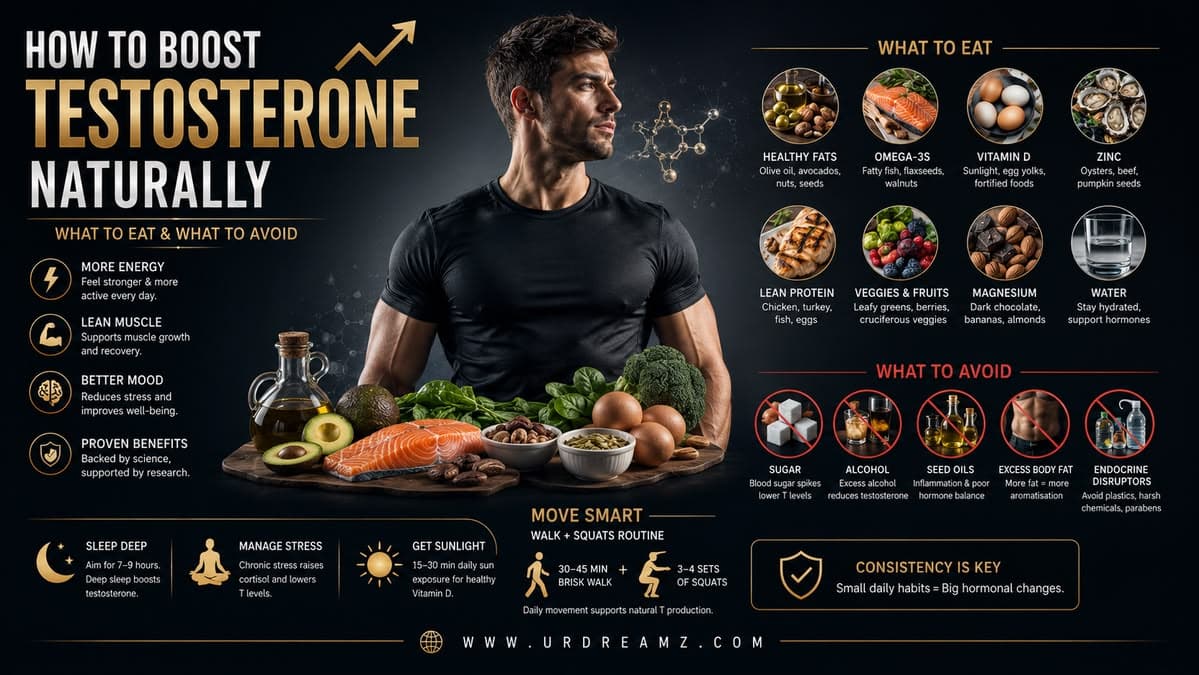
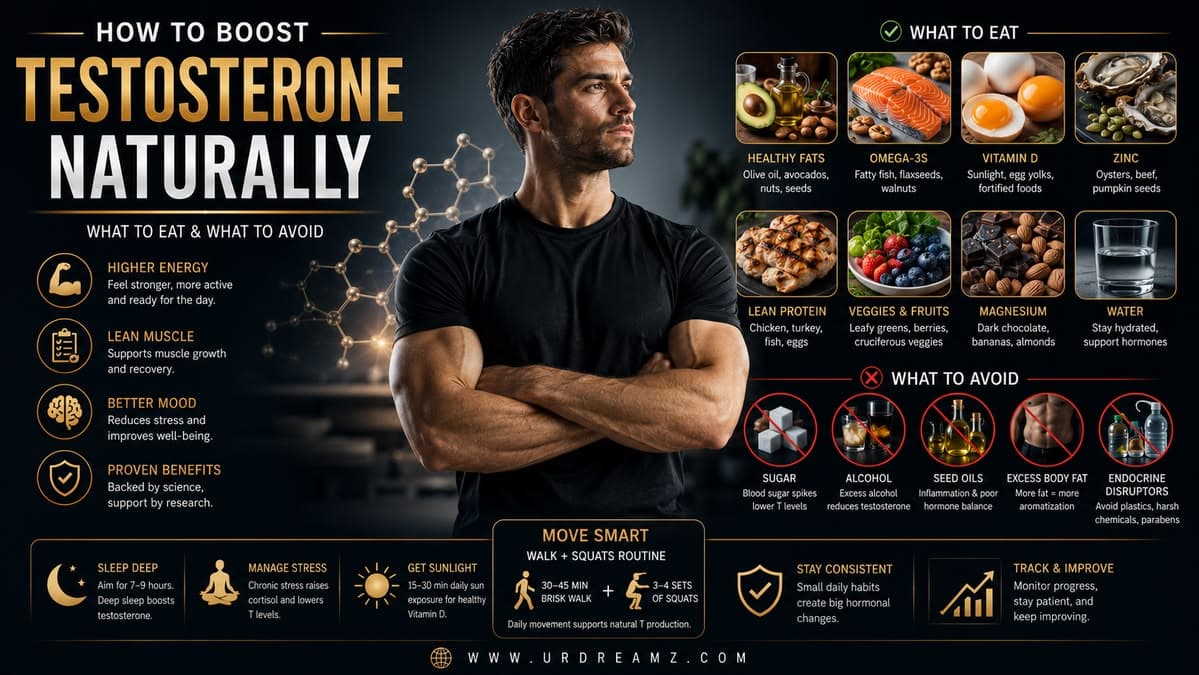
Monounsaturated fats, found abundantly in olive oil, are specifically associated with supporting healthy hormone levels, including testosterone. Incorporating olive oil as a primary cooking or dressing oil is a simple, practical way to increase intake of this specific type of beneficial fat.
11. Omega-3 Fatty Acids: The Other Healthy Fat
Alongside monounsaturated fats, Omega-3 fatty acids represent another category of genuinely healthy dietary fat worth prioritizing. While it's true that Omega-3s are, technically, still a type of fat, they belong to a category of "healthy fats" that support overall hormonal and cardiovascular health, distinct from the more harmful fat types discussed later in this guide.
12. Where to Find Omega-3s
Omega-3 fatty acids are found in a range of accessible foods, including eggs, fish, nuts, and dried fruits, along with various plant-based fat sources. Incorporating a regular rotation of these foods into a weekly diet provides a consistent, natural source of Omega-3s without requiring specialized supplements.
| Healthy Fat Type | Primary Food Sources |
|---|---|
| Monounsaturated Fats | Olive oil, avocados |
| Omega-3 Fatty Acids | Eggs, fish, nuts, dried fruits, plant-based sources |
13. Not All Fats Are Equal
It's worth emphasizing that not all dietary fat carries the same hormonal benefit. The specific research findings discussed above point to monounsaturated fats and Omega-3s as the categories worth deliberately prioritizing, rather than treating "fat" as a single, undifferentiated dietary category to either avoid entirely or consume without discrimination.
14. Research Finding 4: Sunlight, Vitamin D, and the Leydig Cell Connection
Research into hormone and metabolic health has identified a direct, specific connection between regular sunlight exposure and testosterone production. The core recommendation is straightforward: spend some portion of daily activity outdoors in natural sunlight, since this exposure allows the body to produce Vitamin D, which has a direct, mechanistic link to testosterone production.
15. Why Leydig Cells Specifically Need Vitamin D
The specific mechanism connecting Vitamin D to testosterone involves Leydig cells — the same specialized cells within the testes responsible for actually producing testosterone. These Leydig cells carry Vitamin D receptors directly on their surface. When Vitamin D, produced through sunlight exposure or obtained through diet, reaches and binds to these receptors, it directly supports the Leydig cells' ability to carry out their testosterone-producing function.
16. How Much Sunlight Is Actually Needed
This does not require extensive or excessive sun exposure — simply incorporating regular daily activities, errands, or light exercise outdoors during daylight hours, rather than remaining exclusively indoors throughout the day, is generally sufficient to support healthy Vitamin D levels for most people, particularly those living in regions with reasonable year-round sunlight availability.
17. Research Finding 5: Zinc and the Nutritional Journal Research
Nutrition-focused research has identified zinc — a trace mineral — as another essential nutrient directly tied to testosterone production. The research specifically points to zinc deficiency as a contributing factor to reduced testosterone levels, making adequate zinc intake a genuinely important, evidence-based dietary consideration.
18. Why Zinc Is Essential for Testosterone Synthesis
Testosterone, as a steroid hormone, is synthesized from cholesterol through a multi-step biochemical process — and zinc plays a direct, essential role within that synthesis pathway. If the body lacks adequate zinc, this synthesis process becomes less efficient, and testosterone production suffers as a direct result, regardless of how much raw cholesterol material might otherwise be available.
19. Best Food Sources of Zinc
Several accessible, everyday foods provide meaningful amounts of zinc, making dietary correction of a mild deficiency genuinely achievable through food alone in many cases.
| Zinc-Rich Food |
|---|
| Fish |
| Pumpkin seeds |
| Sesame seeds |
| Moong (mung beans) |
20. Research Finding 6: Stress, Anxiety, and Depression
Additional research consistently points to stress, anxiety, and depression as significant contributing factors to reduced testosterone levels. As covered in earlier discussions of testosterone physiology, chronic stress elevates cortisol, which directly suppresses the hormonal signaling chain responsible for driving testosterone production — meaning psychological and emotional health are not separate from hormonal health, but directly connected to it.
21. Breaking the Stress Cycle Through Activity
The recommended approach to addressing this factor involves a combination of regular exercise, improved diet and eating habits, and deliberately creating engaging activity and structure in daily life — essentially, keeping oneself purposefully occupied and active rather than remaining in a prolonged state of idle stress or rumination. This combination approach addresses stress from multiple angles simultaneously, rather than relying on any single intervention alone.
22. Research Finding 7: Testosterone in Women
It is worth revisiting an important point from earlier discussions: women also produce and rely on testosterone, albeit in smaller quantities than men. Research specifically examining female testosterone levels has identified a distinct category of environmental risk factors capable of disrupting healthy hormone levels, including testosterone, estrogen, and progesterone alike.
23. Understanding Endocrine Disruptors
These environmental risk factors are collectively known as endocrine disruptors — chemical compounds capable of interfering with the body's normal hormonal signaling and regulation. Two specific categories of endocrine disruptors are particularly well-documented: phthalates and bisphenols.
24. Phthalates: Hidden in Everyday Products
Phthalates are chemical compounds commonly used in a wide range of consumer products, including many cosmetics, fragrances, and plastic-containing items. Once absorbed into the body, phthalates have been shown to interfere with normal hormone production and regulation, including affecting testosterone, estrogen, and progesterone.
25. Bisphenols (Including BPA)
Bisphenols, including the widely discussed compound BPA (Bisphenol A), represent a second major category of endocrine-disrupting chemicals. These compounds are commonly found in certain plastics and, similar to phthalates, have been associated with disrupted hormonal function when absorbed into the body over time.
26. Where These Chemicals Commonly Hide
Both phthalates and bisphenols are frequently present in everyday cosmetic products — including many types of makeup and synthetic fragrances or dyes — meaning regular, long-term use of certain personal care products can represent an ongoing, cumulative source of endocrine disruptor exposure, often without the user being aware of this specific risk.
27. Practical Steps to Reduce Endocrine Disruptor Exposure
While complete avoidance of these chemicals is difficult given how widespread they are in modern consumer products, practical steps can meaningfully reduce overall exposure: choosing personal care products labeled as free from phthalates and BPA where available, reducing use of heavily fragranced synthetic products, and avoiding heating food in plastic containers, since heat can increase the leaching of these compounds from plastic into food.
28. Research Finding 8: The Exercise Protocol
Exercise-focused research has identified a specific, structured routine capable of supporting healthy testosterone levels, combining two distinct components performed in sequence.
29. Step One: The Brisk Walk
The recommended routine begins with a brisk walk lasting approximately 40 to 45 minutes. This initial cardiovascular activity serves as both a warm-up and a beneficial exercise component in its own right, supporting overall cardiovascular health and helping prepare the body for the strength-focused portion of the routine that follows.
30. Step Two: Squats
Following the brisk walk, the routine continues with squats, performed for approximately 20 to 30 minutes. Squats are specifically highlighted in this research as an effective testosterone-supporting exercise, distinct from other exercise types.
31. Why Squats Specifically Help
Squats are a compound exercise, meaning they engage multiple large muscle groups simultaneously — particularly the legs and glutes, among the largest muscle groups in the entire body. Exercises that engage large muscle groups tend to produce a more significant acute hormonal response, including a temporary rise in testosterone, compared to exercises targeting smaller, more isolated muscle groups.
32. Putting the Full Routine Together
Combining these two components into a single, structured routine — a 40 to 45 minute brisk walk followed by 20 to 30 minutes of squats — provides both the cardiovascular benefits associated with walking and the hormone-supporting benefits associated with compound strength movements, offering a practical, accessible daily or near-daily routine that does not require a gym membership or specialized equipment.
33. What to Avoid: A Quick Checklist
| Avoid | Why |
|---|---|
| Chronic sleep deprivation (under 6-7 hours) | Can reduce testosterone by 10-15% within just one week |
| Excess body fat | Increases aromatase activity, converting testosterone to estrogen |
| Unhealthy trans and processed fats | Displace beneficial monounsaturated and Omega-3 fats in the diet |
| Prolonged indoor confinement / low sun exposure | Reduces Vitamin D, impairing Leydig cell function |
| Zinc-poor diet | Impairs the biochemical synthesis of testosterone from cholesterol |
| Chronic unmanaged stress | Elevated cortisol directly suppresses the hormonal signaling chain |
| Products high in phthalates/bisphenols | Endocrine disruptors interfere with hormone regulation, especially relevant for women |
34. What to Eat: A Quick Checklist
| Eat | Why |
|---|---|
| Olive oil | Rich source of beneficial monounsaturated fats |
| Eggs, fish, nuts, dried fruits | Provide Omega-3 fatty acids supporting hormonal health |
| Fish, pumpkin seeds, sesame seeds, moong | Rich sources of zinc, essential for testosterone synthesis |
| Vitamin D (via sunlight or diet) | Supports Leydig cell function directly through Vitamin D receptors |
35. Setting Realistic Expectations
It's important to approach these natural strategies with realistic expectations. None of these interventions will produce an overnight transformation, and their benefit is generally most pronounced for individuals whose testosterone levels have been meaningfully affected by one or more of the specific factors discussed above — poor sleep, excess body fat, nutrient deficiency, low sun exposure, or chronic stress. These strategies work by removing obstacles to healthy hormone production rather than artificially forcing levels above what a person's underlying biology would otherwise support.
36. When Natural Methods Aren't Enough
For some individuals, particularly those with an underlying medical condition affecting testosterone production, lifestyle and dietary changes alone may not be sufficient to restore levels to a healthy range. In these cases, consulting a doctor for proper testing and, if appropriate, medically supervised treatment remains an important option, rather than relying solely on natural approaches indefinitely without professional evaluation.
37. Frequently Asked Questions
- Q1: How much can poor sleep actually reduce testosterone?
- Research has shown that reducing sleep to just five hours per night for one week can lower testosterone levels by approximately 10-15%.
- Q2: How does body fat lower testosterone?
- Fat tissue contains high concentrations of the enzyme aromatase, which converts testosterone into estrogen, meaning more body fat generally means more testosterone being converted away.
- Q3: What are the best dietary fats for testosterone?
- Monounsaturated fats (found in olive oil) and Omega-3 fatty acids (found in eggs, fish, nuts, and dried fruits) are specifically associated with supporting healthy testosterone levels.
- Q4: How does sunlight help testosterone?
- Sunlight exposure supports Vitamin D production, and Leydig cells in the testes carry Vitamin D receptors directly involved in testosterone production.
- Q5: Why is zinc important for testosterone?
- Zinc plays an essential role in the biochemical pathway that synthesizes testosterone from cholesterol; zinc deficiency directly impairs this process.
- Q6: What foods are good sources of zinc?
- Fish, pumpkin seeds, sesame seeds, and moong (mung beans) are good dietary sources of zinc.
- Q7: Can stress really lower testosterone?
- Yes. Chronic stress raises cortisol, which directly suppresses the hormonal signaling chain (starting with GnRH) responsible for testosterone production.
- Q8: Do women need to worry about testosterone too?
- Yes. Women produce testosterone in smaller amounts, and environmental endocrine disruptors like phthalates and bisphenols can negatively affect their testosterone, estrogen, and progesterone levels.
- Q9: What are endocrine disruptors?
- Endocrine disruptors are chemical compounds, including phthalates and bisphenols, that interfere with the body's normal hormone production and regulation.
- Q10: Where are phthalates and bisphenols commonly found?
- They are commonly found in cosmetics, synthetic fragrances, dyes, and certain plastics.
- Q11: What is the recommended exercise routine for testosterone?
- A brisk walk of 40-45 minutes followed by 20-30 minutes of squats is a research-supported routine for supporting healthy testosterone levels.
- Q12: Why are squats specifically recommended?
- Squats are a compound exercise engaging large muscle groups like the legs and glutes, which tends to produce a stronger acute hormonal response than isolated, smaller muscle exercises.
- Q13: Can diet alone fix low testosterone?
- Diet can meaningfully support healthy testosterone levels, especially if a nutrient deficiency is present, but underlying medical conditions may require professional evaluation and treatment beyond diet alone.
- Q14: How quickly can these natural methods improve testosterone?
- These strategies generally work gradually over weeks to months by removing obstacles to healthy hormone production, rather than producing an immediate or overnight change.
- Q15: When should someone see a doctor about testosterone instead of relying on natural methods?
- If lifestyle and dietary changes do not improve symptoms of low testosterone, or if an underlying medical condition is suspected, consulting a doctor for proper testing and evaluation is recommended.
38. Conclusion
Naturally supporting healthy testosterone levels is not about any single miracle food or supplement — it is the cumulative result of several well-documented factors working together: adequate sleep, healthy body composition, the right dietary fats, sufficient Vitamin D and zinc, effective stress management, reduced exposure to endocrine-disrupting chemicals, and a simple, accessible exercise routine combining a brisk walk with squats. None of these factors alone will transform hormone health overnight, but together, grounded in genuine research from sleep studies, endocrinology journals, and nutrition science, they offer a realistic, evidence-based path toward supporting the body's own natural hormone production — for both men and women.